
Tuscany vs Amalfi Coast Weddings, and Lake Como as the Third Option
Tuscany, the Amalfi Coast and Lake Como are built for three different weddings. Your guest list, your airport and your budget decide between them long before the view does.


Couples comparing Tuscany vs Amalfi Coast weddings usually add Lake Como to the shortlist within a week, and then get stuck, because every article they read describes all three as beautiful and stops there. The short answer is that these regions are good at different things. Tuscany holds a large group in one place for several days. On the Amalfi Coast a small group gets something no photograph quite prepares them for, while a large group becomes expensive and slow. Lake Como delivers a formal, polished day with the shortest trip from the airport.
I photograph in all three. That means I have driven the Meta to Positano road at eight in the morning in July, waited for a rental car convoy to find a gate in the Chianti hills, and stood on a boat landing on Como while a bride worked out how to step off in heels. What follows is what I would tell you on a call, sorted by region, with the trade-offs each one asks you to accept.

Scenery Is the Last Thing That Decides This
Almost every couple opens the conversation with the view. Within twenty minutes we are talking about something else entirely: how many people are coming, how old they are, how many days they can take off, and whether anyone is flying with a toddler.
The conversation moves there on its own, because the three regions differ far more in how they handle people than in how they look. All three photograph beautifully, and the view has never once been the thing a couple wished they had chosen differently. What they do regret is a guest list that outgrew the venue, a transfer that ate an afternoon, and a date picked for the weather that turned out to be the busiest week of the local season.
So the useful way to read this page is to start from your own numbers. If you already know your guest count and roughly when you want to marry, two of the three regions usually eliminate themselves before you finish reading.

Tuscany Works When You Are Bringing Everyone With You
Tuscany is the answer when the wedding is a reunion: three or four days where seventy or ninety people who rarely see each other end up in the same place, eating at the same tables, with everyone sleeping a short walk from where they had dinner.
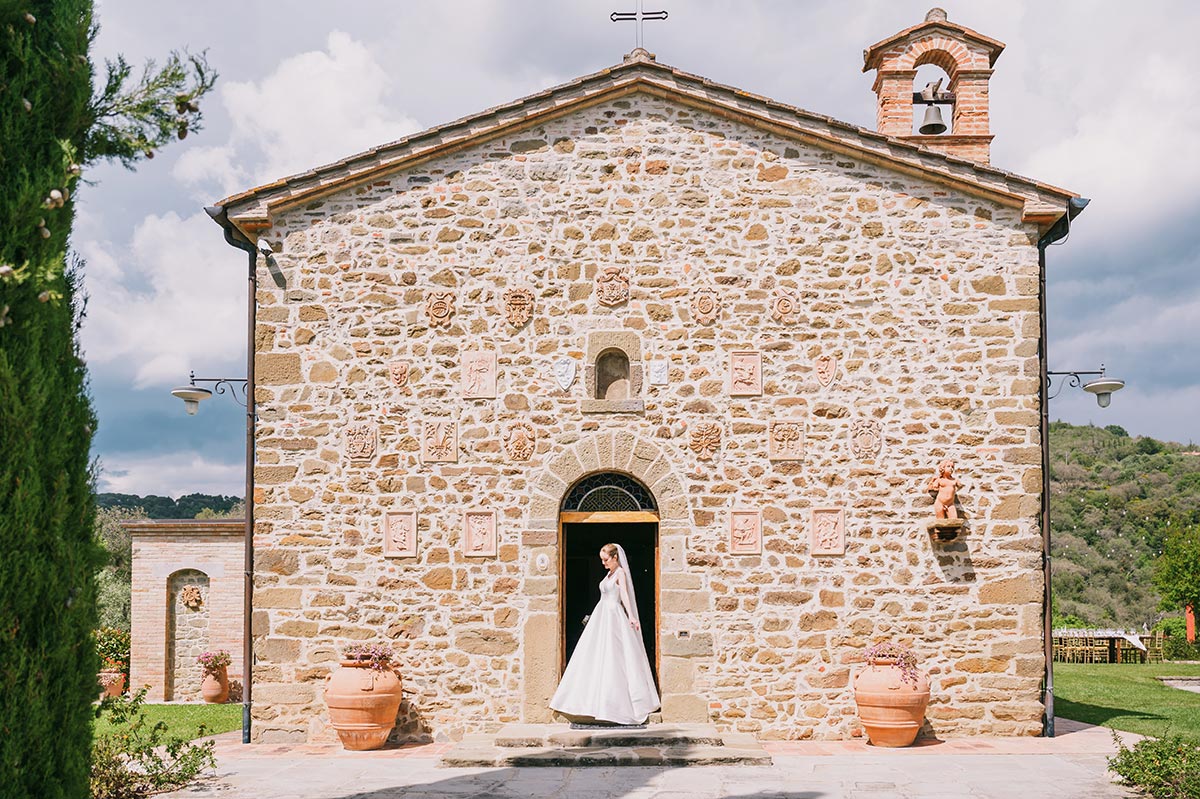
The reason is structural. Tuscan wedding properties are estates: a main villa, converted farm buildings, sometimes an entire restored hamlet, with the accommodation, the ceremony ground and the dinner space inside one perimeter. You rent the whole thing. That single fact solves problems the other two regions spend money solving. There is no transfer between ceremony and reception. There is no curfew negotiation with neighbors, because the nearest neighbor is a kilometer of vines away. Grandparents go up for a nap between the ceremony and dinner and come back down for the dancing.
It also explains the shape of the day. Tuscan weddings run long and loose. The aperitivo stretches because nobody has anywhere to be. Dinner starts late and stays at the table. If you want that kind of day, look at the full picture of a wedding in Tuscany and at what the estates in Chianti wedding venues actually include before you compare prices with anywhere else.
Ninety People, One Property, Three Nights
The number that decides a Tuscan wedding is how many of your guests can sleep on site, which is a smaller figure than the capacity of the dining room and a more useful one. An estate that houses sixty of your ninety guests behaves completely differently from a venue that houses none, because the sixty become the spine of the weekend. They have breakfast together. They are around for the pre-wedding swim, the late night by the pool, the slow Sunday.
This is also where the money makes sense. A borgo rental for a long weekend is a large single line in the budget, and it looks alarming next to a coastal venue fee, until you subtract the hotel rooms, the shuttle buses and the three separate venues you would have paid for elsewhere. I have photographed weddings in Tuscany where the couple spent more on the property than anything else and less on logistics than any coastal wedding I have covered.
The trade-off is real, and it is worth saying plainly. You are choosing a self-contained world over a place your guests can wander into. If your idea of the weekend involves people drifting off to explore a town on their own, an estate in the hills is the wrong container for it.
What Guests Do With the Afternoons
Guests in Tuscany need a plan and a car. The countryside does not entertain people by itself the way a coastal town does. Rent a car at Florence and the Chianti hills open up in about forty five minutes, with wine estates that take bookings, hill towns that fill a morning, and Siena about an hour out.
That sounds like a downside, and in practice it is the reason Tuscan weddings feel generous: because you have to organize something, most couples do, and the wedding grows into a program. A pizza night on the arrival evening, a wine tasting on the Saturday morning, a long lunch somewhere on the Sunday. Guests remember the weekend rather than the six hours of the ceremony.
The practical warning is about the driving. Those roads are dark, narrow and unlit at night, and after a dinner with local wine you do not want forty guests finding their own way back. Every Tuscan wedding I have worked that ran smoothly had transport arranged for the evening, and it is the single item couples most often leave out of the first budget.
The Amalfi Coast Works When the List Is Short
The coast is the opposite proposition. It gives more to fewer people, and it charges heavily for scale.
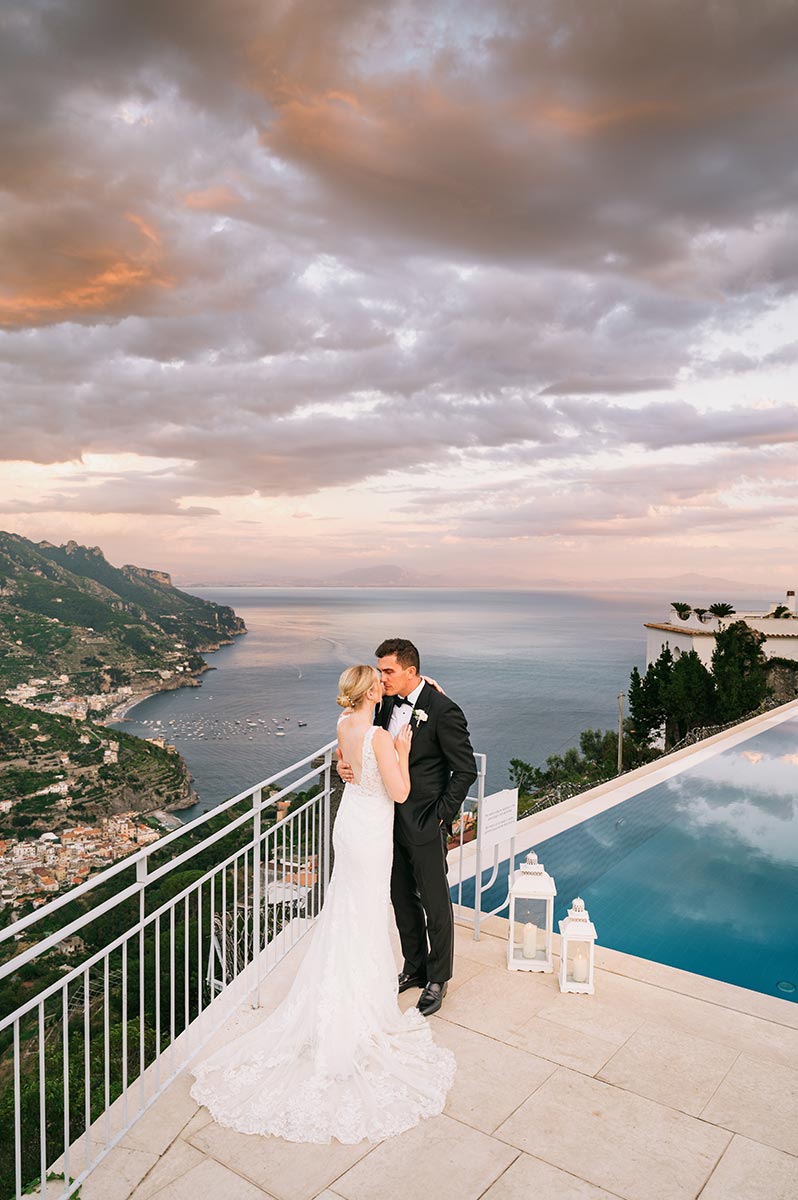
Everything here sits on a strip of vertical rock between mountain and sea, so nothing is big. The venues are terraces, cloisters, hotel gardens carved into the cliff, and most of them top out well below the numbers a Tuscan estate handles without noticing. Roads are single lane in places and slow in season. Space for a marquee, a car park and an overflow simply does not exist. What the coast offers in exchange is a backdrop that does something to twelve people standing on a terrace at seven in the evening that I have yet to find anywhere else in Italy.
So the coast rewards the couple who has already decided to keep it small. If that is you, the whole logic of the region turns in your favor, and the place to start is a wedding on the Amalfi Coast and the shortlist in Amalfi Coast wedding venues.
Why Twenty Guests Stop Feeling Like a Compromise
Couples arrive apologizing for their guest count. On this coast that is the wrong instinct, because twenty guests get things ninety cannot have. A private terrace above Positano with the whole party on it. A restaurant that closes for you on a Tuesday. Three boats instead of a coach. The walk down through the lemon terraces at the end of the afternoon, which works with a dozen people and becomes an evacuation with eighty.
Small also buys back your day. A short list means a short guest management burden, which means the couple actually spends the golden hour with each other instead of moving between tables. For a couple who wants that shape without a full wedding at all, an Amalfi Coast elopement takes the same logic to its conclusion.
Where the coast turns against you is above roughly fifty or sixty guests. Then you need a second venue, or a hotel that can hold everyone, and the day starts including transfers along a road that does not hurry. The cost climbs faster than the guest list does, and the timeline gets tighter rather than looser. That is the point where I usually ask a couple whether they have looked at the hills.
Guests Arrive Already on Holiday
The coast entertains your guests without you, which neither of the other two manages. Positano, Amalfi and Ravello are working towns with boats, beach clubs, restaurants and shops, and a guest with a free afternoon does not need a car, an itinerary or a plan. They walk out of the hotel and the day fills itself.
That changes the economics of the week. You are not obliged to program the free time, which offsets some of the higher venue cost, and it makes the coast the easiest of the three for guests who would rather do their own thing than be marshaled through a group activity.
It also has a cost you should hear before booking. In July and August those same towns are full of everyone else’s holiday, and privacy has to be built deliberately: early hours, boats, terraces that face away from the crowd. Anyone coordinating that for you is doing real work, which is why couples on this stretch lean on an Amalfi Coast wedding planner more than they expect to.
Lake Como Works When You Want the Day to Look Formal
Couples describe Como with words like polished. It carries a certain formality in the setting itself, present before anyone chooses a suit or a menu.
That comes from the architecture. The lake is lined with nineteenth century villas whose gardens were laid out for exactly this kind of occasion: symmetrical, terraced down to the water, with steps and colonnades that frame a group photograph without anybody arranging anything. Put a black tie wedding in that and it looks correct. Put the same wedding in a vineyard and it looks like a black tie wedding in a vineyard.
The light helps. Water reflects back up under the trees, and the mountains behind the lake soften the late afternoon into something even and diffused. The region also runs on boat logistics, which for a photographer is a gift and for a planner is a schedule. If that formality is what you are picturing, start with a wedding in Lake Como, and read the quieter corners in hidden gems in Lake Como before you settle on a villa.
Arriving by Water
A bride arriving at the villa by boat is the single most reliable image on this lake, and it is also a piece of engineering. The boat has to be booked, timed, and matched to the landing, and the landing has to be one you can step onto in a long dress without a scene.
What most couples do not anticipate is how much of the day the water shapes. Guests move by boat between the ceremony and the dinner. Portraits happen on the water because that is where the villas look their best. Wind and the afternoon ferry traffic become real variables in your timeline, in a way that the Amalfi Coast, which mostly moves by road, does not replicate. A planner who works the lake week in and week out earns their place on this alone, and a Lake Como wedding planner handles it as routine.
Lunch on the Lake the Day You Land
For arrivals, Como wins this comparison by a clear margin. Milan Malpensa is a major international airport with direct flights from several US cities, and the drive to the lake is roughly fifty to sixty kilometers of motorway, under an hour and a half even allowing for traffic. Guests can land in the morning and be at a lakeside lunch.
Compare that with the other two and the difference stops being trivial once you multiply it by a hundred people, half of whom are arriving jet lagged. Como also gives guests a city at the other end of the transfer, so anyone extending the trip has Milan without another flight.
The trade-off is the tone. Como is the most formal and the most expensive of the three, and it is the least suited to a couple who wants the wedding to feel casual. The lake does elegance easily and does relaxed with effort, which is the reverse of the coast.
A Tuscany Italy wedding one-of-a-kind experience
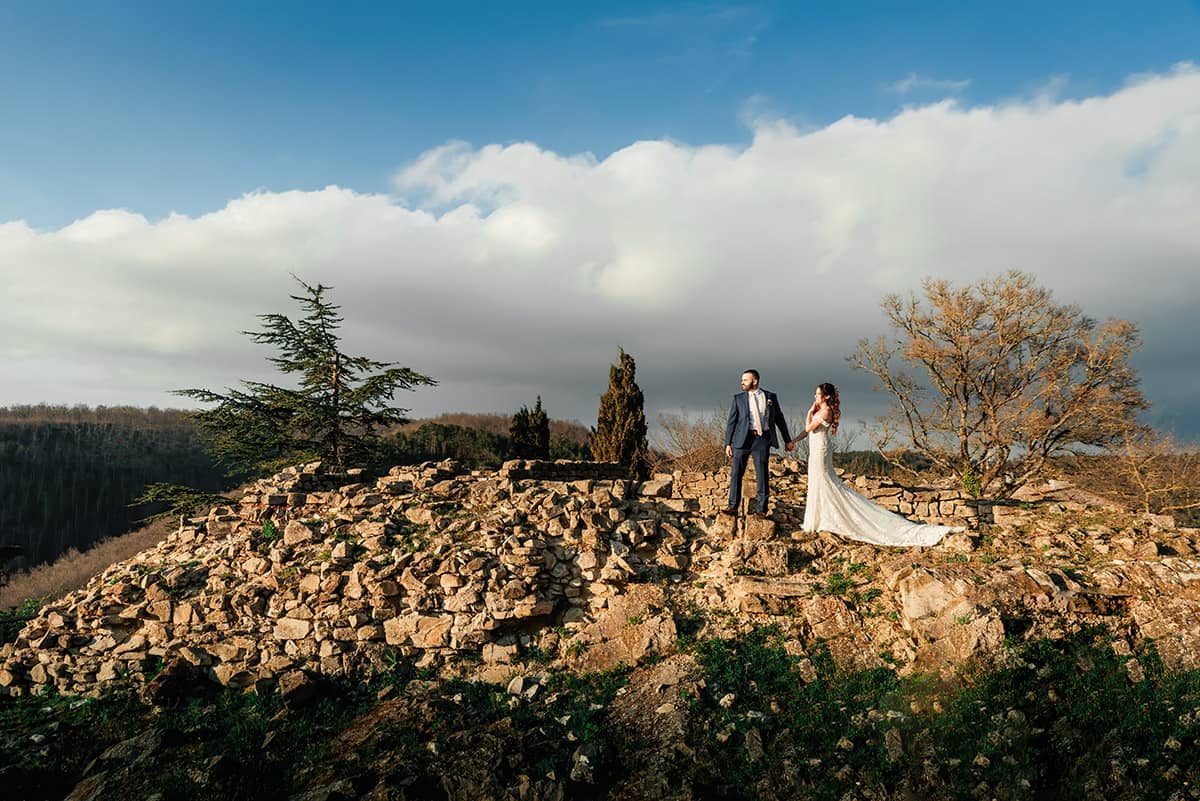
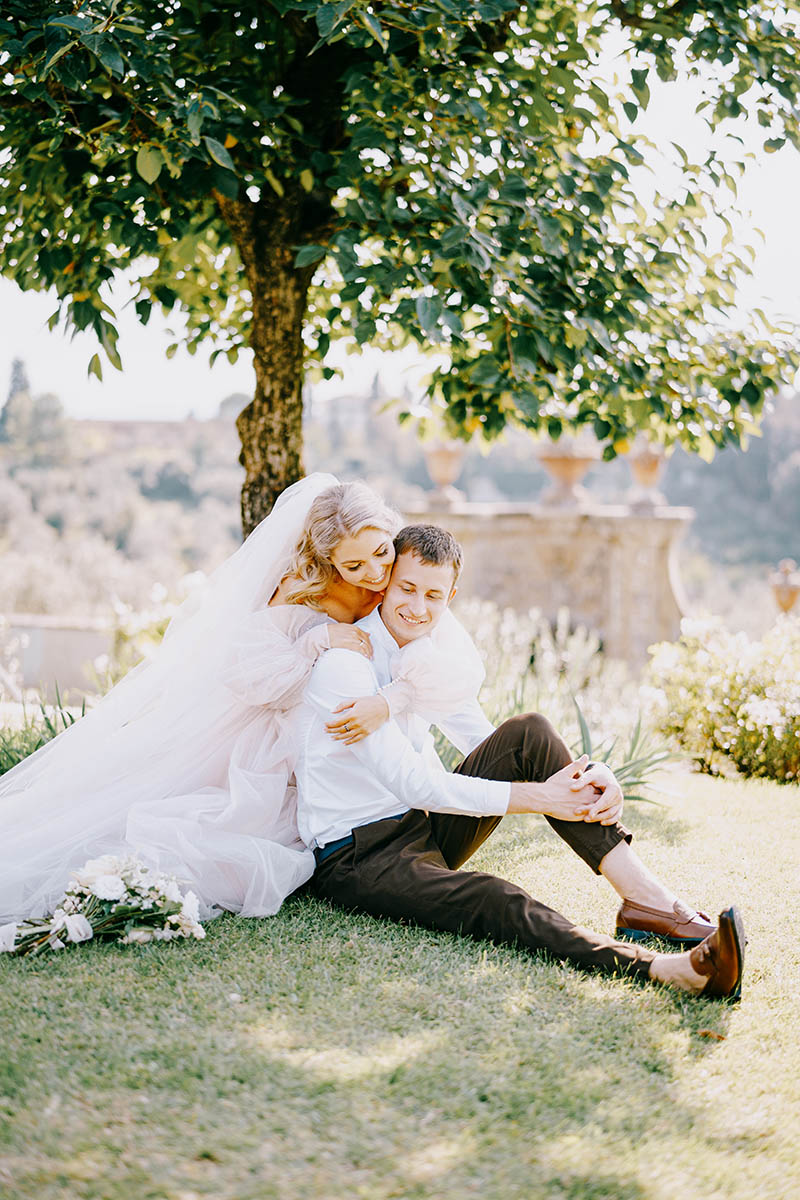
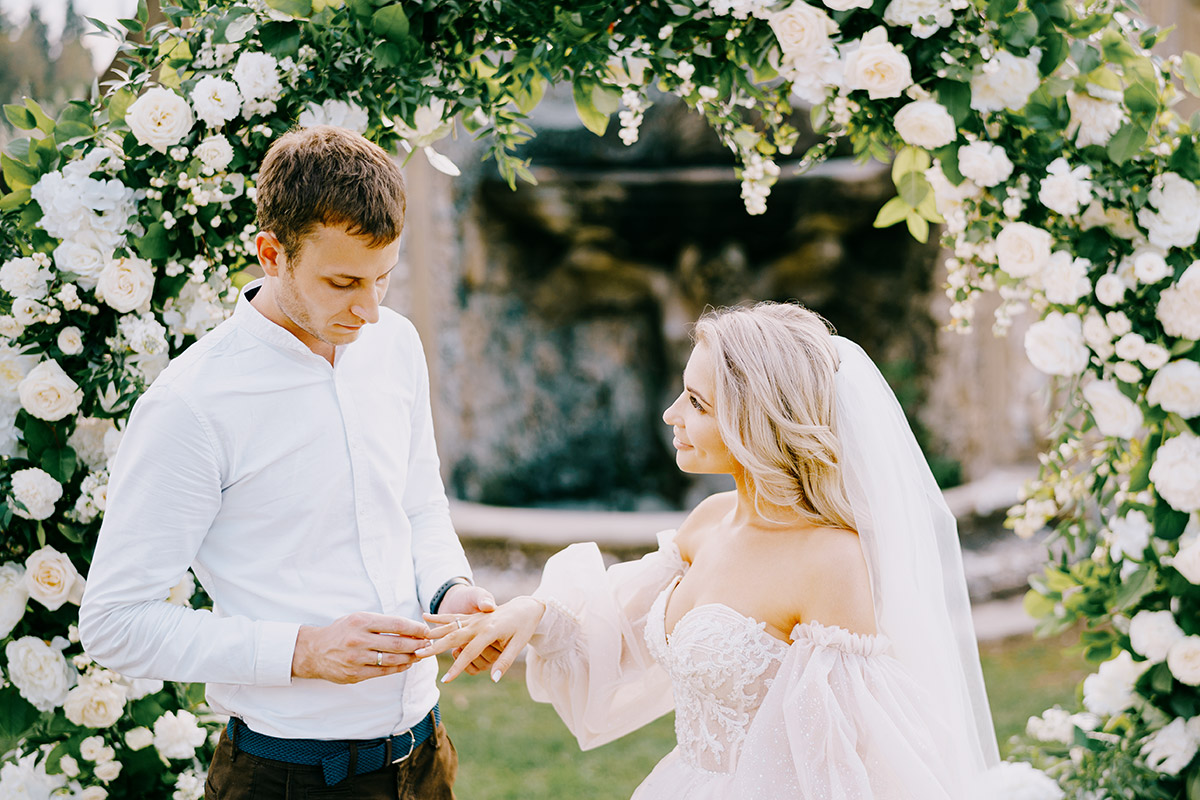
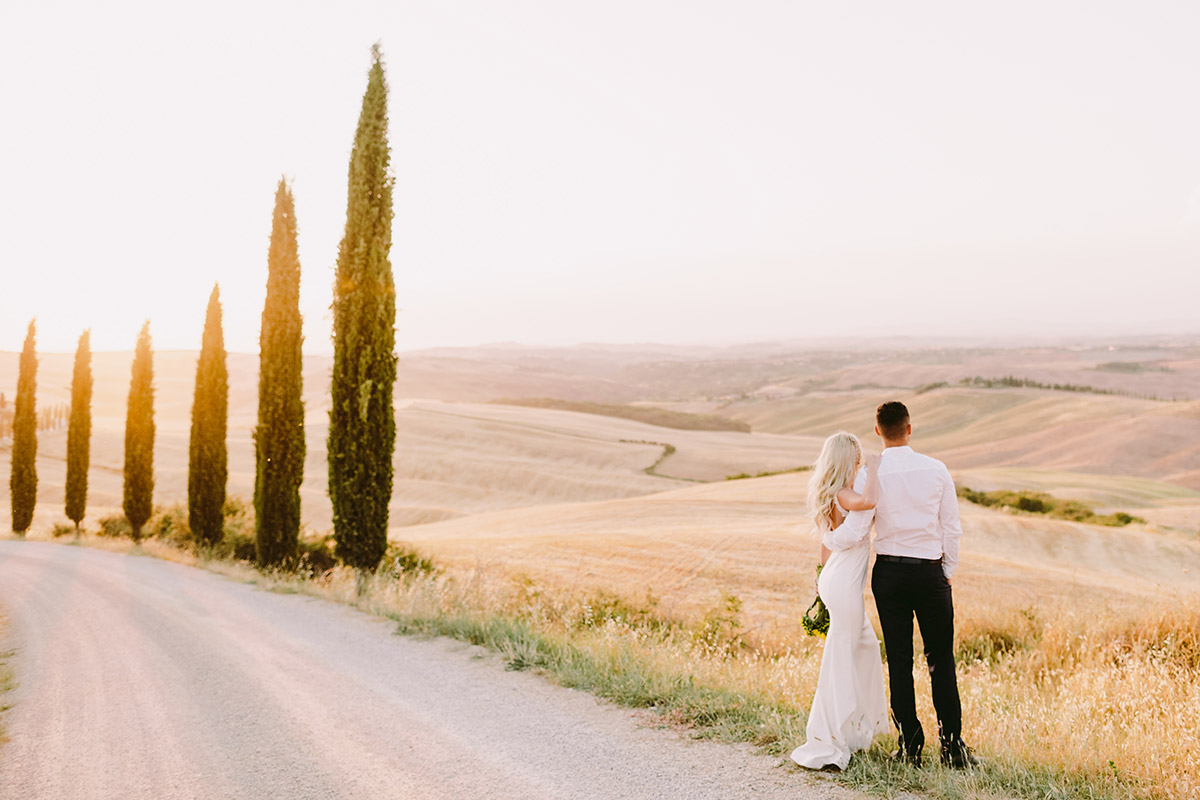
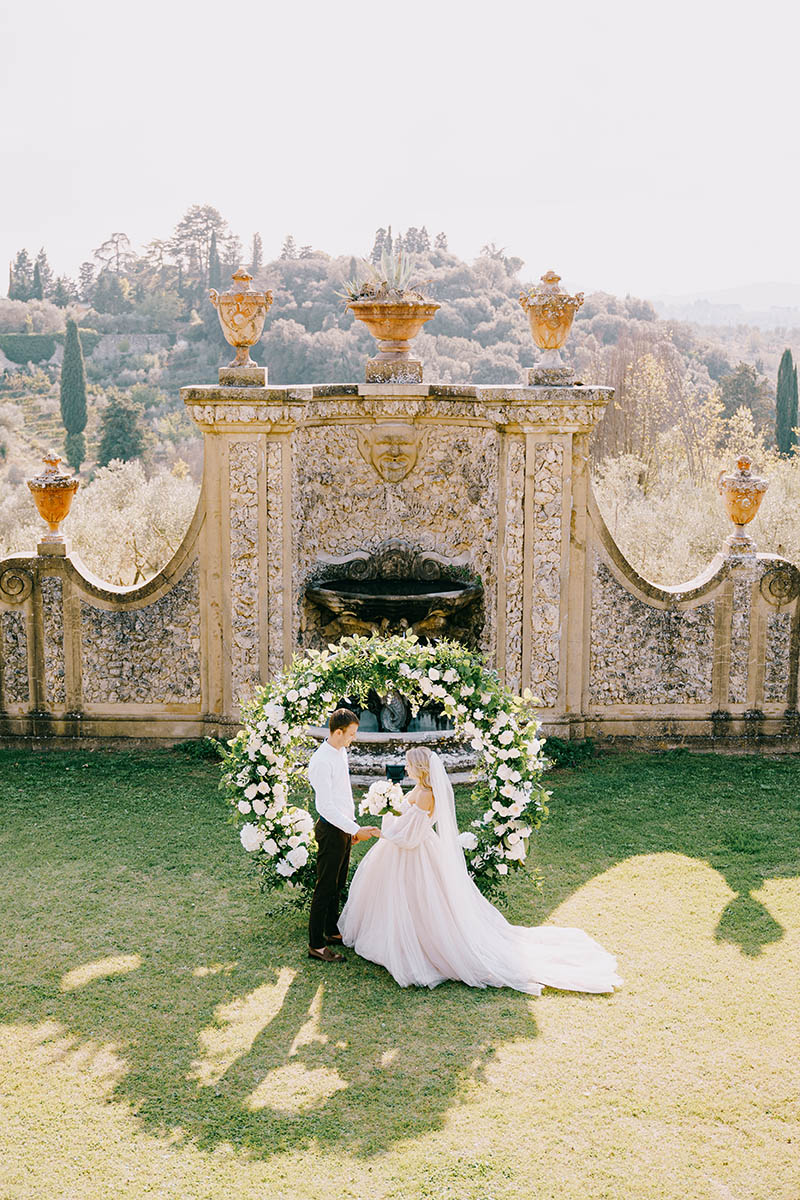
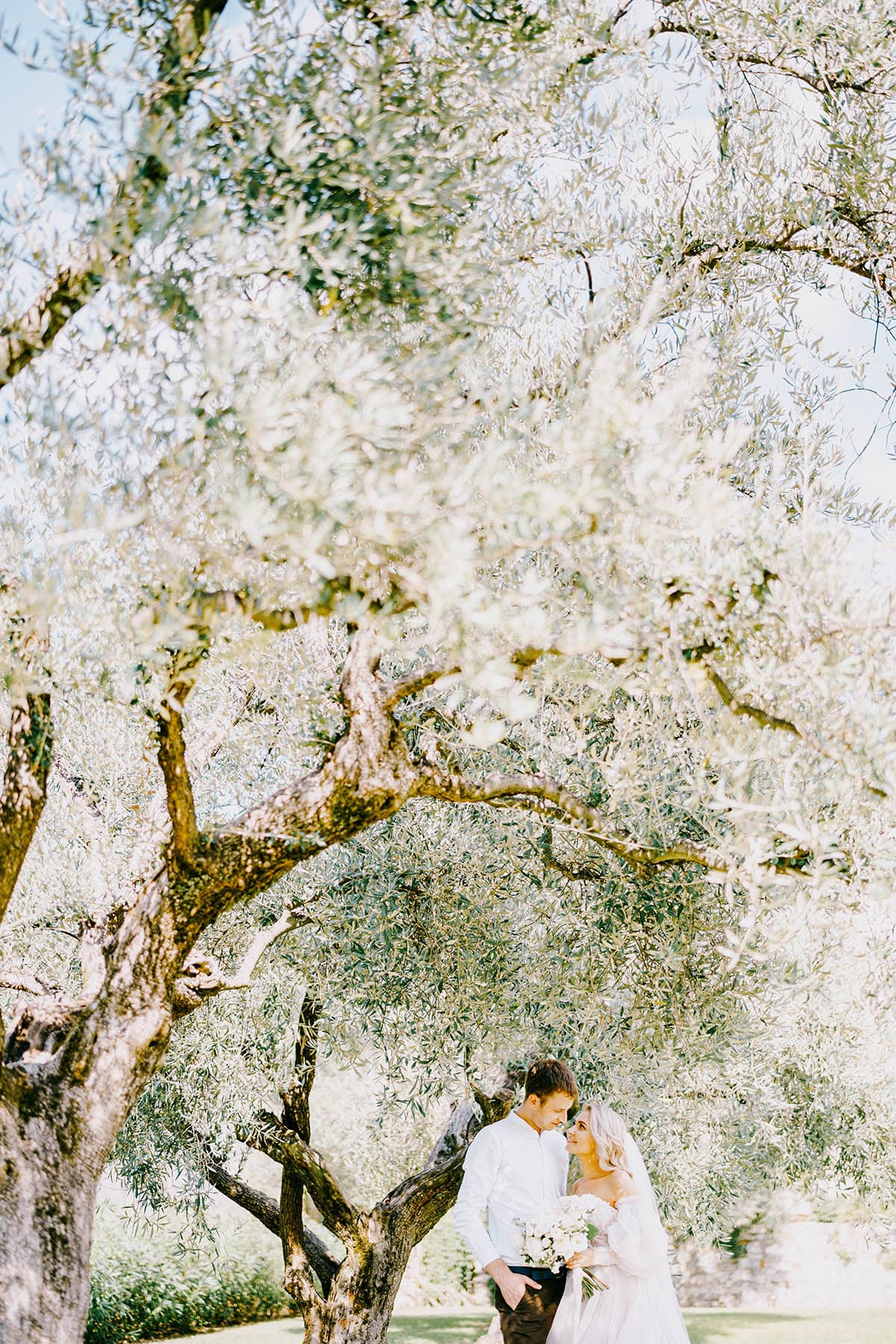
Why is a Tuscany Wedding a special experience? First of all, because Tuscany has a lot to offer: beach, hills, sea, mountains, fabulous cities, culture, ancient atmosphere, delicious food, elegance. When I have been hired as a wedding photographer in Tuscany, I have had the opportunity to appreciate all the special features of a Tuscan-Style Wedding.

IF YOU THINK OF HIRING ME, IT MEANS THAT YOU SHARE THIS VISION AND WE HAVE MANY THINGS IN COMMON.

Tuscany vs Amalfi Coast Weddings, Head to Head
Since Tuscany vs Amalfi Coast weddings is the comparison most couples arrive with, here is where the two genuinely diverge, with Como as the reference point on either side.
On guest numbers, Tuscany scales and the coast does not. A hundred guests in Tuscany is a normal wedding. A hundred guests on the Amalfi Coast is a logistics project with a second venue in it. Como sits in between, with several villas that handle a large formal wedding, at a price.
On the shape of the celebration, Tuscany gives you days and the coast gives you a day. A coast wedding is intense and vertical, and it is over in an evening built around a ceremony and a sunset, while the Tuscan wedding spreads horizontally over a weekend with the ceremony as one event among several. Como usually produces something closer to the coast in duration and closer to Tuscany in polish.
On what your guests remember, the coast wins on the setting and Tuscany wins on the time together. I have photographed both often enough to say that the coast produces the images guests screenshot and Tuscany produces the weekend they talk about at the next family gathering. If you want the wider survey of regions beyond these three, that belongs on the best place to get married in Italy, which covers Rome, Venice, Puglia and Sicily as well.
The Drive From the Airport Decides More Than People Expect
Guests judge a destination wedding partly on how hard it was to get there. This is the least romantic section on this page and the one that changes the most minds.
Naples, and the Road That Follows the Cliff
The Amalfi Coast is served by Naples, roughly sixty five kilometers away, a distance that reads as close on a map and behaves very differently on the road. Expect ninety minutes to two hours for a private transfer, more on a summer Saturday, because the last stretch is a coast road of hairpins that cannot be hurried and is shared with everyone else’s day trip. Guests prone to car sickness should be warned rather than surprised.
Naples also has fewer direct flights from the United States than Milan, so a fair number of guests arrive via a connection in Rome or an intra-European hop. Build the arrival day around that and nobody complains.
Florence or Pisa, Then a Rental Car
Tuscany is reached through Florence or Pisa, and then driven. Florence airport to the Chianti belt is about forty five minutes, to Siena about an hour, and down into the Val d’Orcia closer to two. The roads are good and the driving is pleasant in daylight.
The thing to plan for is that most guests will want a car for the stay, which means rental bookings months ahead in high season and a conversation about who is driving after dinner. Couples who prefer guests without cars end up chartering transport for every group activity, and that cost belongs in the first budget rather than the fourth.
Malpensa, and Under an Hour of Motorway
Como takes the least explaining. Malpensa is a large international hub, the drive is short and on a motorway, and guests can go from landing to lakeside in a single uneventful morning. For a wedding with older guests, small children, or a guest list scattered across several countries, this alone can settle the choice.
Money Behaves Differently in Each of the Three
These are market figures rather than my own rates, and they come from what we already publish about each region, so you can follow them through to the detail.
Tuscany tends to work out at roughly eight hundred to twelve hundred euros per guest for a high quality celebration. For a party of around fifty that lands somewhere between forty five and eighty thousand euros, and a full weekend with a property rental, catering, flowers, music and transport more commonly runs sixty five to a hundred and twenty eight thousand. Taking over a historic estate for three days starts around a hundred and fifty thousand and climbs. The full breakdown sits in how much a wedding in Tuscany costs.

Check our packages
Capture the Magic of Your Special Day with Emiliano Russo
Lake Como is the most expensive entry point of the three. A ballpark for a villa wedding there runs from sixty thousand euros to well over two hundred thousand, driven by villa fees that are high even before catering, and by the fact that the best known properties know exactly what they are.
On the coast the floor is lowest and the slope is steepest. An intimate wedding of ten to twenty five guests sits around thirty to fifty thousand euros, a mid sized day sixty to ninety, and a large one ninety to a hundred and fifty thousand and beyond. The coast is the only one of the three where going small genuinely saves a lot, which is another way of saying it is the region that most rewards a decision you were already inclined to make.

Season Narrows the Choice Faster Than Taste Does
If your date is fixed, this section may decide everything.
Tuscany is at its hardest in July and August, when the middle of the day is genuinely hot and the hills have turned from green to gold. Some couples want exactly that gold. May, June, September and early October are the comfortable months, and September weekends at good estates go two years ahead.
On the Amalfi Coast the usable season runs longer at both ends, because the sea moderates everything. April and October work here and are marginal in the hills. What the coast has instead is a crowd season: the same weeks that give you the warmest evenings give you the busiest towns, so a July wedding on the coast is a different exercise in privacy from a May one.
Lake Como has the shortest window of the three. The lake is at its best from late May to mid September, and shoulder season carries a real risk of a gray, closed-in day with the mountains in cloud. That risk is worth naming, because it is the one thing that regularly pushes a couple from Como to the coast after they have already fallen for the villas. It sits alongside the other practical hurdles of a Lake Como wedding, which are worth reading before a date is locked.

Older Guests, Small Children, and Anyone Who Cannot Do Stairs
This is the question I get asked privately, usually by the person organizing rather than the couple, and the answer is not the one the photographs suggest.
On mobility, the Amalfi Coast asks the most. Towns are built as staircases, venues are reached by steps, and a wheelchair or a bad hip narrows the venue list quickly. It can be done, and I have photographed days built carefully around a grandparent, but it has to be designed from the beginning rather than solved in the last month.

Tuscany is the gentlest for mobility and the most demanding on distance. Estates are largely flat, ground floor rooms exist, children have lawns and pools and space to be children, and this is one of the reasons that, working as a Tuscany wedding photographer, I spend so much less of the day moving people around than I do on the coast. Against that, everything is a drive, and a family with a toddler will do more time in a car seat than they would on the coast.
Como sits in the middle. The villa gardens are terraced, so there are steps, but the transfers are short and the arrival is easy. For a guest list with several people over eighty, Como and Tuscany are both easier propositions than the coast, and I would say so on the call rather than let you find out in September.


A Reunion, a Dozen Friends and a Black Tie Day
These are the three patterns I see repeat, one for each region.
The Family Reunion That Went to Tuscany
Eighty five guests, four generations, relatives flying from three countries who see each other every few years. They wanted people together for four days and did not want anyone driving at night. They rented an estate near Siena, put sixty guests on site, ran a pizza night on the Thursday, a wine tasting on the Friday morning and a long Sunday lunch. The wedding itself was the calmest part of the weekend, because everything else had already happened.
The Twelve People Who Chose the Coast
Parents, siblings, two close friends. They wanted the day to feel like the best afternoon of a holiday rather than a production. A terrace ceremony at six, a boat afterward, dinner at a restaurant that put one long table on its own terrace. The whole party fit in three cars and two boats, nothing needed a coach, and they spent the following two days on the water with the same twelve people.
The Black Tie Day That Belonged on Como
Sixty guests, formal from the start, with a couple who had a very clear picture of what the photographs should look like. Villa gardens, an arrival by boat, dinner under the colonnade. Guests flew into Malpensa in the morning and several extended into Milan afterward. Nothing about that day would have worked in a vineyard, and nothing about the Tuscan family weekend would have worked on the lake.
WEAR POEMS
STOP TIME
IN YOUR LIFE
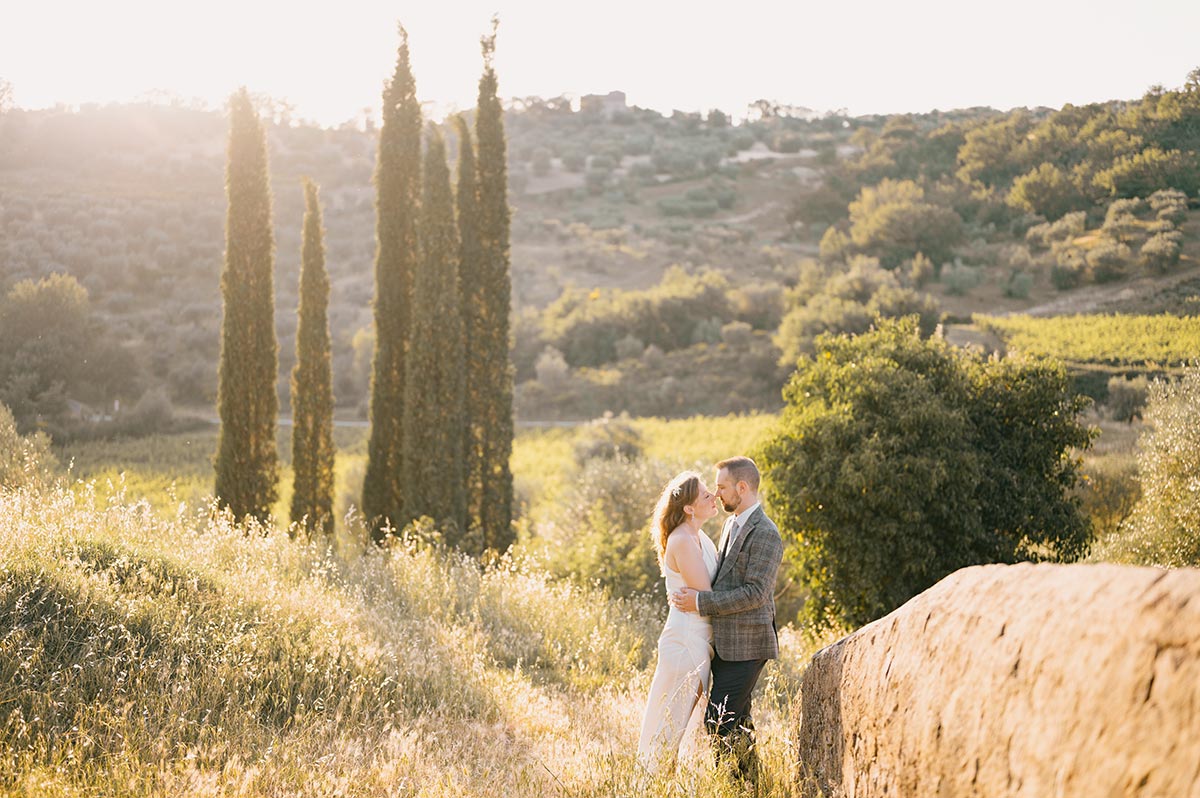
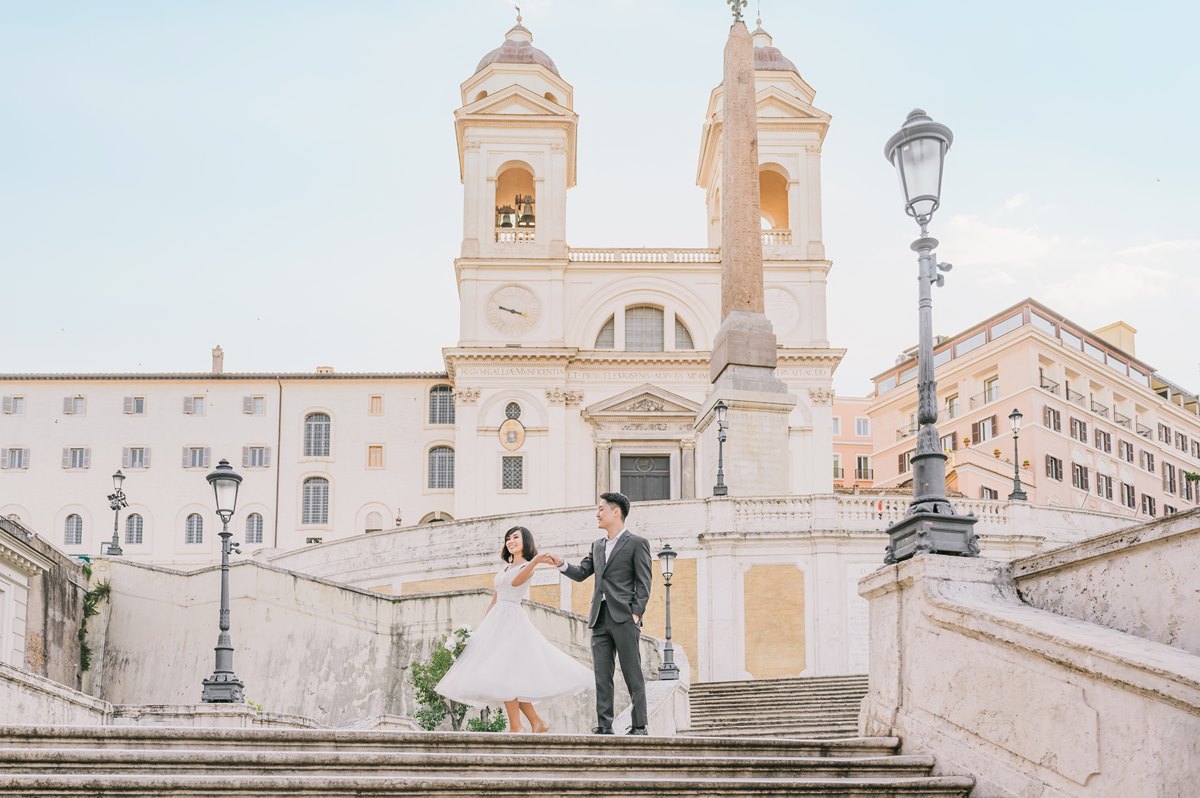
Anyone dreaming of a wedding in Italy should not miss the chance to be photographed at heritage sites.
FEEL VIBES
Your Numbers, Your Month, Who Is Traveling
If you have read this far still undecided, it usually means your guest list sits in the middle and your date is flexible, which is the genuinely open case.
In that situation I would ask two things. Do you want your guests together in one place, or free to scatter and come back for the wedding? And is anybody coming who will struggle with steps and heat? The first question separates Tuscany from the other two. The second usually removes the Amalfi Coast or confirms it.
Beyond that, the honest position is that I would be glad to photograph any of the three, and the images will be good in all of them. What differs is the weekend around the pictures. If you tell me your numbers, your month and who is traveling, I will tell you which of the three I think fits, including when the answer is one I did not expect. Send me those three things through the contact page and I will come back with a straight opinion on Tuscany vs Amalfi Coast weddings, Como included, rather than a brochure.


Two questions
Distances and Paperwork Across the Three Regions
How far Lake Como is from Tuscany, and marrying legally in each of the three regions.
How far is Lake Como from Tuscany?
About three and a half hours by car from Como to Florence, or around three by train with a change in Milan. Tuscany to the Amalfi Coast is roughly five hours door to door, by fast train to Naples and then a transfer. I find a wedding in one region and a honeymoon in another works well on those distances.
Can we marry legally in all three?
Yes. The paperwork is Italian rather than regional, so the practical difference is which town hall you deal with and what it charges. Many of the couples I photograph handle the legal side at home and hold a symbolic ceremony here, which removes the constraint entirely.

 Written By Emiliano Russo