
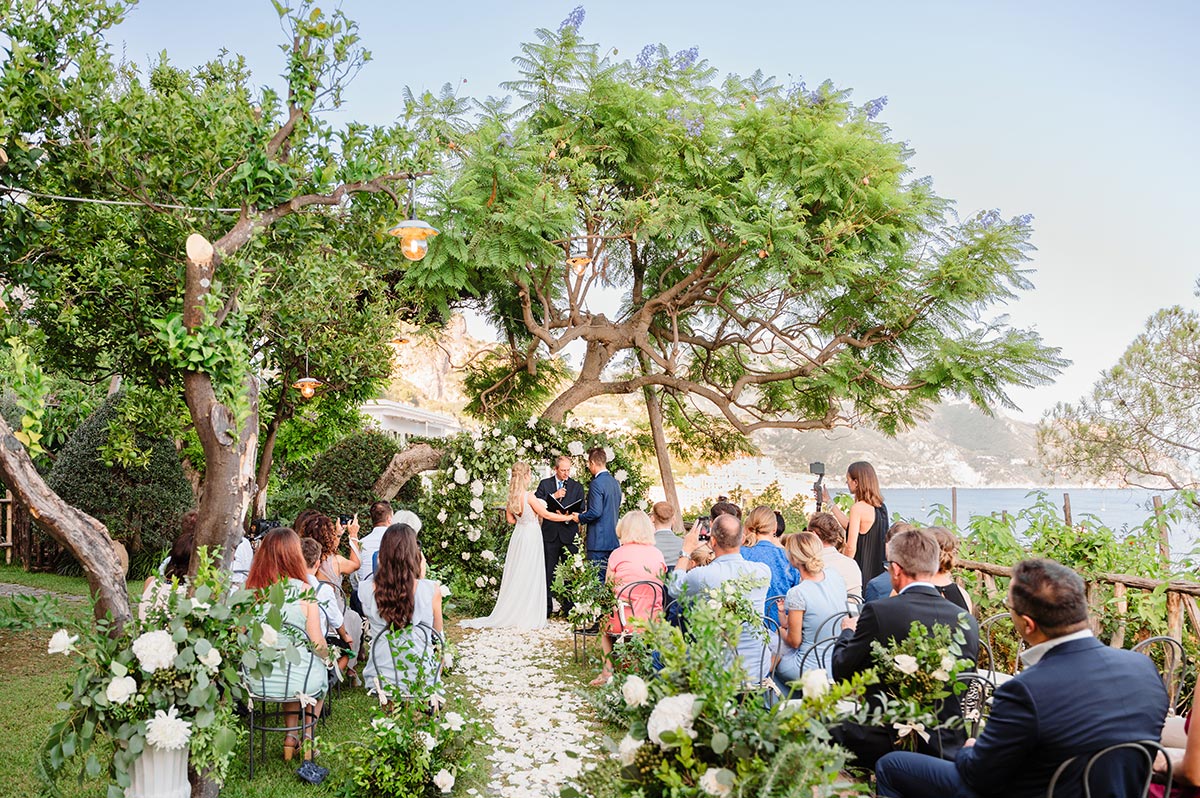

Italian wedding traditions
Ceremonies are essential to many cultures worldwide, and weddings are no exception. Italian wedding traditions are interesting to incorporate.
Italian wedding traditions: A look into the customs, culture, and folklore of Italian marriage
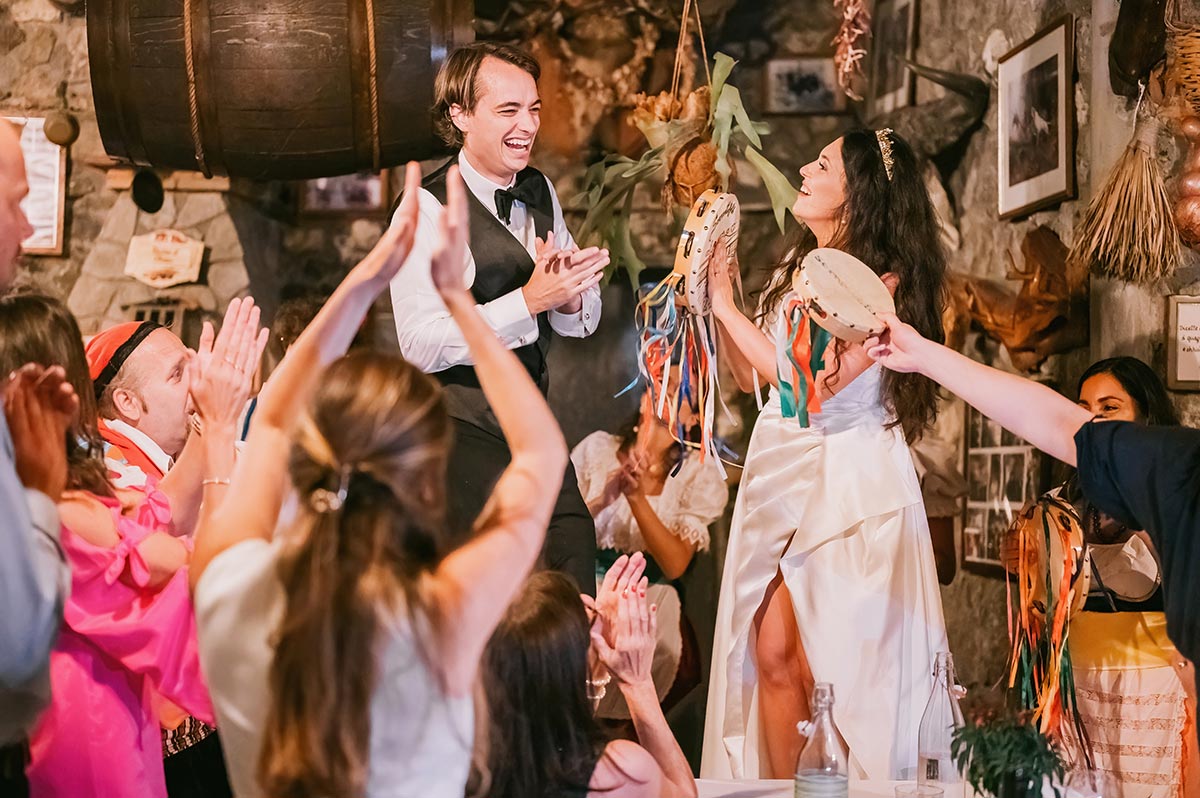
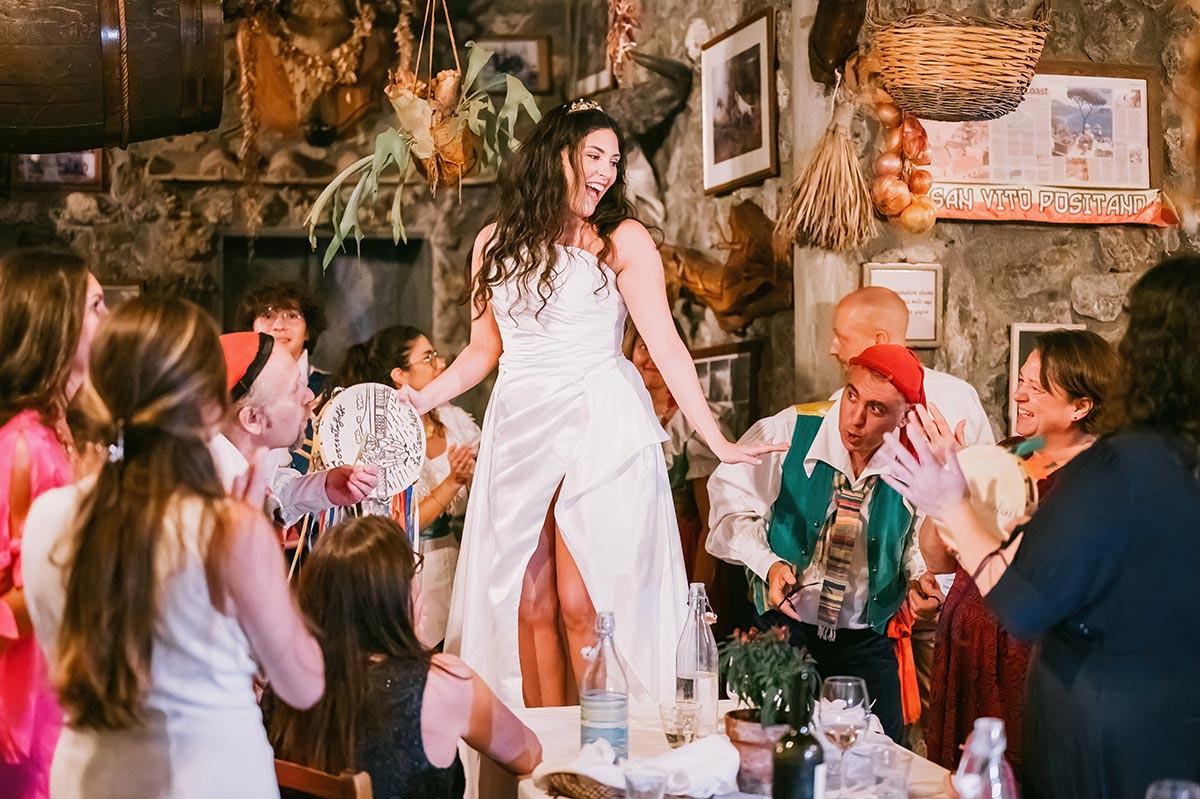
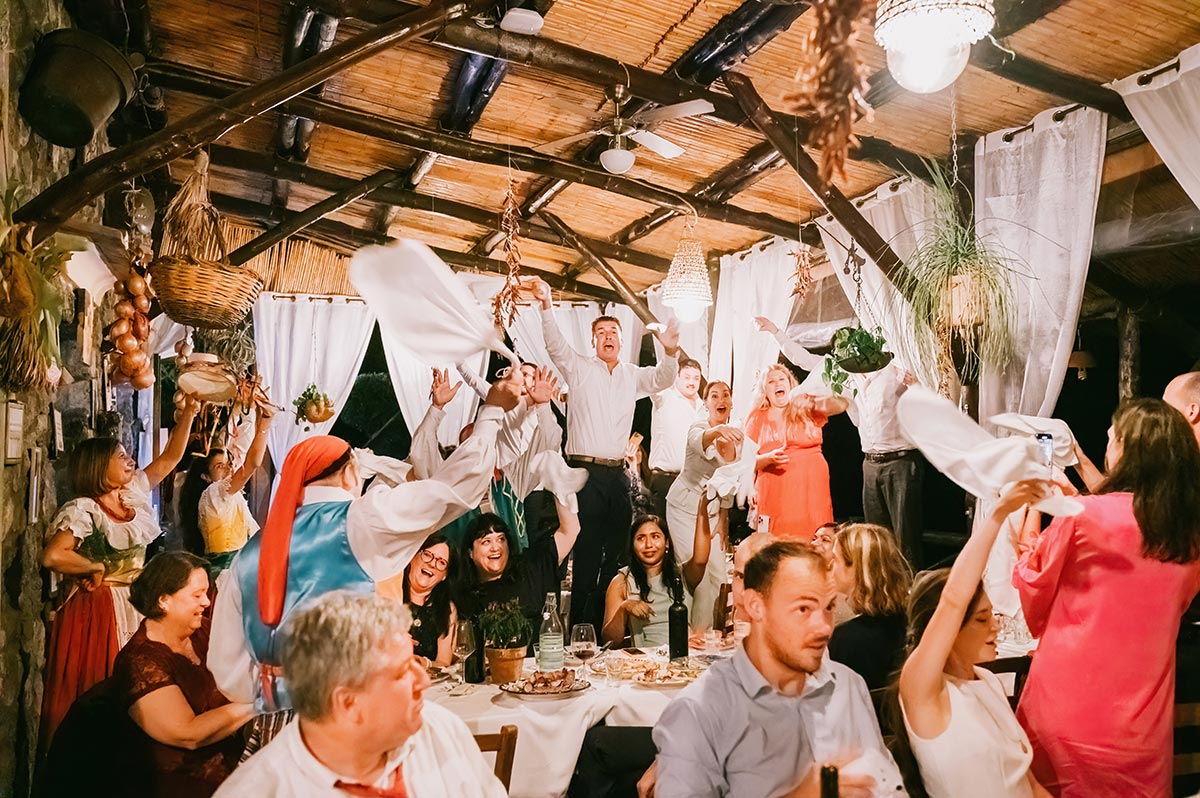
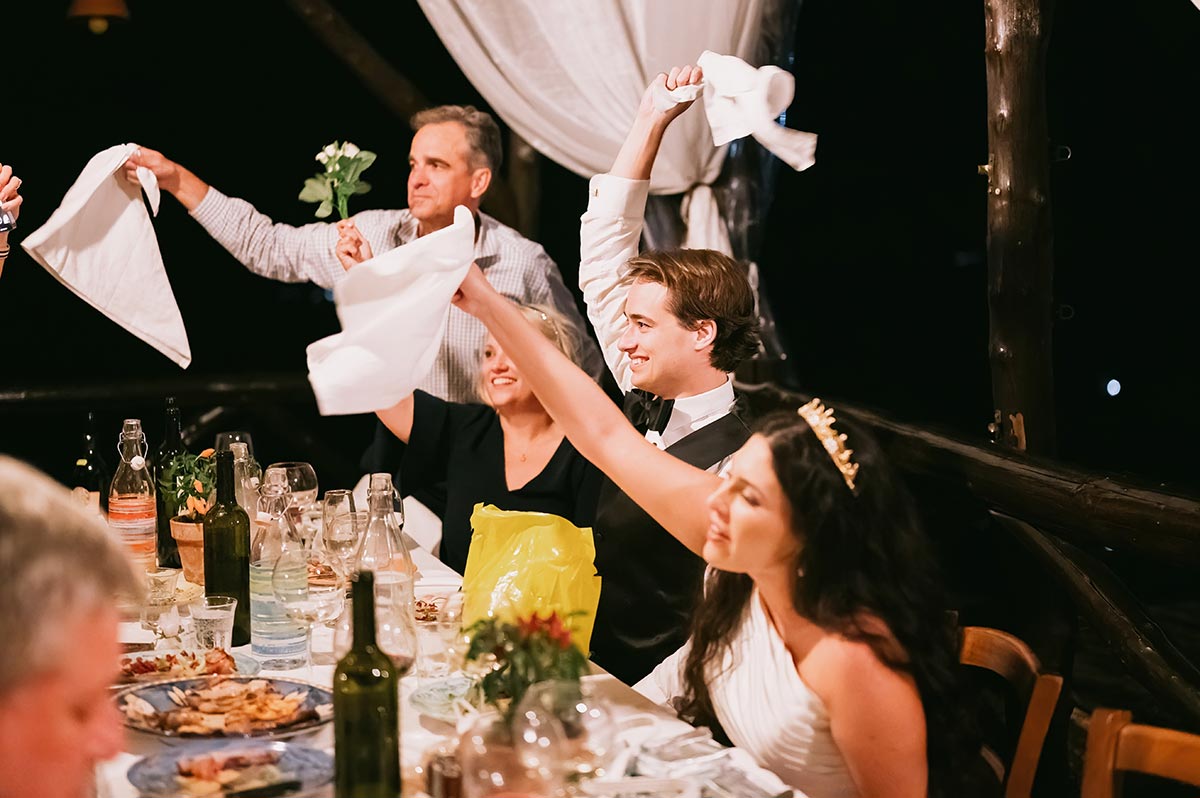
Ceremonies are essential to many cultures worldwide, and weddings are no exception. In Italy, in particular, many Italian wedding traditions – some truly ancient – are still respected today with a bit of superstition or simply for everyone’s enjoyment.
Some Italian wedding traditions are common to the whole peninsula, while others are typical of a particular region. Obviously, in this era, it is not mandatory to respect them, but it is still nice to remember them because they still have a meaning in Italian culture.
As the best wedding photographers in Italy, we wrote a list of the most common Italian marriage traditions that you can include in your Italian destination wedding.

Wedding dress color according to the Italian wedding traditions
As for the bride’s dress, there are Italian wedding traditions of all kinds, starting with the choice of color: the favorite seems to be white, while ivory heralds a turbulent life; blue indicates sincerity on the part of the bride; pink predicts economic loss; red is death wish; the yellow lack of esteem on the part of the bride; green shyness; black repentance.
Furthermore, the bride should not look in the mirror with her dress on the wedding day; if she wants to, she must remove a shoe, earring, or glove.
All guests must avoid white for their clothing, as it would be, traditionally, to prevent black, even if the latter color is used during evening receptions today.

Don’t spoil the wedding dress is another Italian wedding tradition
This superstition is undoubtedly one of the most famous from north to south and requires the groom and the guests not to see the bride’s dress before the wedding. This Italian marriage tradition was born in ancient times when families still arranged marriages.
They imposed this “rule” because couples often and willingly avoided seeing each other before the wedding to prevent them from changing their minds and pulling back.

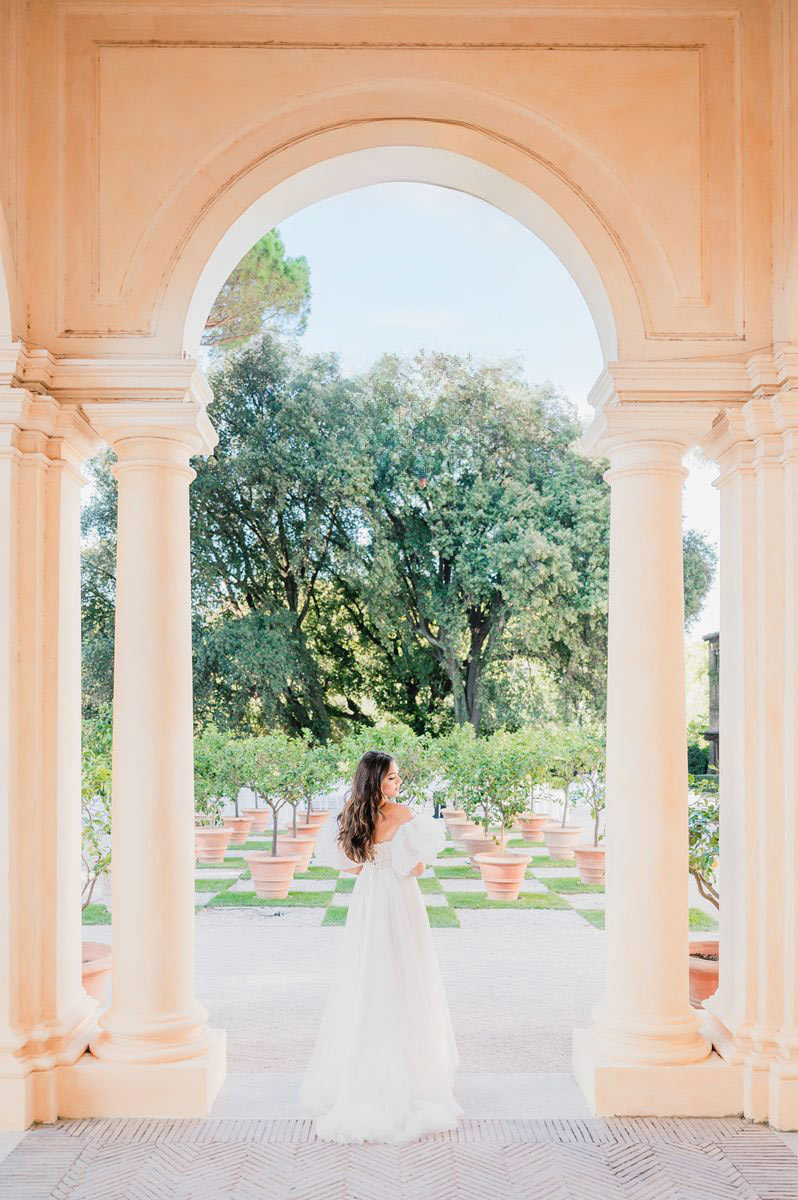
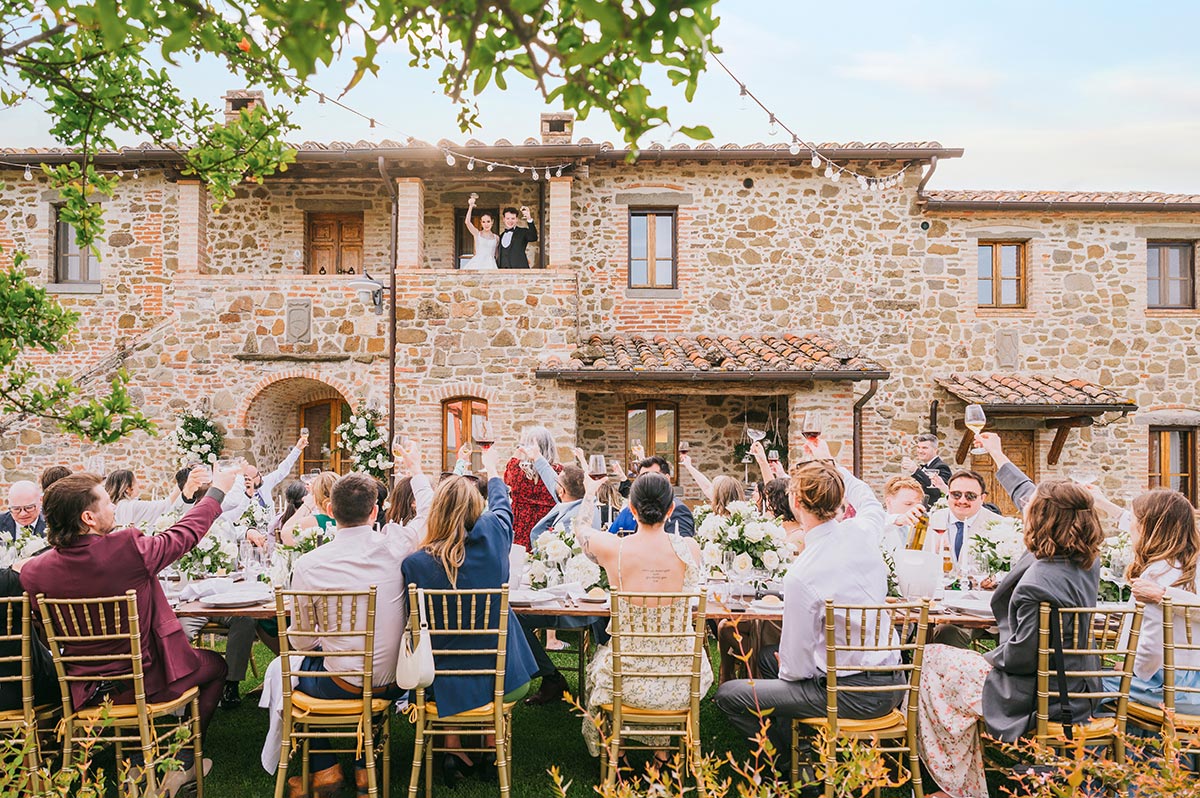




Italian wedding traditions: “Something old, Something new. Something borrowed, Something blue.”
Most Italian wedding traditions revolve around the bride’s dress, and almost all brides try to stick to them, even if skeptical. After all, as they say: it’s not true, but I believe it!
- SOMETHING OLD
It is the link between the past and the life the bride led up to that day. It tends to be Something that binds her to her family of origin. Often it is an object handed down from generation to generation, such as a jewel or a vintage car; in rare cases, it is the family wedding dress or, why not, a piece of fabric of the latter sewn to the inside of the new skirt.



- SOMETHING NEW
It is a wish for a new life as a couple for the future. Sometimes the dress represents the unknown, but if the bride wears a family dress, the unknown can be represented by the accessories or a new lipstick. You must return the loaned item.
- SOMETHING LOAN
A person very dear to her must lend Something to the bride because it represents the bond, the friendship between the person who lends the object and the future bride, in this delicate moment of transition from the new and the old life. You must return the loaned item.
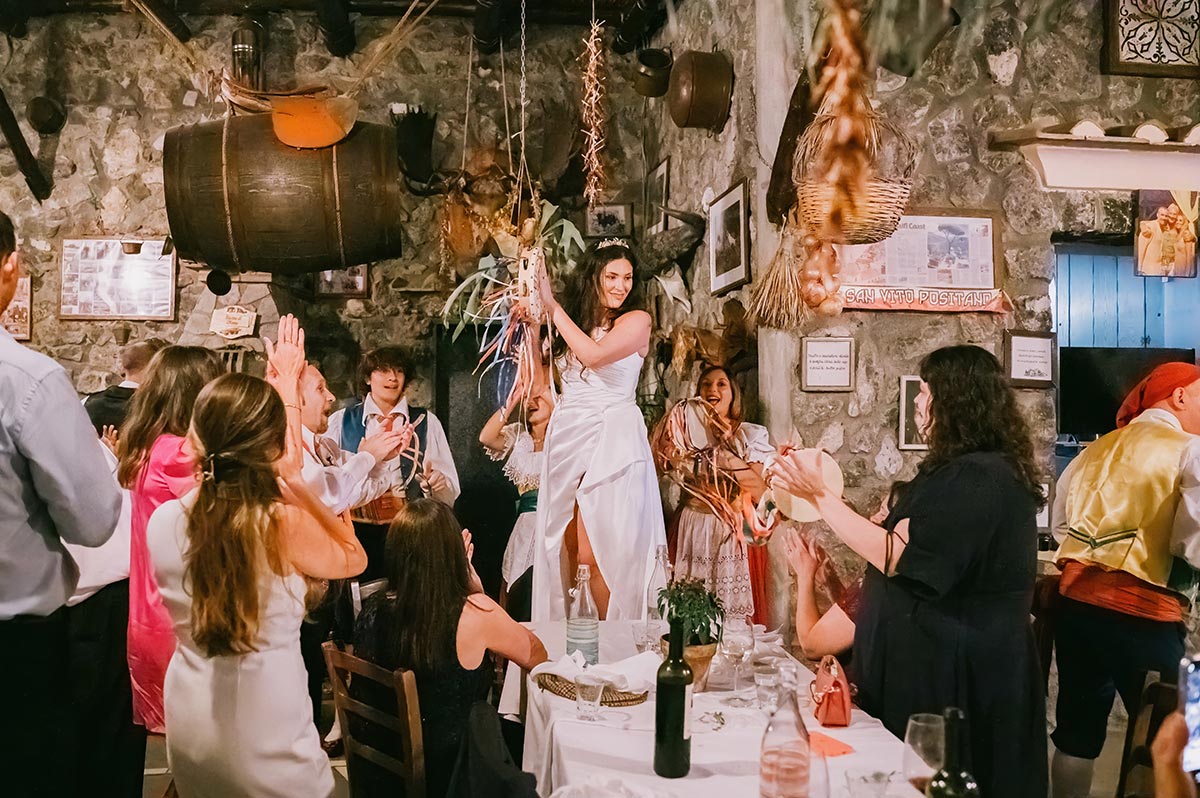
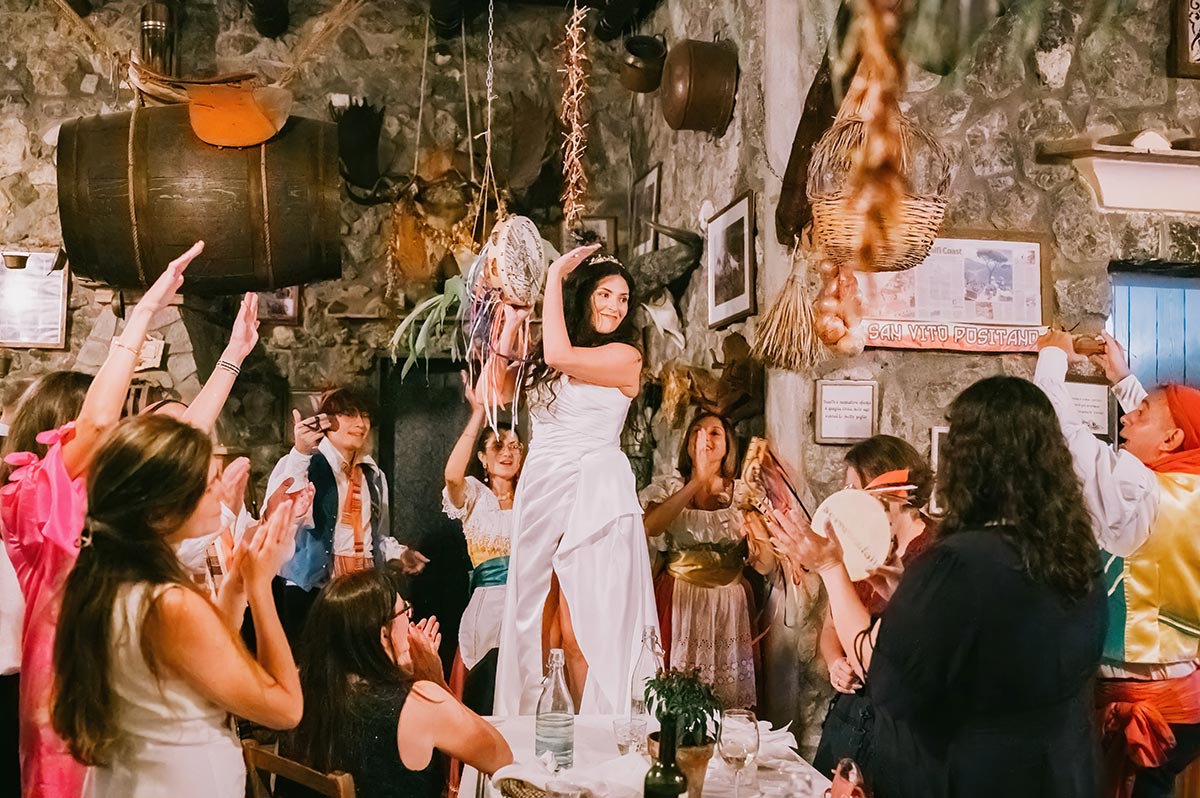

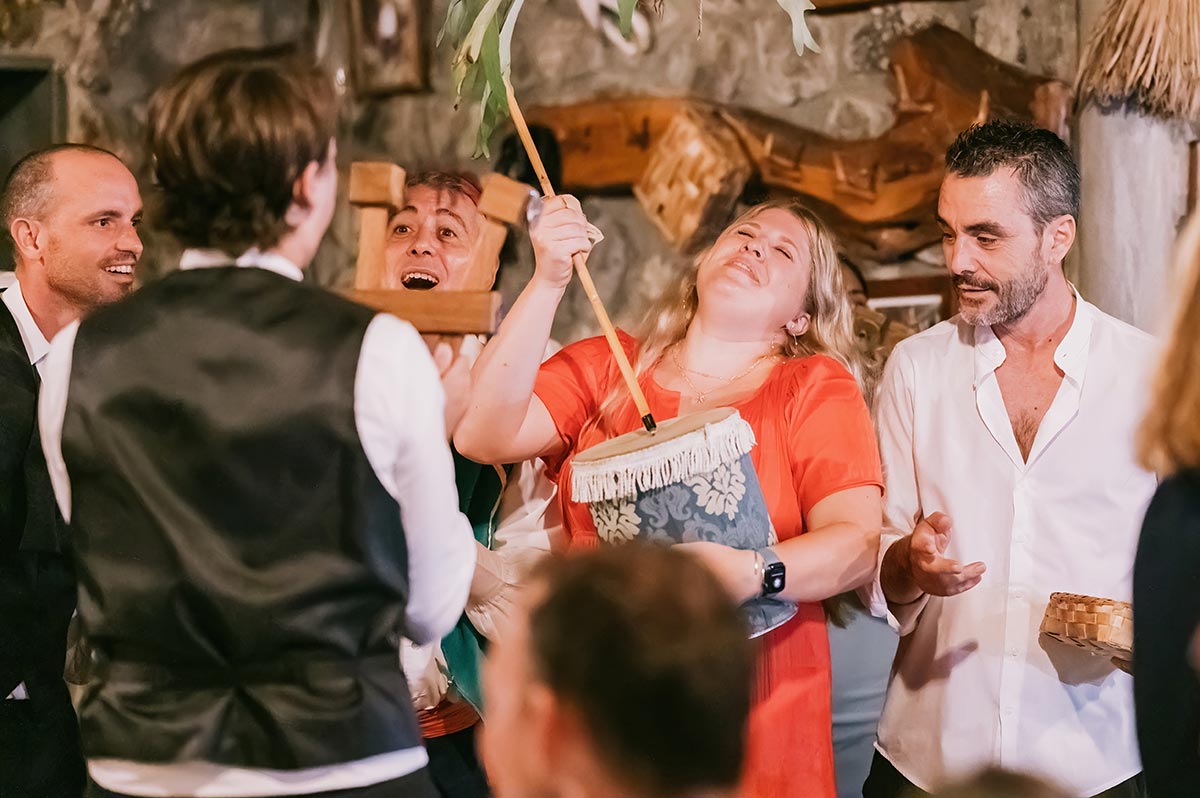

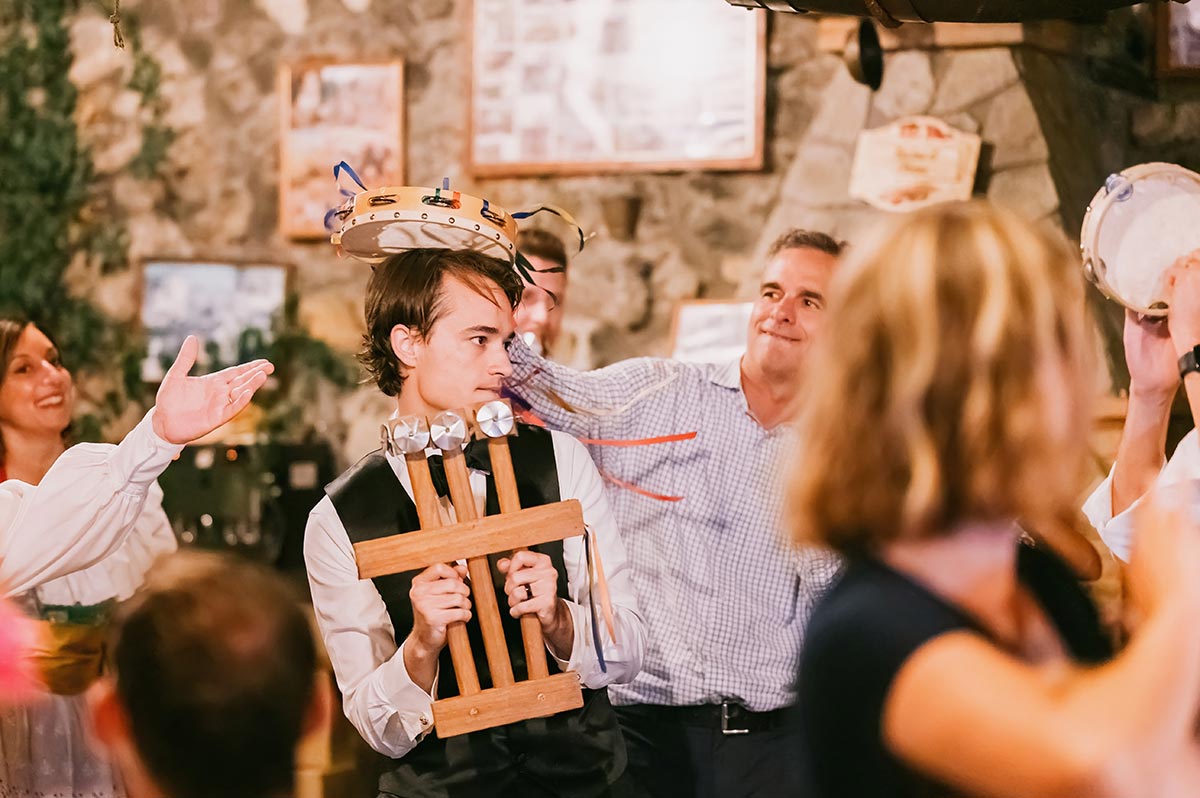
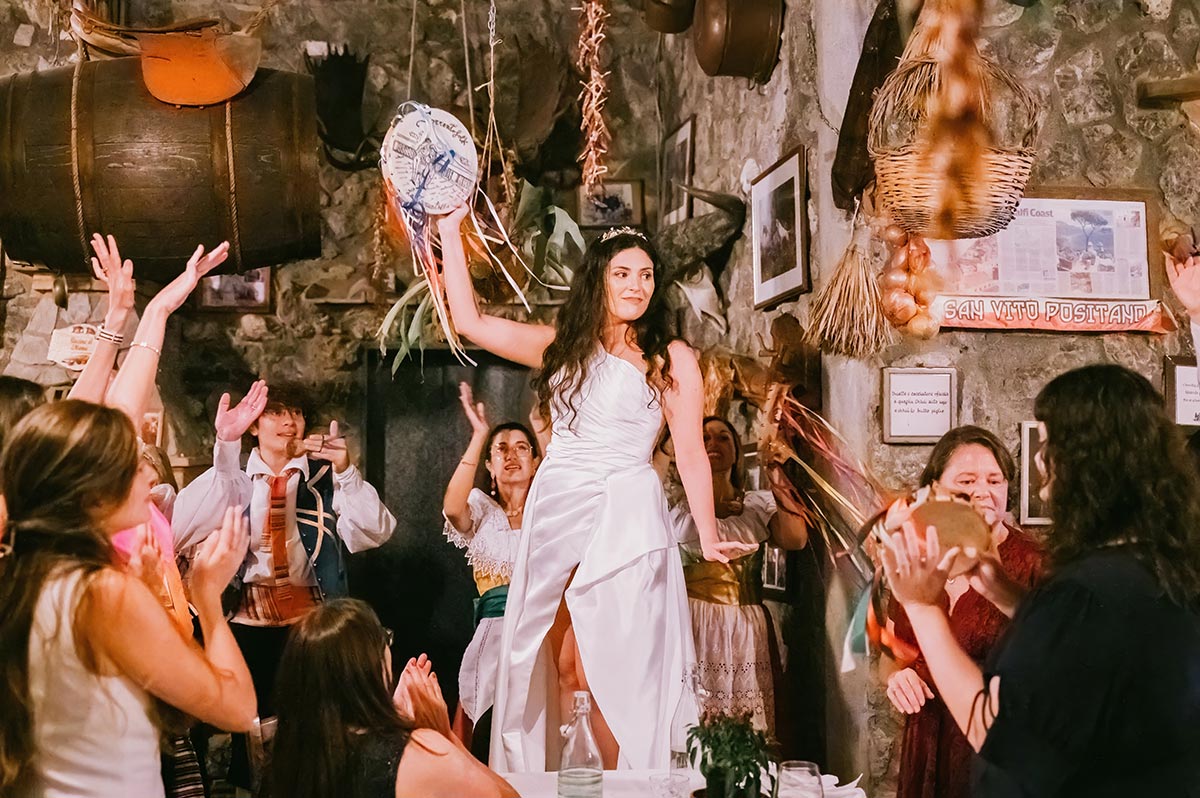



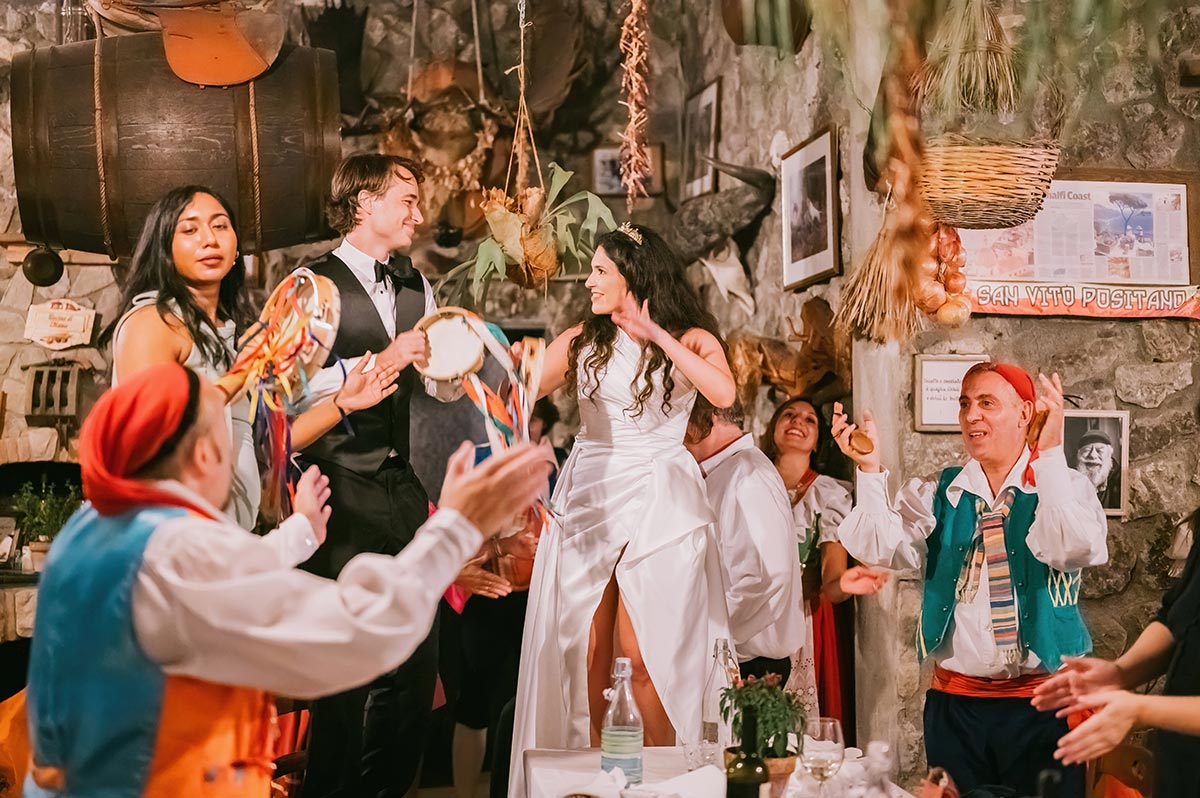
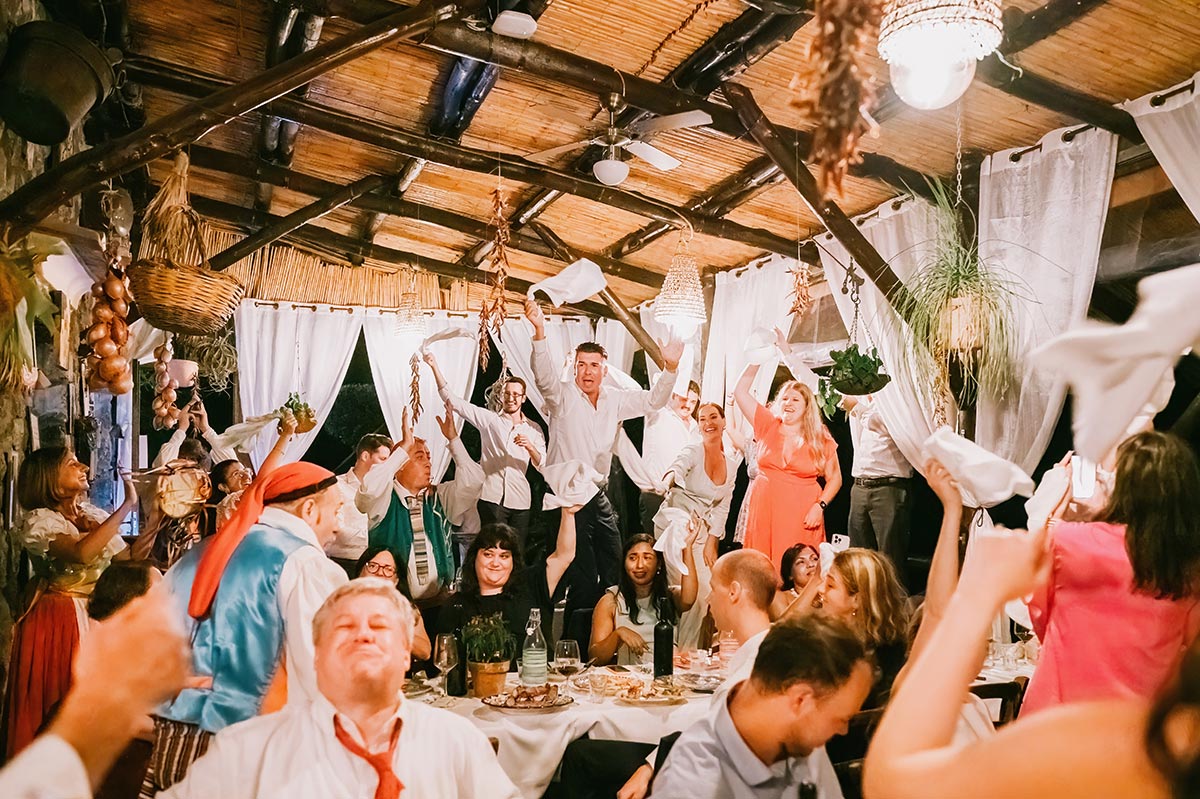
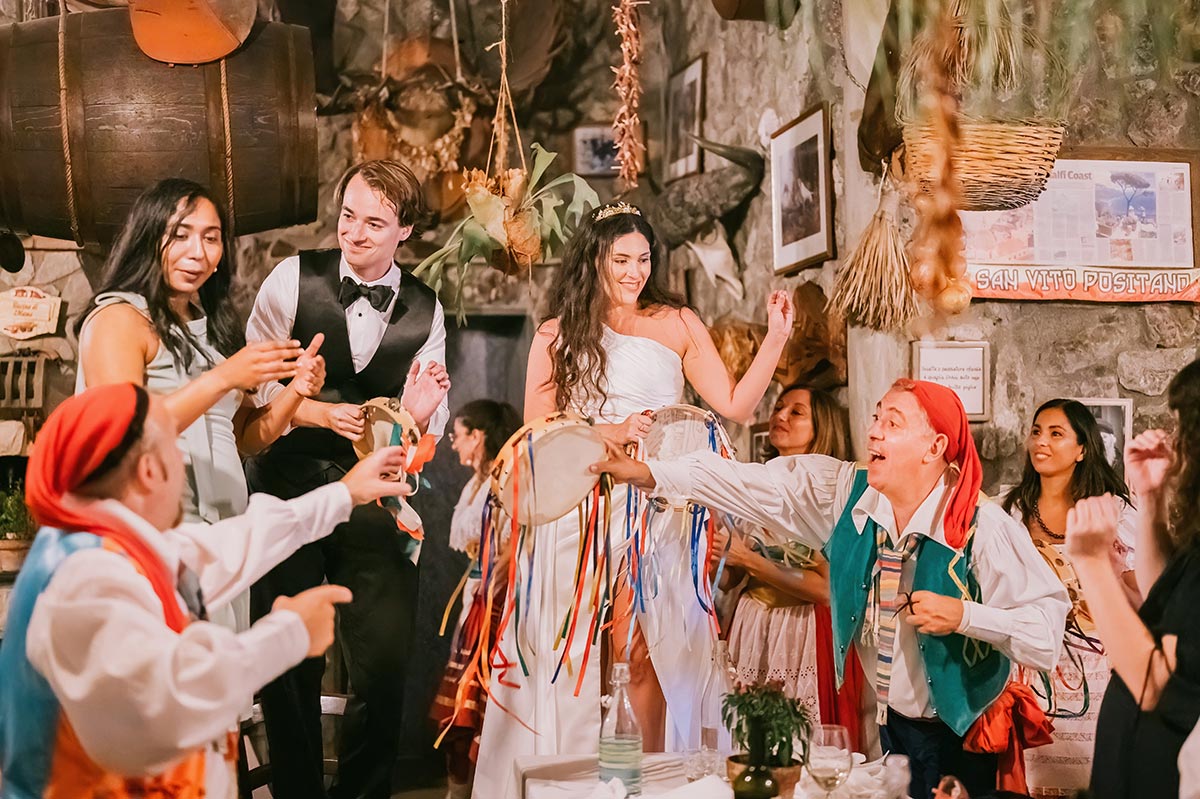

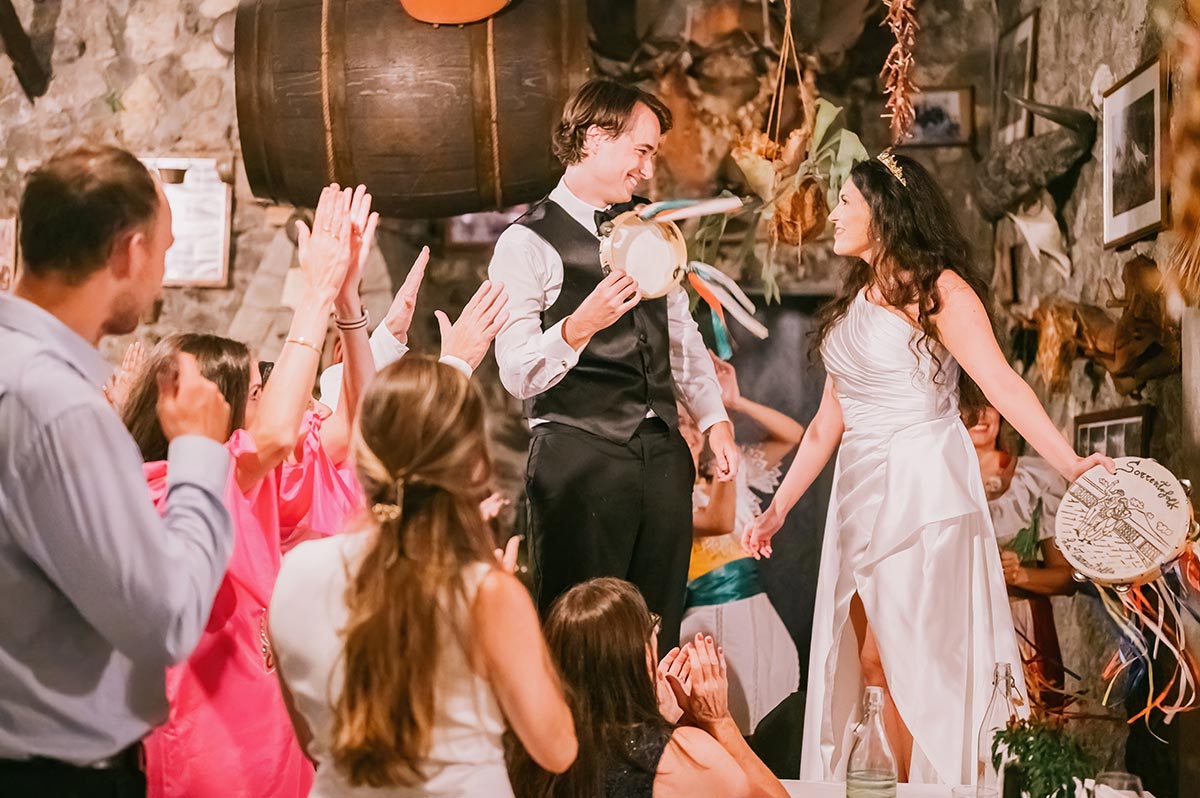


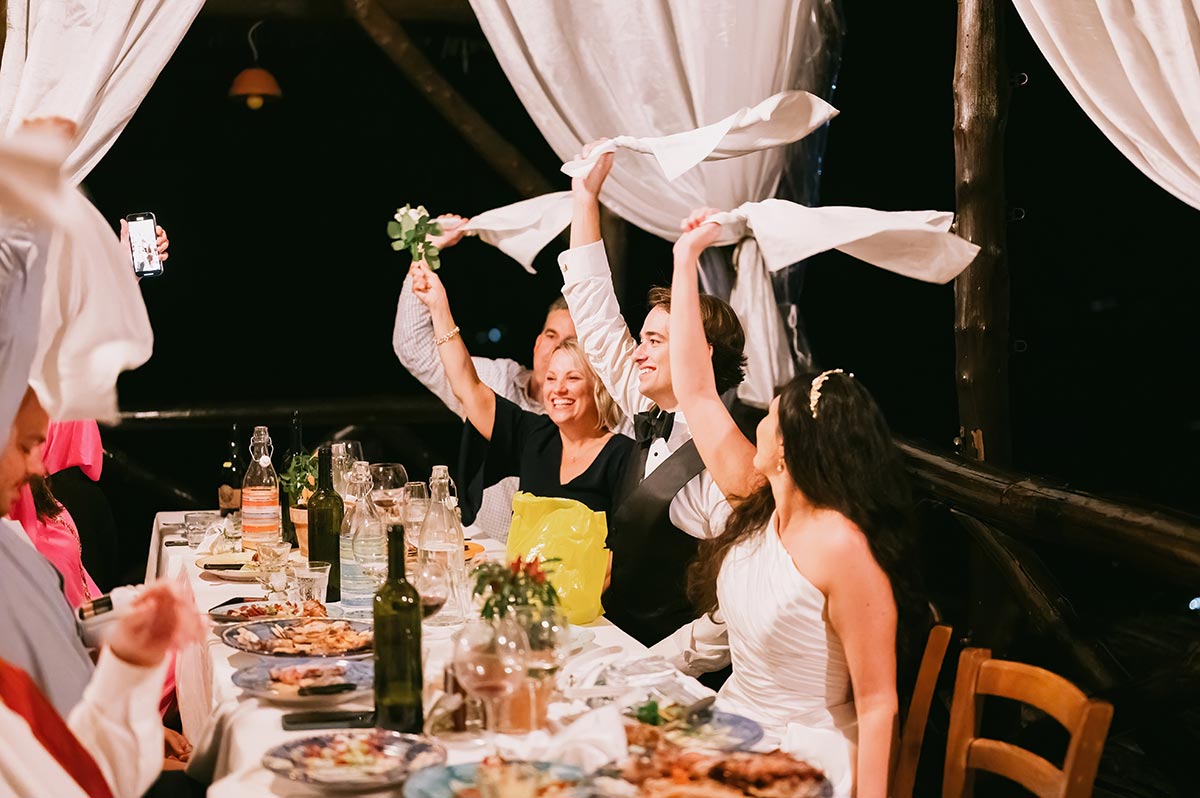
- SOMETHING BLUE
Blue is the color of loyalty, peace, and fidelity. In ancient times, brides wore blue as it symbolized commitment, peace, and dedication, and they wore a blue sash around their waist. The color blue is there nowadays, but you can’t see it! Nowadays, brides often wear either a blue garter or apply a small bow inside the dress.
H2. The rites of bouquet and veil in the Italian marriage traditions
Italian wedding traditions reserve considerable space for the bouquet. But, according to some, the husband must give this indispensable element to the bride, delivering it on the morning of the wedding as the last gift from the boyfriend.

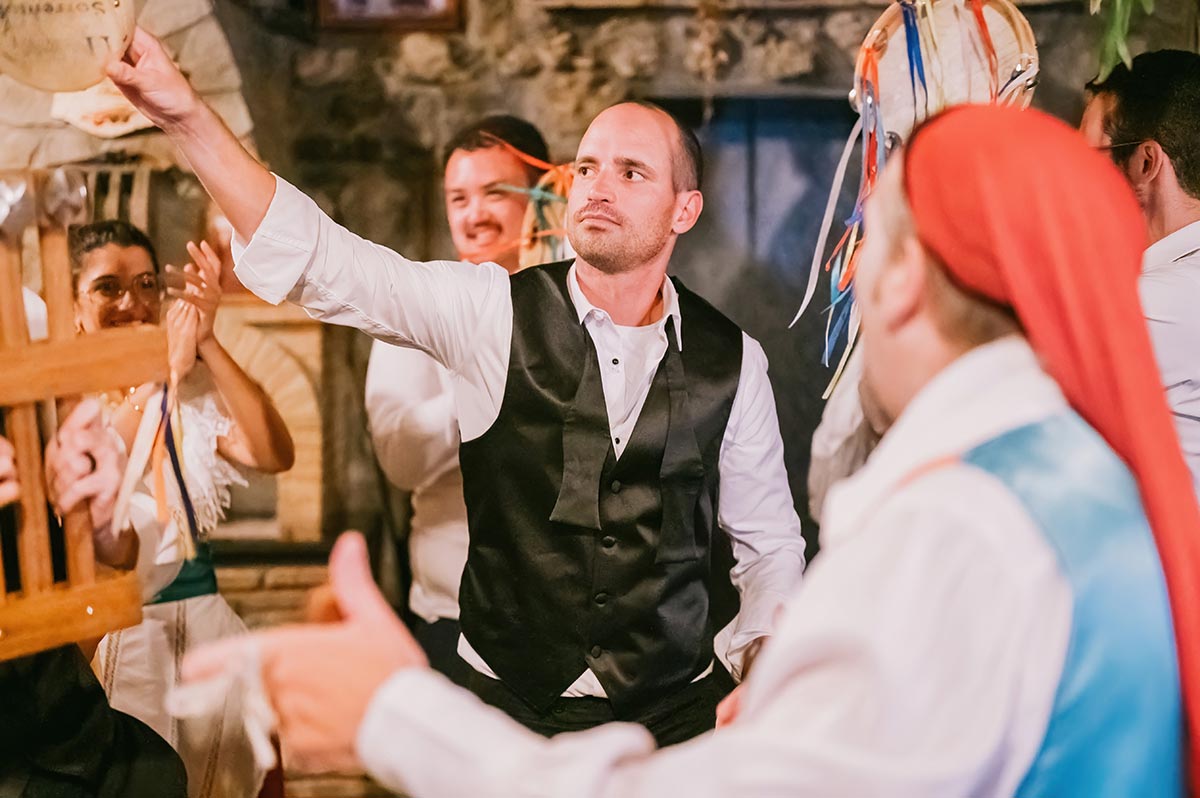


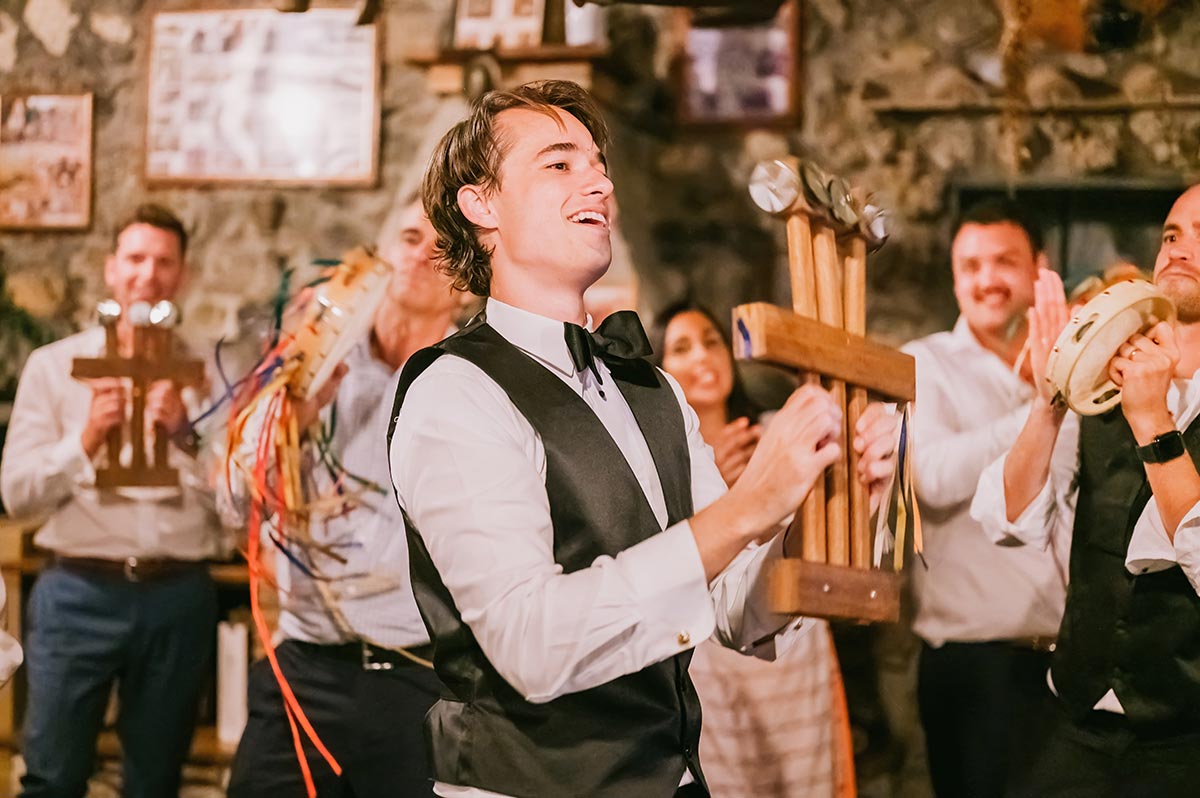
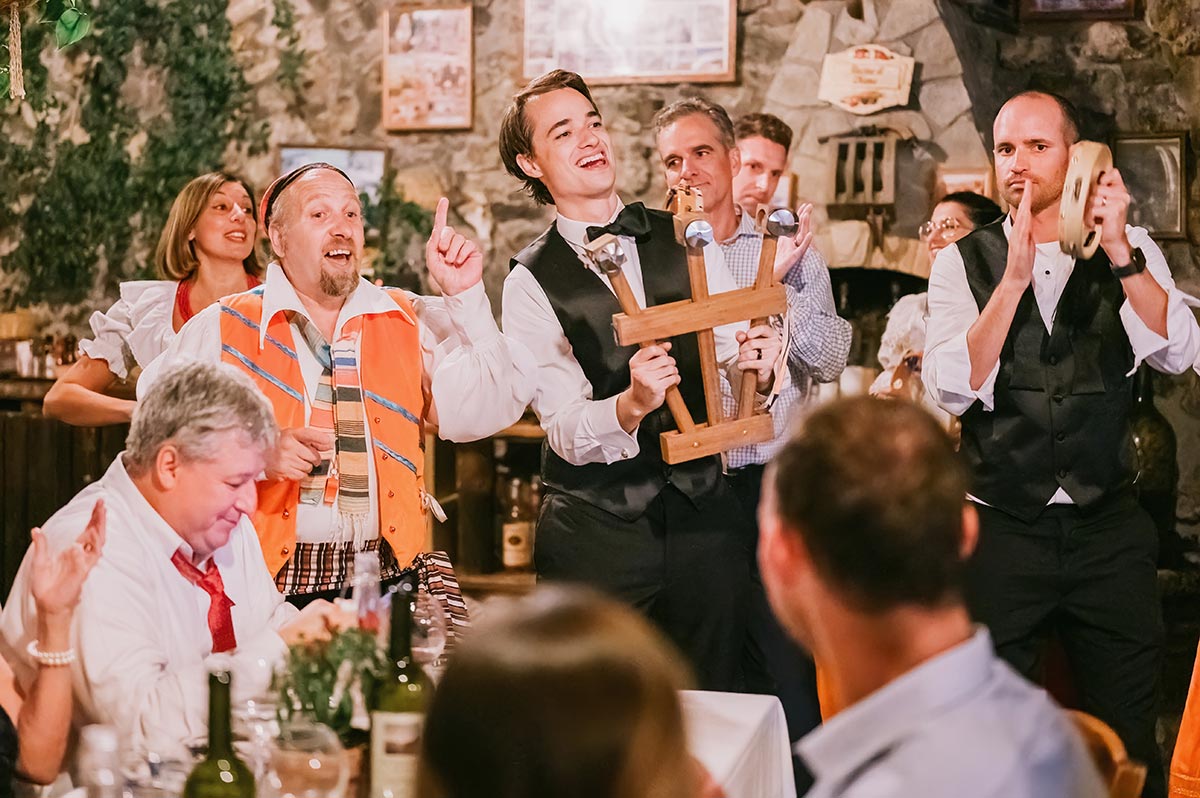
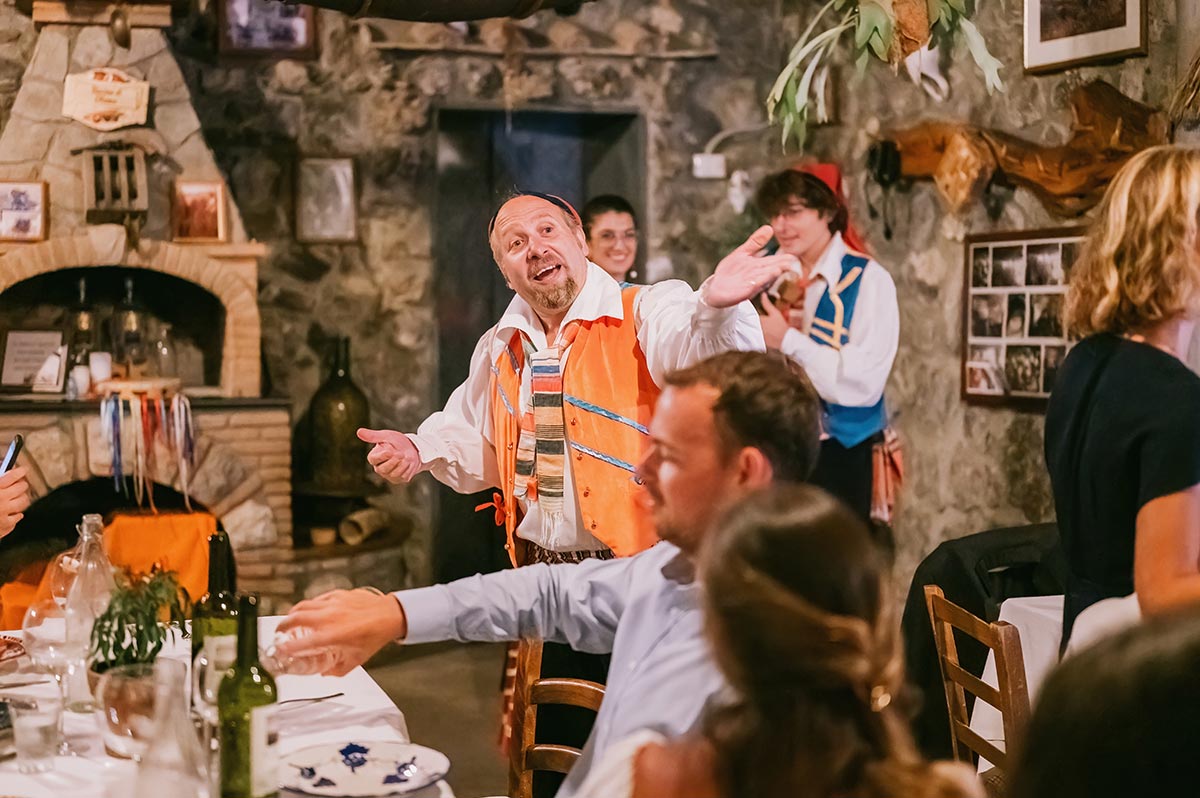
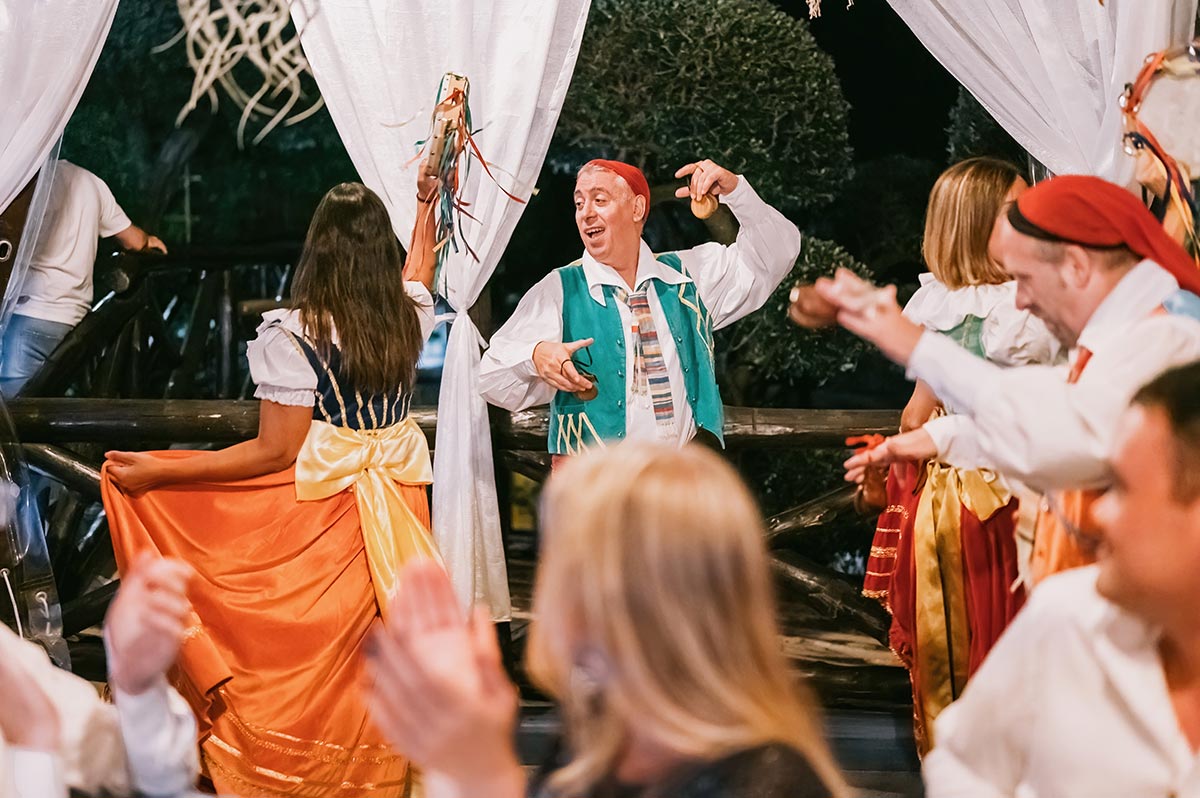
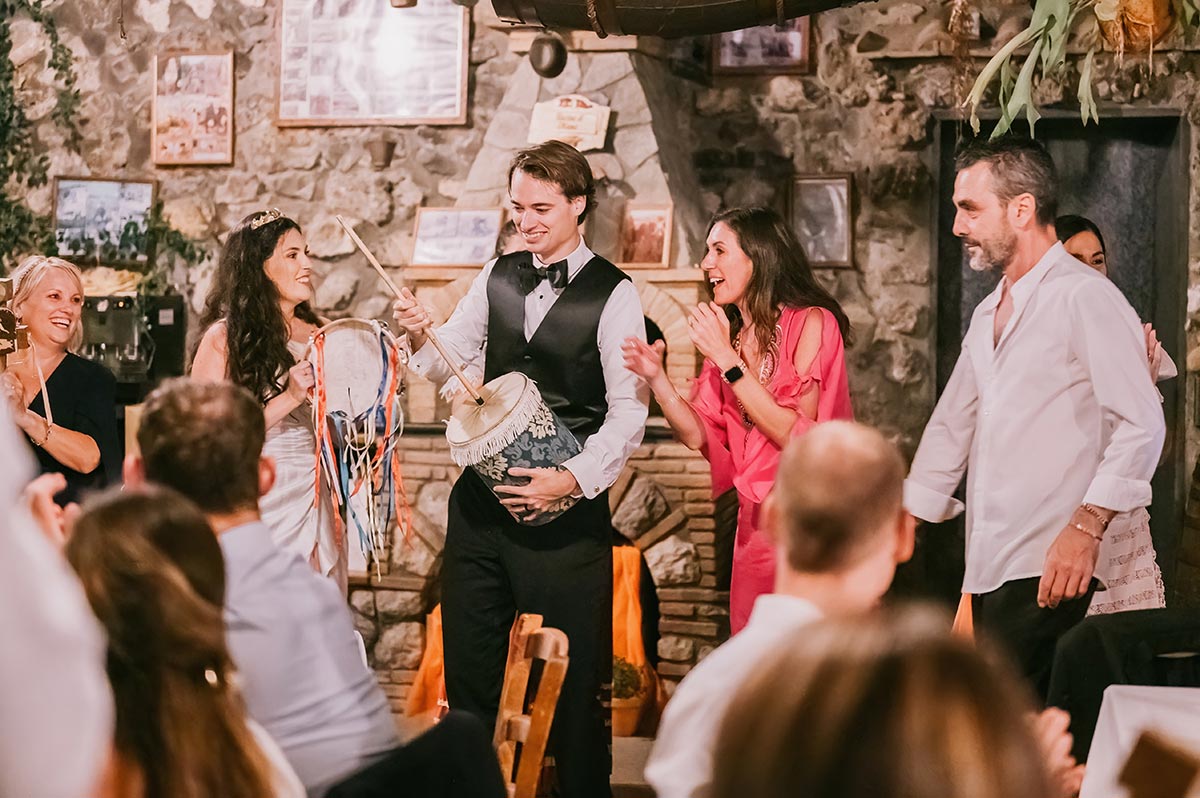



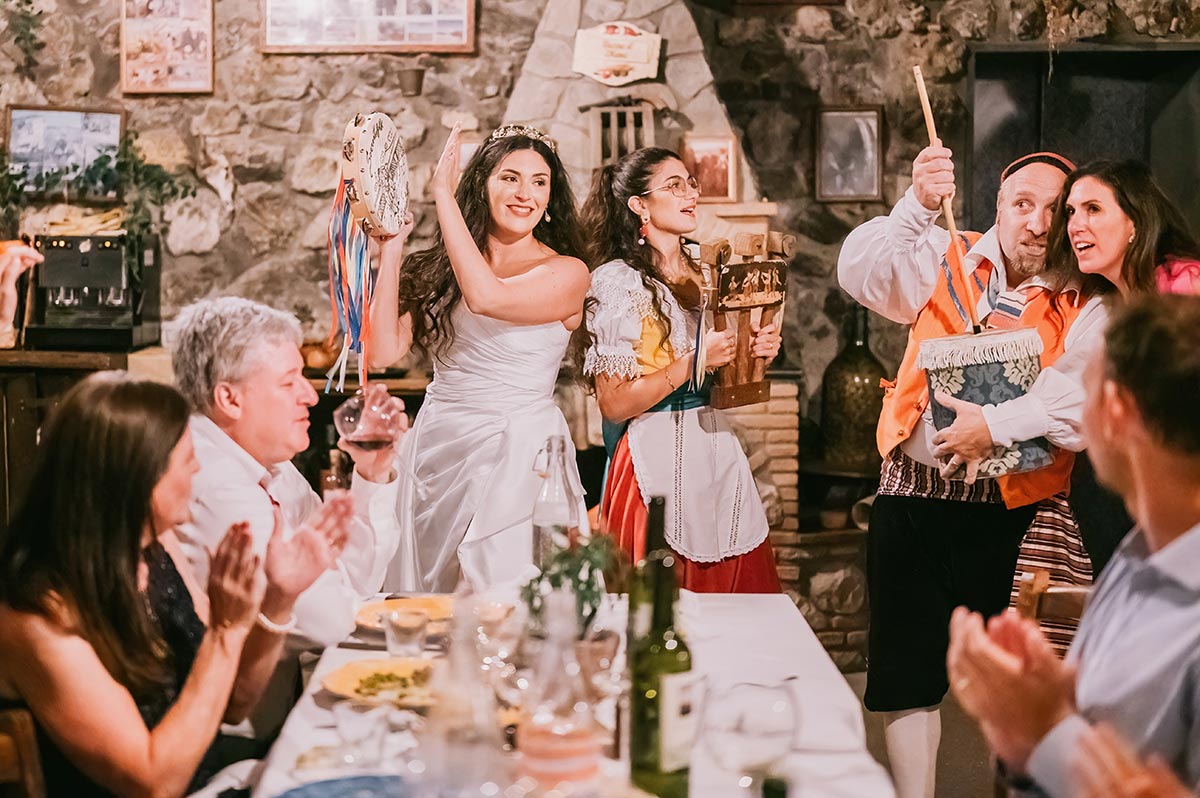




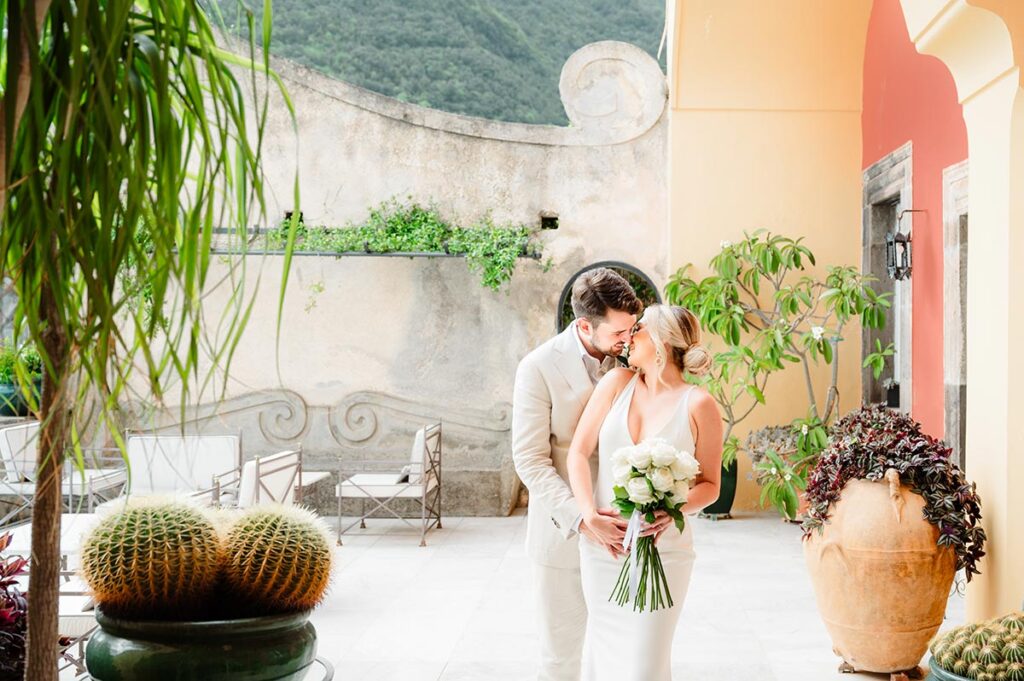
In the South of Italy, the mother-in-law gives the bouquet to the bride, delivering it directly on the wedding day. The mother-in-law appears several times in the traditional Italian wedding: she must also pin the veil given to her on the head of the bride.
At the end of the ceremony, the bouquet is thrown toward a group of unmarried women, and the girl who catches it will be the next to get married!
A prevalent Italian wedding ceremony tradition: throwing rice
A crucial Italian wedding ceremony tradition is the throwing of rice, a ritual we inherited from the ancient Romans and represents a wish for prosperity and fruitful life. In ancient Rome, rice was readily available and cost less than wheat. Today, however, more and more municipalities prohibit throwing rice, which harms the environment and animals. In its place are confetti, petals, balloons, or soap bubbles.





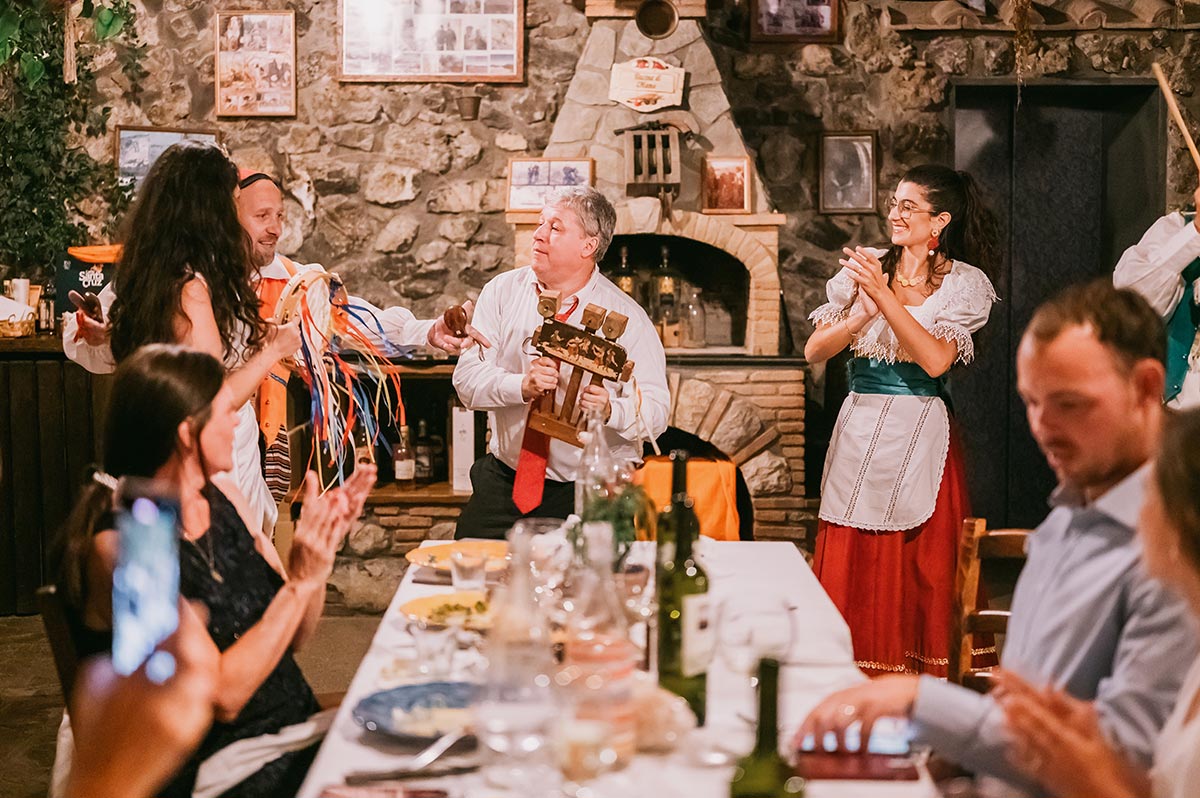
Even though the horn has its roots in antiquity, its purpose, like that of the bridesmaids, was to ward off the anger of evil spirits. Nowadays, it is undoubtedly a goliardic event to celebrate a wedding, an unmistakable sound even for those who hear it along the streets.
Italian wedding traditions: the cut of the tie and the toss of the wedding garter
Even the groom has his Italian wedding tradition in terms of looks. In many areas of Italy, tie-cutting is still a tradition. The groom’s friends are offered the pieces by organizing an auction where they have to pay to win one.
If you like, it is a somewhat bizarre tradition (given how much a ceremony tie costs!), But it is still cheerful and fun to mention.

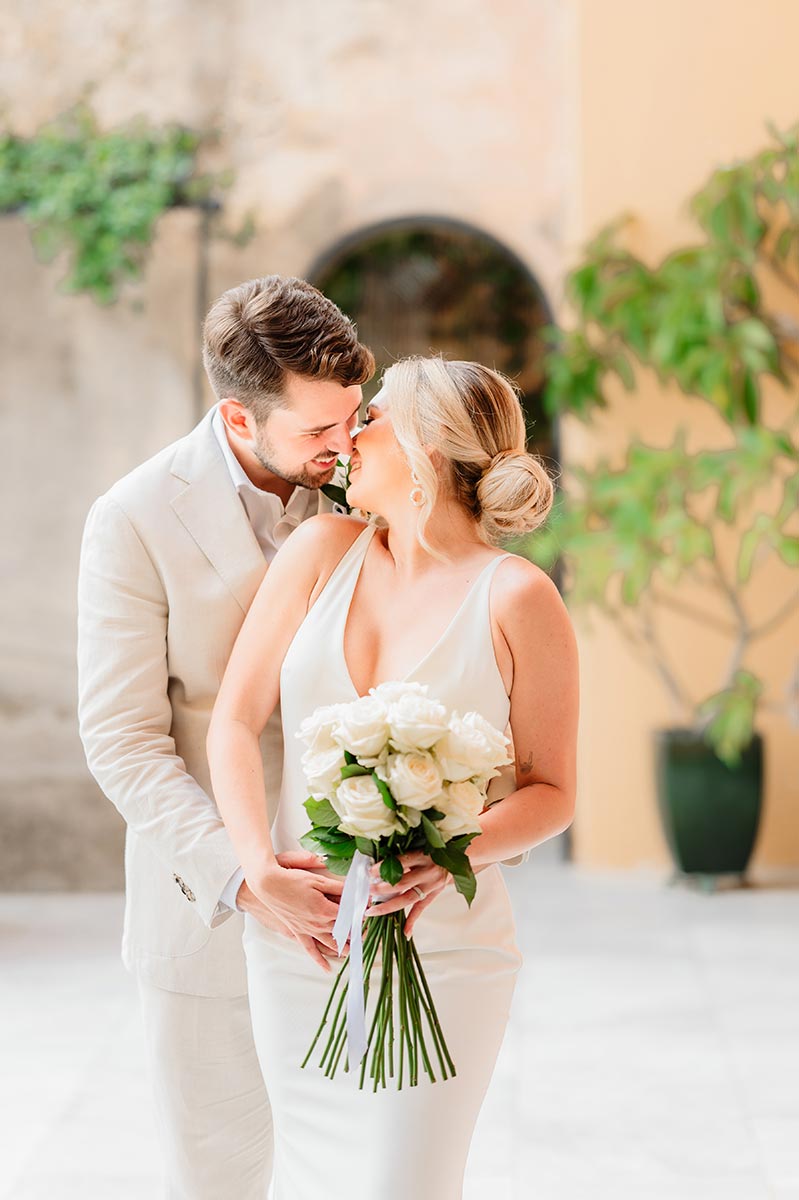

The toss of the wedding garter evokes ancient Italian wedding customs where relatives entered the bride and groom’s room to check, through the presence of the clothes, that the marriage had been consummated.
Today the meaning of the garter is more goliardic: the groom disappears under the bride’s clothes, takes it off delicately, and throws it to celibate men: it will be destiny to choose the next groom.
Italian wedding traditions related to wedding rings
You wear the wedding ring on the left ring finger because the ancient Egyptians believed they had identified a vein in which feelings ran, which started from the left ring finger, reached the heart, and the ring finger somehow meant to secure loyalty.


In some regions of Italy, faith is called “true,” a Venetian-Slavic term that means fidelity; inside the wedding rings, it is customary to engrave the wedding date and the bride’s name in his and the name of the groom in her.
Italian marriage traditions want the groom to pay and keep them until the moment of the exchange, but the witnesses often give them away, and the pageboys will take them to the altar for the blessing.
Southern Italian wedding traditions: the serenade
Here is a typical southern Italian wedding tradition. It foresees that on the evening before the wedding, the groom will make a romantic serenade under his future wife’s balcony, possibly accompanied by a guitar.
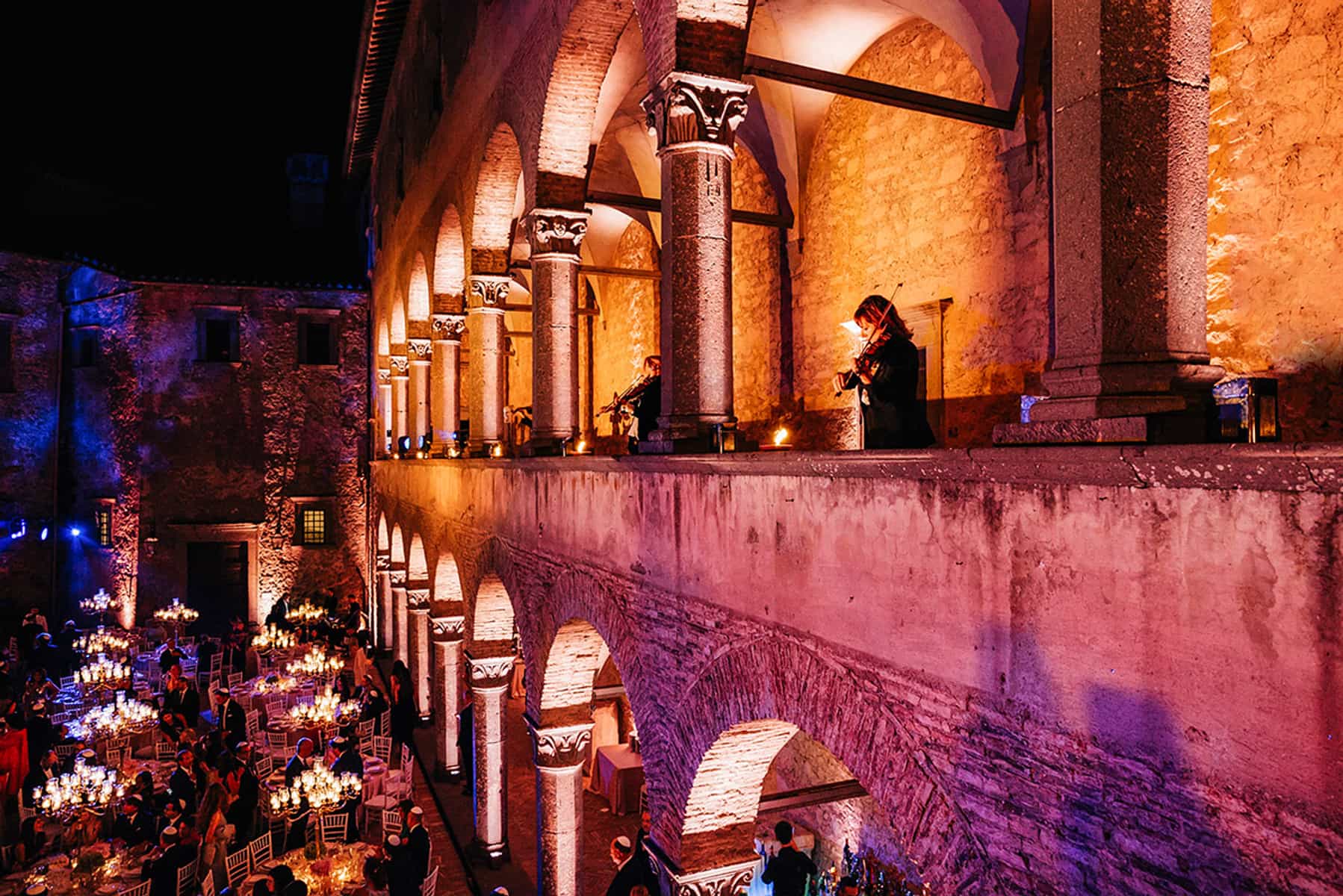
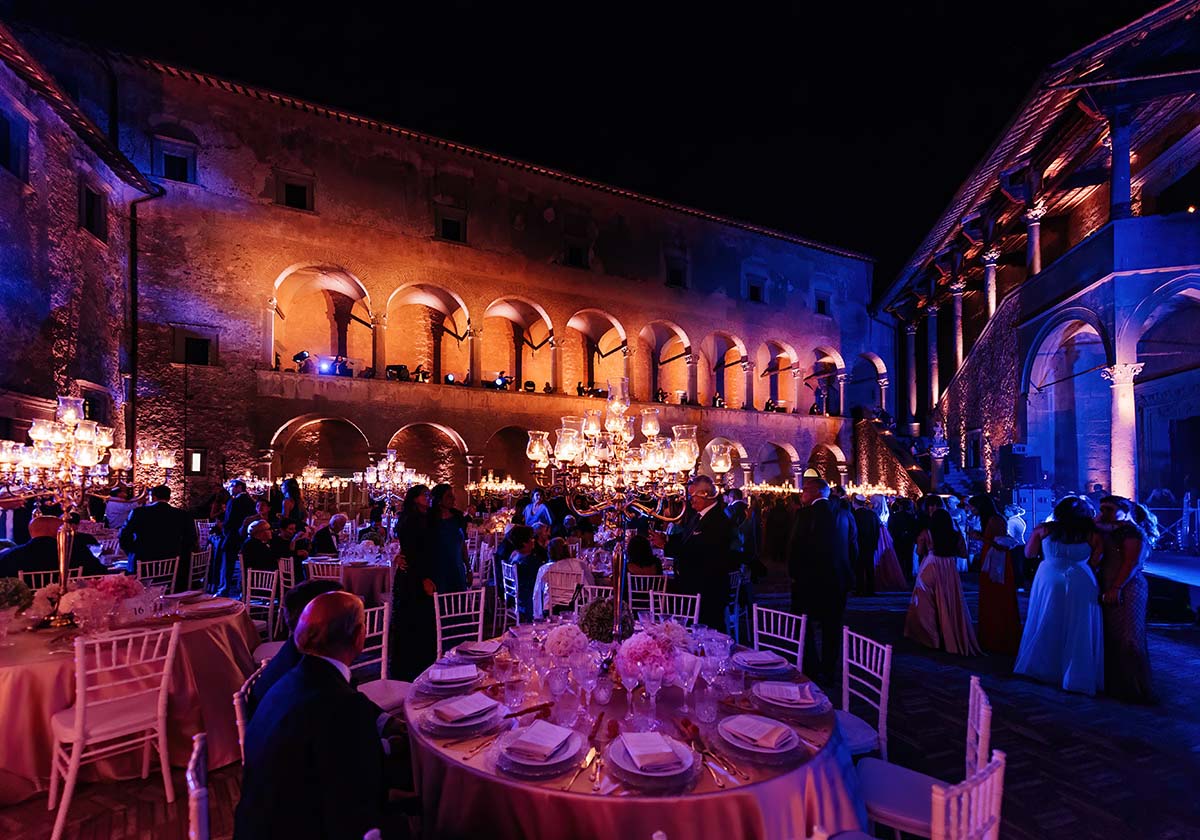
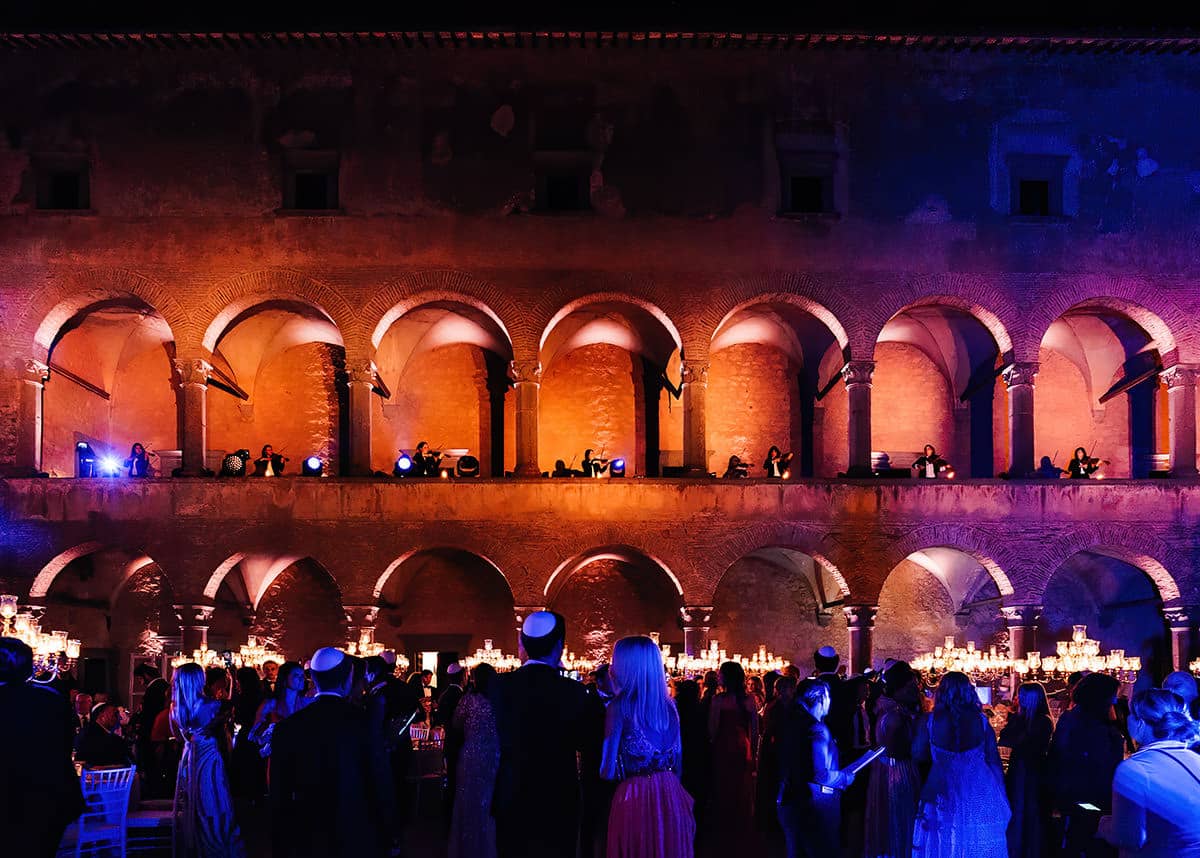

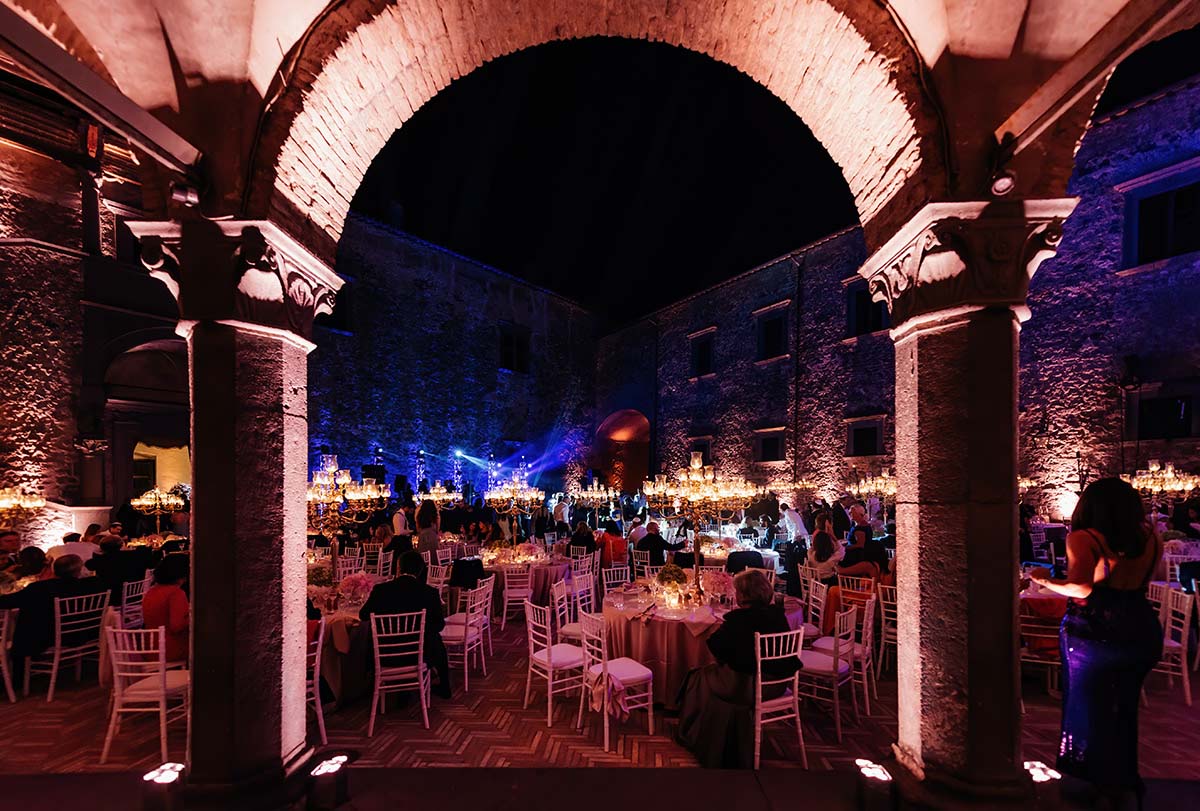
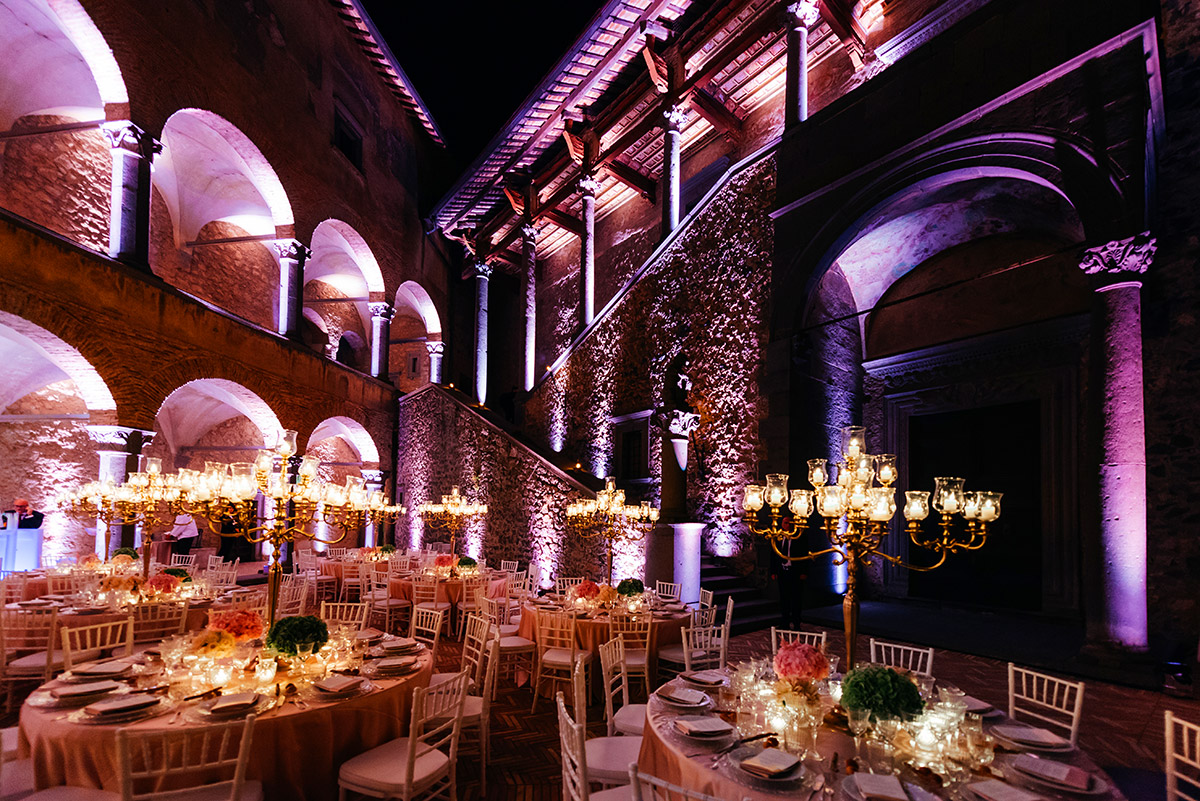

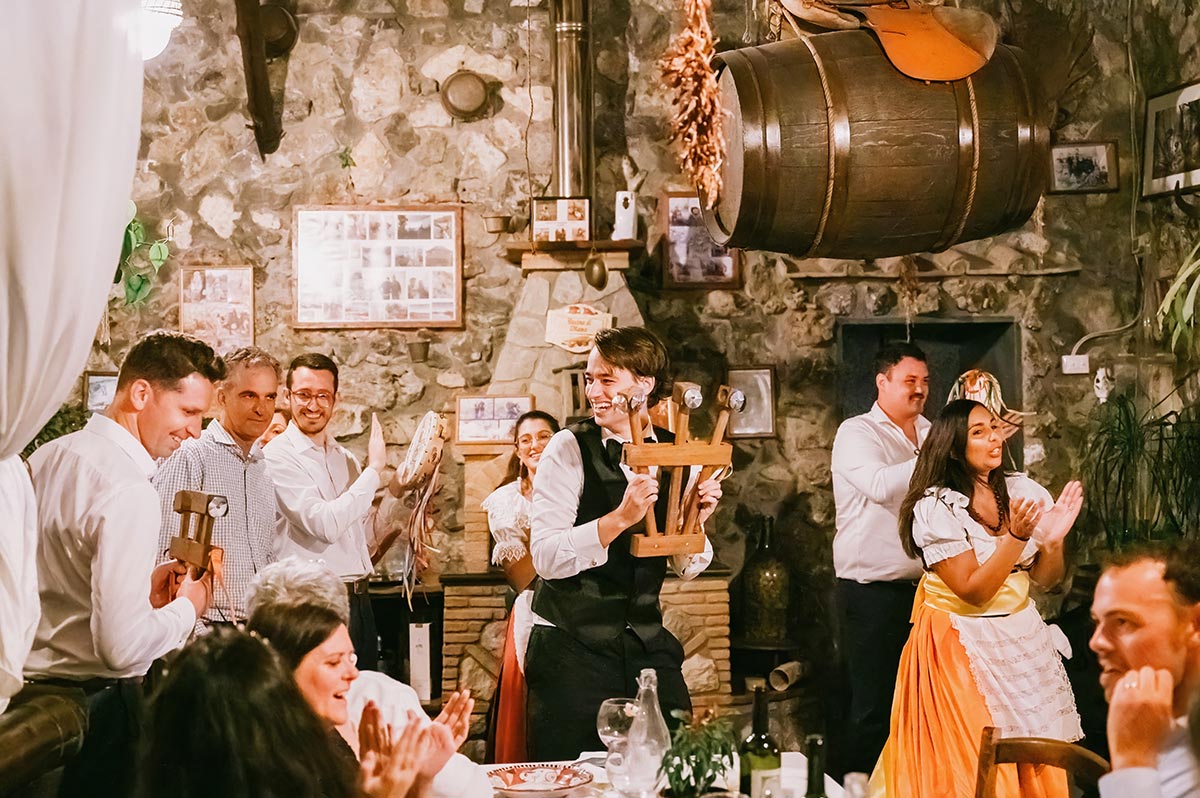
The entire neighborhood usually participates, turning it into a real neighborhood party where everyone dances and sings. It is a decidedly unsuitable tradition for shy and reserved brides (and for spouses who are not very inclined to sing!), But this tradition is for you if you are super romantic and have no problem appearing in public!
Ancient proverbs in the Southern Italian wedding traditions
“Neither on Venus (Friday) nor Mars (Tuesday), get married, leave for a journey, nor start any artistic activities.”
This old proverb is taken literally, especially in the southern Italian wedding traditions. Traditionally, leaving or celebrating an Italian wedding ceremony is not recommended on Tuesdays and Fridays because you risk not getting things done. However, many couples have decided to marry on a Friday recently.
























Italian wedding customs related to confetti
Everyone knows the “confetti,” and they are the symbol par excellence of the wish of happiness and prosperity given to the new couple at every romantic Italian wedding.
But perhaps you do not know that as part of Italian wedding customs in the past, sugared almonds were thrown at the bride and groom as a good omen. But, of course, they did not throw traditional sugared almonds, but a softer and lighter version. The heart of the confetti was not the almond, but a tiny coriander seed: hence the term confetti (which, in English, however, is precisely called confetti!)

Italian wedding customs: a small banquet full of confetti
The confetti is also on the classic table, covered with a lovely tablecloth. An essential and precious table is often set up at the bride’s home before the ceremony. It is an intimate moment that brings together all the guests of their respective families before the Italian wedding.
This small banquet includes a tasty aperitif with savory snacks, coffee, and some sweets, which varies according to the space available and the time chosen to celebrate the Italian wedding ceremony.

The Bomboniere (wedding favors) as Italian wedding traditions gifts
Giving Bomboniere (wedding favors) to an Italian wedding ceremony is extremely popular in Italy. However, this may not be an apparent tradition for foreign couples who want to get married in Italy.
The wedding favor, as we understand it today, was born in 1896 on the occasion of the exclusive Italian wedding of the prince of Naples and future king of Italy, Vittorio Emanuele, with Elena of Montenegro. For the special occasion, the guests brought wedding favors, bags, or boxes containing confetti (from the French bonbon, meaning gluttony) as Italian wedding tradition gifts to the couple as a symbol of prosperity and fruitfulness.

In Italian wedding traditions, confetti is a must-have and follows particular rules: they must always be odd in number, usually 5, and symbolize health, wealth, happiness, long life, fertility, and spirituality.
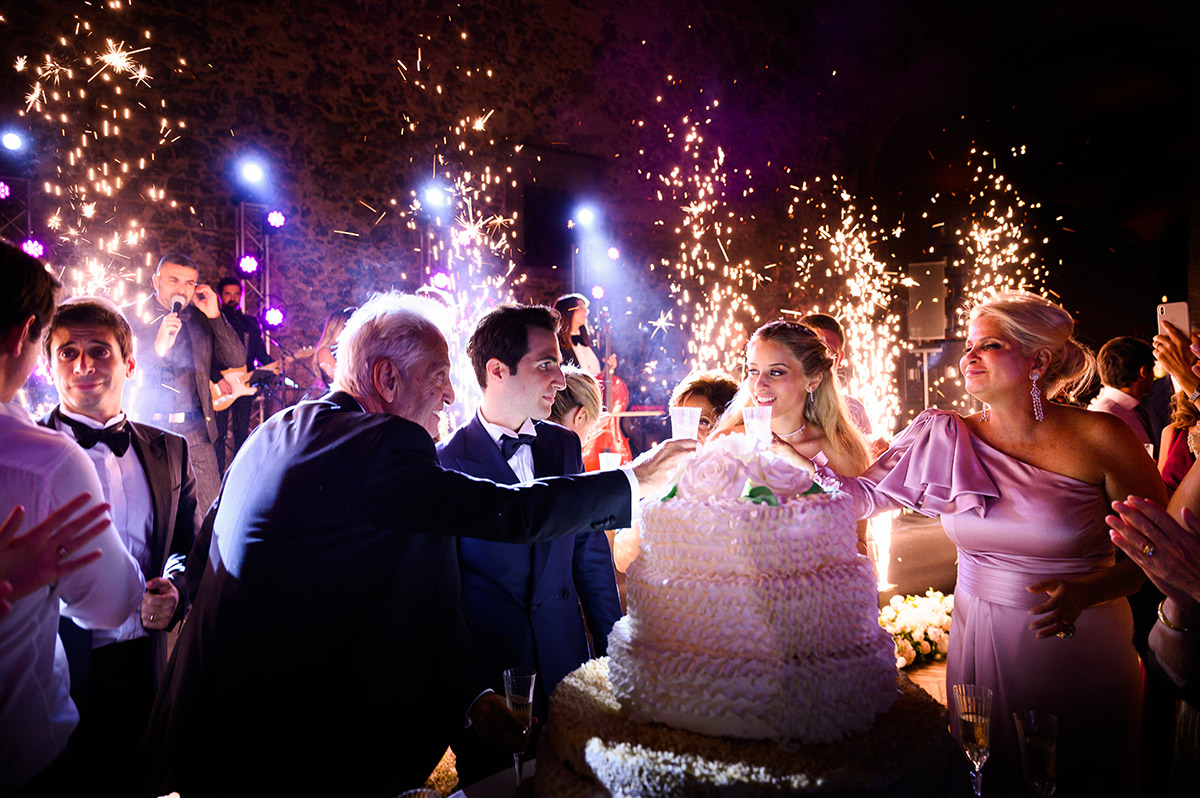
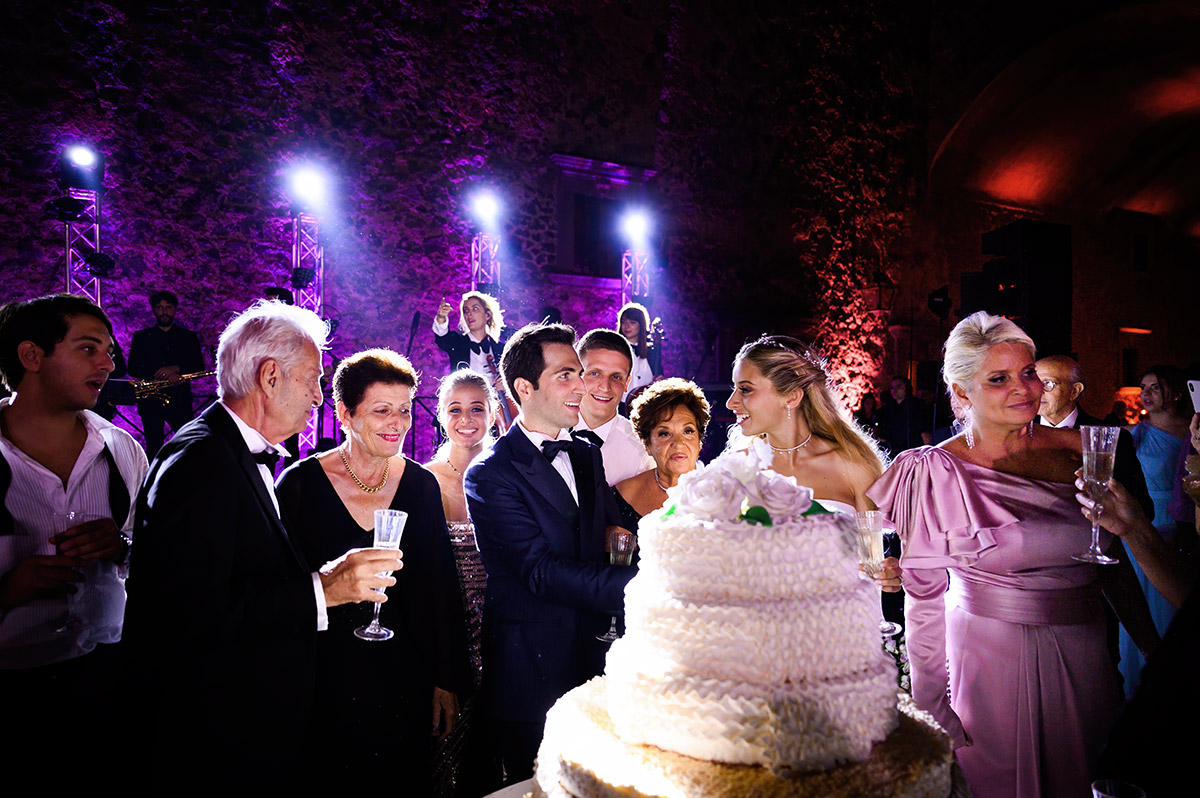
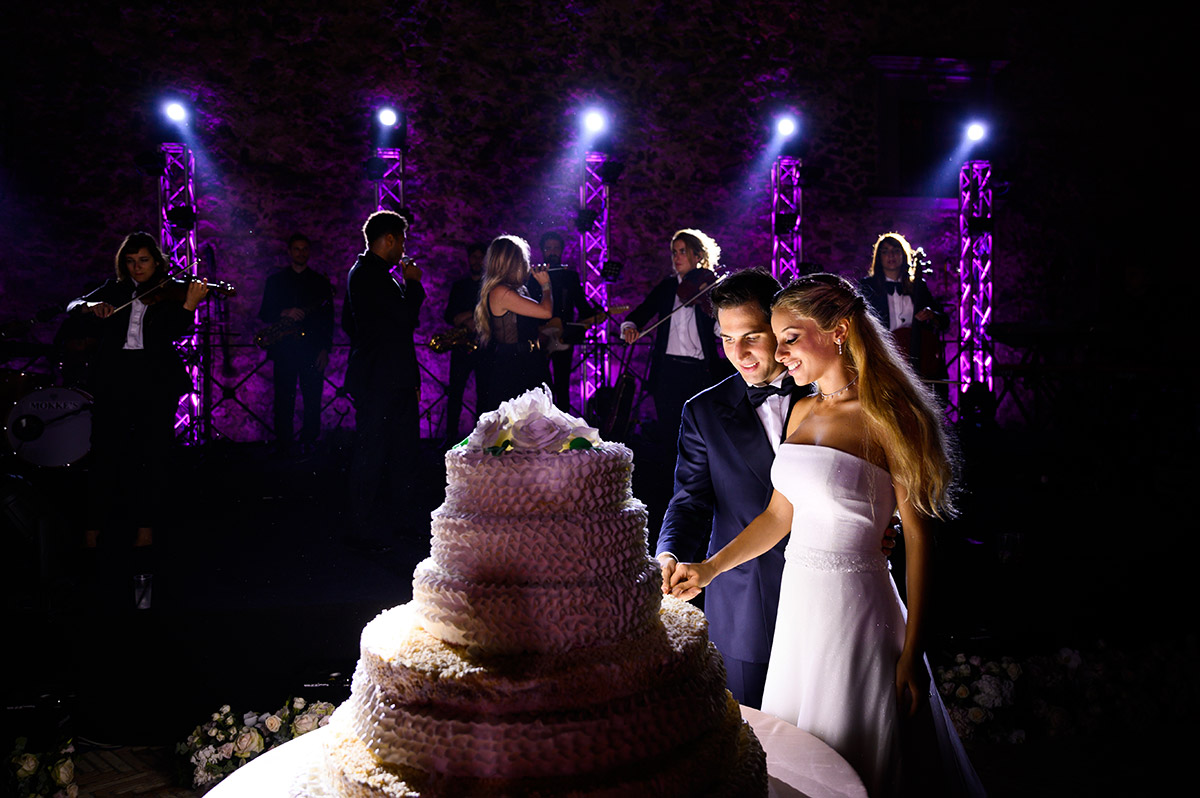
After cutting the cake, an ancient Italian wedding custom called for the groom to walk among the guests with a tray of sugared almonds: the bride distributed them with a silver spoon.
The meaning of bridesmaids in the Italian wedding ceremony traditions
Some guests will have a critical and more specific task. For example, a traditional Italian wedding requires the presence of one or more bridesmaids who will accompany and morally support the bride during the ceremony, often also in the preparations.
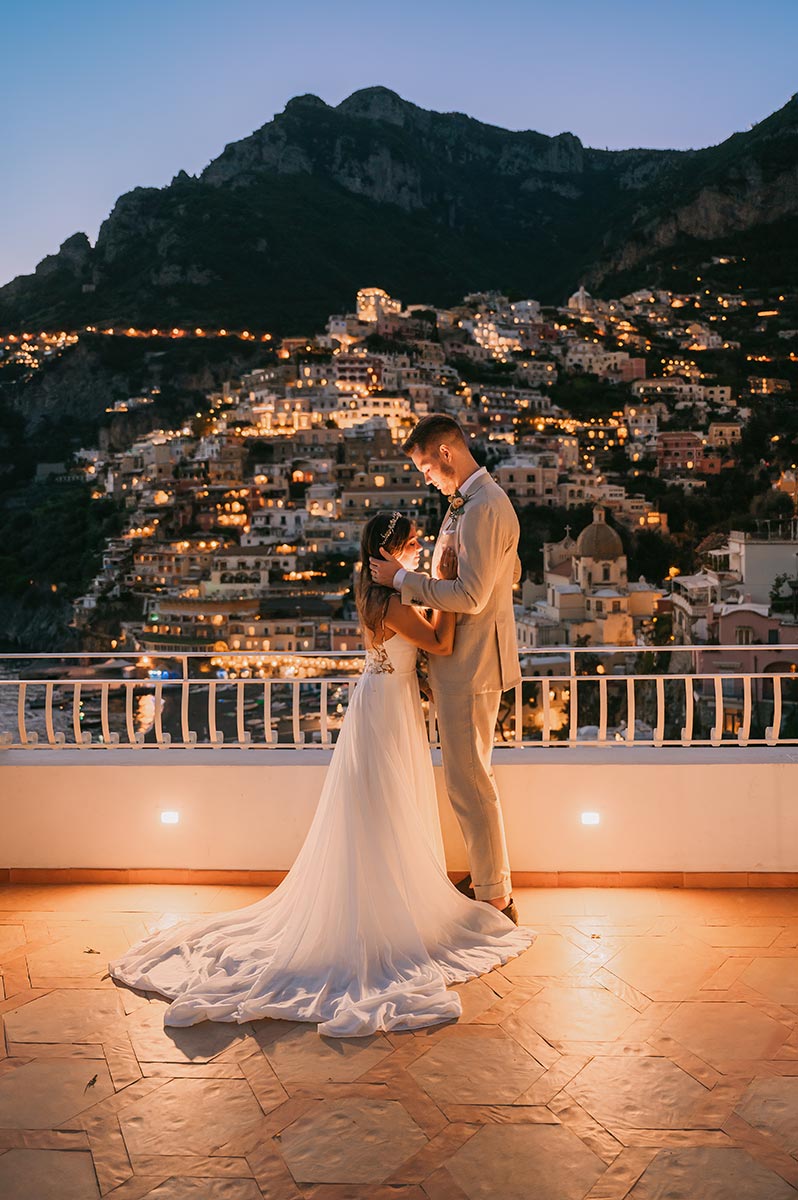
This tradition comes from ancient Egypt when for fear that evil spirits would strike and identify the bride, she was surrounded by beautiful girls elegantly dressed to confuse them.
Italian wedding traditions: final considerations
When you decide to include some Italian wedding traditions in your destination wedding with the help of an Italian wedding planner, you can abandon any worry and still be sure that the person to whom everything was entrusted has the skills to ensure it’s a perfect day.
There is only one solution to make your wedding even more magical: combine the perfection of our wedding photography services with the experience of a wedding planner we will recommend.

Several newlywed couples already have trusted our wedding photography services – as Amalfi Coast and Apulia wedding photographers – in collaboration with the best wedding planner in Italy. Rely on our advice and our experience. You will be able to see first-hand the result of highly professional work, which combines the best photography with the organization of a professional wedding planner.