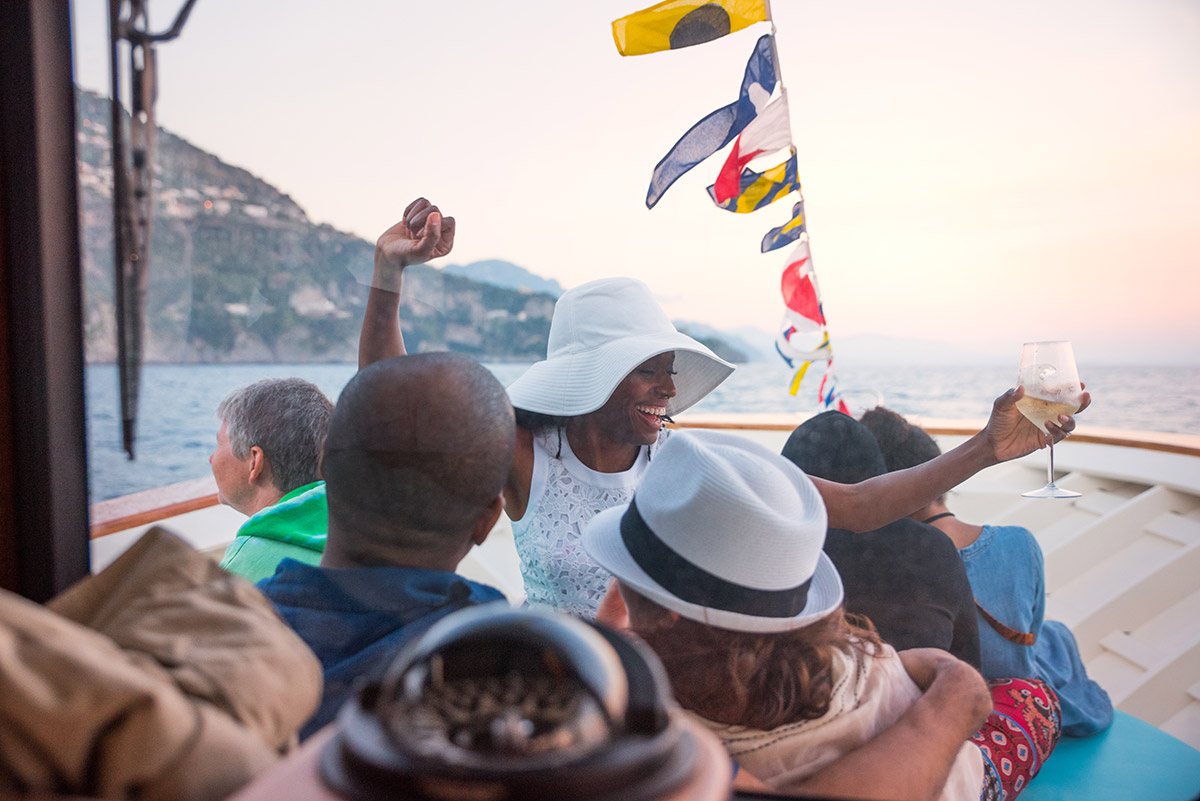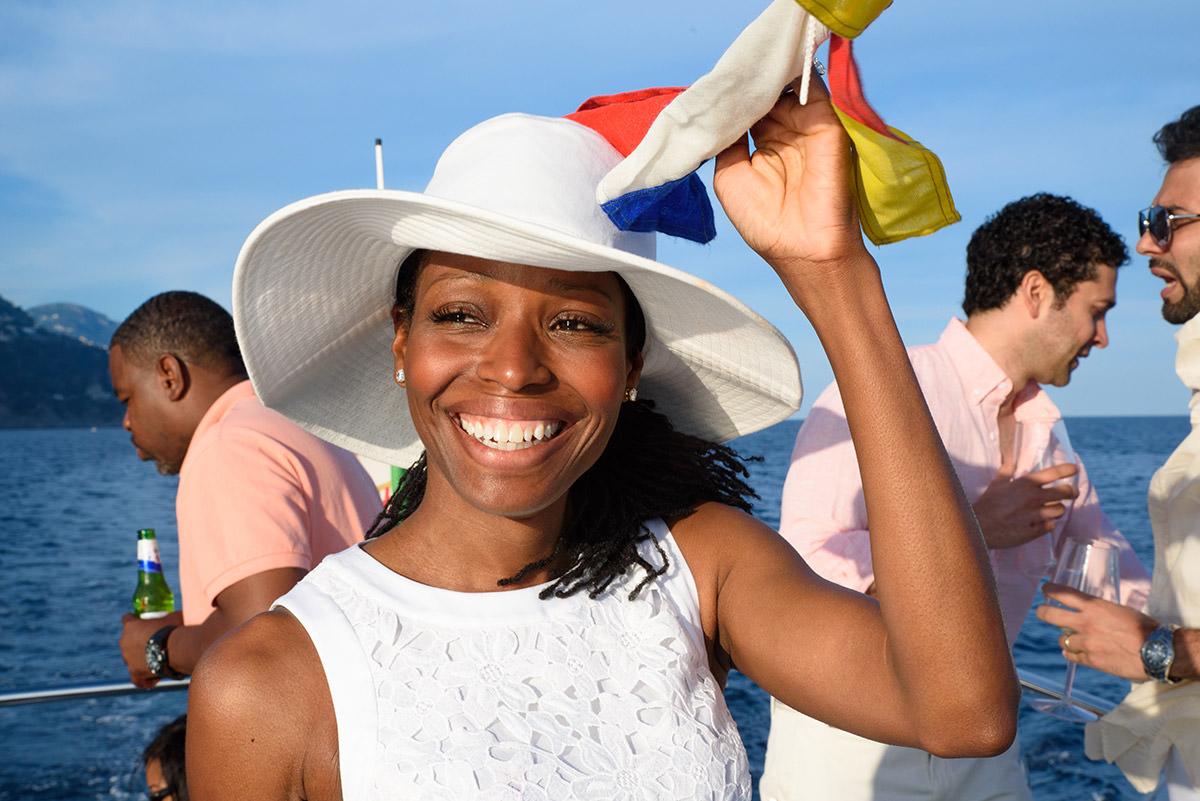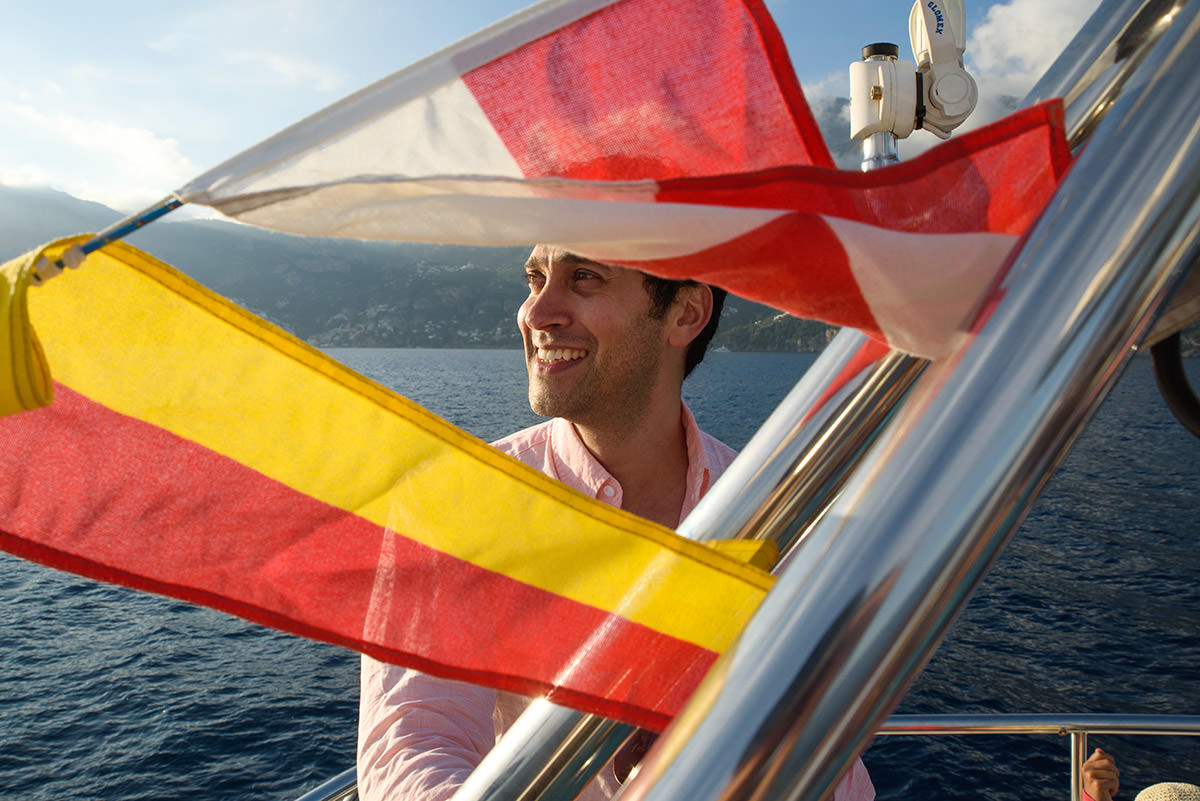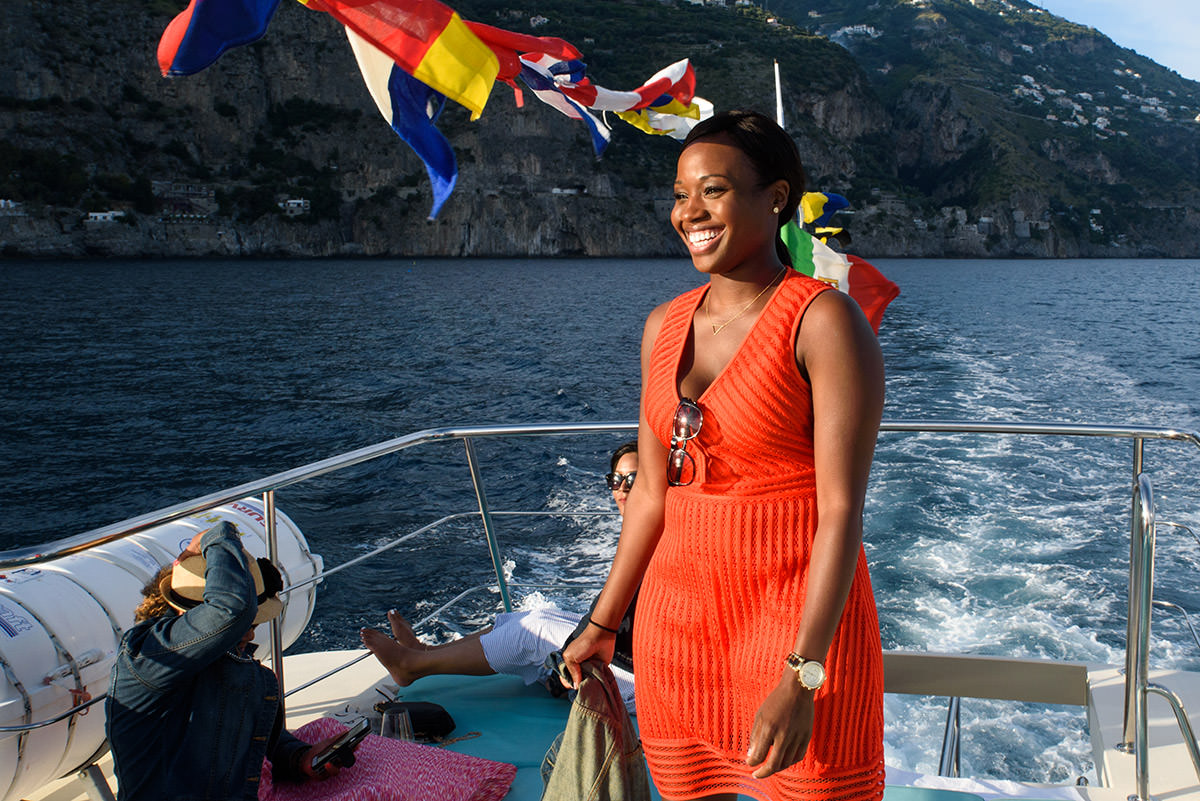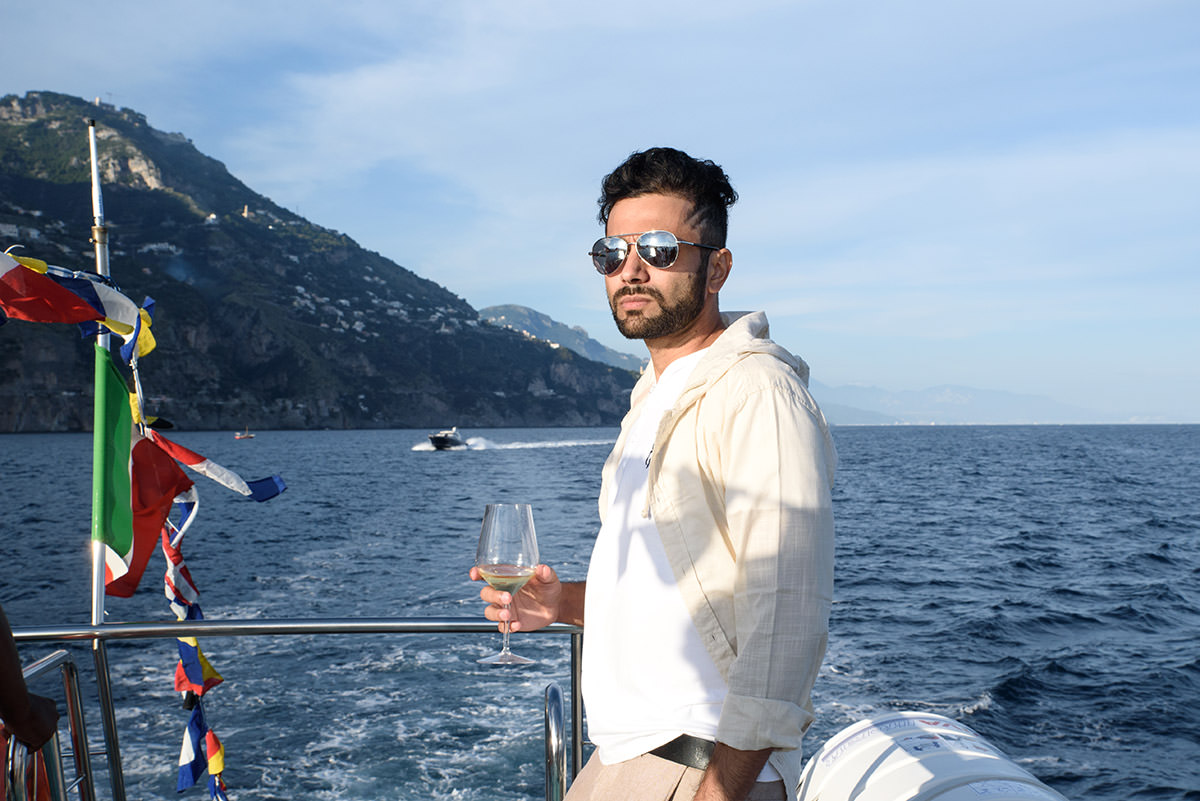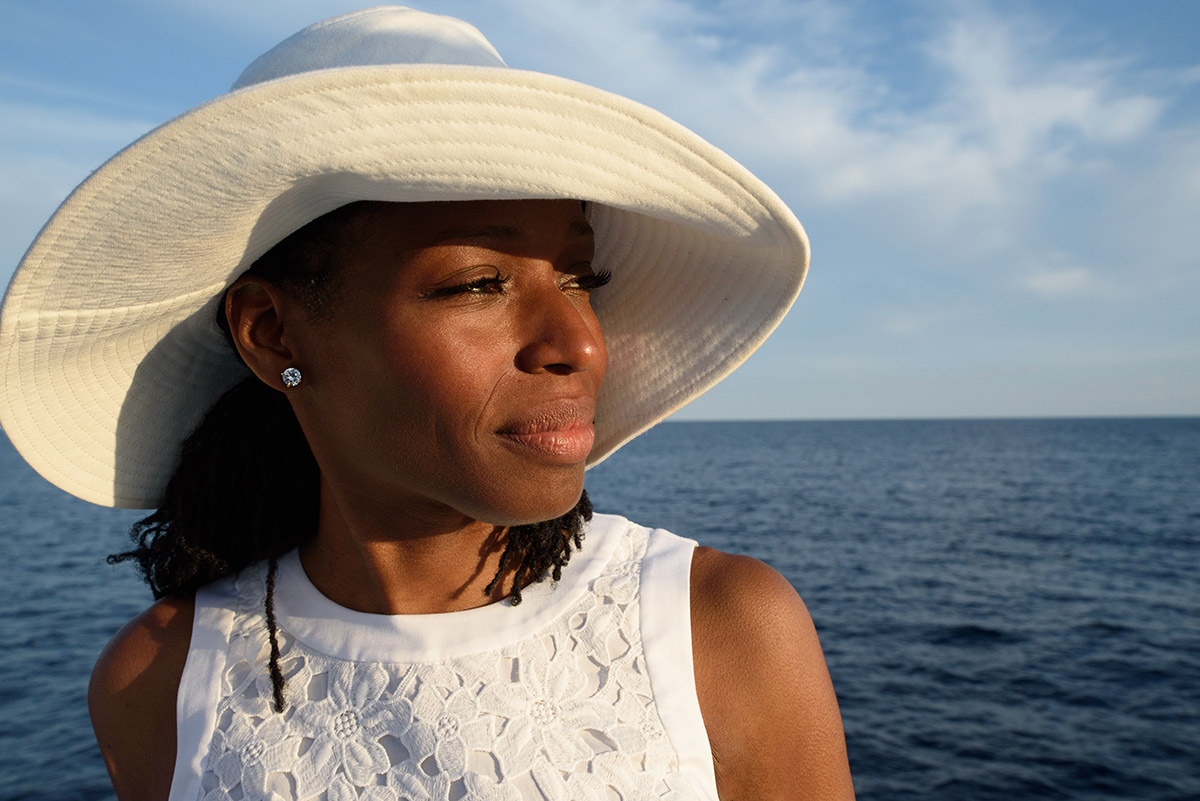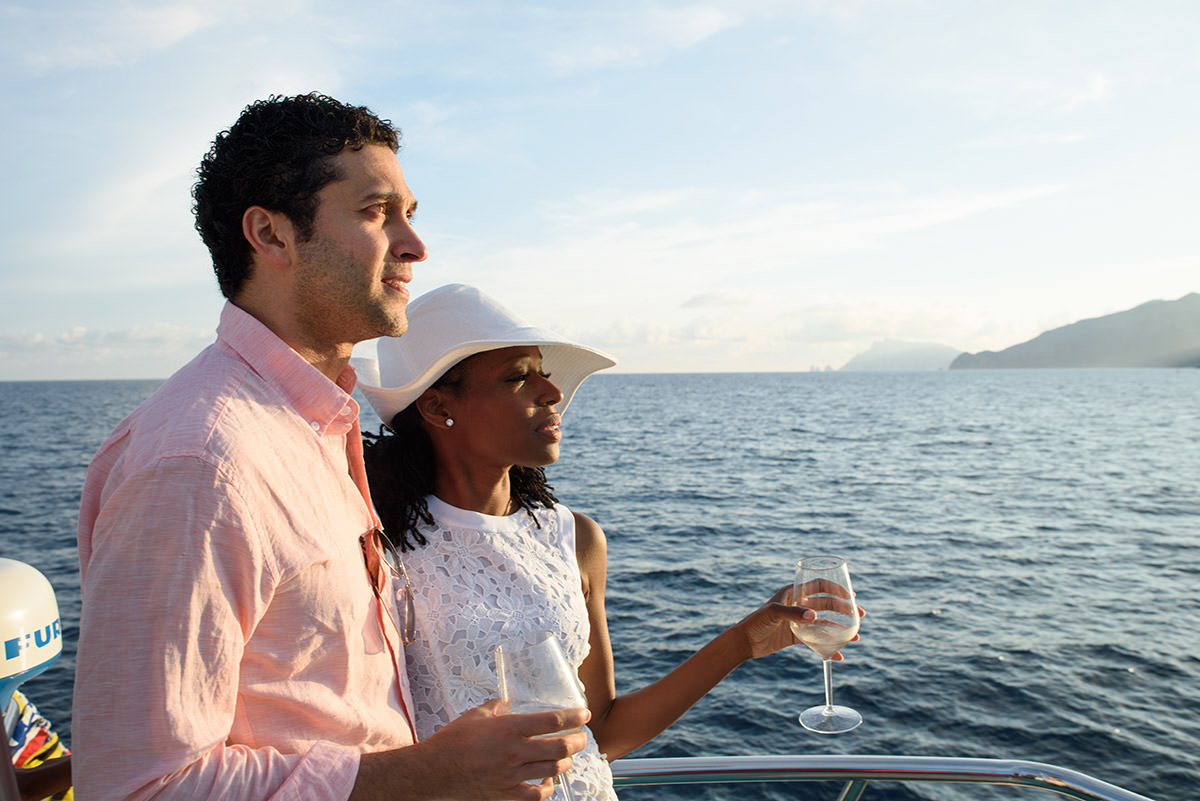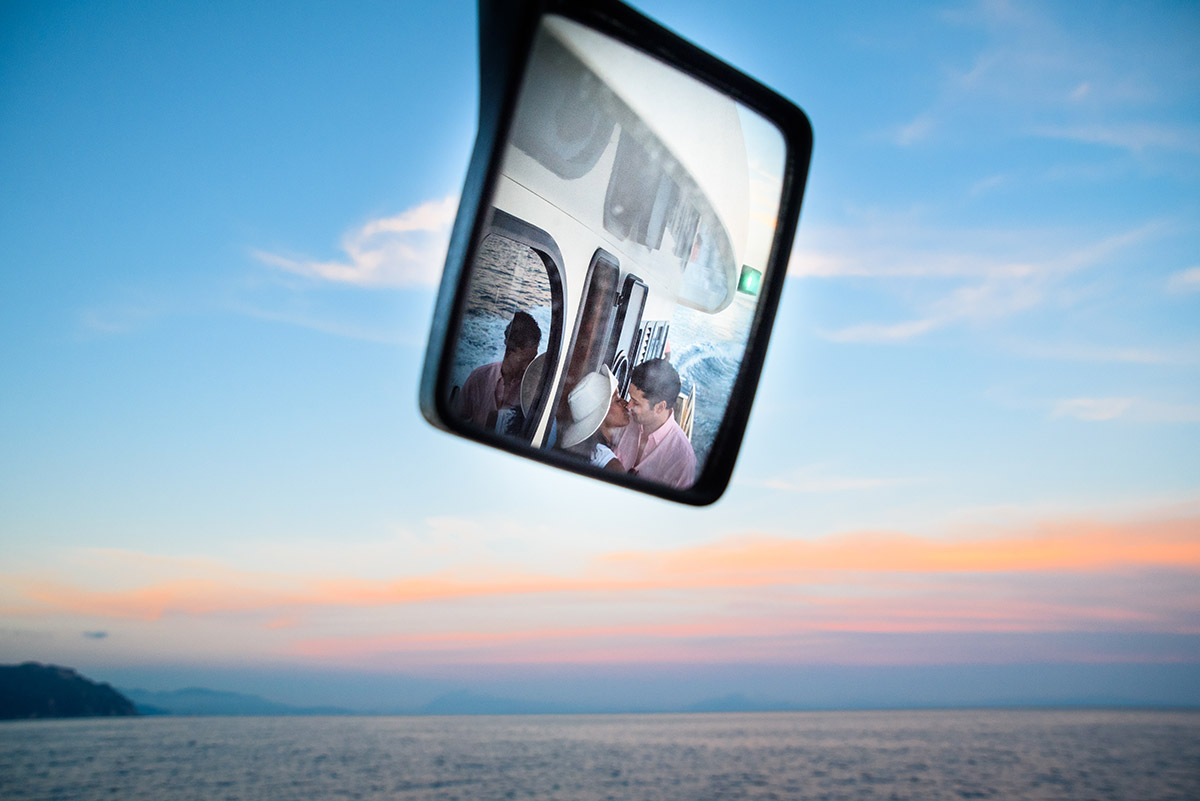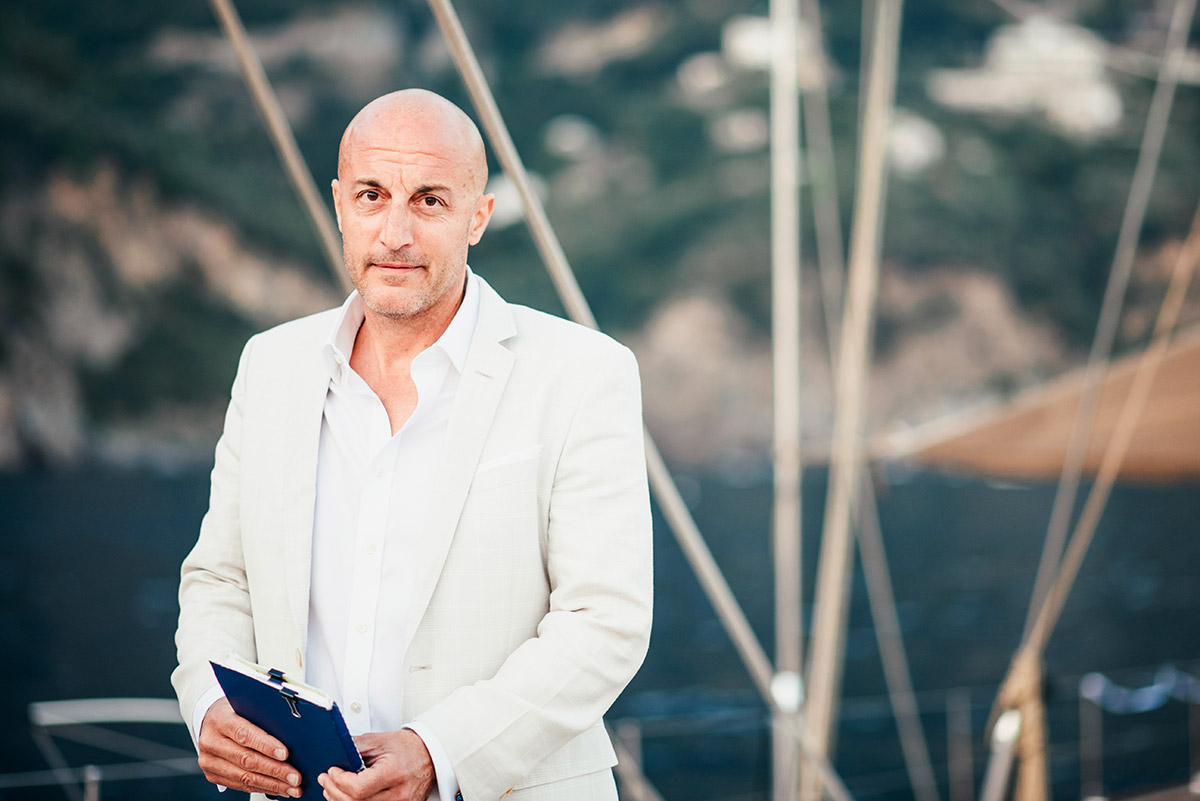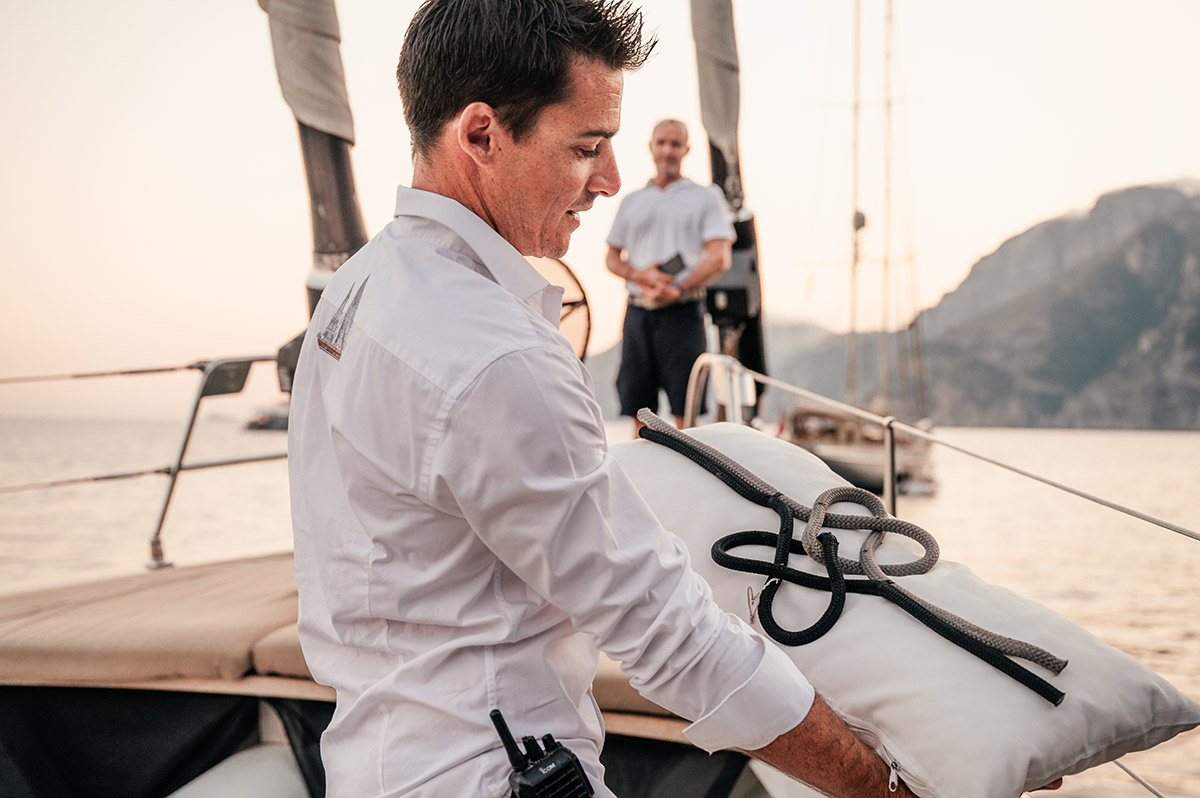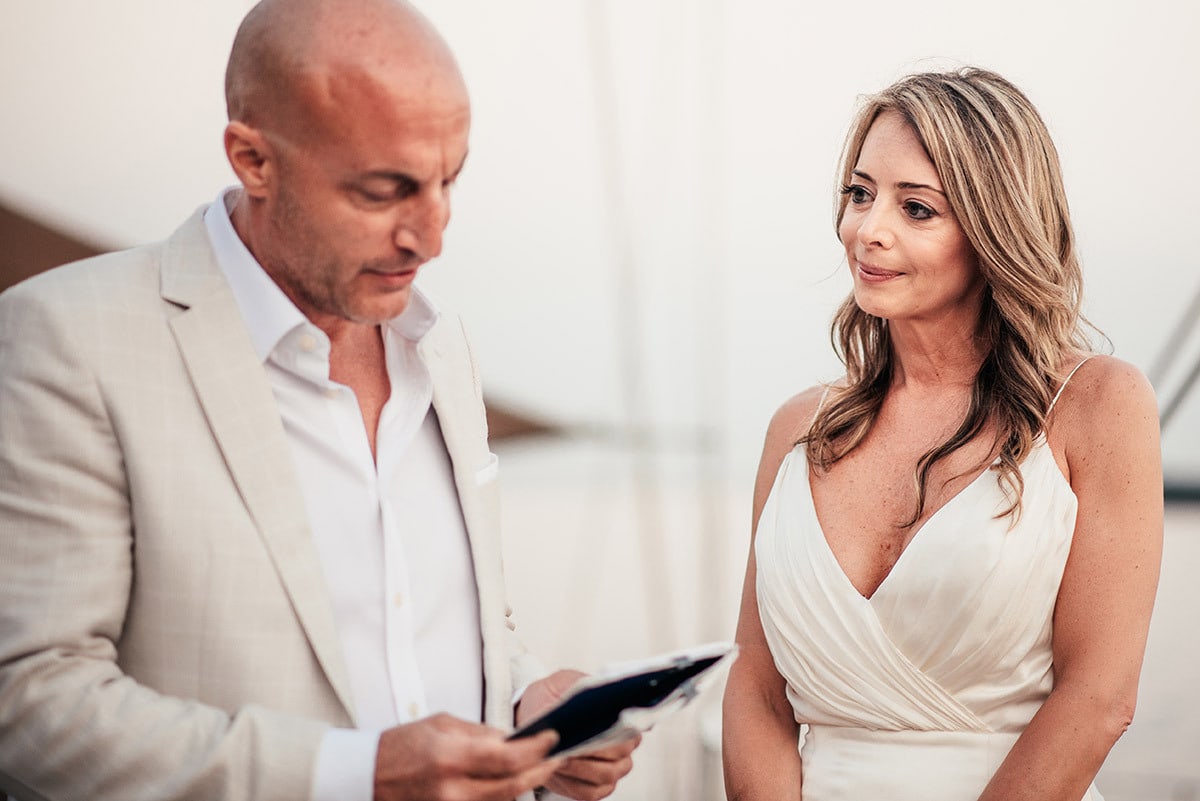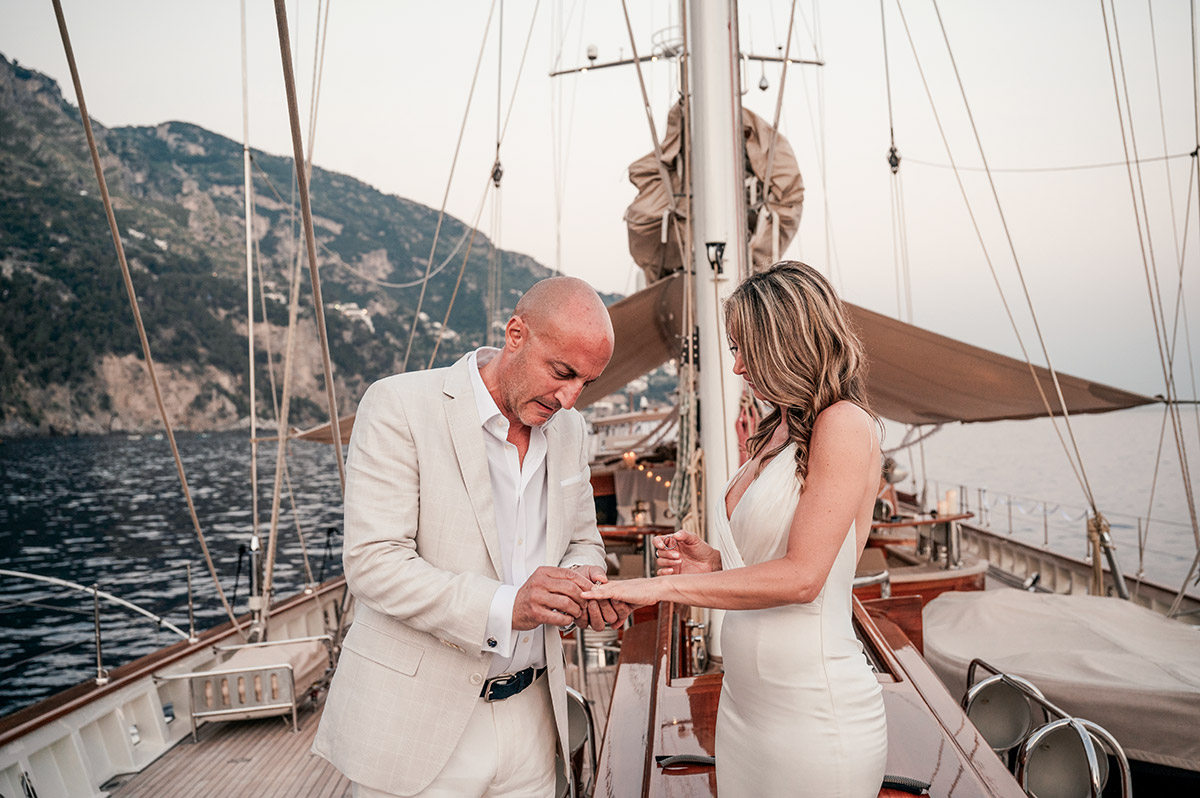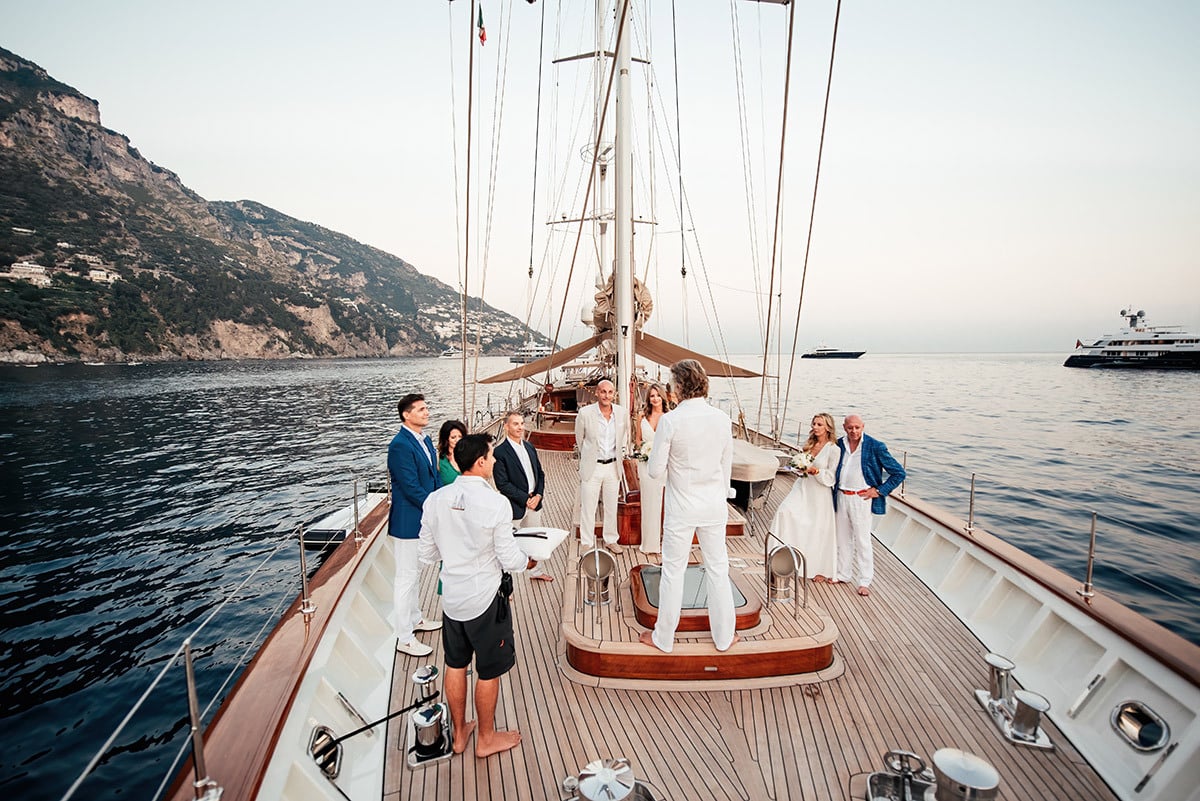

A luxurious yacht tour Photographer Positano, sailing in clear blue waters near the Italian coast.

Yacht Tour Photographer Positano: What the Boat Session Actually Looks Like

What a boat photo session with a photographer in Positano actually looks like: route, vessel choice, light timing, and what images come from Li Galli to the sea caves.

Most people who book a boat photo session in Positano are not getting married that day. They are honeymooners who want something more memorable than a selfie at Spiaggia Grande, anniversary couples returning to the coast who want to see it from a different angle, or engagement couples who want the Amalfi backdrop without the logistics of a formal venue. A boat session with a photographer is a two-to-three-hour experience on the open water, planned around the light, the route, and what you want the photos to feel like at the end of it.

I have been running these sessions since 2011 alongside the wedding work covered on our Positano wedding photographer page. They follow a different logic from a ceremony day: no schedule pressure, no vendor coordination, no concern about the vow exchange landing perfectly. Just the two of you, the boat, the coast, and two hours to move through the light as it changes. What comes back from the boat consistently differs from anything I make on shore, not because the sea is more beautiful than the land, but because the distance from it changes what Positano looks like and what the couple looks like inside it.

Who Books a Boat Session, and What It Is

A boat photo session is distinct from a wedding day boat add-on and from a boat elopement ceremony. Here it is clearly: if you want to exchange vows on the water, with an officiant and a symbolic ceremony, that is a different thing entirely and we have a separate guide for boat elopements. This post is about the photography session for couples who are not having a ceremony on the boat: honeymooners, anniversary couples, vacation couples, and engagement sessions that happen to be on the water.

The session works for any two people who want to spend a couple of hours on the coast from the sea side and come back with a gallery that looks nothing like what you could make from the beach. I run them in the late afternoon to catch the golden light, I coordinate the route with the captain based on the conditions that day, and I photograph throughout the ride rather than stopping at designated portrait stations. The images are looser than a ceremony gallery, more movement, more laughter, more of the coast itself as a presence rather than just a backdrop.

The Light Advantage: Why the Water Changes the Session

Positano’s famous light problem, the way the Lattari Mountains block the sun for the town long before actual sunset, is a real planning constraint for anyone shooting on land in the afternoon. From the beach or a terrace, the light can go flat or shadowed as early as 3:30 to 4:00 PM in summer while the sky above is still fully lit. On the water, moving away from the coast, you pass the shadow line of the mountain and stay in direct sunlight for the full golden hour. This changes the light quality significantly: warm, directional, bouncing off the water surface and filling shadows in a way that flatters skin tones without any artificial assistance.

Timing the session start to coincide with the light window, typically departing around 4:30 to 5:00 PM in June and July, earlier in September and October, is the single most important planning decision. The exact window shifts by about 10 minutes per week as the season moves. I track it for the week of each session and give the captain the departure time accordingly. Arriving at the best light position at the wrong moment by 30 minutes produces a noticeably different quality of image, so this coordination matters. For more on the seasonal logic of when to book, our September weddings guide covers the coast-wide light and crowd patterns month by month.

The Route: What We Actually Visit

The route is not fixed. It depends on the conditions, the wind direction, the state of the sea, and what the captain reads on the day. That said, the sessions I run most often follow a recognizable shape depending on how long we have and what boat we are on.

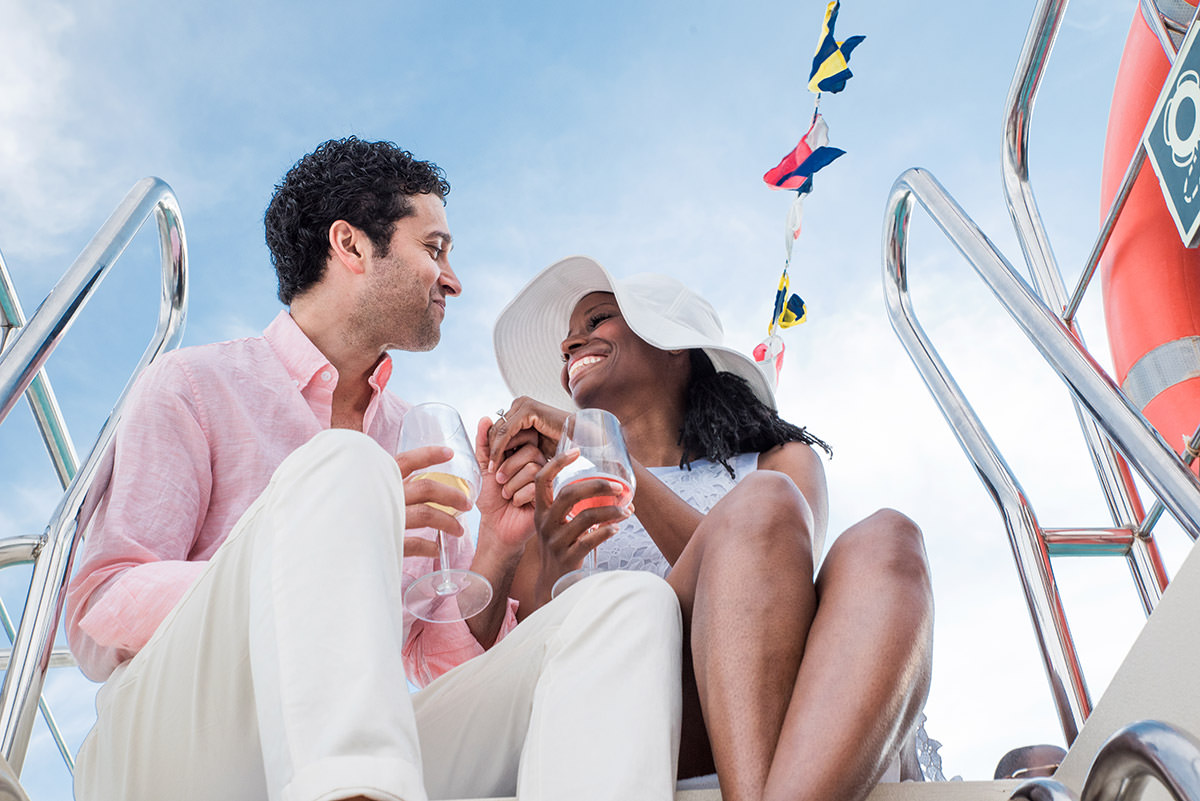
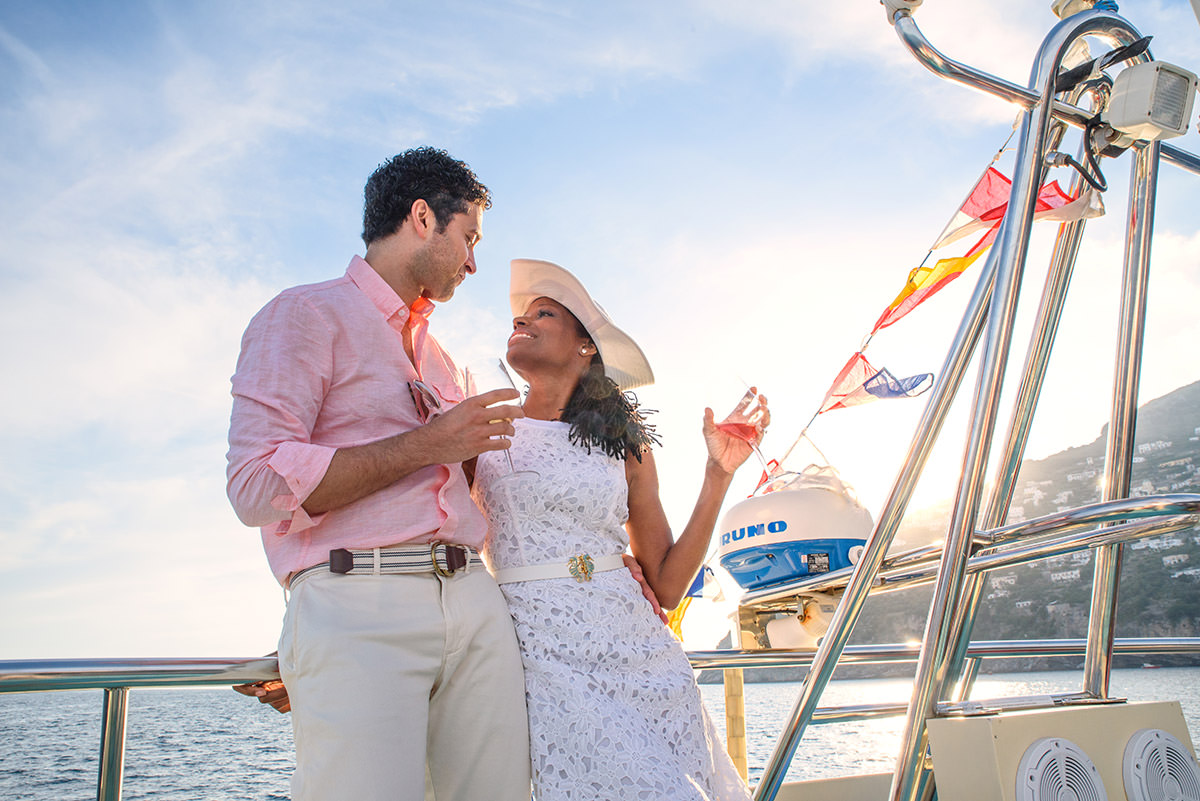
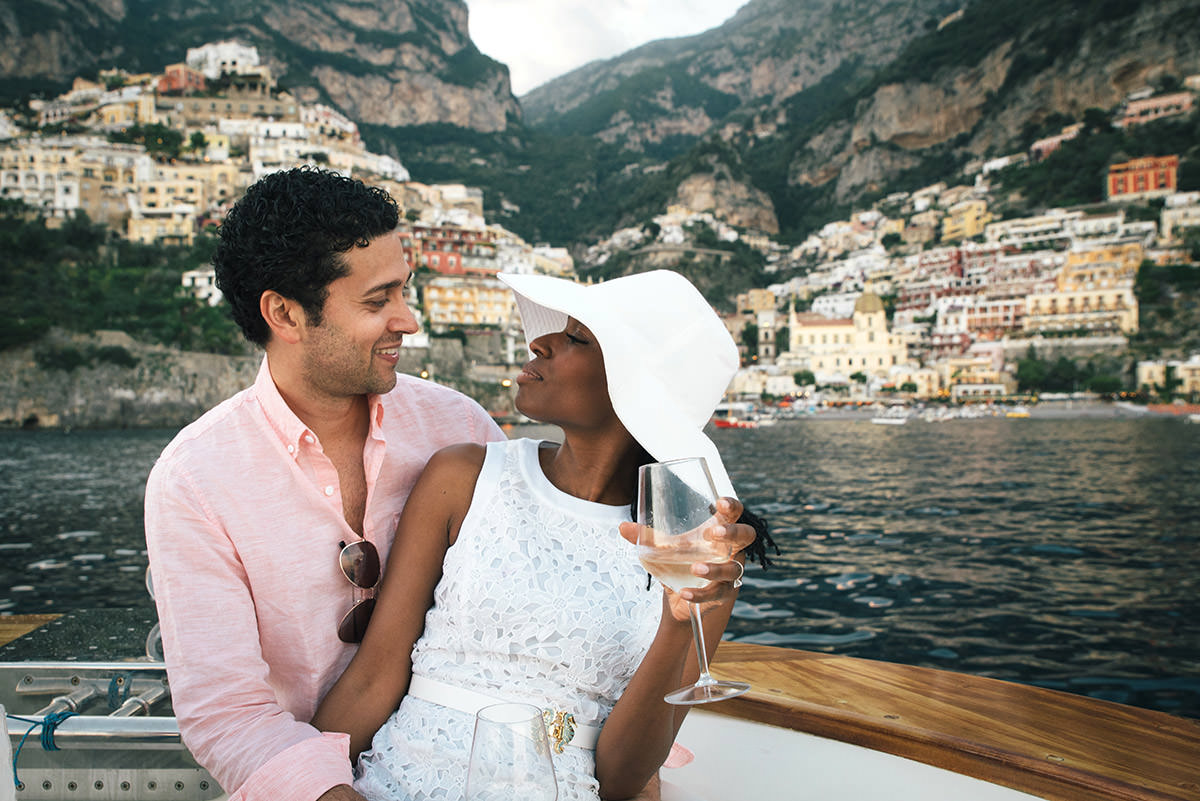
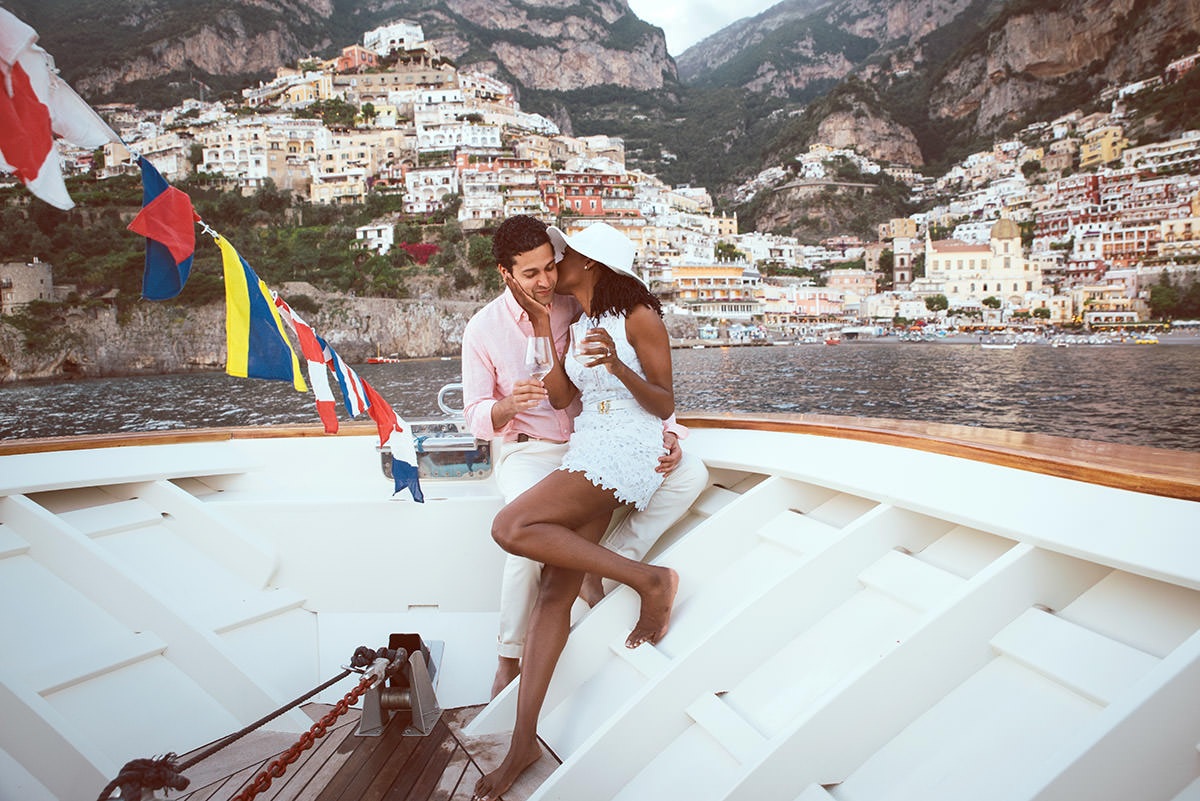
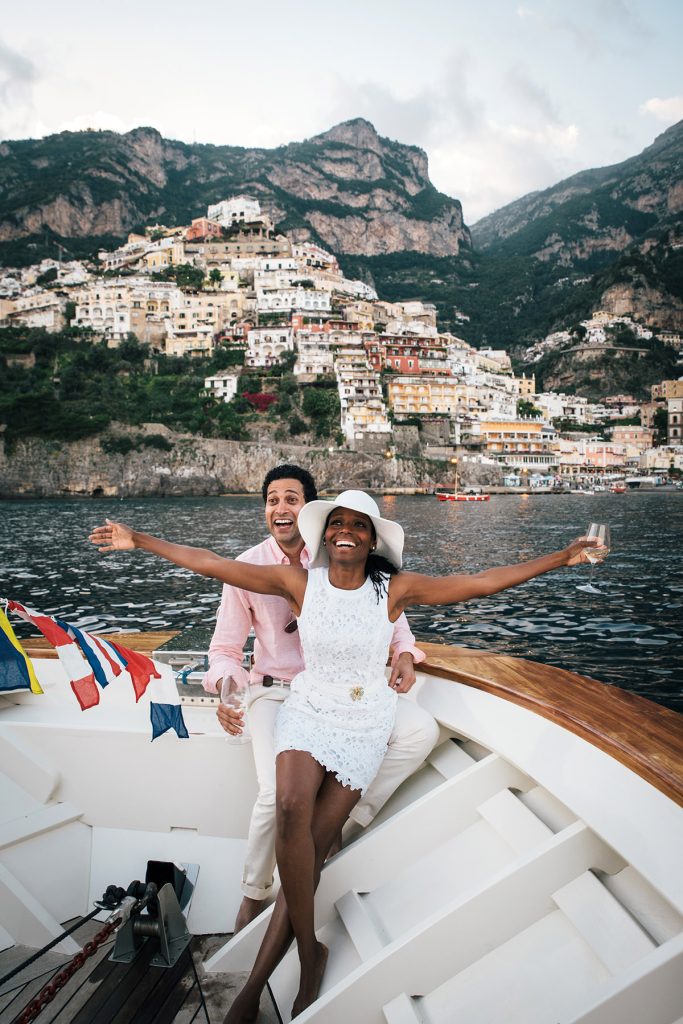
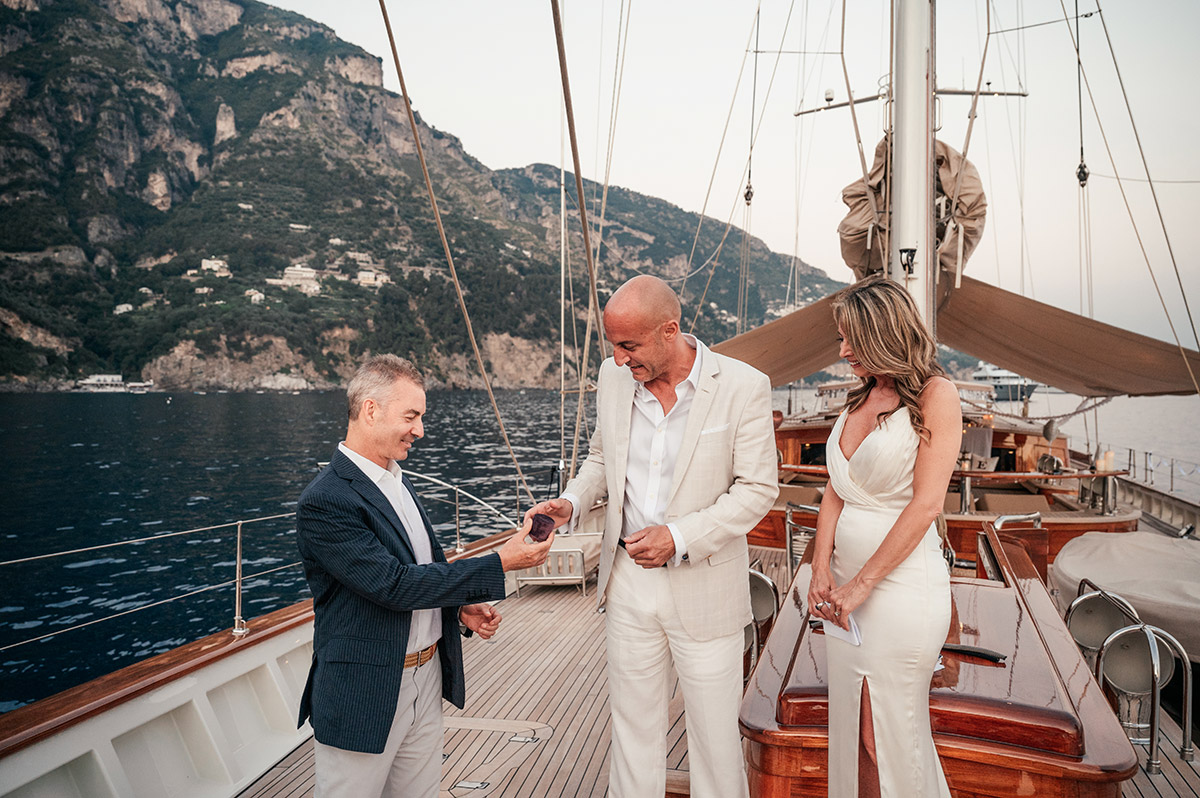
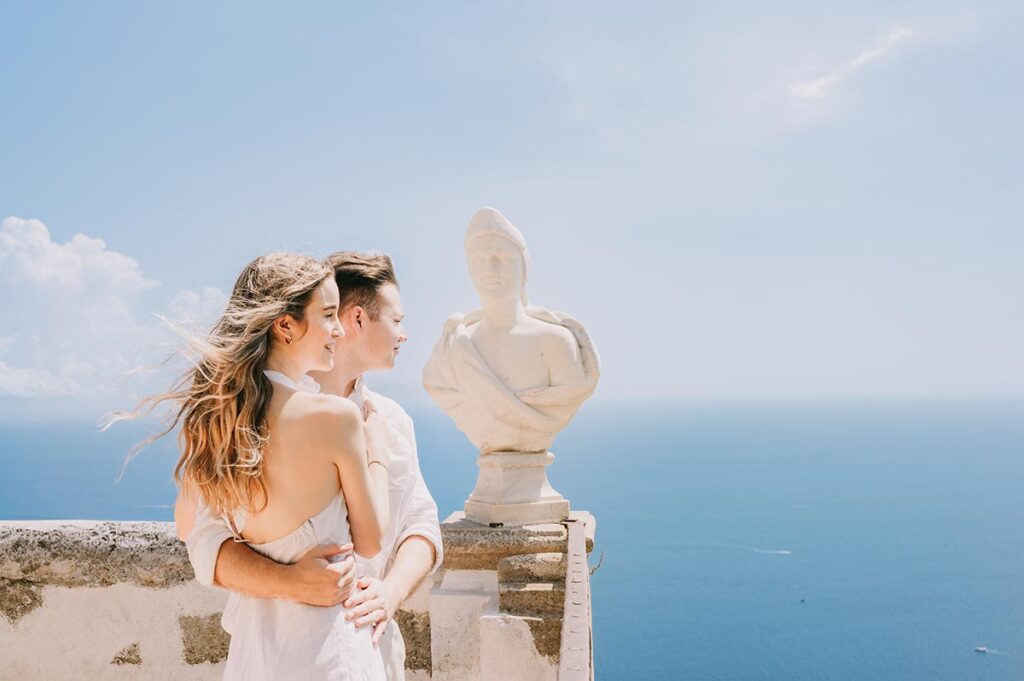
A couple enjoys a private yacht tour Positano with the iconic coastline in the background.
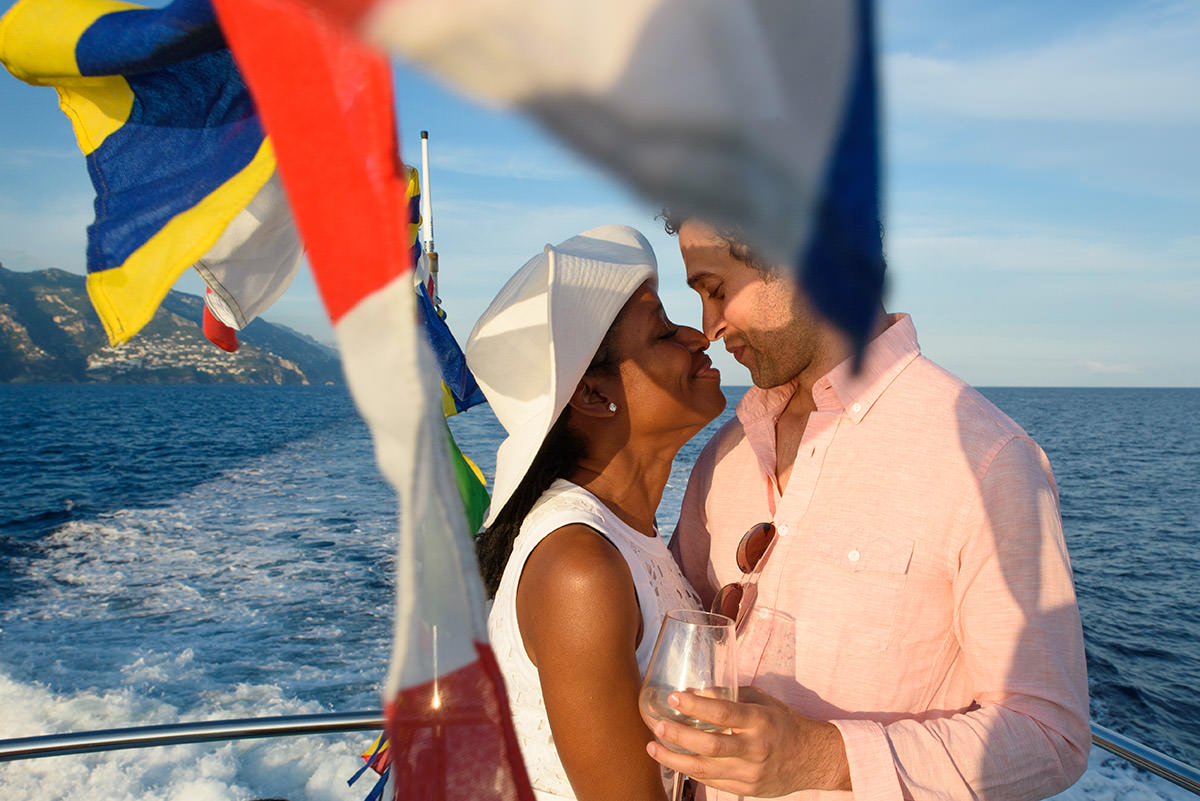
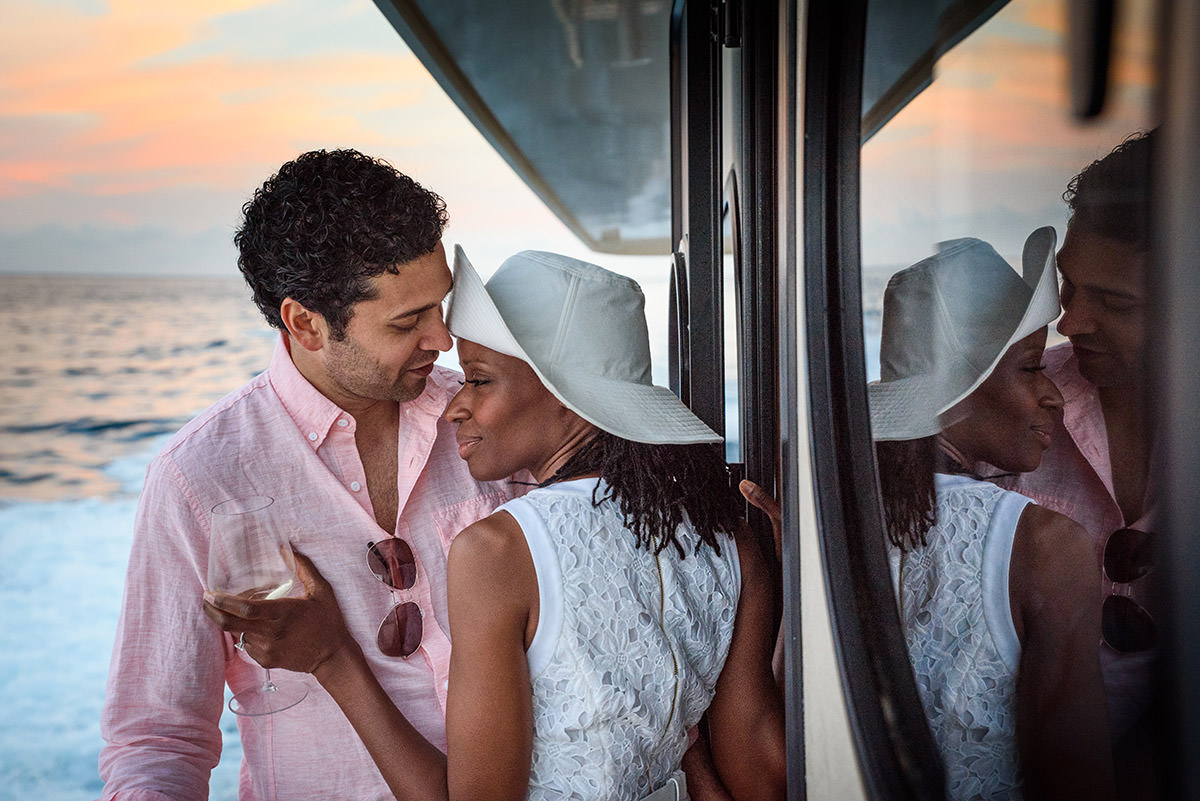
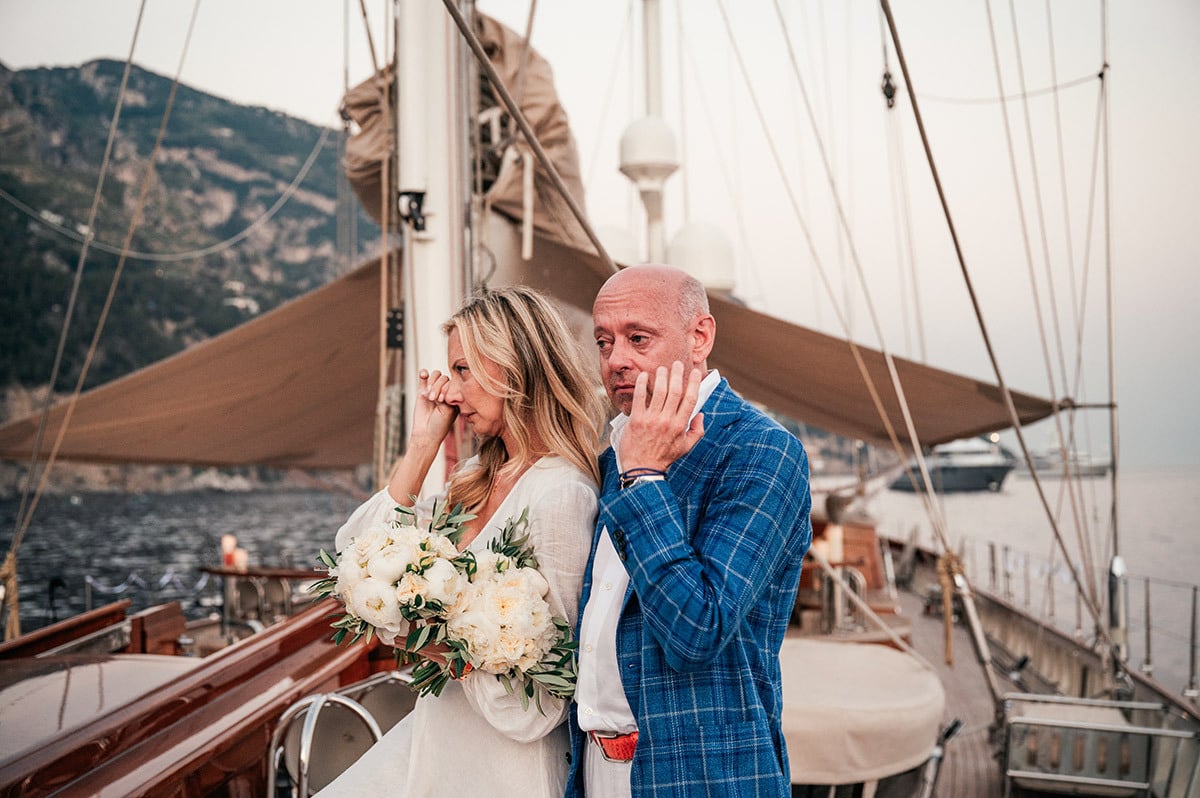
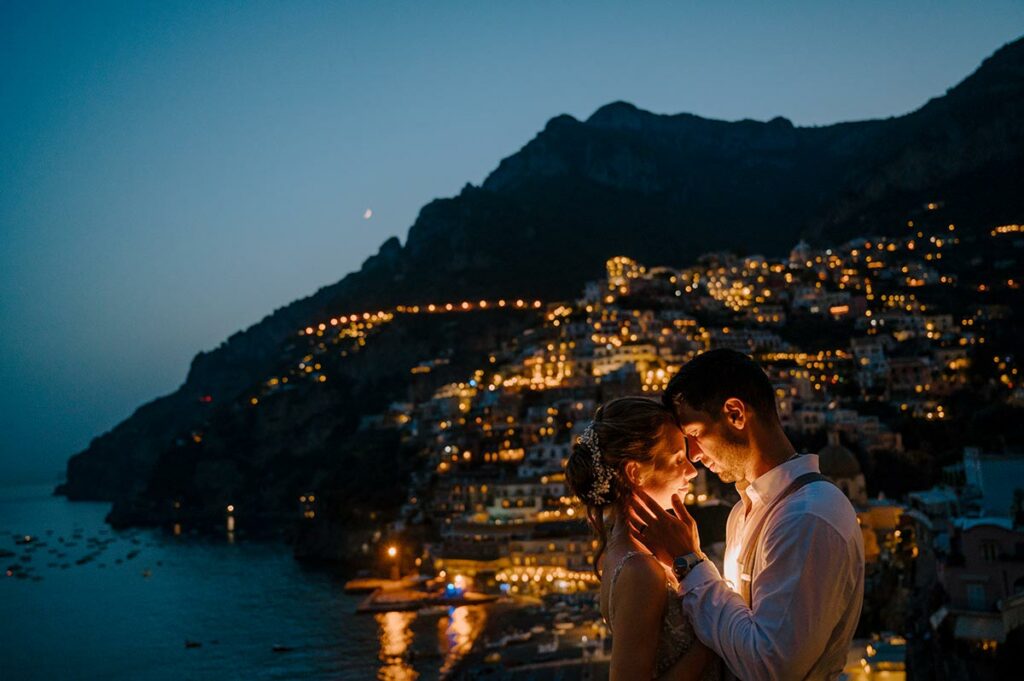
A happy couple enjoys a yacht tour photographer Positano experience with Positano village behind them.

The Standard Westward Run to Li Galli

Heading southwest from Positano’s pier, past the western edge of the town and out toward open water, takes about 20 to 30 minutes by Gozzo before you reach Li Galli, the three-island archipelago that sits in the open sea off the coast. The boat slows and we work the approach: the town of Positano visible behind the couple, gradually smaller and more painterly as the distance increases. At Li Galli, we anchor or drift in the channel between the islands. The water here is a different blue from the shallower water near the pier, deeper and more saturated, and the islands themselves create a framing element in the background of shots taken from any direction. I shoot from bow to stern and back, from low at water level to standing on the cabin roof, depending on what angle the light favors at that moment.

The return trip heading back northeast toward Positano gives me the approach shot: the town resolving out of the distance, the church dome appearing, the stacked houses coming into color definition. I always shoot the couple from behind at the bow during this approach, looking toward the town coming into view. It is a specific Positano image that you cannot make from anywhere on land.

The Sea Caves and Cliffs Toward Praiano

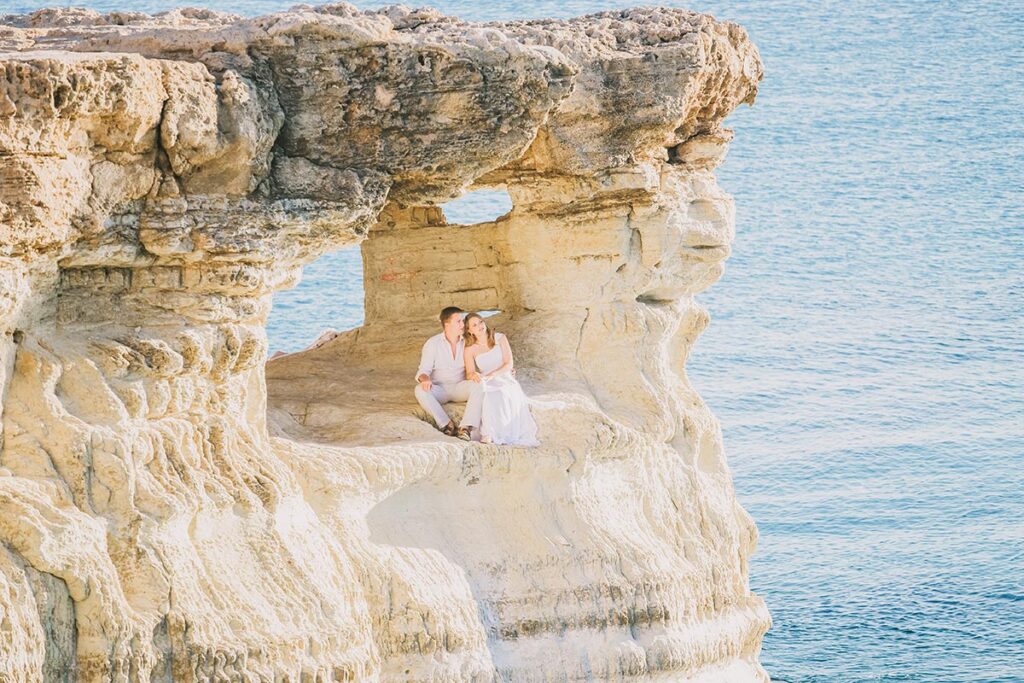
Some sessions go south along the coast before heading to Li Galli, following the cliffs between Positano and Praiano. The rock face here drops almost vertically into the water, and small caves open in the base of the cliff that a Gozzo can nose carefully into when the swell is gentle enough. Inside, the light comes from the opening behind the boat, reflecting off the water surface and bouncing up onto the stone ceiling. The resulting images have a completely different quality from the open sea shots: contained, the couple in the cave’s mouth against a blue sky, the indirect light even and soft. I use these for close portraits, faces and upper bodies, rather than the wider environmental shots that work better in the open bay. The cave stops add roughly 20 minutes to the session and are weather-dependent.

Heading East: Fiordo di Furore for Longer Sessions

The Fiordo di Furore is a narrow coastal inlet about 15 kilometers east of Positano, where the sea has cut into the cliff between Furore and the coast, creating a dramatic vertical canyon with a high stone bridge at the top and a small beach with old fishermen’s houses at the bottom. It is accessible only by sea. By Gozzo, reaching it takes about 45 minutes to an hour from Positano, which makes it a realistic destination only for sessions of four hours or more, or with a faster vessel. By a Riva or similar speedboat, the crossing takes about 25 minutes and fits into a three-hour session. The light inside the fiordo is dramatic: the canyon walls block direct sun for most of the day, leaving a cool indirect light that photographs quietly and clearly. If you have the time and the right boat, it is worth the distance specifically because most photographers do not go there with a couple, and the images look different from anything made in the Positano bay.

Gozzo or Riva: What Each Boat Looks Like in Photos

The Gozzo vs Riva decision in a photo session is about aesthetics and coverage, not about ceremony functionality. Both boats produce strong images in different ways.

The Gozzo: Classic, Close to the Coast, Slower

A traditional wooden Gozzo has warm polished timber decks, a flat open bow, and a pace that keeps us close to the coast and to the water surface. The wood itself photographs well against a white outfit or a blue sea: there is a color palette in the relationship between the honey-toned decks and the Mediterranean that looks inherently Italian without any postprocessing. The Gozzo moves slowly enough that I can walk the deck, change positions, and compose without the vibration and spray that come from a faster hull at speed. For couples who want images that feel unhurried and close to the landscape, the Gozzo is the right vessel.

The Riva: Speed, Silhouette, Editorial Energy

A Riva or luxury speedboat produces a different kind of image. At speed, the hull cuts through the water, the wake spreads behind the boat, and the couple’s hair and clothing move with the air. The silhouette of a Riva at speed with the Amalfi Coast behind it is a distinctive image that reads as high-fashion and cinematic in a way the Gozzo does not. The trade-off: at rest, a Riva is narrower and the deck space is more limited. As a portrait platform when the engine is off and we are drifting, the Gozzo offers more room to move. As a moving-image platform with the couple at the prow and the coast at speed behind them, the Riva is stronger. Couples who have a specific editorial vision for the gallery, a look they have seen on a magazine cover and want to replicate, often choose the Riva. Couples who want a more relaxed and classic Amalfi Coast feel tend toward the Gozzo.

How to Dress for a Boat Photo Session

The boat session is not the same as a terrace portrait session, and dressing for it means thinking about what the sea actually does to fabric and to a look.

Fabrics that move photograph well in the wind and on the water: linen, light silk, flowy cotton. Heavy, structured fabrics stay rigid and can look stiff against a liquid backdrop that is anything but. Color-wise, white and cream work beautifully against the blue water and the warm wood of a Gozzo. Bright colors, particularly coral, orange, and strong reds, hold their own against the coast’s palette without competing with it. Dark neutrals read differently on the water than on land: navy tends to disappear into the sea background, while black can work at golden hour when the light is warm enough to give it dimension.

Shoes: flat sandals or go barefoot. Deck surfaces vary and nobody should be navigating a wooden hull in heels. The session typically involves sitting on the bow, standing at the railing, and occasionally moving from one end of the boat to the other while we are in motion. Comfortable footwear that you are happy to take off when you sit on the bow deck is the practical choice.

Hair: the wind is real and it does what it does. Styling that works on the boat is styling that either looks good moving, a loose braid, a relaxed updo with some pieces out, or that you have decided does not need to look controlled. The best boat session portraits tend to have some movement in them, and fighting the wind rather than working with it produces more stress than better photos. If you want a controlled, polished look throughout the session, the boat is not the right setting for it, and a terrace portrait session will serve you better.

The Session Itself: What Two Hours on the Water Actually Looks Like

We meet at the main pier, usually the ferry departure area near Spiaggia Grande. The captain is already there with the boat. We load in, introduce ourselves, and depart. The first 15 to 20 minutes of travel toward Li Galli or along the cliffs is when most couples relax. The sound of the water, the distance from the town, the physical sensation of being on a moving boat: the combination tends to produce a visible shift in body language. By the time we reach the first spot and the engine slows, people who were quietly rigid in the first minutes are leaning into each other, pointing at things on the coast, laughing at something the captain said. This is when I start working, before we stop, because these are the honest moments.

Once we are at the first location, I photograph for 20 to 30 minutes: wide shots, mid shots, close portraits, some with the boat in motion and some drifting. Then we move. A two-hour session typically covers two or three distinct spots, with travel between them. The last 20 minutes of the return to the pier give me the approach shots toward Positano and usually some of the most relaxed portraits of the session, because by this point the couple has stopped thinking about posing.

What Actually Decides When You Go

Good weather and calm water decide this booking more than personal preference does. April through October is the realistic window, and within it, May, June, September, and October photograph best: less boat traffic, gentler heat, and a sea that cooperates more often than not. July and August still work, but count on real heat over open water and a pier shared with other boats running the same route. For golden-hour light, the 4:30 PM to sunset window is the one I push for. Couples chasing something cooler and quieter instead should look at 7:30 to 10:00 AM, when Positano at a distance takes on a softer quality and the wind hasn’t picked up yet.

Booking the boat and the photographer as a single coordinated decision matters more than either booking alone, since both sides need to confirm the exact same departure window. Our Positano wedding planner guide walks through that kind of coordination for couples juggling several vendors on one trip. Good captains and good boats book out 2 to 4 months ahead for Saturdays and popular weekday slots in peak season. Later bookings are possible, just with a narrower choice of vessel.

How the Boat Session Fits Into a Positano Trip

For honeymooners or anniversary couples with two to three nights in Positano, the boat session works best as the anchor activity of the trip: one defined afternoon built around the light and the water, with dinner at a restaurant afterward. It does not require any additional planning machinery beyond the booking itself. You stay in town, you walk to the pier, you spend two hours on the water, you walk back.

For couples who are combining the session with other activities, the boat session fits before dinner naturally. A late-afternoon departure, a return around 7:30 to 8:00 PM, and dinner at 8:30 PM works logistically. The transition from the boat to dinner is part of the day rather than a logistical interruption.

If you are also planning any part of a wedding or ceremony during the same Positano trip, our Positano elopement guide explains how a symbolic ceremony can take place on the same boat if that is what you want.

What It Costs

The boat rental and the photography are priced separately. A Gozzo for a 2 to 3 hour session runs between 400 and 800 euros depending on the season and the specific vessel. July and August sit at the higher end. A Riva or luxury speedboat for the same window runs 1,200 to 2,500 euros. Photography is a separate fee that depends on the package and coverage hours.

There is no standard package price I can give here because the combination of boat type, session length, and coverage format varies too much. What I can say is that the boat rental is the largest variable cost in the budget: choosing a well-maintained Gozzo over a plastic fiberglass vessel is worth the difference photographically, and choosing an actual Riva is a specific aesthetic decision that roughly doubles the boat cost. For couples adding the boat session to a ceremony day, our wedding in Positano guide has the full cost landscape for the day overall.

Photo Session or Ceremony, Sorting It Out

Is a boat photo session the same as a boat elopement?

No. A boat photo session is a photography session only: no vows, no officiant, no ceremony. A boat elopement involves a symbolic ceremony on the water, with a celebrant who travels with you and conducts the vow exchange at sea. If you want the ceremony on the boat, see our guide to boat elopements in Positano. If you just want the portrait session on the water, this is the right post.

How many people can be on the boat during a session?

Most sessions are for two people, which is the natural format for a couple portrait session. A Gozzo in portrait session configuration holds the couple, a captain, and me comfortably. If you want to bring a third person, a videographer or a friend, it works on most Gozzos but it changes the dynamic of the session. For larger groups, a bigger vessel is more practical. Discuss this at booking so the captain can confirm the vessel has enough space for the specific headcount.

What if the sea is rough on the day?

The captain makes the safety call on the morning of the session. If conditions are not suitable for the boat, we reschedule or discuss alternatives. Building a land-based backup into your planning is worthwhile if your date is fixed. For multi-day trips, there is usually flexibility to shift the boat session by a day if the conditions improve. If your trip is a single night, be aware that weather can make the boat session impossible and the backup plan should be clear in advance.

Can we stop and swim at Li Galli or in the sea caves?

Yes, depending on the conditions and the captain’s assessment of the anchorage. Many couples swim at Li Galli during the session. The water clarity there is excellent and the swim photos, candid, genuine, often taken from the boat deck looking down, tend to be some of the strongest images from the session precisely because the swimming is real and not staged. The sea caves require more care: the swell inside can be unpredictable and swimming there depends on how calm the water is at that specific moment. The captain decides on the day.

Should I bring anything for the session?

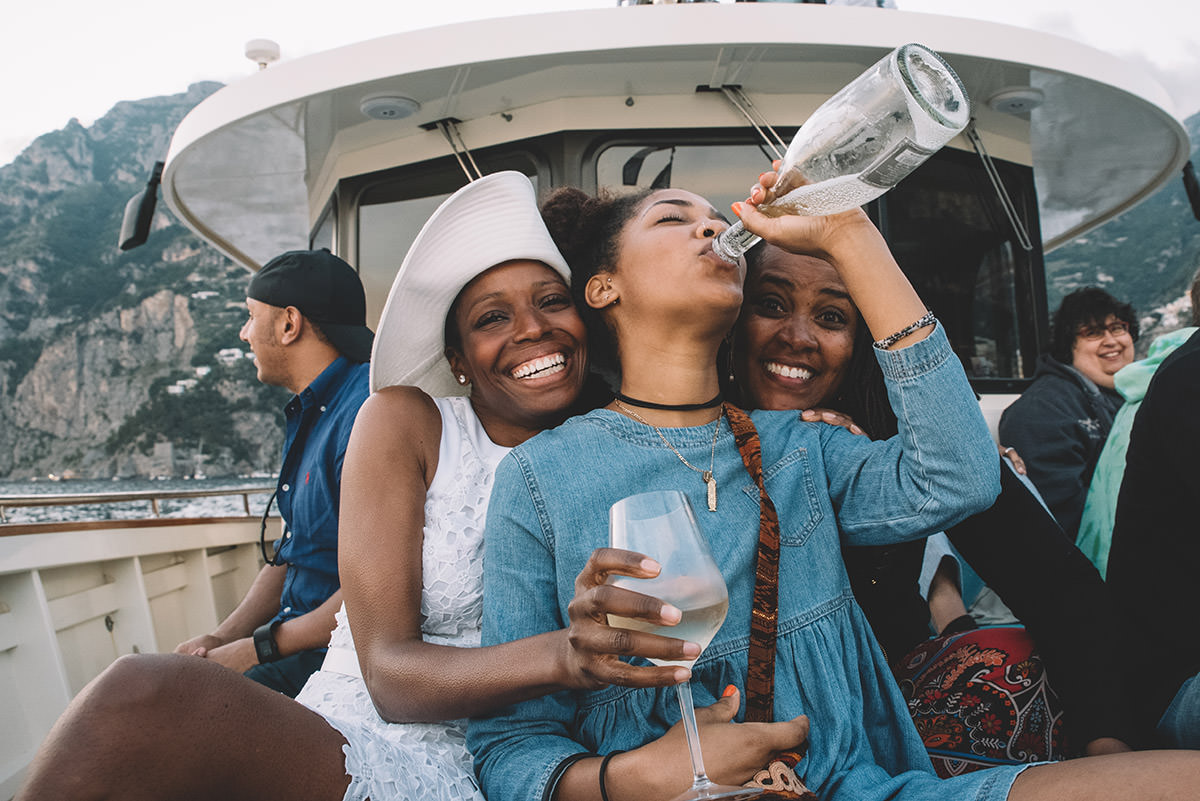
Sunscreen, a small bag with a change of top if you want to vary the look during the session, and a bottle of something to drink if you would like it on board. Some couples bring a bottle of local wine or prosecco, which photographs well and gives the session a relaxed, genuine quality. Do not overpack: space on a Gozzo is limited and excess bags create visual clutter in the background of shots. Keep it to what you need for two hours on the water.

Is this session just for couples, or can families or groups book it?

Primarily couples, because the format is designed around intimate portrait work at a scale that fits a 2 to 3 hour window. Family sessions on a boat are possible but require a different vessel, a longer window, and more logistical coordination. If you are asking about a family session or a group of friends who want a boat activity with photography, that is a separate conversation from what this post describes. Our Positano photographer contact page has the details if you want to discuss a non-standard format.

How far in advance do we need to book?

For peak season, June through August, 2 to 3 months gives you the best vessel selection. September and October can often be arranged with shorter notice, sometimes 3 to 4 weeks, but this depends on the specific captain and boat availability. Booking both the boat and the photographer together and early is always the lower-stress approach than trying to confirm one before the other.

FROM OUR POSITANO WEDDING JOURNAL

CELEBRATE YOUR LOVE IN ITALY