
Wedding in Capri: What an Island Day Really Involves
An island wedding costs more than one on the mainland coast. Here is what a wedding in Capri actually involves, and why it is worth the difference.
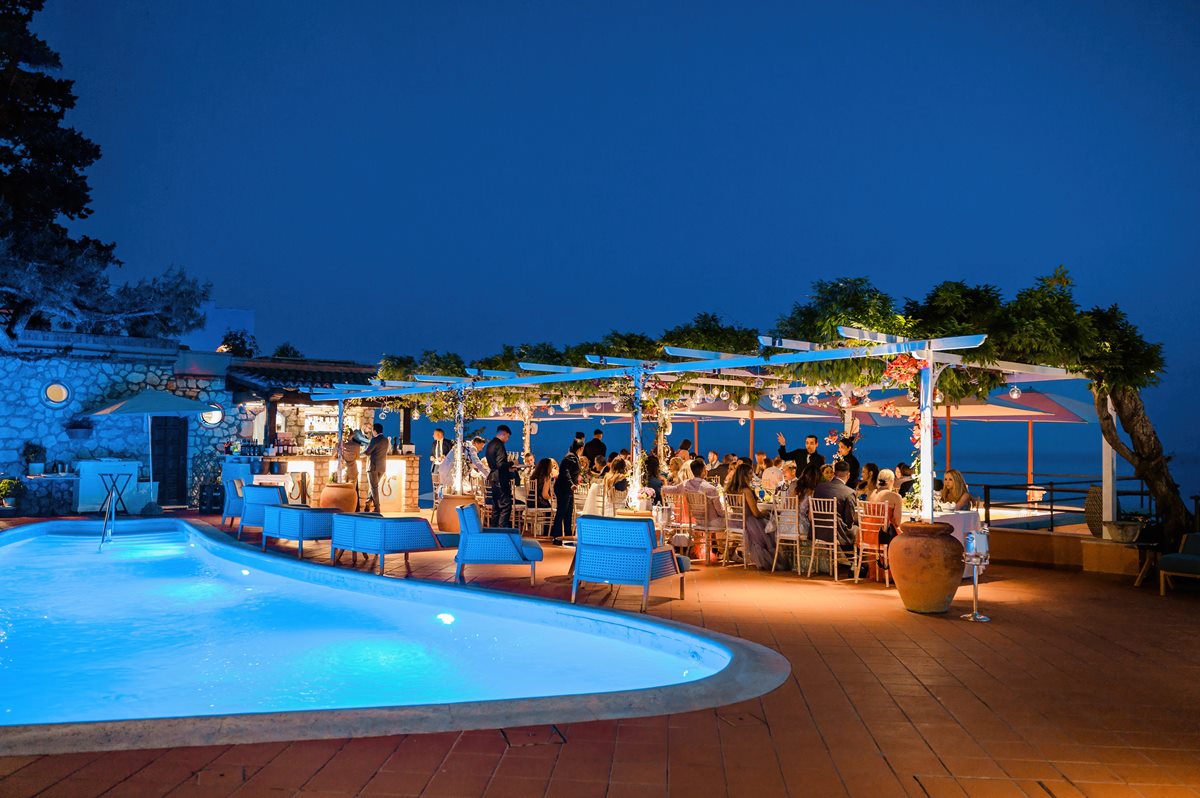

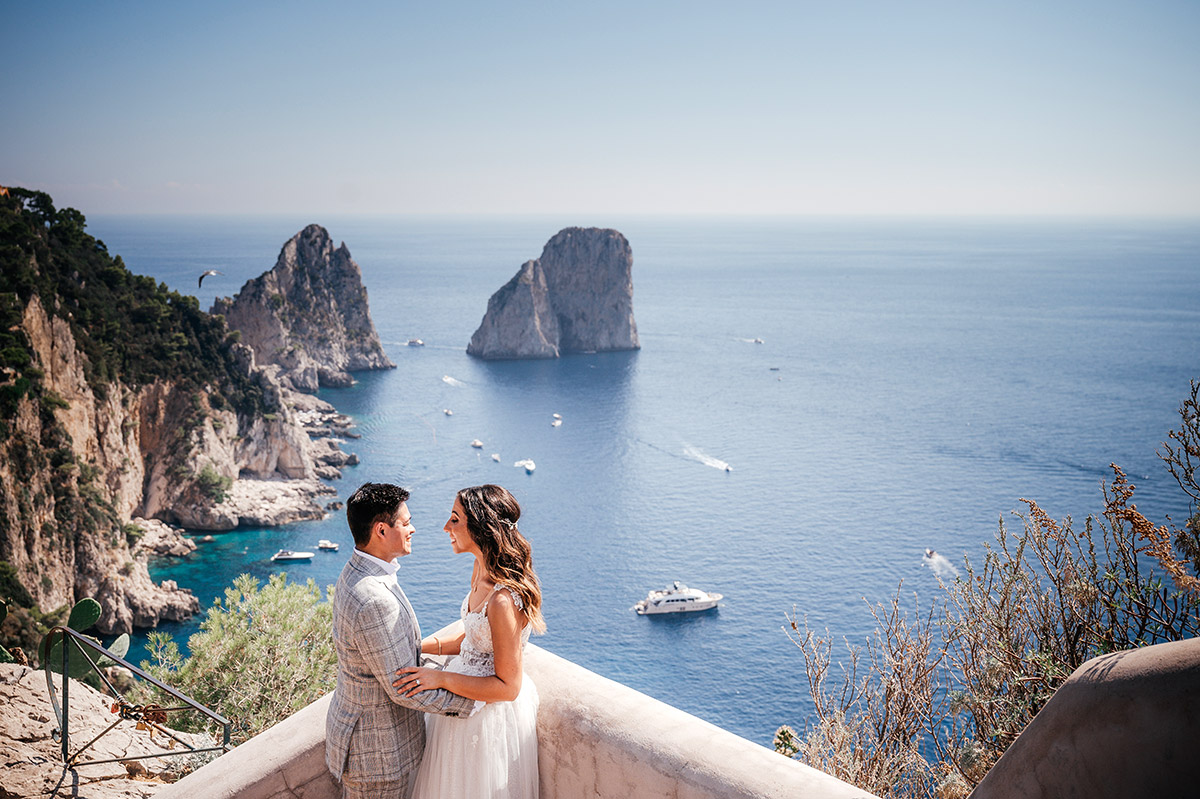
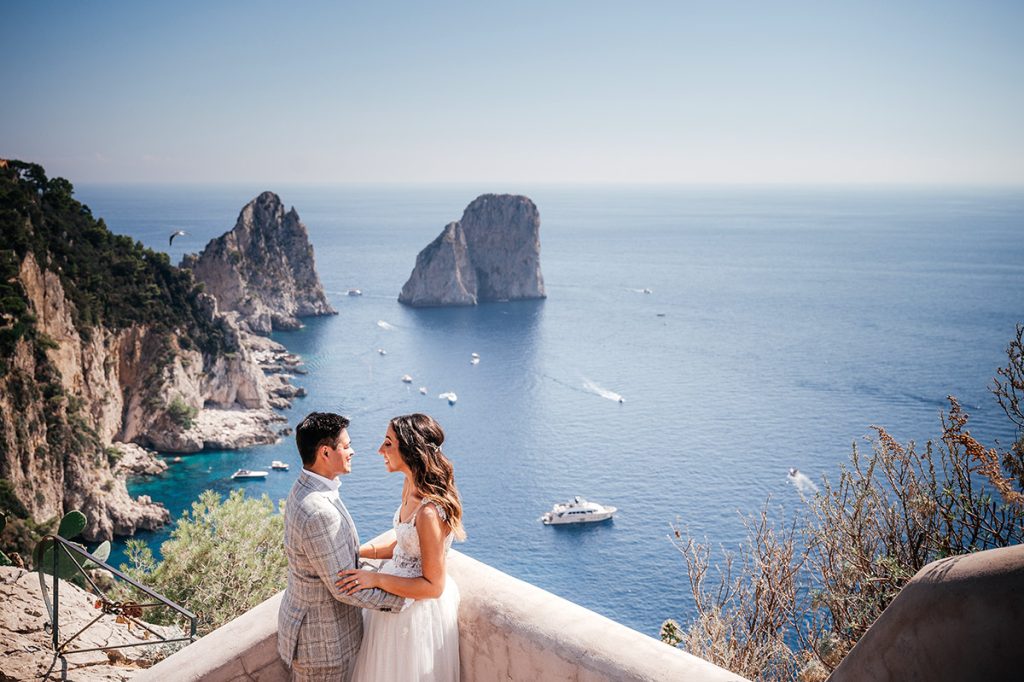
Capri costs more than Positano or Ravello for the same size wedding, and I tell every couple this before they book a single vendor. An island wedding means every flower, every chair, every bottle of prosecco crosses water to get there, and venues on Capri know exactly how much people are willing to pay for a ceremony in front of the Faraglioni. I have been photographing weddings on this island since 2013, alongside my work on the mainland coast, and this page is the honest version of what a wedding in Capri involves, sunset shots and ferry delays included.

Why Couples Choose Capri Over the Mainland Coast
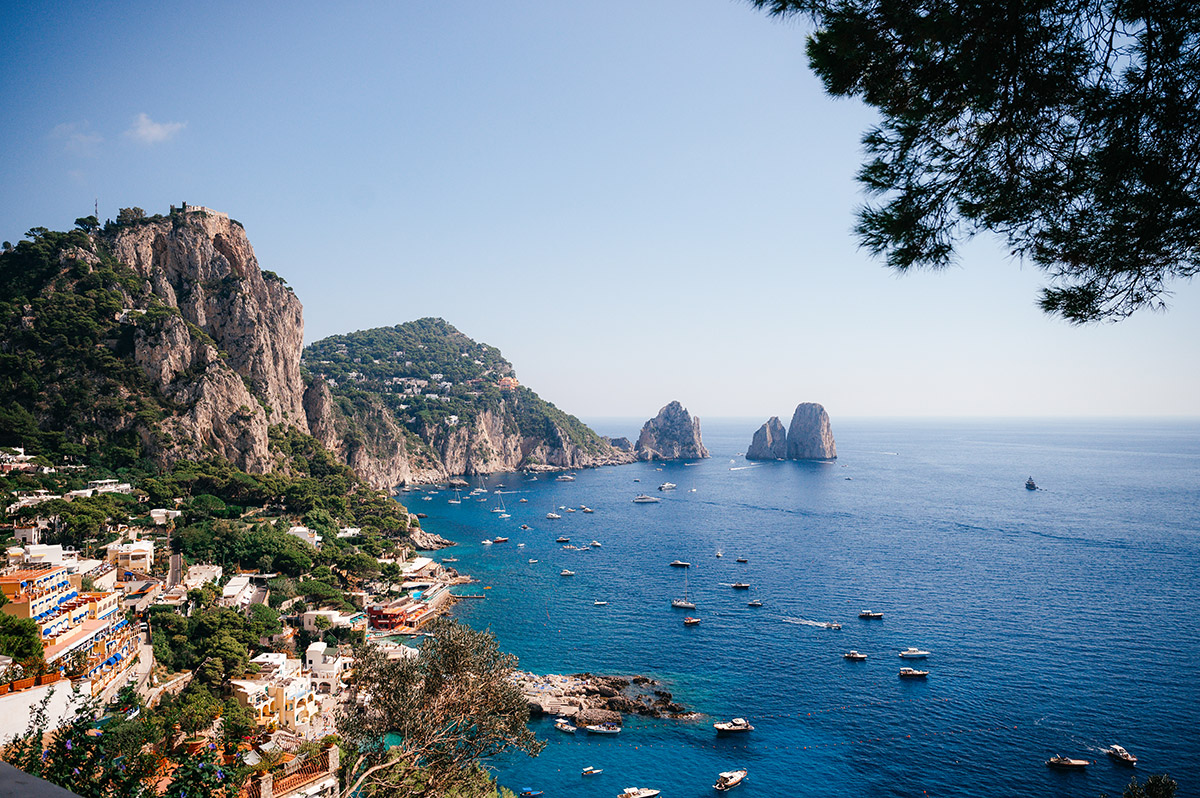
Positano and Ravello are towns built into a mountainside. Capri is an island, and that distinction changes more than the view. You arrive by boat, which means your guests experience an arrival the mainland cannot replicate: the approach past the Faraglioni, the funicular climb from Marina Grande, the sense of leaving the rest of Italy behind on the dock. I have photographed guests standing at the rail of the hydrofoil taking photos of the coastline before the boat has even docked, which almost never happens on the drive into Positano.

The tradeoff is control. Everything on Capri, from a delivery truck to a wedding planner’s site visit, moves at the pace the ferry schedule allows. I once had a florist’s shipment delayed a full day because rough seas grounded the morning hydrofoils, and the venue coordinator calmly told the couple this happens two or three times a summer. It rarely affects the wedding day itself, since most vendors build in a buffer day, but it is worth understanding before you fall in love with the idea of a Capri destination wedding.

The Venues That Define a Wedding in Capri
Capri wedding venues split roughly into three categories: public gardens authorized for ceremonies, historic villas with real stories behind them, and hotels built specifically for events. Here is the shortlist I recommend most often, in no particular order of preference, since the right one depends entirely on your guest count and your reason for choosing the island in the first place.
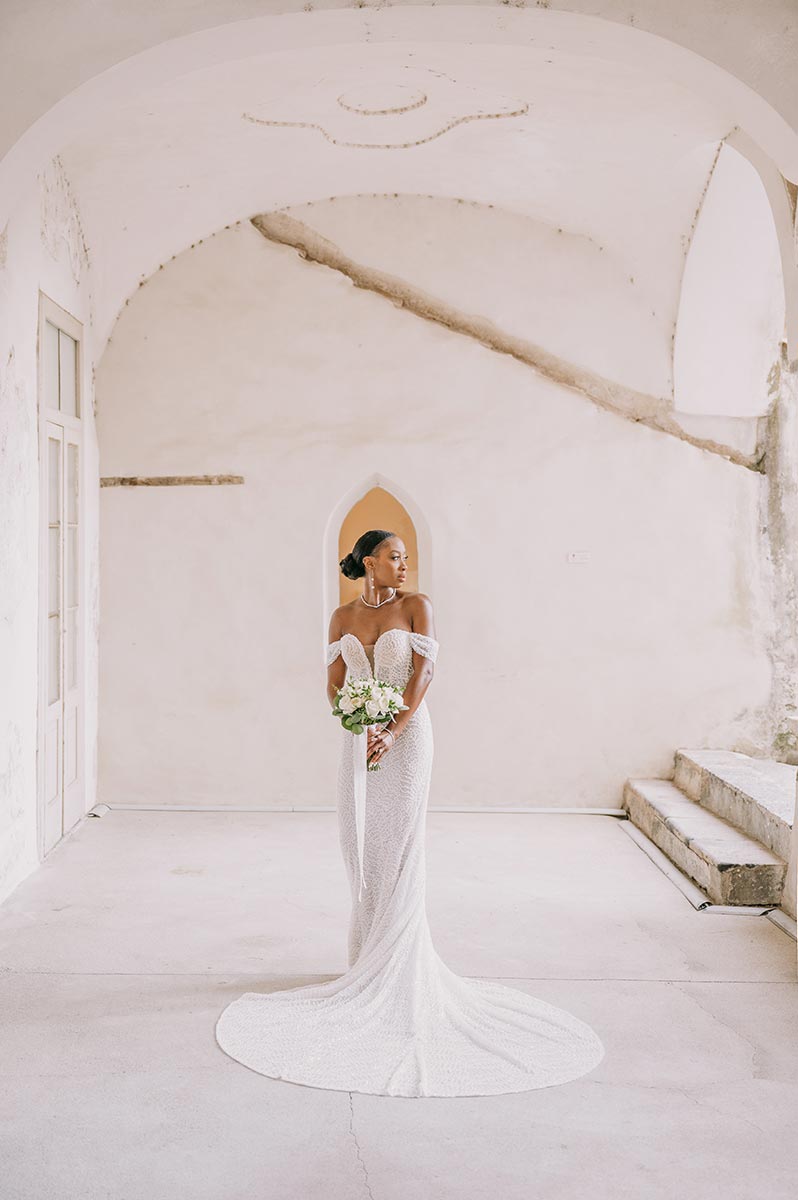

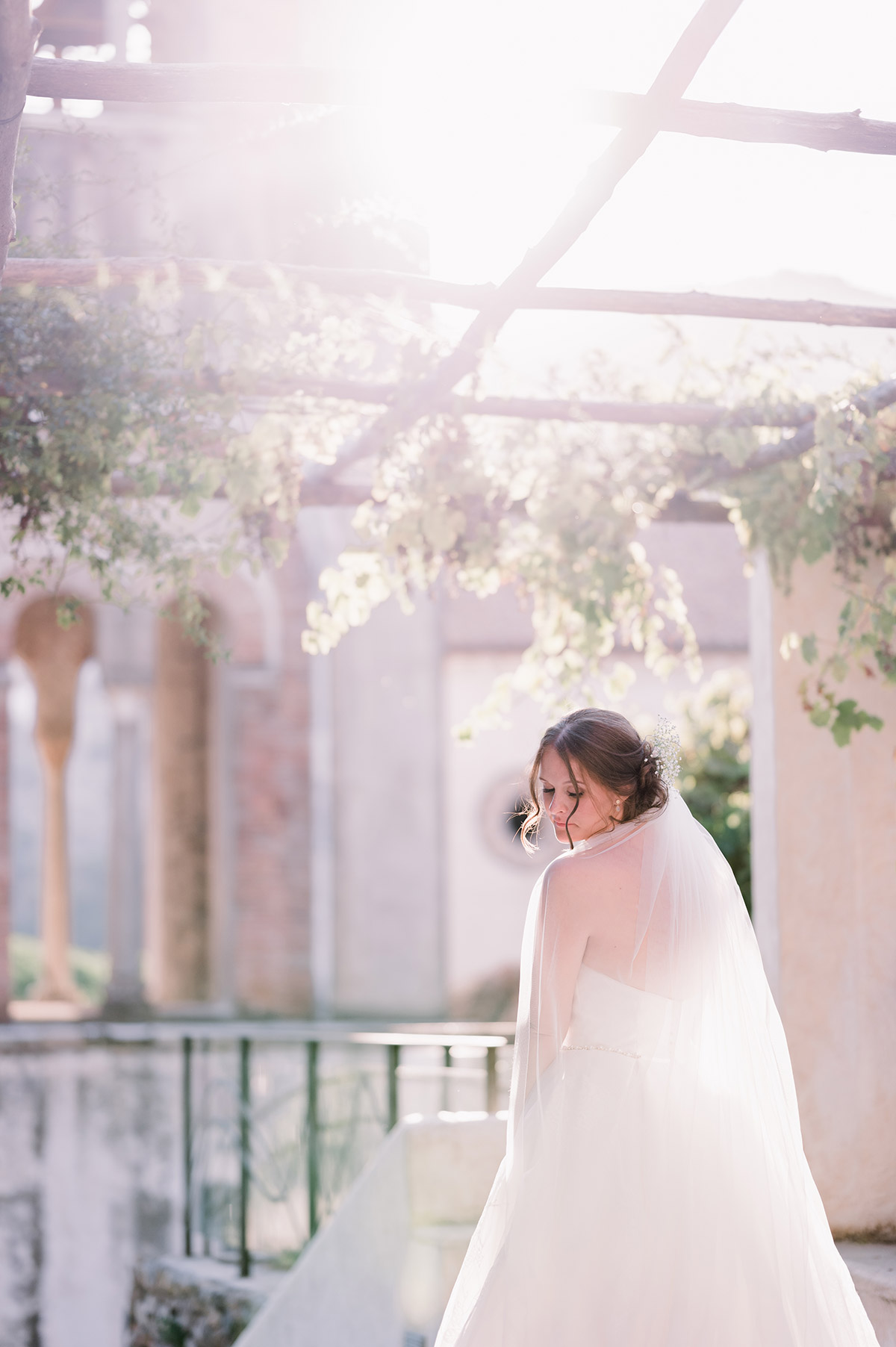

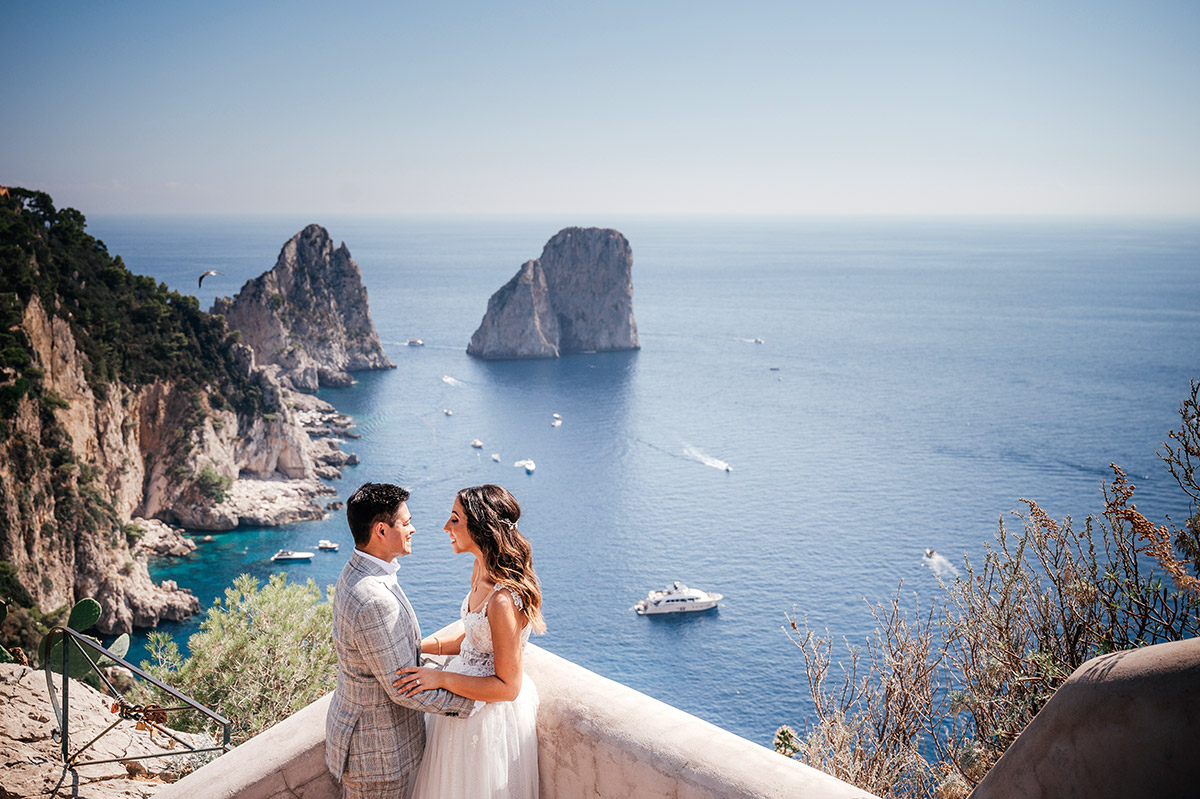
Giardini di Augusto (Gardens of Augustus). These tiered gardens above Marina Piccola started life as the Giardini Krupp, commissioned in the early 1900s by the German steel magnate Friedrich Alfred Krupp, who also financed the zigzagging path below them, Via Krupp, carved nearly 100 meters down the cliff face by the engineer Emilio Mayer and completed in 1902. After the First World War the gardens were renamed for Augustus rather than a German industrialist, and today they’re one of the few outdoor spots on the island licensed for legally binding civil ceremonies, though only during specific windows, usually May and mid-September. The view is the reason everyone books it: the Faraglioni framed by the terraced flowerbeds, Marina Piccola directly below.
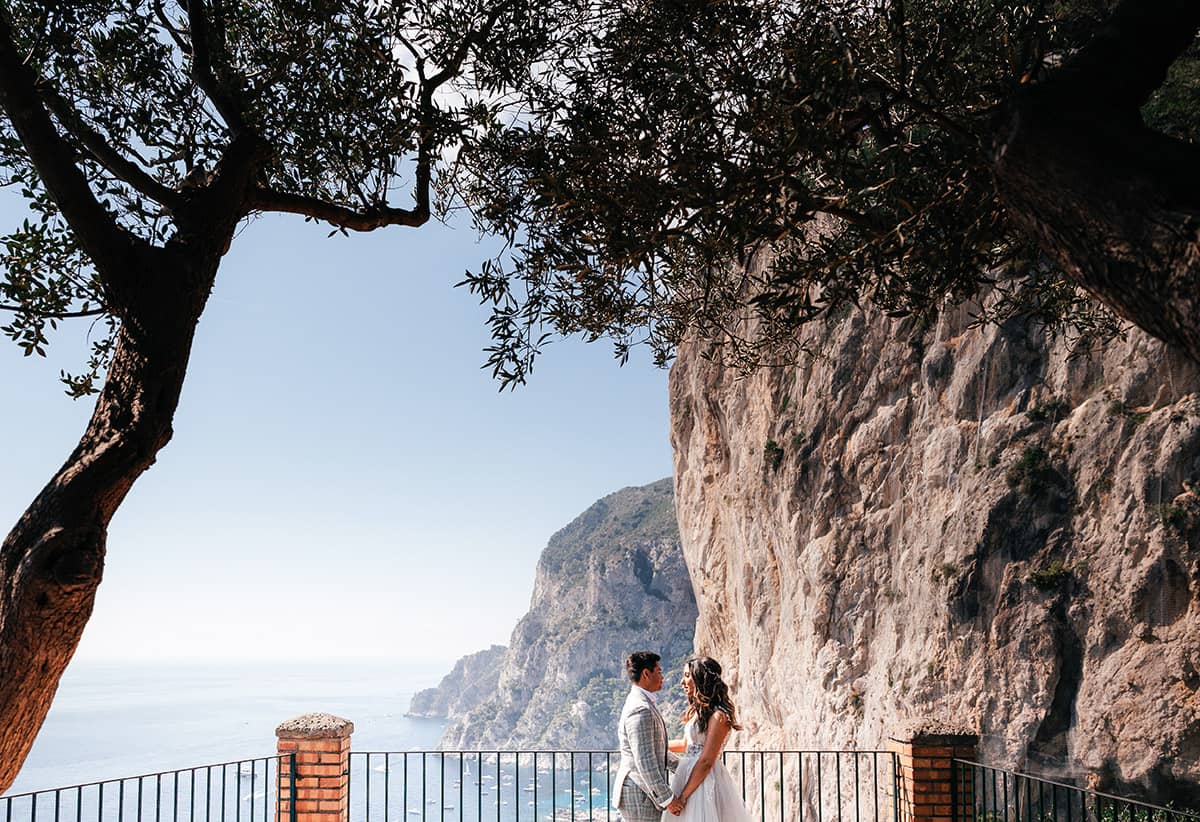
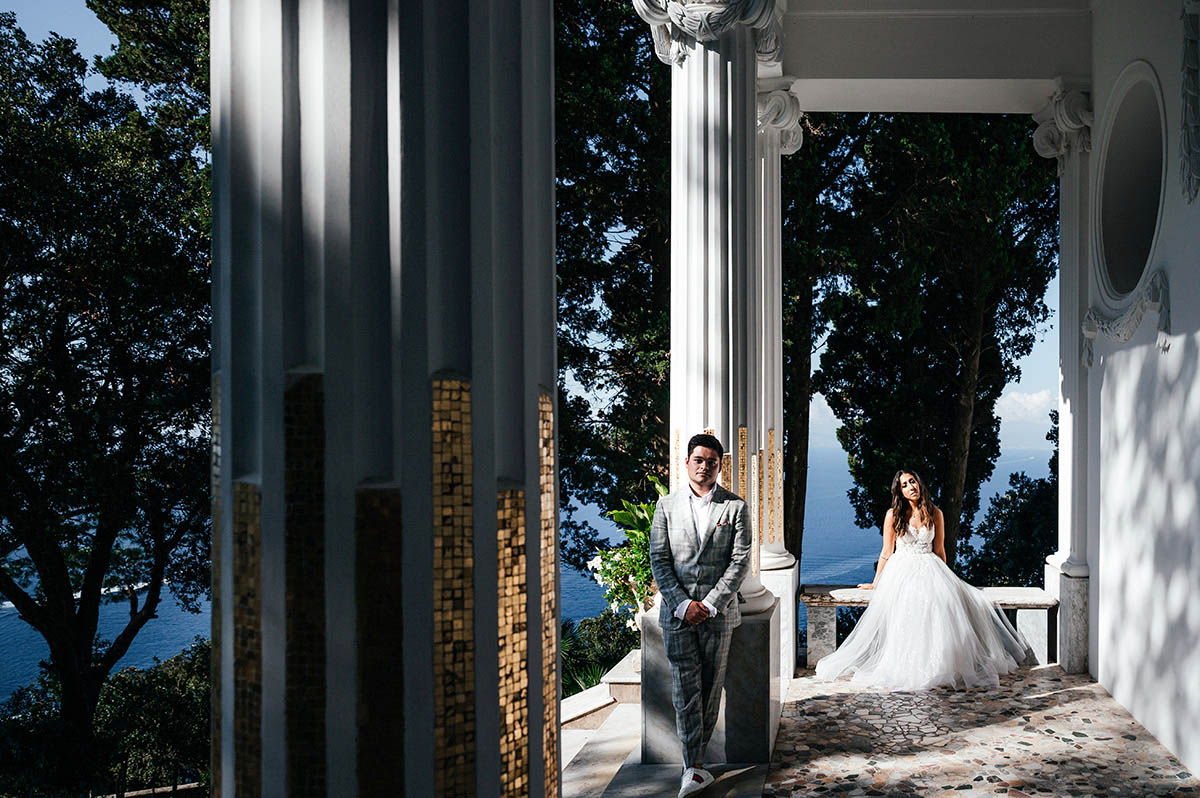
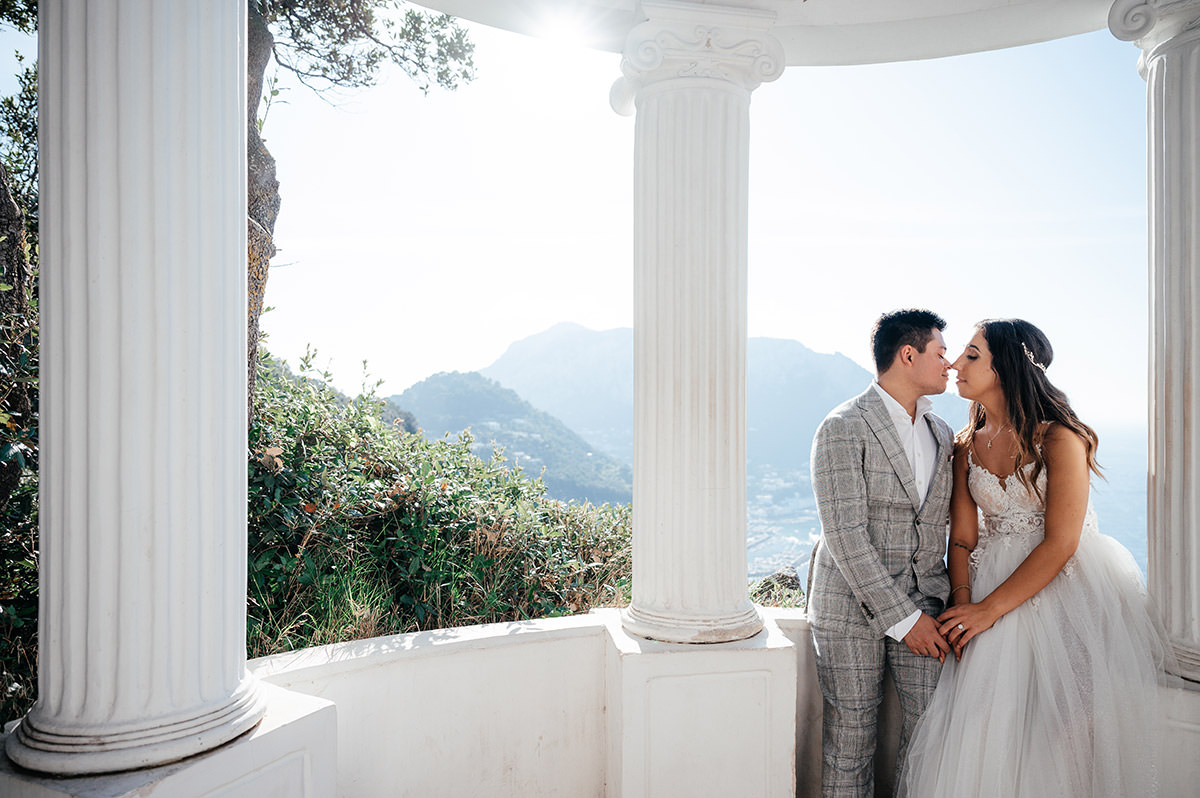
Villa Lysis. This is the venue I recommend to couples who want a real story behind their photographs. The French poet Jacques d’Adelswärd-Fersen had it built in 1904 on a spur of rock that falls straight into the sea, and he mixed into it everything he admired, neoclassical lines, Greek references, Art Nouveau detail. For your photos, the heart of the place is the entrance: a wide staircase climbing to a peristyle of Ionic columns, with the blue majolica lounge and a 12,000-square-meter garden behind it. The town of Capri runs the villa today, and through the summer it fills with concerts, exhibitions and poetry readings, with private events, weddings among them, booked around that program. Tell your guests about the walk before the day: it’s roughly 45 minutes uphill from the Piazzetta. Once you’re standing between those columns with Marina Grande below, the ceremony feels like it’s happening in a small temple above the sea.
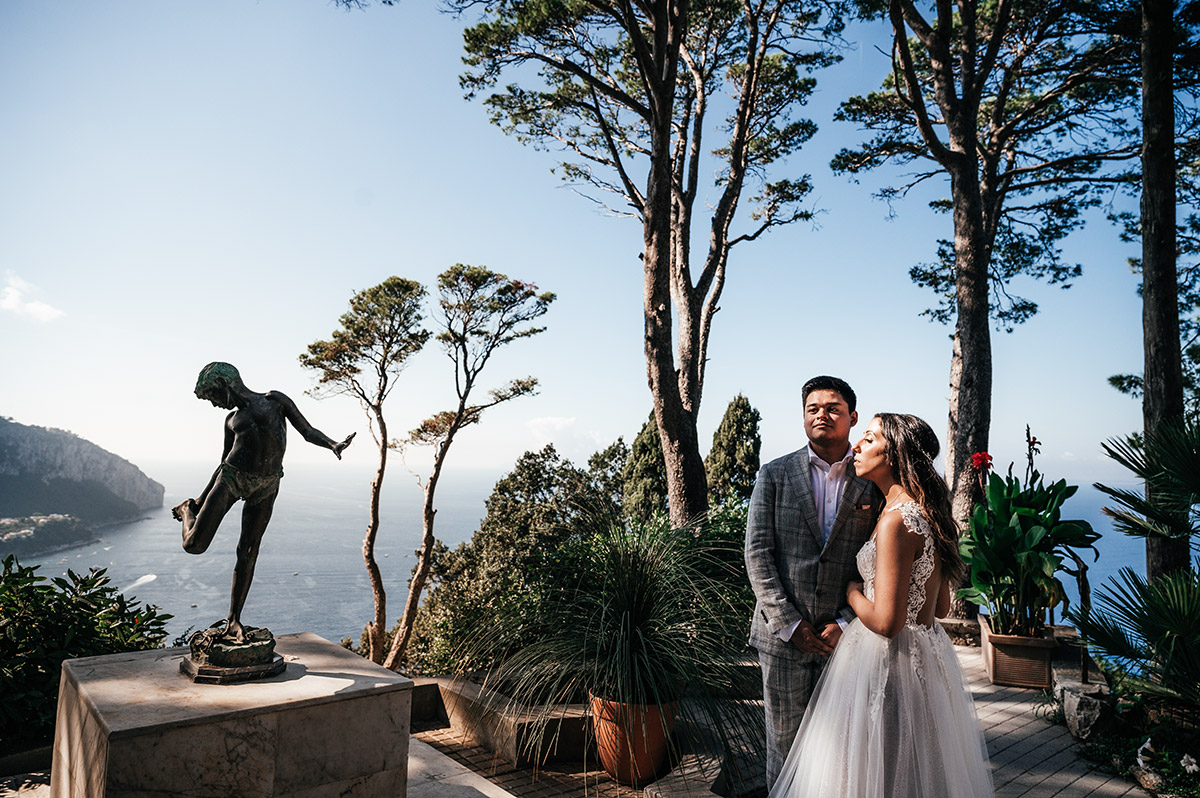
Hotel Punta Tragara. If Villa Lysis is Capri’s most romantic villa, Punta Tragara is its most audacious building. Le Corbusier designed it in the 1920s with the engineer Emilio Errico Vismara as a private residence nicknamed Stracasa, an extraordinary house grown, in Le Corbusier’s own description, like a lichen on the side of the cliff. During the Second World War it served as the American Command’s headquarters and hosted both Eisenhower and Churchill. It became a hotel in 1973 and now offers the closest, most direct view of the Faraglioni of any property on the island. I have shot ring shots on that terrace with the rock formations filling the entire frame behind the couple’s hands, and no other venue on Capri gives you that exact angle.

Caesar Augustus, Anacapri. Built in 1850 as a wealthy German family’s private residence, Caesar Augustus sits on a 300-meter cliff over Anacapri with the Bay of Naples spread out beneath its infinity pool. It’s the venue I point to when couples want the drama of a clifftop wedding without the direct Faraglioni view, since the panorama here sweeps across the entire gulf rather than focusing on one rock formation. It still runs as a family-owned property, which shows in the personal attention the staff gives to weddings compared to some of the larger corporate hotels on the island.

Villa San Michele, Anacapri. This was the home of Axel Munthe, a Swedish physician who wrote in his memoir that he wanted his house open to the sun, to the wind, and the voice of the sea, like a Greek temple, and light everywhere. That sentence describes the building better than I could. The loggia, the sphinx statue gazing out to sea, and the gardens make it one of the most photogenic ceremony backdrops on the island, and its cultural weight, an actual museum rather than a private rental, gives a symbolic ceremony here a gravity that a hotel terrace doesn’t quite match.

Grand Hotel Quisisana. Capri’s oldest continuously operating hotel began life in 1861 as a clinic called Quisisana, meaning here one heals, founded by the British doctor George Sidney Clark for wealthy visitors seeking the island’s climate. It sits steps from the Piazzetta and works well for couples who want their reception in the middle of Capri’s social center rather than isolated on a cliff edge somewhere.
Beyond these, private villa rentals across both Capri and Anacapri give you full control of the space and the vendor list, which matters if you’re bringing a large wedding party or want a multi-day celebration rather than a single event.
IF THE HONEST VERSION OF A CAPRI WEDDING SOUNDS RIGHT TO YOU, WE HAVE MUCH IN COMMON ALREADY.

Where the Reception Actually Happens
Ceremony venue and reception venue are often two different bookings on Capri, more so than on the mainland, since some of the most photogenic ceremony spots, Villa Lysis among them, have no real capacity for a seated dinner. Hotel terraces at Punta Tragara or Caesar Augustus can host both in the same location, which simplifies the day considerably and is why I recommend that route to couples who want one less logistical seam to manage.
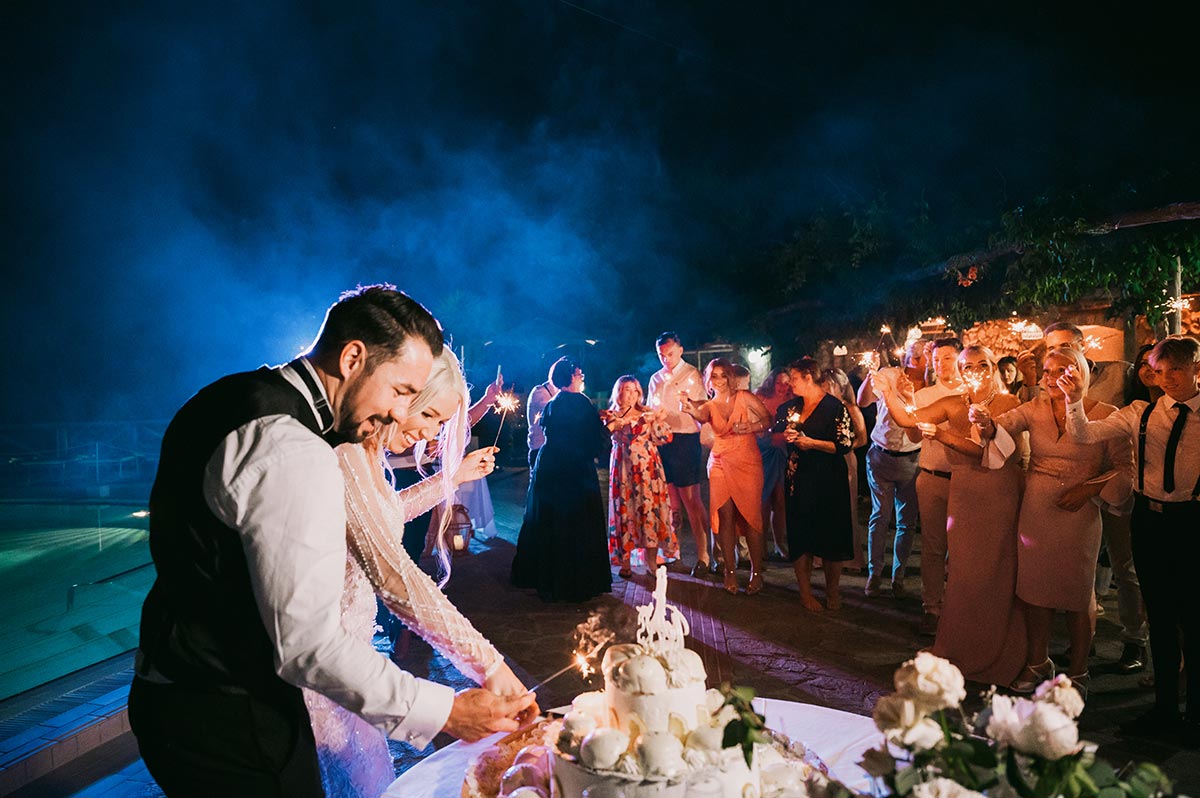
Restaurant buyouts are the other common path, and Capri has several that specialize in private events for wedding-sized groups, particularly around the Piazzetta and along the road toward Anacapri. A private villa gives you the most flexibility of all: your own kitchen team, your own timeline, no house policy about when the music has to stop. I photographed a reception a few years back at a rented villa above Marina Piccola where the couple’s caterer set up a pasta station using lemons picked that same morning from trees on the property, the kind of detail that a hotel package simply can’t offer because the lemons aren’t theirs to pick.
Types of Ceremonies on Capri
For getting married in Capri, most of my American couples choose a symbolic ceremony, which carries no legal weight in Italy but gives complete freedom over location, wording, and officiant. For the officiant we send you a shortlist of celebrants: some are native English speakers with a British or American accent, others are Italians who speak English with a clear Italian accent, and you pick the voice that feels right for your vows; the celebrant is always paid separately, never inside our package. You handle the legal marriage back home, either before or after the trip, and use Capri purely for the ceremony you actually want to remember. Villa Lysis is also one of the places where the Comune performs civil weddings, and both Lysis and Villa San Michele ask for a permit and a fee even for a symbolic ceremony.
A civil ceremony, legally binding in Italy, takes place at the Capri Town Hall or the Anacapri Town Hall, or in specific outdoor locations like the Gardens of Augustus during their authorized windows. Booking fees range from 200 to 1,500 euros depending on the day and the room. American couples need a Nulla Osta (Certificate of No Impediment) plus an Atto Notorio and a sworn Dichiarazione Giurata, since the US doesn’t issue the equivalent document directly, and two witnesses are required regardless of guest count. I once stood as a witness for a couple who arrived with nobody else on the island, and the registrar simply asked the town hall’s caretaker to serve as the second witness, which is a fairly normal solution here.
Catholic ceremonies require a consecrated church, and Capri has two serious options: Santo Stefano, the town’s former cathedral at the top of the steps above the Piazzetta, built on the site of a 6th-century Benedictine convent whose only surviving trace is the clock tower in the square, and Santa Sofia in Anacapri, built in 1510 with twin bell towers and a baroque facade. Both require coordination with the home parish and the Archdiocese of Sorrento-Castellammare di Stabia well in advance.

Why Everything Costs More When It Crosses Water
A wedding on Capri runs meaningfully higher than the same size event in Positano or Ravello, because every vendor, every rental chair and every delivery has to cross water, and Capri’s venues price accordingly. Based on current market rates across the island’s luxury venues and vendor network, here’s a realistic breakdown:
- Intimate wedding (10-25 guests): Roughly 45,000 to 75,000 euros, covering a private terrace or villa, photography, a small catering setup, flowers, and a celebrant.
- Medium wedding (30-60 guests): Roughly 80,000 to 130,000 euros, which typically brings in a full hotel or villa buyout, live music, and a proper multi-course reception.
- Large or multi-day wedding (60-80+ guests): 120,000 to 150,000 euros is the starting range for a single-day event at this scale on Capri, and multi-day celebrations with welcome dinners and farewell brunches commonly reach 180,000 to 350,000 euros or more.

Check our packages
Capture the Magic of Your Special Day with Emiliano Russo
These figures come from current market research across the island’s venues and vendors, not from a single quote, so treat them as planning ranges rather than a fixed price. The single biggest cost driver is guest count, since every additional person adds a place setting, a transfer seat, and often a hotel room booked out for multiple nights. The second biggest driver is which side of the island you choose: Anacapri venues tend to run slightly lower than properties directly in Capri town or overlooking the Faraglioni, purely because of proximity to the port and the Piazzetta.
None of these ranges include photography, video, or planning fees separately, since venues and catering are typically the largest line items and get quoted together by the property itself. Your photographer, your planner, and any add-ons like a live musician or a boat excursion sit outside these figures and get booked independently, which is exactly why I keep those numbers on their own dedicated pages rather than folding them into a single all-in estimate that would be more guess than fact. For a category-by-category breakdown of exactly where the money goes, see my full Capri wedding cost breakdown.
For the photography and planning pieces specifically, with real starting prices, see my Capri wedding photographer and Capri wedding planner pages. If your guest list is closer to zero than sixty, the math changes completely, and I’d point you toward eloping in Capri instead.
Getting Guests to the Island
Capri is reachable only by sea, from Naples or Sorrento. From Naples, the ferry takes about 75 minutes and the hydrofoil about 45. From Sorrento, it’s roughly 25 minutes by ferry or 15 by hydrofoil, which is why many of my Capri couples put their guests in Sorrento the night before rather than Naples. Every non-resident pays a landing tax on arrival, 5 euros per person from April through October and 2.50 euros the rest of the year, usually already folded into your ticket price. Non-residents cannot bring a car onto the island from Easter through early November, so guests need to be comfortable with taxis, the funicular from Marina Grande up to the Piazzetta, and a fair amount of walking on stone streets and stairs.
Sea conditions matter more here than on the mainland. Hydrofoils are the first service canceled in rough weather, while the larger ferries keep running in all but the worst storms. I always tell couples to schedule guest arrivals with at least a half-day buffer before any wedding-related event, precisely because of afternoons like the one I mentioned earlier, when a supplier’s shipment sat in Naples for an extra day waiting for the water to calm down.

When to Get Married on Capri
May, June, and September give you the most reliable combination of good weather and thinner crowds. July and August bring the warmest water and the fullest hotels, along with day-trip crowds that can make popular spots like the Piazzetta and the Gardens of Augustus hard to shoot around midday. October is a season I’ve grown to love personally: the light turns softer and more silver-toned, the tourist boats thin out, and venues that are booked eighteen months in advance for June sometimes still have a Tuesday open in October.

If you’re weighing Capri against the rest of the Amalfi Coast, or you already know this is your island, get in touch with your dates and rough guest count. I’ll tell you honestly whether the venue you have in mind fits, and what it will actually cost to make it happen.
What Weddings on Capri Actually Look Like
A few real weddings and sessions from the island give a better sense of how these venues actually work in practice than any description on this page.
Elopement in Capri
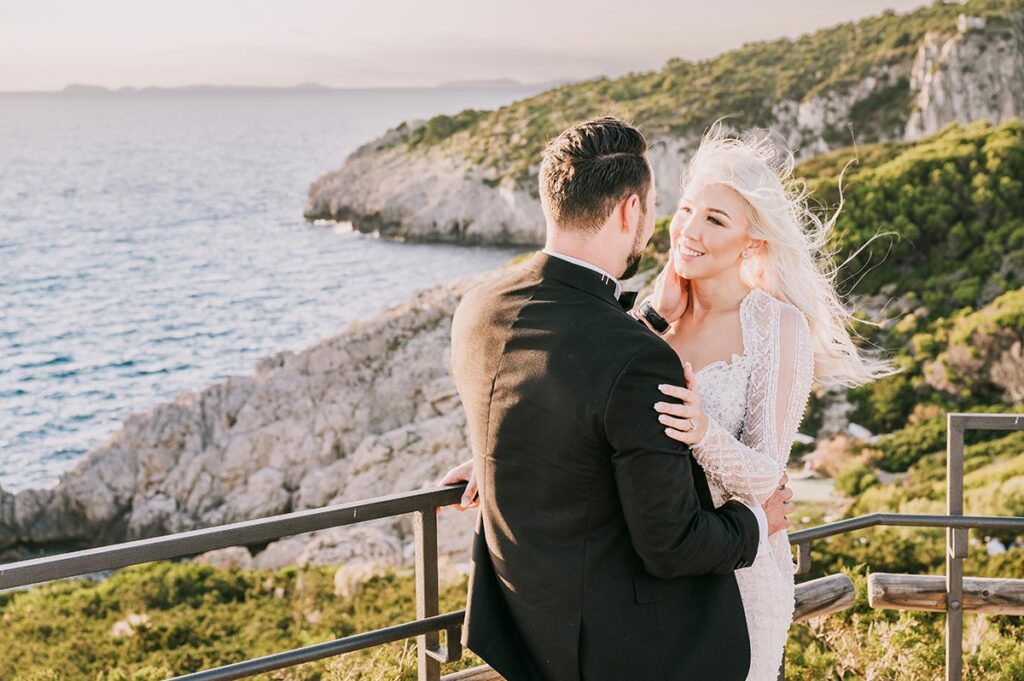
Cydney and Charles

Punta Tragara Wedding: Raquel and David’s Jewish Ceremony
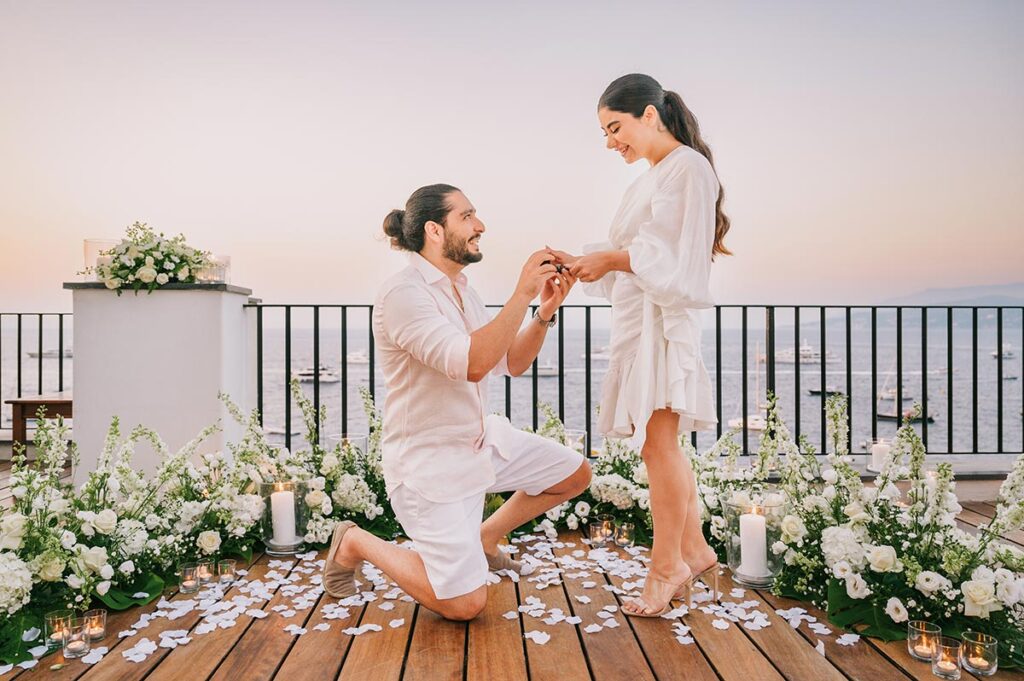
Maya and Anthony: A Capri Wedding Proposal at JK Place

Wedding in Procida – Valentina e Giuseppe
Villa Lysis Elopement Capri – Nicole and Raphael
Tell me your date and roughly how many guests you’re bringing, and I’ll reply with real availability and what a Capri day at that size really involves.
Five questions
Island Questions Before You Book Capri
Whether the crossing costs extra, drone footage, renewing your vows, proposing in the Gardens of Augustus, and a shorter session.
Do you charge extra to come to Capri for our wedding?
No. The ferries and a night on the island for our team are already inside the Capri price, so the crossing never shows up later as an extra line on the invoice. That is also why photography on Capri starts at 3,200 euros, VAT included, more than on the mainland coast: the boats and the hotel room are part of the figure you read.
Are drones allowed at Capri weddings?
Sometimes. Our drone pilots are licensed and insured, but most villas and every hotel now say no, for privacy and safety. A private villa you rent, or the open sea, is where it usually works, so we check your venue first.
Can we renew our vows on Capri?
Yes, as a symbolic ceremony, which needs no paperwork. Just the two of you is priced as an elopement, from 3,200 euros for three hours with a photographer and an assistant; with family and friends it becomes a wedding in size and price.
Can we propose in the Gardens of Augustus?
You can, but I steer couples away from it. The gardens are among the most crowded places on the island, a surprise is hard to keep there, and a garden run by the town asks for permission for a planned event. Capri has many quieter spots with the same sea below, and I share them once you have booked.
Can we book a shorter session on Capri?
Two hours is the shortest I book anywhere, and on Capri 3,200 euros is the minimum for any service. The ferries and the night on the island for my team cost the same whether we photograph for one hour or four, which is why the shorter session does not come out cheaper here.
 Written By Emiliano Russo