
Punta Tragara Wedding: Raquel and David’s Jewish Ceremony
A CHUPPAH FACING THE FARAGLIONI
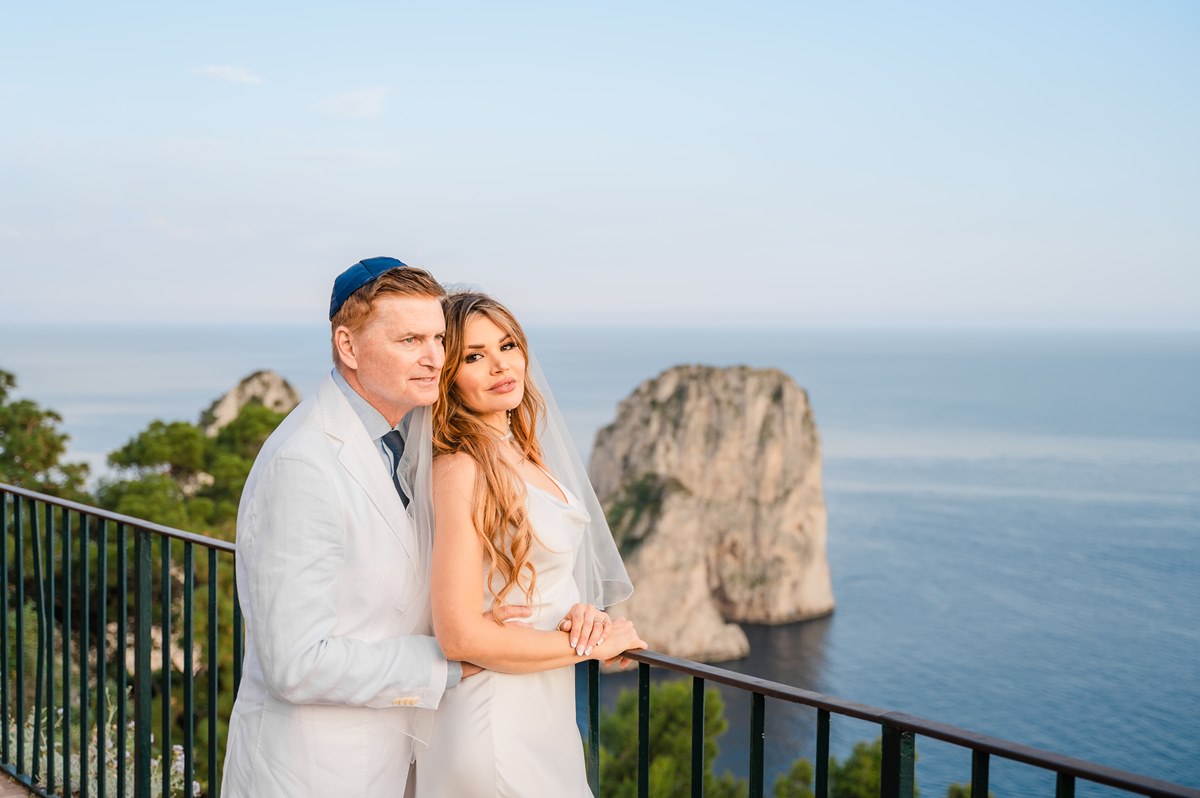
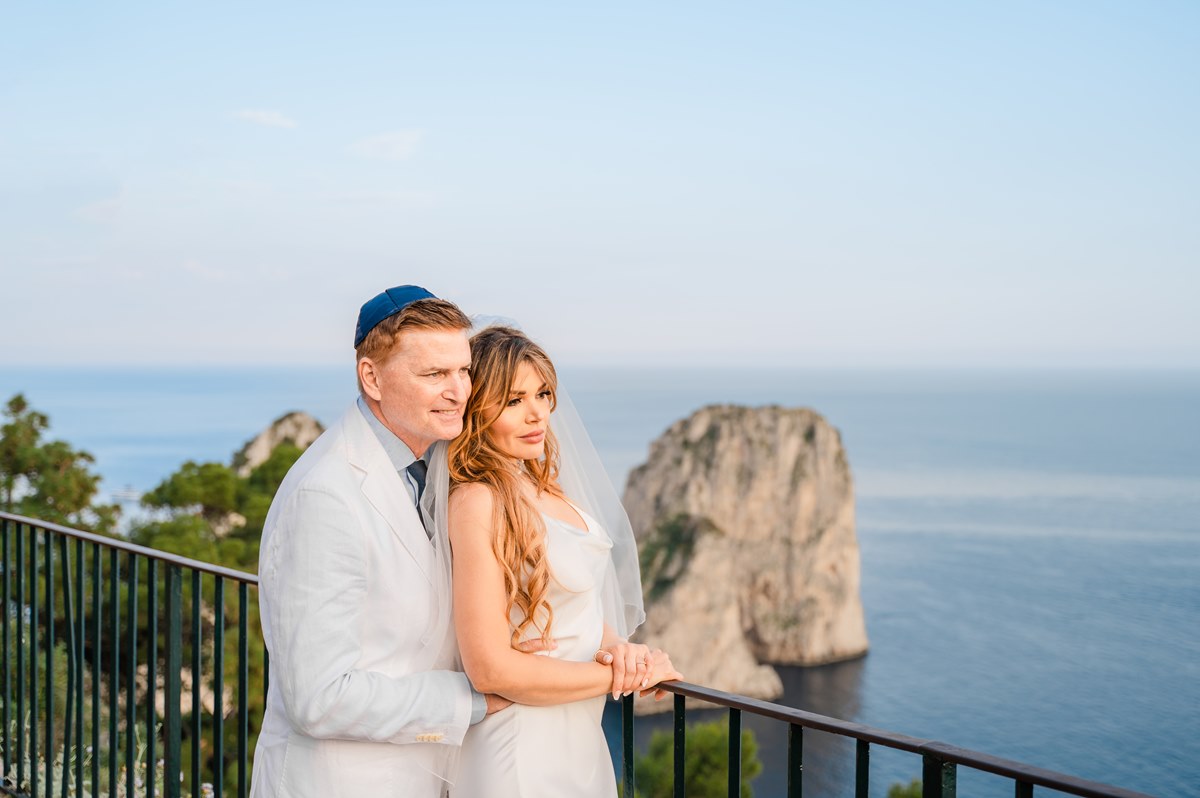
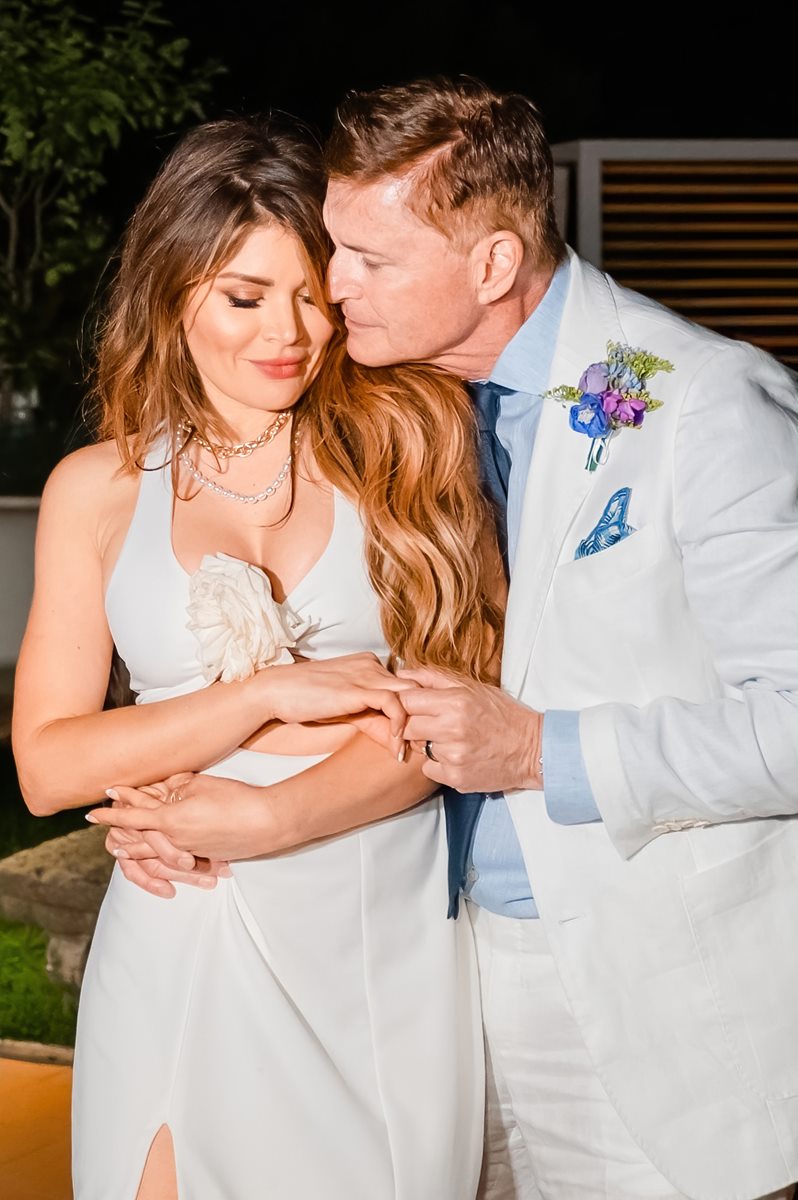
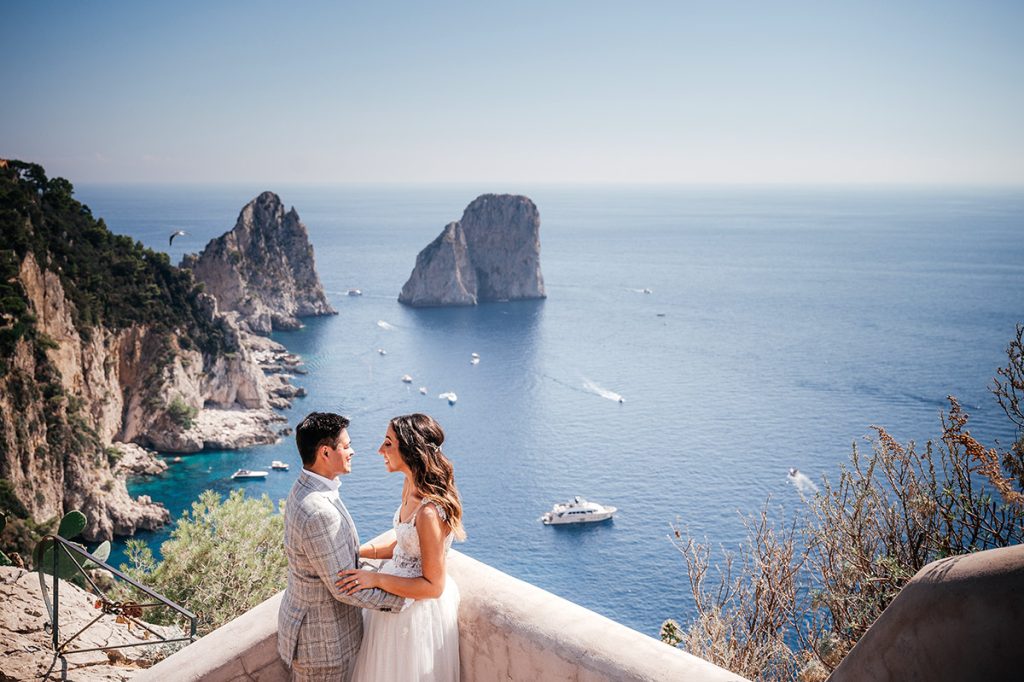
Raquel and David’s Punta Tragara wedding was a Jewish ceremony, with a chuppah facing the Faraglioni and a bridal party dressed in blue.

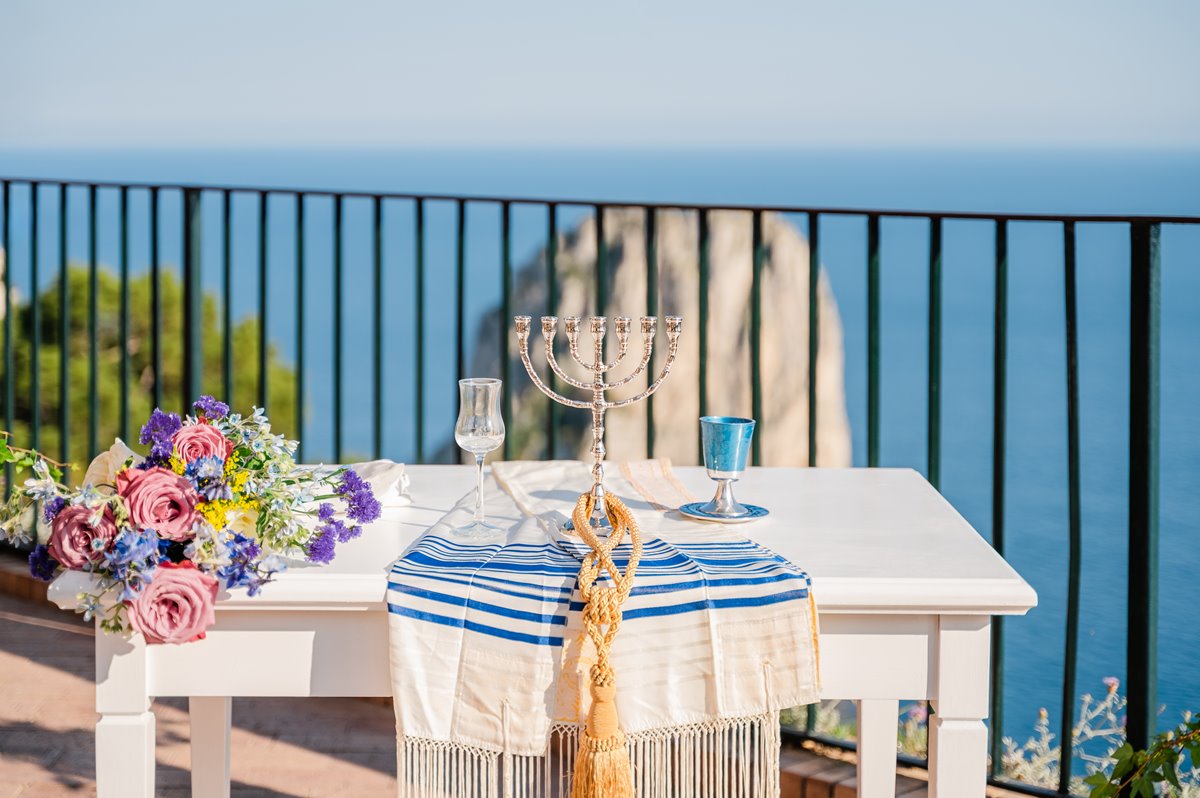
A chuppah on the terrace, facing the Faraglioni at last.

Most of the weddings I photograph on Capri at Hotel Punta Tragara use the terrace the same way: a symbolic ceremony, a young couple, a single officiant reading from a card. Raquel and David’s day on May 28 was built on a completely different structure, and it’s one of my favorite weddings on the island because of how much tradition it carried. It’s also the gallery I point to whenever a couple asks me whether a Jewish wedding on Capri, or any full religious ceremony, can work on the island.
The Hotel Behind a Punta Tragara Wedding
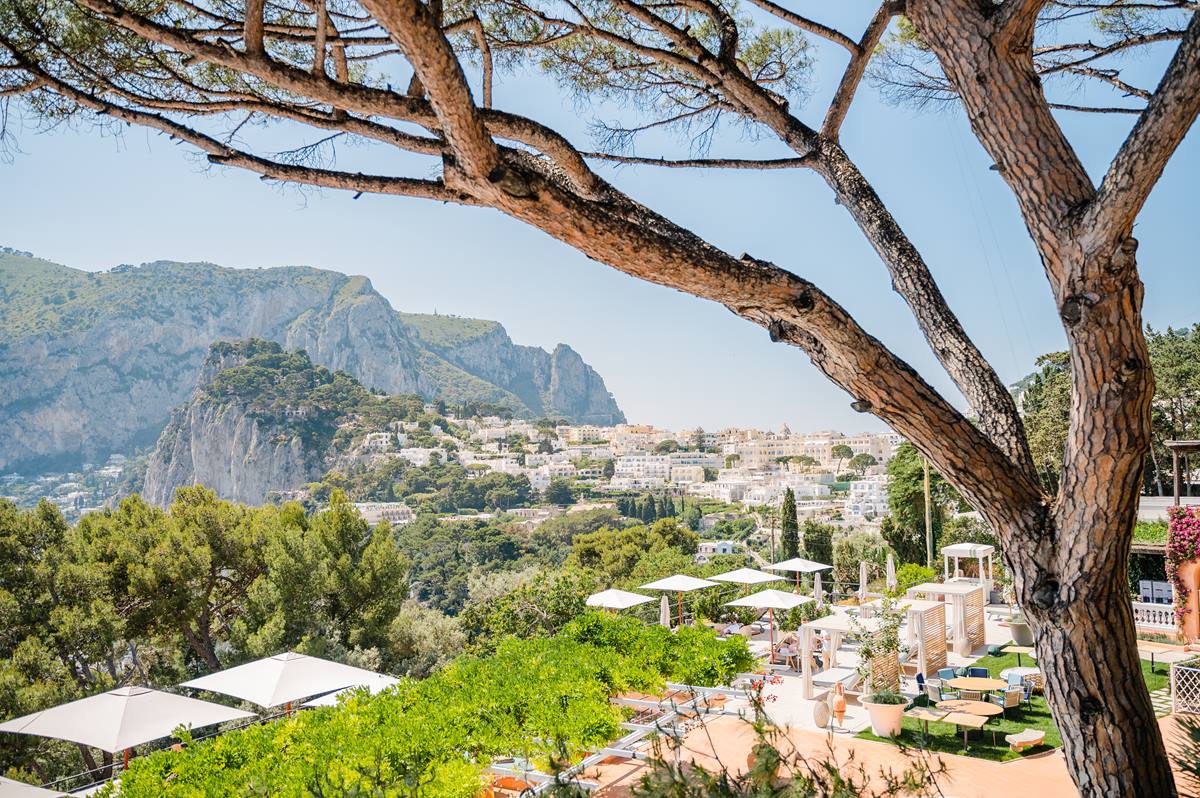
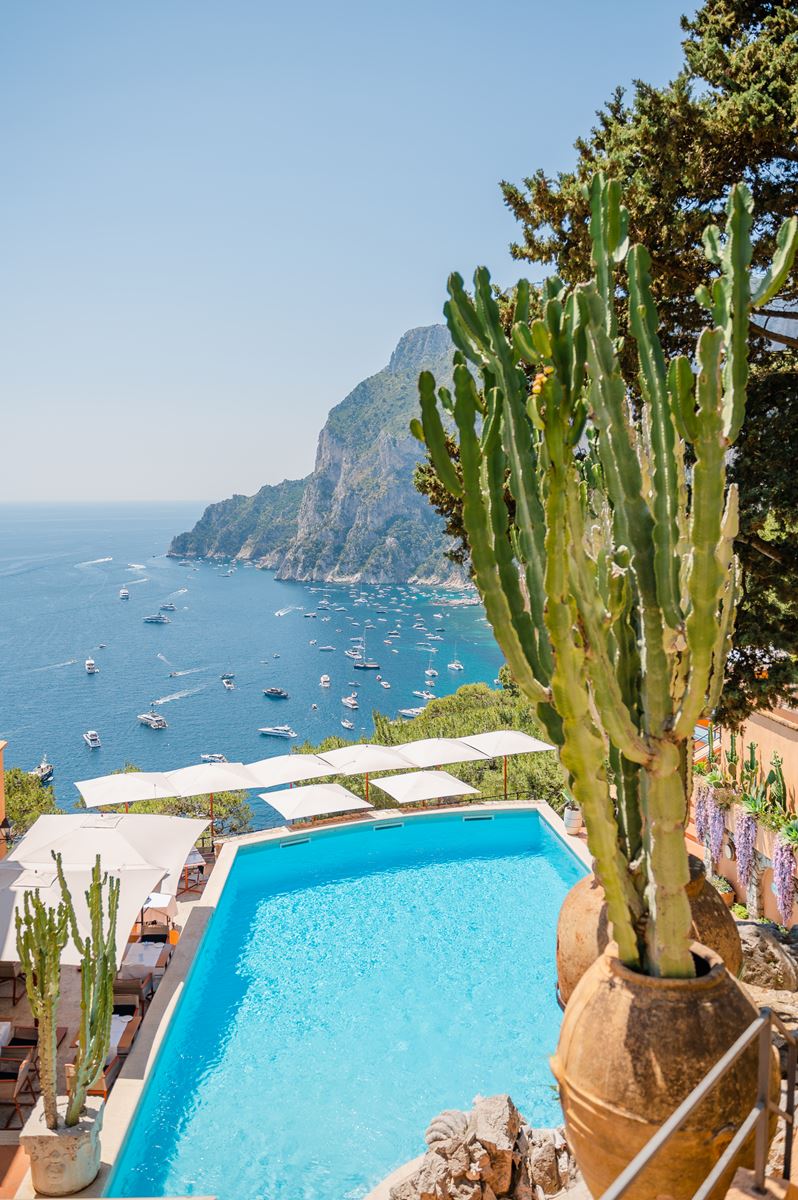
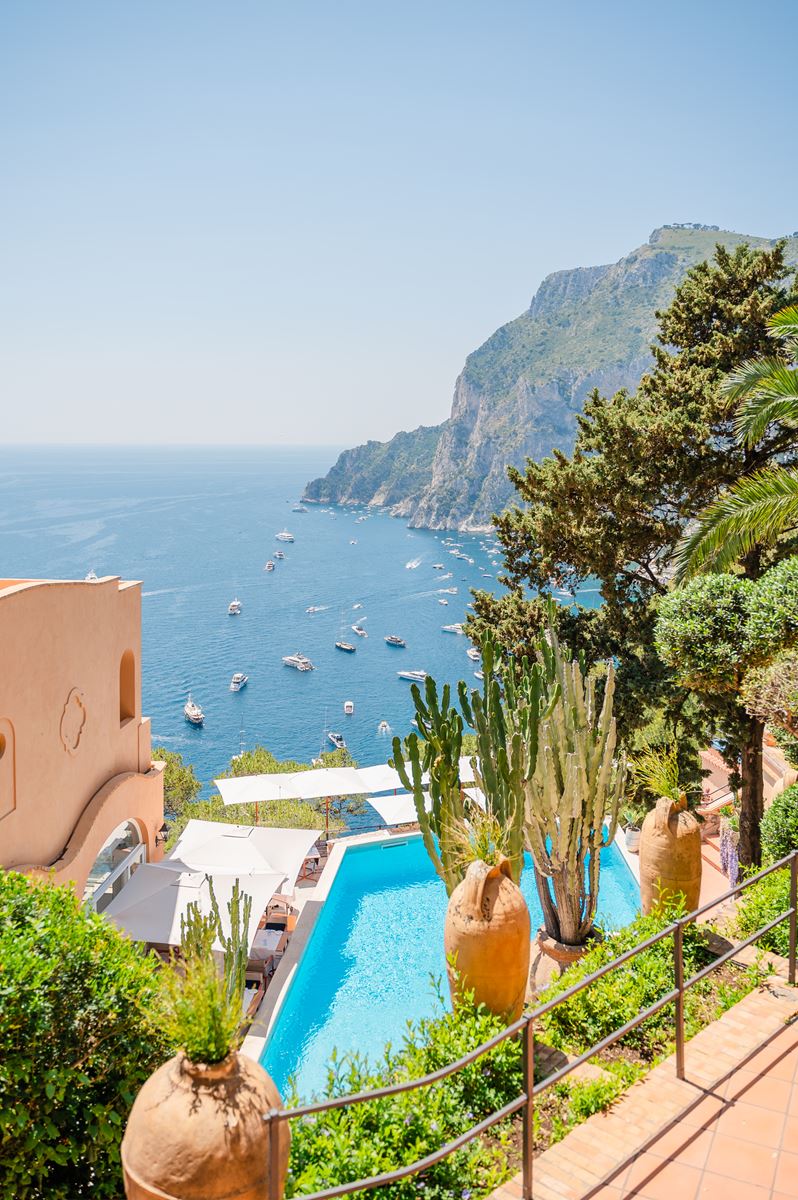
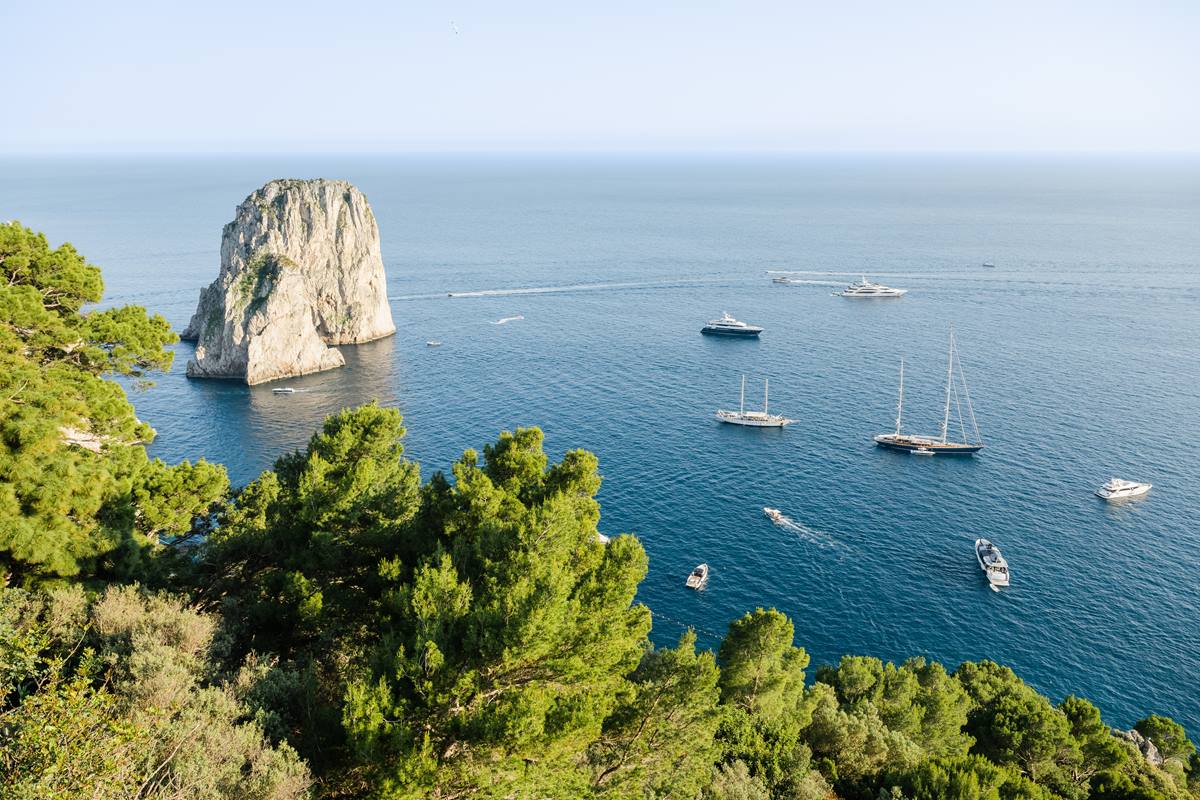
I’ve written elsewhere about Punta Tragara’s history as a Le Corbusier-designed residence turned hotel, and I won’t repeat that story here. What matters for Raquel and David’s day is the orientation of the terrace. Most ceremony spots on the island offer an angled or partial Faraglioni view, while this corner of Punta Tragara looks across the water toward the rocks, so a chuppah has a backdrop that frames it.
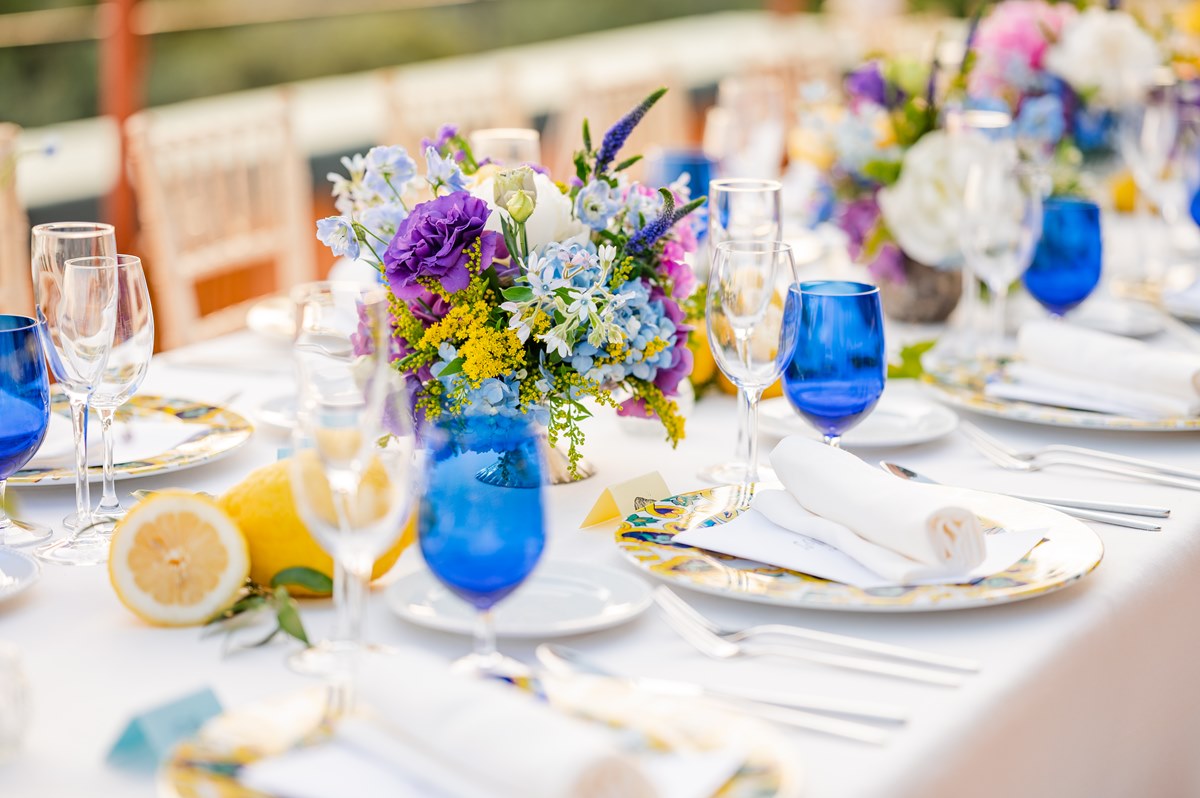
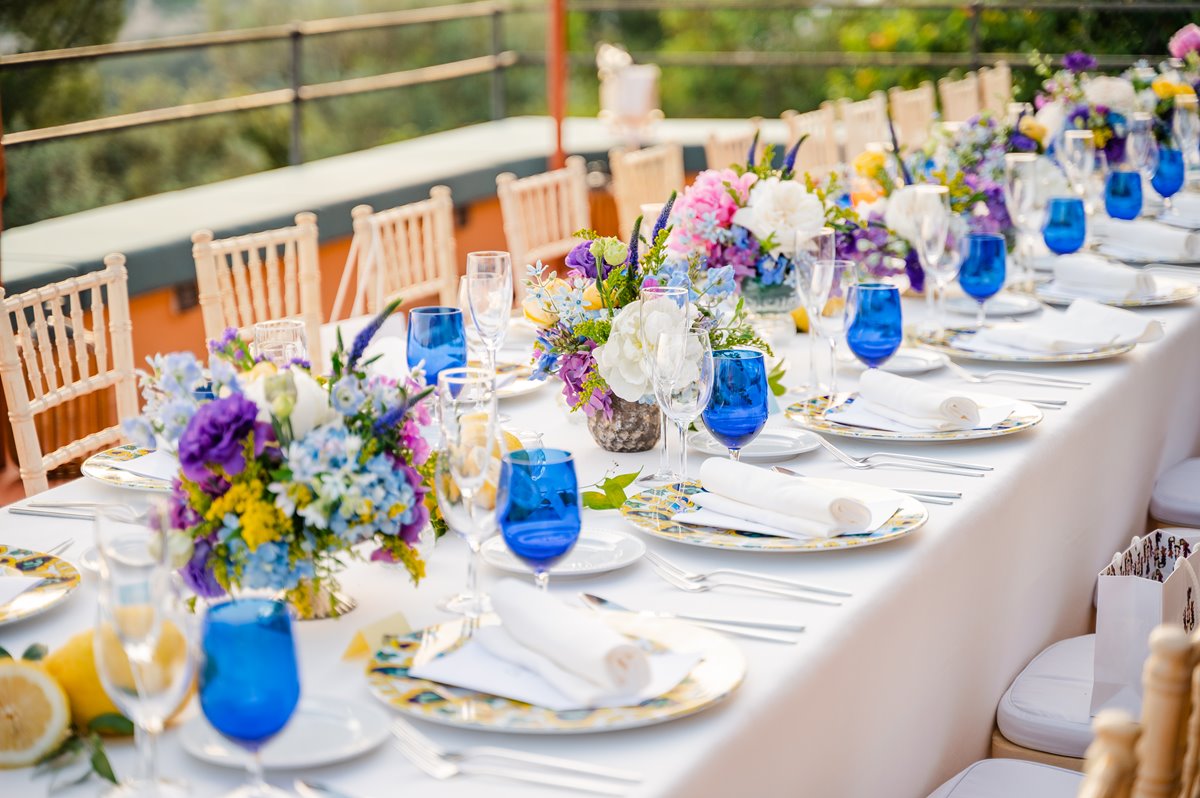
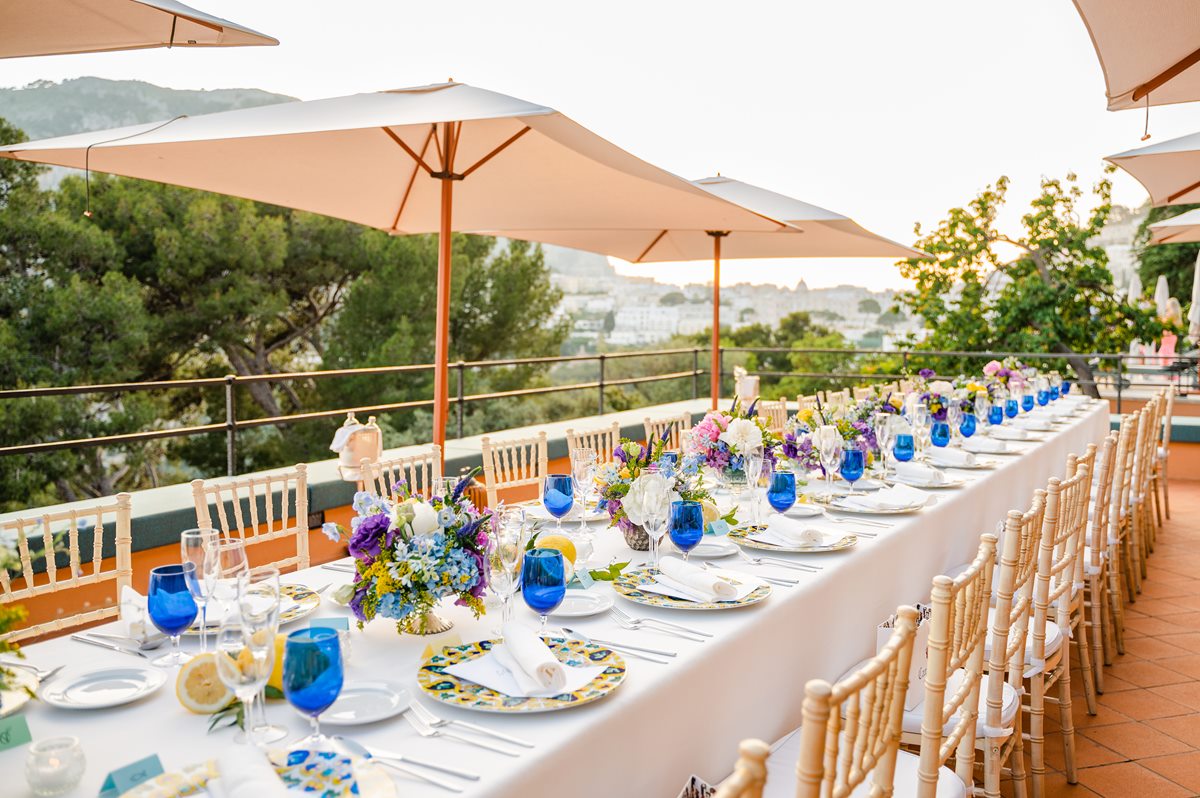
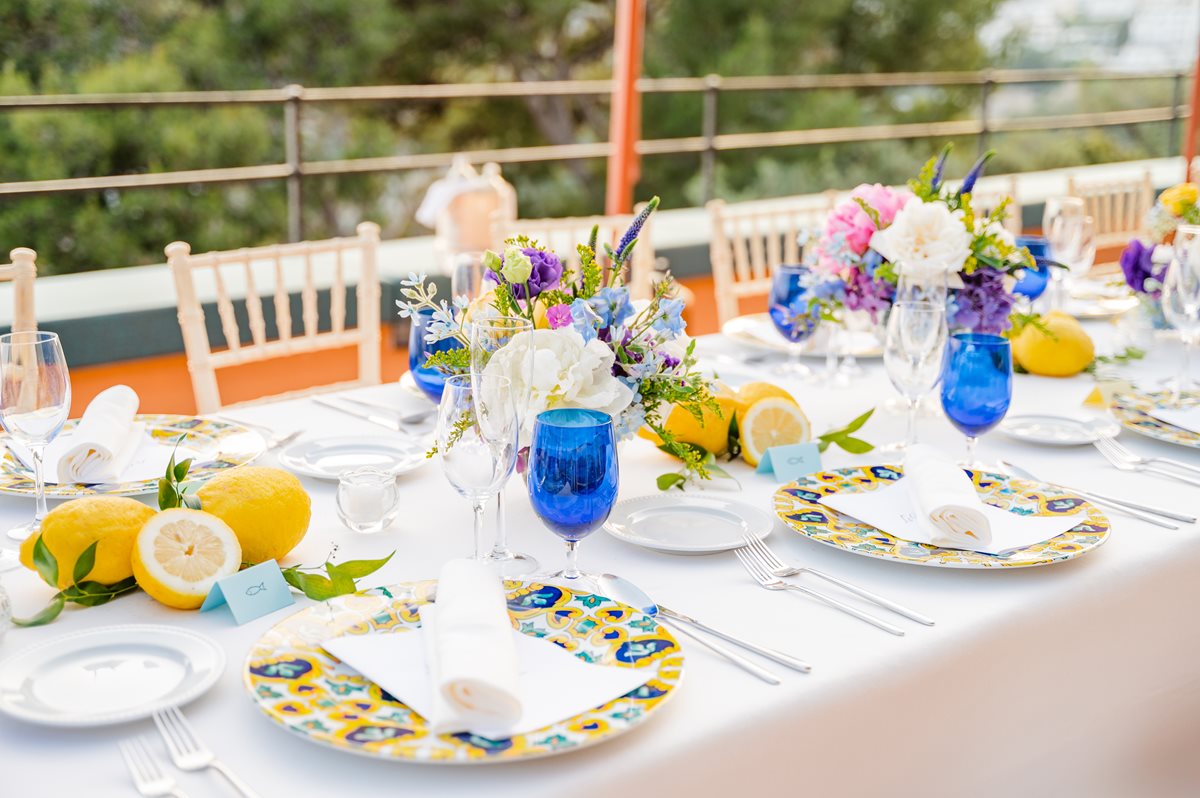
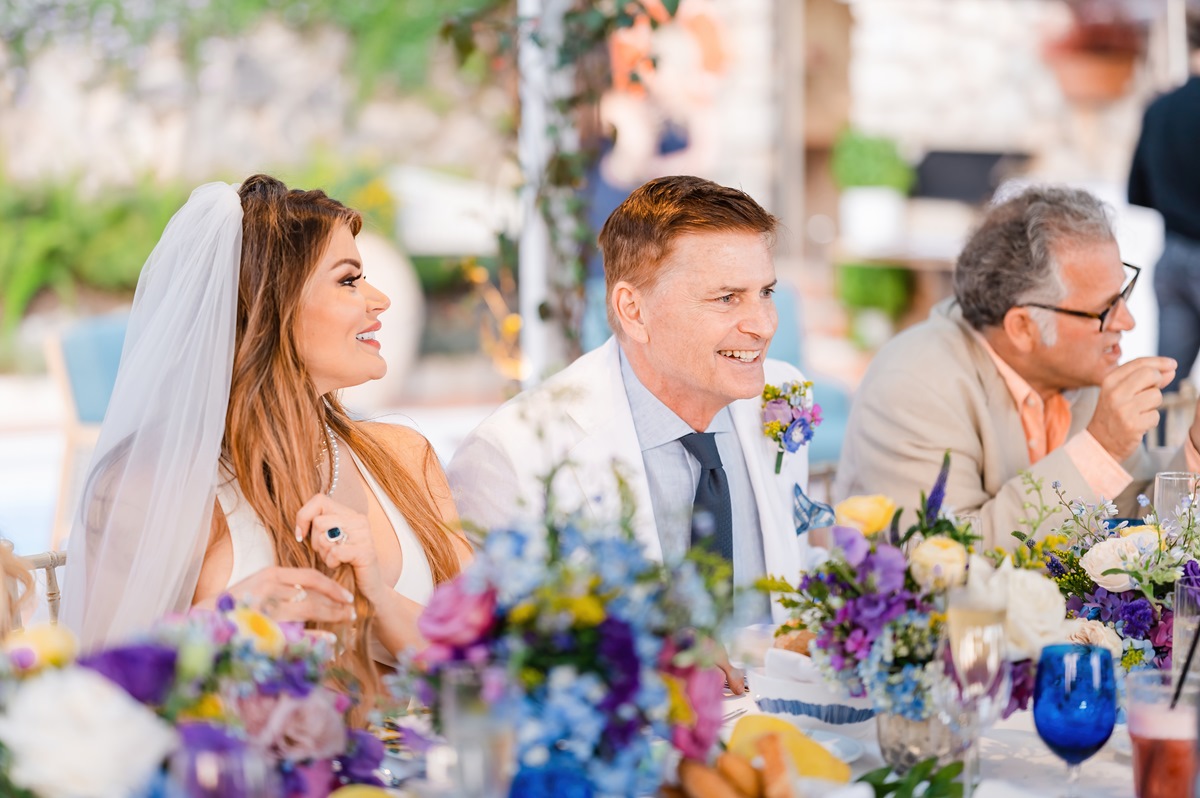
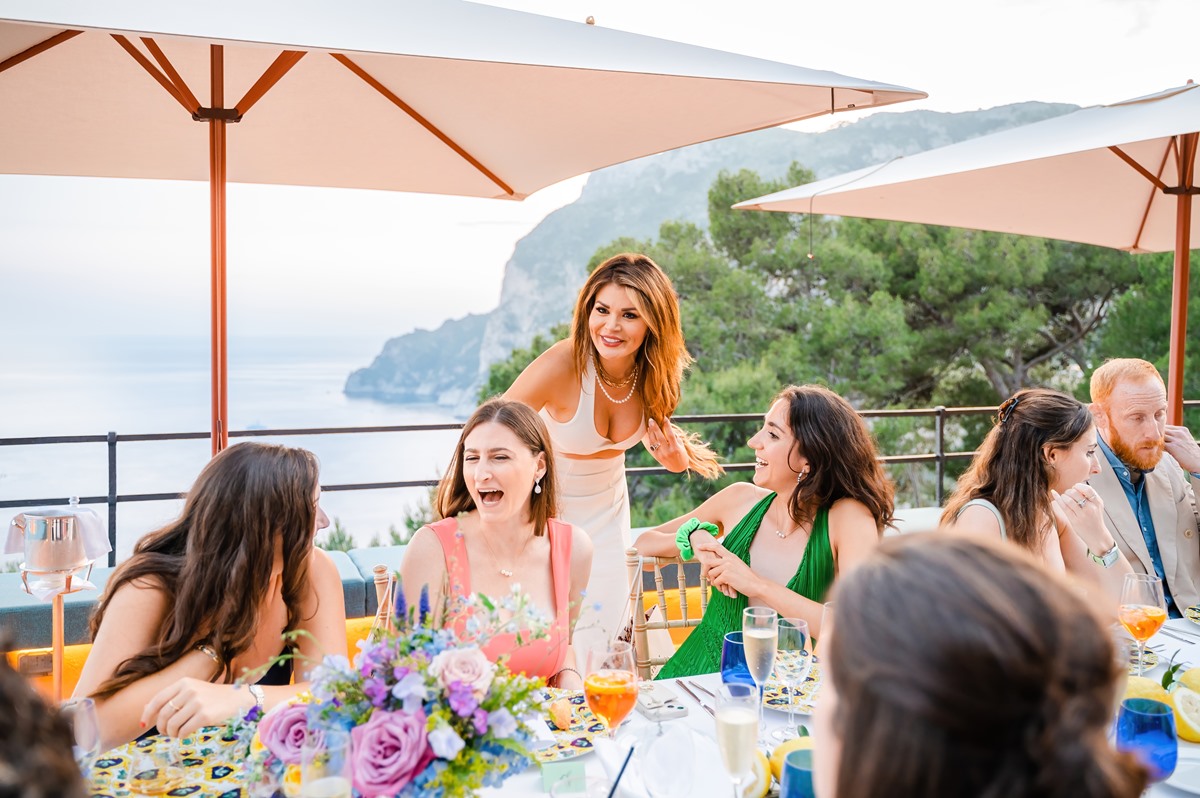
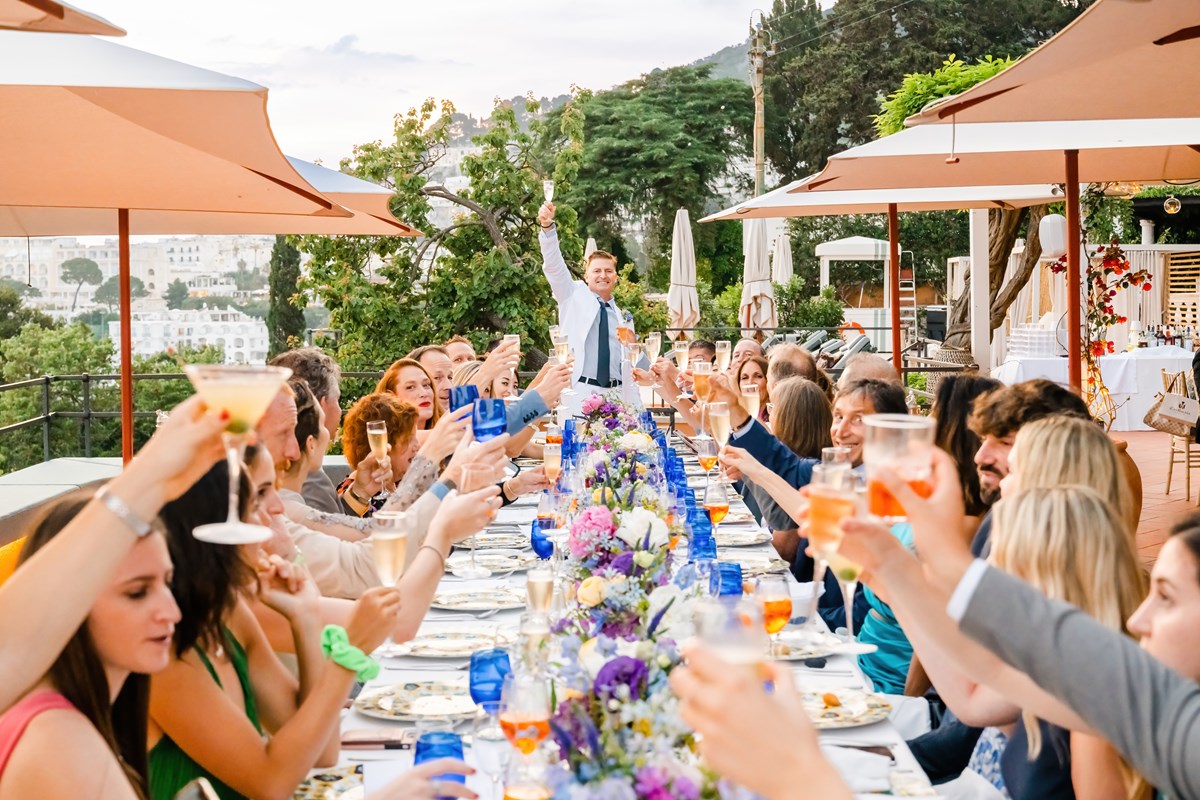
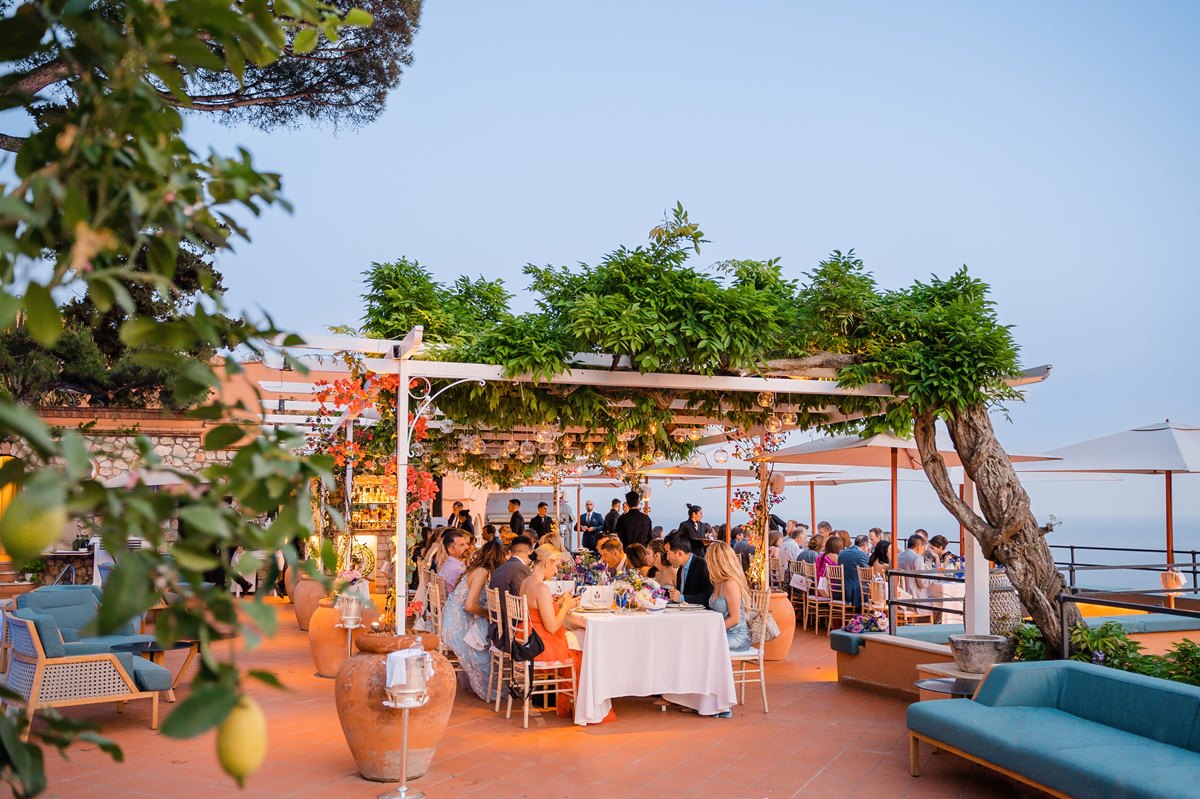
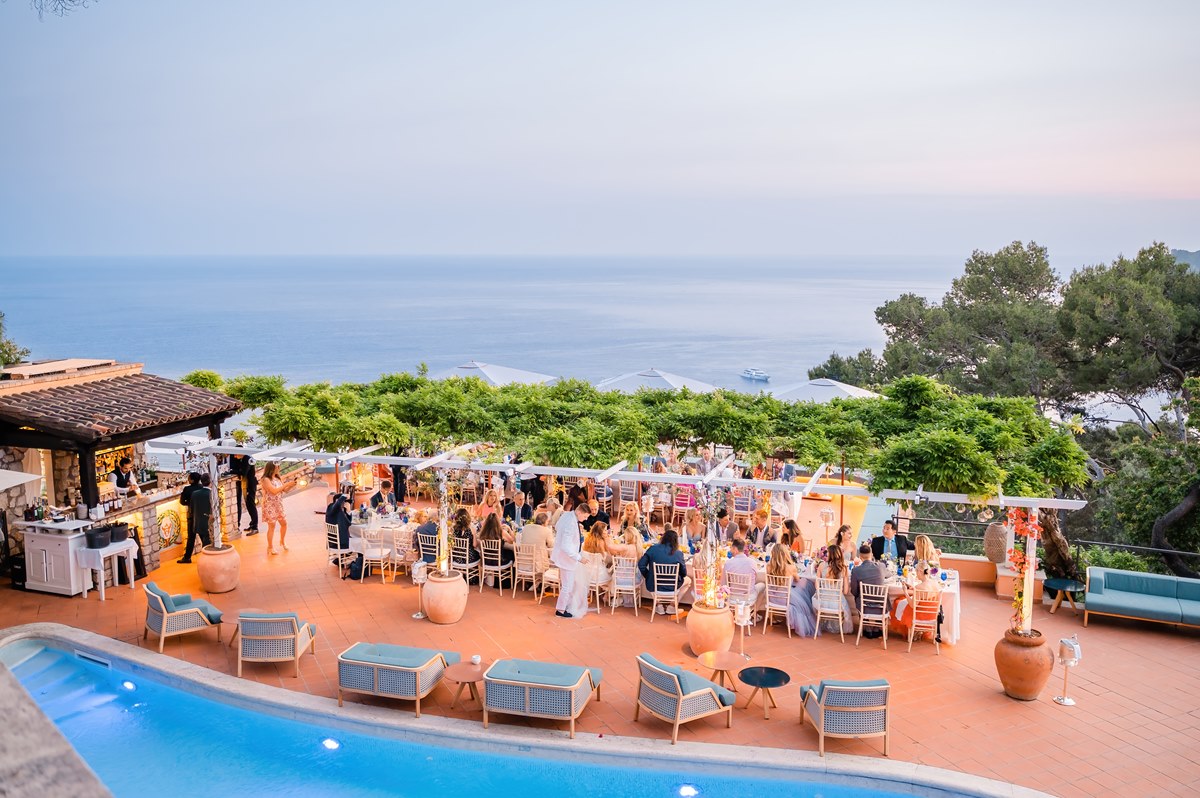
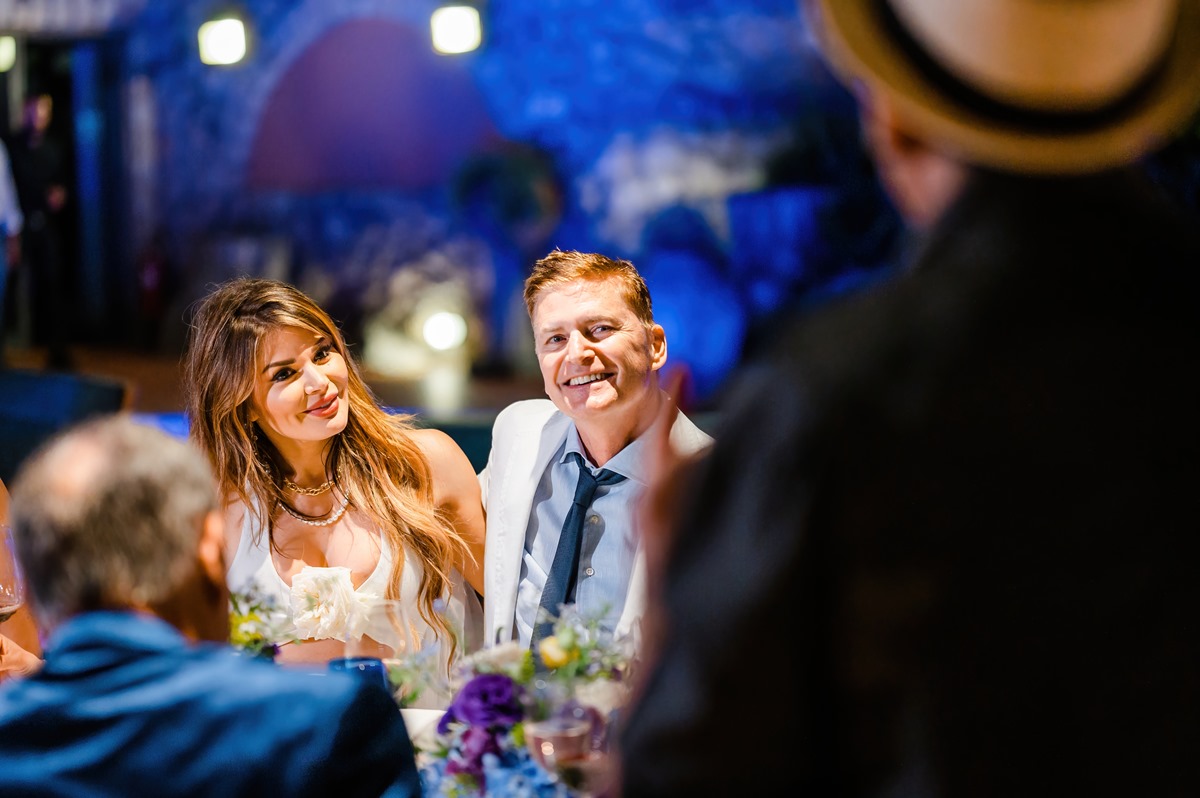
The tables were set long before the guests arrived, with blue glassware, majolica-style plates and low centerpieces of blue and purple flowers with lemons tucked between the stems. Lemon slices sat at every place, a small detail that ended up in half my favorite reception frames because of how the light caught the yellow against the blue. I’ve started asking couples to consider small, repeatable table details like this, because they read better in wide shots than elaborate centerpieces that only work as close-ups.



A Timetable That Started at 3:00 PM
Raquel sent me the plan for the day in writing, group by group, and I’ve rarely been handed anything so useful. At 3:00 PM I photographed her with the first group of bridesmaids at the hotel, at 4:00 PM the second group, David’s daughters and her father, and at 5:00 PM David’s family. Three hours of portraits before the first guest arrives sounds like a lot until you count the combinations on a list like that.
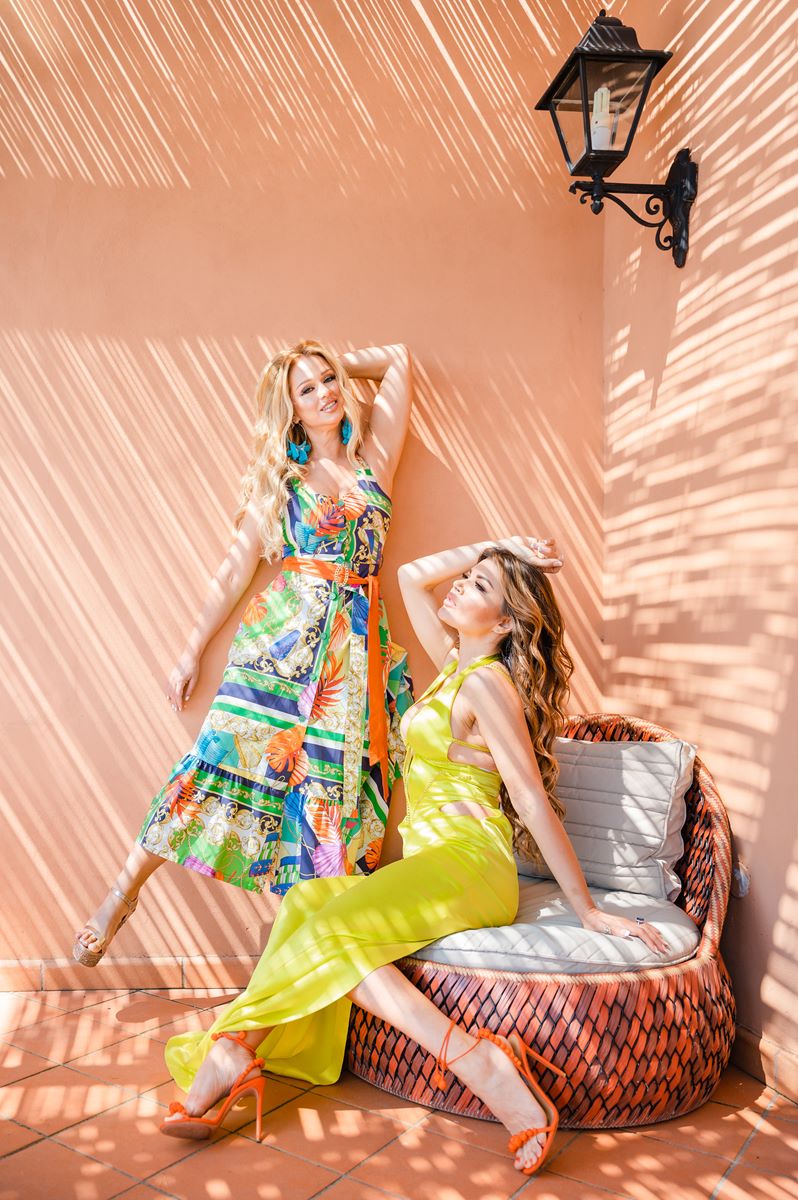
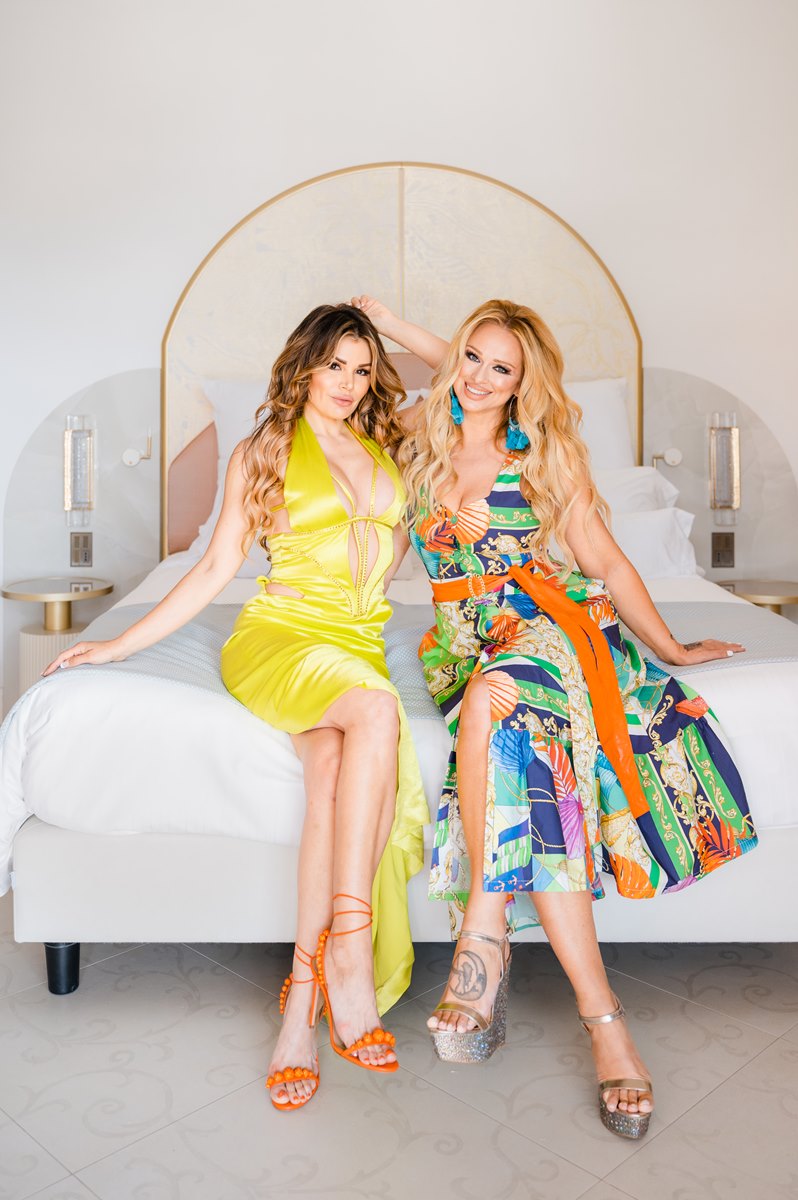
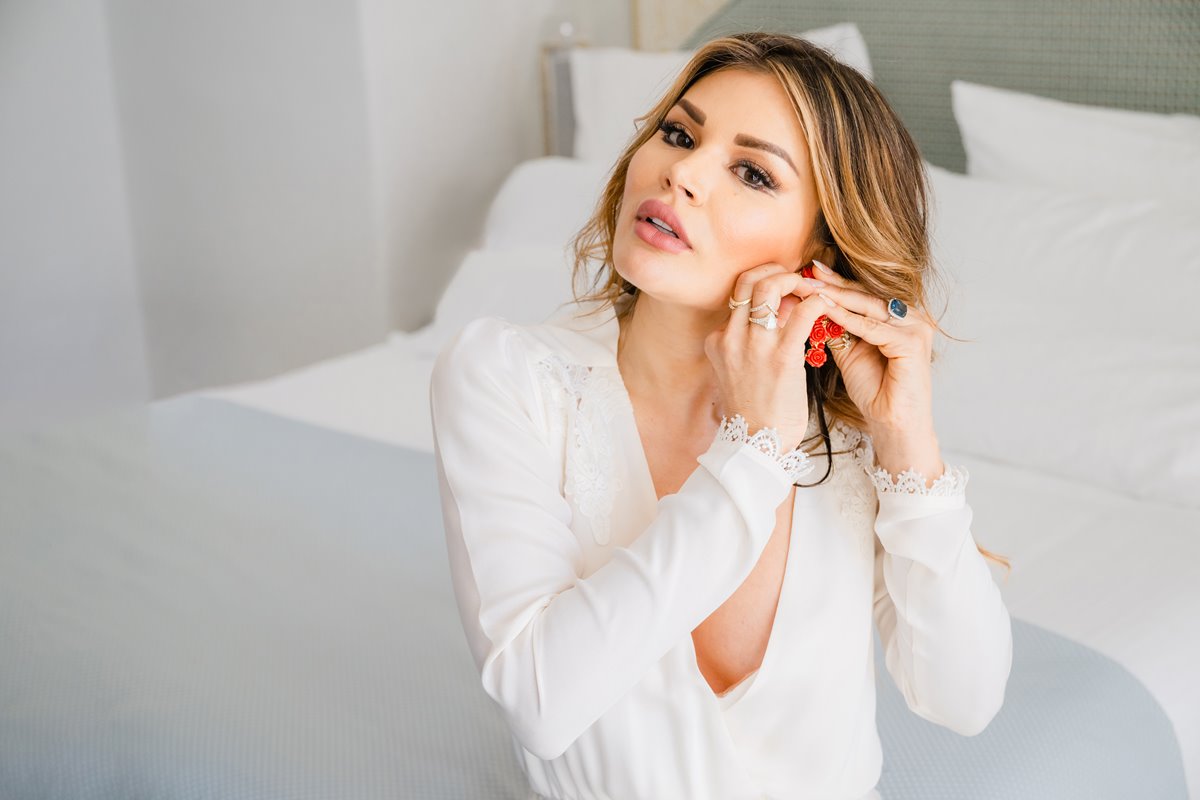
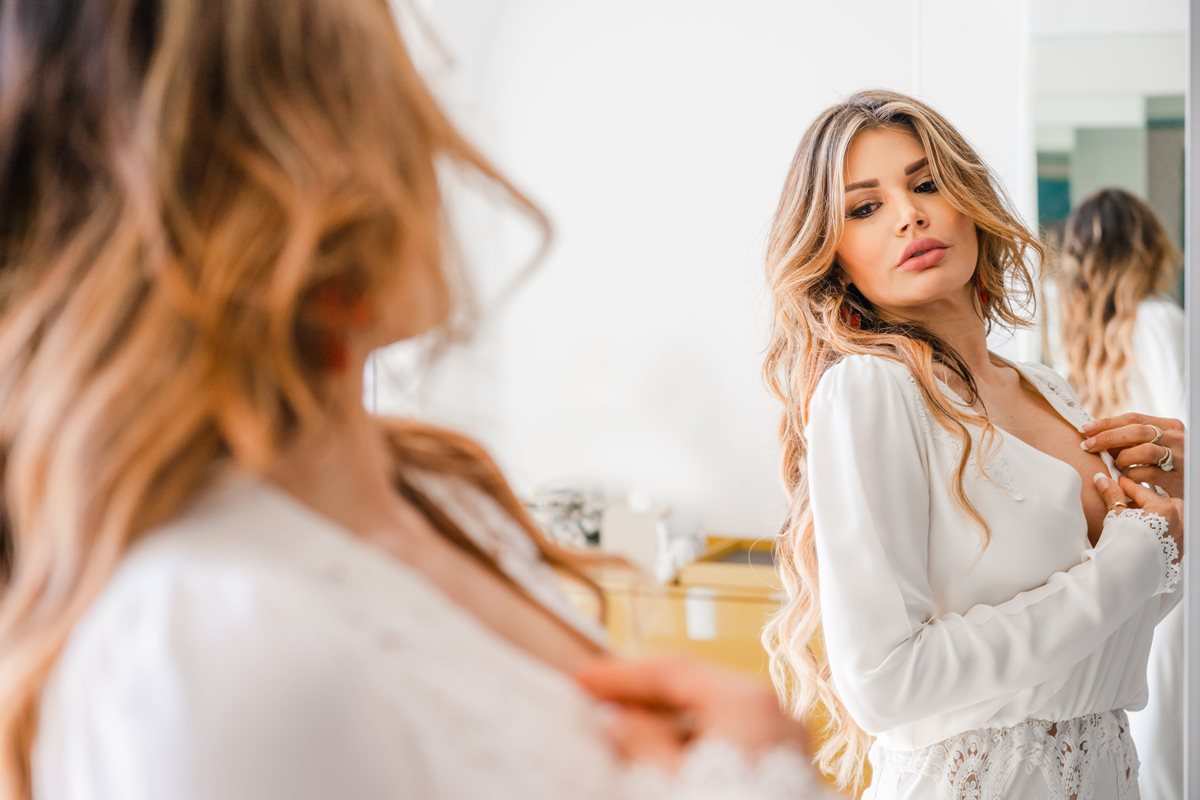
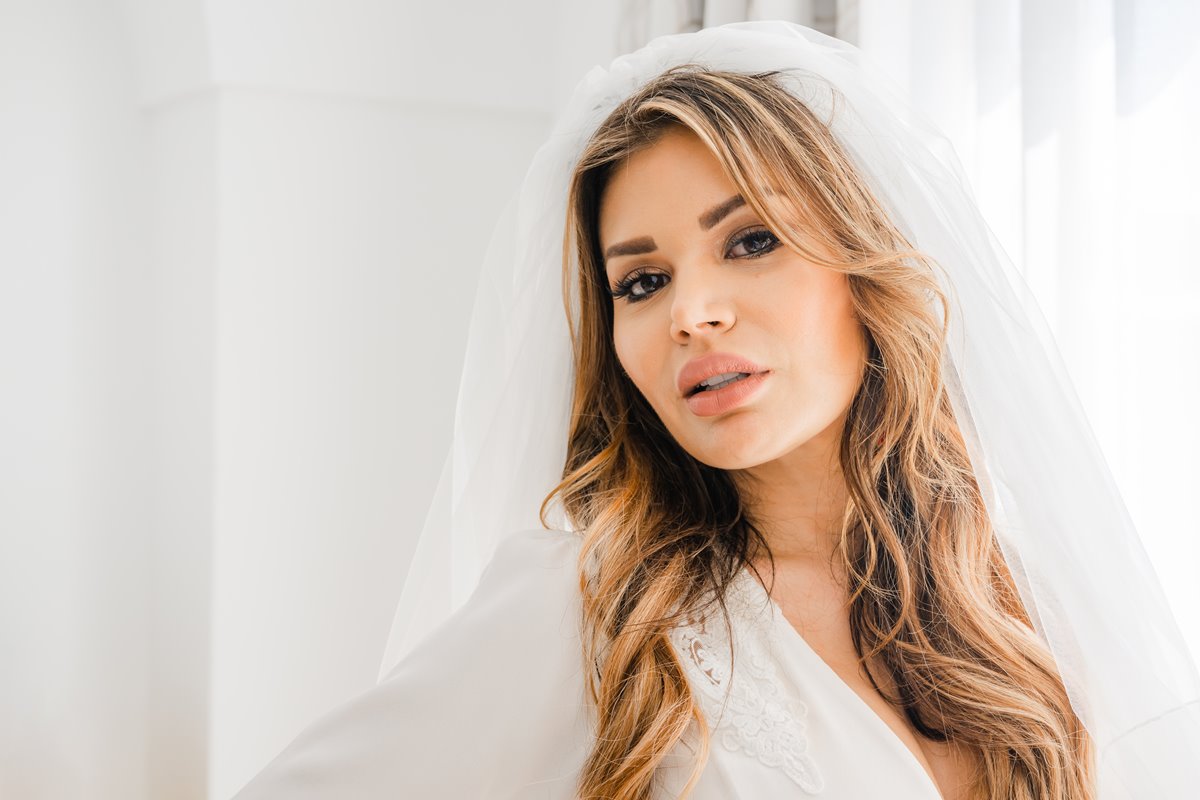
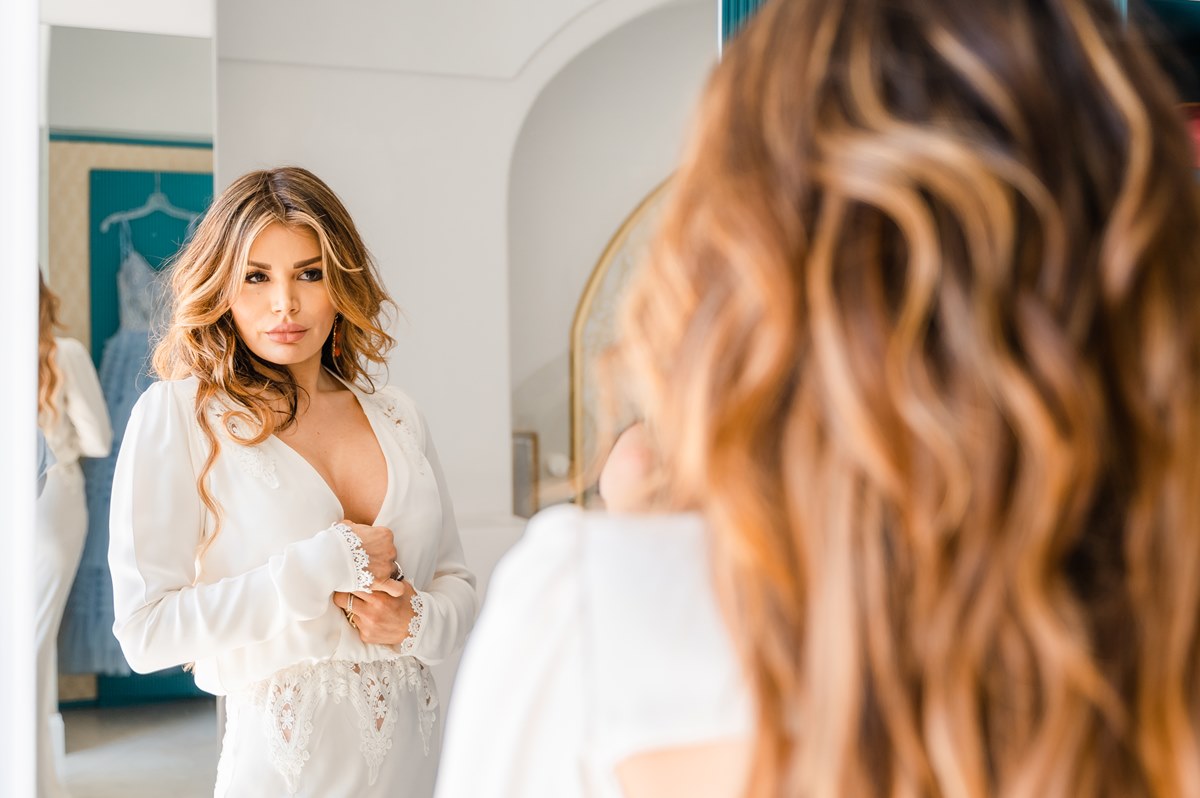
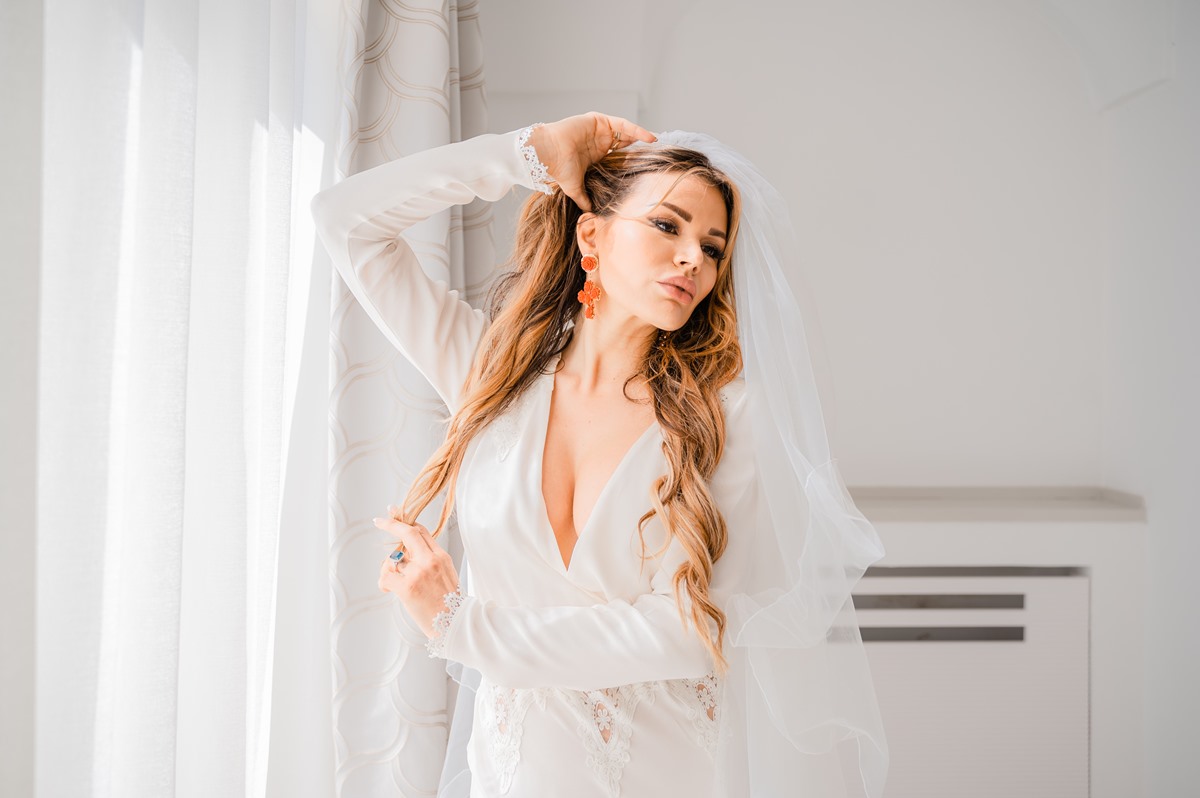
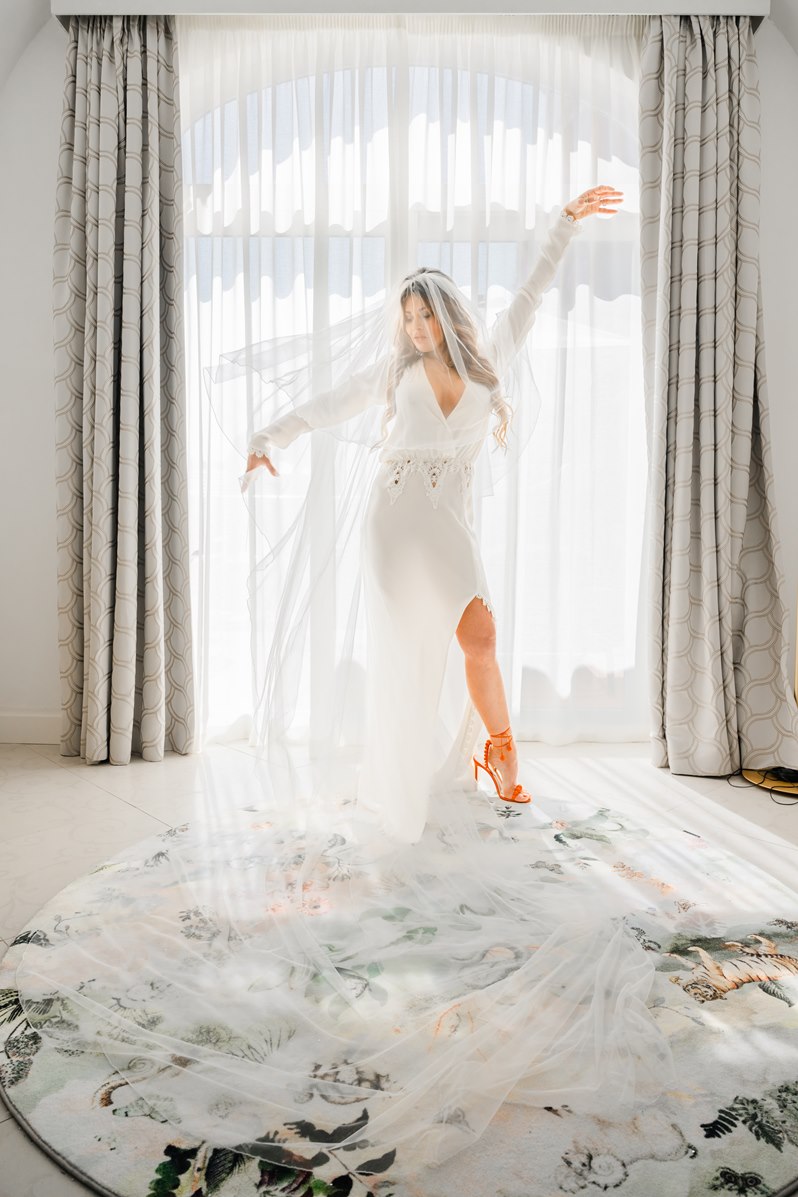
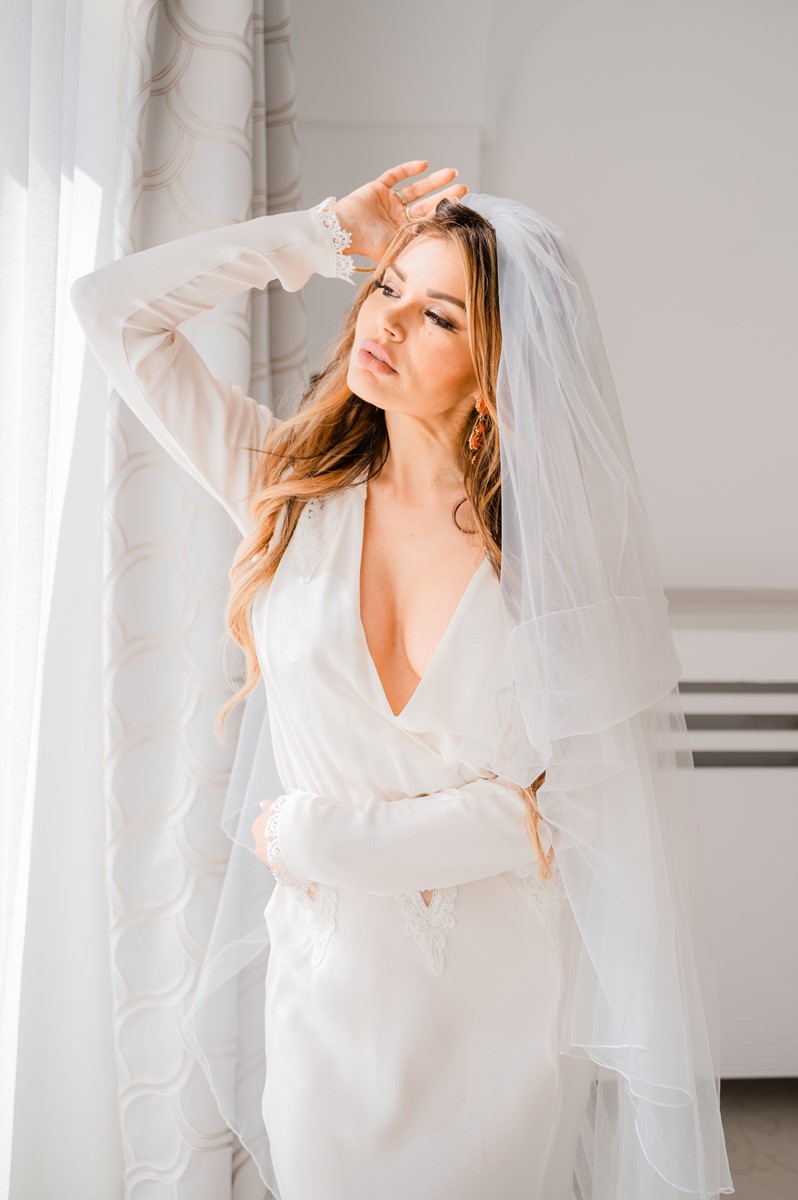
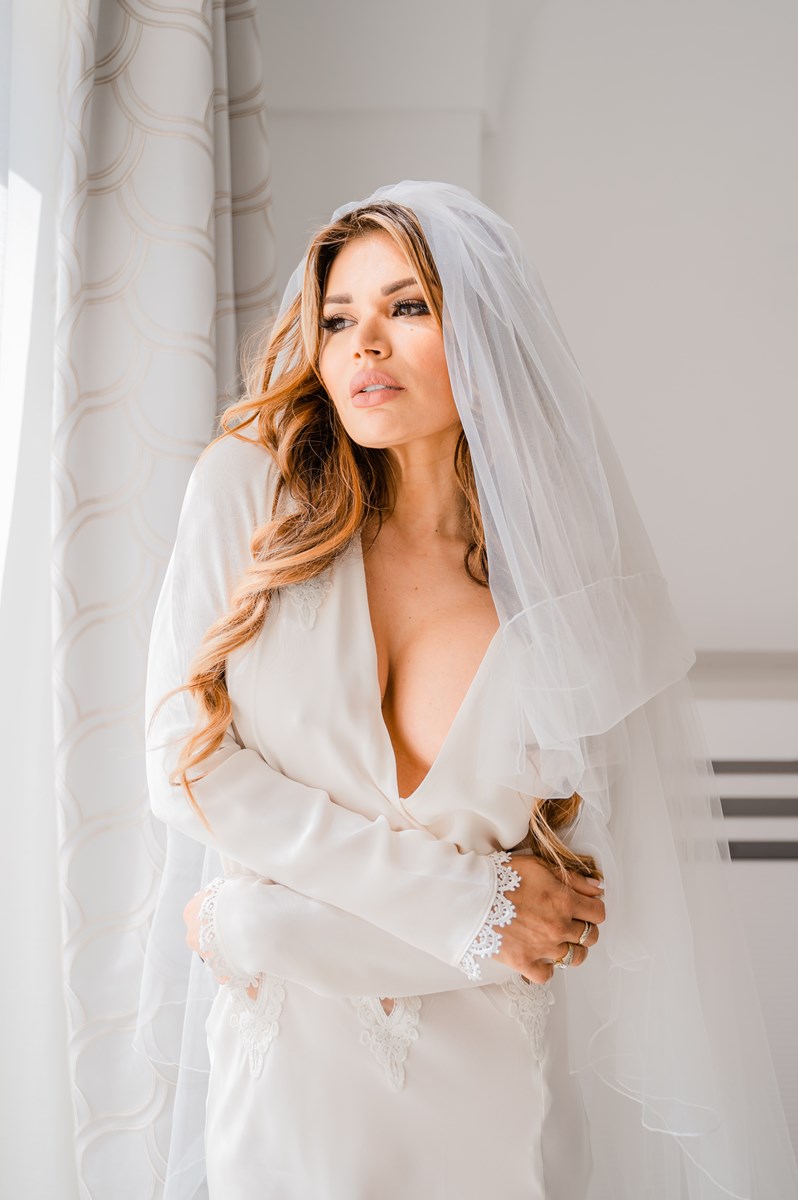
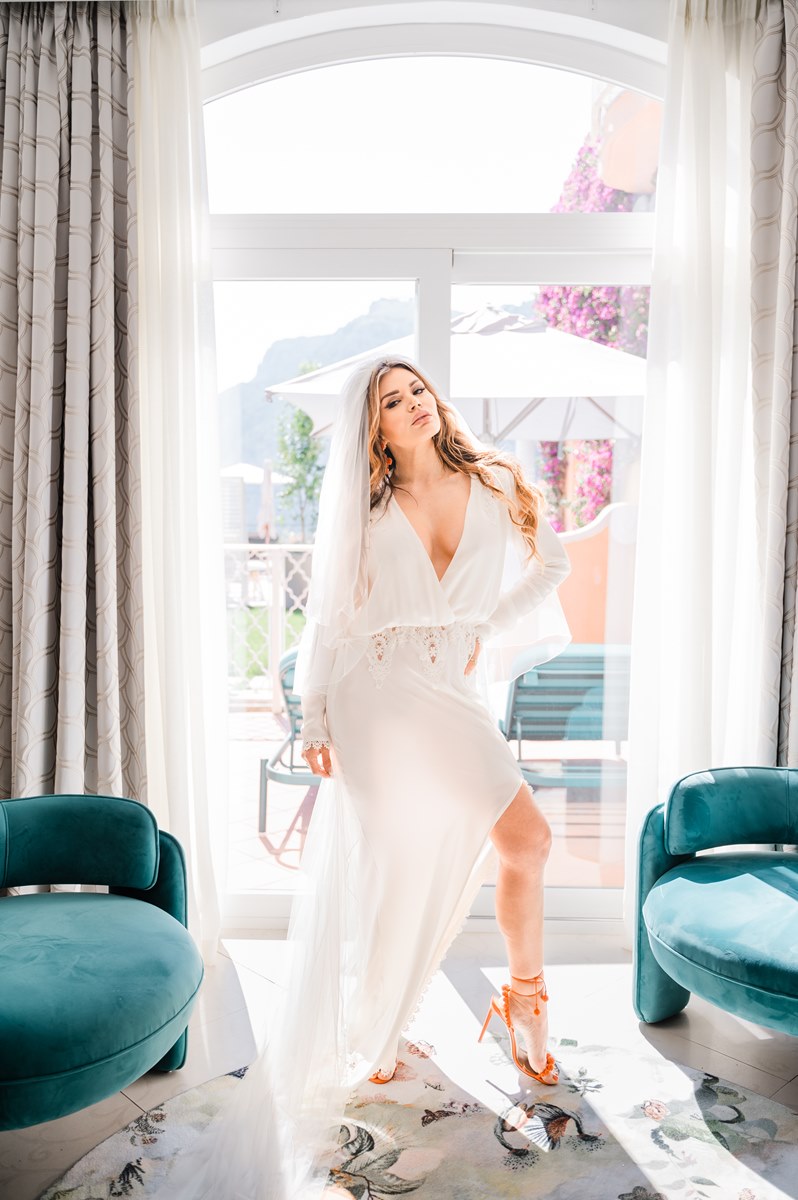
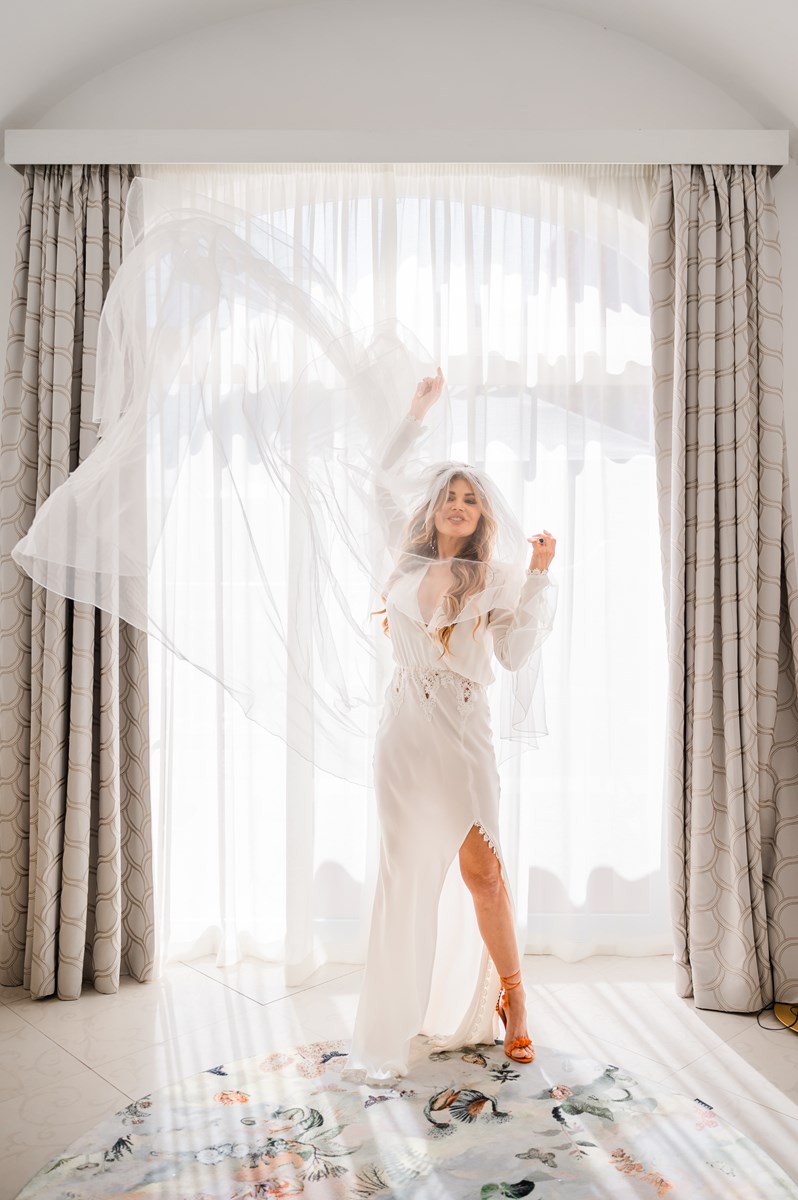
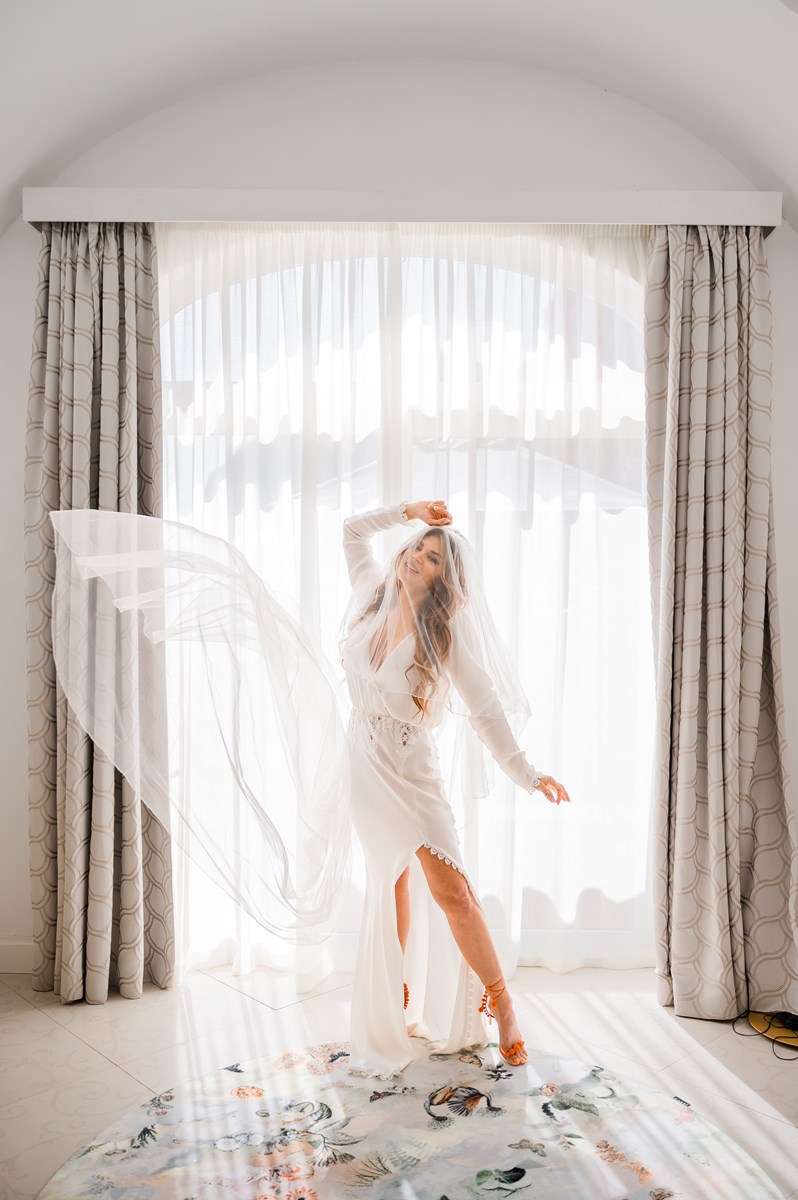
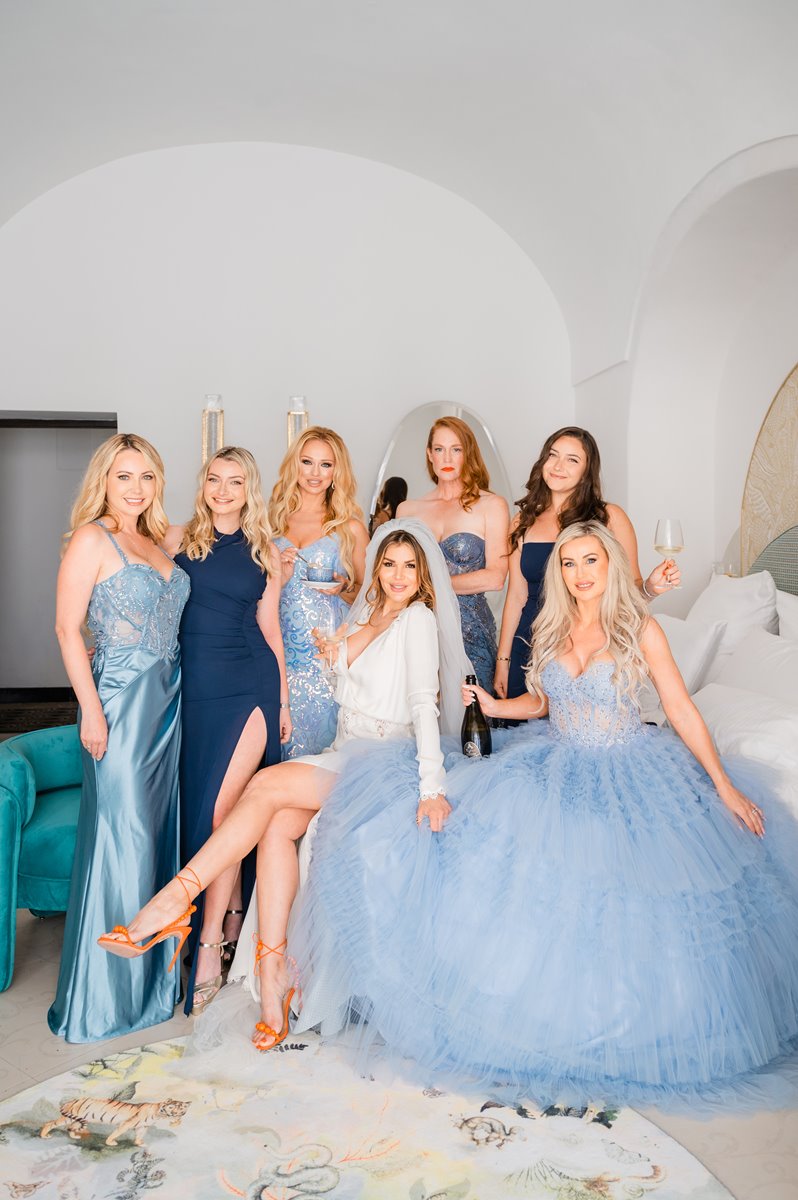
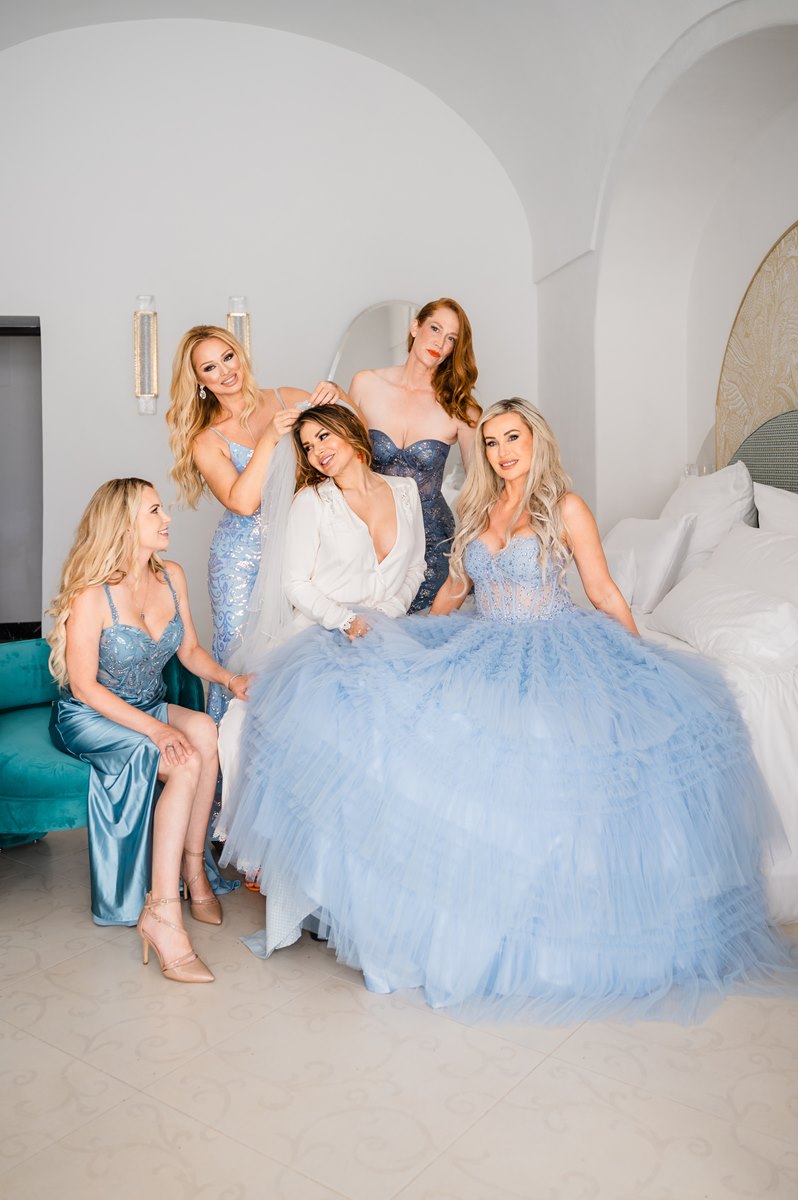
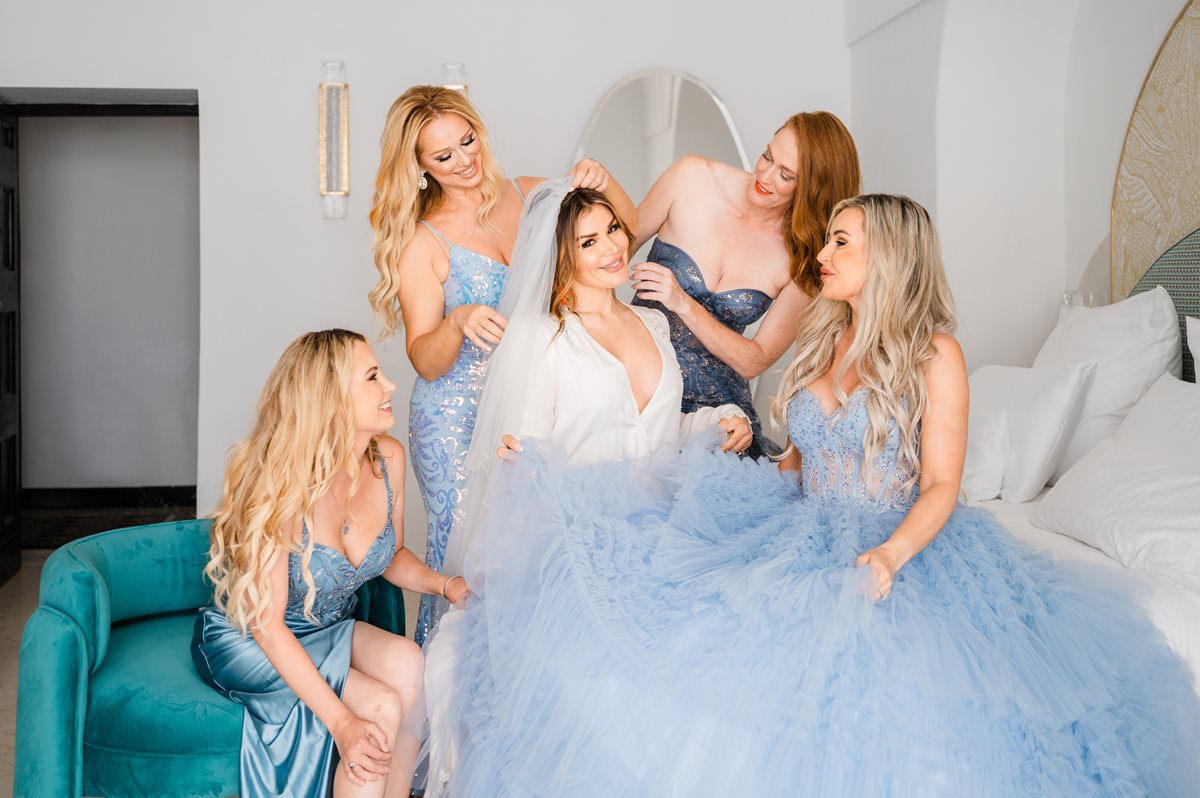
The rooms at Punta Tragara are white and full of light from the terrace doors, so the getting-ready pictures needed nothing from me beyond standing out of the way. Raquel stood at the window in her robe and veil with the curtains moving behind her, and I kept my lens wide enough for the whole room. Before the gowns went on, she and a friend sat on the bed in bright printed dresses, laughing, and that picture says more about the afternoon than any list.





A Bridal Party in Blue
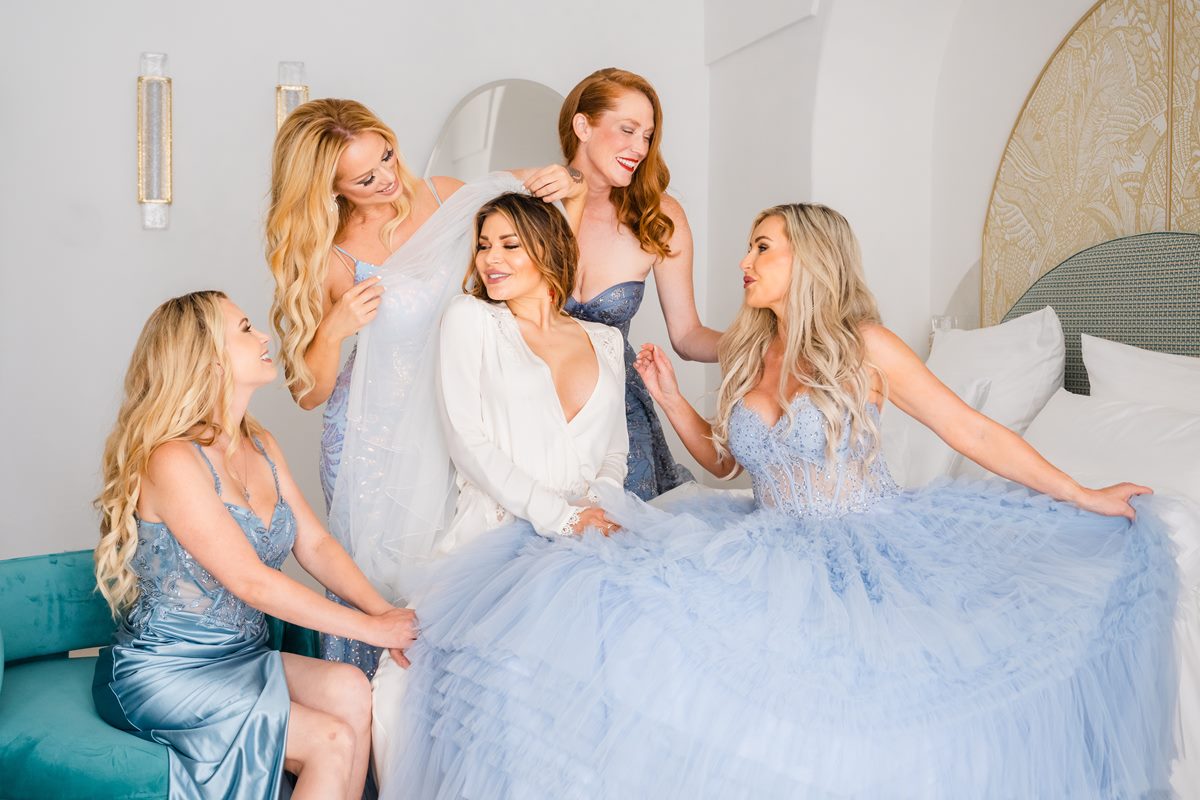
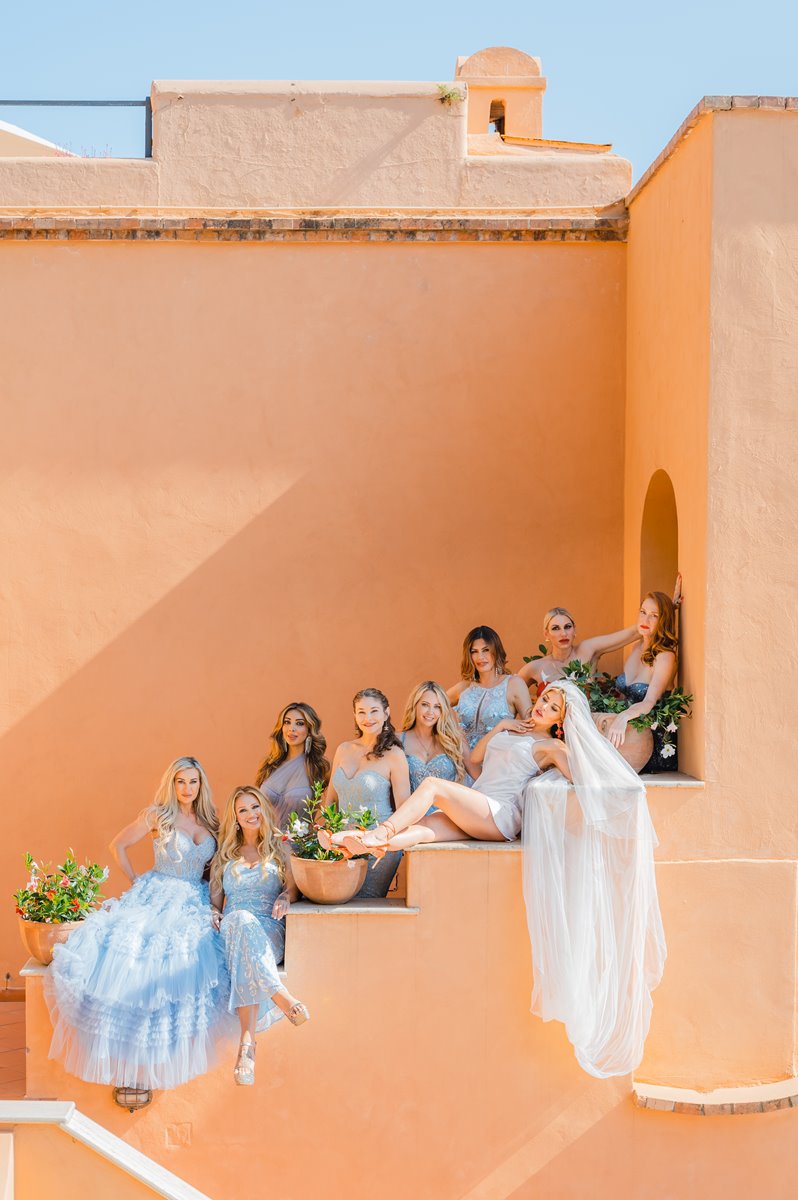
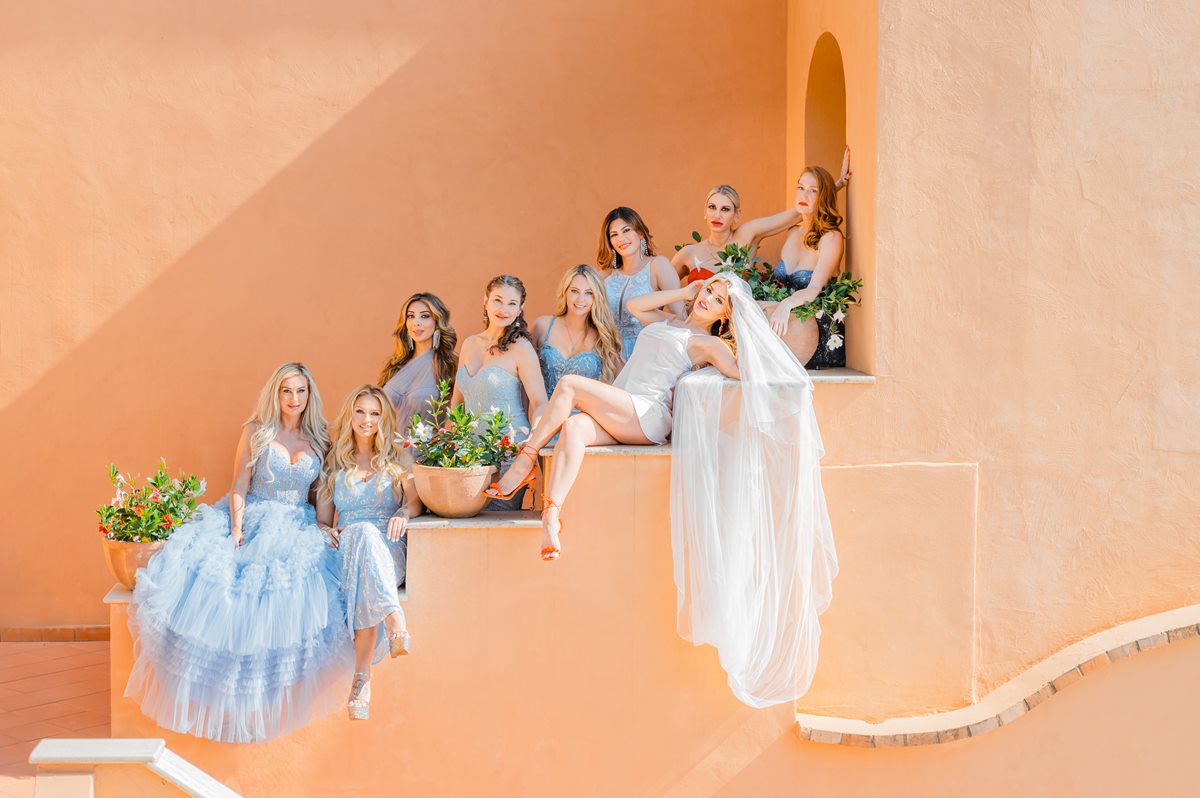
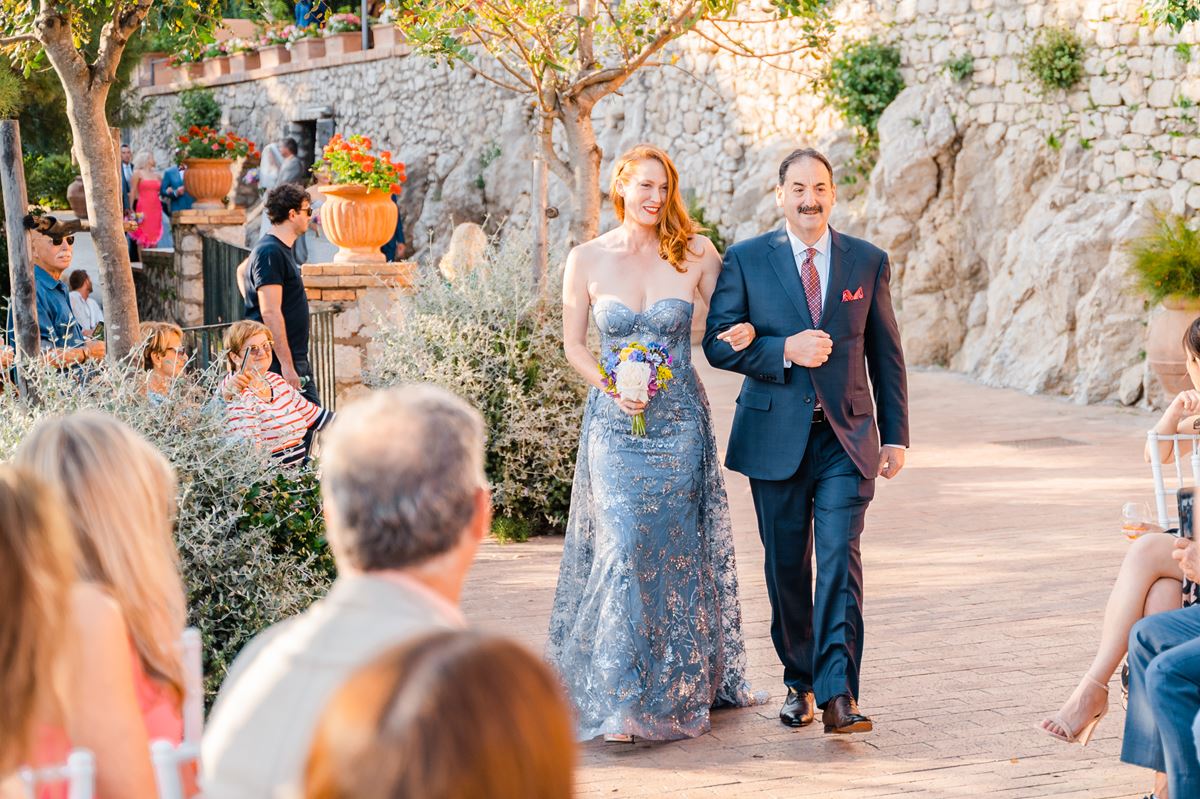
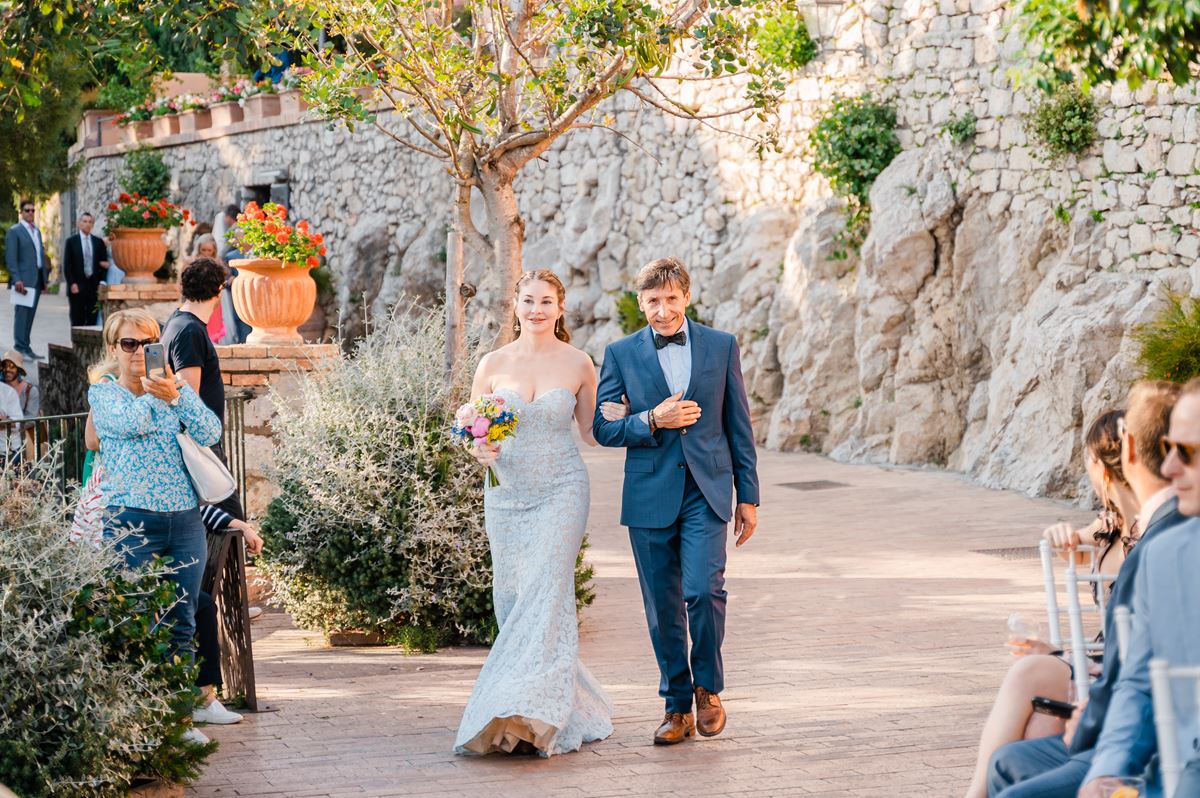
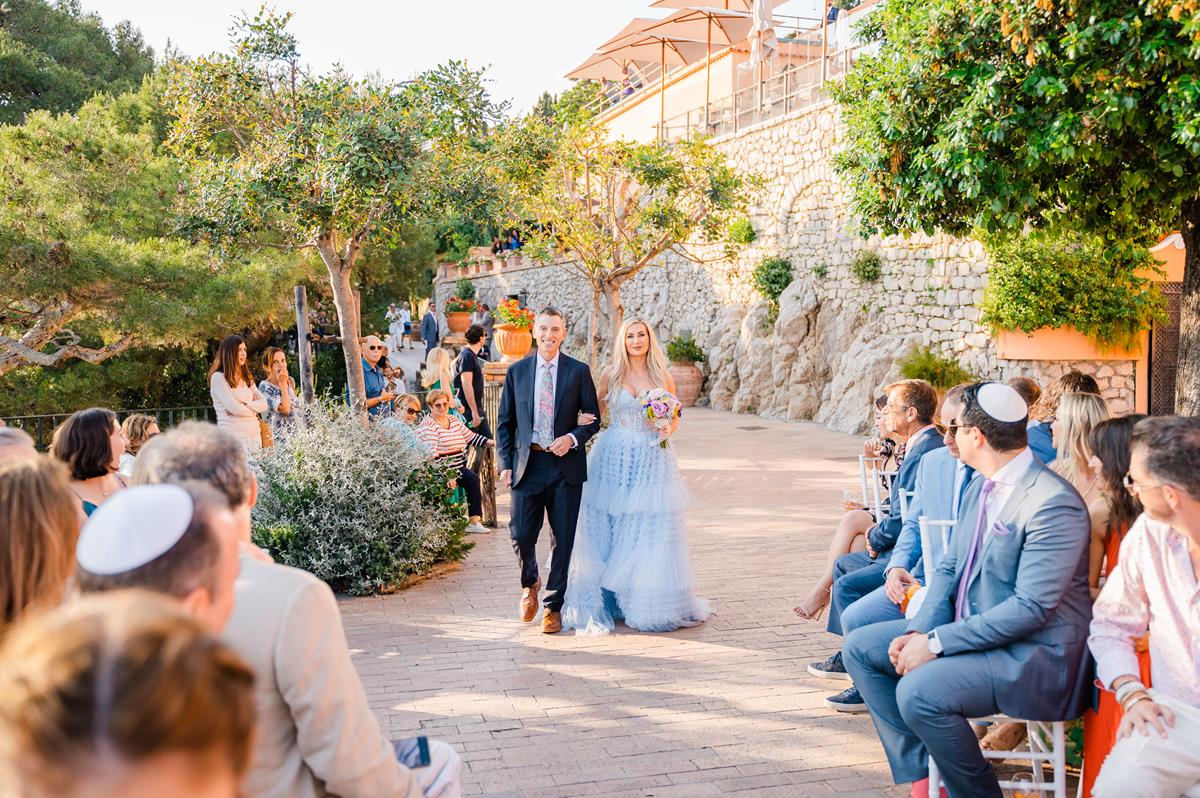
The detail that made this wedding unlike anything else I’ve shot at Punta Tragara was the bridal party. One group stood in pale blue tulle and sequins, a second in navy, and against the white rooms and the orange walls of the hotel the effect in wide shots was closer to a color-graded film still than a typical wedding gallery.
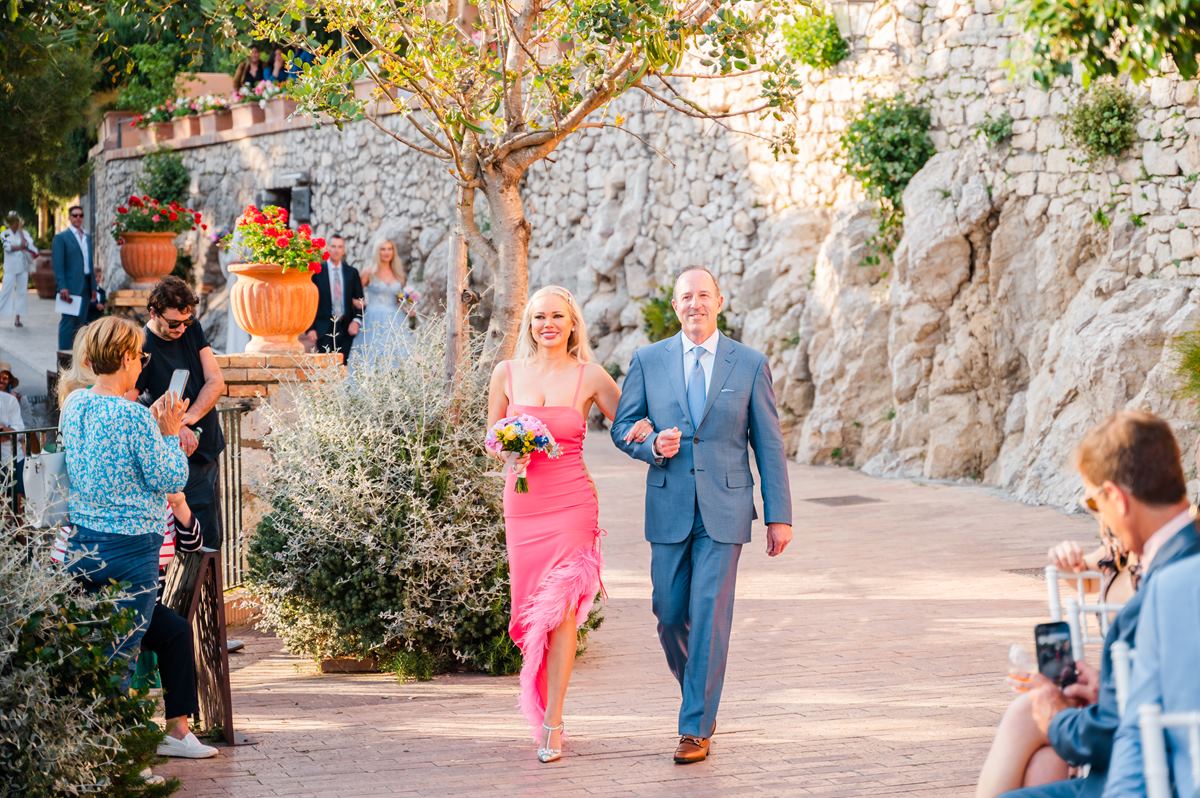
The guests came in every color, coral, pink and green, and that worked in the bridal party’s favor, because the blue at the front of the aisle read as one block. If you want your ceremony photographs to hold together, give the people standing closest to you a palette and leave everyone else free.


A Different Portrait, a Different Dress
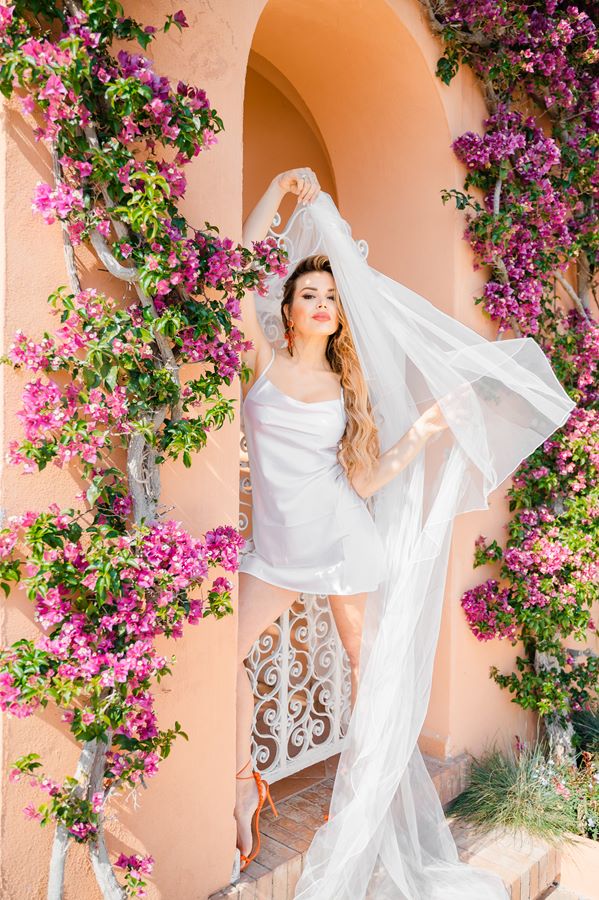
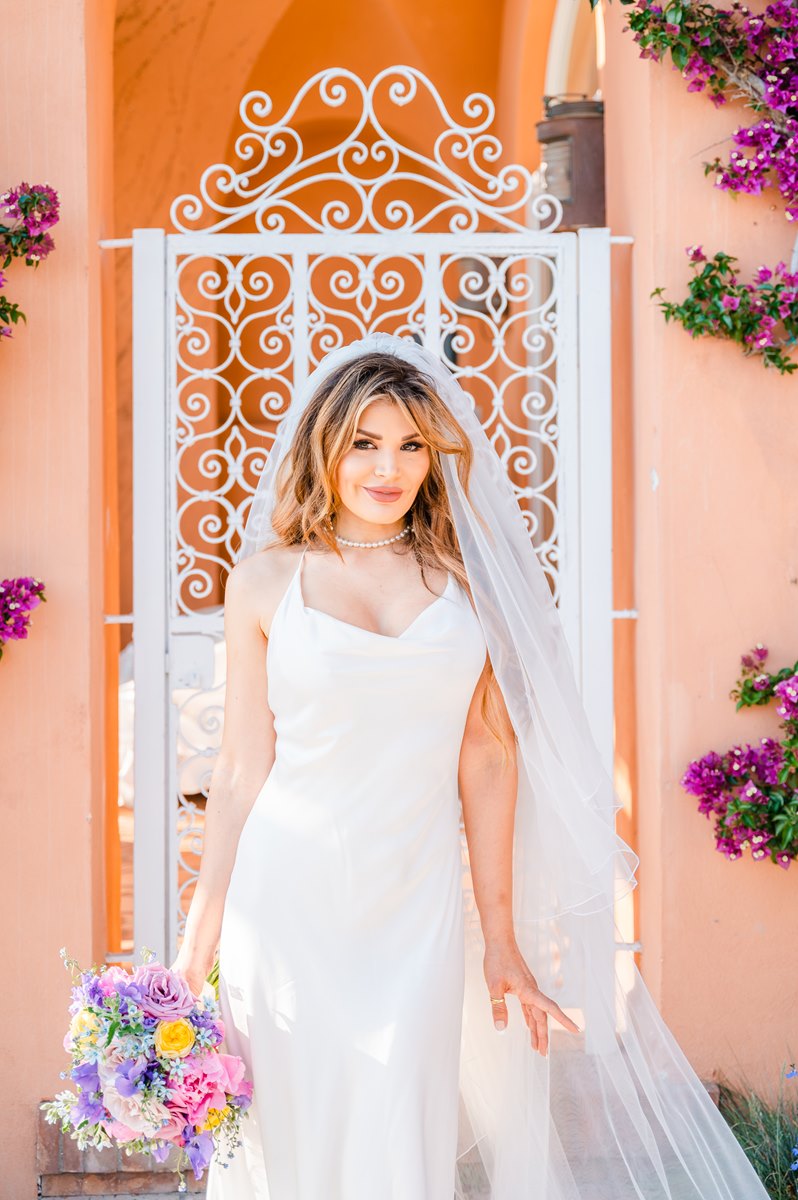
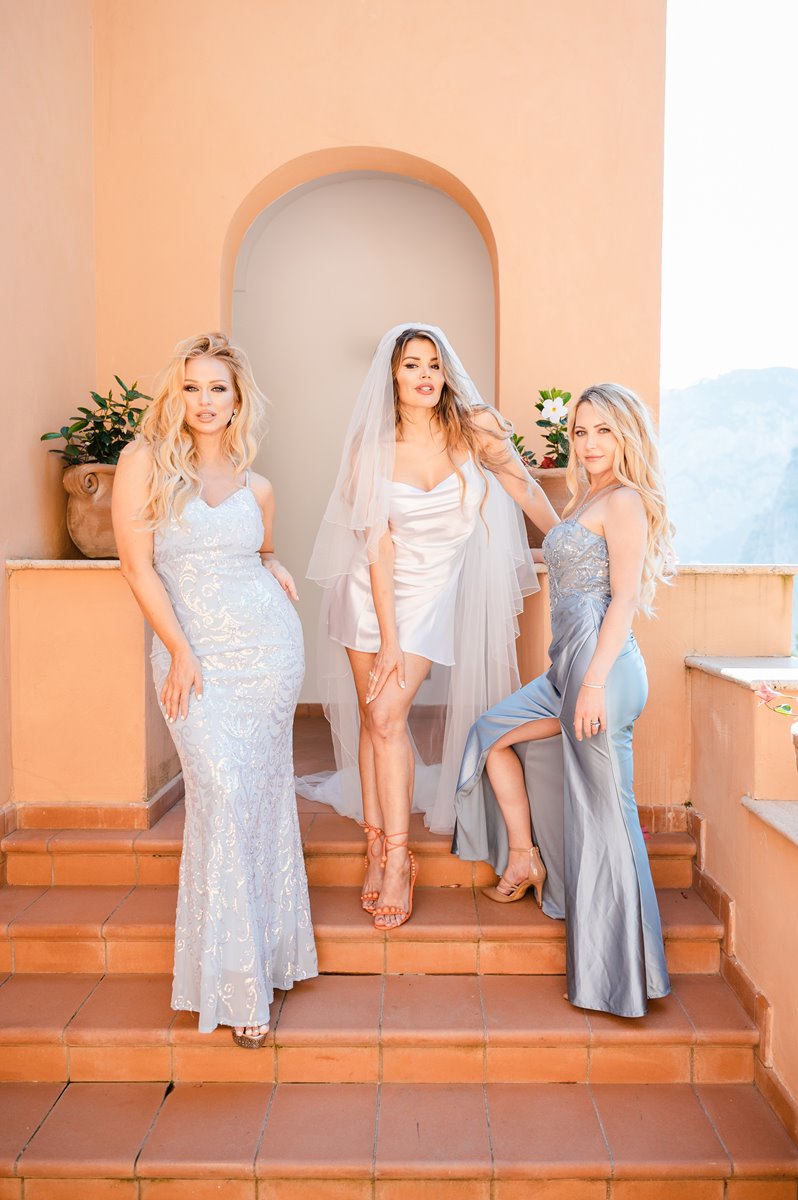
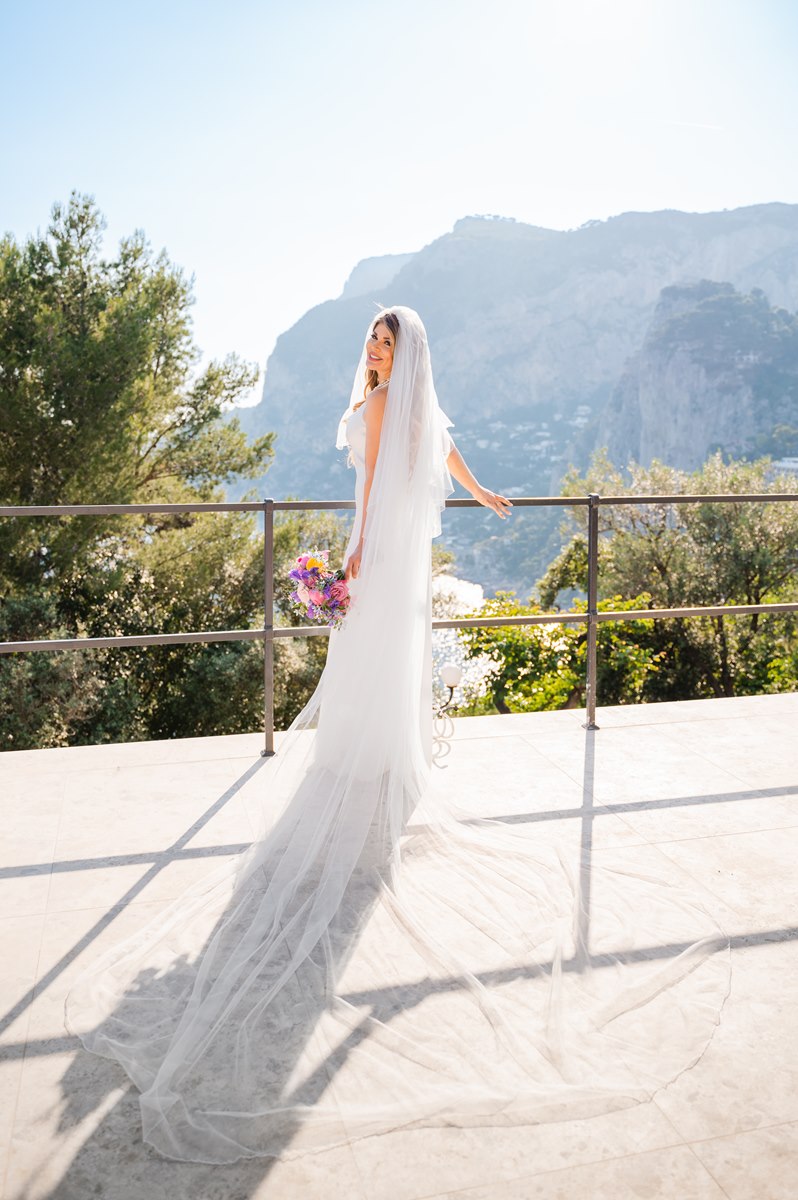
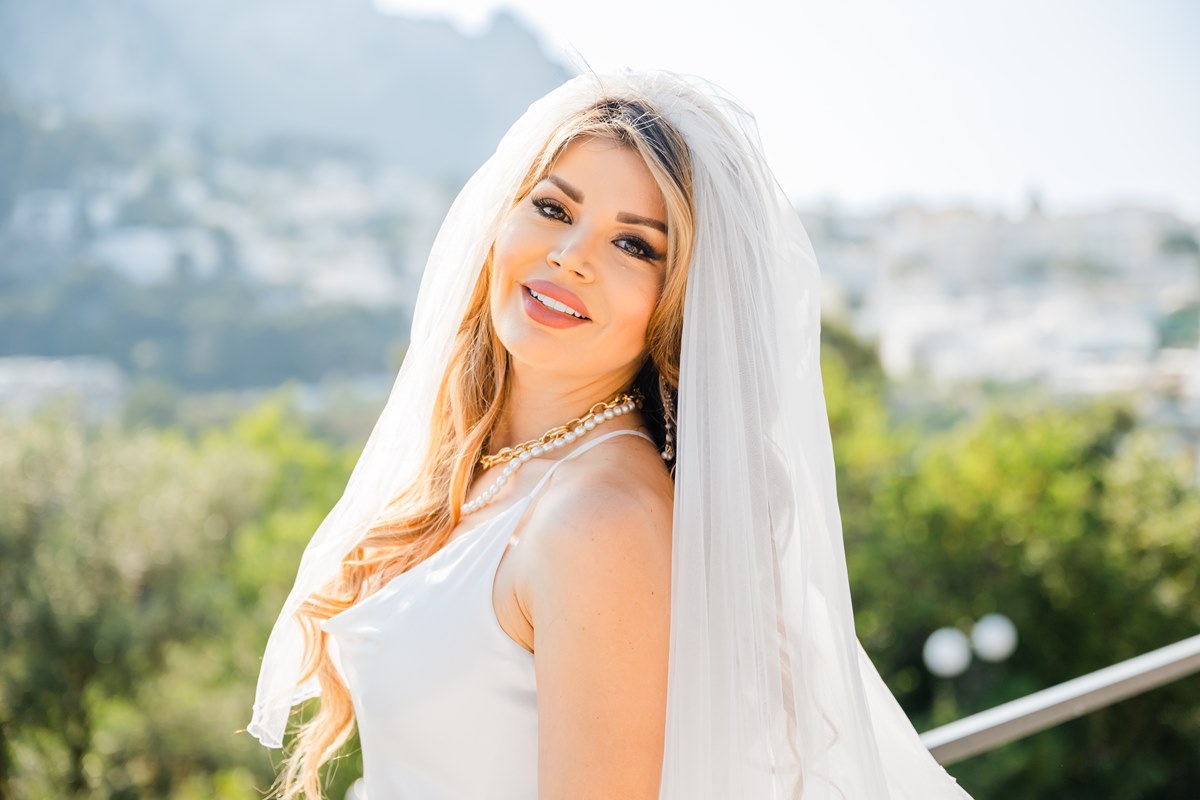
Raquel wore a short white dress for a portrait session at one of the property’s arched corners, with the terracotta-pink walls Punta Tragara is known for and magenta bougainvillea spilling over a white wrought-iron gate. Orange strappy heels, a cathedral-length veil pooling on the stone steps below her. It’s a striking contrast to the ceremony look, more editorial and considerably less traditional, and it gave me a second visual register in the same gallery. The bridesmaids joined her at the gate afterward.

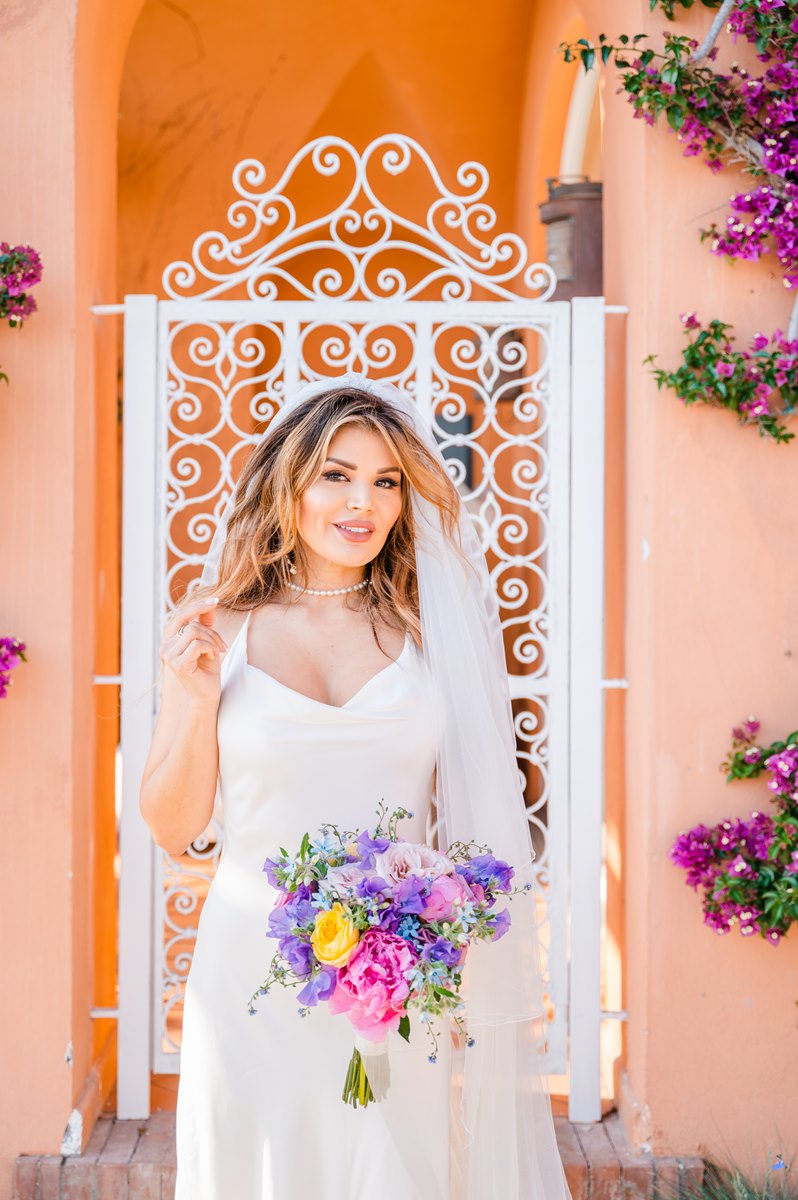
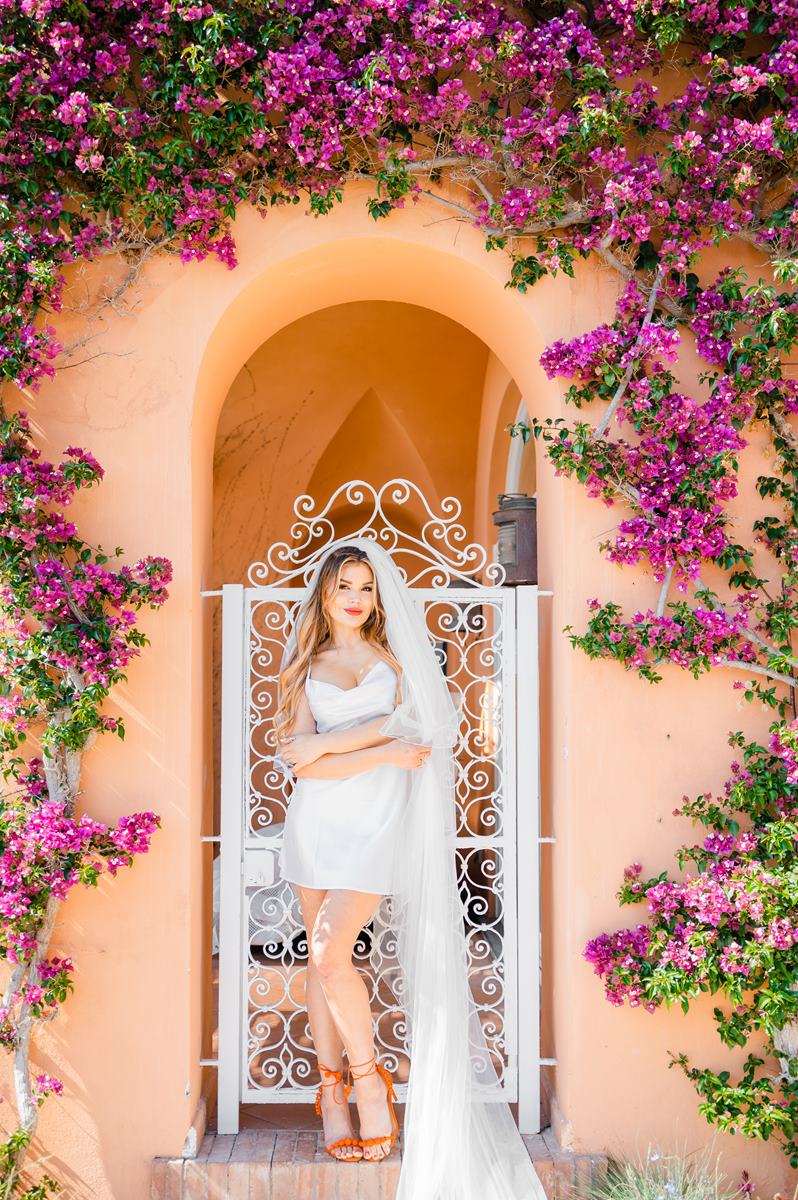
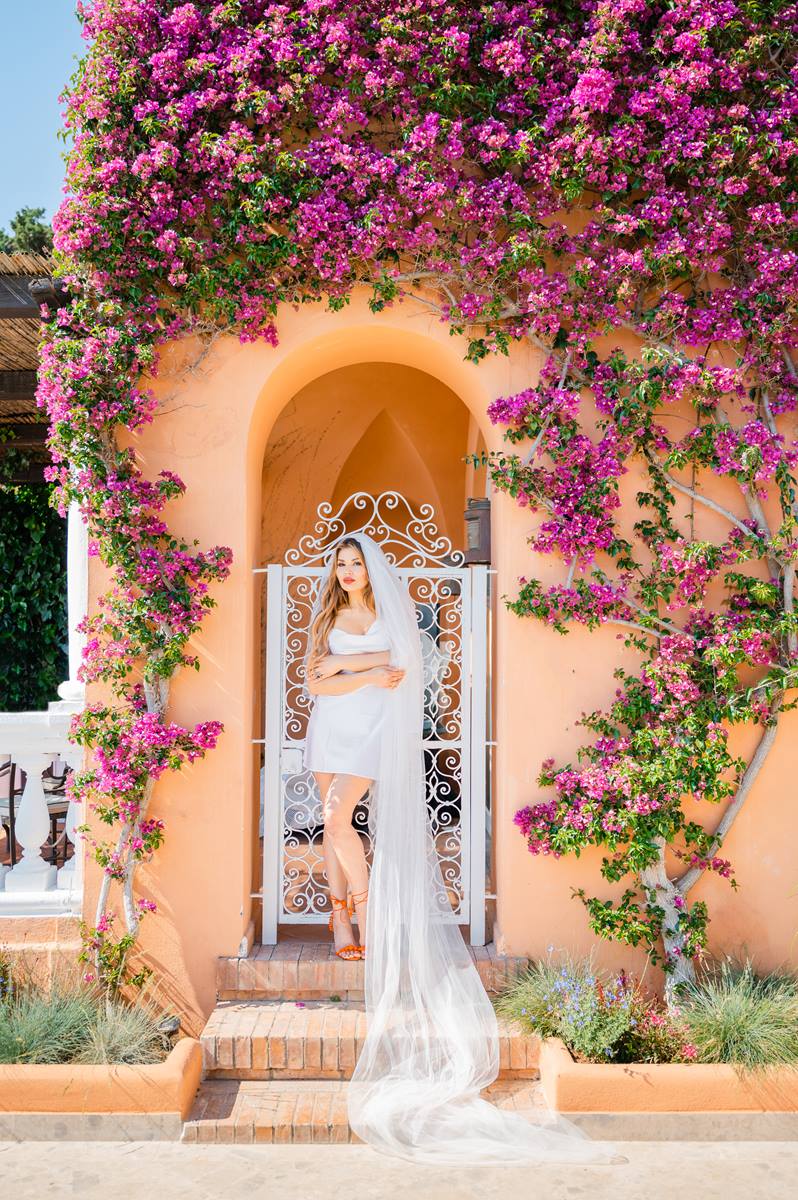

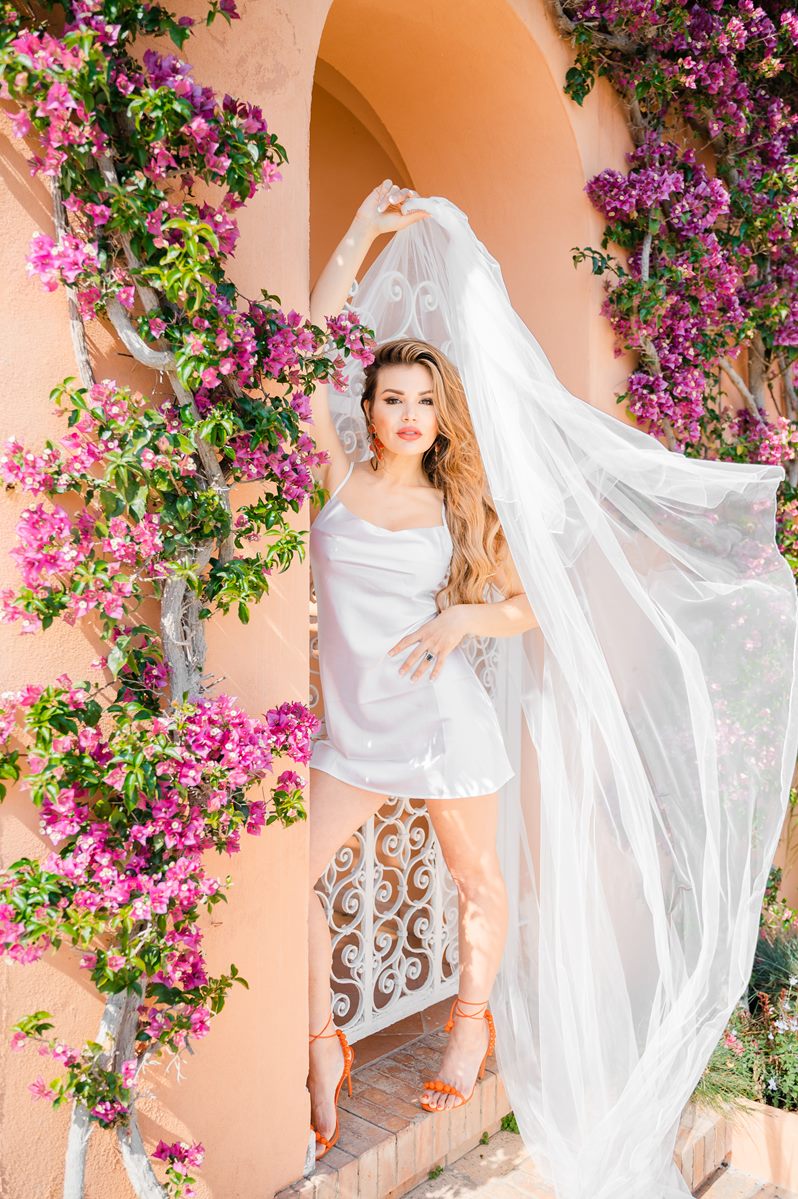
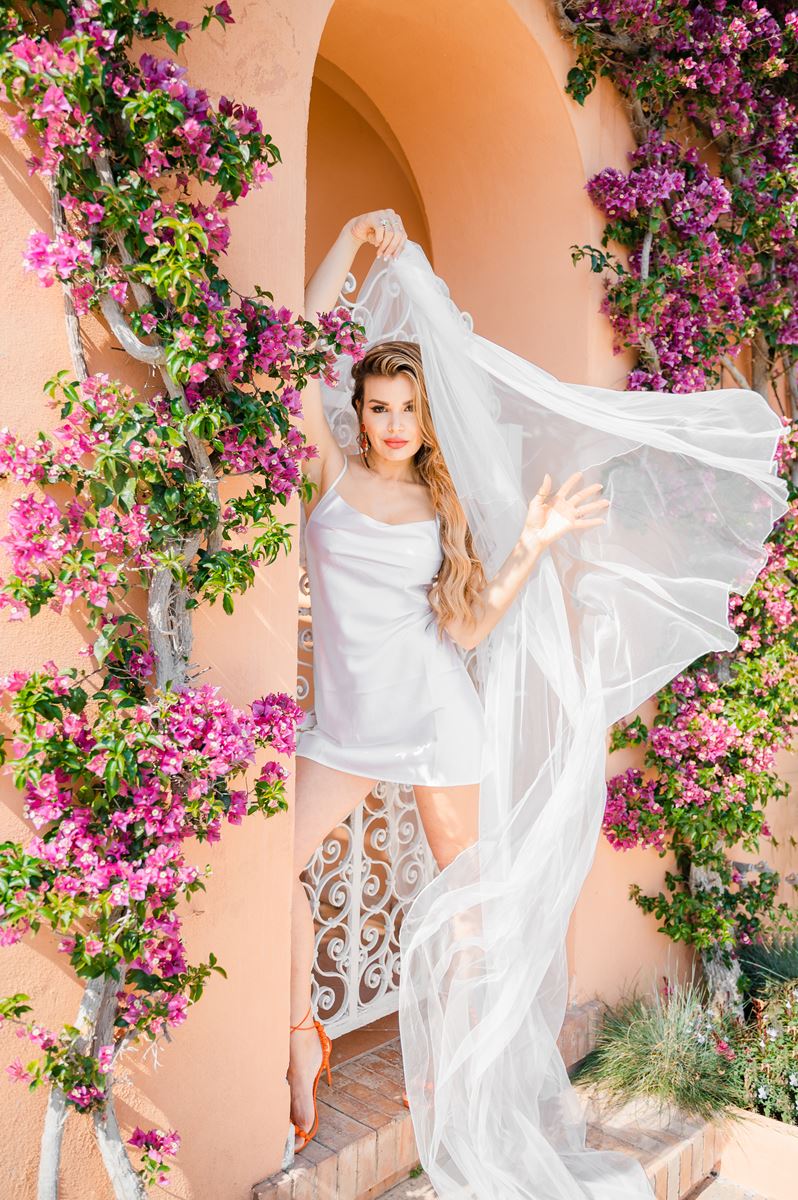
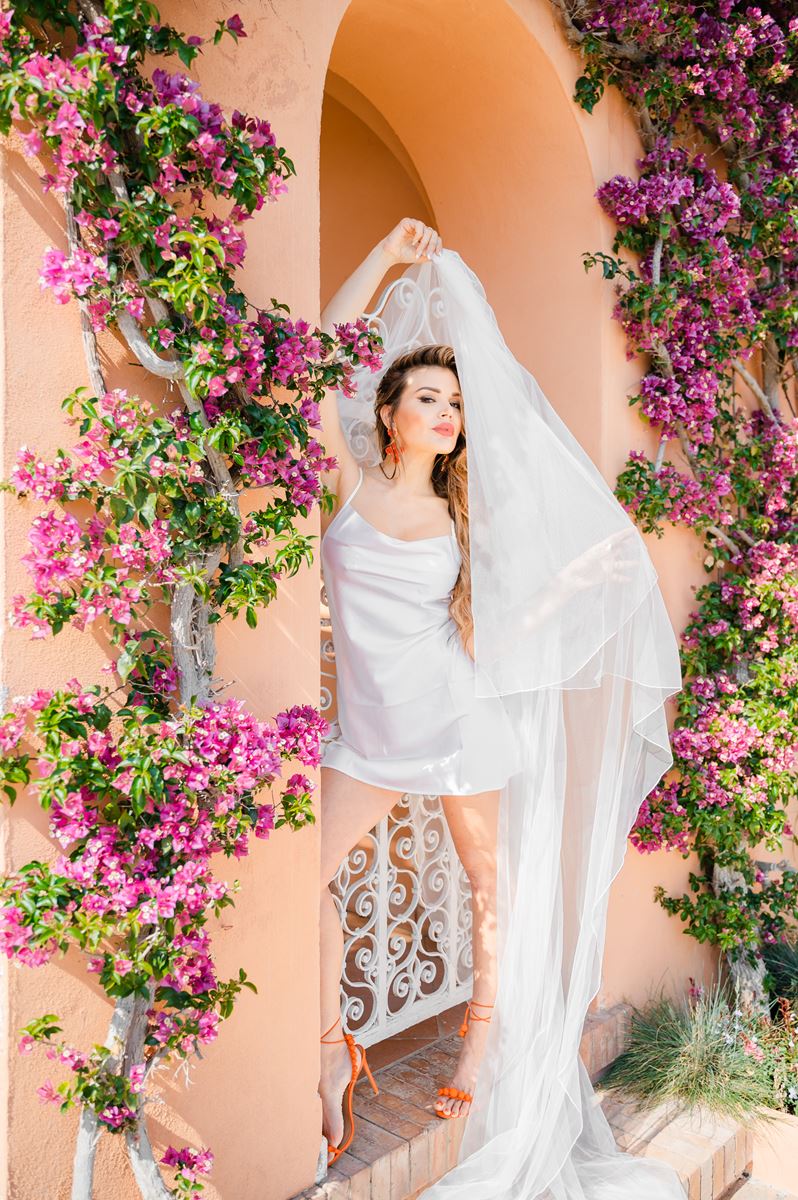

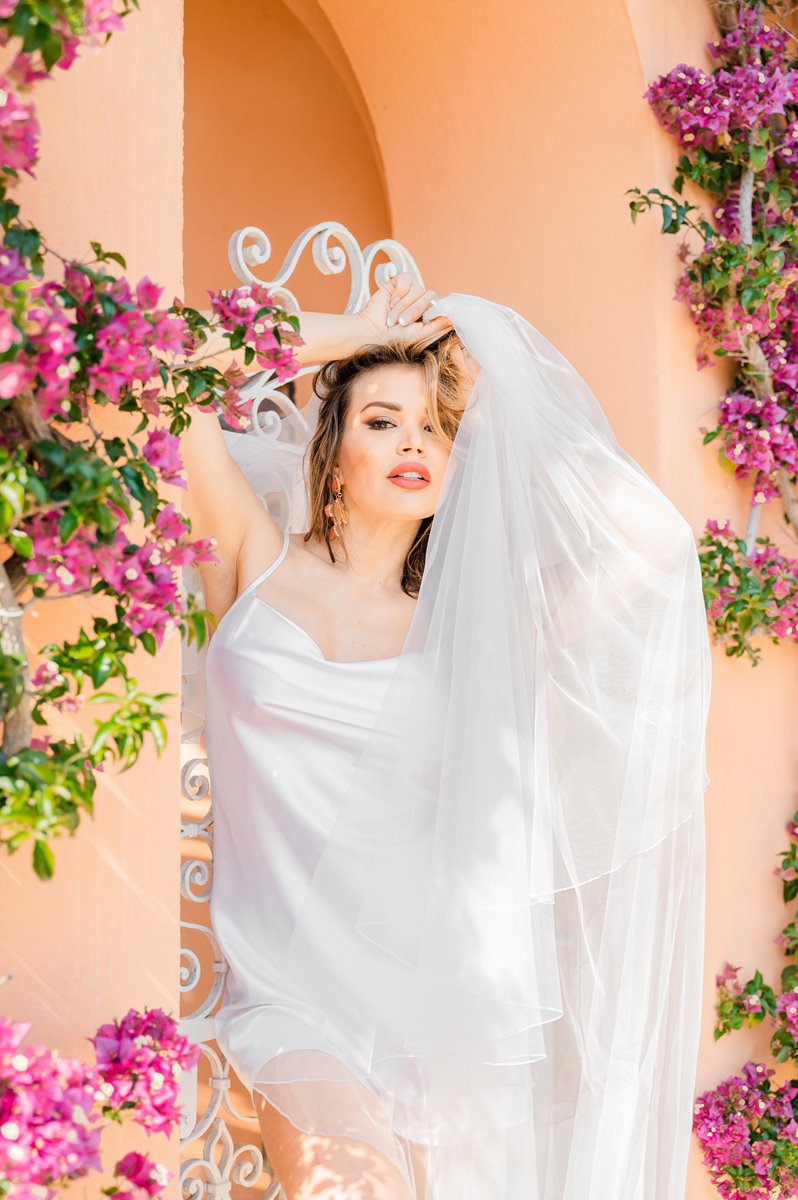

The stairs and the orange walls behind the hotel gave me the group shots. I sat the bridesmaids along the wall and on the steps, so the blue of the gowns sat straight against the orange, with Raquel’s veil running down the wall beside them.
David and the Groomsmen
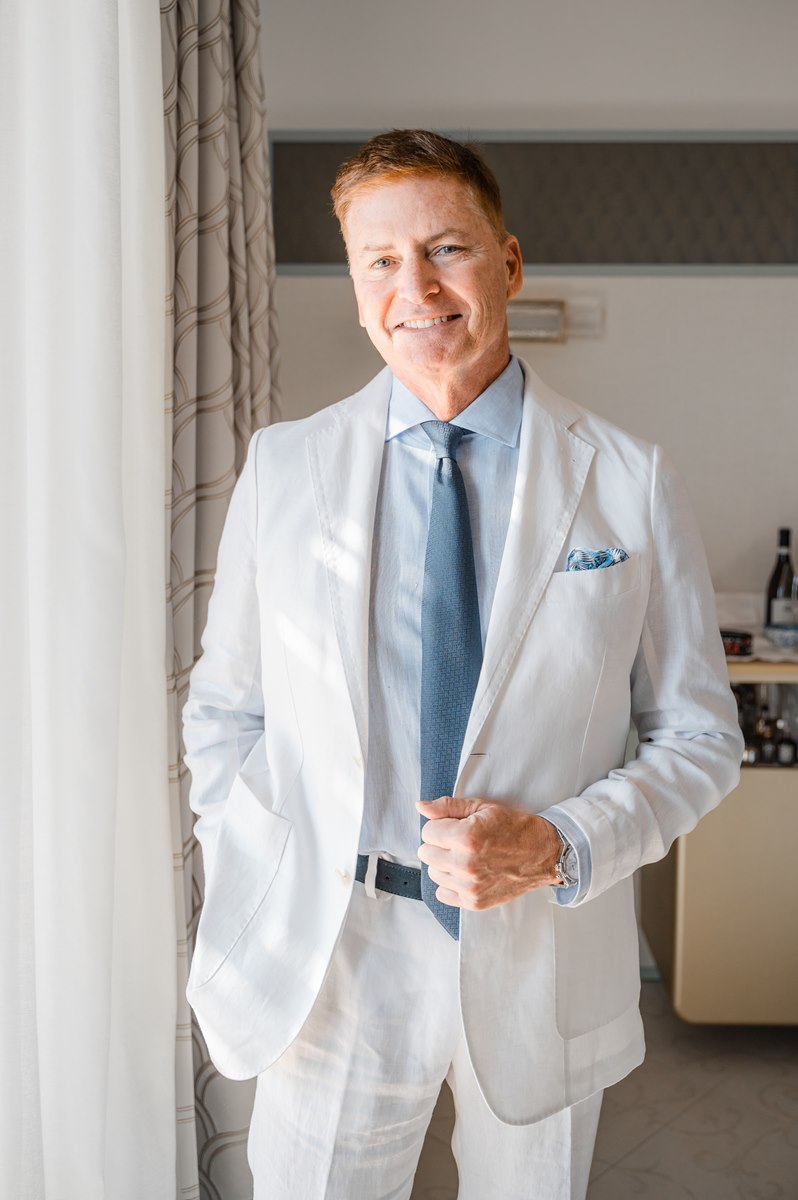
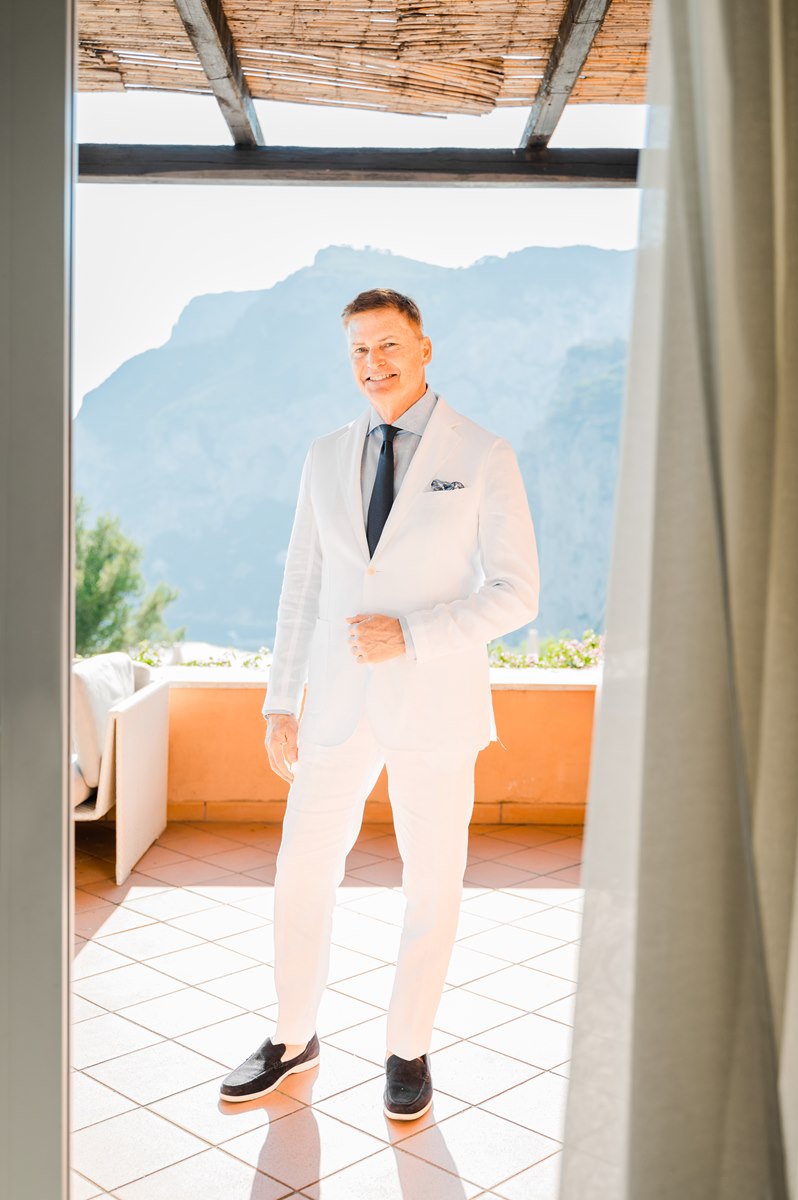
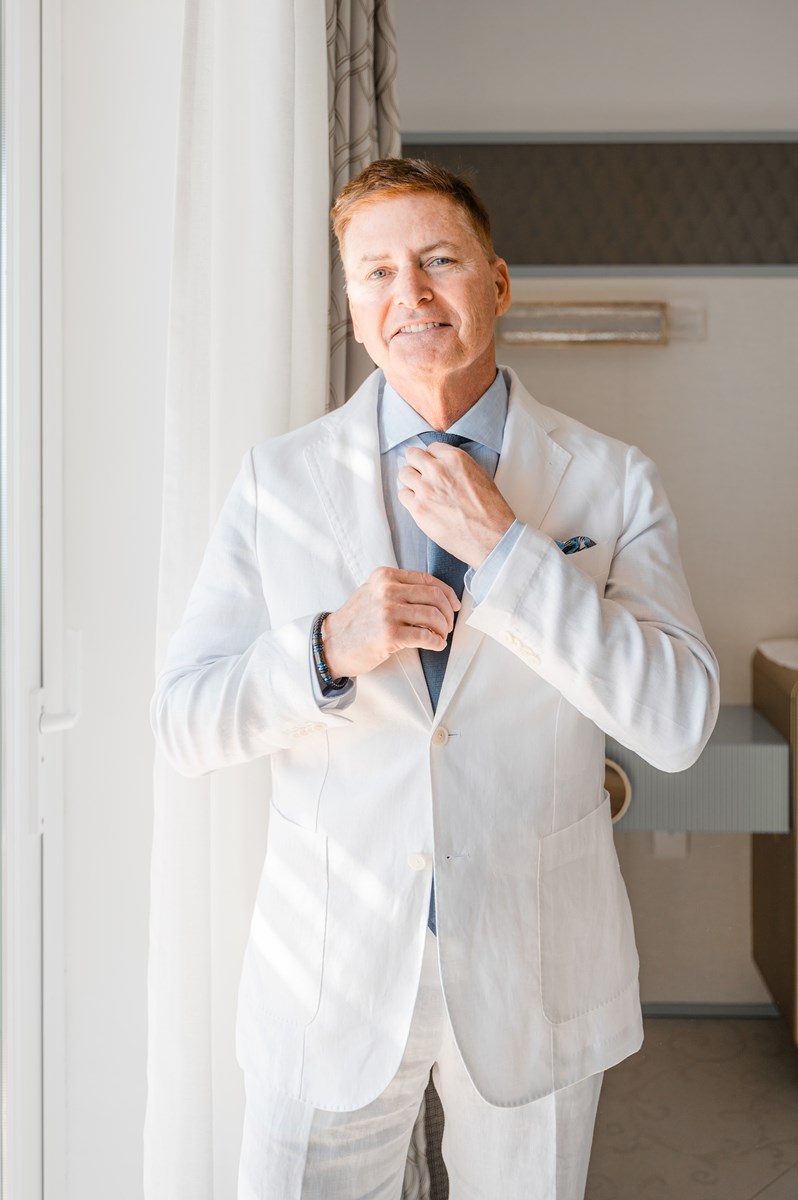
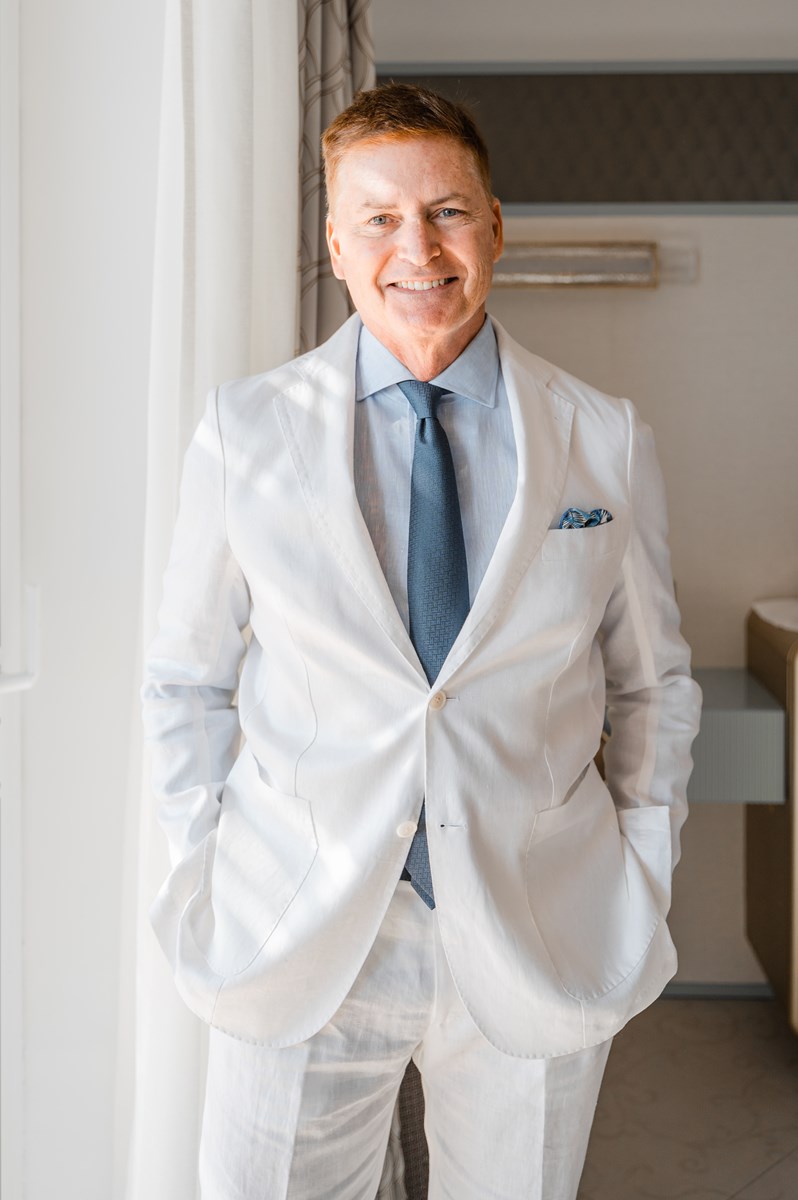
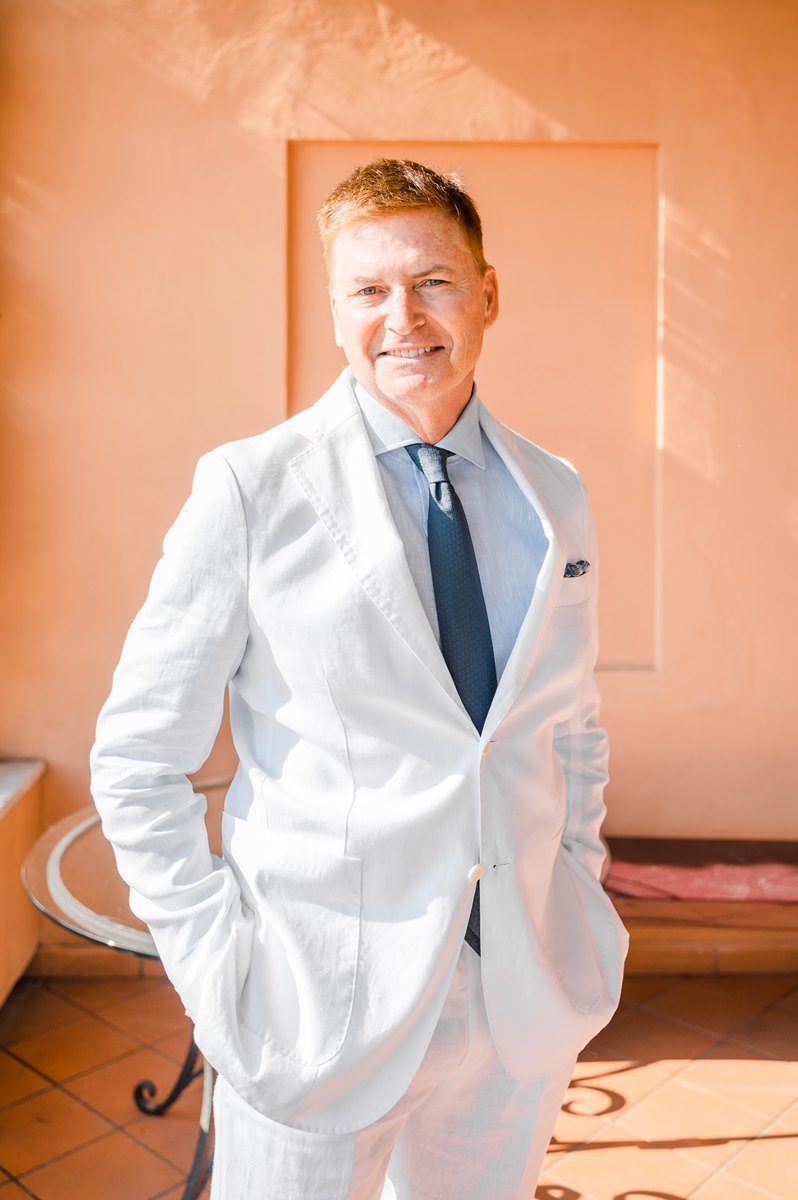
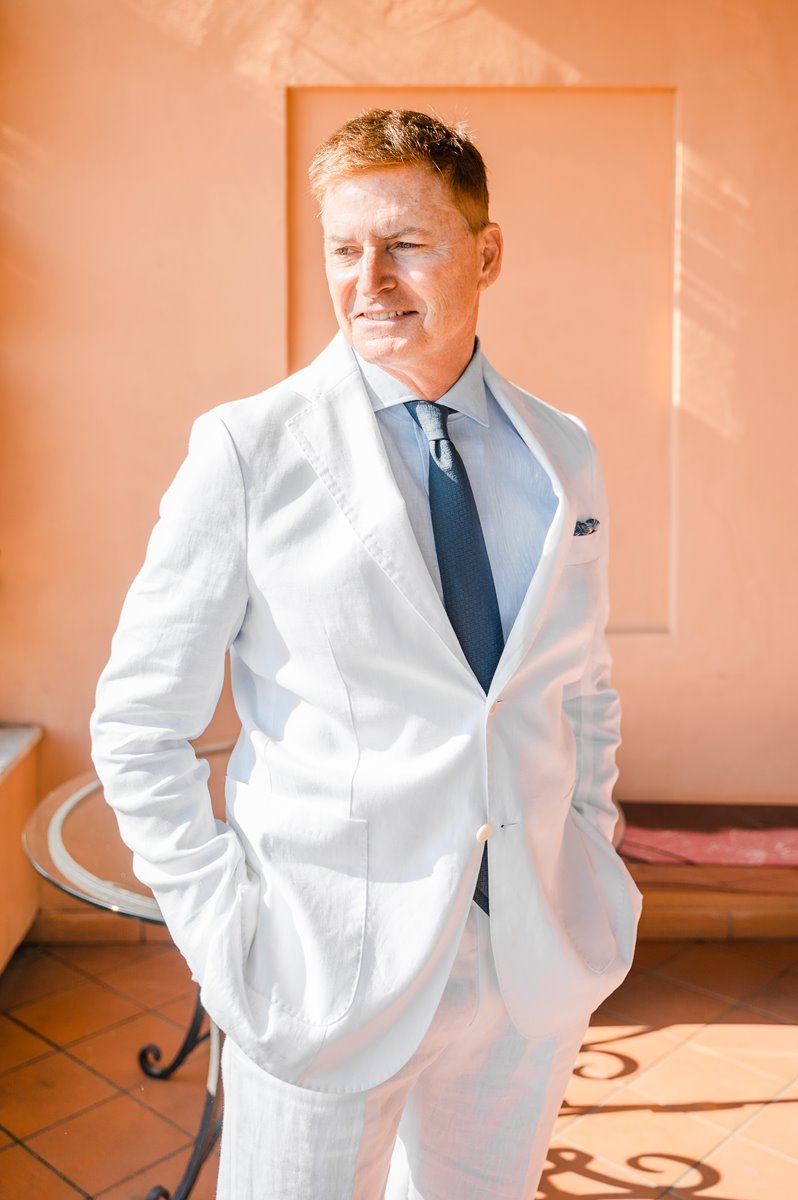
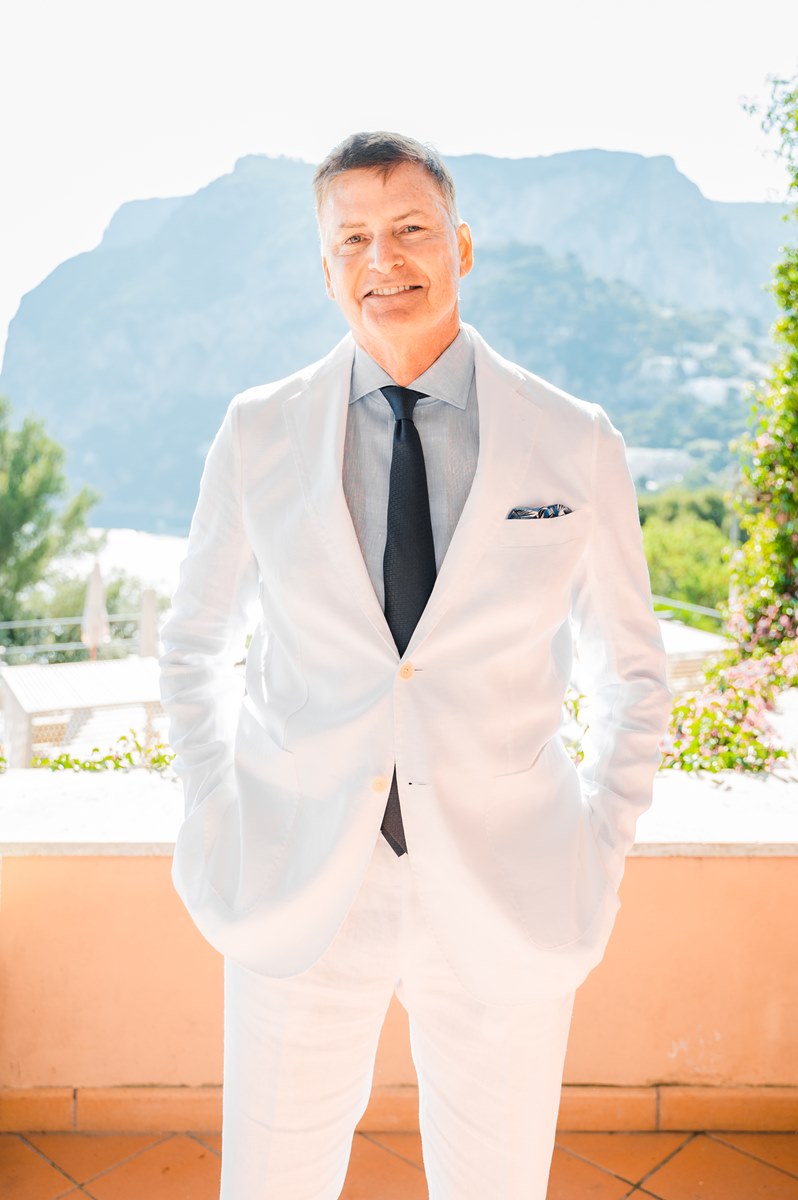
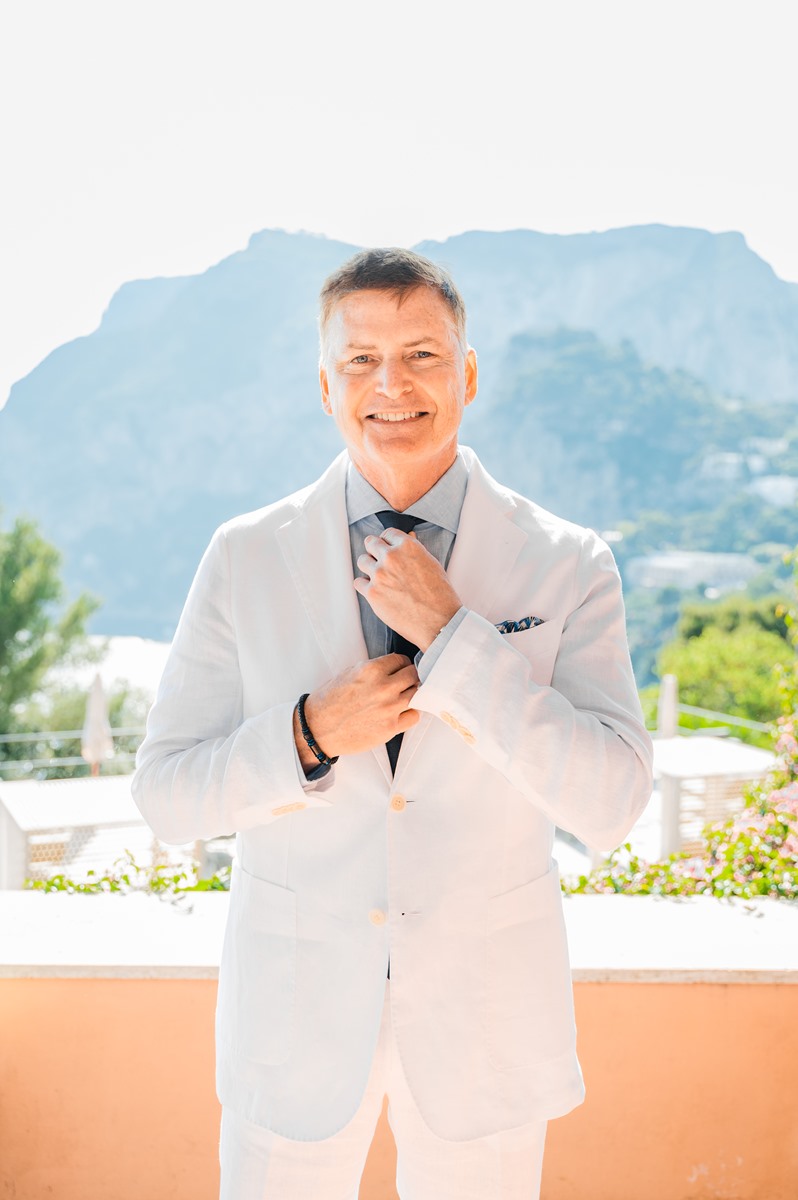
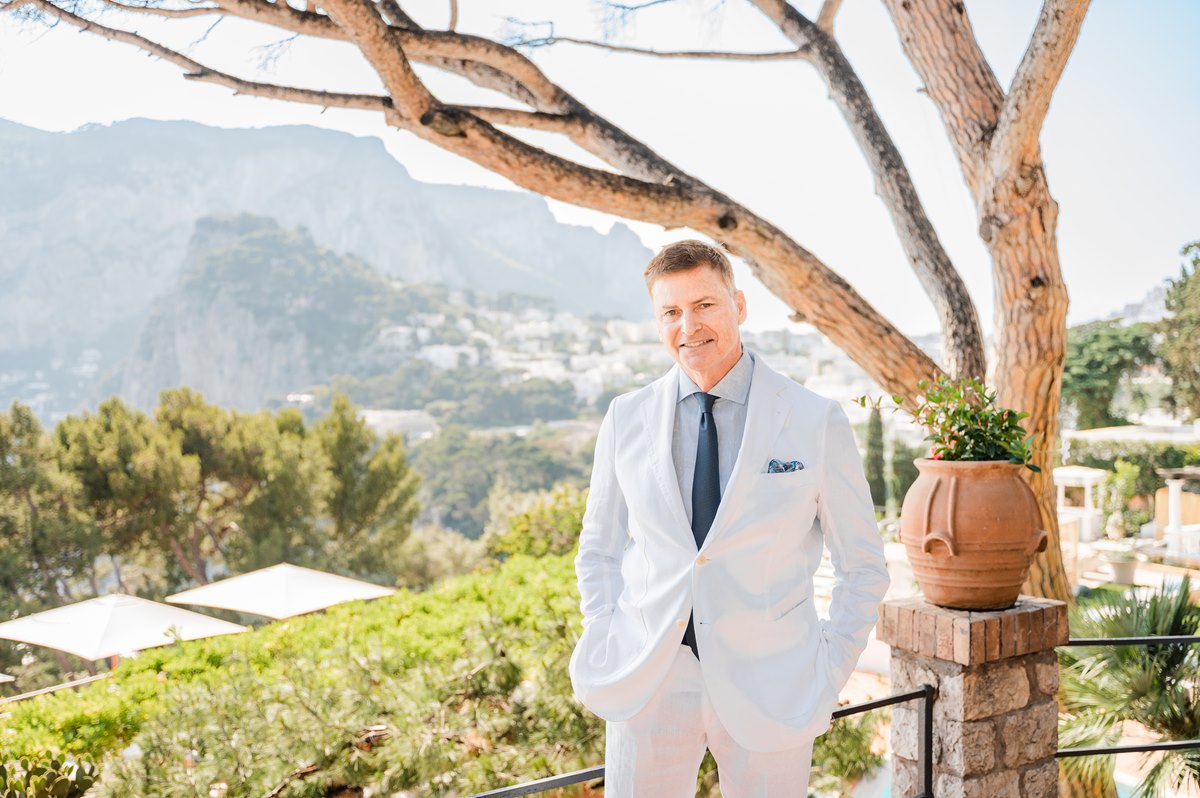
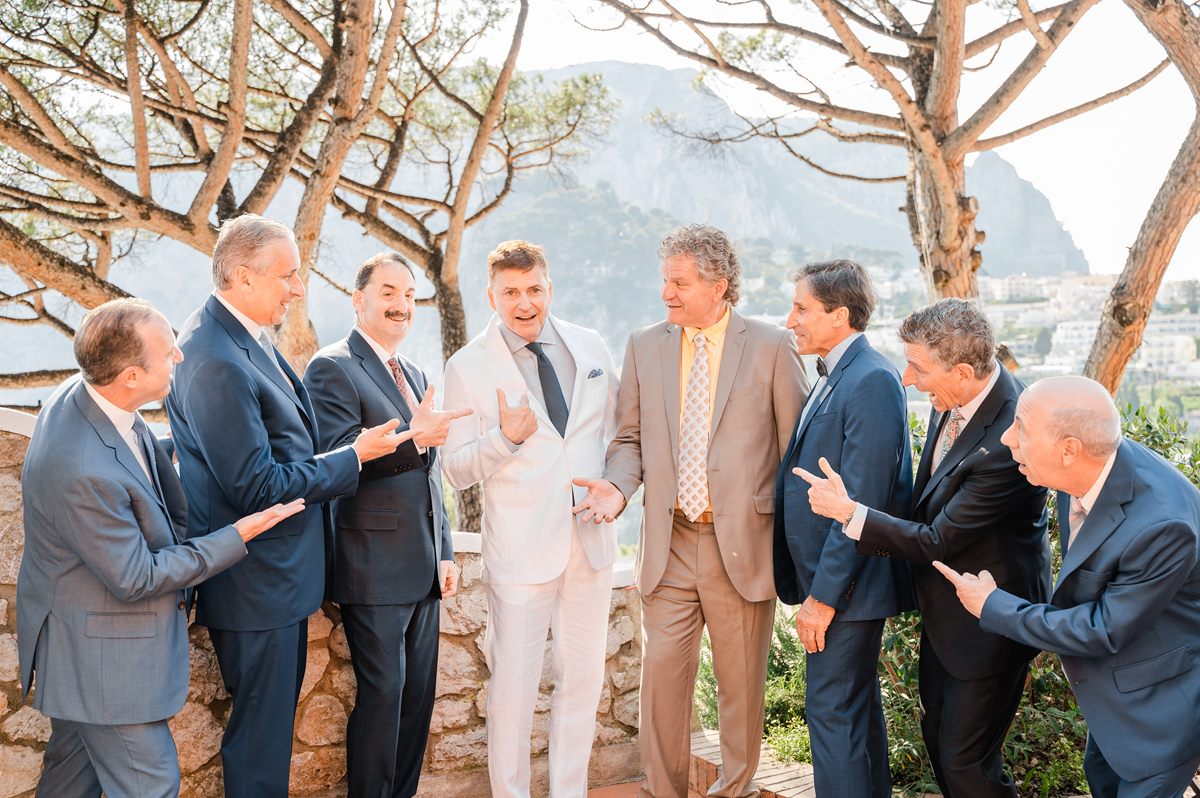
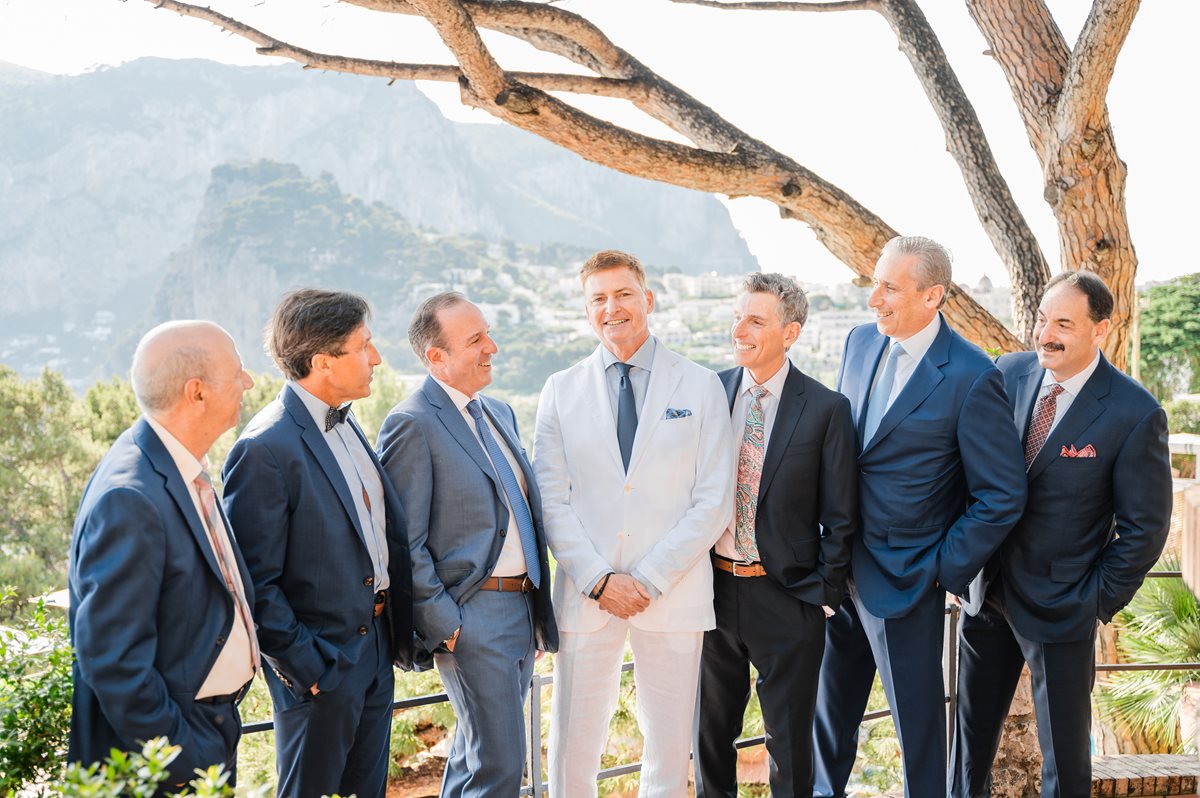
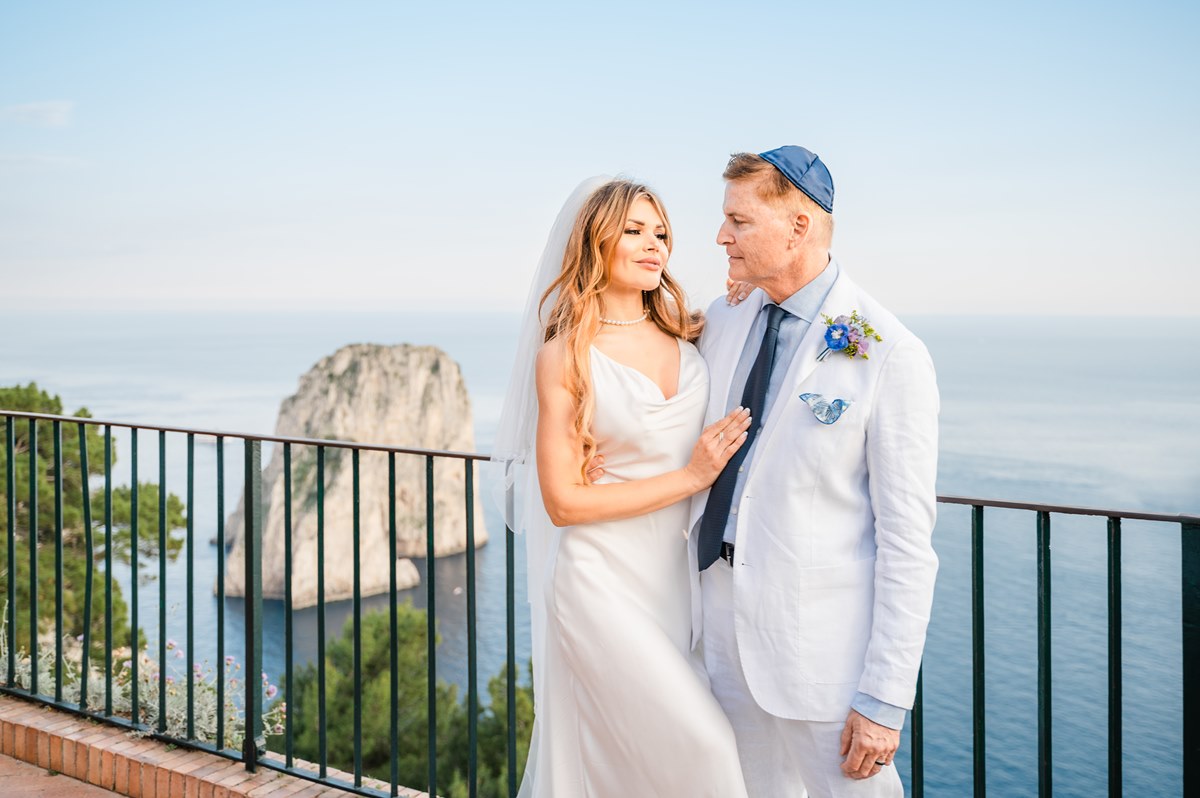
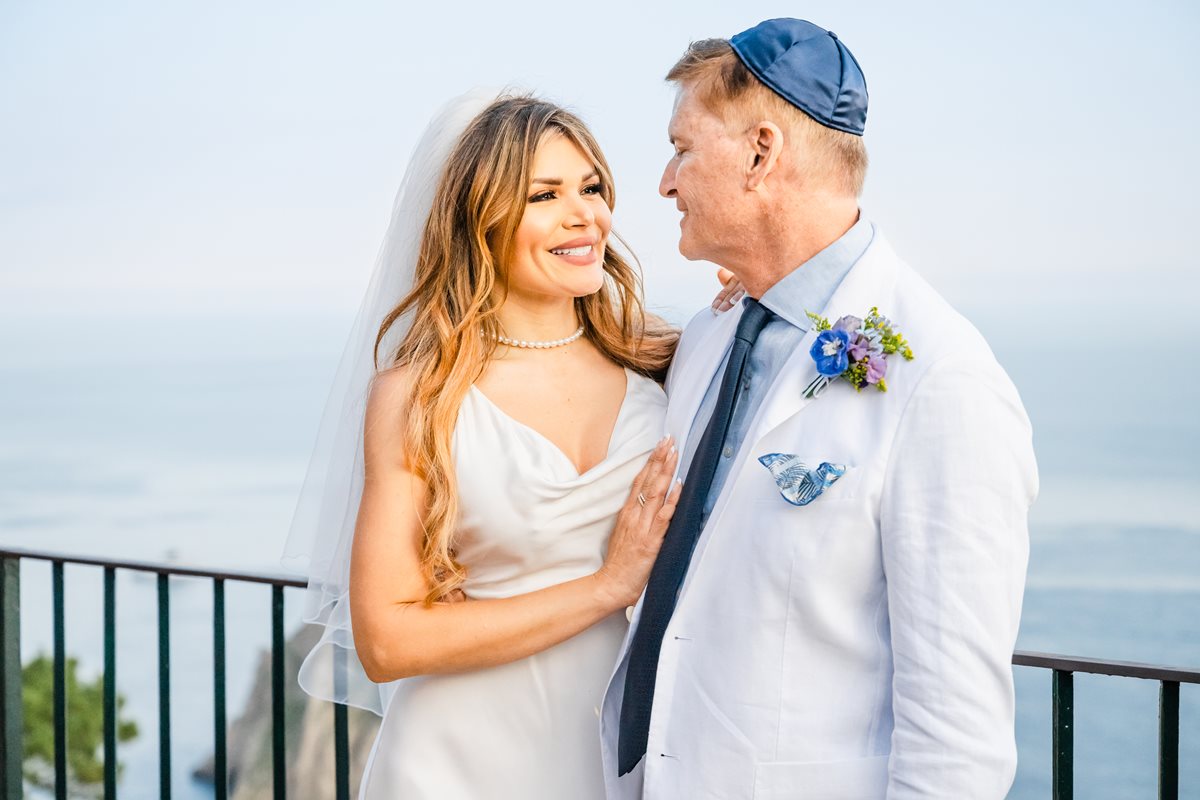
At 5:00 PM it was David’s turn, with his family in different combinations, as the timetable asked. He wore a white dinner jacket and a blue tie, and I took him out under the old pine at the edge of the garden, with the island behind him. The groomsmen lined up along the railing in navy and gray, and I kept that group short, because men in dark suits in the afternoon sun don’t stay patient for long.

A Chuppah Facing the Faraglioni
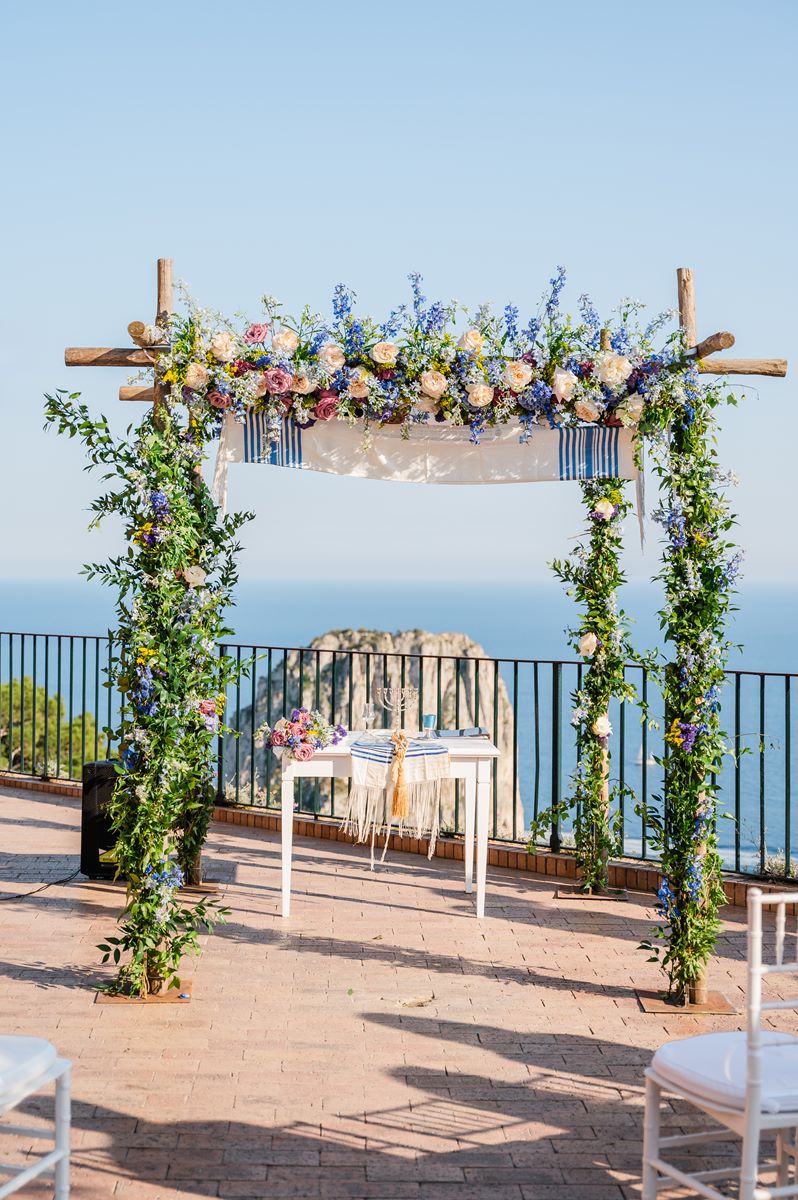
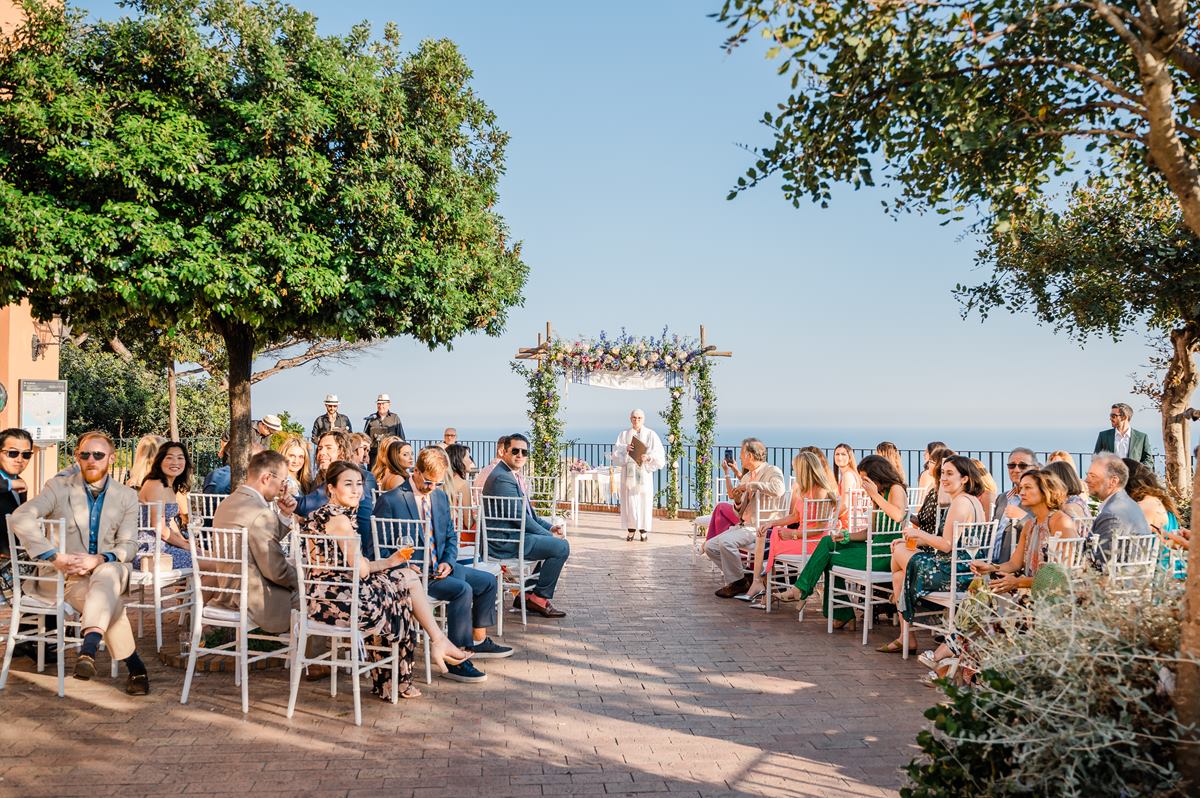
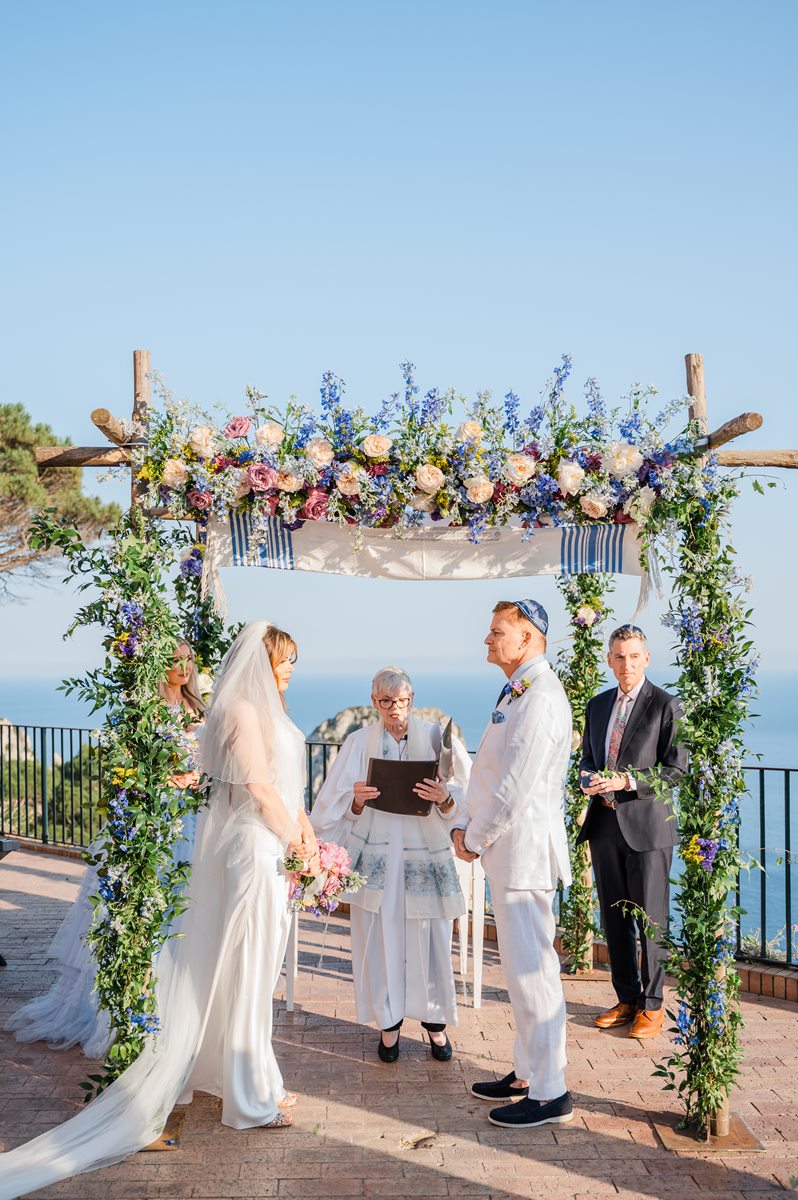
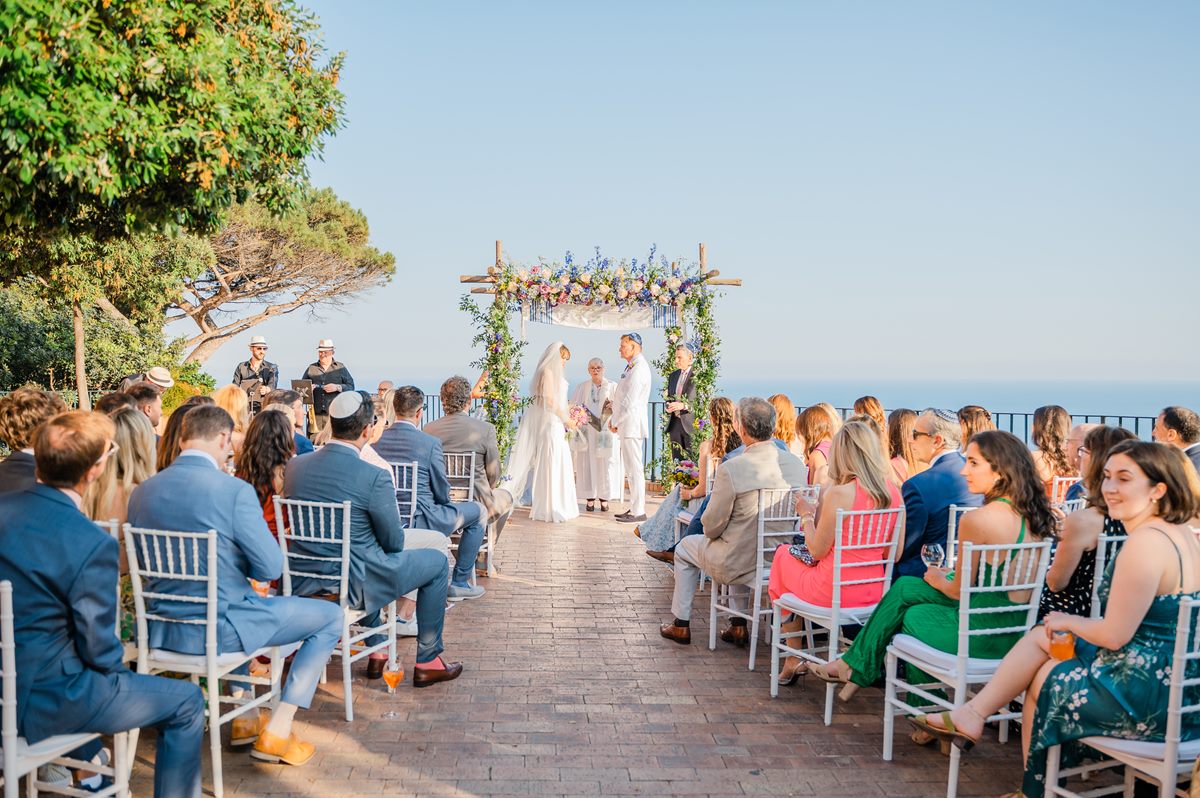
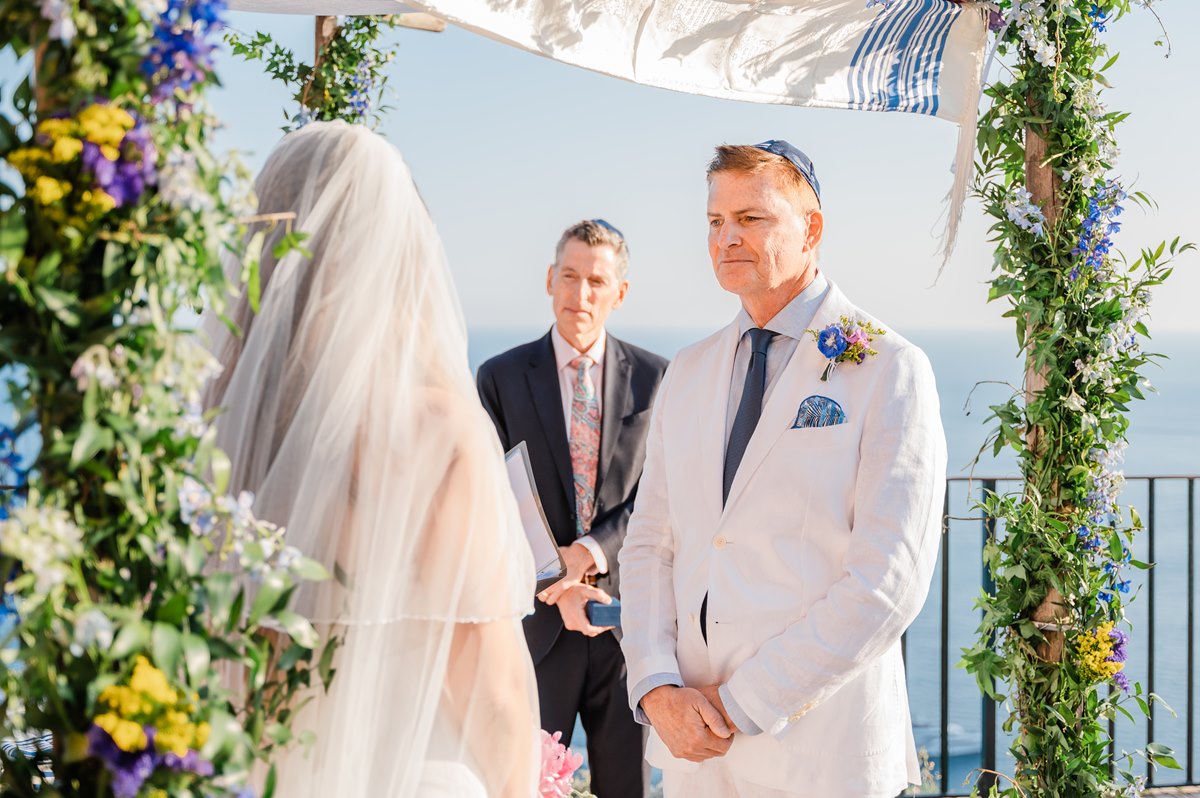
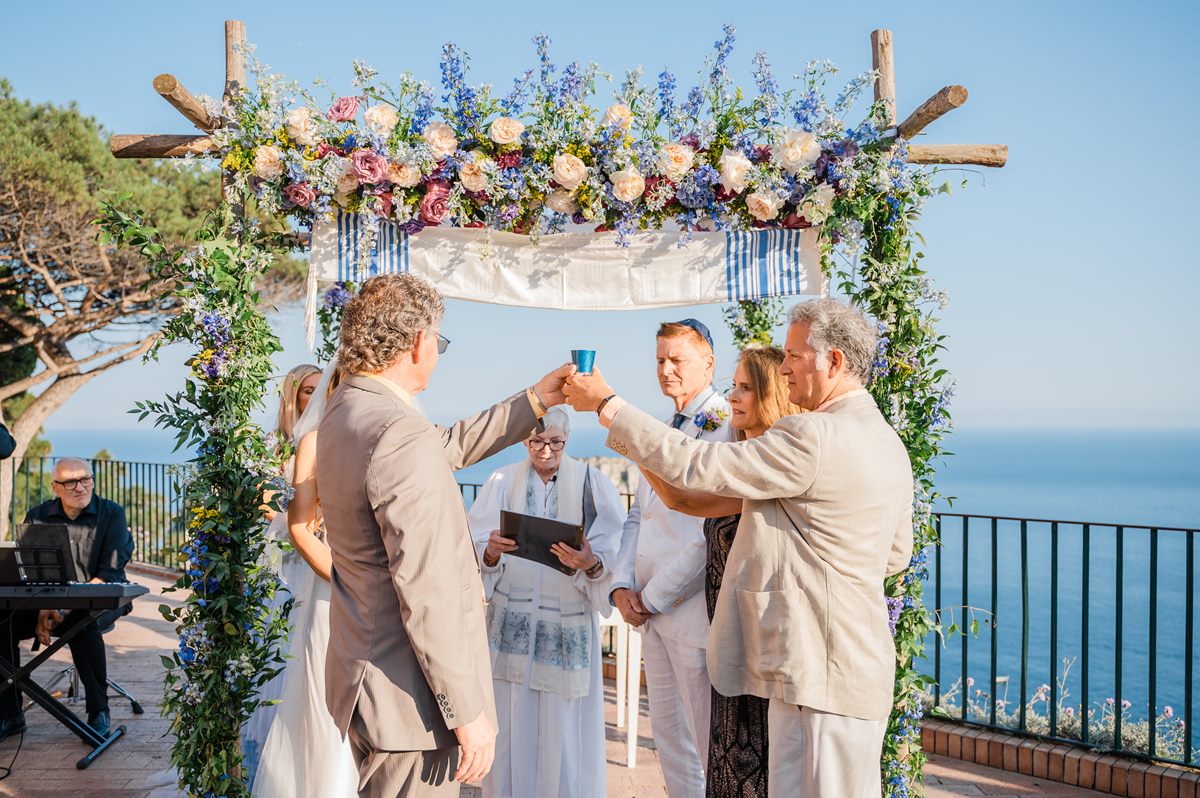
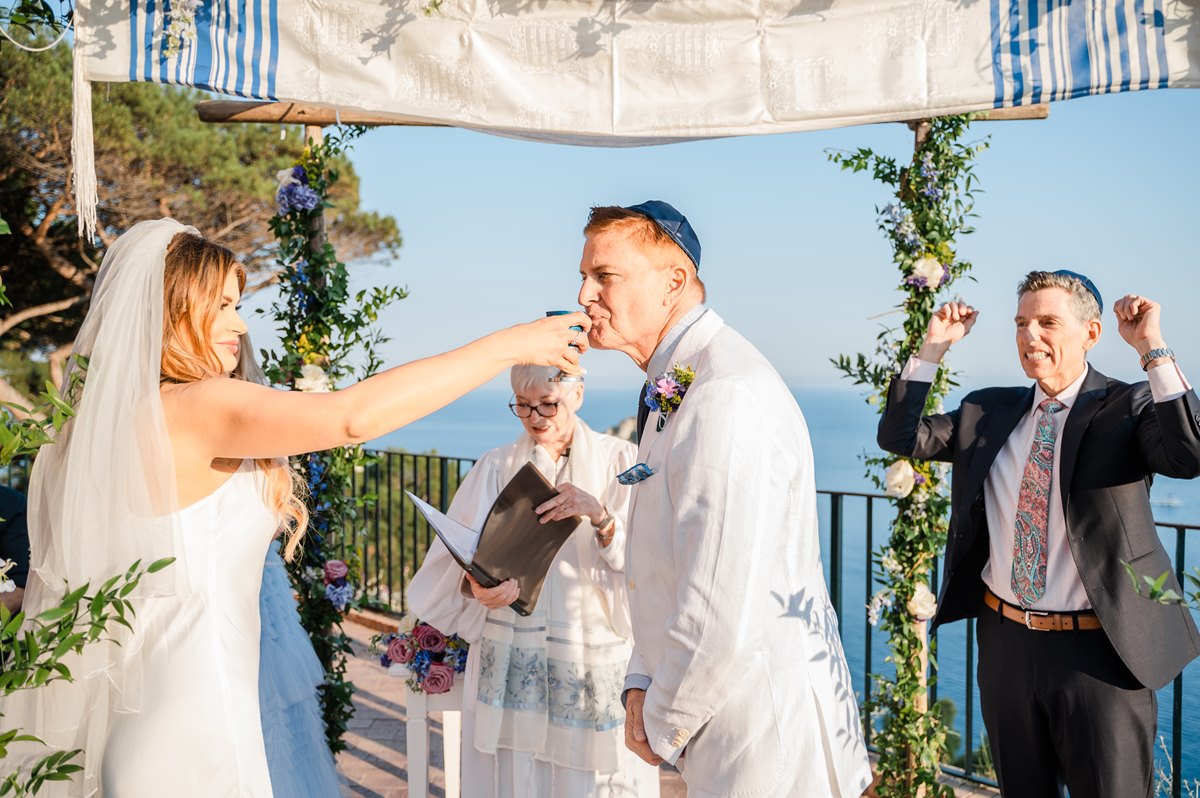
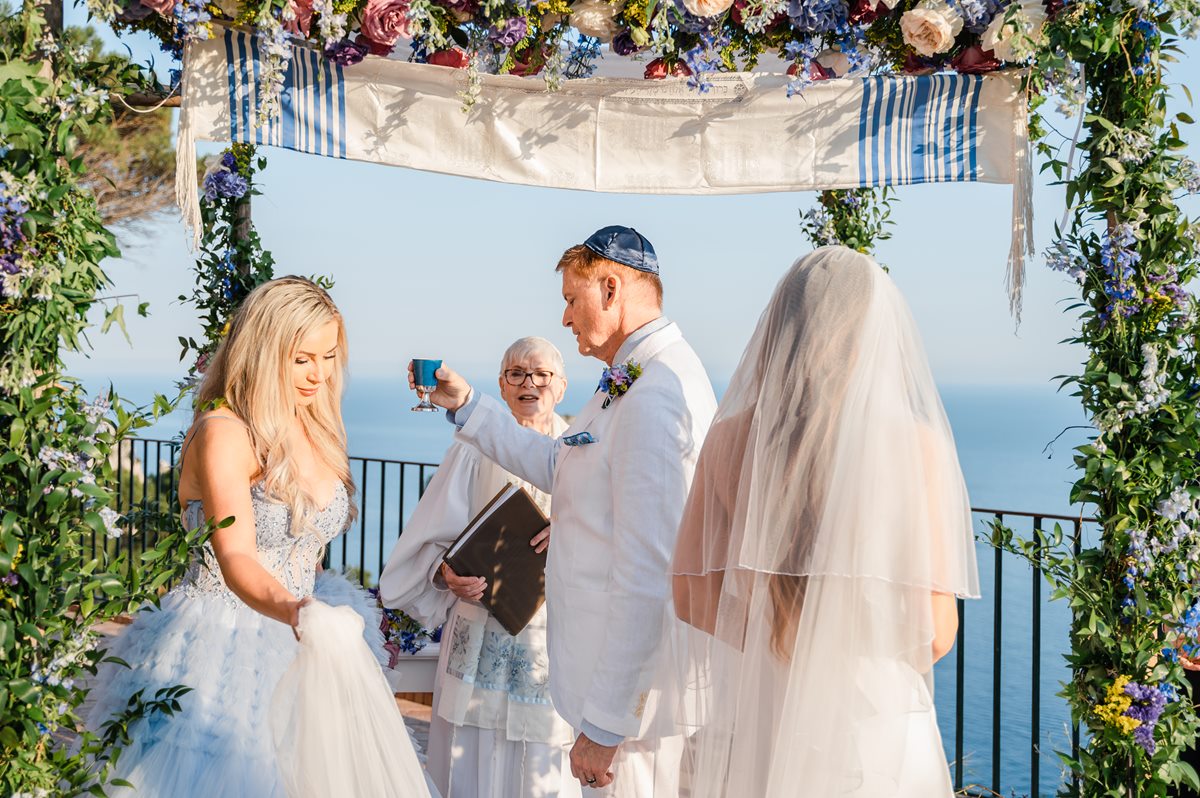
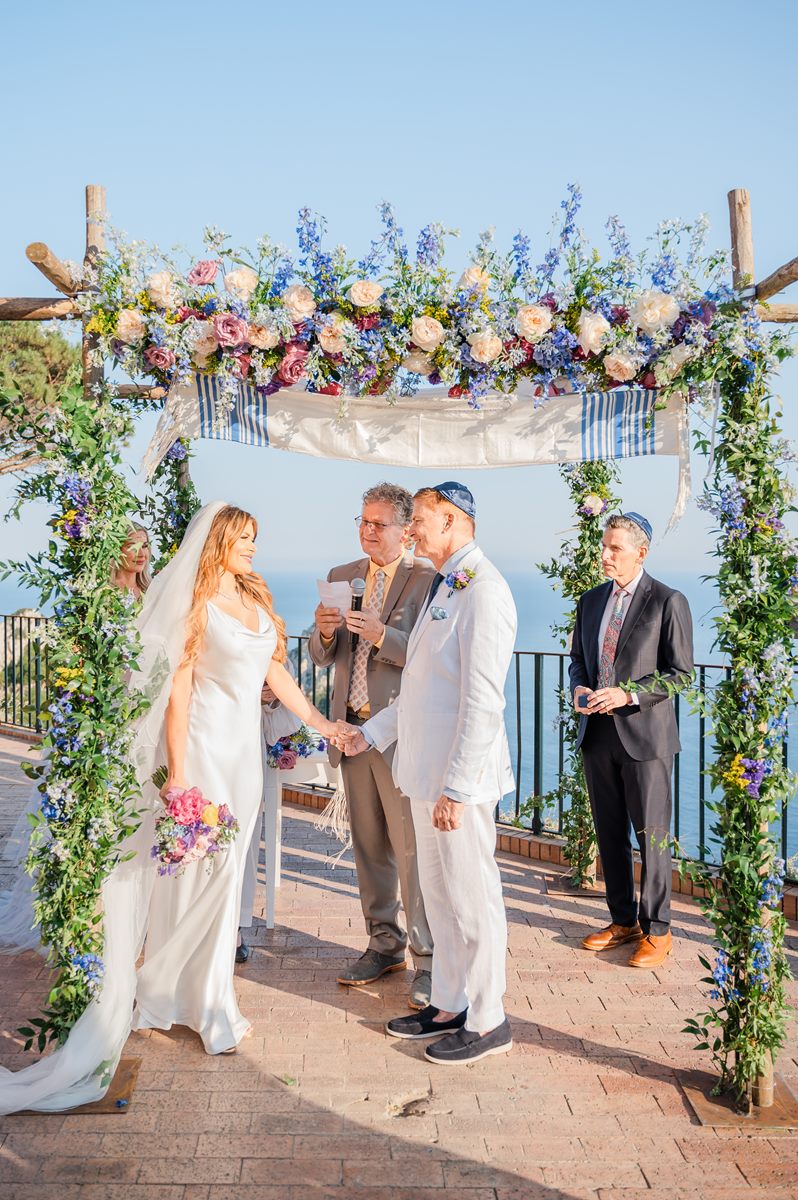
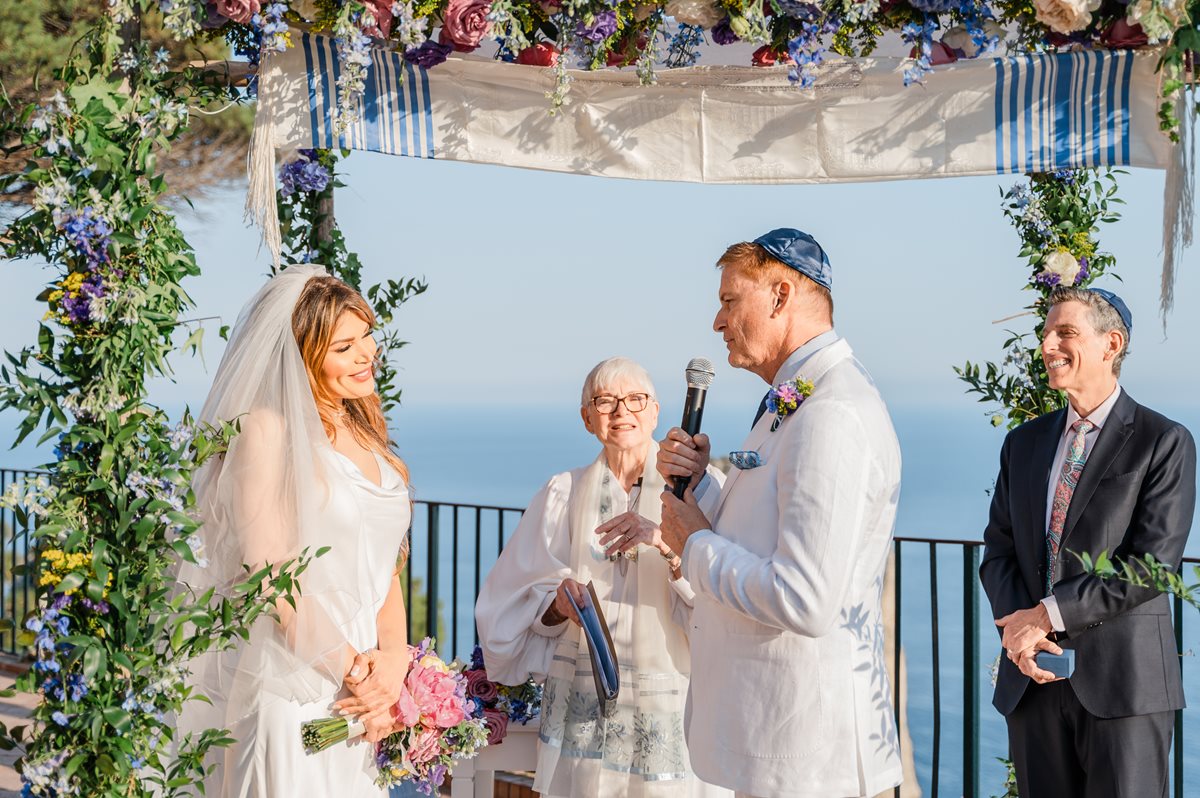
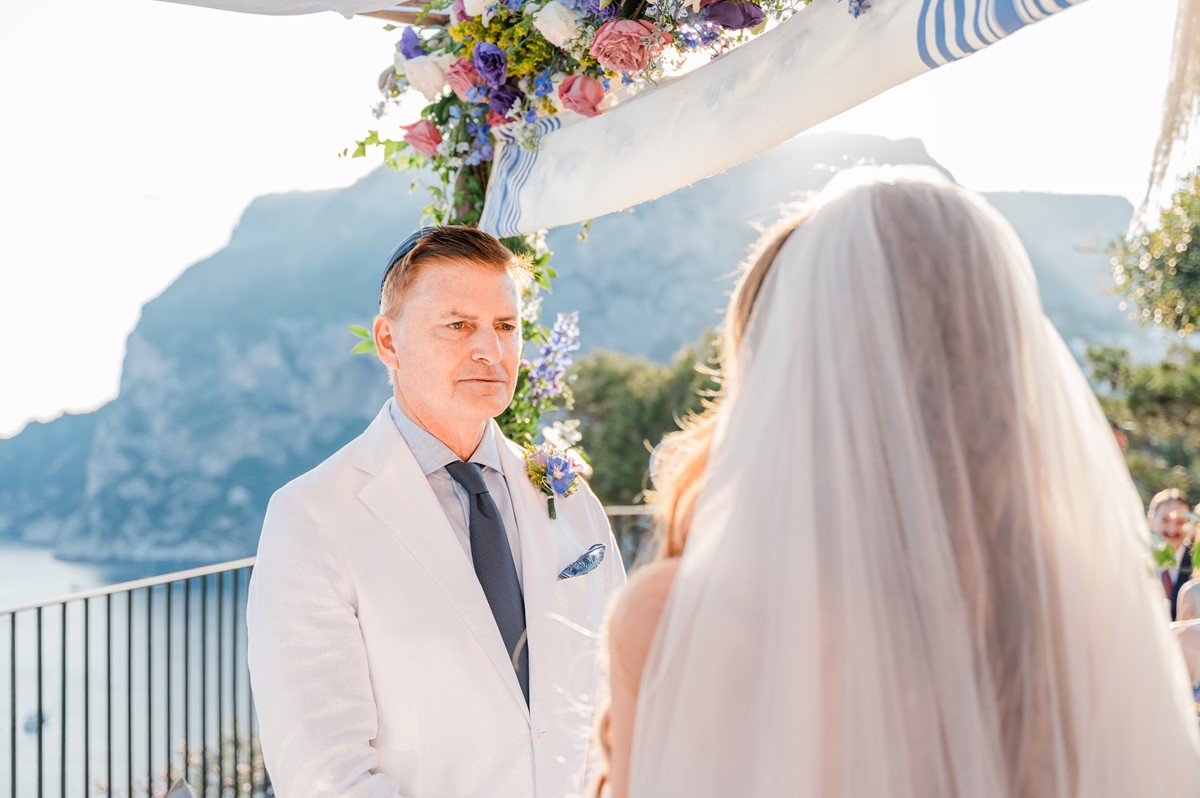
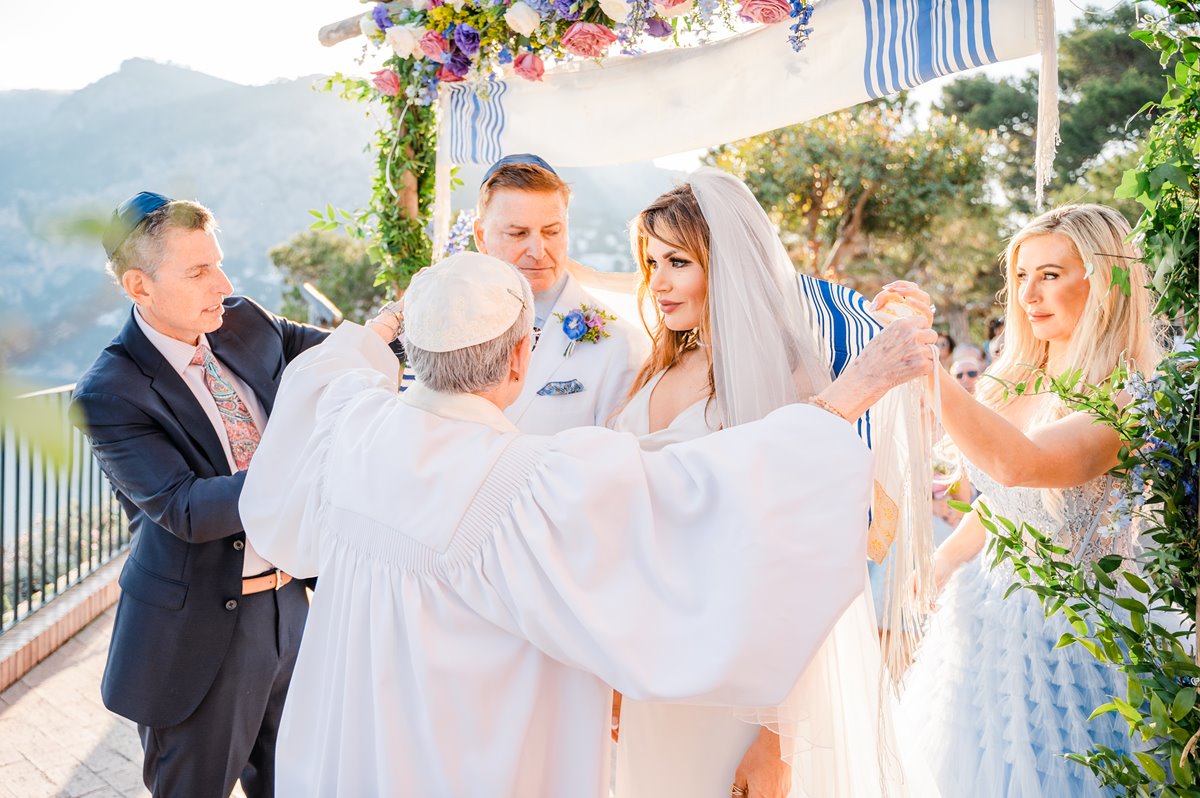
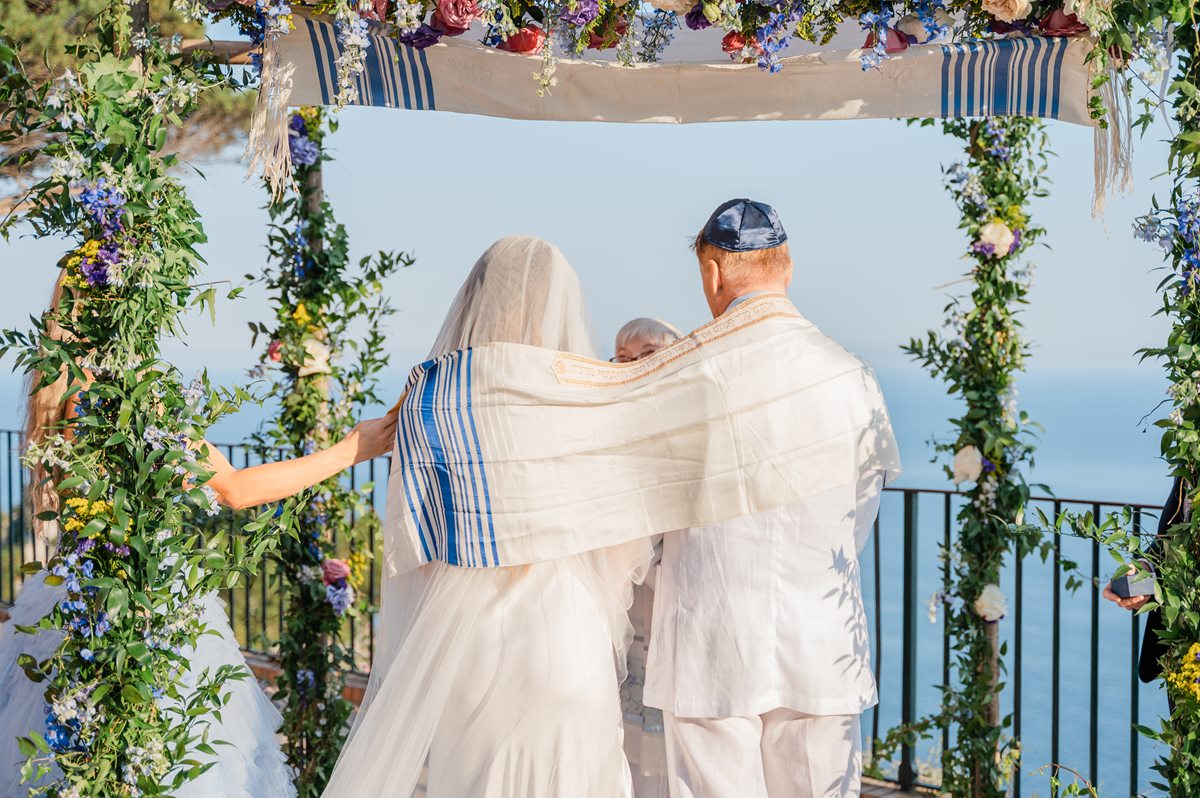
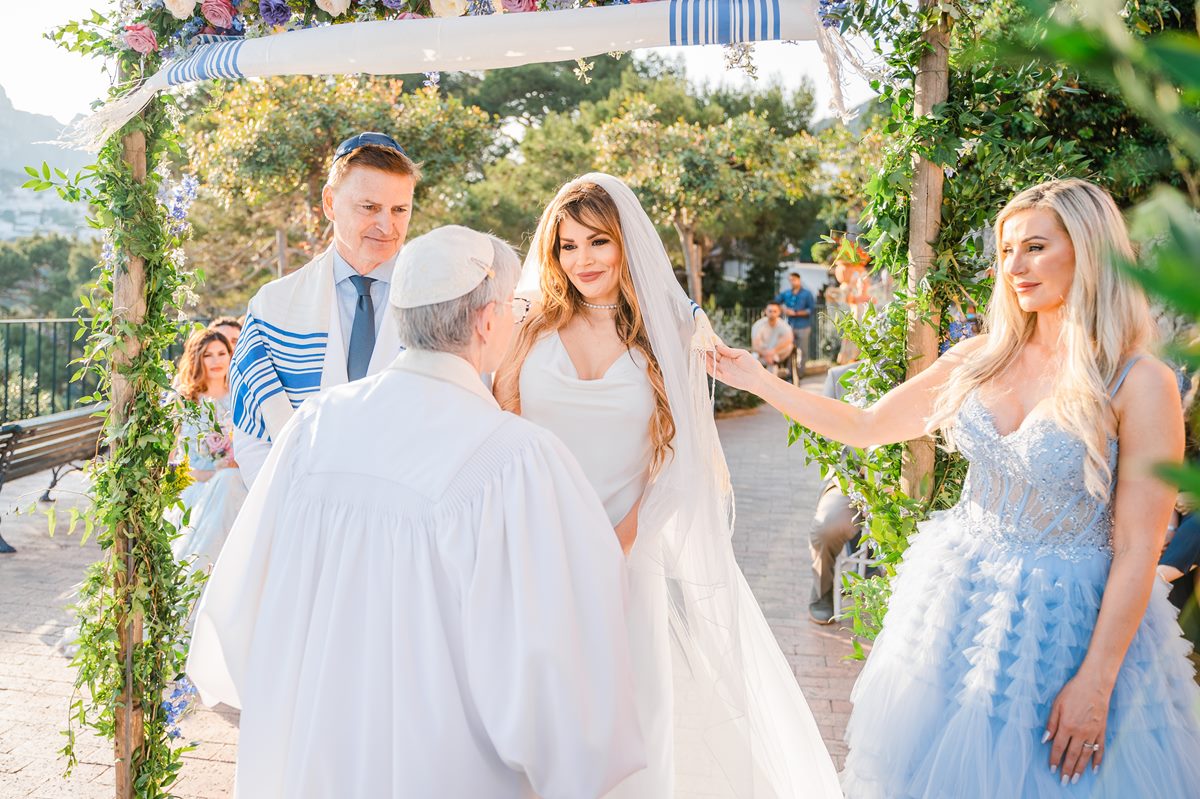
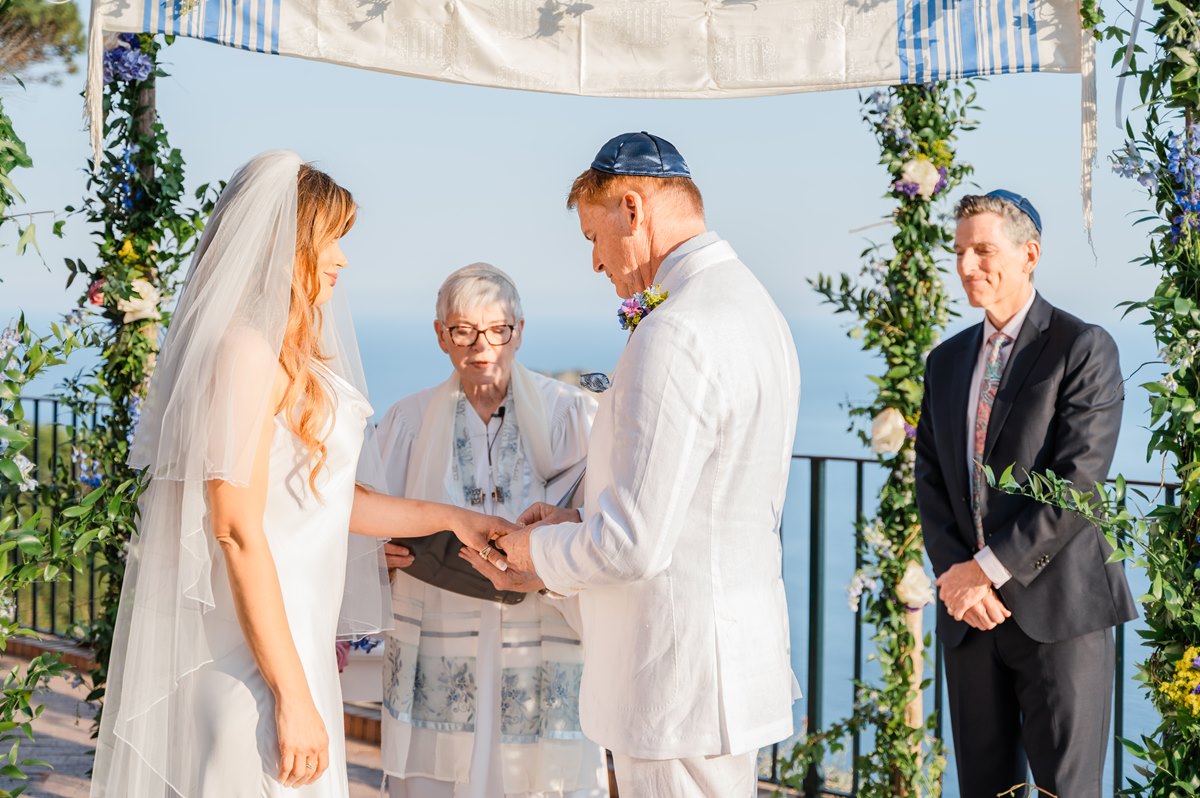
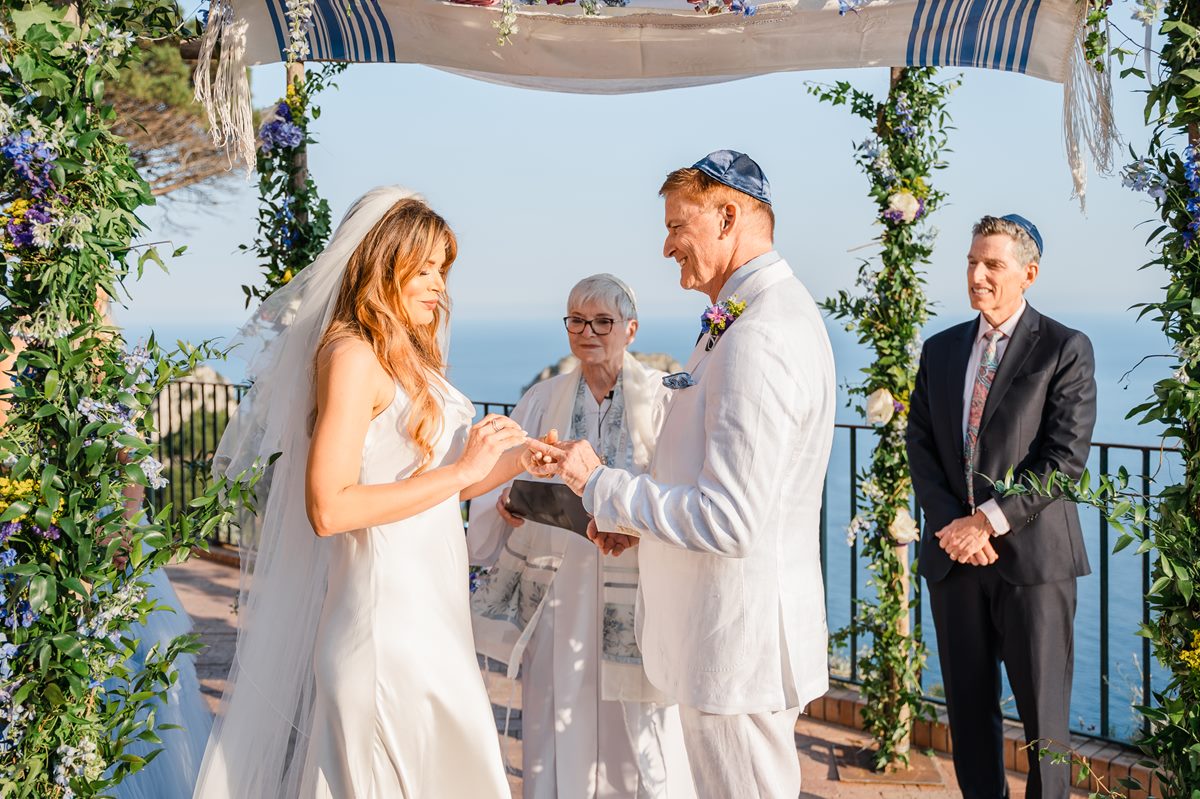
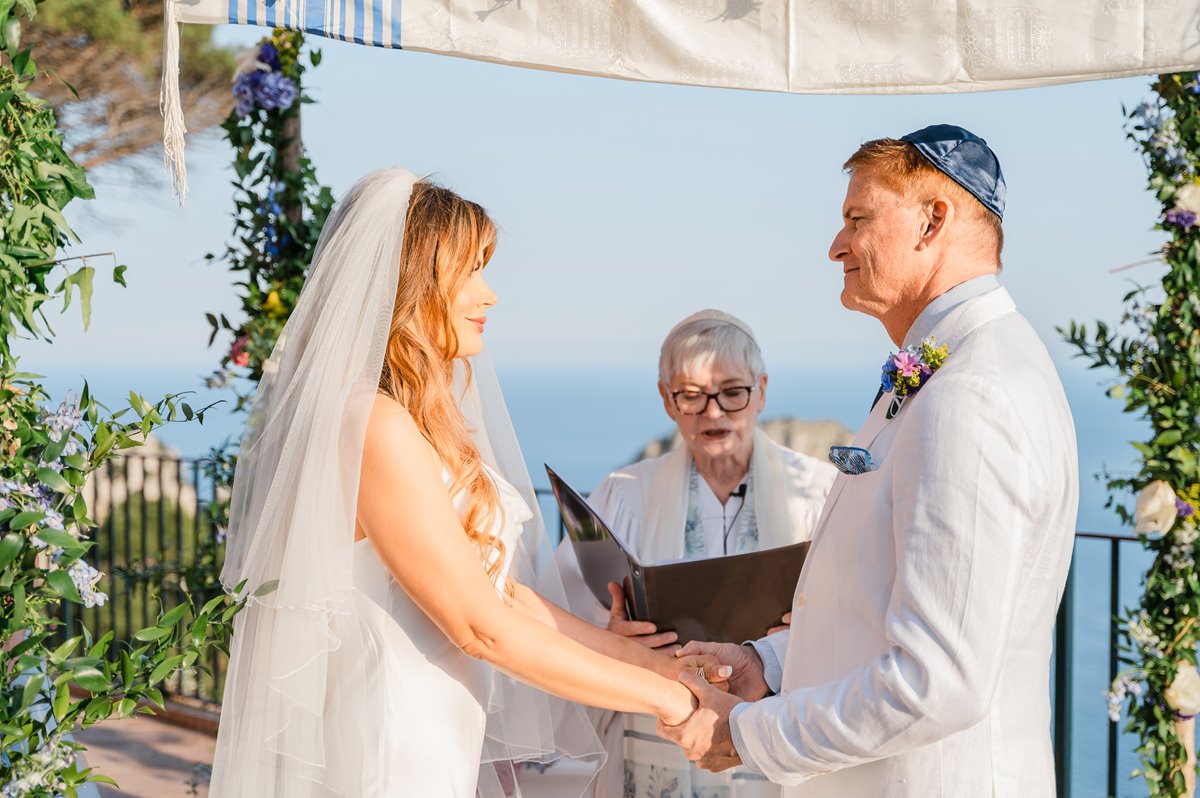
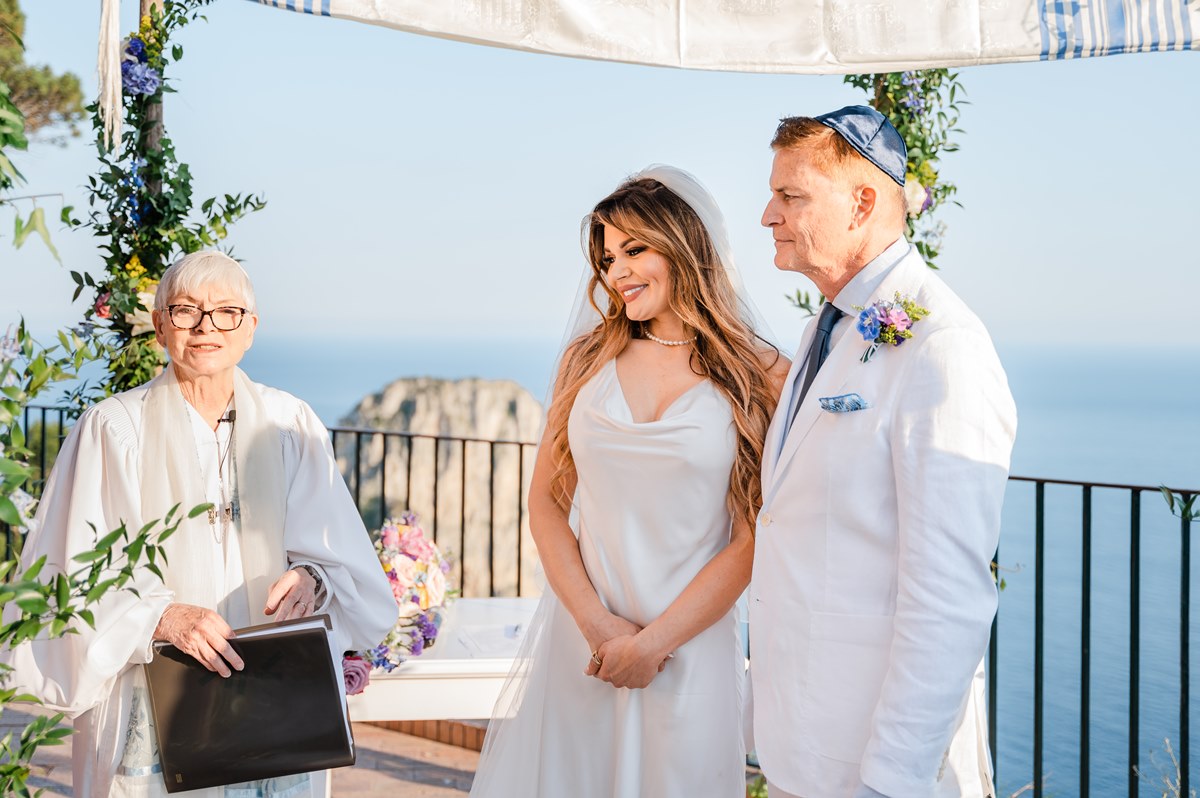
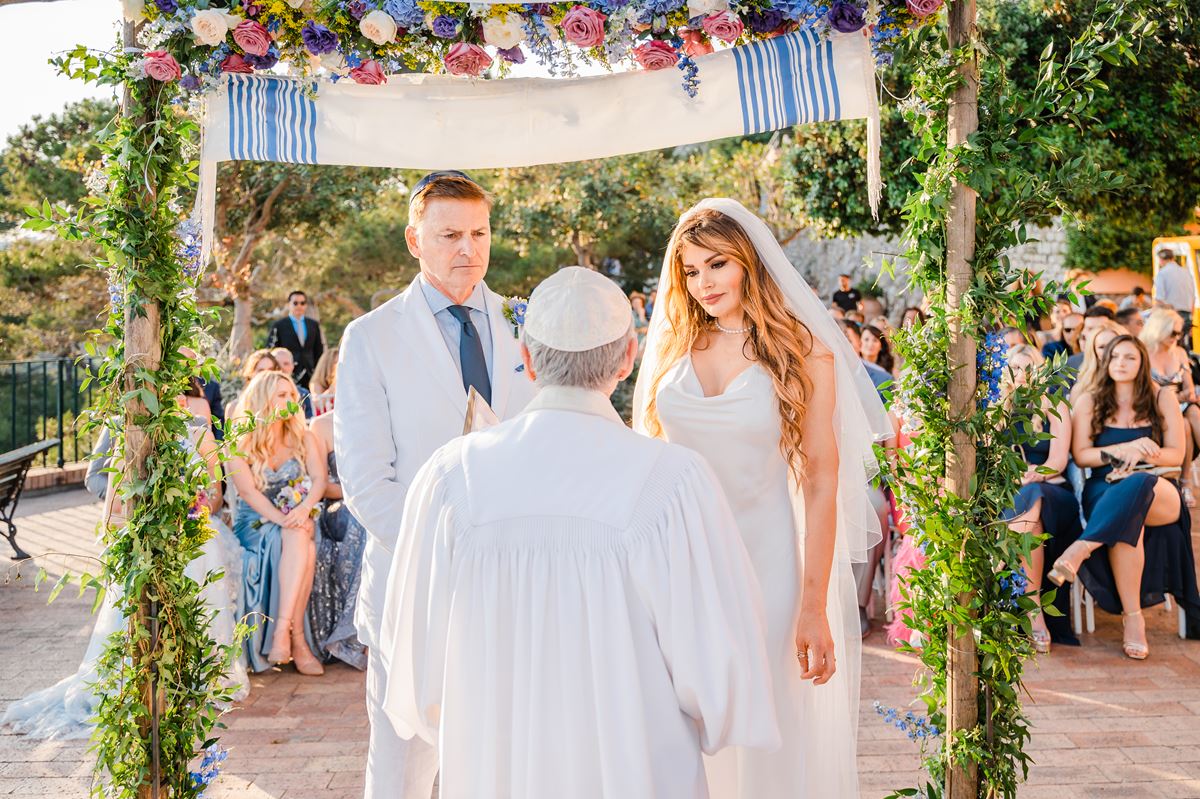
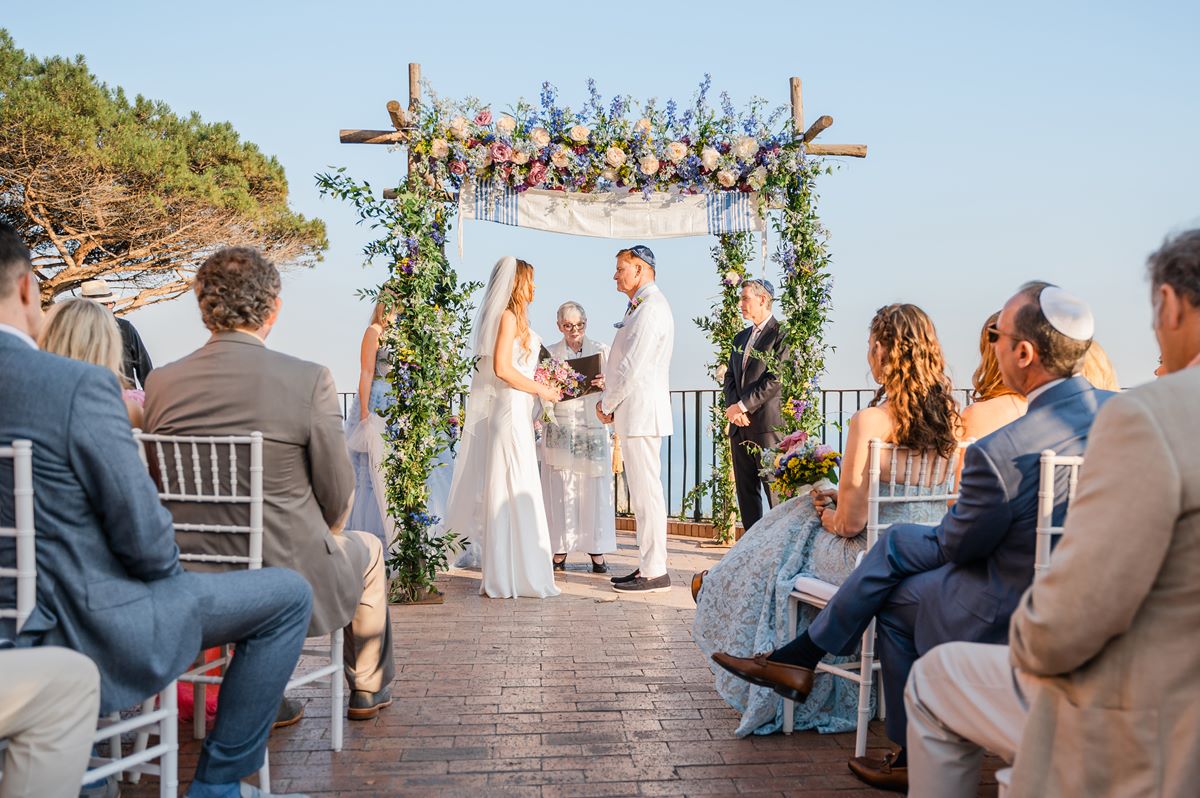
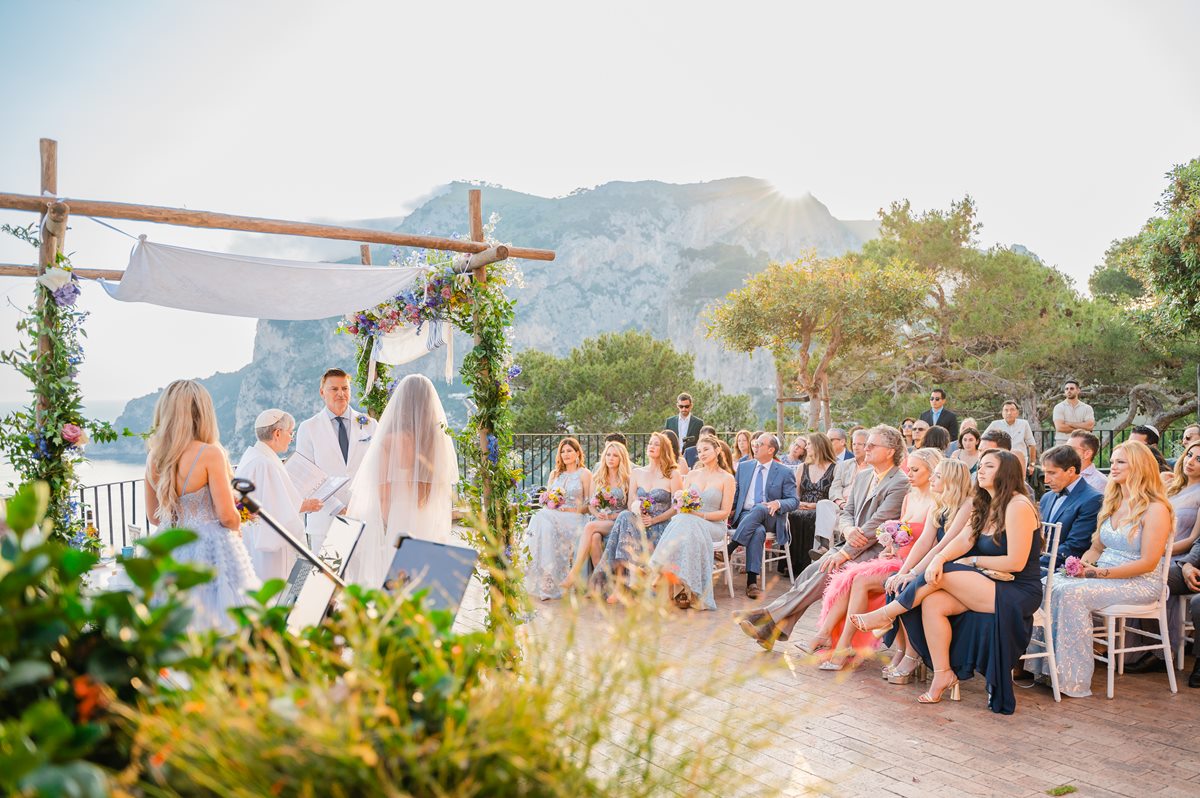
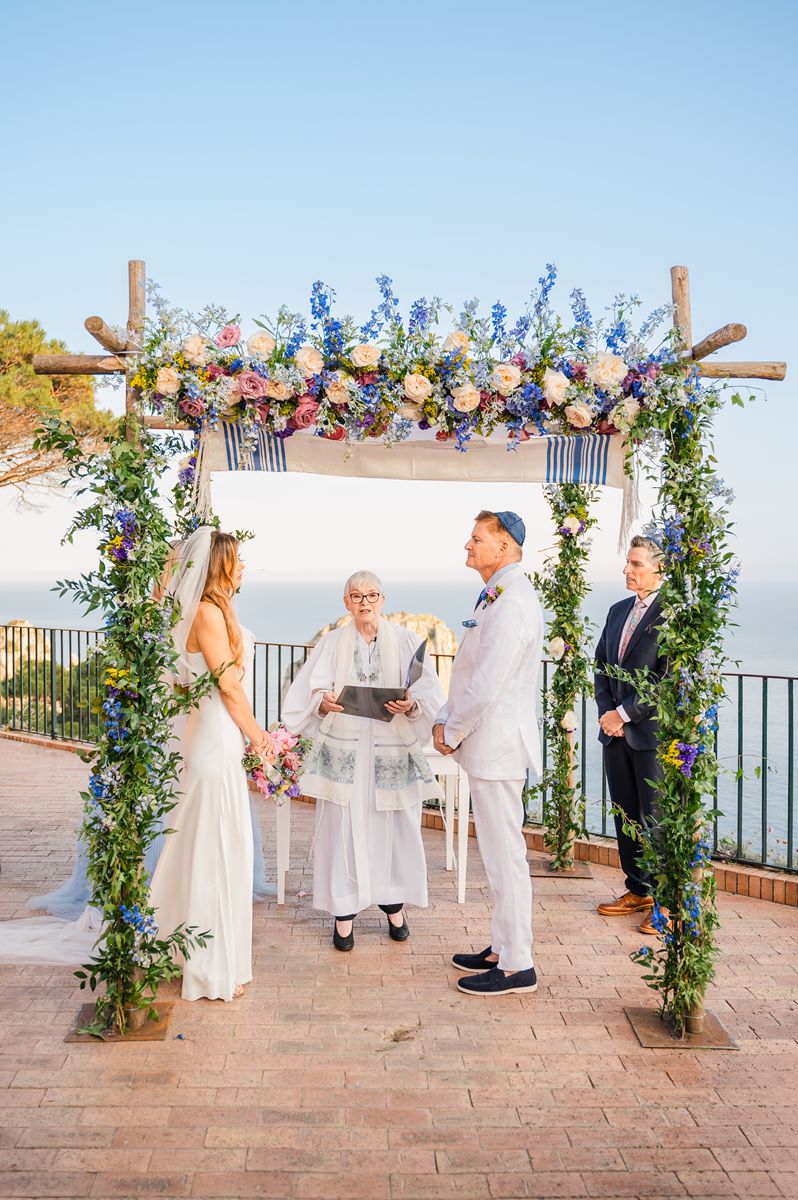
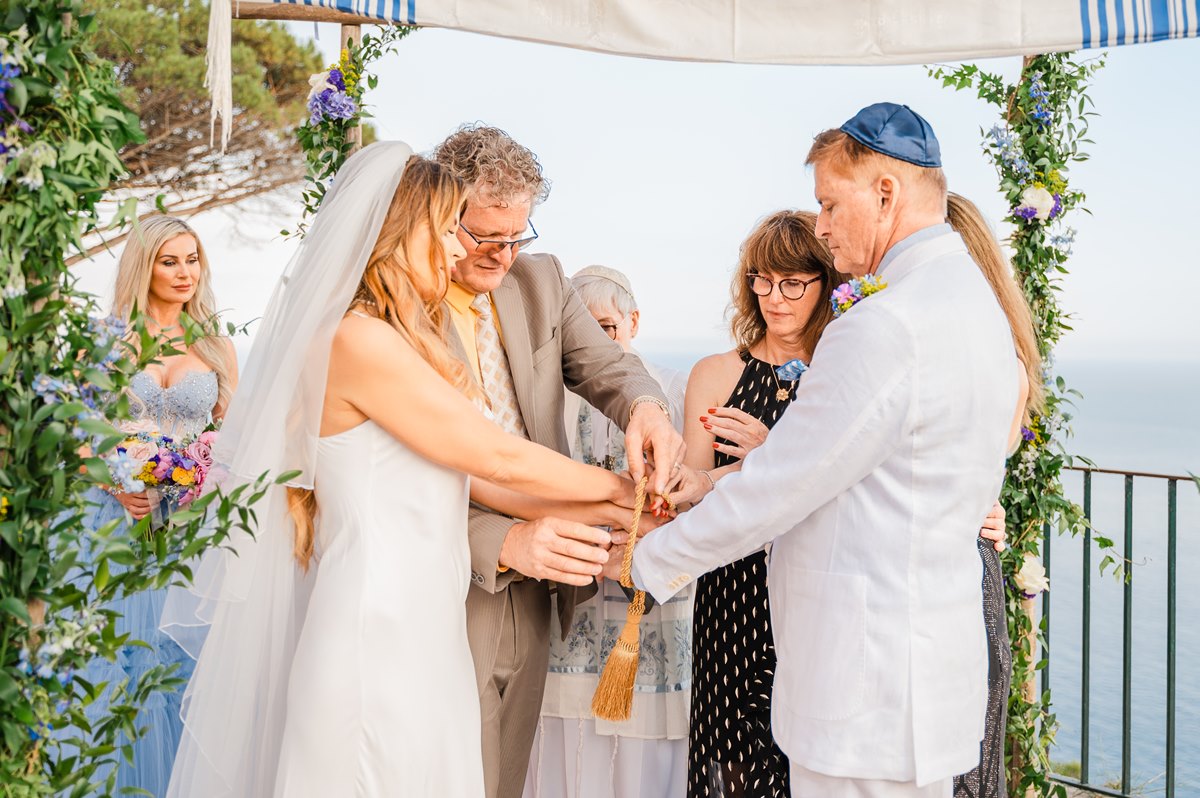
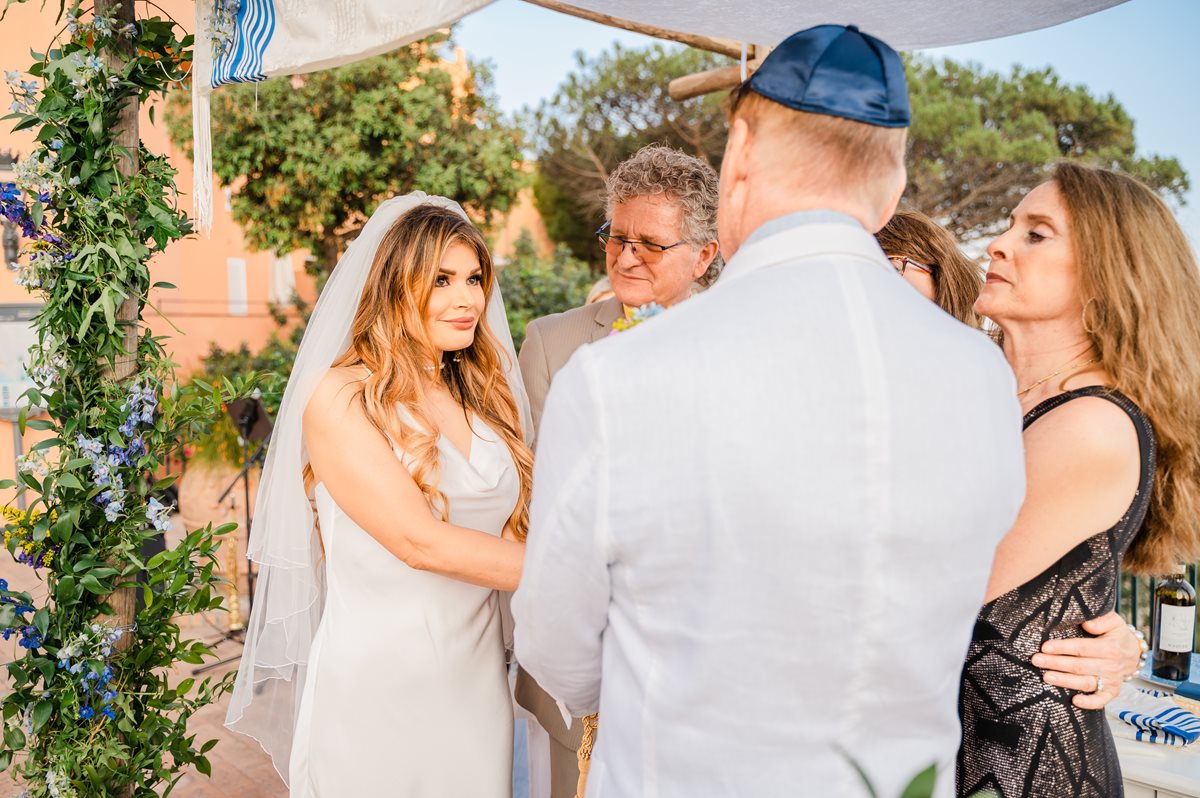
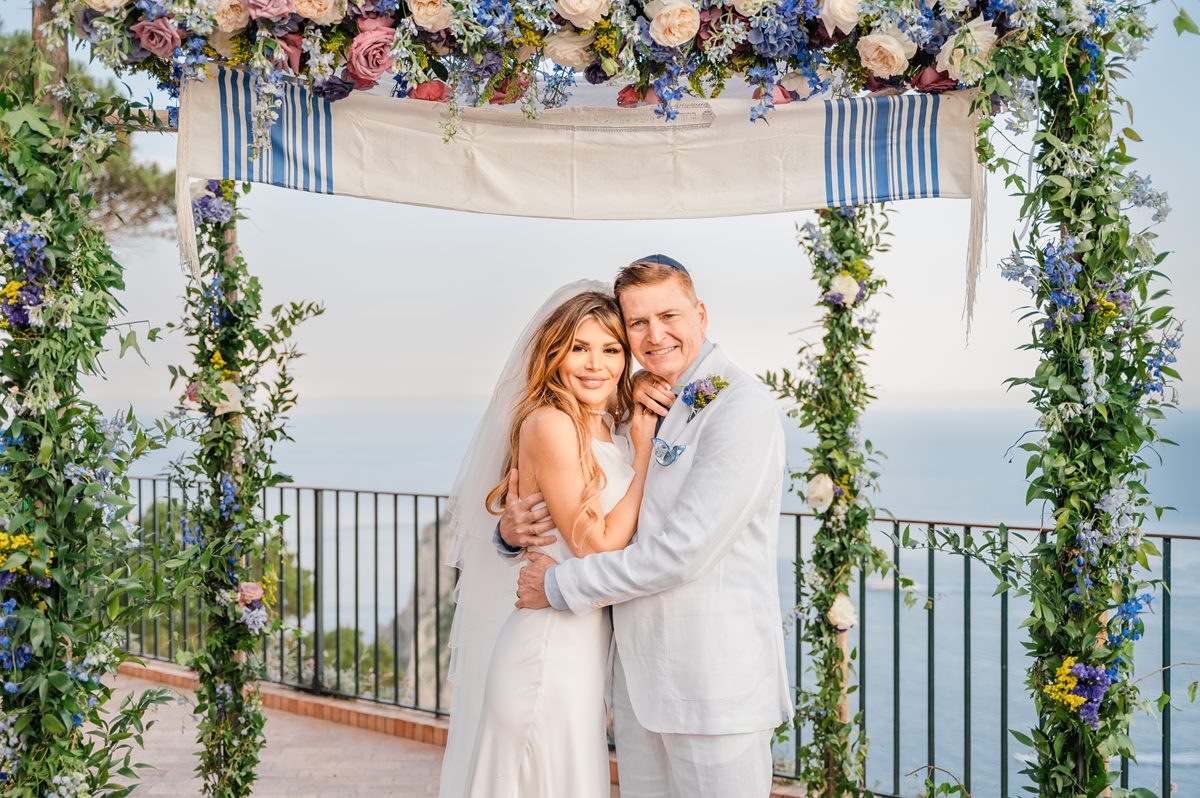
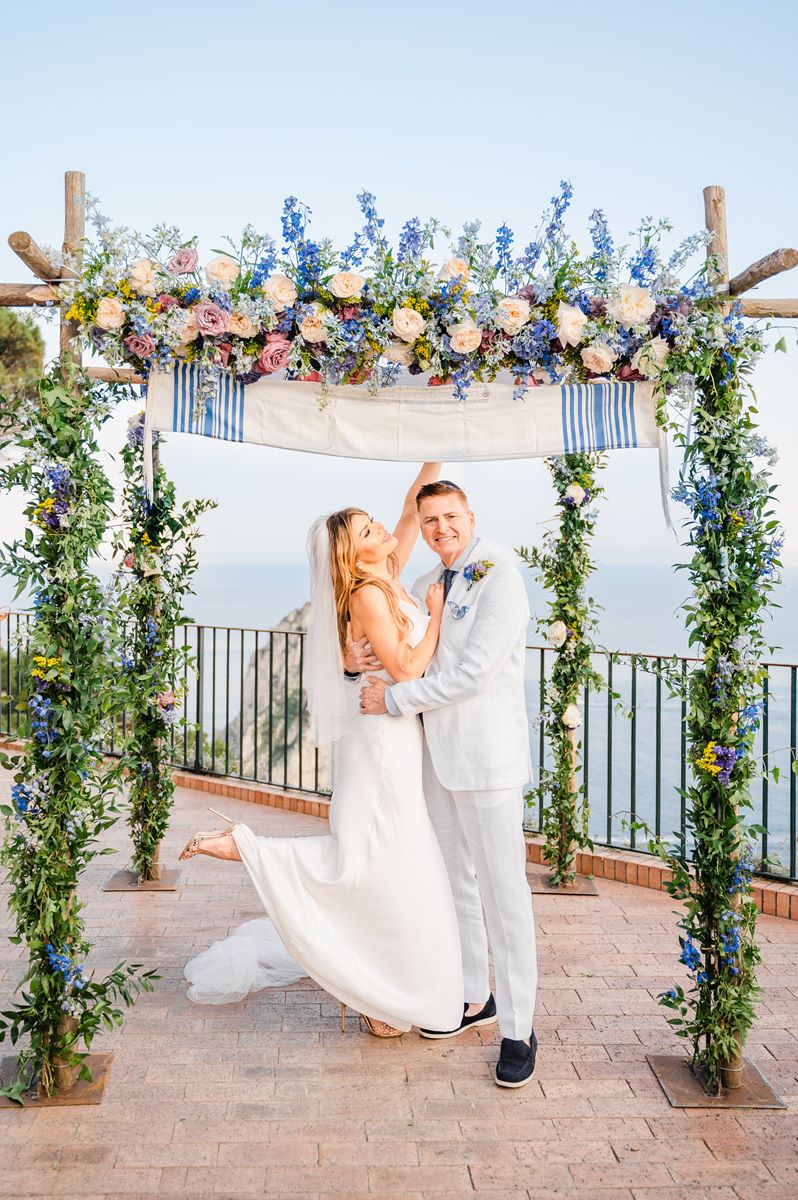
The chuppah stood at the far end of the terrace, the one spot on the property with a completely open line to the Faraglioni across the water: four wooden poles wrapped in greenery, a canopy of blue and white striped cloth, and a dense crown of blue, purple, pink and cream flowers. It was close enough to the edge that the sea filled the background of every ceremony photograph without me needing to hunt for the angle.
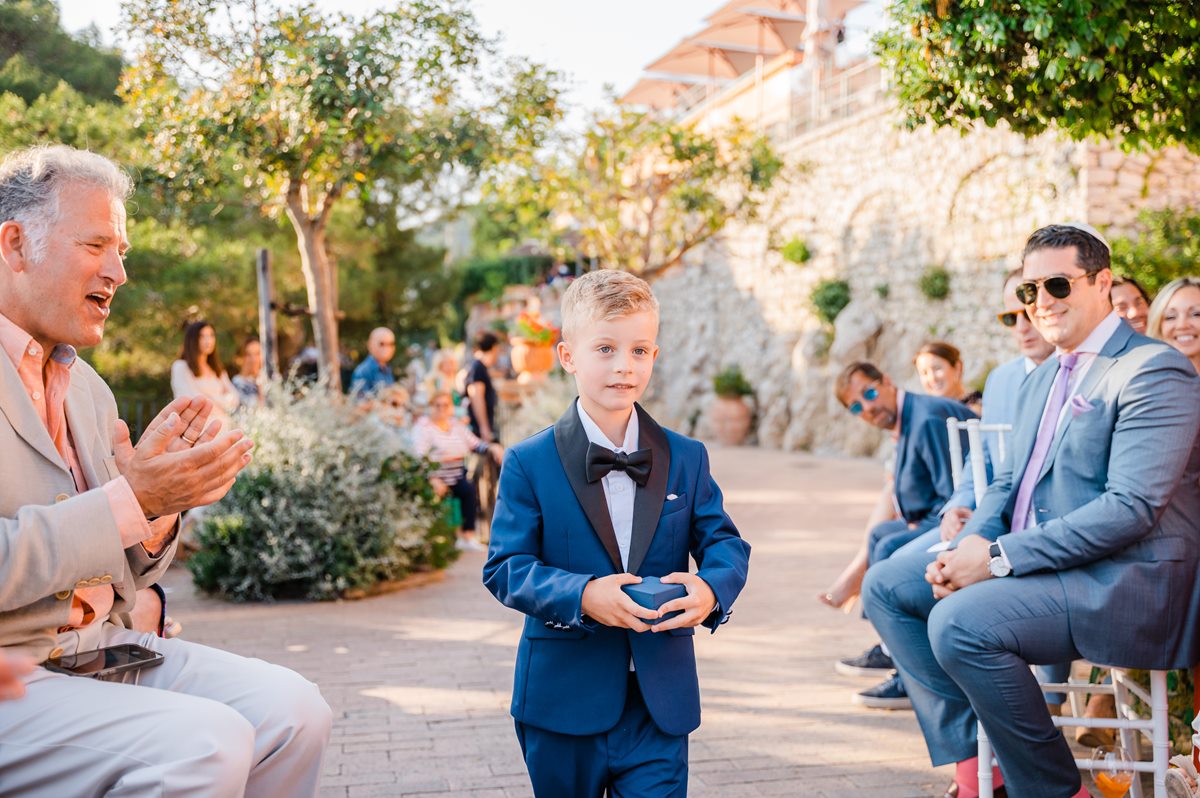
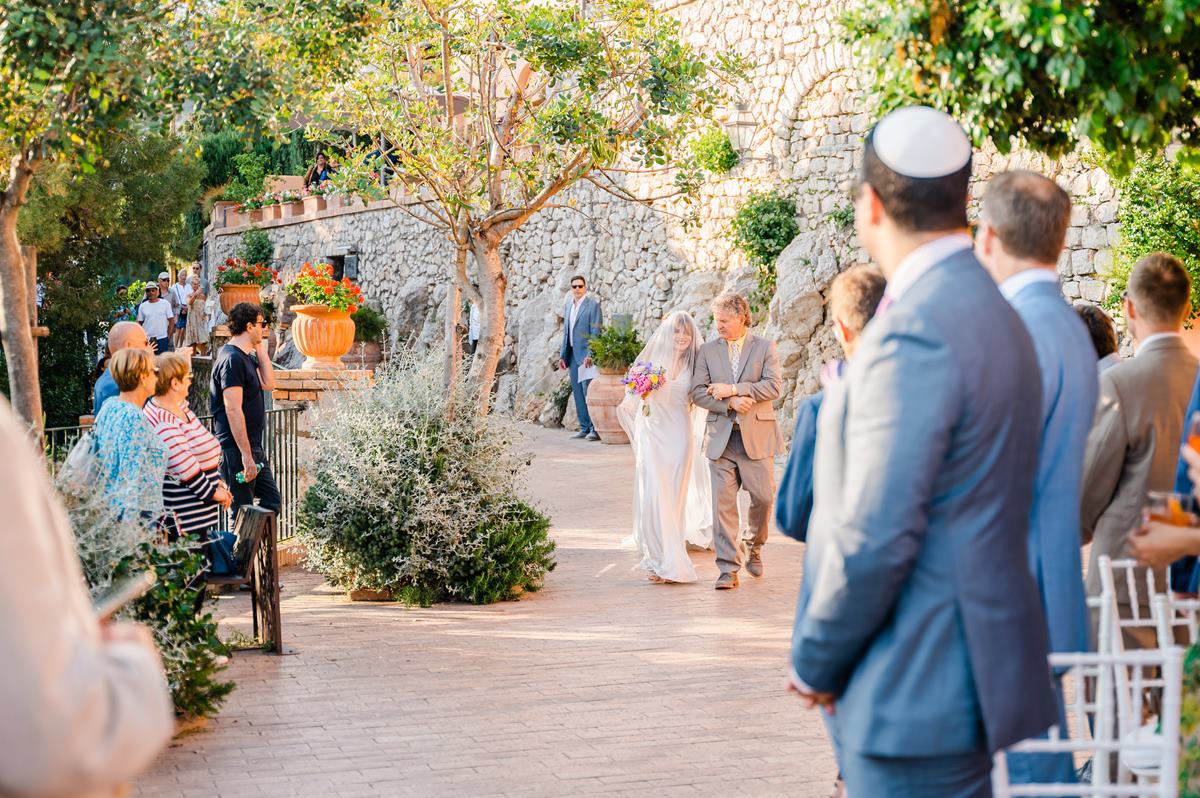
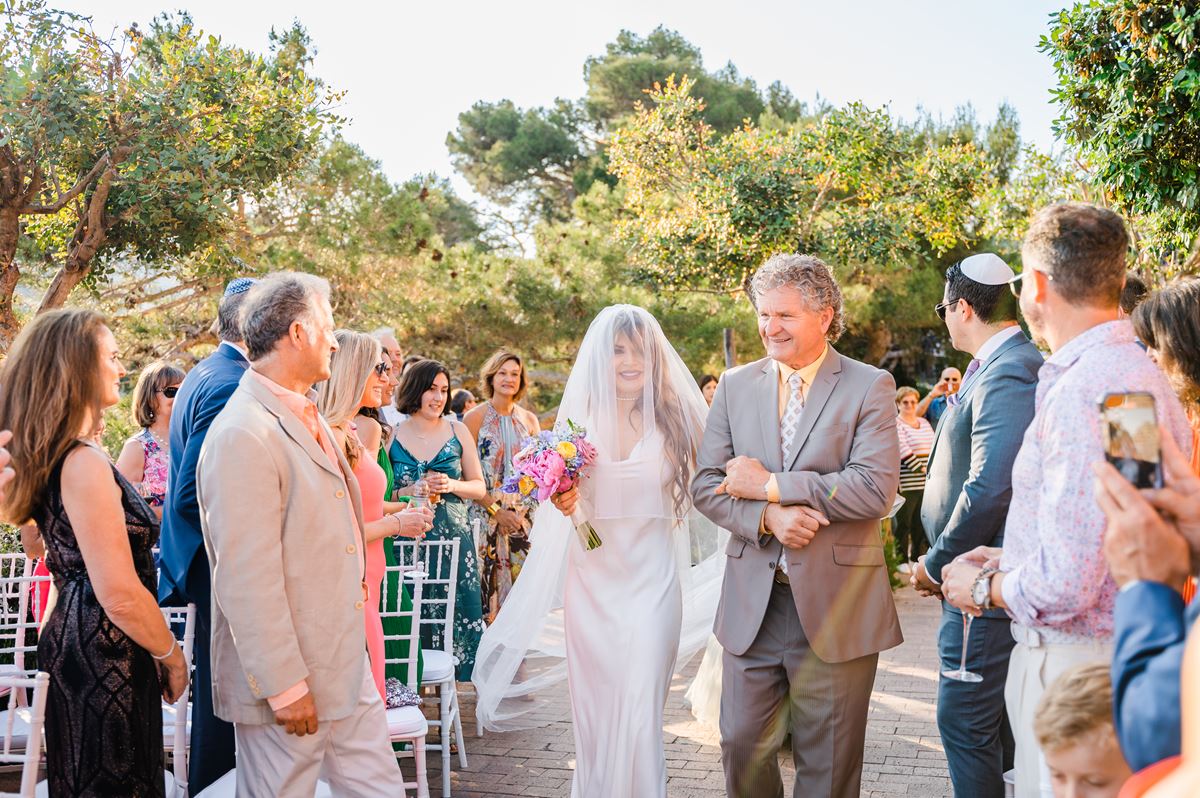
Raquel had one request she underlined, and it’s one I now pass on to other couples: from 6:00 to 6:30 PM, photograph every couple as they arrive, while their hair and makeup are still perfect and the sun is low. About fifty guests came along the terrace in their best clothes, and a small boy in a navy suit carried the rings up the aisle.


A Rabbi, a Blessing, and a Broken Glass
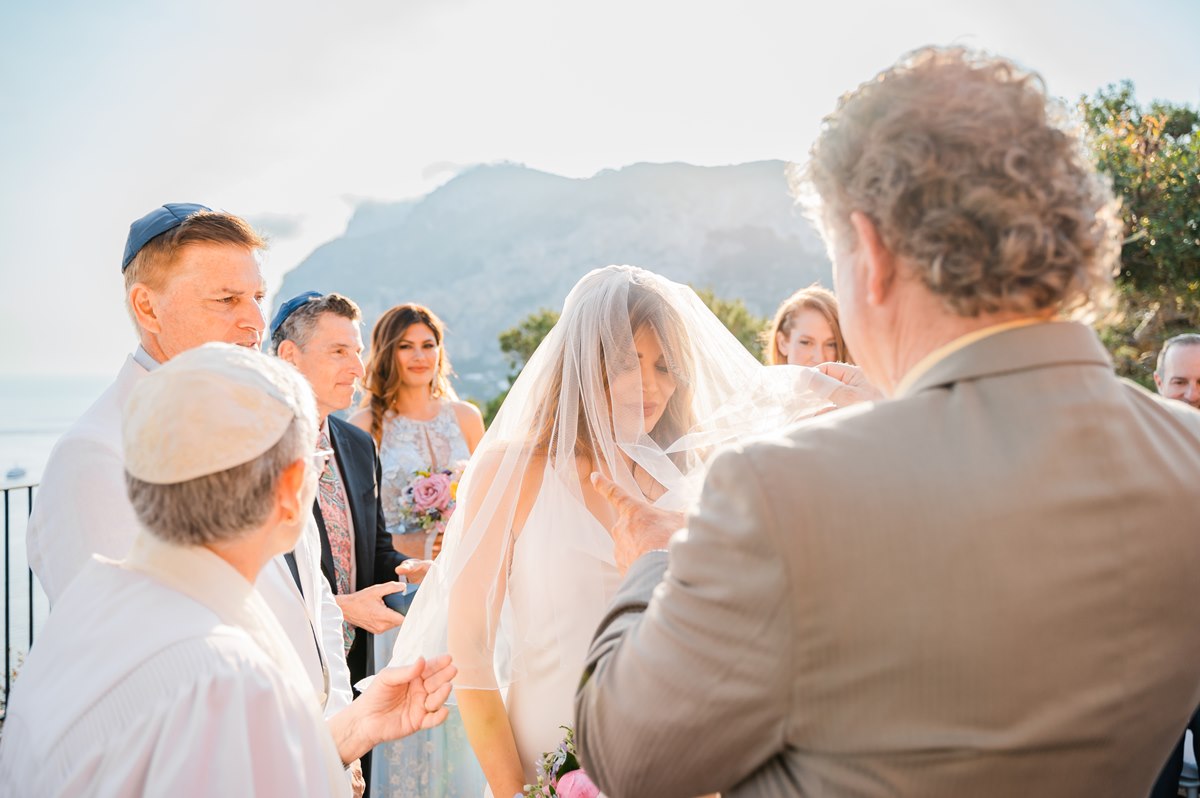
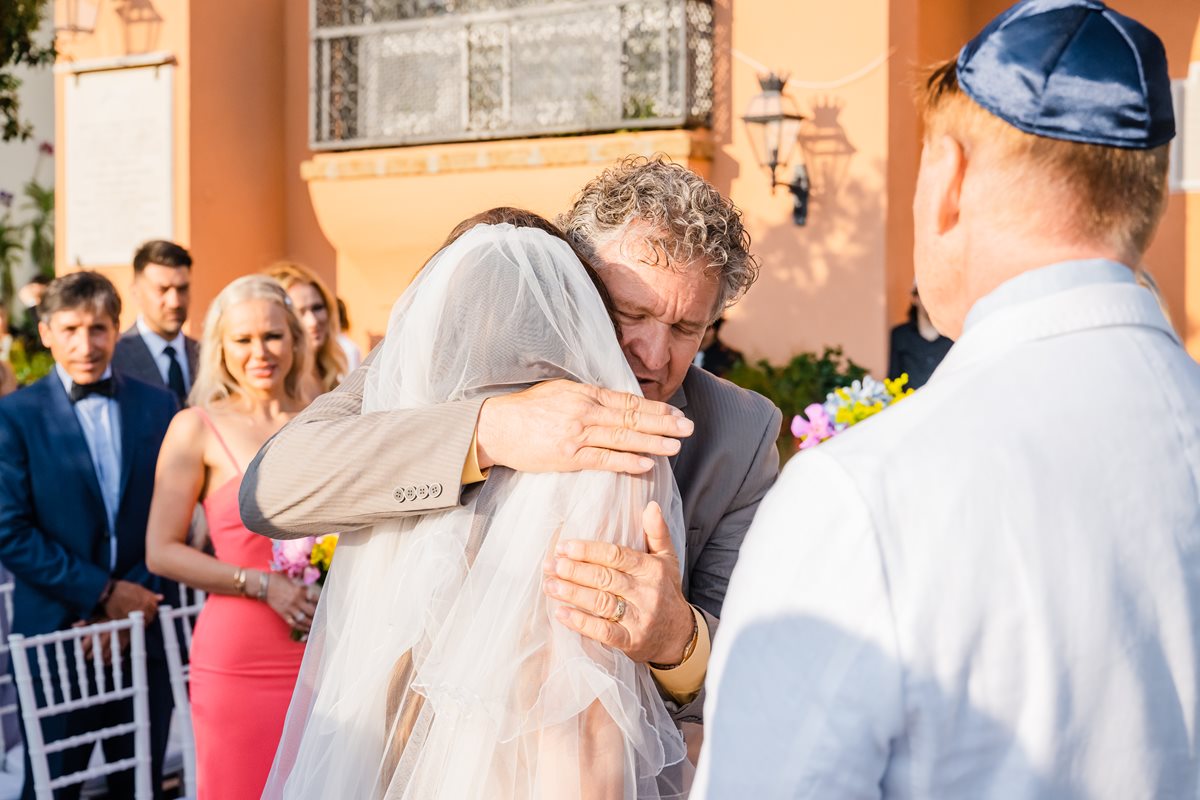
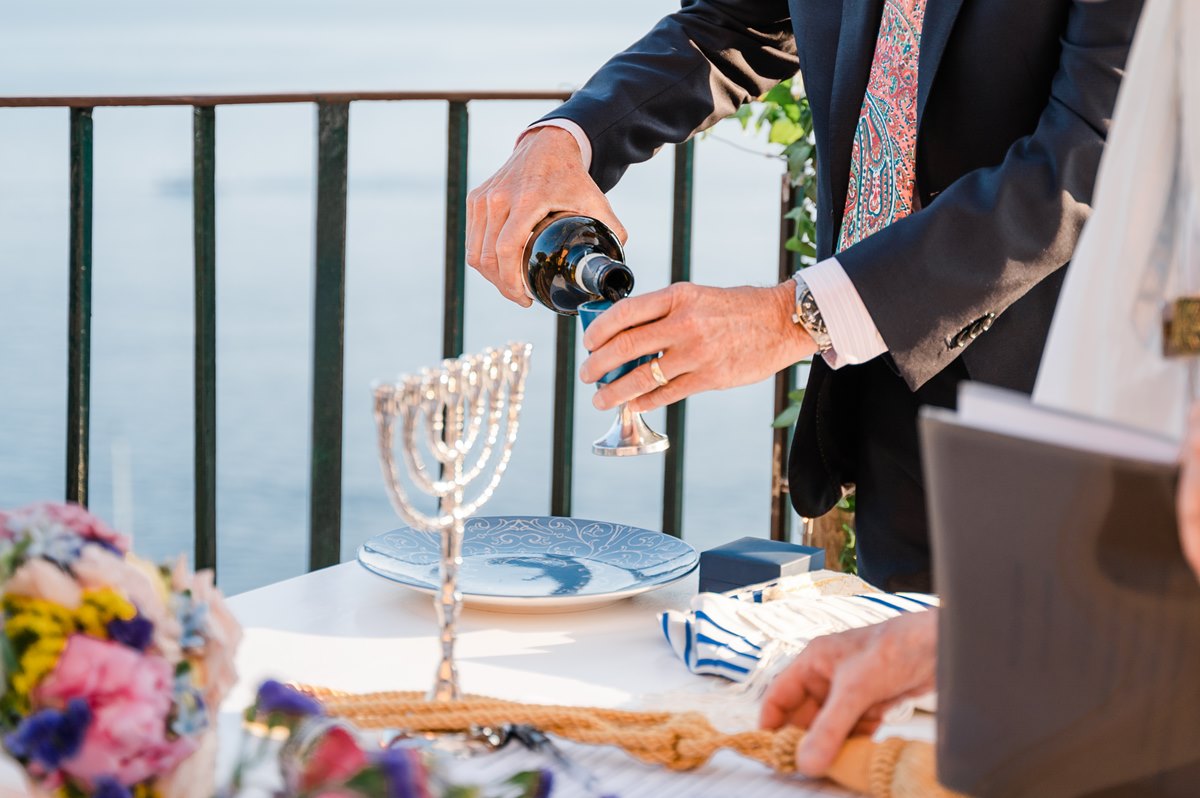
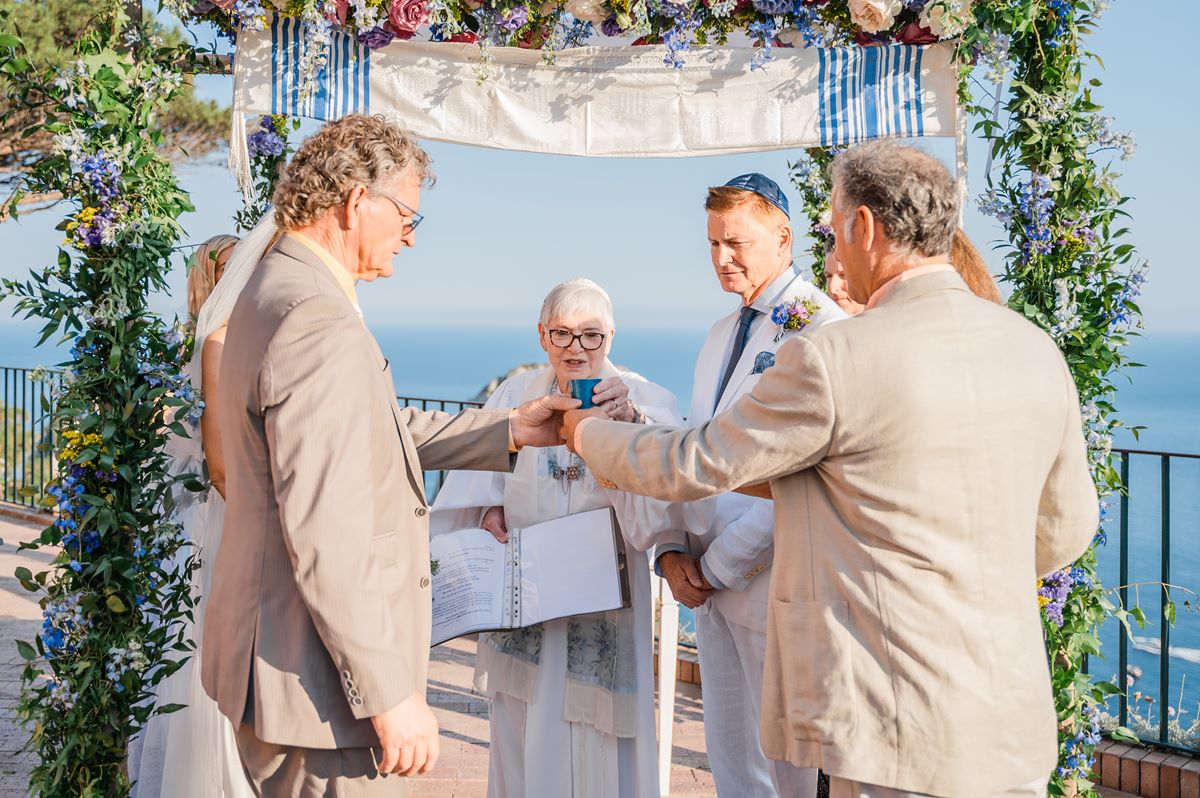
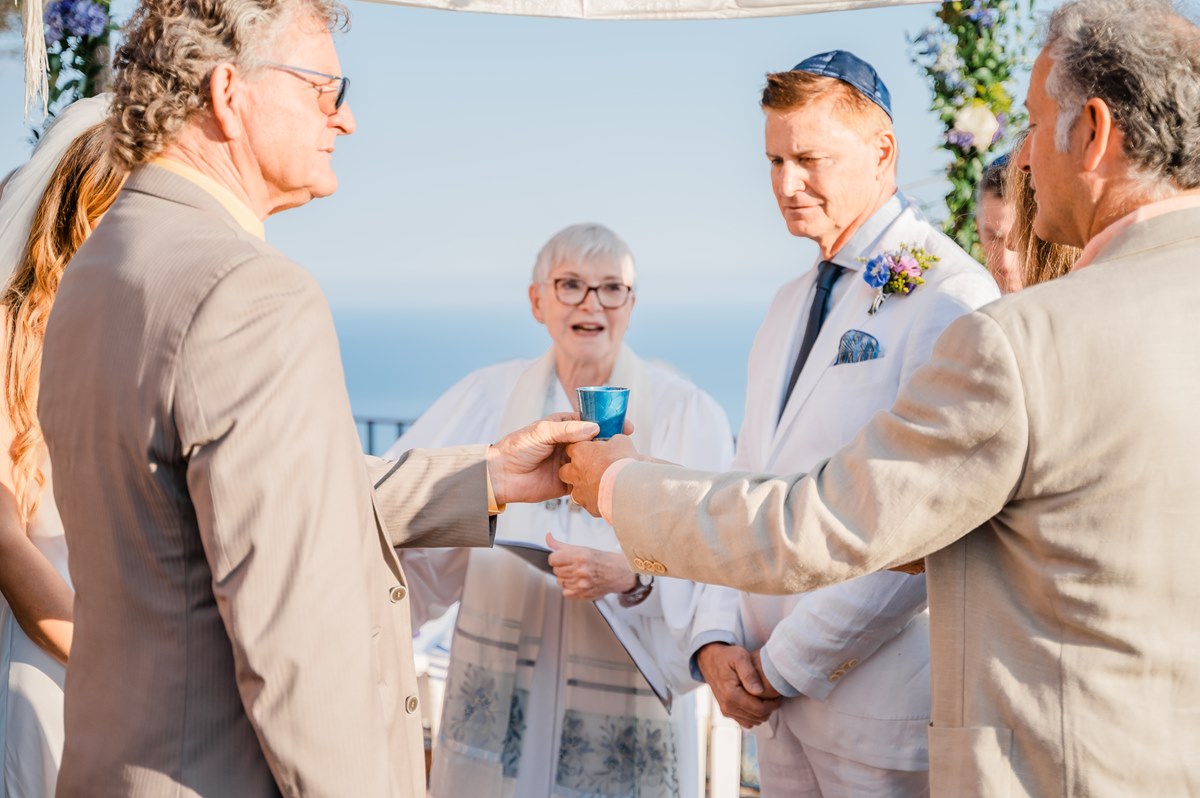
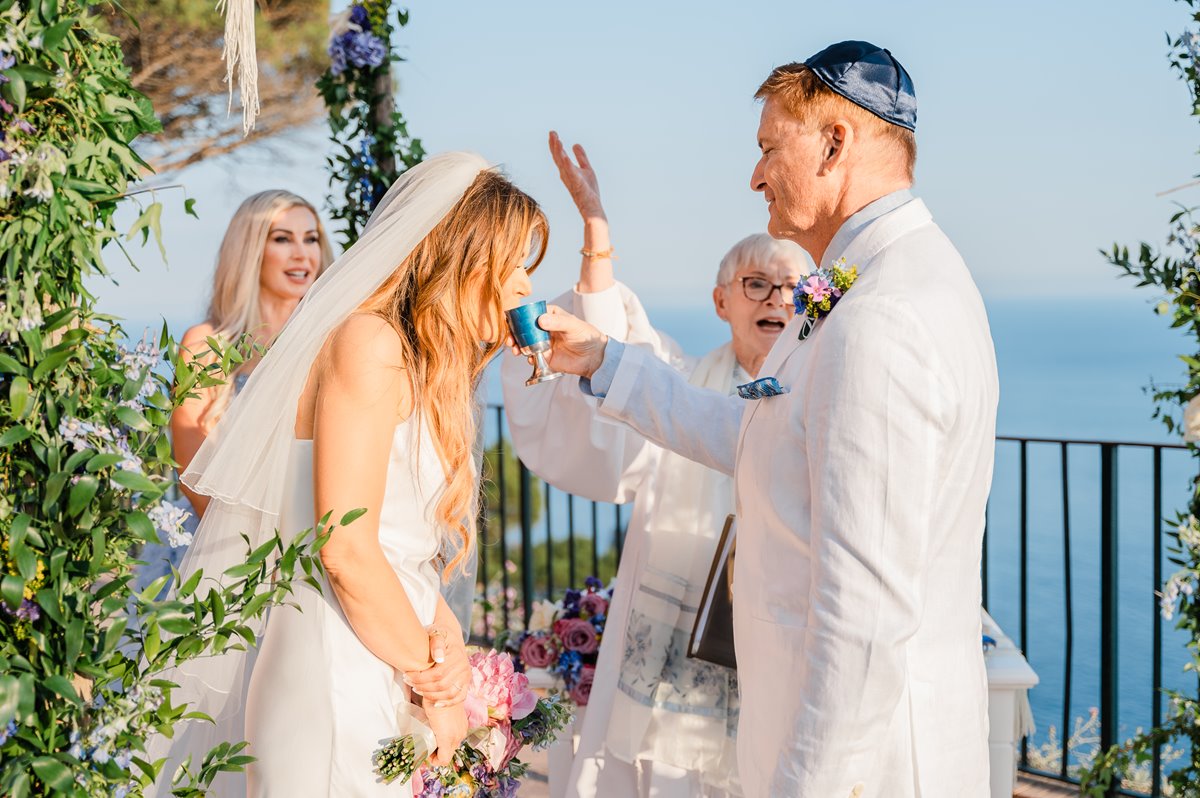
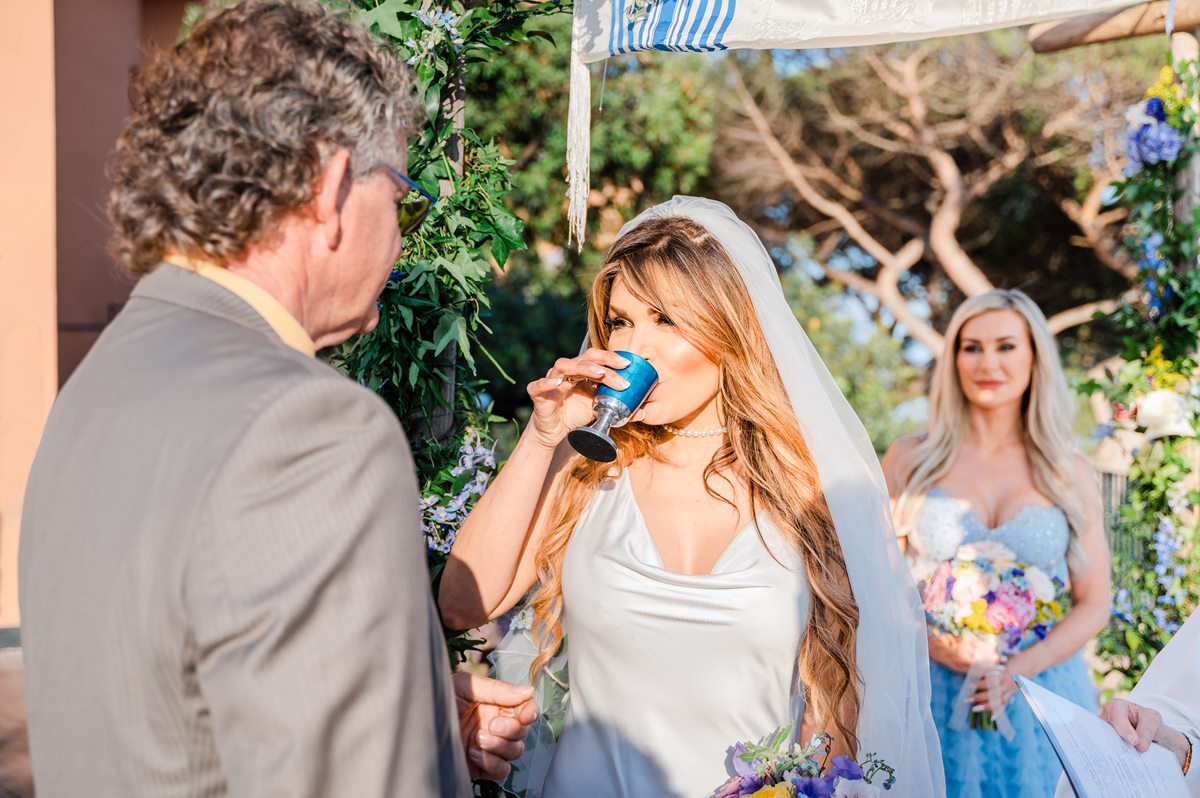
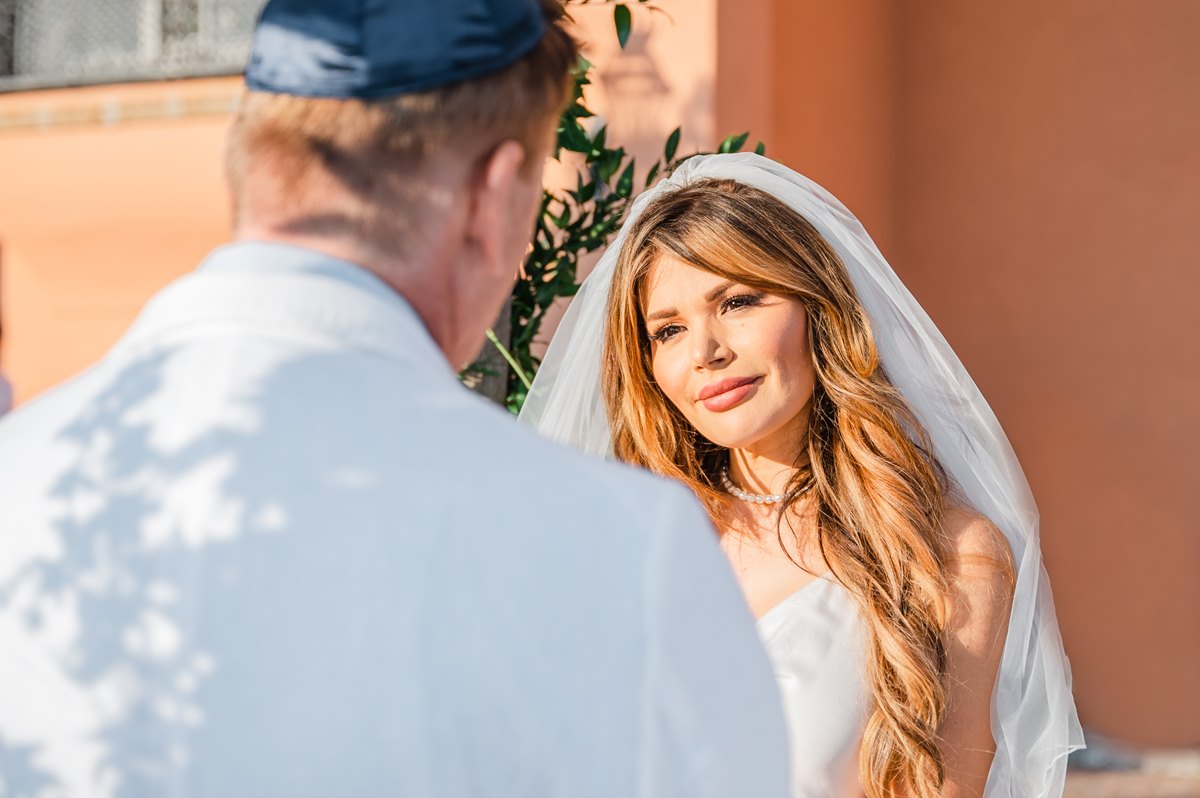
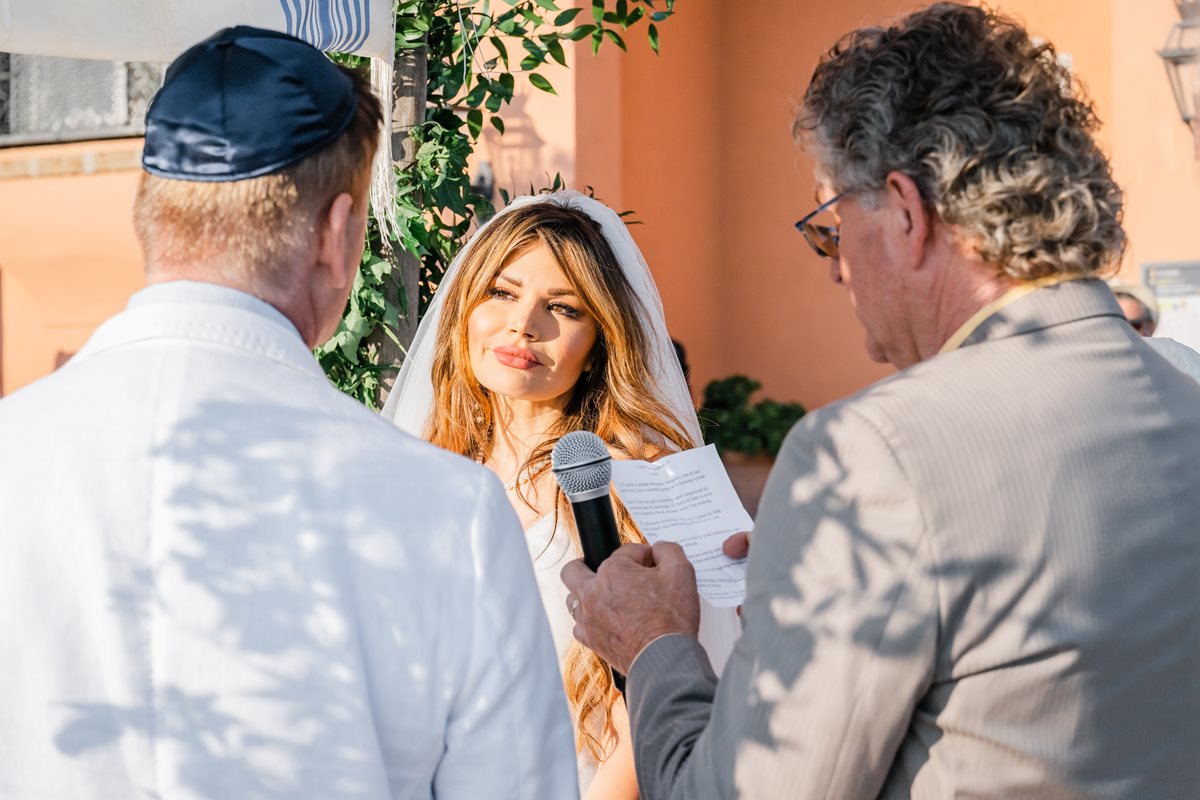
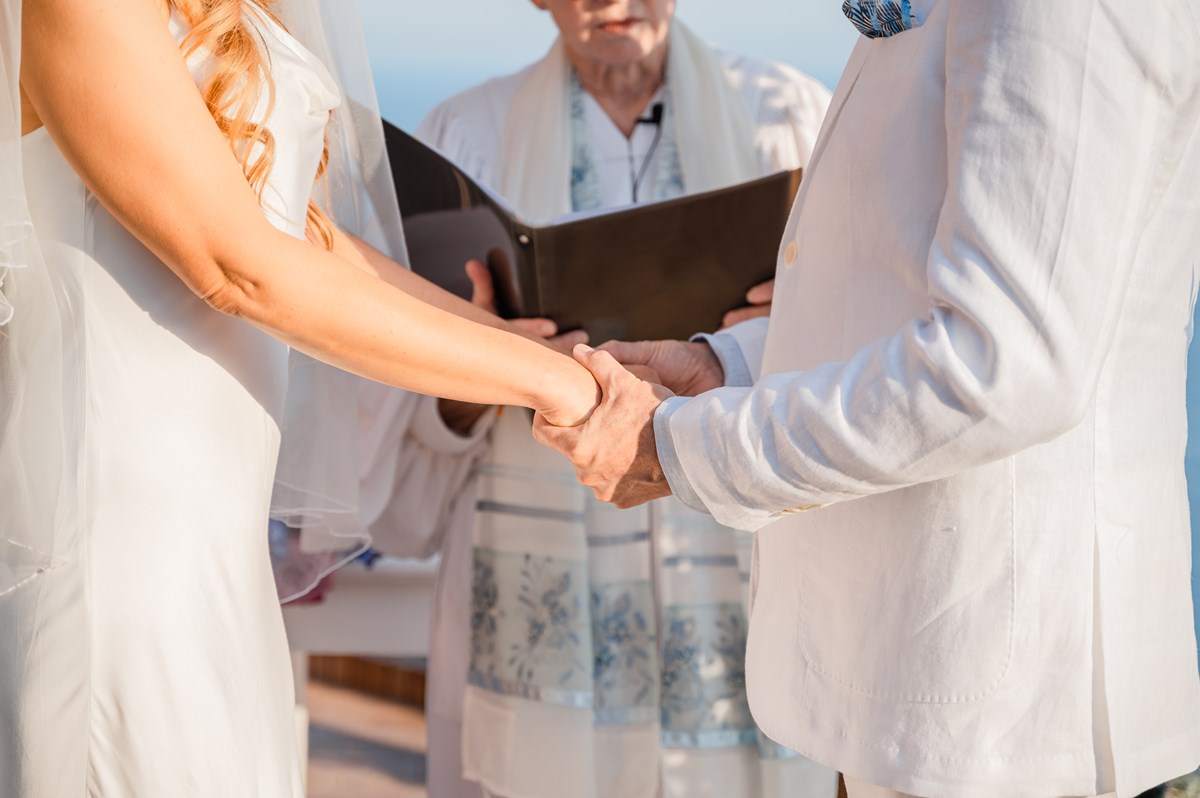
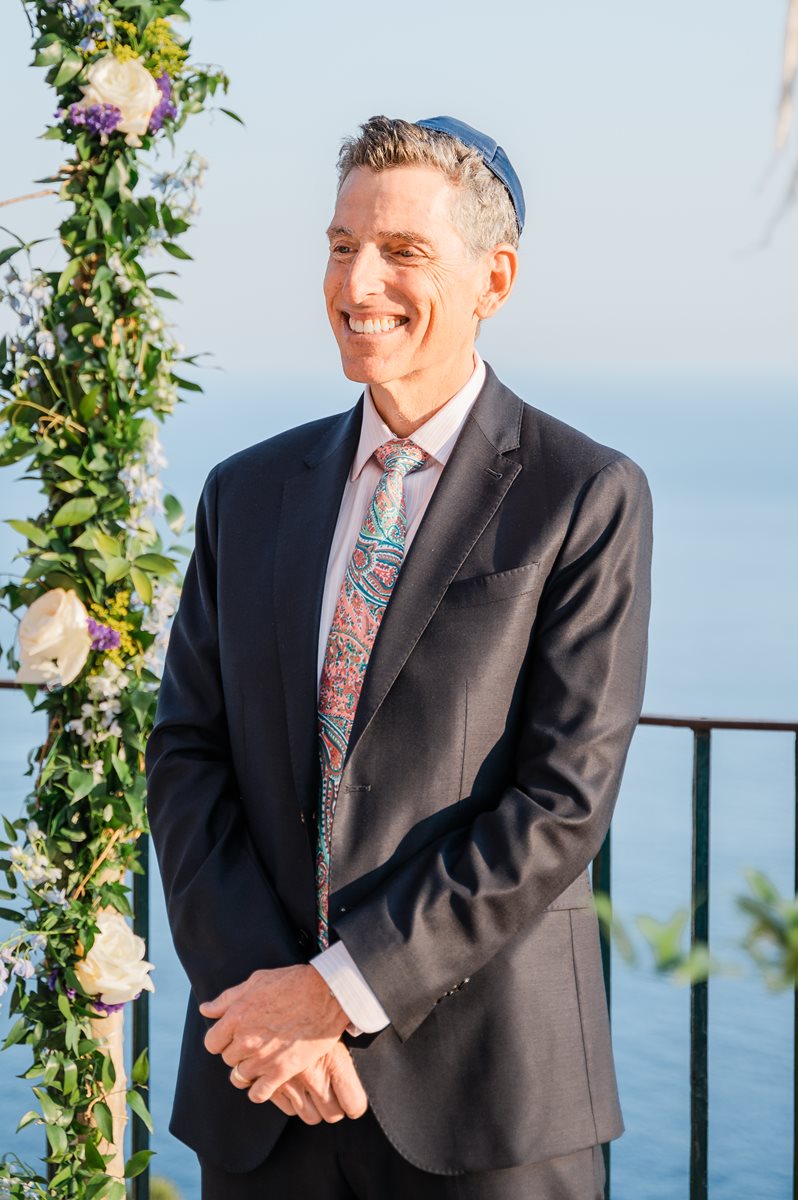
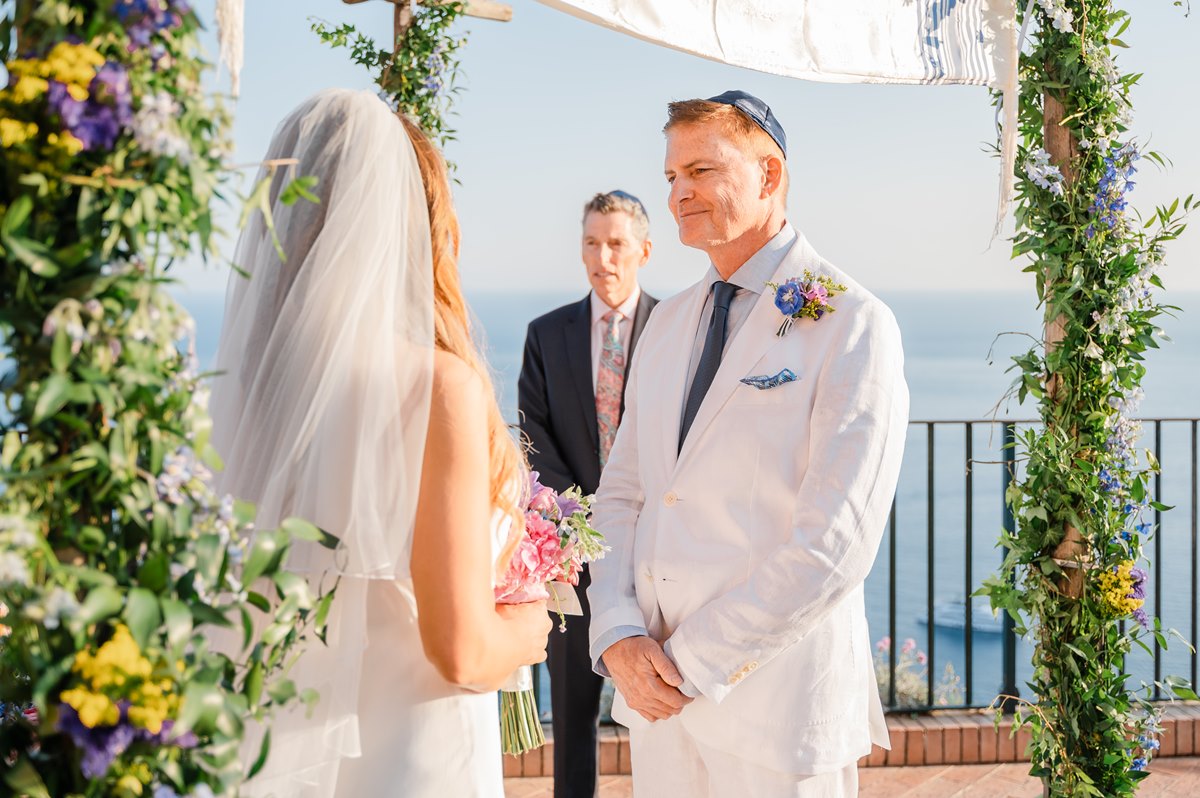
The ceremony ran from 6:30 to 7:15 PM. The rabbi, in a white robe and a tallit, read from a printed ceremony book rather than working from memory. David wore a blue kippah through the entire ceremony, as did most of the male guests, and at one point he lifted a blue glass Kiddush cup for the wine blessing, with the men of the family at his shoulder. The moment right before the glass breaks, that half-second where a whole terrace of guests goes quiet in anticipation, is one of the most reliably electric beats in any wedding format I shoot.


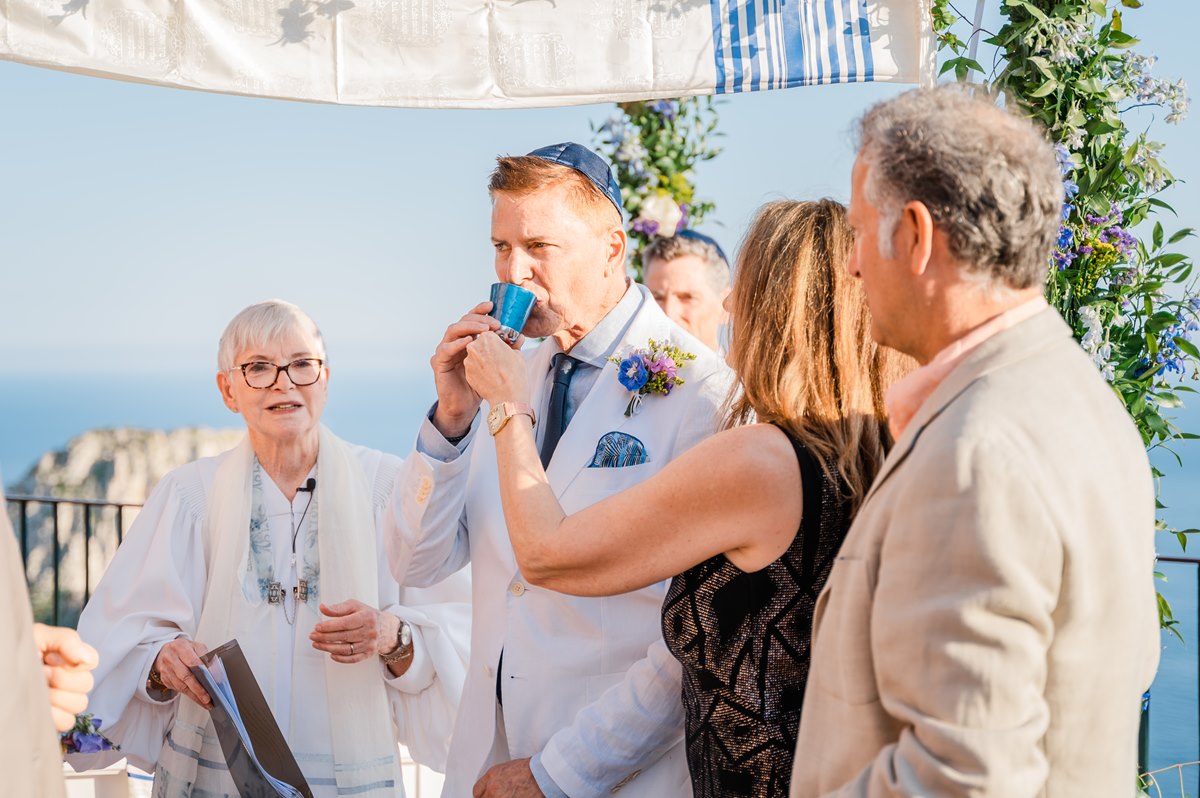
What Happens Under the Chuppah
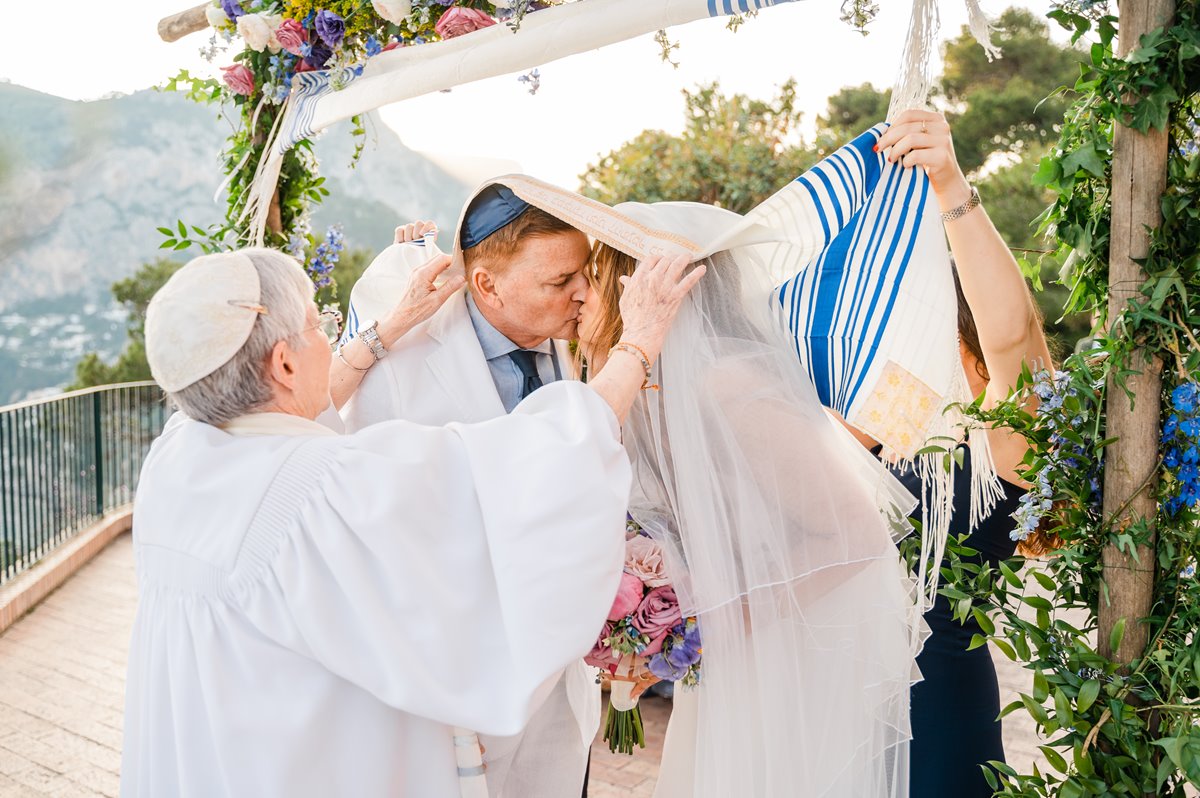
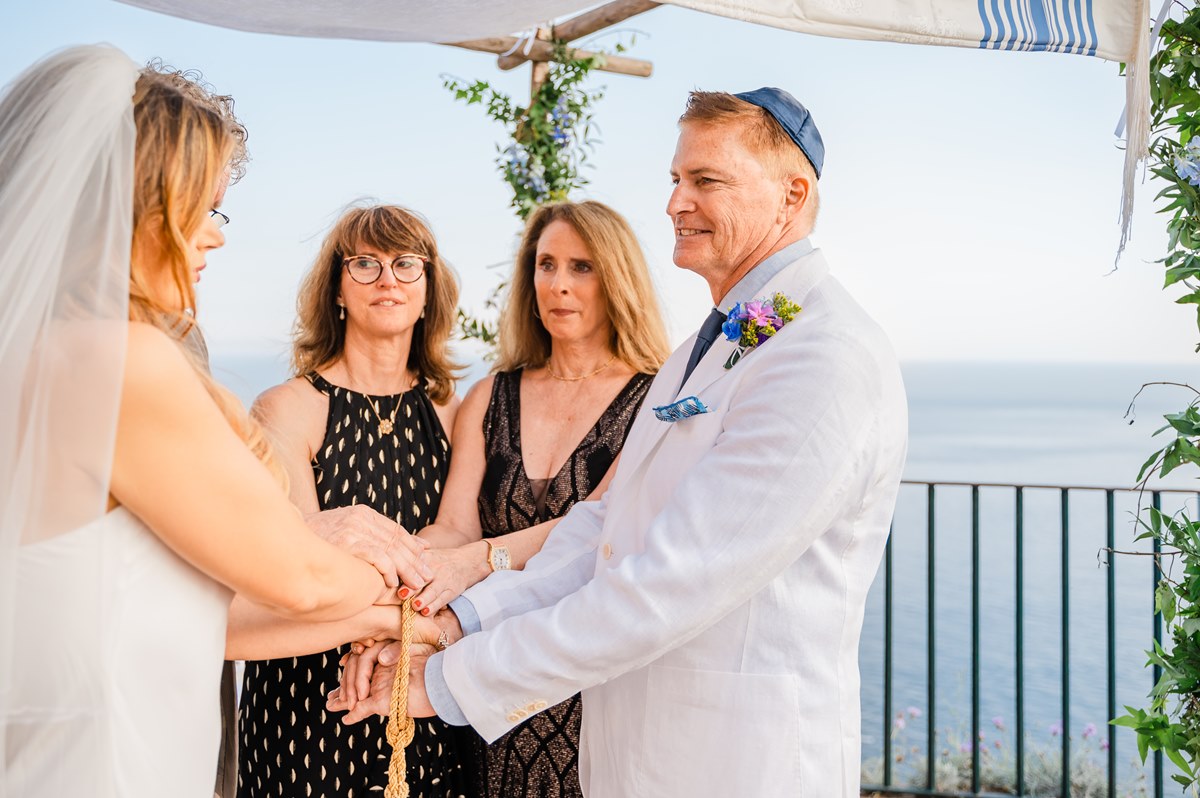
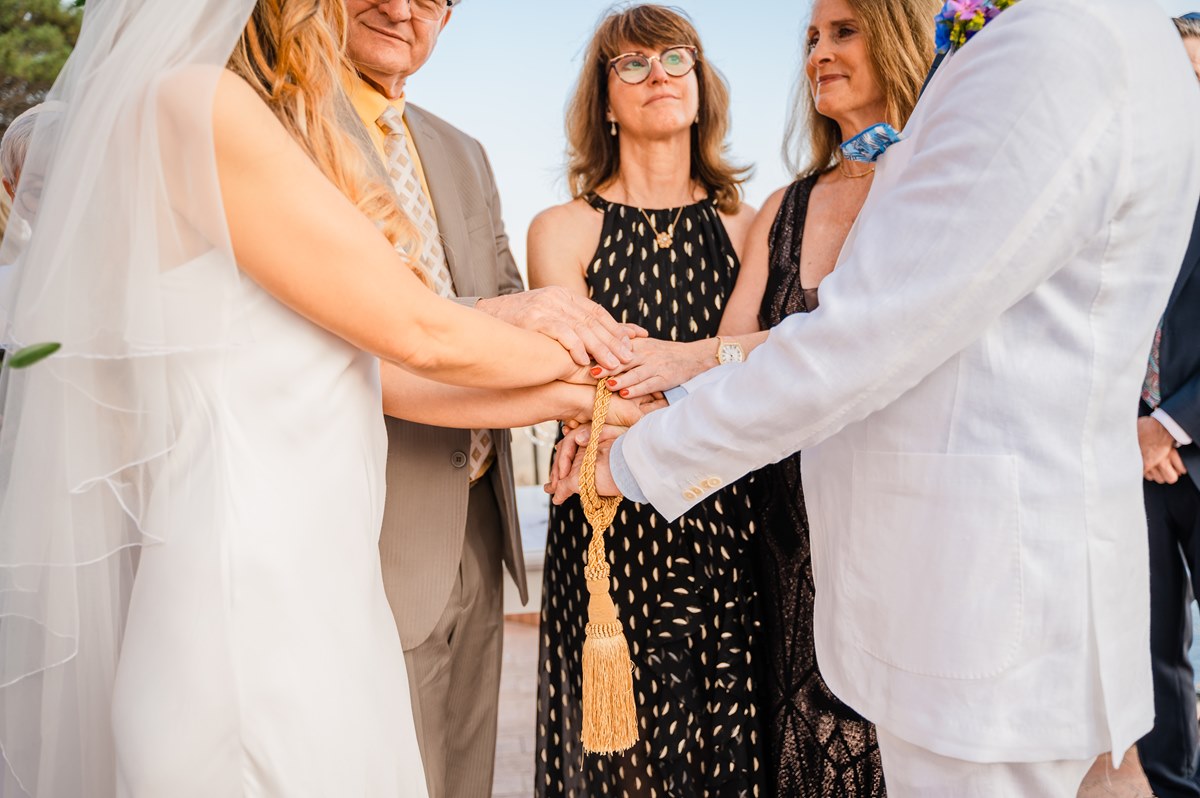
If you have never been to a Jewish wedding, here is what I watch for as a photographer. The ceremony moves through a wine blessing, the ring, the reading of the ketubah, the seven blessings and the breaking of the glass, and each step has its own person and its own place under the canopy. Traditions differ from one family to the next, so I ask for the order of service beforehand and go through it with the rabbi, because a Kiddush cup comes up fast and a glass only breaks once. During the blessings themselves I keep further back, so I’m documenting the ritual rather than intruding on it. Raquel and David’s ceremony took 45 minutes, a little longer than the symbolic ceremonies I usually shoot on this terrace, and it gave me time to move around the chuppah without hurrying.

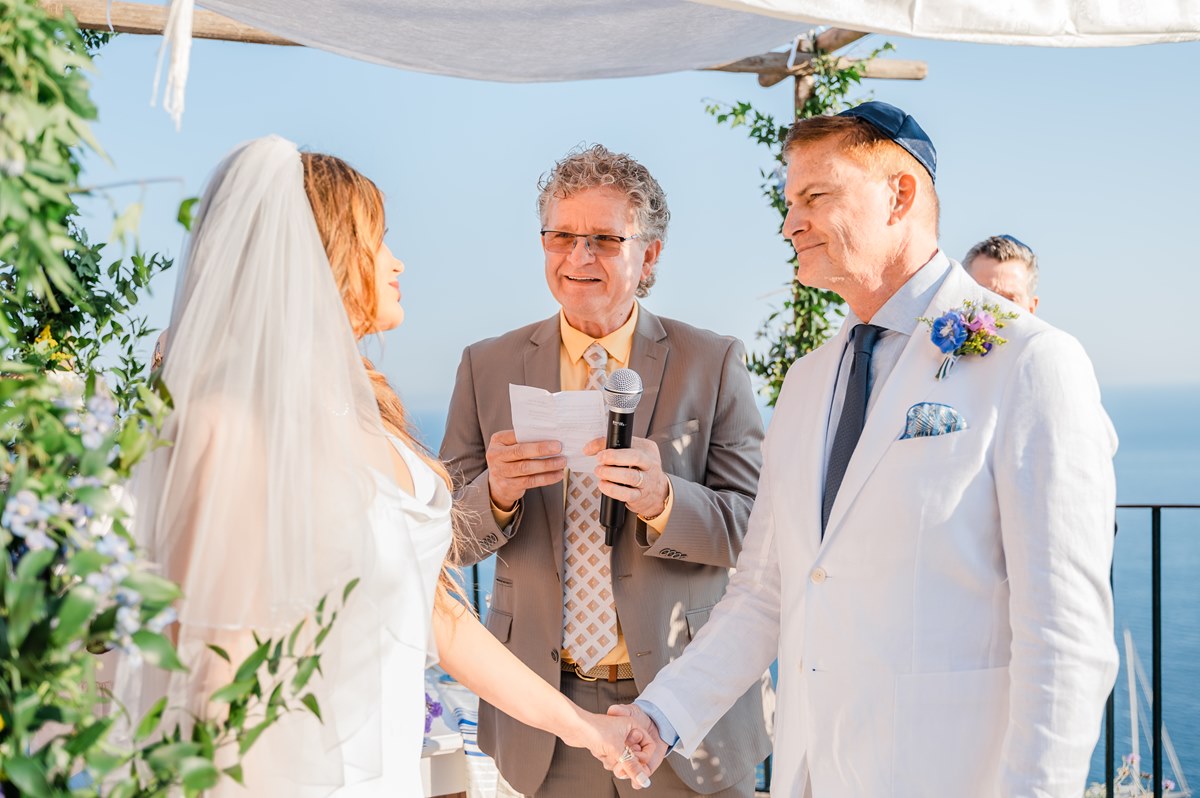
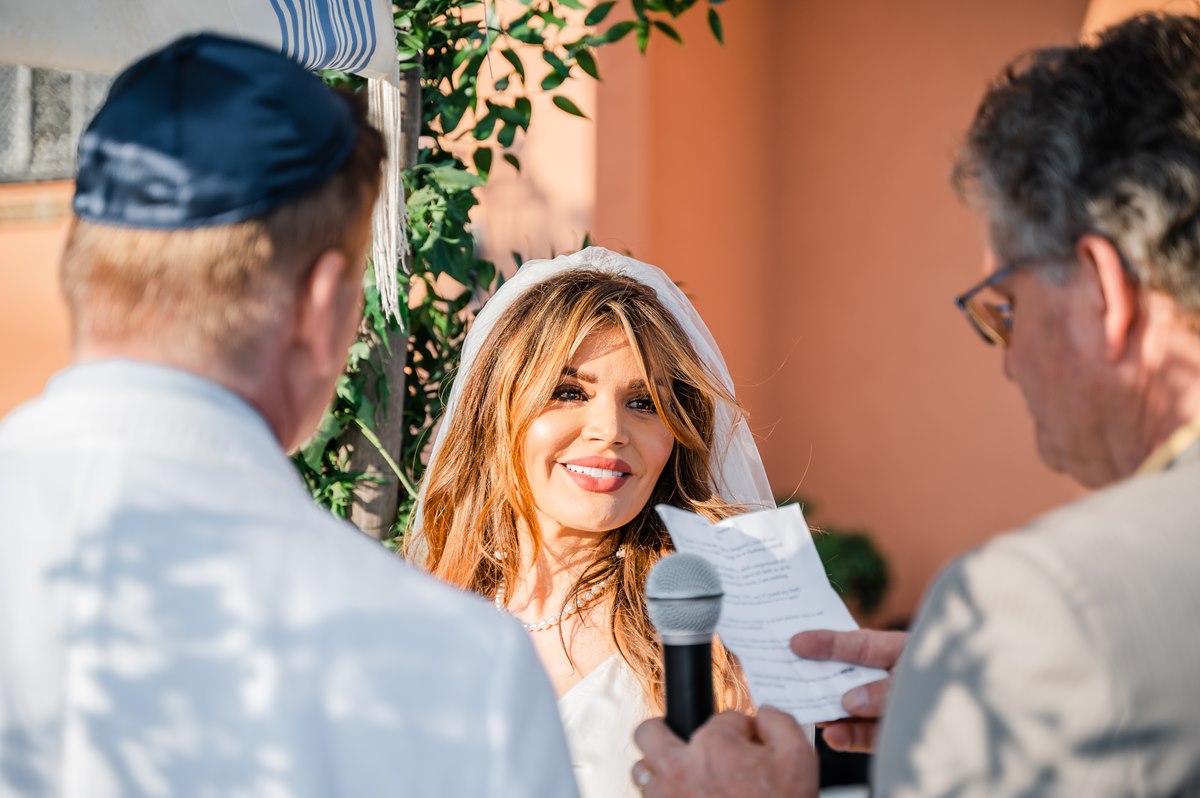
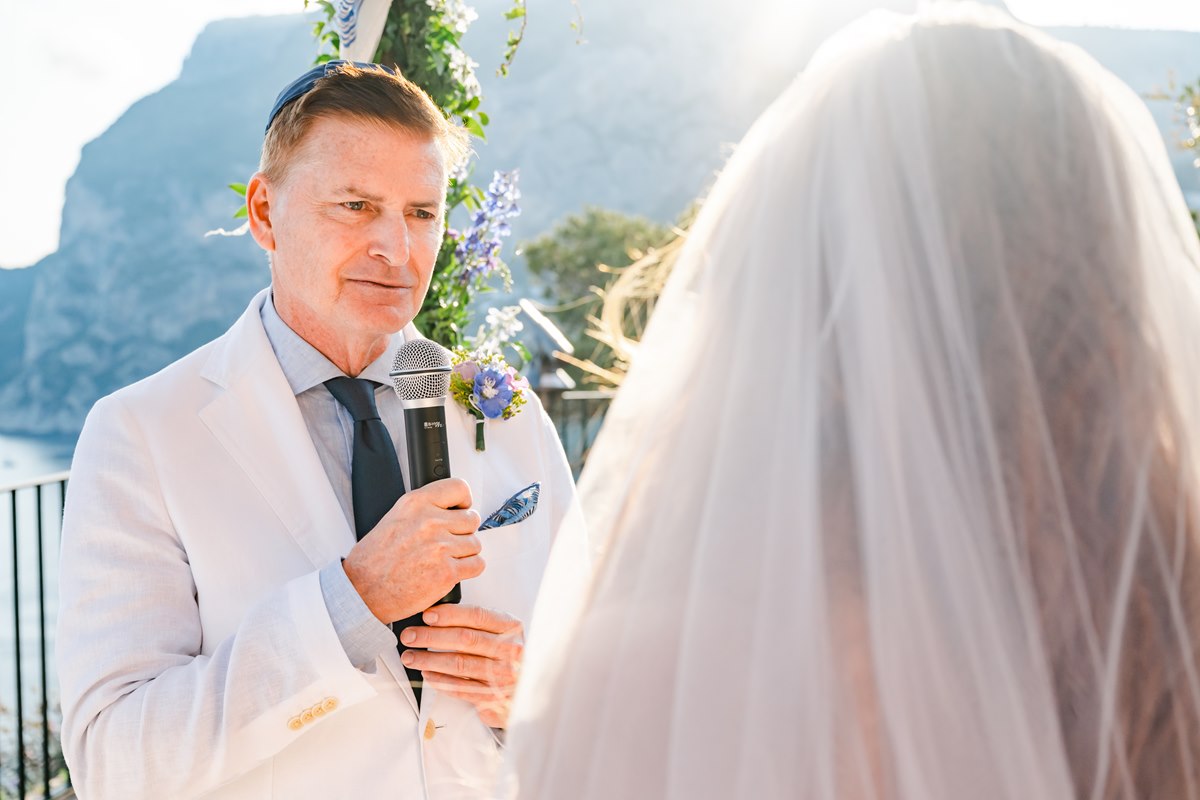
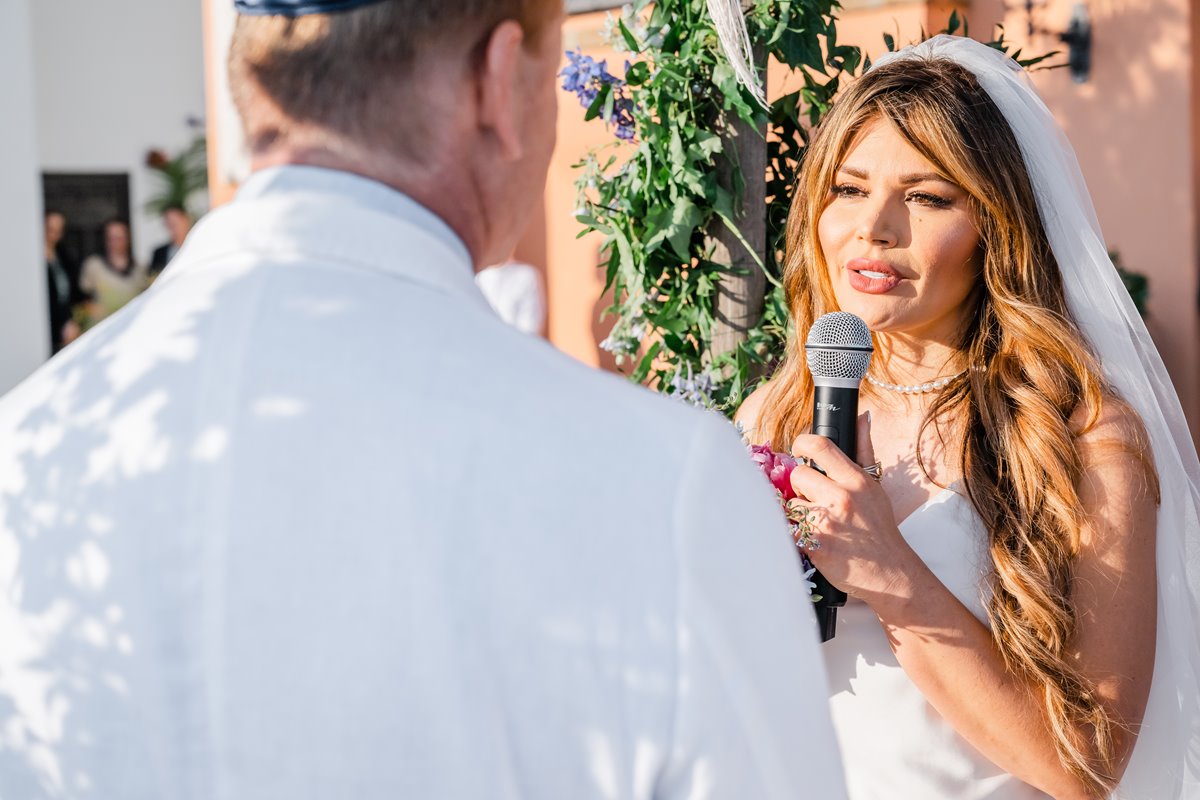
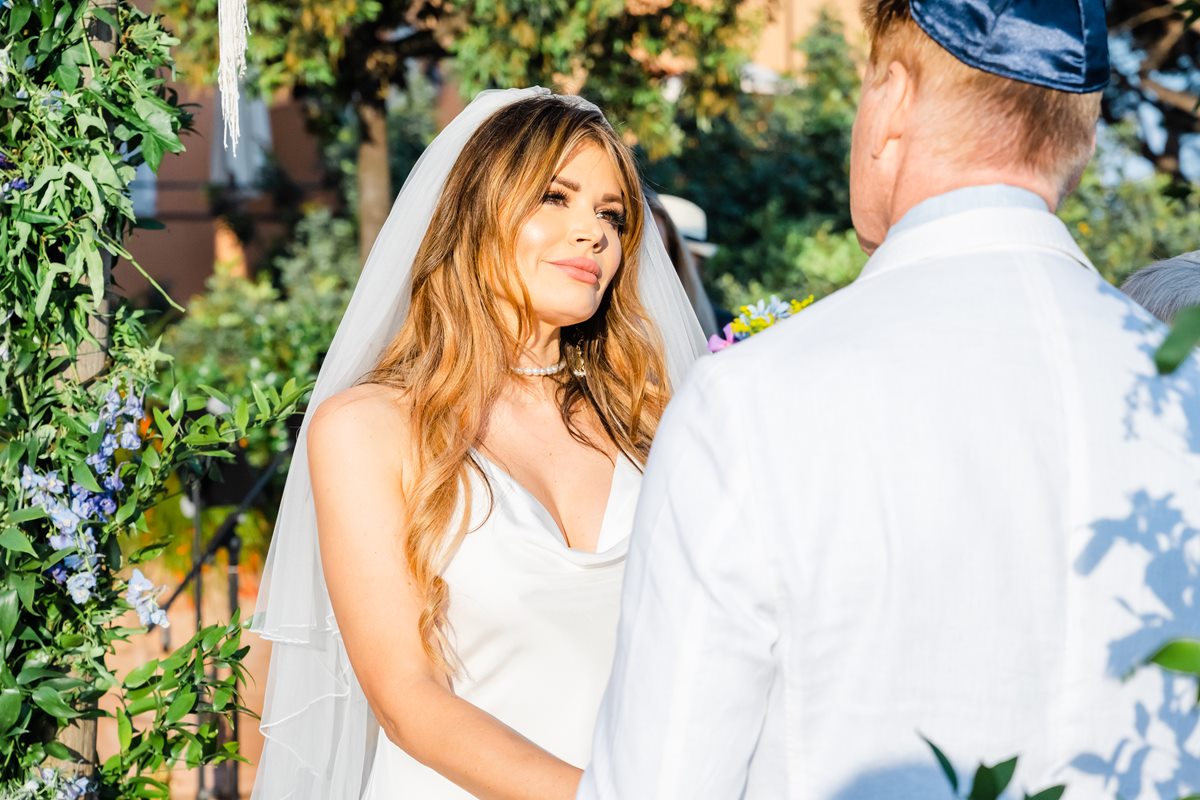
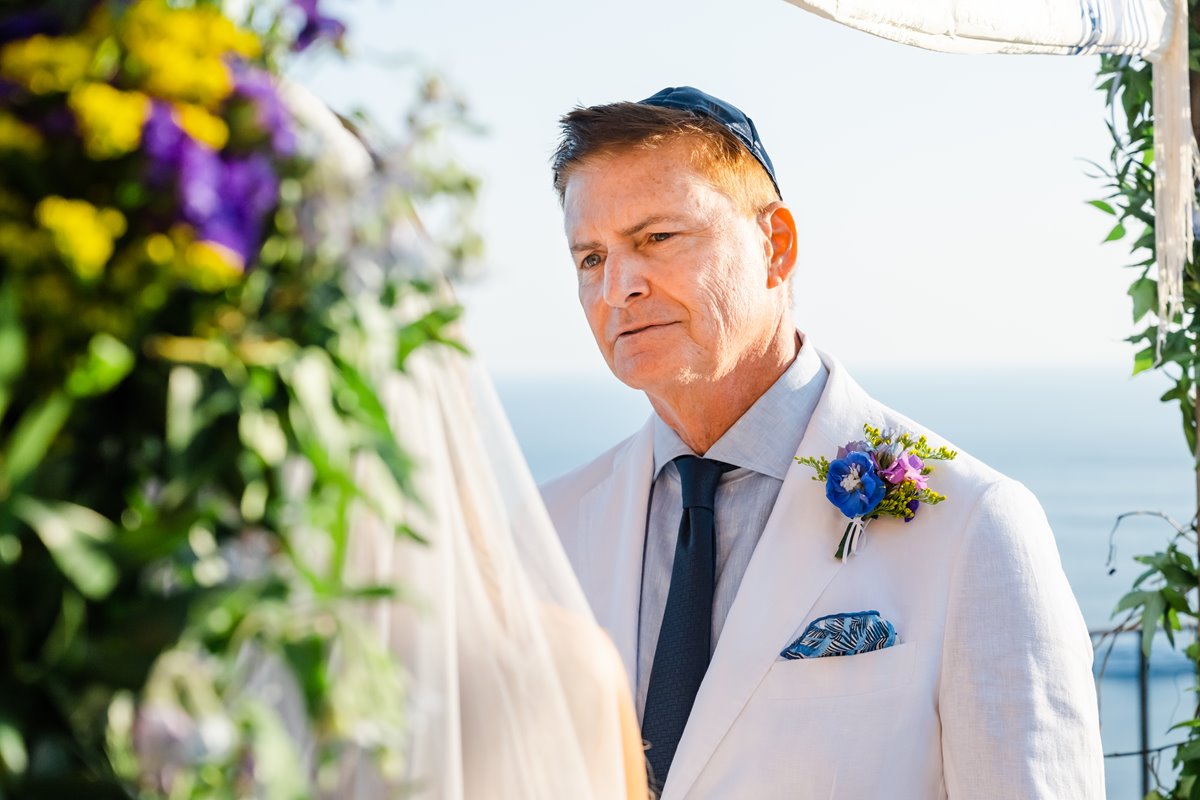
At another point in the ceremony, family members held the corners of a second tallit stretched over the couple’s heads, a canopy within the canopy, while the rabbi read a blessing. I hadn’t photographed this specific variation before, and I had to adjust my position quickly to keep both the hands and the couple’s faces in the same frame without the fabric blocking the shot. No timeline I build could have scripted it.


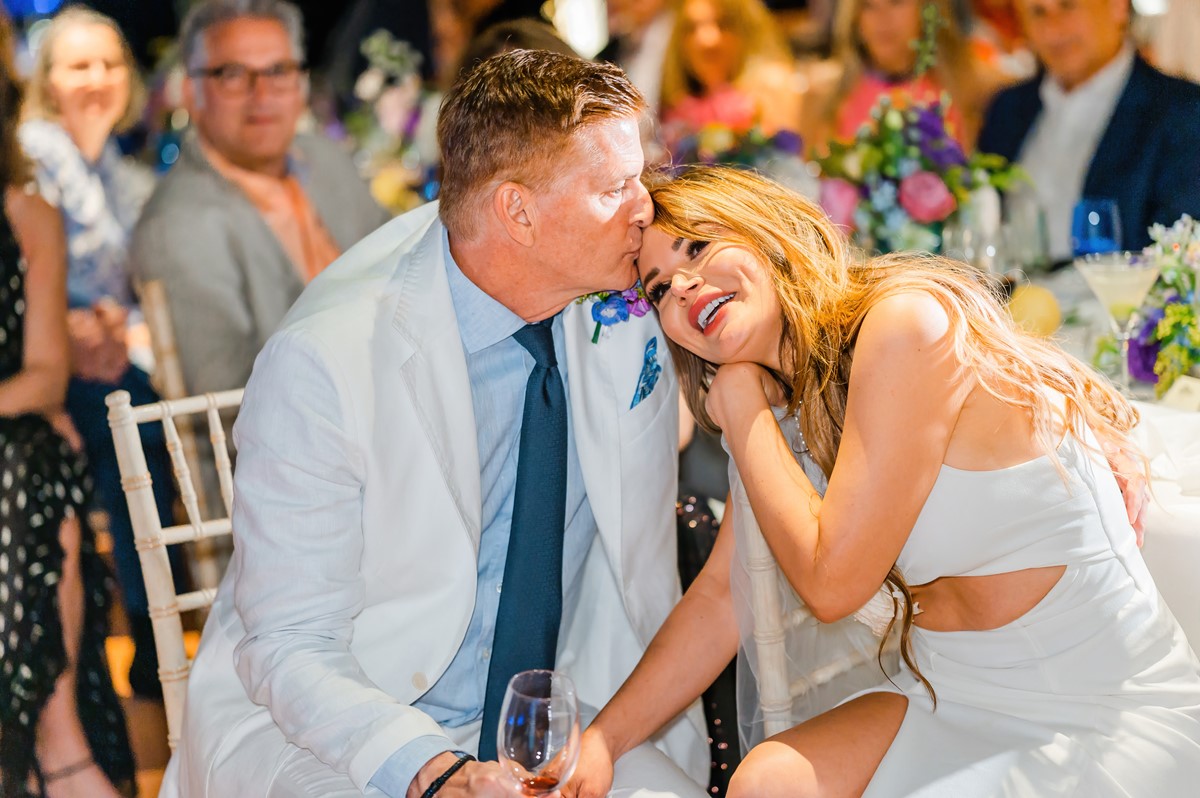
Raquel and David married later in life than most couples I photograph here, and David’s daughters were part of the day from the first photographs. There’s a settled quality to a wedding like that, and it showed in how calm both of them were under the canopy. So I paid less attention to adrenaline and more to small gestures, the way David rested his hand on the small of Raquel’s back without thinking about it.
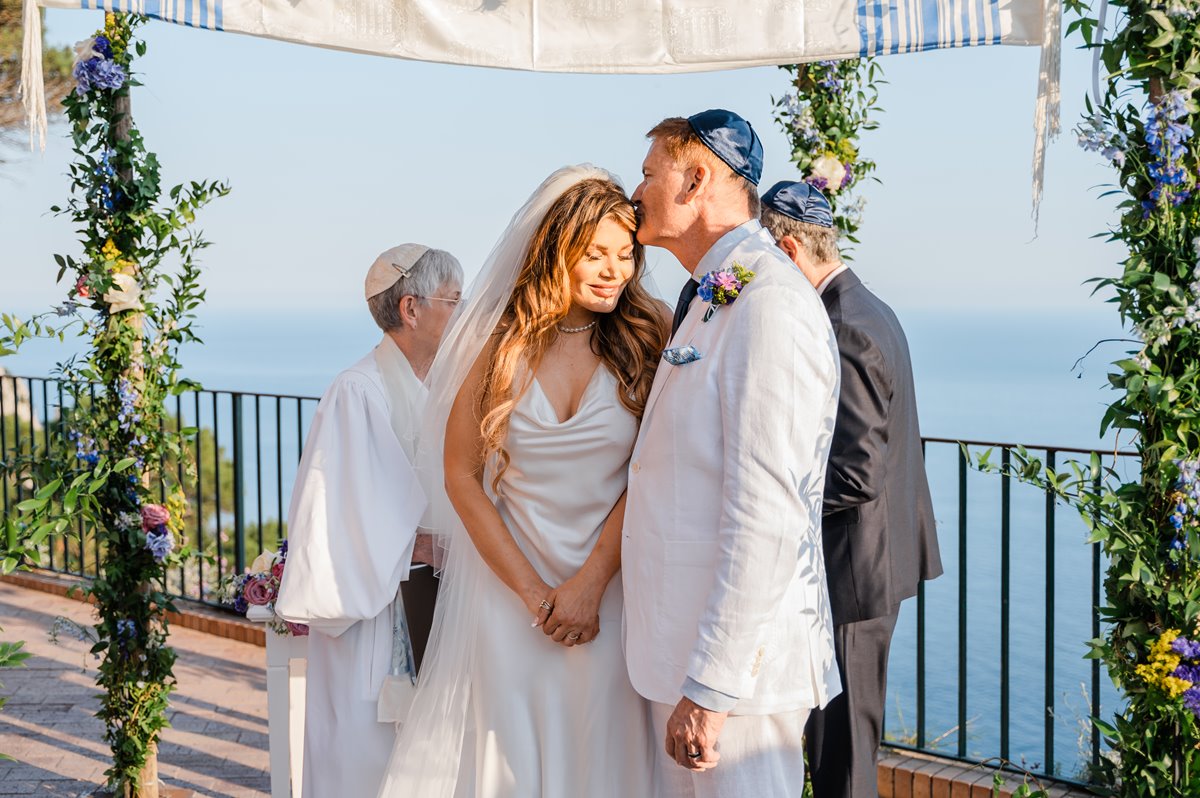



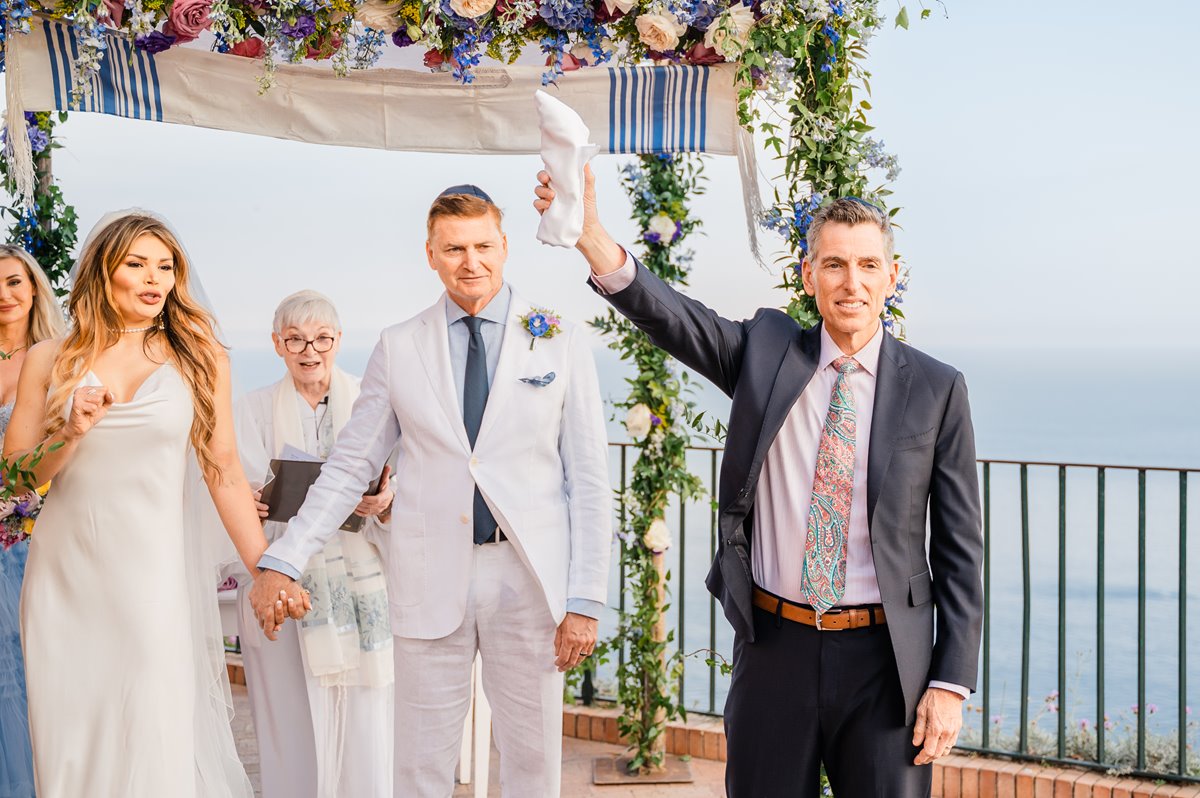
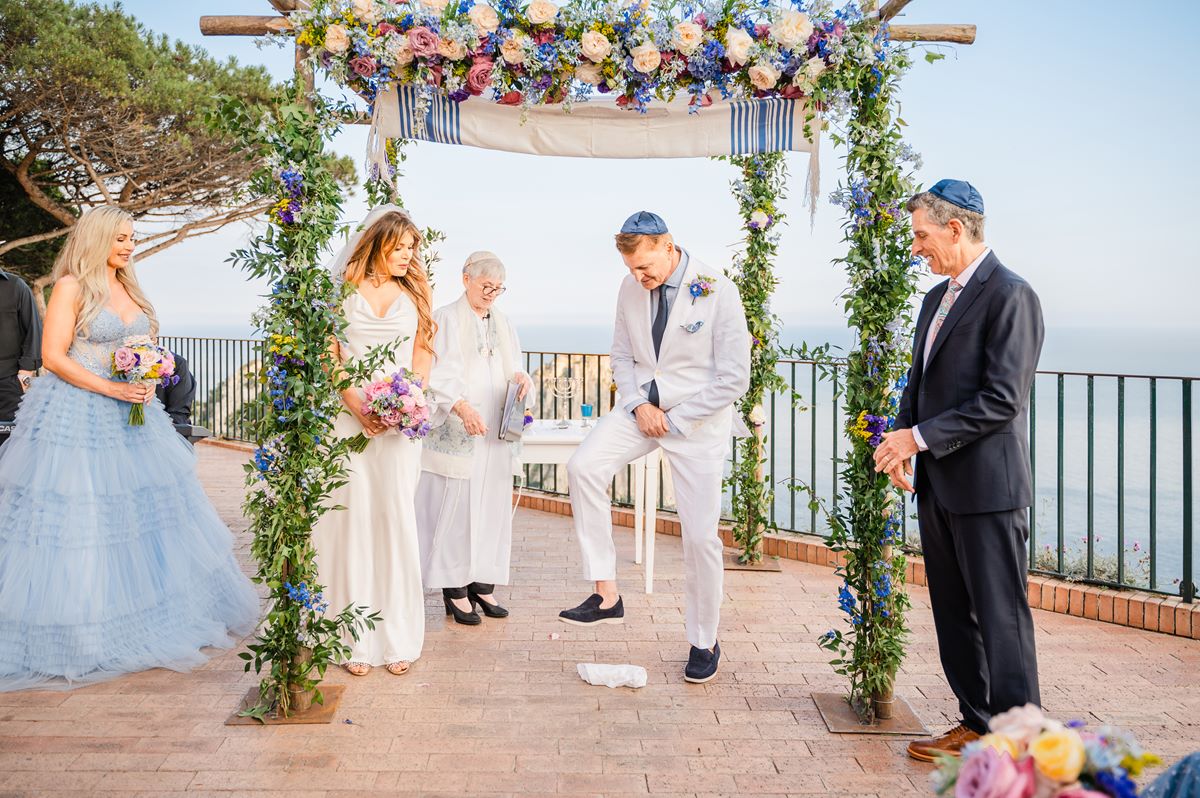
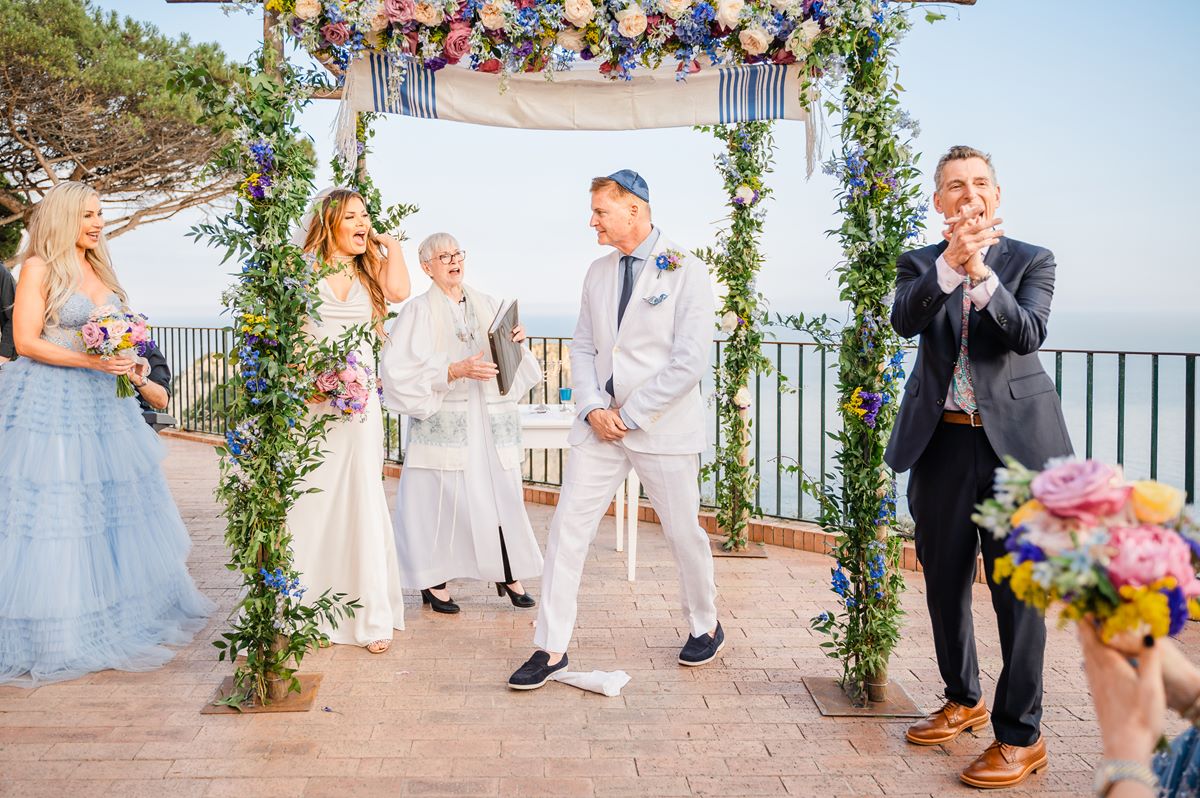


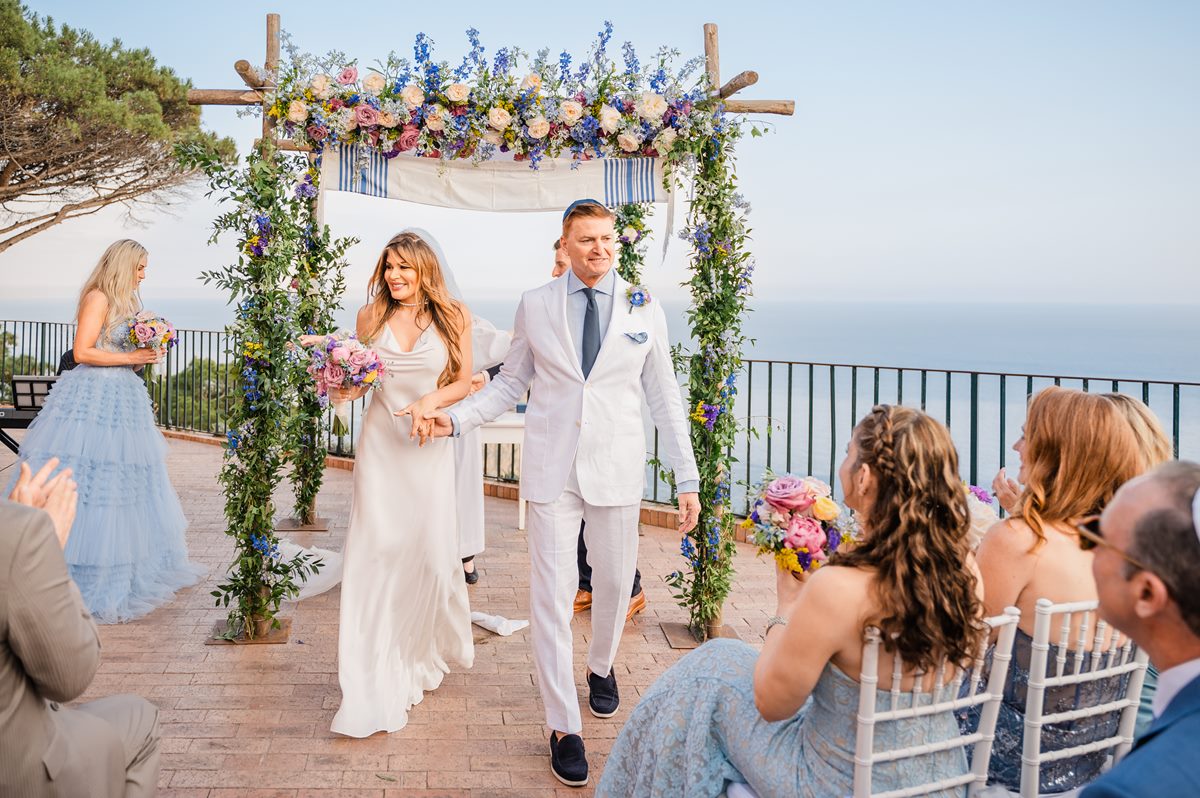
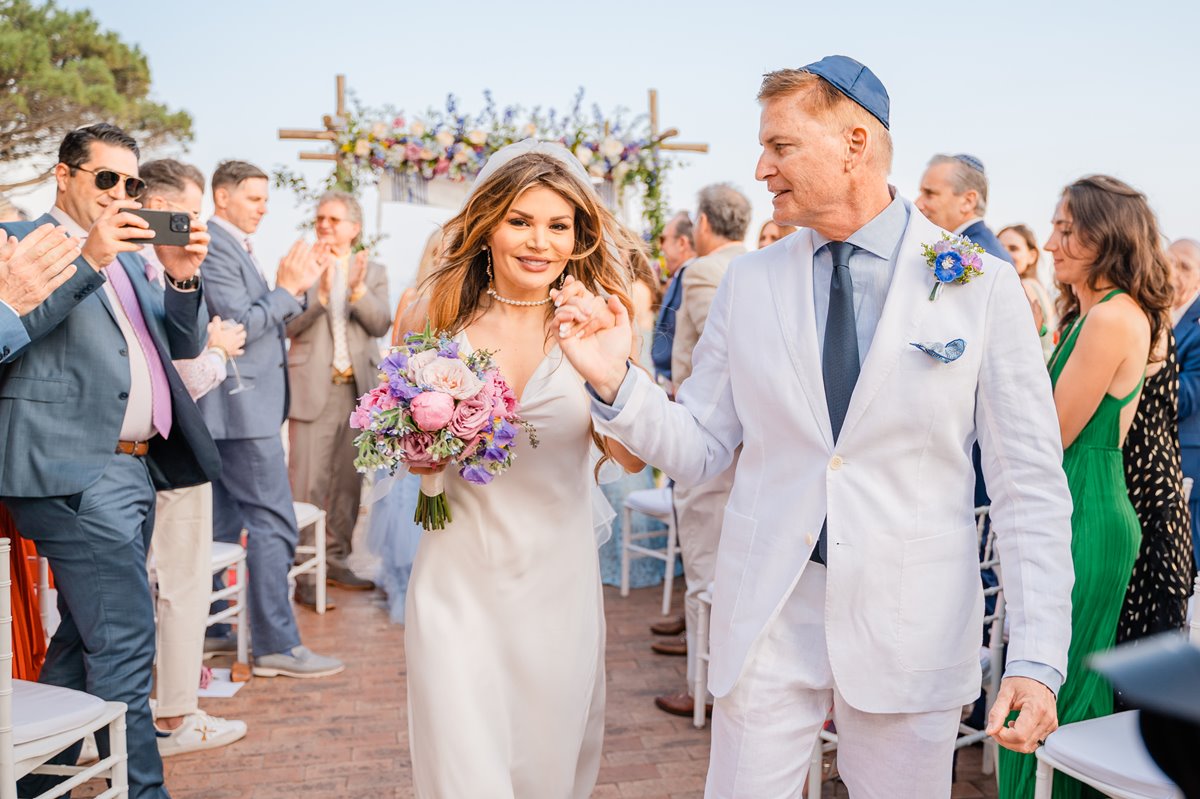
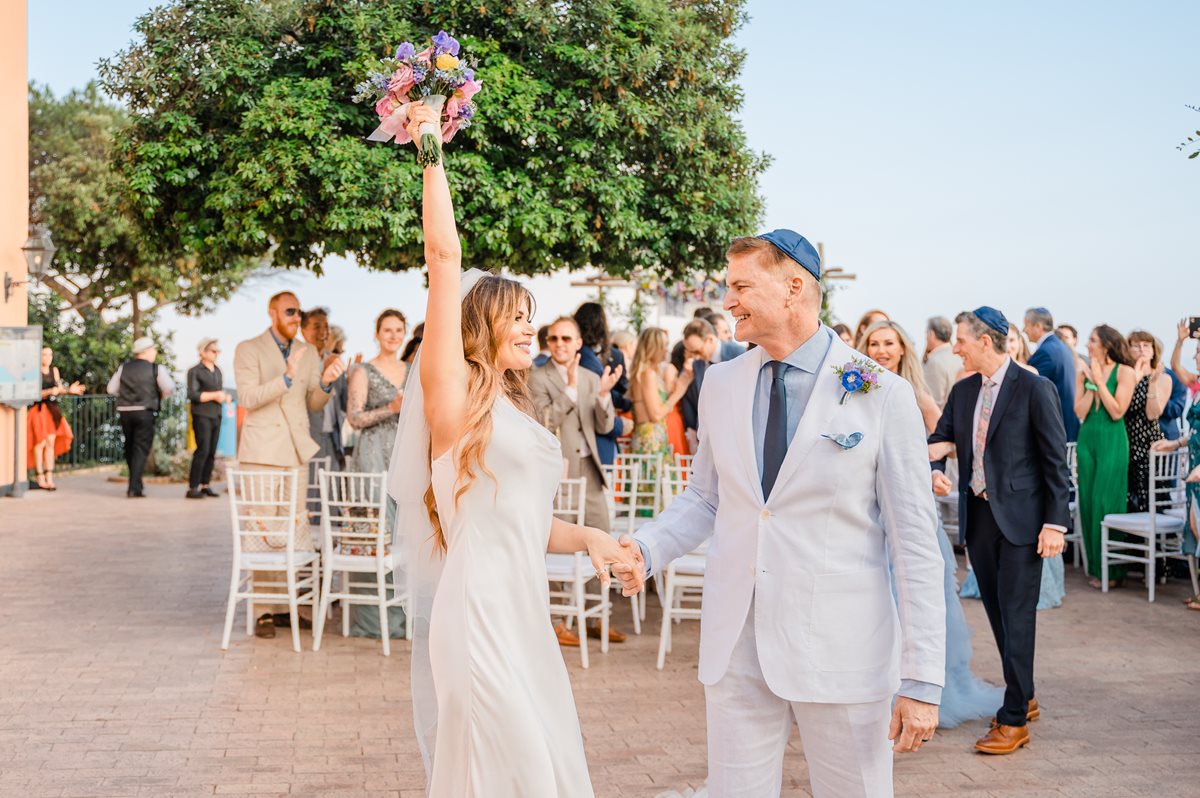
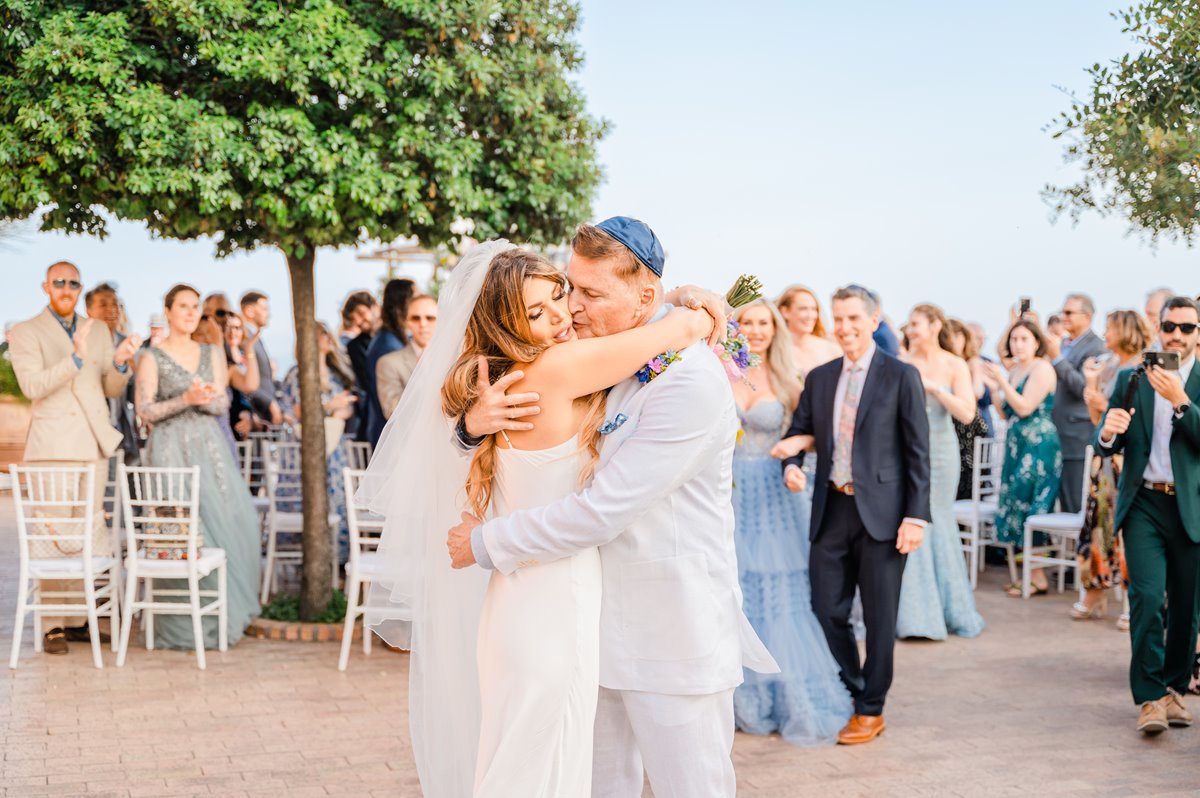
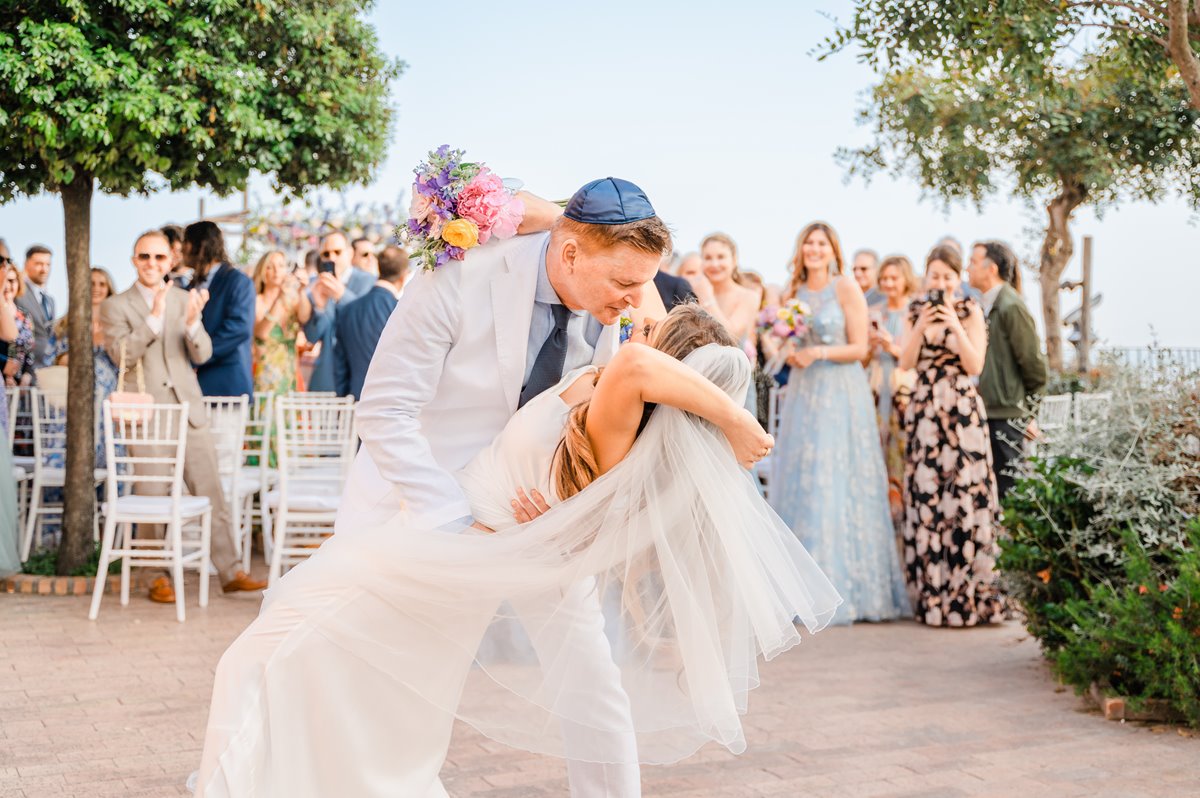

The recessional afterward was pure joy rather than composed elegance. David pulled Raquel into an embrace at the end of the aisle, guests stood and applauded on both sides, several with phones raised to film rather than just watch. I stayed wide for this part rather than tight, since the energy of the whole crowd told more of the story than a close portrait of just the couple would have.

The Reception on the Terrace
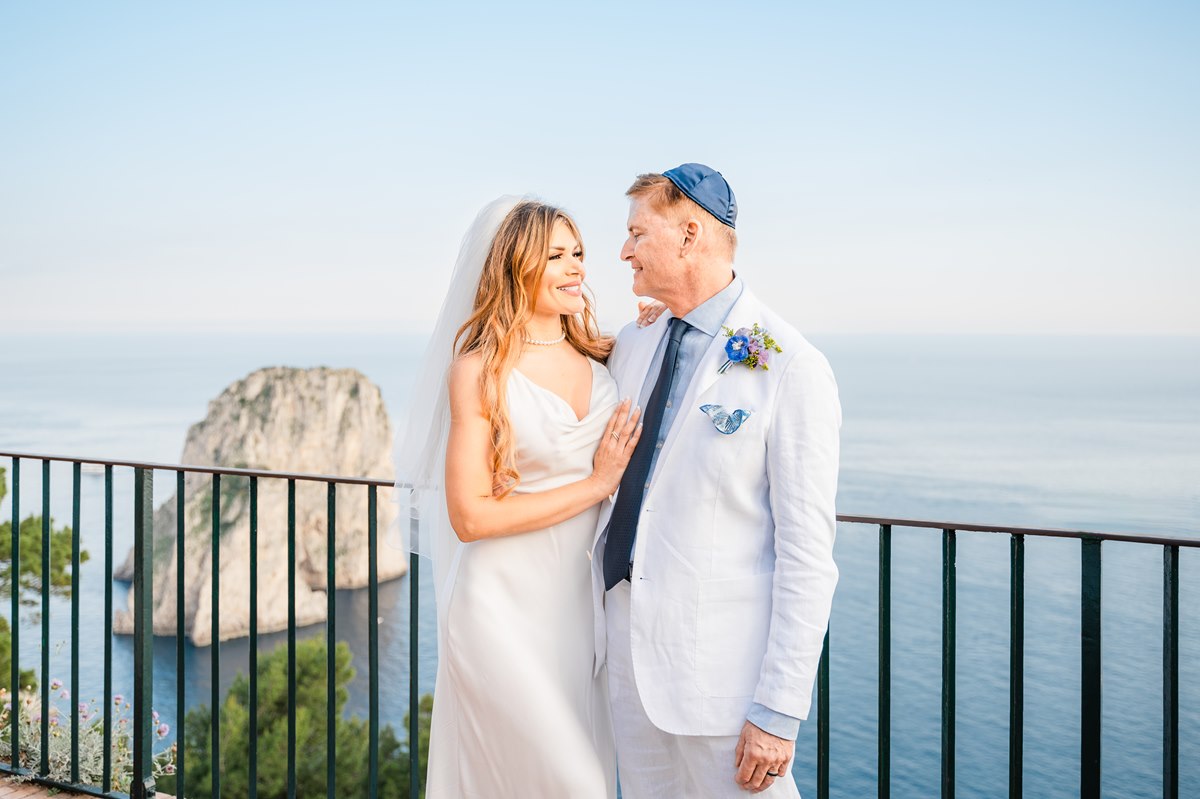
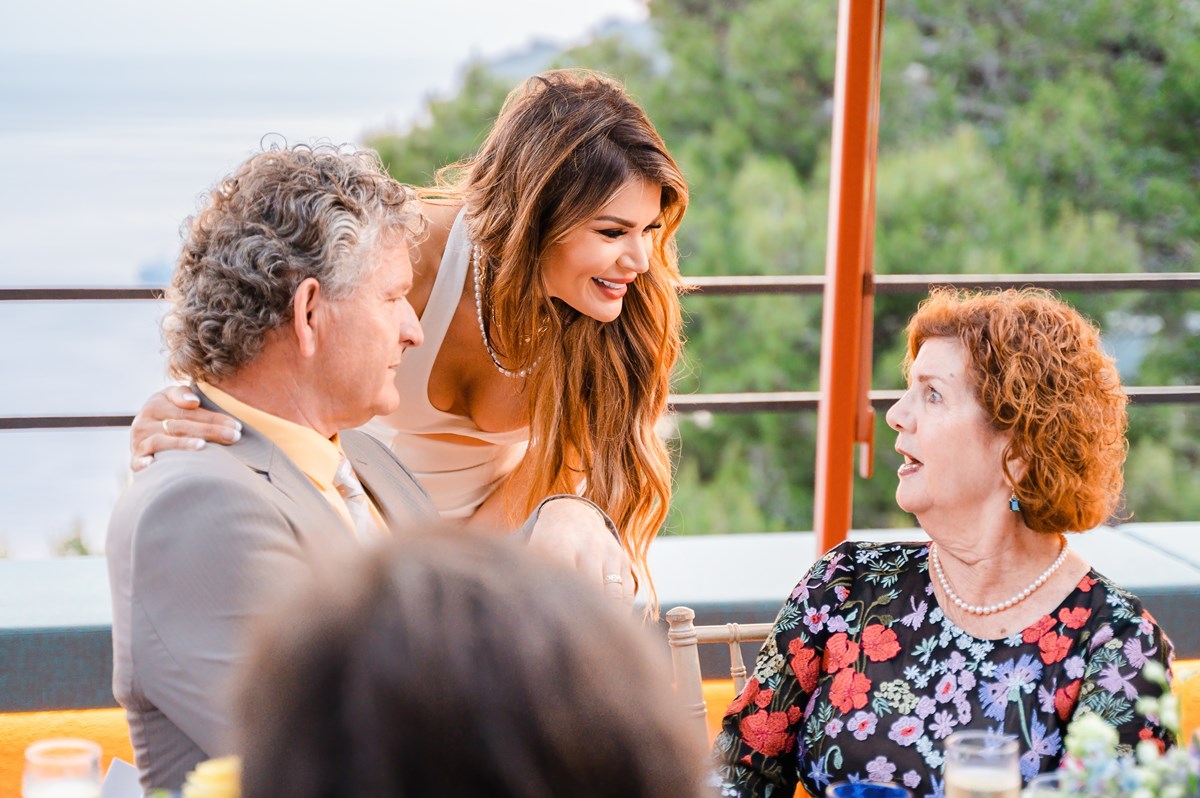
Right after the ceremony we had 45 minutes for the two of them, which Raquel had marked on her timetable as the most beautiful light of the day. She was right. Then the party moved to the tables under the big umbrellas, and an accordion player in a white hat went from group to group, with David and his friends gathered around him.

Speeches by the Pool
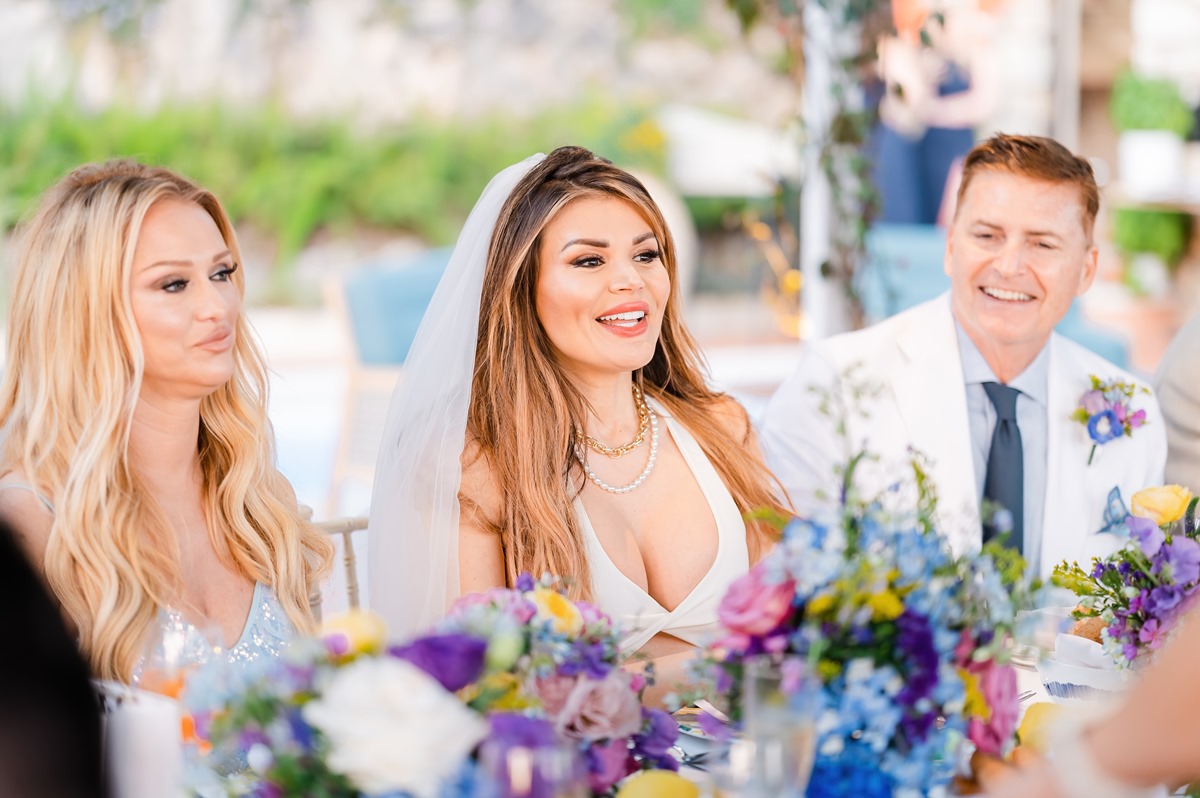
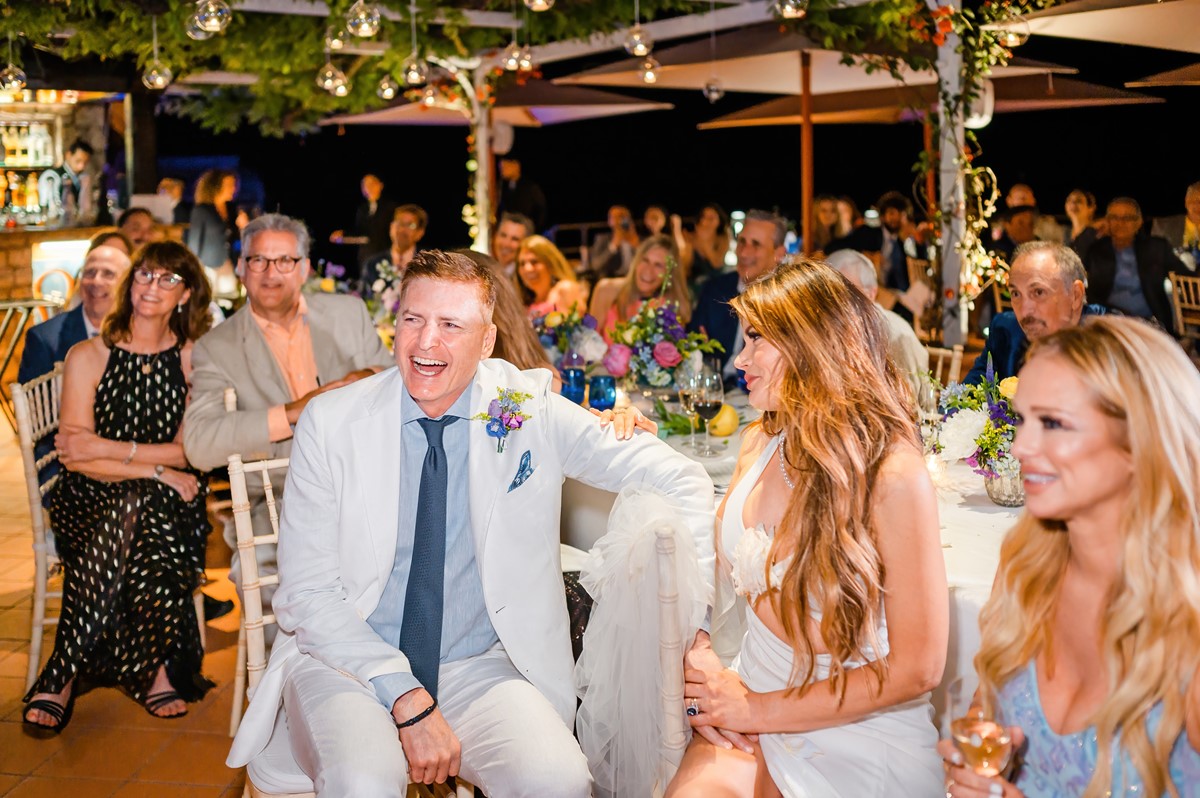
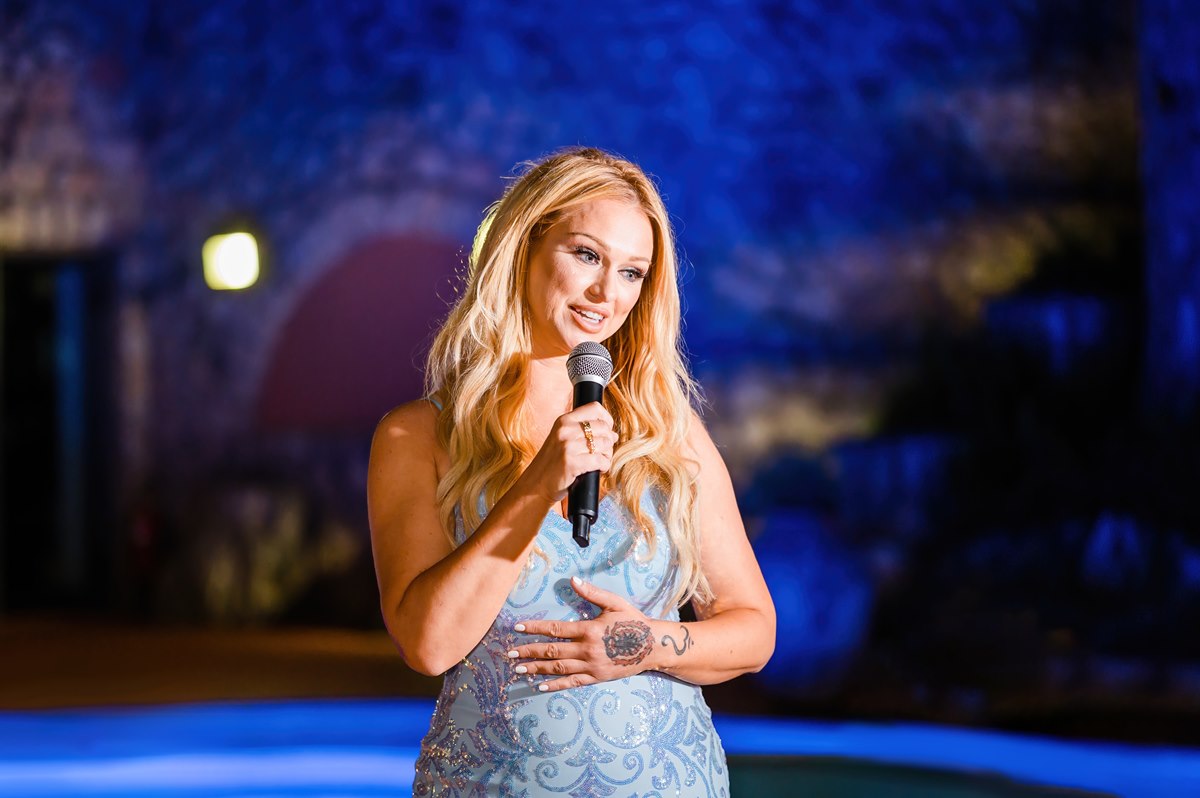
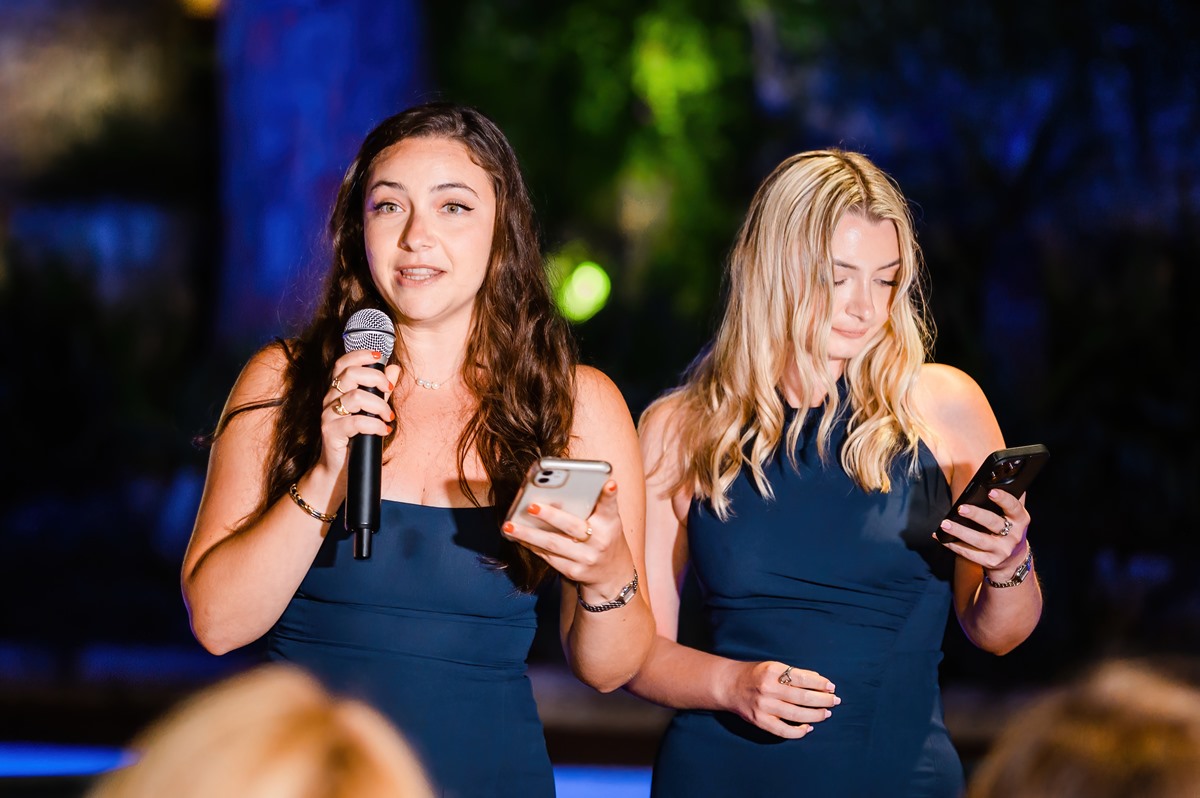
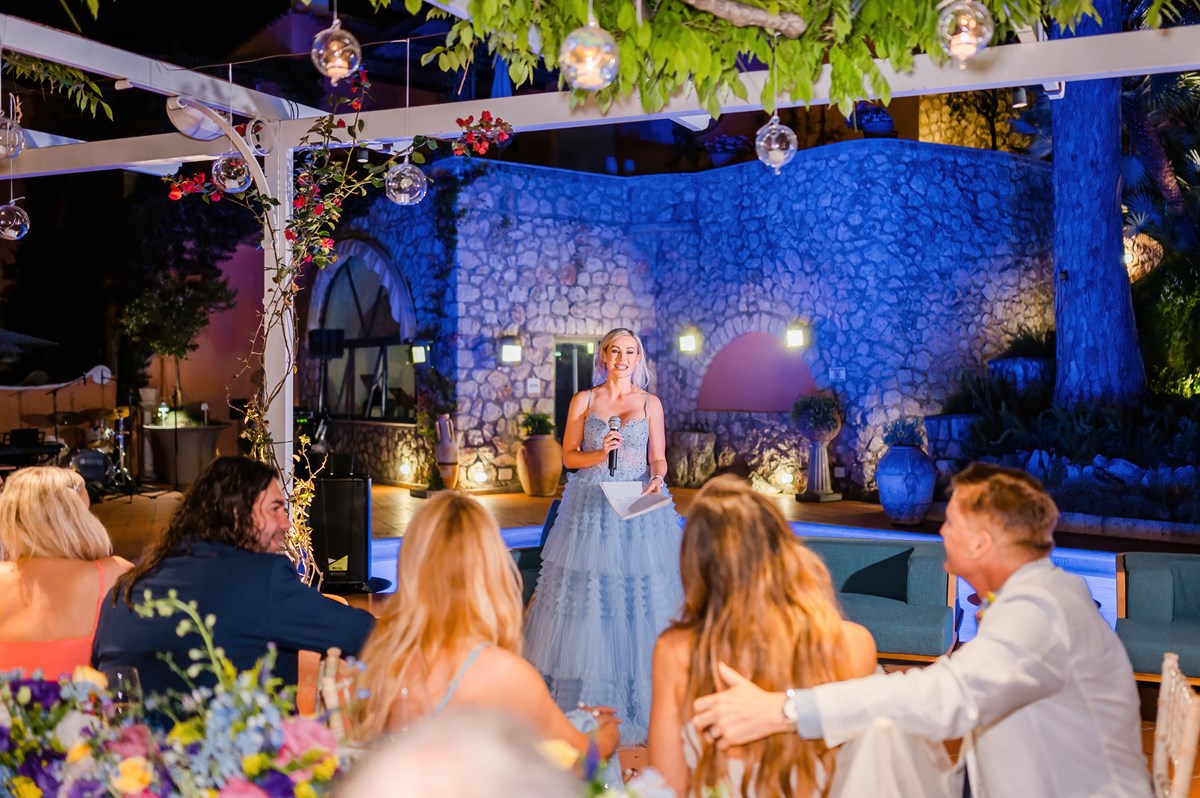
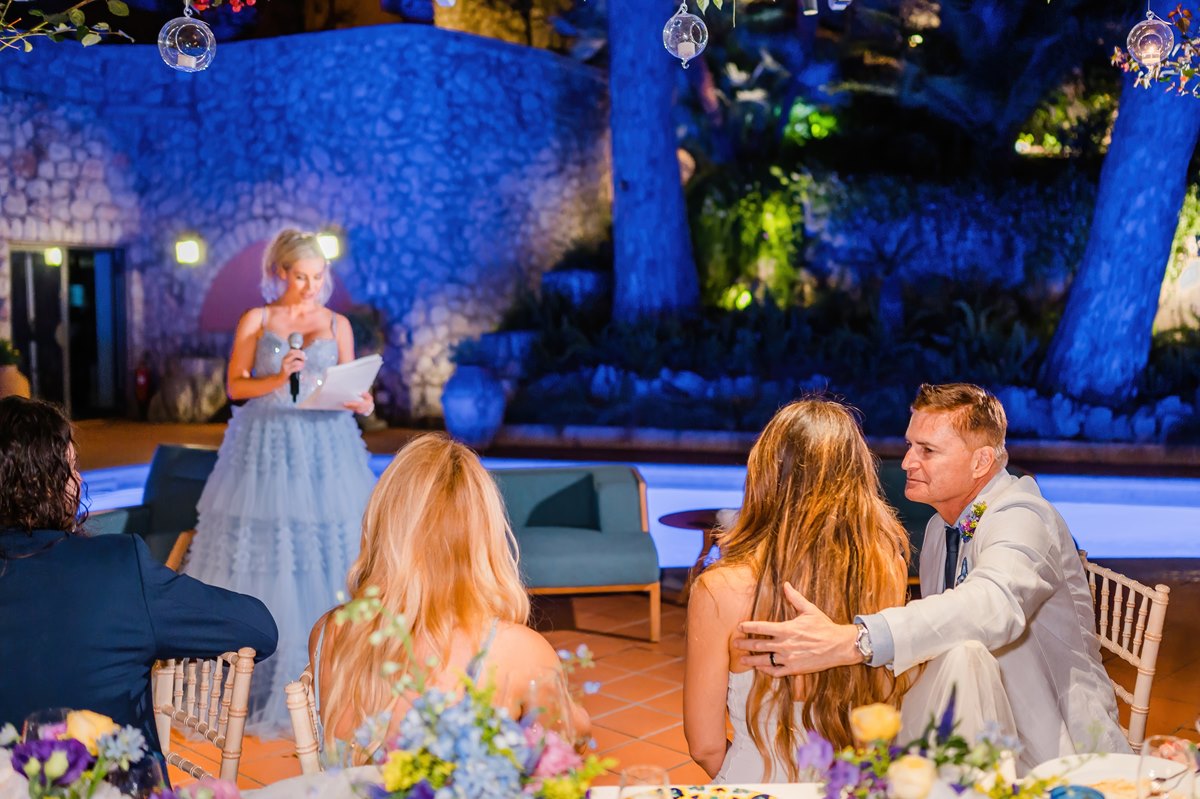
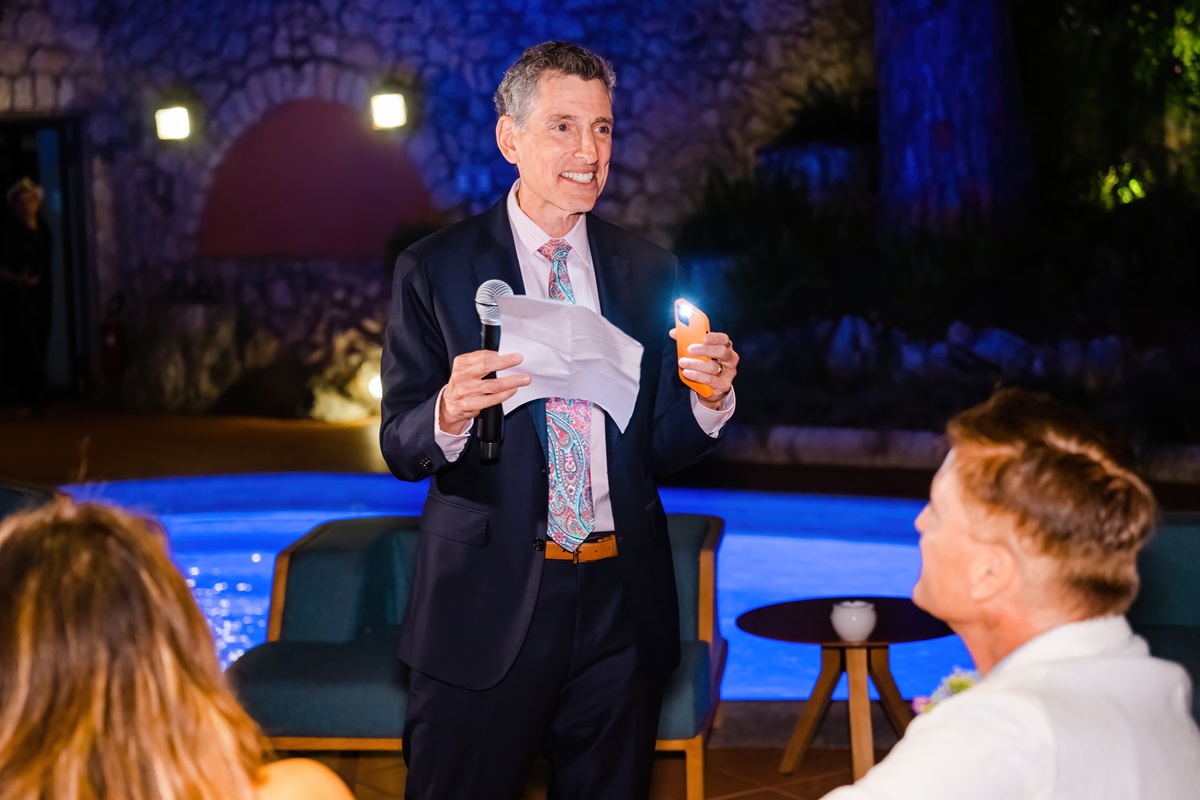
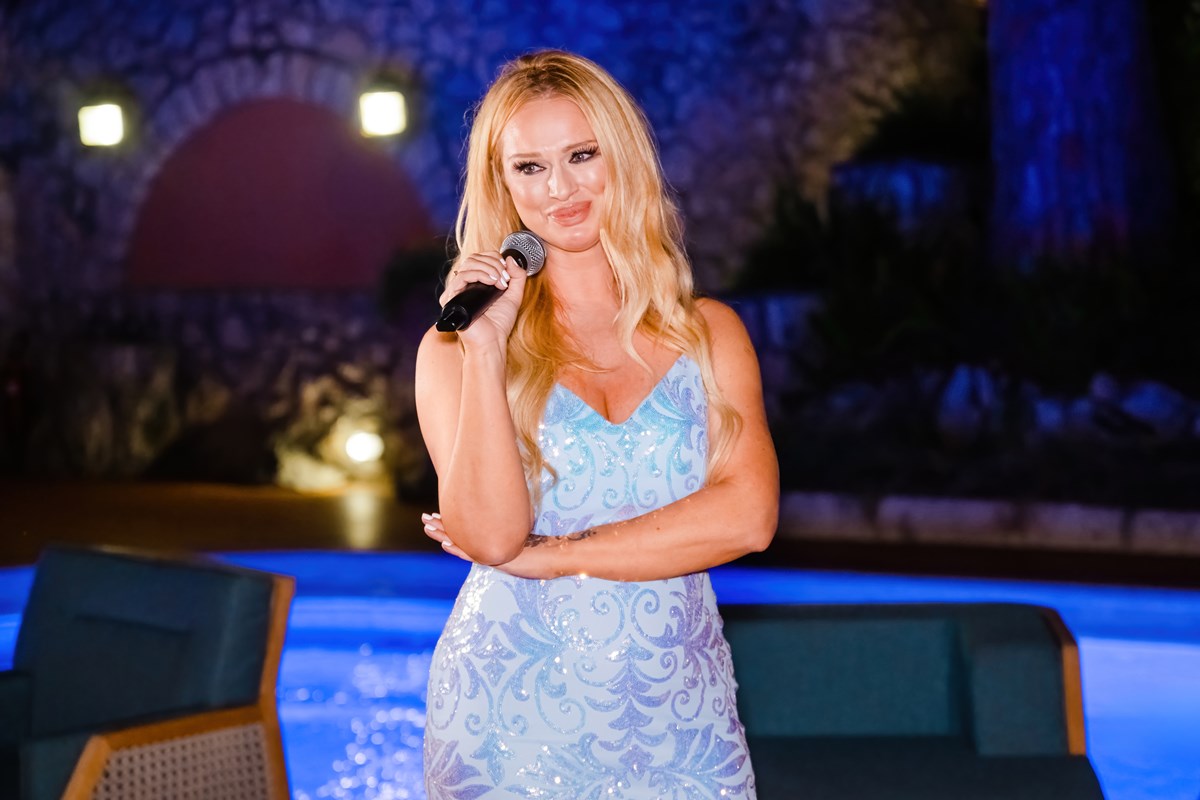
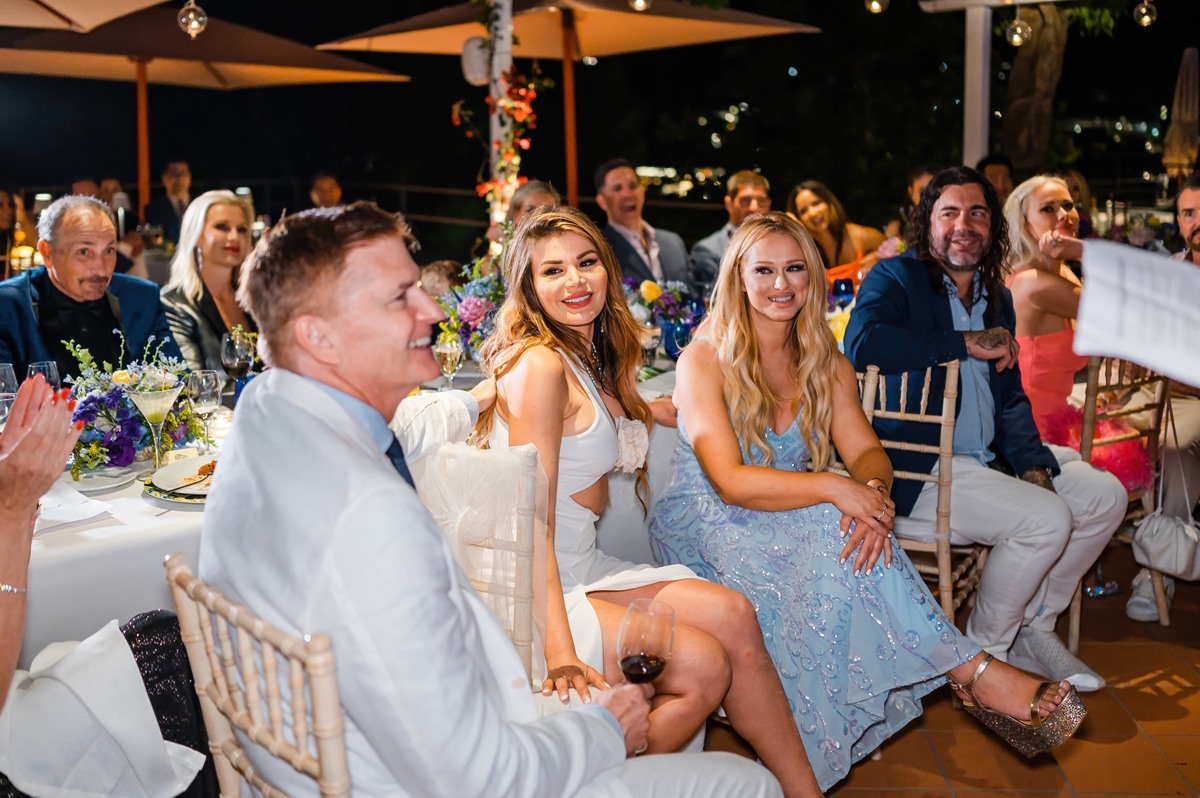
Dinner ran from 8:00 to 9:30 PM under the pergola, with the speeches and the cake inside that hour and a half. One bridesmaid after another took the microphone with the pool lit blue behind her, a few reading from their phones, and I stayed low at the side of the tables so I could hold the speaker and the couple’s reaction in the same frame.

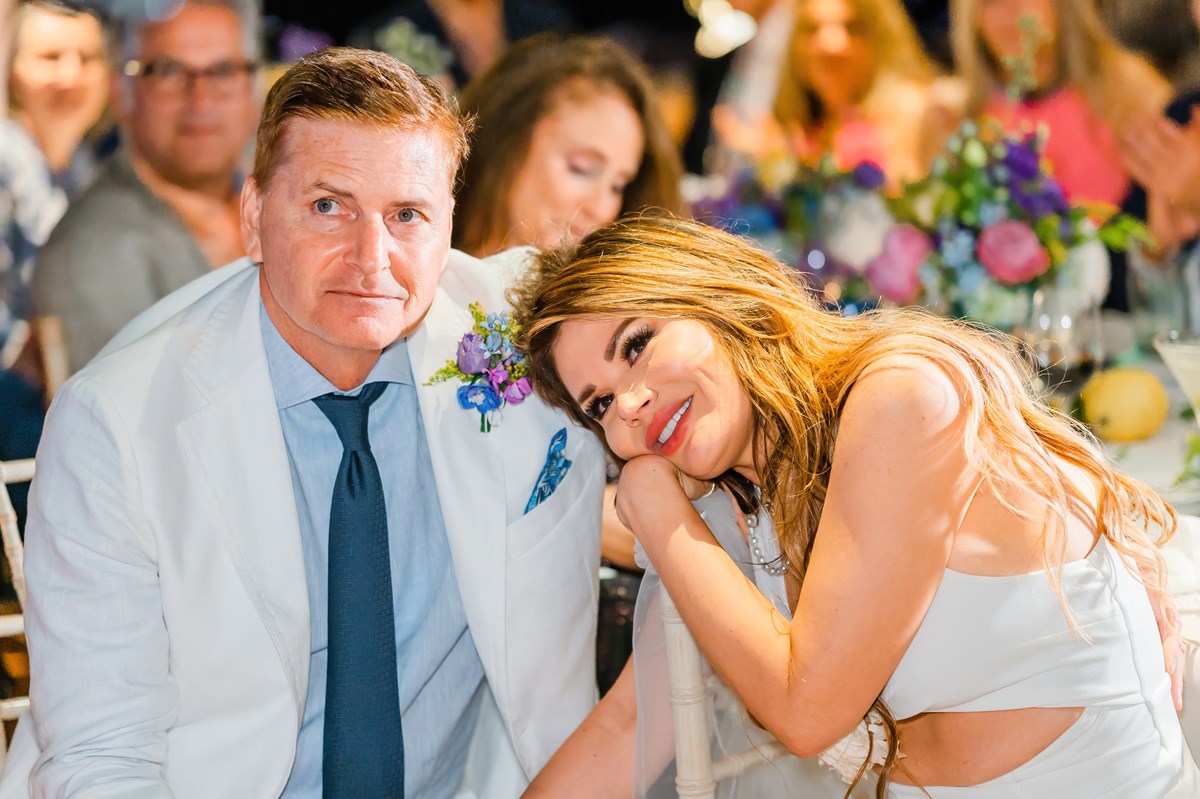
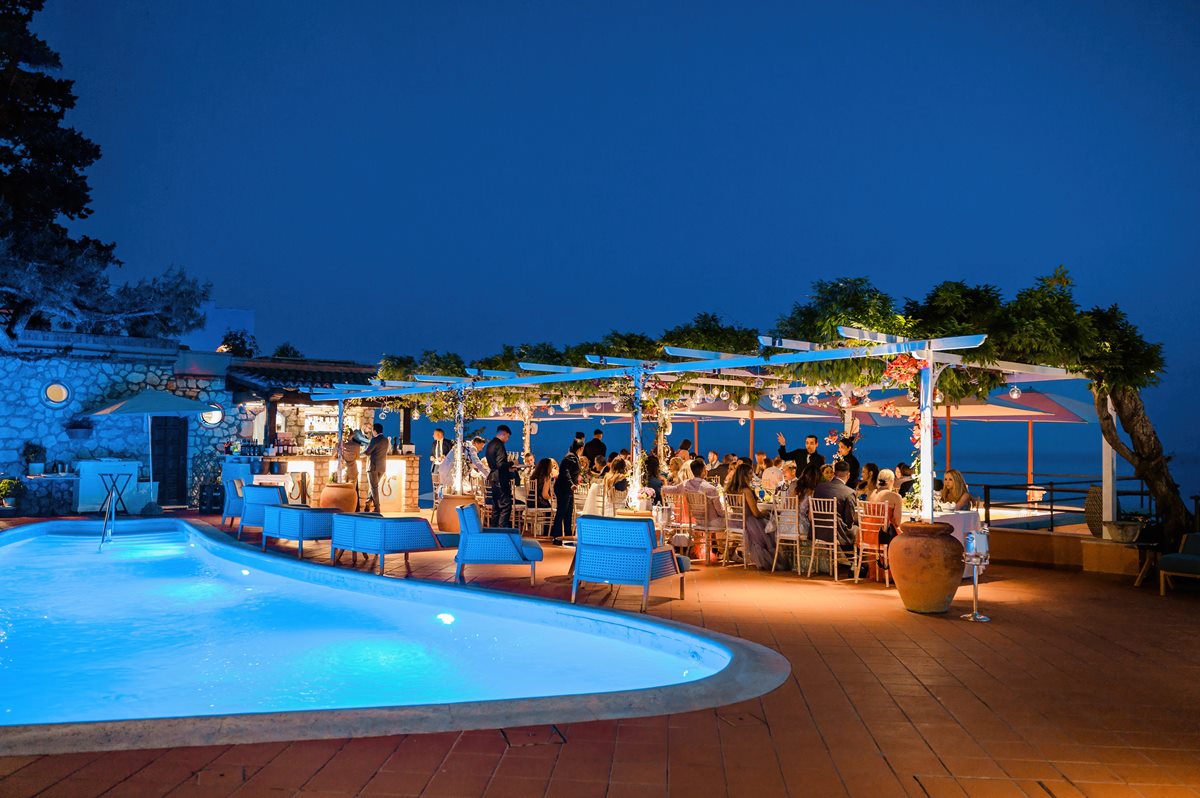

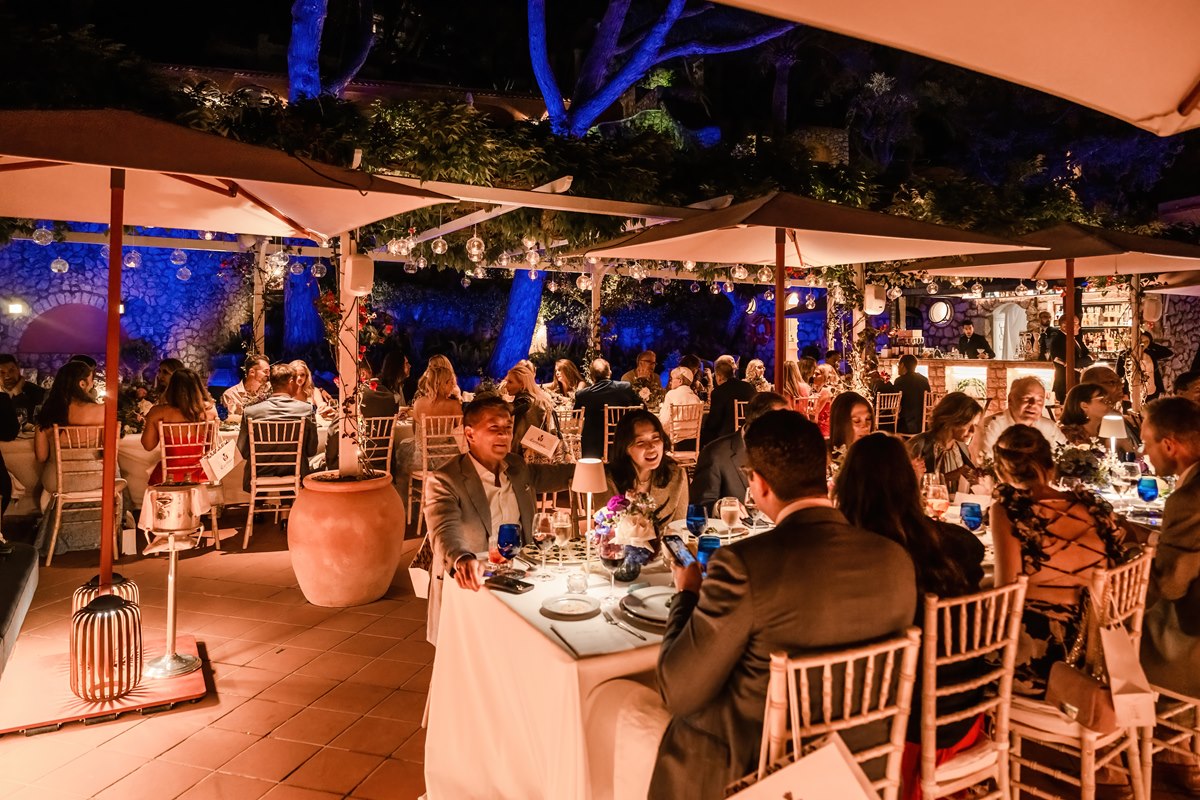
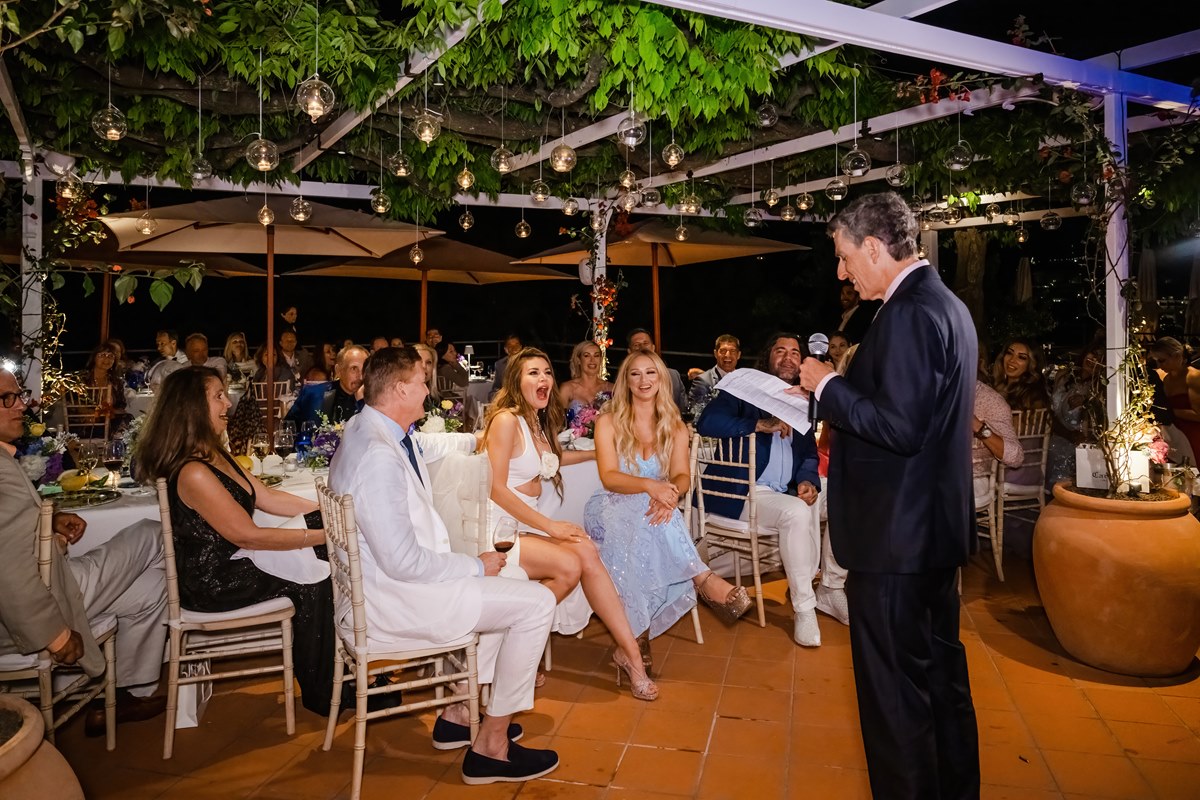

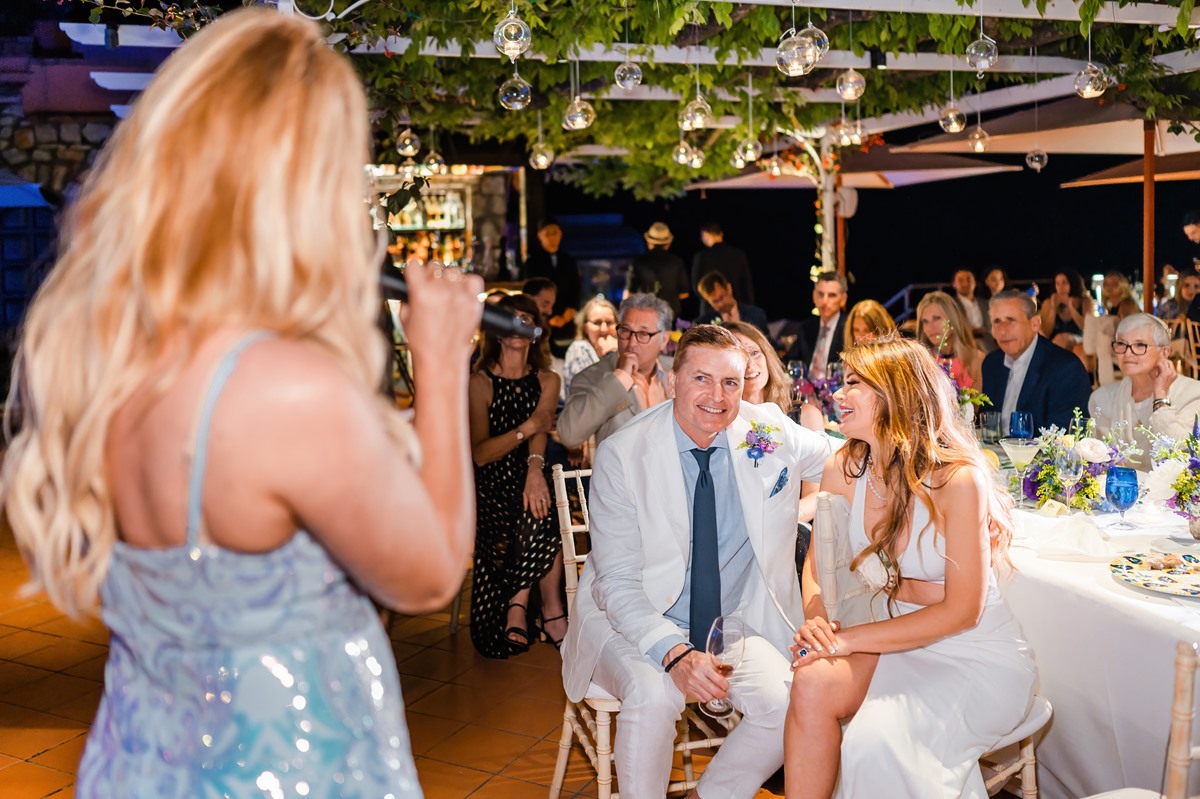
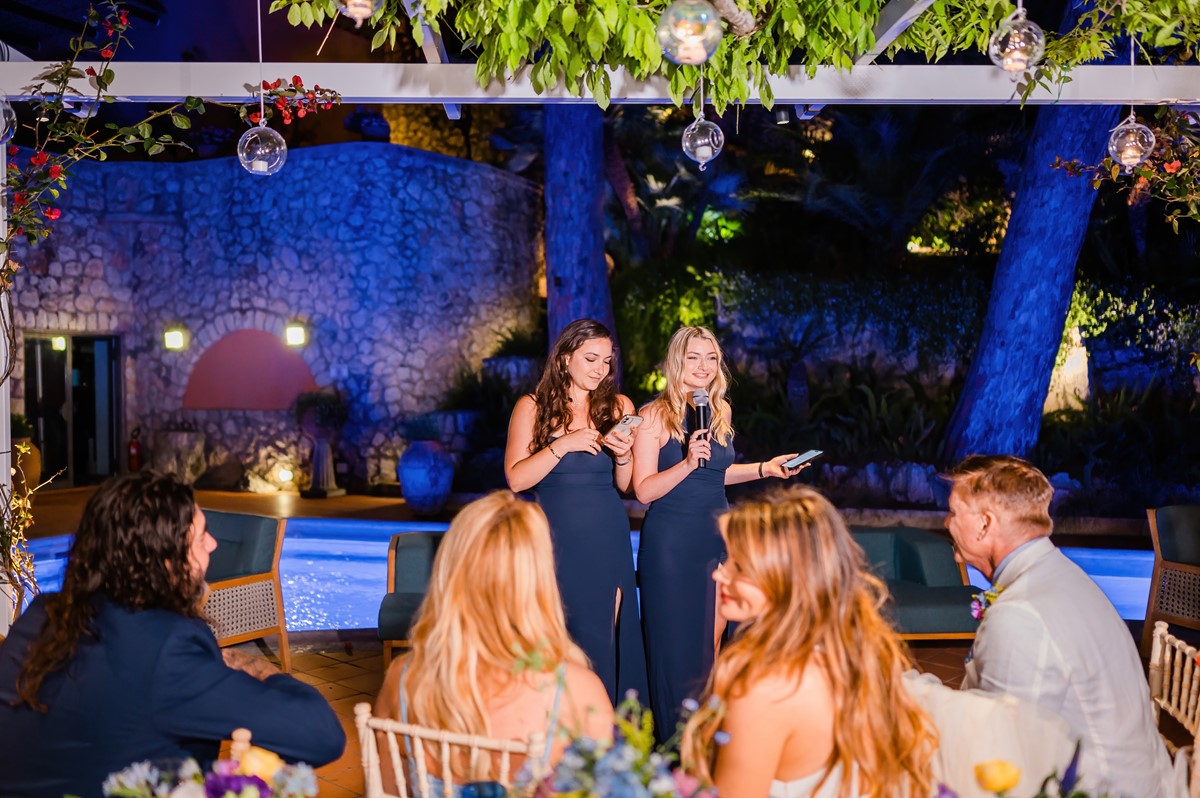
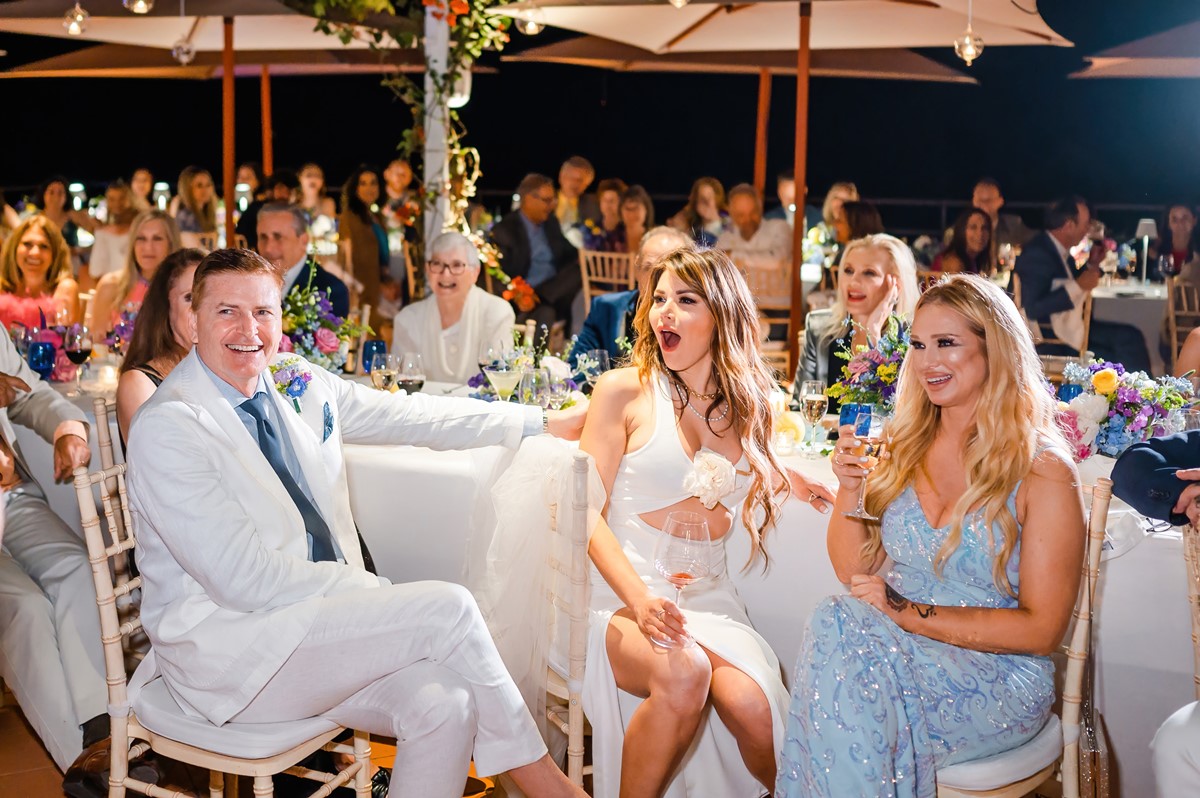

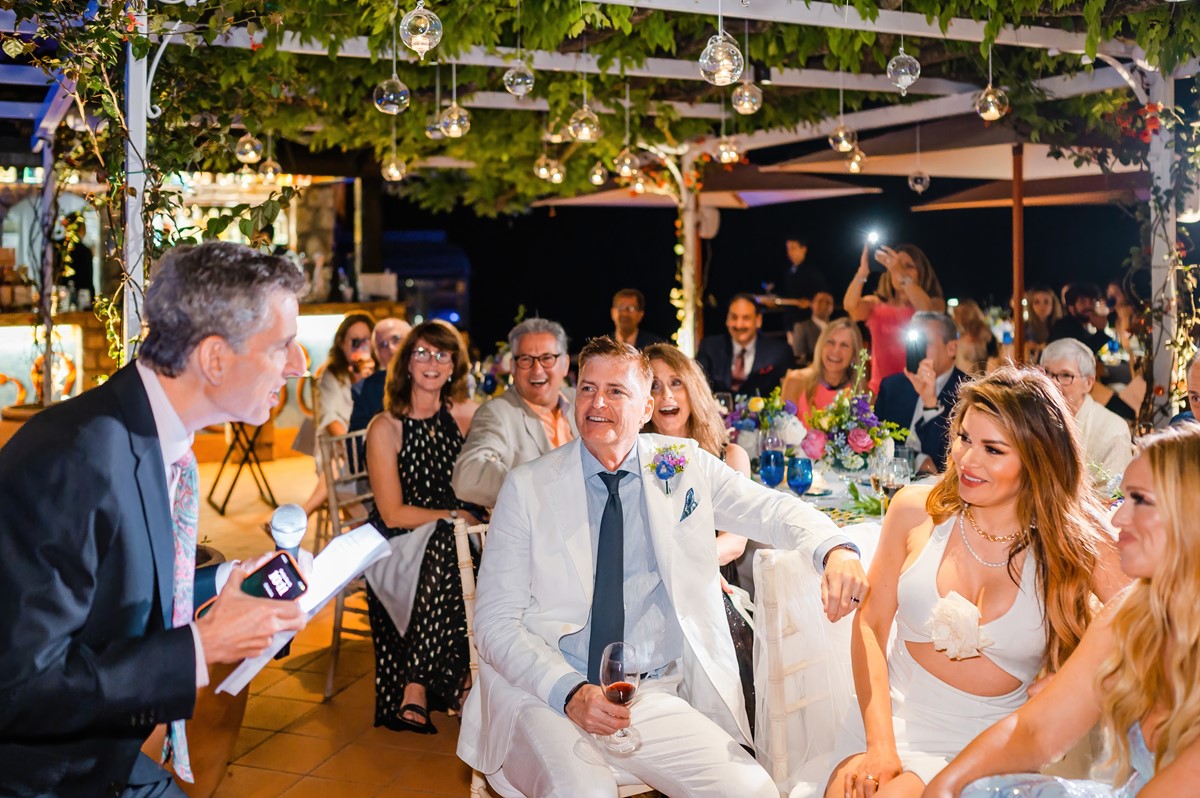
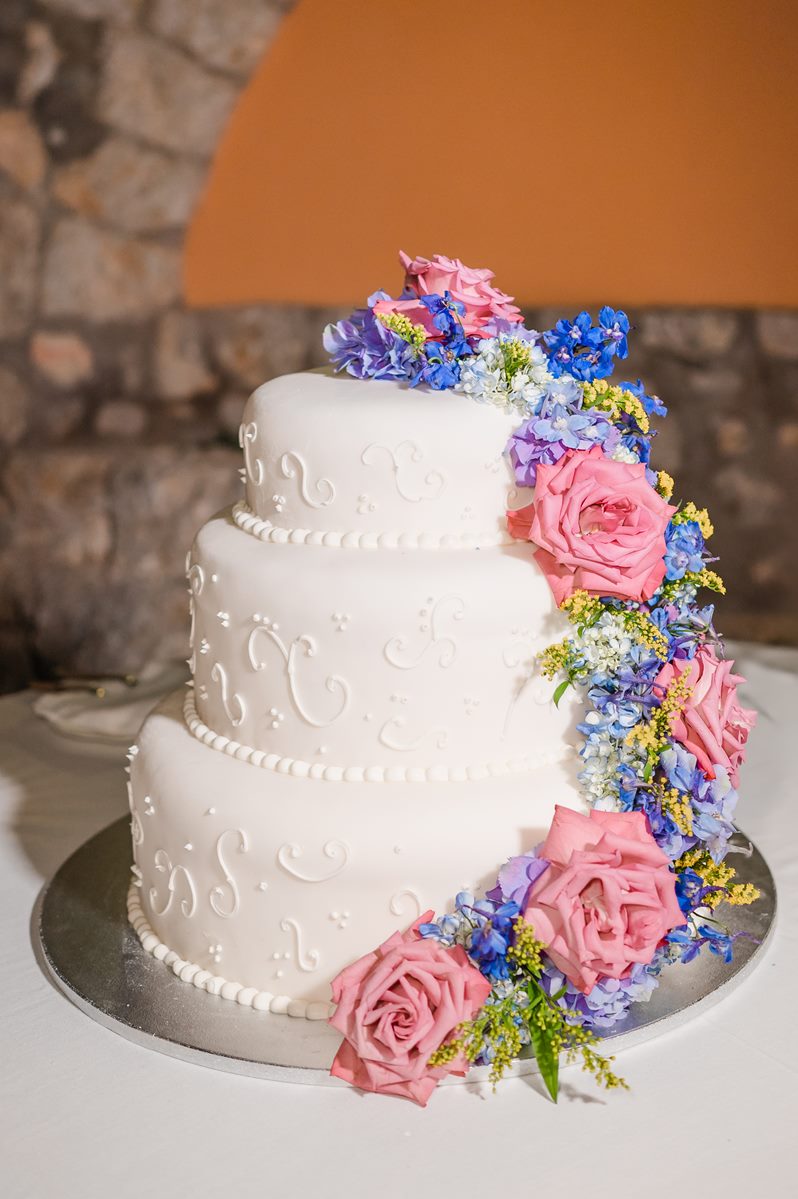
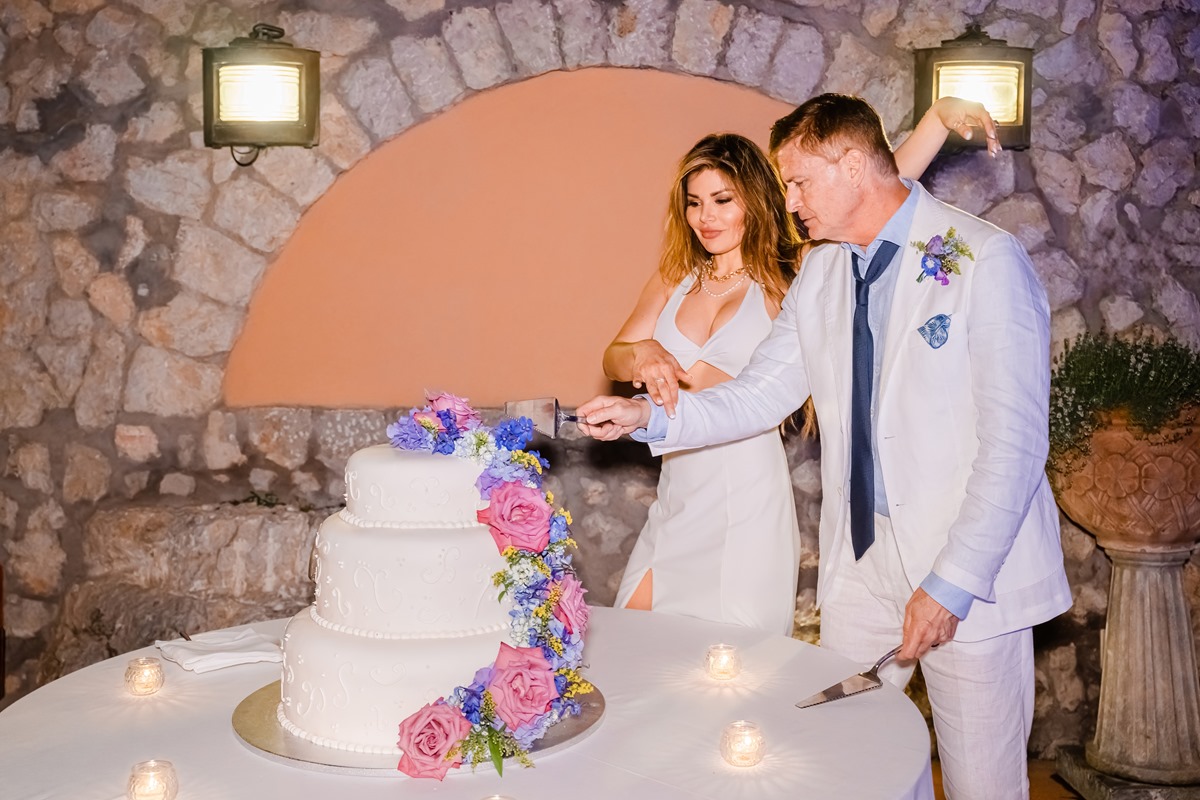
The cake came out in front of the stone wall at the end of the terrace, with the same blue and purple flowers from the chuppah climbing up it.
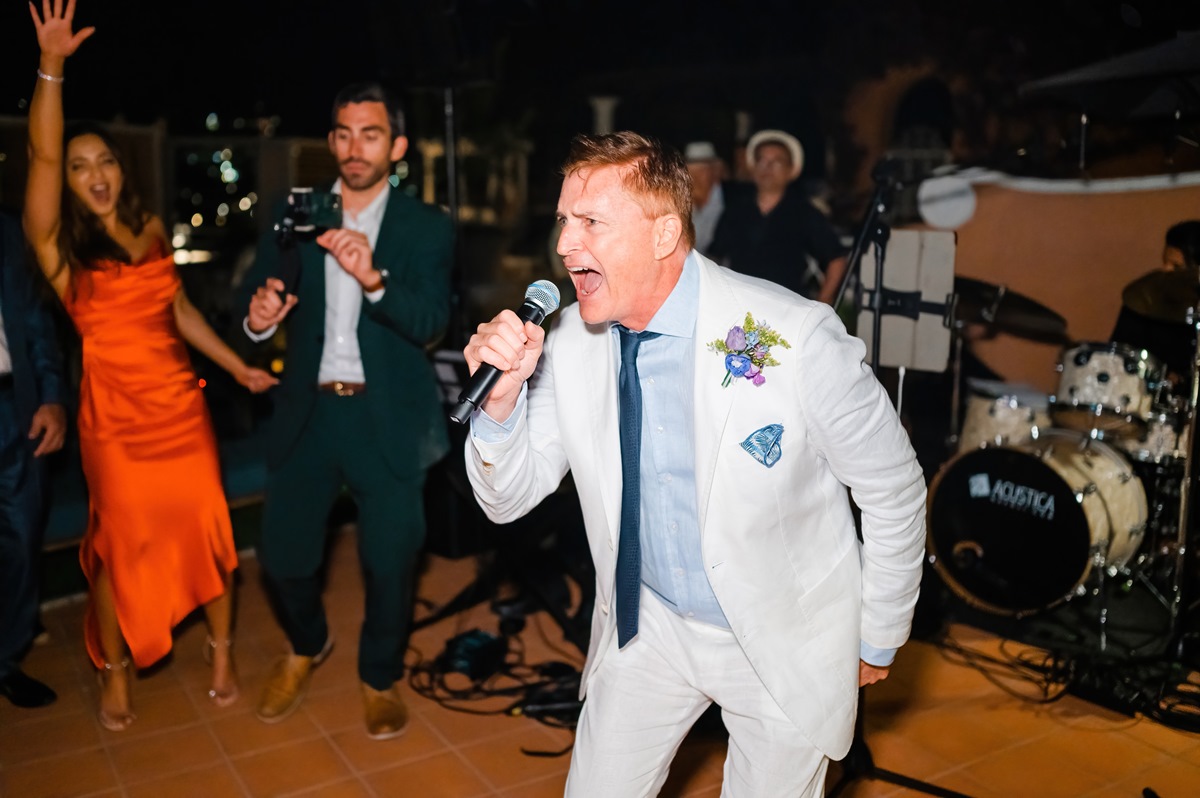
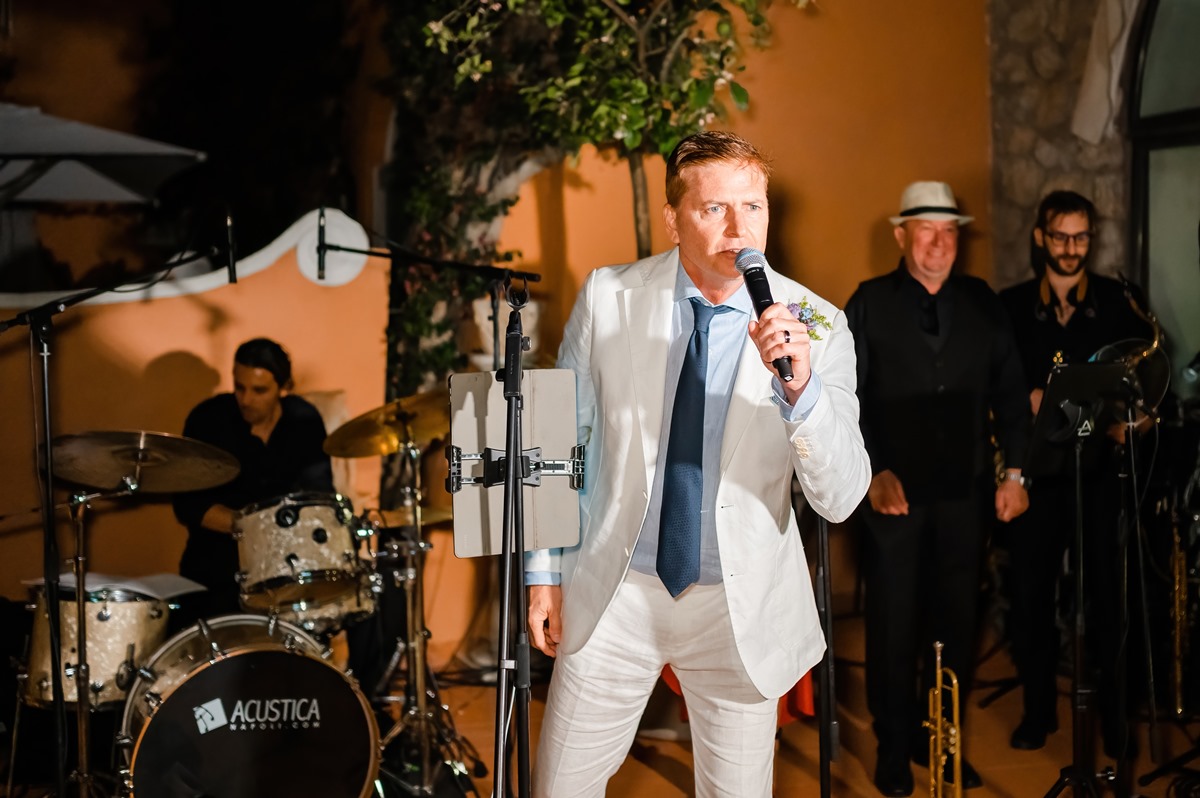
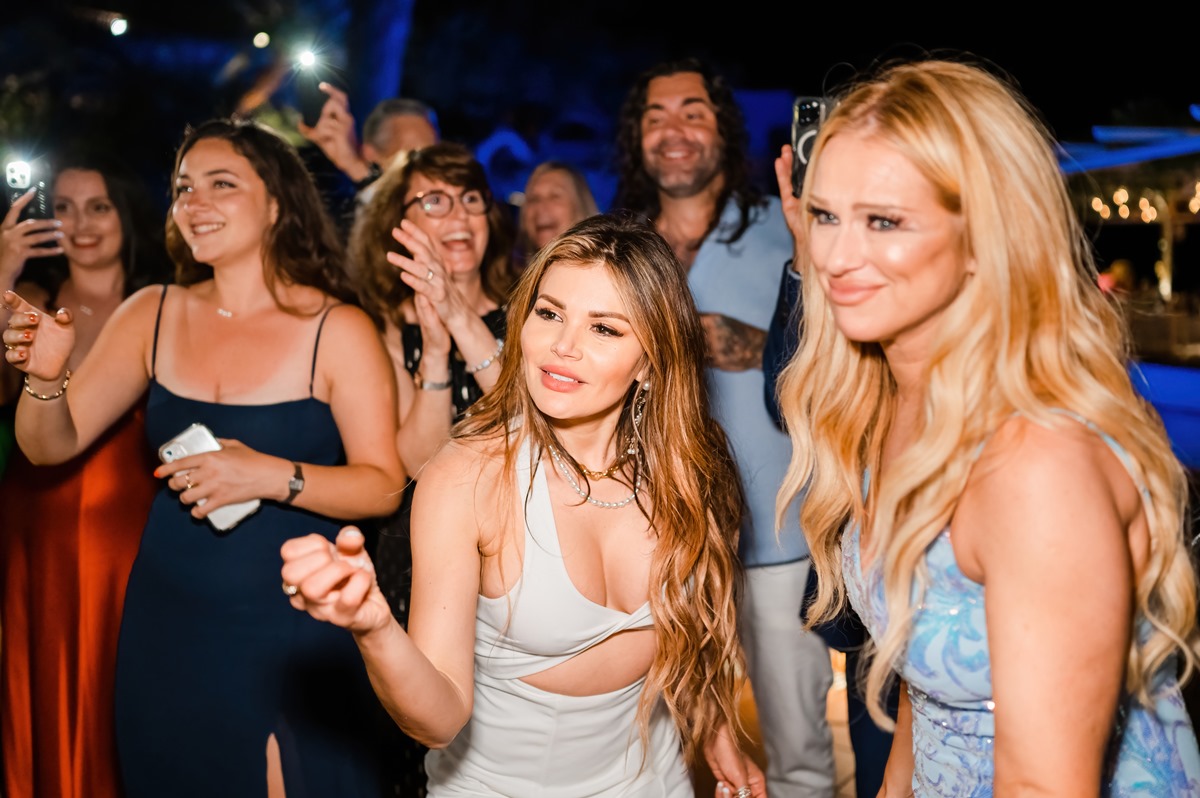
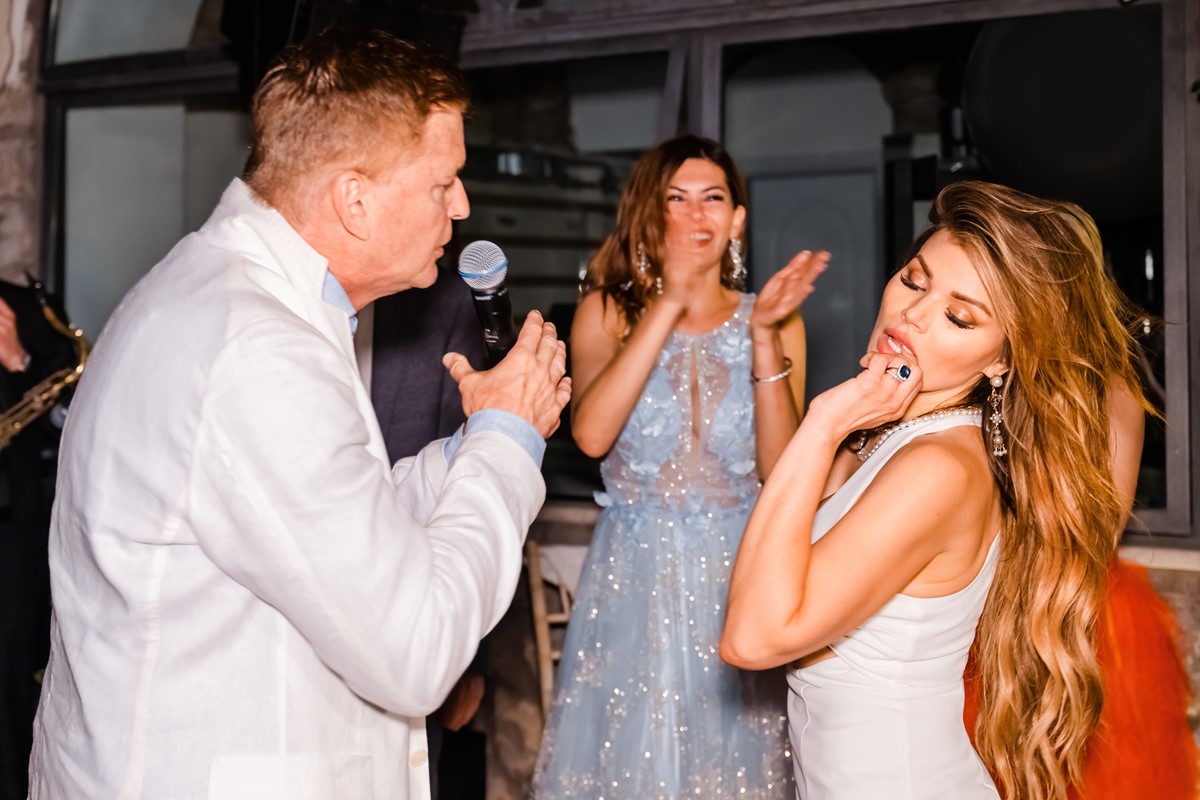
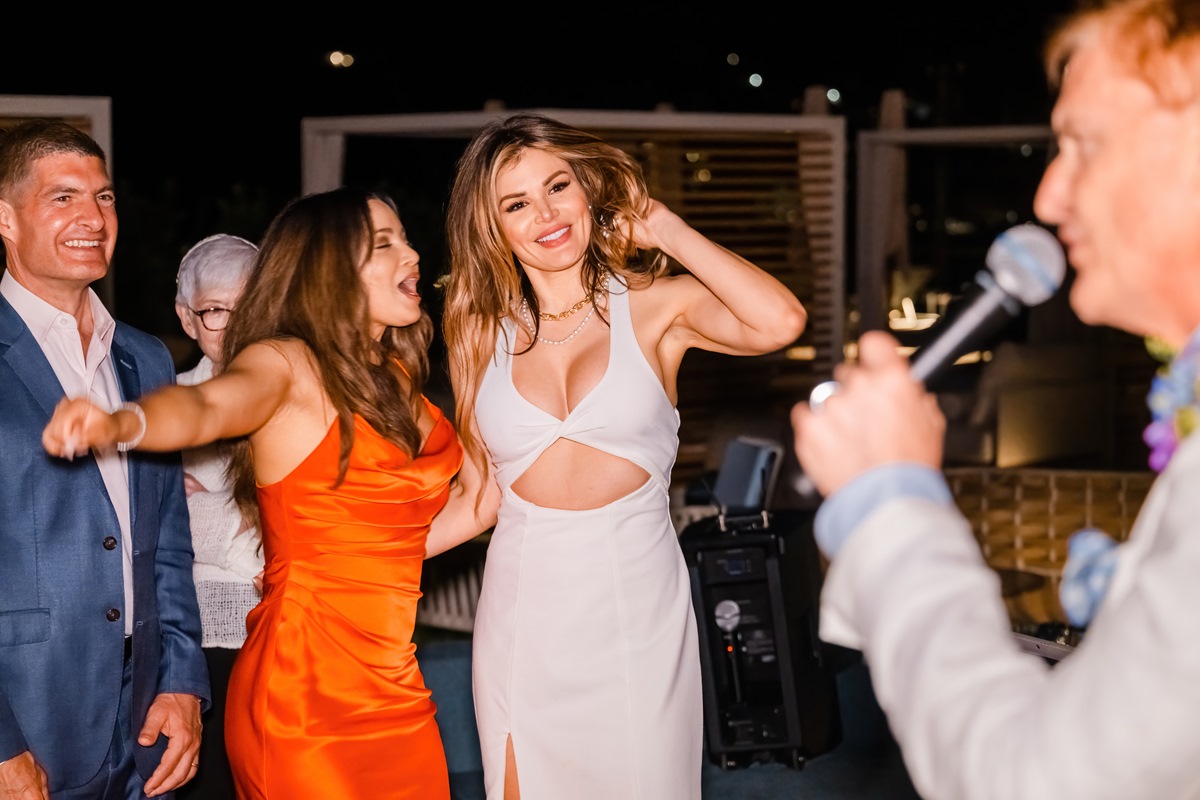
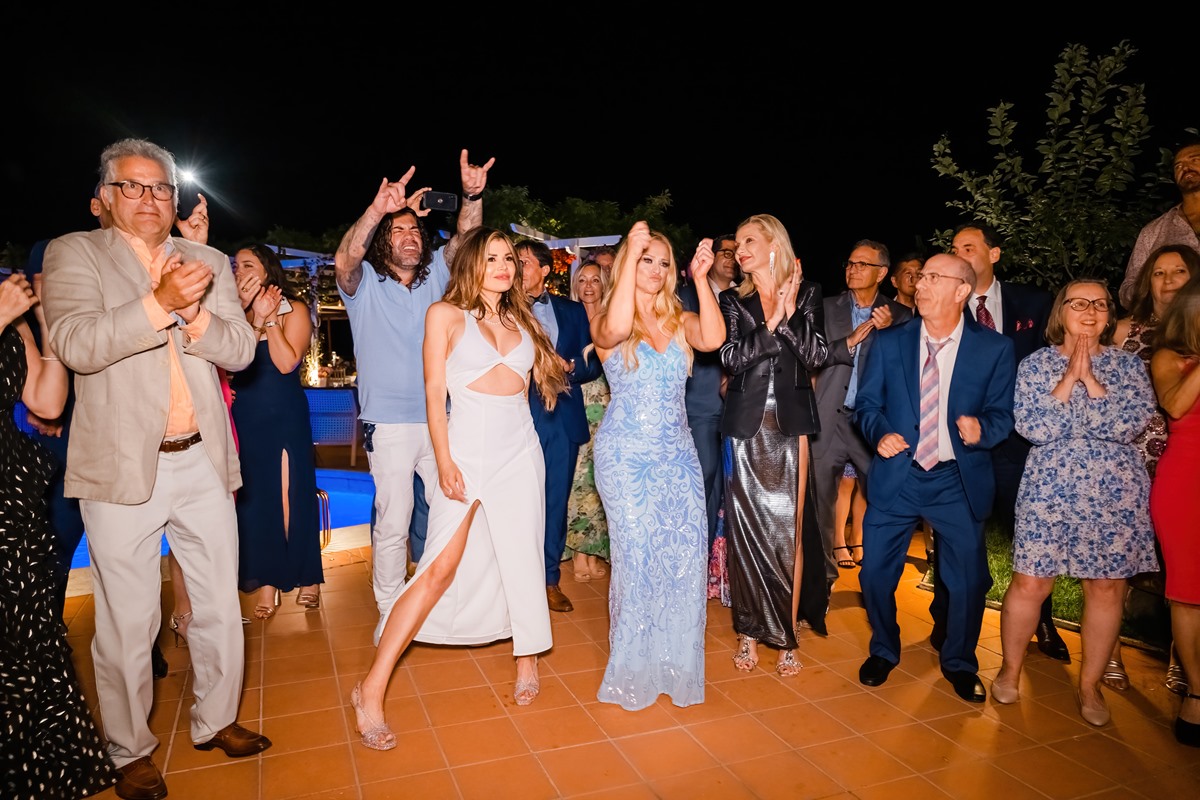
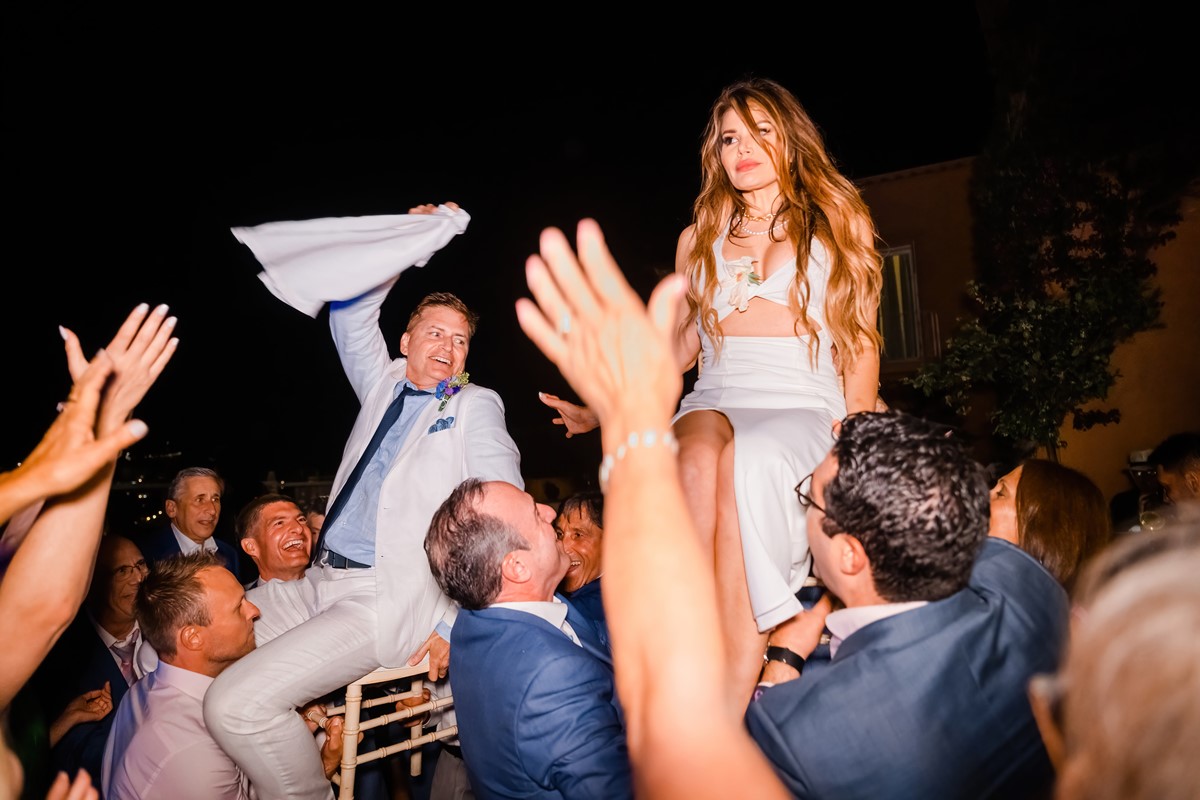
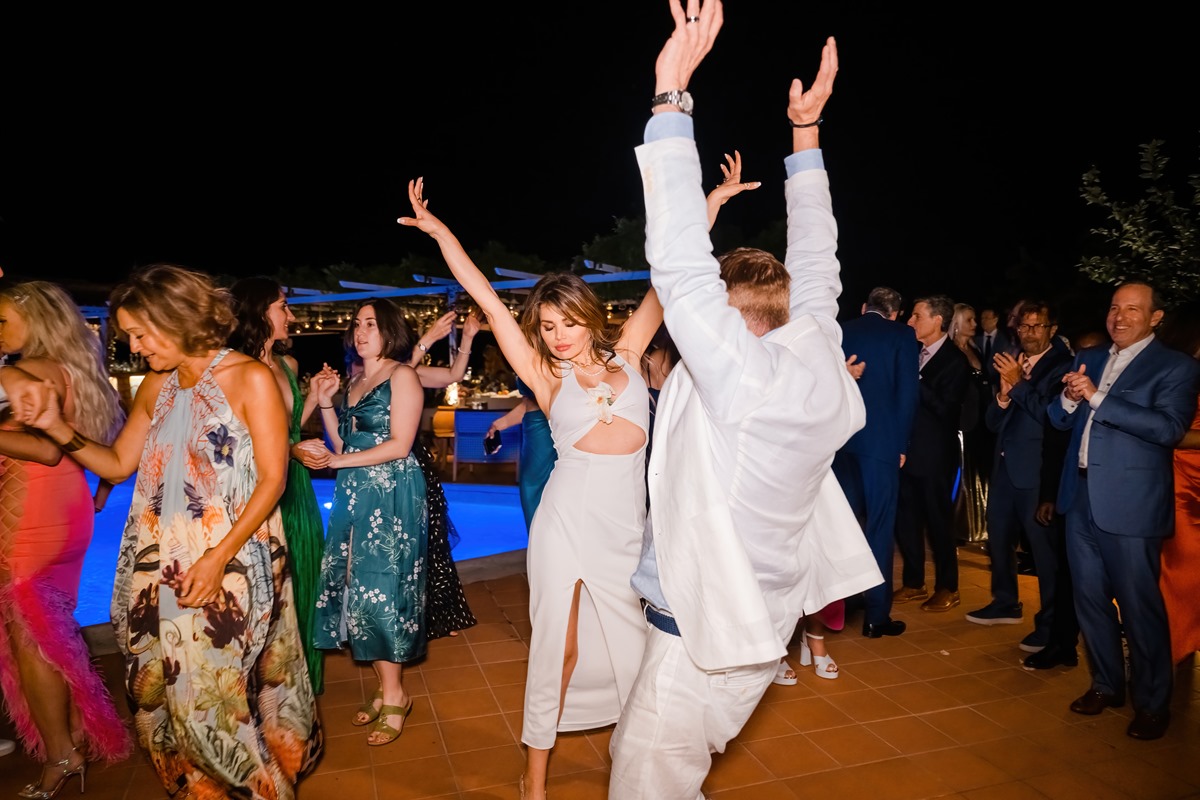
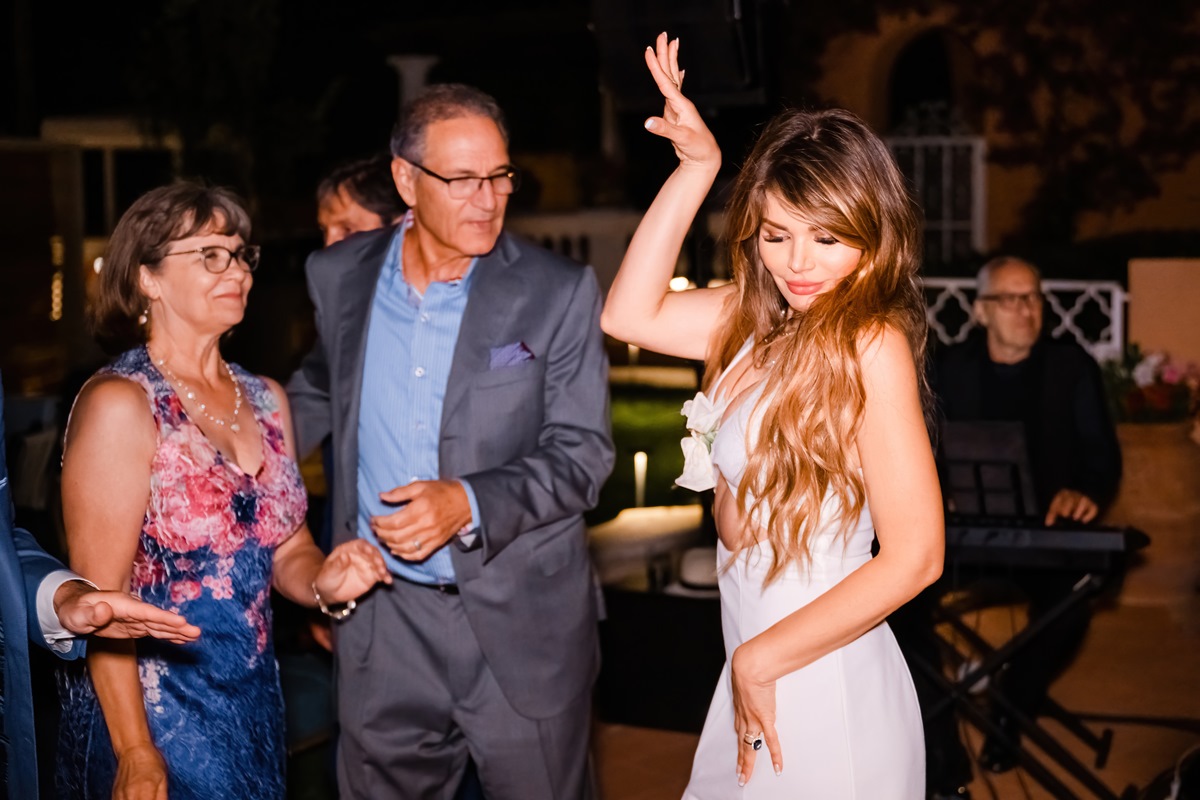
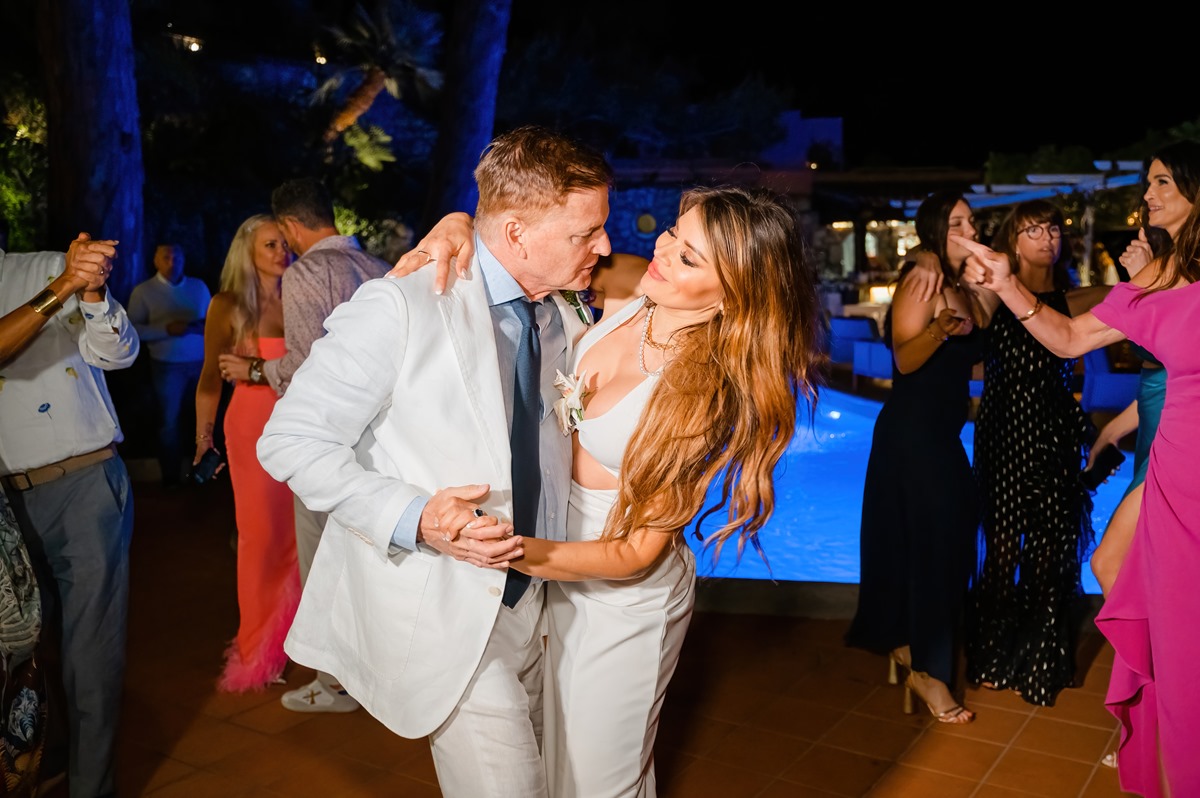
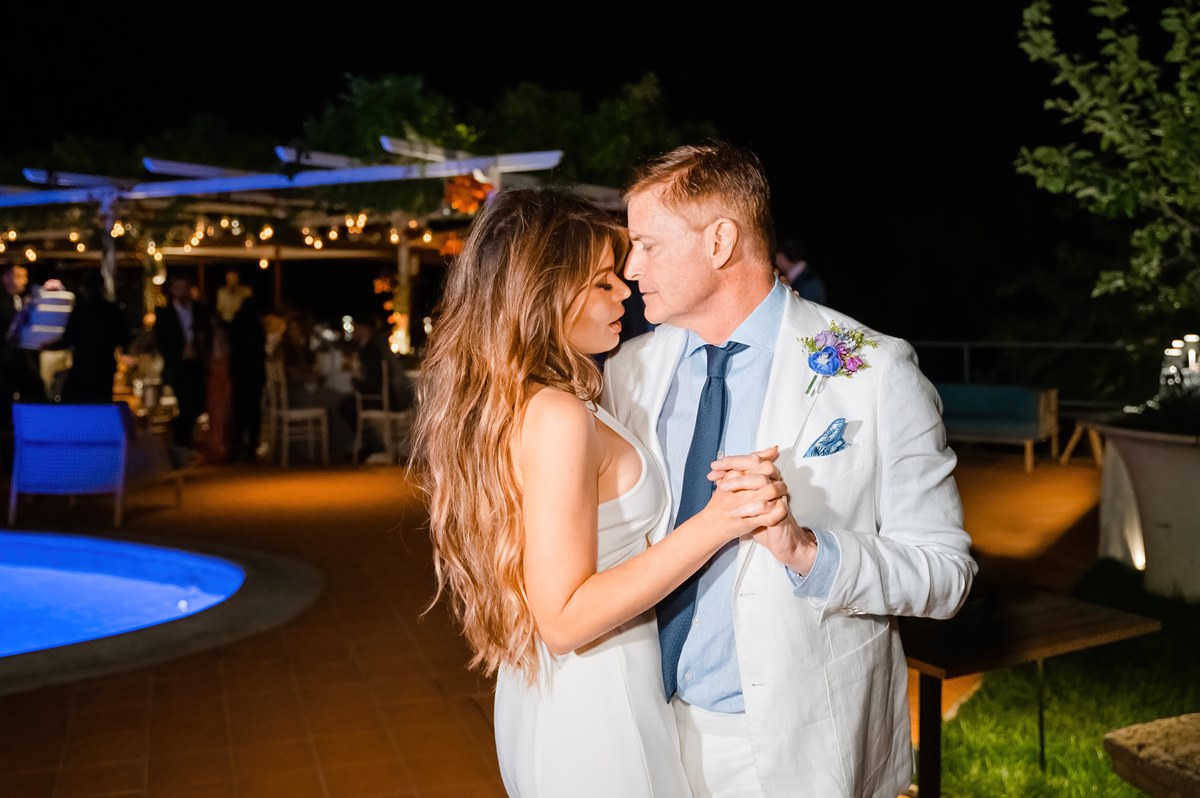
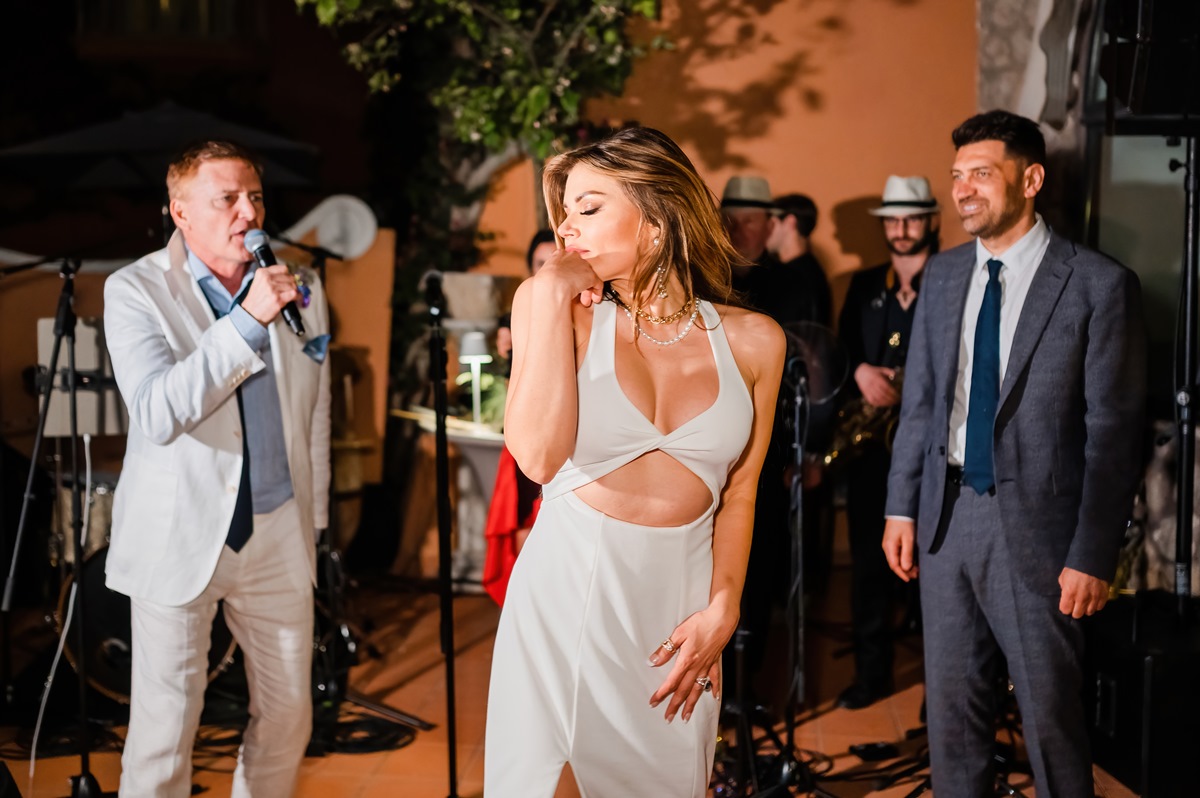
Raquel had changed into a white dress for the party, and the band was set up by the pool, with the keyboard, the drums and a singer under the pergola. On paper the dancing ran from 9:30 to 10:00 PM, a short slot for a group this happy, and they used every minute of it.












Getting Your Guests to Hotel Punta Tragara
Private cars can’t come onto Capri from Easter to early November, so your guests will reach the island by ferry or hydrofoil to Marina Grande, then take a taxi or the funicular up to the Piazzetta. From there Via Tragara is a lane for walkers, about ten to fifteen minutes on foot to the hotel. It is flat and pretty in the late afternoon, and I’d still warn anyone in heels, and ask the hotel how luggage reaches the rooms before the day. Raquel’s bridesmaids and David’s family spent the afternoon at the hotel, which took the walk out of their day altogether.

Planning a Religious Ceremony on an Island
A wedding built around specific religious requirements adds a layer of coordination that a purely symbolic ceremony doesn’t need. If you fly in your own rabbi, build the travel into the schedule the same way I’d account for any other essential vendor. I recommend arriving on Capri the day before, on an early hydrofoil, because rough seas stop the boats first and there is no other way onto the island.
Kosher catering is the other consideration that catches couples off guard on Capri. The island’s restaurant and hotel kitchens are built around Mediterranean and Neapolitan cuisine, and sourcing kosher ingredients or arranging a supervised kitchen takes real lead time, ideally worked out with the venue and a planner many months before the wedding rather than assumed to be available on request. The same applies to a chuppah: bringing your own structure, or having a florist build one from scratch, needs to be flagged to the venue well before the wedding week so the terrace can be measured and cleared for it.
Six questions
Questions Couples Ask Me About a Jewish Wedding on Capri
What couples ask me once they start planning a religious ceremony on the island.

Can a rabbi legally officiate a wedding in Italy?
A rabbi can lead the religious ceremony, but for it to be legally binding in Italy, couples still need to go through the civil process with the appropriate documentation. Most of my couples in this situation handle the legal marriage separately, often at home before traveling, and use the religious ceremony on Capri as the event that reflects their faith and their families.
Can a Jewish wedding take place on a Saturday?
Traditionally a Jewish wedding isn’t held during Shabbat, from Friday at sunset to Saturday at nightfall, which is why so many couples pick a Sunday, as Raquel and David did. Ask your rabbi first, and if the date has to be a Saturday, plan the ceremony after nightfall.
When do we sign the ketubah, and do you photograph it?
Usually just before the ceremony, with the rabbi, your two witnesses and your closest family, in a quiet room or a corner of the terrace. Yes, I photograph it, and I’d give it its own line in the timetable before the guests are seated, so it doesn’t eat into your portraits after the ceremony.
Does a Jewish wedding have to take place in a synagogue?
No. What the ceremony needs is a chuppah, and a chuppah can stand anywhere, even on a hotel terrace above the sea like this one. Whether your rabbi will officiate outdoors or at a hotel is their decision, so I’d ask that before you book the venue.
Does Hotel Punta Tragara publish a wedding price?
I haven’t seen a public price list, so ask the hotel for a quote on your date and your guest count. Plan on the flowers, the rentals and the music being separate from the menu, and photography on Capri starts at 3,200 euros with two photographers.
Can your planners organize a Jewish wedding on Capri?
Yes. My in-house planners coordinate the venue, the florist who builds the chuppah and the catering, while the rabbi is your choice and travels in on your plan.

If you’re planning a religious ceremony on Capri and want a venue with a direct view of the Faraglioni, get in touch with my planning contacts early, since terraces with this sightline are limited on the island and an outside officiant’s travel takes real coordination. My Capri wedding photographer page has the current packages.
MORE CAPRI WEDDING STORIES

Elopement in Capri
Cydney and Charles
Maya and Anthony: A Capri Wedding Proposal at JK Place

Wedding in Procida – Valentina e Giuseppe
Villa Lysis Elopement Capri – Nicole and Raphael
EMILIANO RUSSO
 Written By Emiliano Russo