

A Ravello Garden Wedding, Venue by Venue
For a Ravello garden wedding, light works venue by venue and season by season: a photographer’s guide to Villa Cimbrone, Villa Eva, Palazzo Confalone, Hotel Caruso, and the free public gardens nobody uses.


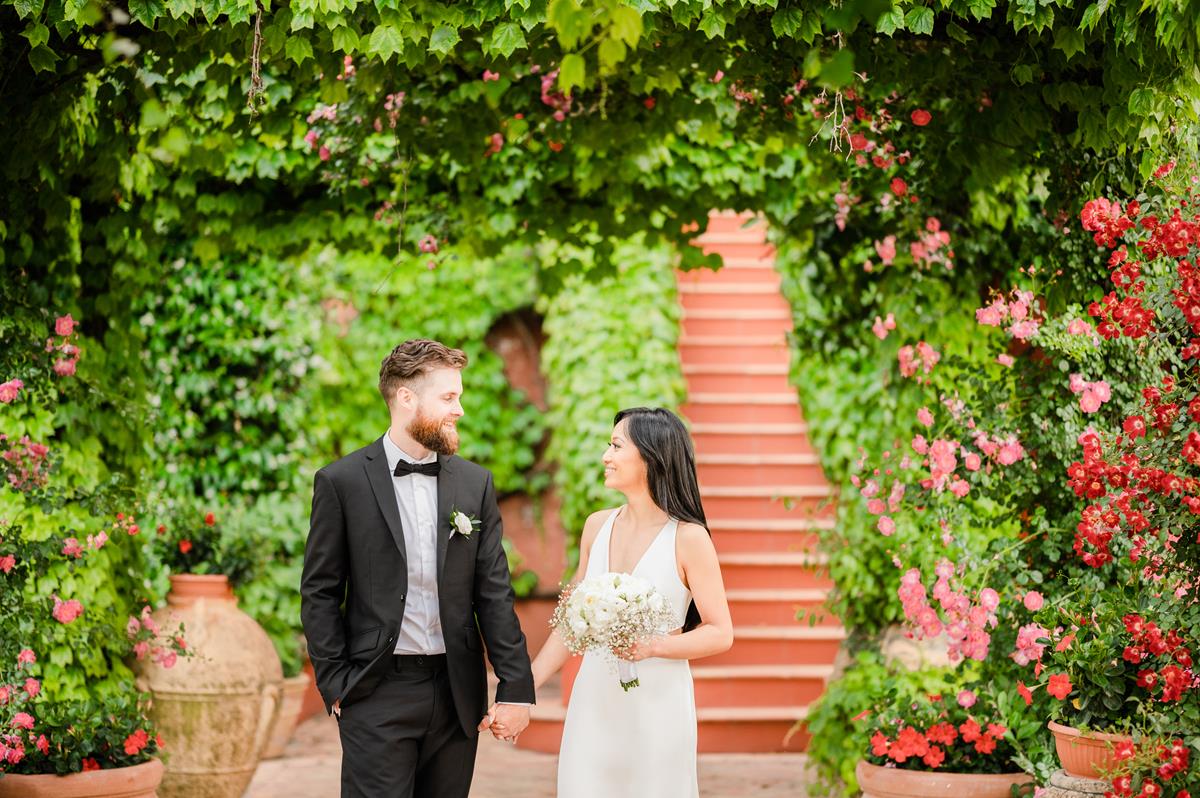
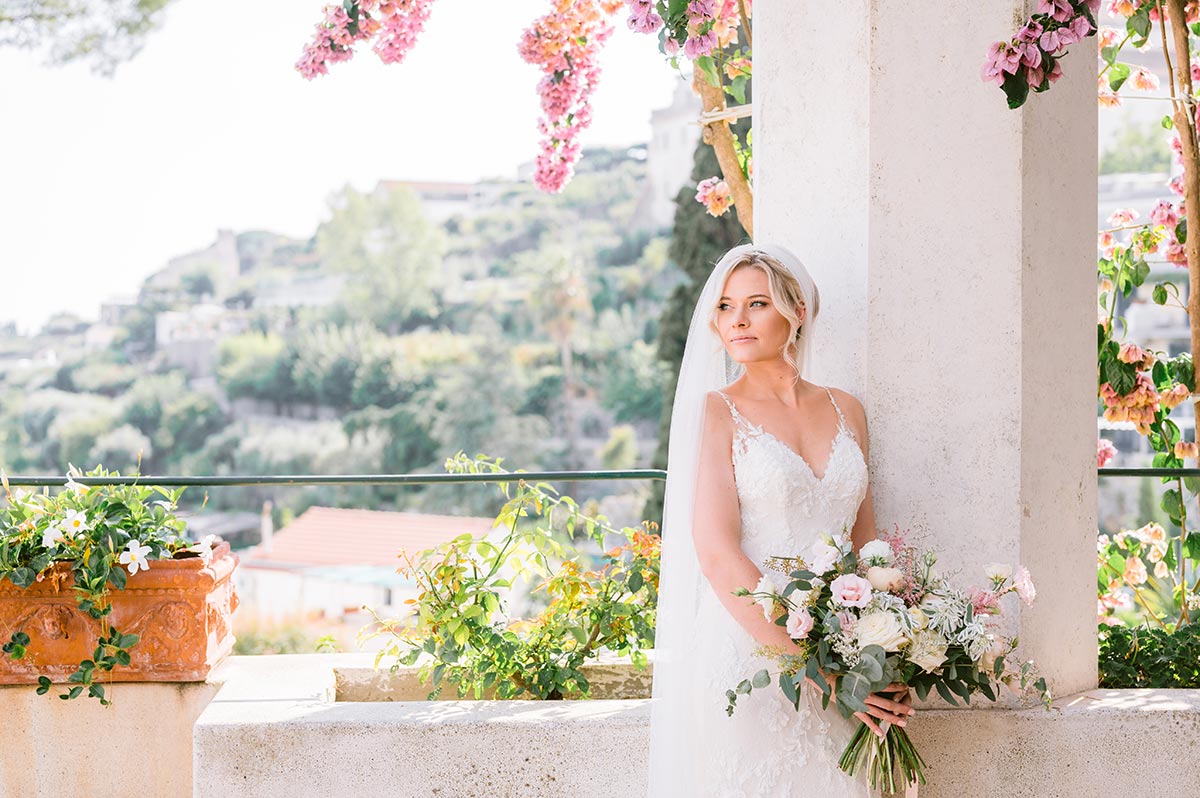
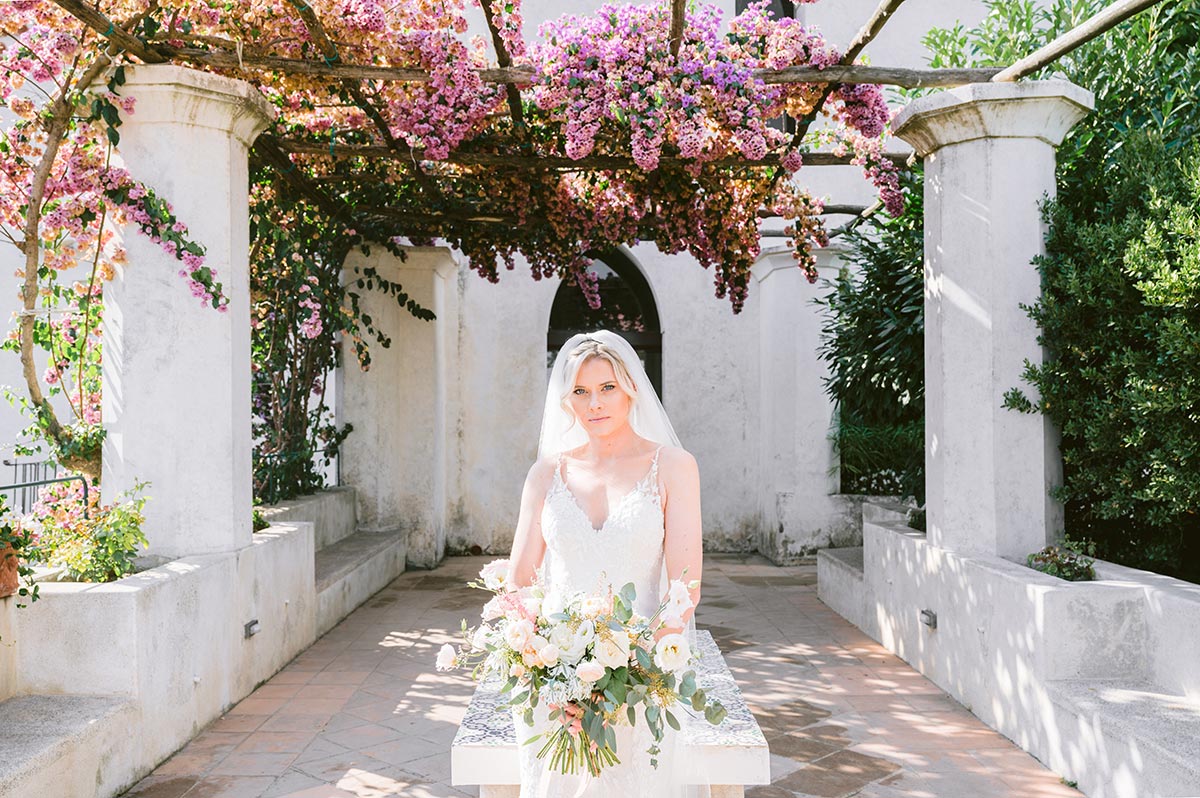
The bougainvillea at Villa Eva peaks in June and stays through most of July. Deep pink, close to purple in the late afternoon, and heavy enough that the branches bend over the stone wall on the east side of the property. I noticed it during a summer wedding about three years ago, when the groom’s mother stood under it to get shade and ended up in one of the best frames of the entire day, without anyone staging it.
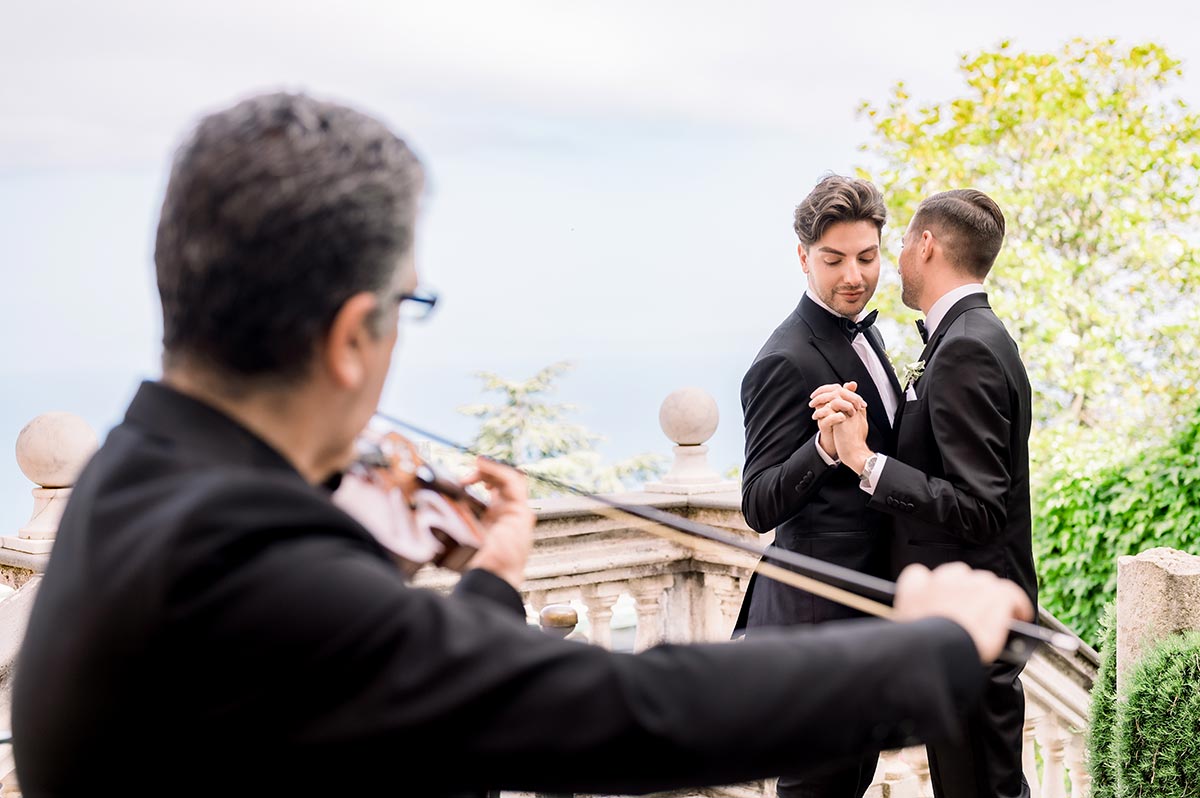
That is the thing about a Ravello garden wedding: the gardens have their own logic. What blooms when, how the light moves through each space, which direction each terrace faces: none of this appears in the venue brochures, and most of it matters if you want photographs that look like this place rather than a generic Italian backdrop. I have shot weddings in these gardens in every month of the year. What follows is what I have learned.

Why Garden Light Works Differently at 365 Meters
Most photography advice about the Amalfi Coast treats the coast as a single lighting environment. It is not. Ravello sits at 365 meters, and the air here holds less moisture than at sea level in Positano or Amalfi town. Less moisture means less diffusion: colors read truer, shadows are sharper at midday, and the rare mountain mist that drifts through in May and October creates something unusual: a thin luminous layer, much lighter than the haze on the coast, that flatters every surface it lands on. I have waited for that mist in spring and it always delivers something I could not have planned for.

The other thing altitude does is create an early sunset that no phone app accounts for. Ravello sits against the Lattari peaks to the west. The sun drops behind those mountains anywhere from twenty to forty-five minutes before the official sunset time shown online, depending on the time of year and where on the ridge you are standing. A couple who plans their garden ceremony at 6:30 PM in October based on a quick search might find themselves in flat shadow by 5:45. I plan sessions backward from the actual moment direct sun leaves each specific garden, not from a general calculation. The difference matters.
Villa Cimbrone: Three Separate Gardens, Three Different Lights
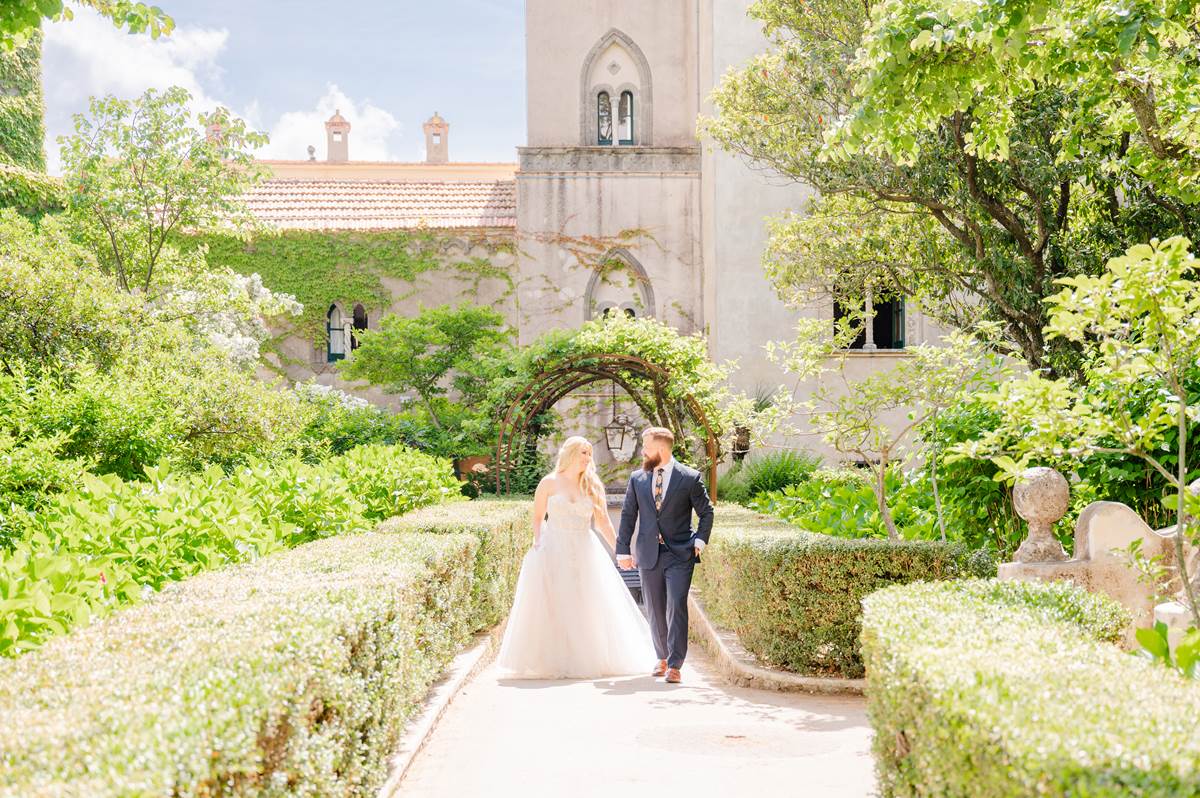
The Villa Cimbrone venue page covers costs, capacities, and the booking process. Here I want to talk about something else: where the light falls on the property, because the three main garden areas at Cimbrone photograph very differently.
The Terrace of Infinity
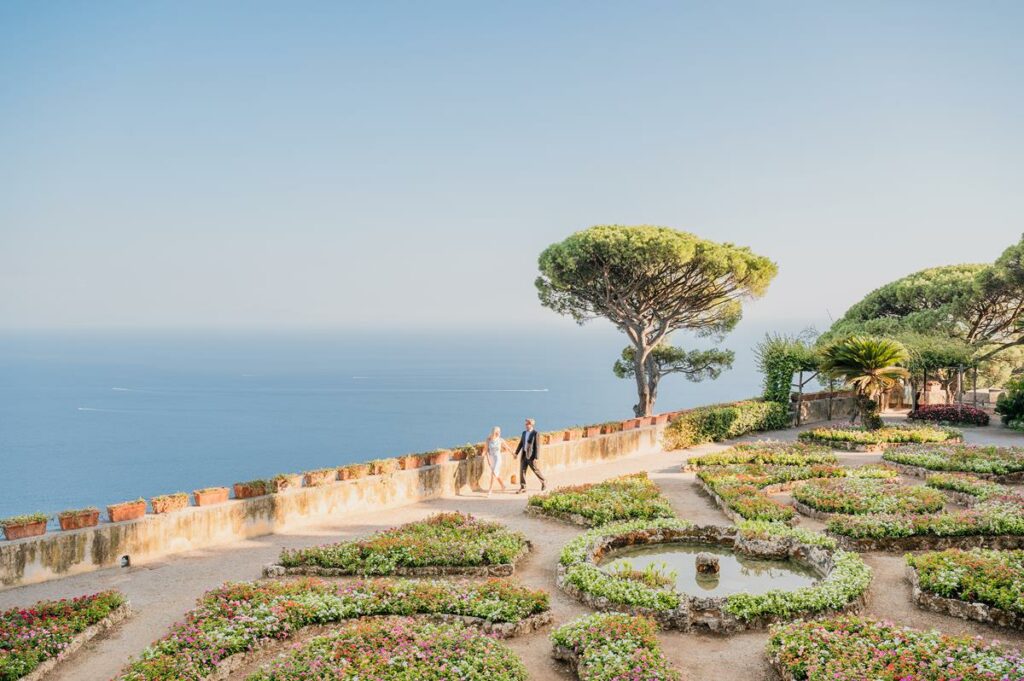
The terrace faces west. Morning shade, afternoon gold. The usable golden-hour window in summer starts around 5 PM and ends when the ridge cuts the light off, usually between 6:00 and 6:30 PM depending on the month. In December that same window starts at 2:30 PM and is gone by 3:45.
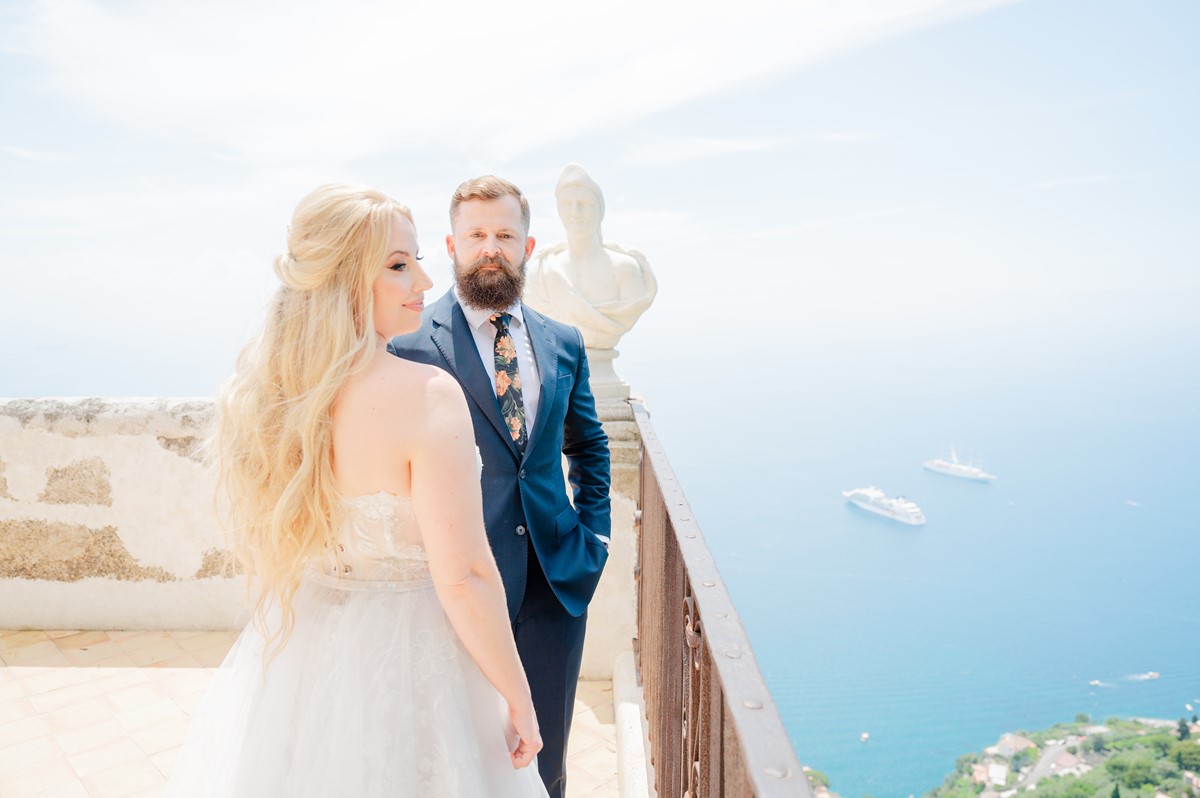
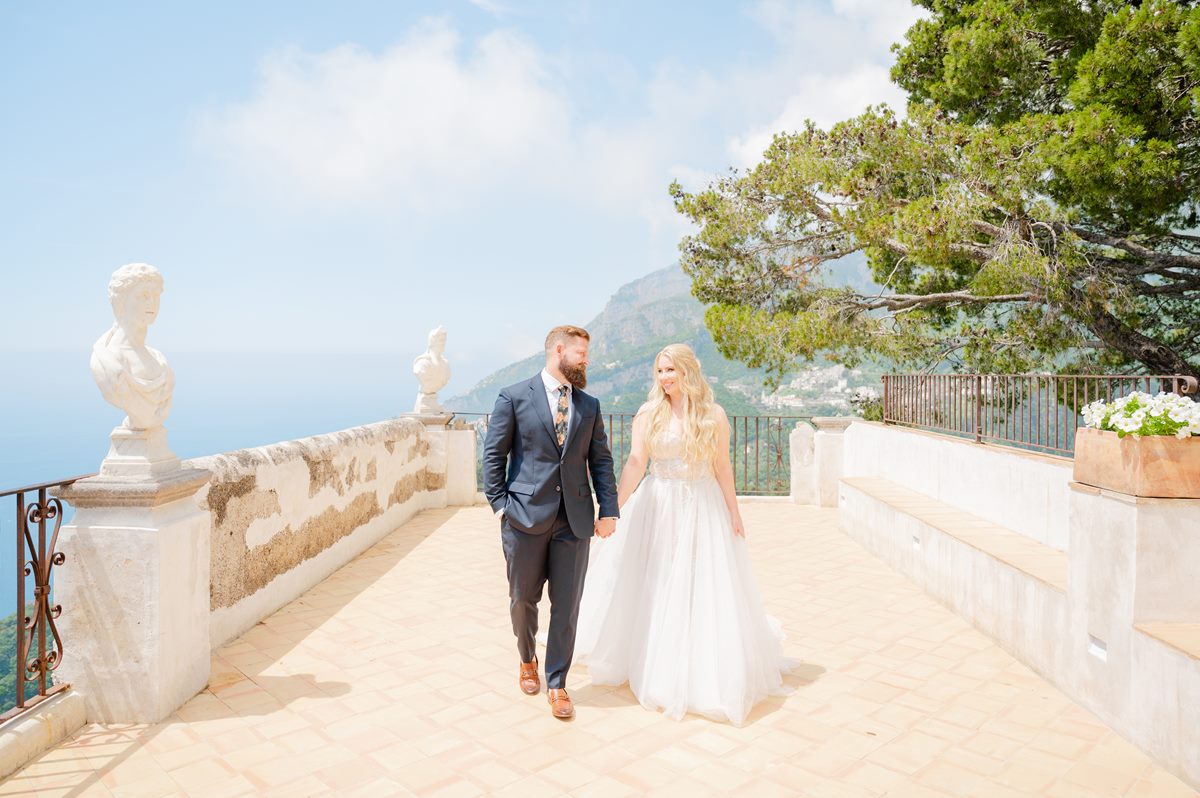
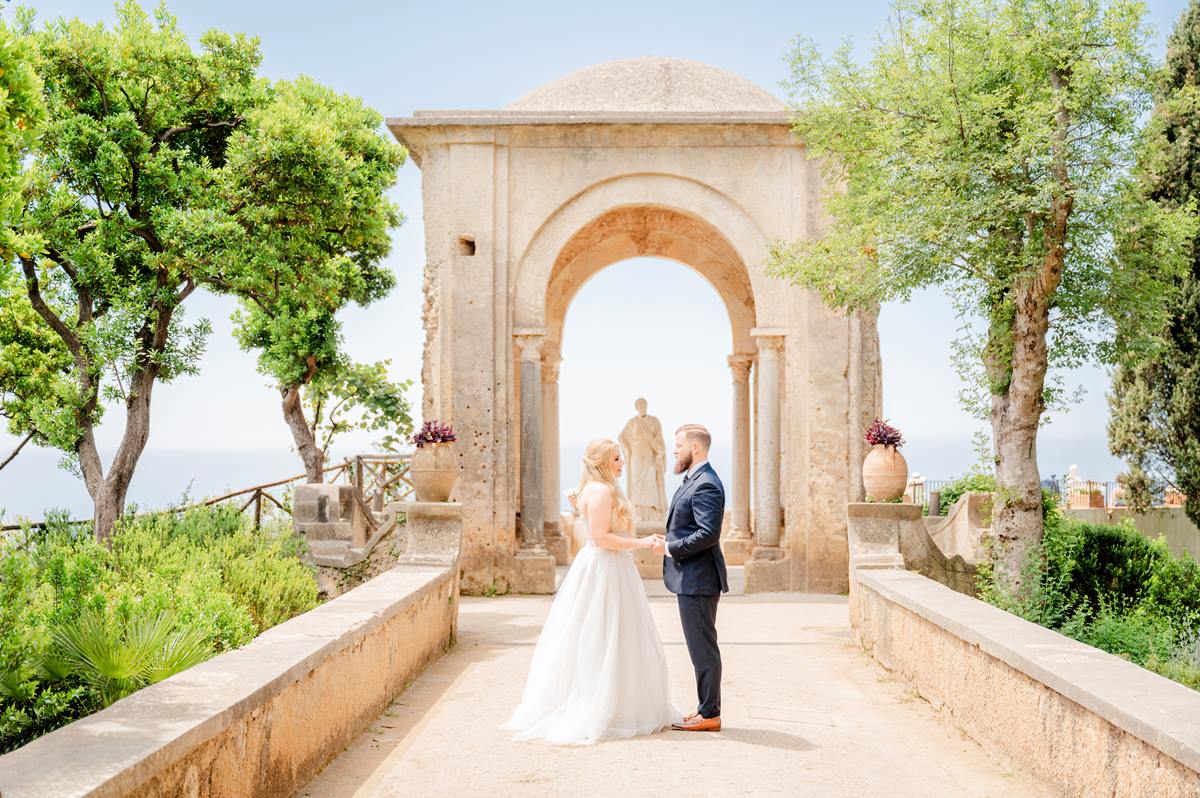
Between 10 AM and mid-afternoon, the terrace is bathed in direct overhead sun that creates harsh shadows under every brow and chin. I avoid pointing the camera west during those hours unless I am deliberately shooting into the light for a silhouette against the sea. For portrait work during midday, I position couples at the eastern end of the terrace where the stone wall catches light at a raking angle that wraps rather than flattens. The marble busts along the sides pick up the same cast. It works consistently.
The crowd pattern on the terrace runs in waves, roughly every forty minutes, clusters of eight to fifteen visitors who arrive, photograph, and move on. I have tracked this rhythm long enough to tell a couple when the next clear window opens, almost to the minute. The early morning opening at 9 AM is the most reliable. The last hour before closing is the second-best option and has better light.
The Rose Garden
This section of the property gets almost no attention in wedding guides, which is strange because it is where I spend most of my time between May and June. The rose garden sits west of the main building, partially enclosed by stone walls and low hedges. When the roses are full, late April through most of June depending on the year, the color and scent shift the photographs entirely. The mood becomes something softer and more private, less dramatic terrace, more intimate enclosure. If you want that register, aim for May or early June.
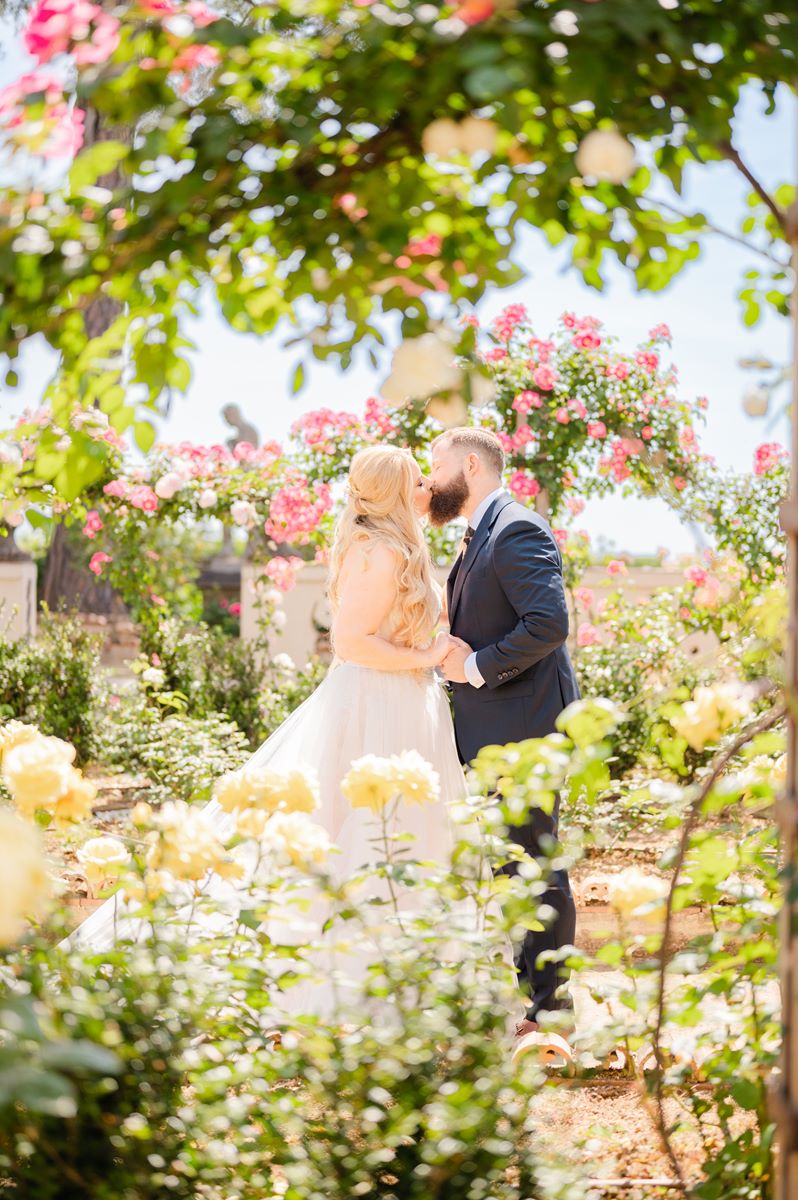
By July the roses are mostly spent. The garden reverts to foliage and stone. Still good, but different. If the rose garden is the specific reason you want Cimbrone, the date matters.
THE RIDGE DECIDES
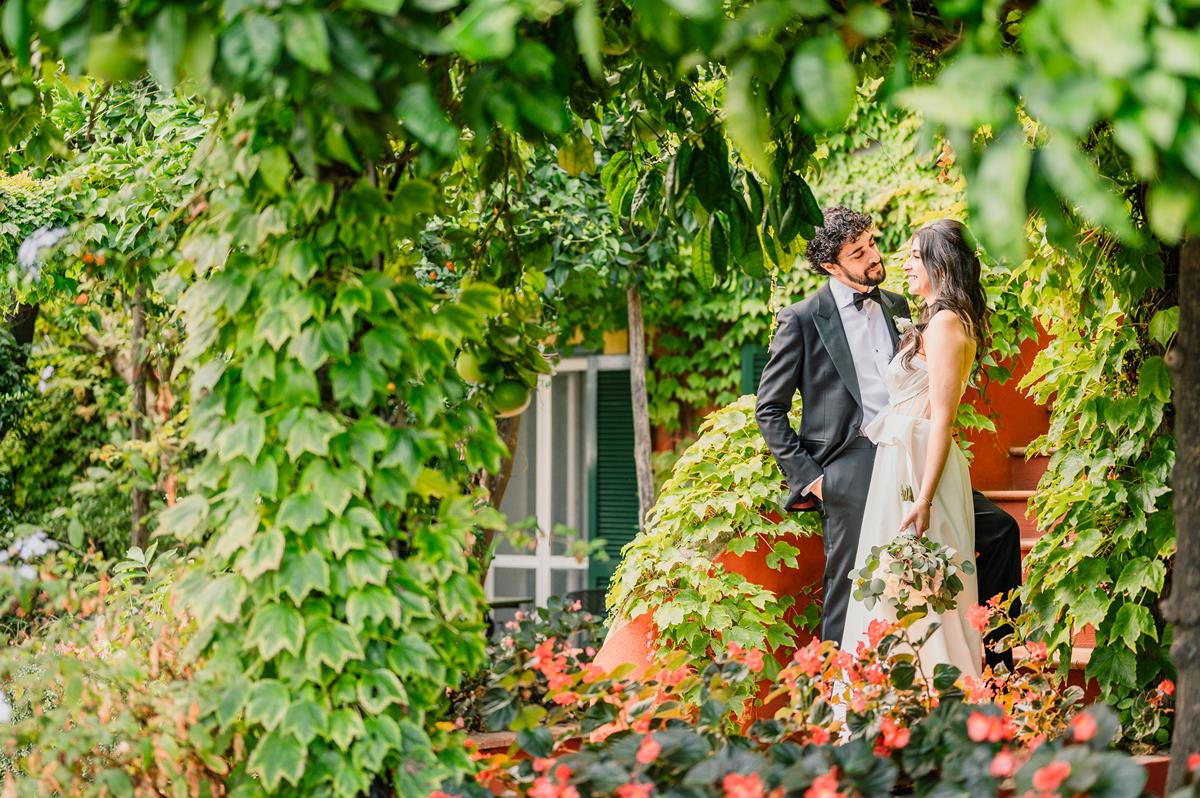
Ravello’s sun leaves the gardens early: the Lattari peaks cut it long before the official sunset.


LIGHT BEFORE FLOWERS
Before choosing a garden, ask where the light falls at the hour of your ceremony.
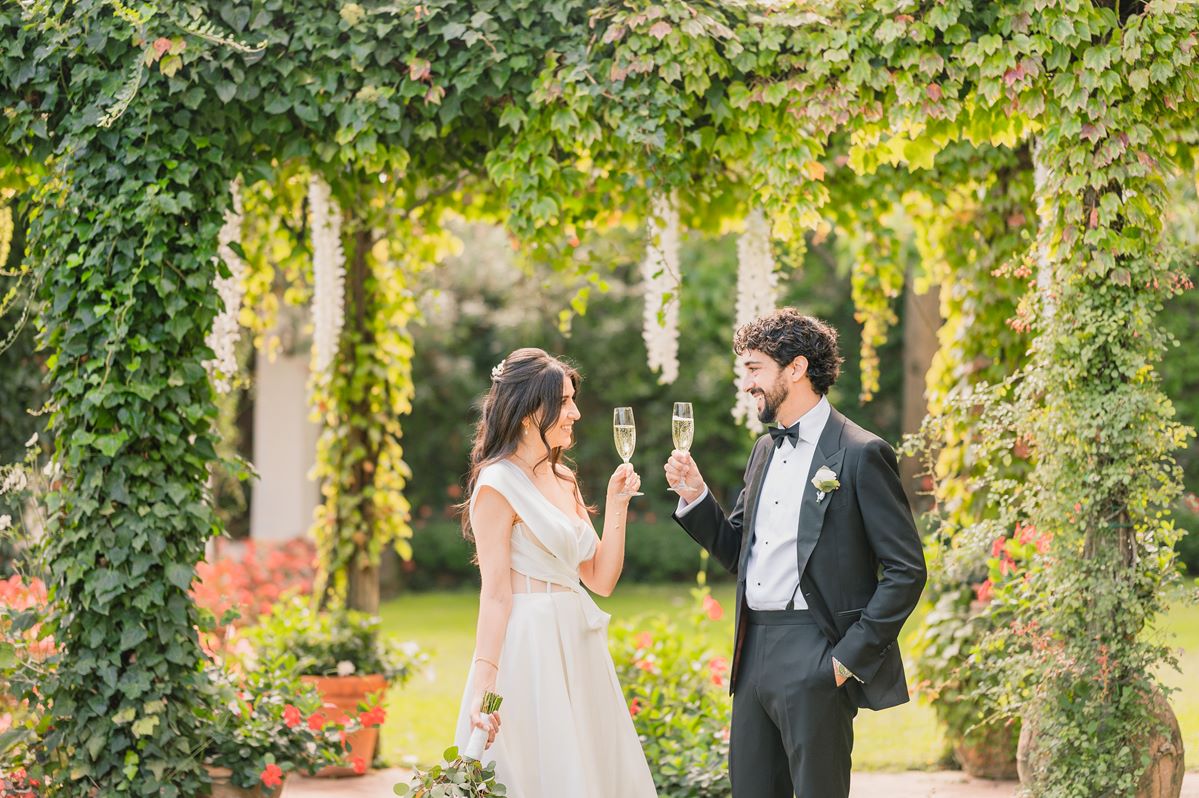
SPRING WISTERIA
In April, the wisteria over the Confalone courtyard is the image I use to explain spring in Ravello.
The Crypt and the Cloister
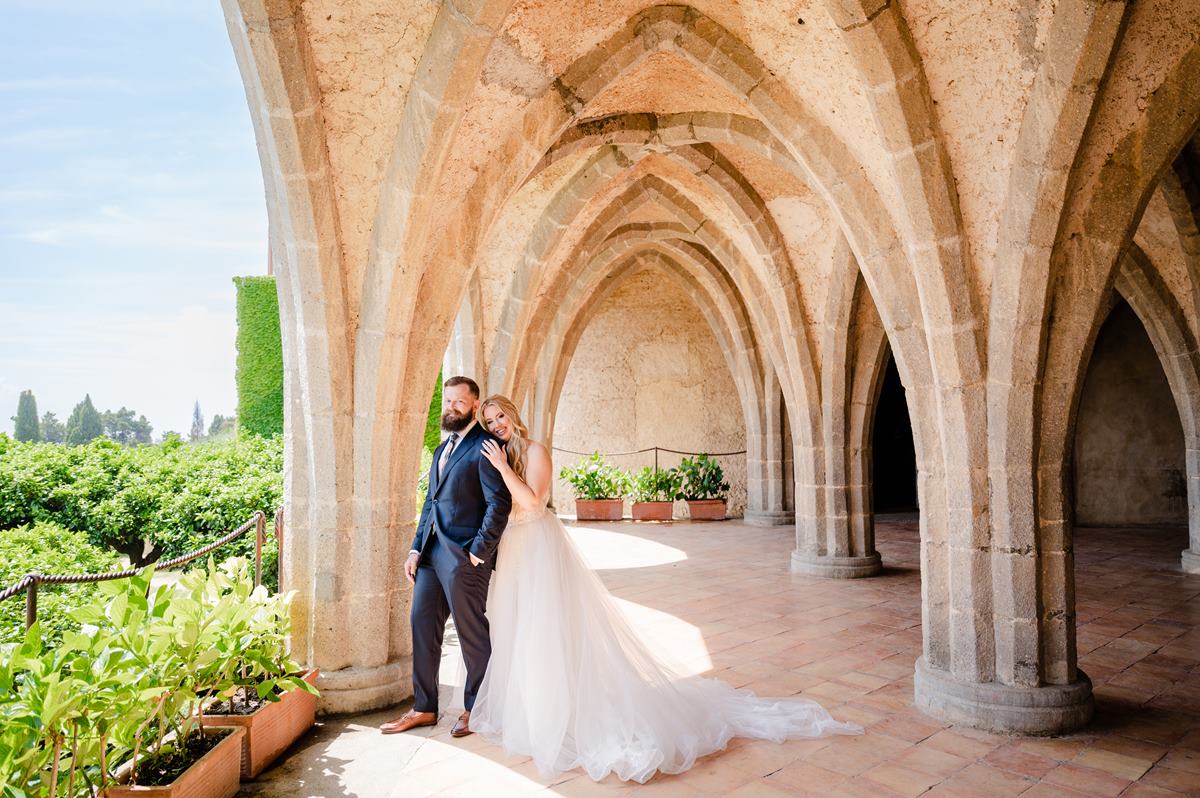
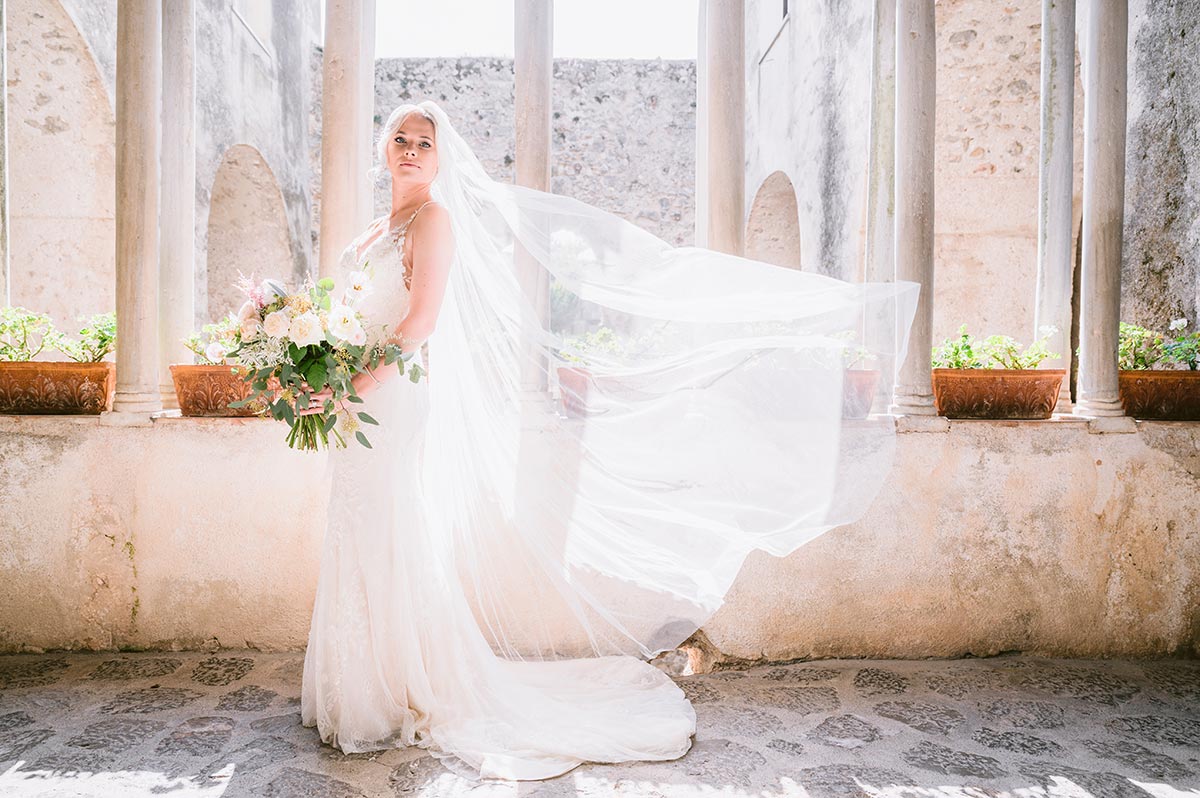
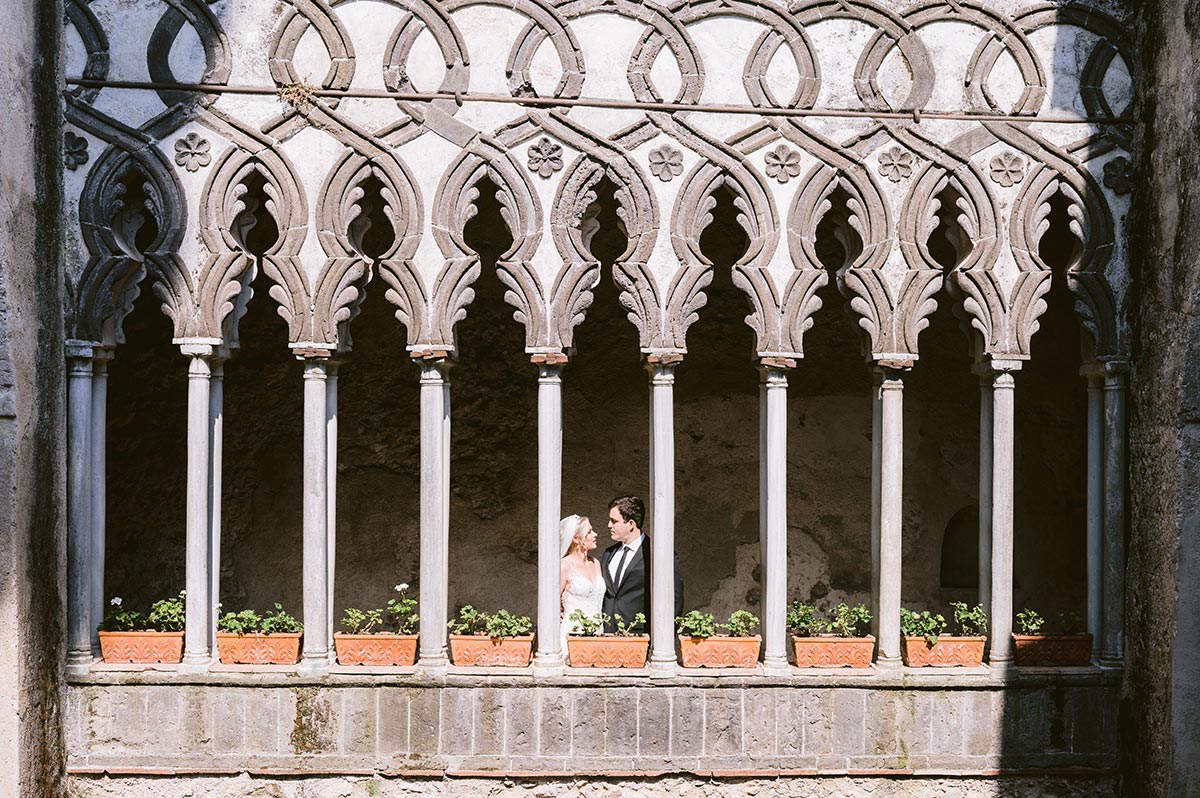
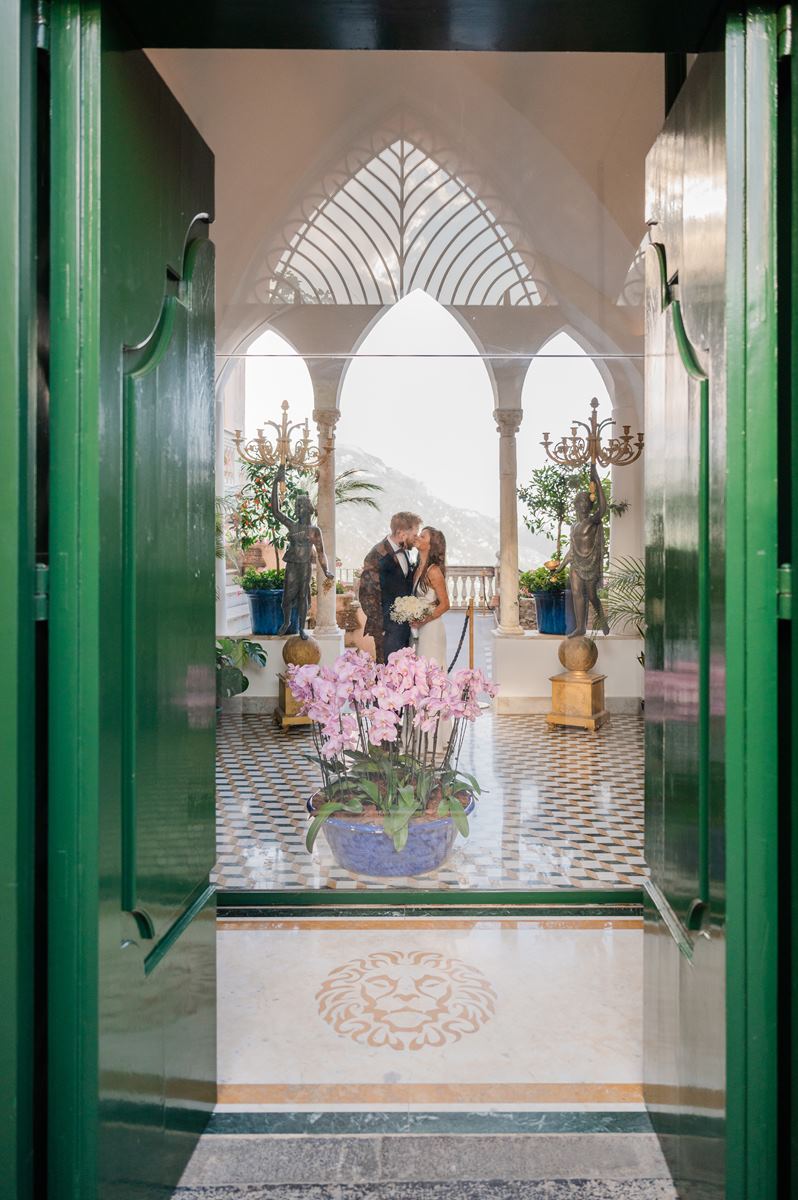
One level below the main terrace: stone vaults, slender columns, arched openings that frame the coastline in controlled rectangles rather than the open panorama above. I use the crypt most often at midday, when direct sun makes anywhere exposed on the property difficult. The crypt stays in partial shade throughout the afternoon and gives me a soft, directional light through the arches that I cannot find anywhere else on the coast at 1 PM. If guests are at lunch and I have forty minutes with the couple for portraits, this is where I go without discussion.
Villa Eva: When the Canopy Does the Work
Villa Eva’s garden surprises photographers the first time they work there. The Villa Eva page covers the practical side. Here is the photographic reality.
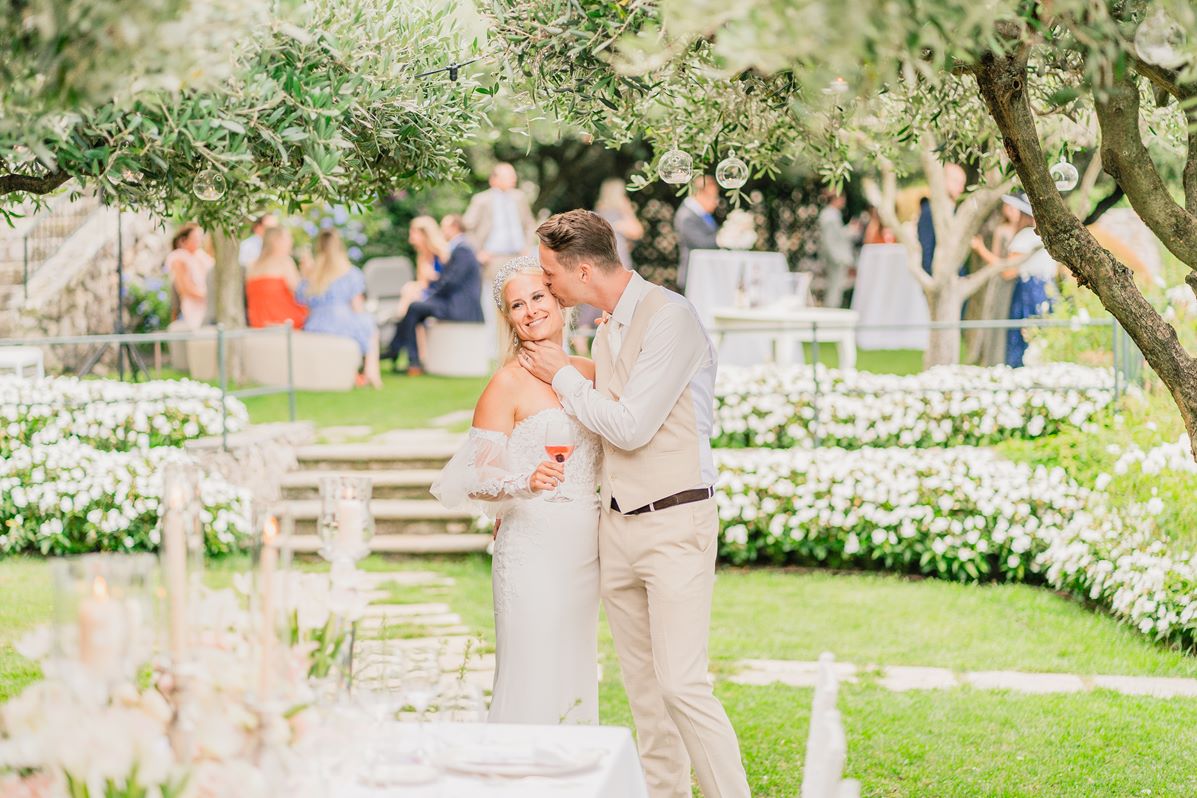
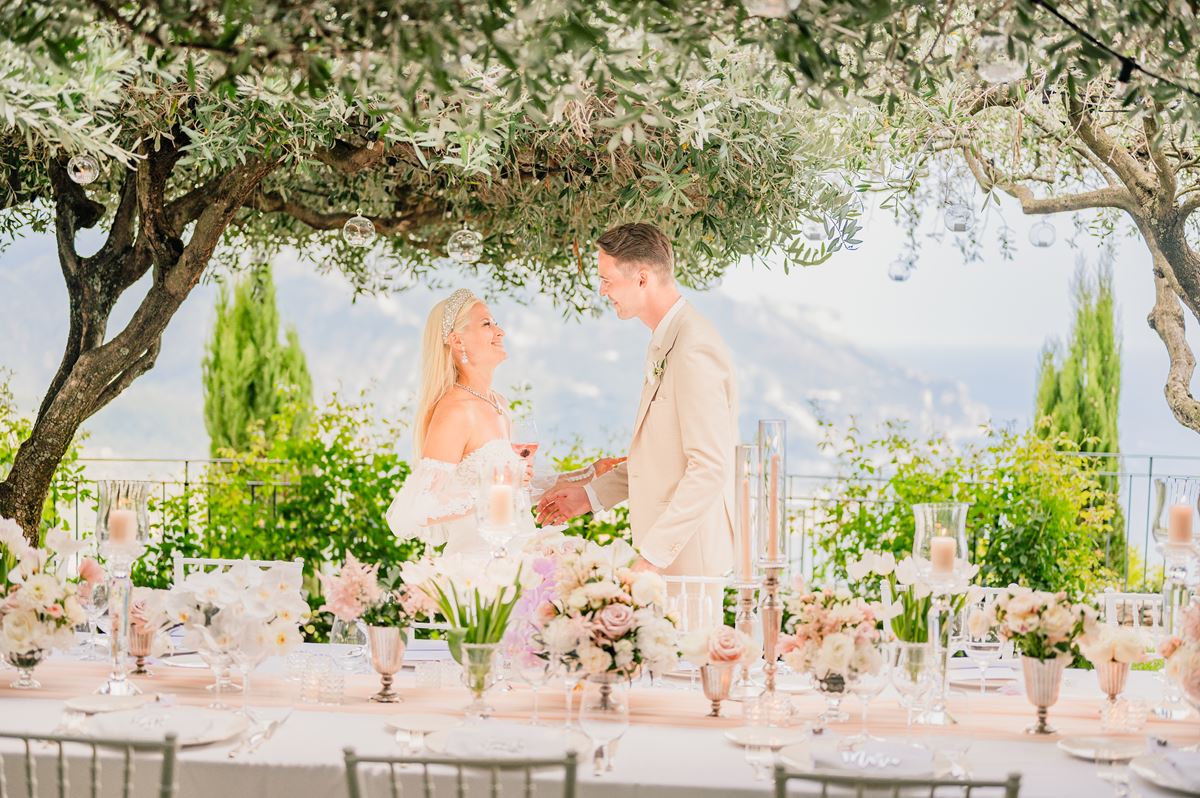
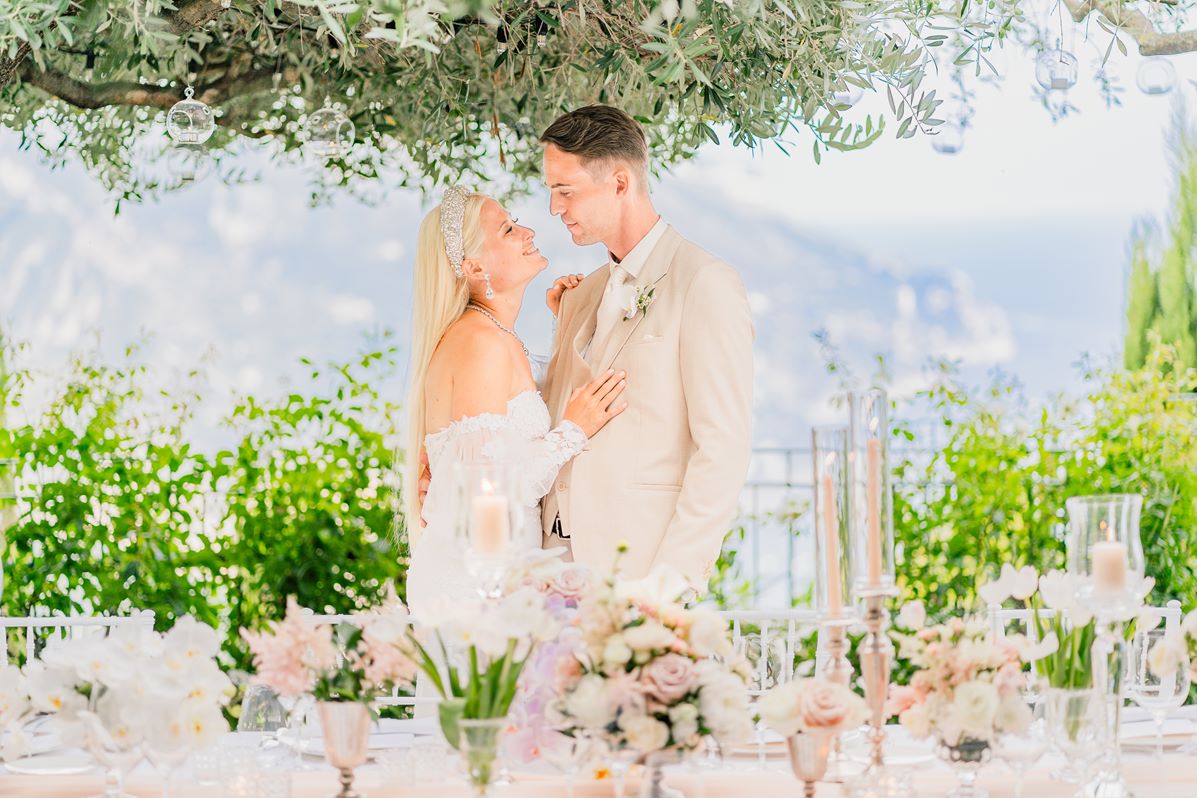
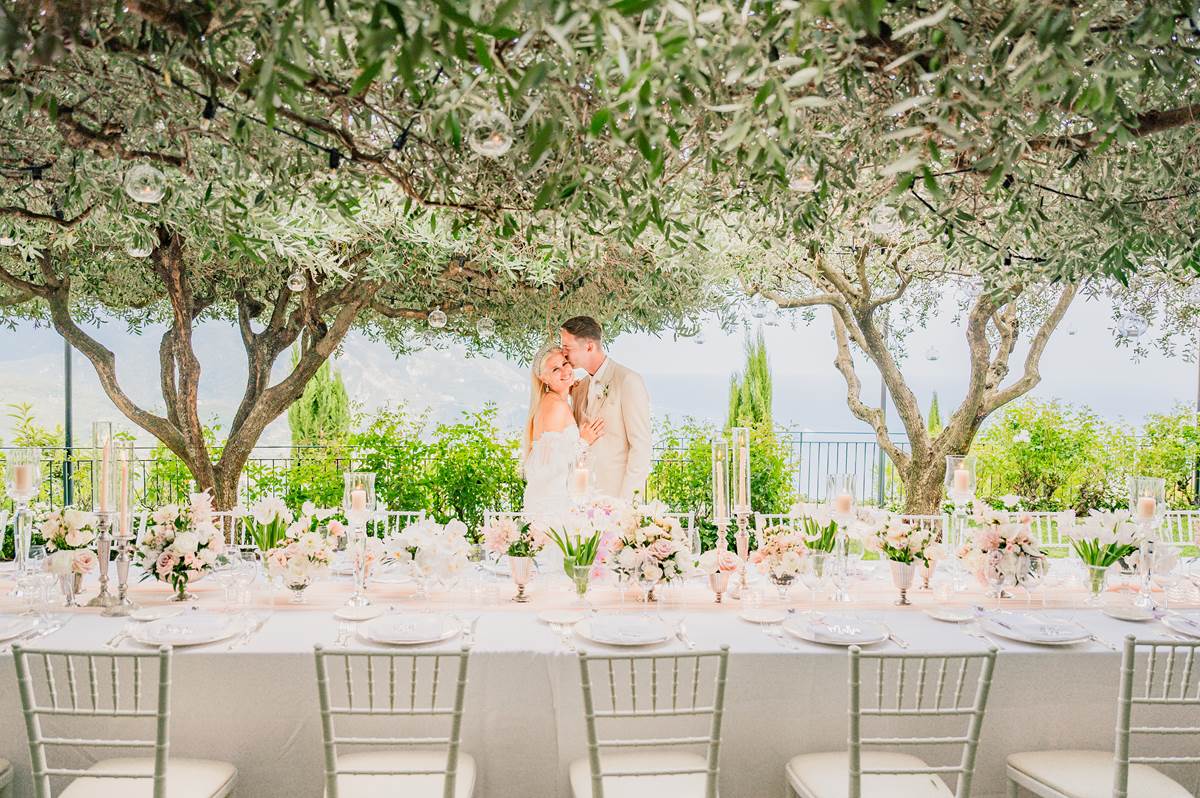
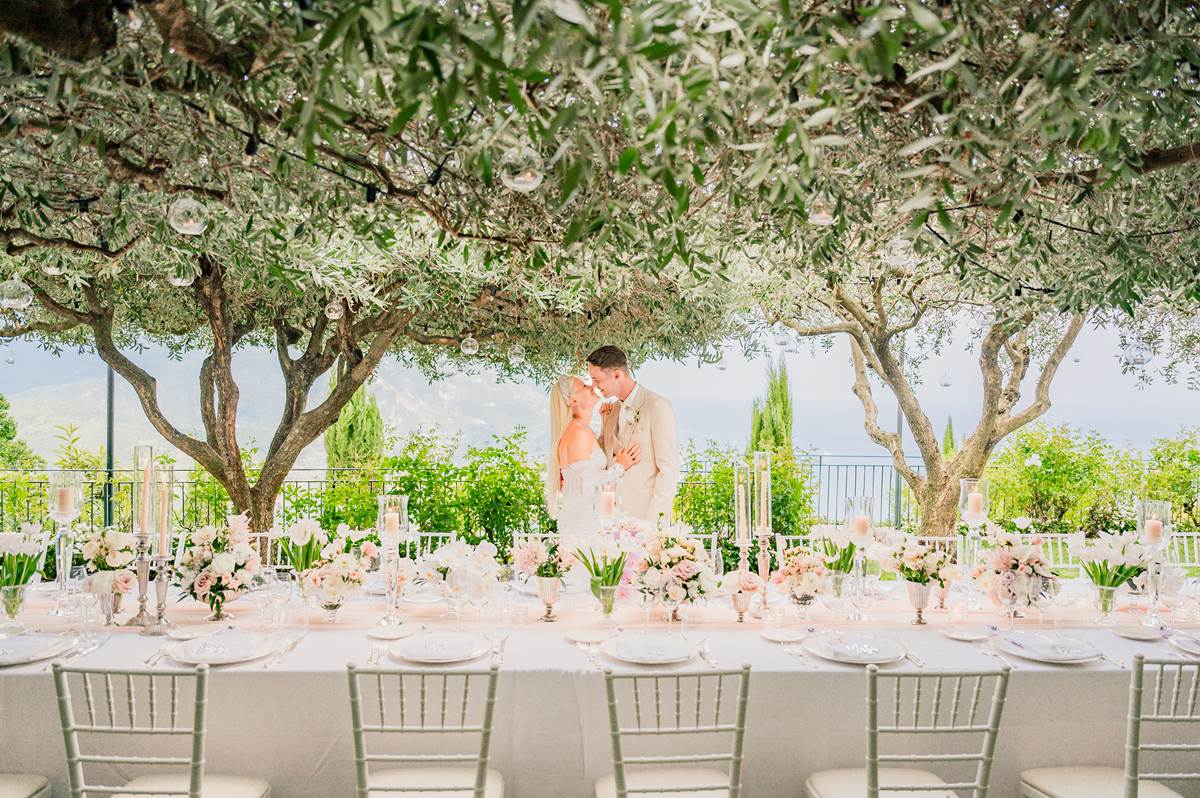
The property sits at the highest point of Ravello, and large sections of the lower garden sit under a full canopy of old olive trees and chestnuts. That canopy is the point. Under olive trees at noon in August, you get filtered, dappled light that makes skin look good without fill flash or reflectors. The silver-green leaves break the sun into fragments that land at unpredictable angles, the kind of light that takes real effort to replicate in a studio and happens here, passively, all day long.

The rooftop terrace is different. Completely exposed, with a 360-degree view of the Lattari range, the valley, and a strip of coastline. It holds direct light longer than any other point in Ravello because of how the ridge curves away behind it. I use the rooftop specifically for the last thirty to forty minutes before the ridge shadow arrives: the light comes in low and warm, the direction shifts to almost horizontal, and the terrace does what open terraces do best.
In June, bougainvillea covers the east wall of the property. In August, the fig trees in the lower orchard are heavy. September brings late pomegranate. The garden produces something different every month, and none of it requires staging.
Palazzo Confalone: Stone Walls and Enclosure
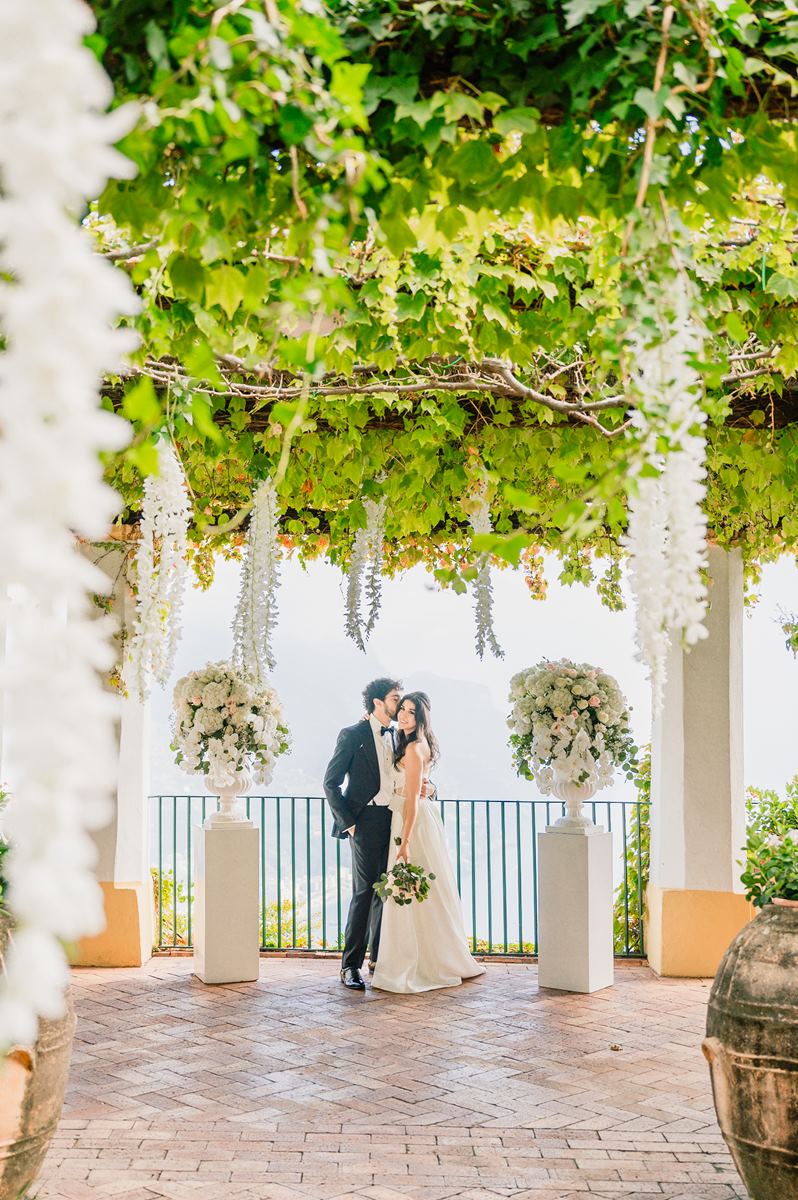
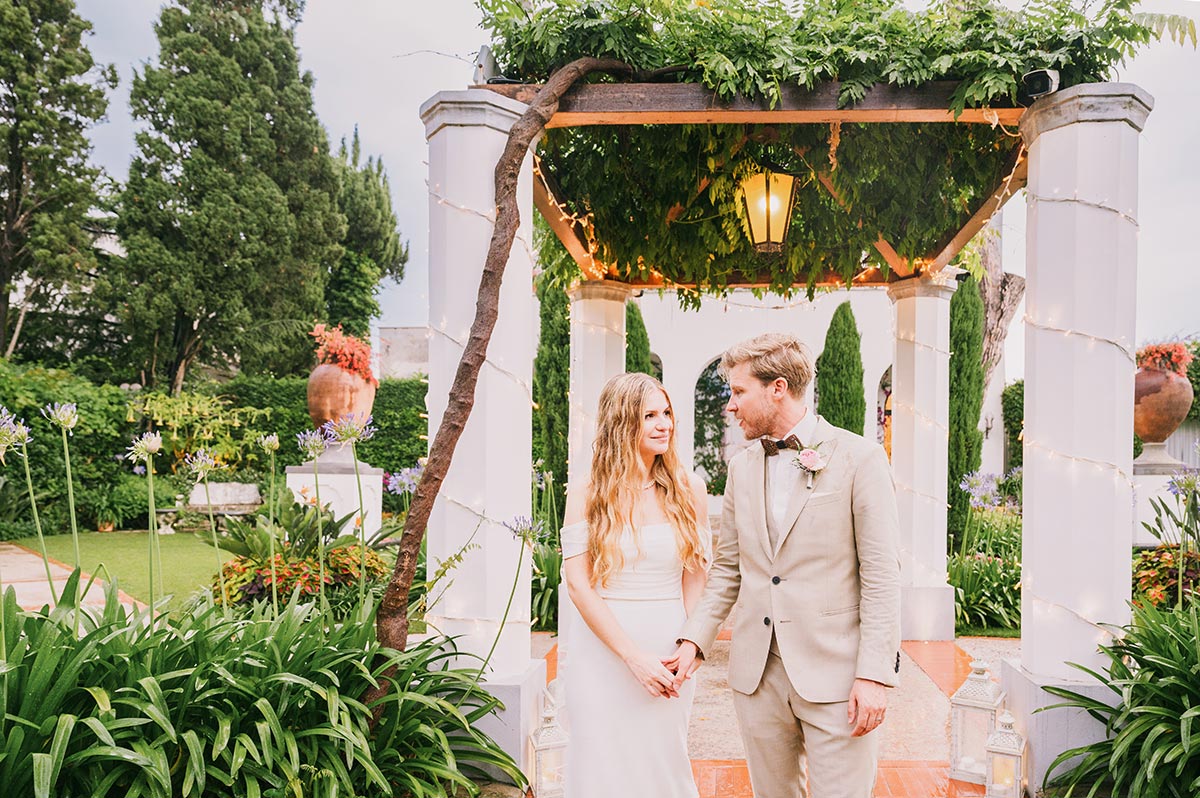
The medieval courtyard at Palazzo Confalone is an enclosed space. Stone walls on three sides, a wisteria pergola covering the main entrance path. That enclosure does something the open terraces at Cimbrone and Eva cannot: it blocks direct sun almost entirely from mid-morning through mid-afternoon, turning the courtyard into a naturally shaded environment at the hours when every other garden in Ravello is at its harshest.
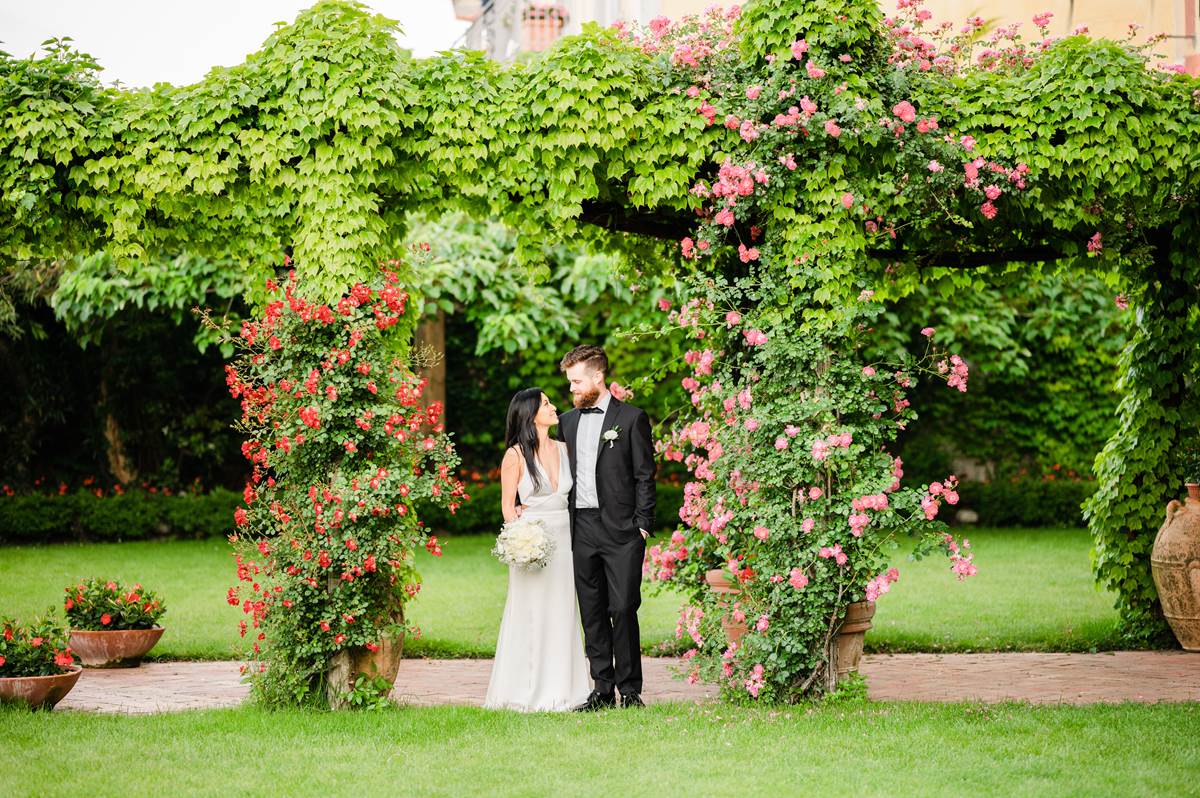
The wisteria blooms in April and into May. One cascade of it above the stone path, in soft overcast light from a spring sky, is the reference image I use when I want to explain to a couple why I think spring in Ravello is the best season. It is specific in a way that a general “beautiful Italian garden” is not. You cannot replicate it by moving the session to a different date.
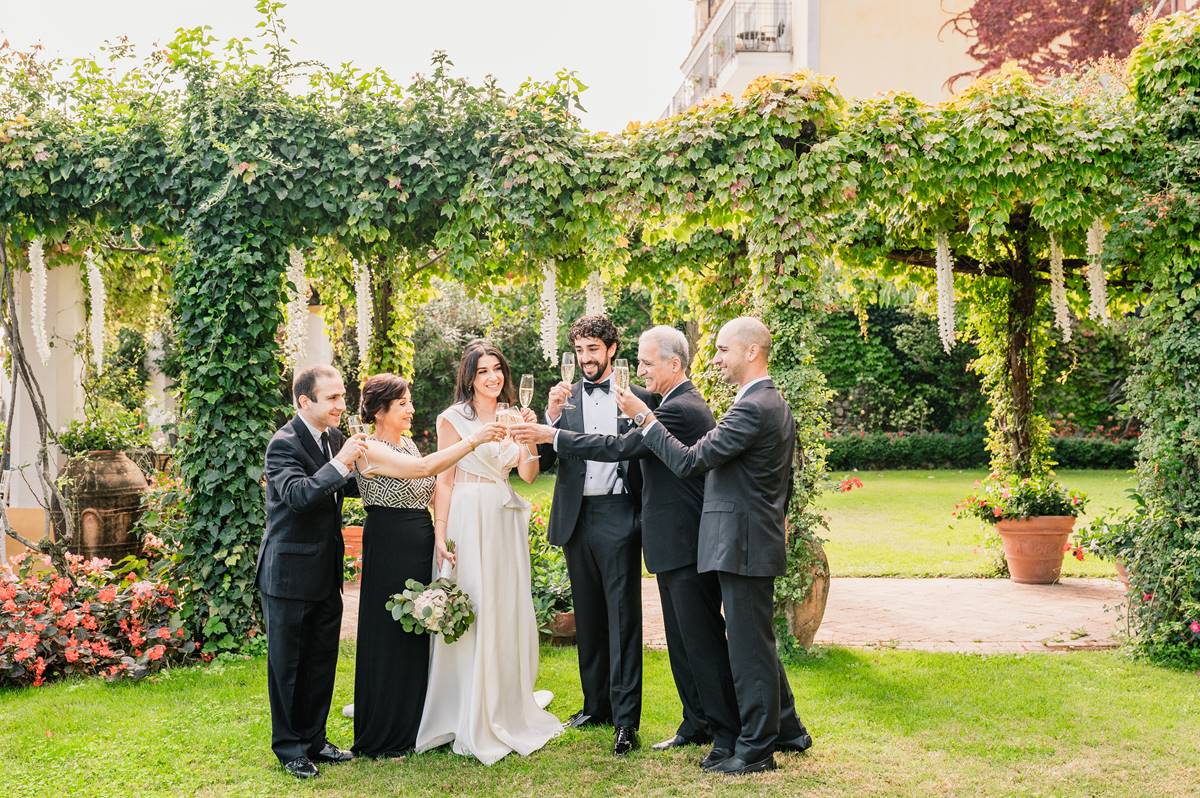
Beyond the courtyard, the garden narrows to a stone pergola along the south edge. I use it for portraits in summer because the structure creates shade when I need it and frames the view when I do not. The scale of Confalone is smaller than Cimbrone or Eva, but it is entirely private, and privacy changes how couples behave in front of a camera.

Check our packages
Capture the Magic of Your Special Day with Emiliano Russo
Hotel Caruso: The Wagner Gardens
The Belmond Hotel Caruso has terraced gardens that drop away from the main building in levels, each with a different orientation and therefore different light at different hours. The Wagner Gardens on the middle terrace take their name from Richard Wagner, who came to Ravello in 1880. The garden he took as his model for Klingsor’s in Parsifal is the one at Villa Rufolo, a few minutes’ walk away. The current iteration is the hydrangea garden, blue and white and lavender from June through August, depending on which bed you are standing near.
For couples with a cooler-toned palette, this is the garden. A late July wedding here a few years ago: the light at 6 PM came through the hydrangea beds at a long horizontal angle, and the flowers, the stone and the dress all pulled toward the same blue-gray register. It looked like a deliberate styling decision. It was the garden doing what that garden does in that light at that hour.
The infinity pool terrace above is more photographed and less controllable. Hotel guests use it through the day. The window I aim for is the thirty minutes when the sun drops low enough that it creates a reflection on the water without also creating blown highlights on every face nearby. I set an alarm for it. It comes and goes quickly.

The Princess Gardens: Free, East-Facing, Quiet
The Giardini della Principessa di Piemonte sit off Via San Giovanni del Toro, three minutes from the main piazza, and almost nobody in the wedding industry talks about them. The garden faces east, which means morning light and afternoon shade. I use it for morning portrait sessions almost every time I am in Ravello before noon: the light is direct and warm, the view looks toward Maiori and Minori rather than the more photographed western panorama, and on a weekday I have had the garden entirely to myself more often than not.
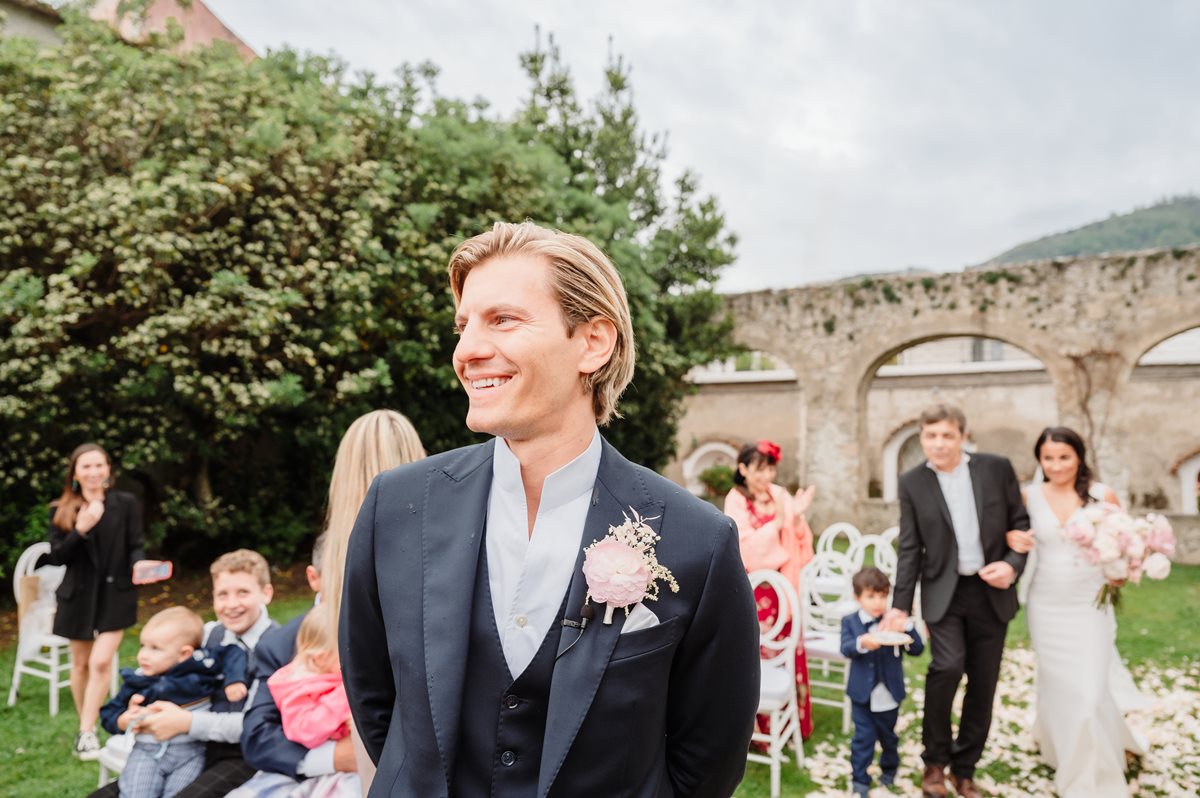
For portraits it is public and free, with no permit, as long as no event is set up there at the time. Ceremonies are another story. Those need a permit and a fee from the Comune, whether the ceremony is civil or symbolic, and this is where the town holds most of its civil weddings. The area with your chairs and flowers is closed off while the rest of the garden stays open, so I keep the frames tight when someone walks through. The railing at the far end gives a clean composition with the coastline curving below and no architectural clutter competing. This is where I send couples who want the view without the entrance fee, the photography permit, or the forty-minute crowd cycle.




Flowers by Season
This is specific to Ravello’s microclimate: slightly cooler than the coast, slightly more humidity in spring, which delays flowering by a week or two compared to Positano at sea level.
March and April: Wisteria peaks, usually in the third week of April, though the year determines the exact timing. The Confalone courtyard wisteria is the most reliable shot of the season. Almond trees in the valley below bloom earlier, in late February, but Ravello’s altitude delays them until March. If wisteria is specifically what you want in the frame, April is the month.

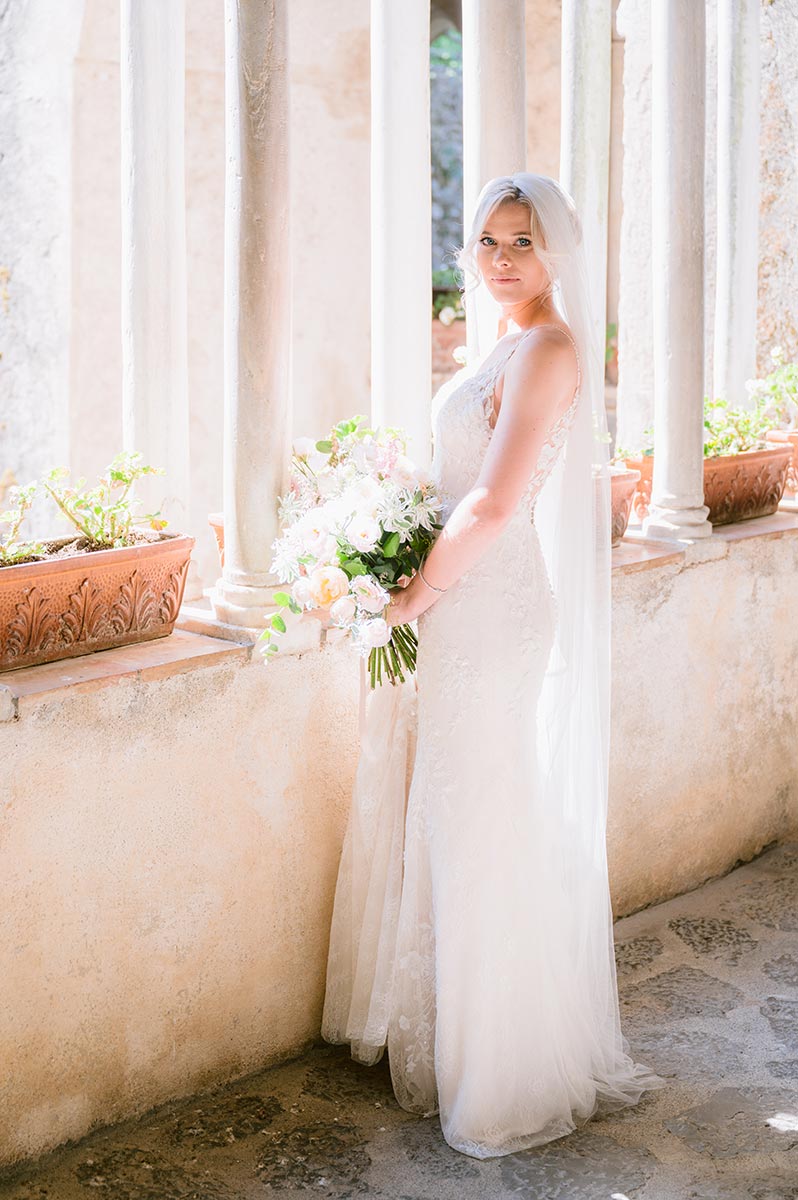
May and June: Roses at Villa Cimbrone. Bougainvillea begins in mid-May and peaks through June. Jasmine along the old walls in the town center. Citrus trees in flower, which is something photographs cannot transmit: the scent on a still June morning in a garden here is its own thing, separate from anything visual.
July and August: Bougainvillea peak. Figs heavy on the tree. Oleander. The garden colors in this period are saturated to the point where a camera set to automatic will push toward blown highlights on deep pink flowers against limestone. Manual exposure or careful metering is not optional in these conditions.
September and October: Late bougainvillea, beginning to thin. Pomegranate visible. Persimmon trees on the lower slopes below the ridge. The light has dropped enough in the sky that it wraps rather than flattens. Crowds are thinner. September and October are the months I recommend most consistently for garden weddings: good flowers still going, better light than summer, and the town feels like itself again after the August peak.
November through February: Most of the dramatic flowering is done. What remains is structure: stone walls, bare olive branches, lemons still heavy on the trees through January, camellia if you look for it. The sun is low in the sky all day, which means the light wraps around subjects at angles summer never produces. January sessions in Ravello are consistently some of my best-light days of the year. The temperature runs around 10-14°C on a clear day, which is cold by Amalfi standards, but the gardens are empty and the light is worth dressing for it.
The Ridge Shadow: When Sunset Apps Are Wrong
In summer, the Lattari peaks cut the direct sun over Ravello’s western-facing gardens somewhere between 5:45 PM and 6:30 PM, depending on location. A phone will show sunset at 8:05 PM. There is a ninety-minute gap in there that surprises people every season.
The effect is not darkness. The sky stays bright, diffuse light remains, and the blue hour after ridge-shadow is worth shooting. But the warm, directional light that people have in mind when they picture “sunset portraits” disappears much earlier than expected. Villa Cimbrone’s terrace loses direct sun earlier than Villa Eva’s rooftop. The Princess Gardens, east-facing, lose it earliest of all because the ridge is behind them and to the side rather than directly behind the view.
I plan every garden session from the question: when does direct sun leave this specific terrace, this specific month? That time varies by forty minutes or more between different gardens in the same town. I have been tracking it across seasons since 2011 and I know it, which is the practical value of having a photographer who works this coast year-round rather than visiting twice a season.


Garden Weddings and Elopements: Same Light, Different Scale
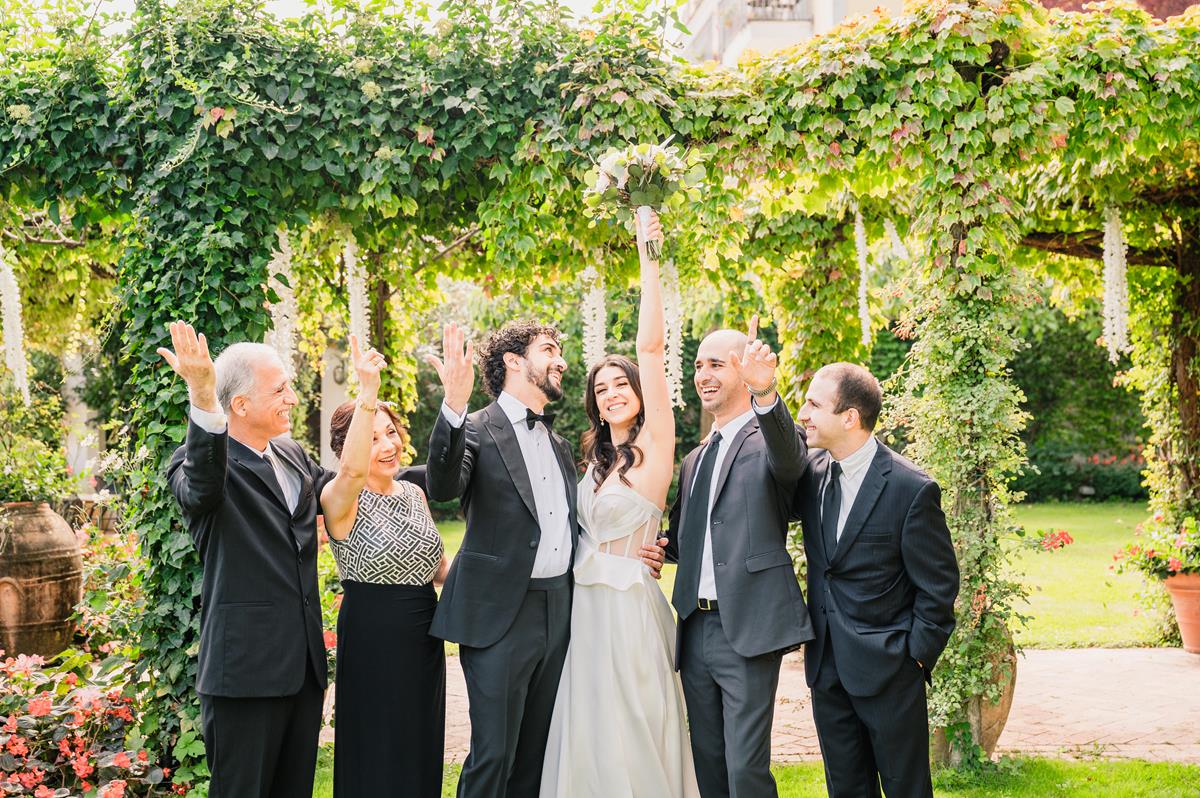
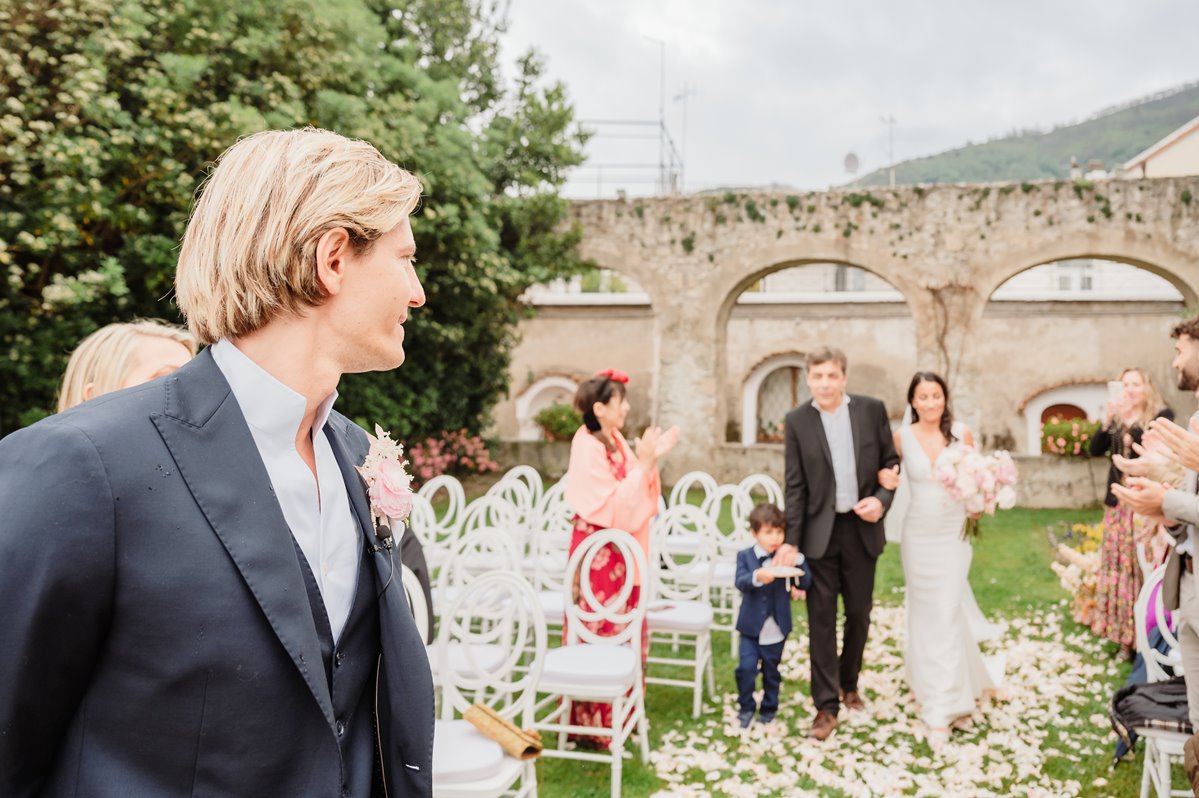
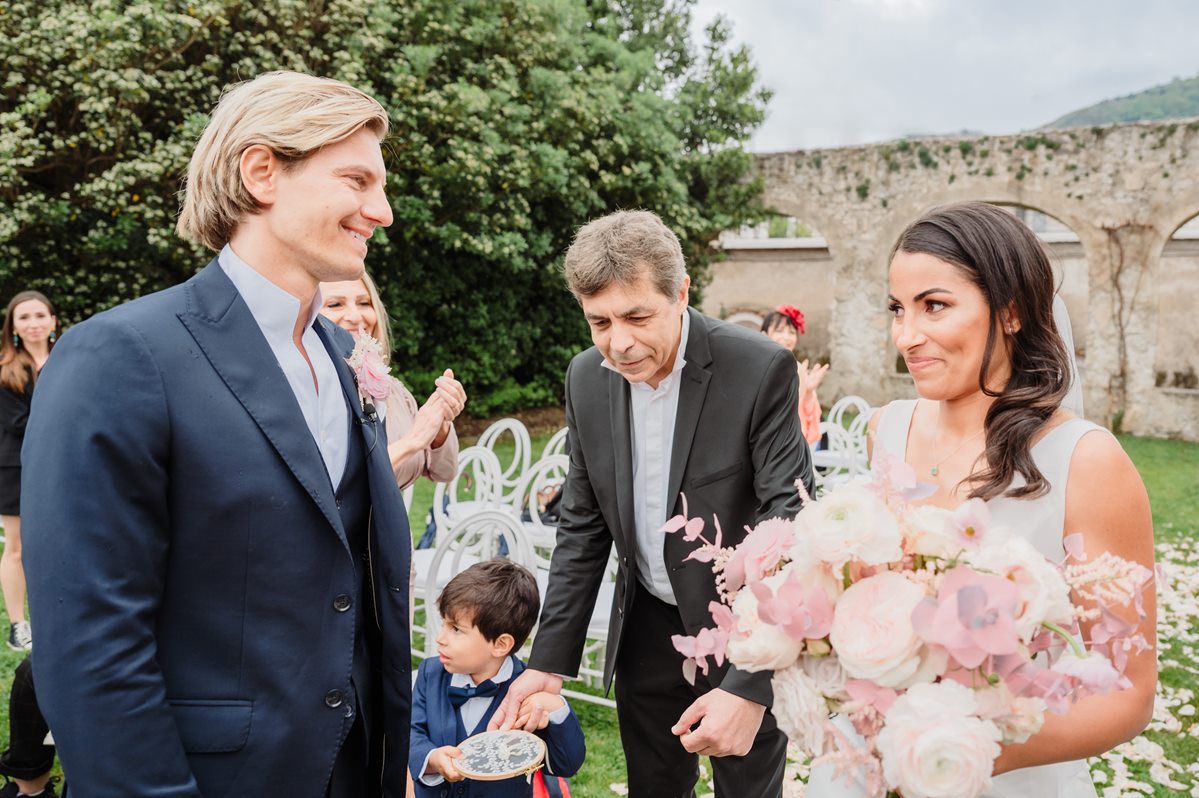
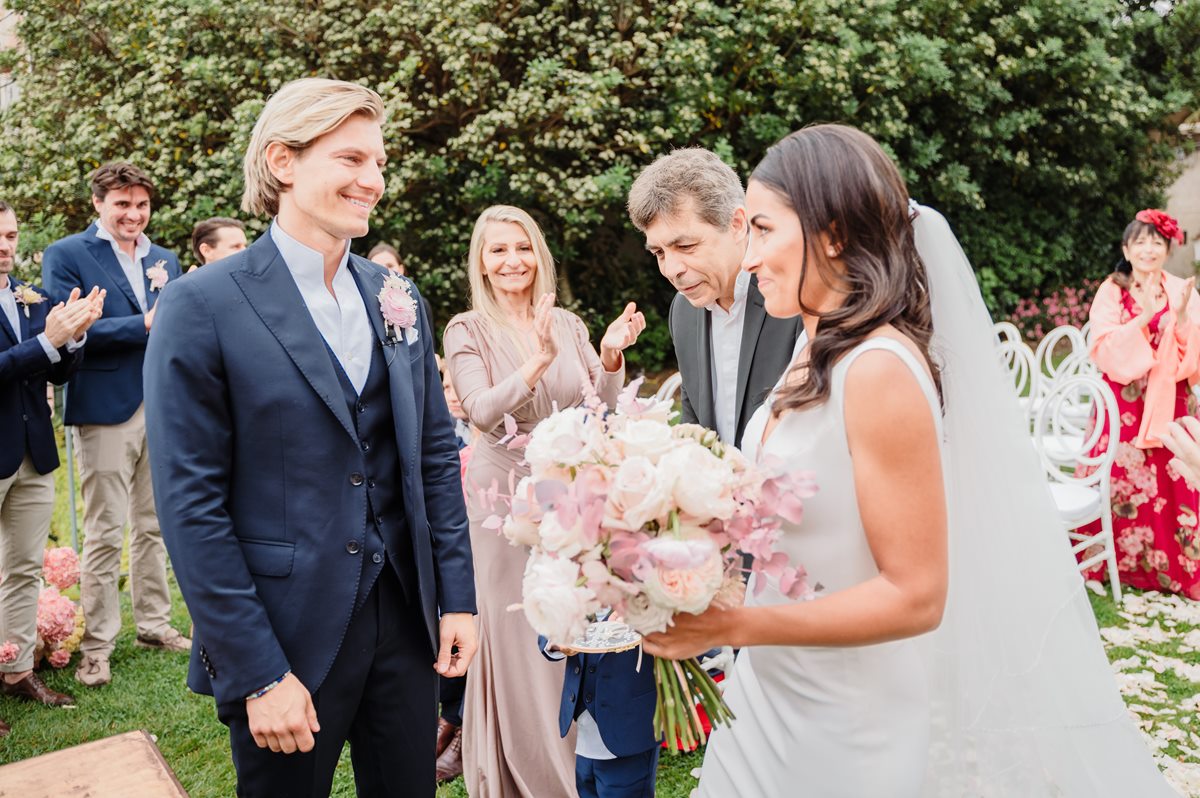
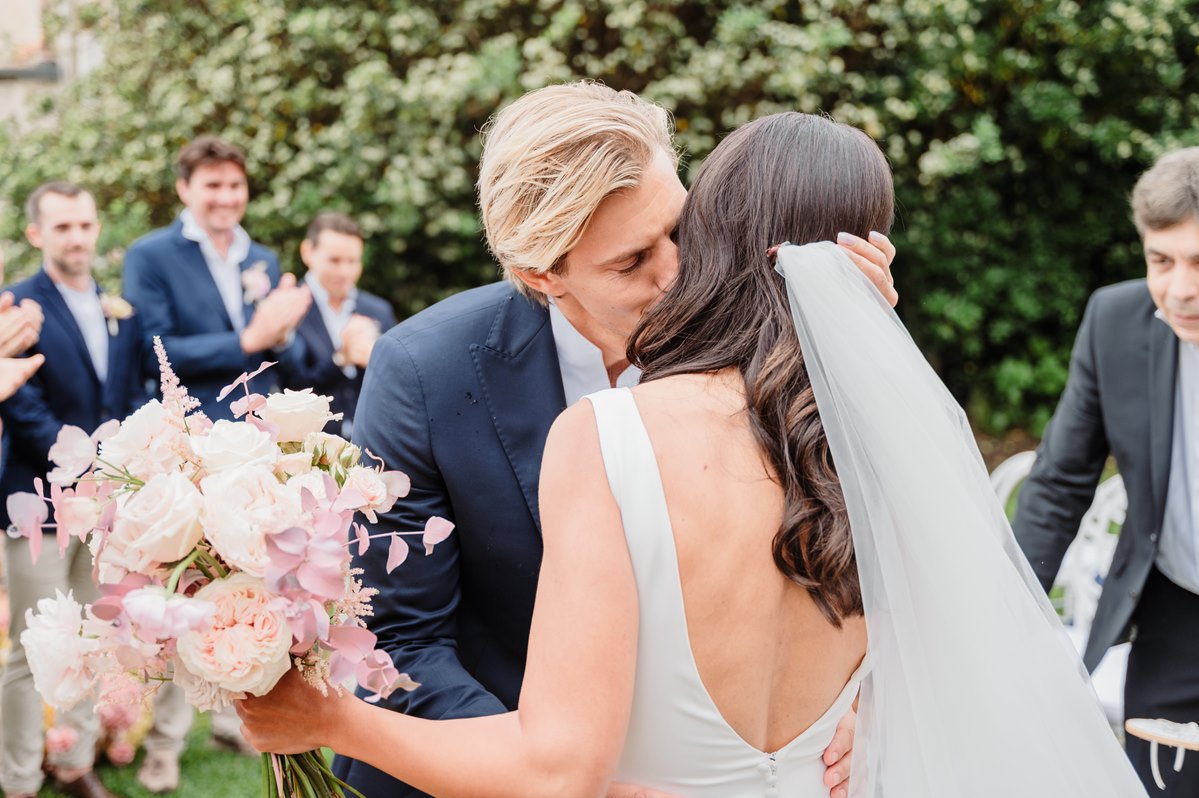
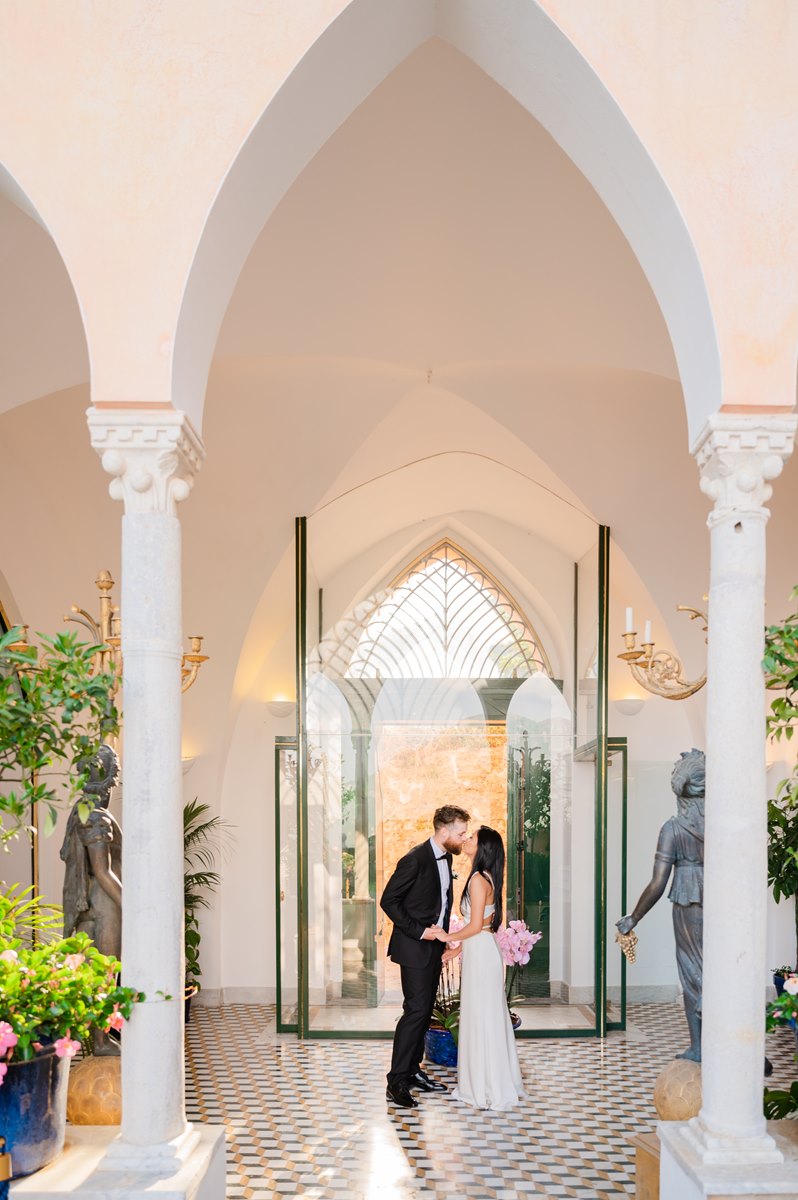
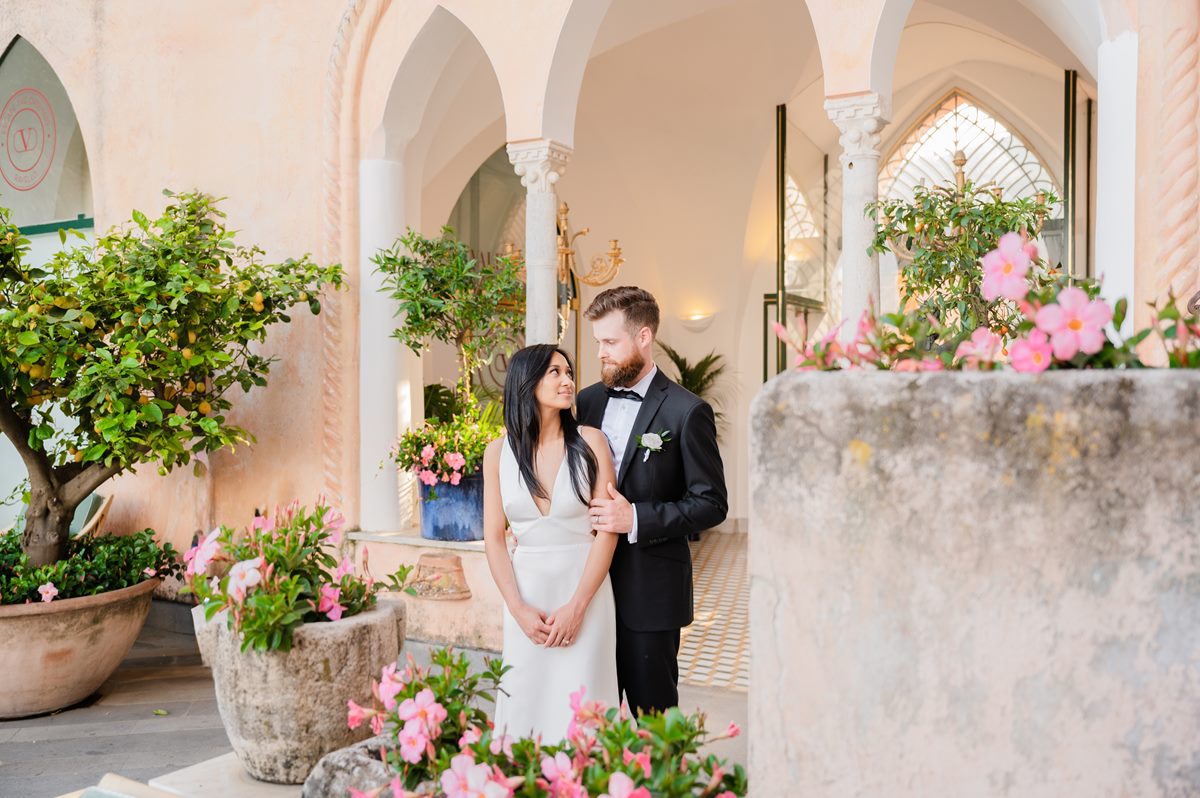
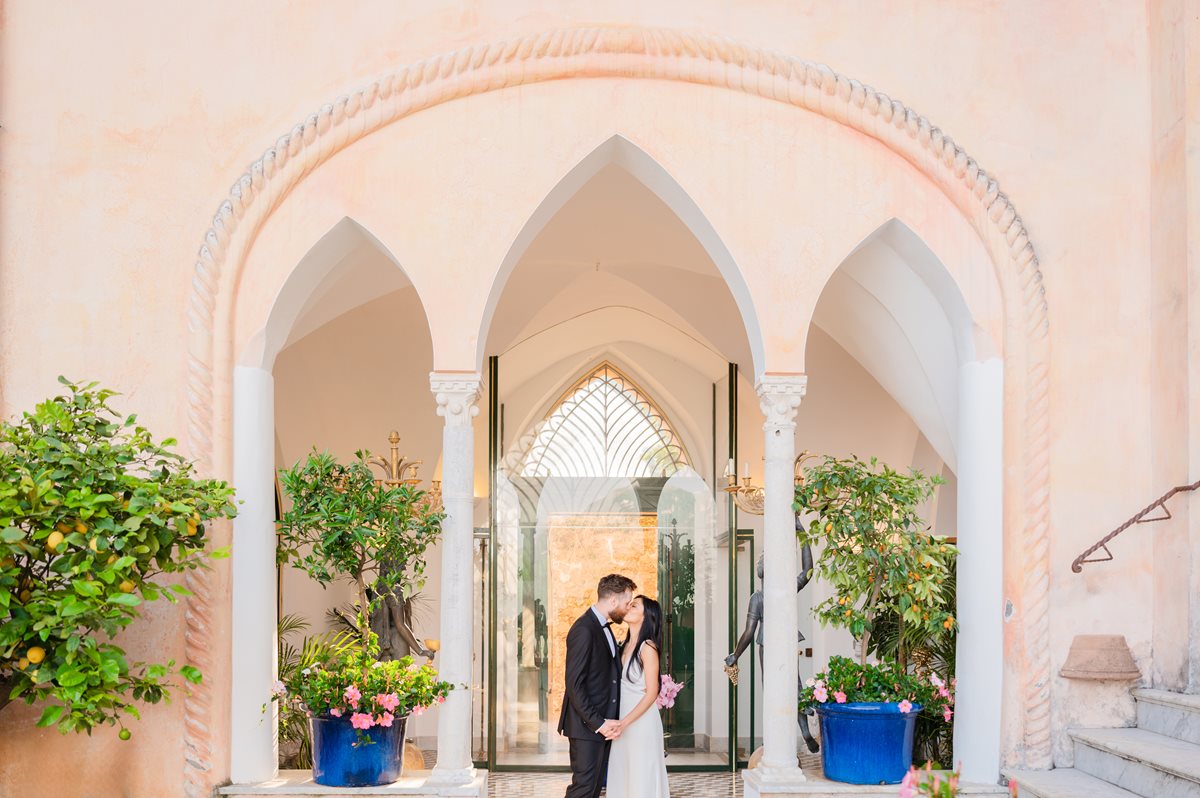
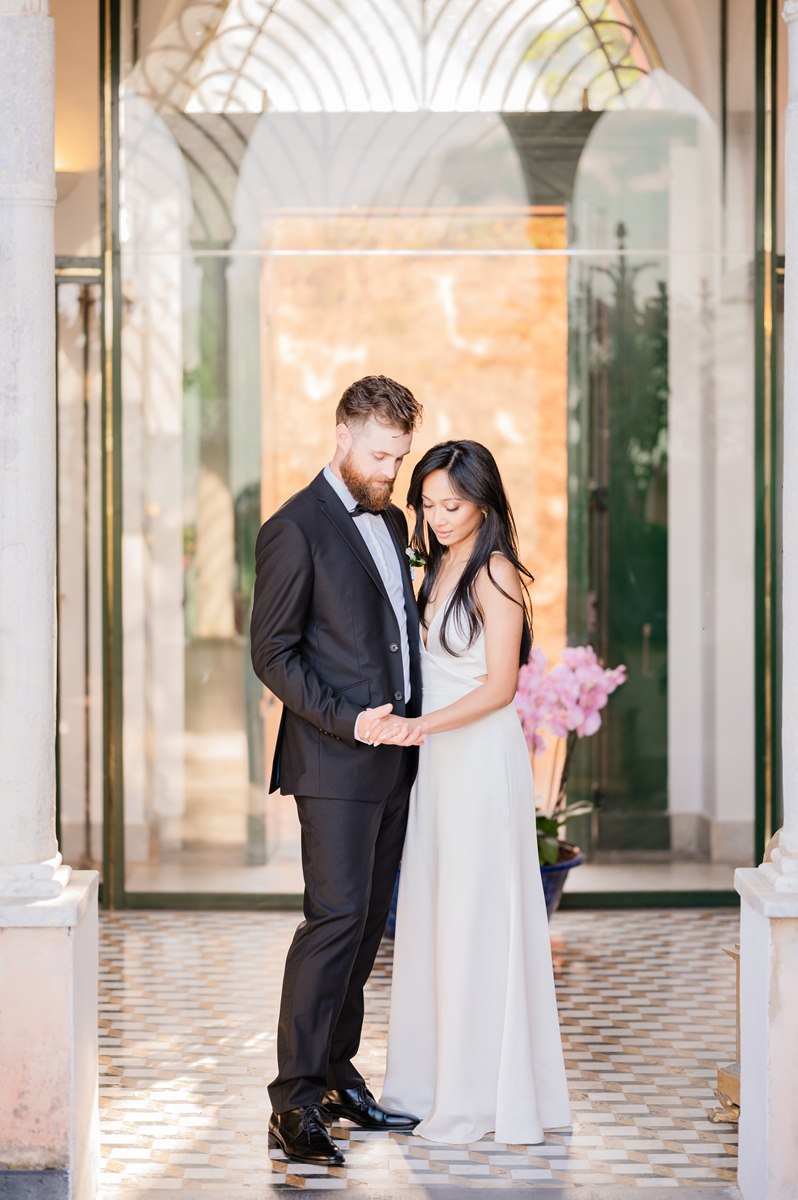
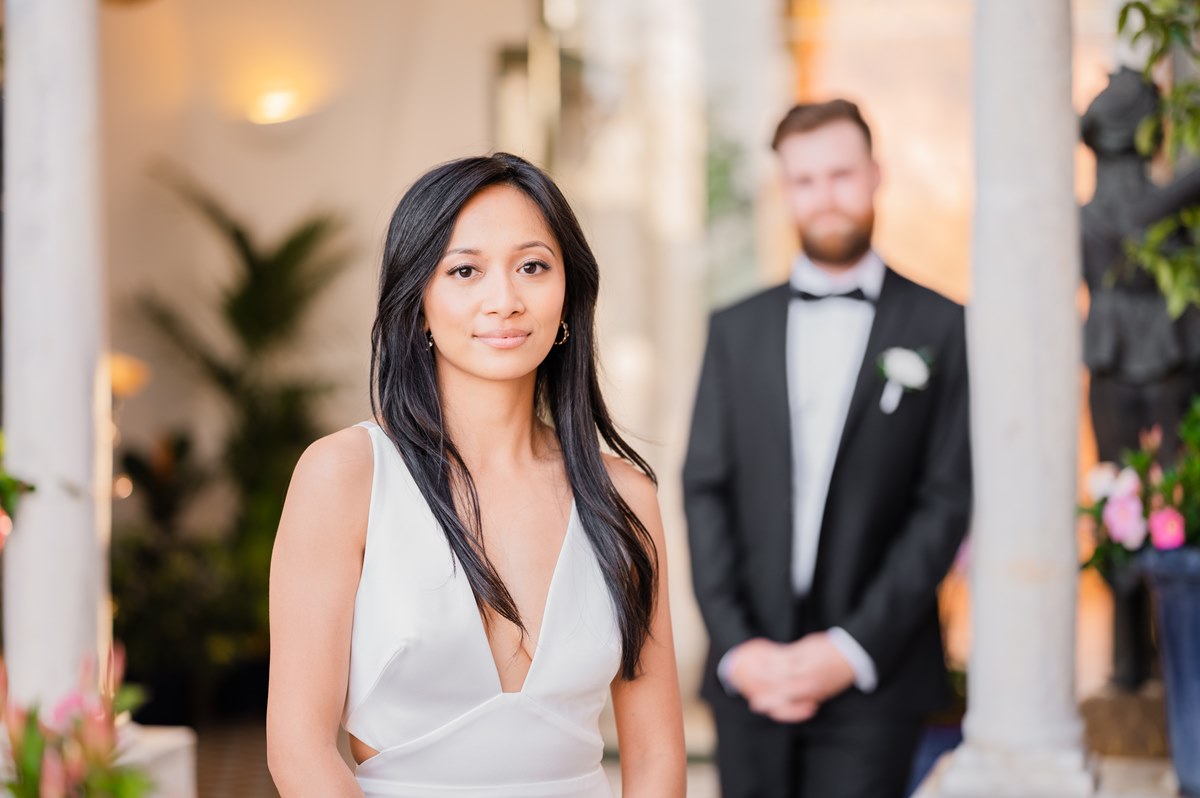
A Ravello garden wedding scales well to small groups: Villa Eva’s courtyard, Palazzo Confalone’s pergola path and the Princess Gardens do not require a hundred guests to look inhabited. I shoot elopements in Ravello regularly, two people and an officiant moving through one or two gardens in a morning. The light is the same. The intimacy of a garden that is not overfull, where the ceremony words echo off stone rather than getting absorbed by a crowd, produces a different kind of photograph.
For the full planning picture, from venue and ceremony format to costs and logistics, the wedding in Ravello guide covers all of that. This post is specifically about what I look for photographically when I am standing in these gardens at different hours and different months. The two are related but separate questions.
Two questions
Distances, and a Winter Ceremony
How far apart the gardens are, and whether a winter ceremony can stay outdoors.
How far apart are the main gardens?
I walk to Villa Cimbrone in about fifteen minutes from the main piazza, along a lane with steps, and Villa Eva sits at the other end of the ridge, roughly twelve minutes the other way, so a session can move between two gardens without a car.
Can we have an outdoor garden ceremony in winter?
Yes, with a covered alternative agreed with the venue in advance, because January and February are cold for this coast, even on a clear day.

MORE ON RAVELLO VENUES AND LIGHT
Ravello Photoshoot: Your Honeymoon and the Dress You Packed

Symbolic Wedding Ceremony in Ravello
What to Wear to a Ravello Wedding: A Practical Style Guide

Rehearsal Dinner in Ravello: Where to Go and How to Plan It

Ravello Wedding Music: What to Book and When It Has to Stop

A Ravello Wedding Guest Guide: Where to Stay, What to See and How to Get Around
EMILIANO RUSSO
 Written By Emiliano Russo