
Symbolic Wedding Ceremony in Ravello

A practical guide to symbolic weddings in Ravello: no legal paperwork in Italy, complete freedom over venue and timing, and why this format often produces better photographs than a civil ceremony.

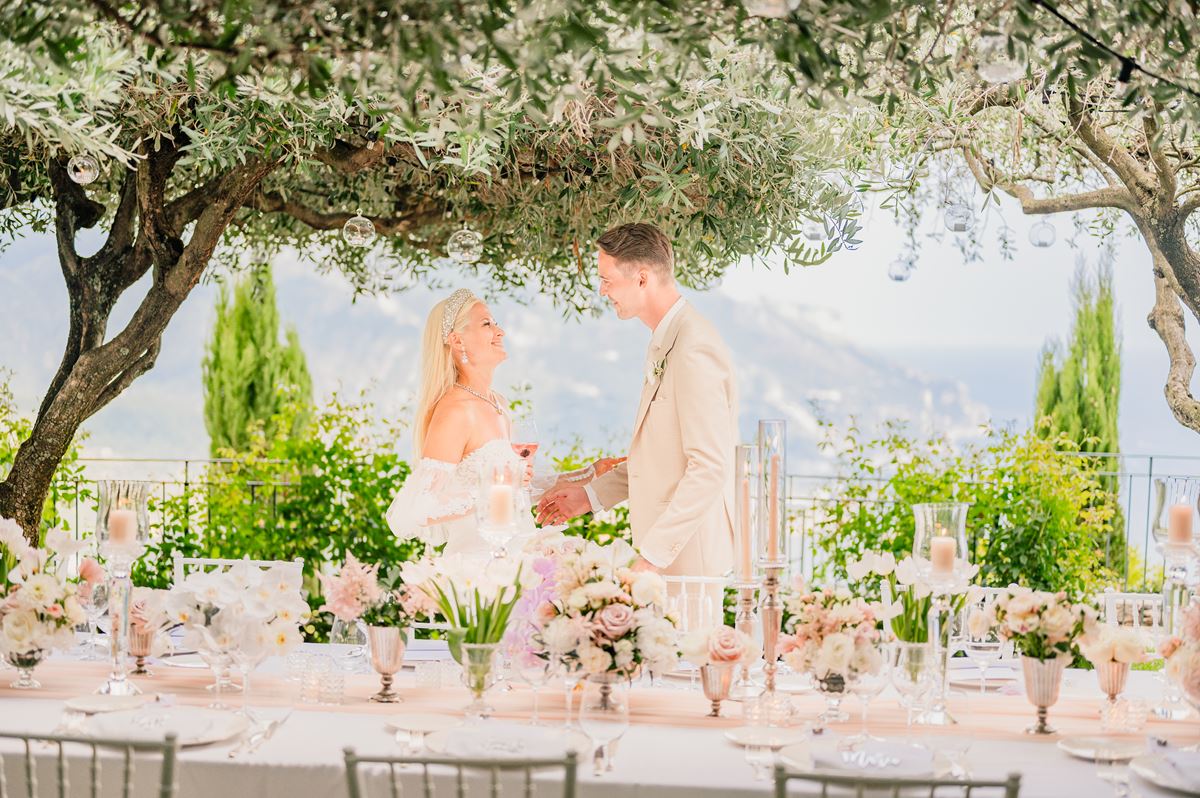
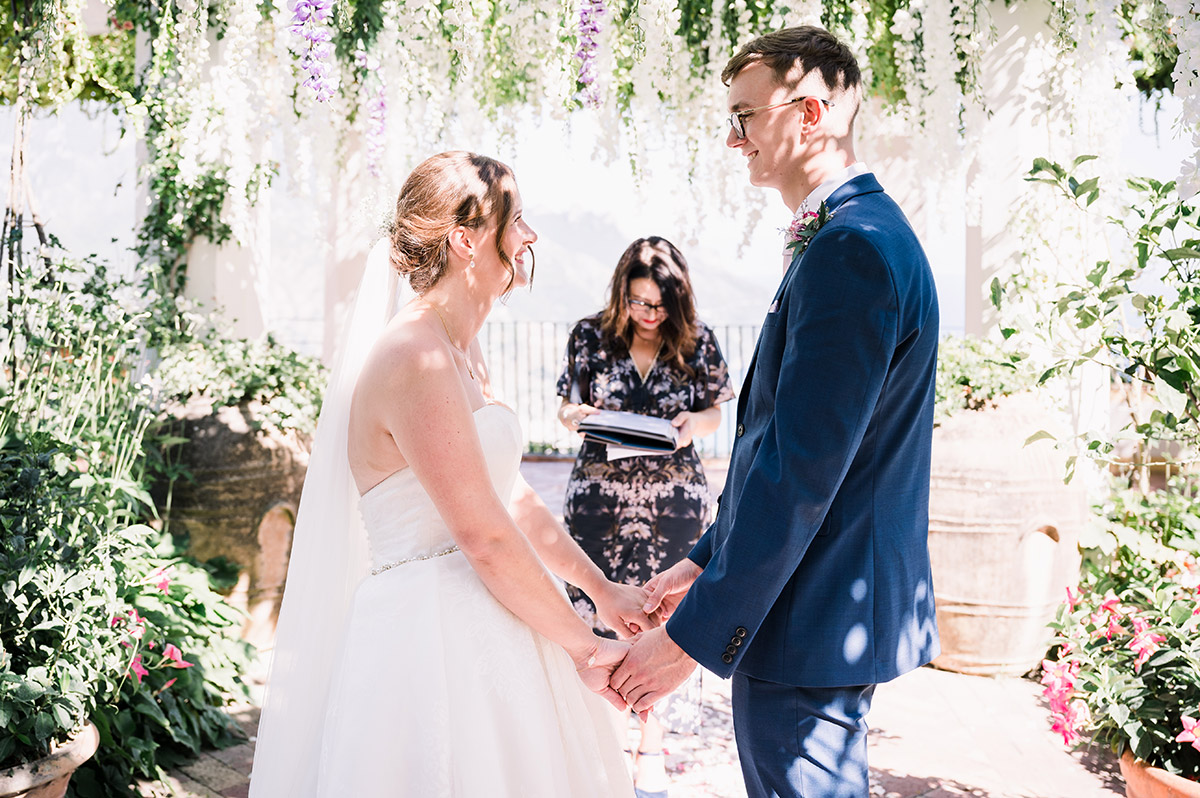
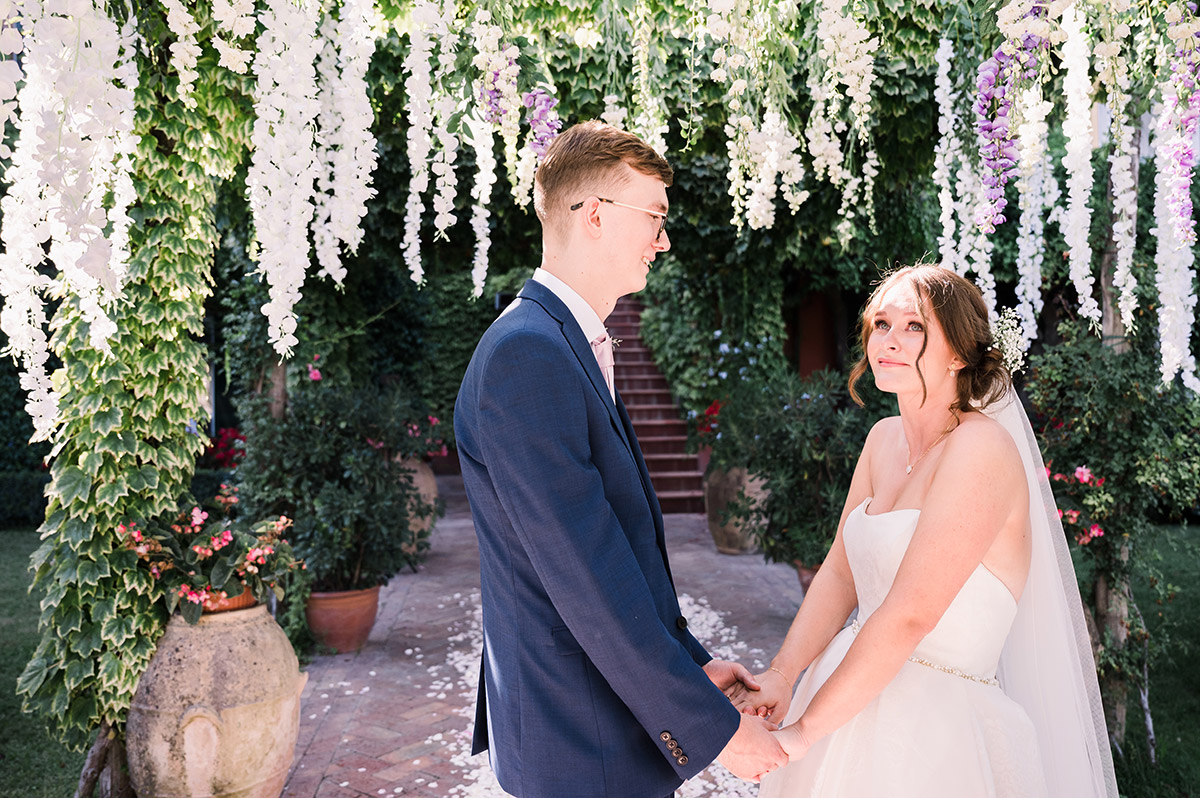
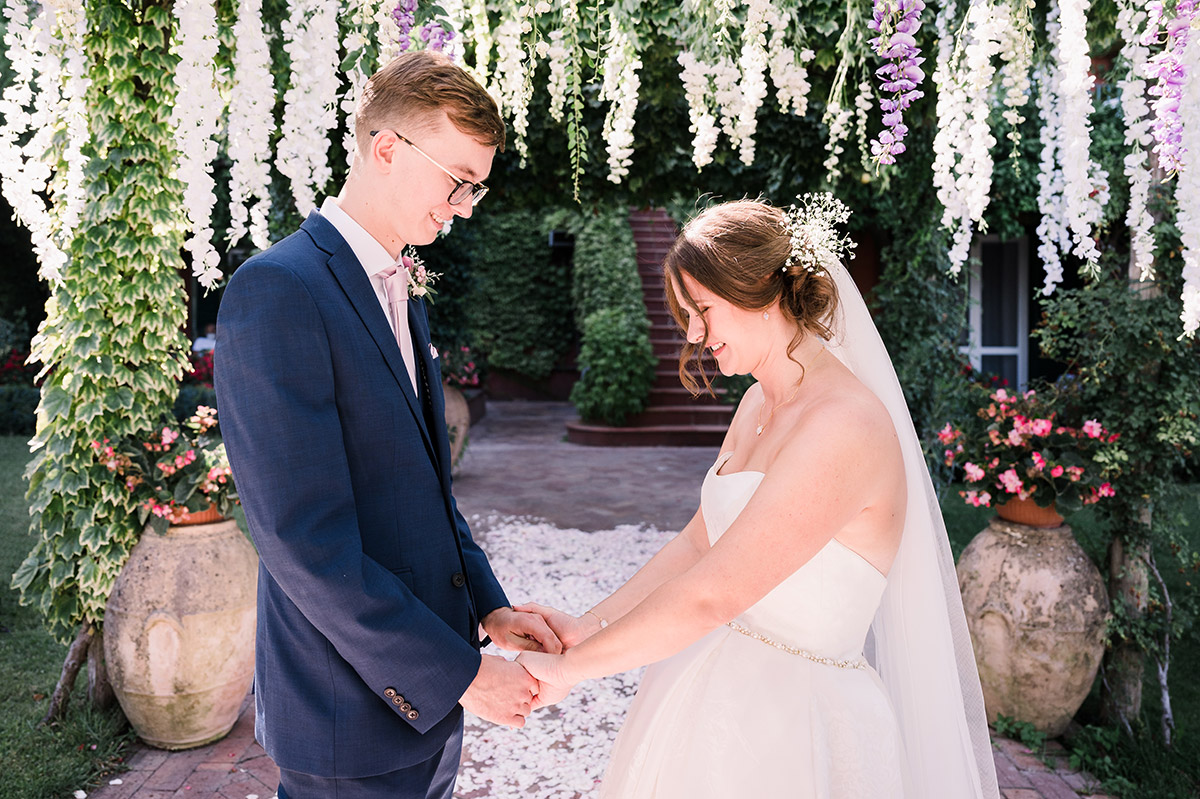
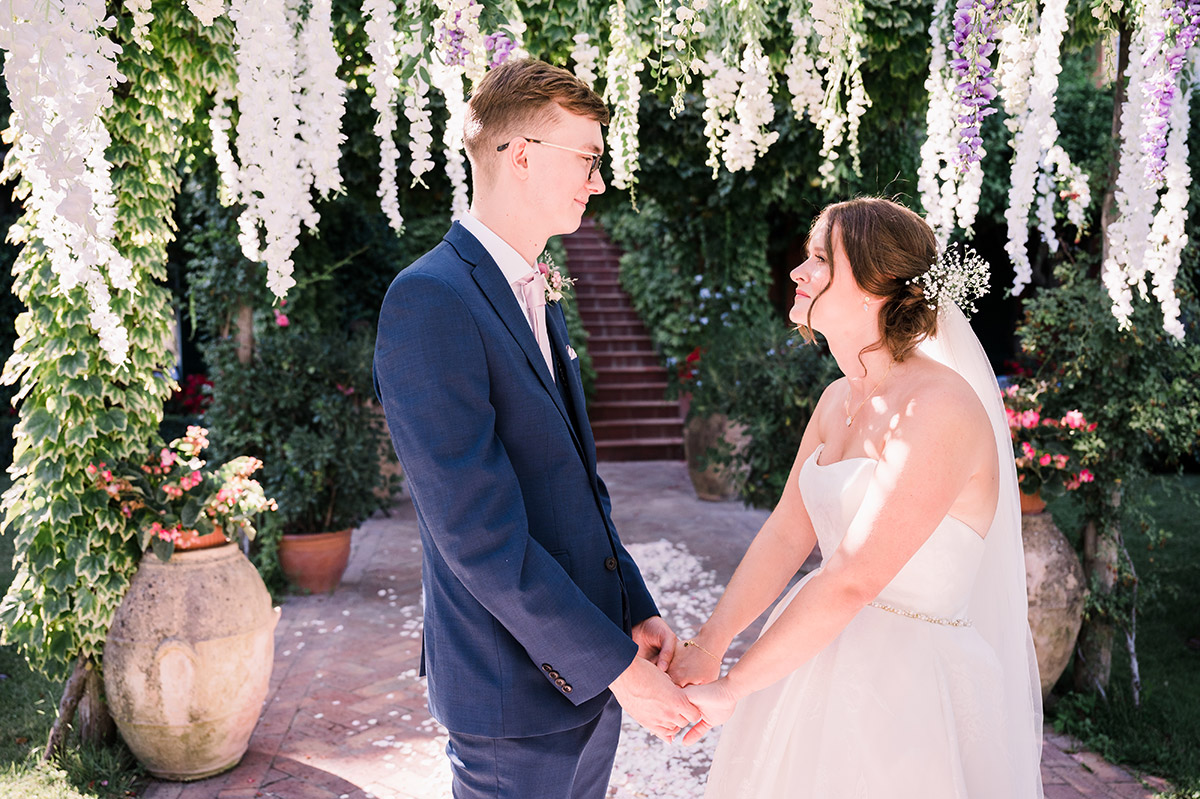
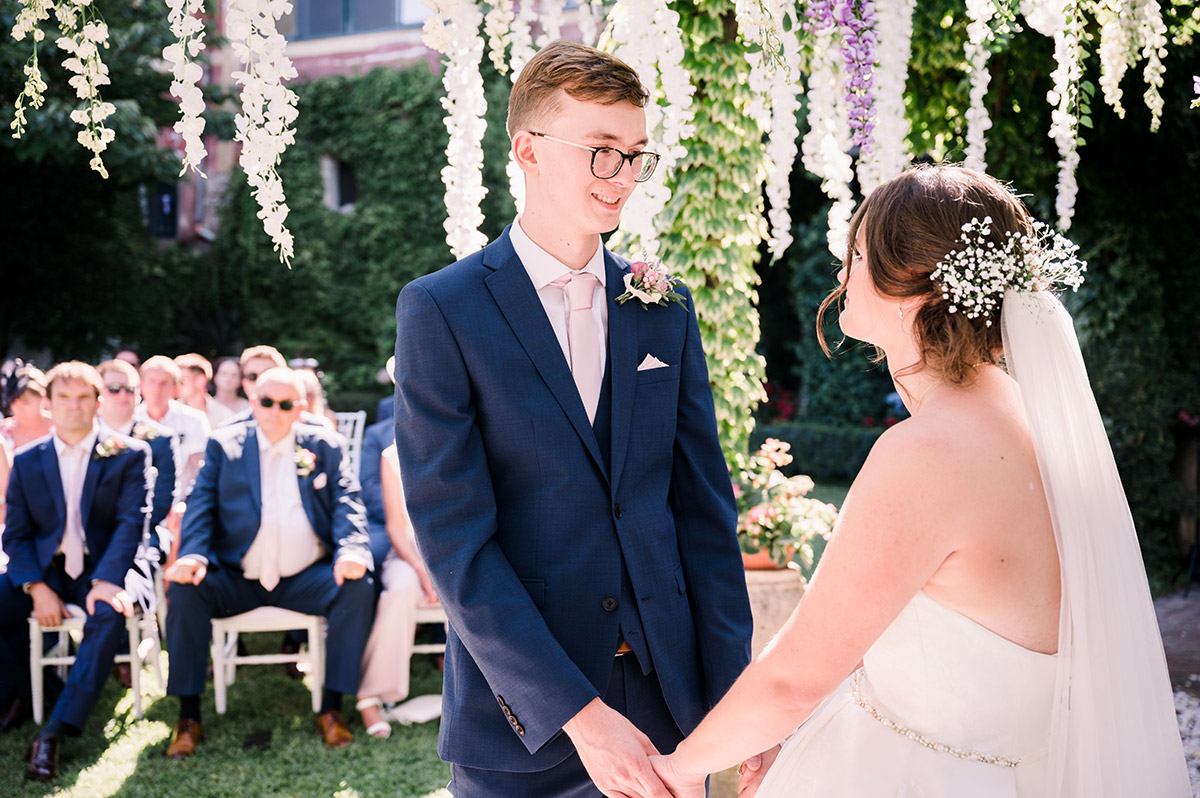
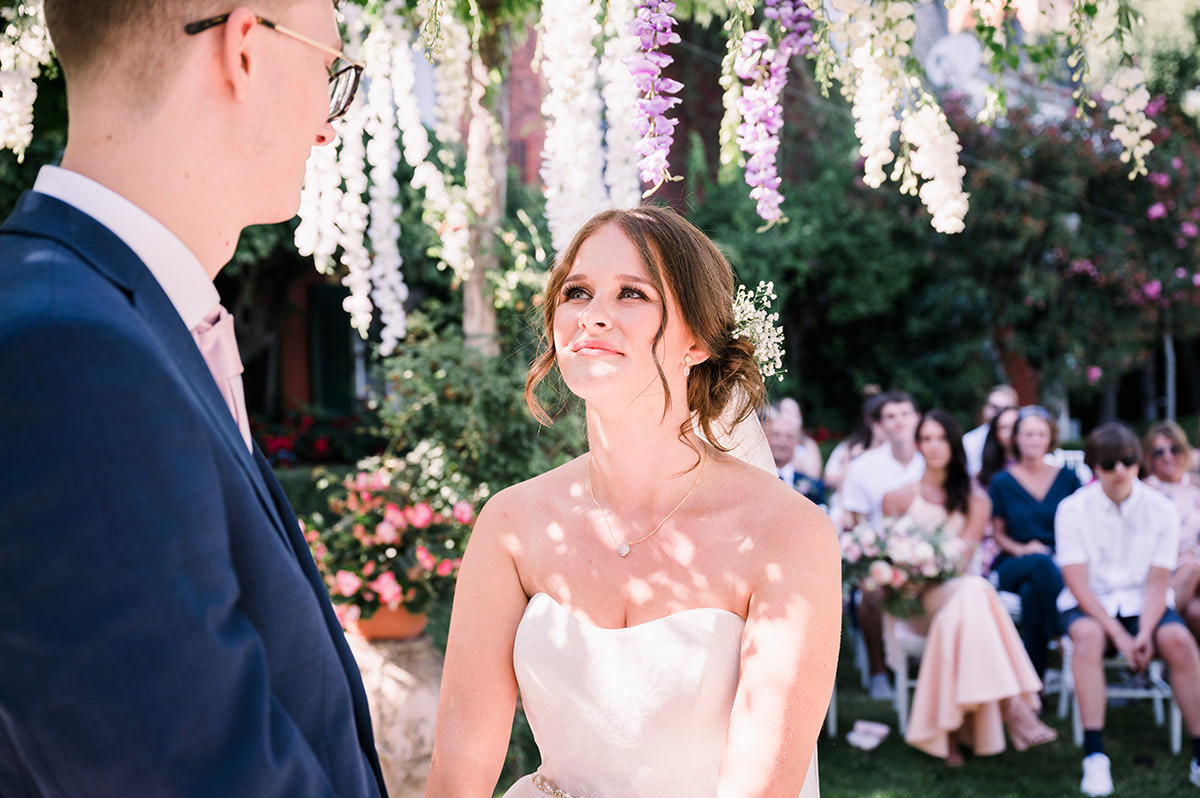
Couple holding hands during a symbolic ceremony in Ravello, Italy with an officiant.
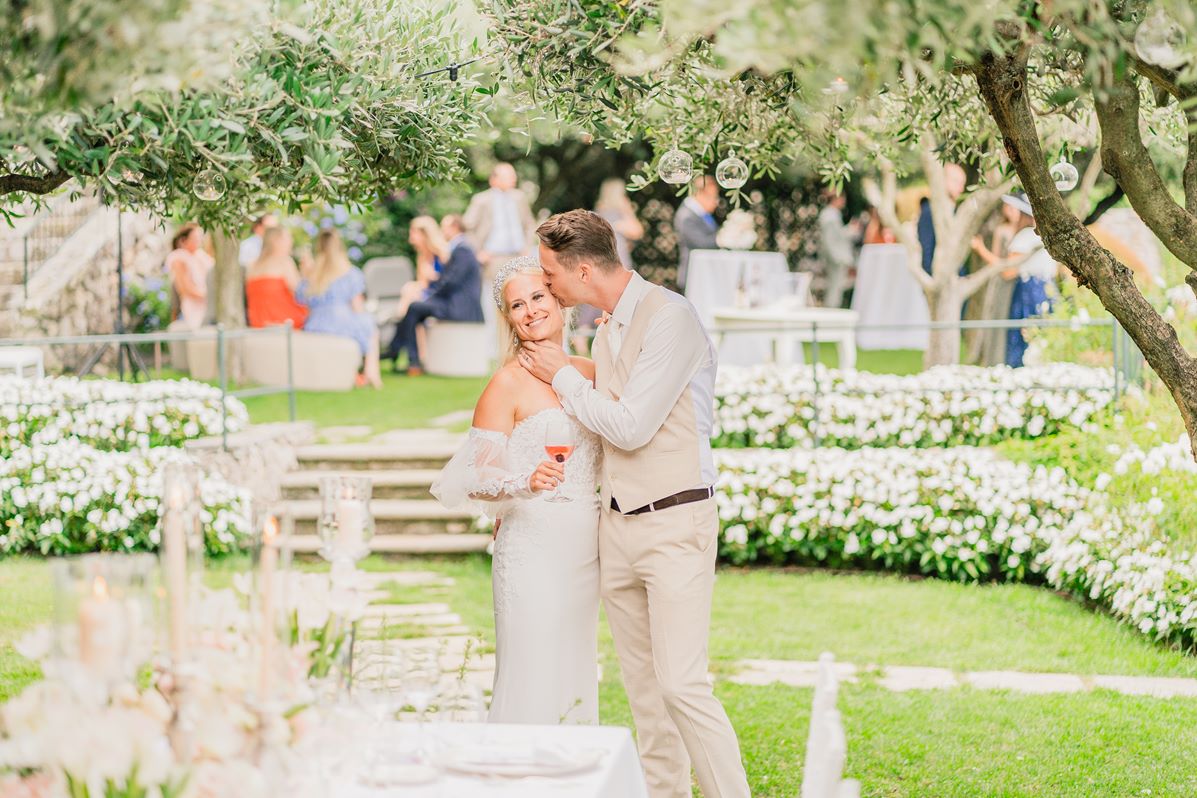
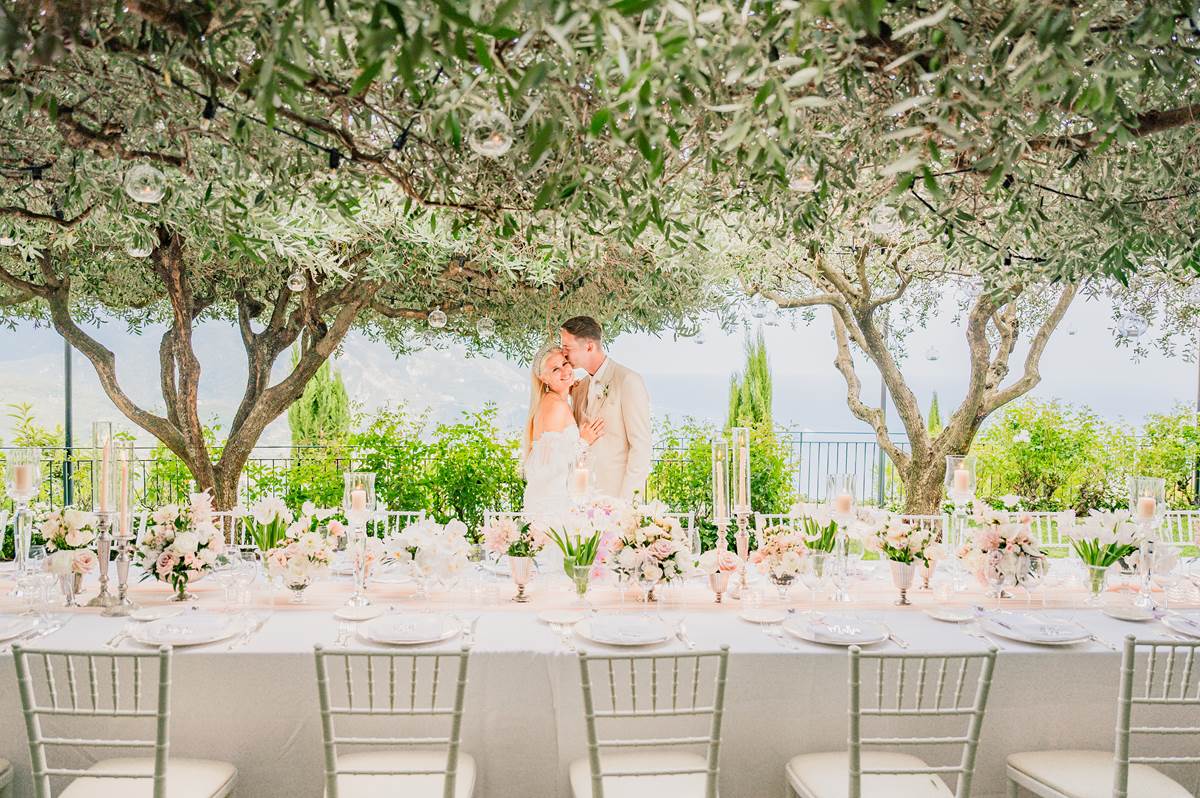
Couple kissing during a scenic symbolic ceremony in Ravello, surrounded by floral decor and guests.

A couple from Austin came to me two years ago with a specific request: they wanted their friend from New York to officiate. He had gotten ordained online the month before, and they had written the entire ceremony together on a shared document during a road trip through the Southwest. Nothing borrowed from a template. Every word chosen because they meant it.

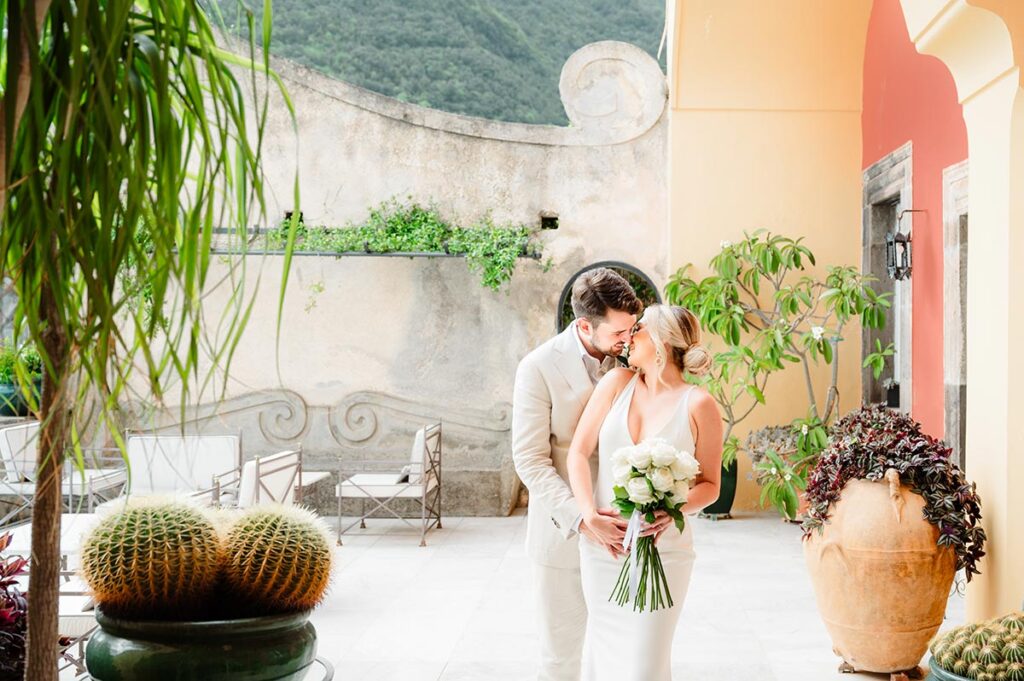
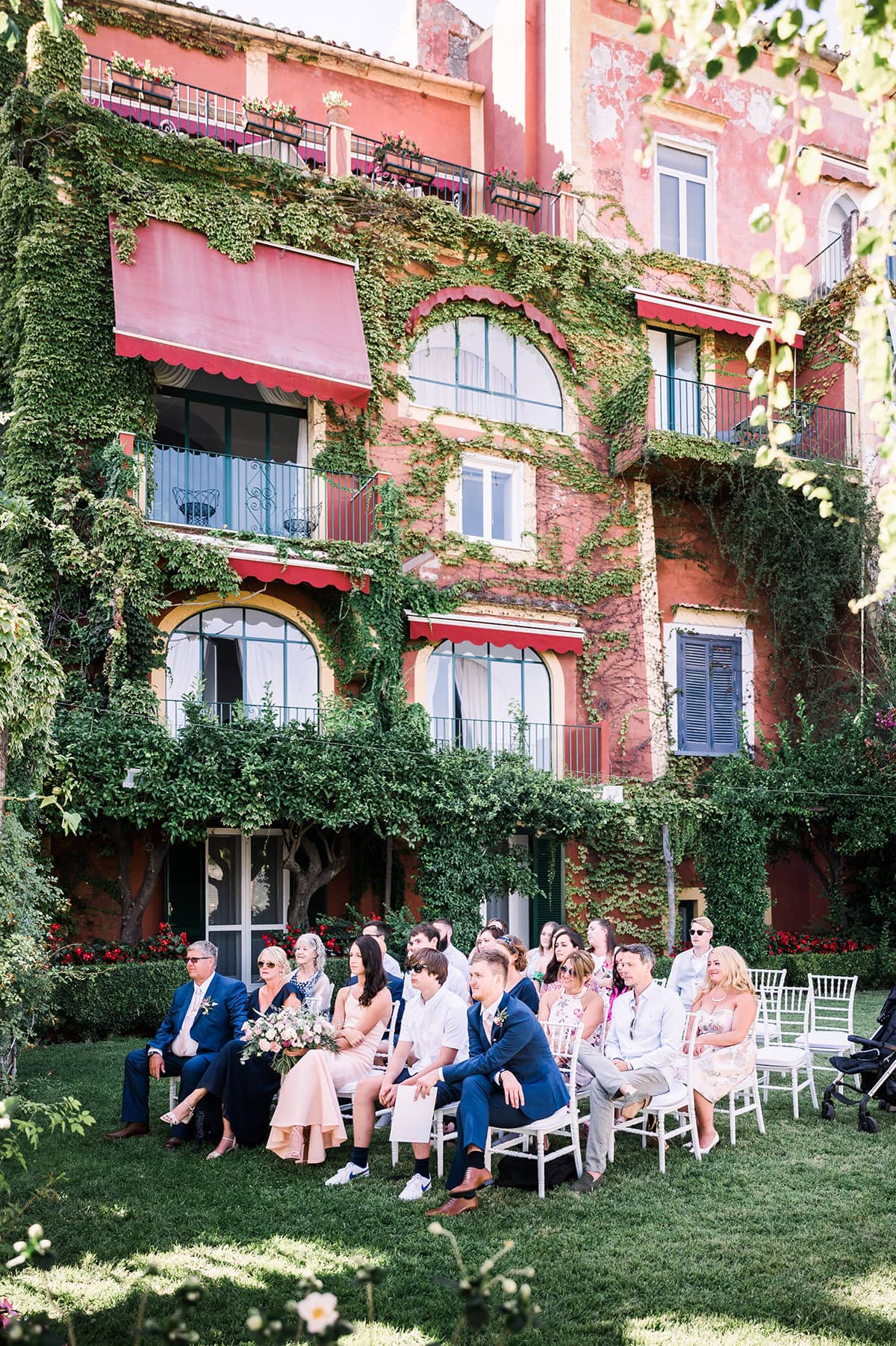
A civil ceremony in Italy does not allow this. The officiant must be a registered municipal officer, the location must be licensed for civil ceremonies, and the slot is scheduled by the Town Hall on their terms, not yours. For these two, that format would have stripped the day of the thing they cared most about. A symbolic ceremony gave them what they needed: Palazzo Confalone’s stone garden at 5:30 PM, their friend with his printed pages, the three of them and sixty guests, and a light that hit the terrace wall at exactly the angle I had planned for months.

I have photographed symbolic weddings in Ravello since my first season on this coast in 2011. This post is part of a broader guide to planning a wedding in Ravello, and covers specifically how the symbolic format works, why the town suits it particularly well, and what changes practically when you remove the municipal paperwork from the equation.

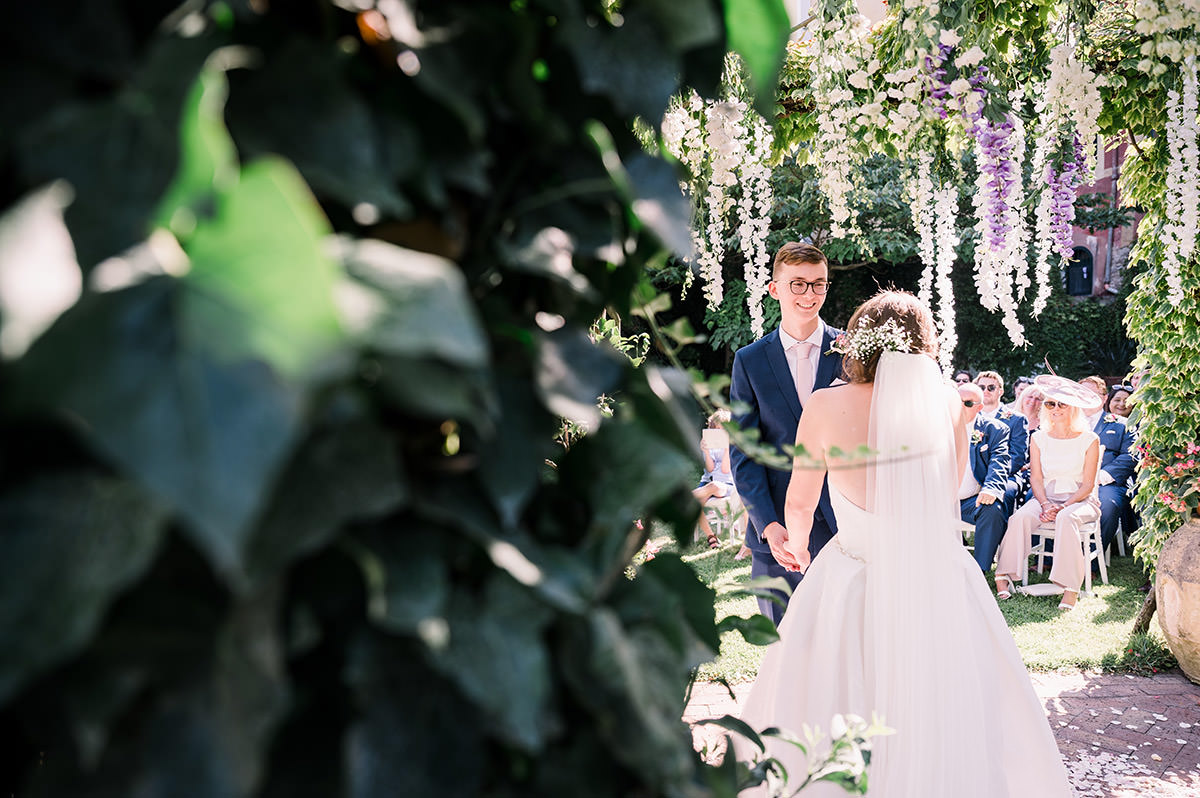
Couple exchanging rings during a romantic symbolic ceremony ravello with mountain views.

What Symbolic Actually Means

A symbolic ceremony has no legal standing in Italy. The couple either married legally before the trip, at a courthouse back home, or they handle the paperwork after they return. The Italian ceremony is a personal celebration: vows, rituals, music, witnesses, a reception, everything you want from a wedding day, without any legal obligation to the Italian state.

This is not a workaround or a consolation. For most American couples, it is the deliberate choice. Italian civil marriage requires documentation that takes months to prepare: apostilled birth certificates, a Nulla Osta signed before a US consular officer, a sworn declaration before an Italian court. The process is manageable, but it takes significant lead time and anchors parts of the day to government schedules. Symbolic removes all of that. The legal side stays at home, where the paperwork is in English and takes an afternoon.

The day in Ravello is entirely yours to design.

Why Ravello Works Particularly Well for This Format

The difference between a symbolic ceremony and a civil one goes beyond paperwork. It changes the geography of the entire day.

Civil ceremonies in Ravello happen at the Town Hall, in the Palazzo Tolla, or in licensed venues like the Princess Gardens. The time slot is what the municipality gives you. If the 11 AM slot is what is available and your ideal light is at 5 PM, you either adapt or find a different date. The ceremony is the fixed point around which everything else adjusts.

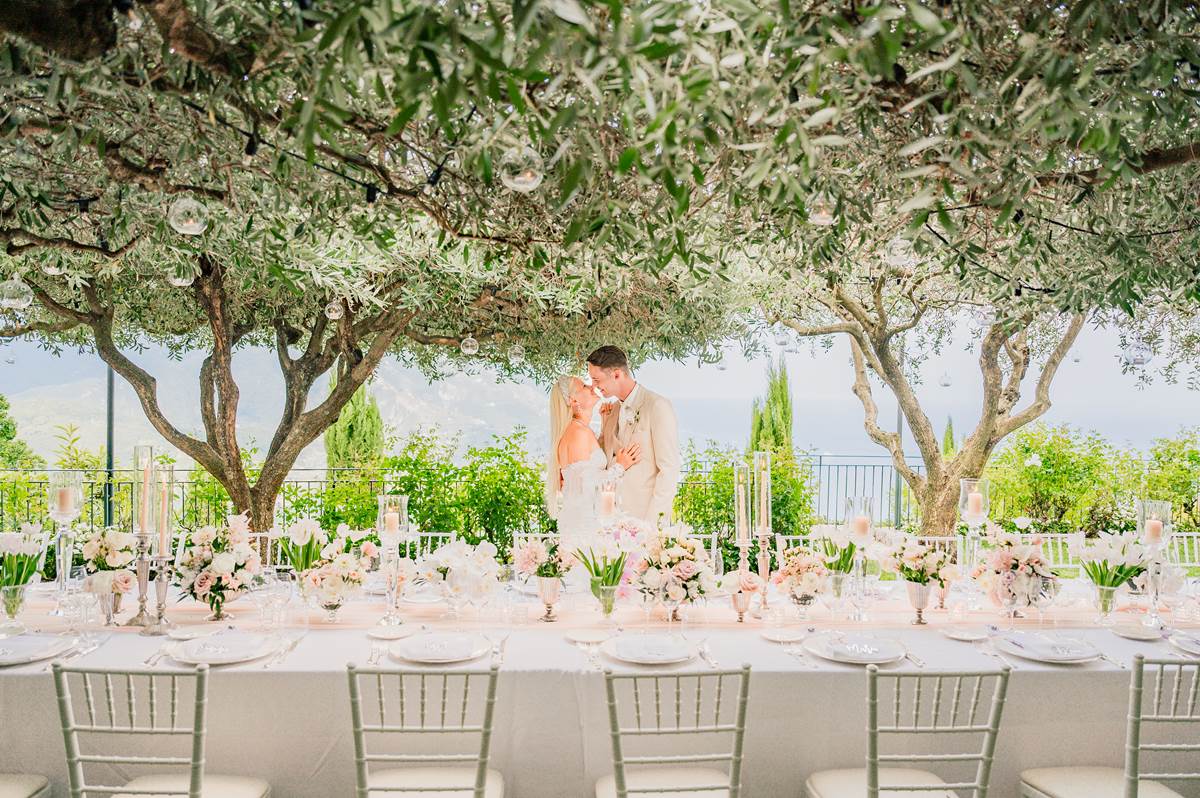
With symbolic, the ceremony has no fixed location requirement. It can happen in any garden, on any terrace, on any street in Ravello, at whatever hour produces the light you want. I schedule it around the sun’s position for that specific week. In October I know that Palazzo Confalone’s courtyard holds the best directional light from 4:30 PM to 6:00 PM. In June, Villa Eva’s lower garden stays out of direct overhead sun from 10 AM through mid-afternoon because of the olive canopy. Those are the times I build the day around. With a civil ceremony, that control does not exist.

Ravello also amplifies this advantage in a specific way. Because the town is pedestrian, there are no delivery trucks or taxis interrupting a ceremony. Because it sits at 365 meters, the air clarity is different from the coast, and the light quality is consistently better than at sea level. And because it is smaller and less touristed than Positano, you can find genuine privacy in spots that would be impossible to clear in a busier town.

Who Officiates a Symbolic Ceremony

This is the question I hear most from couples who are new to this format, and it has more answers than most guides mention.

The most common choice is a local Italian celebrant. These are professionals who specialize in symbolic ceremonies, work in English, and bring experience in structuring the ceremony so it flows well, has the right pacing for photographs, and handles the emotional weight of the moment. Several celebrants work the Amalfi Coast regularly and I have coordinated with all of them enough to know who is good at reading a crowd and who tends to rush.

The second option is what the Austin couple did: a friend or family member who gets ordained in their home country and flies over. In the US this is straightforward through organizations like the Universal Life Church, and the resulting ordination is valid for ceremonies in Italy where there is no legal registration required. If you go this route, have whoever is officiating do at least one rehearsal of the phrasing out loud. Reading cold from paper in front of sixty people on a terrace is harder than it looks.

The third option, less common but viable for very small ceremonies, is having a family elder lead the vows without any formal officiant structure at all. Two people, a witness, and someone who knows them well enough to say something honest. I have photographed three ceremonies like this and they tend to produce the most unguarded photographs of any format I work in.

Bride in a white gown with a long veil ascends a grand marble staircase with a red carpet.

Check our packages

Capture the Magic of Your Special Day with Emiliano Russo

Which Venues Work Best Without a Civil License

One practical benefit of symbolic is access to spaces that cannot host civil ceremonies. Villa Cimbrone’s rose garden, Palazzo Confalone’s stone courtyard, Villa Eva’s lower garden: none of these are licensed for civil weddings. Symbolic opens them up entirely.

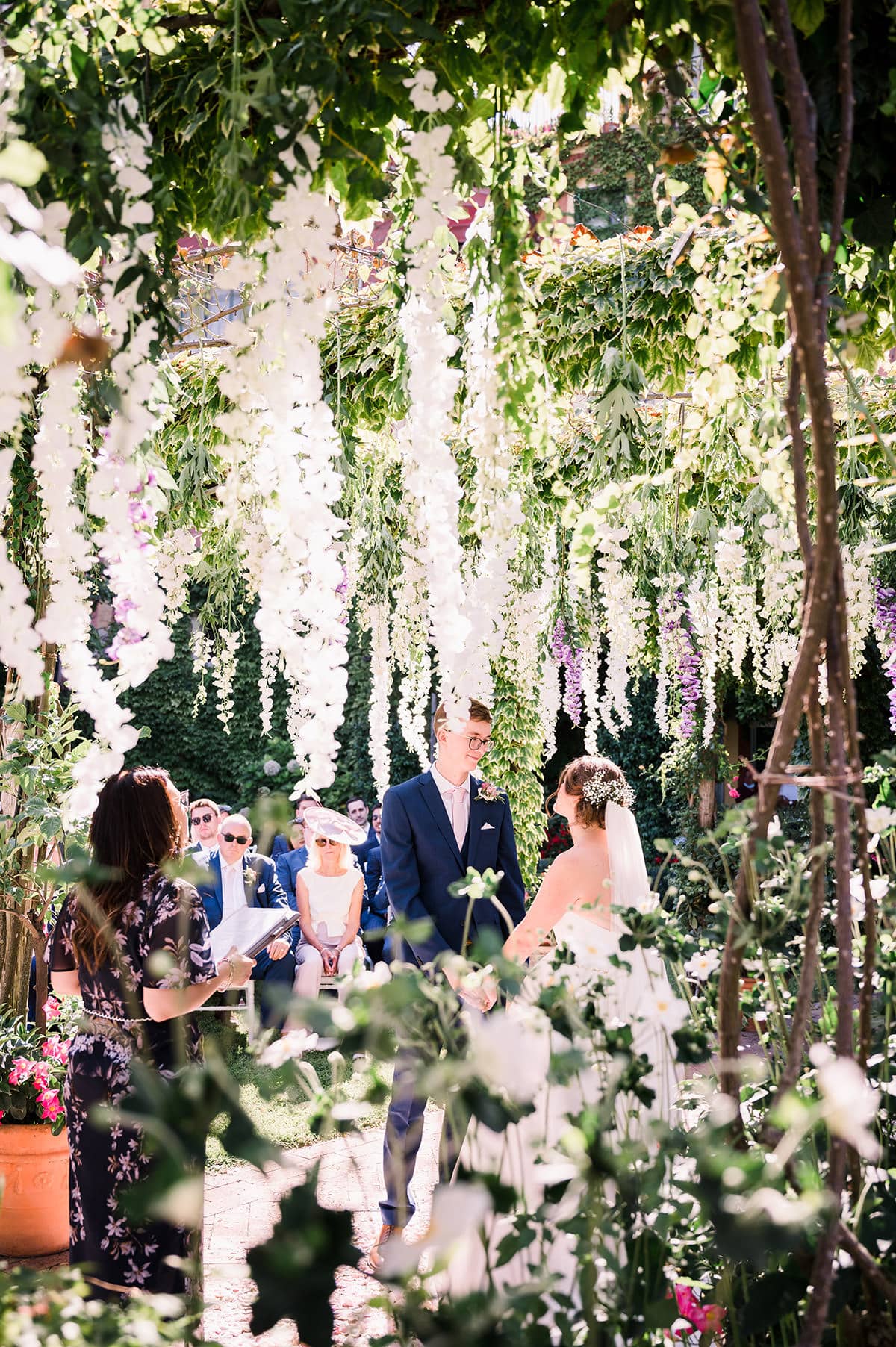
For groups of fifteen to forty guests, the Palazzo Confalone garden is the venue I recommend most often for symbolic. The enclosed courtyard keeps the ceremony intimate regardless of group size, the wisteria pergola in spring adds something no other venue in Ravello can match, and the property is entirely private for the day.

For larger groups, fifty to one hundred guests, the Belmond Hotel Caruso Wagner Gardens give the scale and the drama. The olive trees there provide shade during afternoon ceremonies, which matters when you want guests comfortable for thirty minutes in summer. The Caruso’s exclusive-use arrangement also means you are not managing around hotel guests.

The Villa Eva garden works specifically for couples who want the party to run well past midnight. The indoor soundproofed hall removes the curfew constraint that limits most Ravello venues. If the ceremony in the garden at 6 PM and dancing until 2 AM is what you are planning, Villa Eva is the only venue in Ravello where both are structurally possible.

For very small ceremonies, two to twelve people, the Villa Cimbrone rose garden or crypt can be arranged through the venue for private access. I have used the crypt specifically for elopement-scale symbolic ceremonies where the couple wanted stone vaults and arched sea views rather than an open terrace. The scale of the space makes a small group feel intentional rather than sparse.

For couples who want something free and public, the Giardini della Principessa di Piemonte on Via San Giovanni del Toro requires no permit and no venue fee. The garden faces east, which means morning ceremonies get the best light. On a quiet weekday in May I have had it entirely to myself with a couple and their witnesses for ninety minutes. That option exists. Not everyone needs a booked venue.

What Changes Photographically When the Day Is Symbolic

I notice the difference on the day itself, in a specific way. Civil ceremonies tend to start mid-morning because that is when Town Hall slots are available. By the time the couple finishes the legal part, moves to the reception venue, and is ready for portraits, the light is at its worst: overhead, flat, and hard. I spend a significant part of those days finding shade and working around the midday sun rather than with it.

A symbolic day is different from the first hour. Because I help plan the timeline, and because there is no fixed legal appointment to work around, the ceremony goes when the light is right for that specific venue. Portraits happen immediately after, while the energy of the ceremony is still fresh and before the reception pulls everyone toward drinks and food. The entire sequence of the day runs in the order that makes sense photographically, not in the order the municipal schedule dictates.

This does not mean symbolic ceremonies always produce better photographs. It means I have more control over the conditions, and control matters when the light changes as fast as it does in a mountain town where the ridge cuts off direct sun forty minutes before the official sunset.

If you want to understand how I specifically approach the photography for a day like this, the Ravello wedding photographer page explains the format and how I coordinate with venues and planners ahead of time.

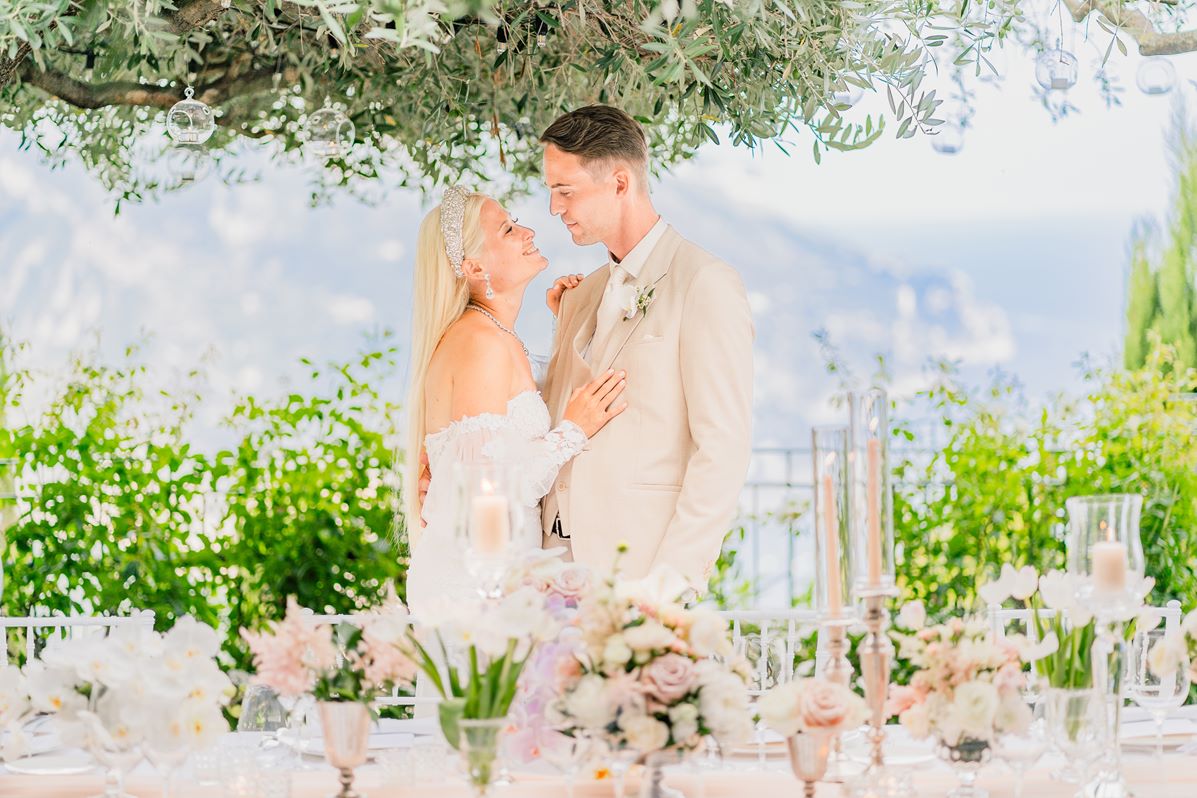
Couple embracing during a romantic symbolic ceremony in Ravello with hanging plants.

The Legal Side: What to Handle at Home

The simplest and most common approach for American couples is a civil marriage at their local courthouse before or after the trip to Italy. Before is more common because it resolves any insurance or paperwork concerns that reference legal marital status. The courthouse ceremony takes fifteen minutes. Some couples make a small event of it, a family lunch after, a photographer for a few shots. Others treat it as pure administration.

After returning from Italy, some couples find a local justice of the peace who will perform a legal ceremony incorporating the vows and readings they used in Ravello. That is less common but it happens. The specifics depend on the state and local requirements.

Either way, the legal event is separate from what happens in Ravello. They do not interfere with each other. The Italian ceremony is designed entirely around what you want, with no reference to the legal calendar.

If you want a civil ceremony in Italy itself, the Ravello Town Hall page covers the full process: documents required, timeline, where it actually takes place, and what the space looks like.

Symbolic Ceremony vs. Elopement: The Difference

Couples sometimes use these terms interchangeably and they mean different things in practice. A symbolic ceremony in Ravello can have two guests or two hundred. The format (personal, non-legal) describes the legal structure, not the scale.

An elopement is typically a very small event: two people, possibly a witness or two, no formal reception. The emphasis is on privacy and simplicity rather than celebration with a group. I cover that format separately on the elopement in Ravello page, including the specific spots in Ravello that work best when the goal is to disappear from the tourist circuit entirely for a morning.

If you are planning a symbolic ceremony with more than twenty guests, a reception, music, and a full-day timeline, the better starting point is the wedding in Ravello guide, which covers venue capacities, costs, and logistics for groups.

Symbolic Ceremony in Ravello: Common Questions

Can we have a symbolic ceremony in English if neither of us speaks Italian?

Amalfi Coast wedding photographer captures a bride and groom reflected in an infinity pool at sunset.

Yes. Most symbolic ceremonies in Ravello for American couples happen entirely in English. If you use a local celebrant, they work in English by default. If you use a friend as officiant, the language is whatever you choose.

Do we need any permits for a symbolic ceremony in a public garden?

Bride in a white lace dress with a long train stands in a garden with olive trees, overlooking mountains.

For public spaces like the Princess Gardens, no permit is required for a small ceremony. For private venues, the venue itself handles access and any internal requirements. I coordinate the logistics as part of planning.

How many guests can a symbolic ceremony accommodate?

Woman in a short white dress walking down marble stairs next to a potted plant.

The format itself has no guest limit. The limit comes from the venue. Palazzo Confalone works up to around eighty guests. Villa Eva and Hotel Caruso can handle larger groups. Two people and no guests is equally possible.

Is a symbolic ceremony recognized back in the US?

Wedding ceremony in a picturesque Italian garden courtyard with a bride, groom, officiant, harpist, and guests.

No, it has no legal standing anywhere. That is the point. The legal marriage happens at home, where the process is in English and takes minimal time. The Ravello ceremony is the emotional and personal event, separate from the legal one.

Can we write our own vows?

Bride and groom posing for a photo, a photographer holding a phone captures the moment.

Yes, and most couples who choose symbolic do exactly this. No script is required. The ceremony can be entirely original, structured around what you want to say to each other and how you want to say it.

How do I start planning a symbolic ceremony in Ravello?

Newlyweds embracing by an infinity pool with a mountain backdrop.

Write to me through the contact page with your dates and approximate guest count. I will tell you which venues have availability, what the light is like for your specific dates, and whether you need a planner or can coordinate directly with the venue. The Ravello wedding planner page explains what the planning service covers if you want full coordination.

OUR RAVELLO RELATED POSTS

EMILIANO RUSSO

Emiliano RussoWritten By