


Amalfi Coast Yacht Photo Session: The Boat, the Hours, the Deck
An Amalfi Coast yacht photo session with nothing else attached: no vows, no guests, no wedding day around it. Which boat works, which hours to buy, and what a moving deck does to the pictures.
An Amalfi Coast yacht photo session is the one booking where the location moves while I work. There is no ceremony in it, nobody is getting married, and without a timeline to serve, the whole session can be built around the two hours when this coast looks like itself.
People book it for three or four reasons. A couple who has chartered a boat for the day and would rather have real photographs than phone snaps. Two people celebrating something with no ceremony involved. A pair of wedding guests with a free afternoon and a hired skipper. What they have in common is that the boat is the session rather than a transfer between two places on land.


Why the Water Solves the Problem the Coast Creates
Photographing this coastline from the coastline is a fight. The towns are vertical, the good spots are narrow, the stairs are full by nine in the morning, and half the day the light is coming straight down between buildings that block it.
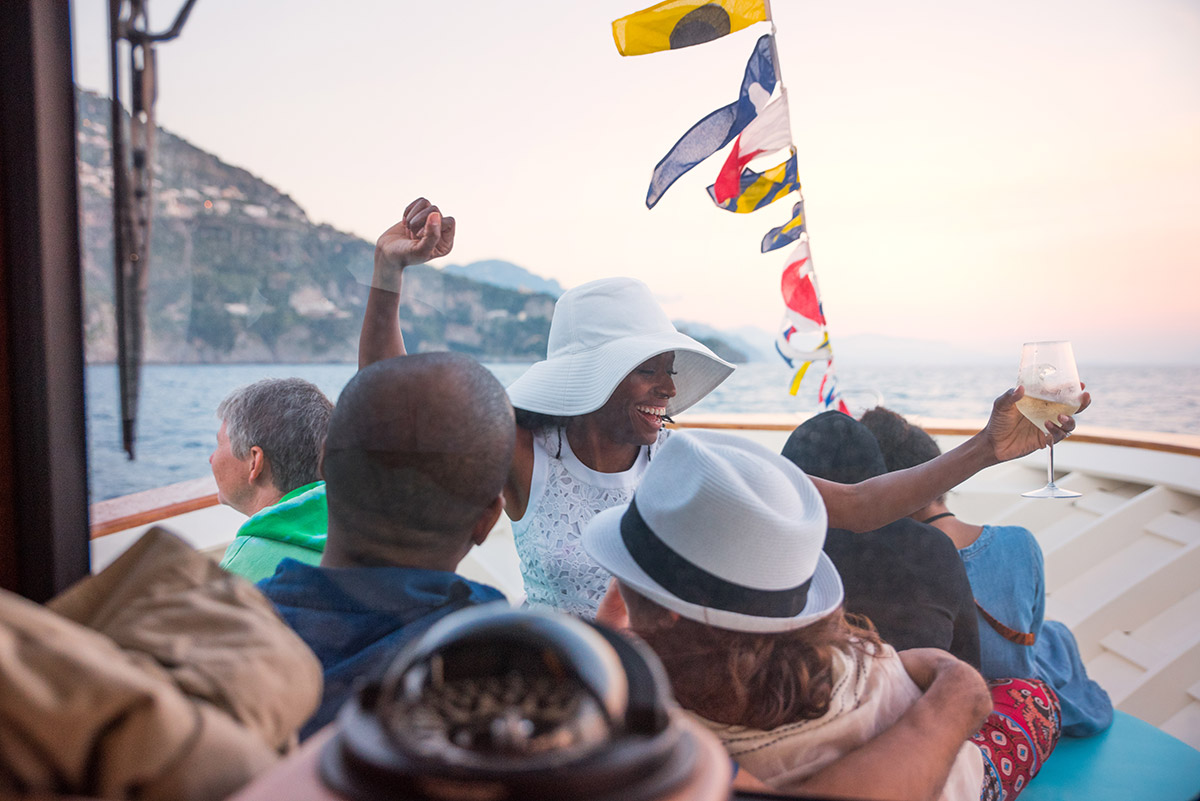
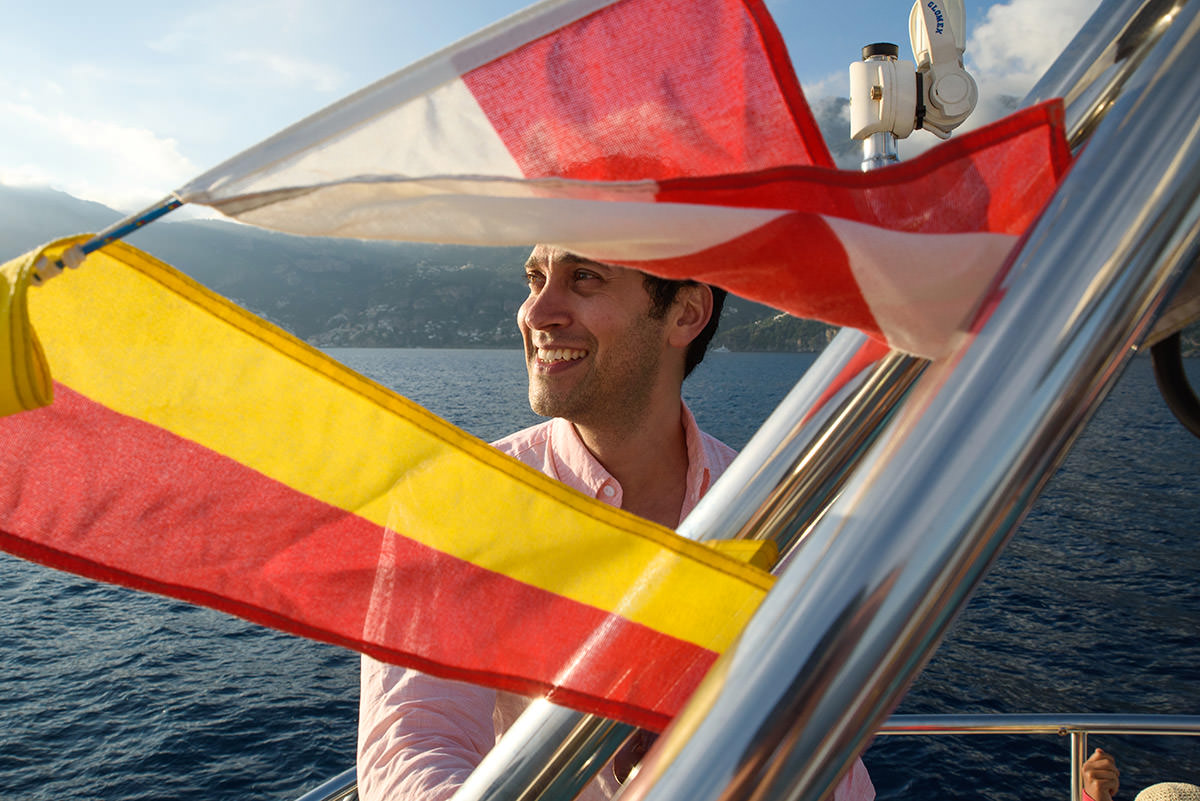
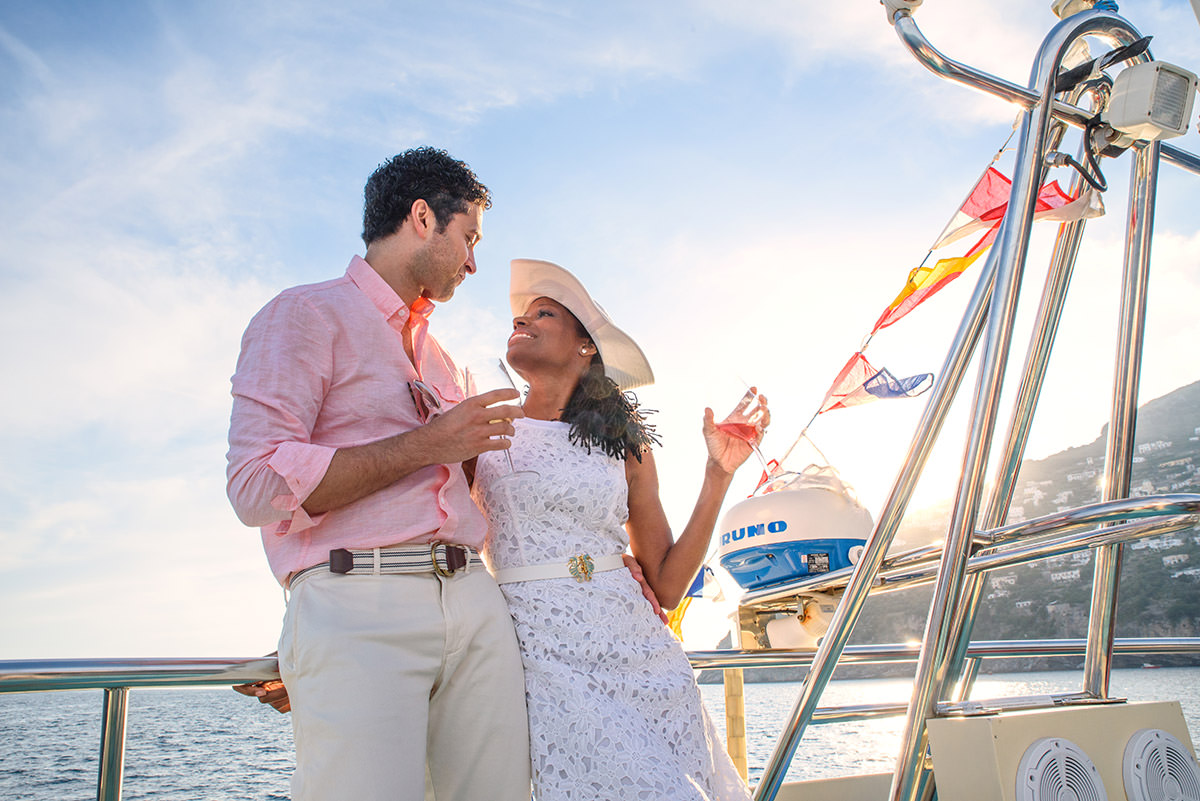
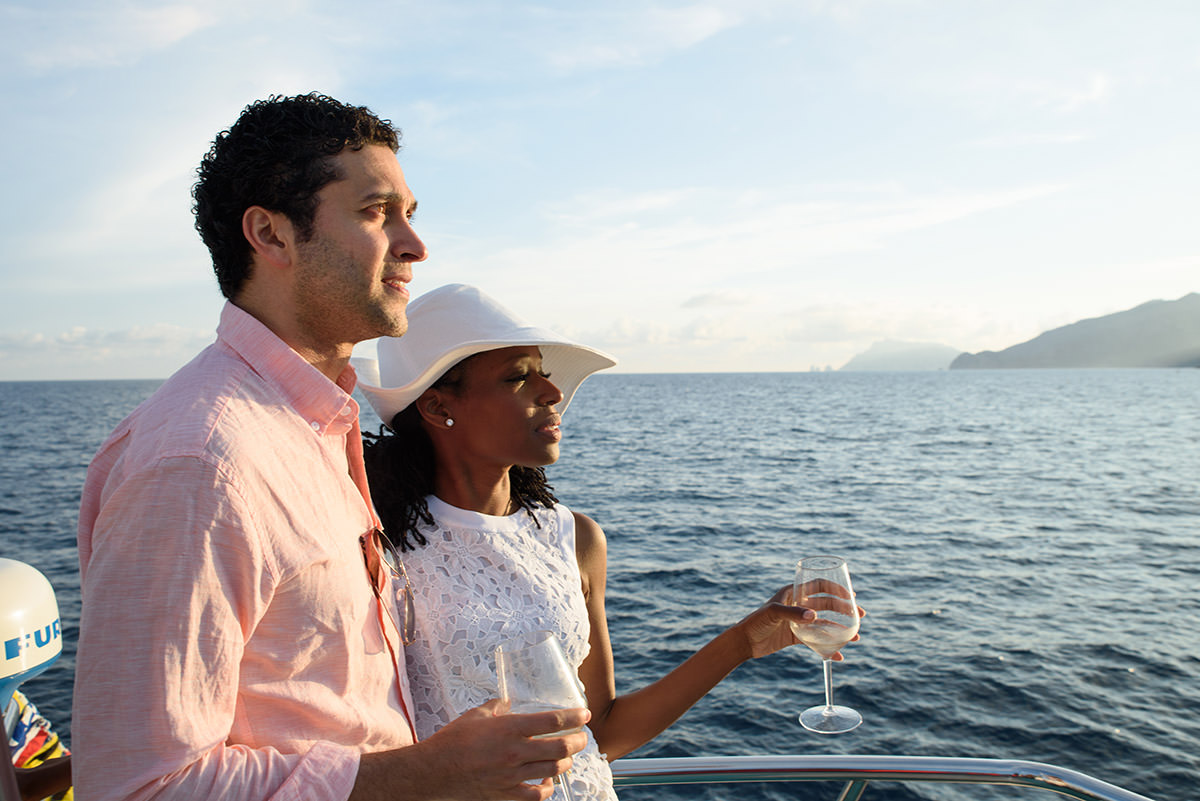
From the water all of that inverts. There is no crowd, because the crowd is on land. Nobody queues for the viewpoint. The light comes off the sea and lifts into faces instead of falling on top of them, which is the single biggest technical difference and the reason the pictures look softer without anything being done to them.
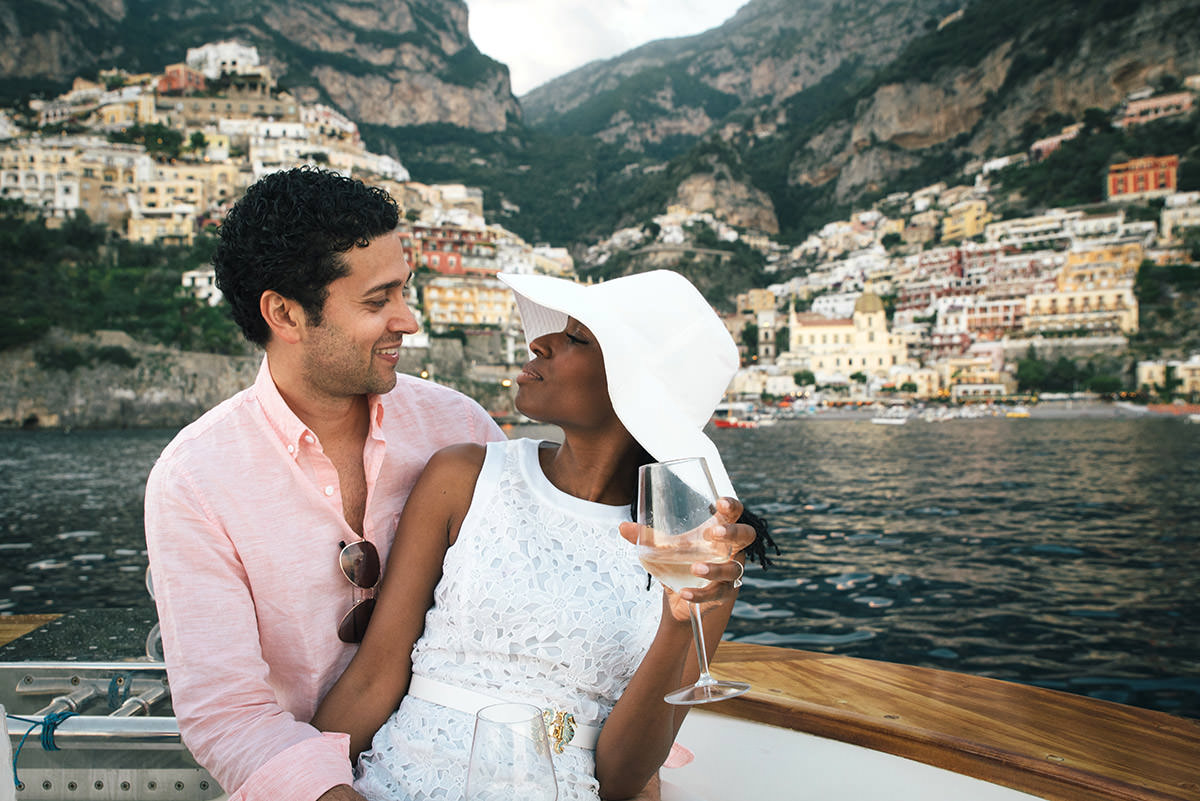
You also get the thing the towns cannot give you: the whole coast in one frame, with the couple in it. It is the same reason I take couples off the stairs whenever the day allows it, whether the session is on the water or on foot along the Amalfi Coast itself. From Positano’s beach you photograph Positano. From four hundred meters offshore you photograph Positano and the mountain behind it and the water in between, which is what people actually picture when they imagine being here.


Gozzo, Motor Yacht or Sail
The Gozzo, and Why I Suggest It Most Often
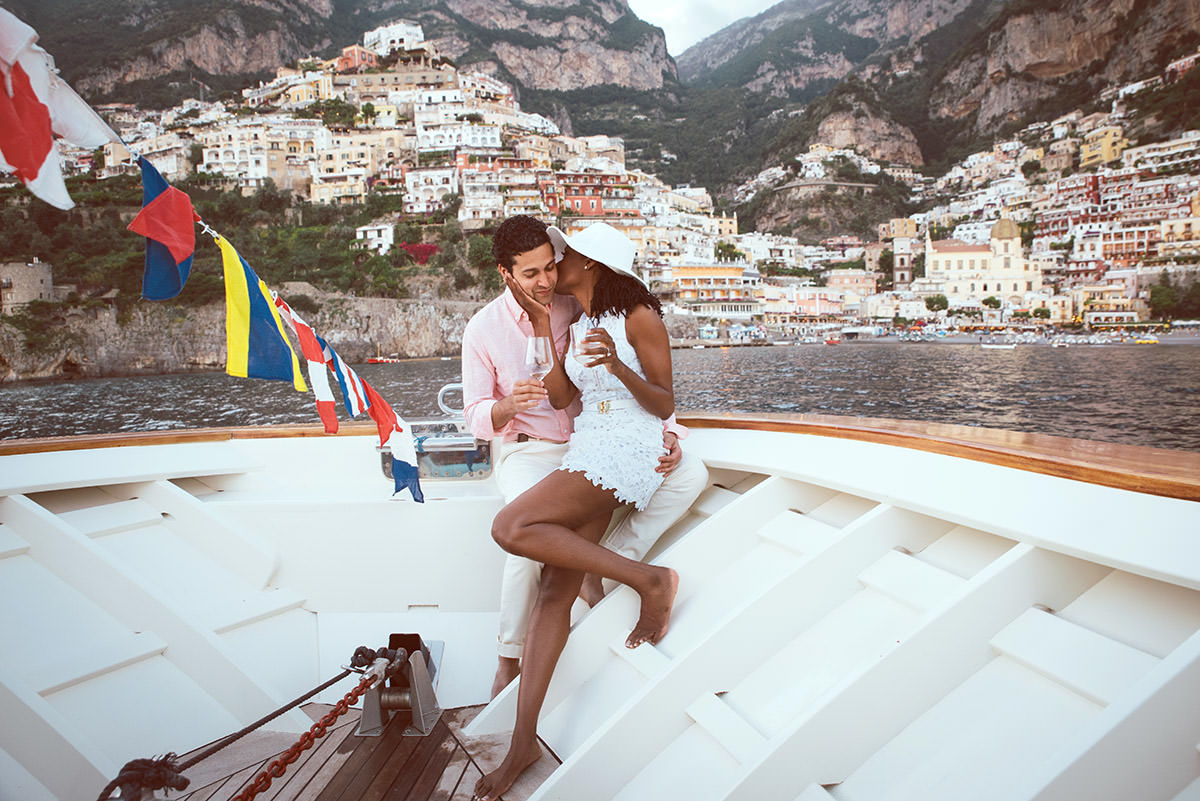
The traditional wooden boat of this coast is smaller than what most people picture when they say yacht, and it photographs better than almost anything larger. Low sides, warm wood, a shape that belongs to this coast rather than sitting on top of it.
Low sides matter more than they sound. On a low boat the sea is right there beside you in the frame, and someone sitting on the edge with their feet near the water reads as being in the place. On a high-sided motor yacht the water disappears below the rail and you end up photographing people on a white platform that could be anywhere in the Mediterranean.
A Motor Yacht Gives You Height and Takes Intimacy
A larger motor yacht gives you space, shade, somewhere to change and a flybridge with a genuinely different point of view. For a group it is often the only sensible answer, and the upper deck gives me a height I cannot get anywhere else.
What you give up is intimacy in the frame. Two people on a big deck look small, and the pictures start to be about the boat. The way round it is to work close and use the details, which is a deliberate choice rather than a compromise, and worth agreeing before the day rather than discovering in the gallery.
Sailing Boats, Which Are the Hardest and the Best
A sailing yacht under canvas is the most cinematic of the three and the most demanding to work on. The deck tilts, the boom moves, the crew is working, and the good frames happen in the seconds when the sail fills and the light comes through it.
I have photographed a full wedding on one, told in a luxury boat tour between Amalfi and Positano. Without a ceremony, nothing has to happen at a fixed minute.

The Two Hours Worth Paying For
Boats get chartered by the day or the half day, which tempts people into starting at eleven in the morning because that is when the charter begins. The middle of the day is the worst light of the twenty four hours and the water is at its busiest.
The hours that repay you are the first ones after sunrise and the last two before sunset. Early, the sea is flat, the ferries have not started, and the towns are still in shadow with the light hitting only the top of the cliffs. Late, everything turns warm, the water goes gold and then blue, and the boats that were out all day are heading in.
If the charter is yours for the whole day, use the middle of it for swimming and lunch and keep me for the ends. That is usually the honest advice, and it costs you nothing. The same two windows govern the town-specific version of this session, a yacht photo session in Positano, where the boarding point is fixed and the timing matters even more.


Looser Frames, and Light From Below
Two things change the moment we leave the harbor, and both are worth knowing before you look at the gallery.
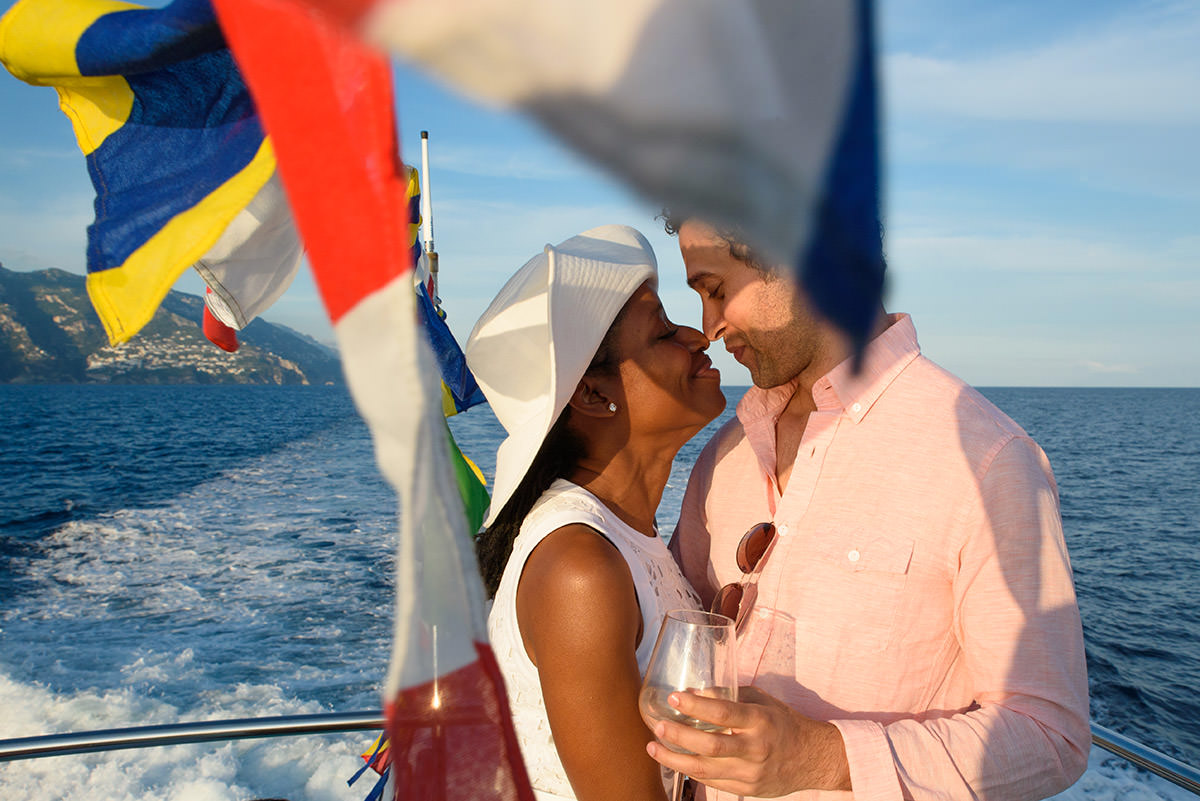
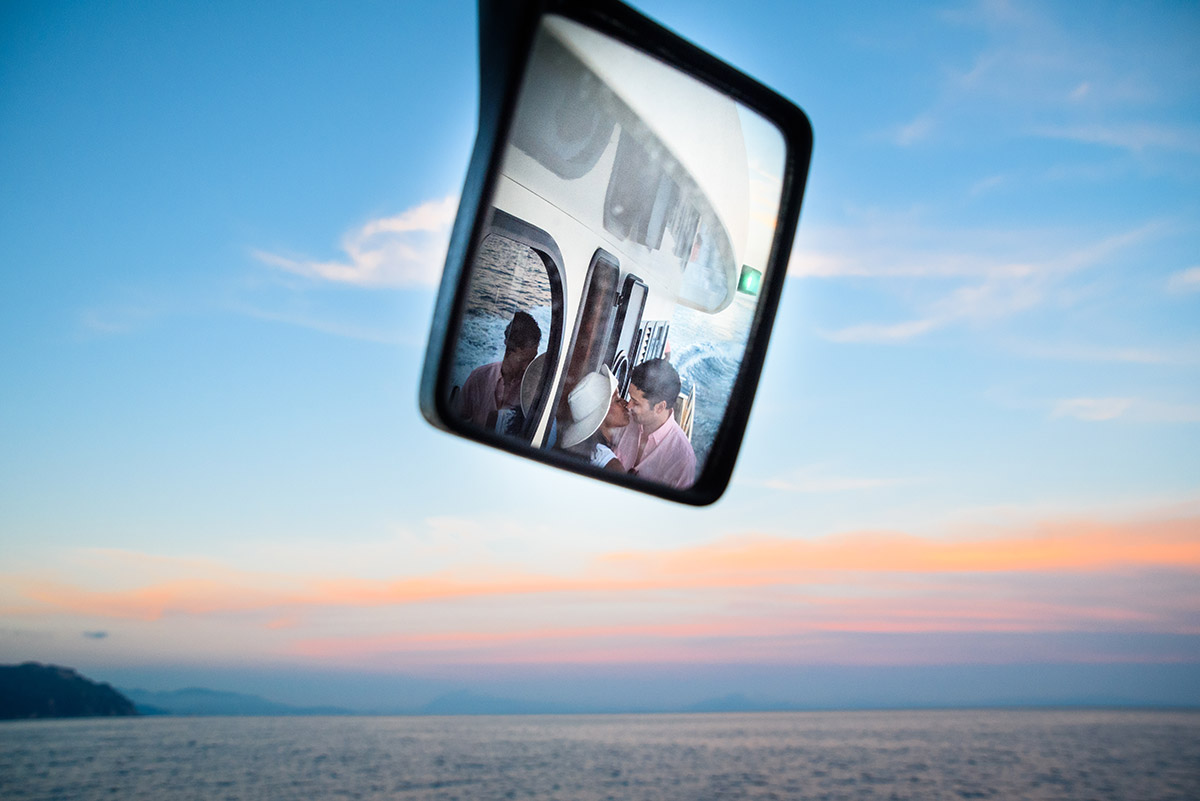
The first is that everything is looser. On land I can place people precisely and wait. On a boat the horizon tilts, the light swings as the hull turns, and a composition I set up disappears in four seconds. The frames that survive are the ones with movement in them, and most couples end up preferring those to the arranged ones. A few do not, and that is worth saying out loud rather than discovering afterward.
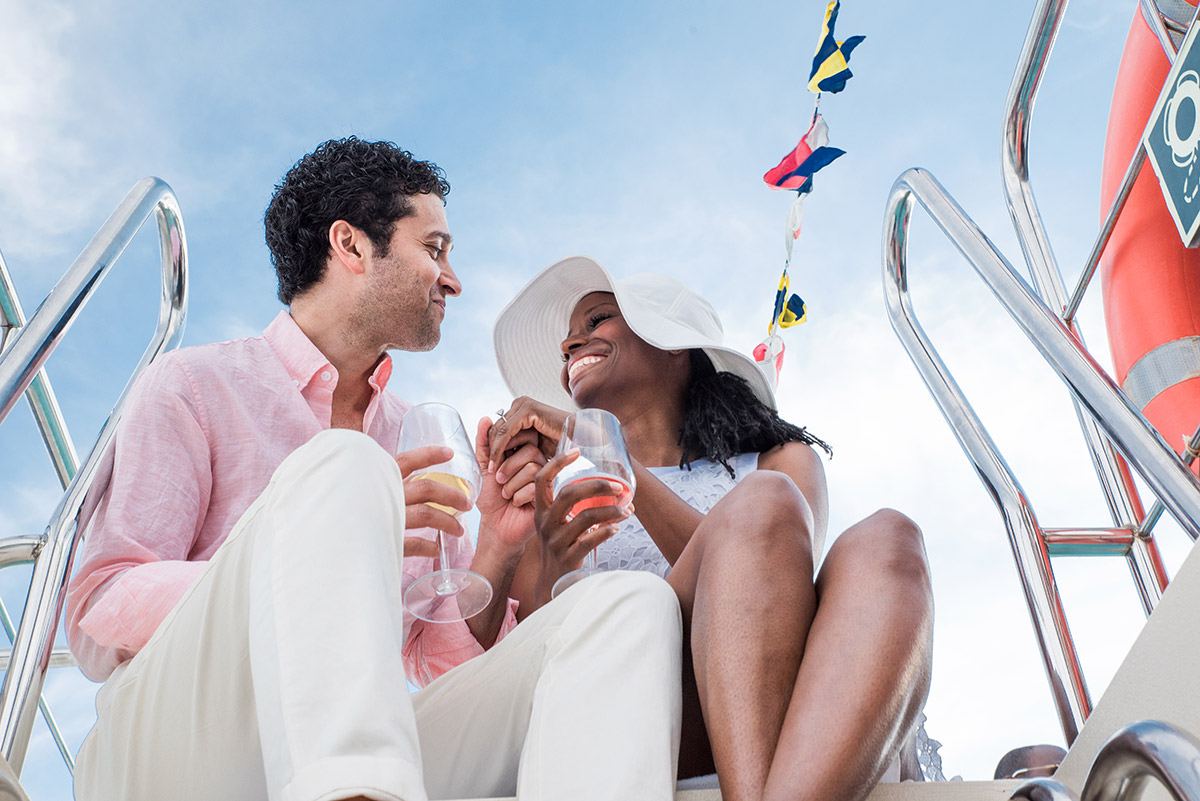
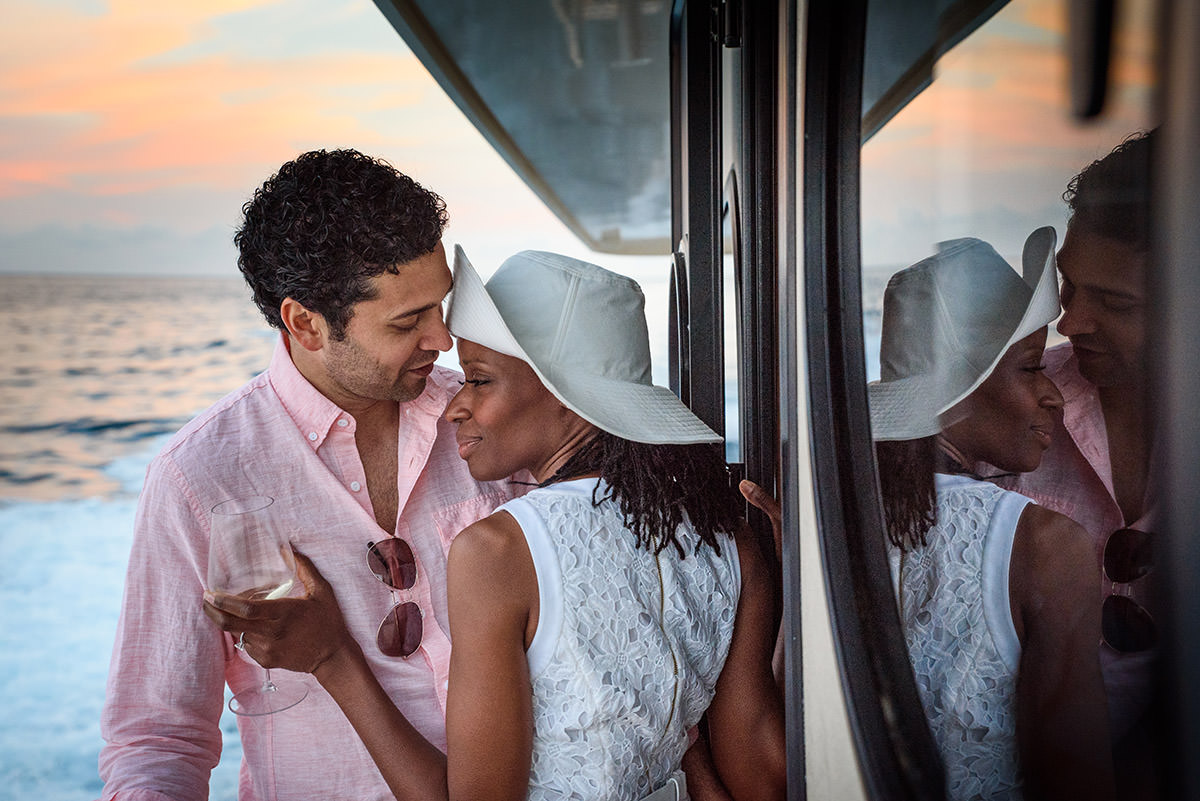
The second is that the sun is above you and reflecting off the water at the same time, which is a demanding combination. It also means faces are lit from below, which is flattering in a way that land almost never gives you for free.



Where a Session Goes Once You Leave the Harbor
The route depends on where you board, and there is no single itinerary worth reciting. What follows is what actually holds up in front of a camera.
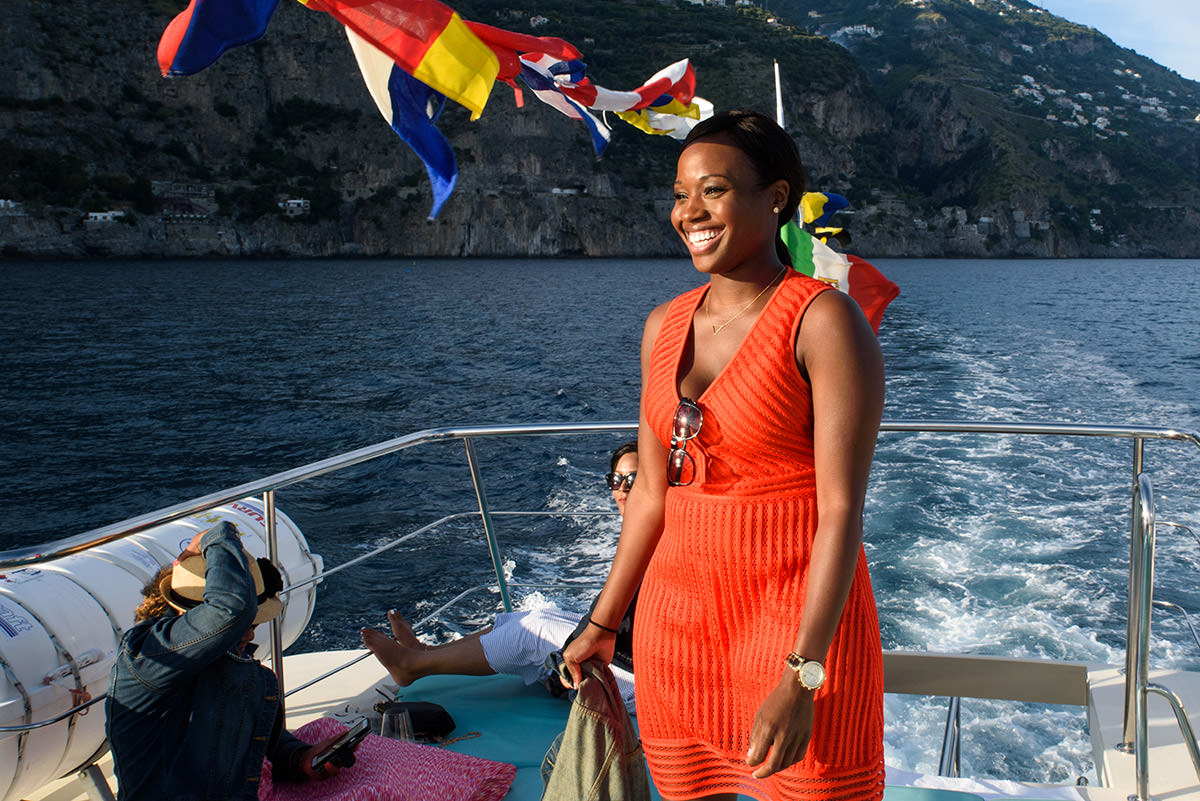
The stretch between Positano and Praiano gives you the towns from the angle nobody sees from the road. Further along, the coast turns to rock and the villages disappear entirely, which makes a completely different picture and one most visitors never take home. Li Galli, the small islands off Positano, work best in the last hour when the light comes low across them.
Caves and narrow inlets photograph beautifully and behave badly: the boat cannot hold position, the light drops several stops, and you get a handful of frames rather than a sequence. Worth doing, worth not building the session around.
The Price of an Amalfi Coast Yacht Photo Session, and Who Charters the Boat
The photography starts at 1,800 euros with two photographers for two hours, VAT included, the same as any other session of this kind, and one photographer alone is possible for 1,450 euros.
The boat itself is separate, and it is not my service. You hire it from a skipper or a charter company, and the price varies so much with the vessel, the season and the number of hours that any figure I published would be wrong by the time you read it. Once the session is booked, I send you the skippers I work with and we choose together which kind of boat suits what you have in mind and which hours to book it for, which is the part that actually changes the pictures.


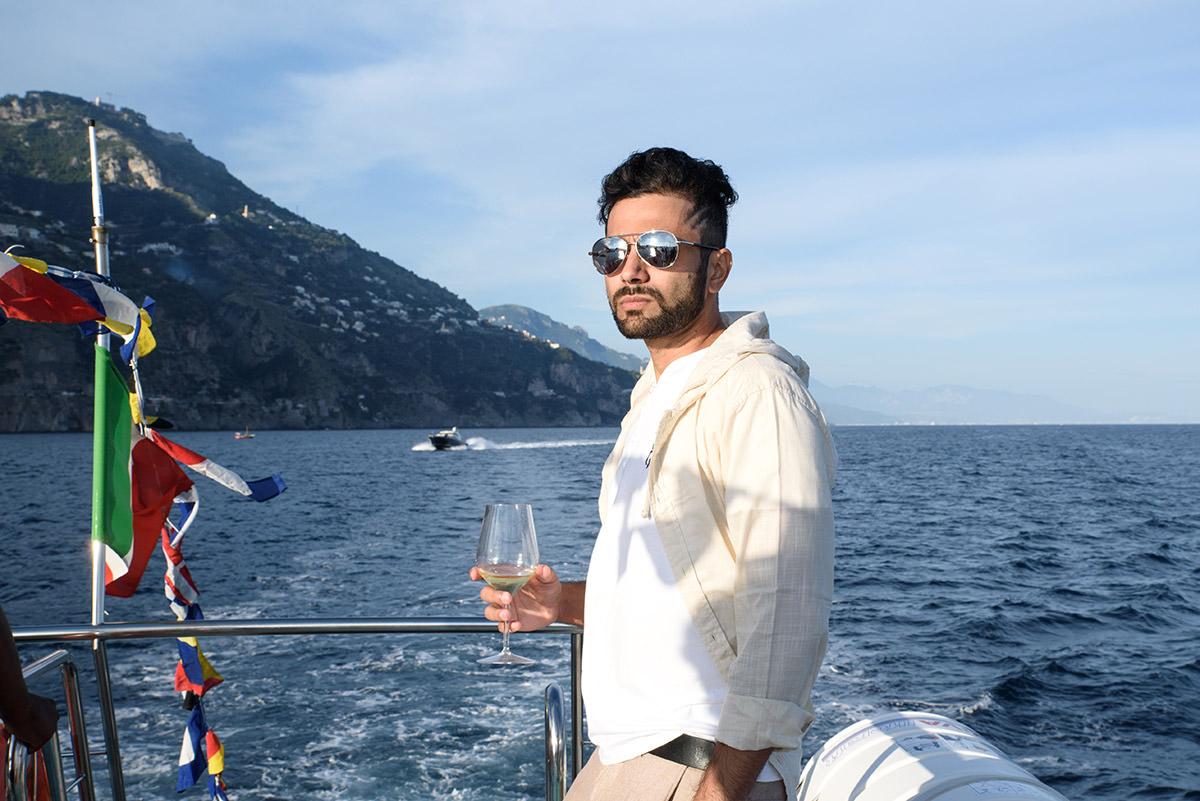
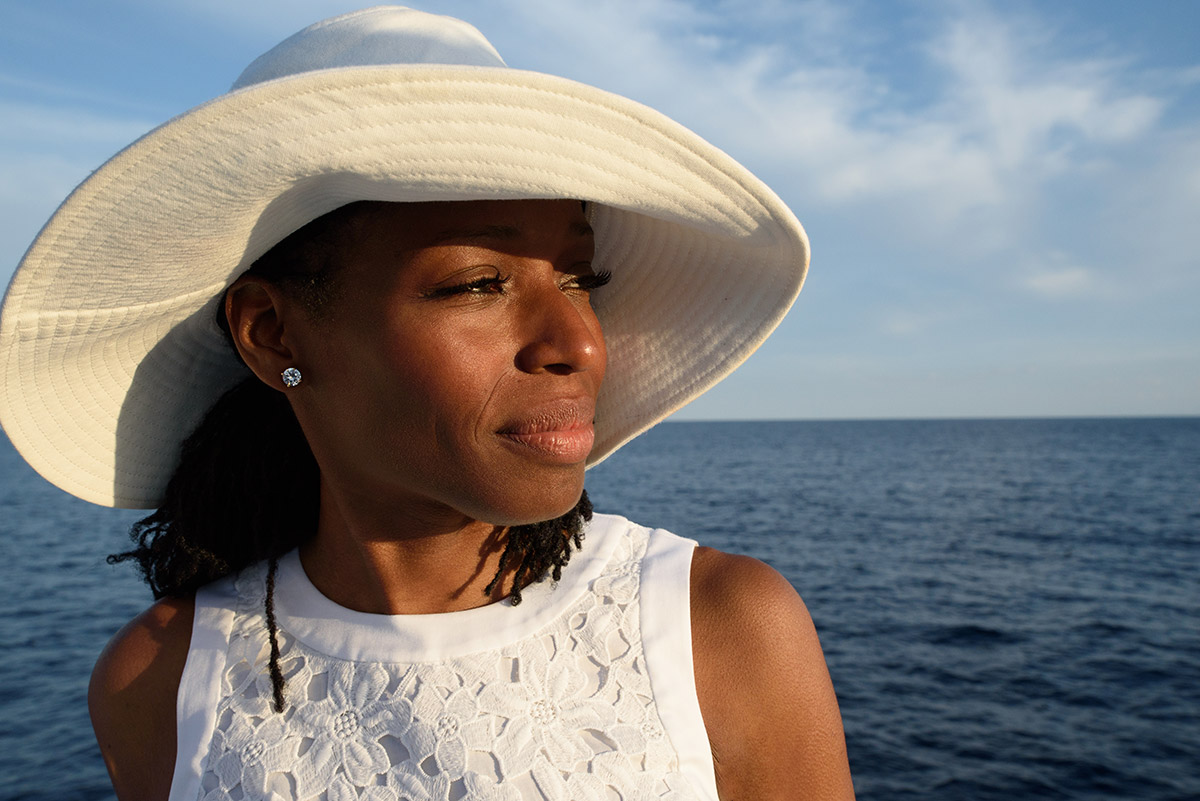
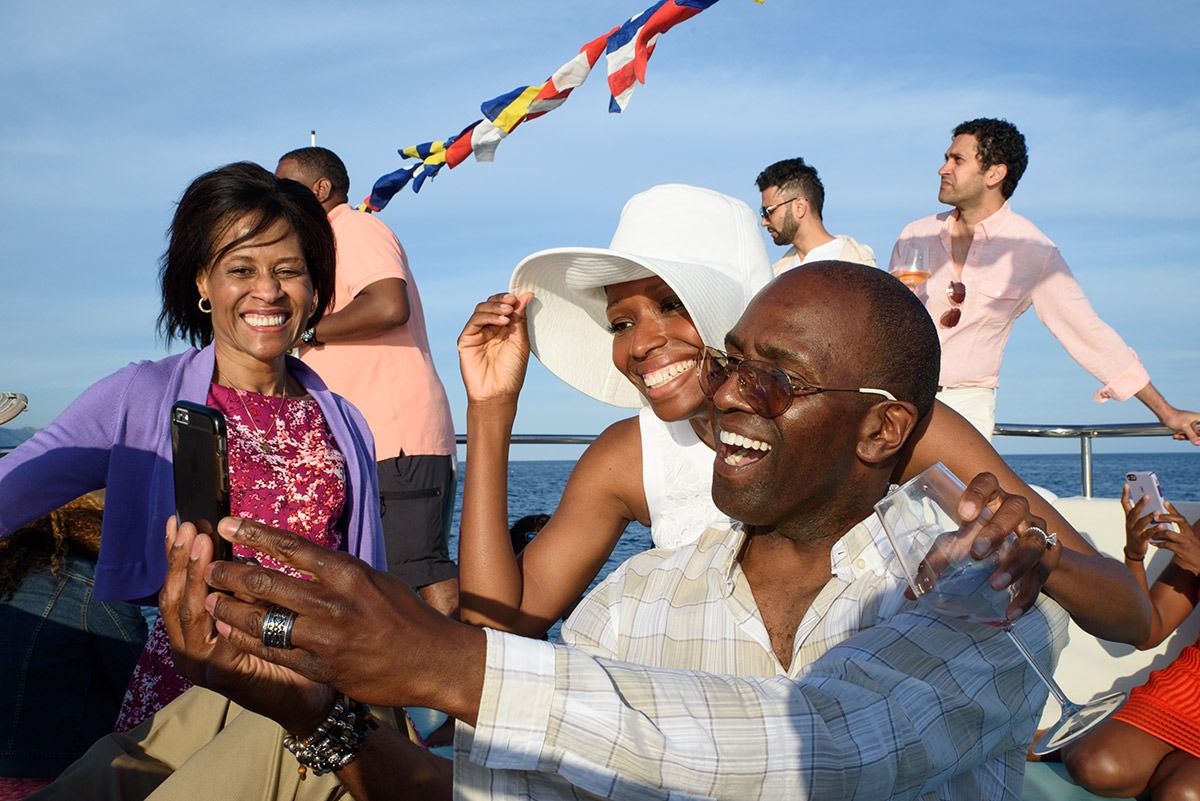
A second photographer earns their place on a boat more than on land. Somebody works close while the other holds the wide frame from the bow, and on a deck where nobody can move quickly that is the difference between covering a moment and missing it.
Two Aboard, Six Aboard, and the Deck in Between
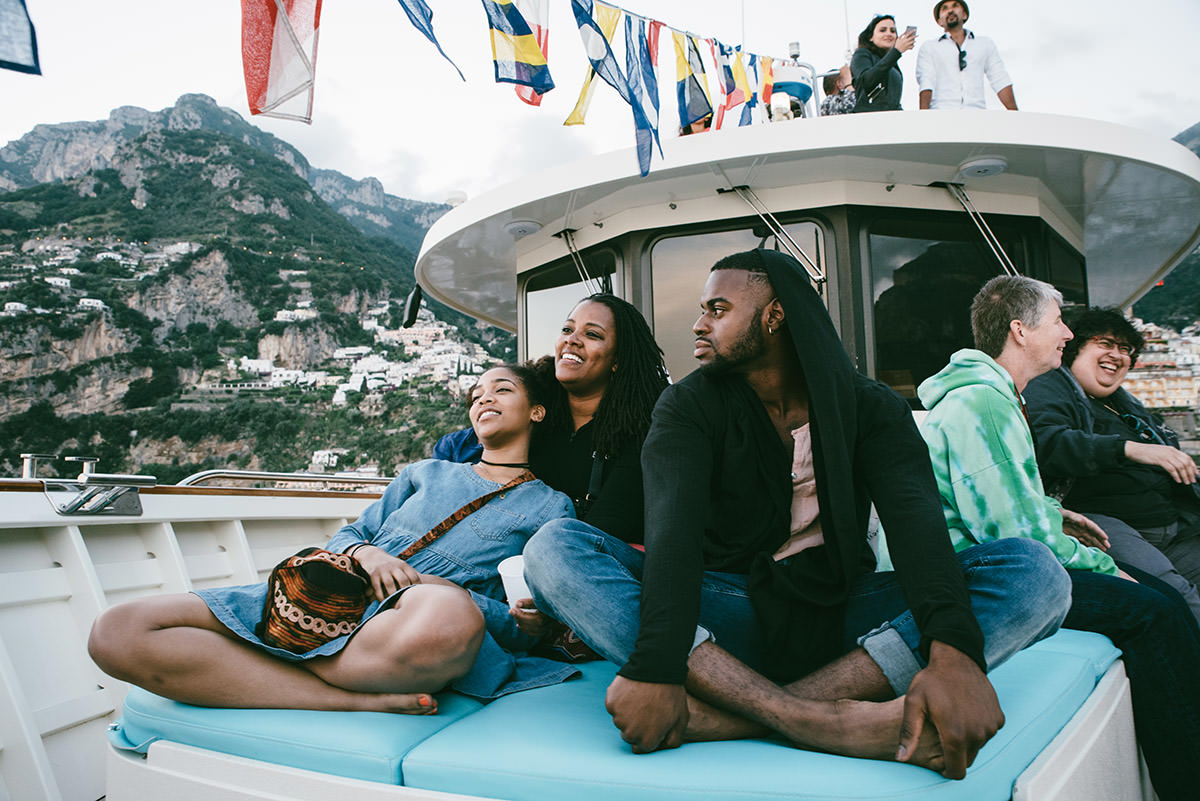
Two people work on any boat. Four still work on most. Above six the deck starts to dictate the photographs rather than the other way round, because there is nowhere to stand back to and nowhere for anyone to go while somebody else is being photographed.
Groups are perfectly possible, and they need a larger boat booked for the purpose rather than the small wooden one that would have been prettier. If the group is a wedding party rather than a private session, the version built for guests is a boat trip from Praiano, which is a different exercise with a different rhythm.
Clothes That Survive the Wind
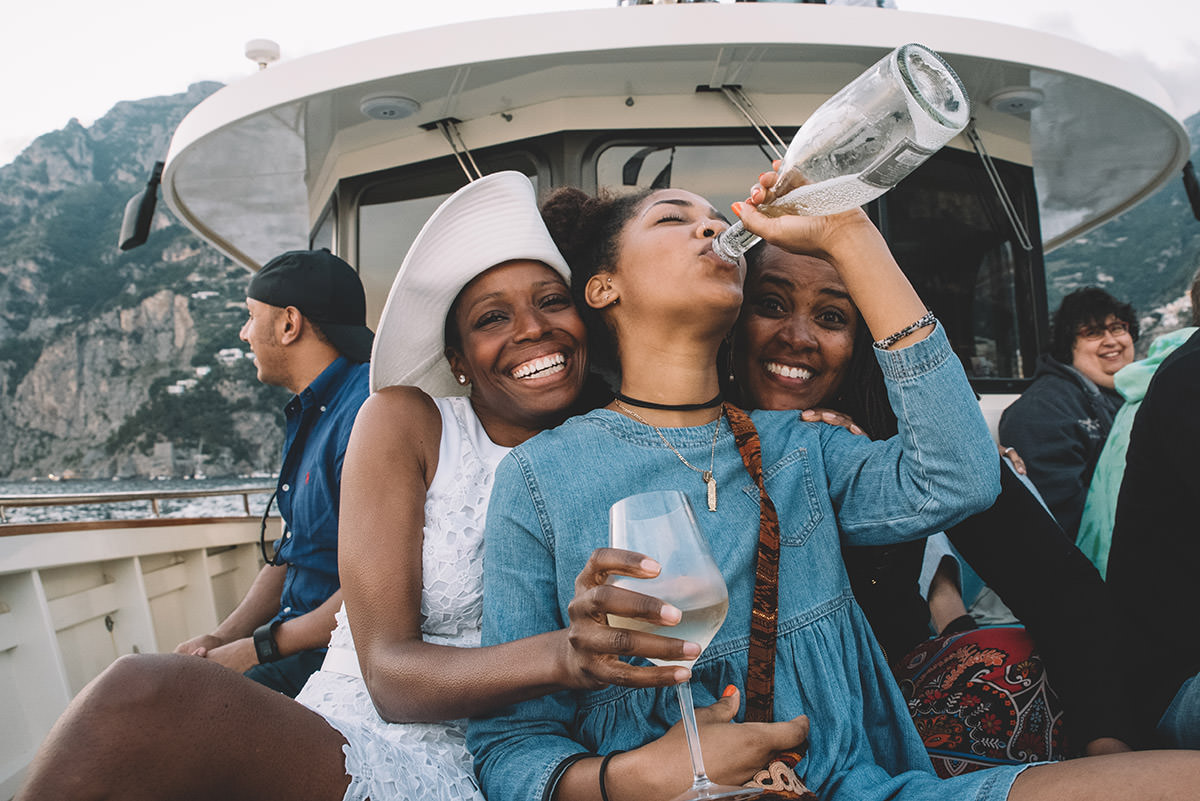
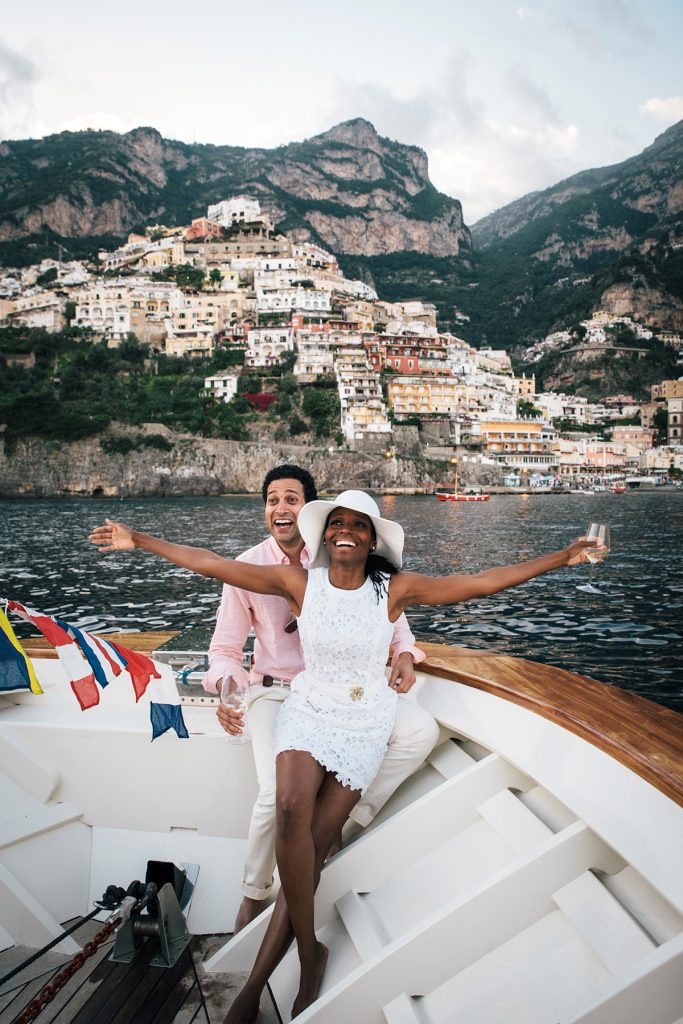
Everything loose becomes weather on a moving boat. A long dress will do something spectacular and completely uncontrollable, which is worth wanting rather than fighting, and worth deciding in advance.
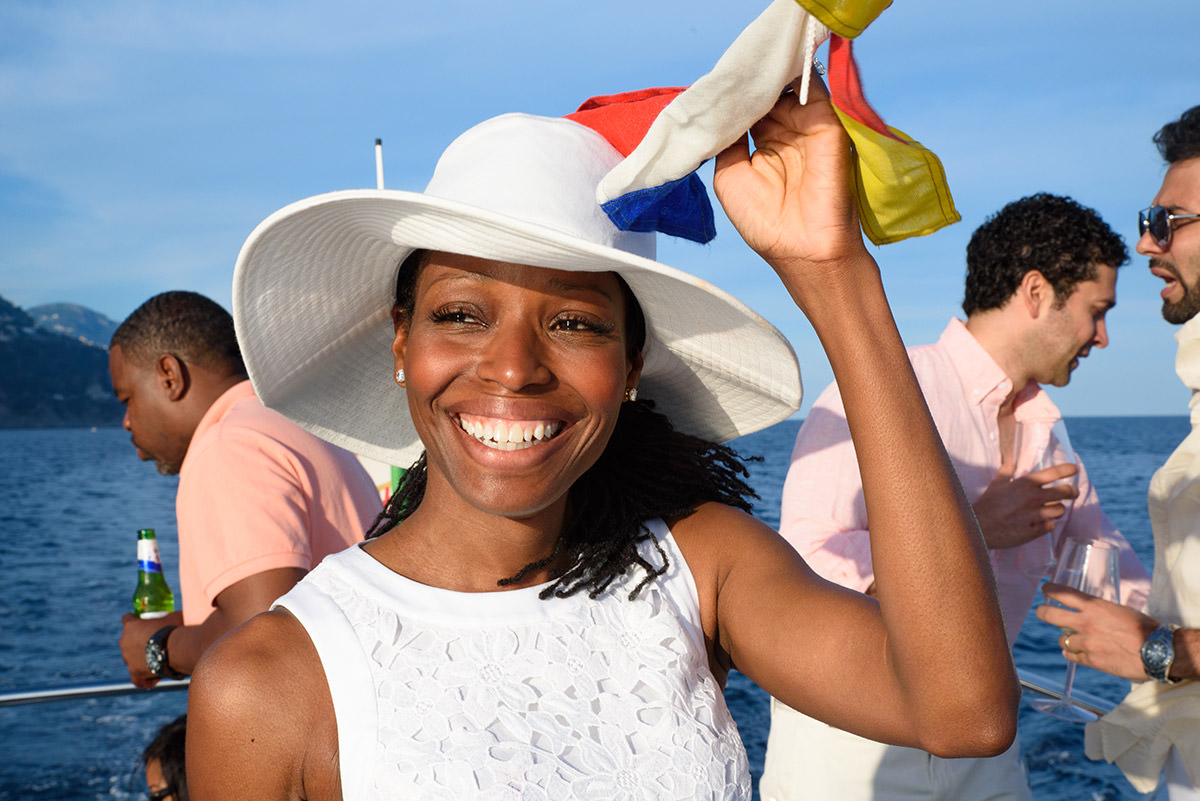
Hats leave and do not come back. Heels are unusable on wet teak and get taken off in the first five minutes anyway, so bare feet are the honest plan. Light fabrics move well and dark ones photograph flat against a bright sea. Bring a second layer for the last hour, because the temperature drops once the sun is off the water and nobody ever expects it to.
Seasickness, and the Conversation Nobody Has
Seasickness is the worry people mention last, usually once we are already out. The sea here is calmer from June to September and choppier at the edges of the season, and the smaller the boat the more you feel it.
If you know you are susceptible, say so when you write. It changes the sensible choices: a larger hull, a route that stays closer to shore, morning rather than late afternoon when the wind gets up. All of that is easy to arrange in advance and impossible to fix once we are an hour out.
Wind, Lemon Terraces and Days to Stay Ashore
Wind cancels boats, and it does so on days that look perfectly fine from a hotel terrace. A session that depends entirely on being on the water has a real chance of moving, so I would rather book it on a day with something after it than on the last morning before a flight.
There are also sessions that simply belong on land. If what you want is the painted facades, the tiled staircases and the lemon terraces, those are not visible from a boat, and the version of this session that walks through the towns is an Amalfi Coast couple photoshoot. Plenty of people do half of each, which works well and needs the day planned in one direction rather than both.

If There Is a Wedding in the Same Week
Boat sessions attach themselves to wedding weeks constantly, and they work best on the day after rather than the day before. Nobody has anything left to organize, the mood is completely different, and the couple finally has time that belongs to them.
What I would avoid is putting a boat on the wedding morning. The sea decides whether it happens, and building a fixed morning around something the weather can cancel puts pressure on the part of the day with the least slack in it. If the ceremony itself is meant to happen on the water, that is a different page and a different set of rules, covered in eloping on a boat in Positano. And if the wedding is still being planned around the coast in general, the wider picture is a wedding on the Amalfi Coast.

What to Send Me Before You Charter Anything
Four things let me answer properly about an Amalfi Coast yacht photo session: your dates, where you are staying, how many people are coming aboard, and whether you have already booked a boat. If the boat is booked, tell me what it is, because the vessel changes the plan for the hours more than anything else does.
If it is not booked yet, write before you charter it, so the boat and the session can be planned together rather than one around the other. Tell me which day of your trip is still open, and I will come back with availability and the price for that day.
Two questions
From a Boat Session to Vows on Deck
Mixing the boat with the town, and saying your vows on board.

Can we combine the boat with a session in town?
Yes: walk the town in the early morning and take the boat for the last hours of light. It runs smoothly when the boarding point is close to where we finish on foot, which is the first detail I fix when we plan the day.
Can we turn the boat session into a ceremony on board?
Yes. A symbolic ceremony has no legal side, so a celebrant can lead your vows on deck with the coast behind you. At that point it is an elopement rather than a session: on my list for this coast it starts at 2,000 euros for three hours with a photographer and an assistant, and the boat and the celebrant stay separate bookings.

MORE SESSIONS ON THE WATER HERE
MORE READING BEFORE YOU BOOK A BOAT SESSION


 Written By Emiliano Russo