
The Dress That Didn’t Whisper: A Ruffled Ballgown Wedding in Positano
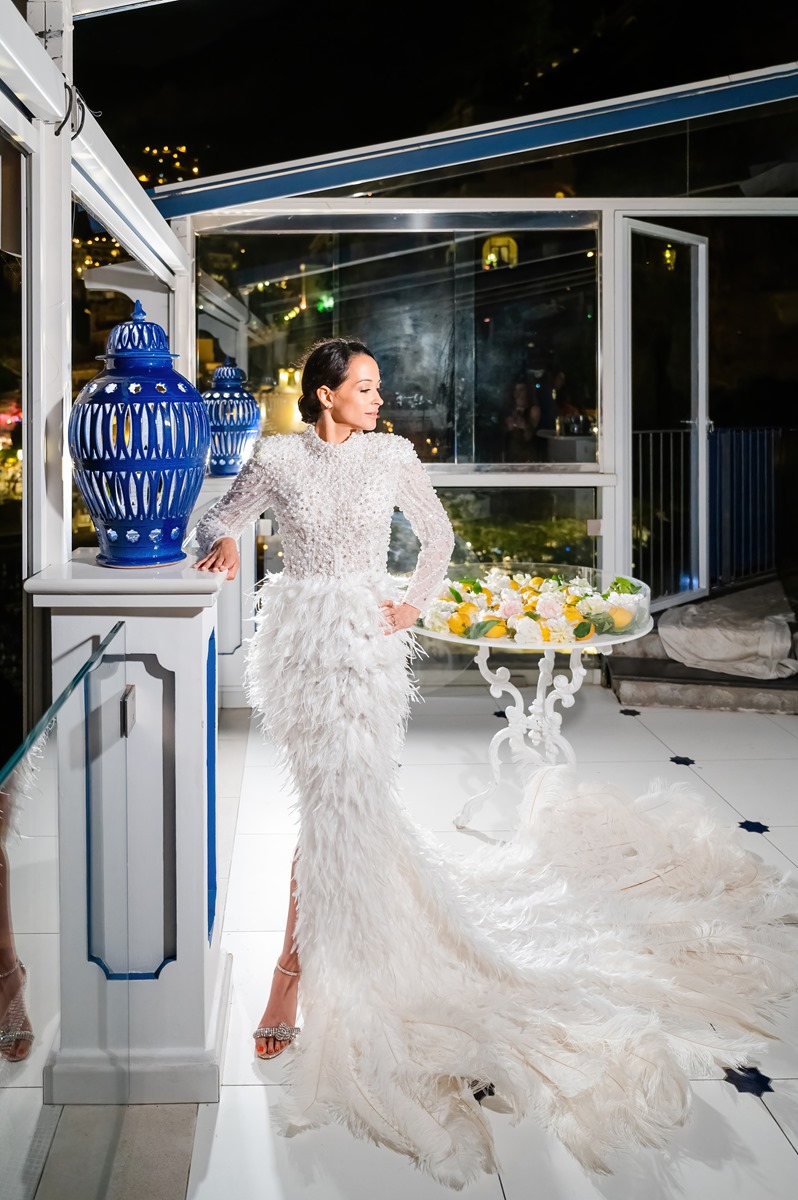
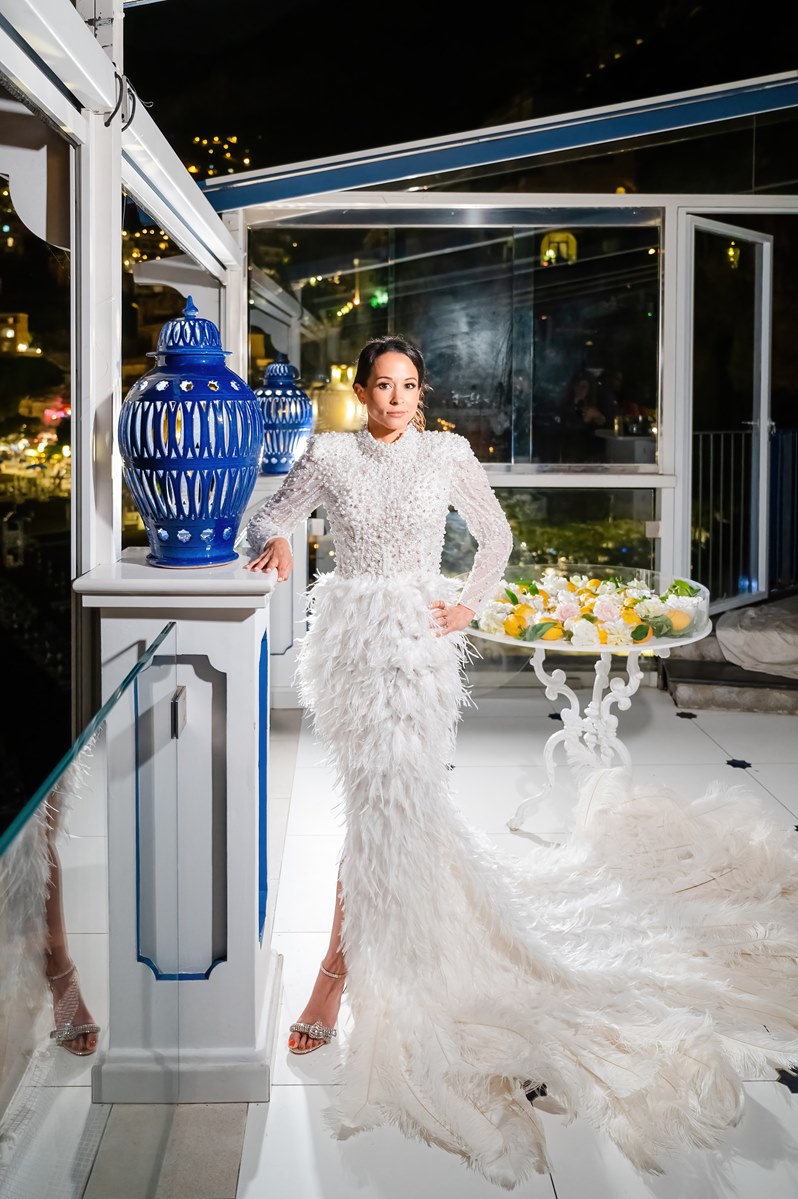
A tiered ruffled ballgown, five gold mirrors, and a pair of shoes displayed like art. What a maximalist dress does in Positano.
A BALLGOWN THAT REFUSED TO WHISPER QUIETLY
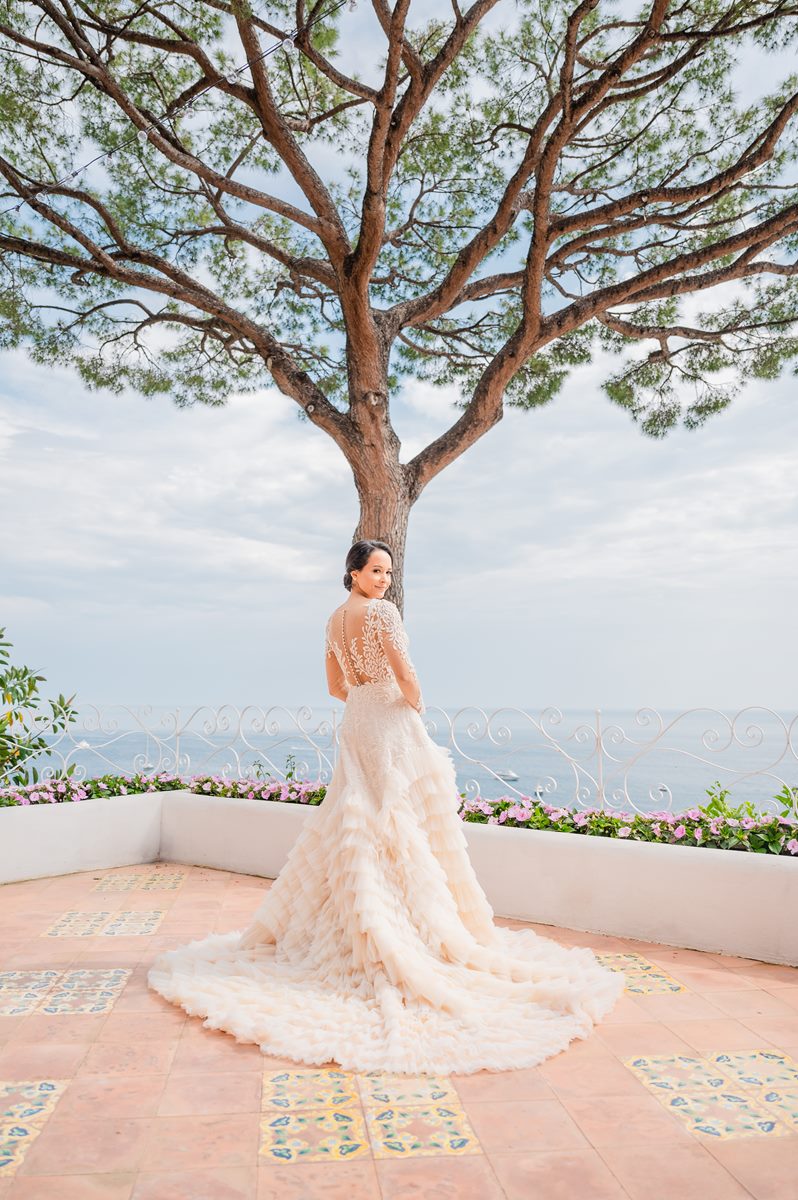
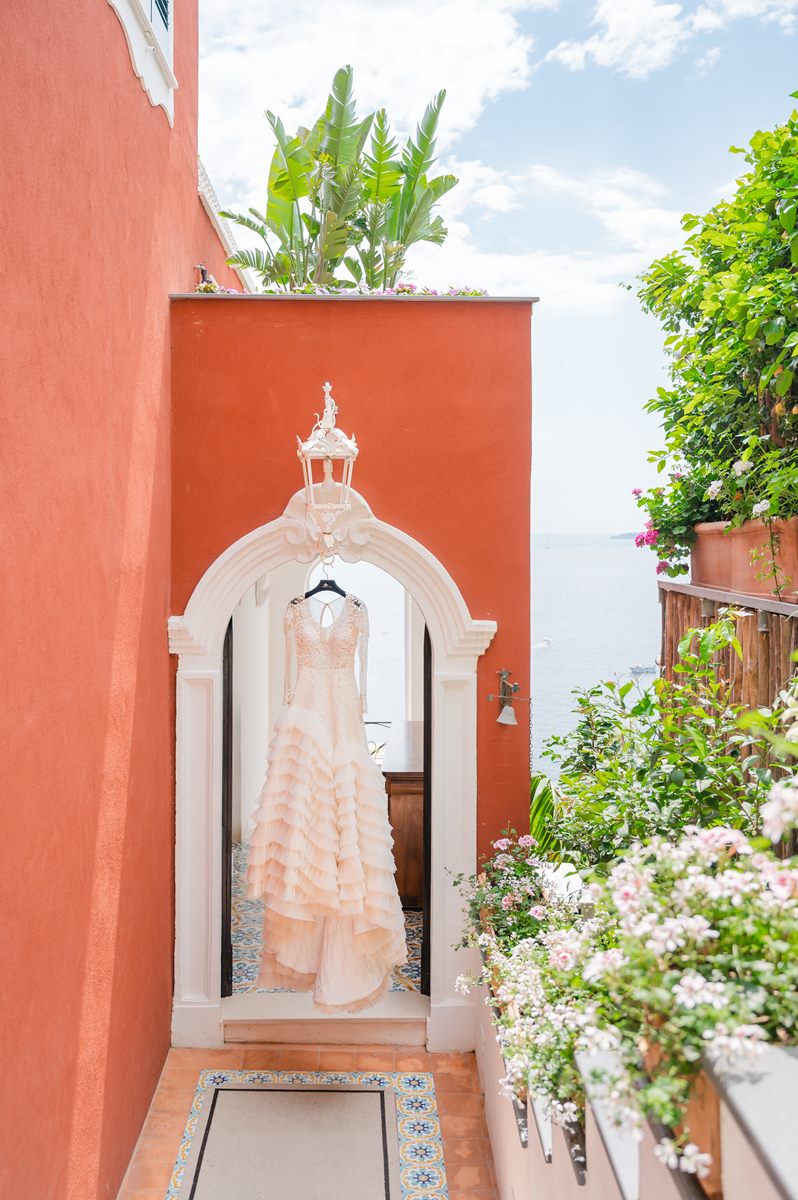
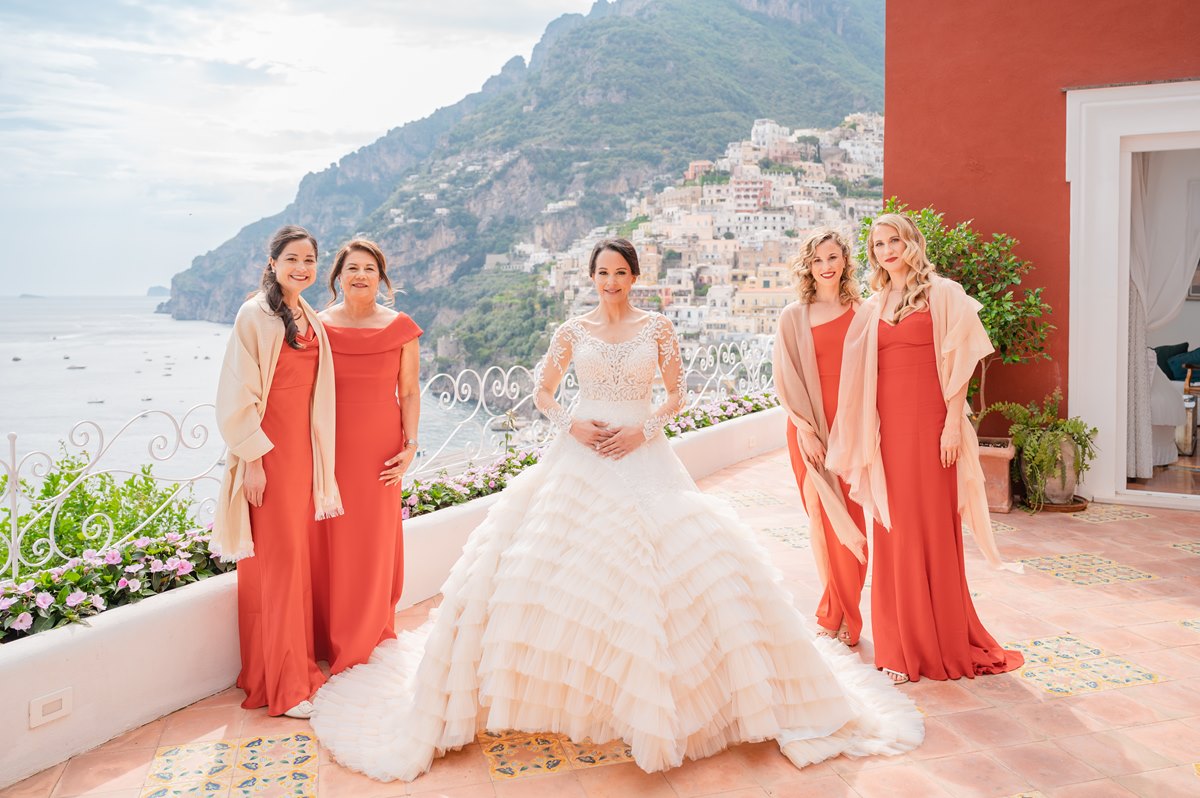
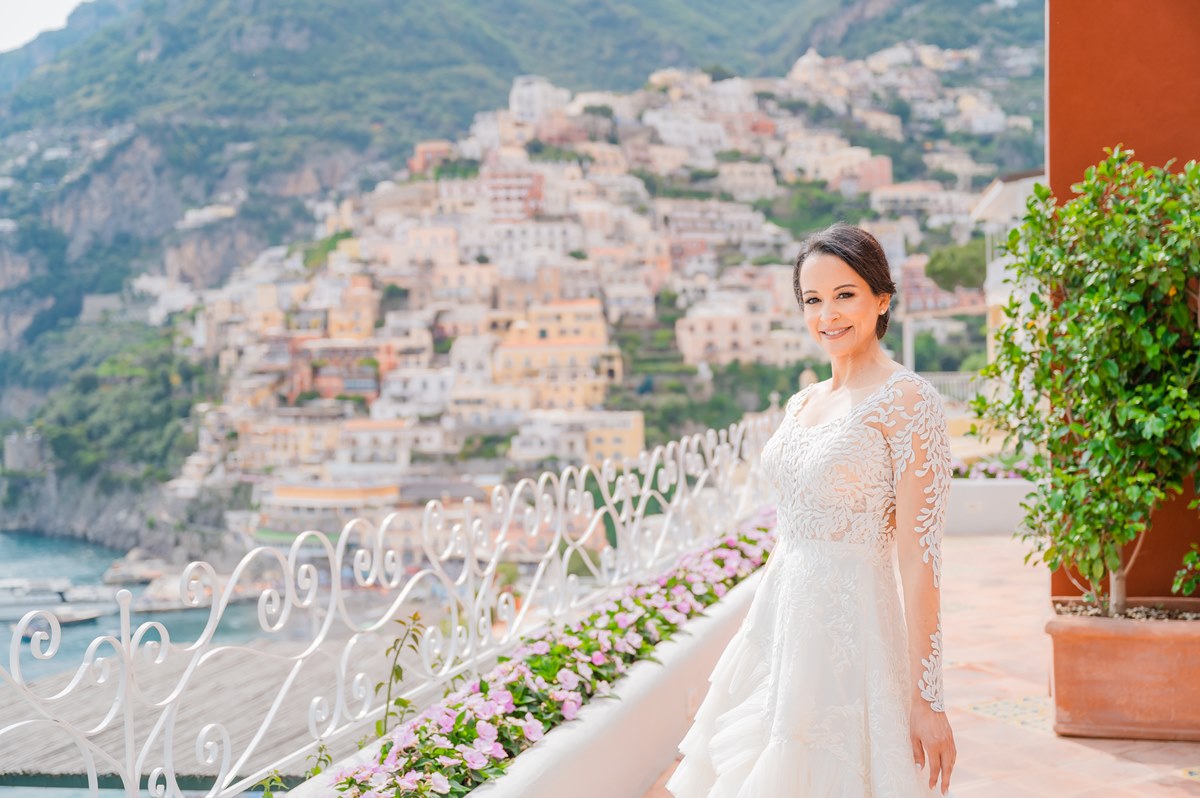
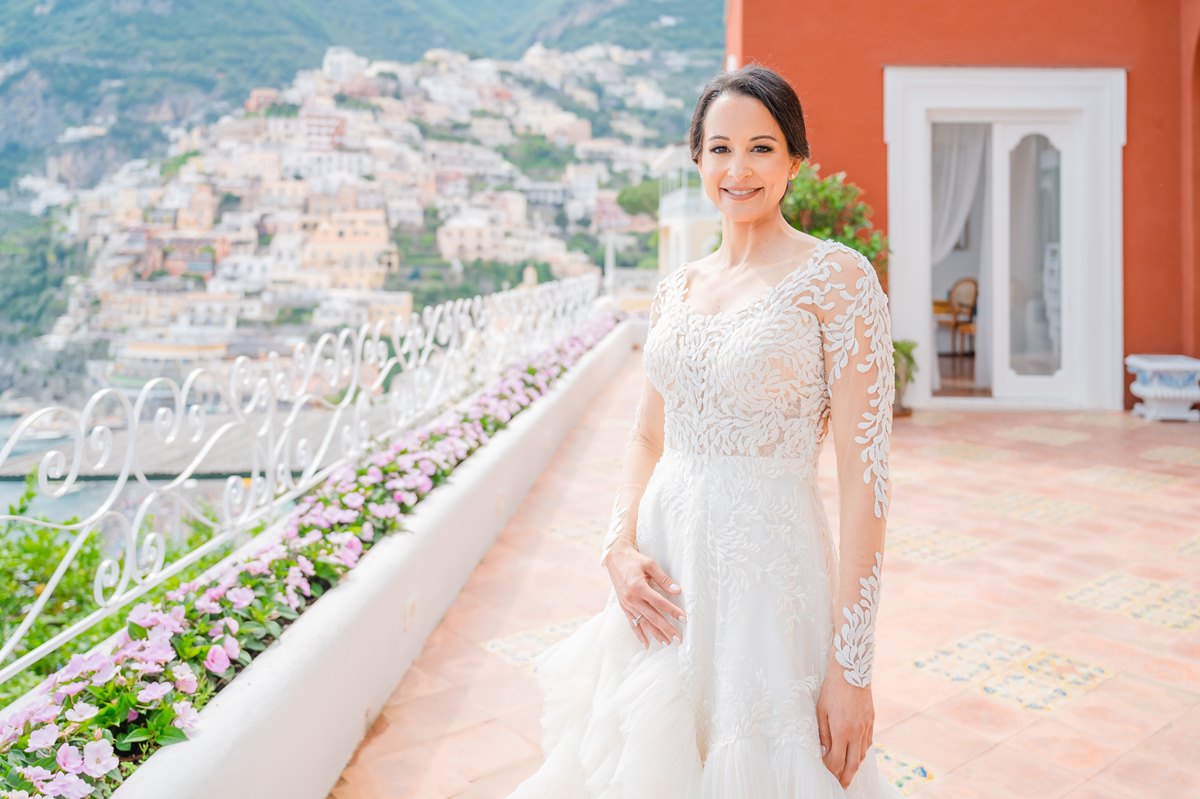
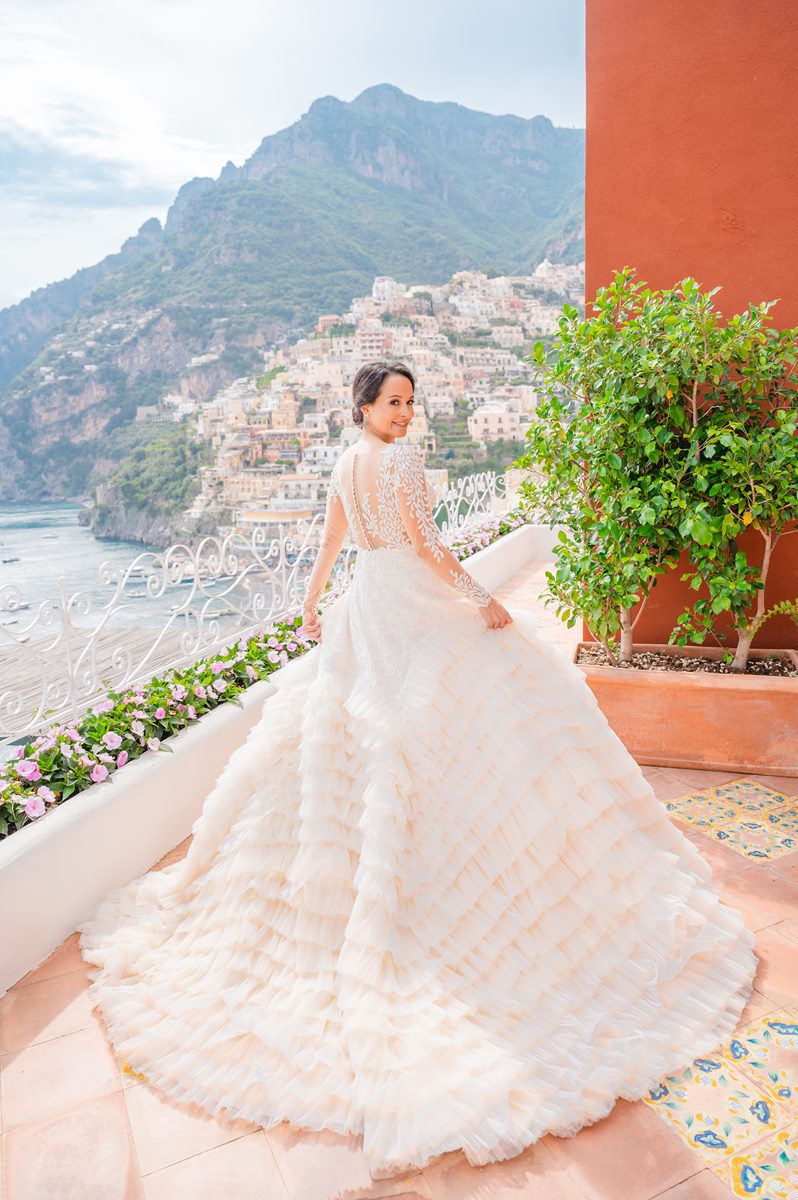
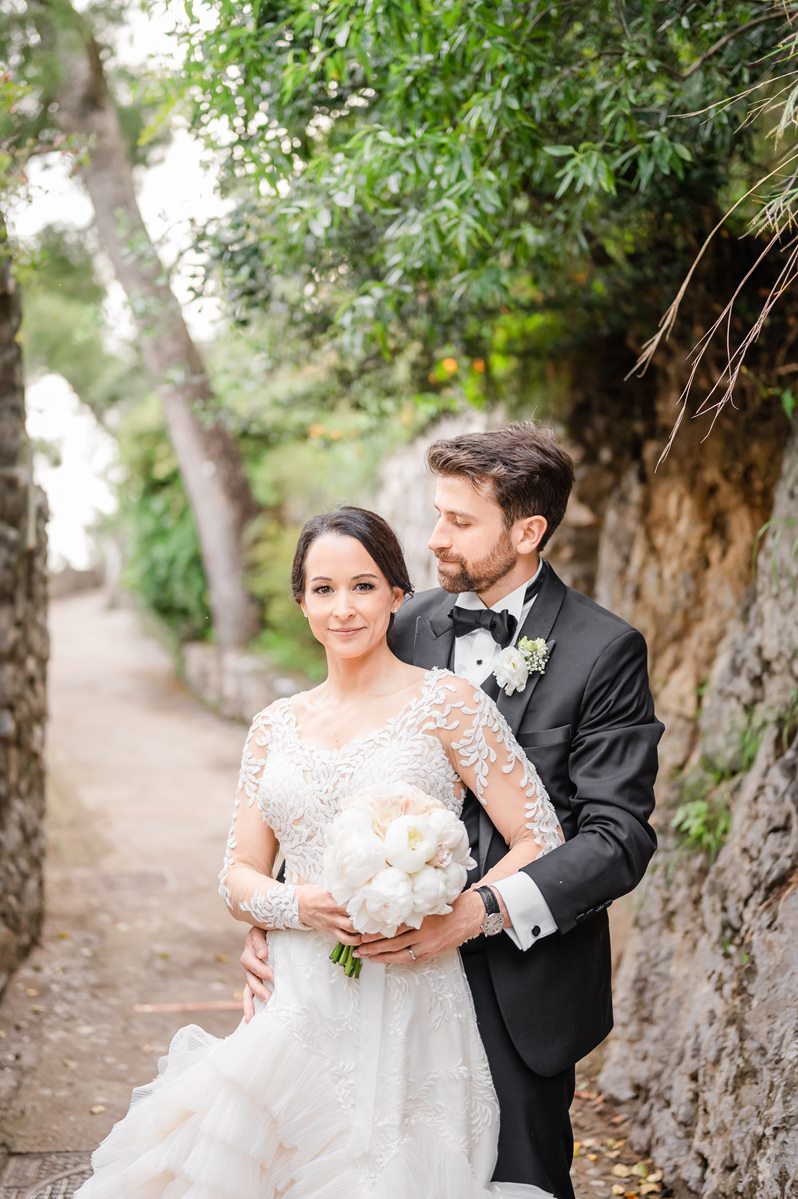
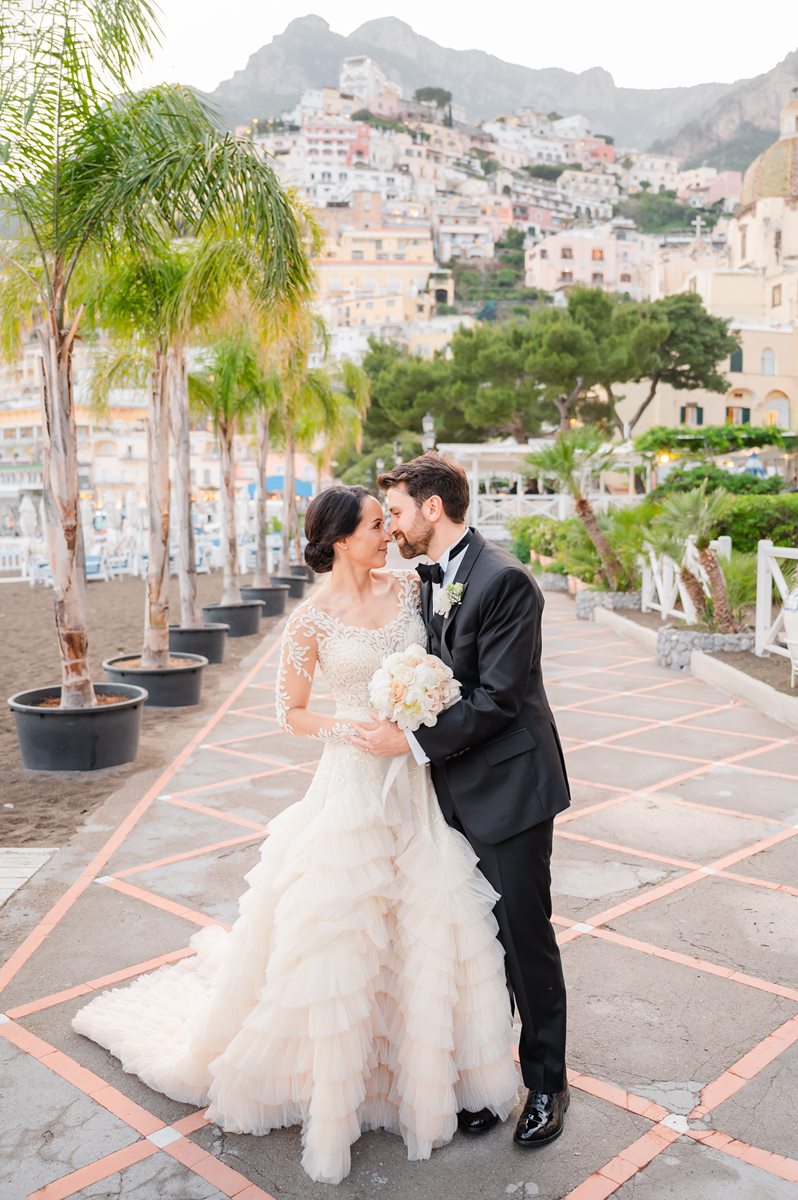
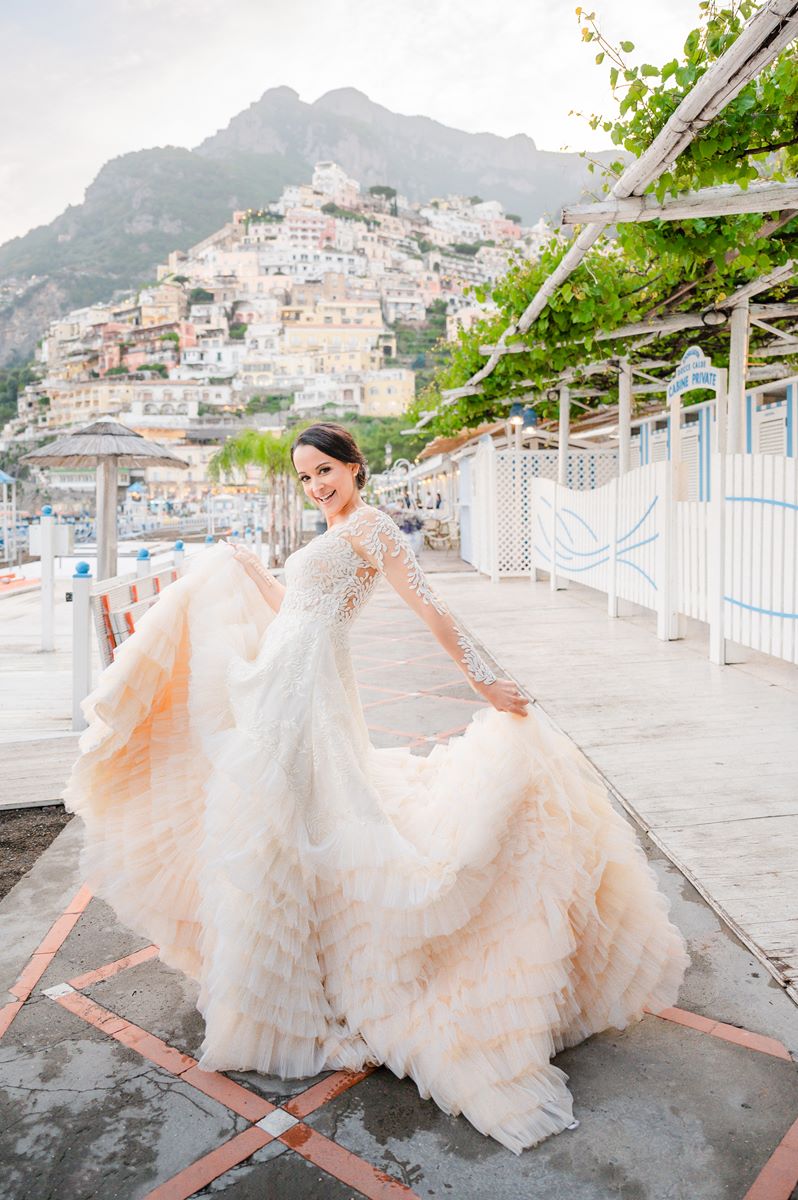
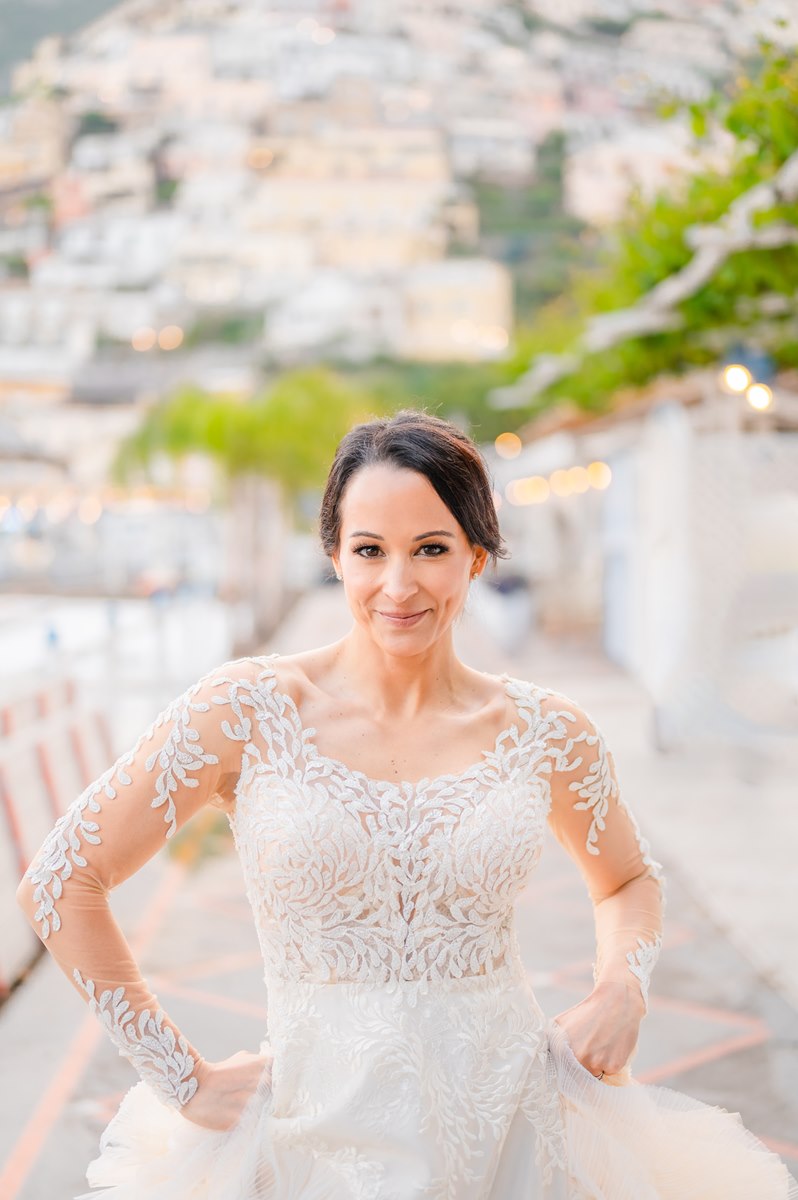
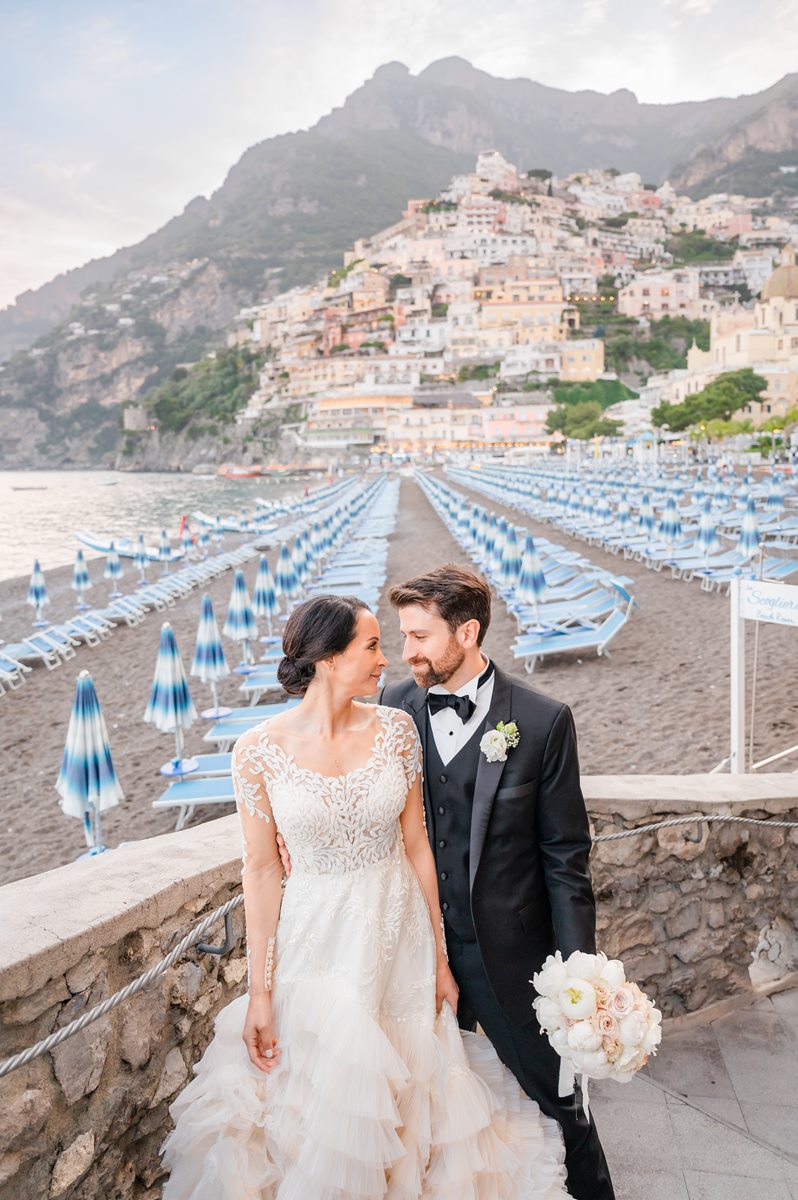
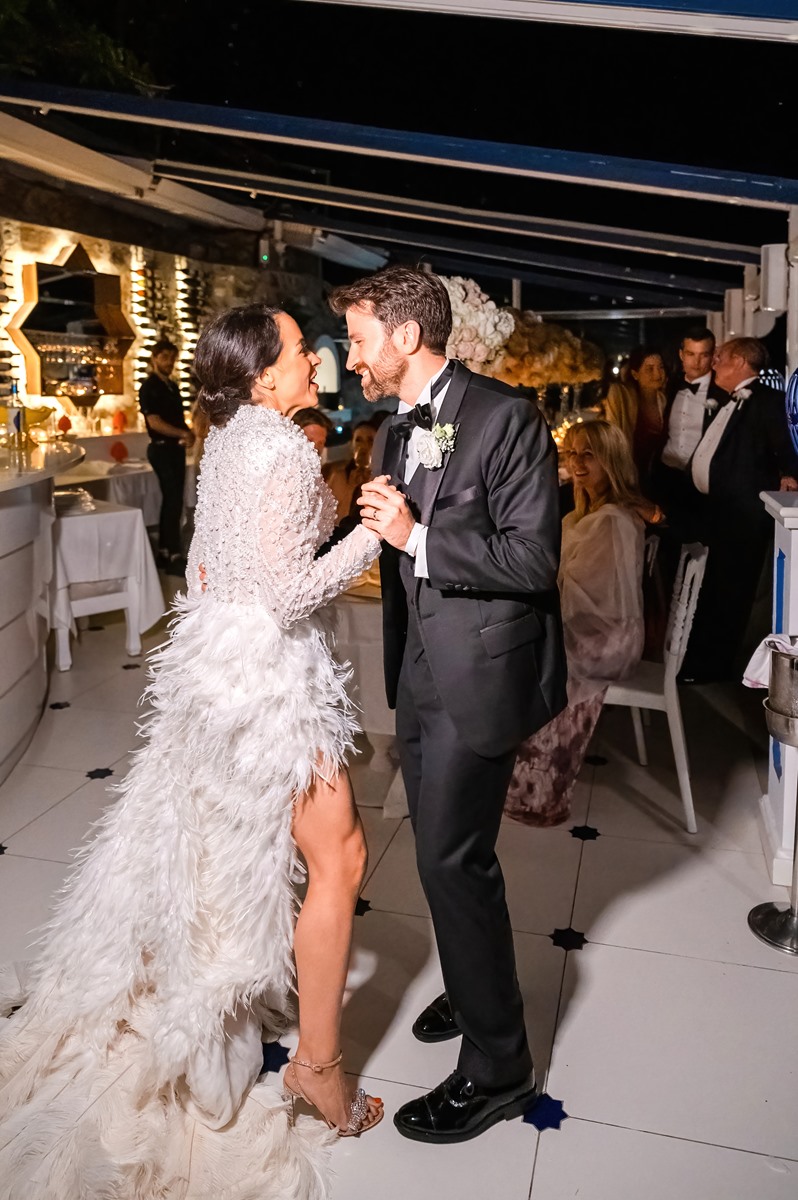
Every bride I’ve photographed at Hotel Marincanto this year, without exception until Christina, chose the same broad silhouette: a slip dress, a simple sheath, something minimal enough to let the view do most of the visual work. Christina planned a ruffled ballgown wedding in Positano instead, a tiered gown with a long-sleeved lace bodice and a skirt built from layer after layer of fabric, the kind of dress that competes with a view on purpose, and I wanted to write about what that choice actually does to a wedding gallery, because it’s the exact opposite of everything I usually recommend.
Planned by Linda Gatto
Linda Gatto planned this wedding, from the getting-ready suite at Marincanto to dinner at Rada. I’ve worked beside her on enough wedding days on this coast to know what that means for me behind the camera: the timeline holds, and nobody brings the couple a logistics question in the middle of a portrait.
With a dress this demanding, that mattered more than usual. The twenty minutes of fastening, the car to Rada and the resets on the boat all had to fit inside the same day, and they did.
The Weight of Getting Into It
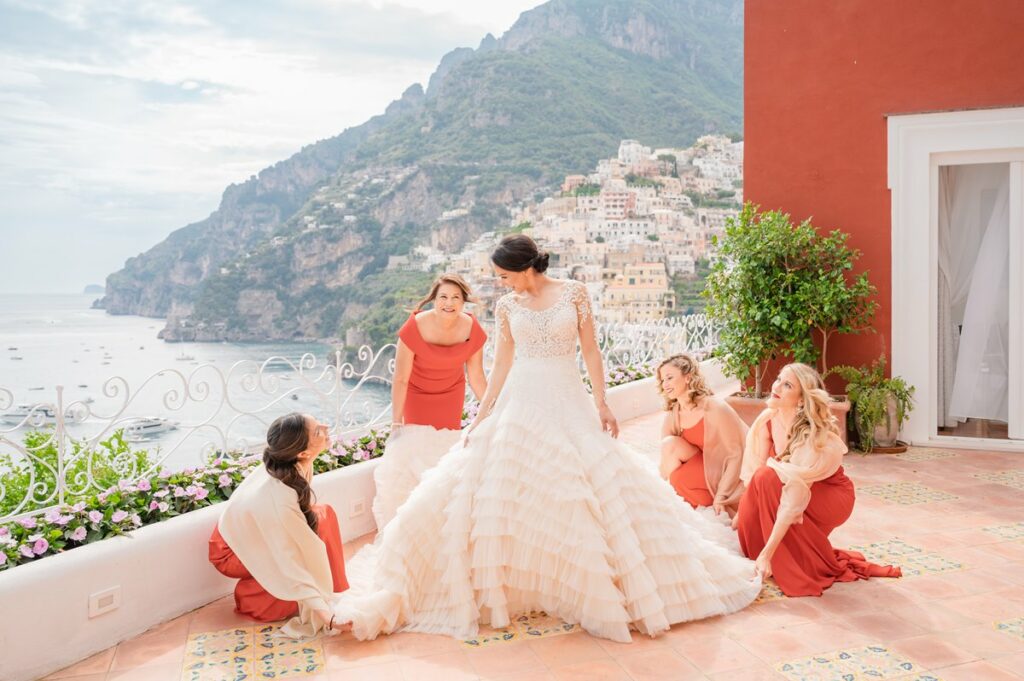
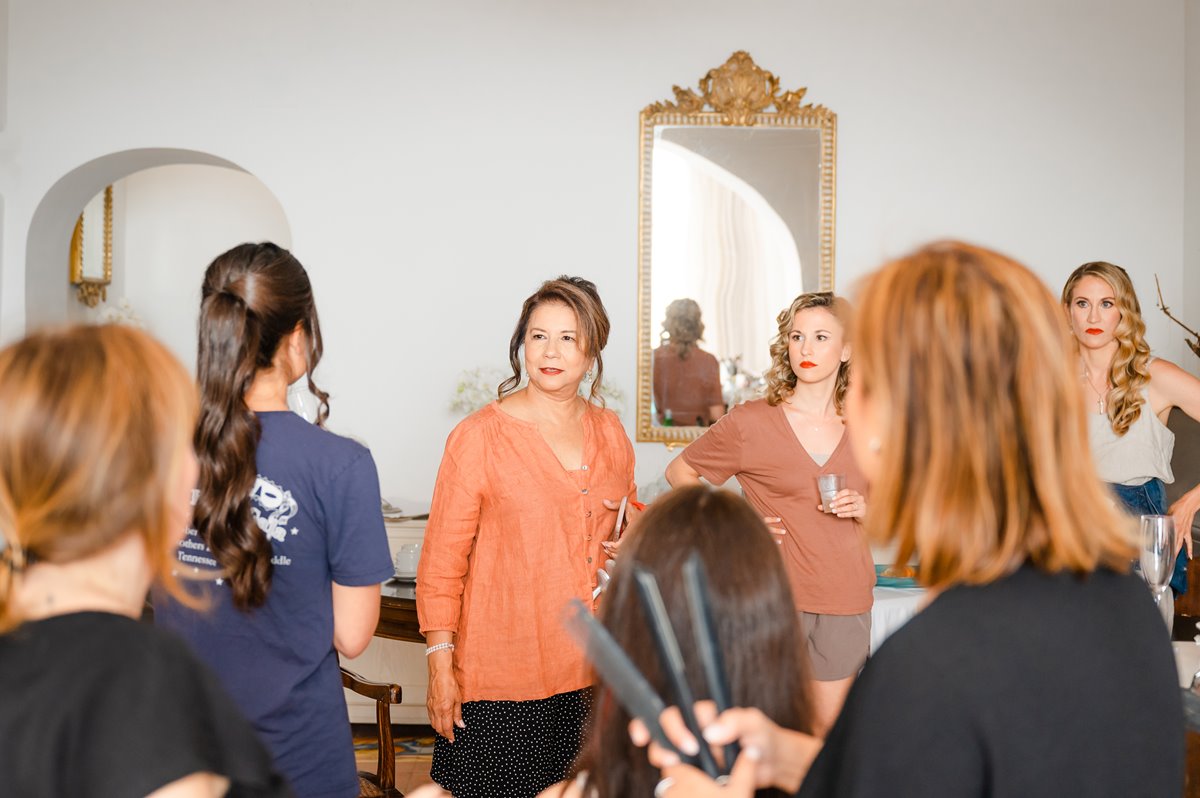
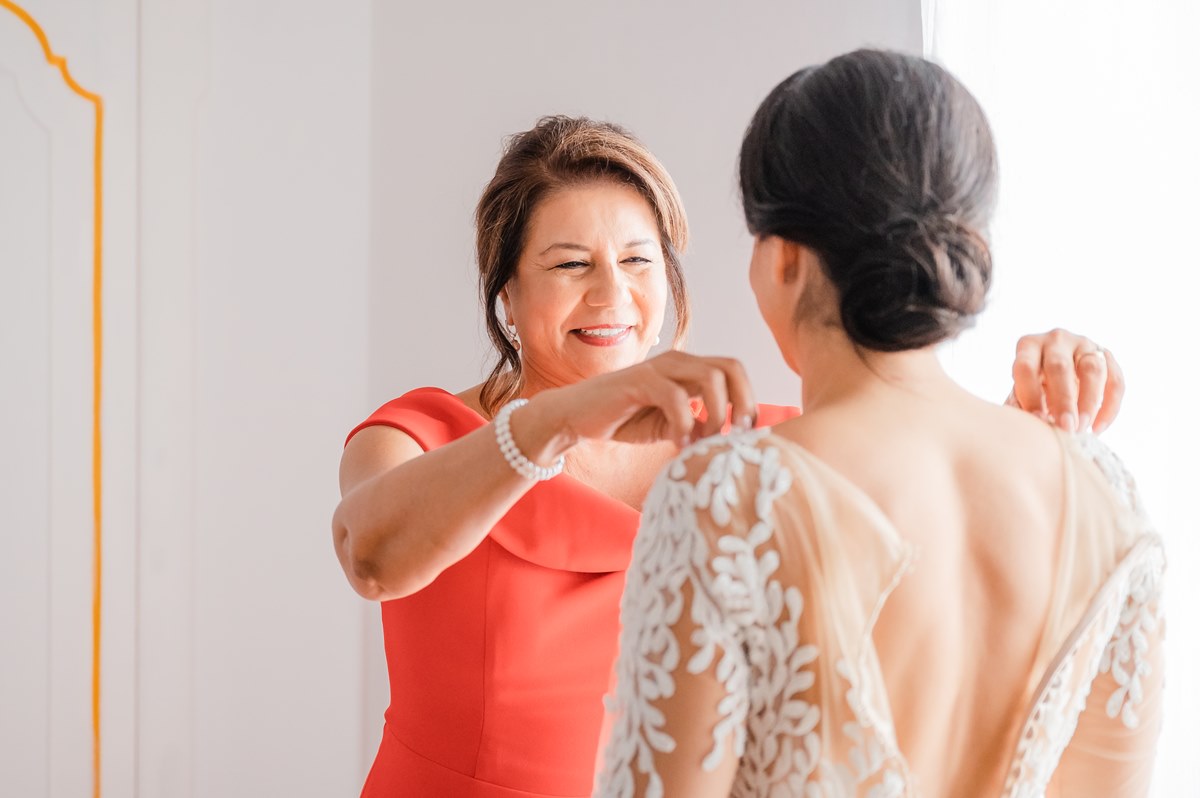
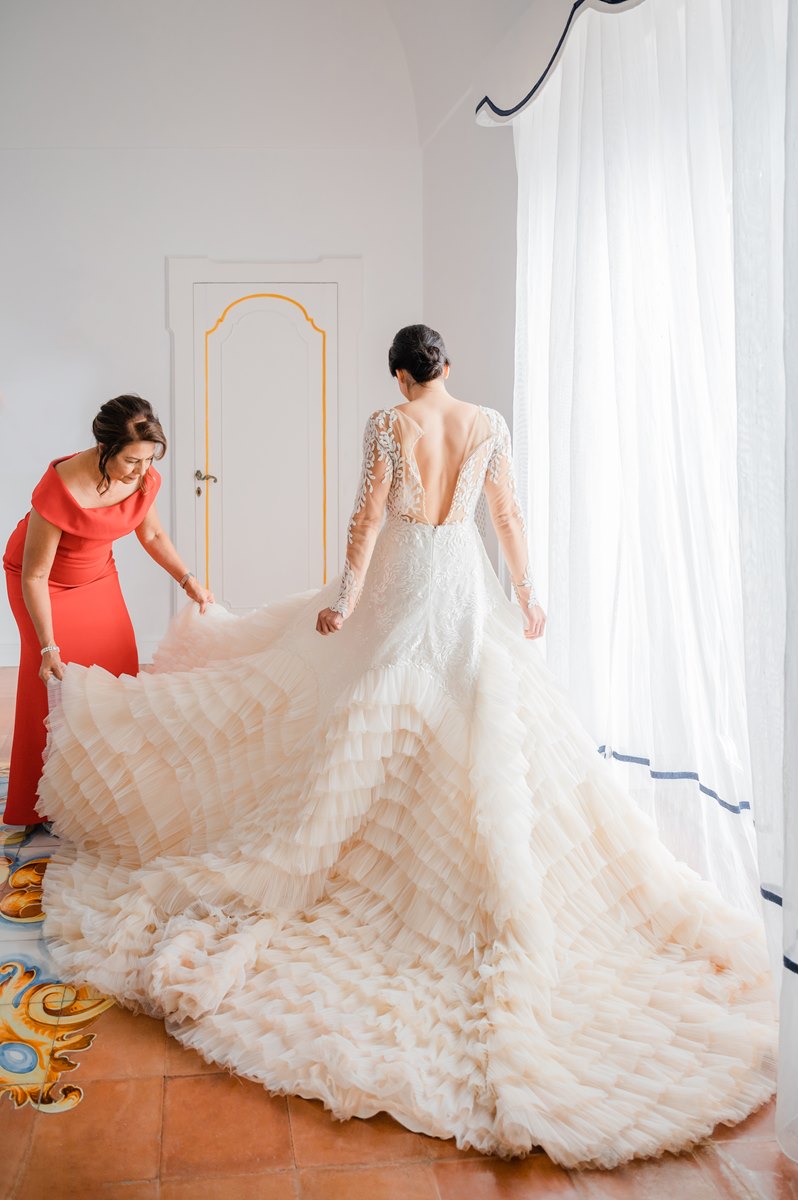
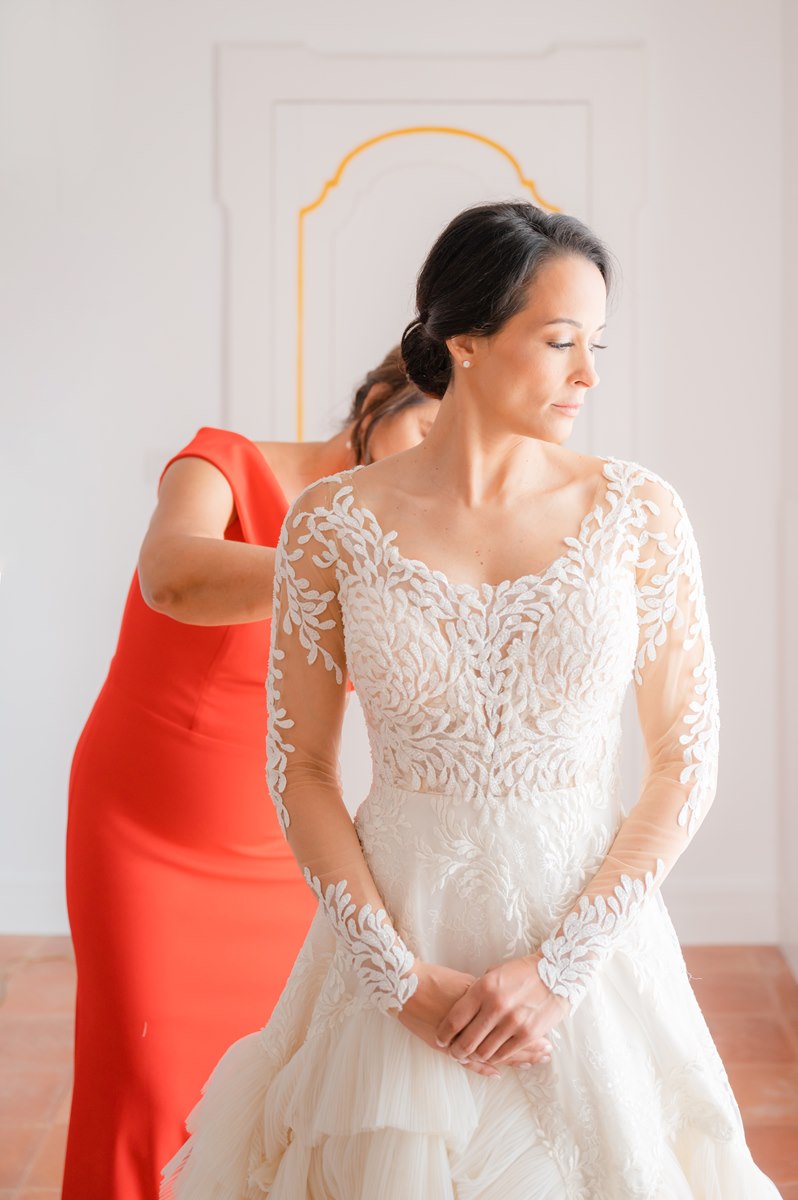
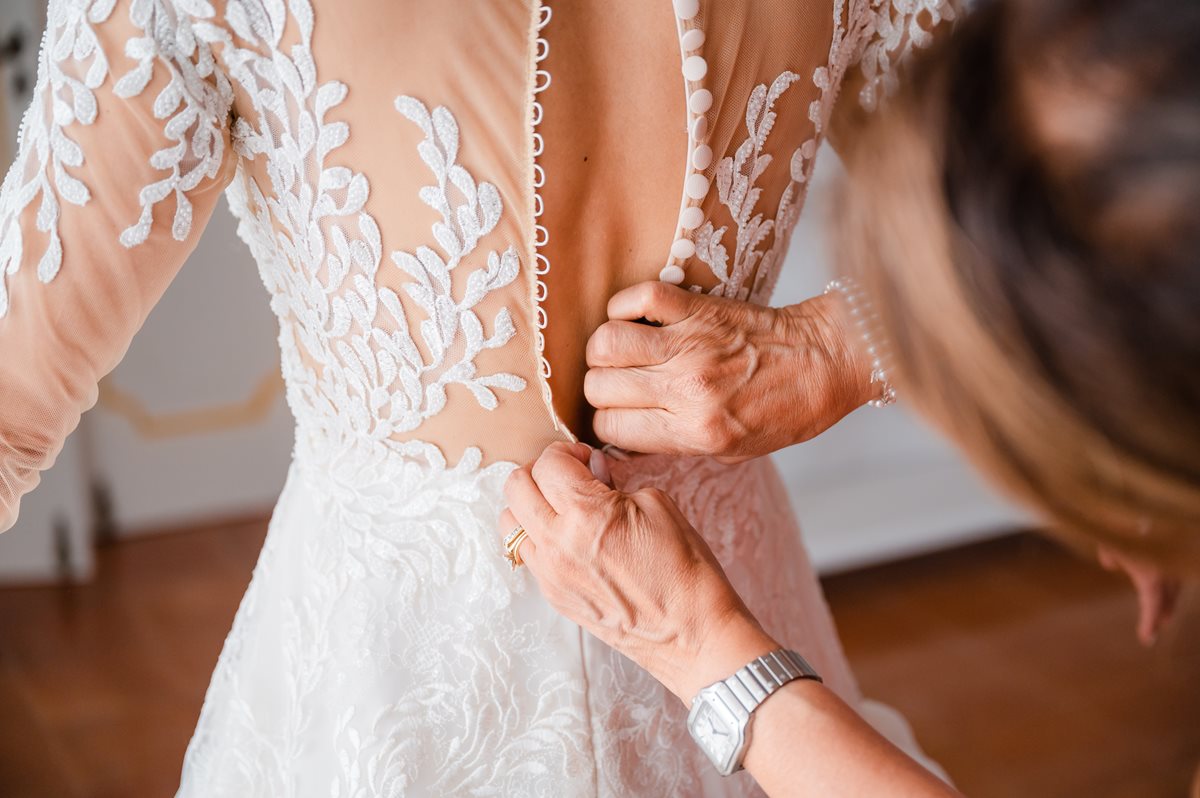
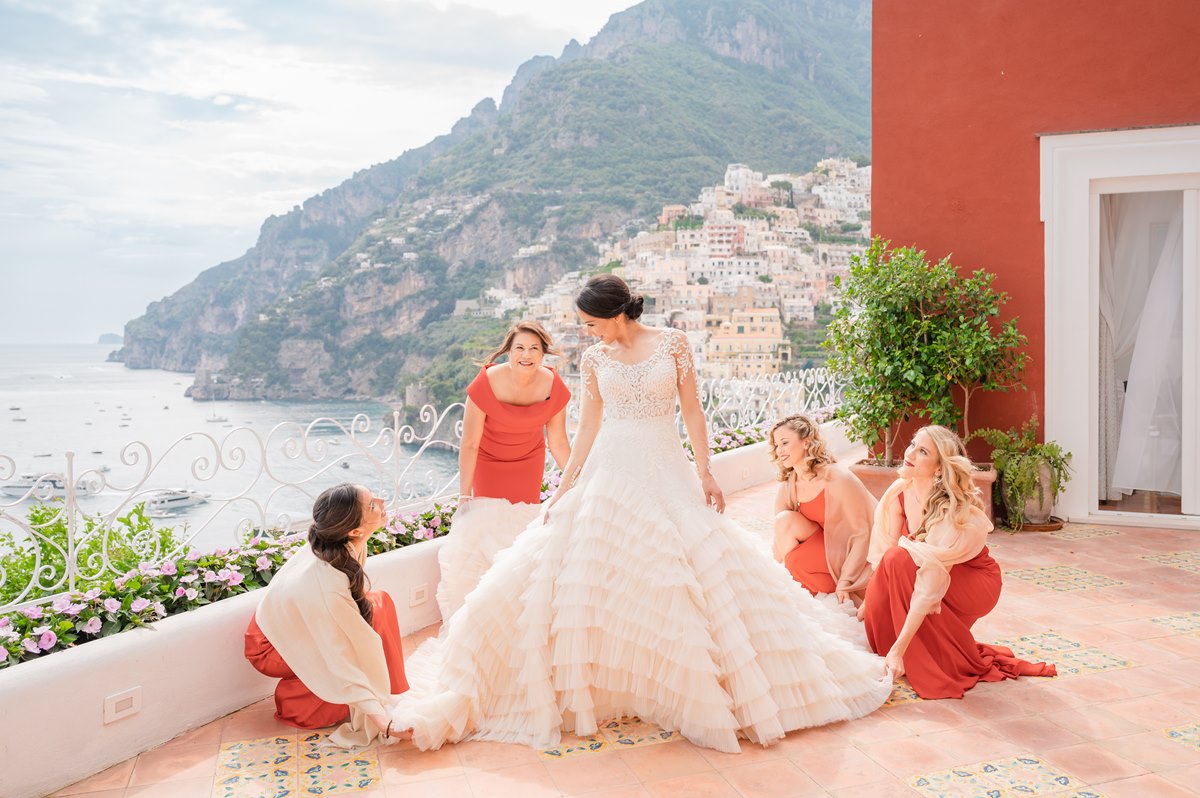
Christina’s dress took nearly twenty minutes to fasten properly, considerably longer than the five or six minutes a simple slip dress needs from start to finish. The multiple tiers of the skirt needed to be arranged and settled after the corset-style bodice was laced, each layer checked for how it fell against the ones beneath it, a process her mother and her maid of honor handled together while I photographed the sequence from the doorway. A dress this structured adds real time to a getting-ready morning, so if you choose something similar, build that extra window into the schedule instead of assuming every wedding dress takes about the same time to put on.




The Physical Reality of Moving in a Ballgown
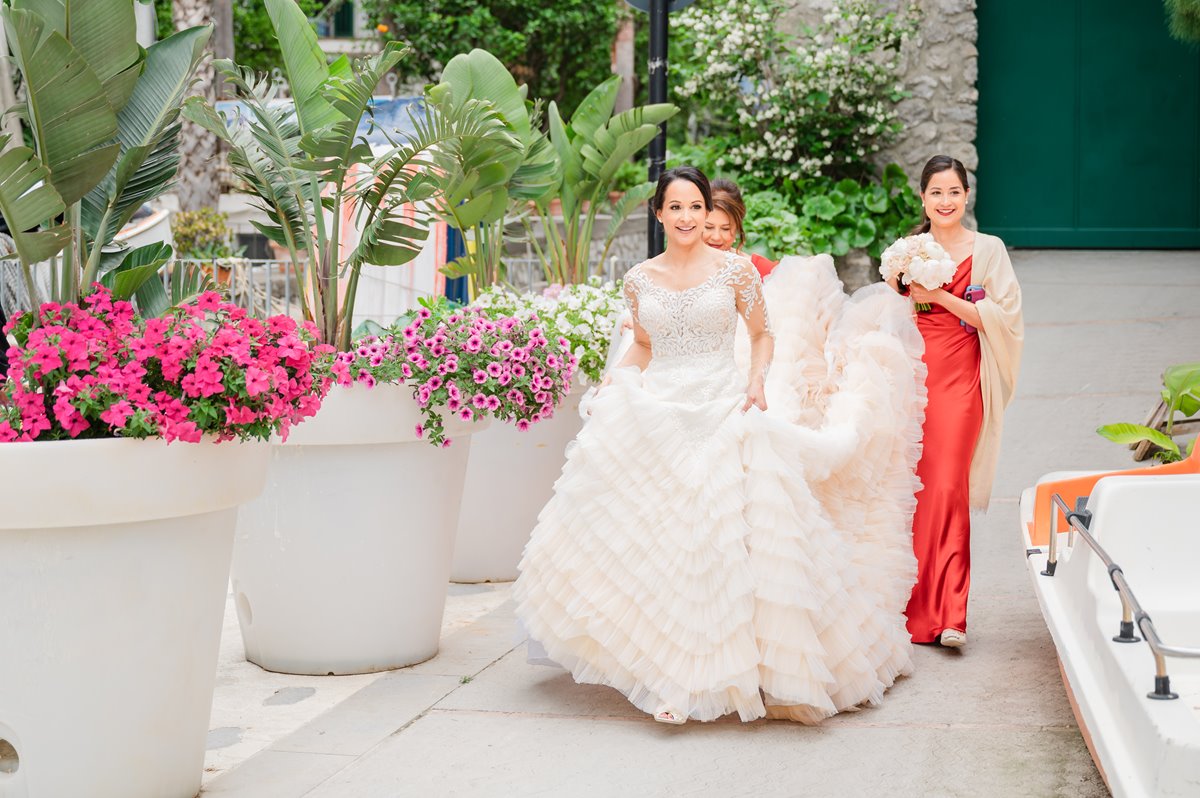
Once fully dressed, Christina moved through the suite and out to the terrace more deliberately than a bride in a lighter dress would, the sheer weight and volume of the skirt requiring a slower, more considered gait, particularly through the suite’s narrower interior doorways and the tighter turn onto the terrace itself. That slower gait gave her a grace of its own, unhurried and careful, and on camera it read as poise, a different quality from the quick, light movement of a slip dress.


Why I Usually Push Positano Brides Toward Simplicity
My default advice to brides planning a Positano wedding, given consistently across dozens of sessions, is to let the coastline itself carry the visual weight. A simple silhouette against that backdrop reads as elegant rather than competing with the scenery, which is why the slip dress has become close to a uniform for weddings on this stretch of coast. It’s good advice, and it produces consistently strong, timeless images. It is not, however, the only approach that works, and Christina’s dress is the clearest counterexample I’ve photographed.





What a Maximalist Dress Requires From the Photography
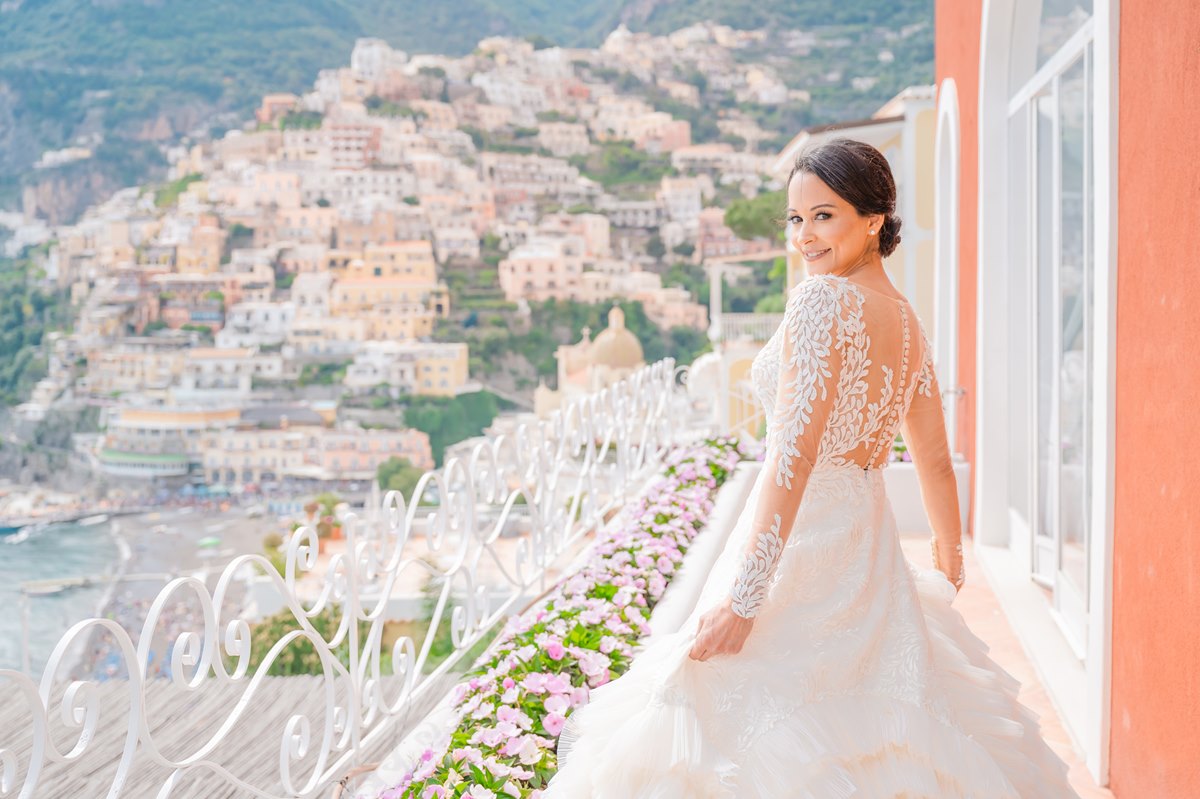
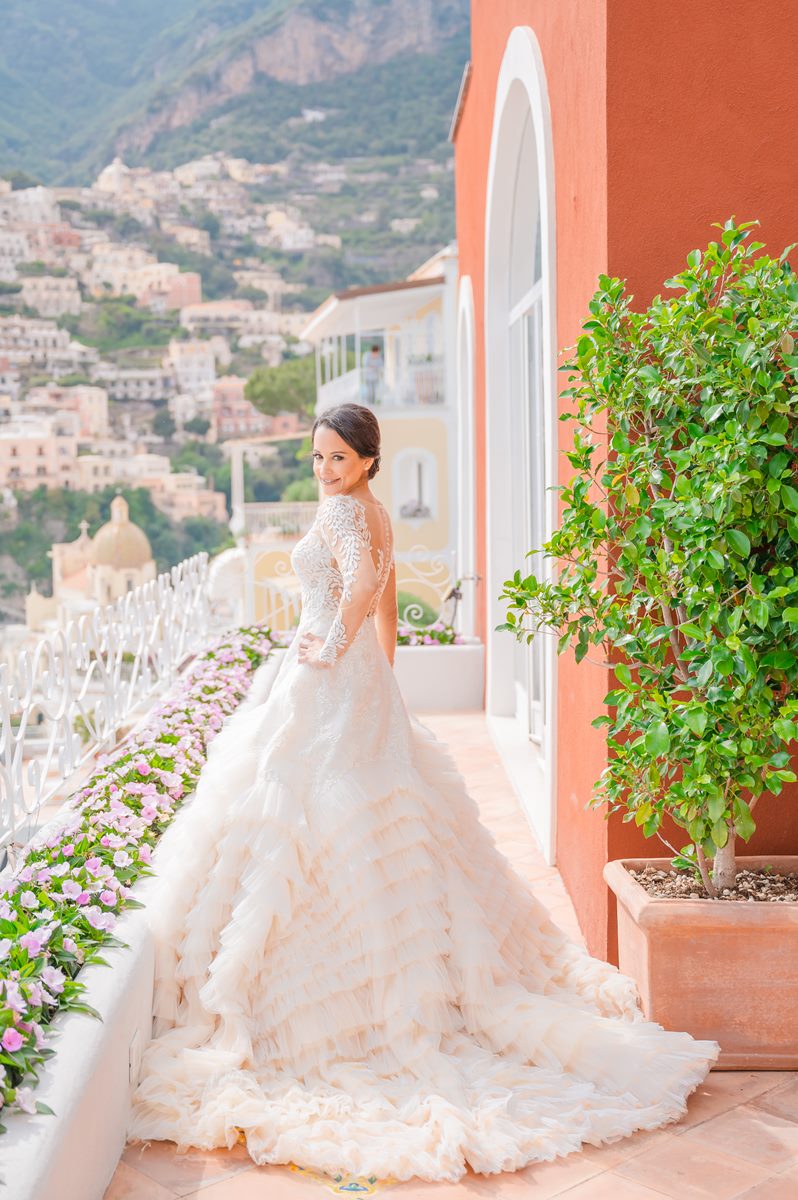
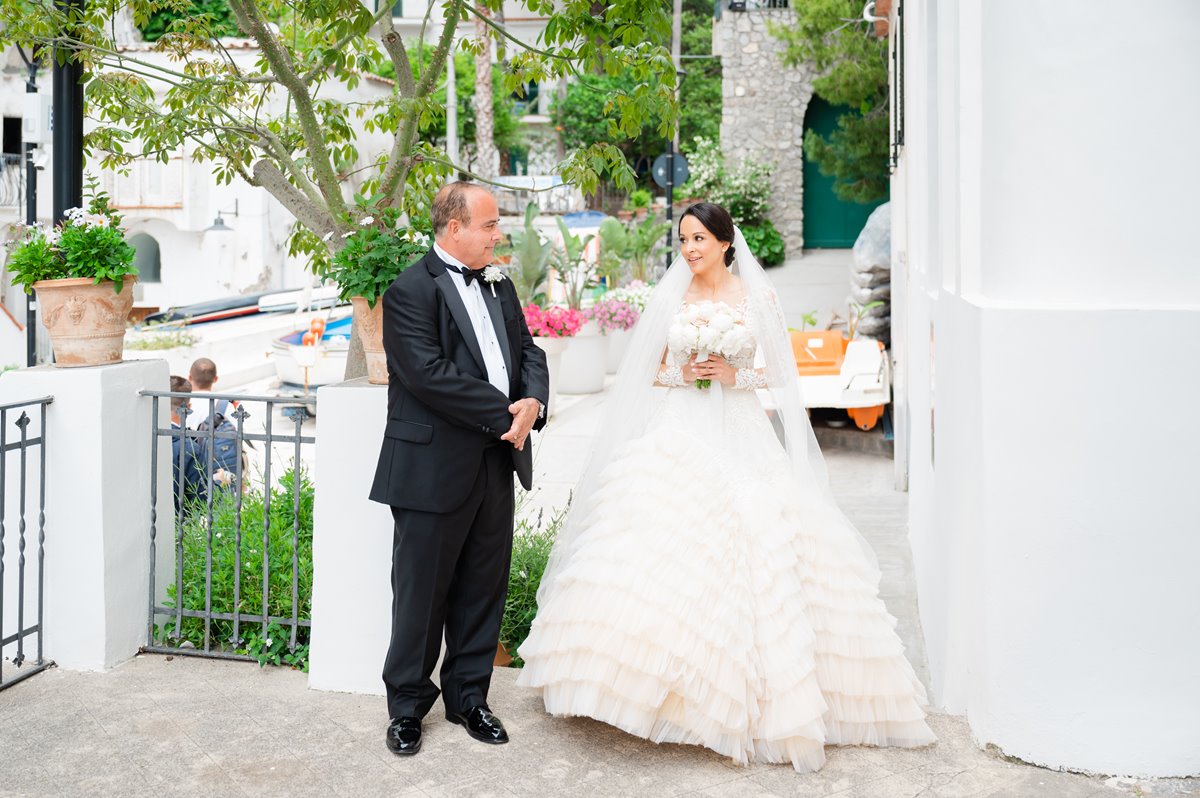
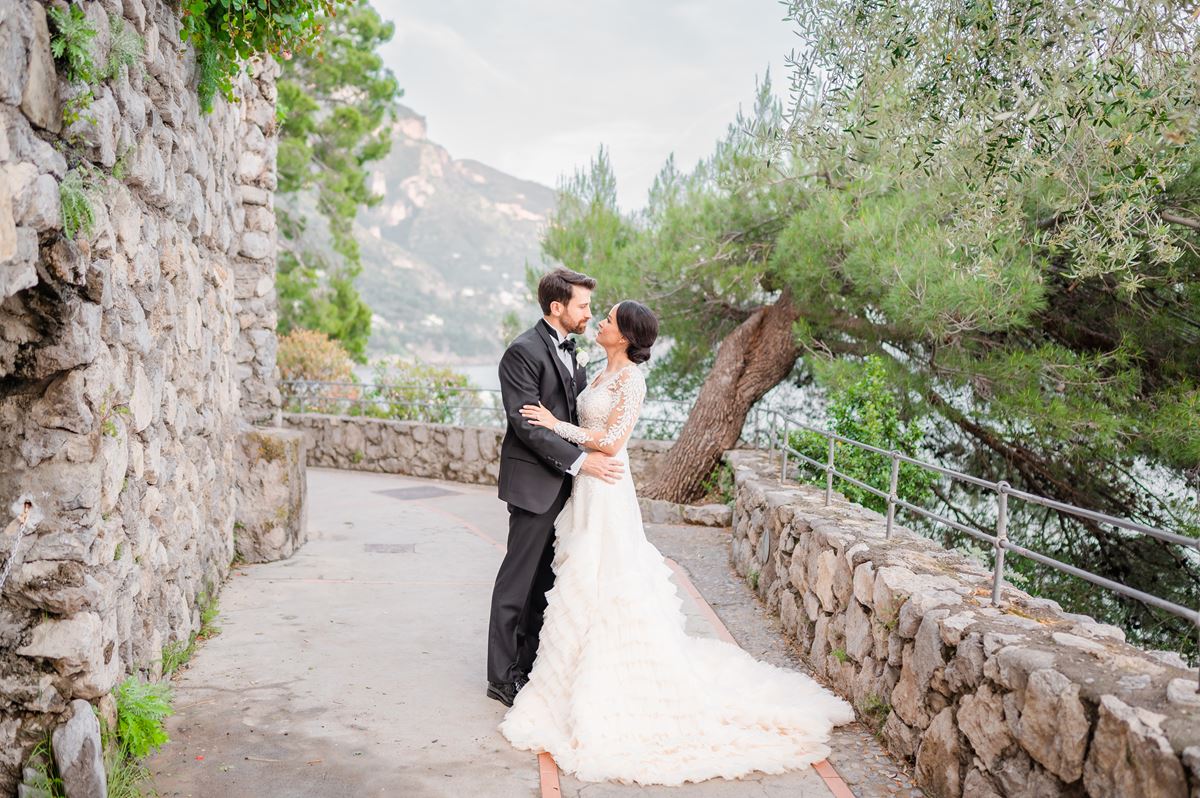
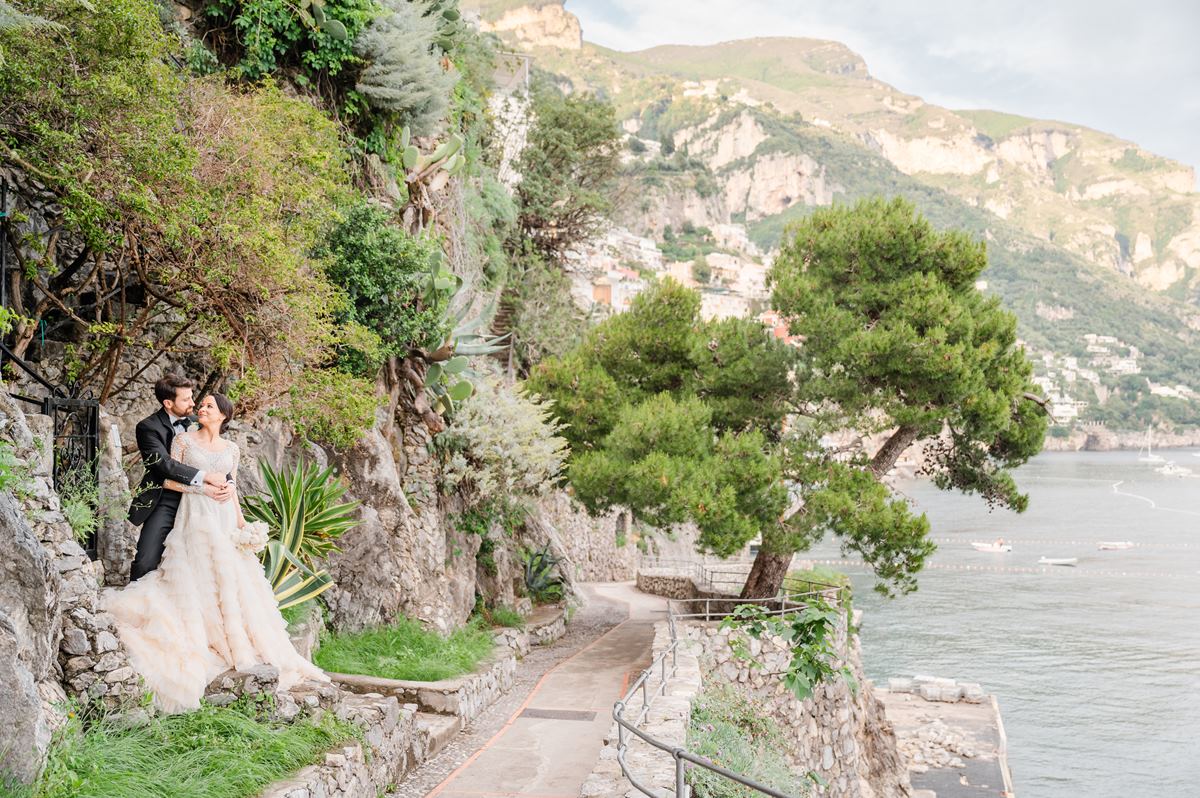
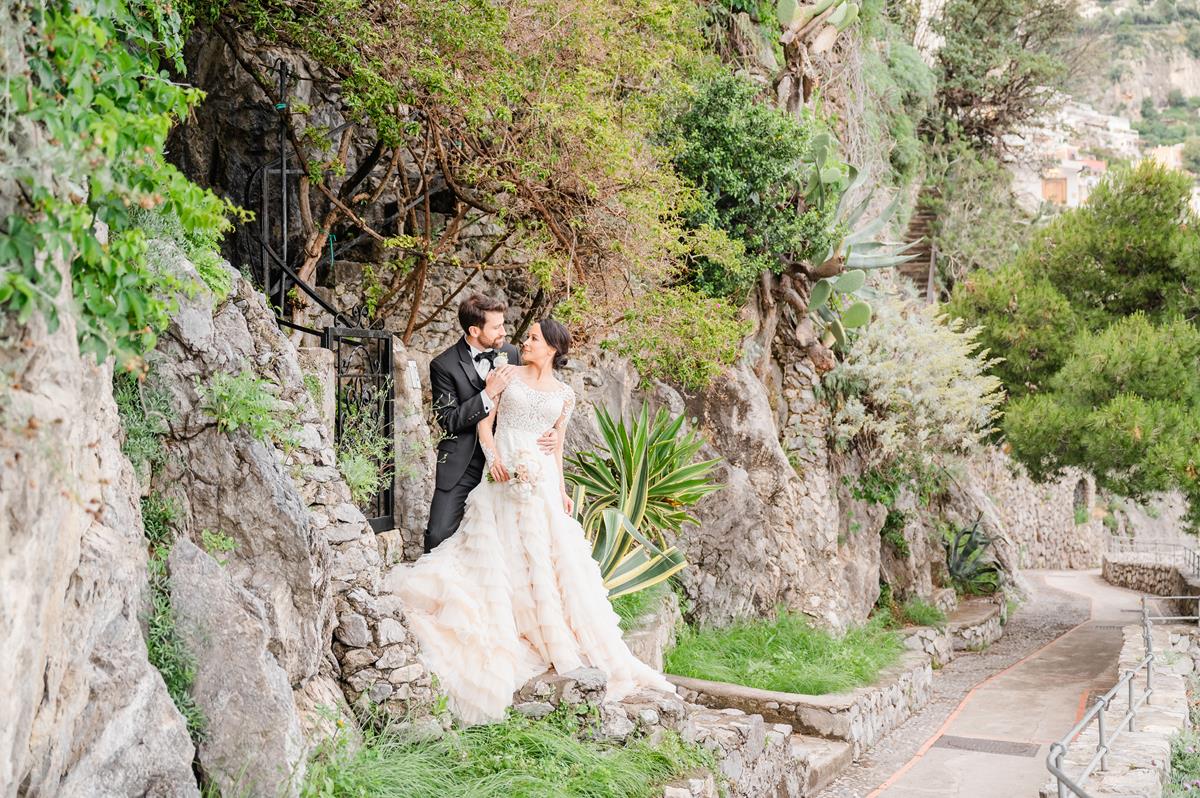
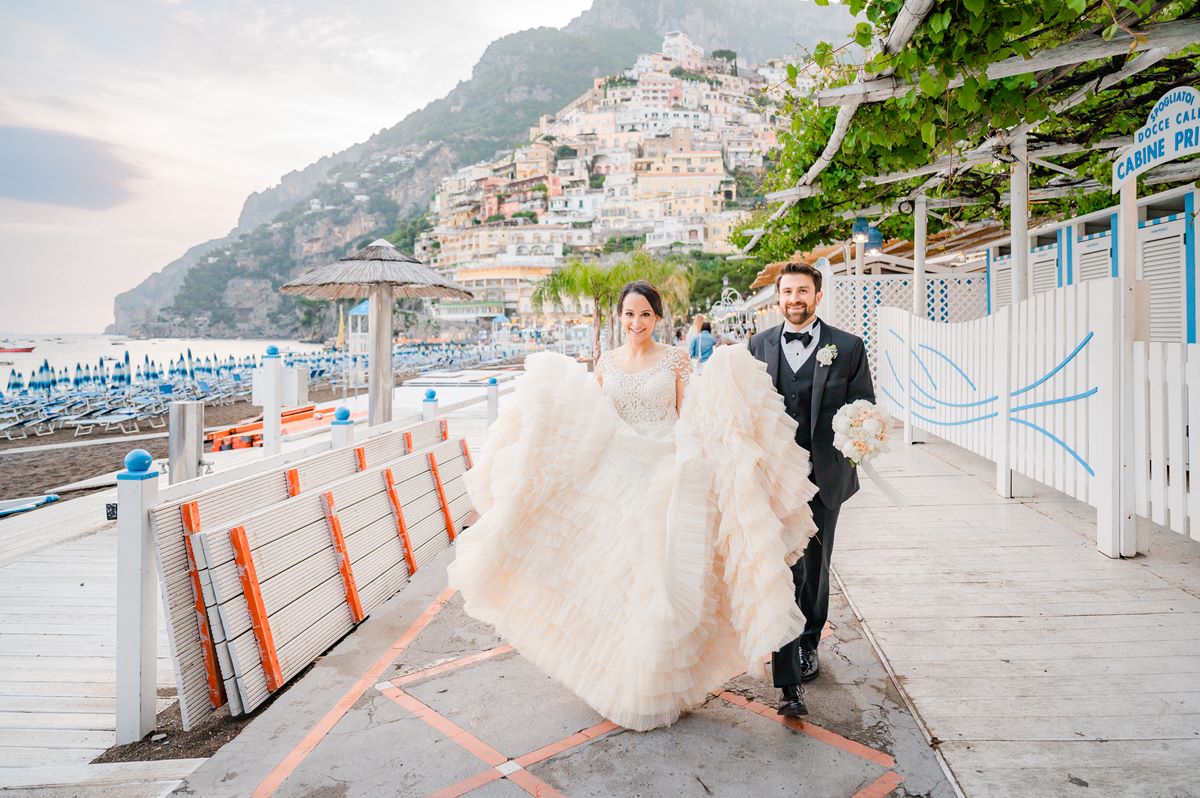
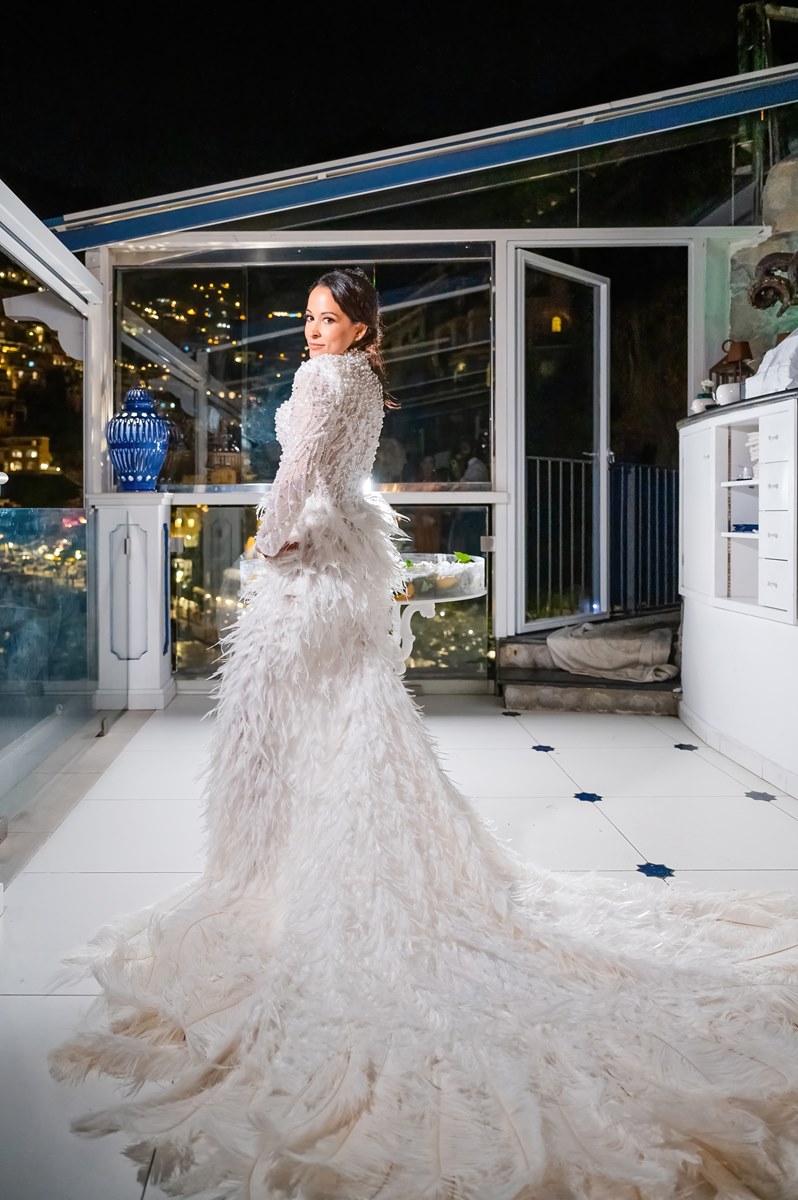
Dramatic wedding gown photography starts with the compositional math, and a ballgown with this much volume and texture changes it. Where a slip dress lets the eye move freely between the couple and the view, Christina’s dress demanded its own visual space in every frame. I widened my compositions considerably to give the skirt room to actually read, since a tight crop cuts off the tiered ruffles at an awkward point and makes an intentionally dramatic silhouette look accidentally truncated. Every portrait needed enough negative space around her for the dress to finish its own shape within the frame, which meant stepping back further than my instinct says for a portrait this intimate.

How the Marincanto Terrace Framed the Ballgown
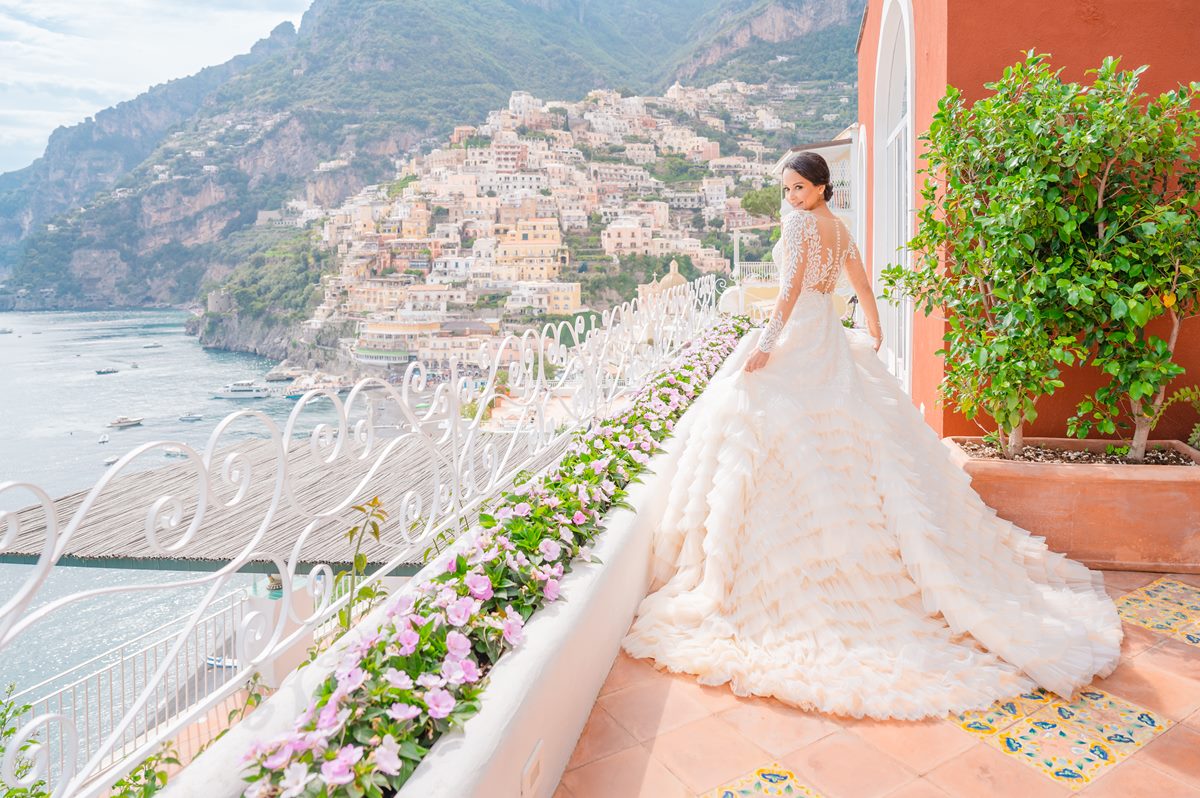
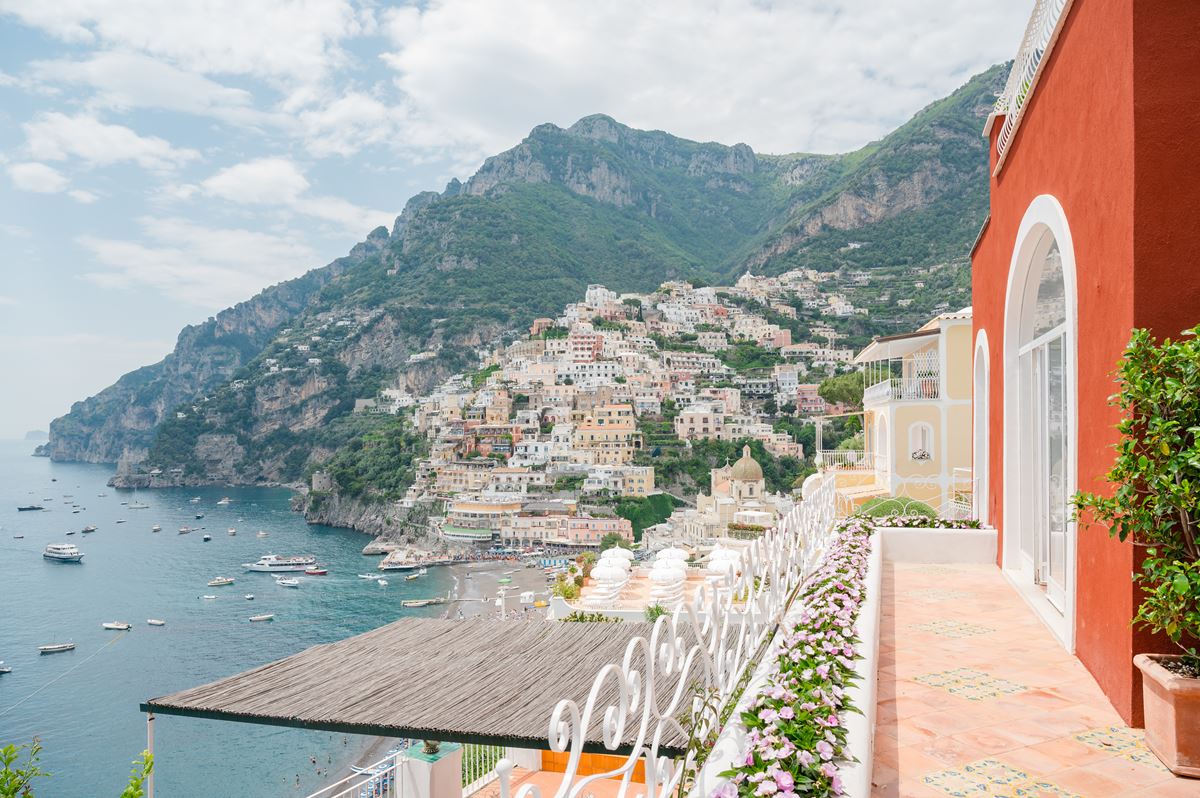
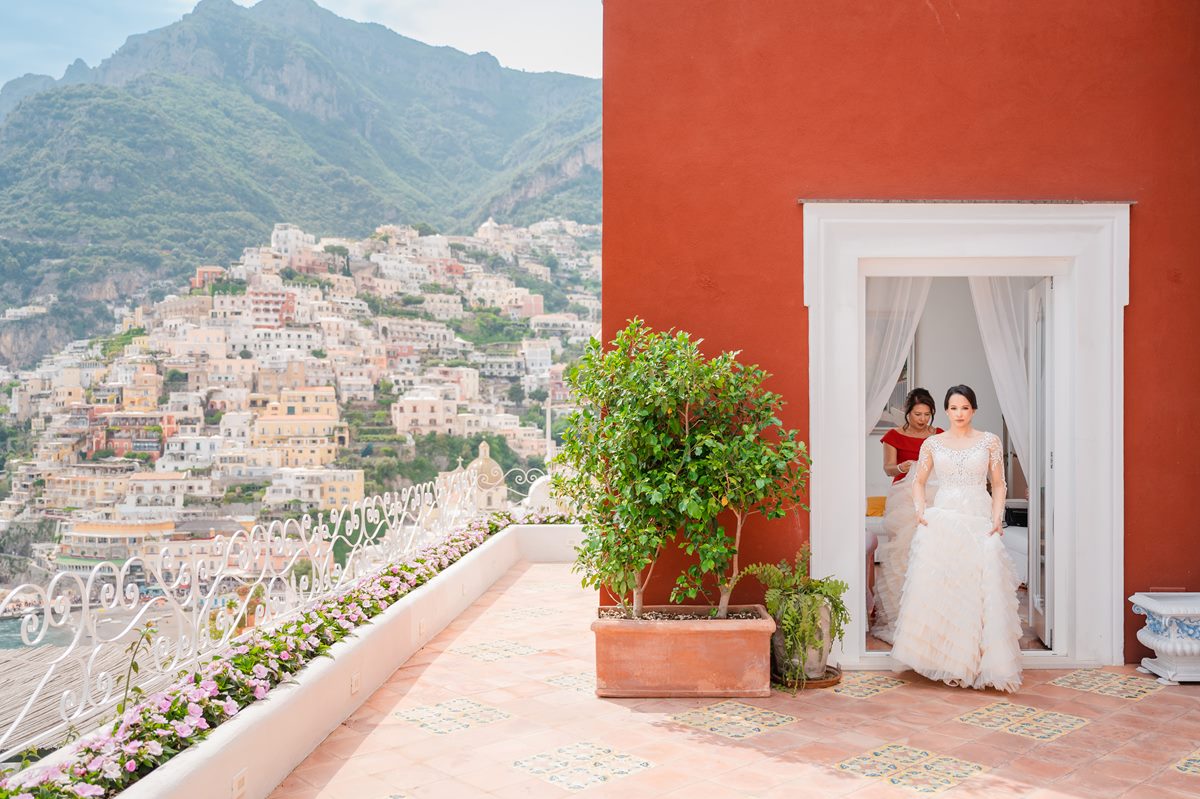
What surprised me most, shooting this session, was how well Marincanto’s terrace actually handled a dress of this size and complexity, since a strong dress and a strong venue can easily end up working against each other. The terracotta-colored wall behind Christina, the white stone archway, the climbing greenery, all of it has enough visual weight of its own that it didn’t get overwhelmed by the ballgown the way a plainer backdrop might have. Rather than the dress and the venue competing for attention, as I’d half expected walking into the session, the two ended up working in the same visual register: both bold, both heavily textured, both entirely unwilling to fade quietly into the background of the frame.

The Shot That Confirmed It
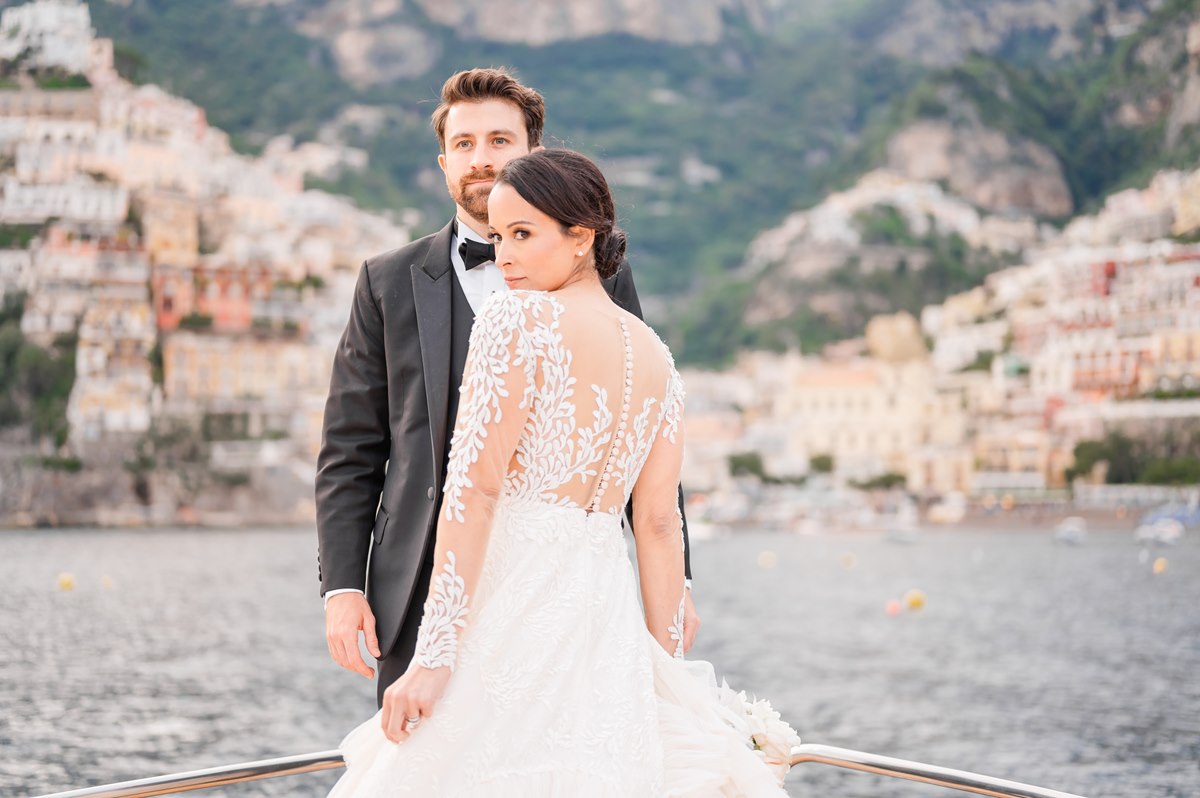
Christina standing at the terrace’s edge, back to the camera, the full cascade of her ruffled train pooling across the tiled floor while she looked back over her shoulder toward Positano’s cliffside, is the single image from this session I’d point to as proof that a ruffled ballgown wedding in Positano works. The train’s tiers echo, in a loose way, the stacked, layered geometry of the houses climbing the cliff behind her. It’s not a comparison I planned consciously while shooting, but reviewing the gallery afterward, the visual rhyme between the dress and the town is unmistakable.

Ryan’s Restraint as a Deliberate Choice
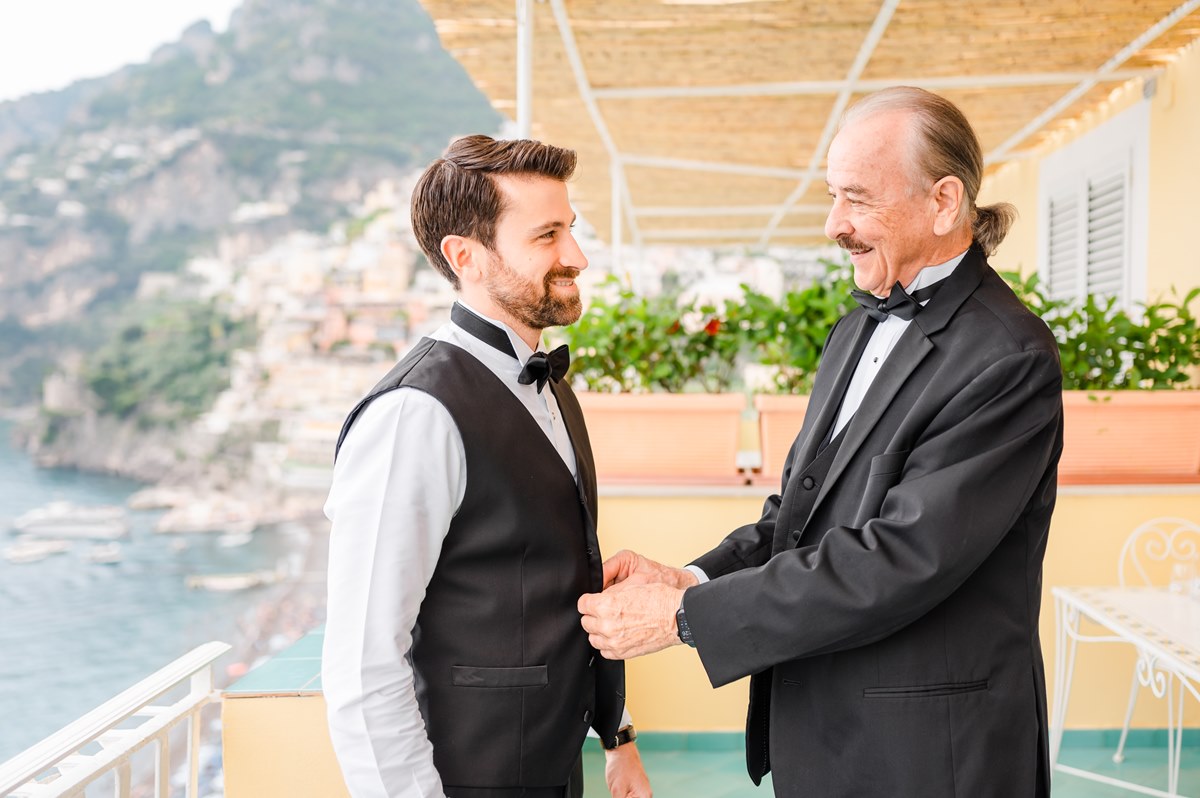
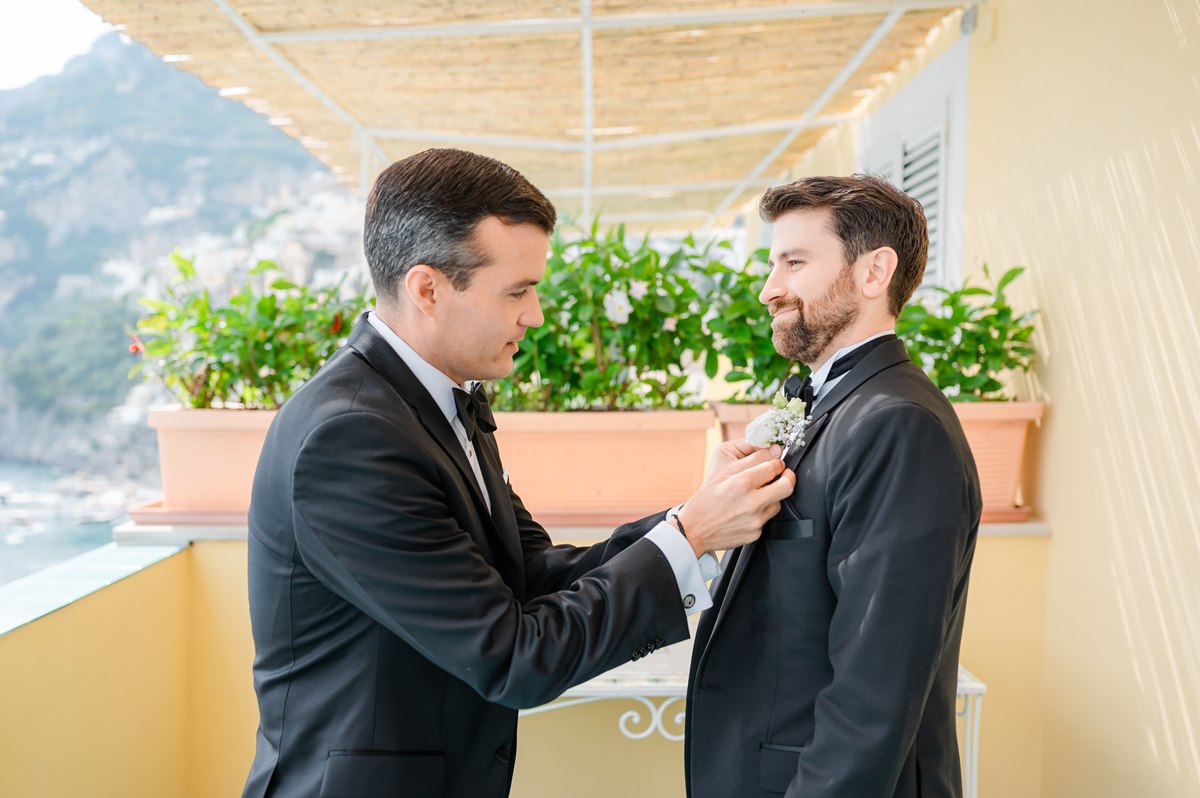
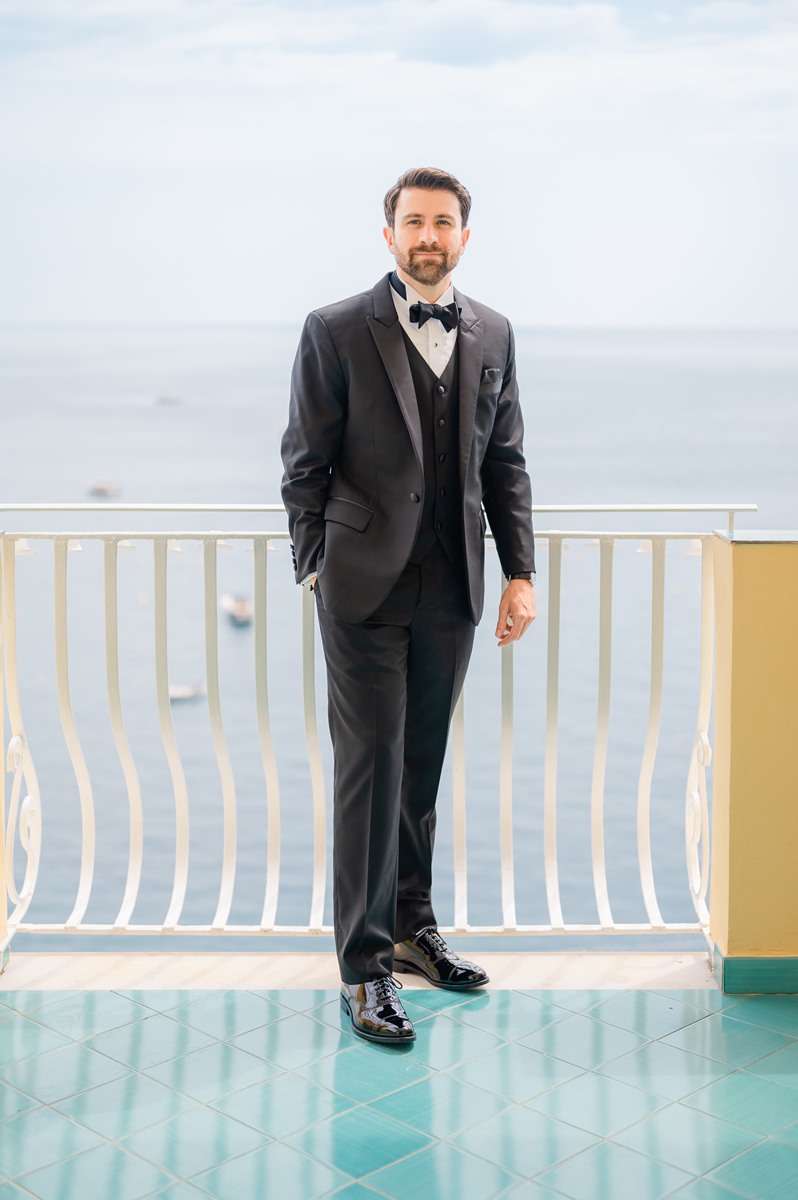
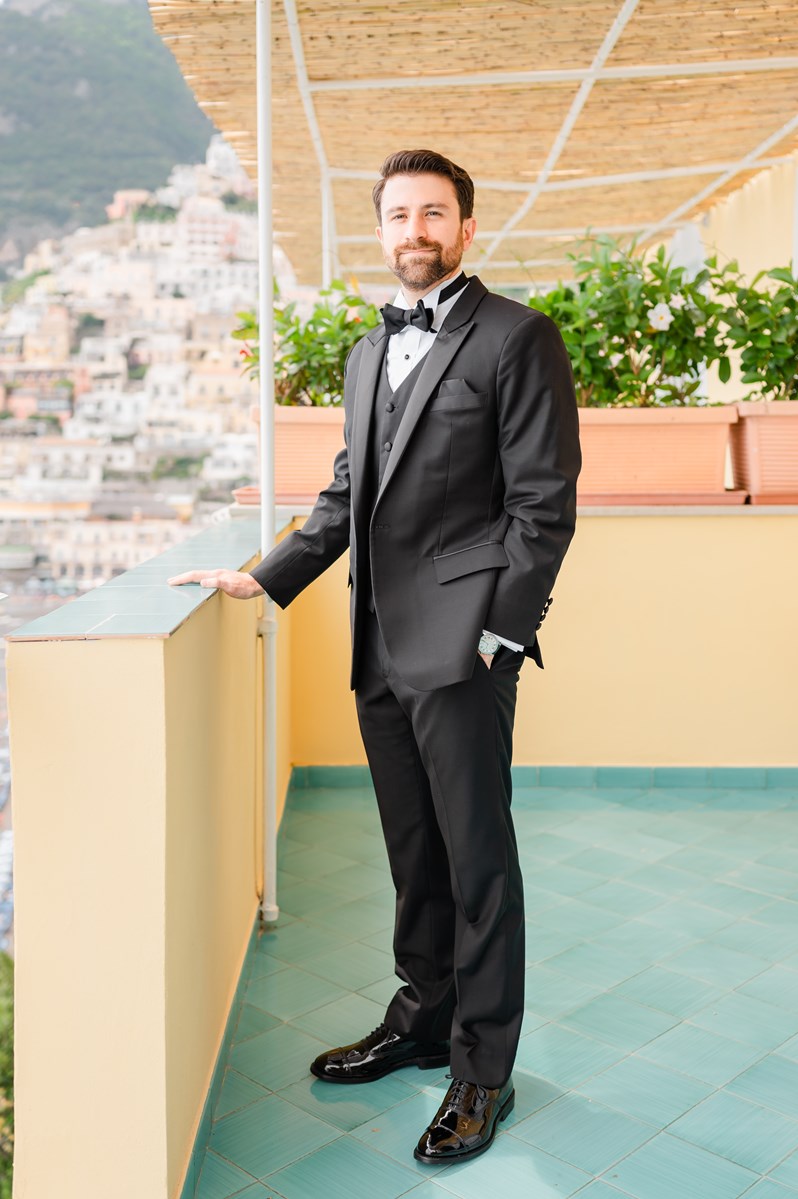
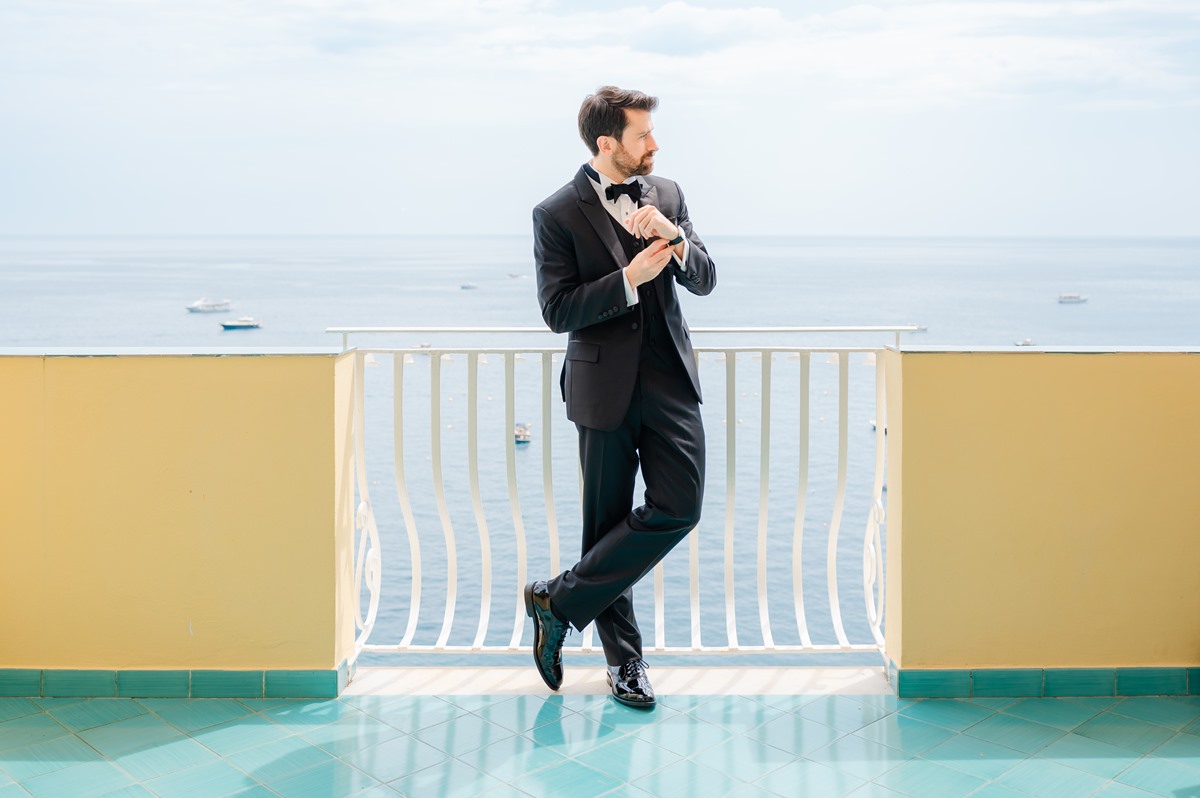
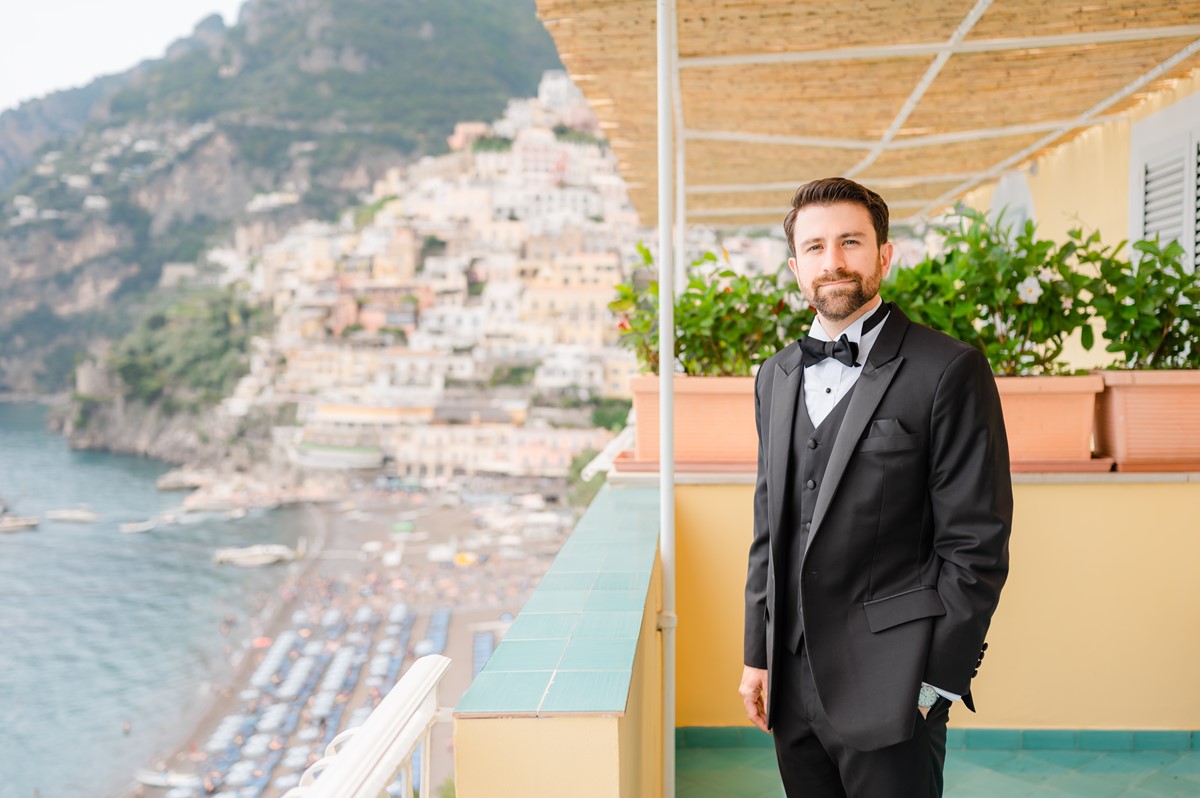
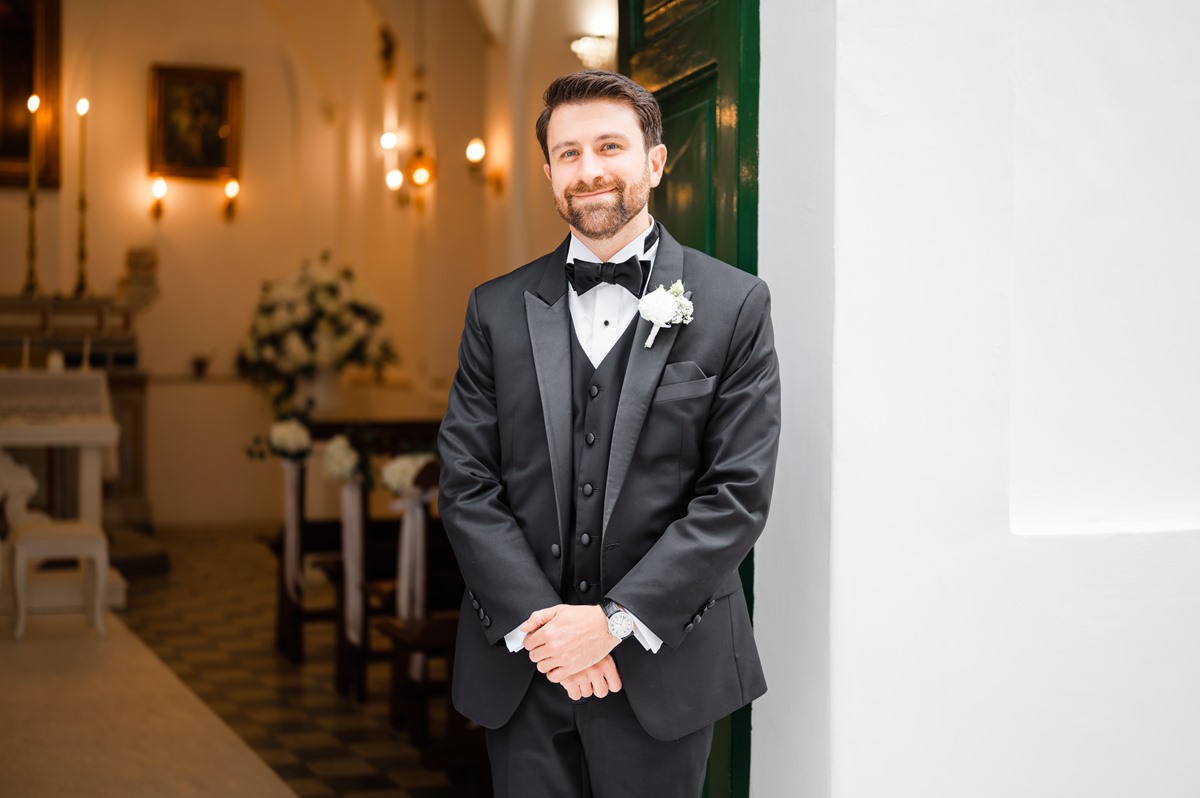
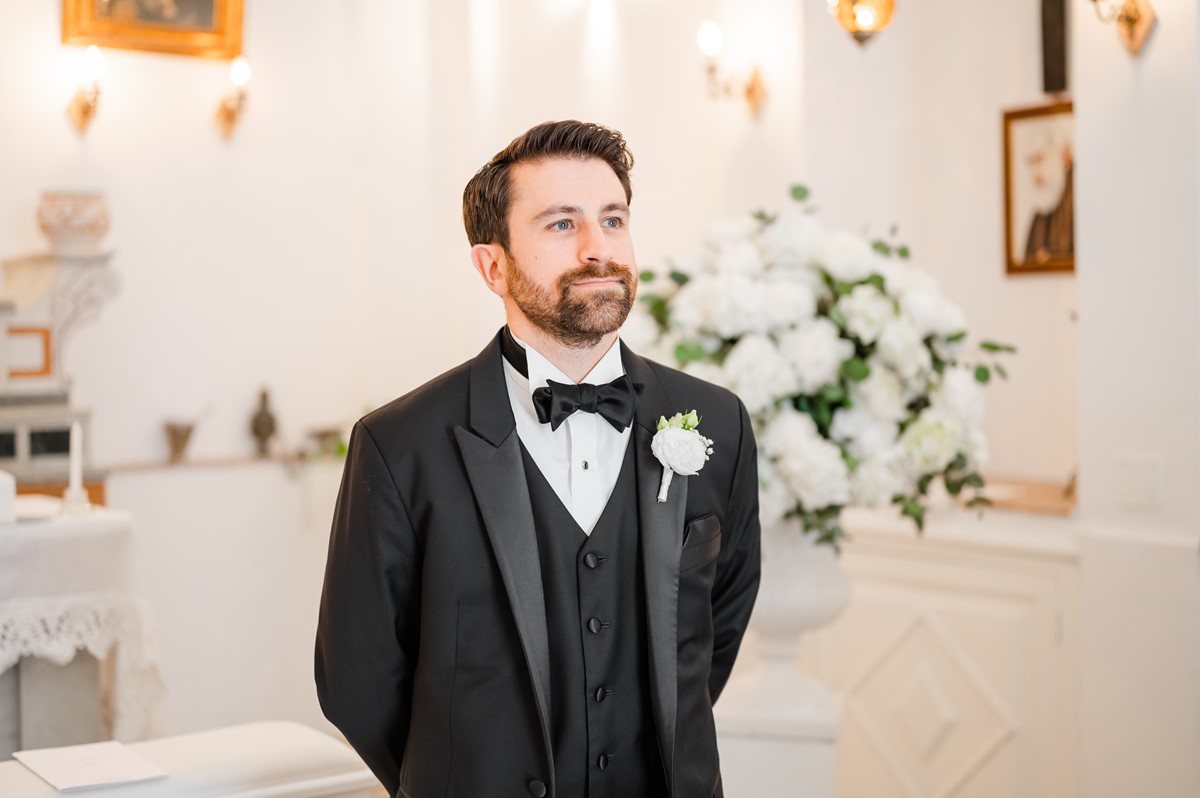
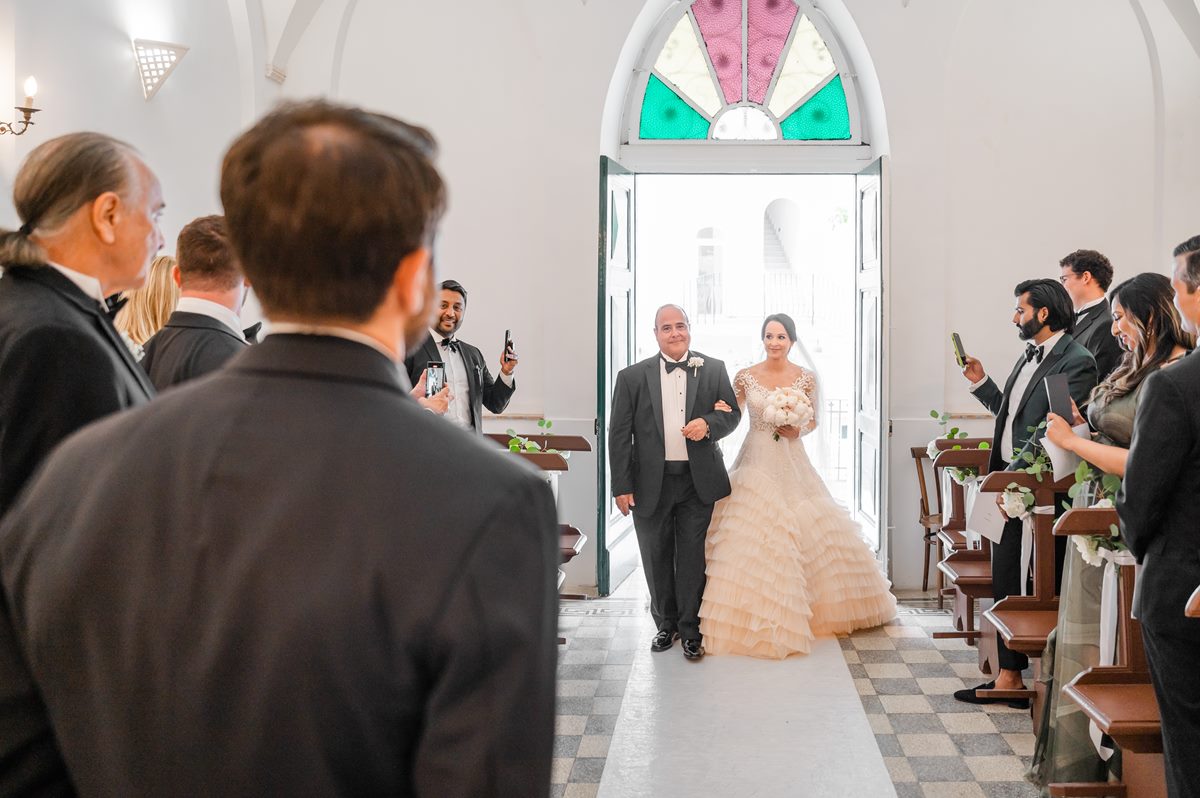
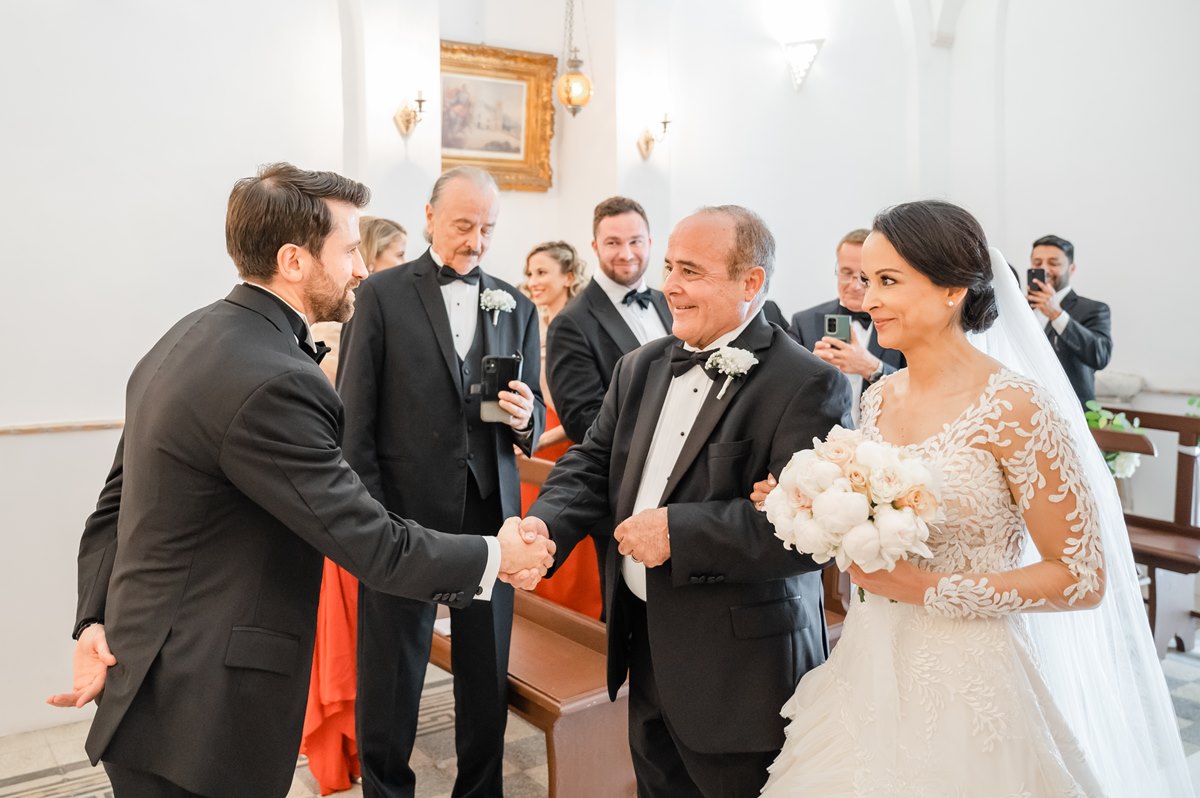
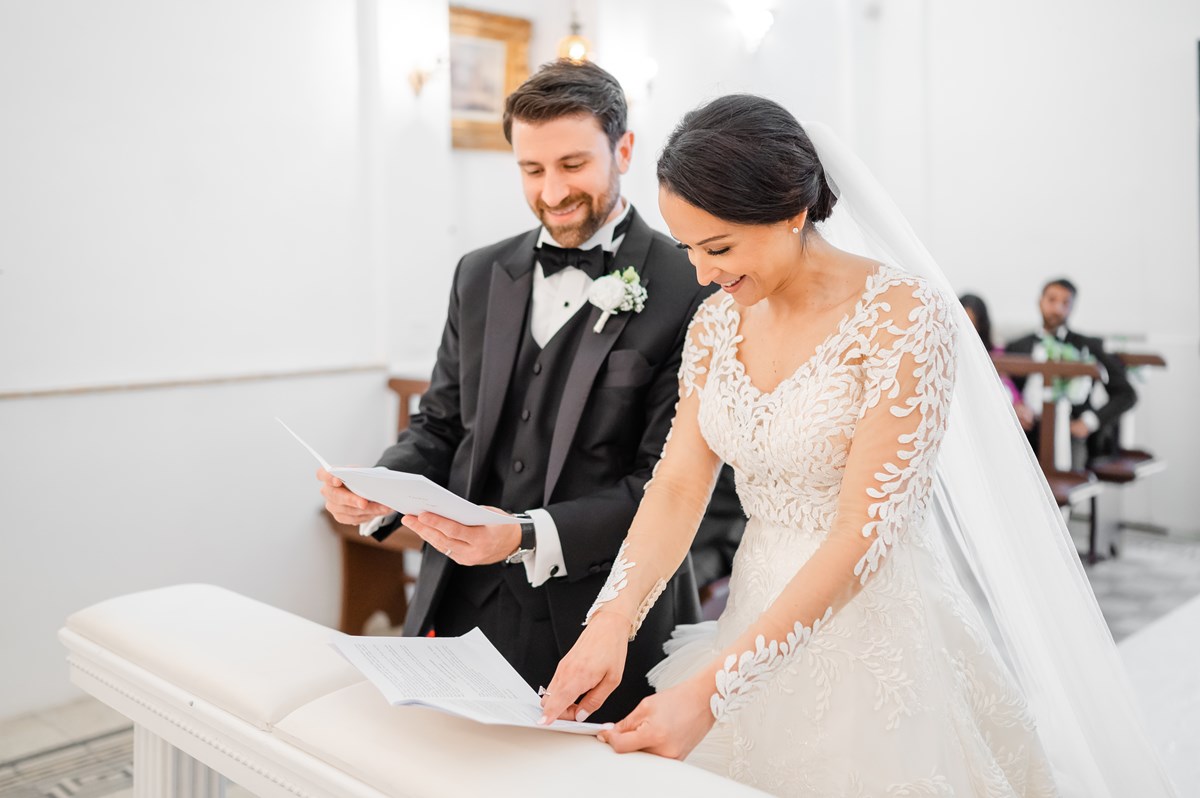
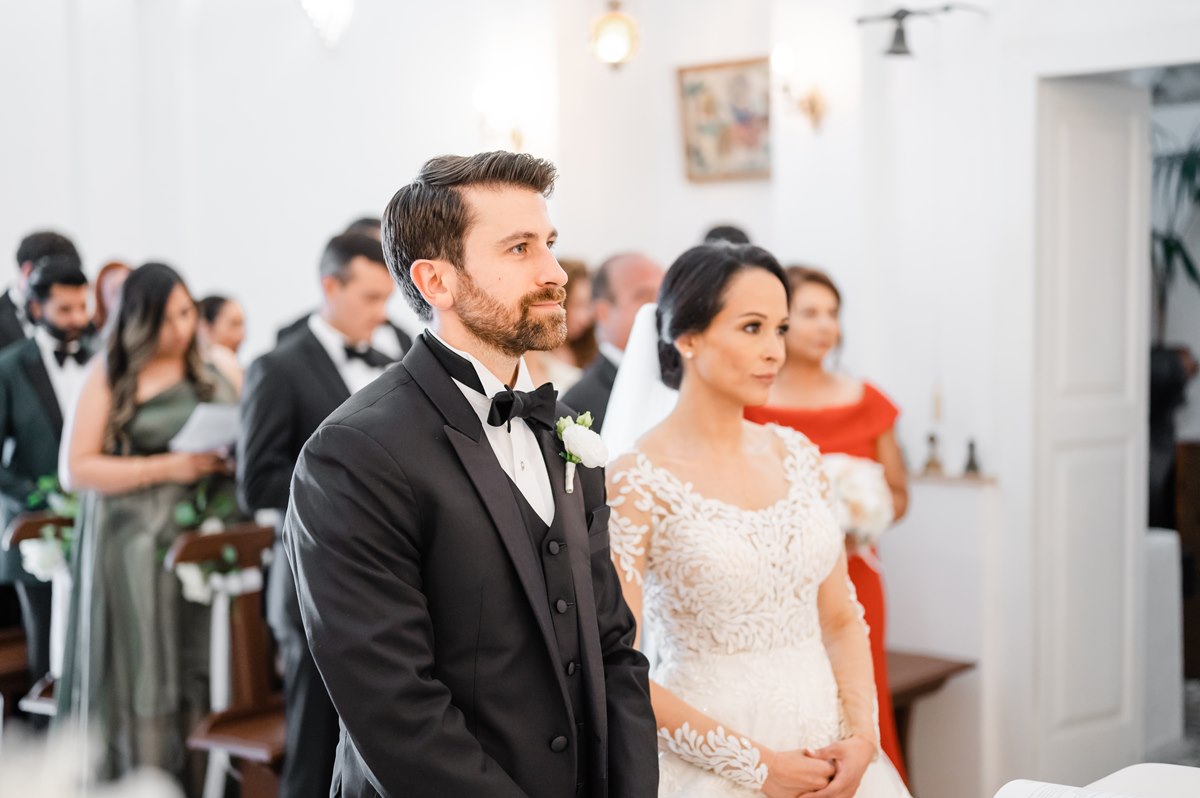
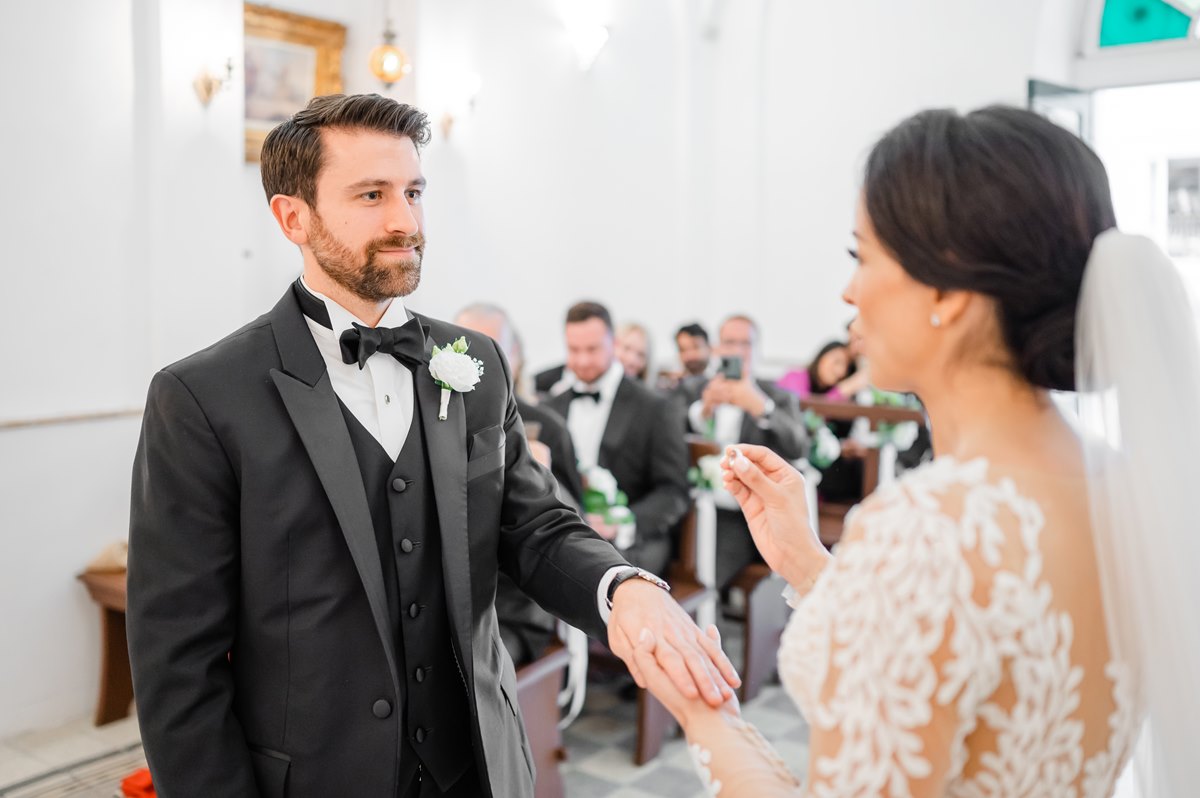
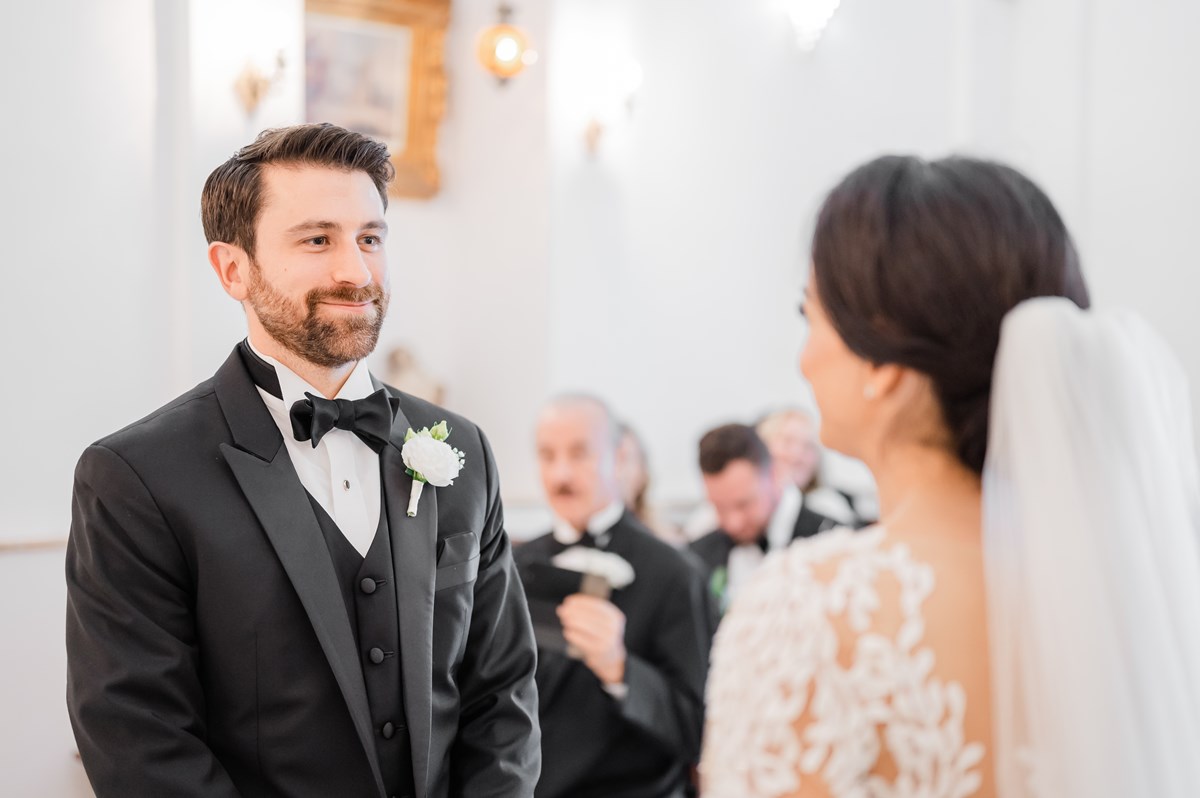
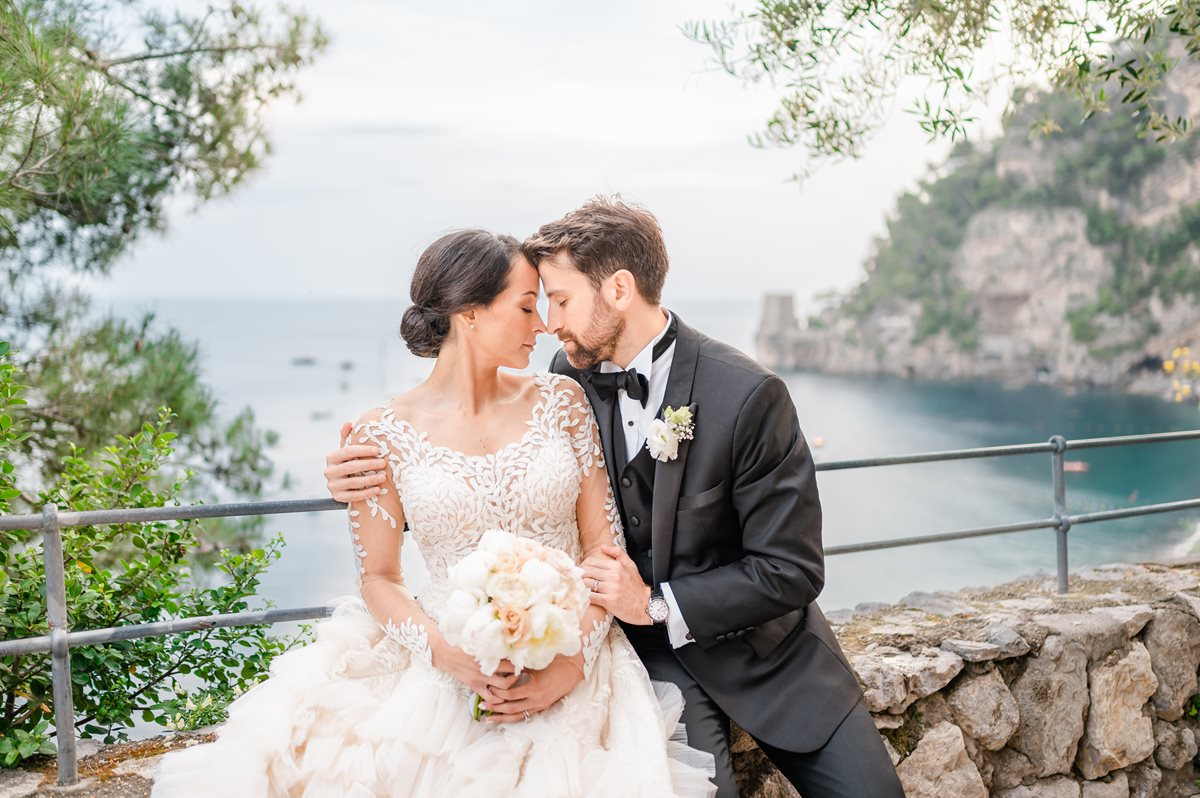
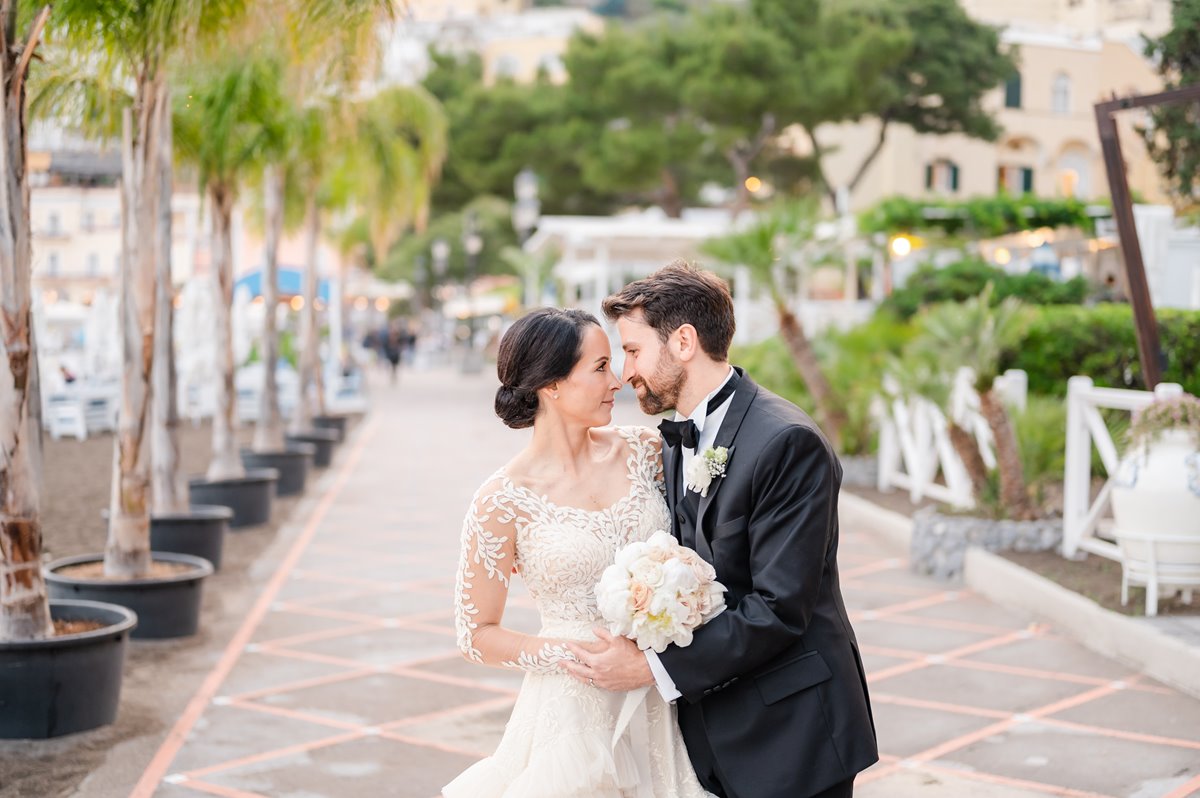
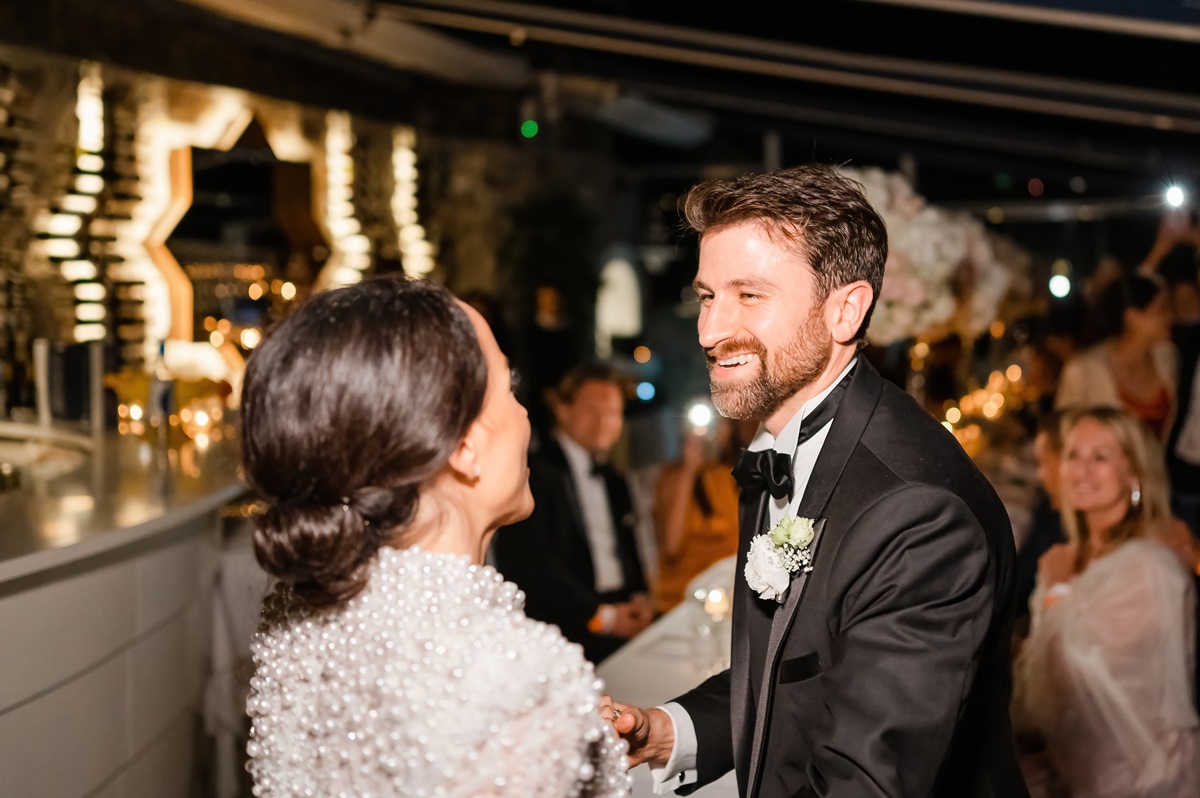
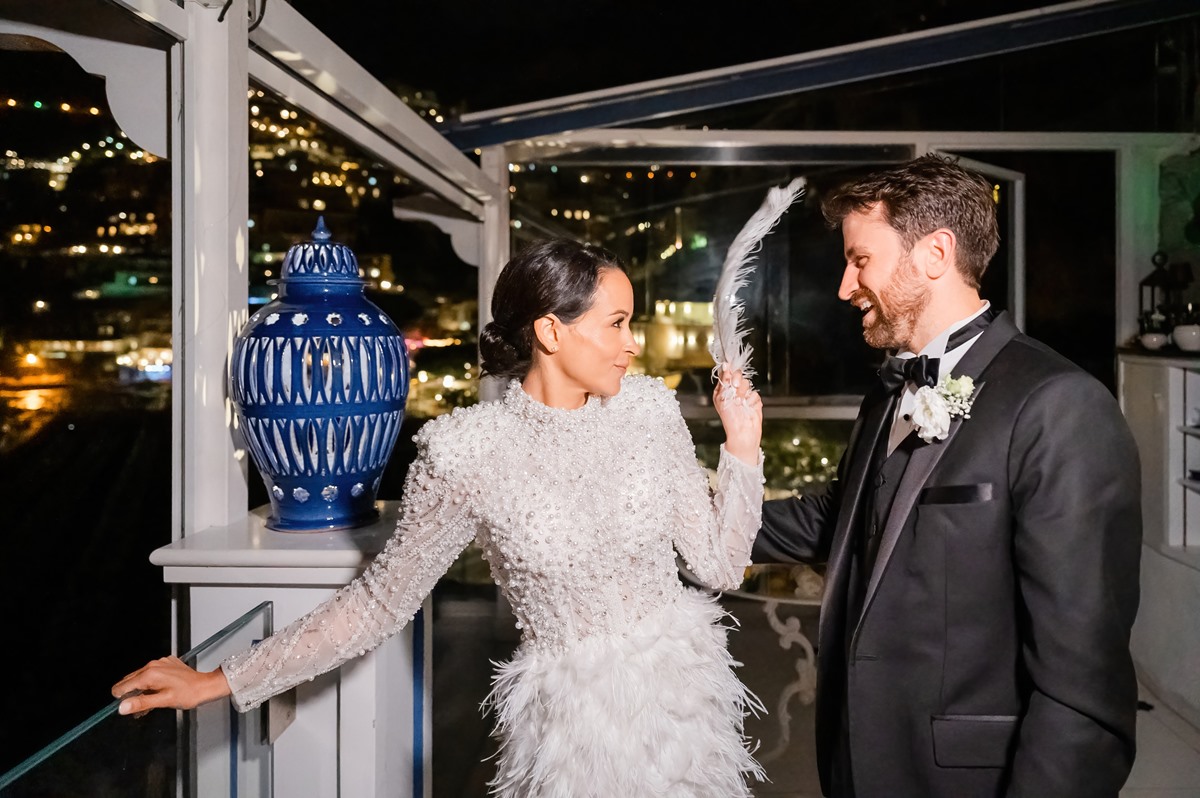
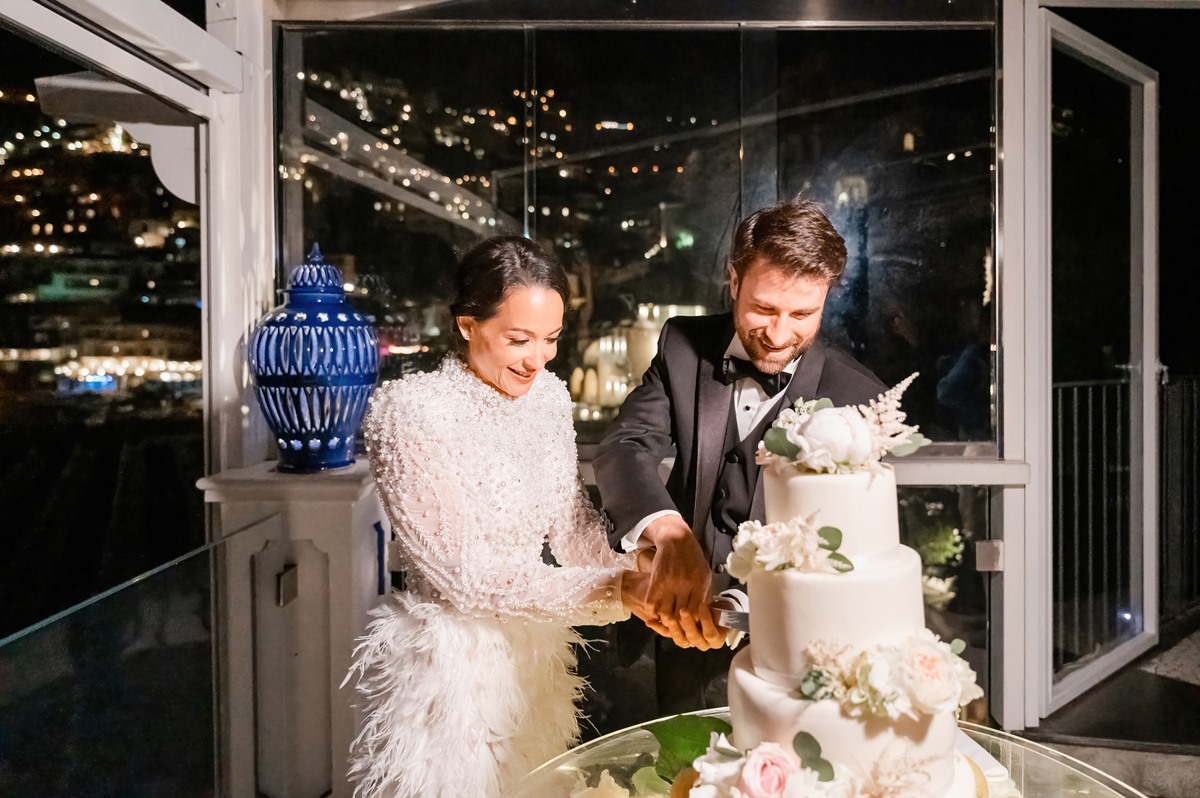
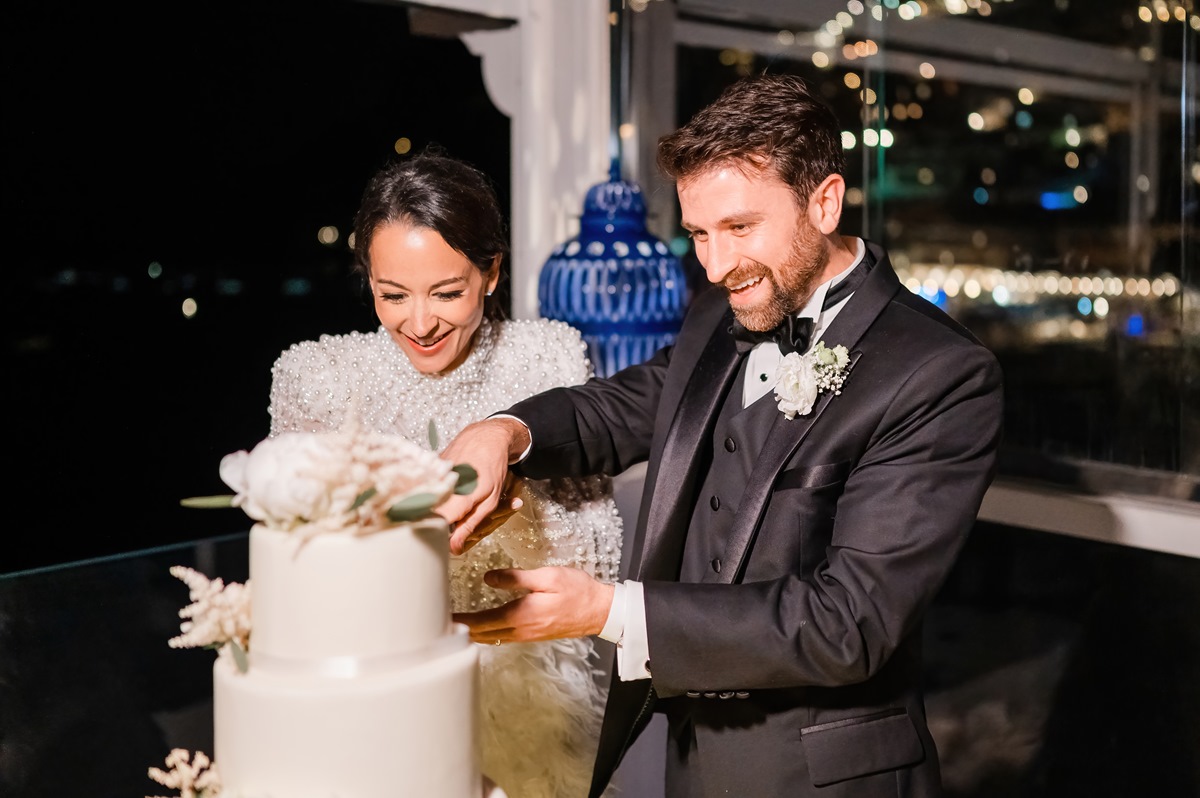
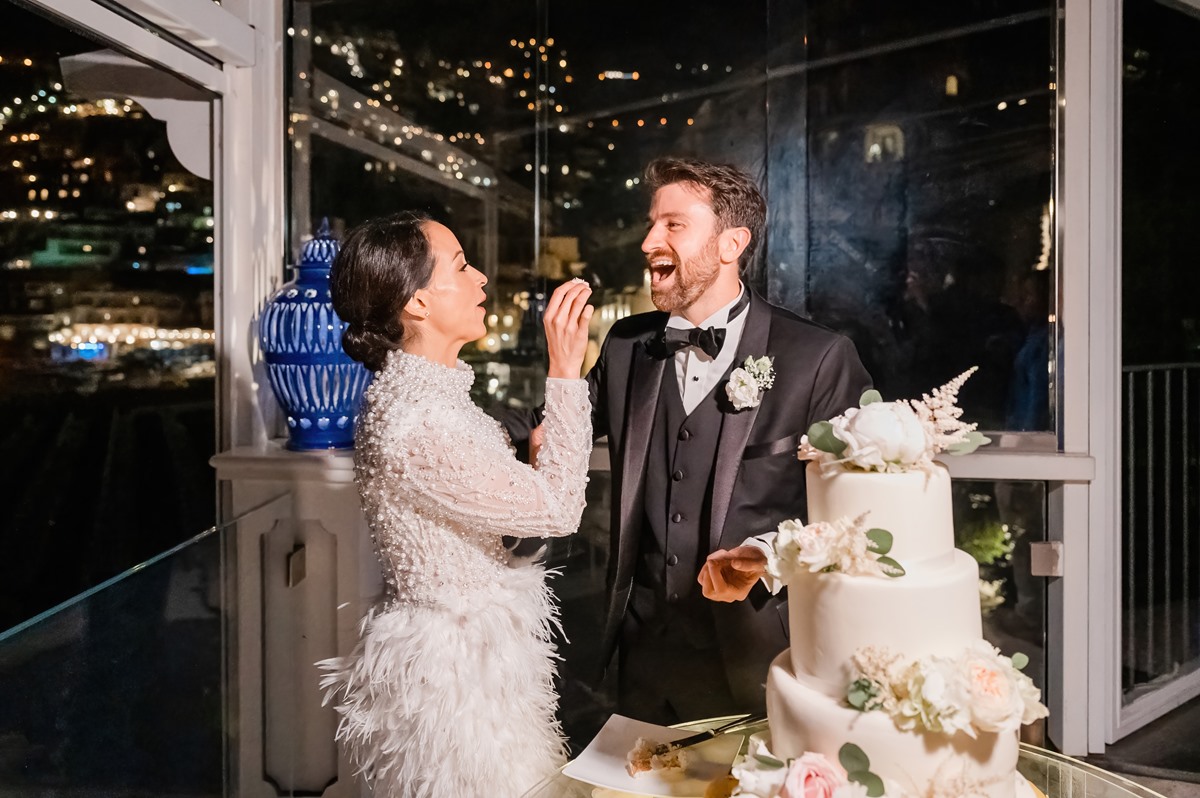
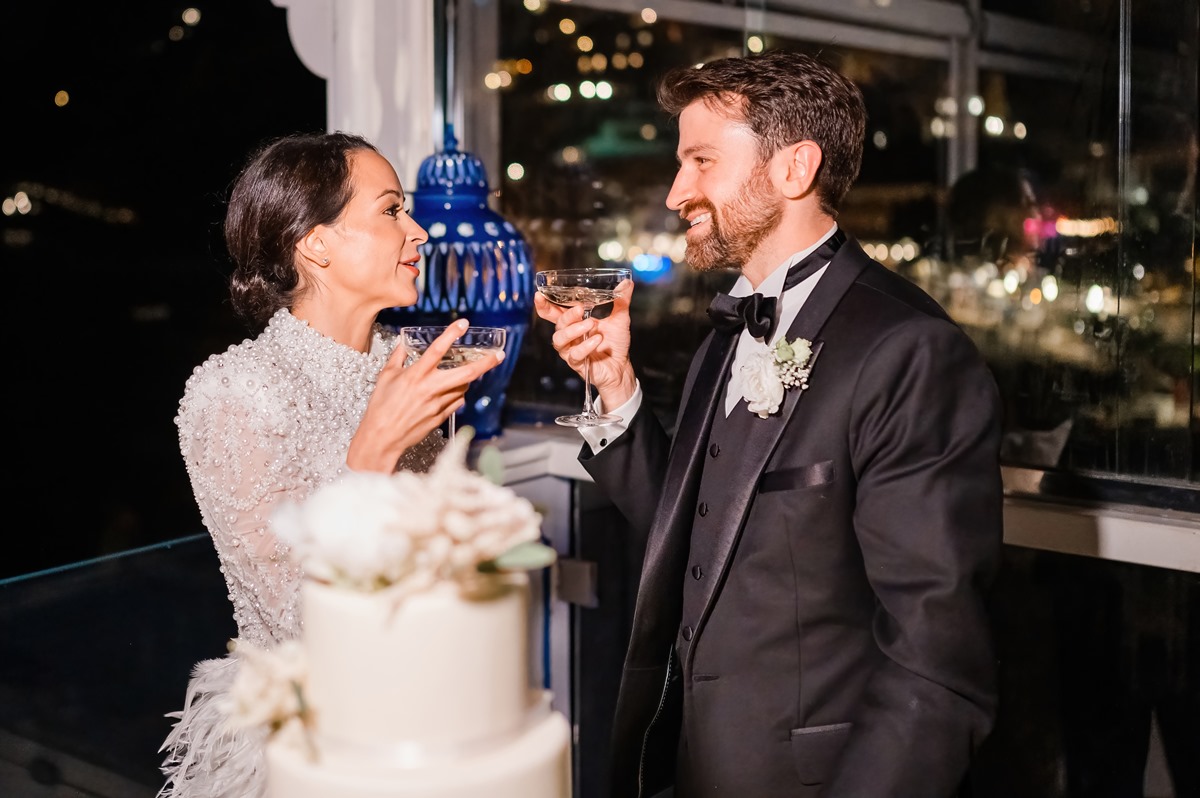
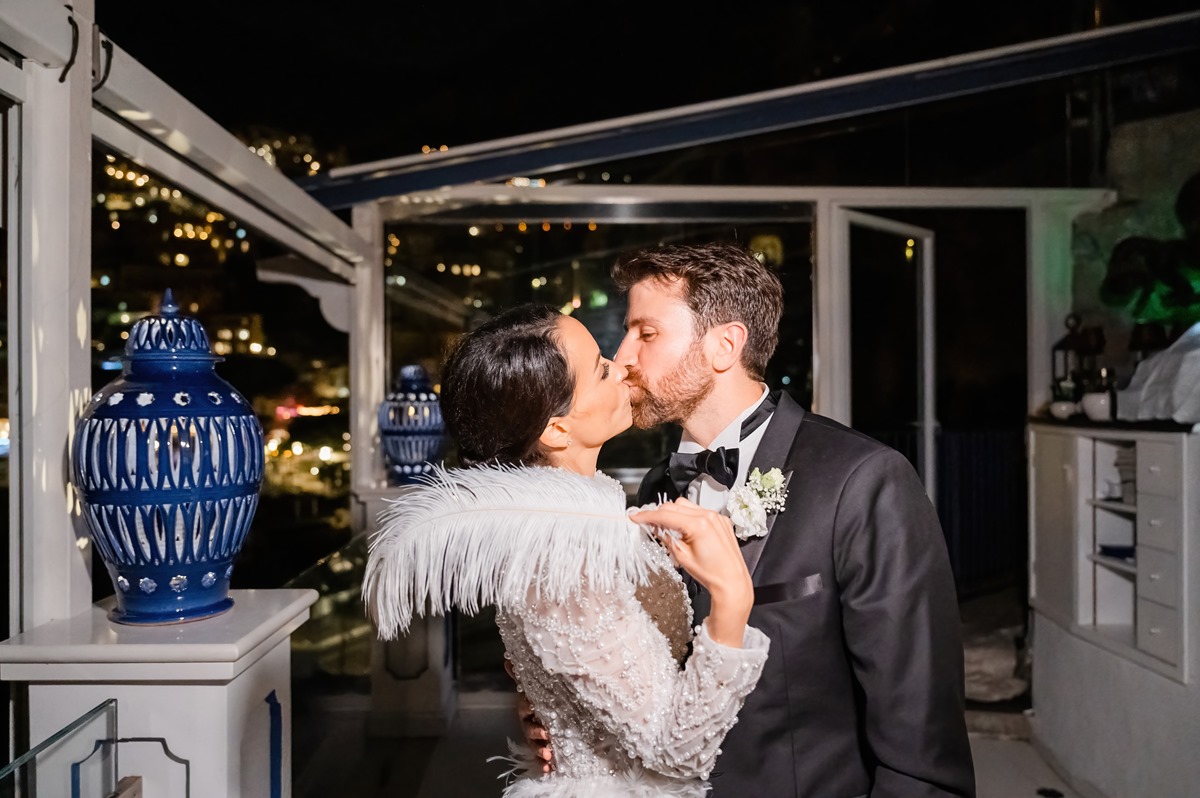
With a dress this dramatic, the groom’s styling decisions matter more than usual, and Ryan’s choice to keep his own look simple, a classic black tuxedo with minimal detail, no bold color or pattern to compete with Christina’s silhouette, was clearly a considered decision rather than a default. In couple portraits, his restraint gave the dress room to be the visually dominant element without the frame feeling unbalanced or competitive between the two of them. A groom in an equally maximalist outfit, patterned fabric or a strong color, would have turned the portraits into a visual contest rather than a complementary pairing, two loud elements pulling attention in different directions instead of one clear focal point.



What This Means for Couples Planning Together
Christina and Ryan’s styling worked because they discussed it as a pair instead of choosing separately and hoping it matched. If one of you goes dramatic, the other’s outfit should support it, simple tailoring, muted colors, minimal accessories, so that the two outfits read as a considered pairing rather than two strong individual choices that happen to be standing next to each other. Have that conversation well before the wedding day, because it won’t balance out on its own.



The Shoe Display That Wasn’t a Flat-Lay
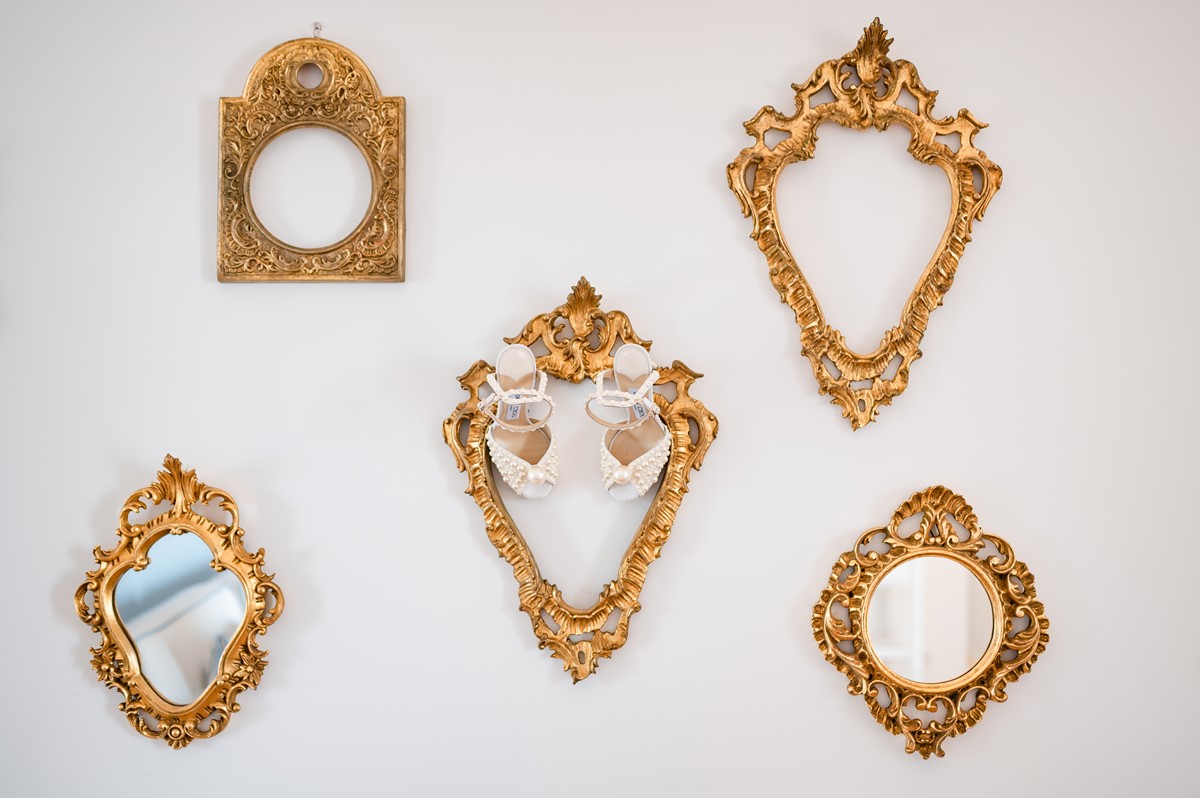
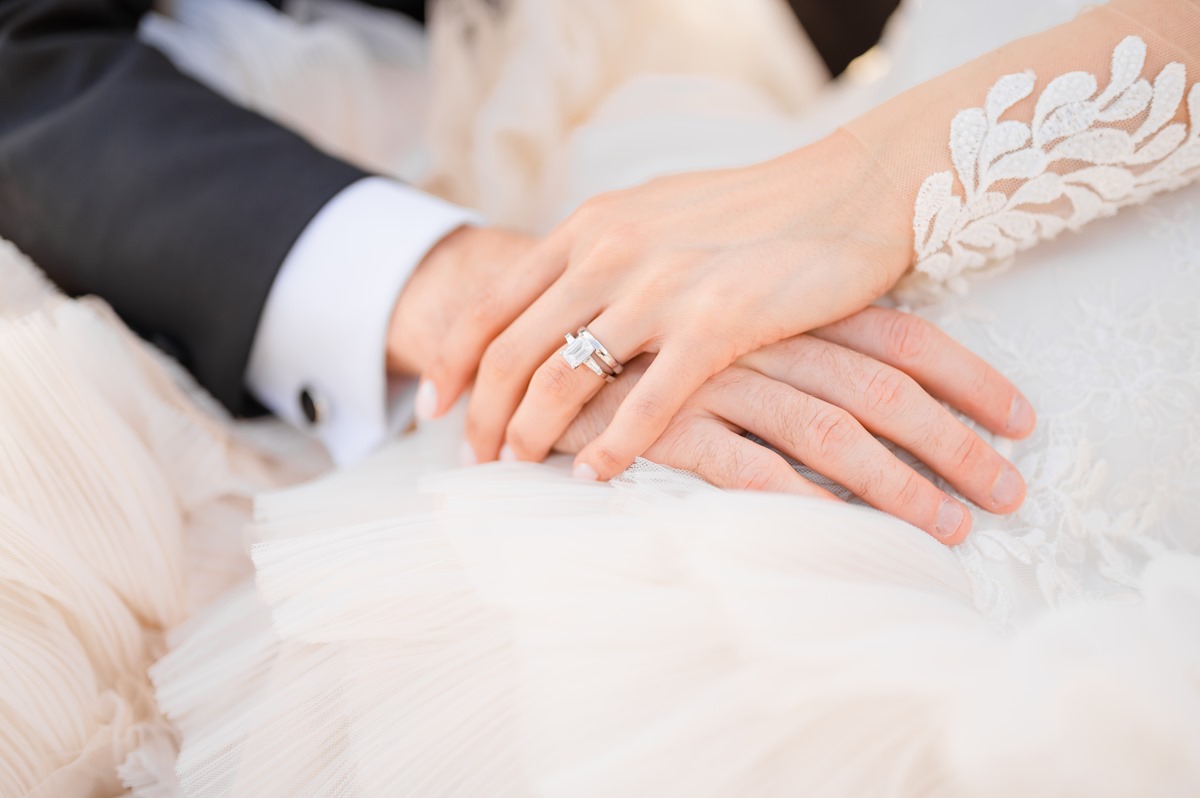
Rather than a standard shoe detail shot on a table or windowsill, Christina’s team arranged five ornate gold-framed mirrors of different shapes and sizes directly on a wall, and hung her pearl-embellished sandals inside one empty frame, the glass removed entirely, so the shoes appeared to float within an ornamental border rather than sitting on a flat surface. As a gold mirror wedding shoe display, it reinvented a detail shot that has become standard and predictable across wedding photography, and it’s the first time in years of shooting on this coast that I’ve seen a couple’s own styling team bring this specific idea to a session.




Photographing an Already-Composed Detail
My job with a setup this considered was mostly restraint. The five mirrors were already arranged with real intention, varied shapes and sizes creating their own visual rhythm on the wall, and adding an aggressive angle or heavy styling on my end would have undercut the arrangement. I shot it straight on, evenly lit, letting the gold frames and the suspended shoes carry the entire composition without any additional intervention. Sometimes the most useful thing a photographer can do with a beautifully staged detail is simply not get in its way.




Where This Kind of Silhouette Comes From
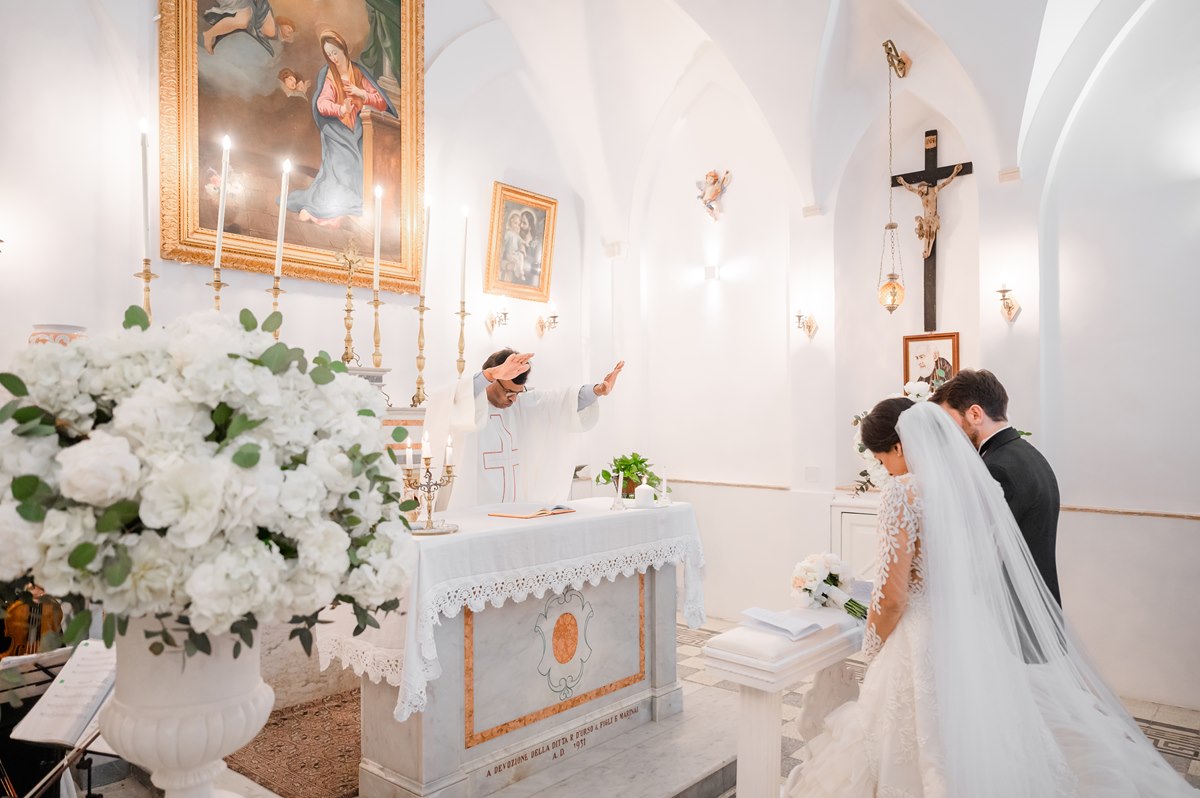
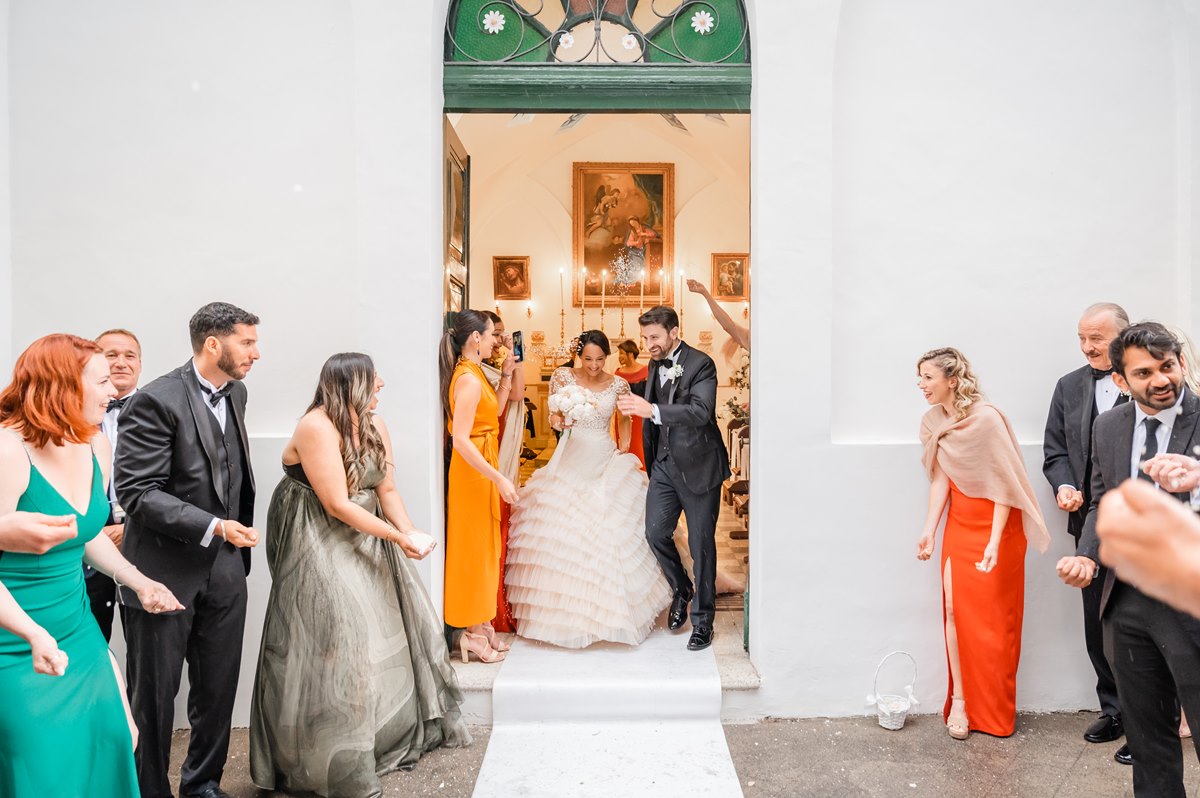
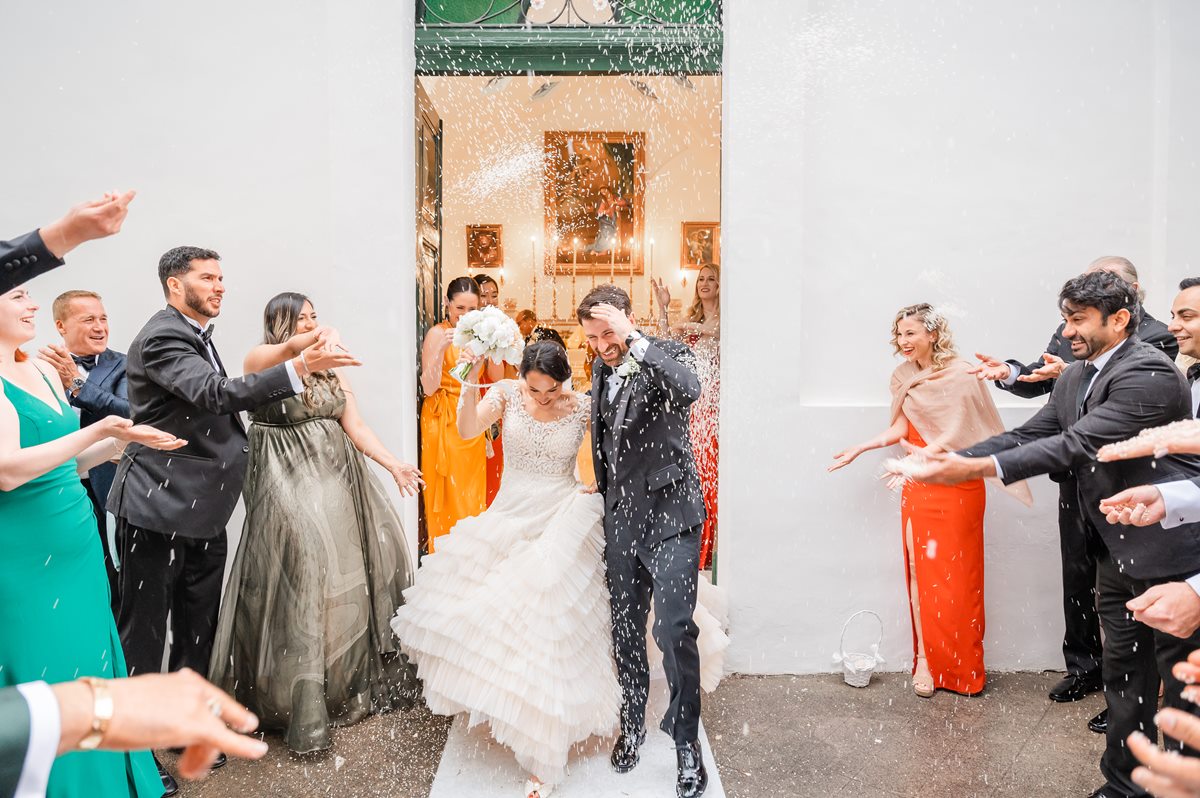
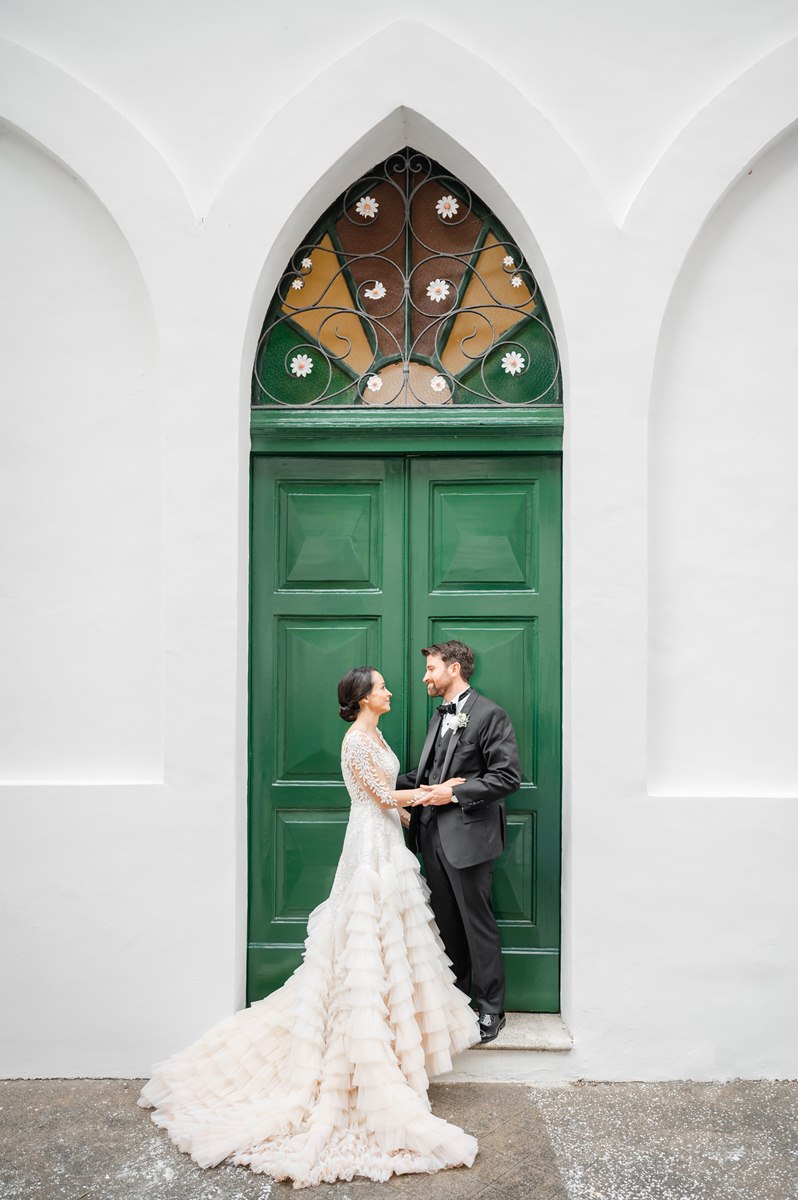
The tiered, voluminous ruffle skirt Christina chose sits within a recognizable lineage in Italian bridal fashion, closest in spirit to the romantic, fairytale-leaning gowns associated with designers like Giambattista Valli, known for exactly this kind of layered, sculptural ruffle work. It’s a specifically Italian strand of maximalism, distinct from the more restrained, pared-back aesthetic that dominates a lot of American bridal fashion, and choosing a maximalist wedding dress in Italy has its own logic: a bold, theatrical Italian silhouette worn in the country where that design language actually originates, exactly the kind of styling choice my guide to what to wear to a Positano wedding explores in more depth.
The Bouquet Against the Old Vine
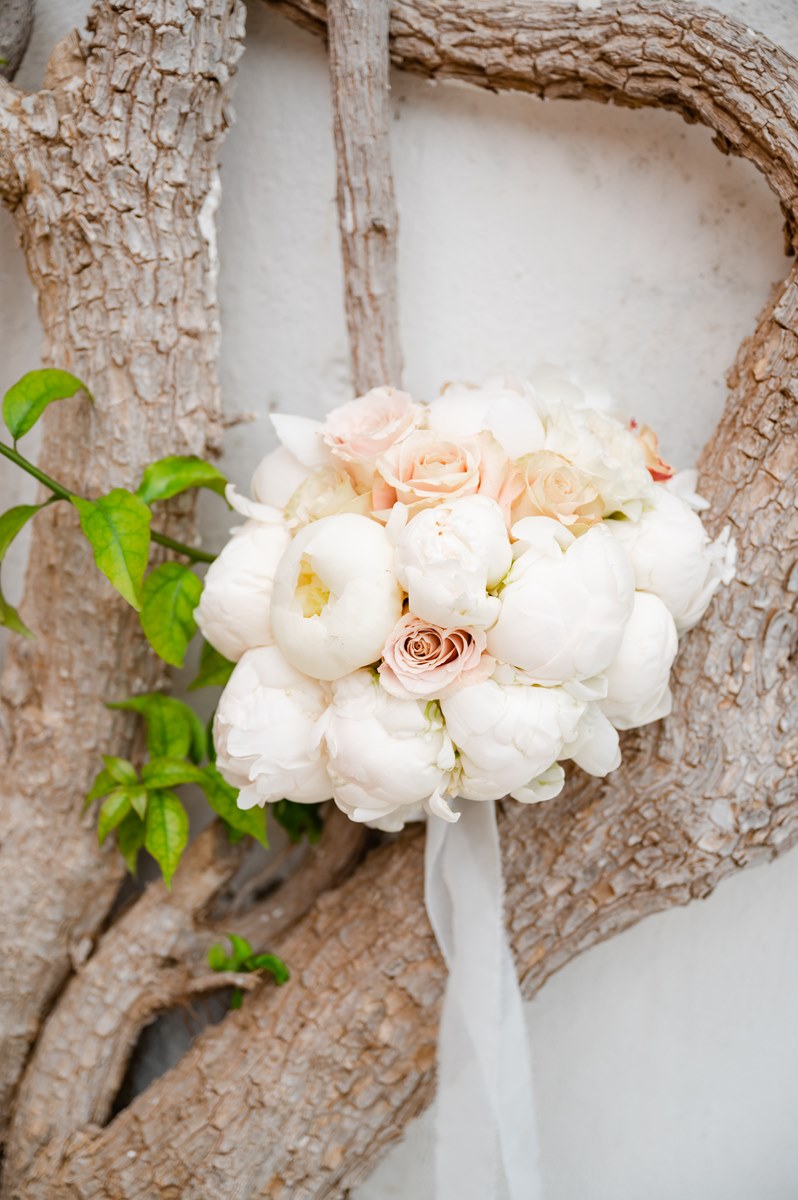
A separate detail shot placed Christina’s bouquet, white peonies and blush roses with a trailing ribbon, against the gnarled, weathered trunk of an old vine growing against a whitewashed wall. The contrast between the soft, precise floral arrangement and the rough, sun-bleached bark behind it gave this single image a textural range that a bouquet shot against a plain surface wouldn’t have had. Positano’s older properties are full of these kinds of incidental textures, aged wood, worn stone, twisted old vines, and part of what a local photographer brings to a detail shoot is knowing which specific surfaces on a given property are worth using as a backdrop rather than defaulting to a table or a windowsill every time.
The floral style itself, loose, textured, heavy on peonies rather than tightly structured roses, matched the dress’s own visual language better than a more architectural, monochrome bouquet would have. A stiffer, more geometric arrangement would have read as visually at odds with the soft, cascading ruffles of the skirt. Matching the bouquet’s texture to the dress’s own energy is a detail that’s easy to overlook when florals get chosen separately from the gown, and you can see it in how cohesive the finished gallery feels.
A Second Backdrop for the Same Dress
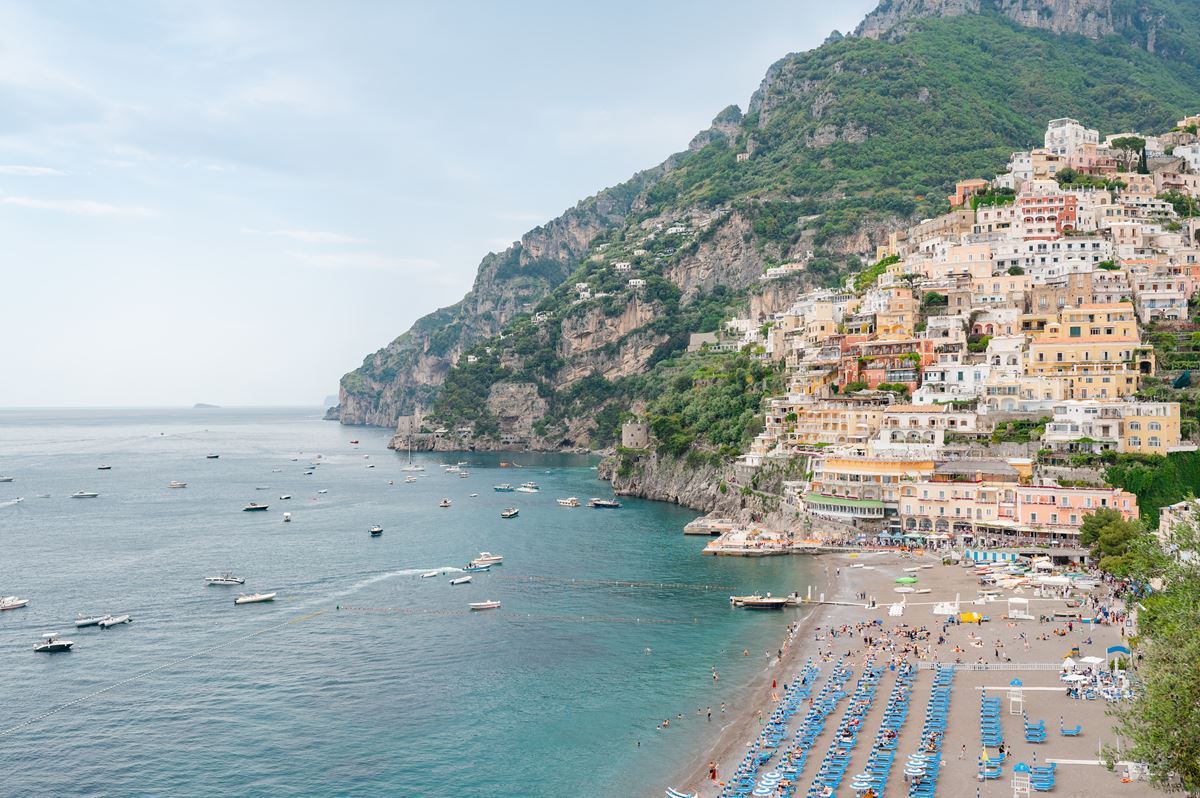
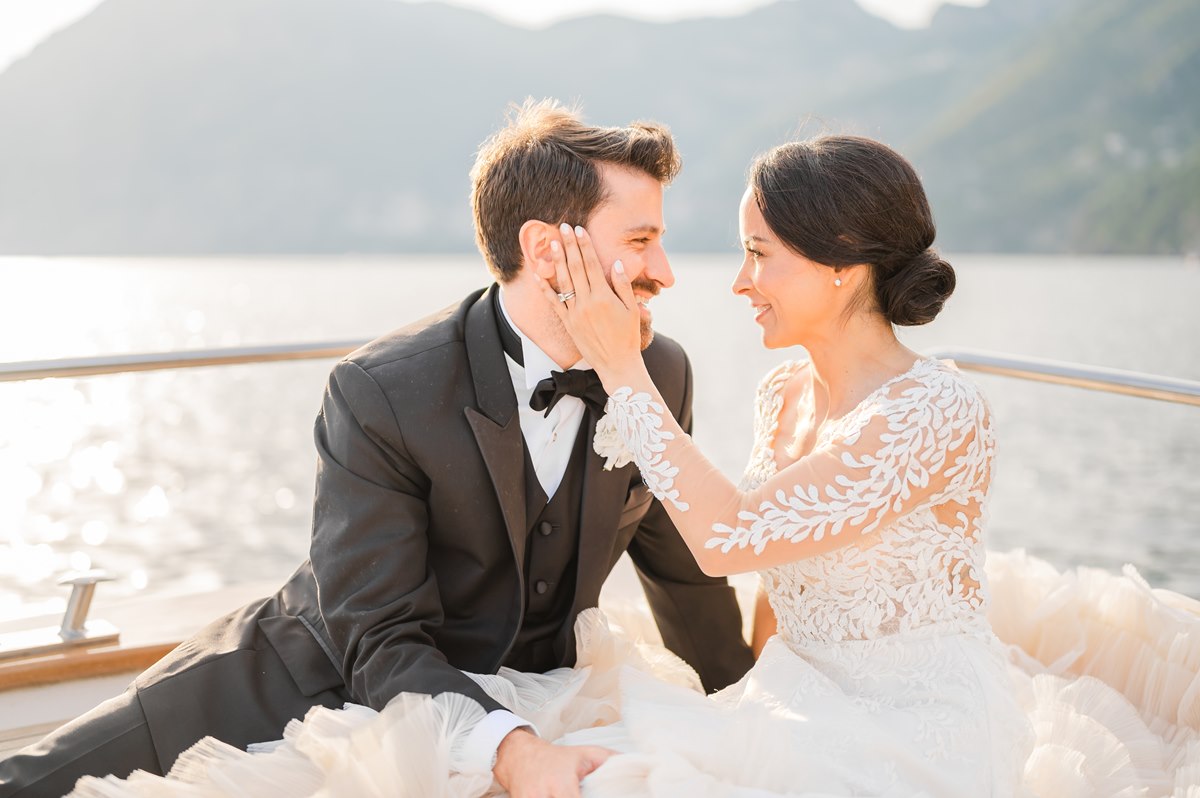
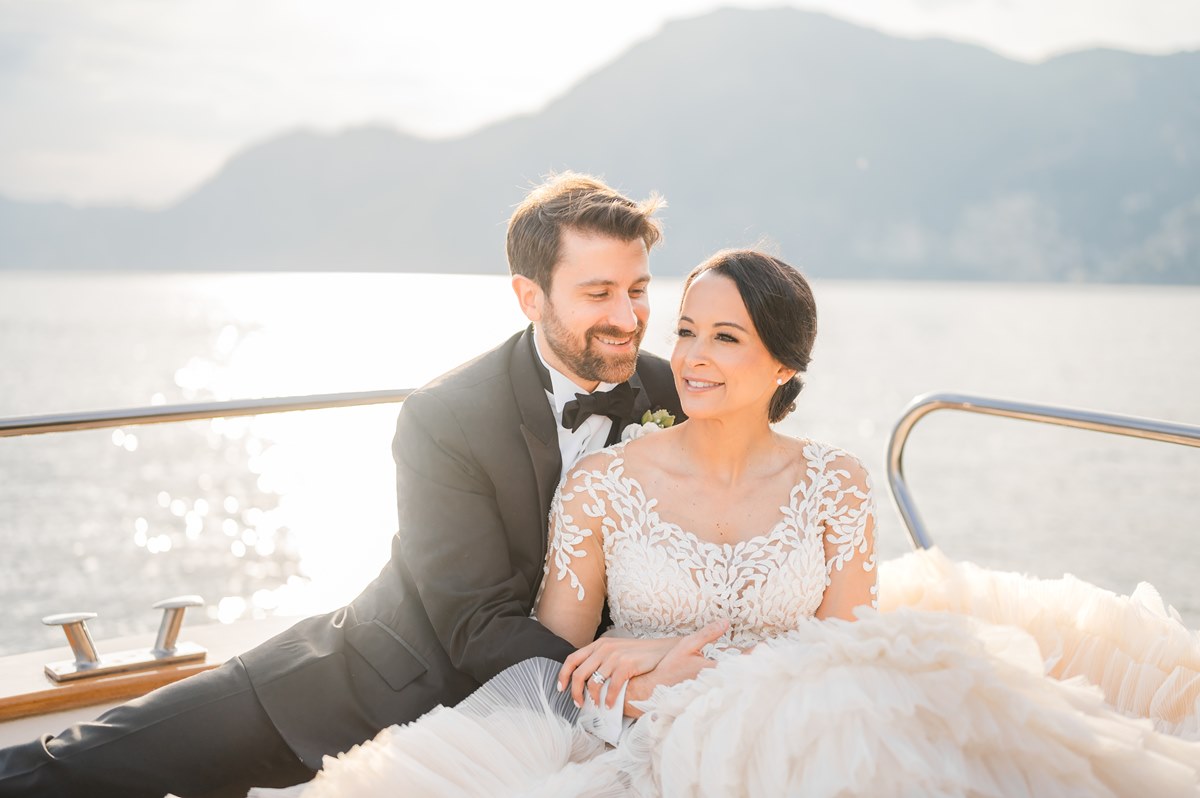
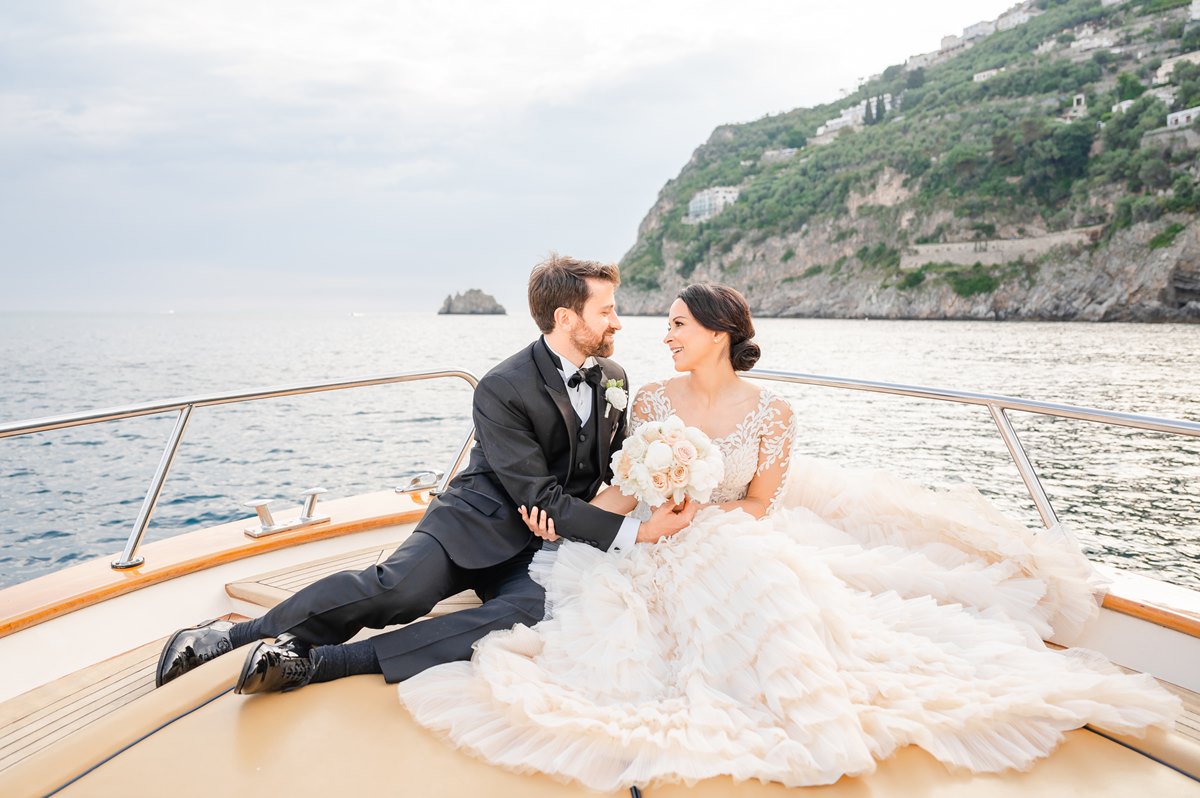
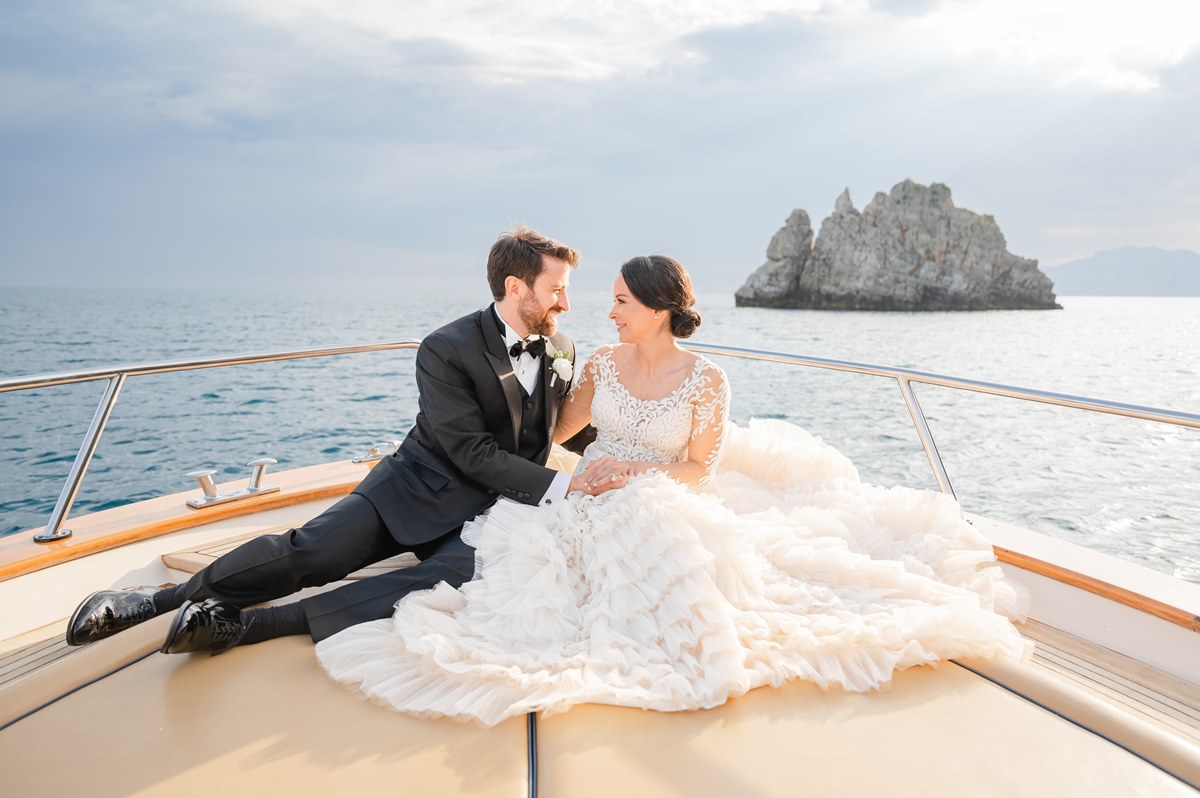
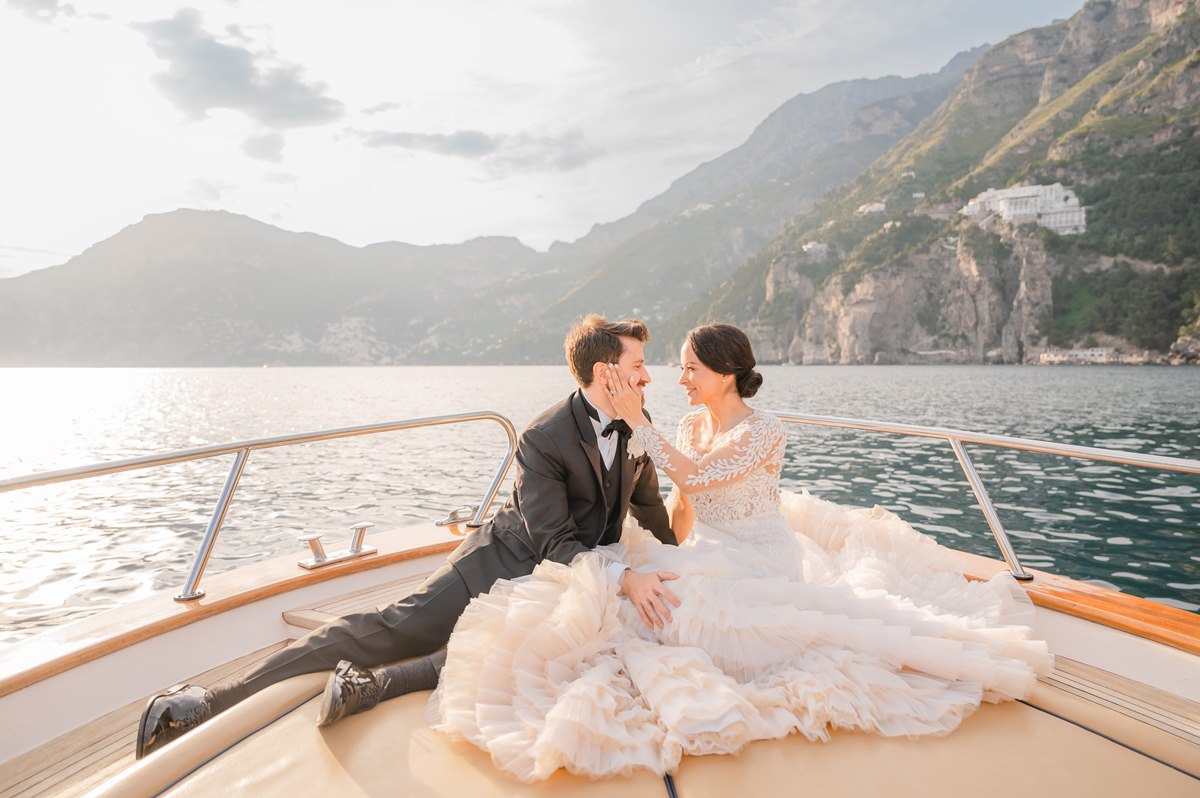
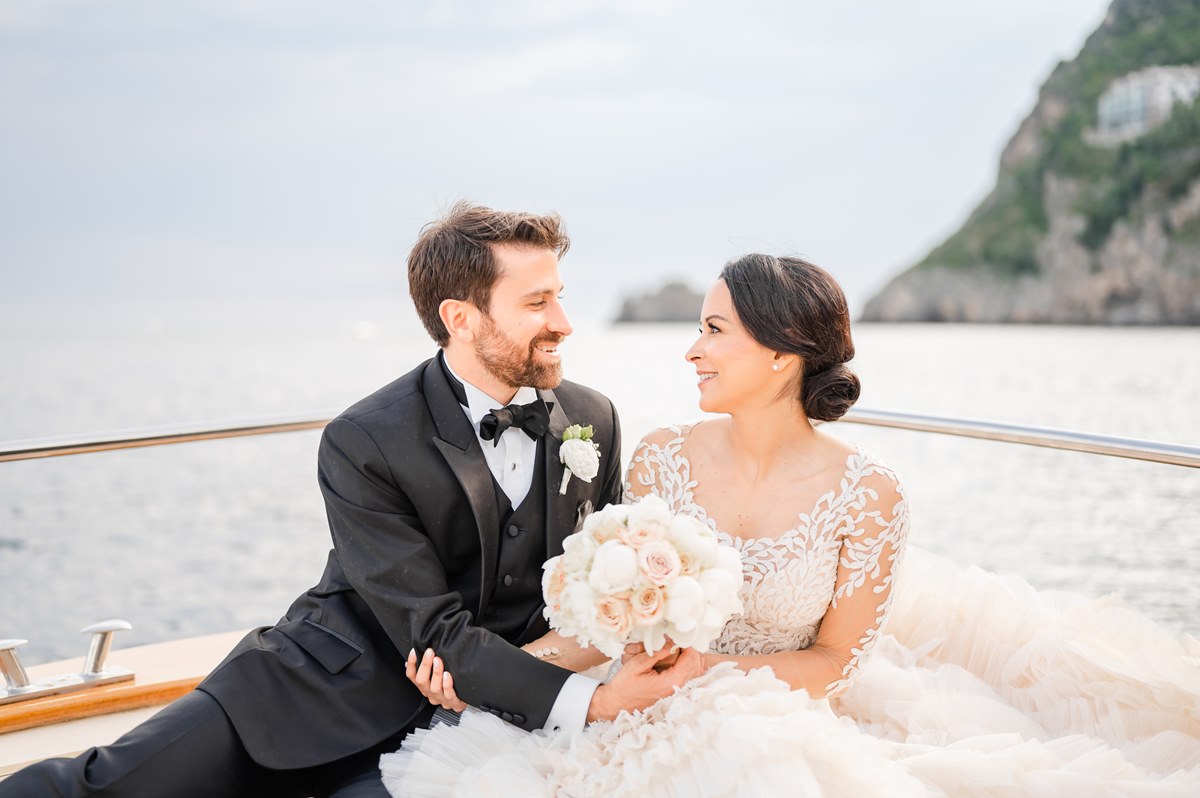
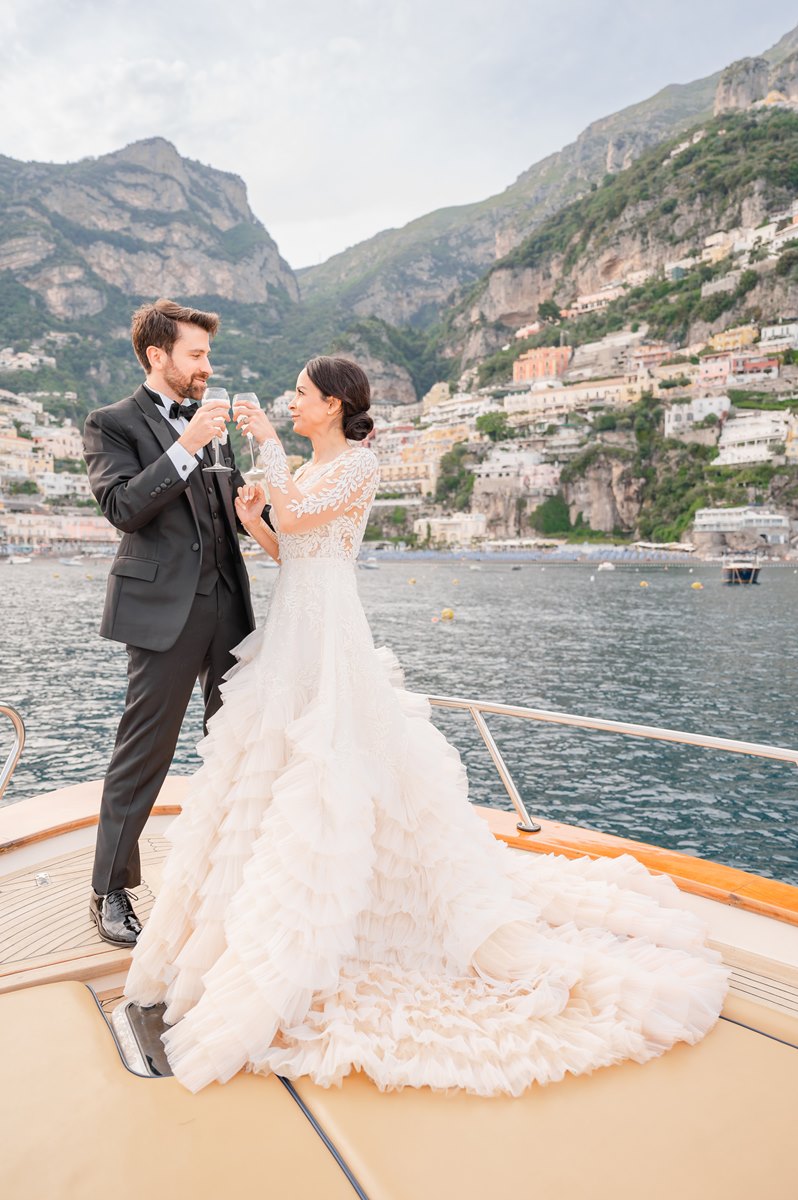
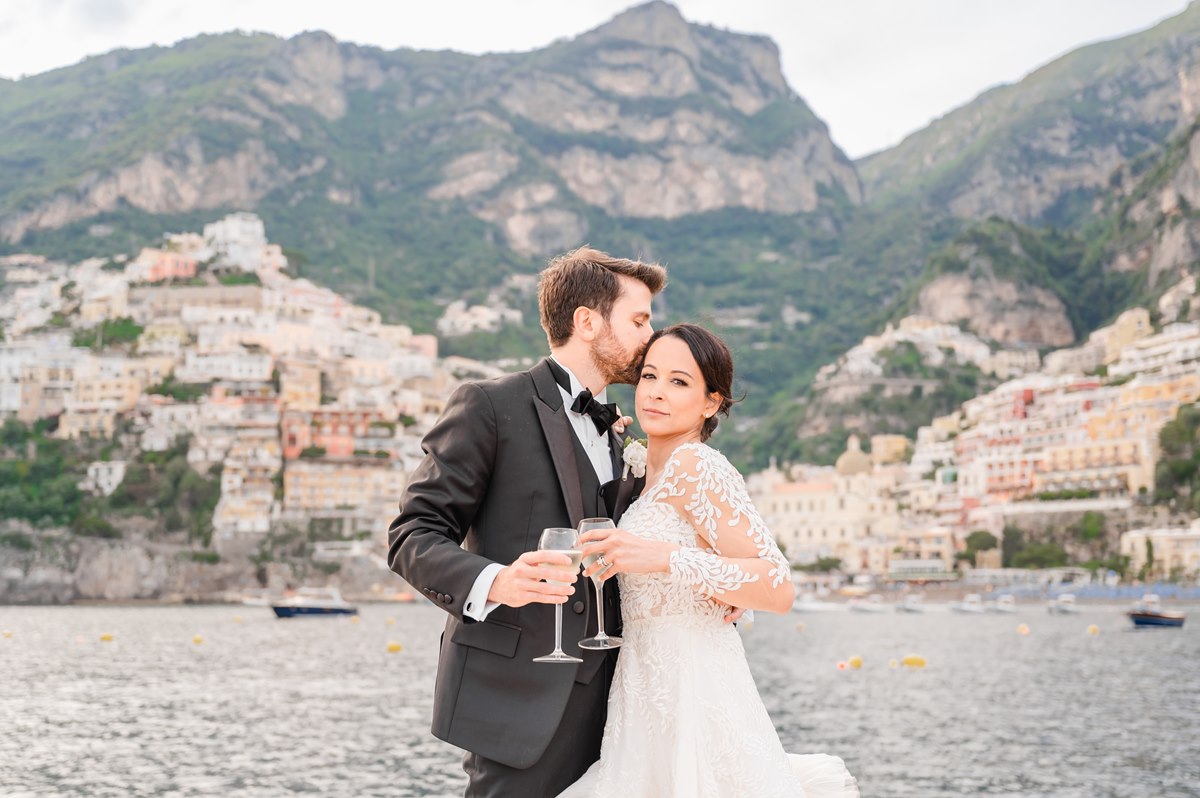
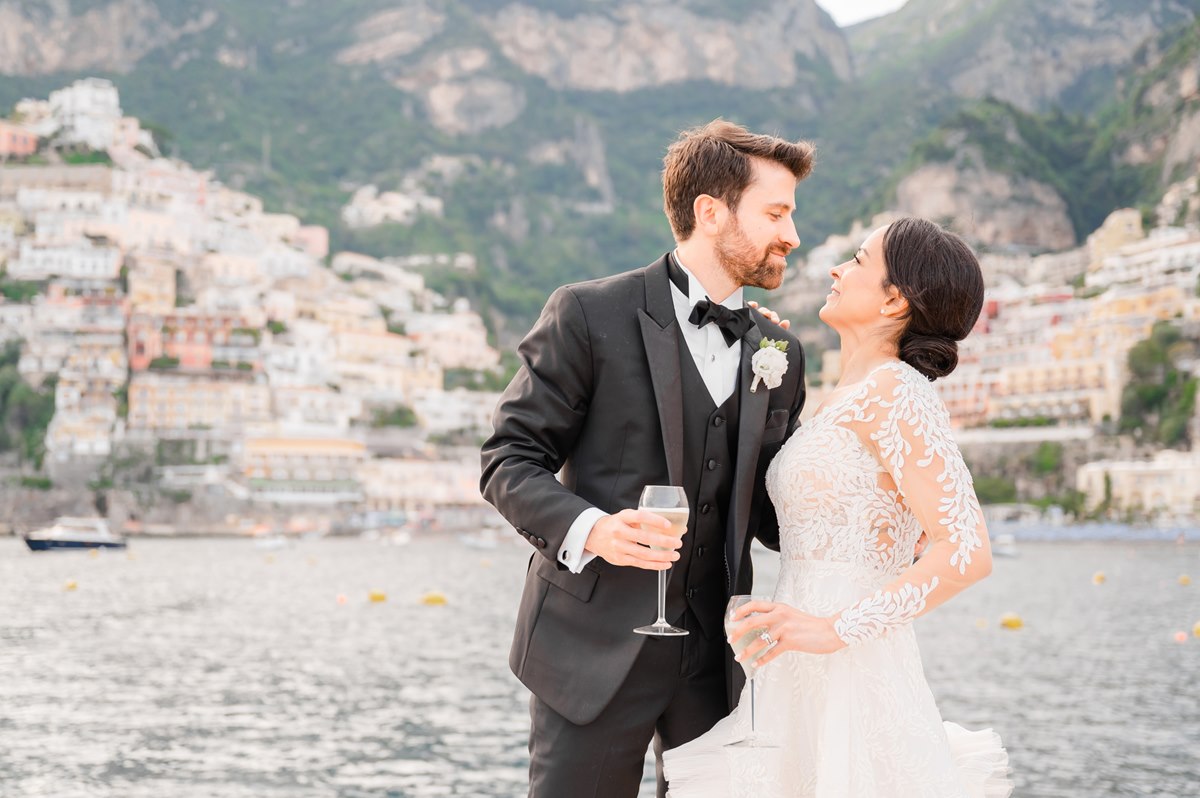
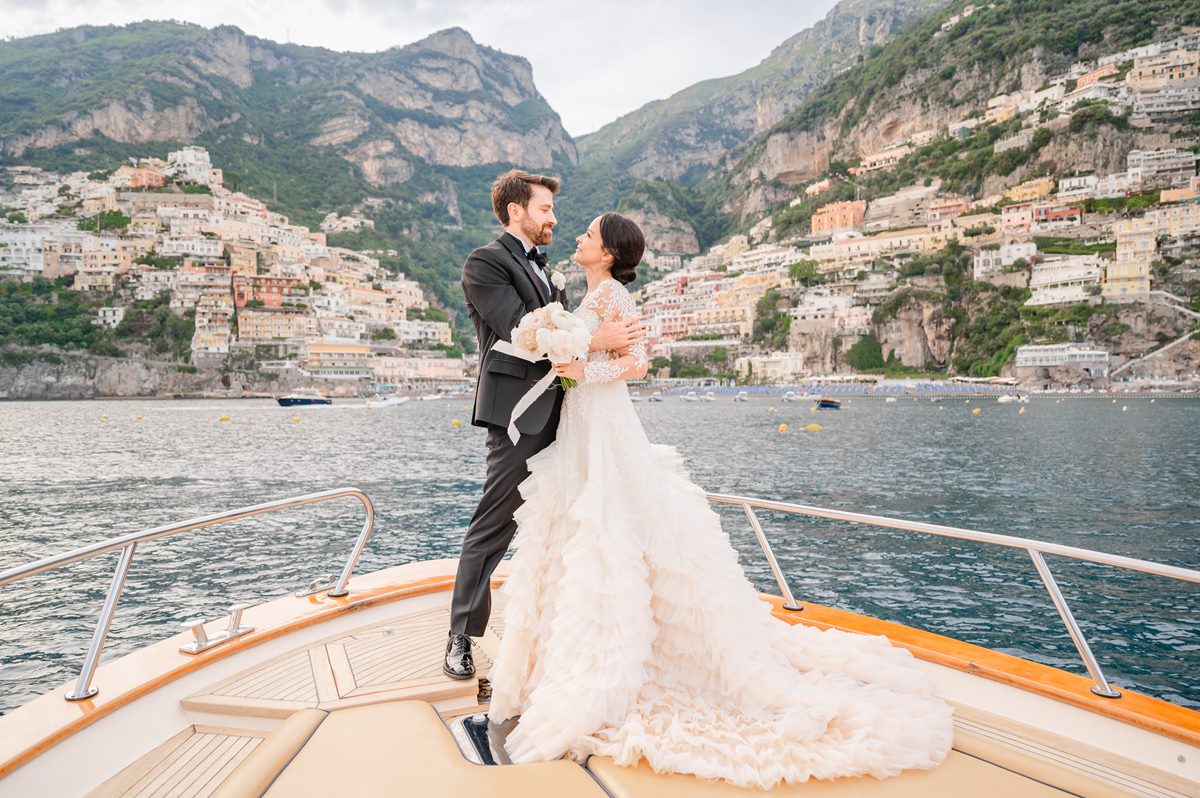
Later that same day, Christina and Ryan took the dress somewhere the terrace couldn’t follow: onto the water, aboard a classic wooden launch with a cream deck and varnished trim, motoring out just far enough from shore that all of Positano stacked up behind them across open water. It’s a completely different kind of backdrop from the fixed terracotta wall and archway back at Marincanto, one that moves under your feet rather than holding still, and I wanted the two settings to read as distinct in the finished gallery.
Managing a Train on a Boat That Won’t Stay Still
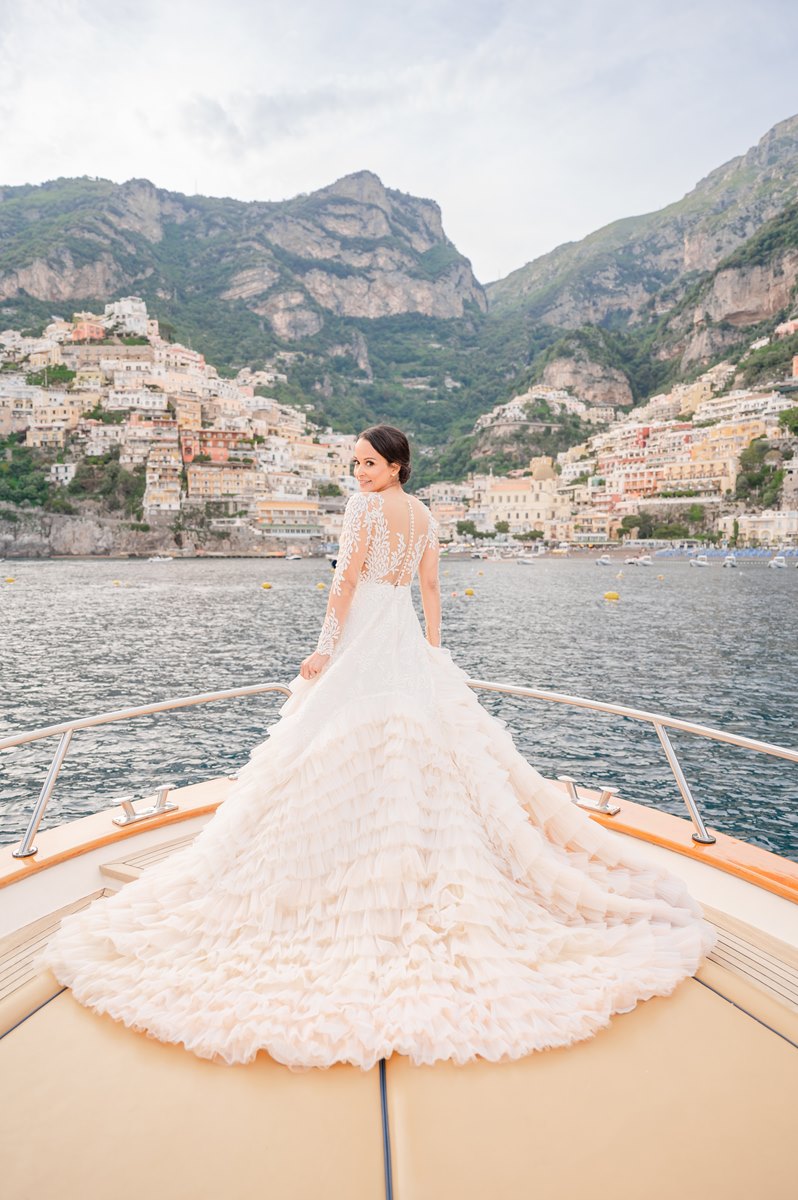
A tiered ballgown is demanding enough on solid ground. On a boat’s narrow bow, with the deck gently rolling under a light chop and no fixed rail to brace the fabric against, arranging the train took real cooperation between Christina, the crew, and me: someone had to fan the ruffled layers out flat across the teak before I could get low enough for the shot, and the whole process had to be redone almost every time the wake from a passing boat shifted the skirt out of position. In a full ballgown on a boat, plan more time than you would on a terrace, because a moving surface turns a five-minute reset into fifteen.
The payoff was worth the repeated resets. Christina alone at the bow, back to the camera again, the ruffled train spread wide across the boat’s cream deck instead of a tiled terrace floor, looking back over her shoulder at the same stretch of coastline from an entirely new angle, gave the gallery a second version of that signature pose without feeling repetitive, since the water, the motion, and the wider, more open horizon behind her changed how the image actually reads.
Ryan joined her at the bow for a toast a few minutes later, two champagne glasses raised between them with Positano’s cliffside crowding the frame behind, and then a closer embrace shot, his black tuxedo against the lace and tulle of her back, both of them looking out at the view rather than at each other. Shooting a couple with their attention on the view instead of on one another is a compositional choice I make deliberately when a location earns that kind of focus, and Positano from open water, at that hour, earned it easily.




Rada, Briefly
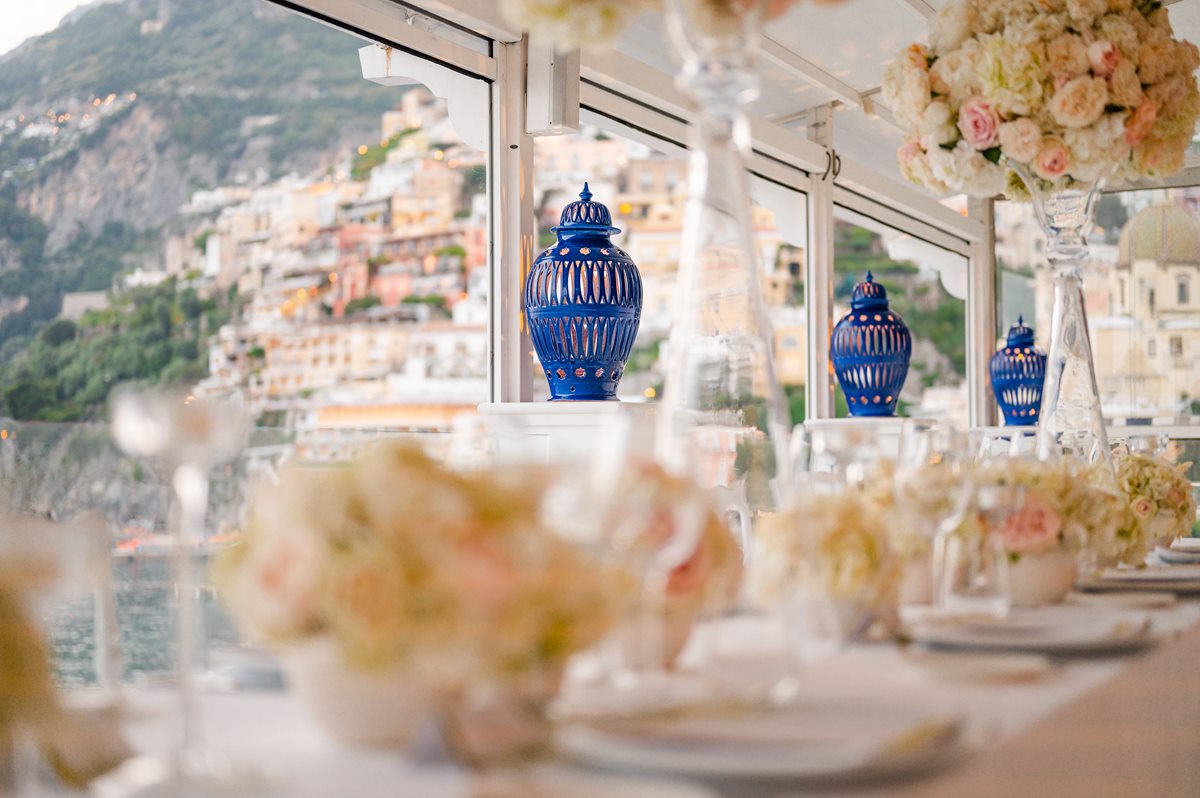
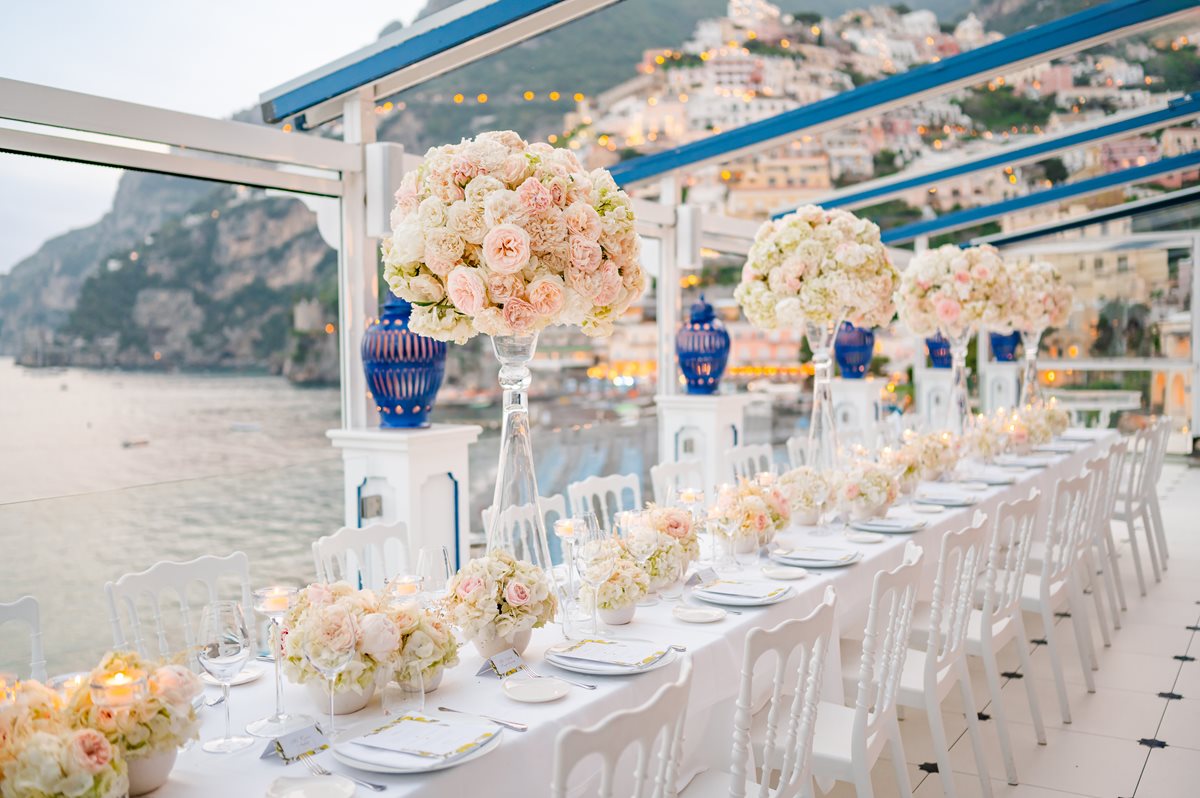
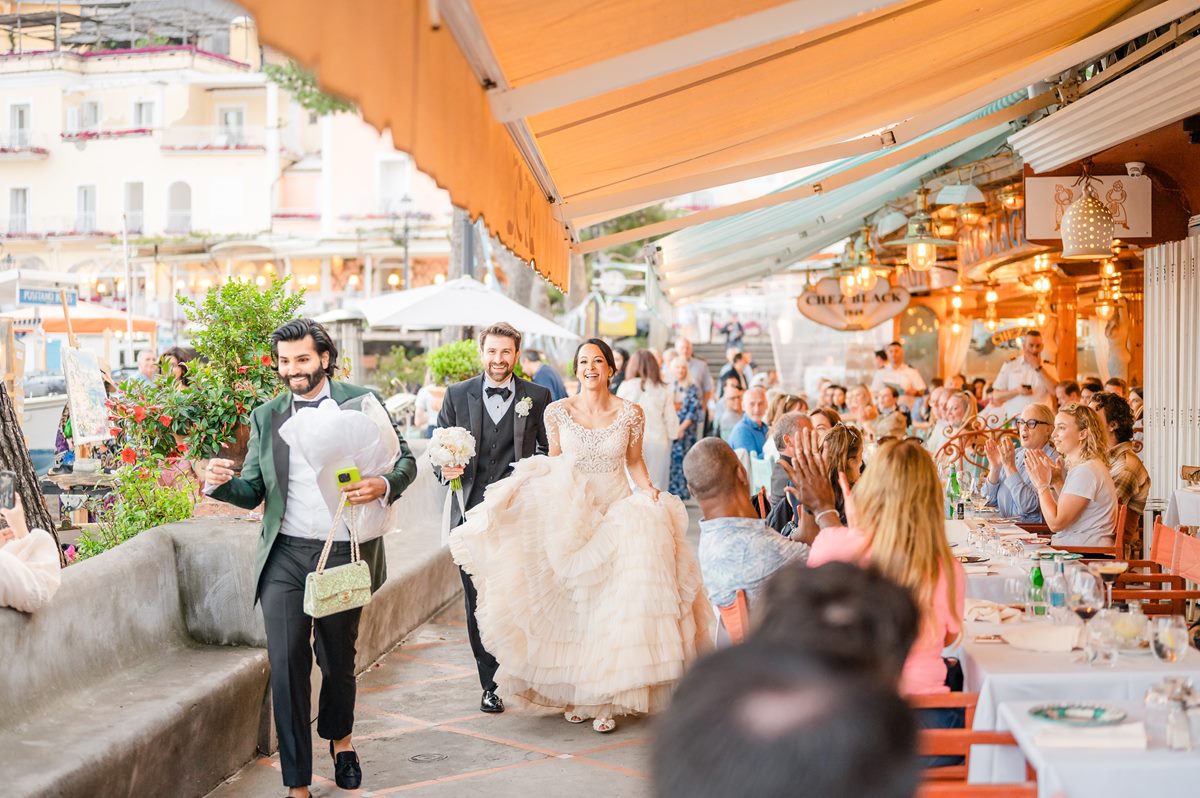
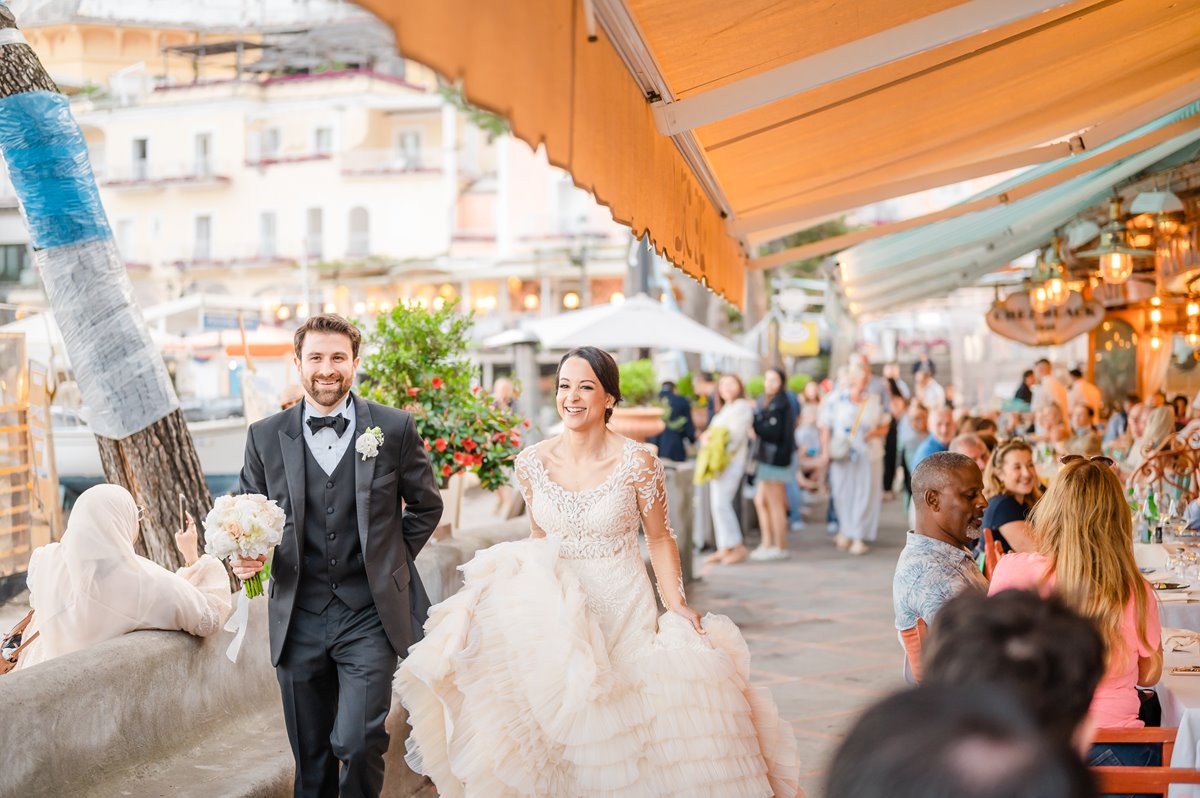
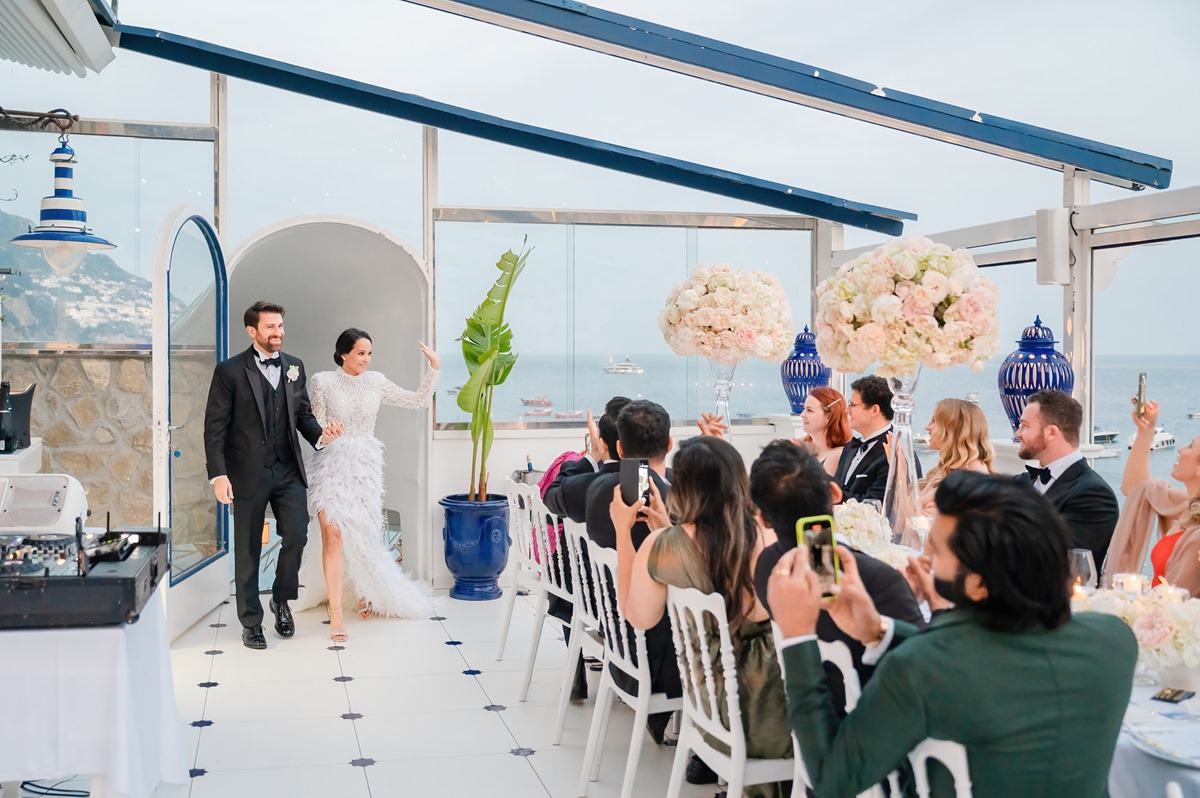
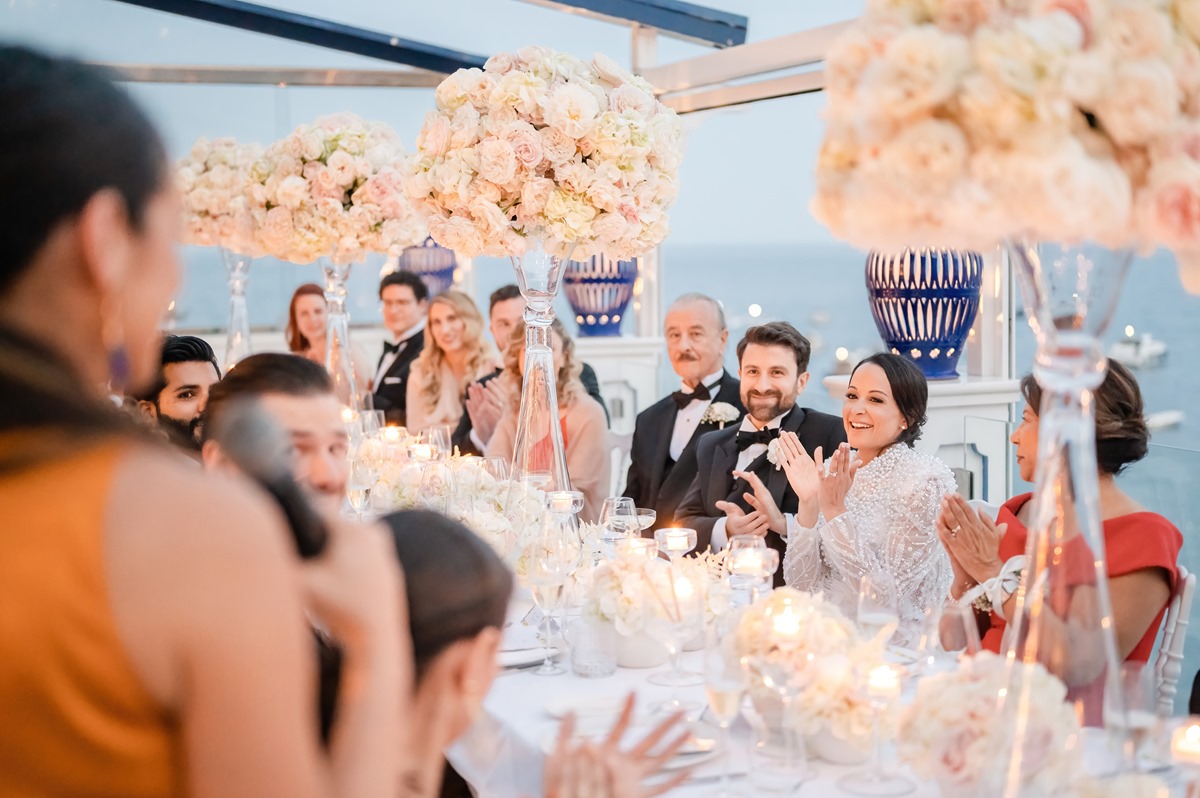
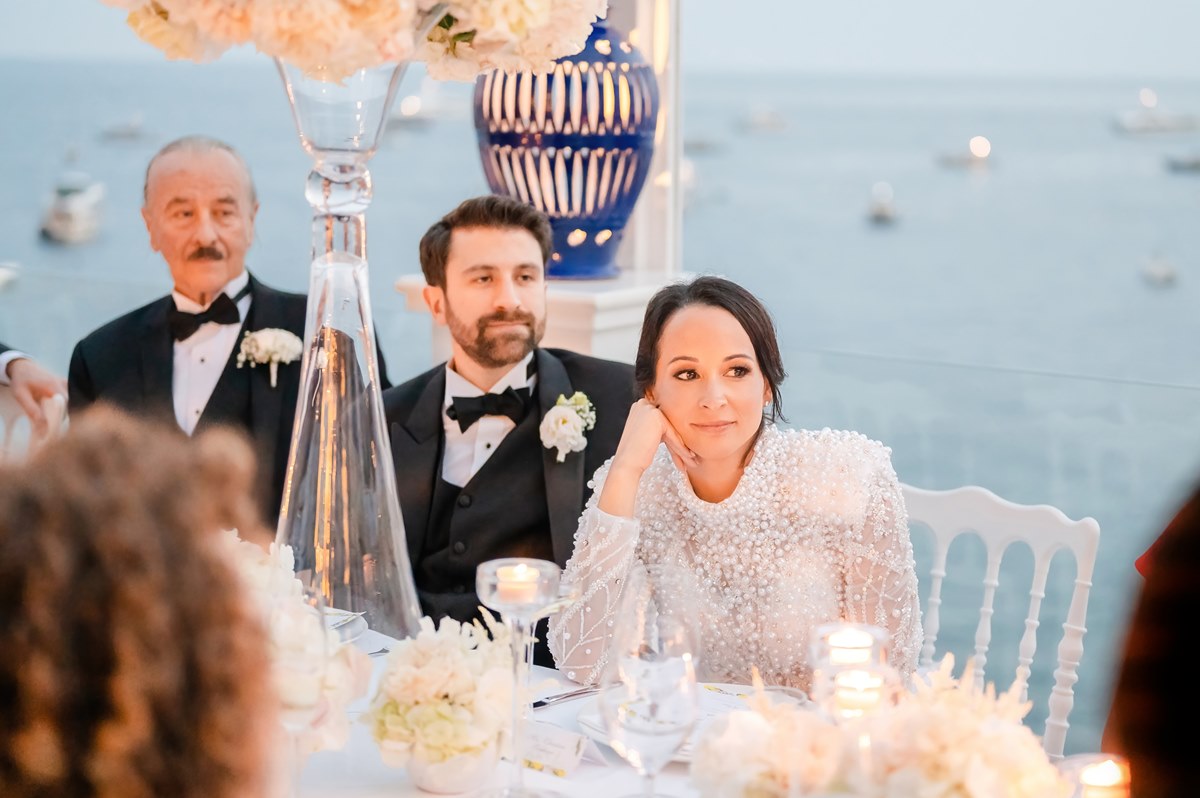
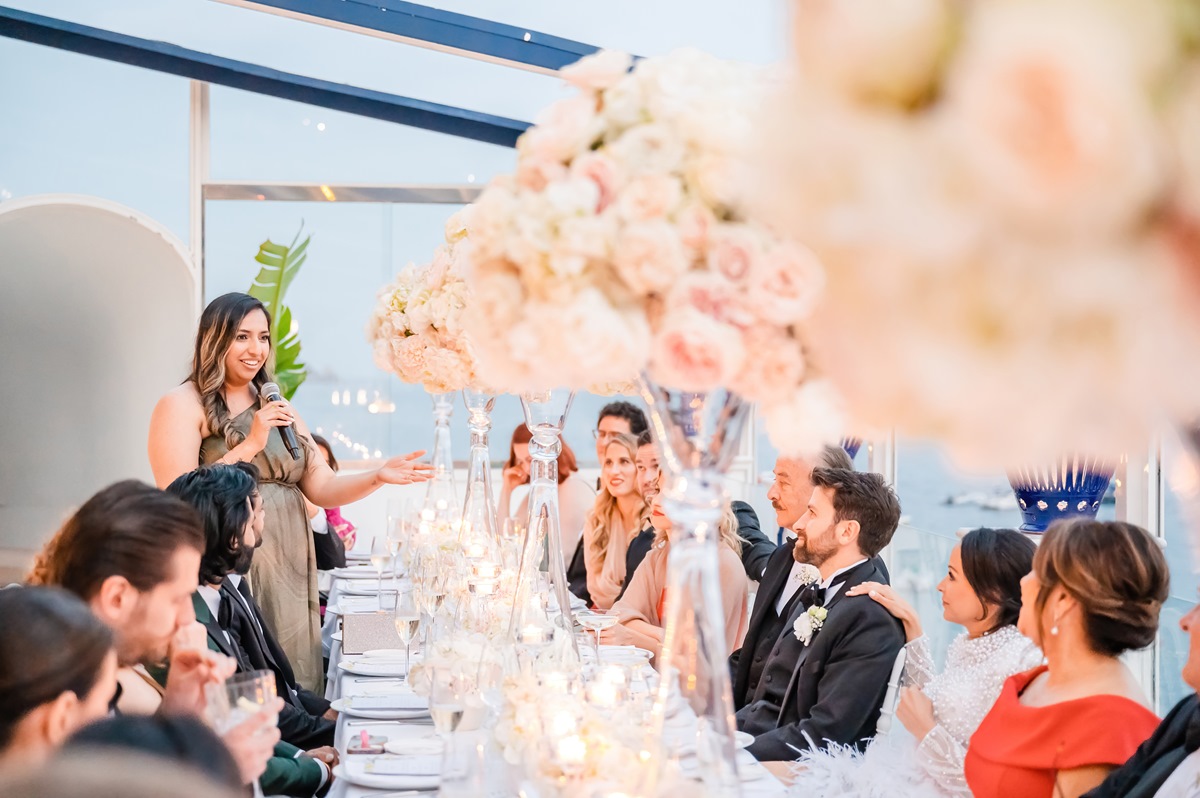
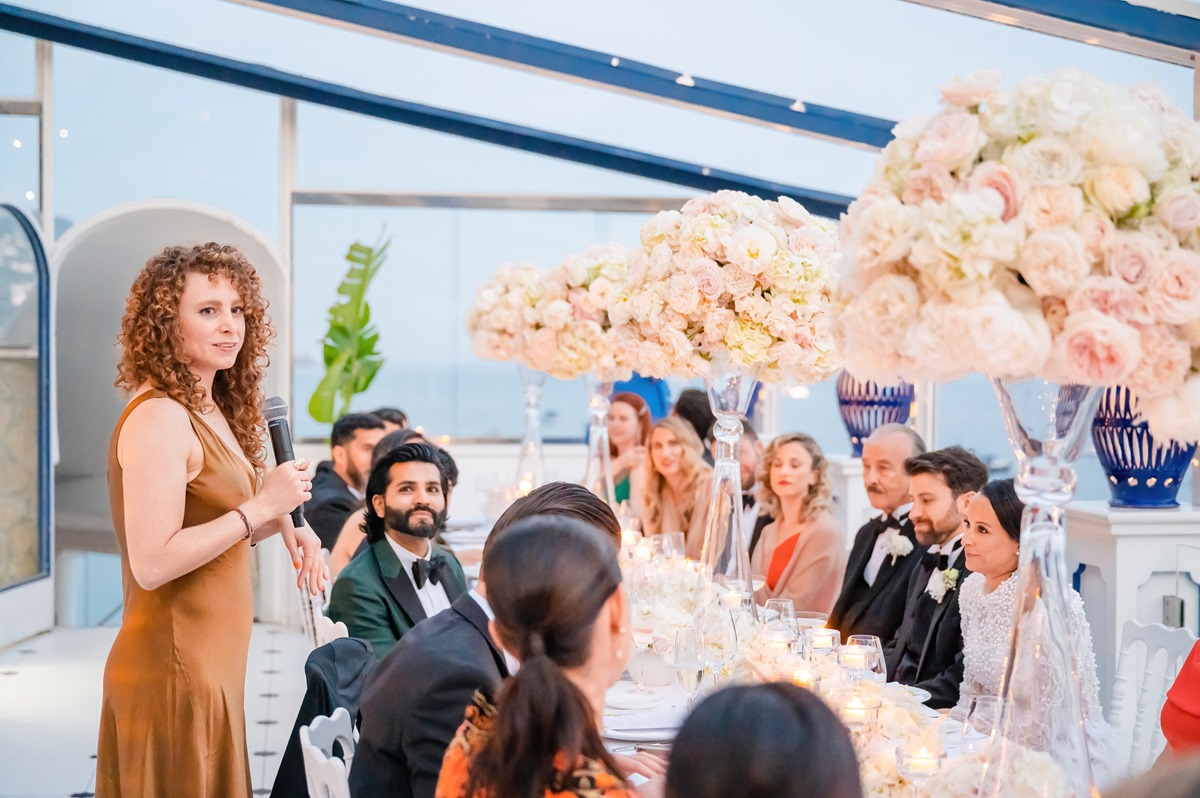
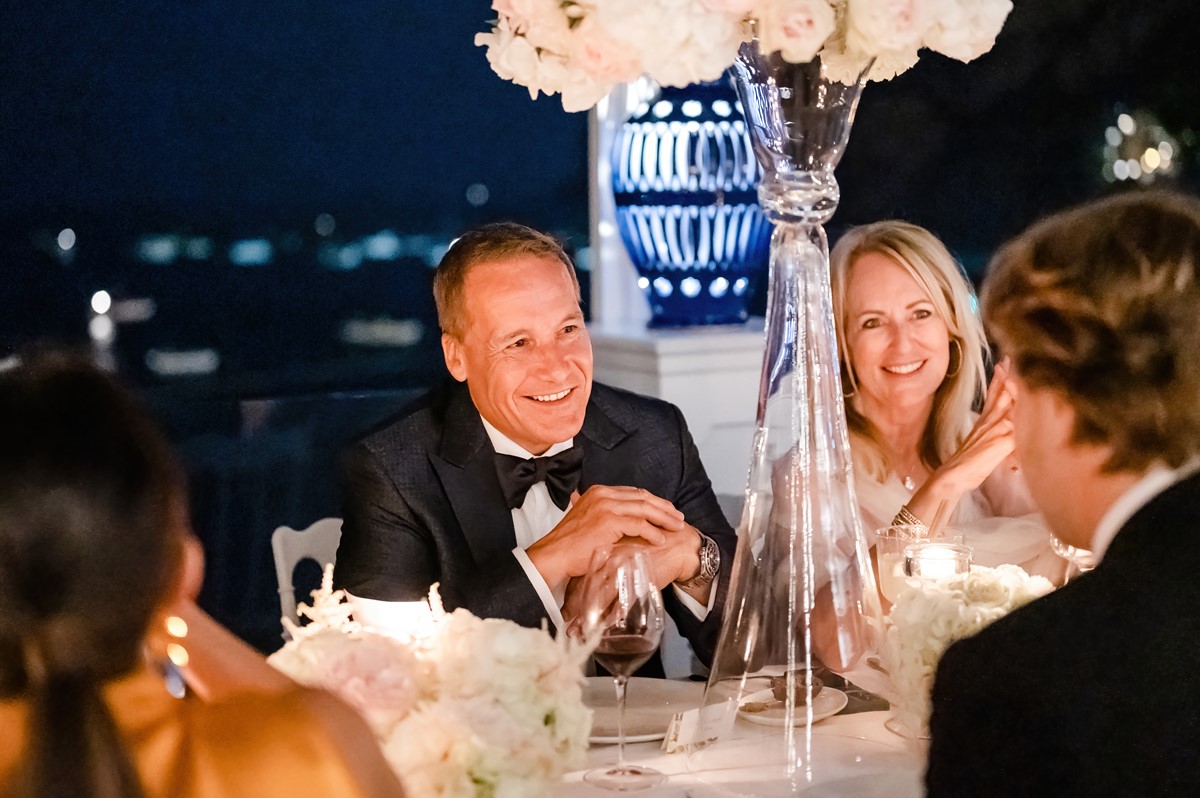
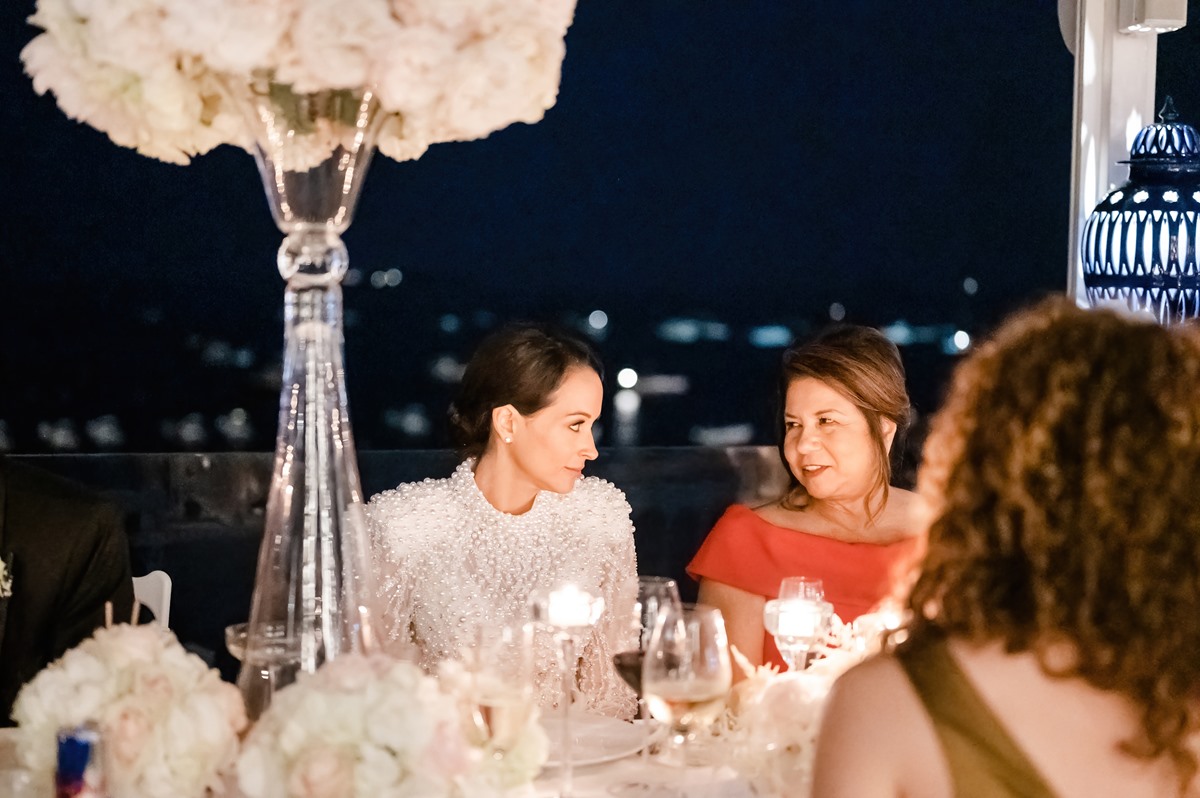
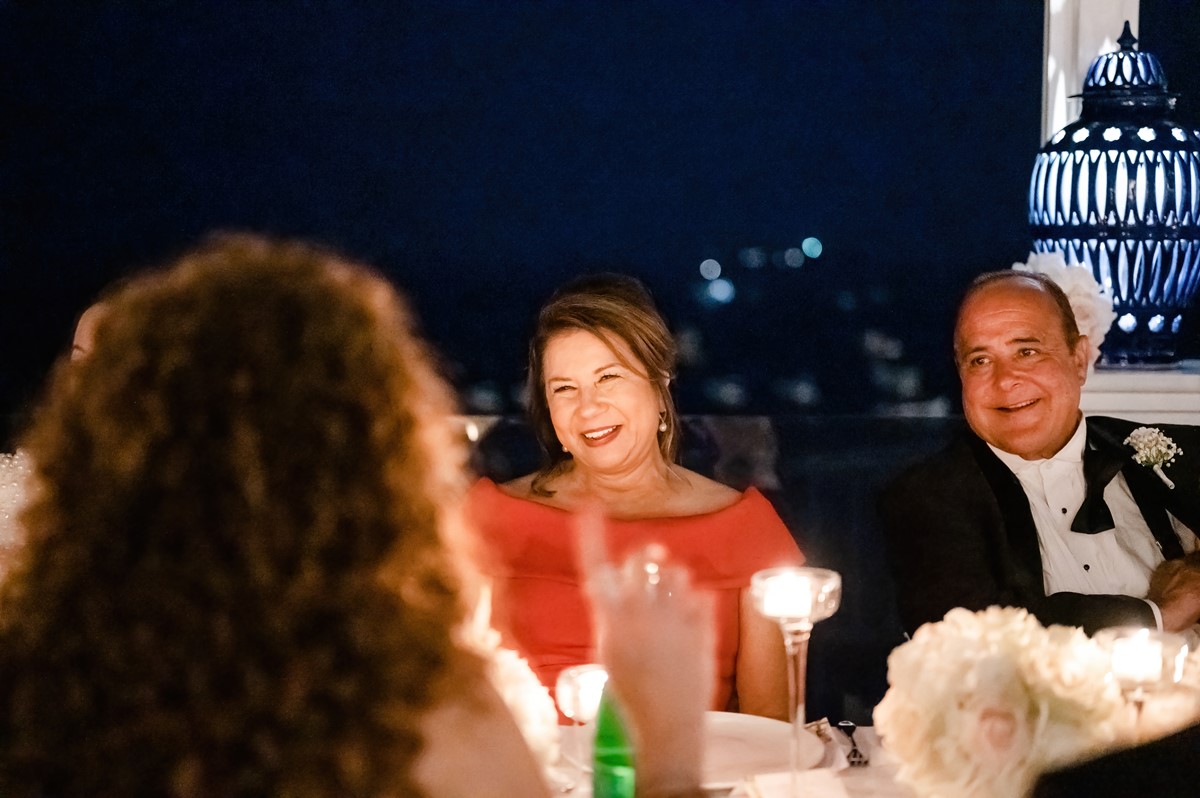
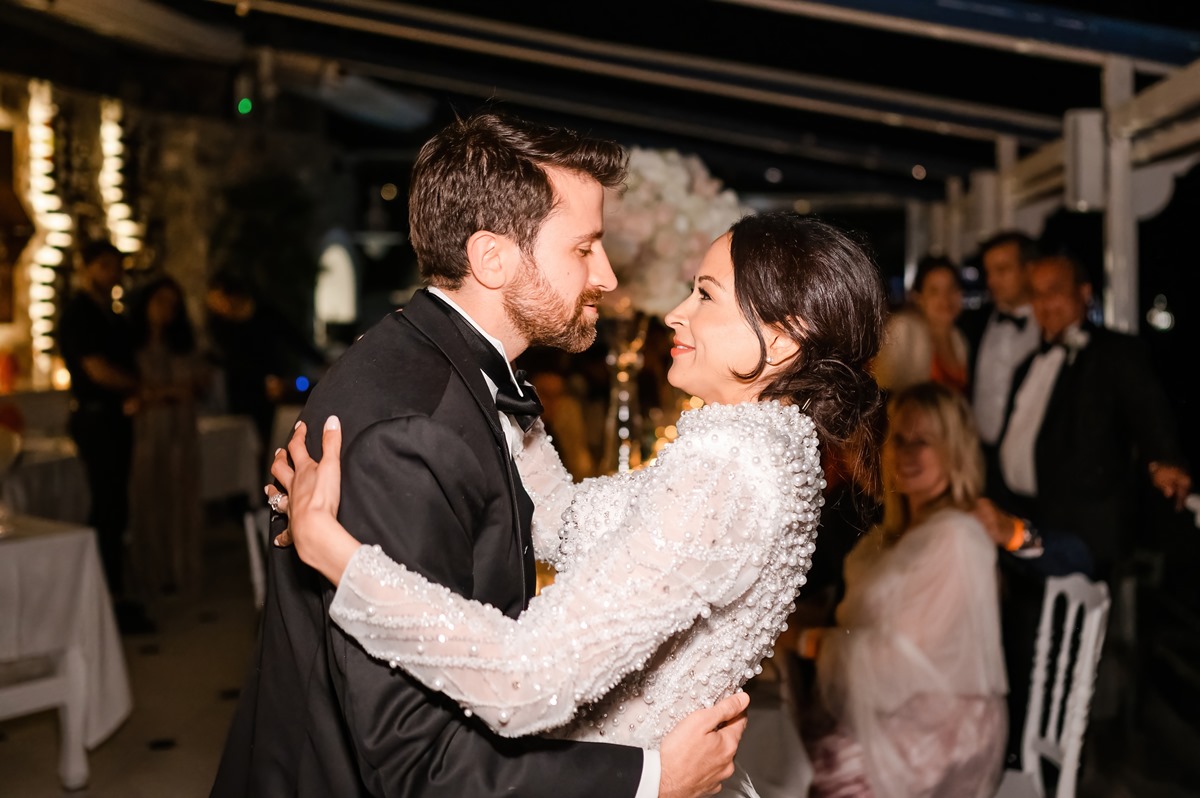
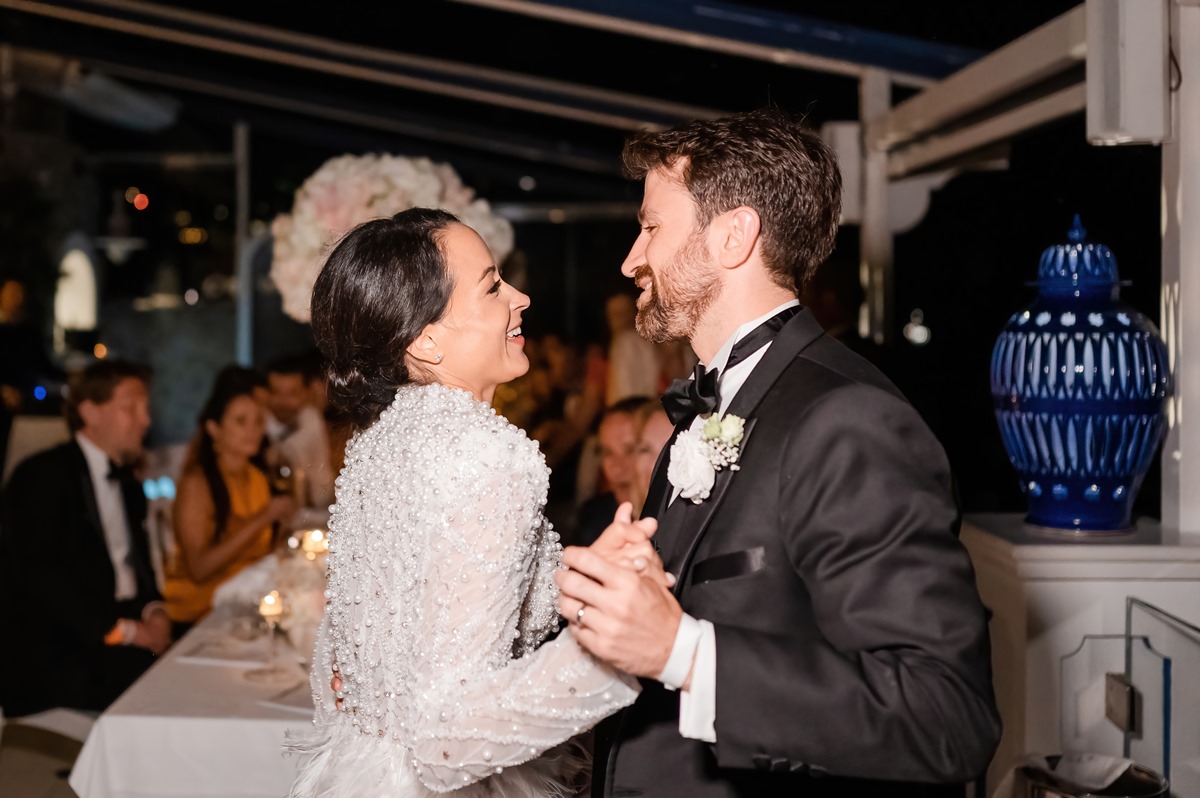
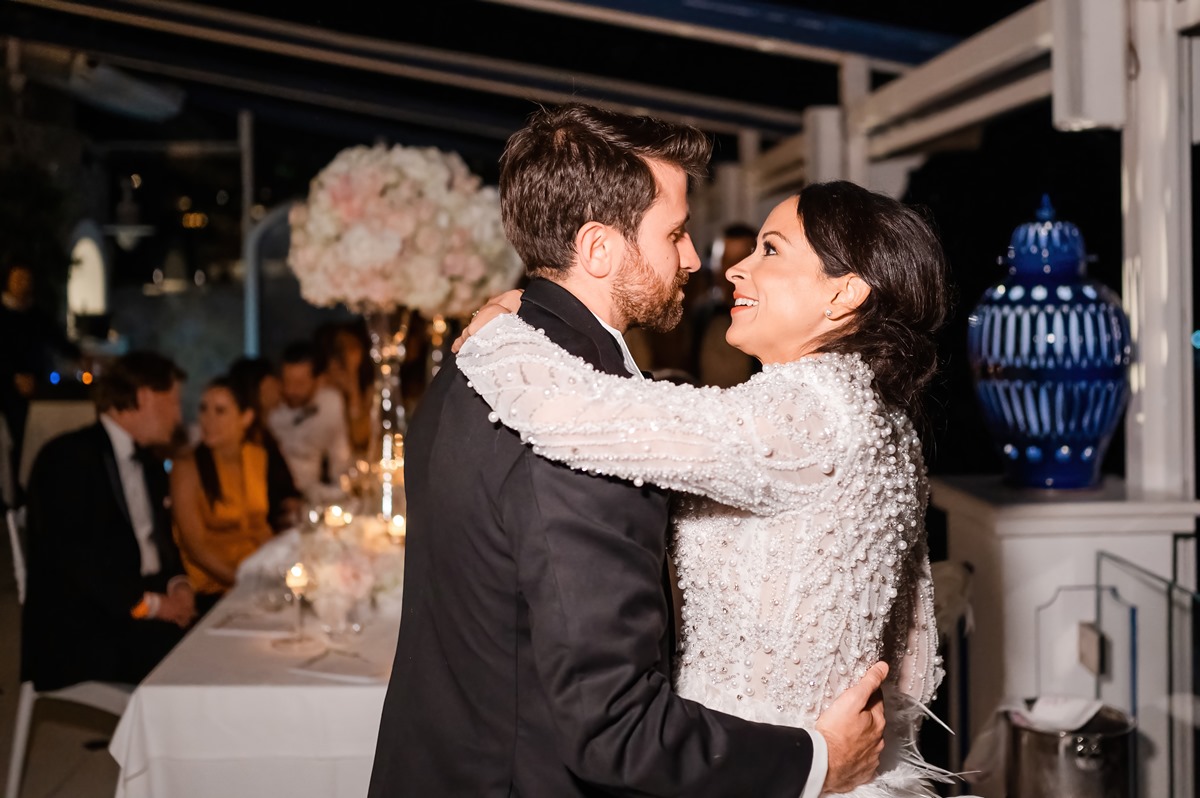
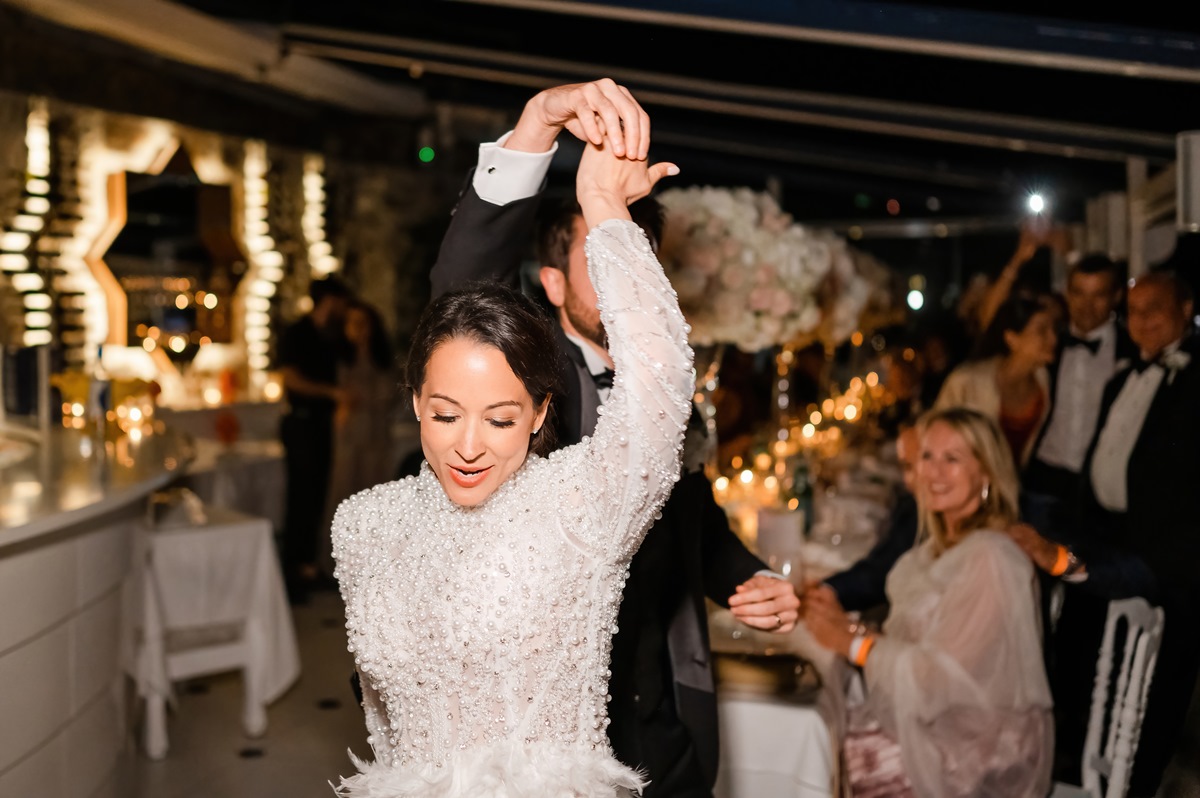
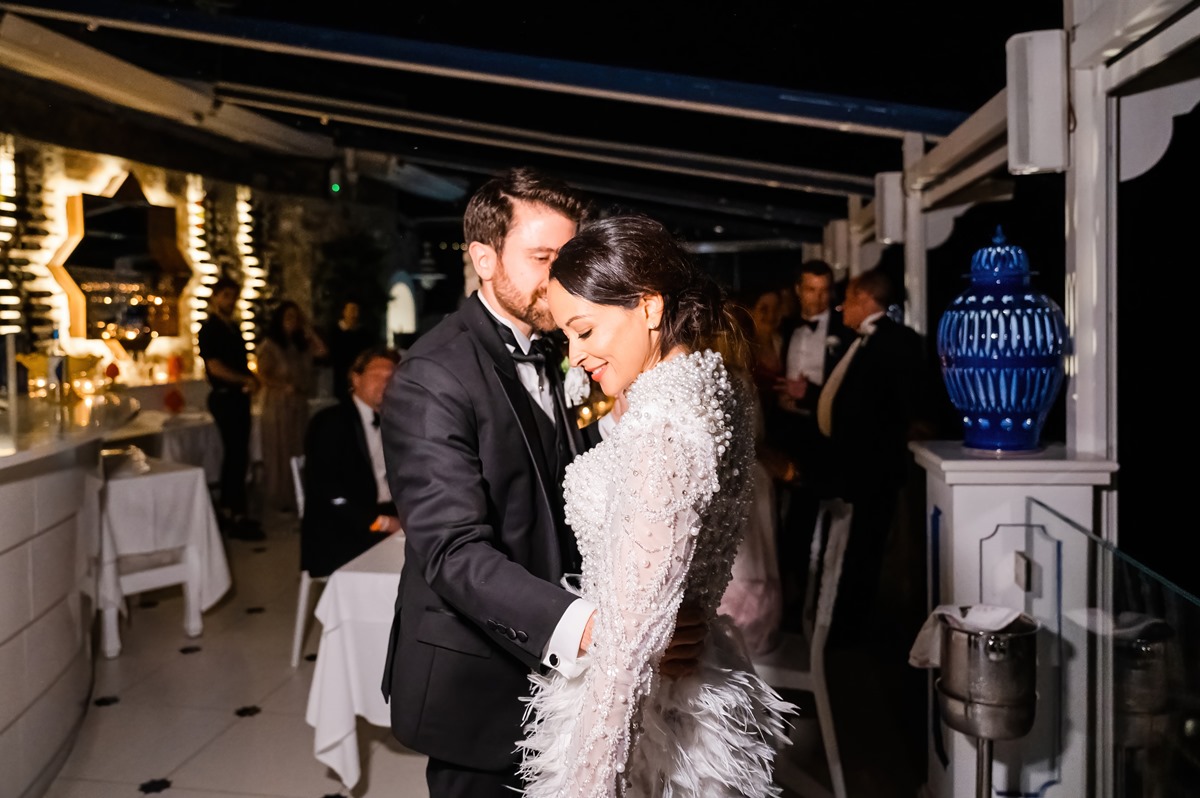
Part of Christina and Ryan’s day extended to Rada, a restaurant on a terrace over the sea that works well for a sunset dinner away from the main hotel. I don’t have detailed material from that portion of the day to describe here, but it’s worth mentioning for couples considering a similar structure: pairing Marincanto’s ceremony and portrait spaces with a separate dinner venue elsewhere in town is a common and effective way to give a wedding day two distinct settings without the complexity of a full second getting-ready location.
For a dress with this much volume, the practical question of moving between two locations matters more than it would with simpler styling. Christina’s team planned the transfer between Marincanto and Rada with a car rather than a walk, specifically because the ruffled train and the layered skirt would have been hard to manage on foot through any real distance of stepped street. If you choose a dramatic ballgown for a Positano wedding, factor this into your venue and transport planning early, since a walkable itinerary that works fine for a slip dress can become a real logistical problem for something this structured.
A DRESS THAT DEFIES

A tiered ruffled ballgown against the coast, proof that maximalist style works here too.
THE MIRRORS
Five gold-framed mirrors, a pair of shoes floating inside an empty frame.
TOO BOLD TO WHISPER
A ballgown built to hold its own against Positano’s own coastline
Planning a Ruffled Ballgown Wedding in Positano
If you’re drawn to a ruffled ballgown wedding in Positano, or any bold, maximalist silhouette, it can absolutely work, but it changes what your photographer needs to do compositionally. Wider frames, more negative space, and a venue with enough architectural texture of its own to hold its ground against the dress rather than disappearing behind it. Marincanto’s terrace, with its saturated terracotta walls and layered greenery, happened to be a strong match for Christina’s dress specifically. A starker, more minimal venue might not carry the same visual weight against a gown this dramatic.



Who Should Actually Consider This
A dress like Christina’s rewards you if you want your wedding photographs to feel like a fashion moment rather than a quiet, understated record of the day, and you’re comfortable with the extra logistics, the longer dressing time, the more deliberate and unhurried movement it requires, the additional weight and warmth of that much fabric in summer heat. It doesn’t suit every personality, every budget, or every practical circumstance a wedding day involves. A couple planning multiple locations in a single day, extensive walking through Positano’s stepped streets, or a boat session as part of the timeline should think carefully about whether a dress this structured fits the physical demands of the day, since the mermaid gowns and slip dresses that dominate this coast are, in part, a practical response to exactly those demands.
What I’d Tell a Bride Considering the Same Dress
Show your Positano wedding photographer the specific silhouette before the day, because the general idea of something dramatic isn’t enough to plan around. Christina and I discussed the dress’s construction in real detail well in advance, the tiers, the train length, the sleeve structure, the way the skirt was expected to move, which meant I arrived already knowing how much space each portrait would need and which parts of the venue would give the dress room to actually read on camera. A maximalist dress that hasn’t been discussed in advance risks becoming a series of tight, awkward crops rather than the full, deliberate compositions it deserves.
For a smaller-scale alternative, my Positano elopement guide covers the range of options available on this coast.



OUR RELATED WEDDING STORIES IN POSITANO
Christian and Michelle in Positano
Valentina and Jason – Casa Passalacqua
Allison and Adam – Le Sirenuse and Maricanto

Casa Passalacqua micro-wedding Positano – Anna and Jackson
Villa dei Fisici – Rossina and Kim
Casa Angelina Elopement – Ray and Dan
EMILIANO RUSSO
 Written By Emiliano Russo