
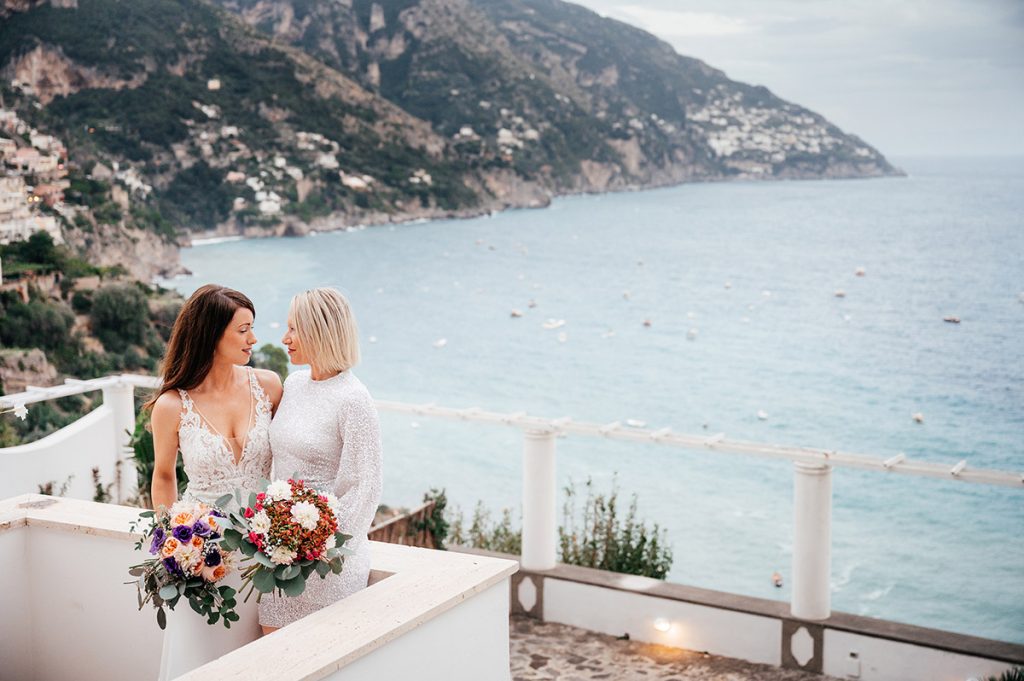
Same-Sex Wedding on the Amalfi Coast: The Law, the Ceremony and the Photos
A local photographer’s guide to a same-sex wedding on the Amalfi Coast: what the law lets you do, how the ceremony works, which venues fit and what the photos look like.
PLANNING A SAME-SEX WEDDING ON THE AMALFI COAST

A same-sex wedding on the Amalfi Coast raises two questions before any other, what Italian law lets you do here and what the day itself looks like, and this guide answers both. I have been photographing same-sex couples on this coast since before Italy recognized civil unions in 2016, back when a gay wedding on the Amalfi Coast meant a symbolic ceremony and nothing more. The law has moved since then. The photography has changed far less, and most American couples still choose a symbolic ceremony here, with the legal side already done at home.
When two grooms arrive at a Positano pier at 6:30 in the morning for their symbolic ceremony on a Gozzo, the first thing I notice is that they are calmer than most straight couples at the same point of a wedding morning. My guess is that they have already fought for this, in a way most straight couples never had to, so the flight to Italy comes at the end of a much longer story. It shows in how they hold each other. It also makes my job easier, in a way that is hard to explain and easy to see in the photos.




Civil Union or Symbolic Ceremony Under Italian Law
Plenty of websites say Italy “legalized gay marriage in 2016.” It didn’t. In May 2016 Italy passed Law 76/2016, known as the Legge Cirinnà, which created civil unions for same-sex couples. A civil union gives you most of the legal protections of marriage under Italian law, but it remains a separate legal category, and Italy still has no marriage equality of the kind you know from the United States, Canada or most of northern Europe.
For an American couple planning an LGBTQ wedding in Italy, that leaves three options:
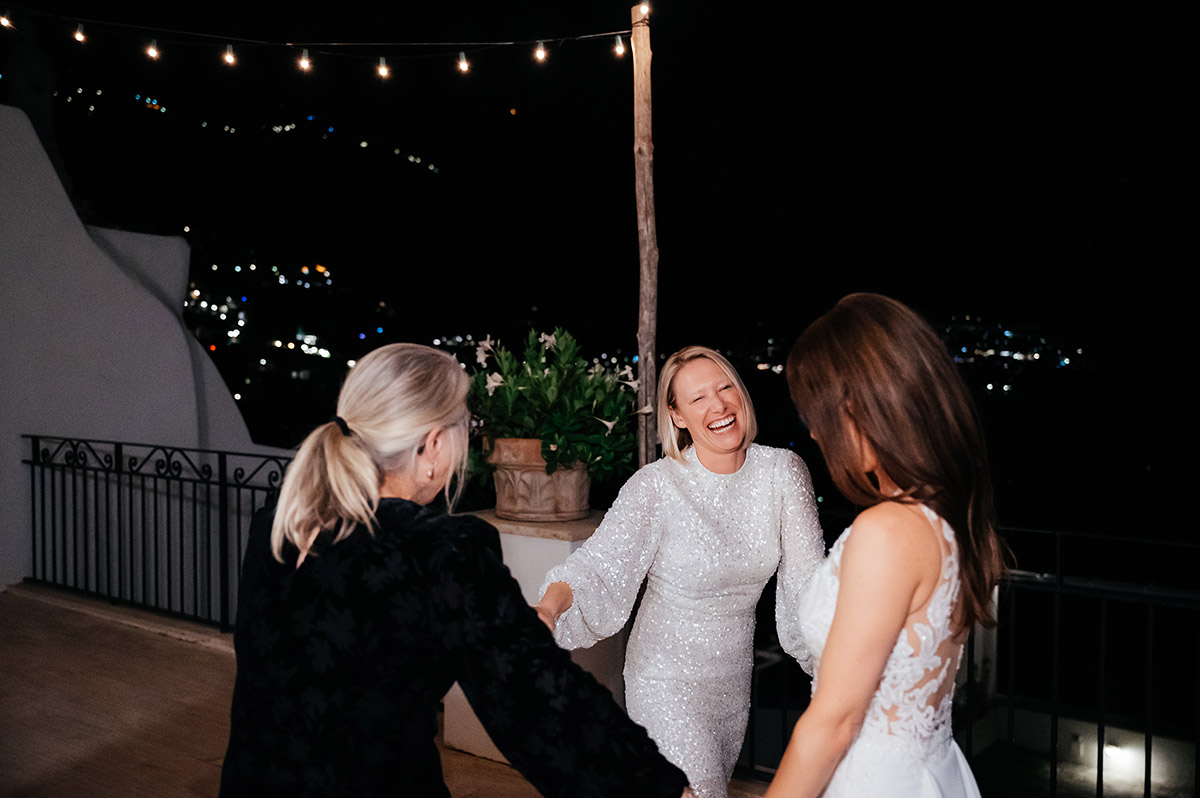
REAL SAME-SEX WEDDINGS PHOTOGRAPHED ON THE AMALFI COAST
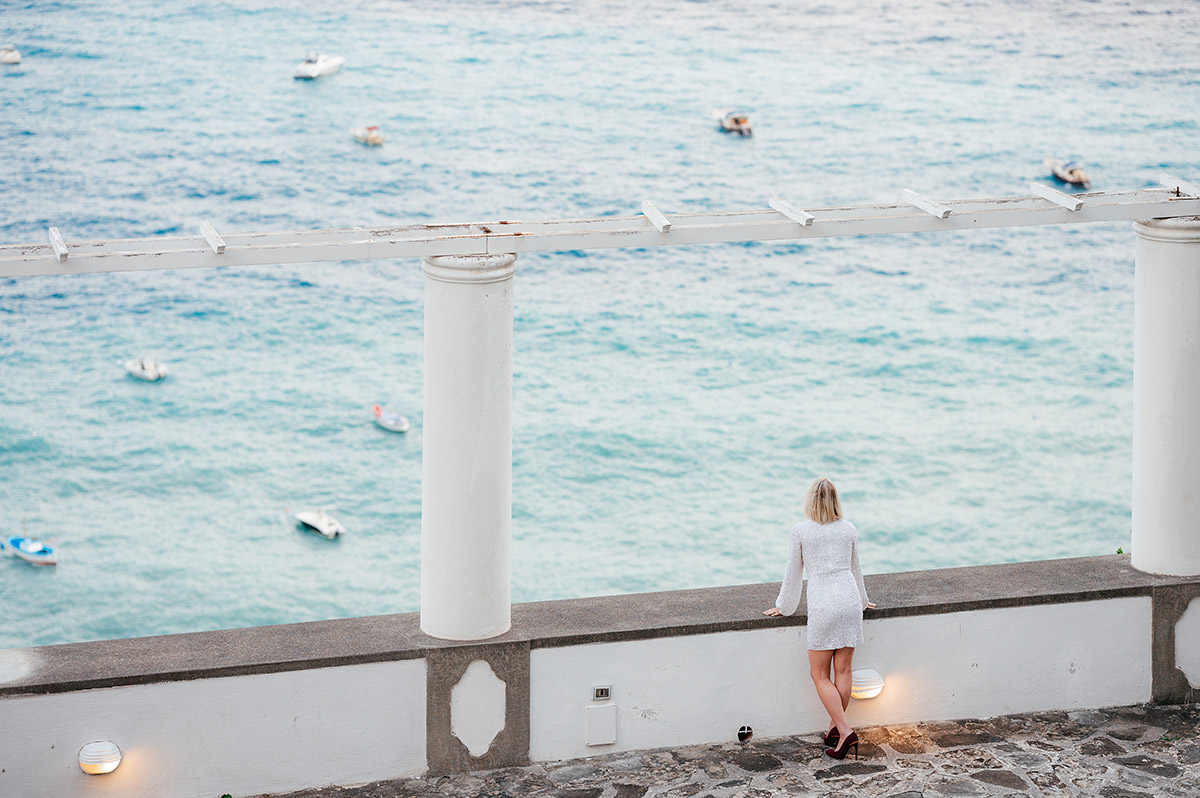
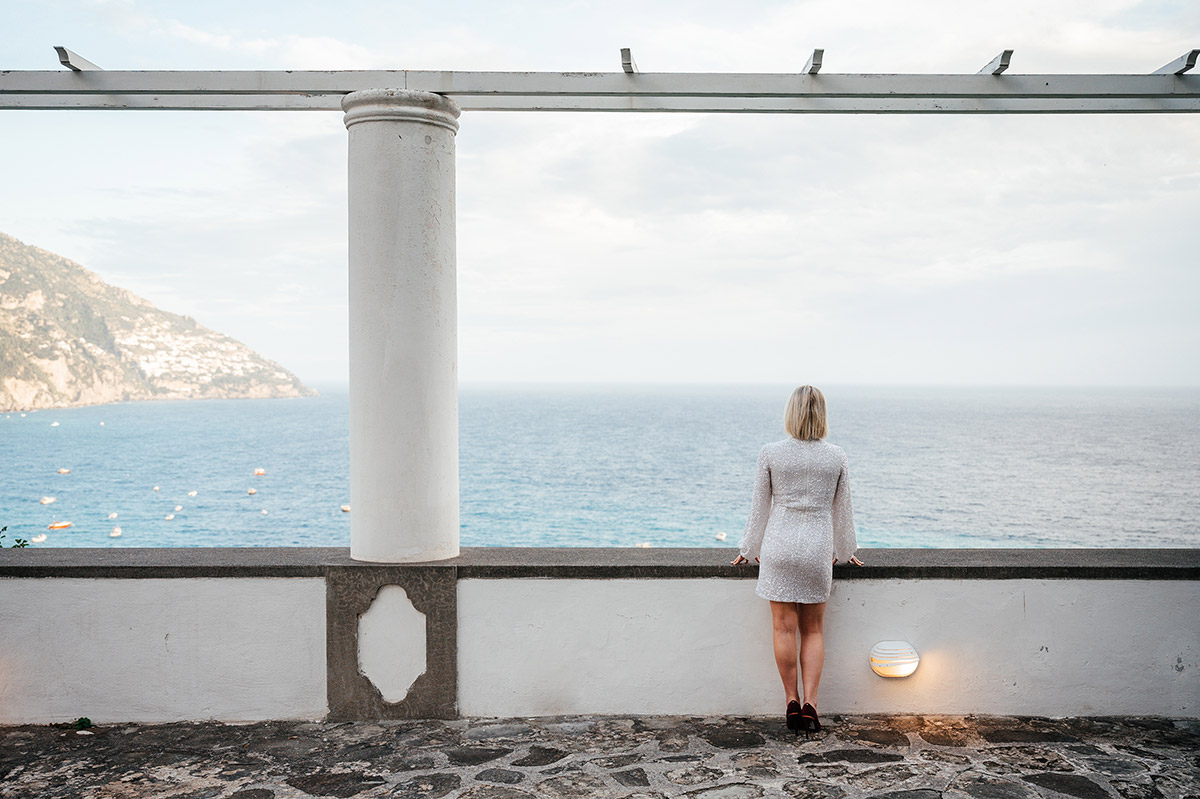
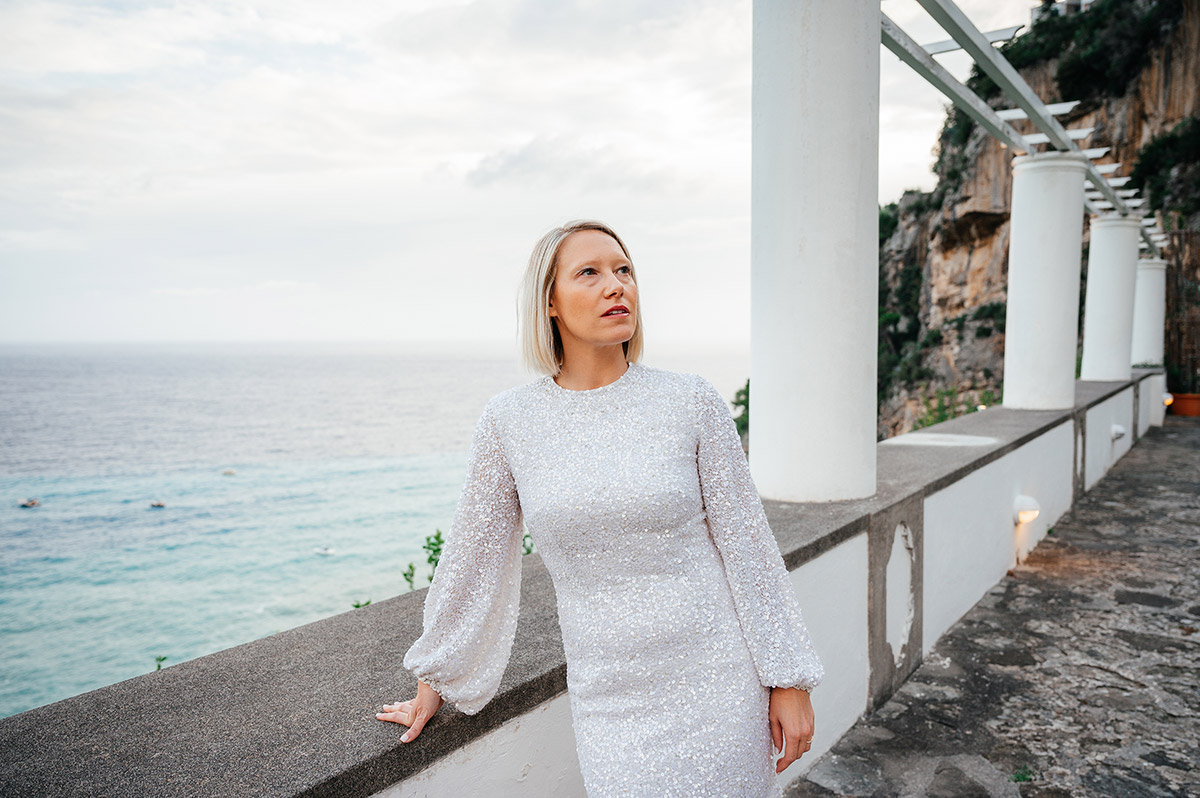
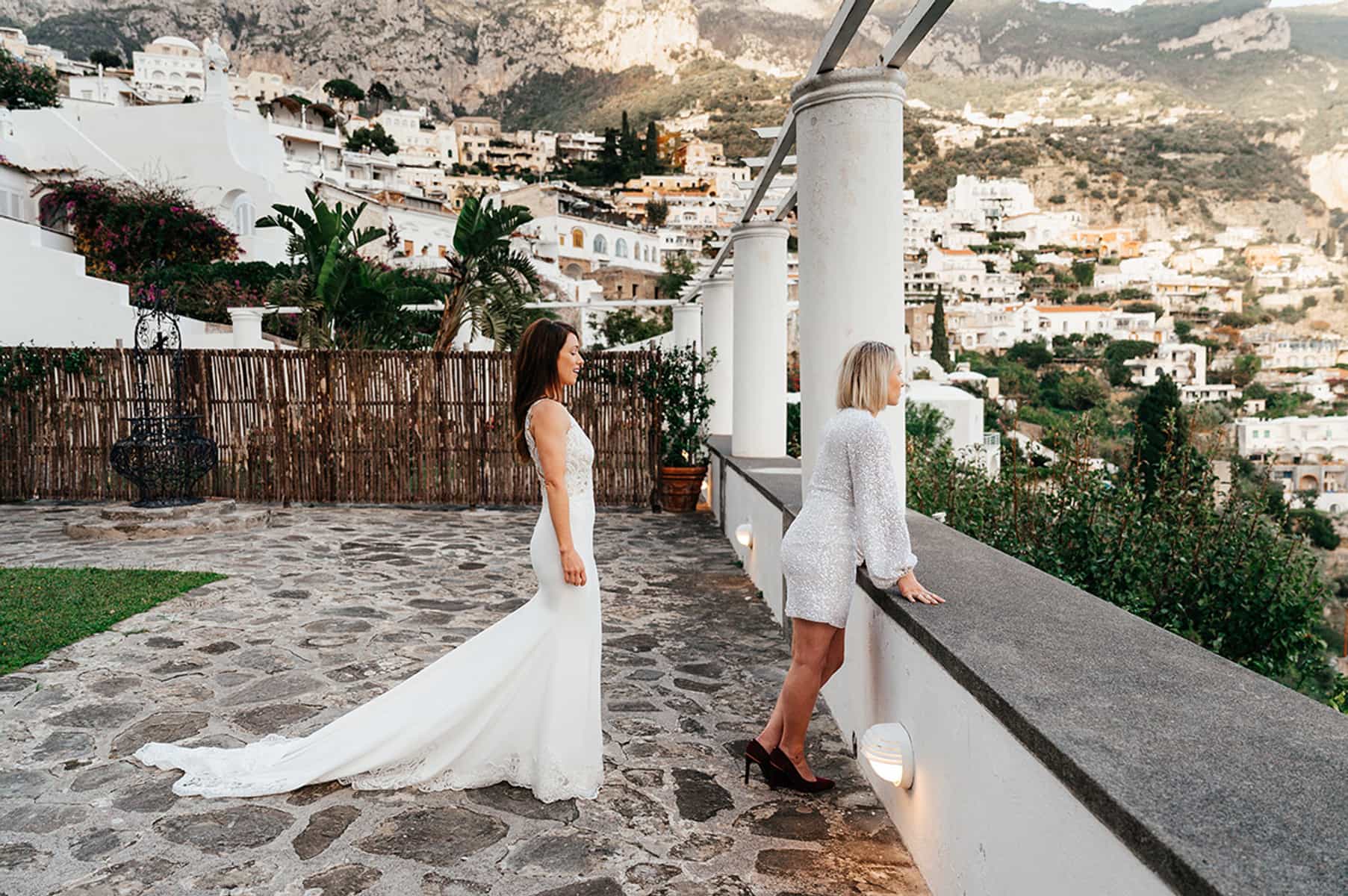
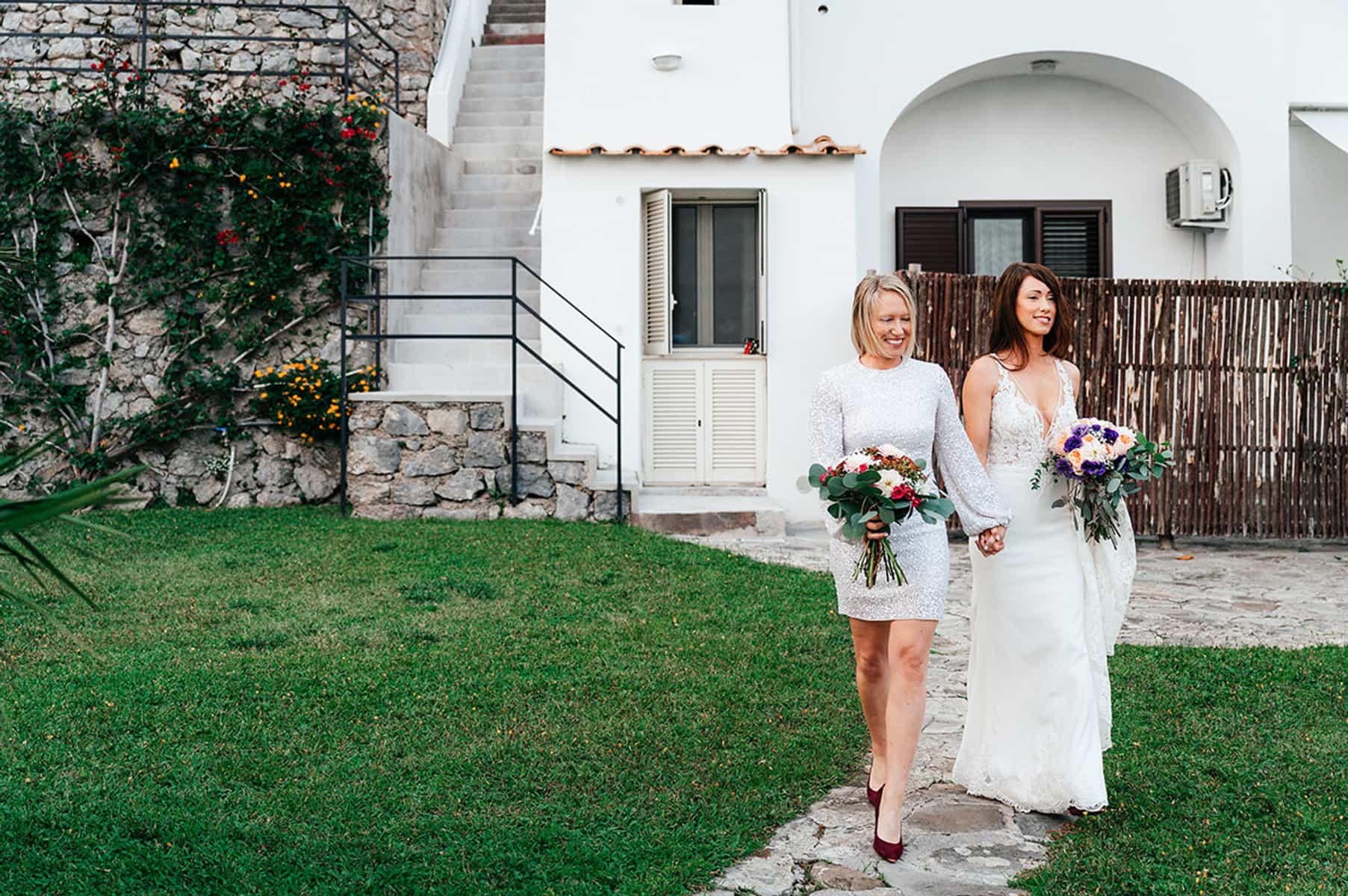
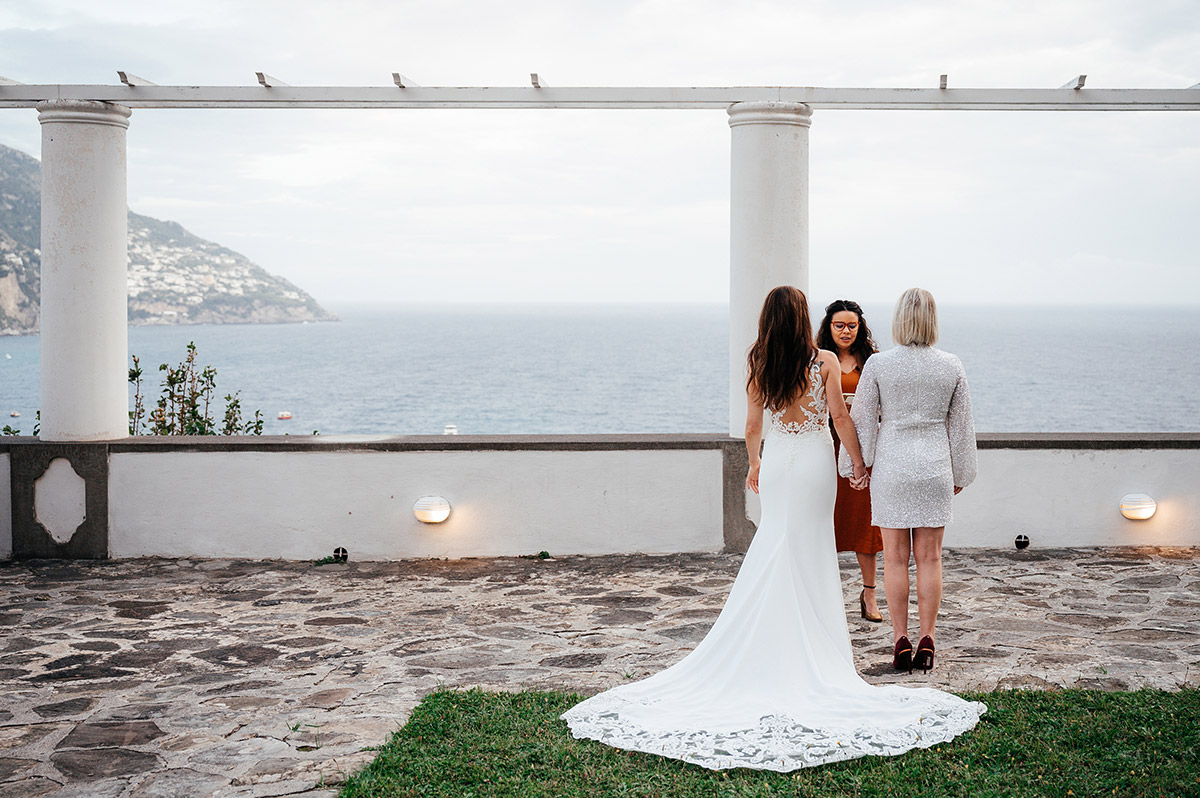
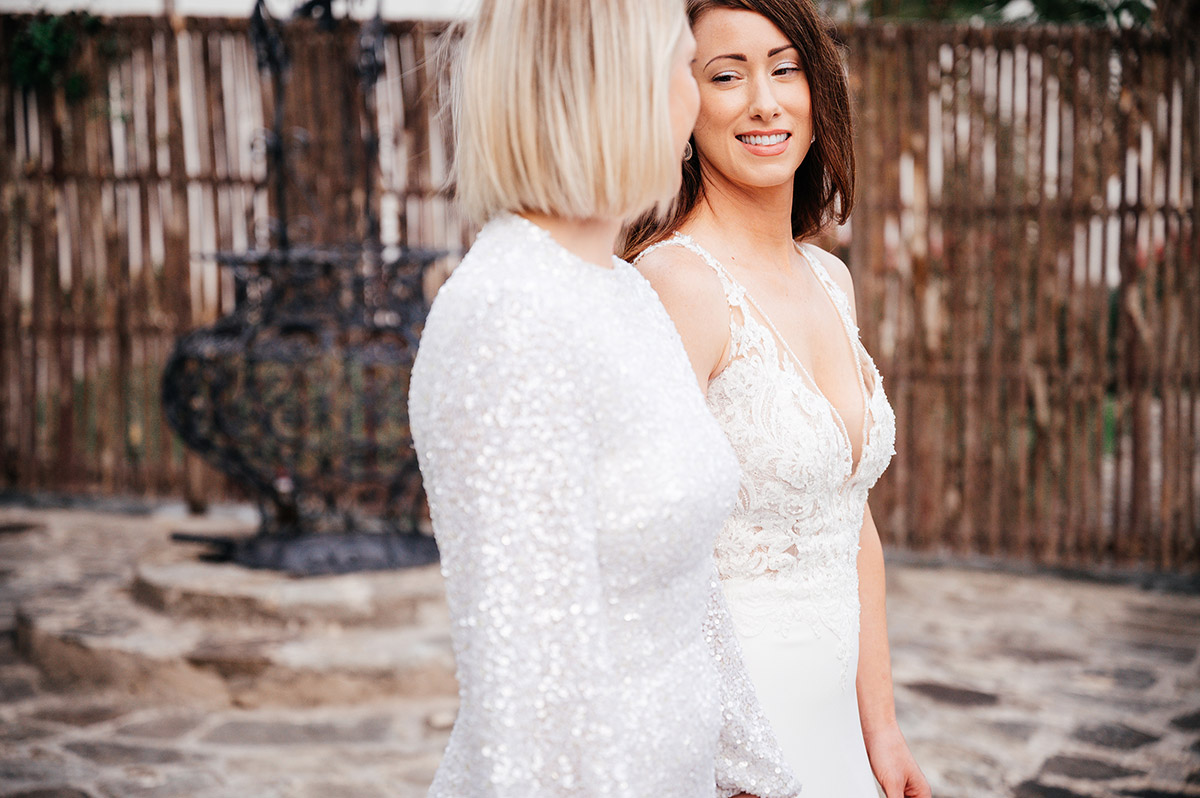
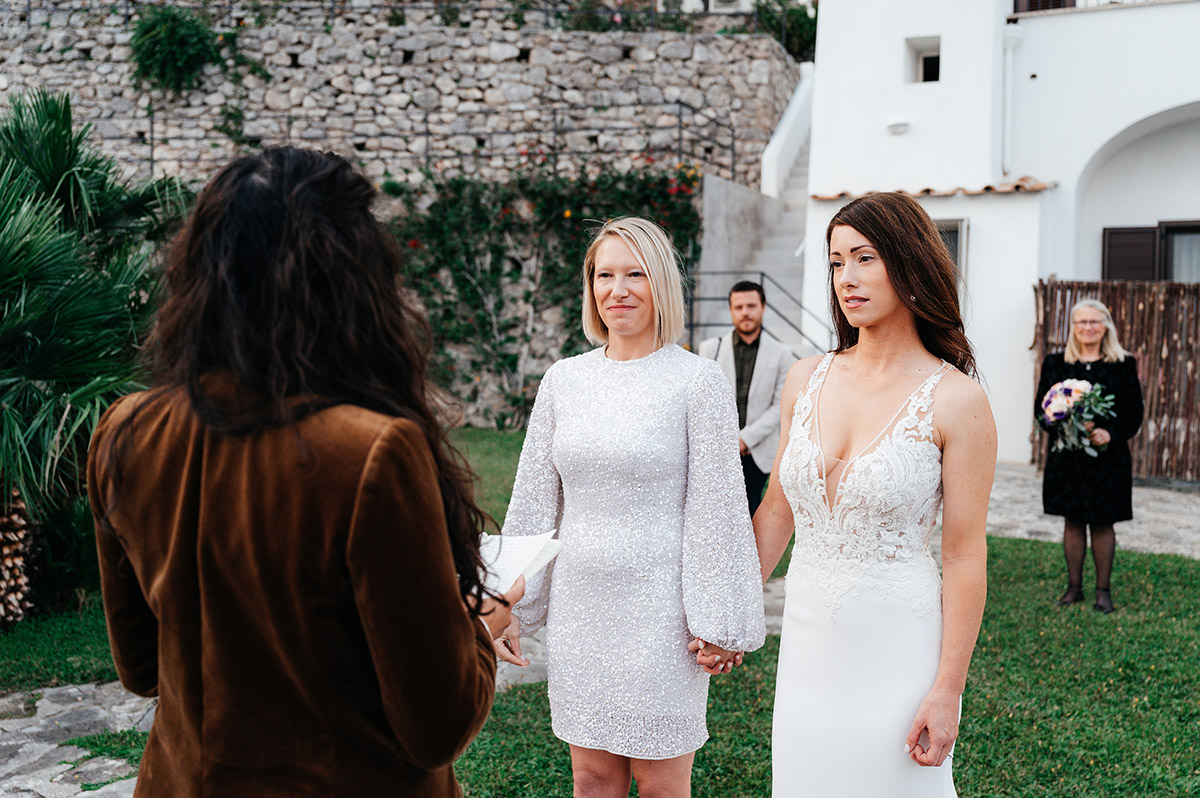
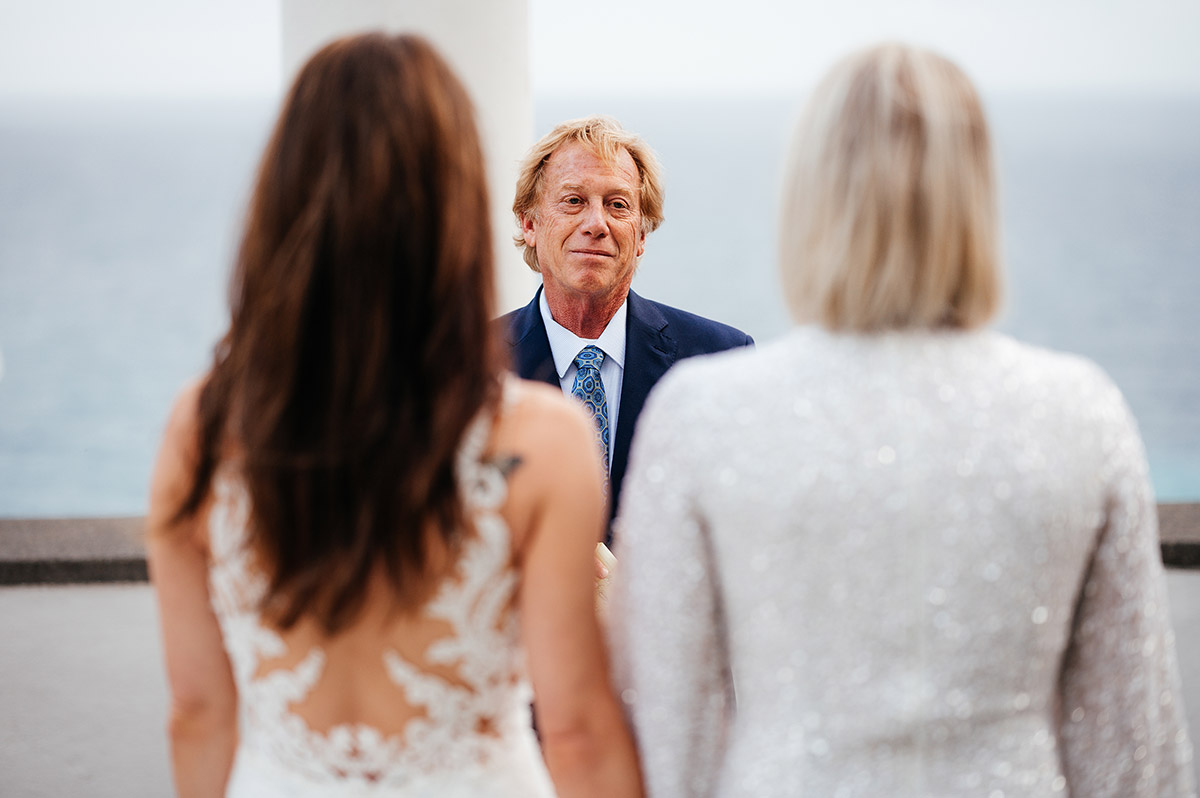
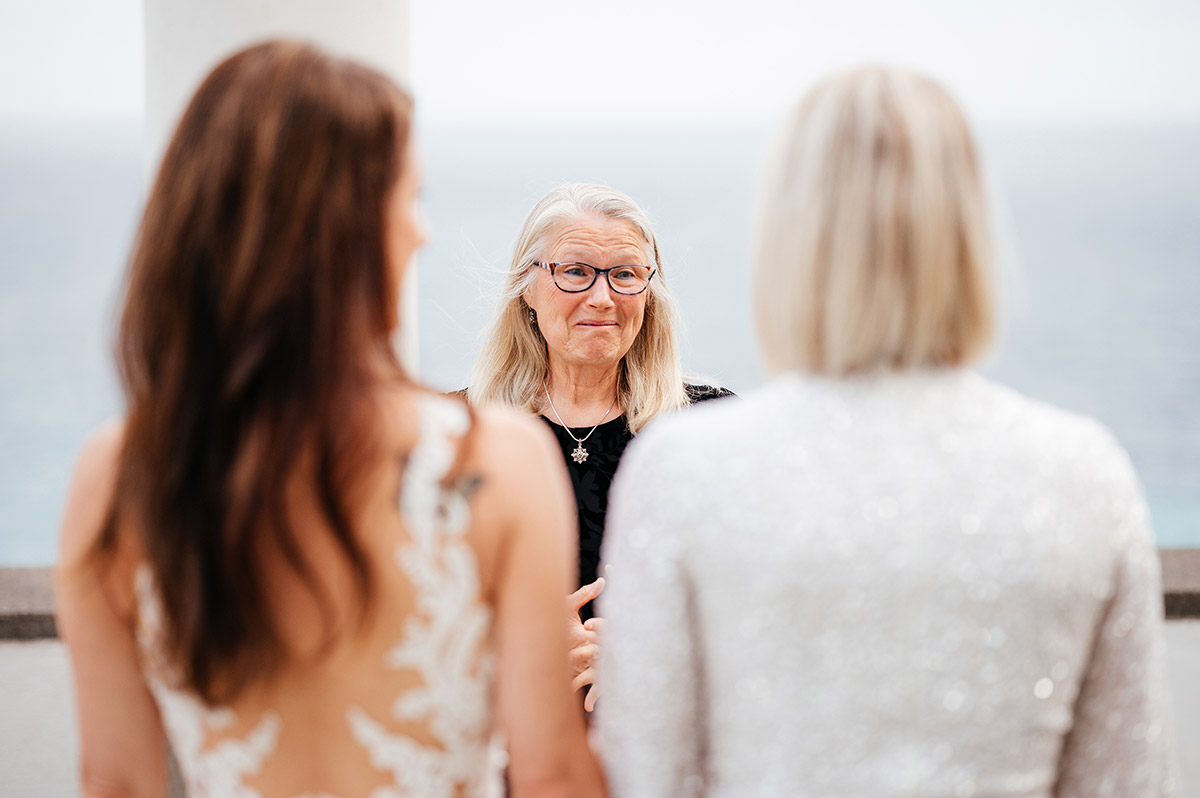
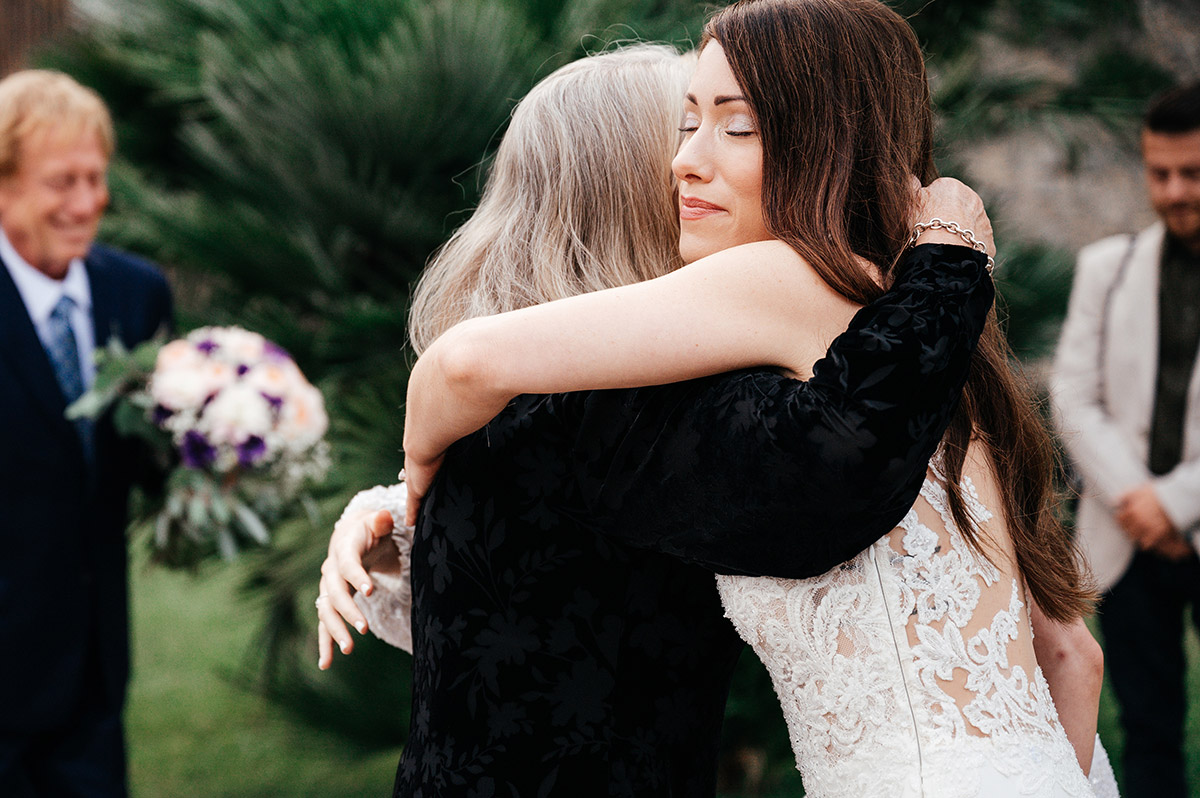
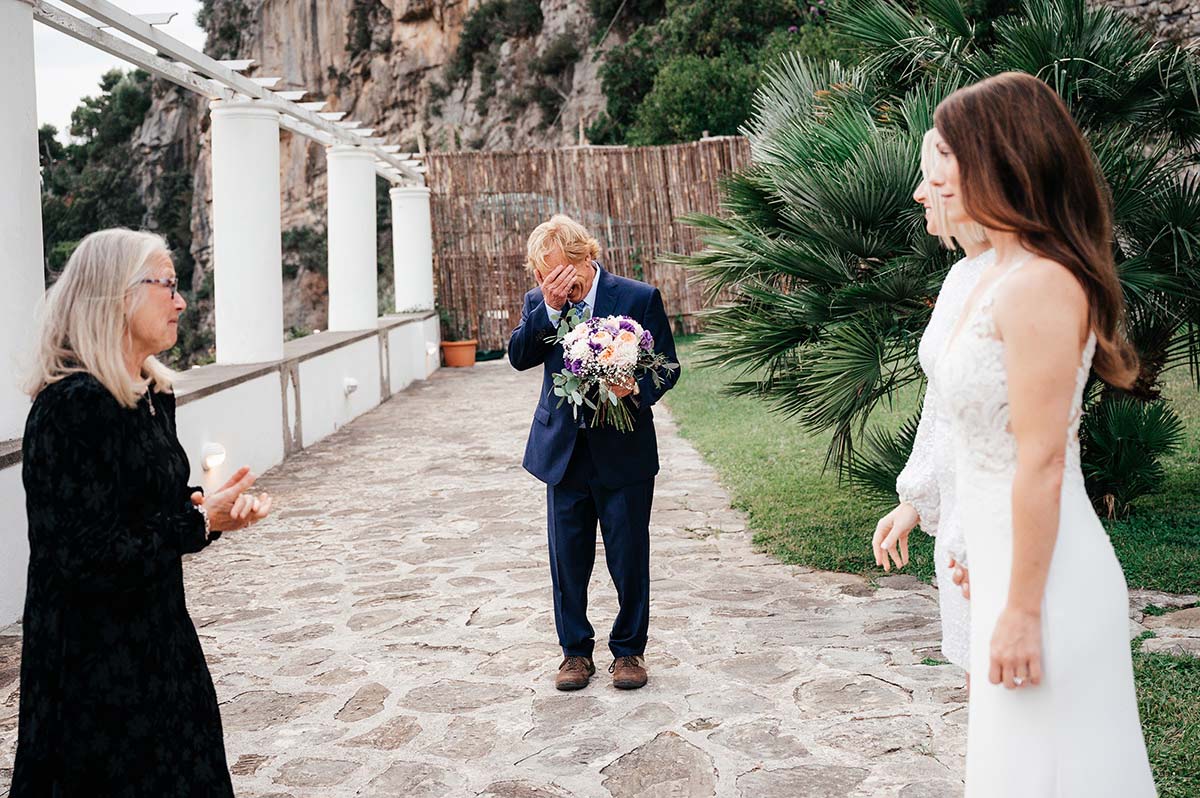
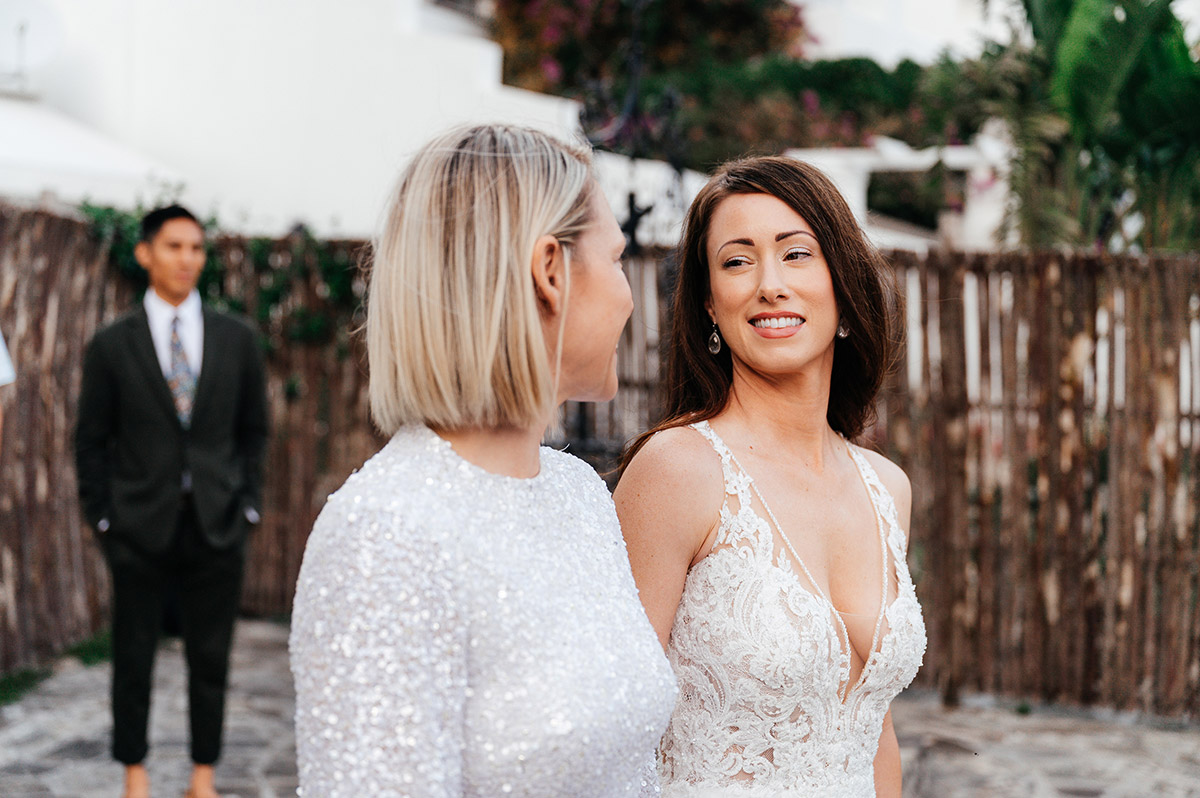
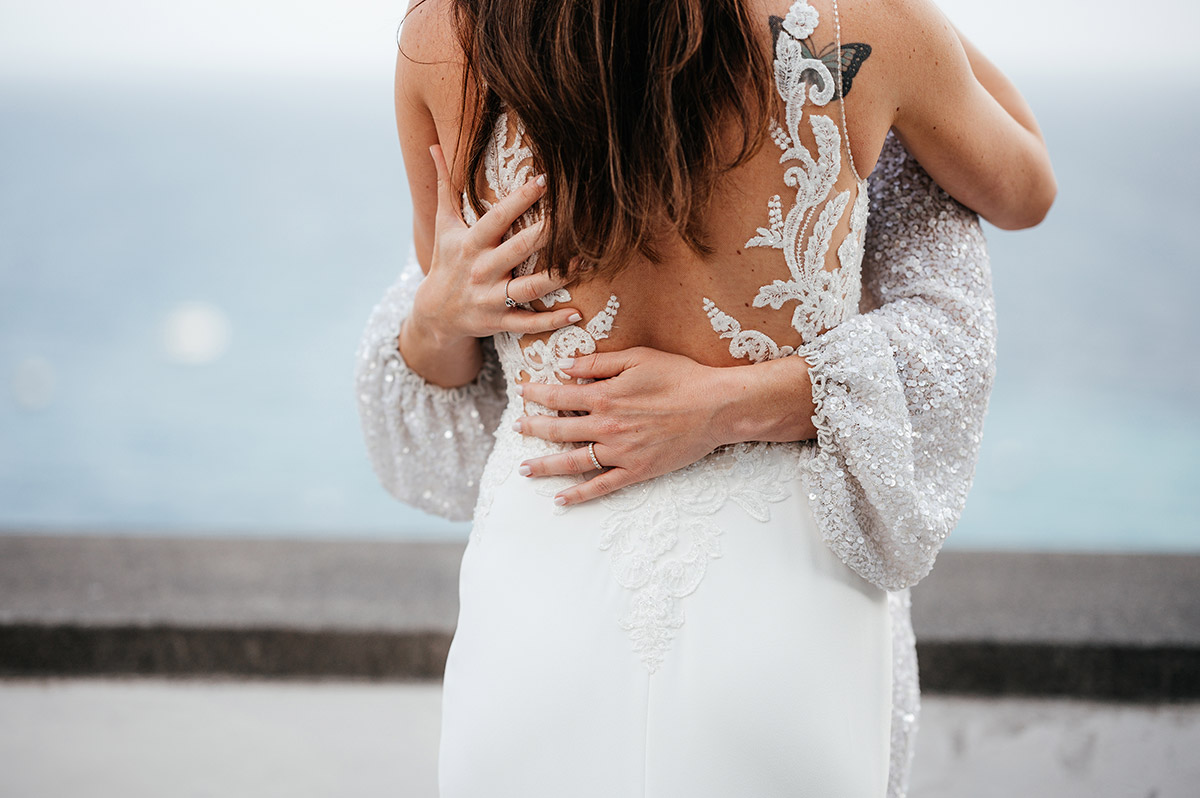
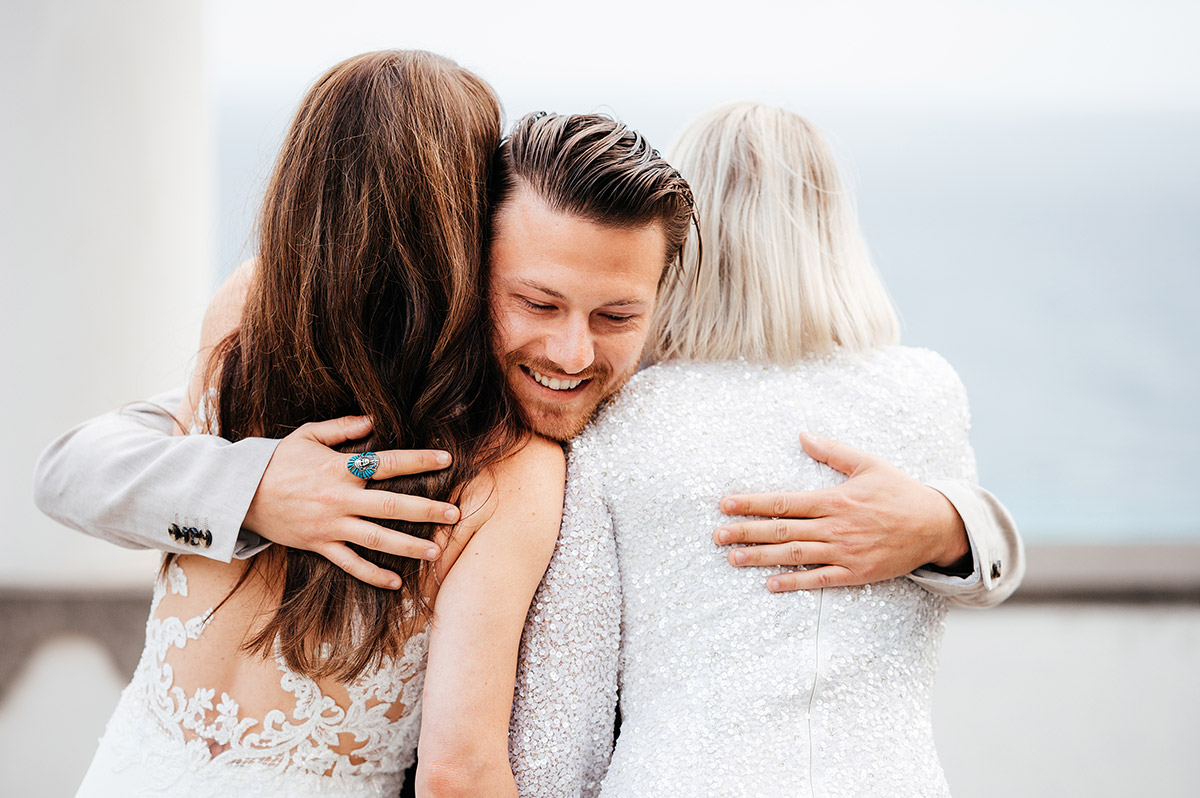
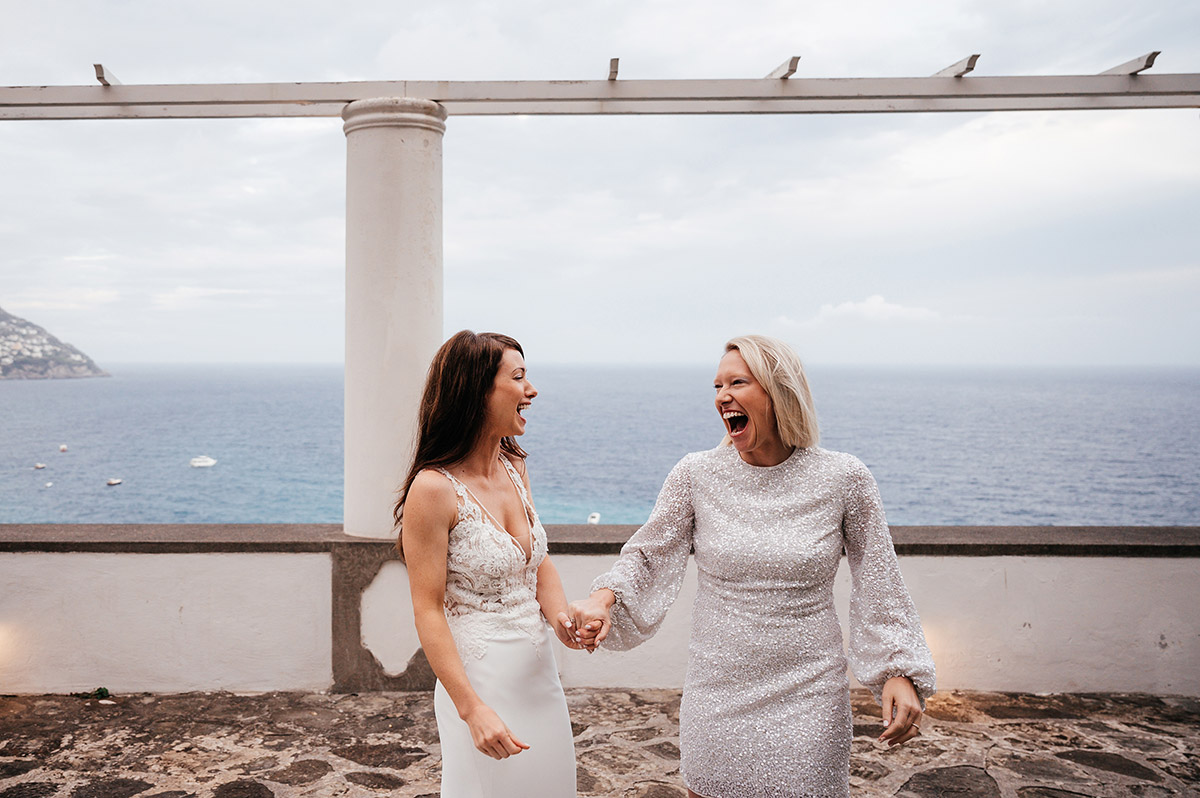
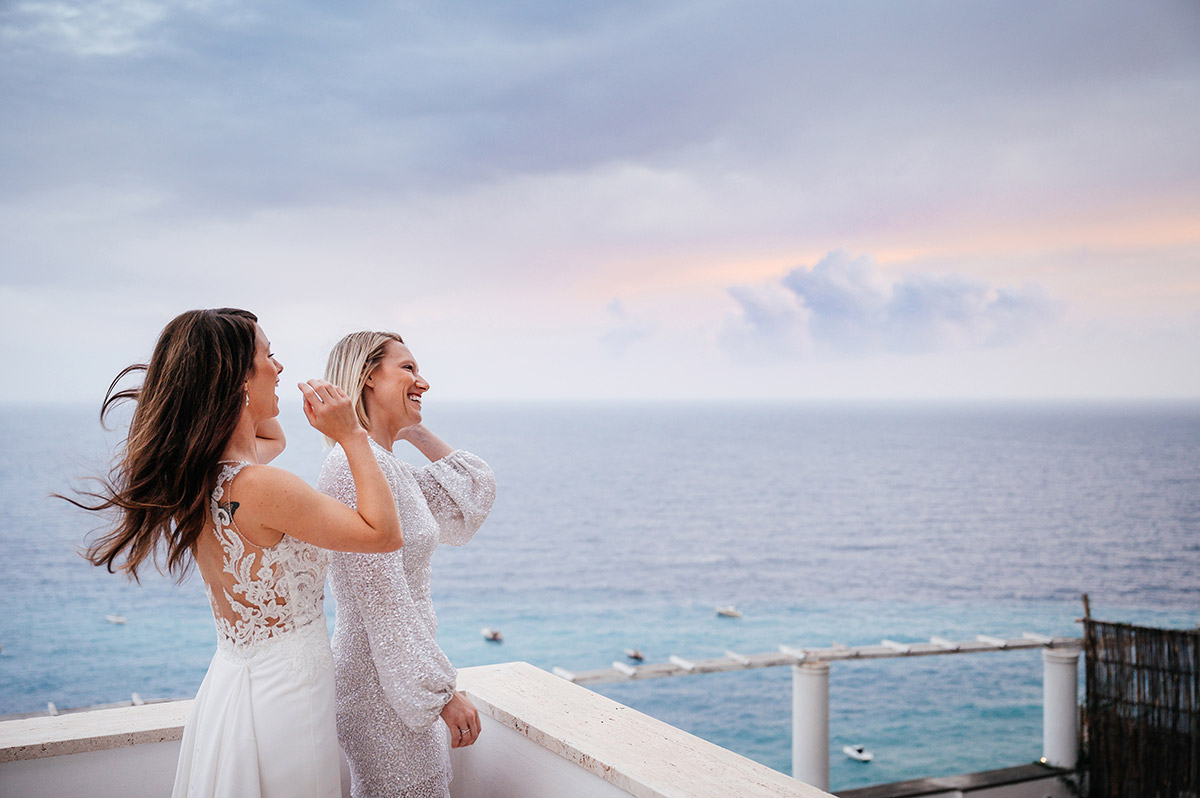
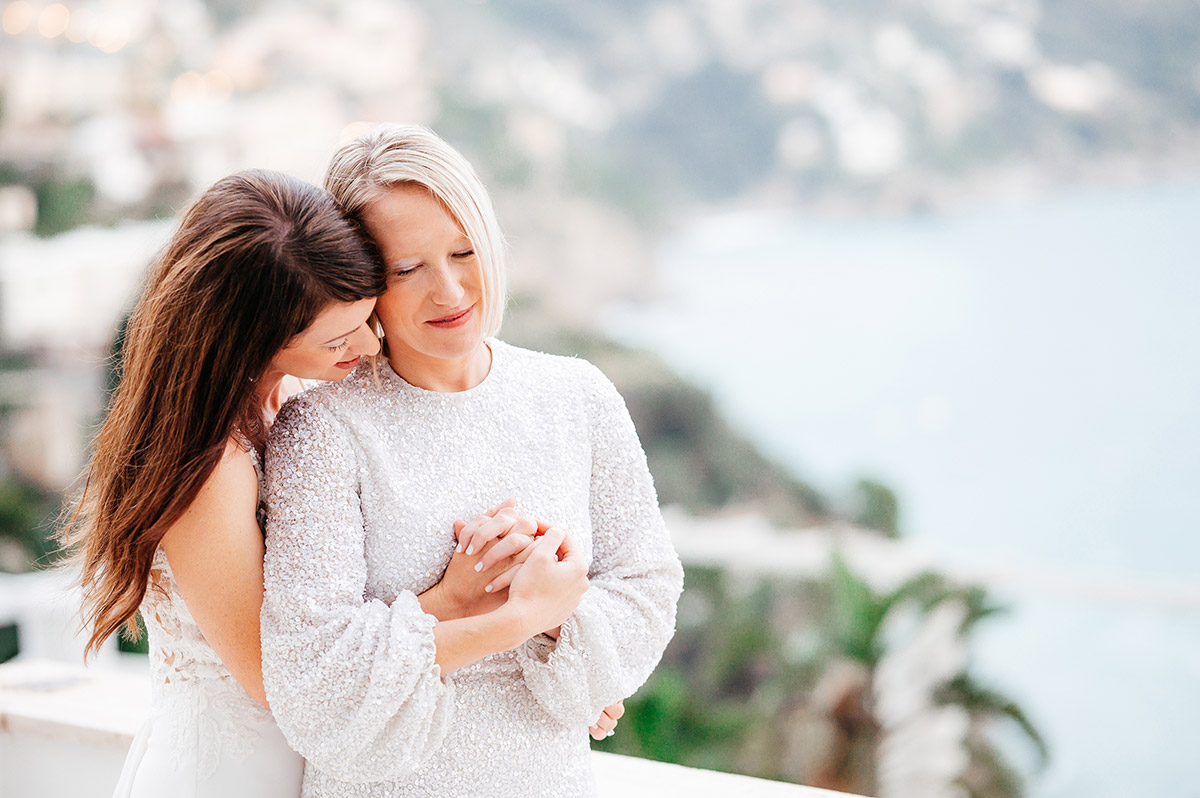
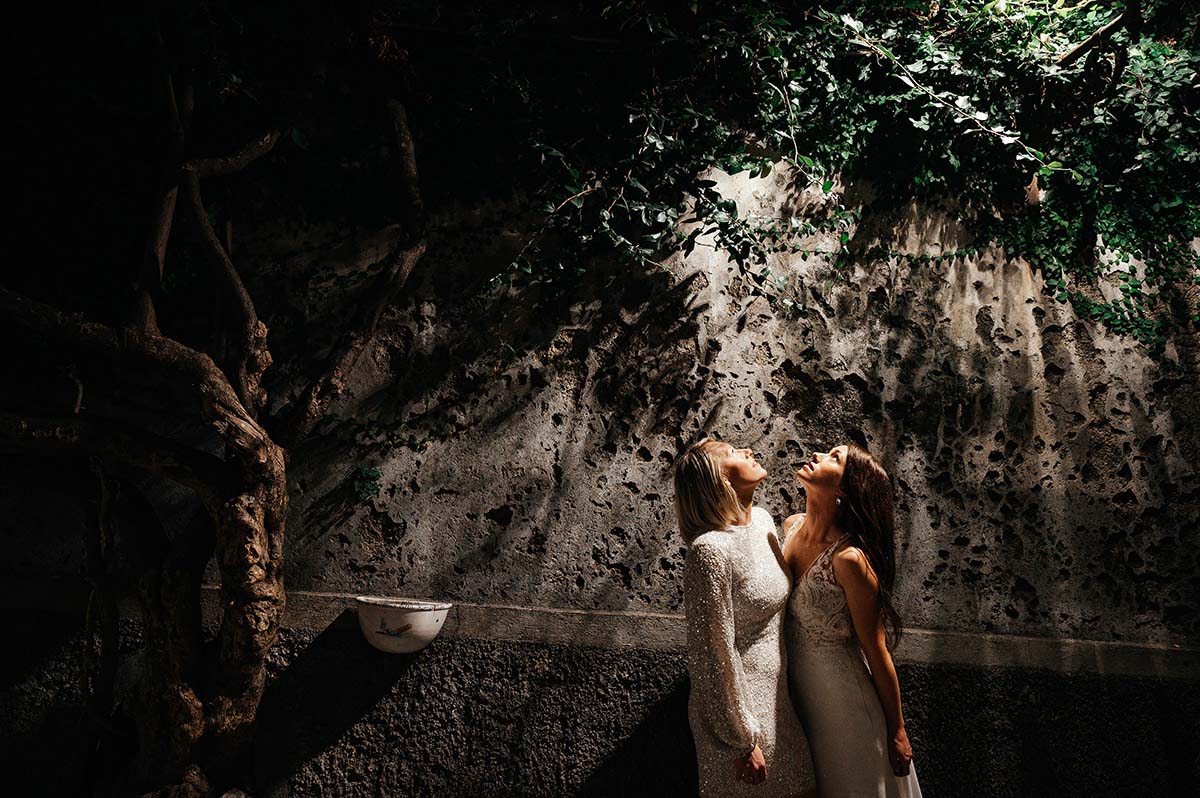
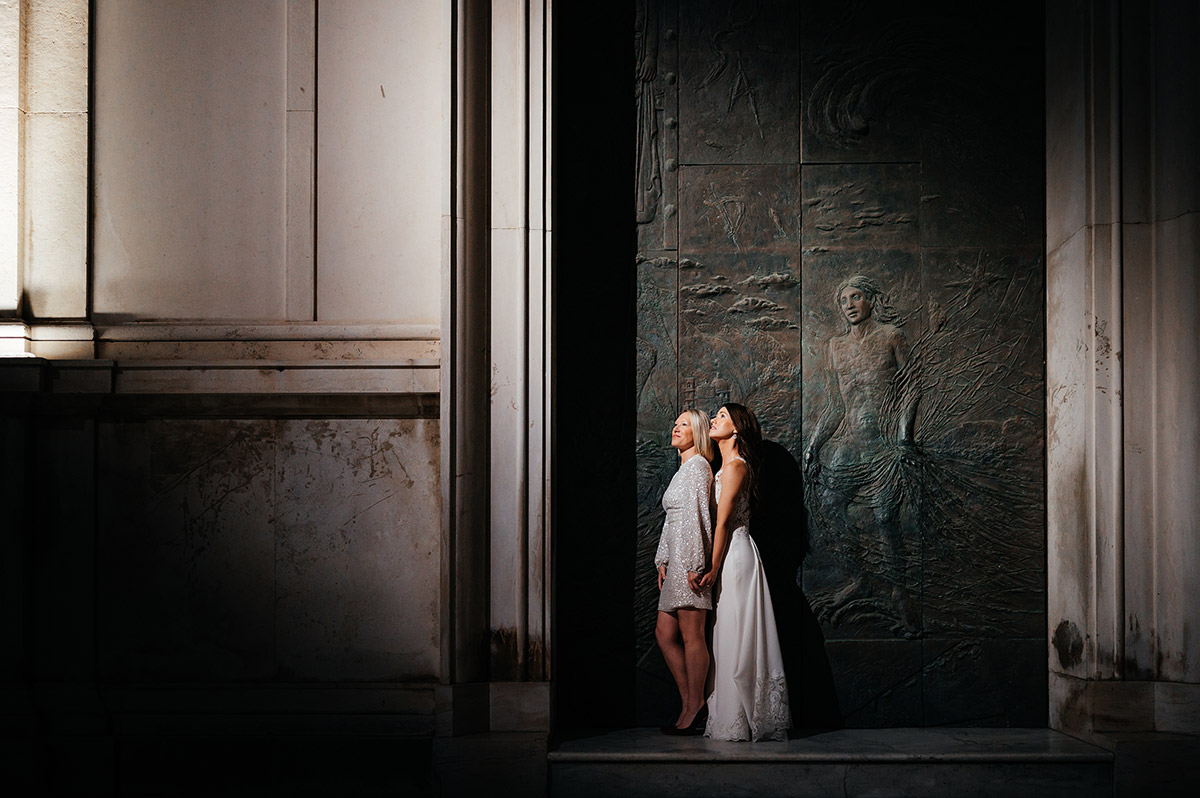
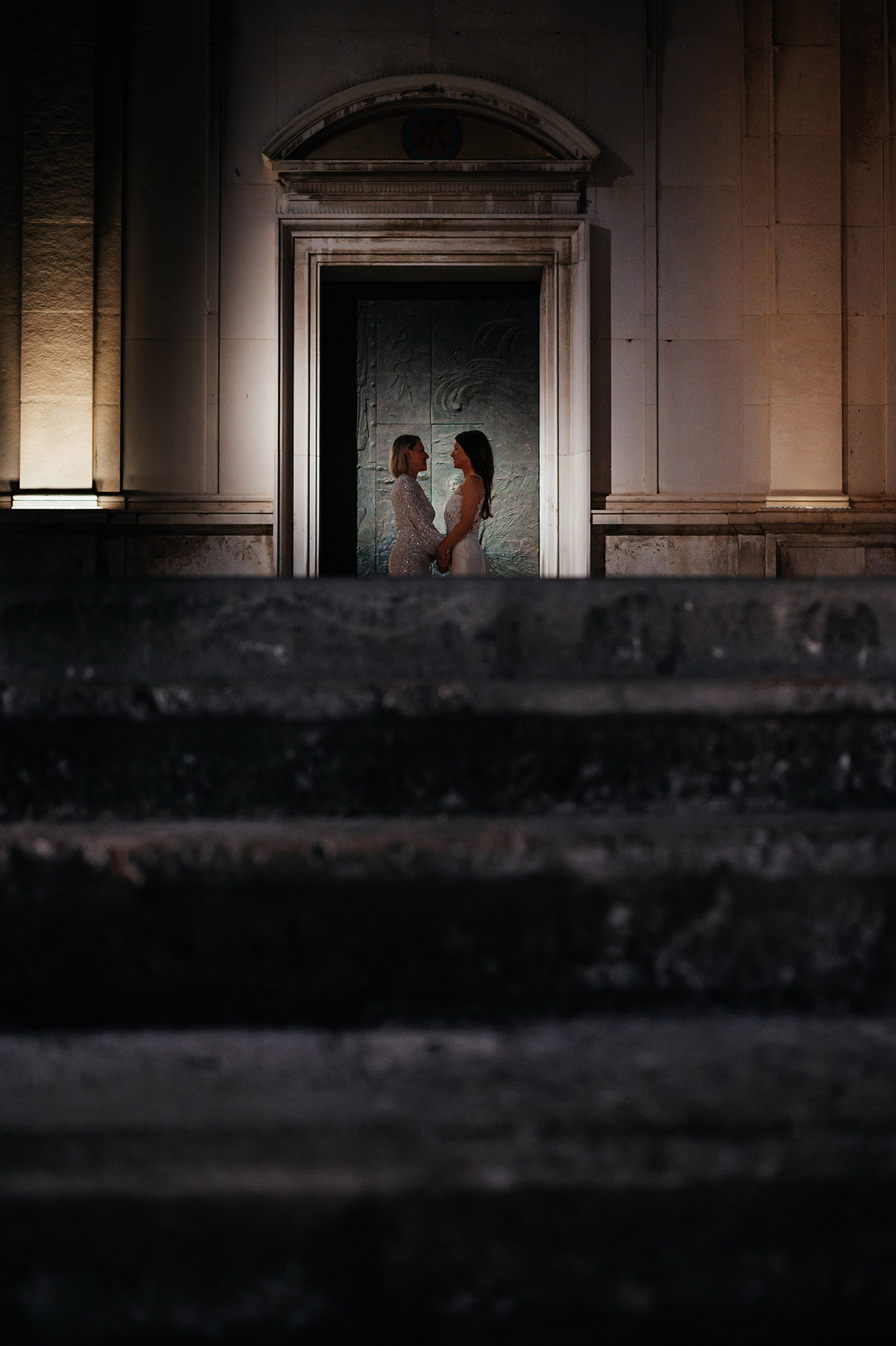
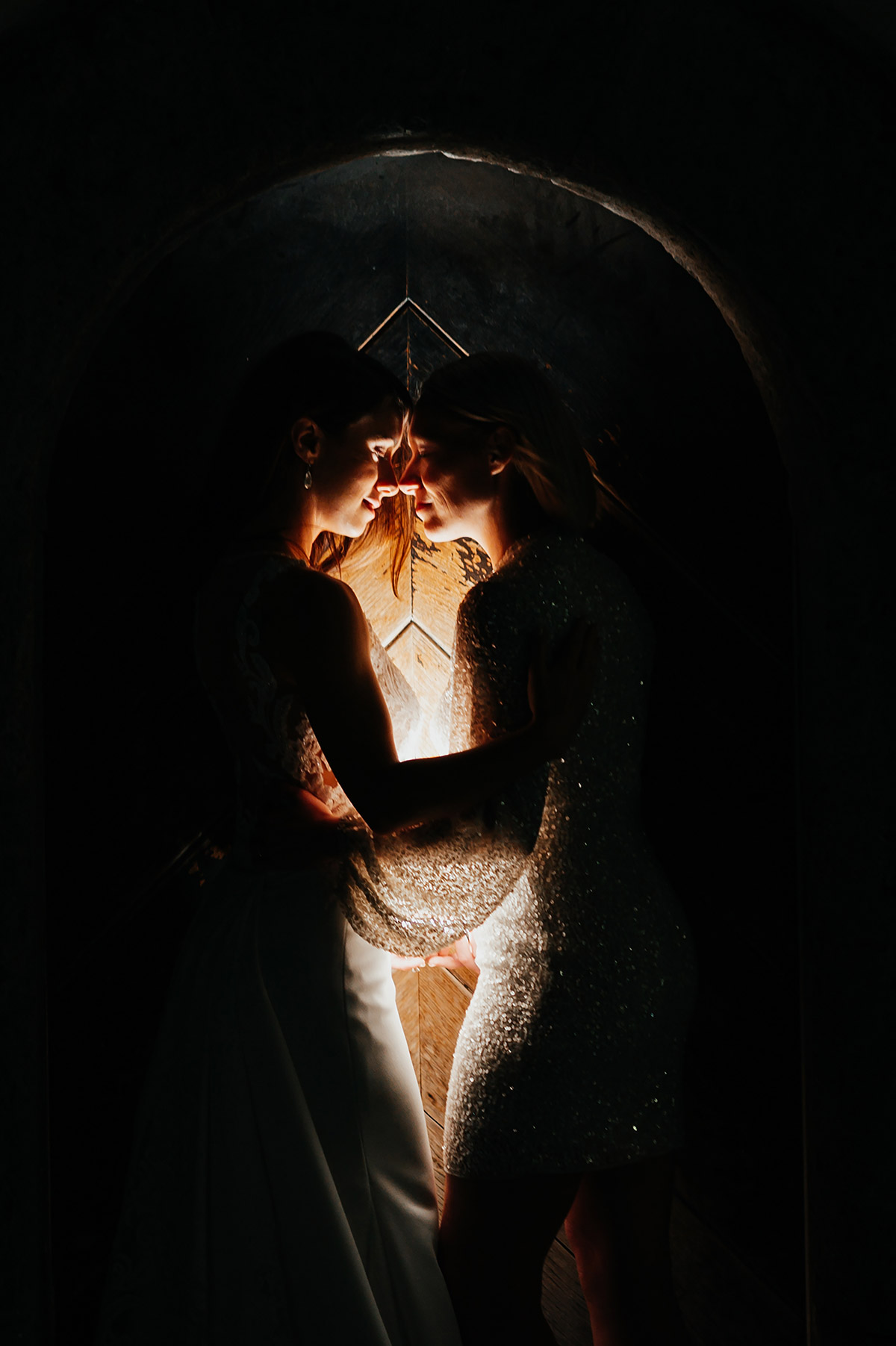
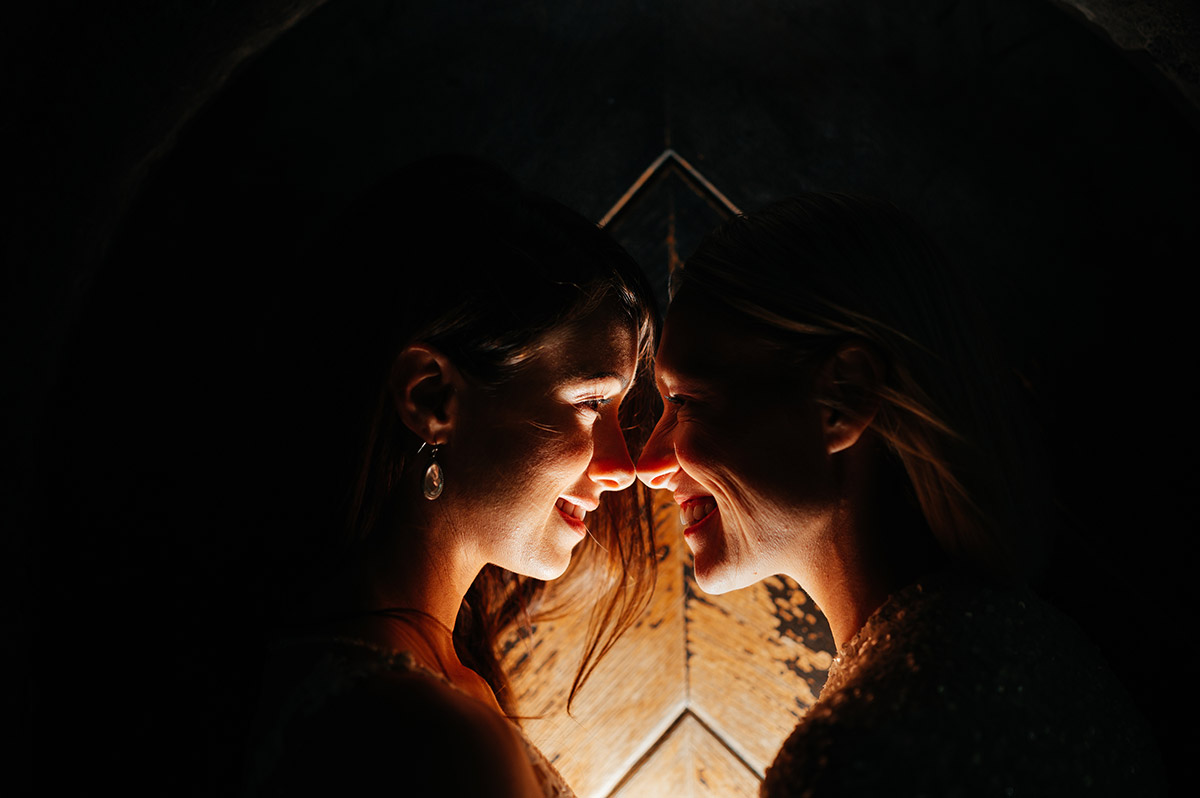
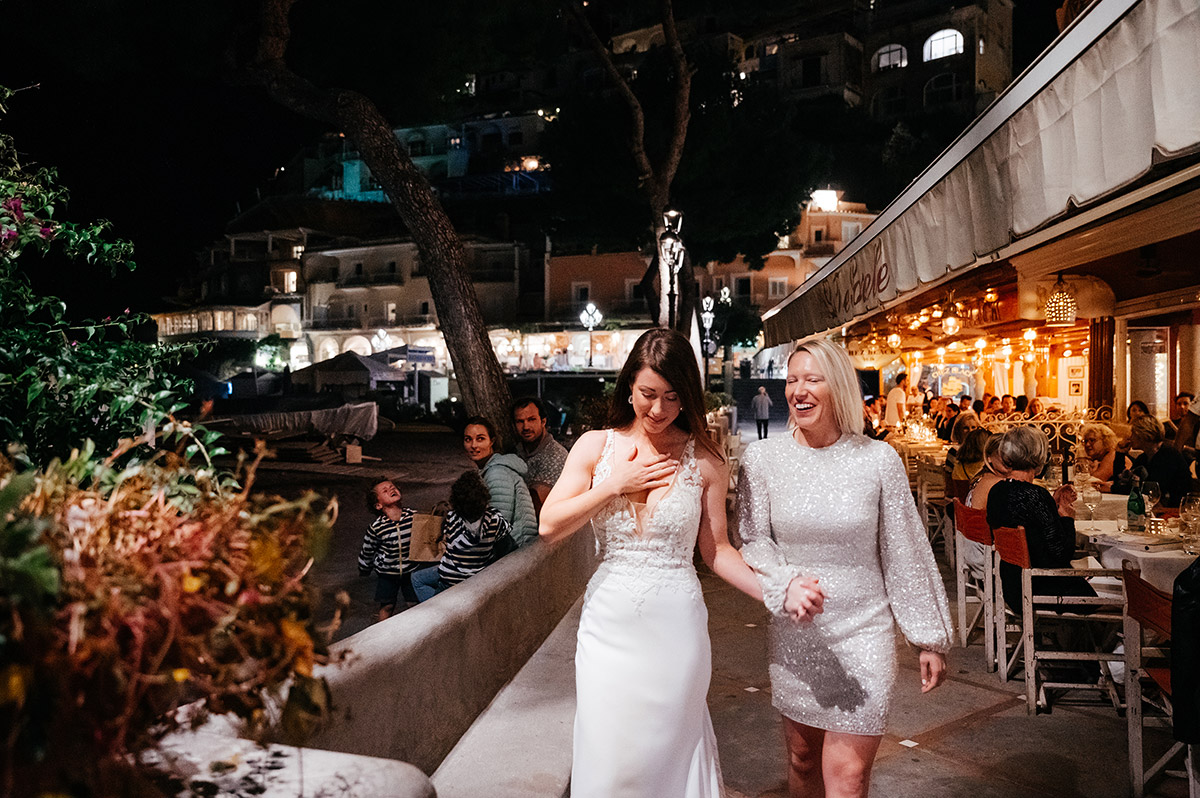
Years from now, what you keep from a wedding here is the photographs, so look at real ones from same-sex weddings before you decide anything else.
- Civil union in Italy: possible, with the same steps as a civil marriage for foreigners, meaning an Italian-language ceremony at the Comune, an official interpreter, two witnesses, and documents that include a Nulla Osta sworn in front of an American consular officer in Italy. Since most of you are already legally married in the US, that is a lot of bureaucracy for a second ceremony, and I don’t think it’s worth it.
- Symbolic ceremony in Italy: no legal standing in Italy, but complete freedom on location, language, content, officiant, timing and form. The vast majority of American same-sex couples choose this one, because it says what the marriage means without a second legal registration.
- Your US marriage in Italy: Italy does not have a formal mechanism to universally recognize foreign same-sex marriages, though this area of law has been evolving at both the national and EU level. For your celebration it changes nothing, because a symbolic ceremony asks for no paperwork at all.
Most international couples on this coast, gay or straight, choose a symbolic ceremony because it leaves every part of the day in their hands, and I would never call it a second-best option. My guide to symbolic ceremonies in Positano explains how it works, from the officiant to the rituals.


Is the Amalfi Coast Welcoming to Same-Sex Couples?
Southern Italy has a complicated relationship with social progressivism, and I would rather be honest about it than market a fantasy. The towns on the Amalfi Coast (Positano, Ravello, Amalfi, Praiano) are international tourism destinations that have been receiving guests from around the world for over a century. The people who work in the hospitality industry here, at the hotels, restaurants, boat rentals, flower studios, and venue spaces, are professionals whose livelihood depends on making international clients feel comfortable. In practice, with the people you will deal with while planning a wedding, from the hotel desk to the florist, the Amalfi Coast is welcoming.
That is different from promising that every person you pass on a staircase will feel the same way. This is a largely Catholic region, and the residential neighborhoods behind the hotels are traditional. A wedding weekend keeps you almost entirely among hotels, restaurants and boats that host foreign guests every day, and the same-sex couples I have photographed here have almost never come back to me with a story of friction.
The venues I work with most regularly are Hotel Caruso in Ravello, Villa Cimbrone, Palazzo Confalone, Hotel Marincanto in Positano, and Villa Magia. All of them have hosted same-sex celebrations without issue. The planners and officiants who work on this coast are used to LGBTQ+ couples and won’t ask you for anything beyond what every couple sends in the planning documents.
The Ceremony at a Same-Sex Wedding on the Amalfi Coast
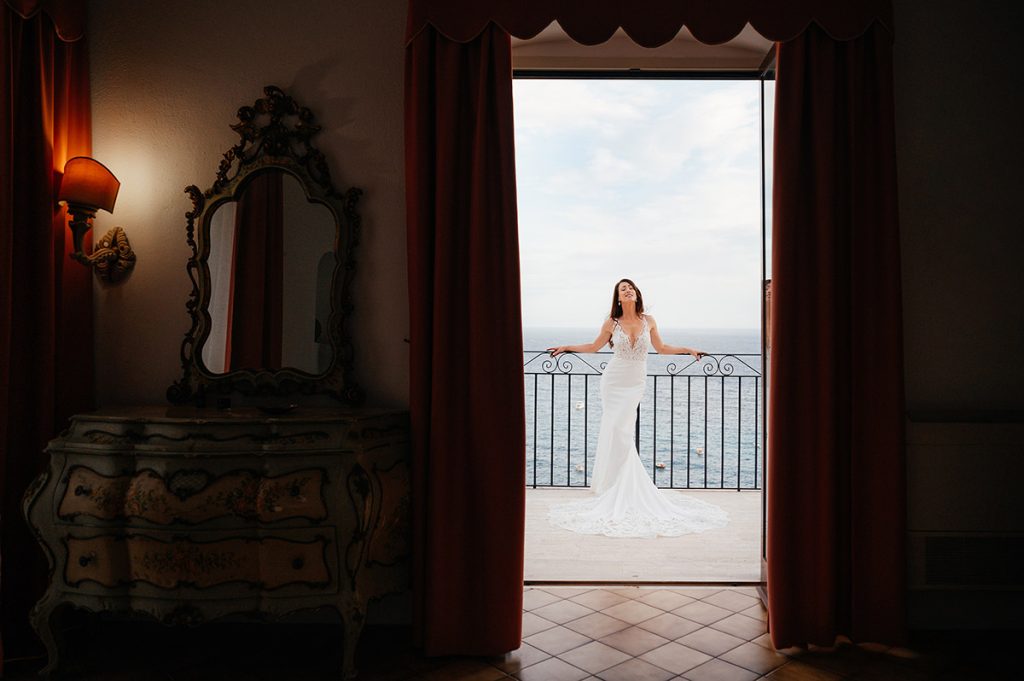
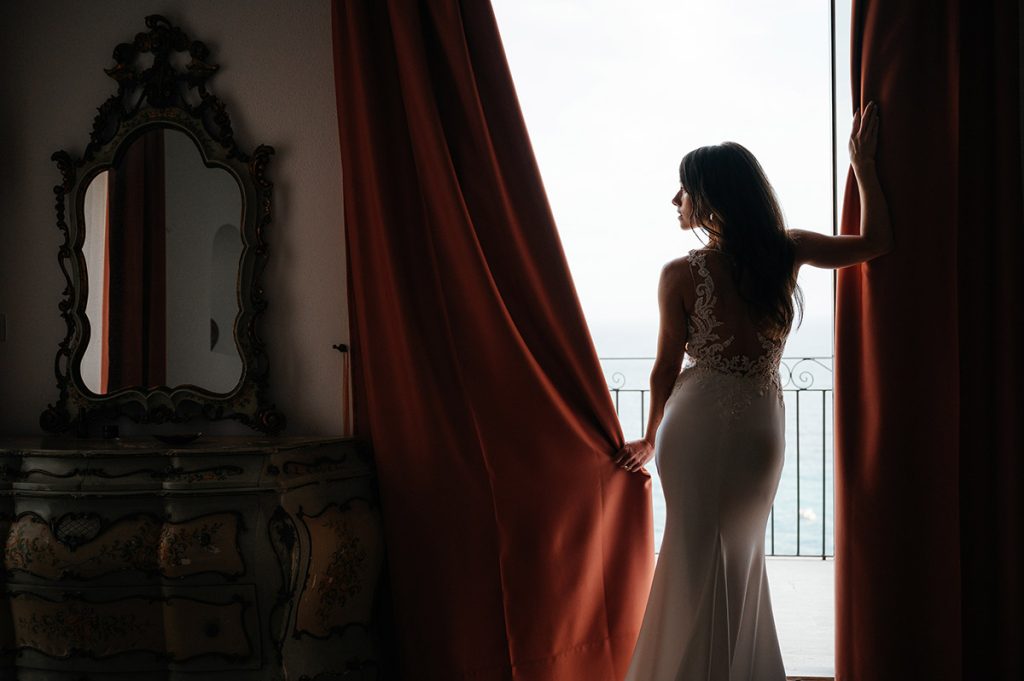
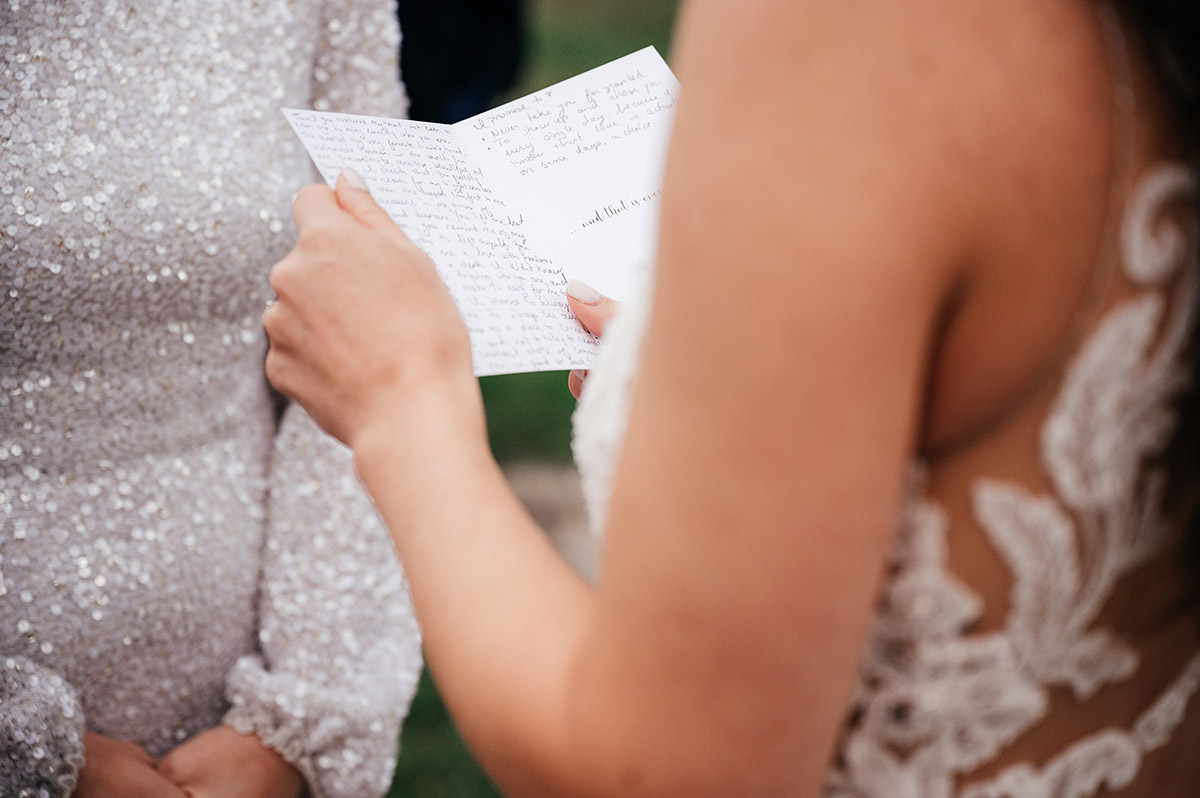
The symbolic ceremony format works for same-sex couples in the same way it works for straight couples: you write your own vows, choose your own rituals, select your own officiant, and decide on the form the ceremony takes without being constrained by a municipal script. So the ceremony can be in English and at sunset on a terrace above the sea, with a ring warming, a handfasting or an exchange of letters, and it lasts 20 minutes or an hour depending on what you want.
The practical advantage is that you have no civil ceremony to fit into the day. The legal side was handled when you married at home, so the symbolic ceremony is the whole event, and the timeline follows the light and your guests instead of an appointment at the Town Hall.
Where the Ceremony Takes Place
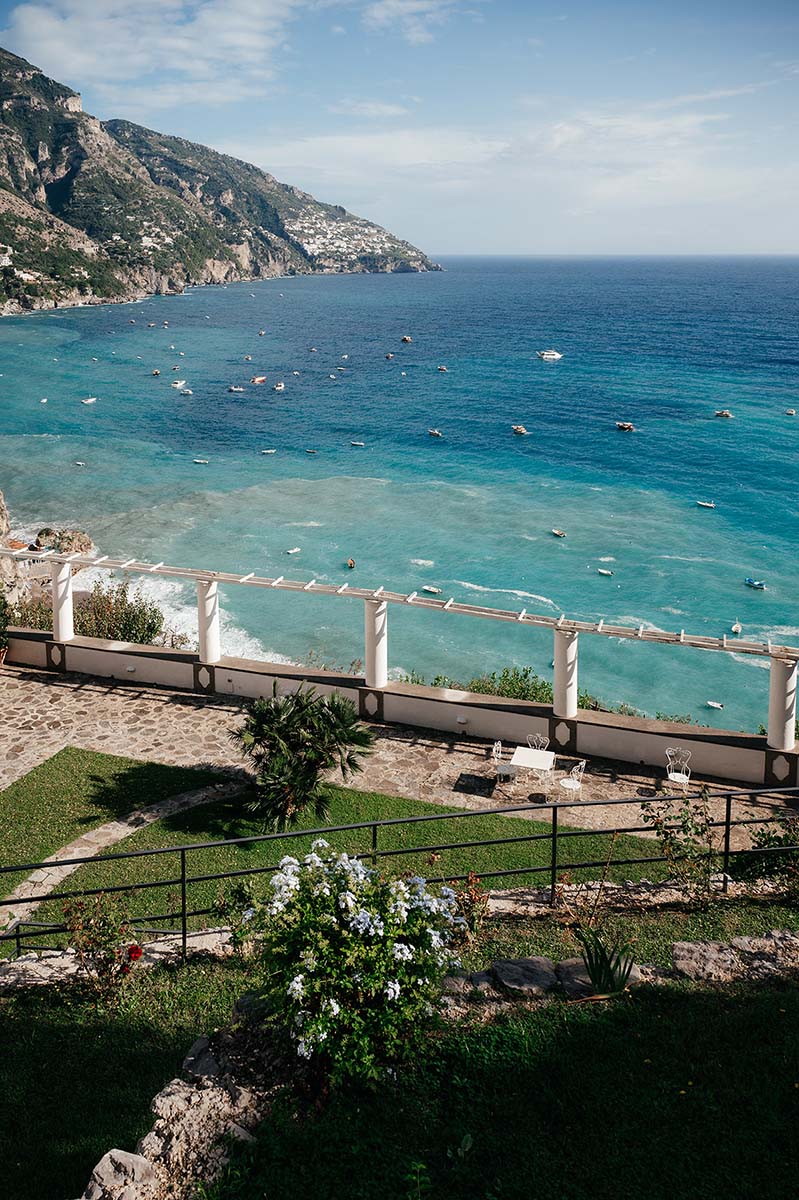
You will use the same venues as any straight couple, and no list of “LGBTQ+ approved venues” exists. What changes your day is whether the ceremony space is private or open to the public. Most high-end venues here, with their terraces, gardens and villa grounds, are private enough that the only people watching are the ones you invited, and in Ravello that is true of Belmond Hotel Caruso and Palazzo Confalone. Villa Cimbrone is different, because its gardens stay open to visitors, so ask the villa first about availability, permits and costs for your date. For a same-sex wedding in Positano, Hotel Marincanto’s floating terrace and Villa Magia are private or close to it. My Positano wedding hub and Ravello wedding hub go through the venues in both towns.

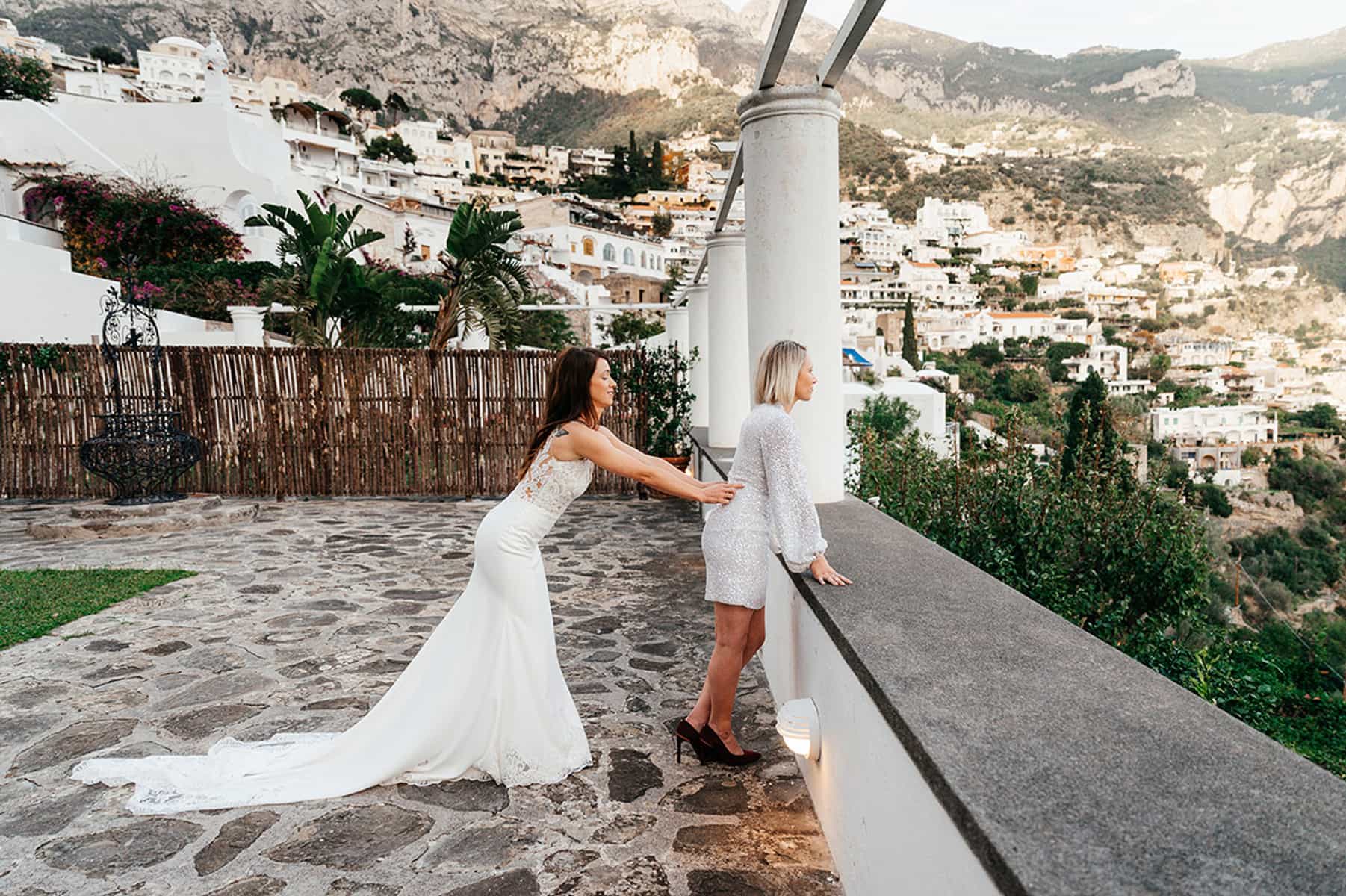

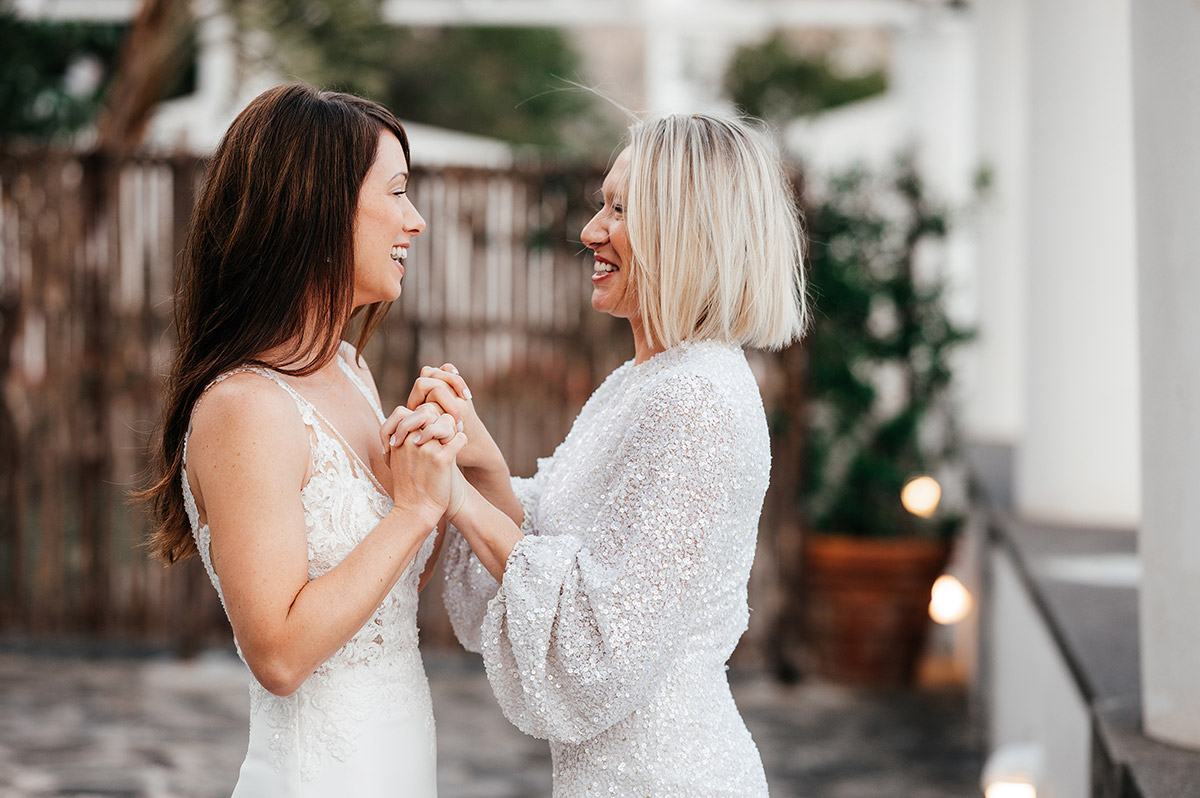
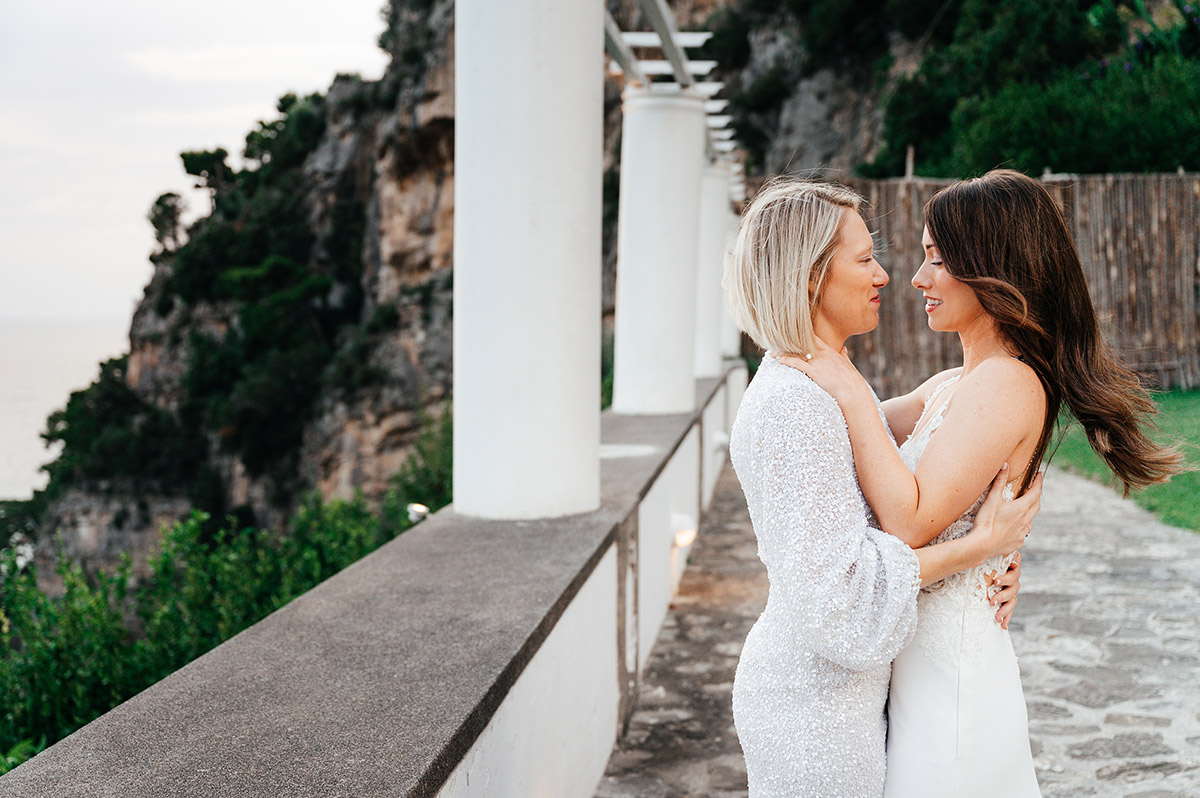

The Photography: Two Grooms, Two Brides, or Neither
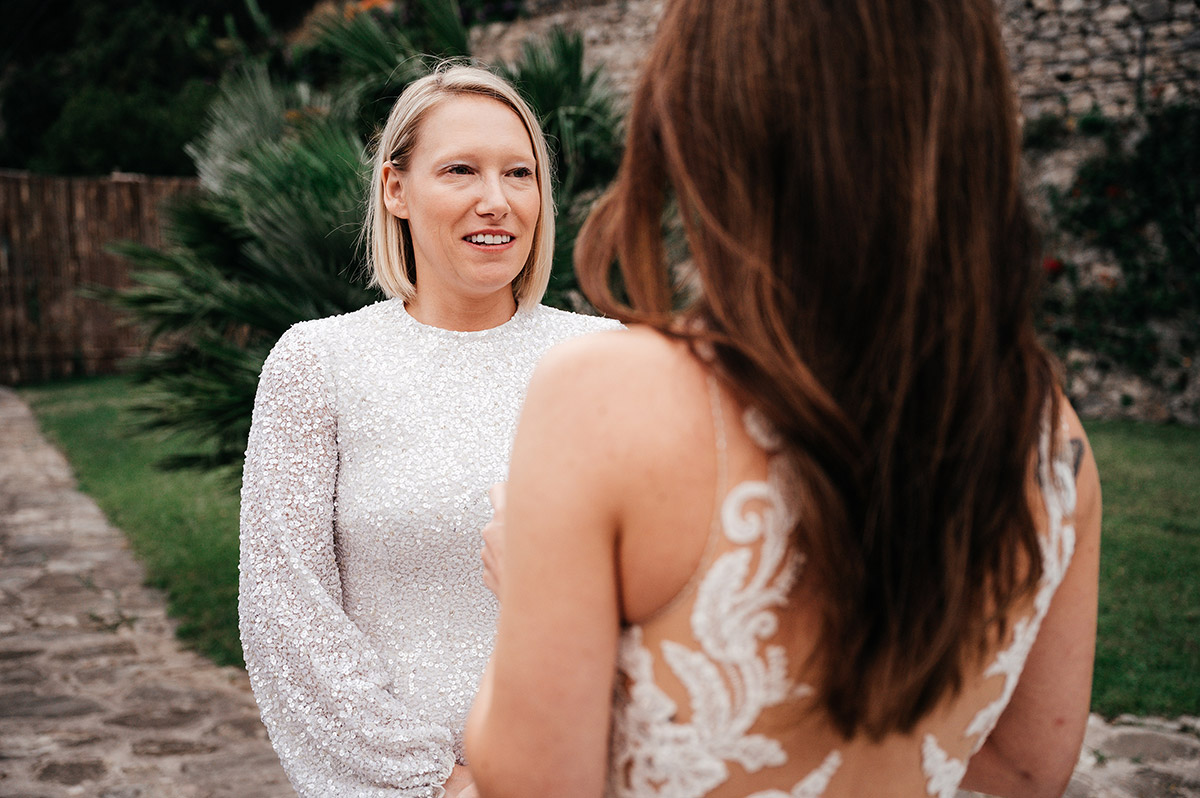
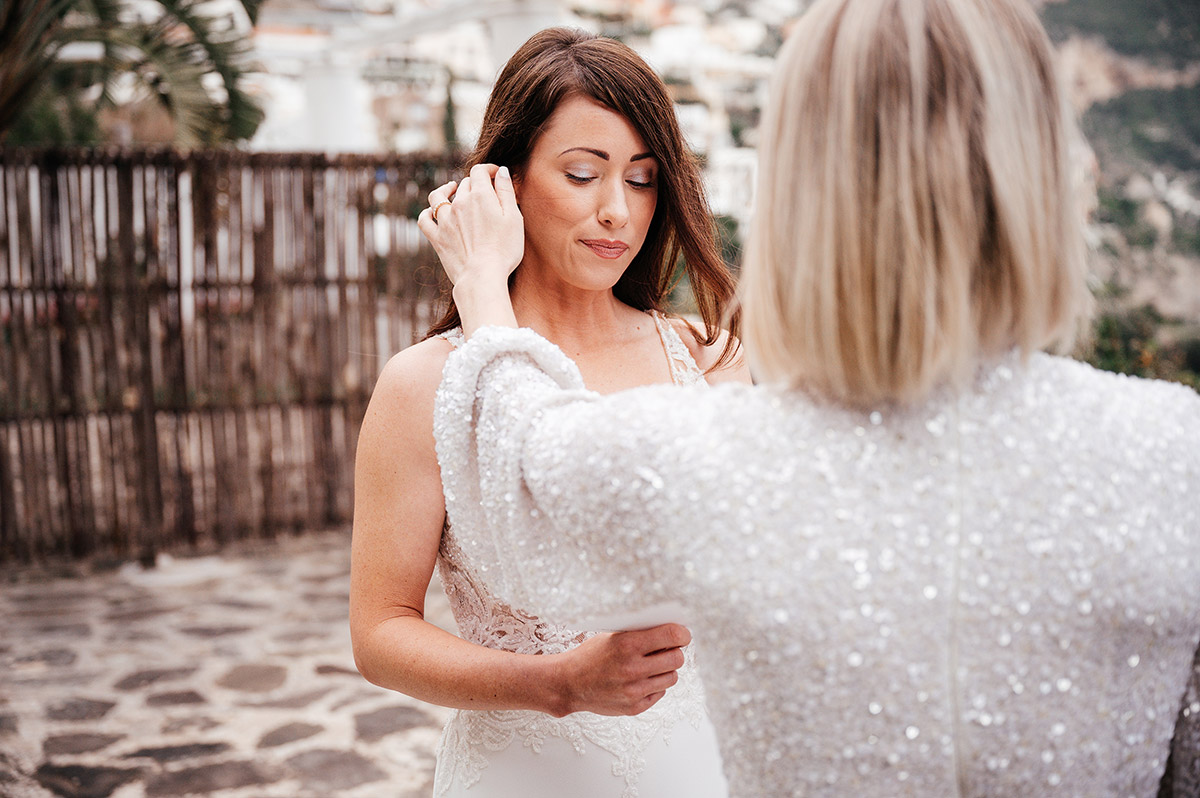
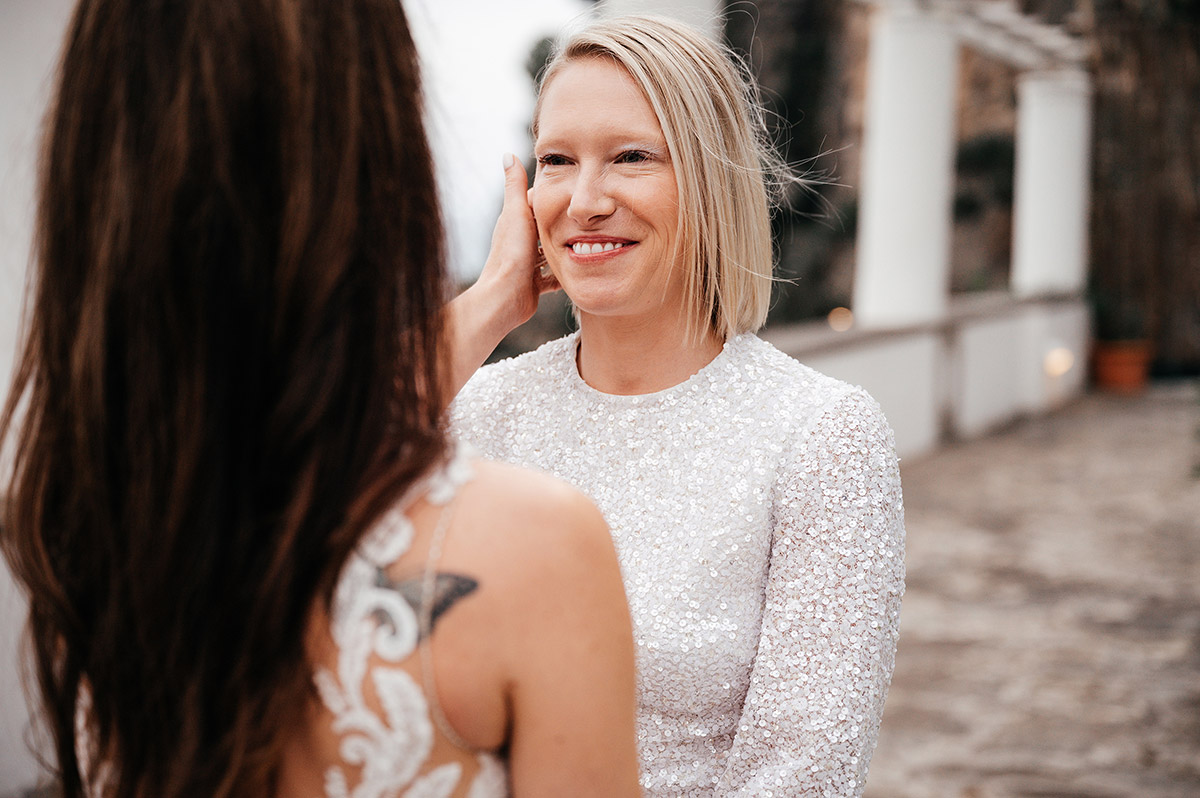
Whoever you hire as a gay wedding photographer in Italy, ask how they handle the three moments that standard wedding photography builds around a bride and a groom: getting ready, the first look and posing. Below is how I approach each one.
Getting Ready: Together, Separately, or Both
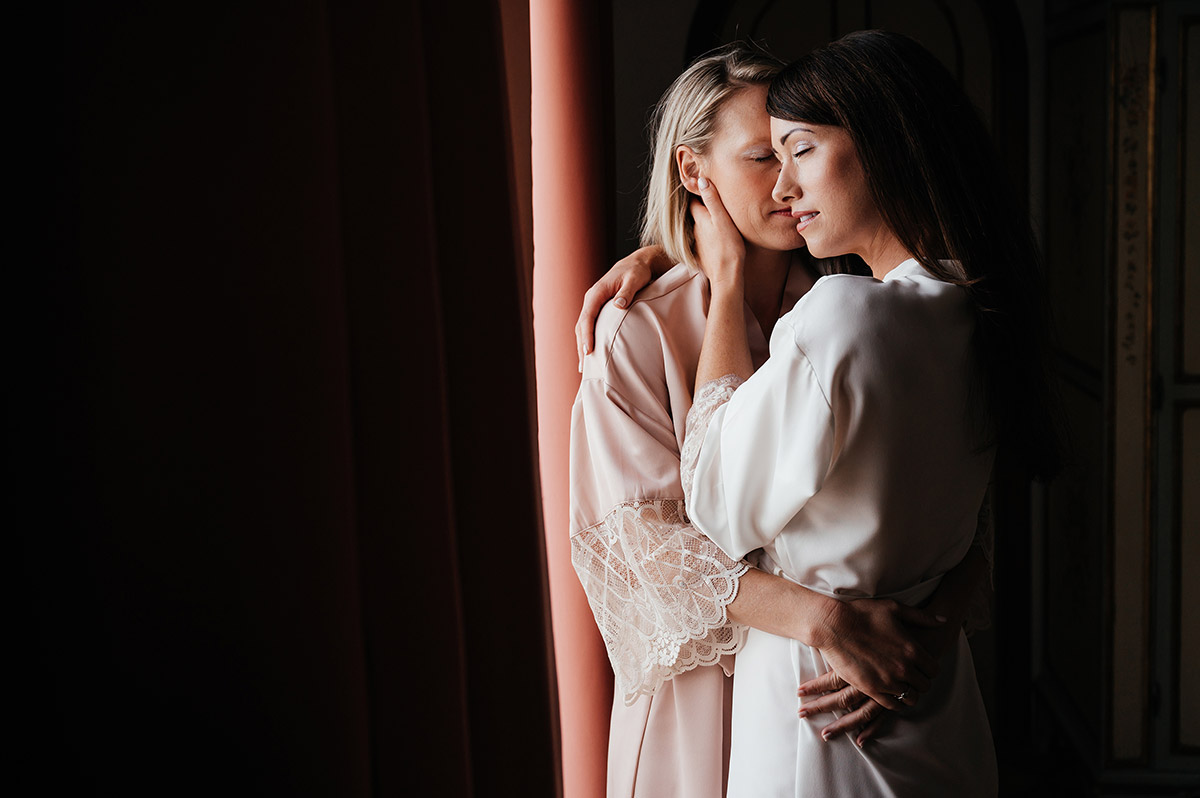
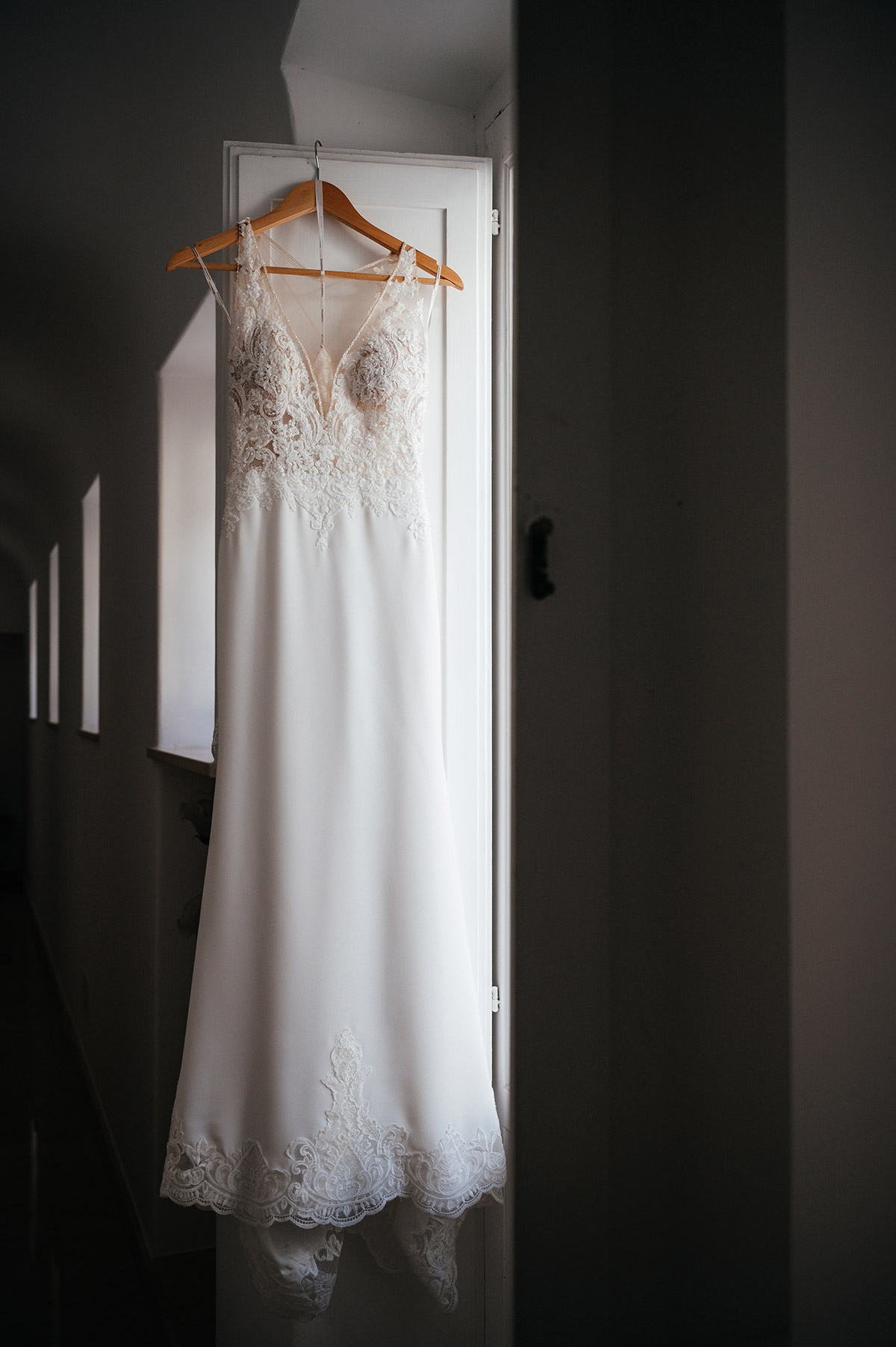
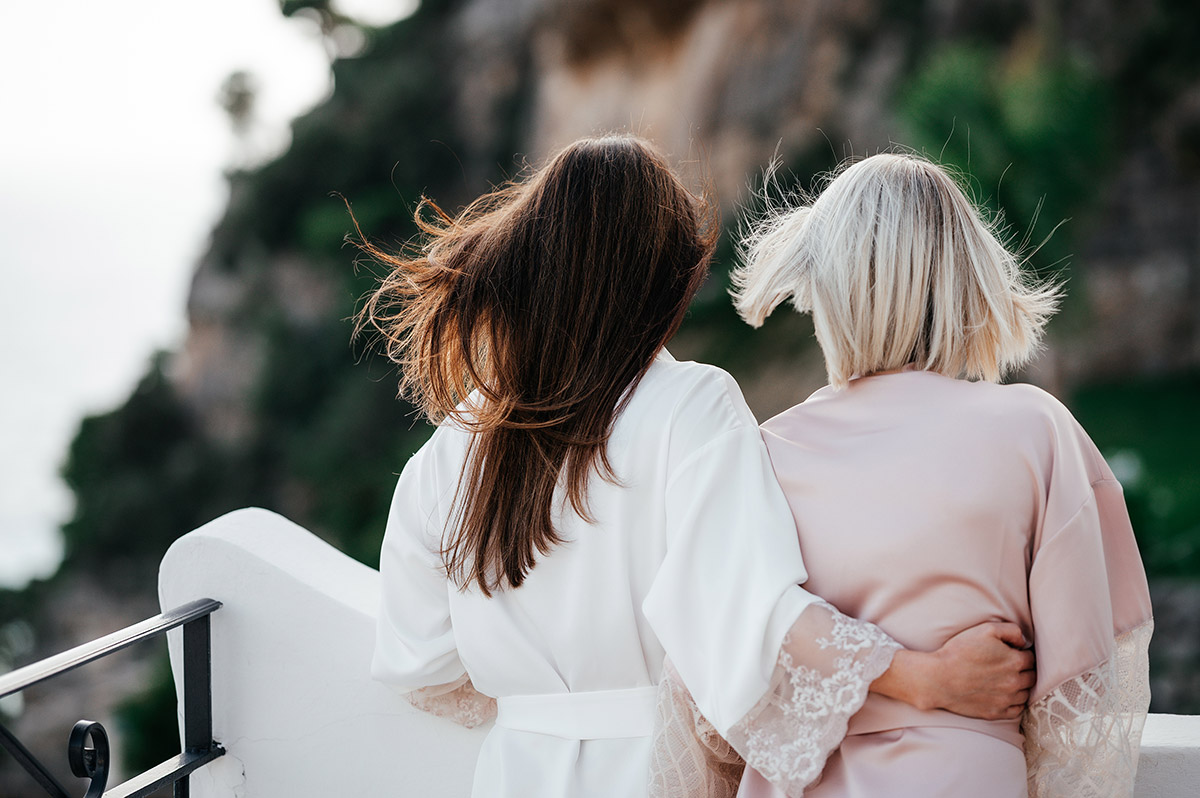
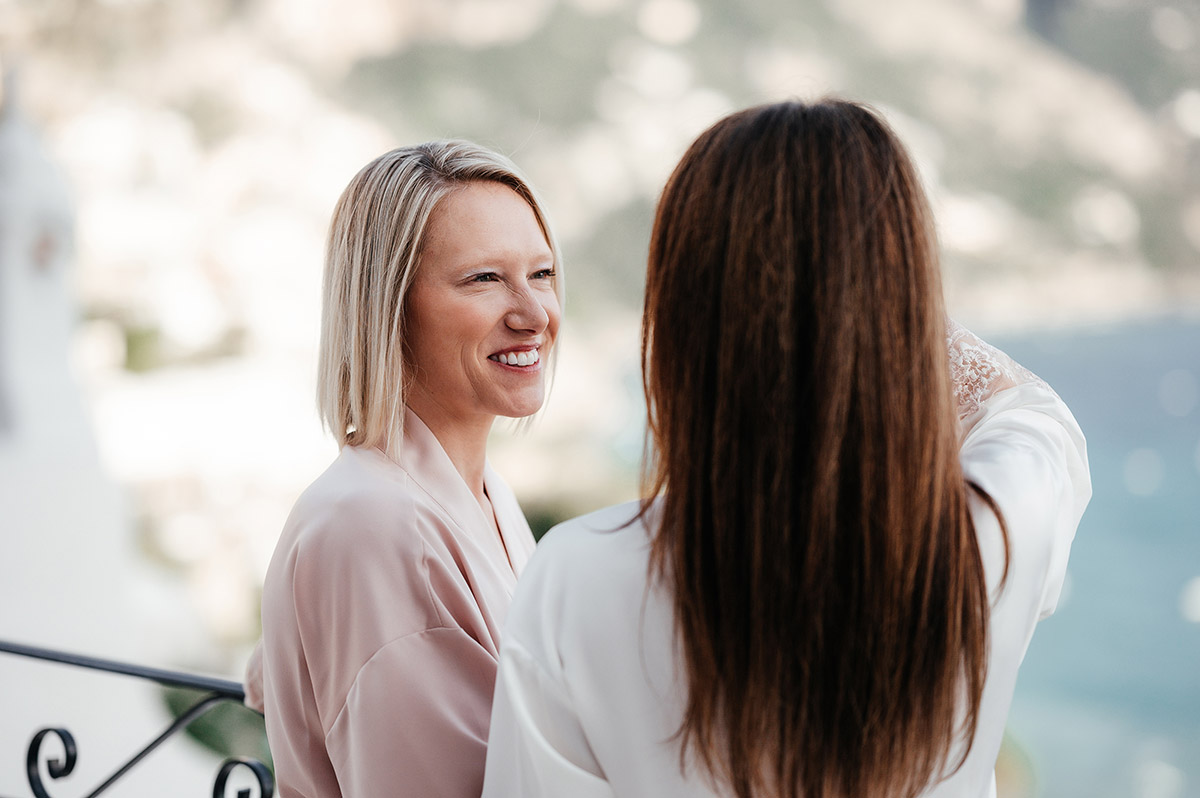
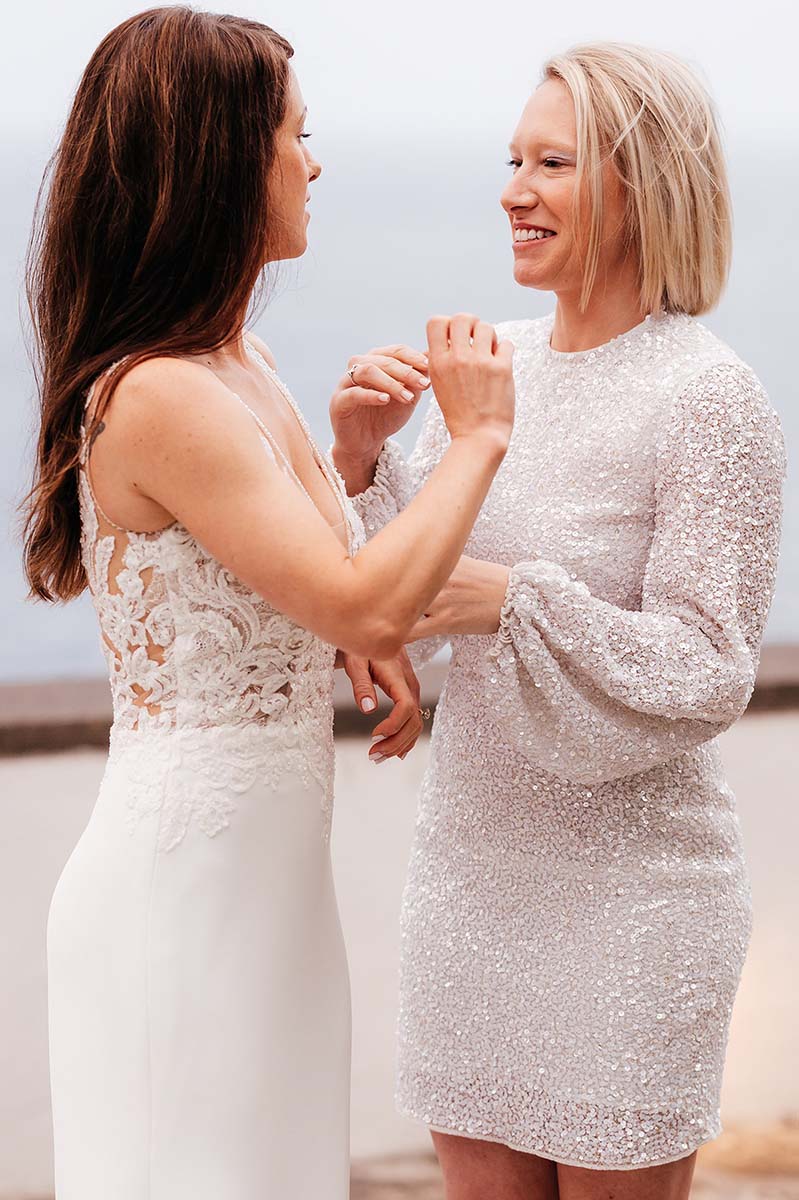
For straight couples the getting ready is almost always split: bride in one room, groom in another, and a first look staged as a reveal. Same-sex couples have more options and rarely pick one by default. When two grooms share a suite, the pictures turn documentary on their own, because two people helping each other with ties and cufflinks need no direction from me. Two brides who want a reveal get ready in separate rooms. Sharing the space gives the gallery a symmetry I like a lot, two robes and two coffees in the morning, then two dresses, each of you closing the other’s buttons. I ask which you prefer during planning and build the morning around your answer.
The First Look Question
The first look, the moment you see each other for the first time on the wedding day, works differently when there is no bride and groom to build it on. With a bride and a groom the picture rests on contrast, a white dress against a dark suit. With two grooms or two brides it rests on something else, the strange mirror of seeing your partner dressed the way you are. On a flight of stone steps in Ravello I photographed two grooms in matching linen suits turning toward each other, and I stayed at the bottom of the steps with a long lens so the stairs would lead the eye up to their faces. What showed there is what every good first look shows, recognition first and then relief.
You can also skip it and see each other for the first time at the ceremony. With a sunset ceremony I would still do the first look, because otherwise your couple portraits have to fit into the few minutes of light left after the vows.
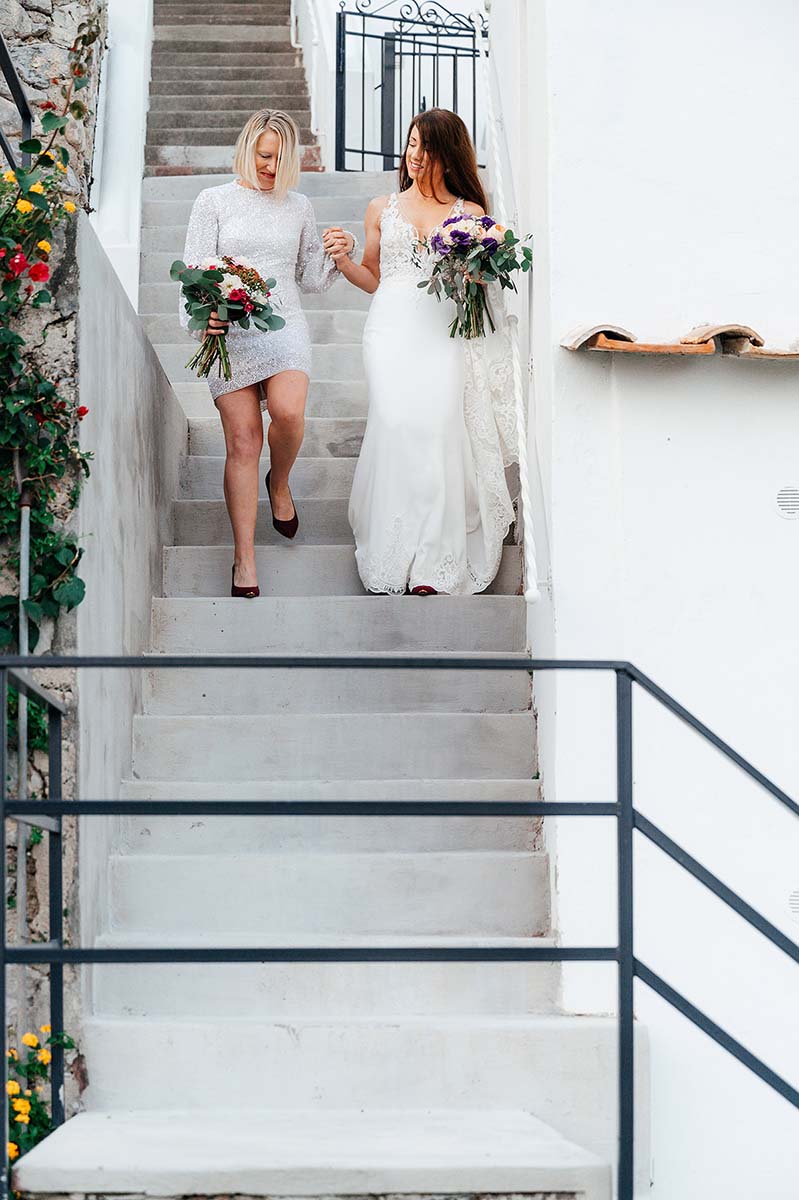








Posing Without Assumed Roles
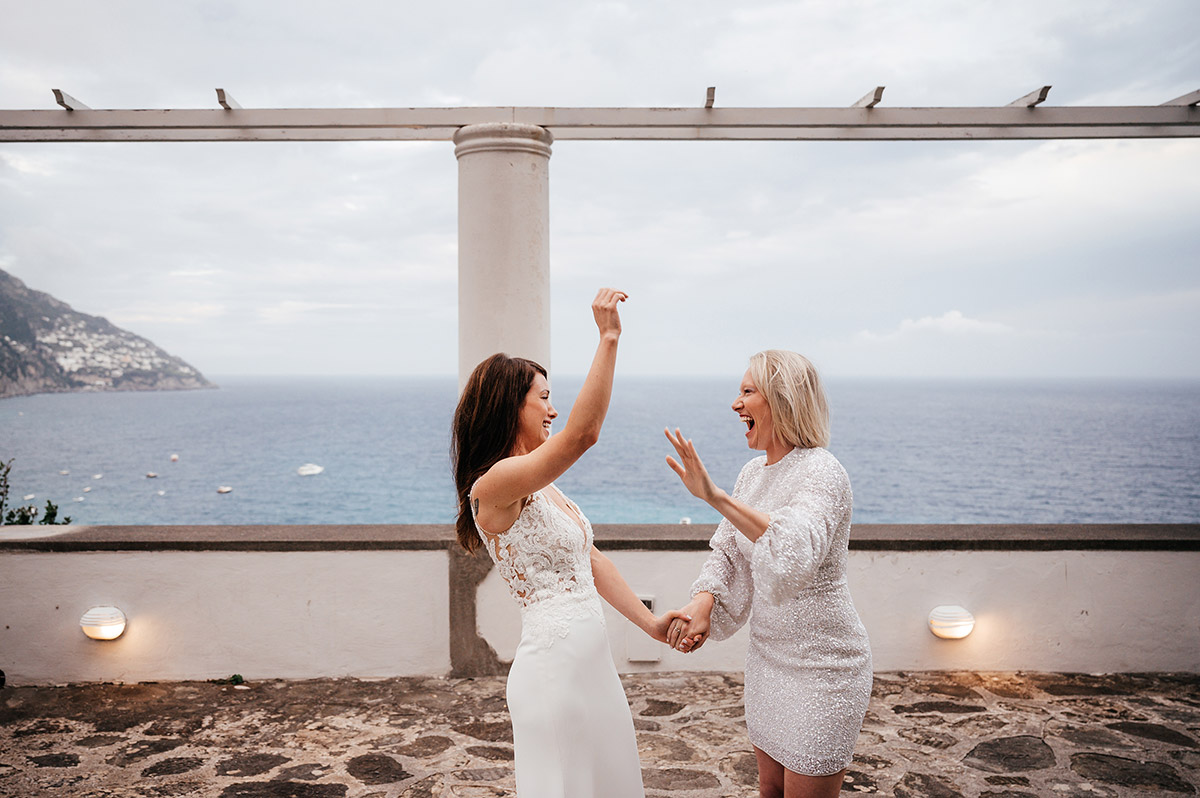
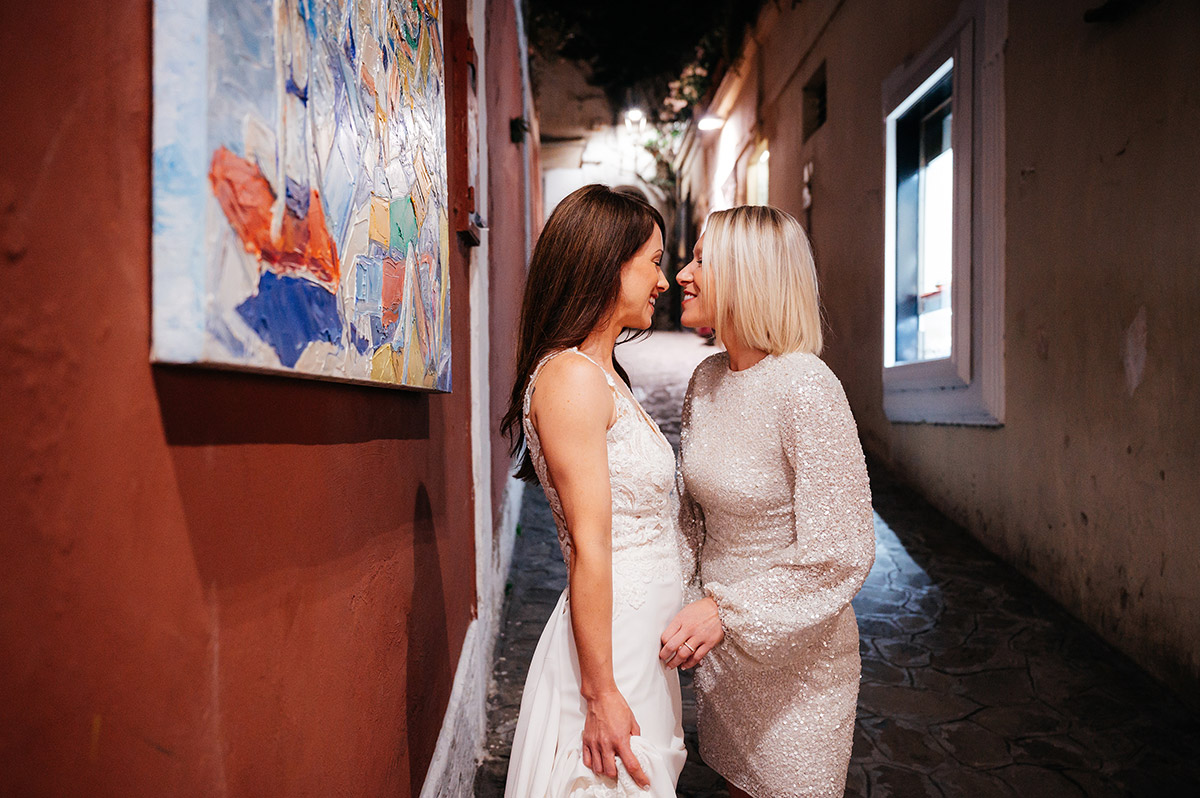
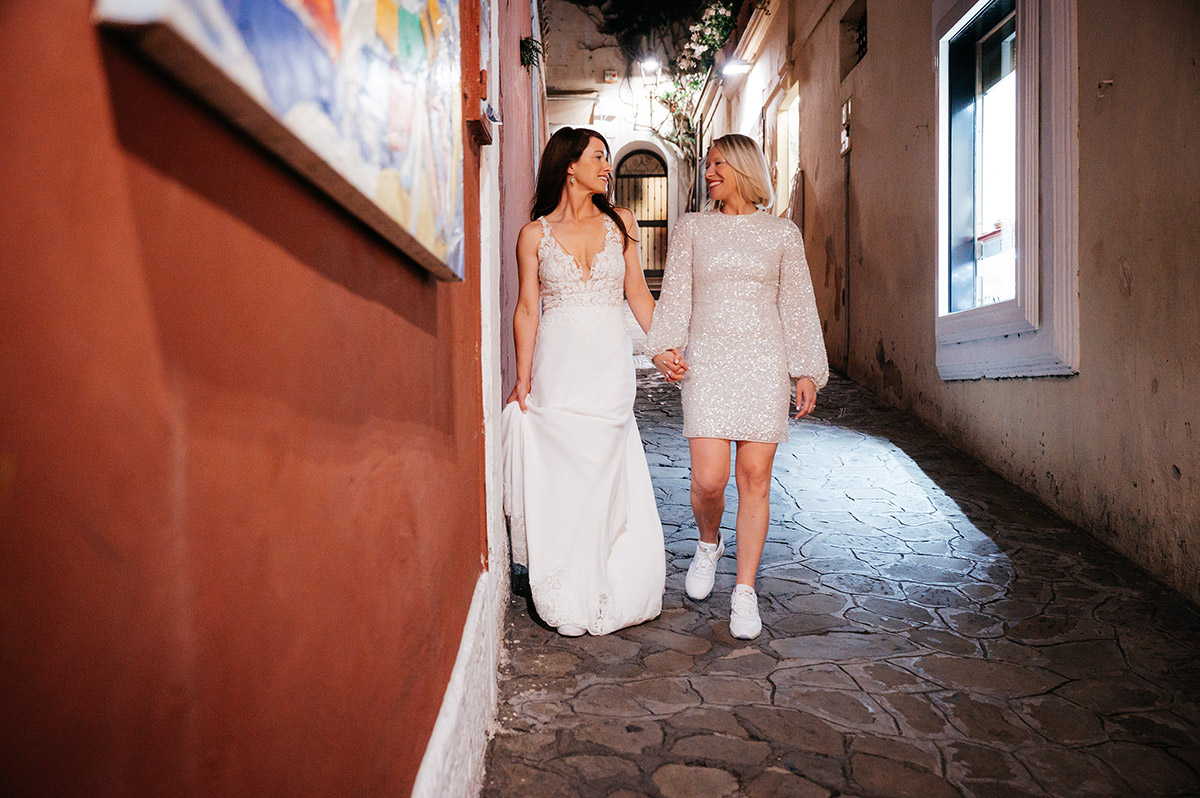
Standard wedding posing (who stands where, who dips whom, who leads in the walking shot, which side of the frame carries which person) assumes a bride and a groom, and I leave all of it out. First I watch how the two of you move. One of you reaches for a hand first. One of you looks into the lens, and the other never takes their eyes off their partner. Those habits make the best pictures because nobody invented them. When I direct, I give movement instead of roles: “walk toward the cliff edge, stop when it feels right.” Every couple does something different with that sentence, and that difference is what ends up in the photo.
A dip, a lift, a picture you saved on Pinterest: I will work toward any of them, and who dips whom is for the two of you to decide, not your height or your build.
Venue Choices on the Coast
I recommend the venues below to you for the same reasons I would to any couple: the number of guests, the view you want, how your guests get there, your budget and the kind of ceremony each venue accepts. The venues listed here have hosted same-sex celebrations with no extra paperwork or conditions.
- Ravello: Hotel Caruso (pool terrace, full buyout for smaller events), Villa Cimbrone (Belvedere of Infinity, garden, private terrace options), Palazzo Confalone (central, flexible for smaller ceremonies), Palazzo Avino (elevated terrace, formal atmosphere). Full detail in my Ravello elopement guide.
- Positano: Hotel Marincanto (symbolic ceremonies on its terraces, for up to 50 guests), Villa Magia (intimate, max 15 guests from 2026), Villa dei Fisici (larger capacity, more formal). Full detail in my Positano elopement guide.
- Private villas: several villa rentals on the coast accept events, some with no limits on the ceremony. You rent the whole property and bring your own coordination.
REAL WEDDINGS
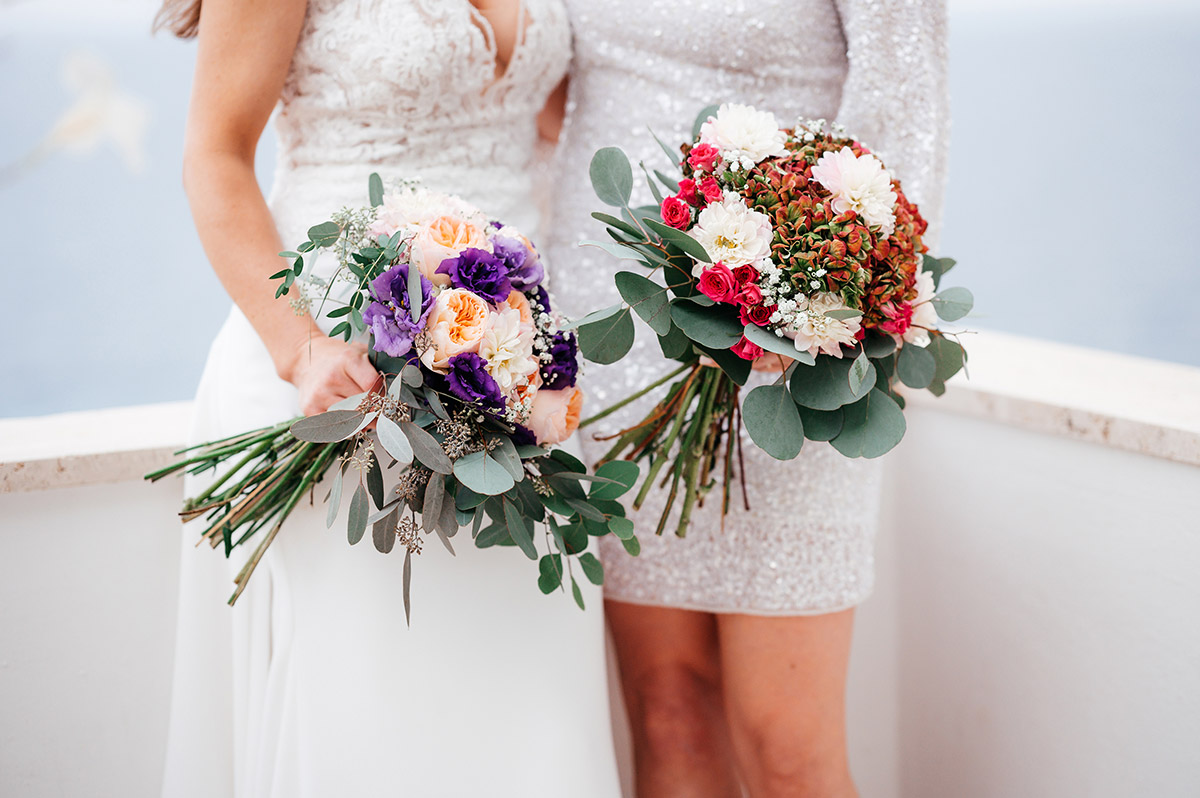

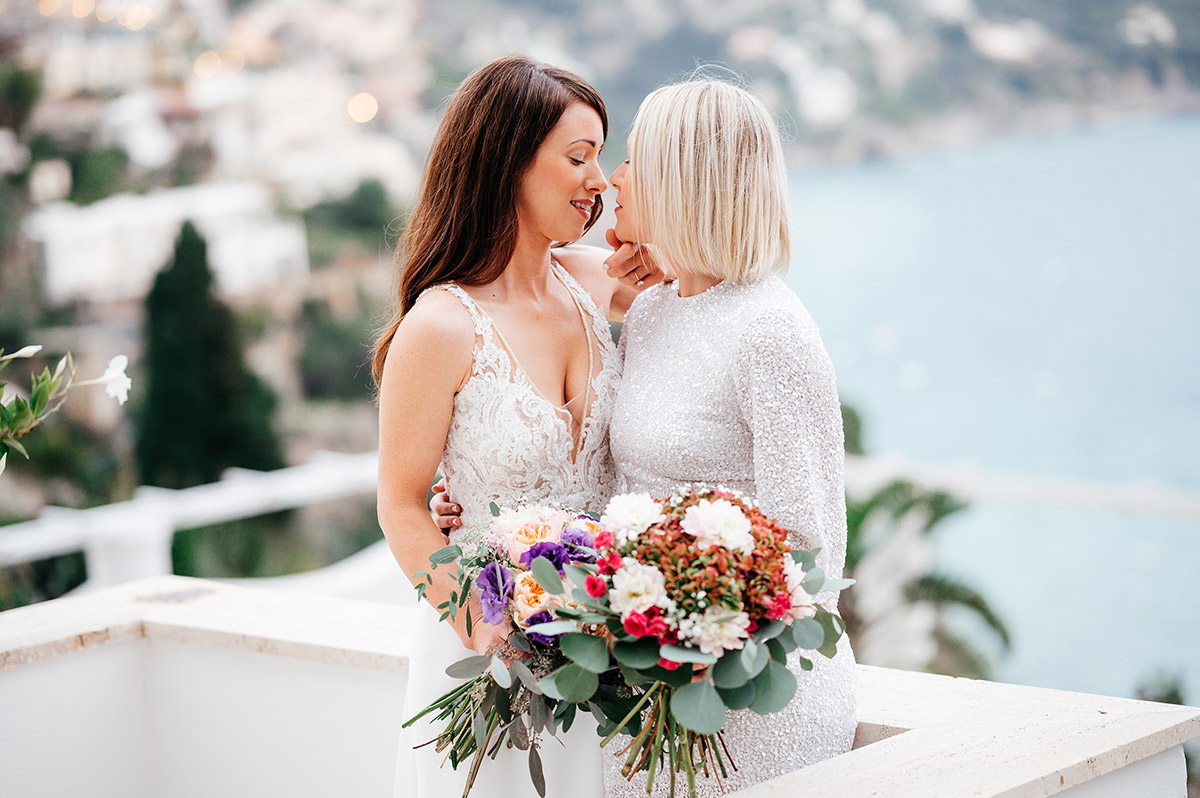
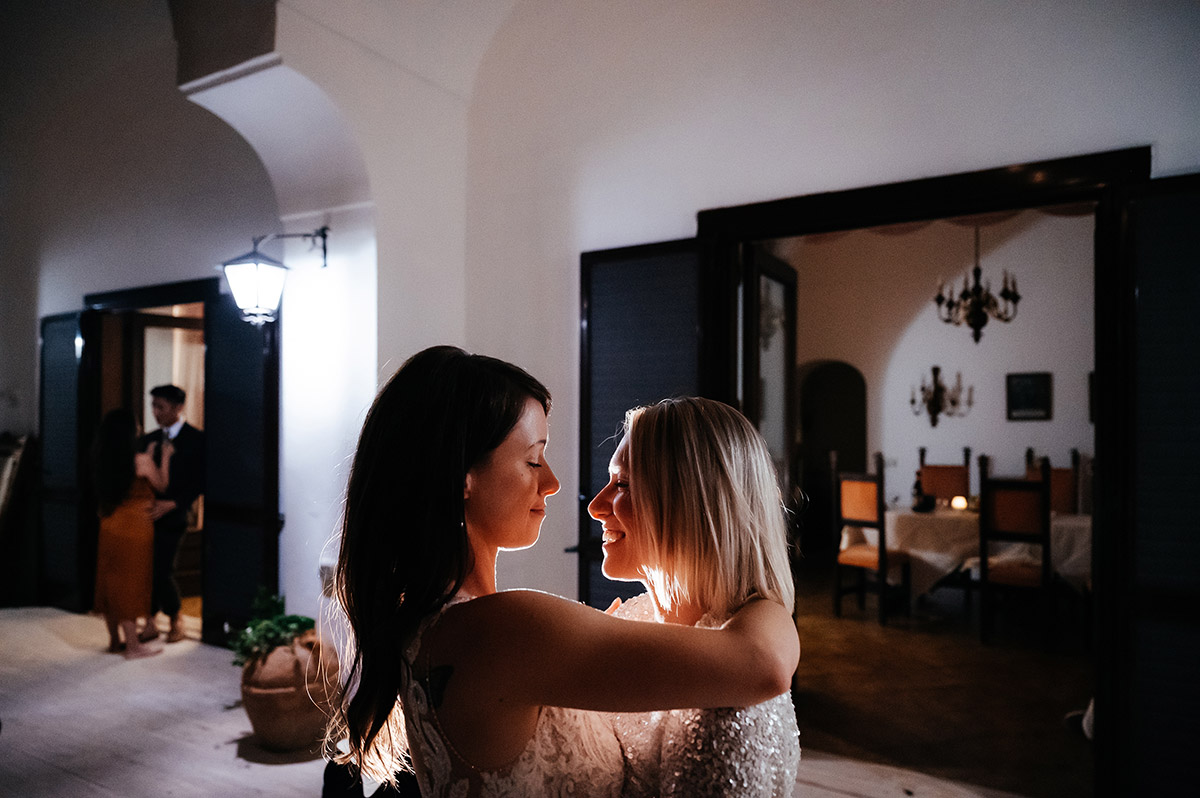
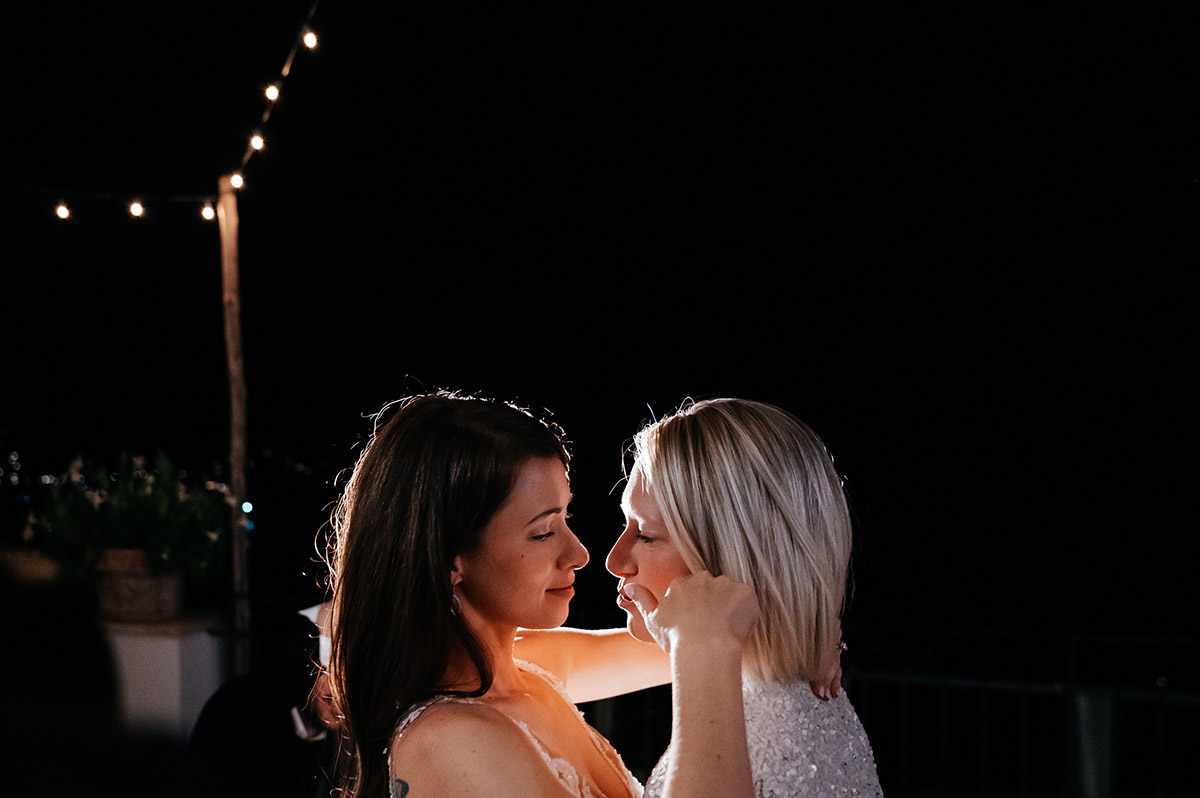
I photograph what happens between the two of you on the day, without a script and without poses borrowed from a bride-and-groom wedding.
SAME-SEX STORIES
Planning Logistics Specific to Same-Sex Couples
Three questions come up when I plan a wedding with a same-sex couple: what to tell vendors, which documents you need, and whether to hire a planner. The answers are short, and the third depends on the first two.
Communicating Your Situation to Vendors
You don’t need to explain or justify anything to vendors on the Amalfi Coast. Coordination goes through a planner or through me, and vendors get the same information they get for any wedding: names, number of guests, how the ceremony runs and how you get ready. If a vendor ever shows an attitude that would make you uncomfortable, you will hear about it before you book anything, not after.

Documentation and Announcements
If you want a civil union in Italy rather than a symbolic ceremony, you need three documents besides a valid passport. The Nulla Osta (the Dichiarazione Giurata) is signed in front of an American consular officer in Italy, and for the Amalfi Coast the closest office is the US Consulate in Naples. The Prefettura then legalizes it, and the only cost is a 16 euro marca da bollo you buy at any tobacco shop. The Atto Notorio is an Italian sworn statement that nothing prevents your union, and for same-sex couples it may require specific wording. You make it with two witnesses at an Italian consulate in the US before you fly, or at a court in Italy. Between your first appointment at the Comune and the ceremony there are at least 30 days. For the legal ceremony on Italian soil I would hire a planner who has already done this paperwork for same-sex couples. A symbolic ceremony needs no documents at all, because the officiant is not a civil registrar.
The Planner Question
In my view a same-sex couple gets more out of a local planner than a straight couple does, because the planner talks to every vendor for you and stops any friction before it reaches your inbox. My Positano planner page and Positano wedding photographer page have the contacts for the coordination side.
When the Season Works in Your Favor
September is the month I would pick here: strong light, the warmest sea of the year, and a real advantage if any part of your celebration happens on the water. May, June and October come close, with emptier beaches and steady weather. July and August still work, but in those two months an early start, around 7 AM for portraits in Positano, stops being a preference and becomes the only way to avoid the crowds. None of this changes with who is marrying whom. My September guide covers the rest of the season.
Does It Cost More If You’re Same-Sex?
A same-sex wedding on the Amalfi Coast costs exactly what any other wedding costs here, with no LGBTQ+ surcharge and no discount. The price depends on the venue, the number of guests, the vendors you hire and how many hours of coverage you book. A symbolic elopement for two on a private terrace in Positano, with a photographer, an officiant and flowers, is priced like any intimate elopement there, and a reception for 30 guests at Hotel Caruso like any other 30-guest event at the hotel. My venue guides break the costs down town by town. For photography, write to me with your date and plans. My price does not change with who you are marrying or with the type of ceremony.



What Same-Sex Couples Ask Me Before They Book
Can we legally marry on the Amalfi Coast as a same-sex couple?
Italy has civil unions for same-sex couples (Law 76/2016), not marriage equality in the same legal sense as the United States. You can register a civil union at an Italian Comune with the same bureaucratic steps as a civil marriage for foreigners: a Nulla Osta sworn at a US Consulate in Italy, an Atto Notorio, two witnesses, Italian-language ceremony. Most American same-sex couples who are already married in the US choose a symbolic ceremony in Italy instead, which has no bureaucratic requirements and complete format freedom. The legal dimension of your union is already handled at home.
Do we need to disclose to vendors that we are a same-sex couple?
It helps to include this in your initial planning communication so vendors know the correct names, getting-ready format, and ceremony structure. There is no requirement to explain or justify anything. If it is easier, your planner or photographer can handle vendor coordination and communicate the practical details without you having to deal with it yourself with every person involved in the day.
Will we feel comfortable in Positano and Ravello?
Within the hospitality and event environment of the Amalfi Coast, consistently yes. These are international destinations with experienced professional communities. In the general public spaces of these towns, the coast is more conservative than a northern European capital but significantly more comfortable than many other parts of southern Italy, in part because the tourist economy normalizes international norms. Most same-sex couples I have worked with on this coast have had no uncomfortable experiences during their stay. That said, visibility in very traditional residential areas can attract attention in a way that the hotel terrace or the private villa will not.

How do you approach posing for two grooms or two brides?
Without a predetermined script based on gender. I watch how you move together naturally, identify the spatial dynamic between you, and build the session around those real patterns. I give movement instructions rather than role assignments. For specific poses you have in mind, I work toward them without imposing a gendered structure on who does what. The result is images that look like you specifically rather than a generic same-sex wedding template.
Can we do a boat ceremony?
Yes. The boat elopement format works identically for same-sex couples: symbolic ceremony on a Gozzo in the open water, officiant on board, the coast visible behind you, photographs throughout. The legal category of the ceremony (symbolic) is the same as for any couple who chooses not to do a civil ceremony on the water. Our boat elopement guide covers the logistics, timing, and mechanics in detail.
Are there photographers on the coast who specialize in same-sex couples?
Several photographers on this coast have shot same-sex weddings. The distinction that matters is not specialization but experience: someone who has actually photographed same-sex ceremonies understands the getting-ready logistics, the posing approach, and the ceremony structure in a way that someone who has not will not. I have been photographing same-sex couples on this coast since 2016, the year civil unions became law in Italy. The portfolio includes several two-groom weddings and elopements, from Hotel Caruso in Ravello to Casa Passalacqua in Positano, two-bride elopements in Positano, and proposal and engagement sessions for LGBTQ+ couples across the coast. The images speak to the approach more than any description I could give here.
OUR POSITANO WEDDING STORIES
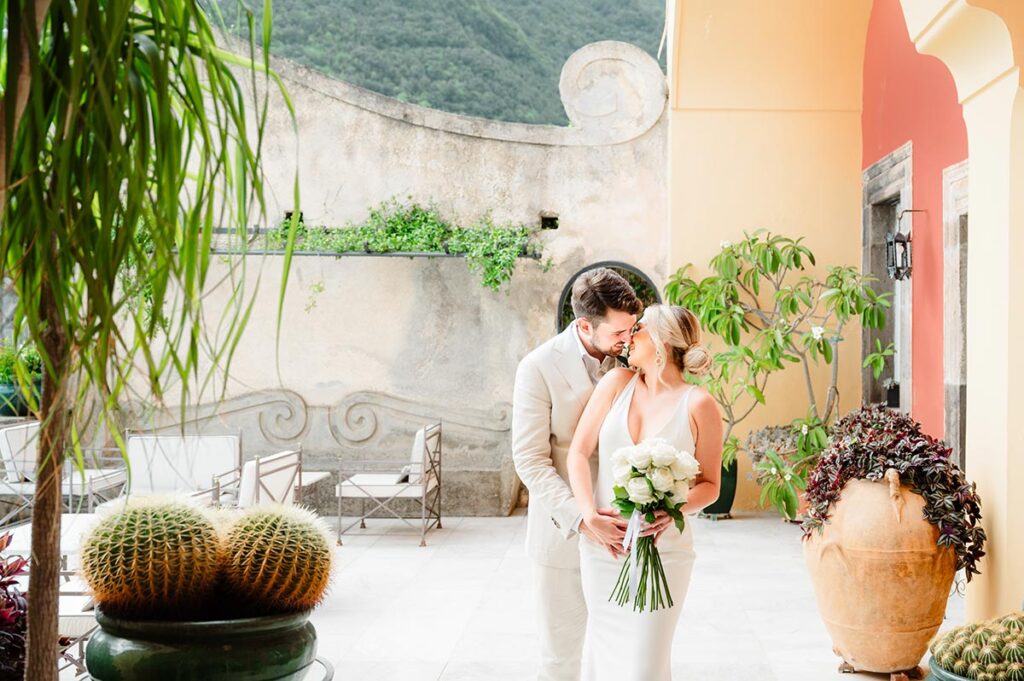
Christian and Michelle in Positano
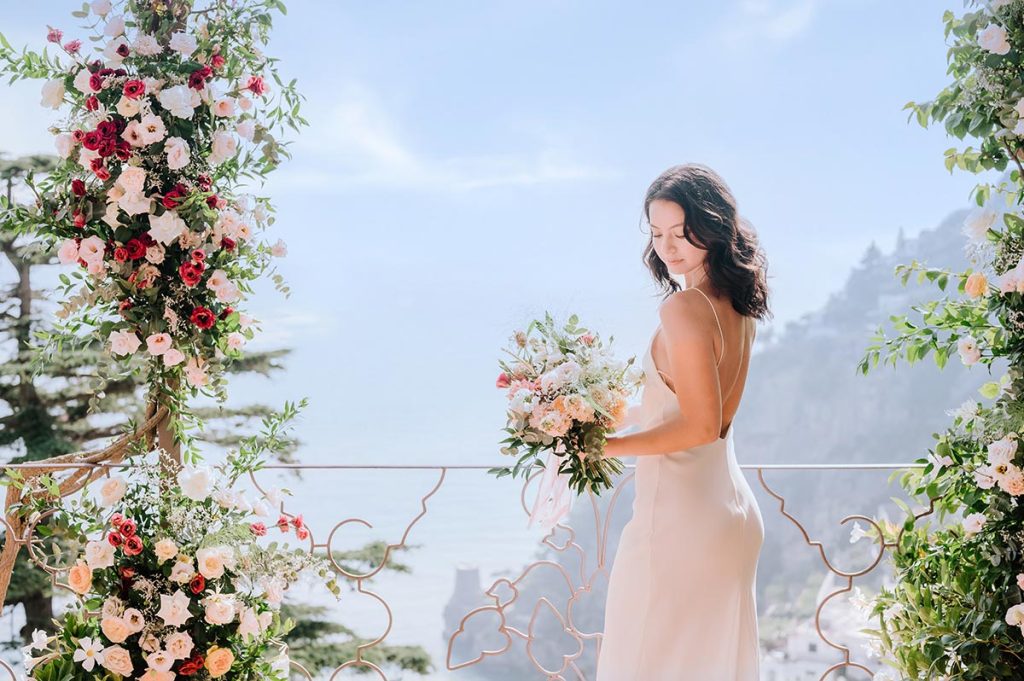
Valentina and Jason – Casa Passalacqua
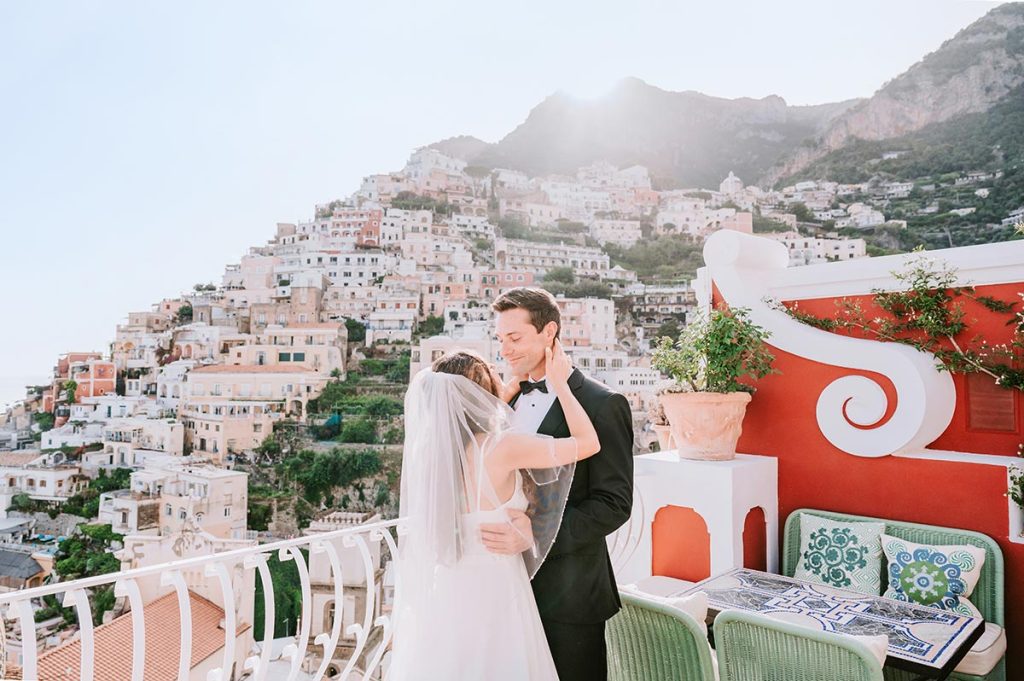
Allison and Adam – Le Sirenuse and Marincanto

Casa Passalacqua micro-wedding Positano – Anna and Jackson
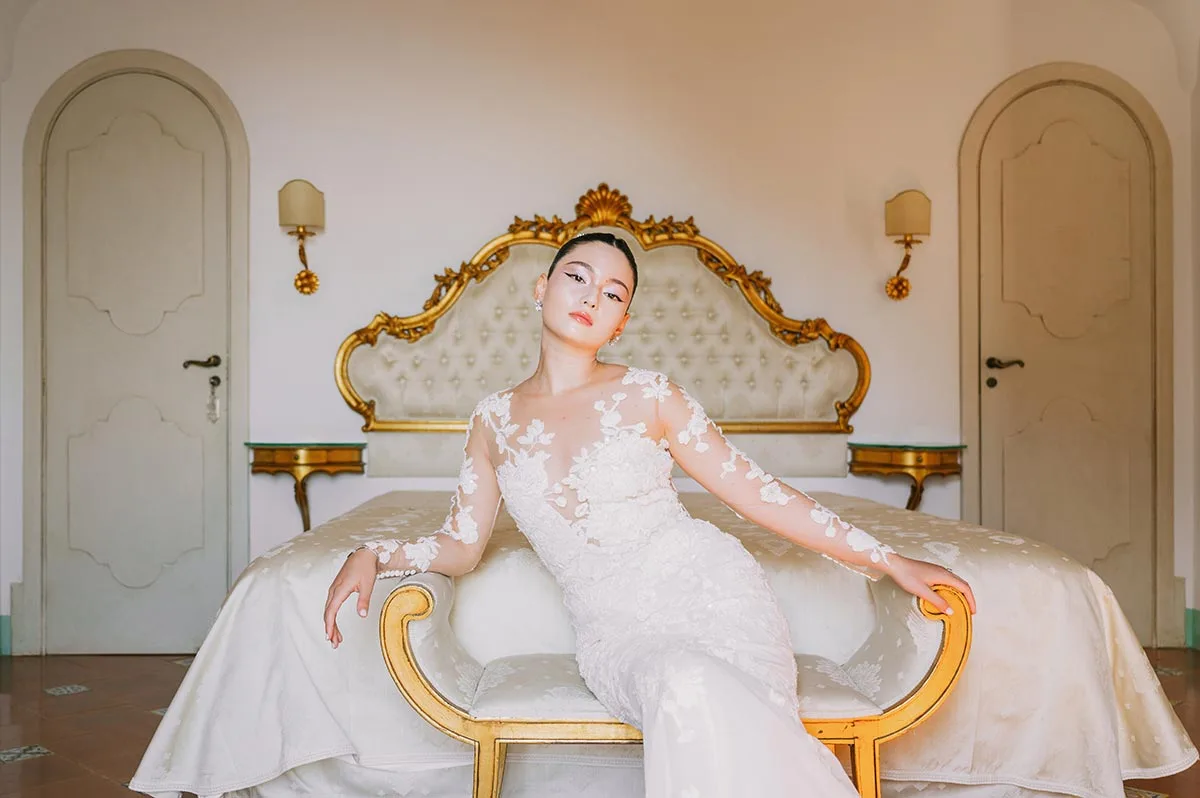
Villa dei Fisici – Rossina and Kim
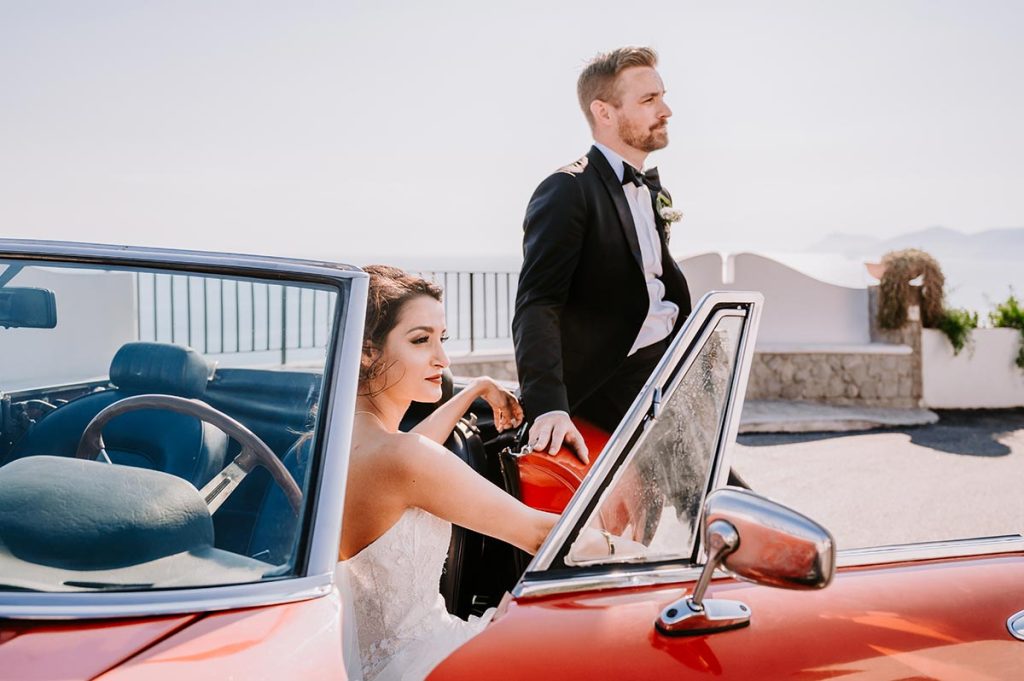
Casa Angelina Elopement – Ray and Dan
EMILIANO RUSSO
 Written By Emiliano Russo