Intimate wedding at sant’Eustachio ruins in Scala, Amalfi Coast
RAVELLO STORIES
A wedding at sant’Eustachio ruins is a journey from Ravello to Scala in Amalfi Coast for those who deeply love discover the Italian culture.
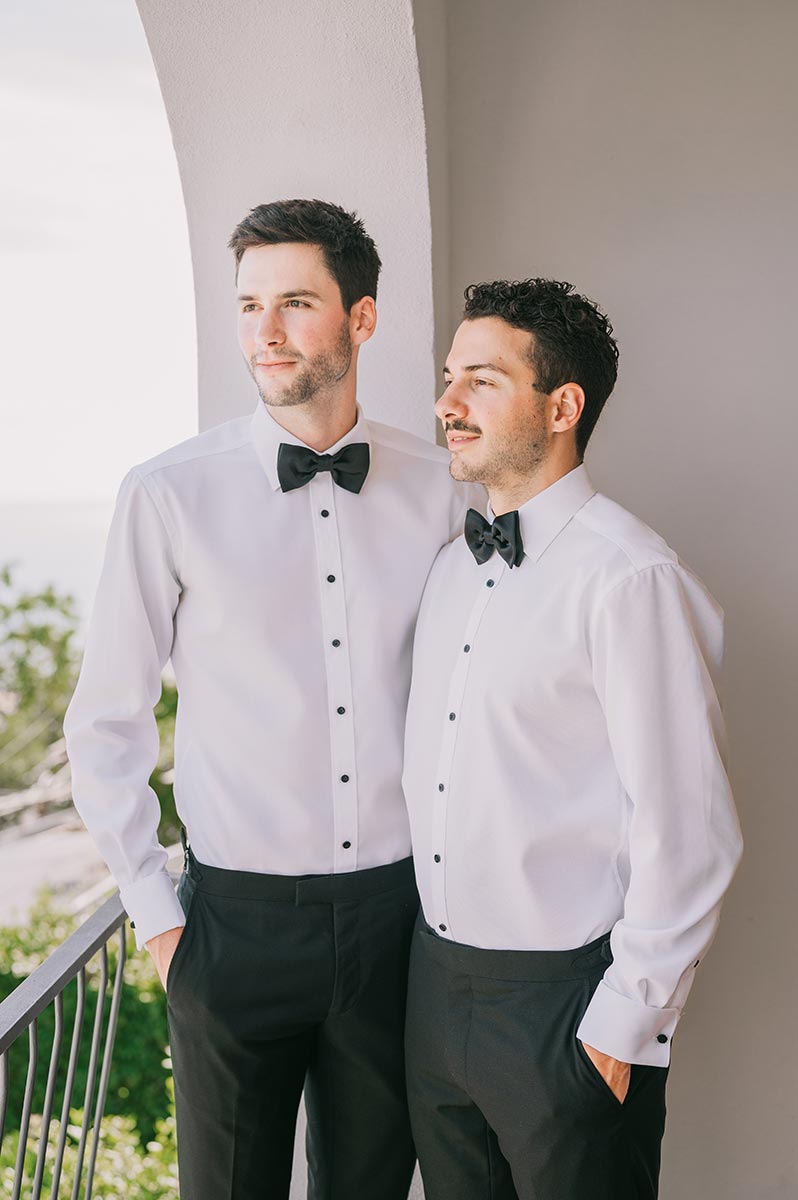
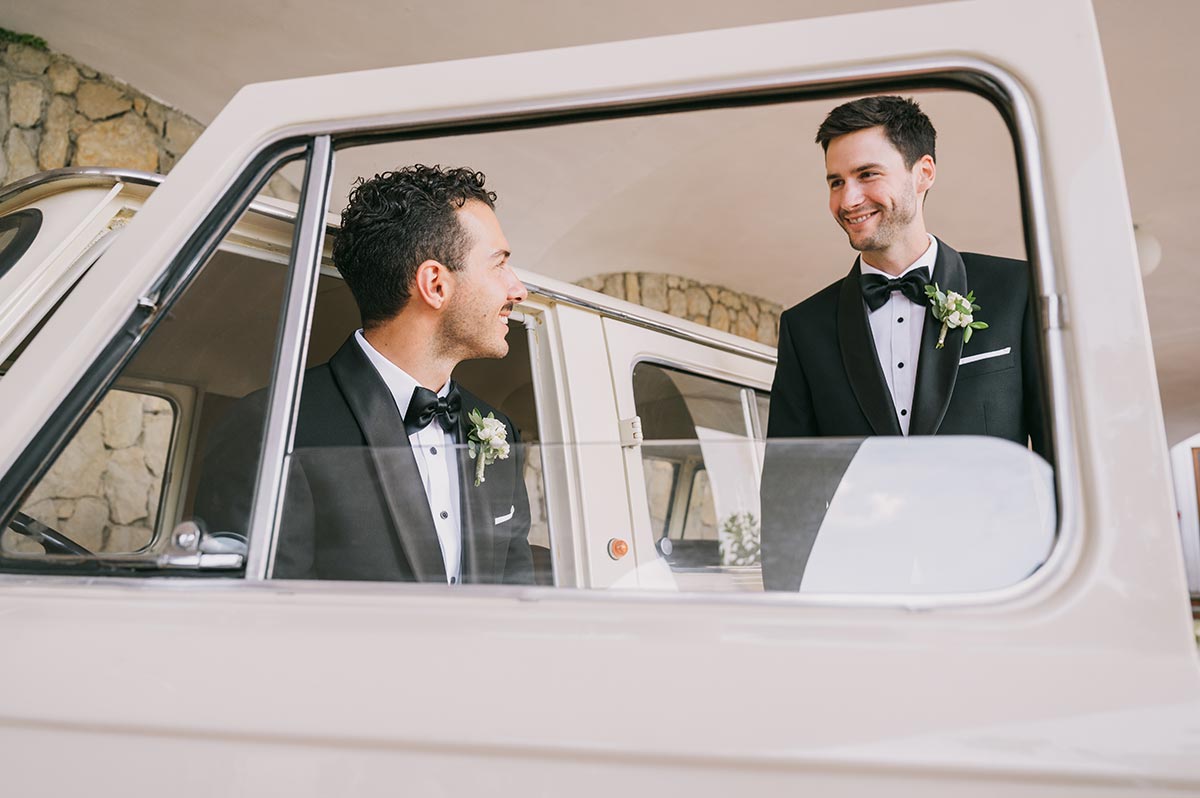
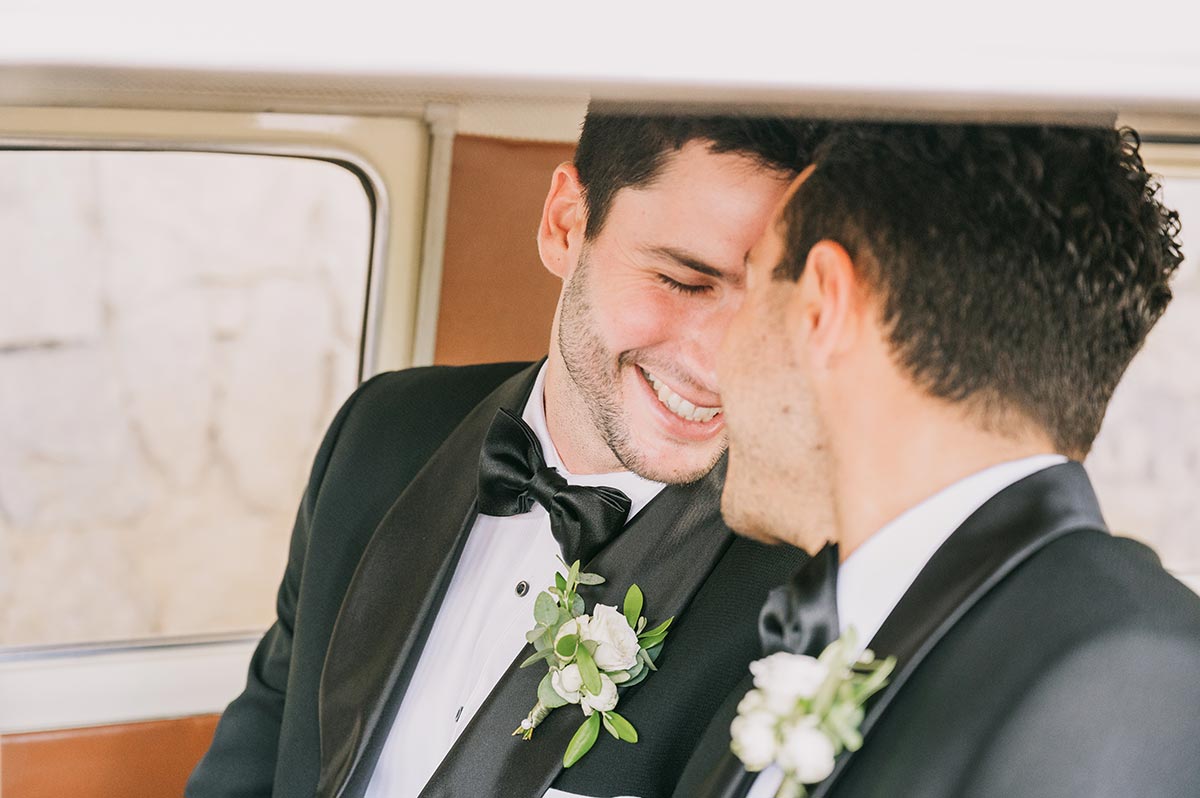
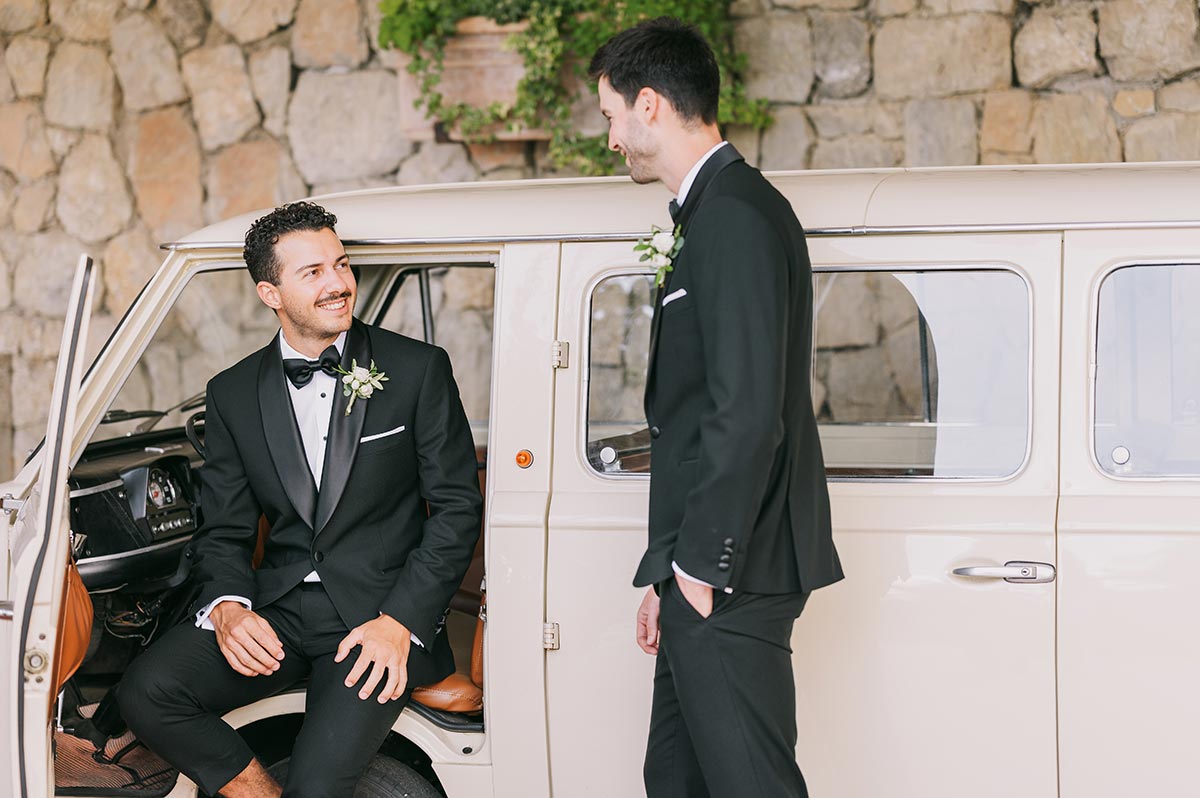
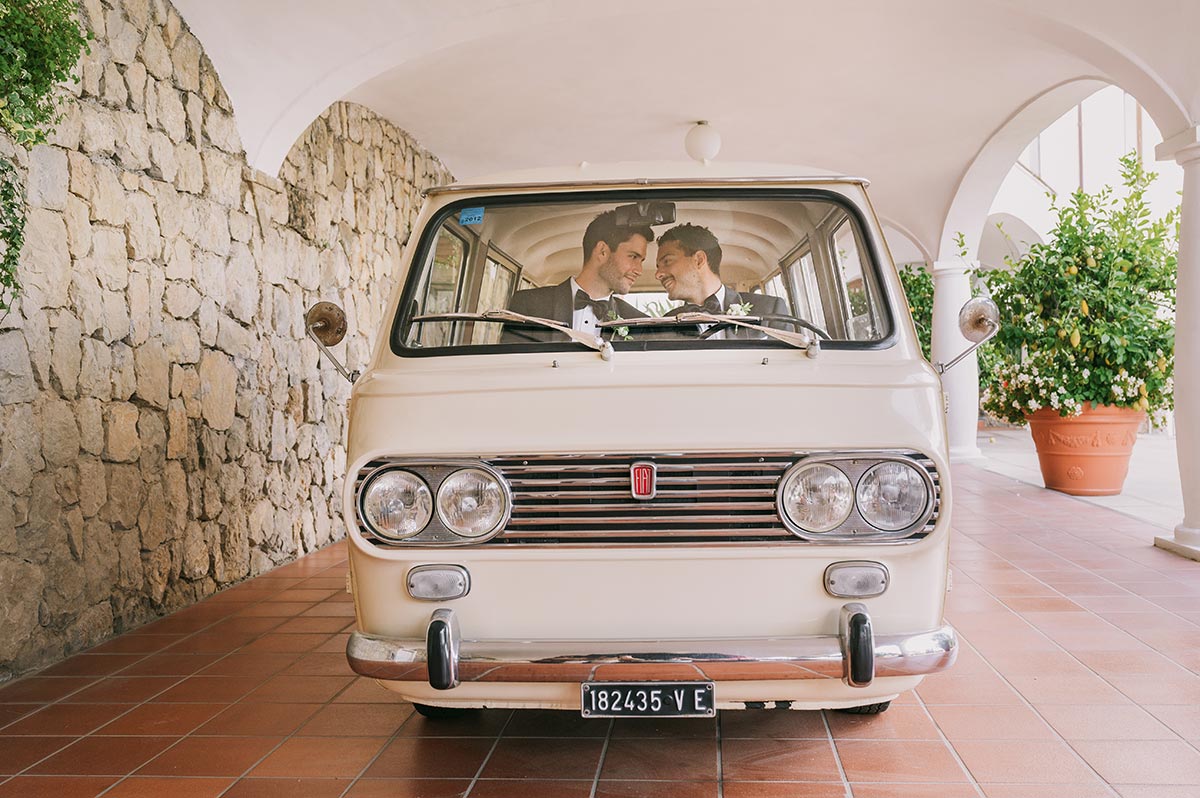
I agree, “Wedding at Sant’Eustachio ruins” is a bit of an understatement. John and Josh’s wedding was more like an authentic journey across the best locations in Ravello and Scala.

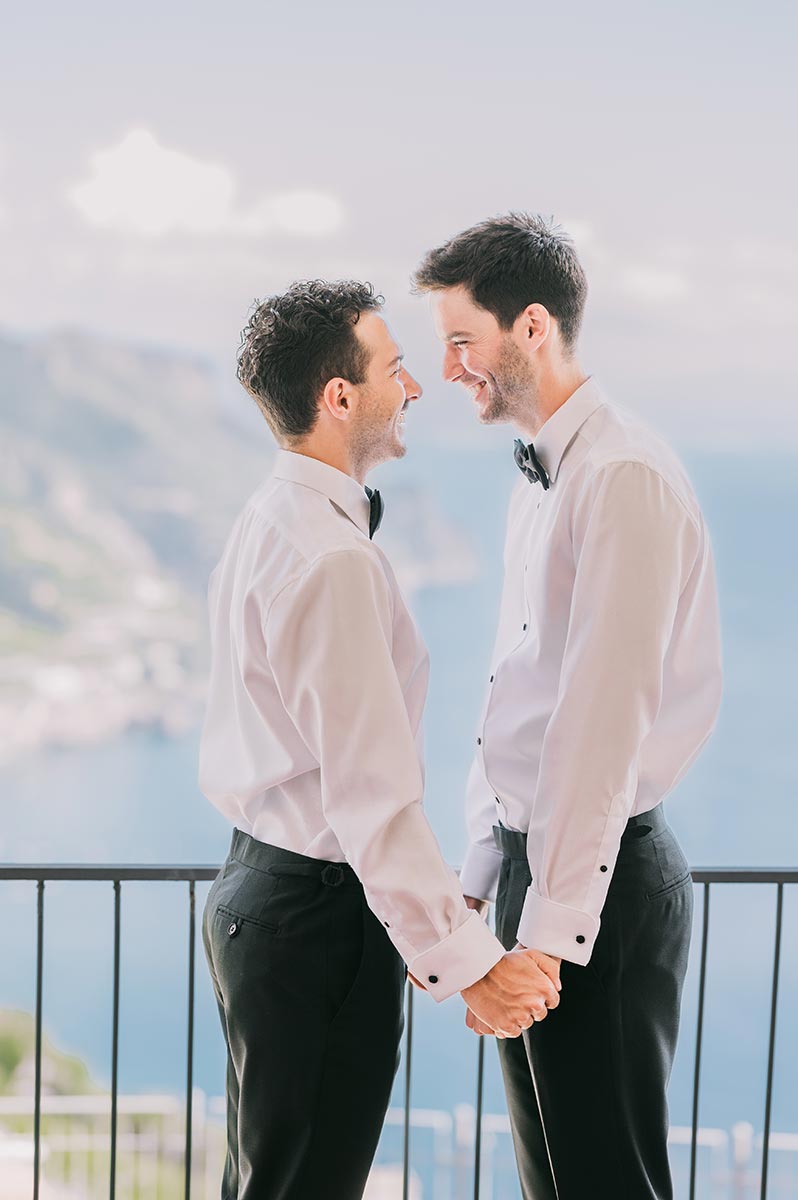
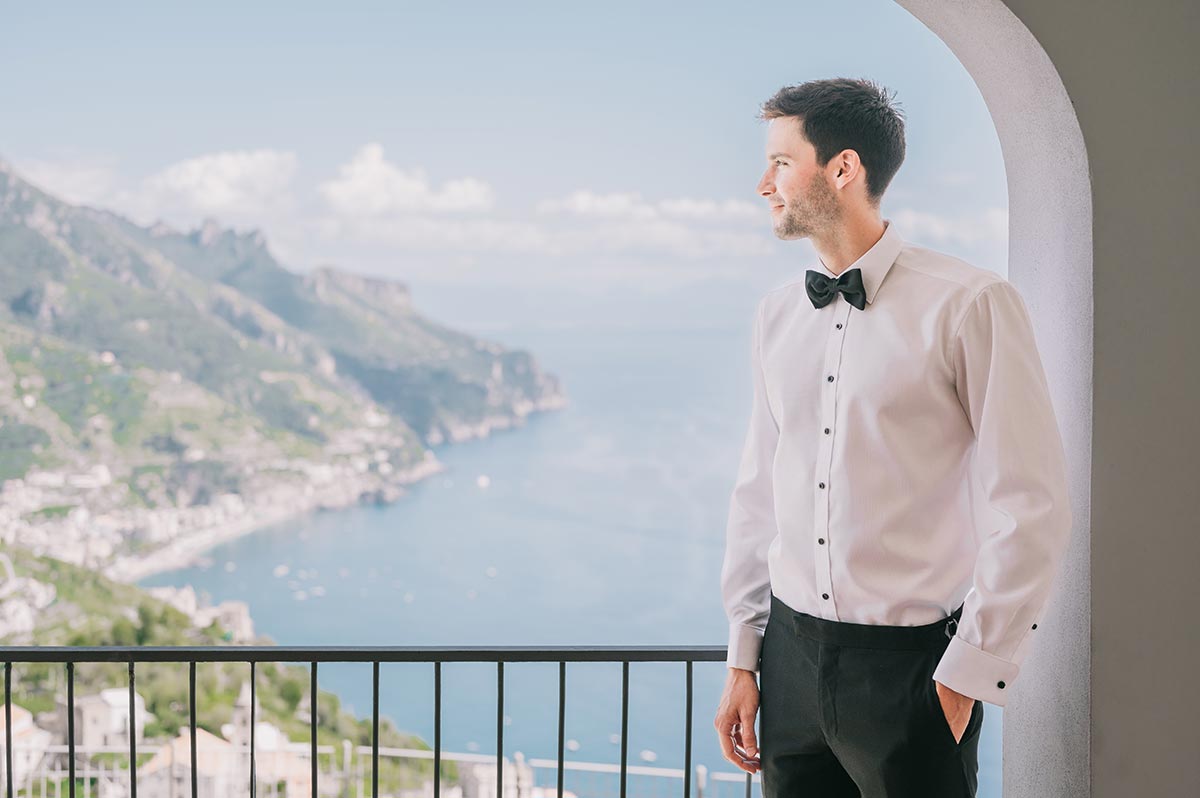

From Palazzo Avino to Sant’Eustachio Ruins: A One-of-a-Kind Wedding Adventure
At the beginning, I was contacted by Josh, who was very interested in my photos and liked my photography style. Before locking in the date, he asked me for advice on making an elopement that was also an opportunity to explore Ravello’s well-known and less-known places.






I must add that John and Josh received special attention and affection from me, not only because Josh has an incredible sense of humor but also because they are Australians. As everyone knows, I love Australia and have a preference for this country which I will undoubtedly return to someday. So, I came up with the idea of involving planner Linda Gatto and The catering Scalaro to organize a true one-day cultural journey within a wedding between just two people.
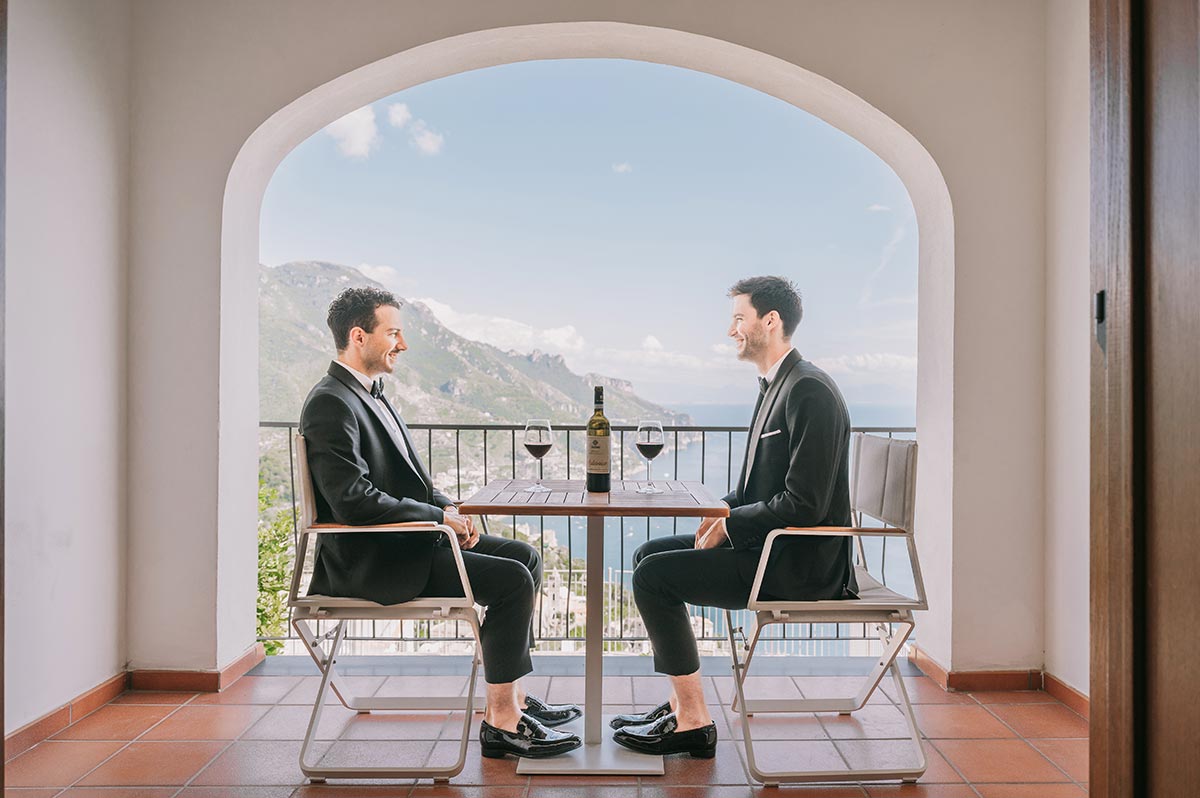
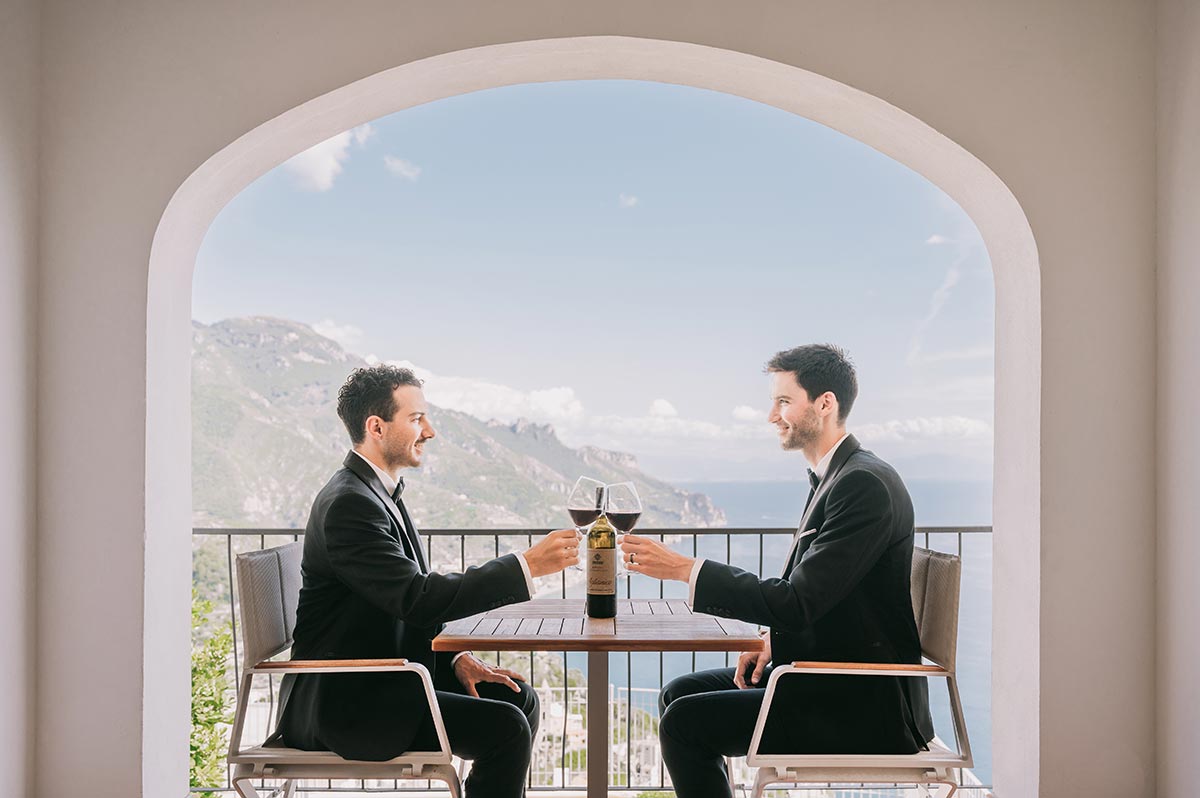
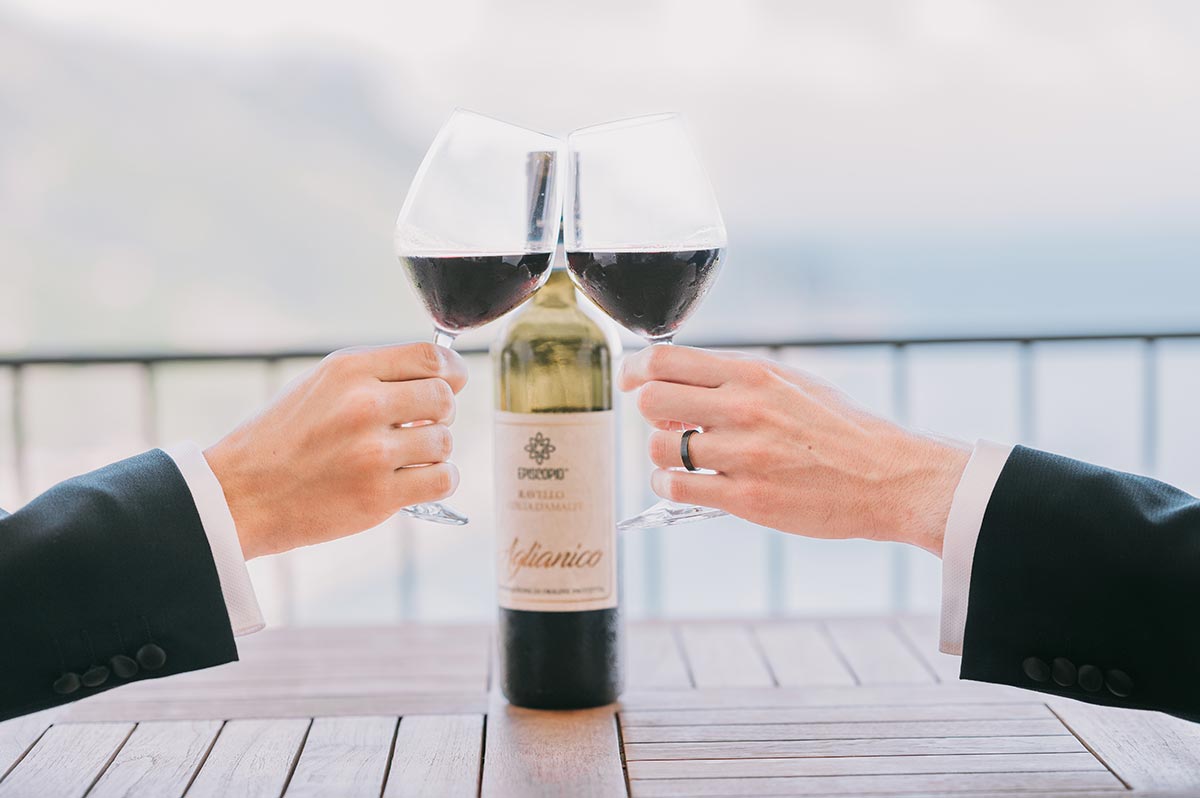



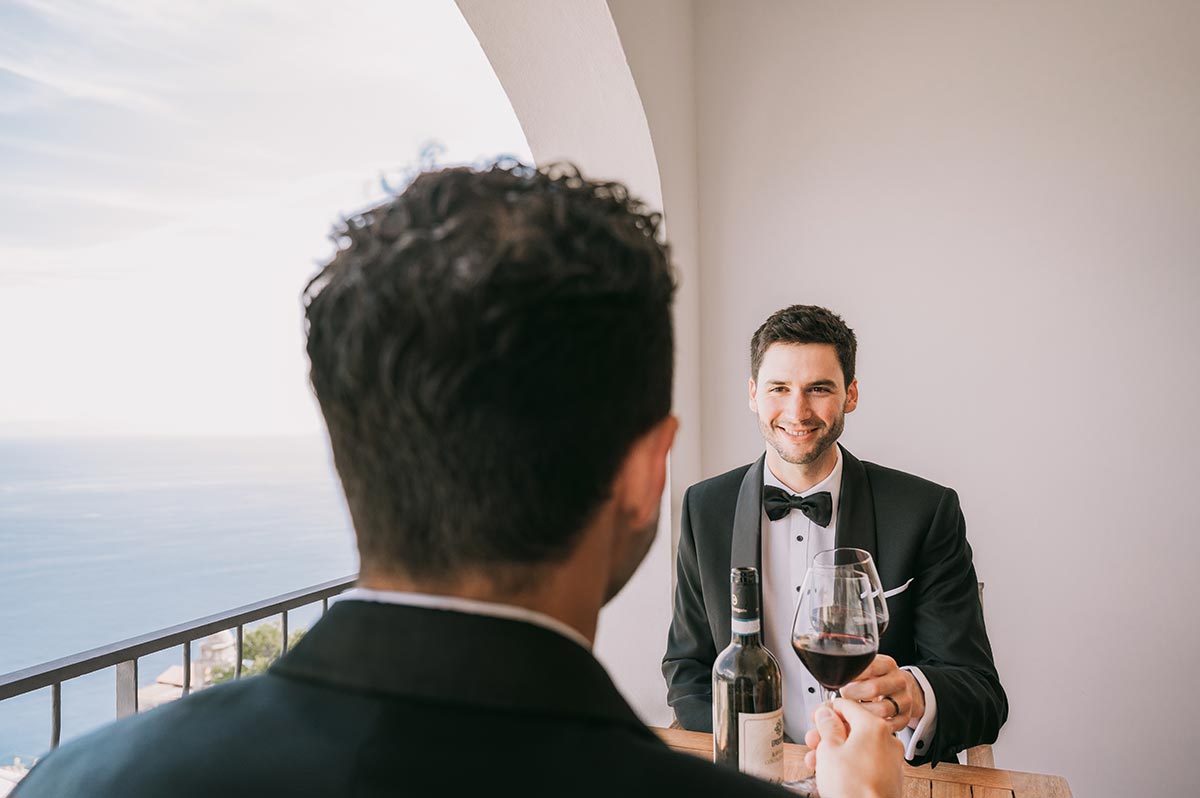
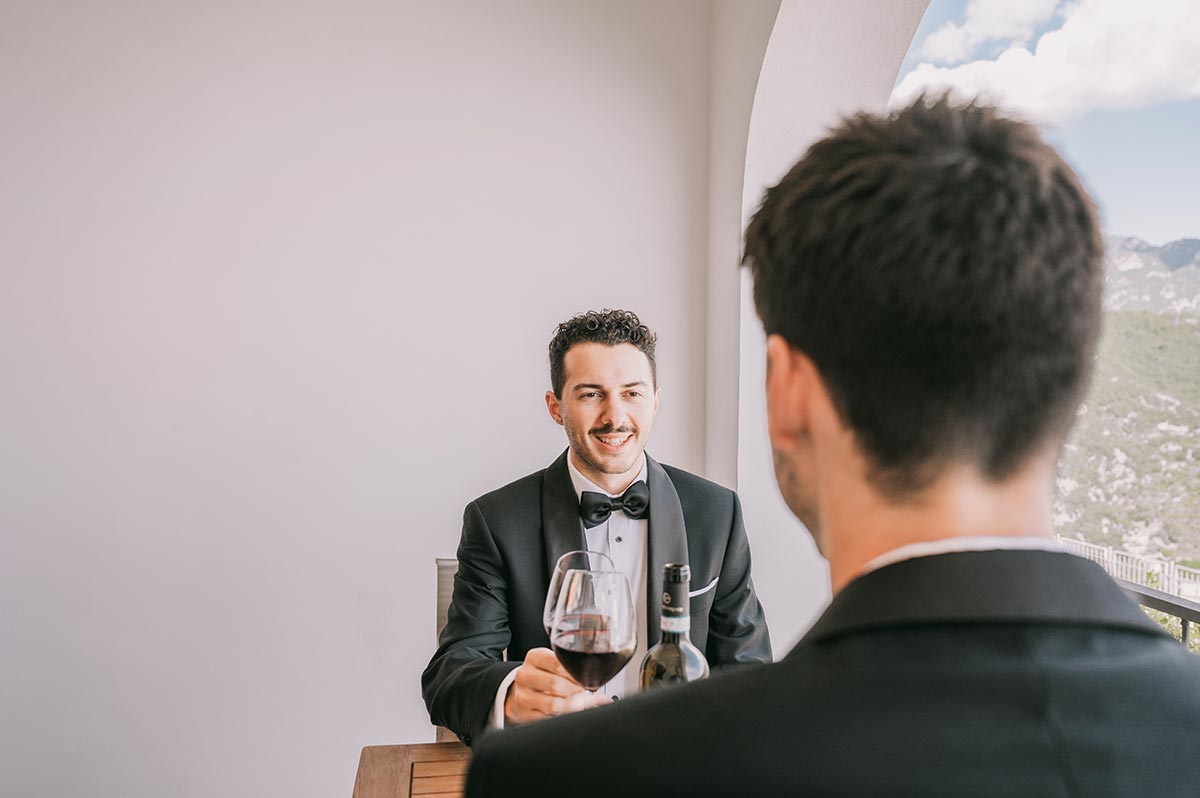
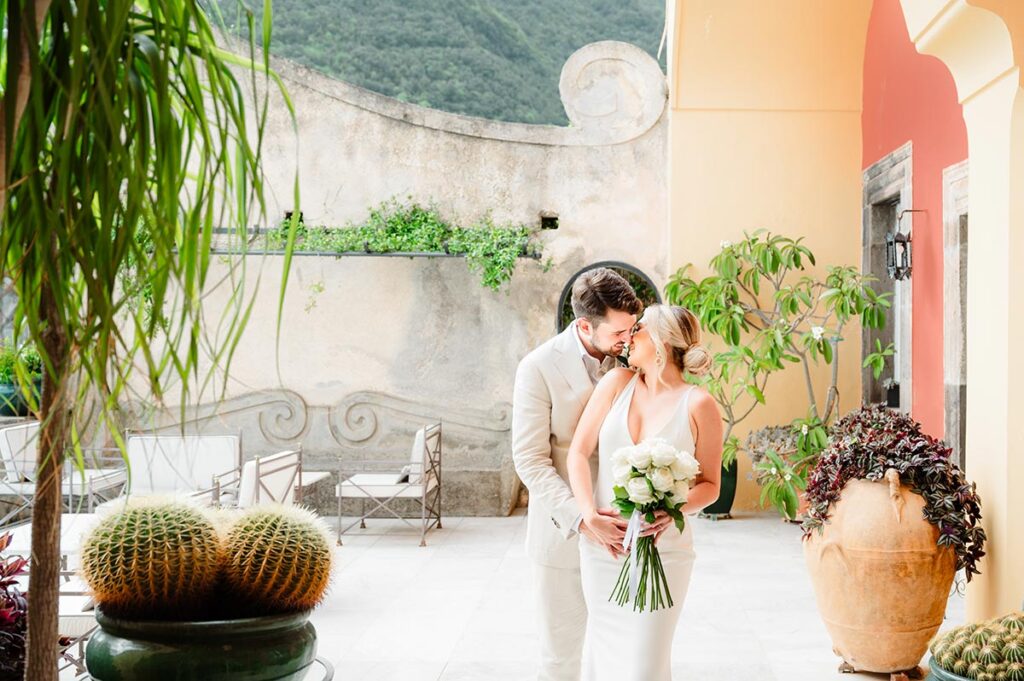
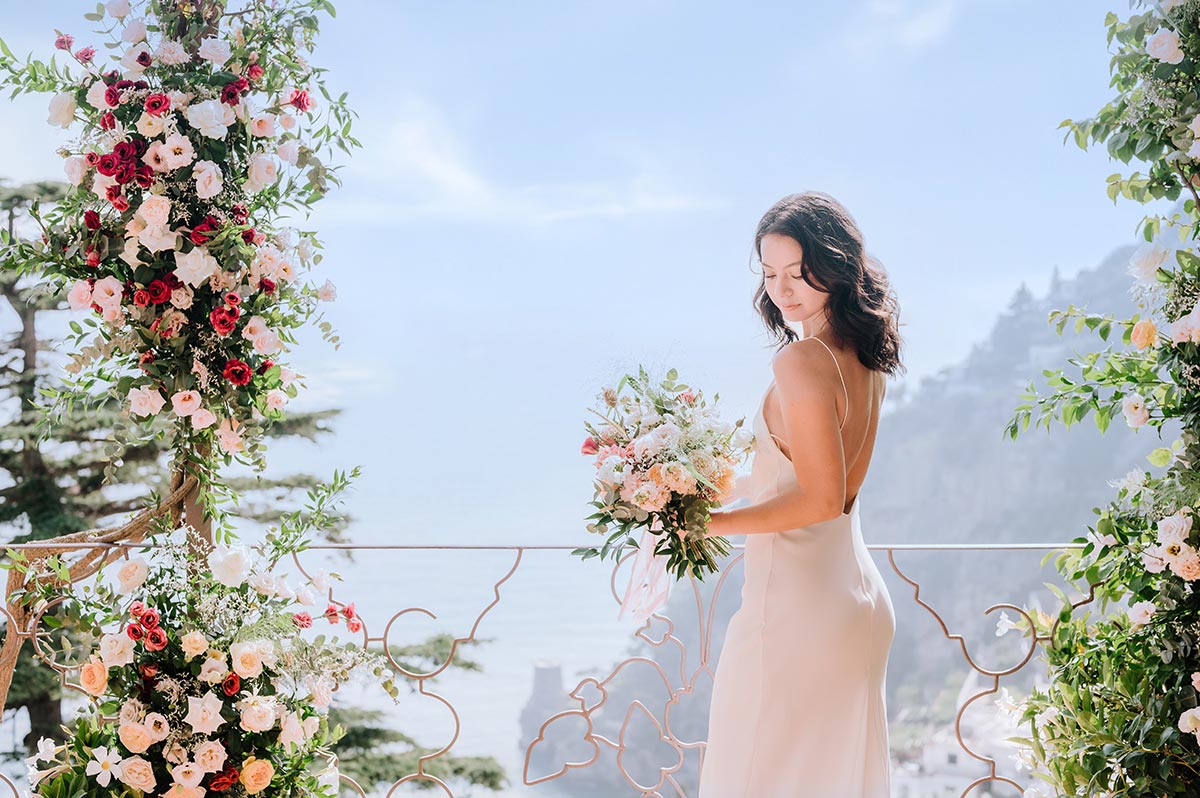
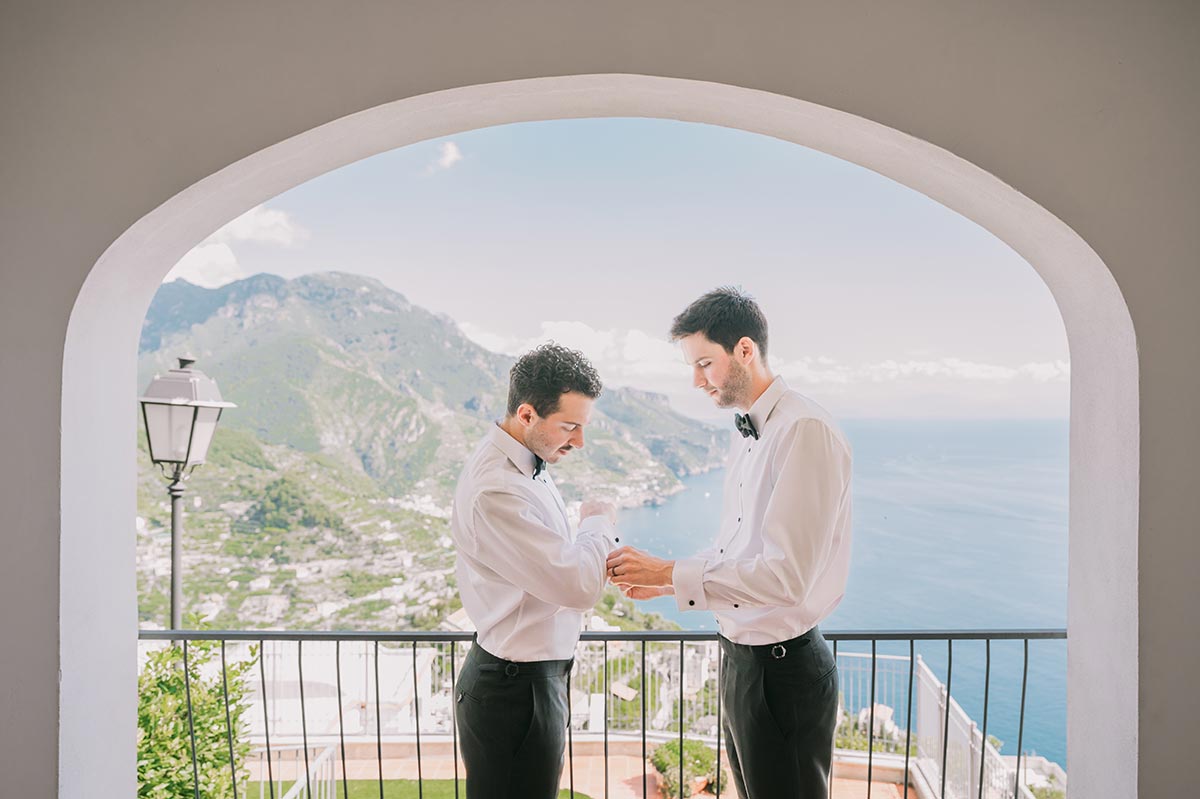
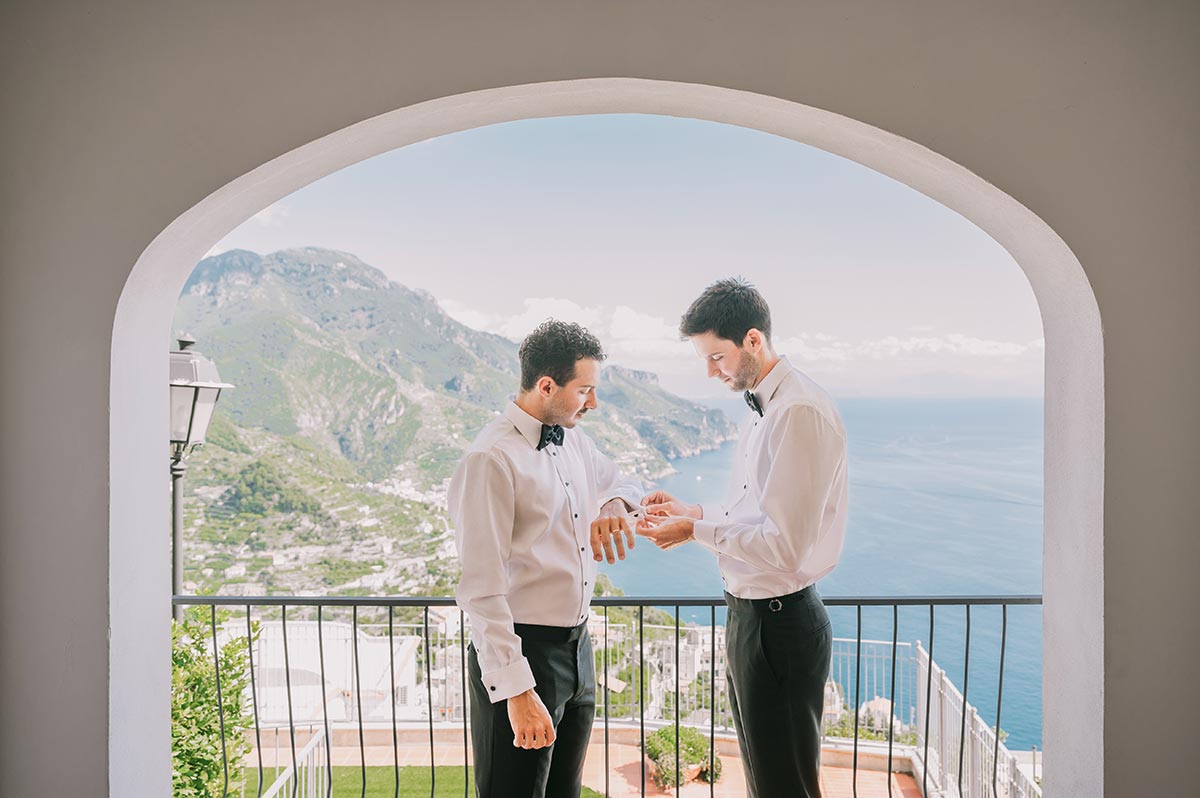
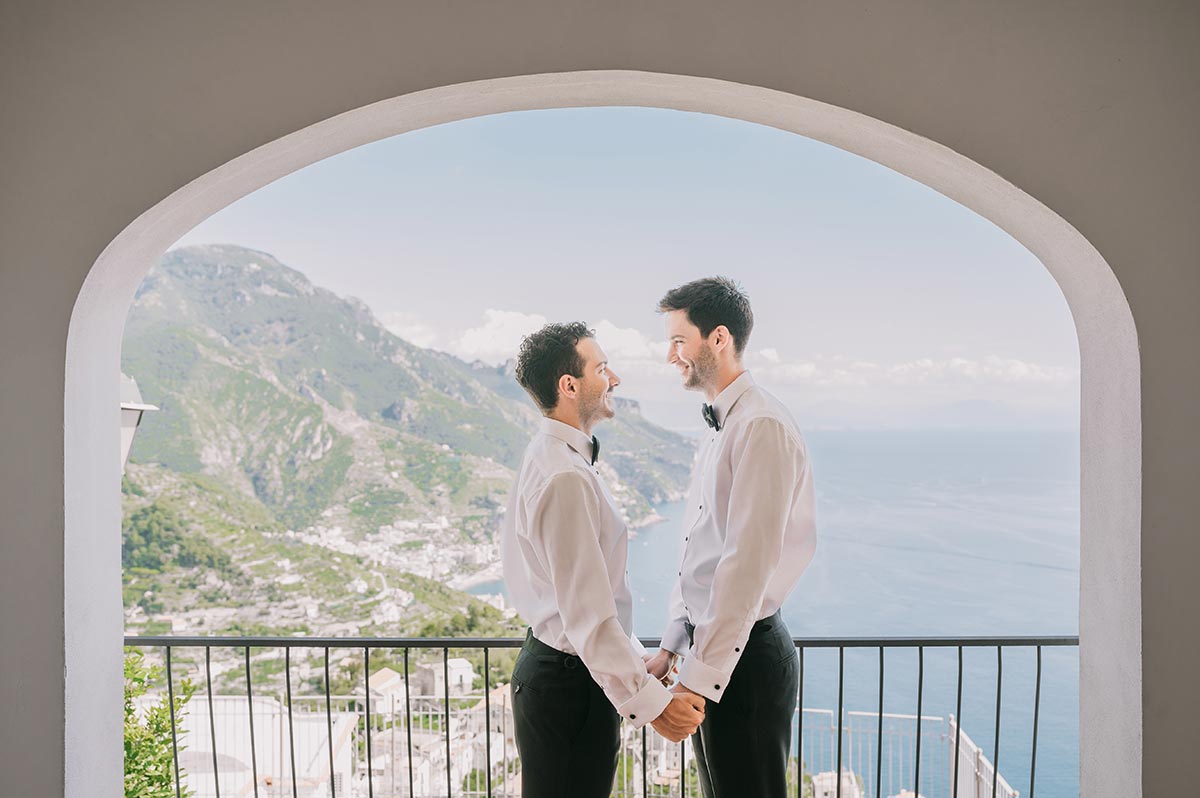
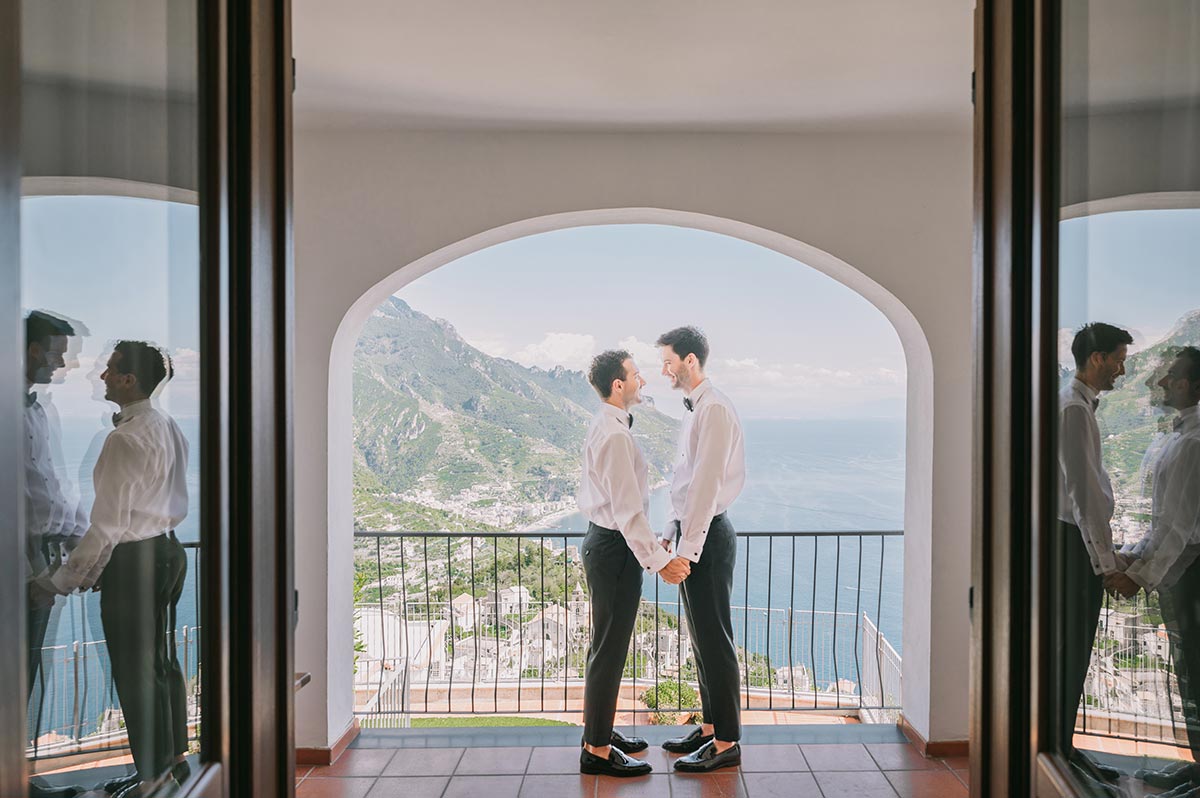
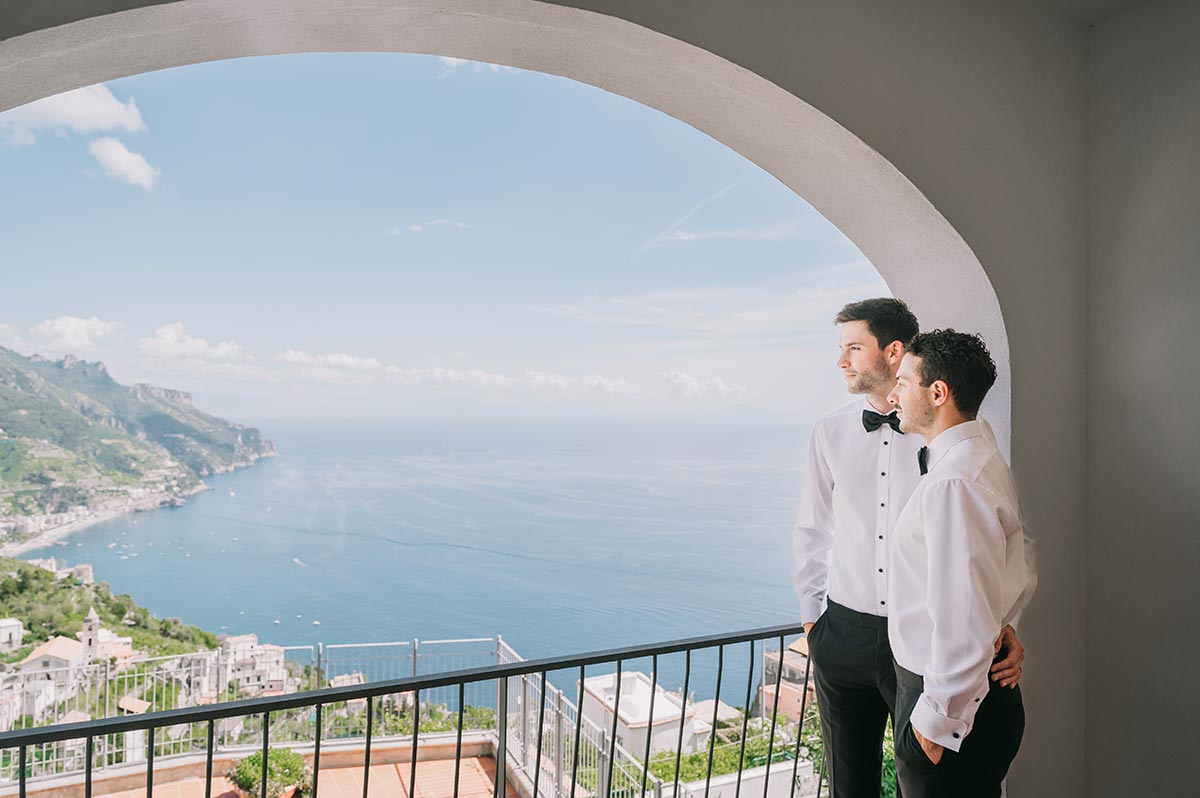
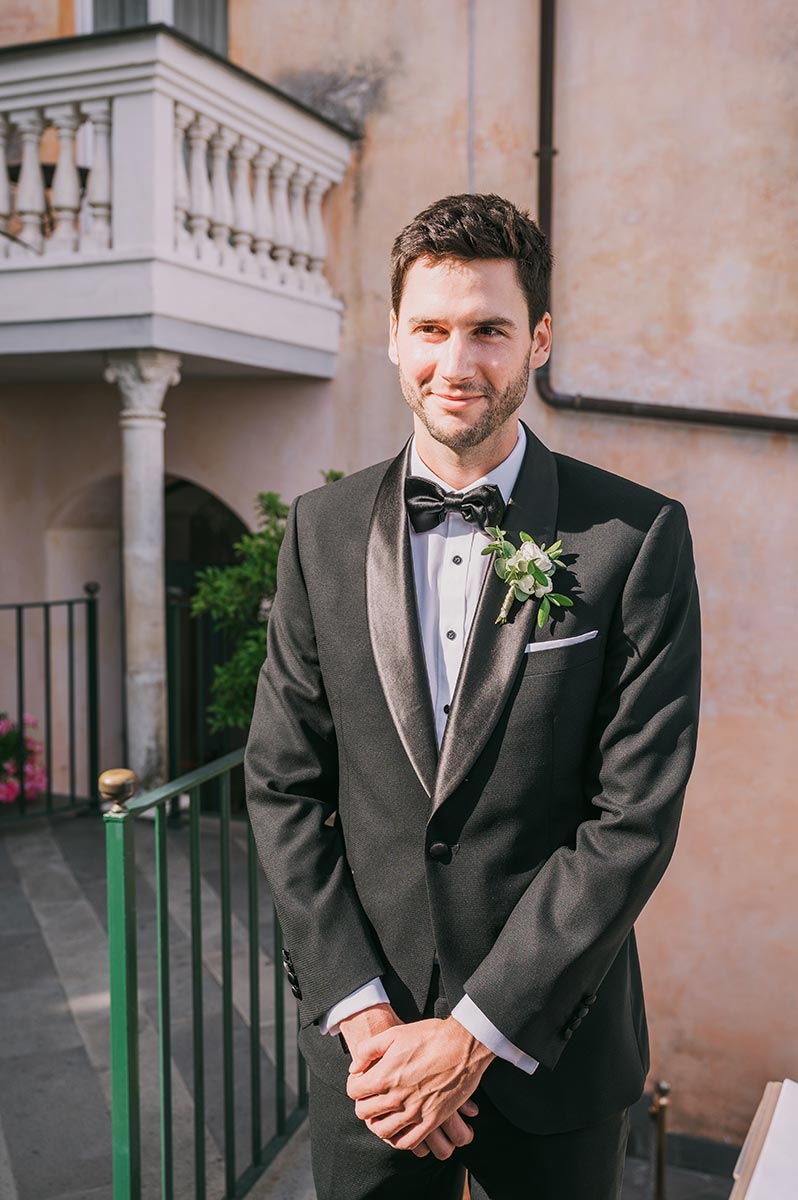
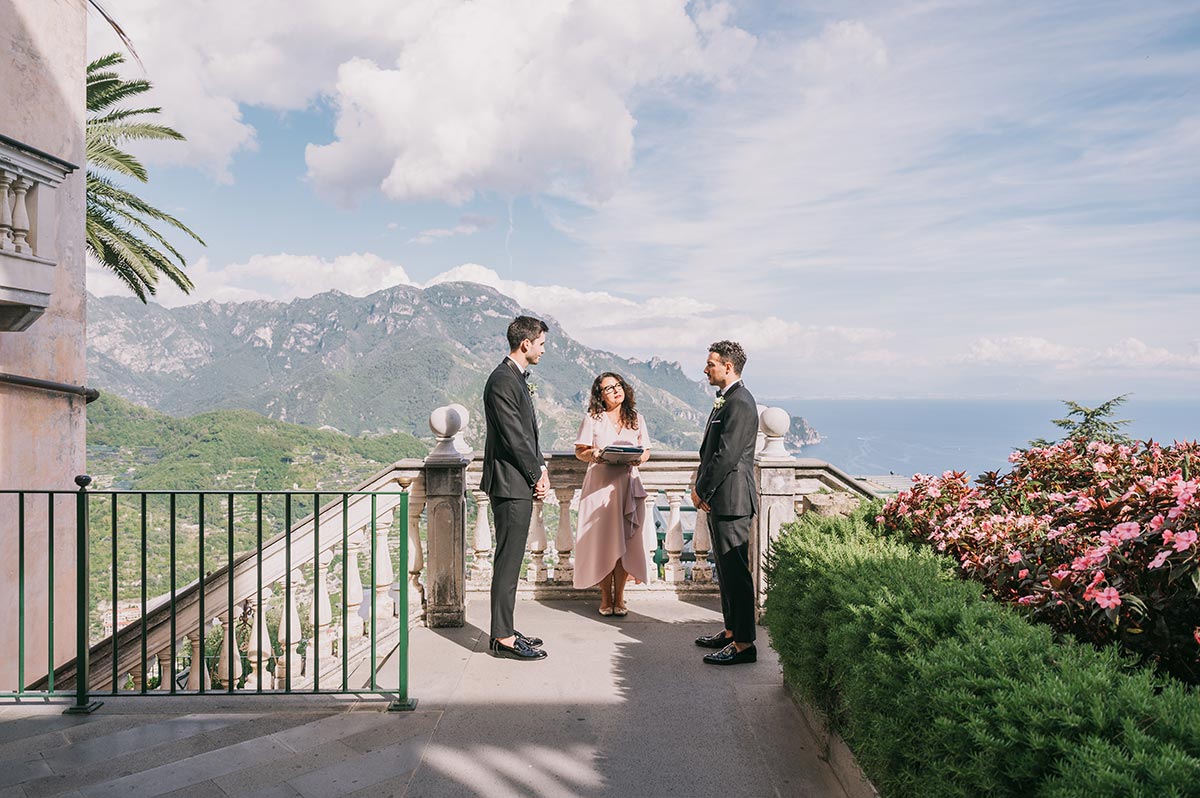
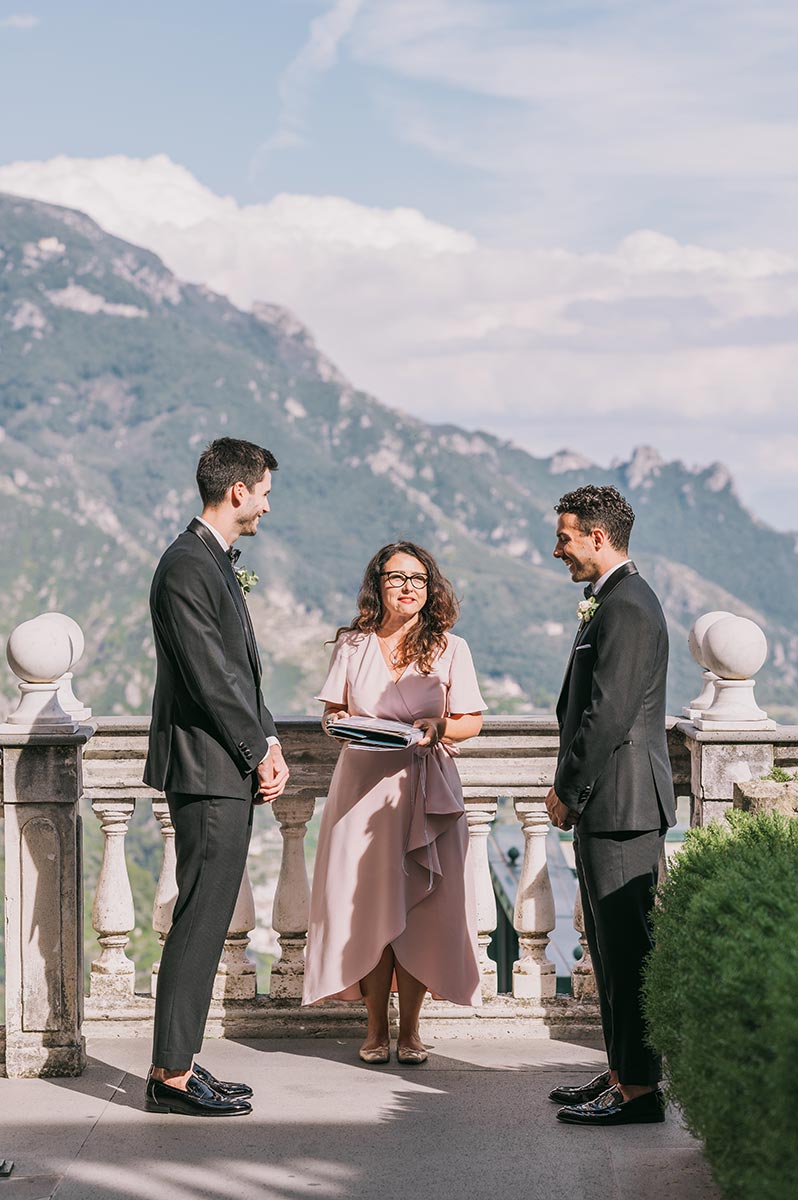
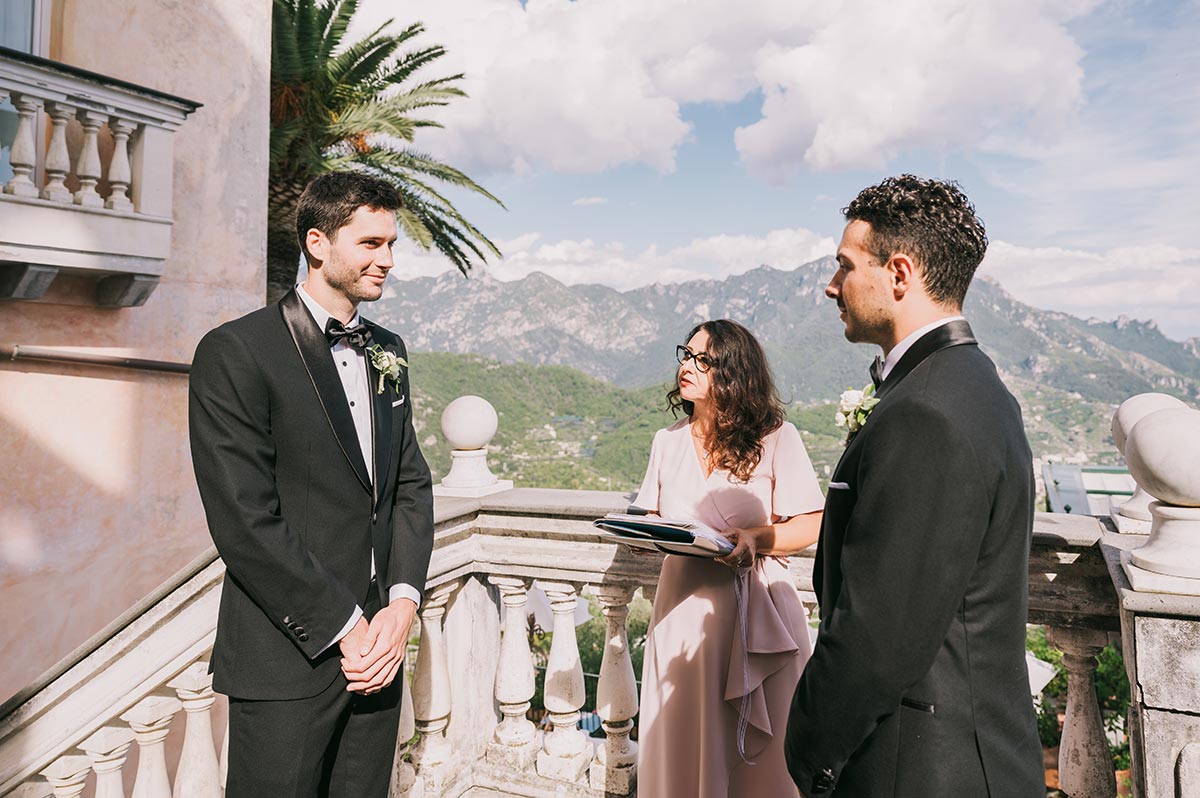
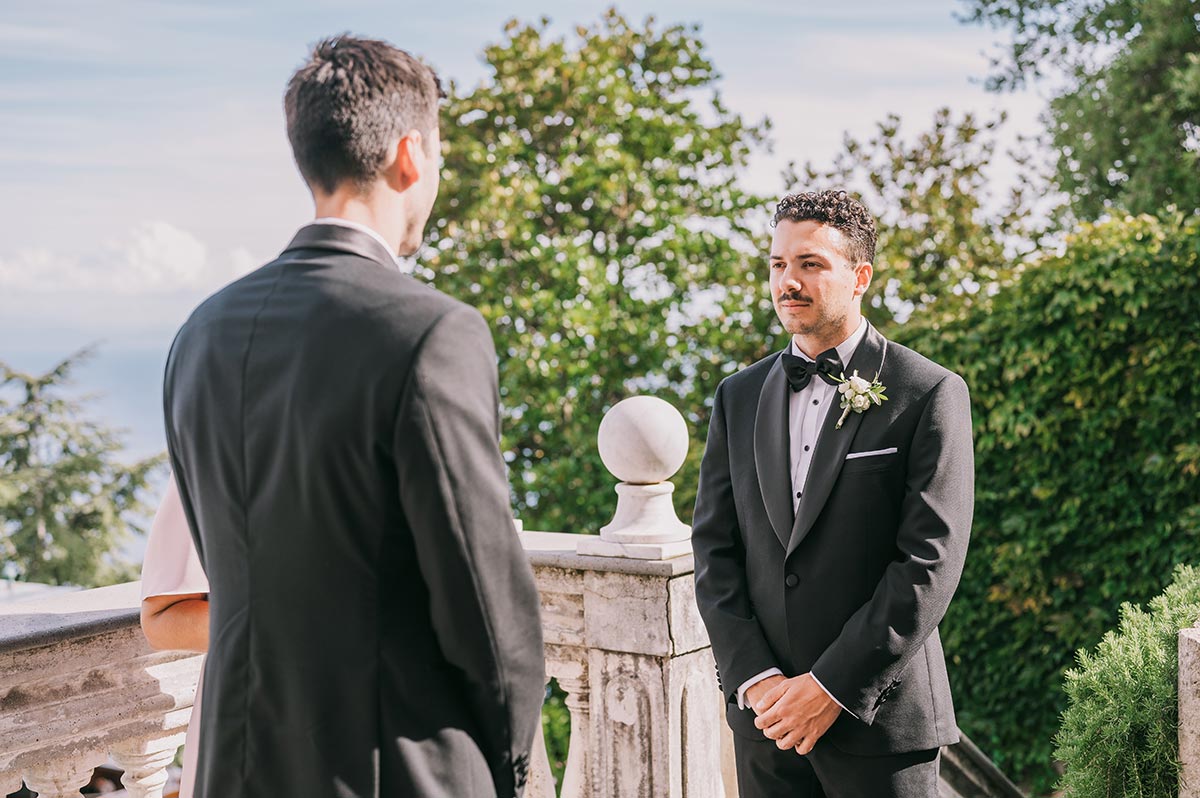
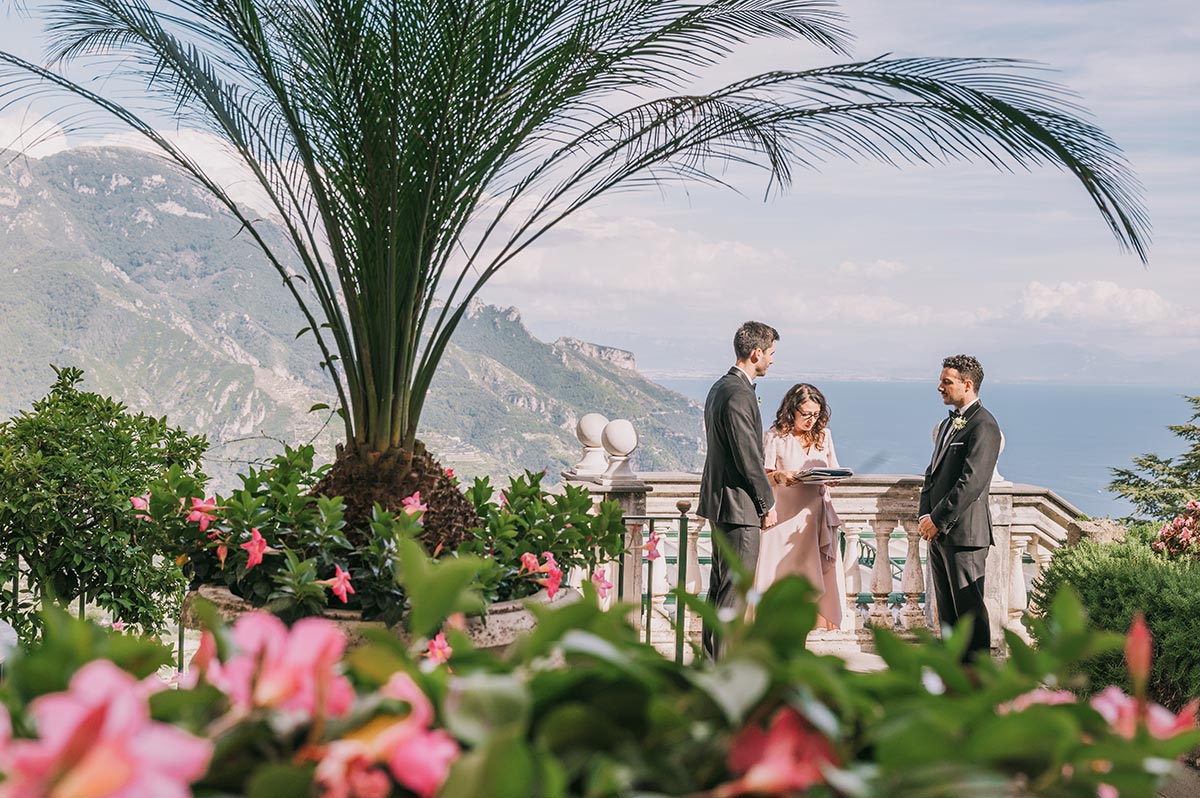
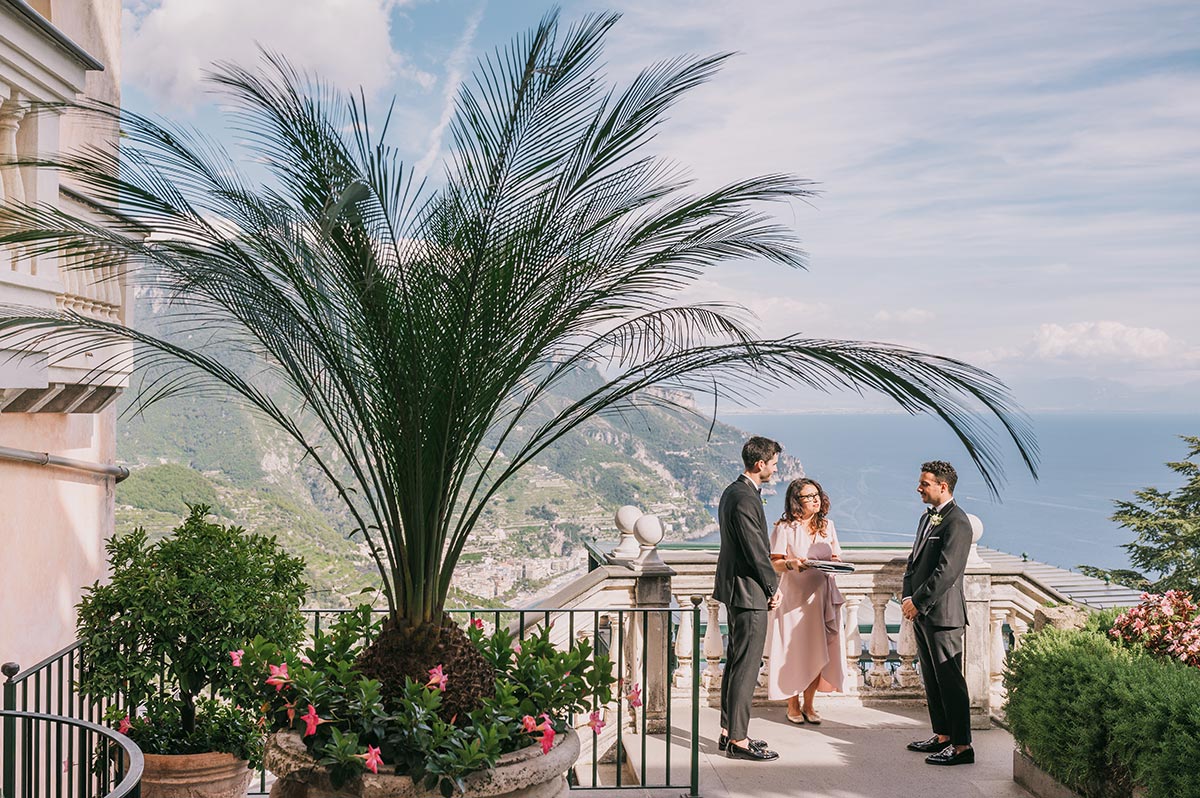
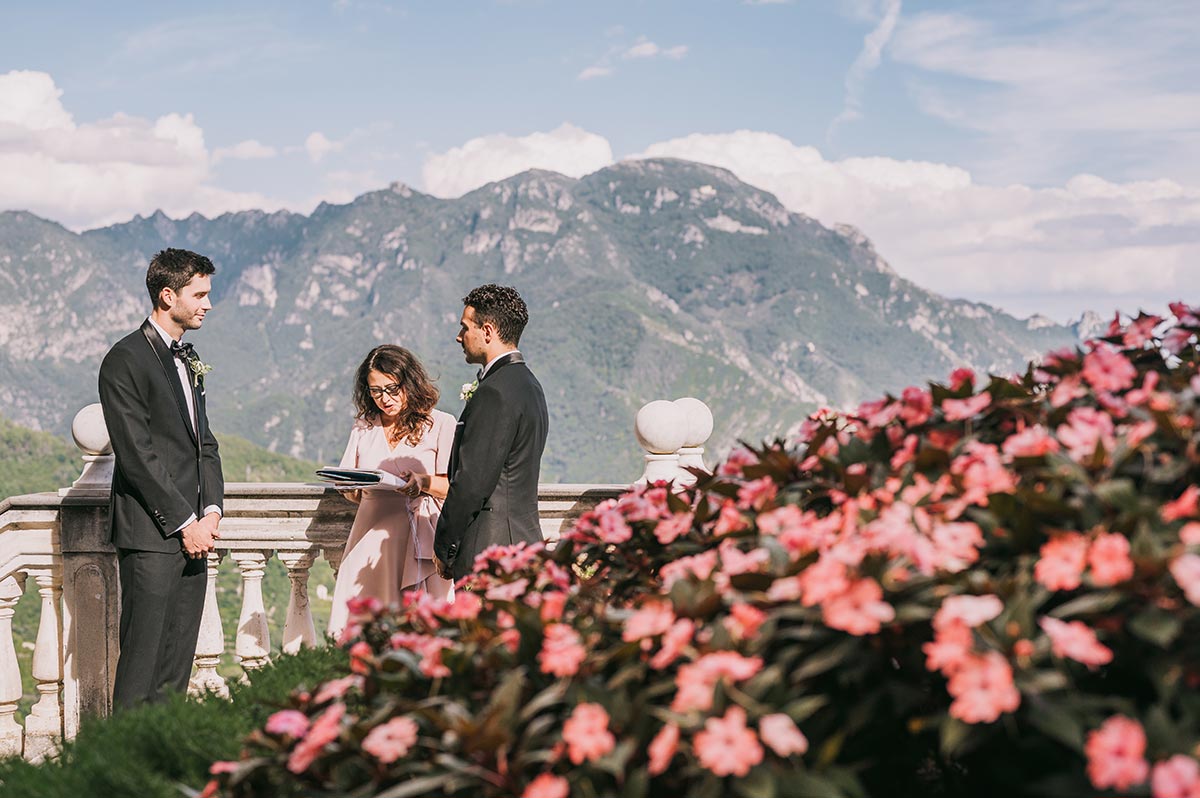
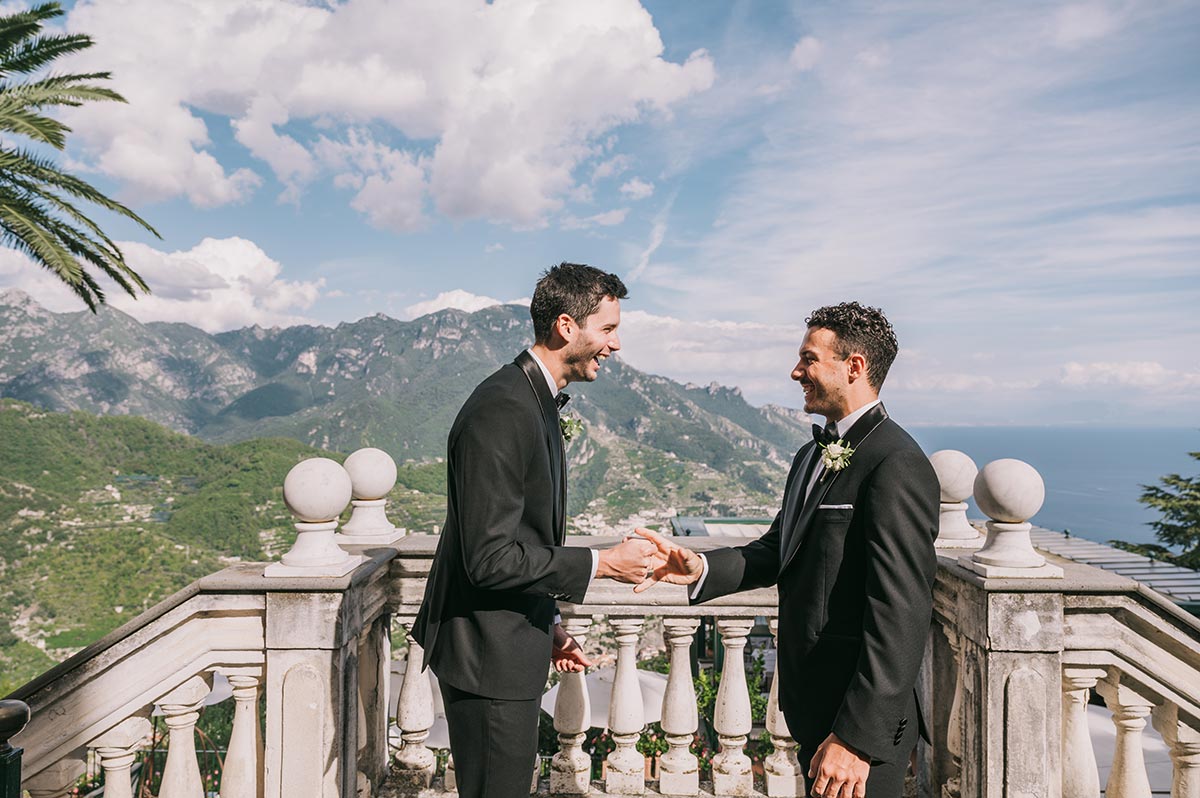
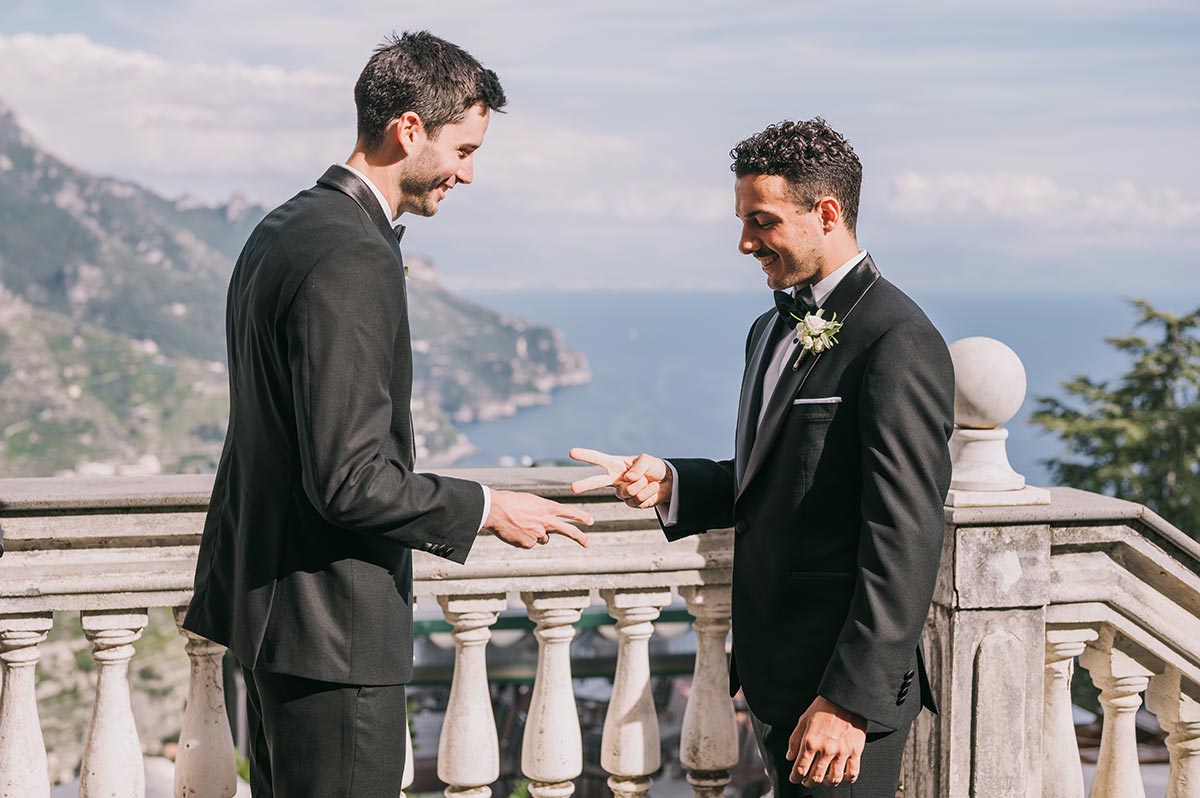
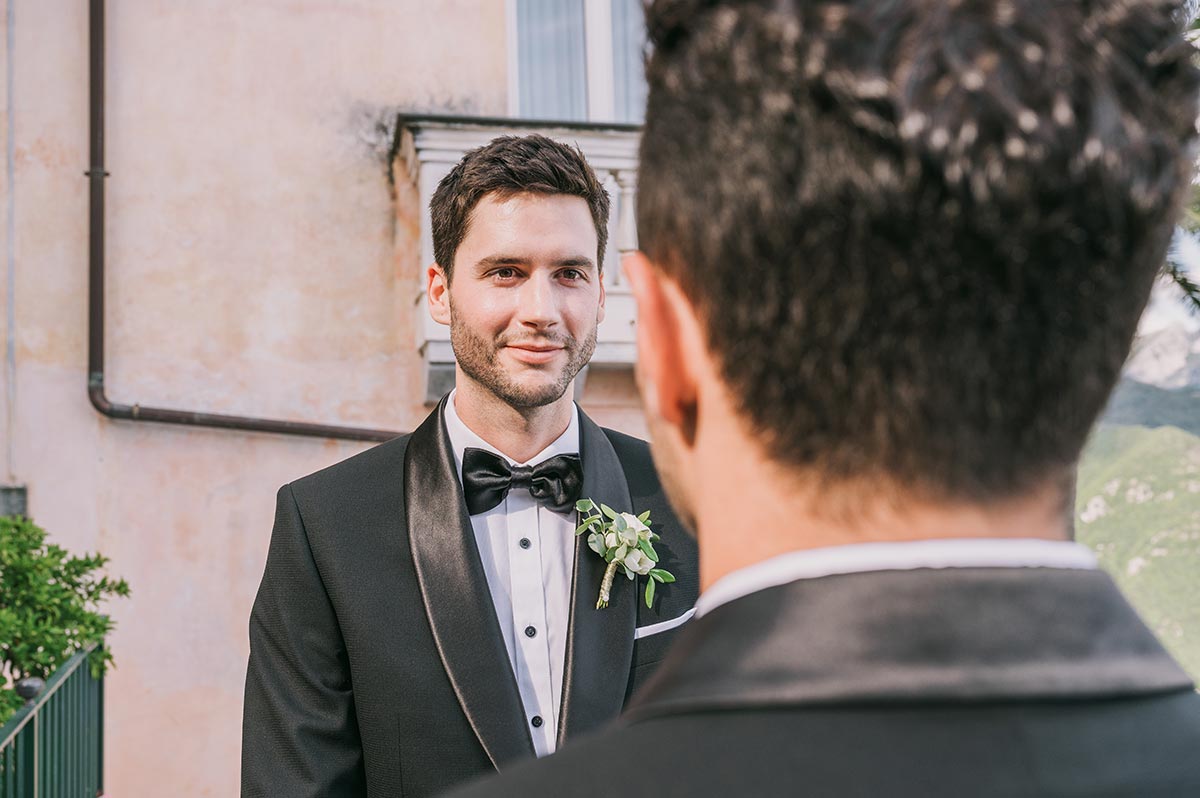
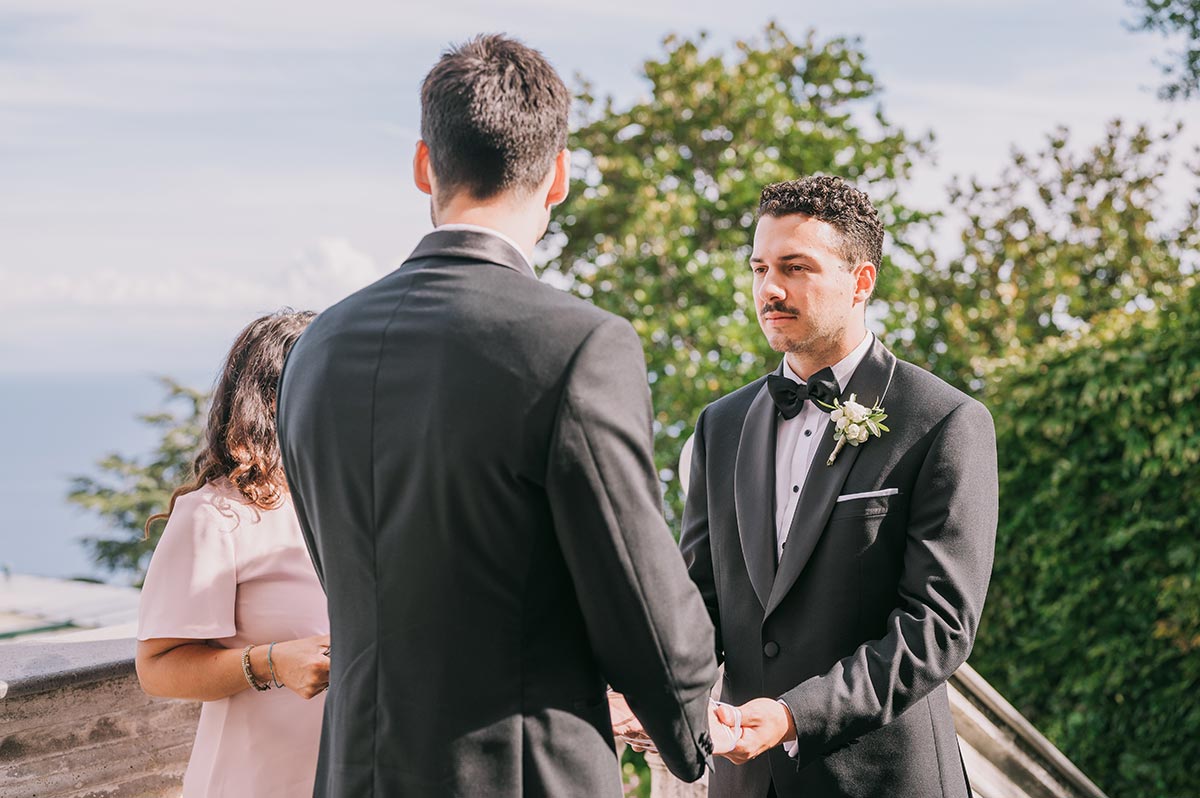
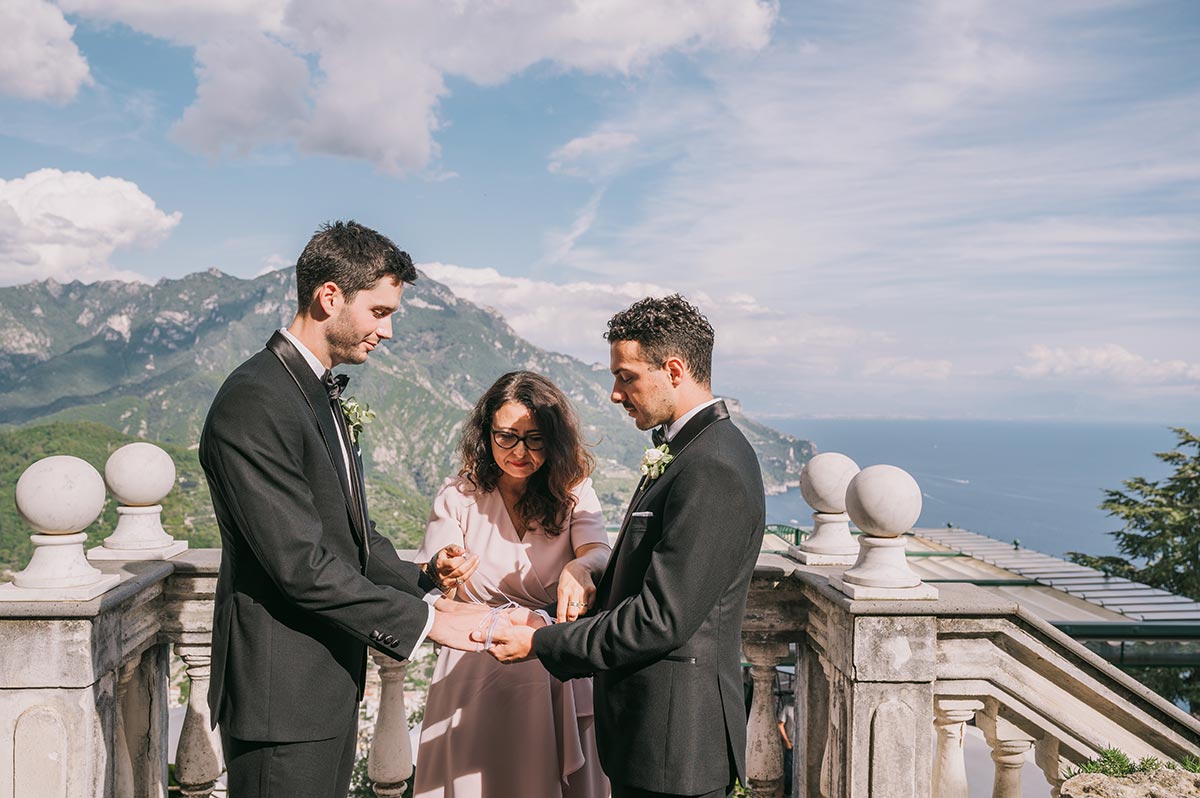
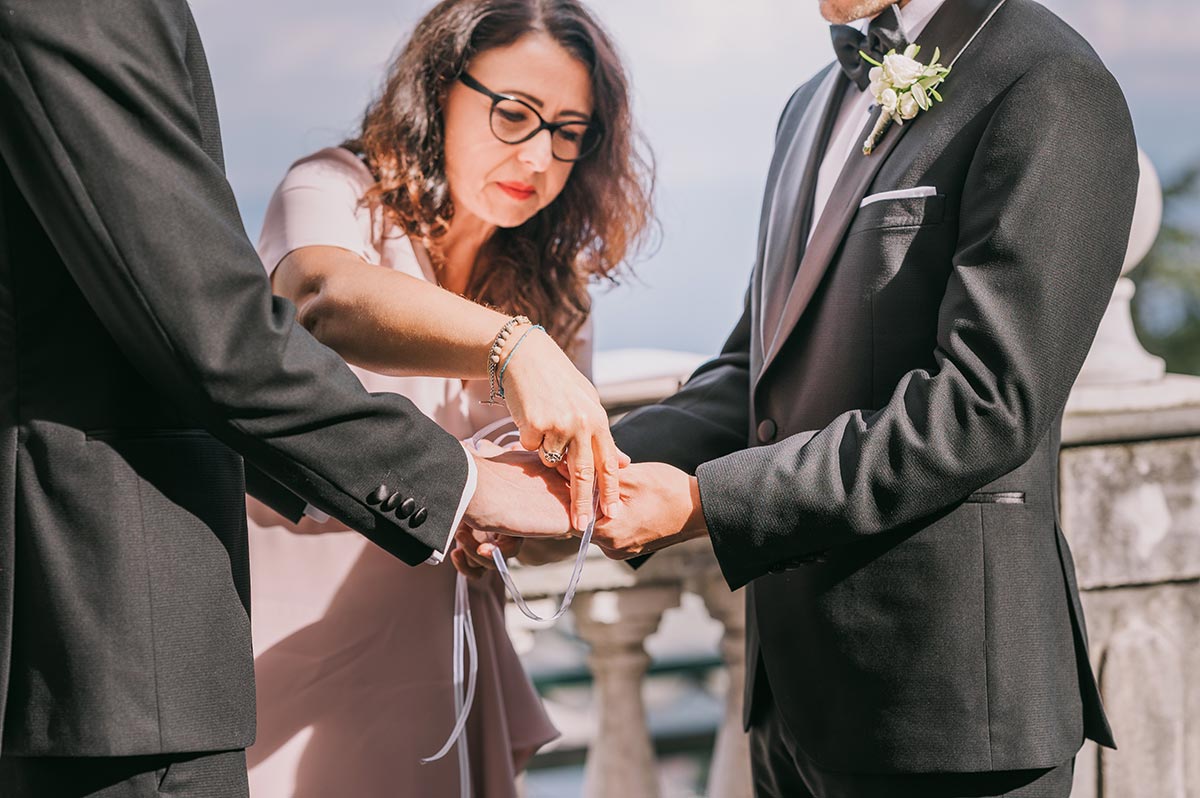
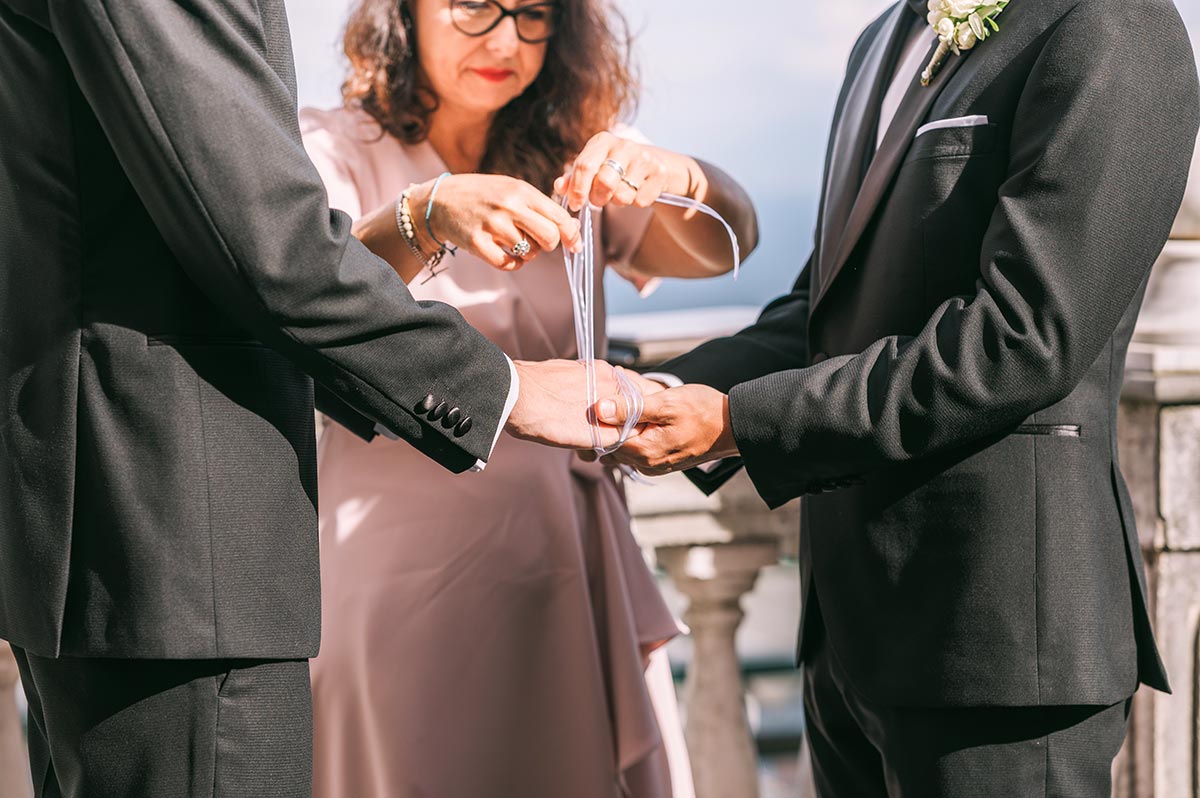
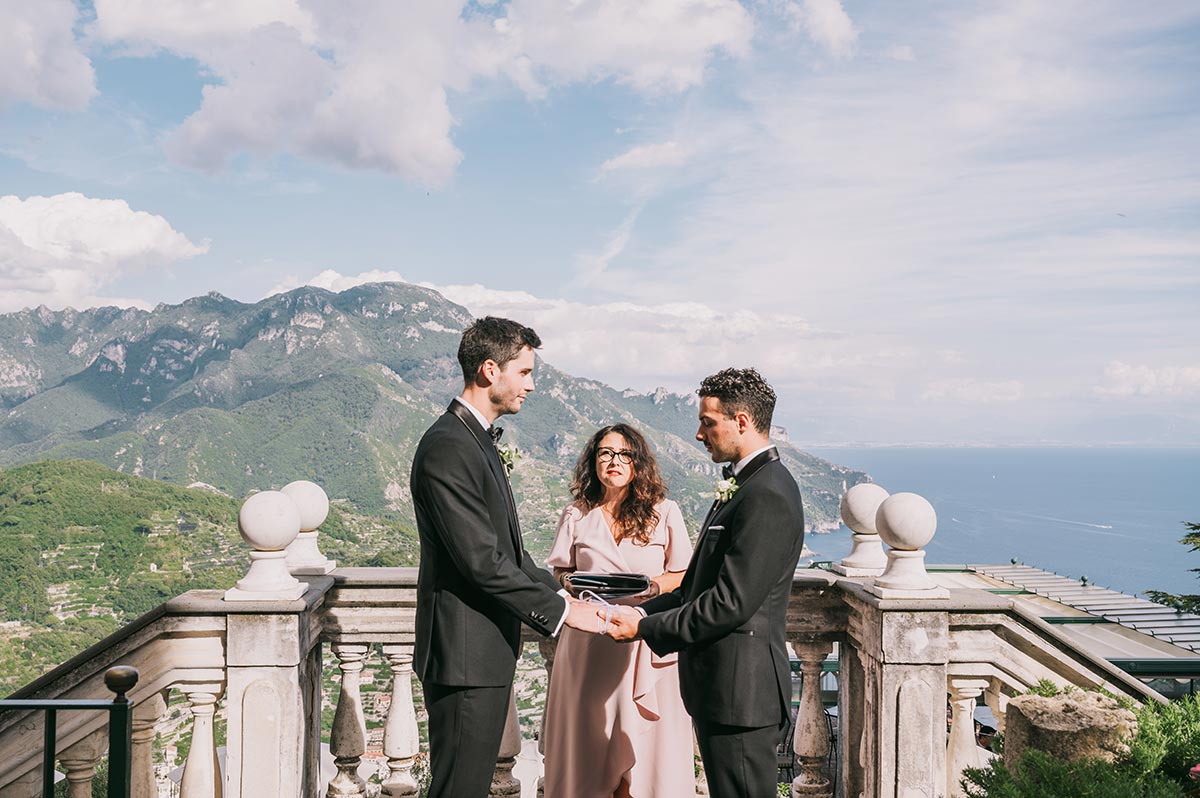
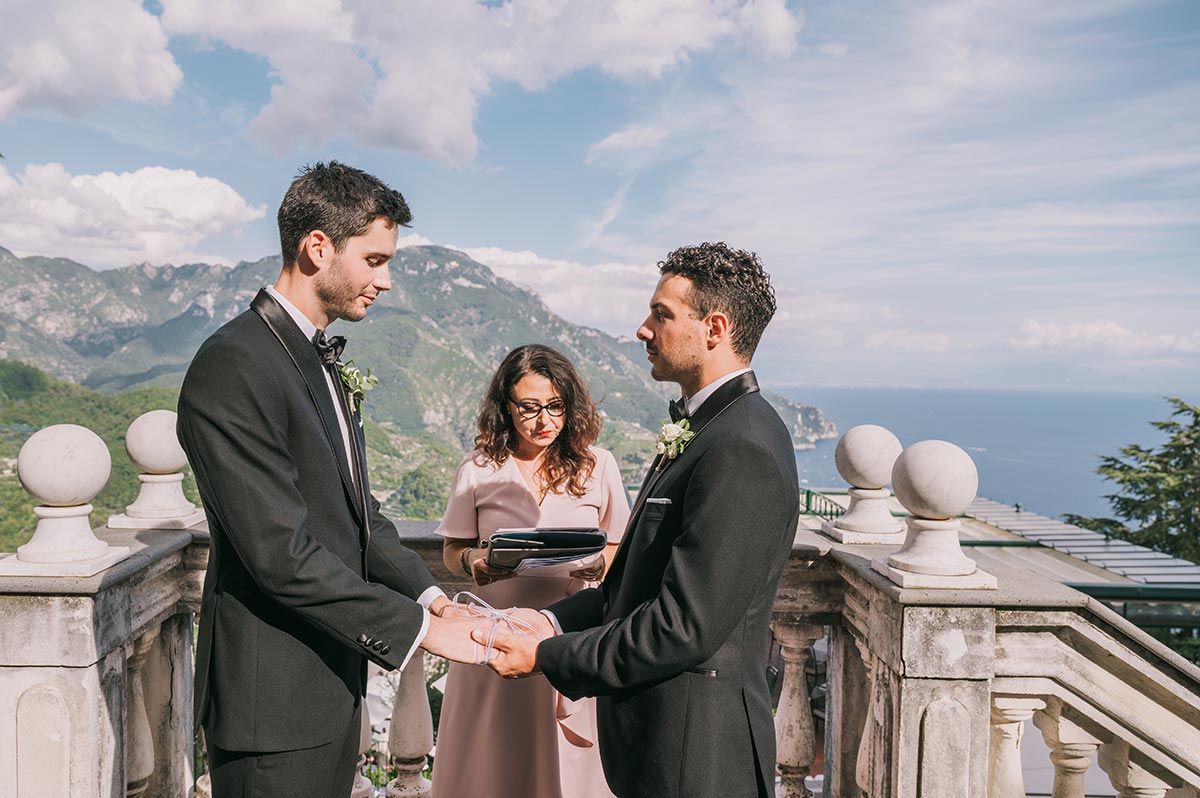
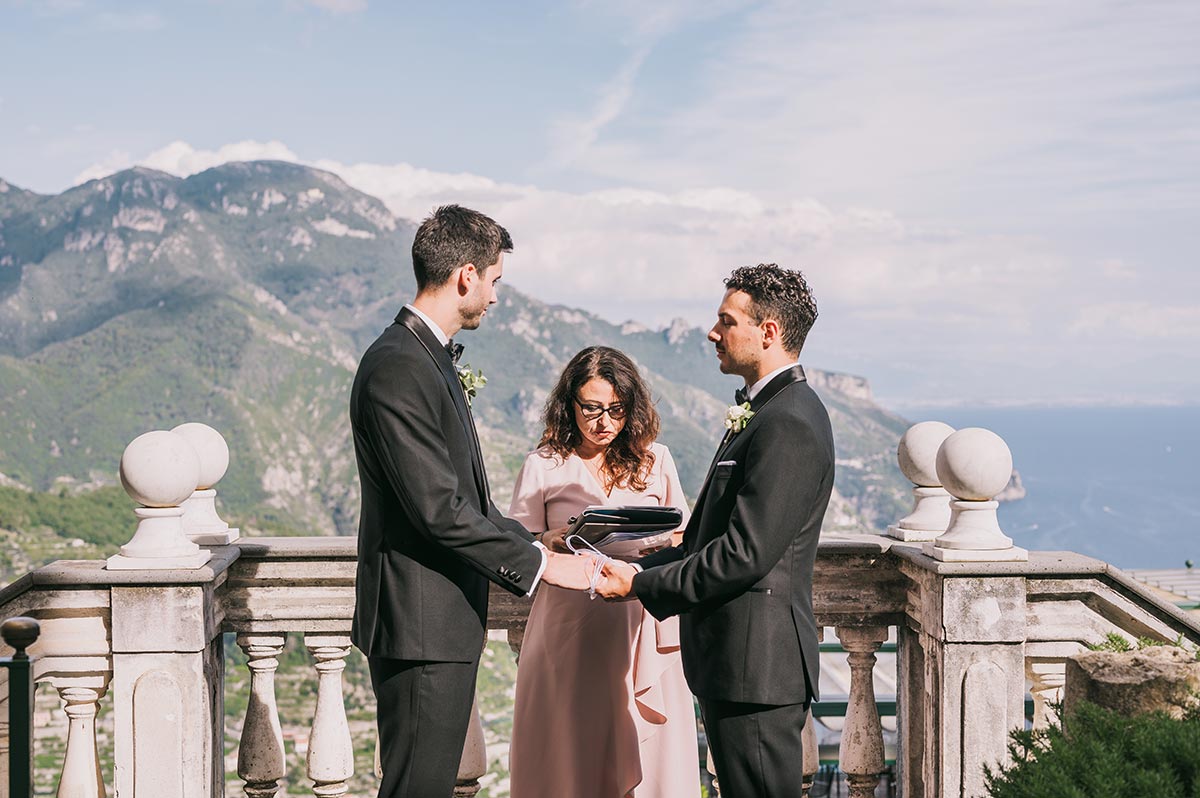
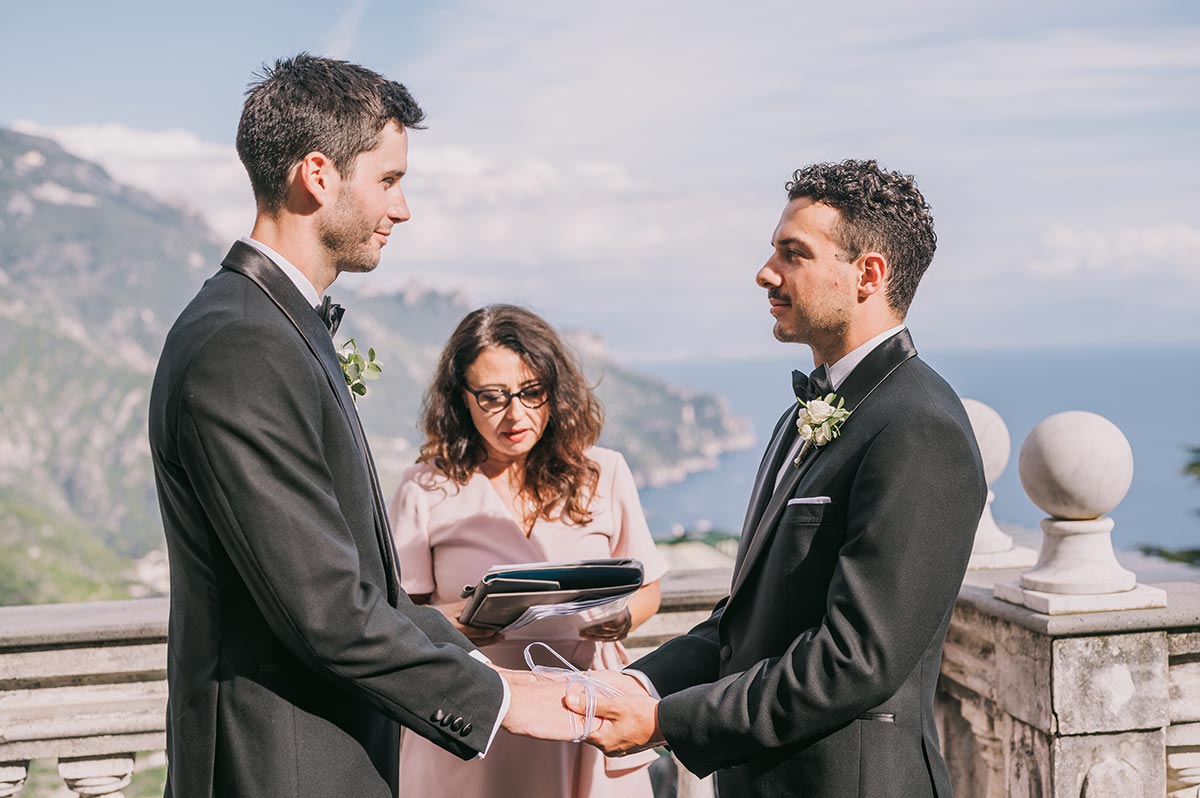
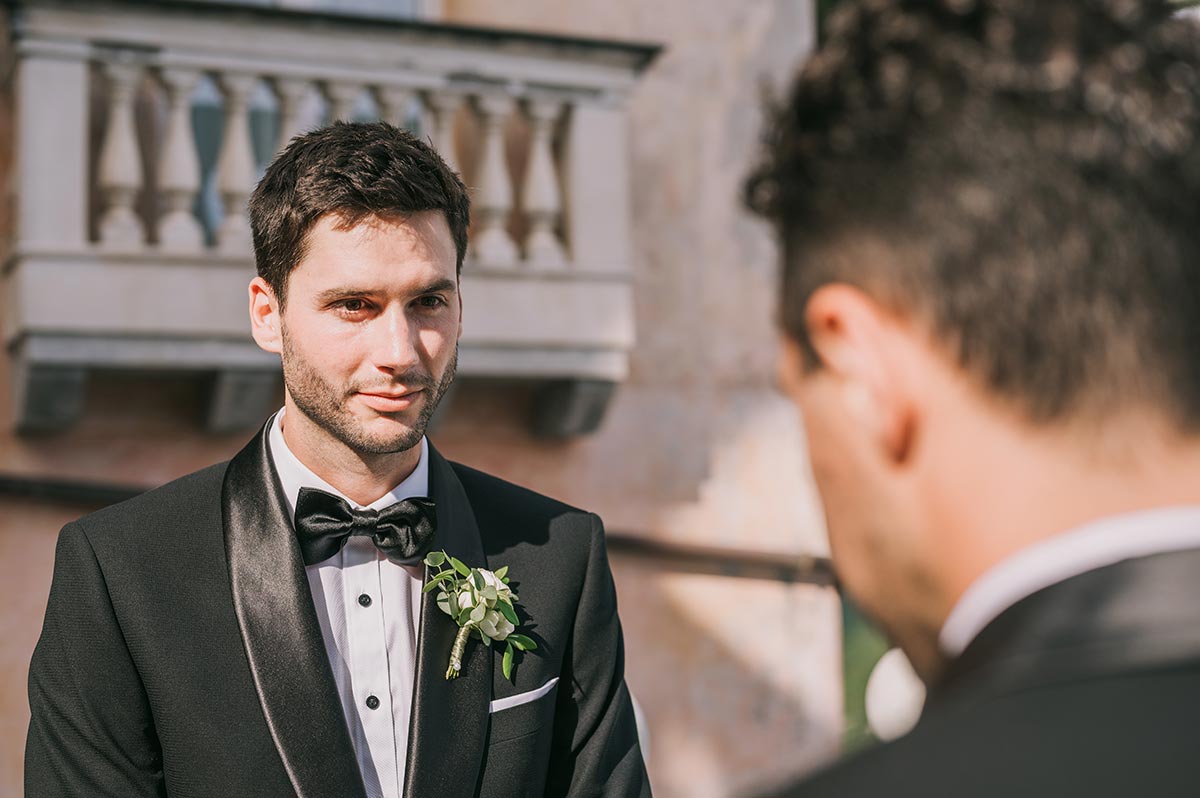
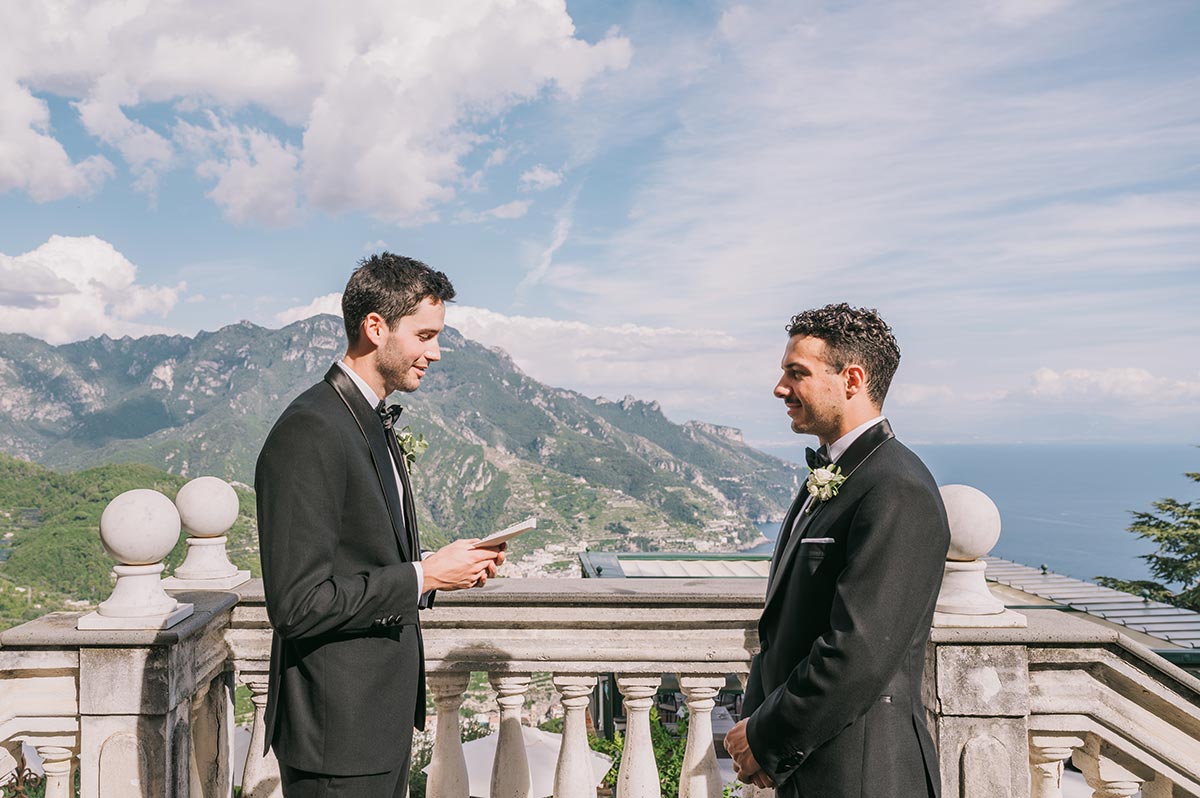
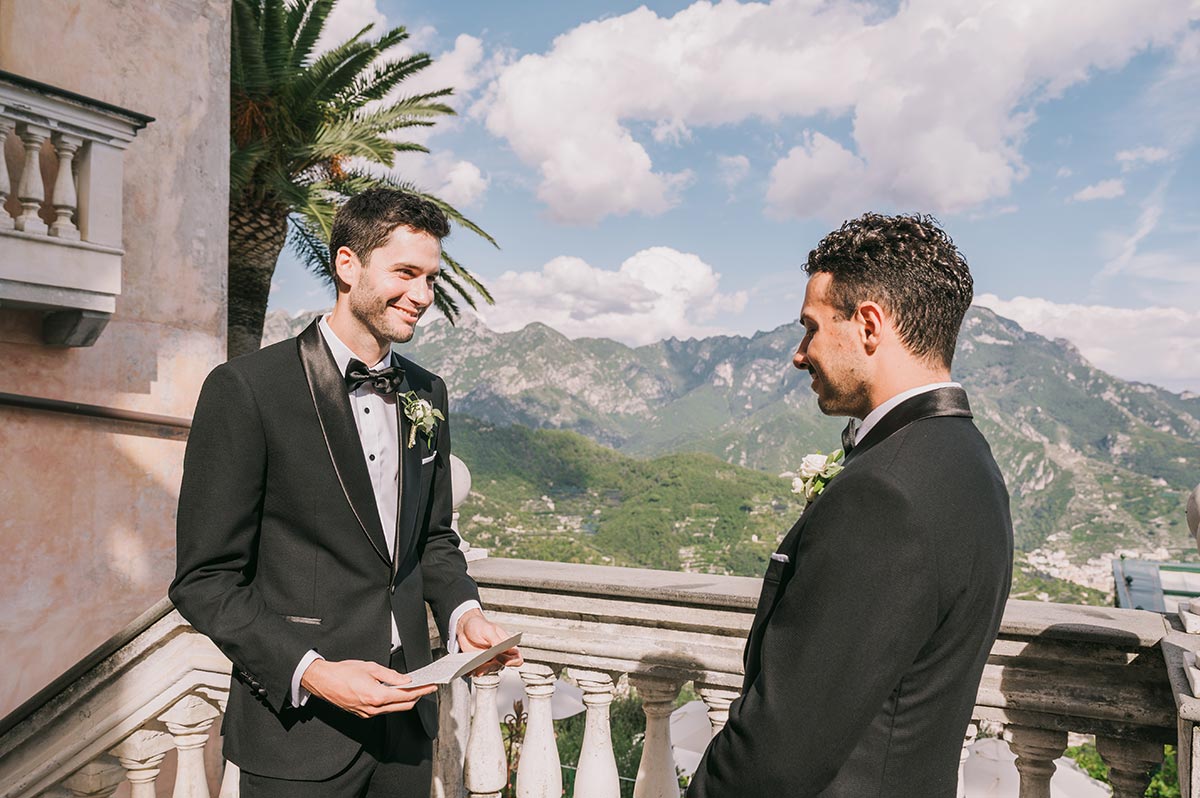
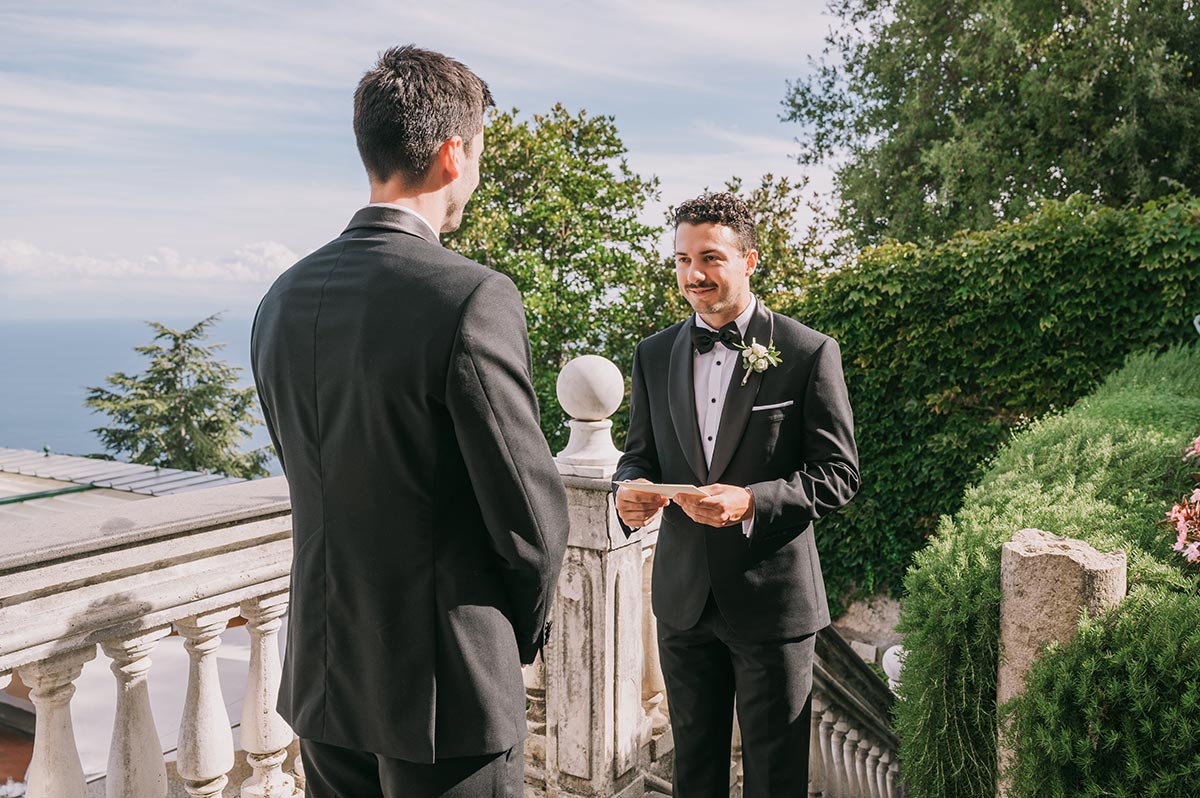
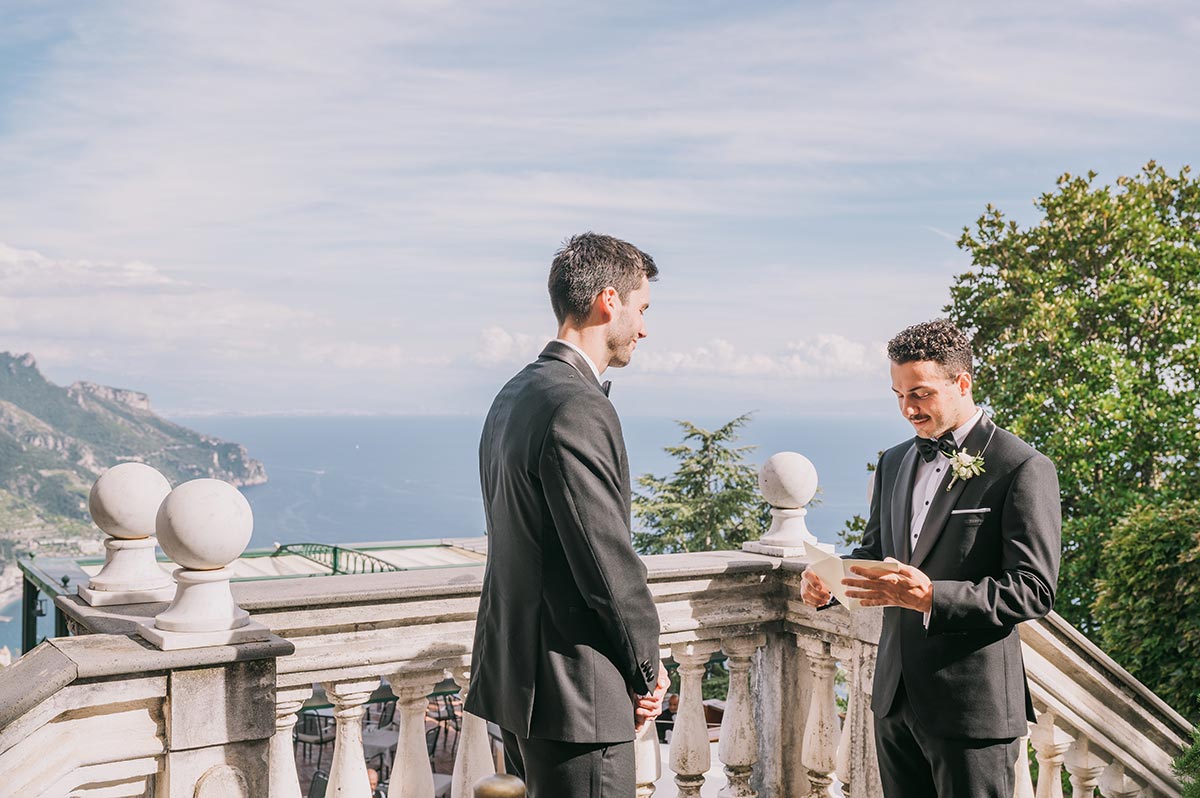
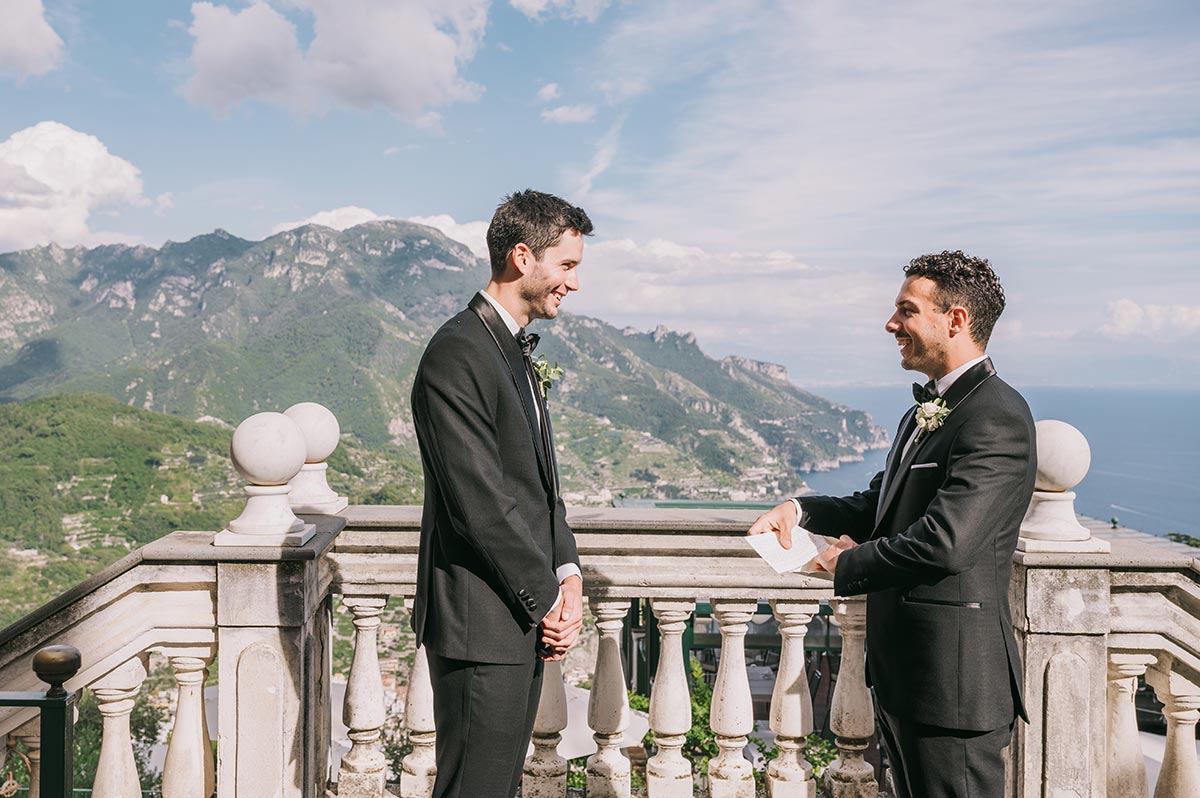
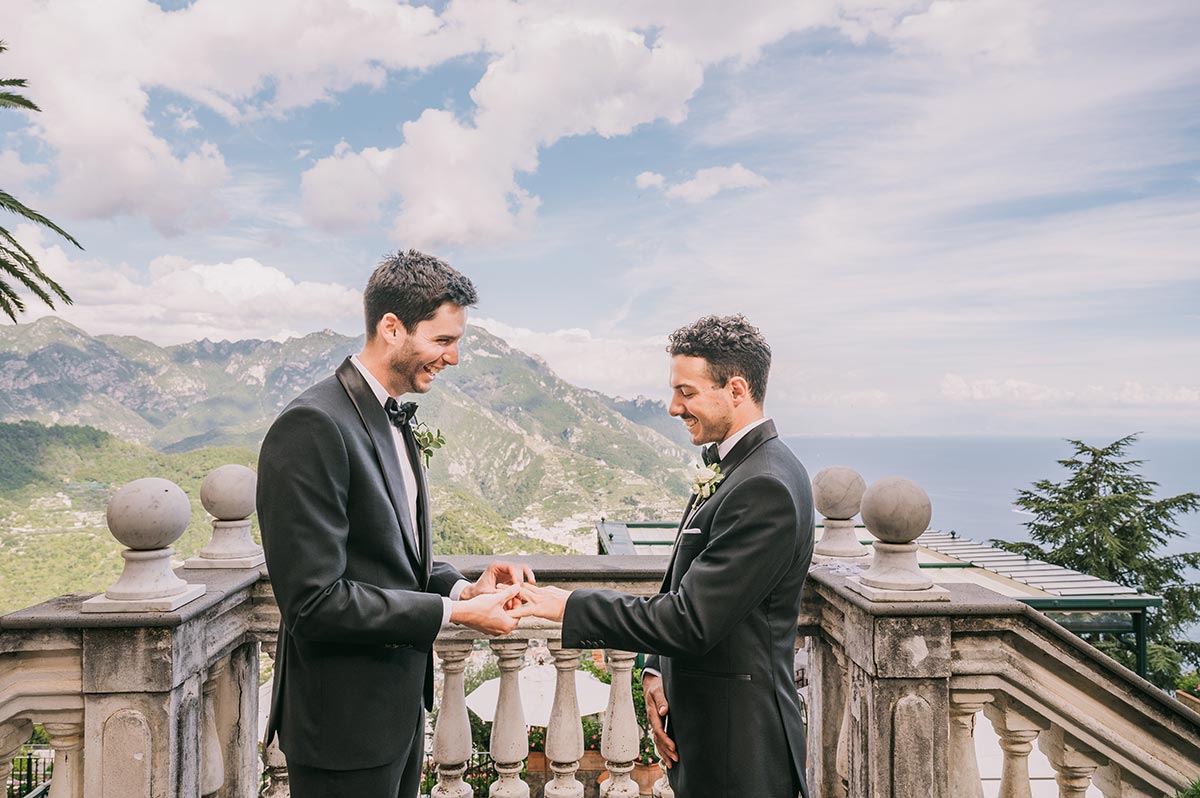
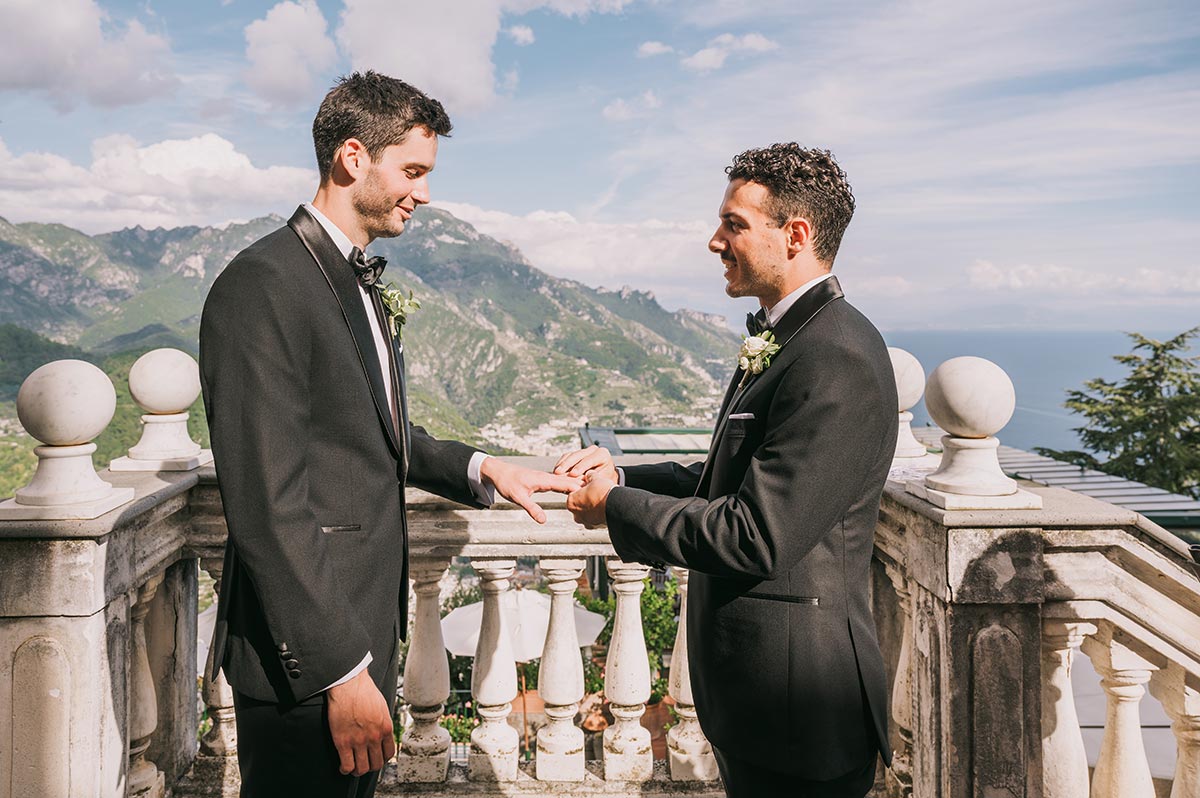
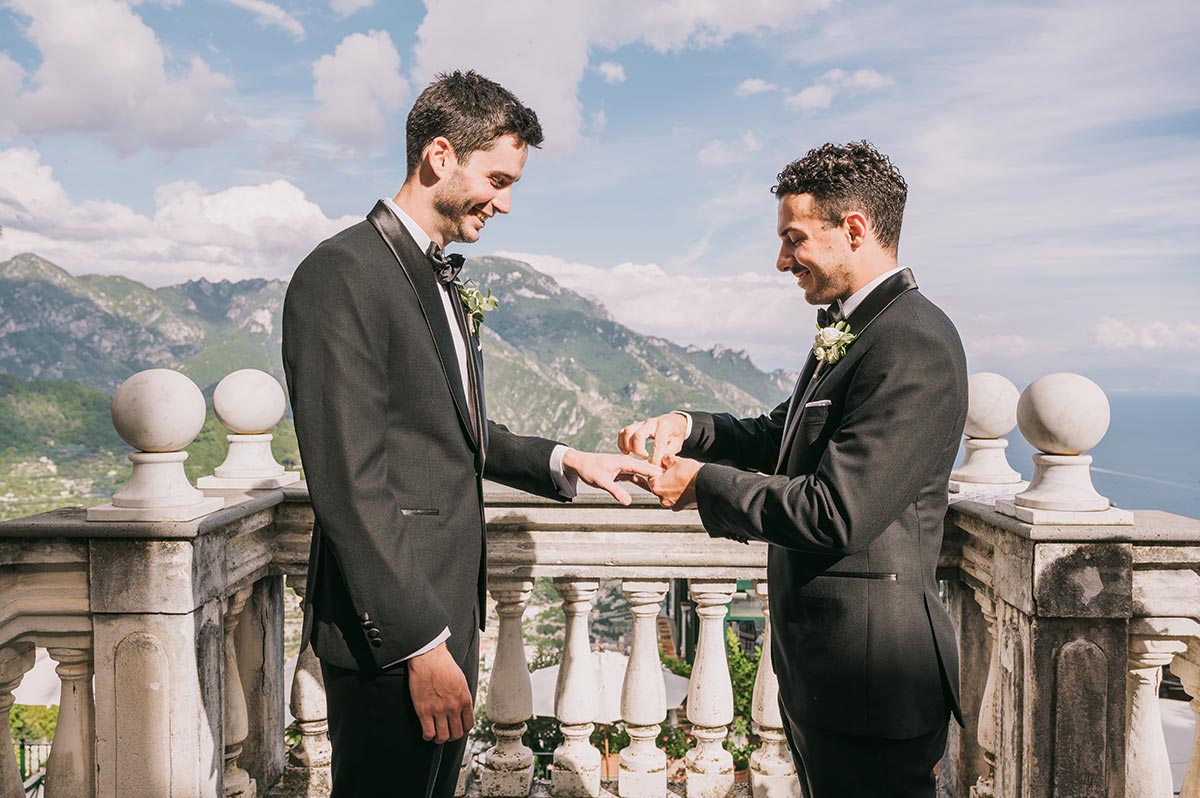
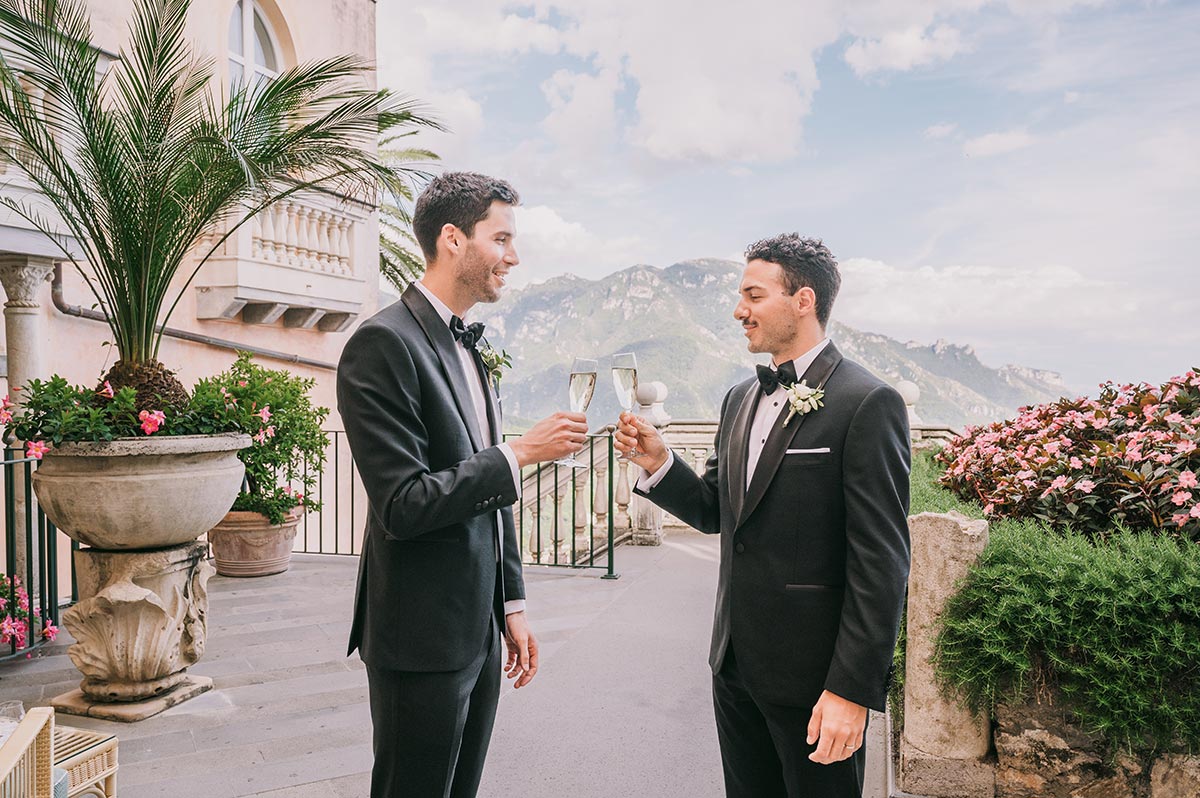
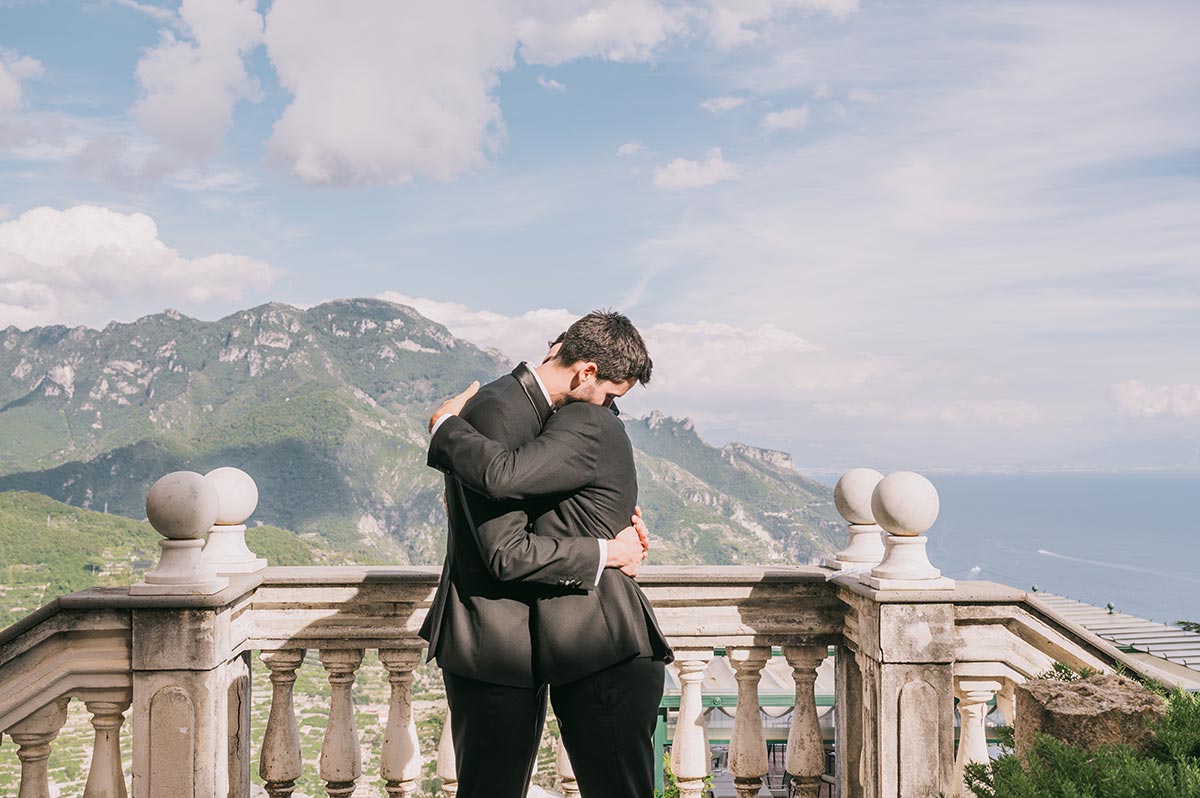
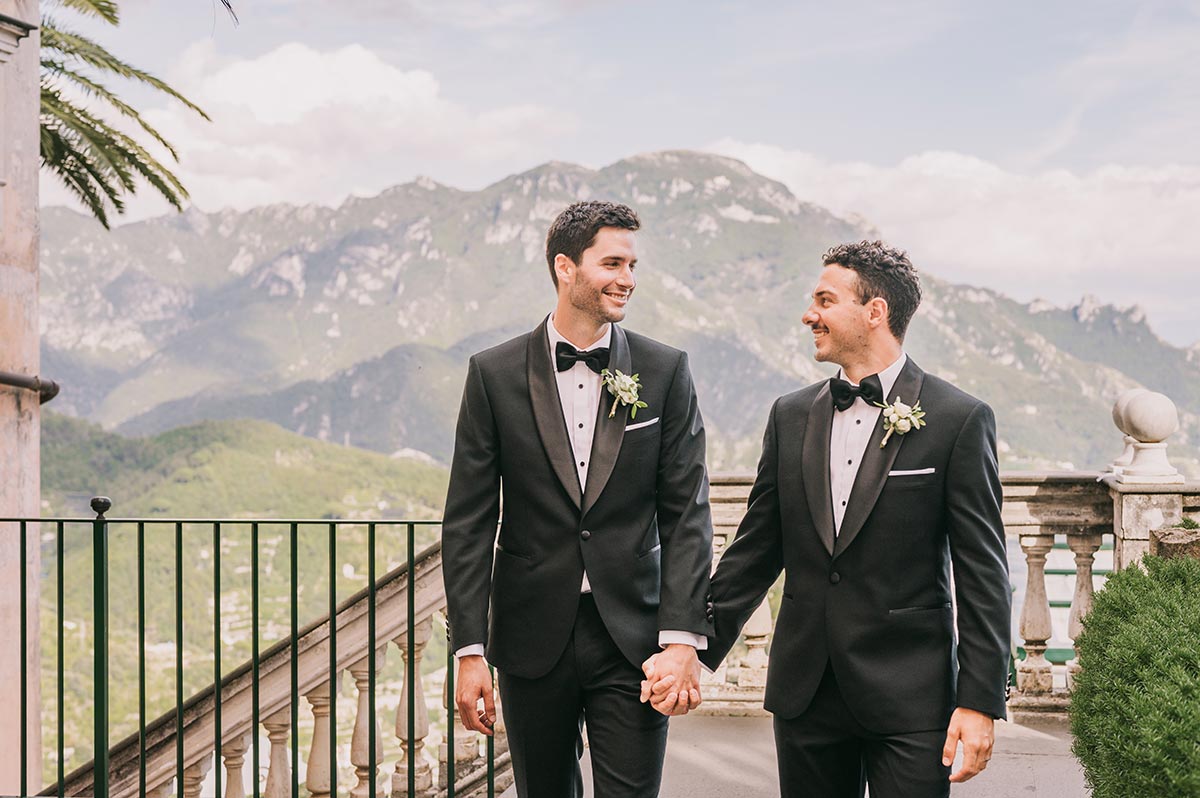
The symbolic wedding took place at Palazzo Avino, with officiant Carmela, immediately after getting ready at a well-known B&B in Ravello with a stunning coast view. After that, photos were taken at Palazzo Confalone, a hotel I love and recommend to others because they kindly allow me to shoot with any couple I come across. Josh and John happily accepted every one of my ideas, including taking photos at Villa Rufolo.
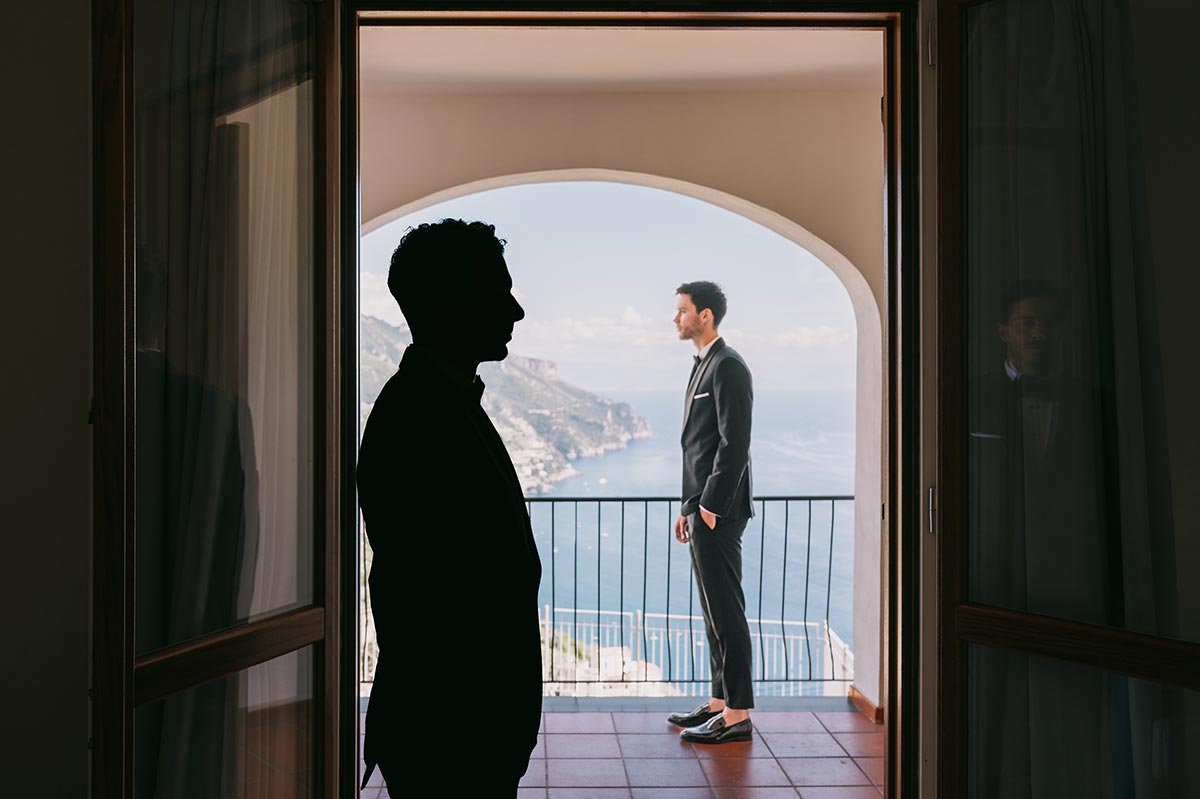
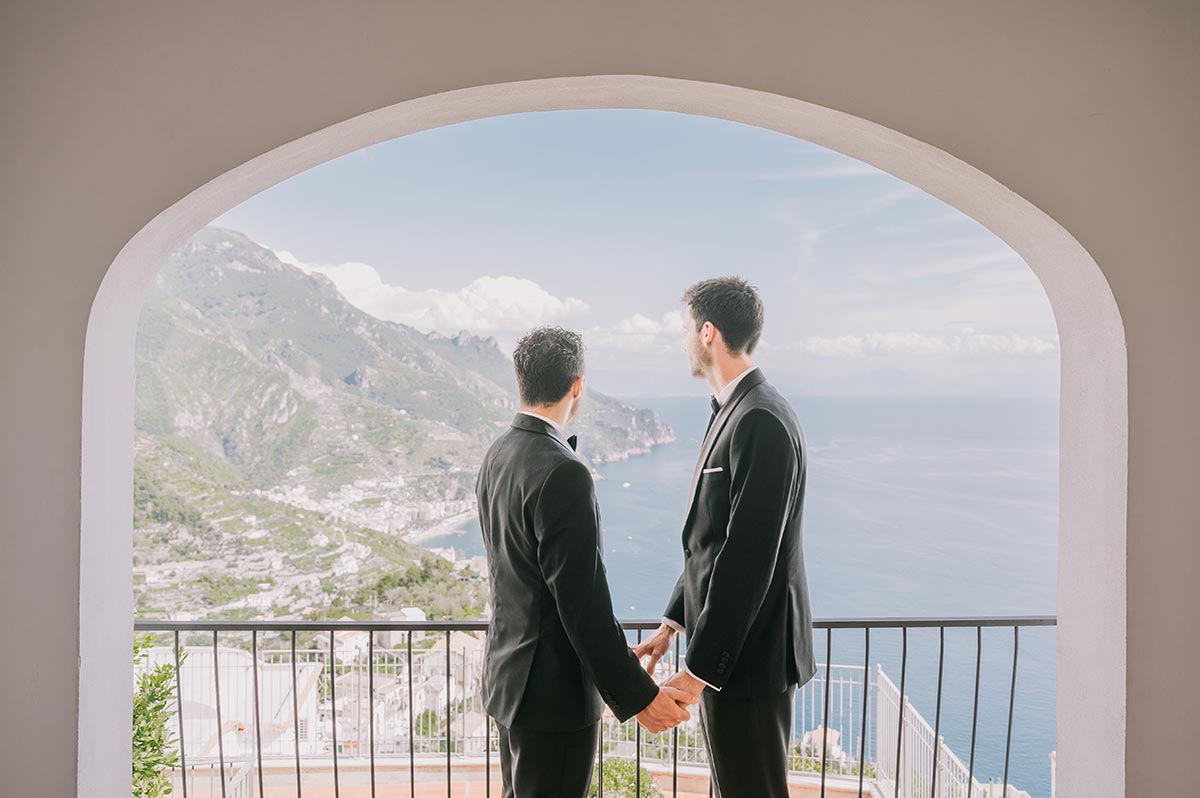
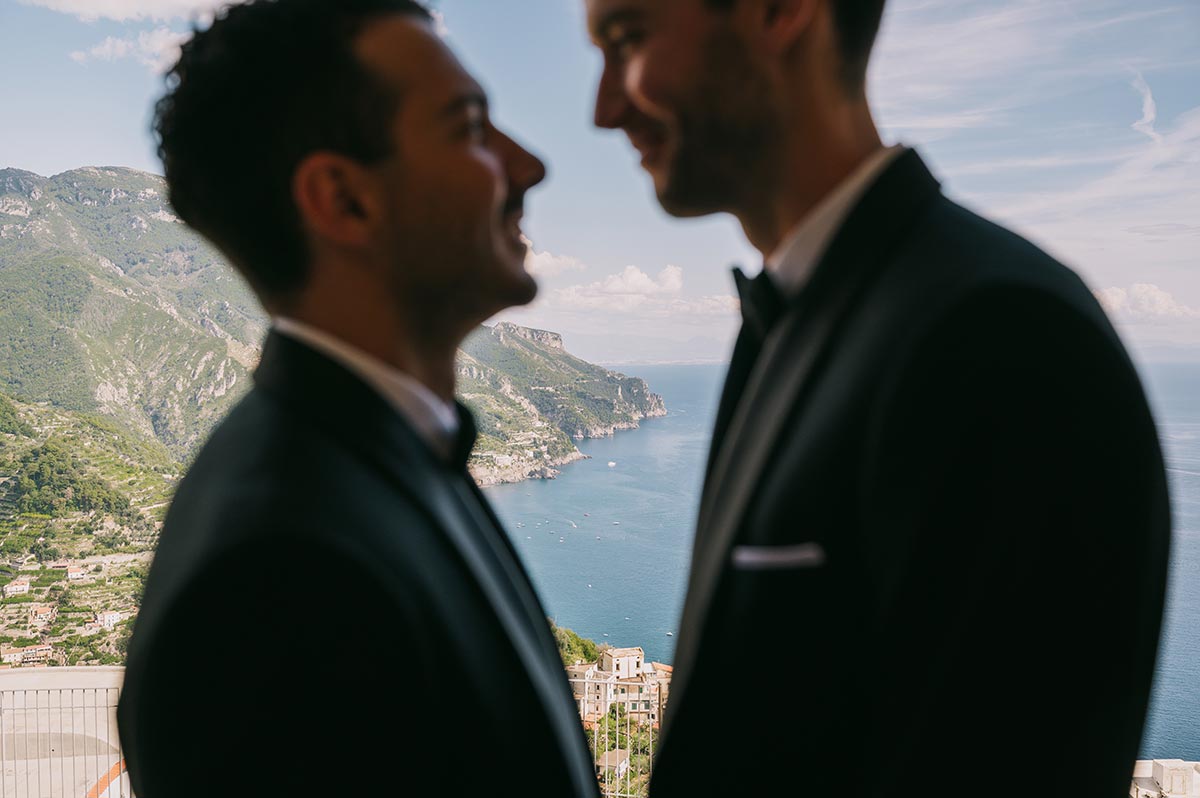

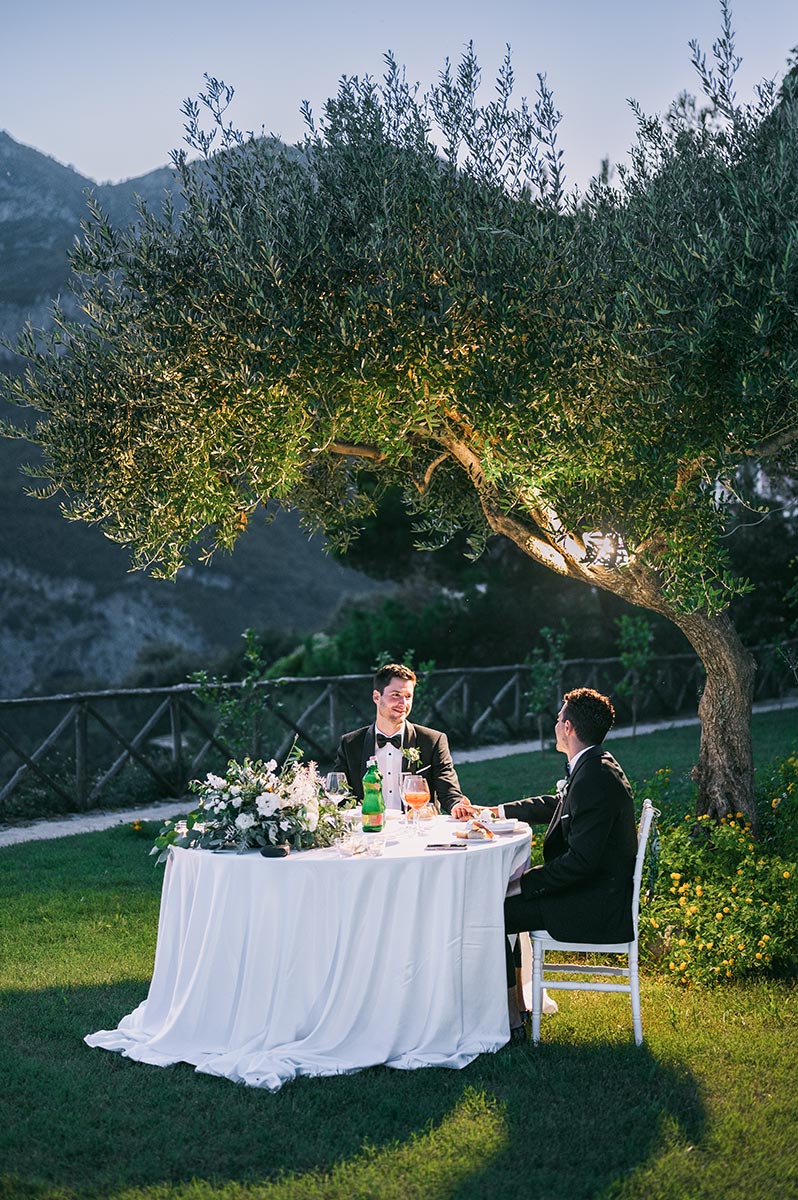
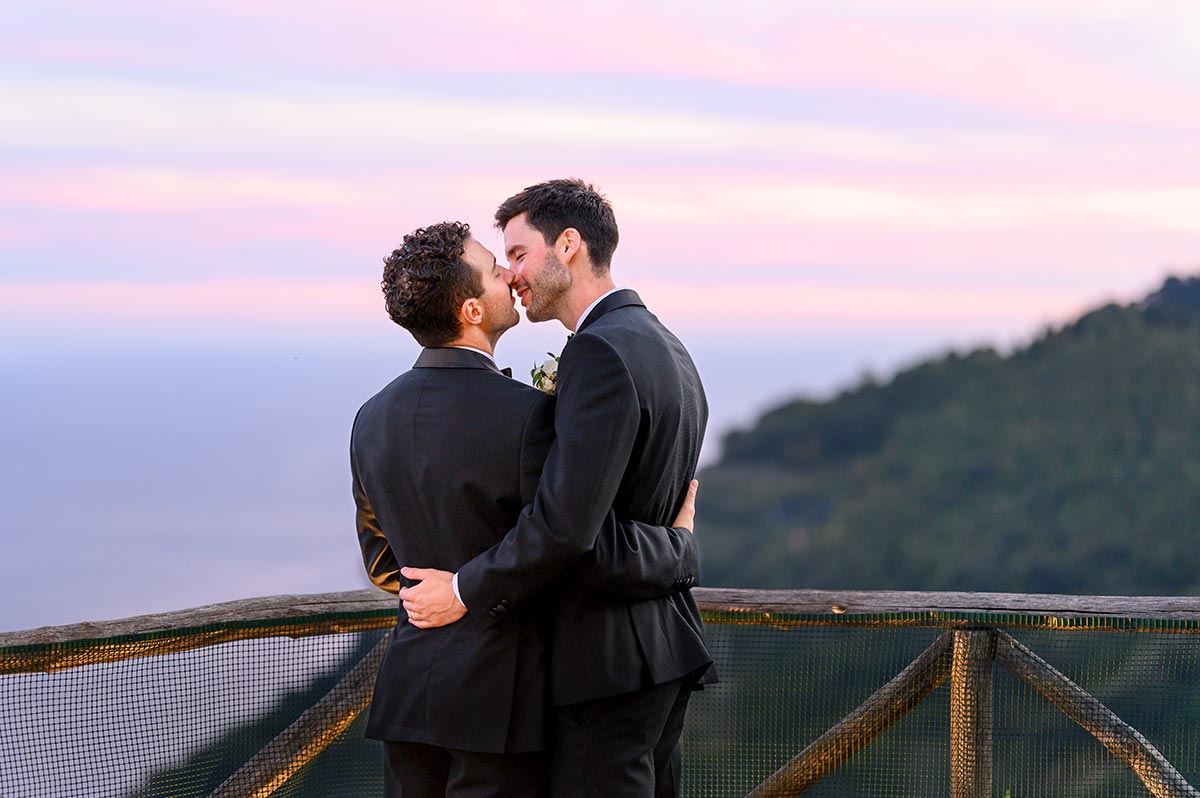
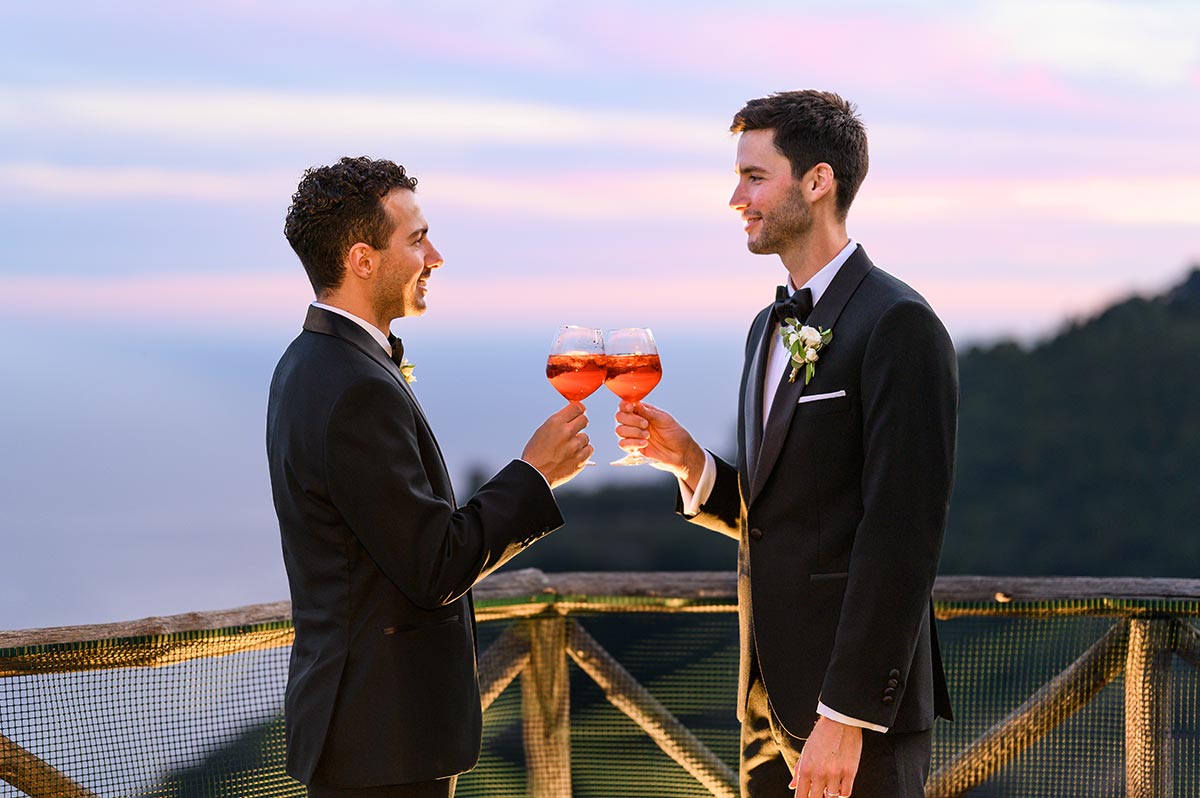
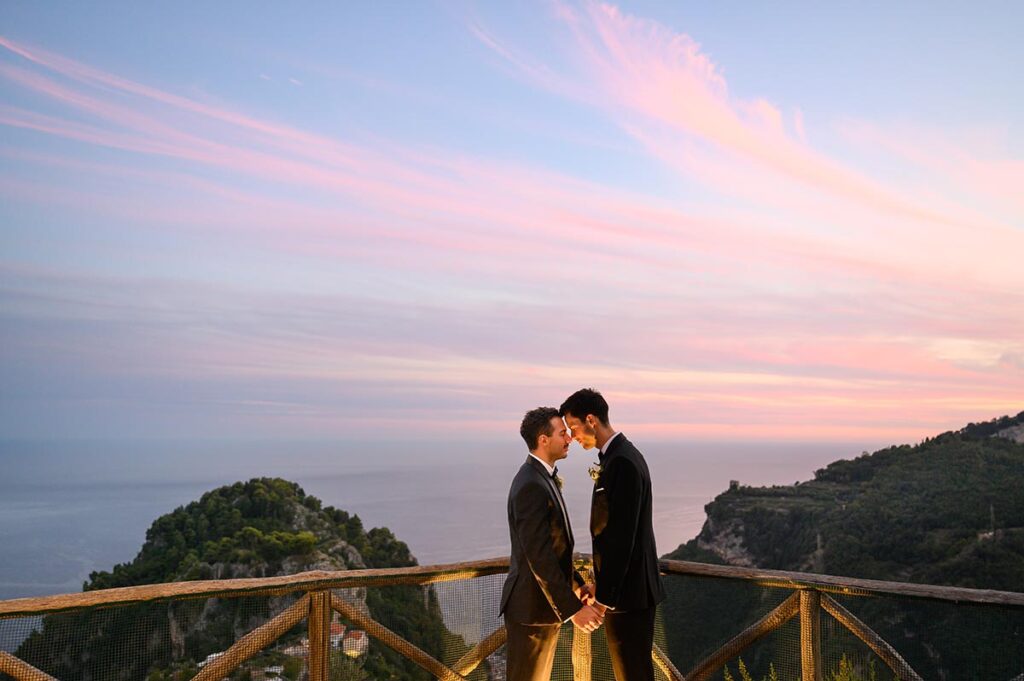
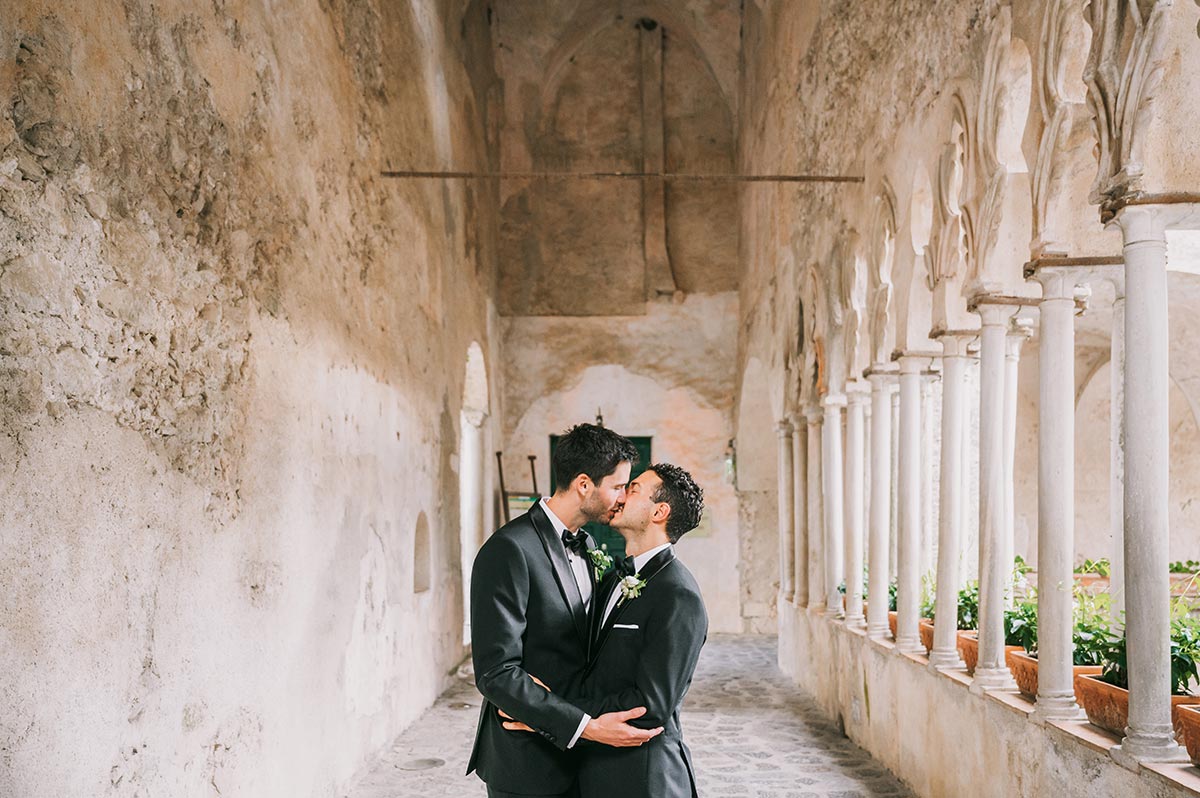
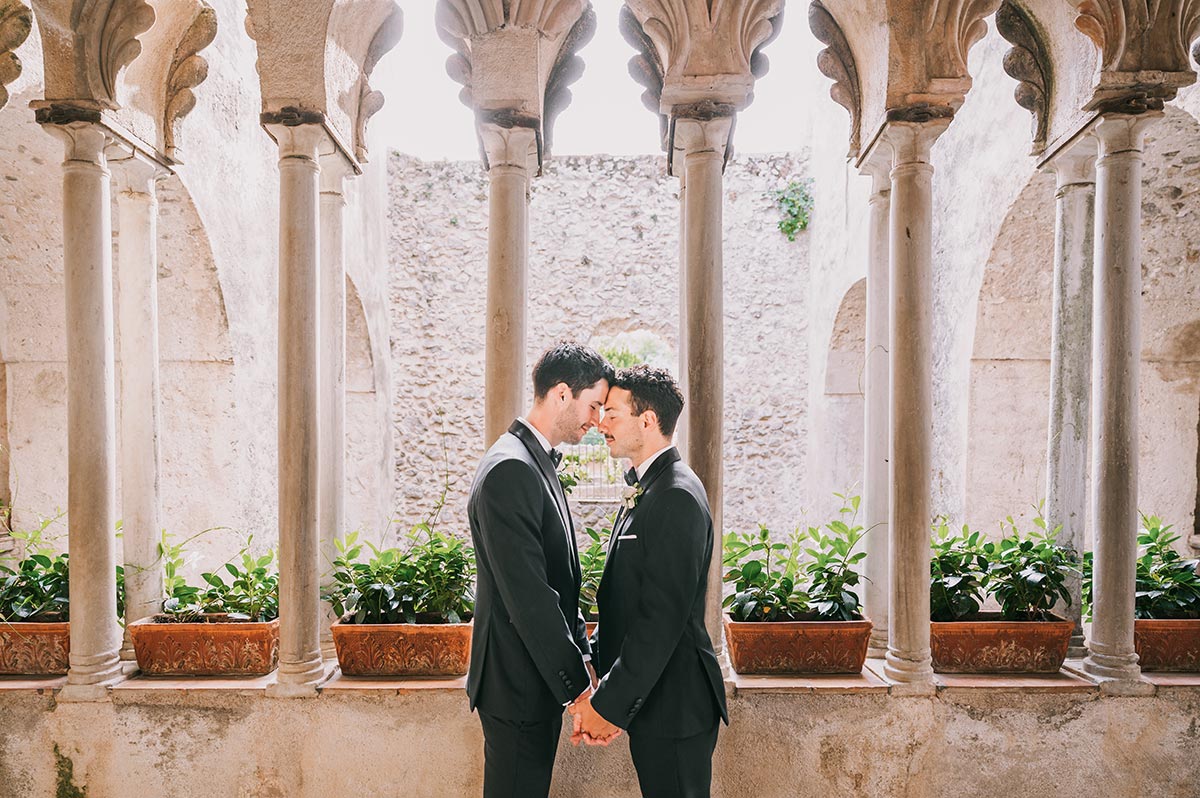
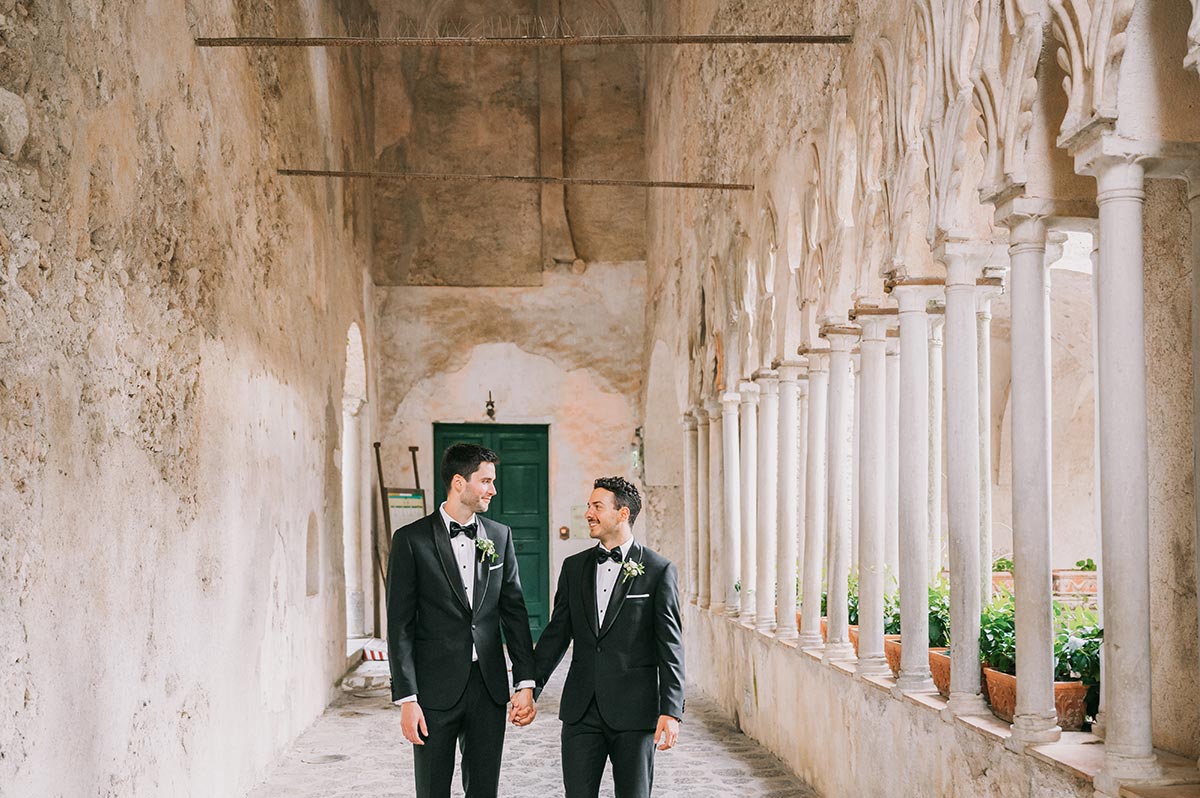
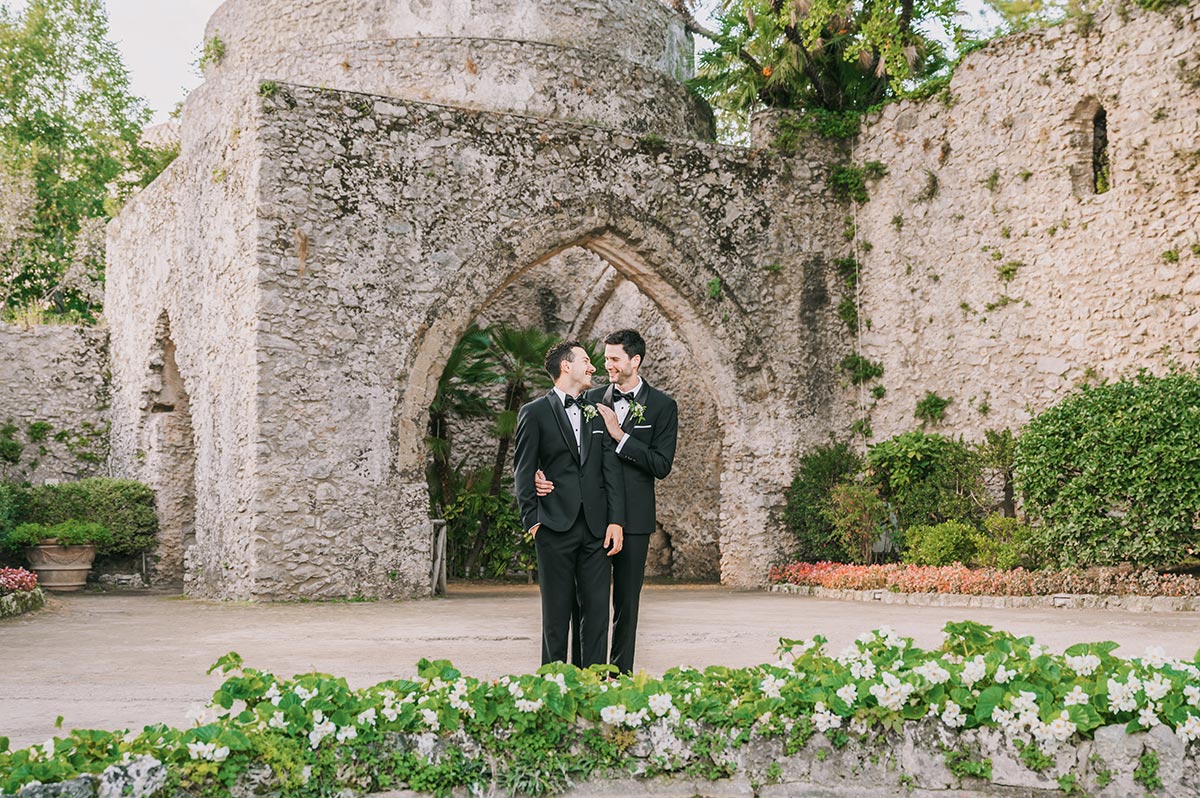
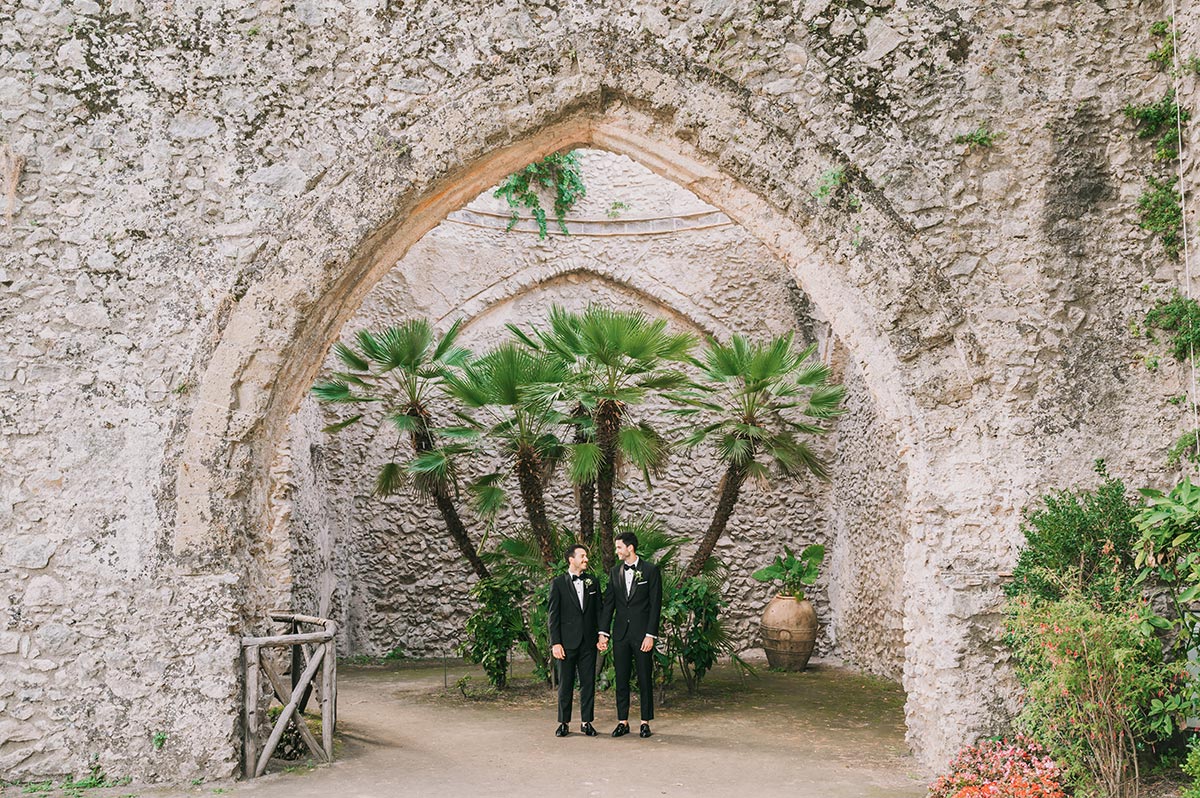
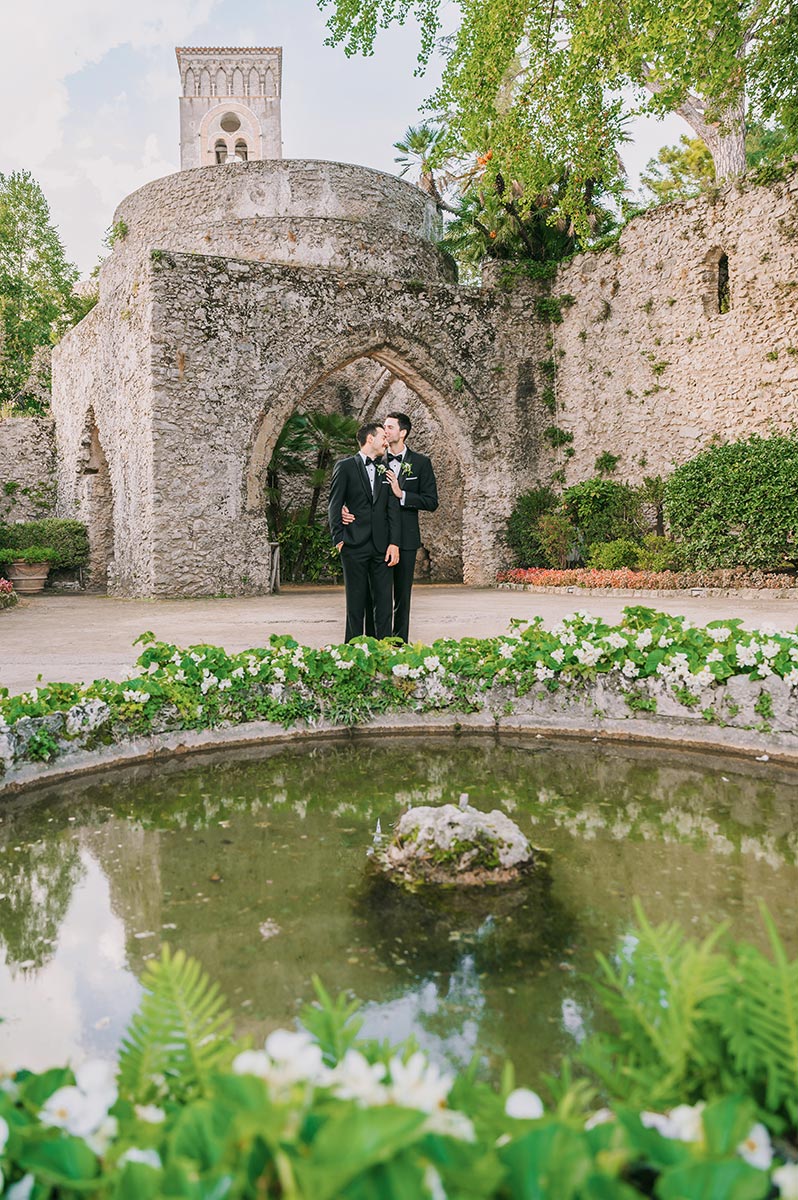
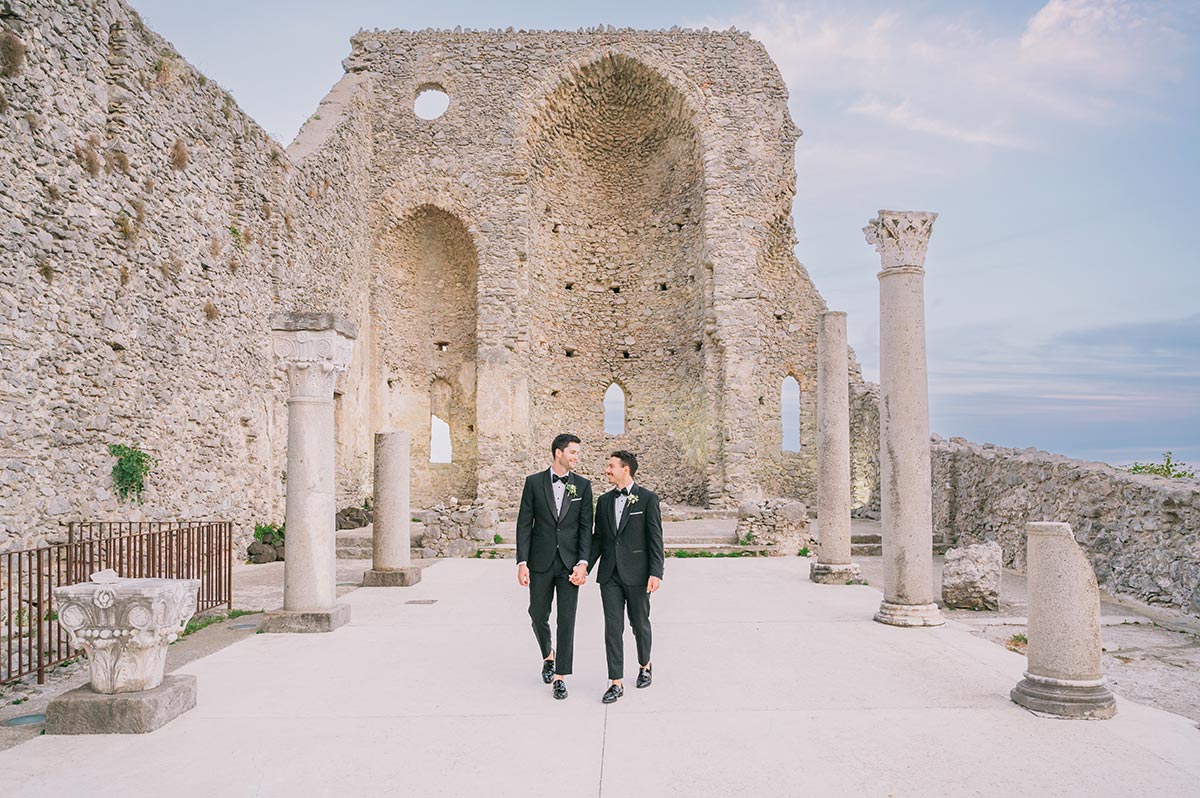
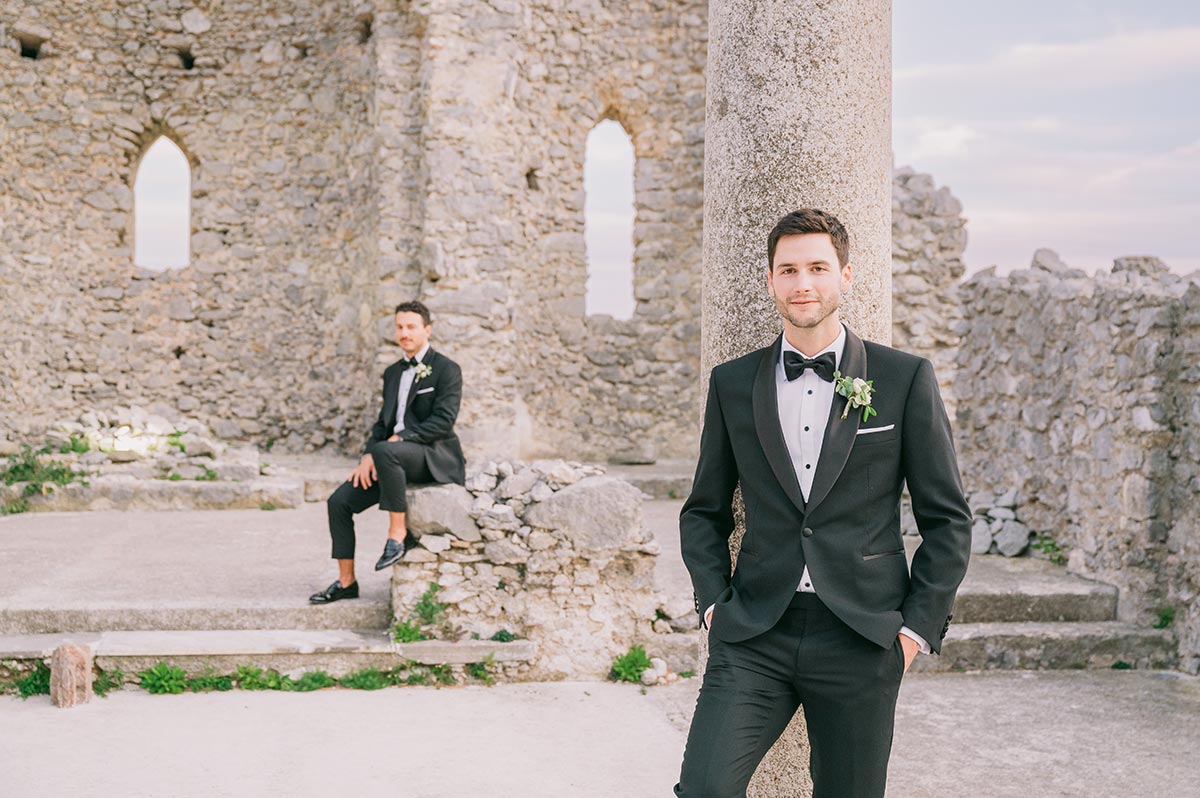
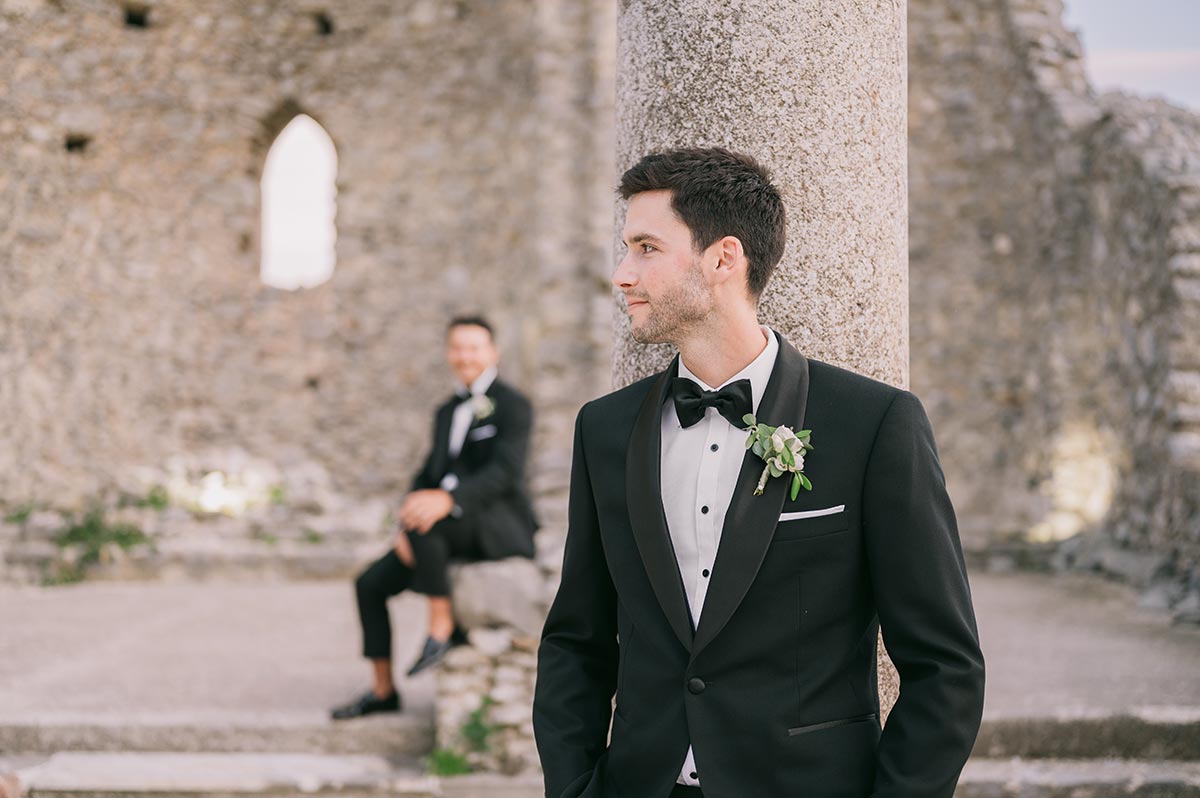
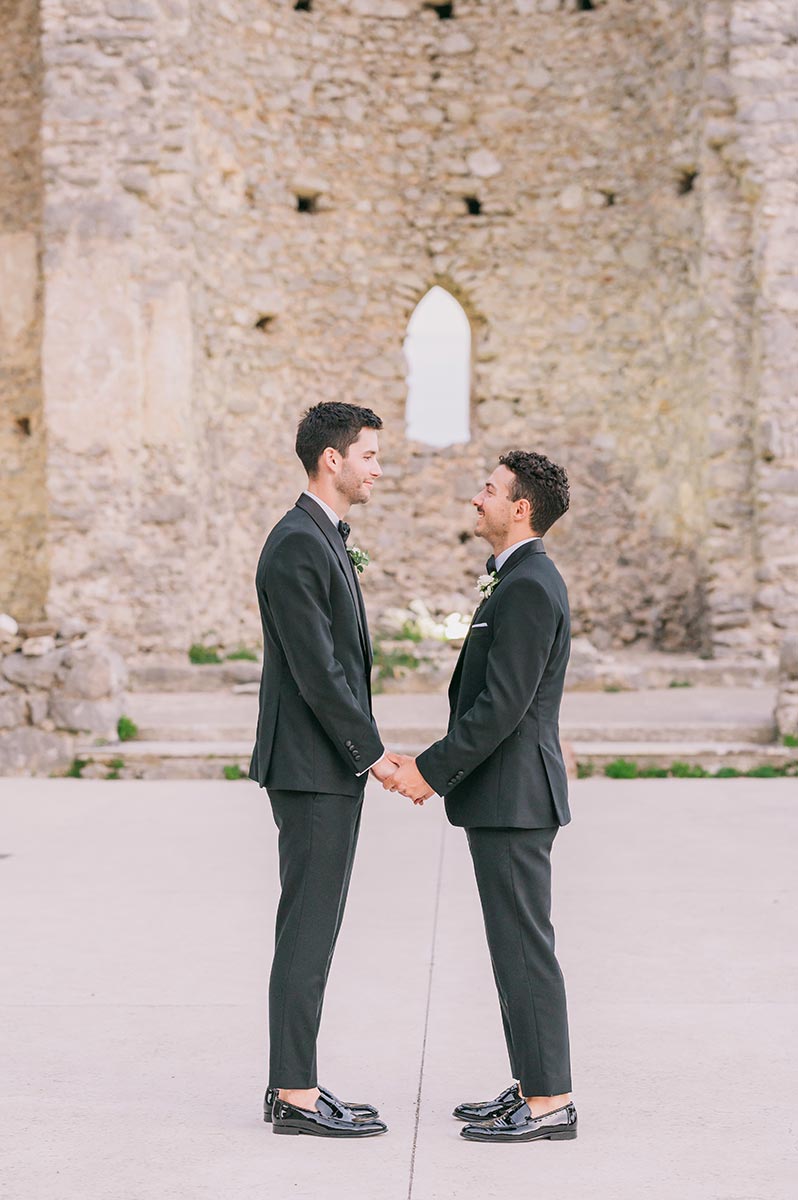
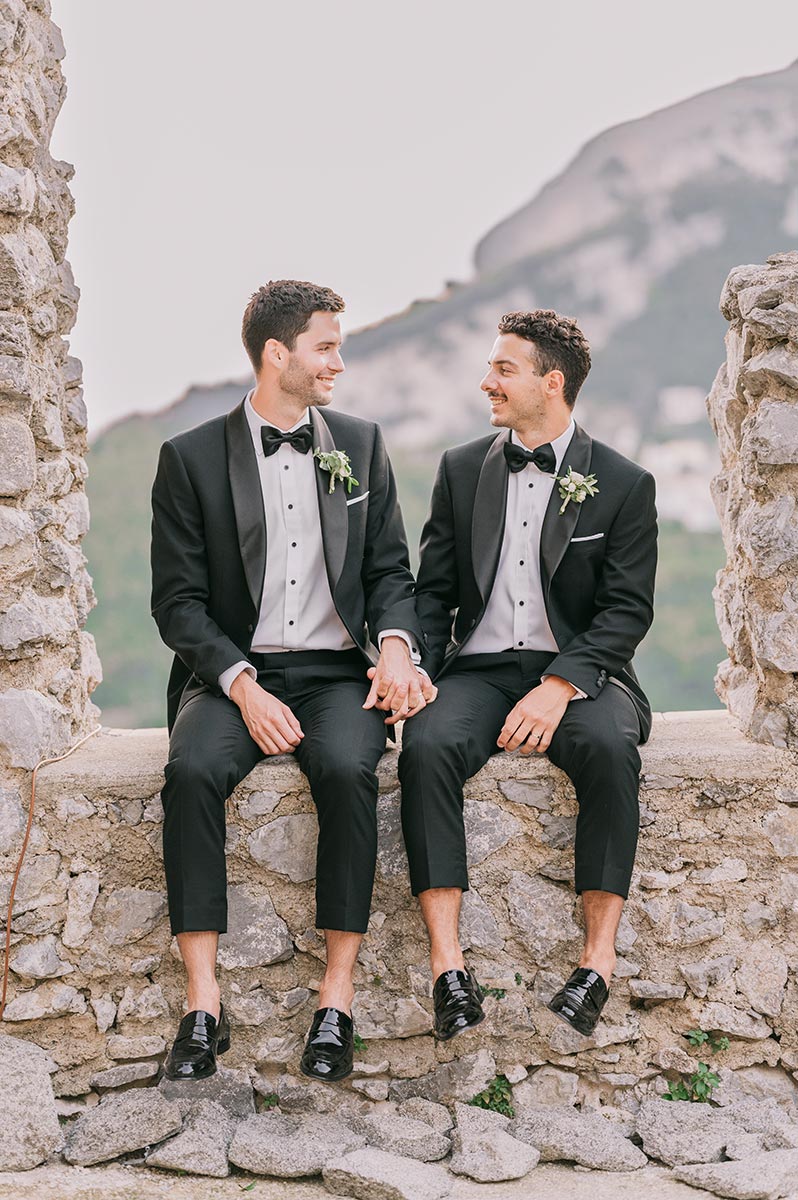
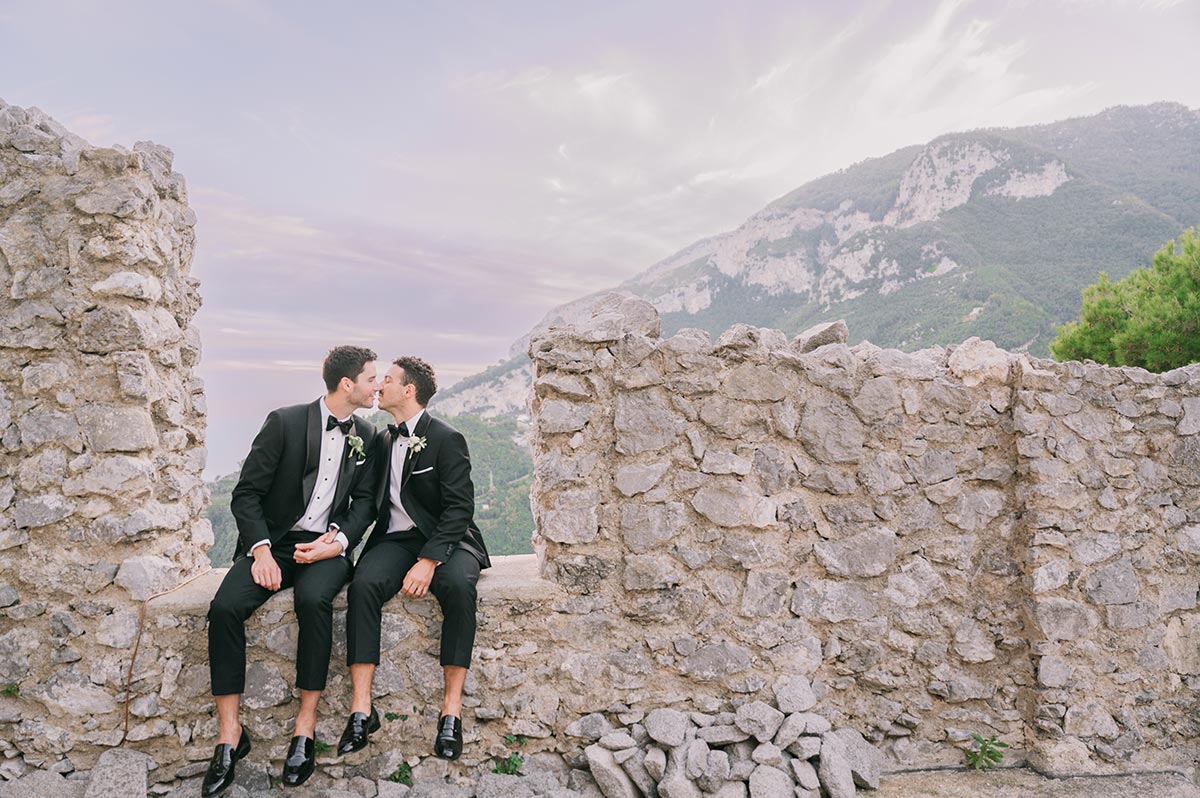
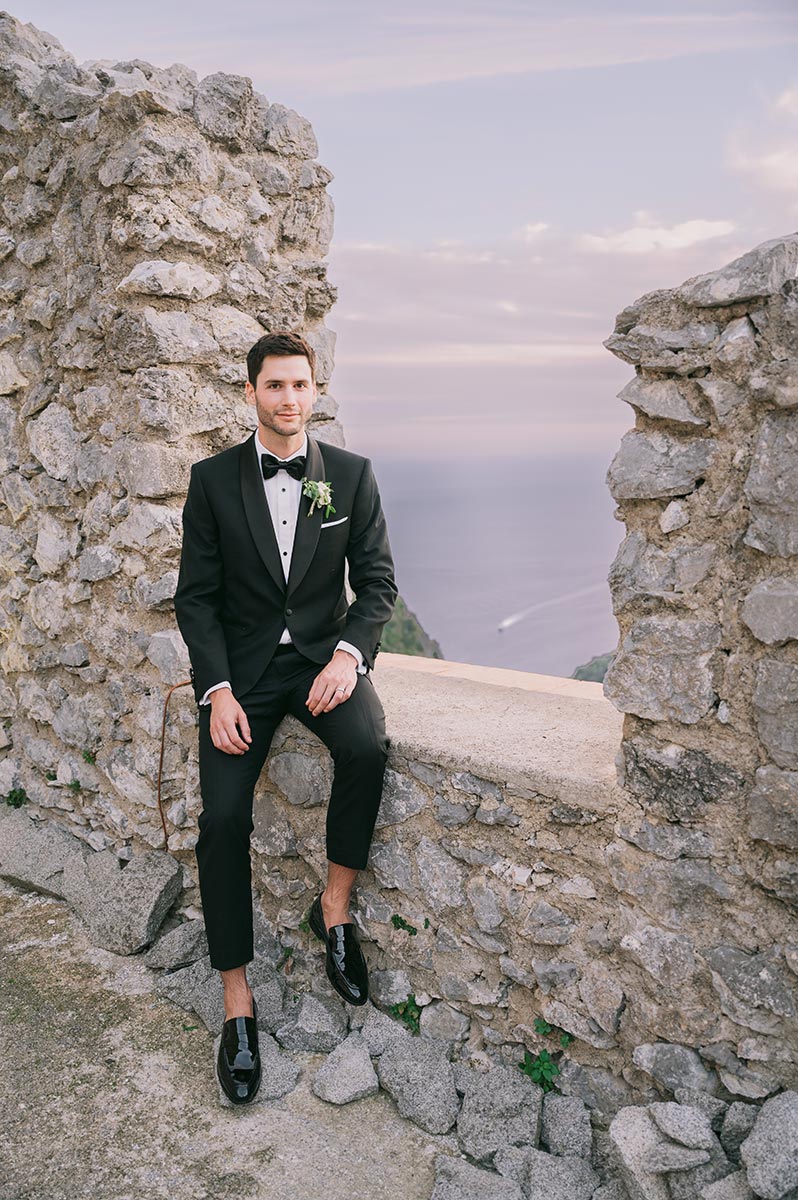
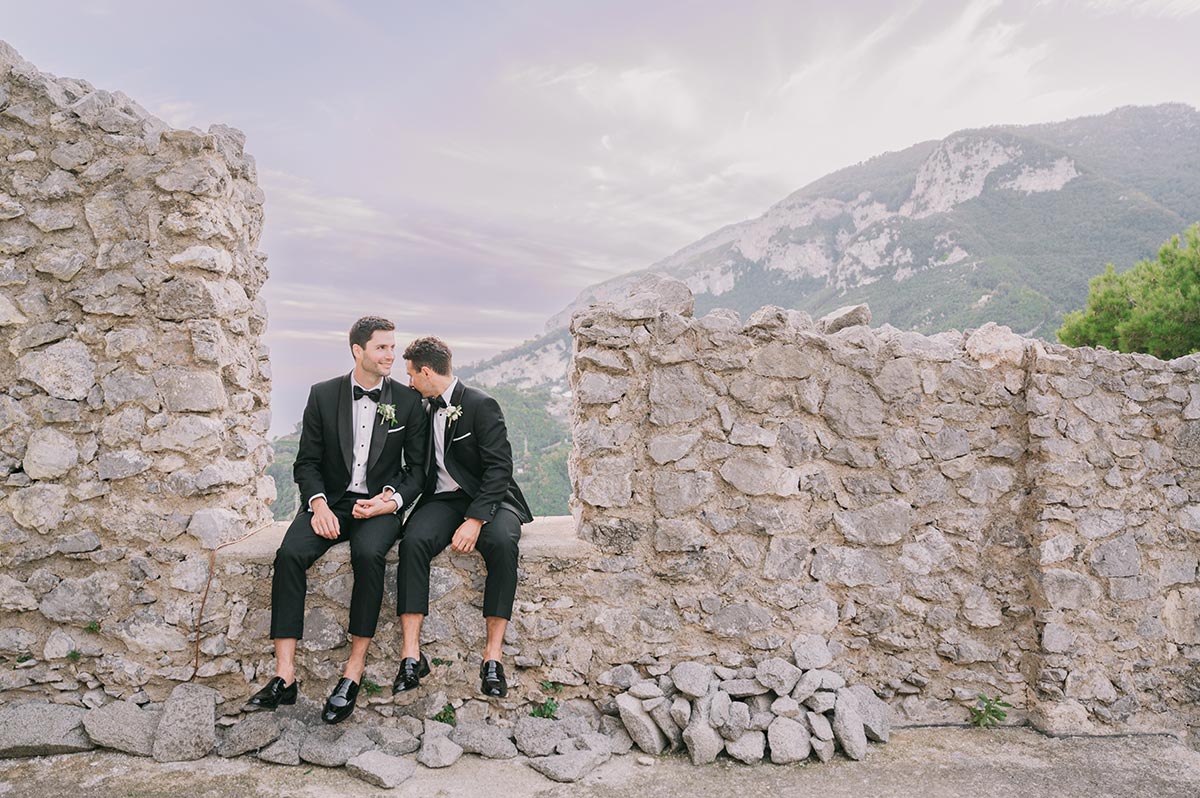
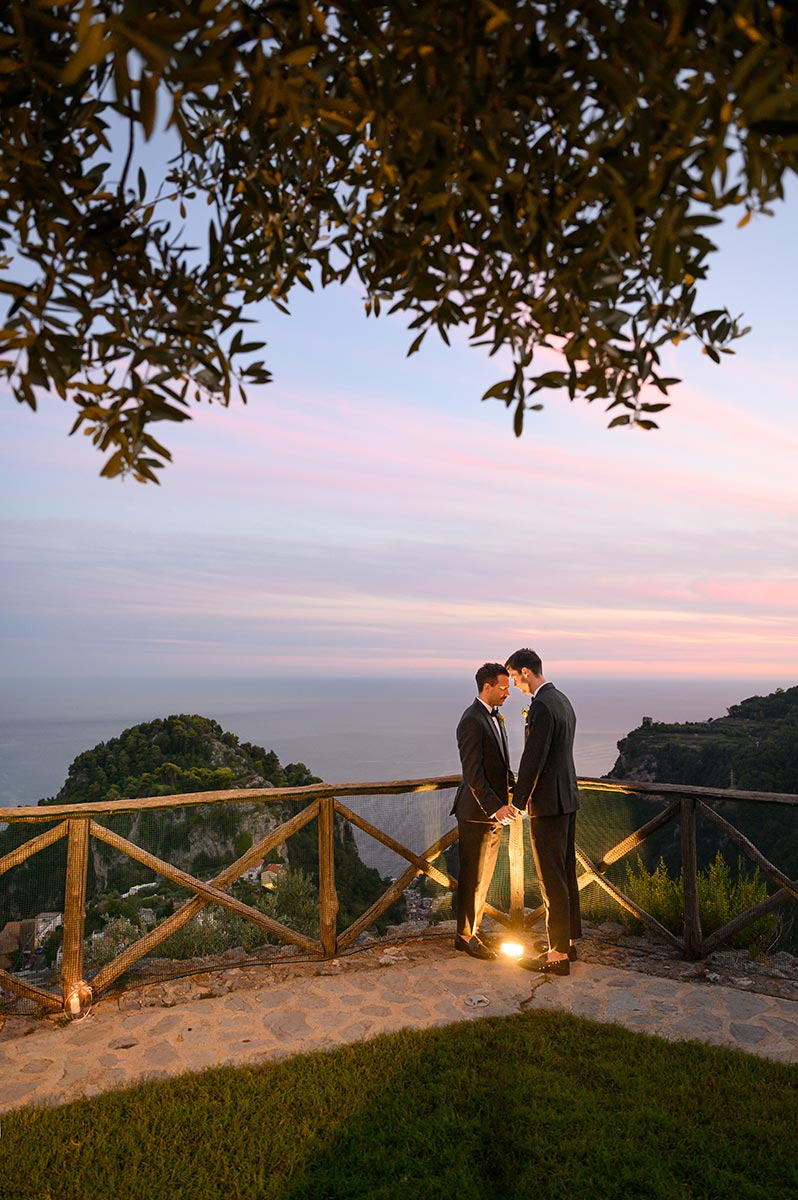
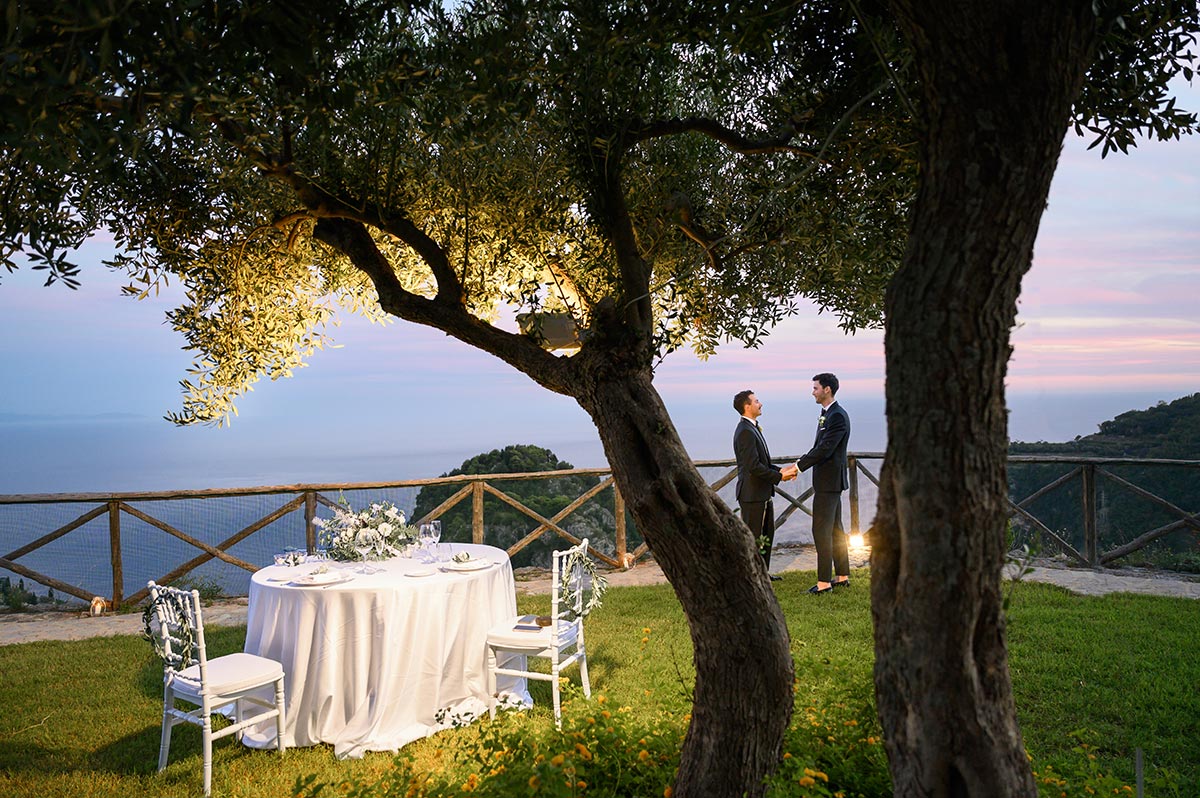
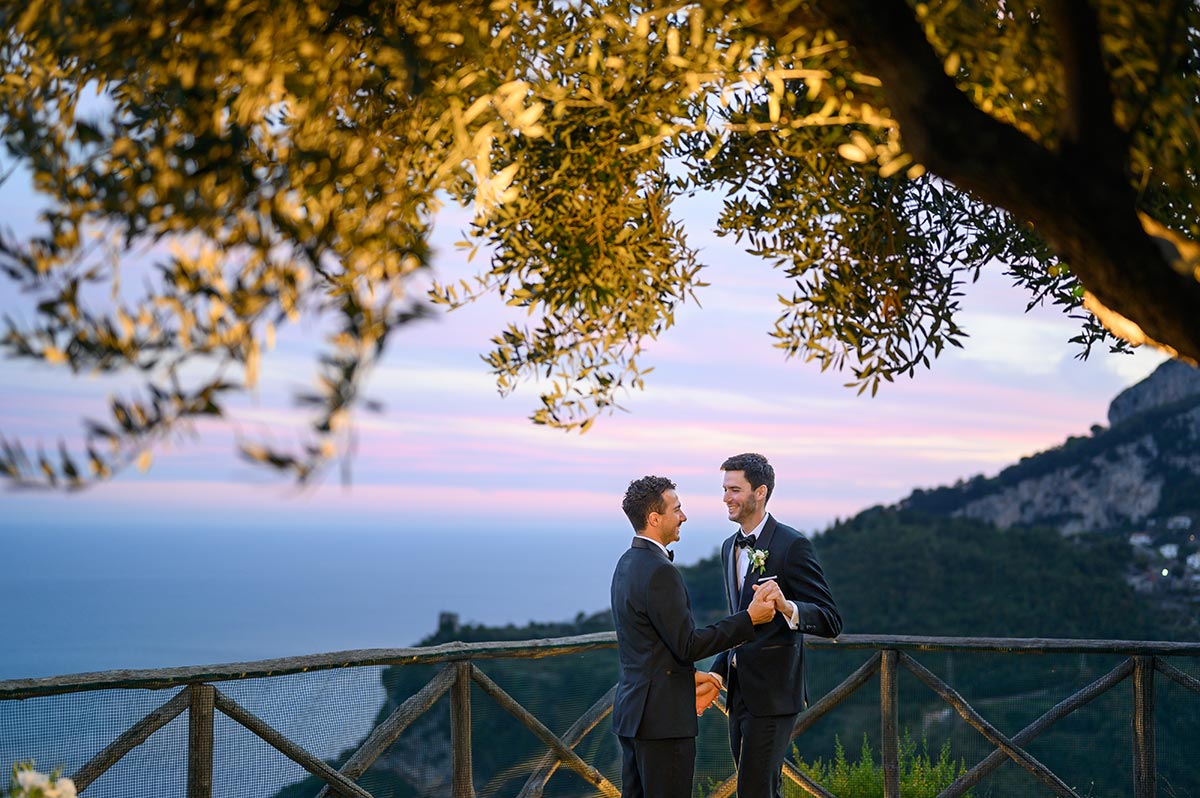
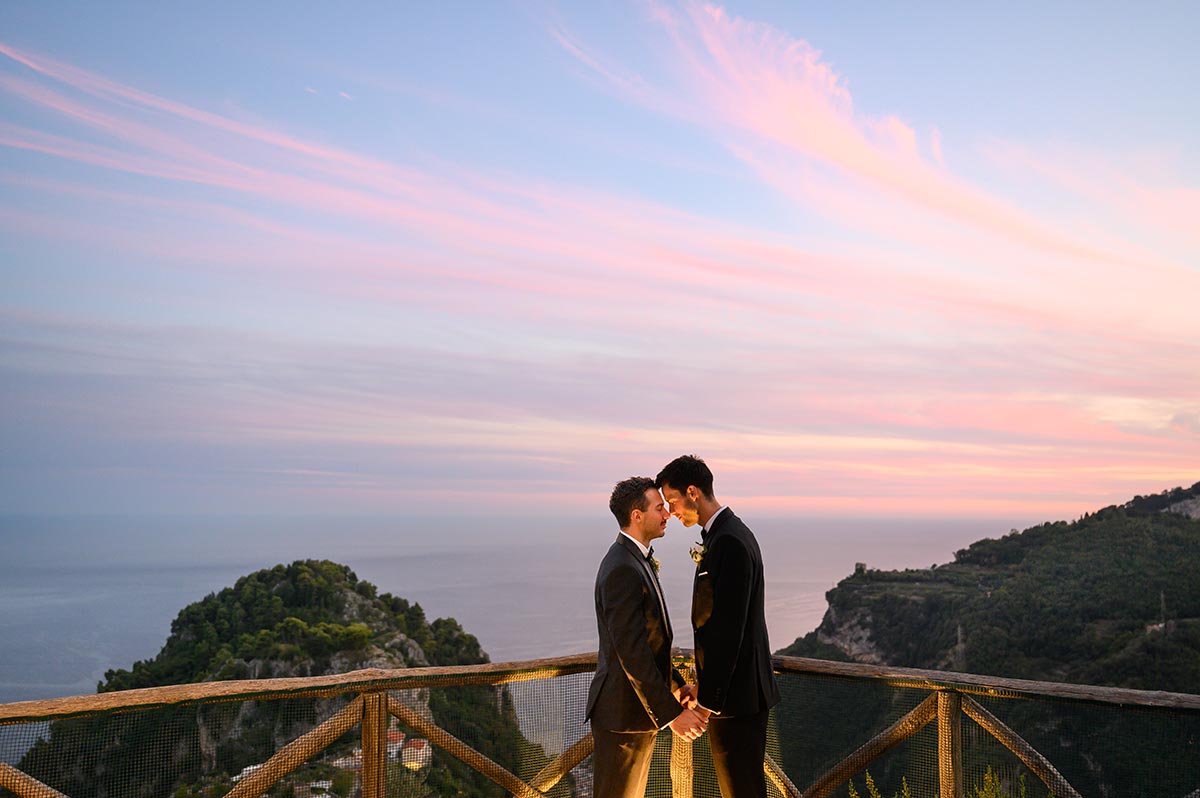
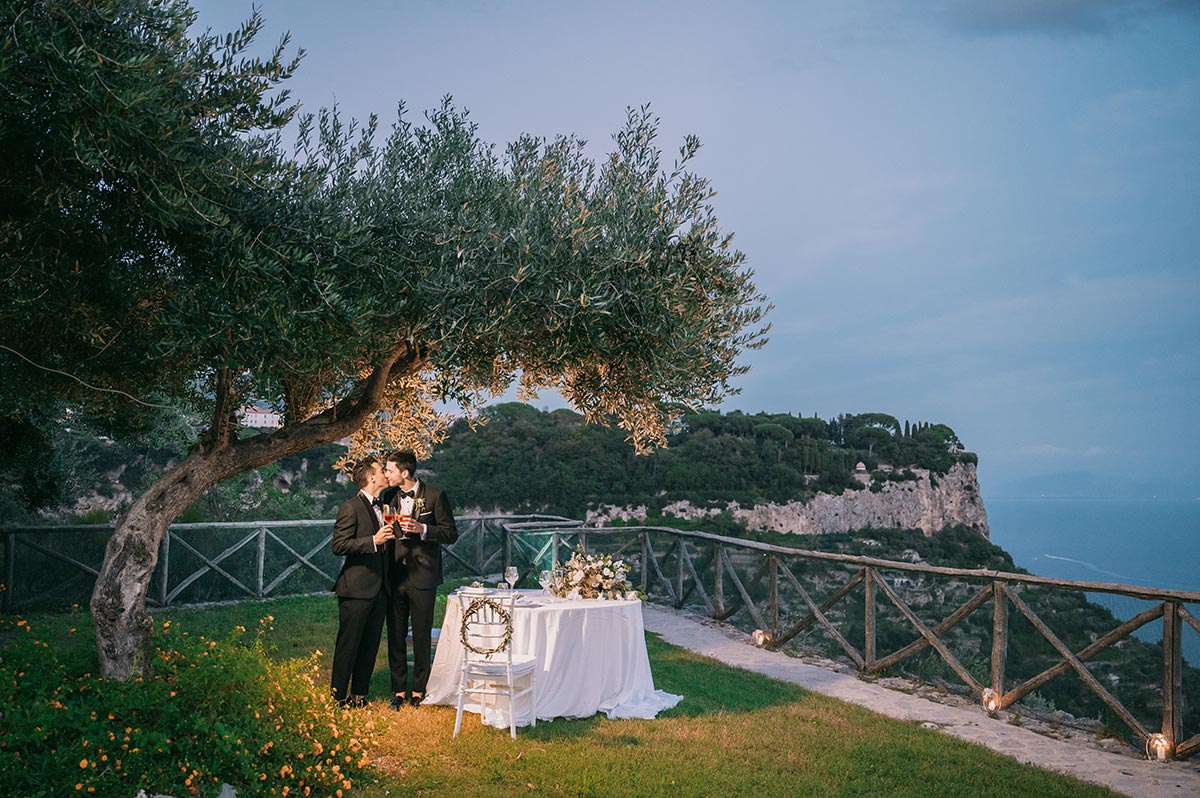
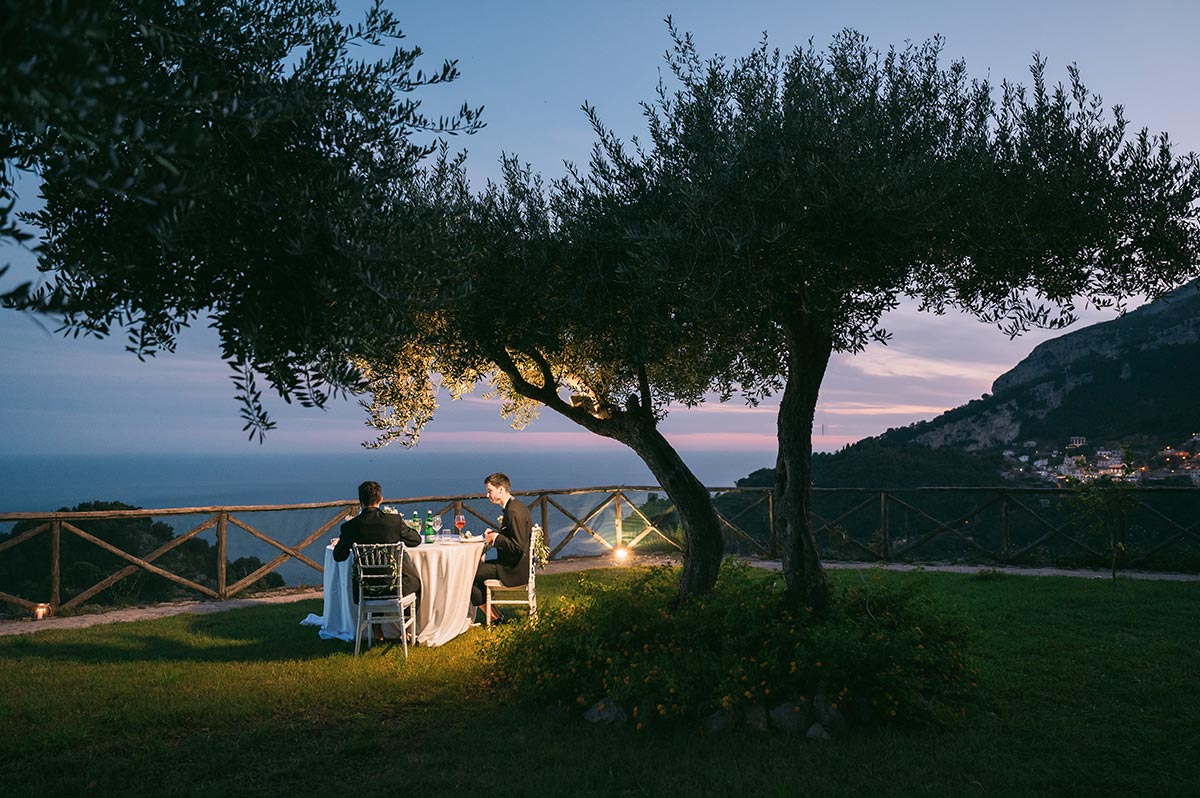
The end of the day took place at the Sant’Eustachio ruins in the little-known Pontone, which is part of the Scala municipality (right across from Ravello). The beauty of the intimate dinner was made possible thanks to the skills and professionalism of caterer Enrico Scarano. This is a summary of the day. Let’s take a closer look at each part of this two-person journey.
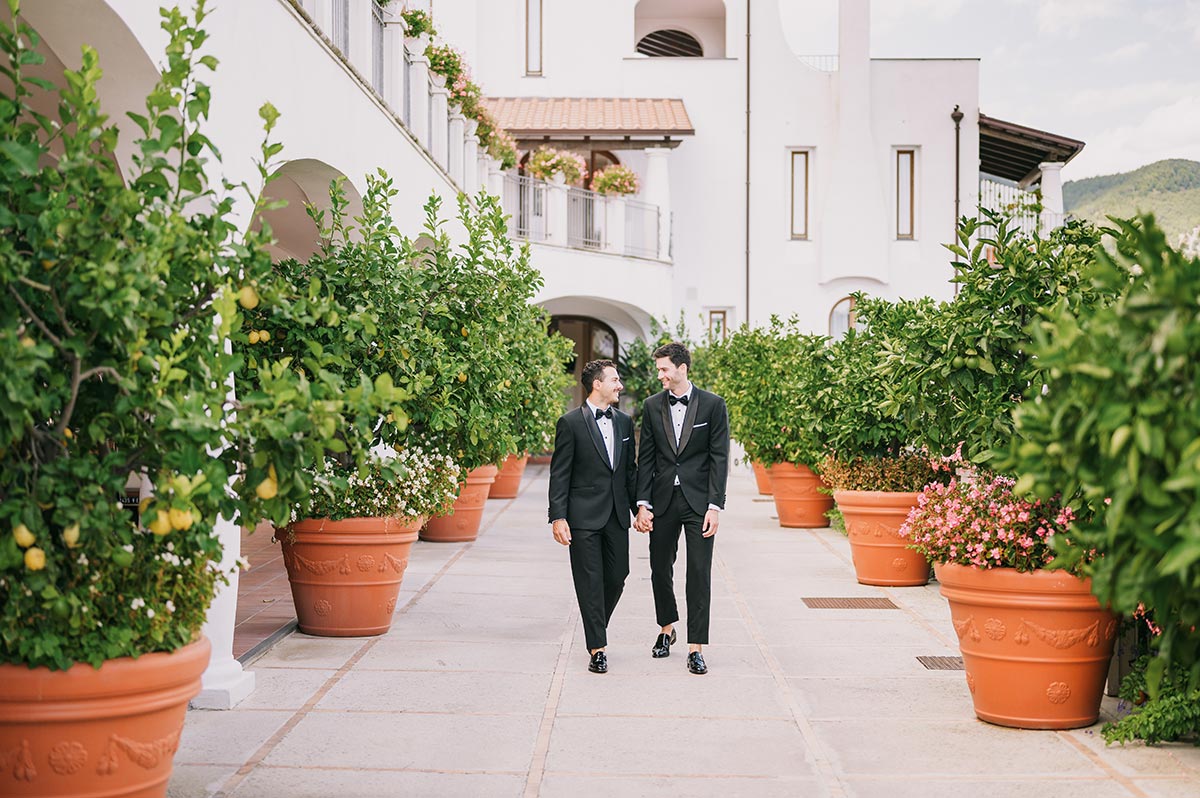
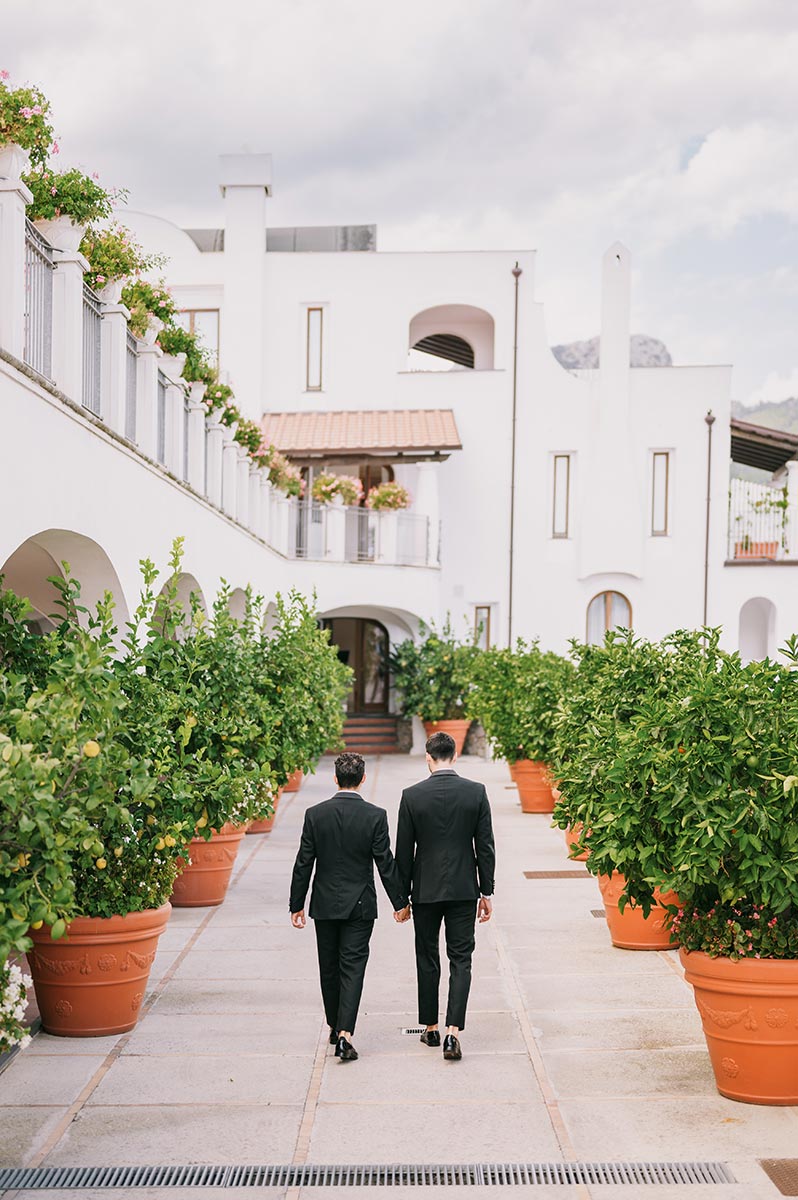
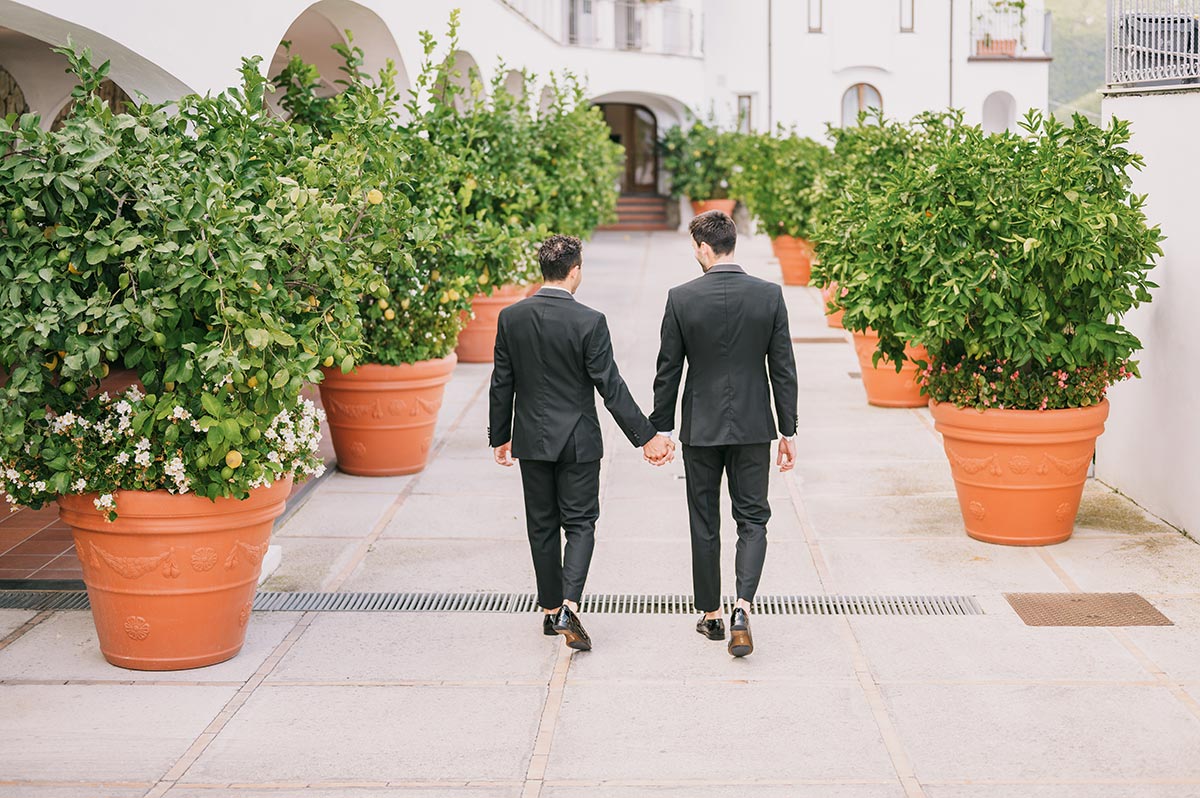
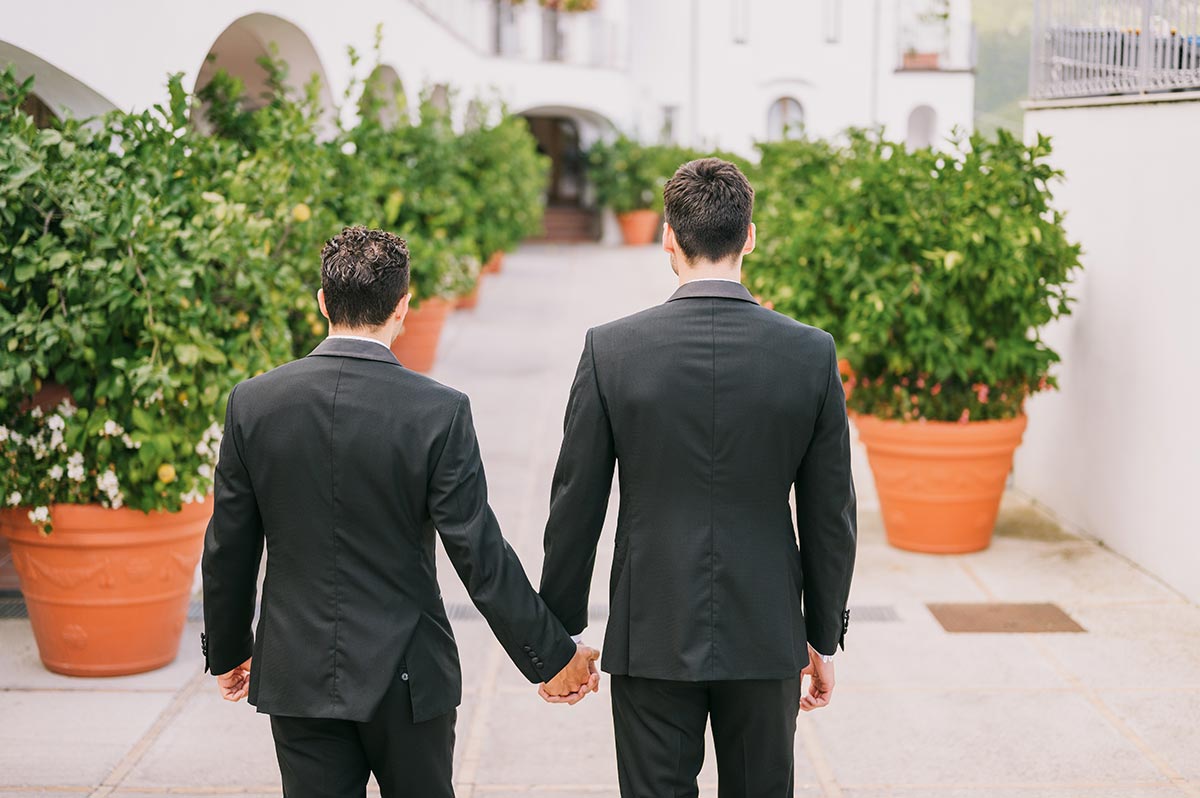
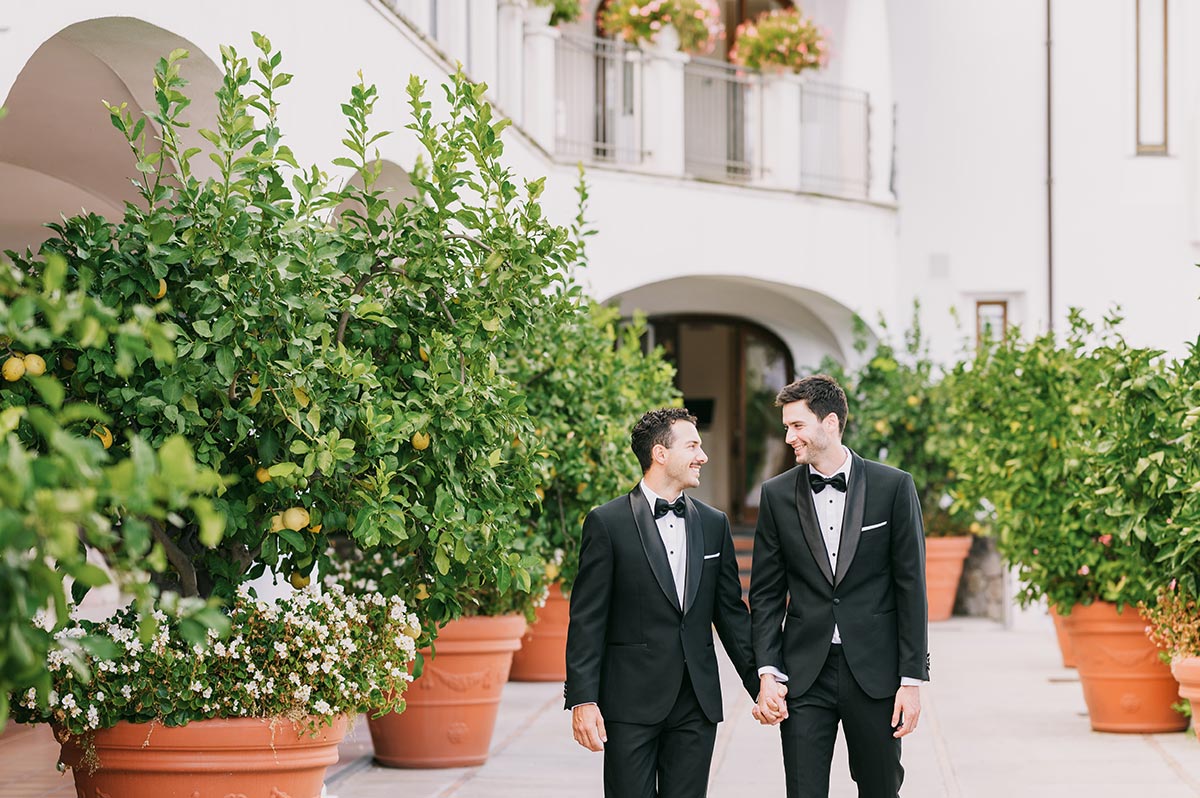
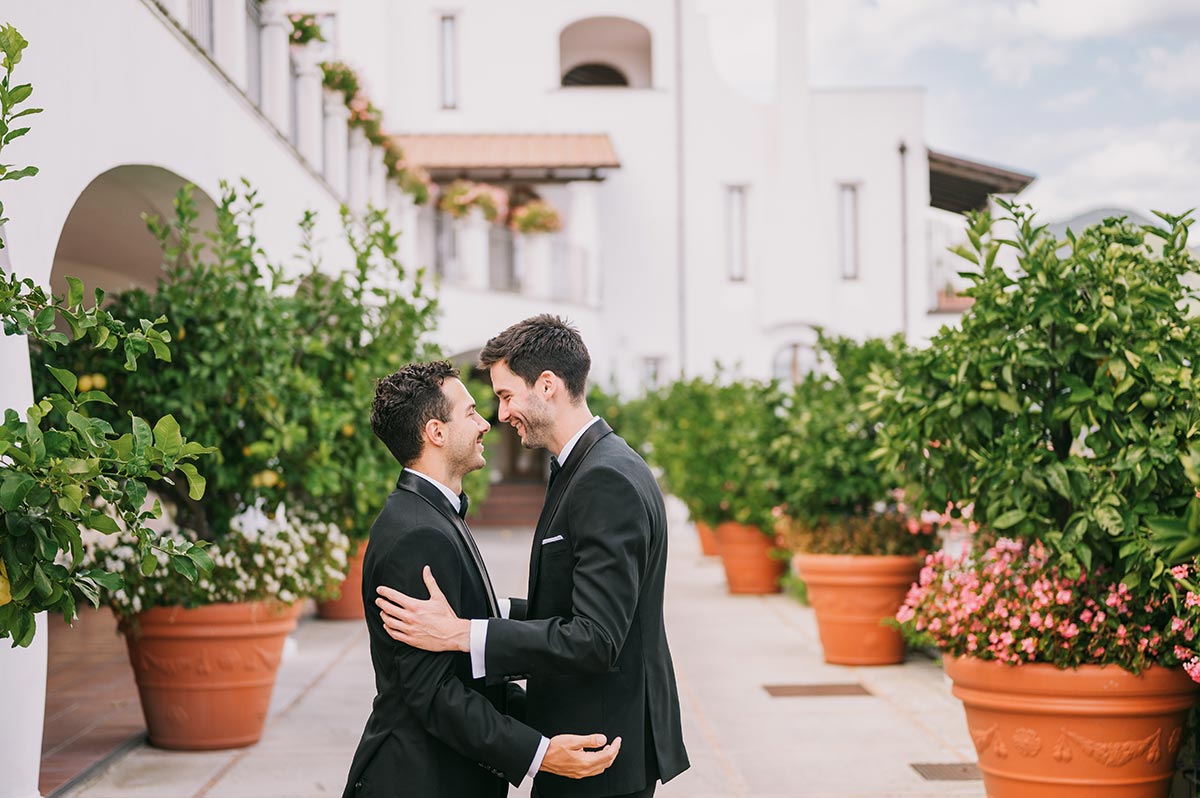

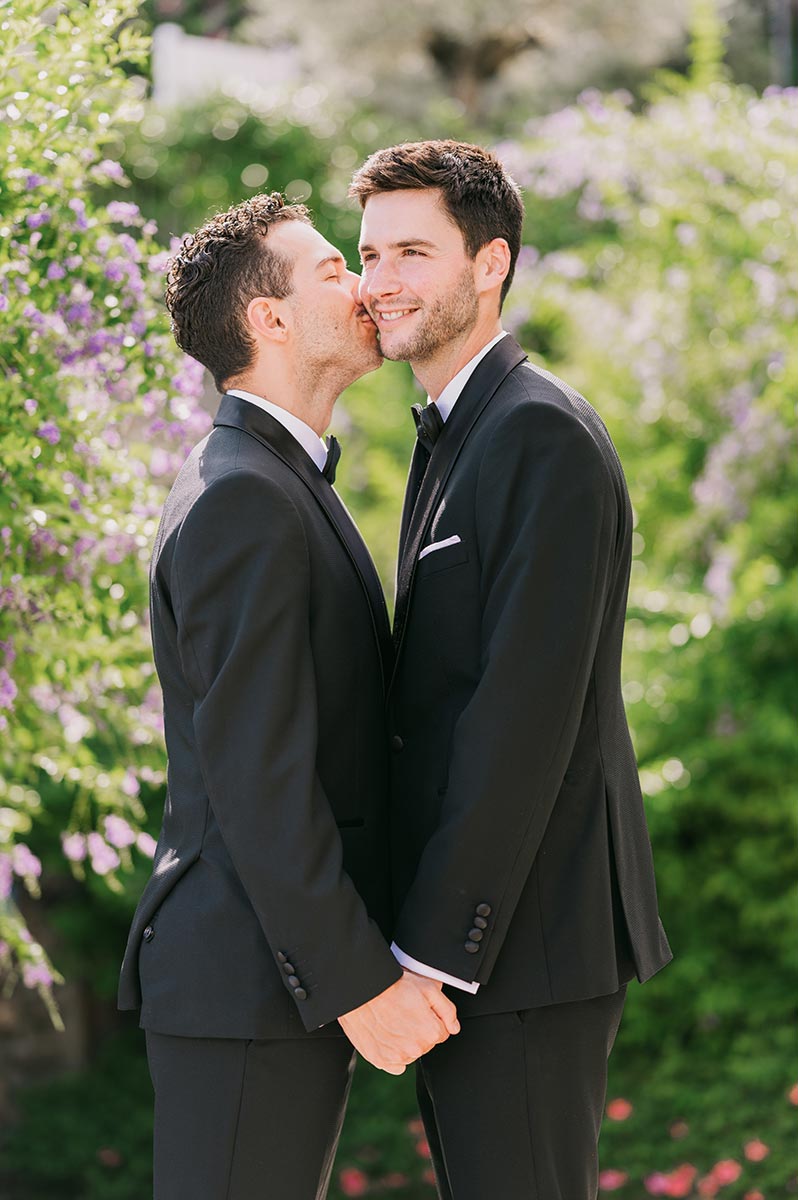
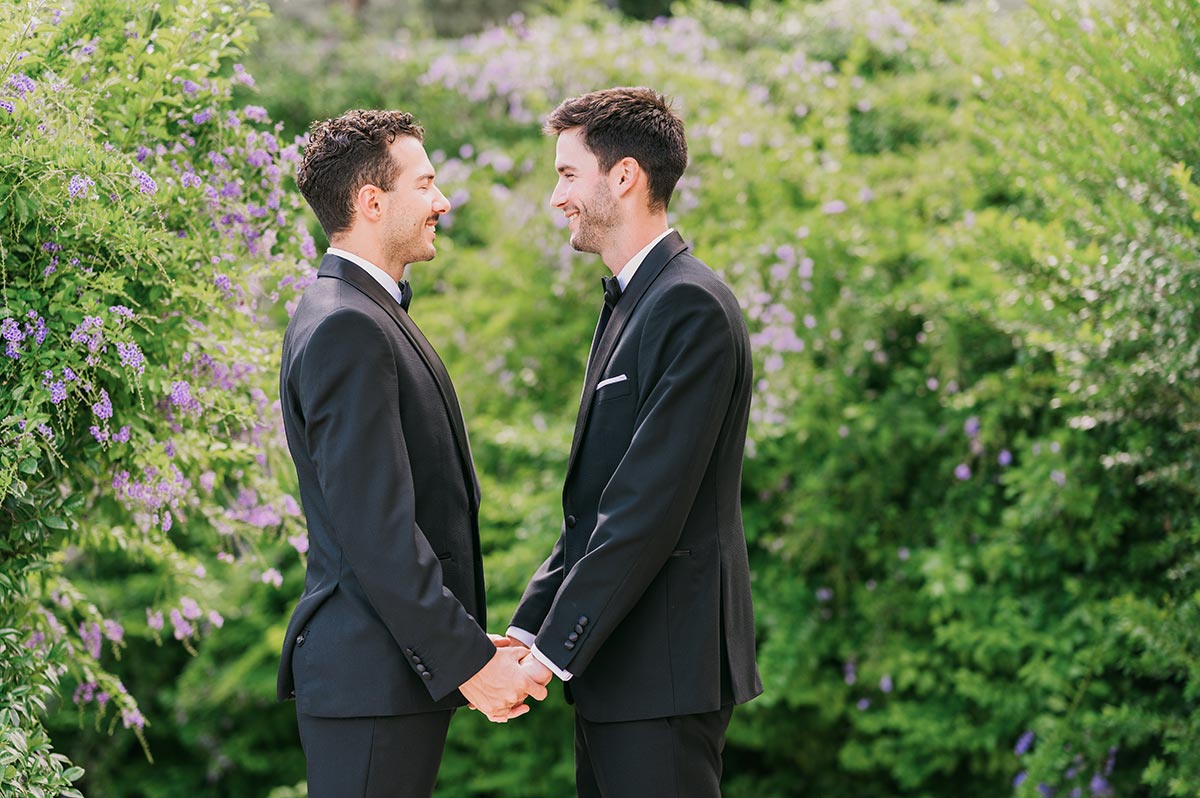
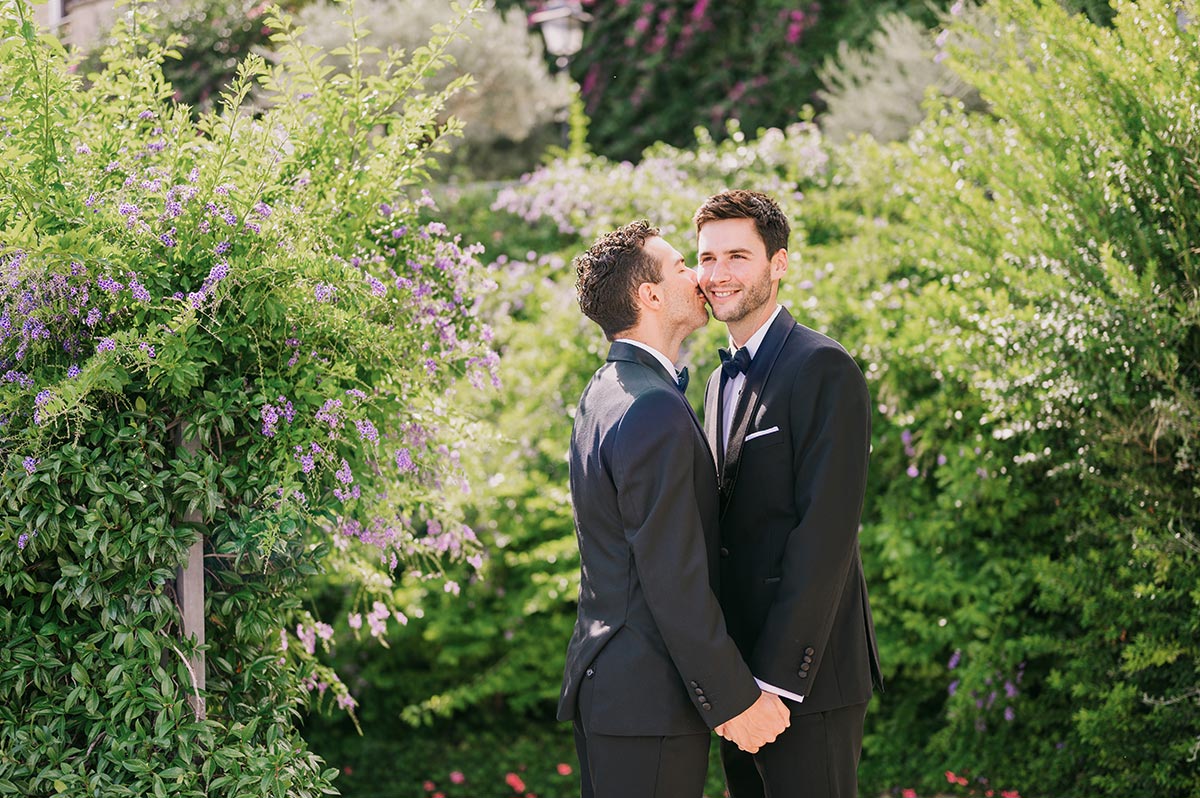
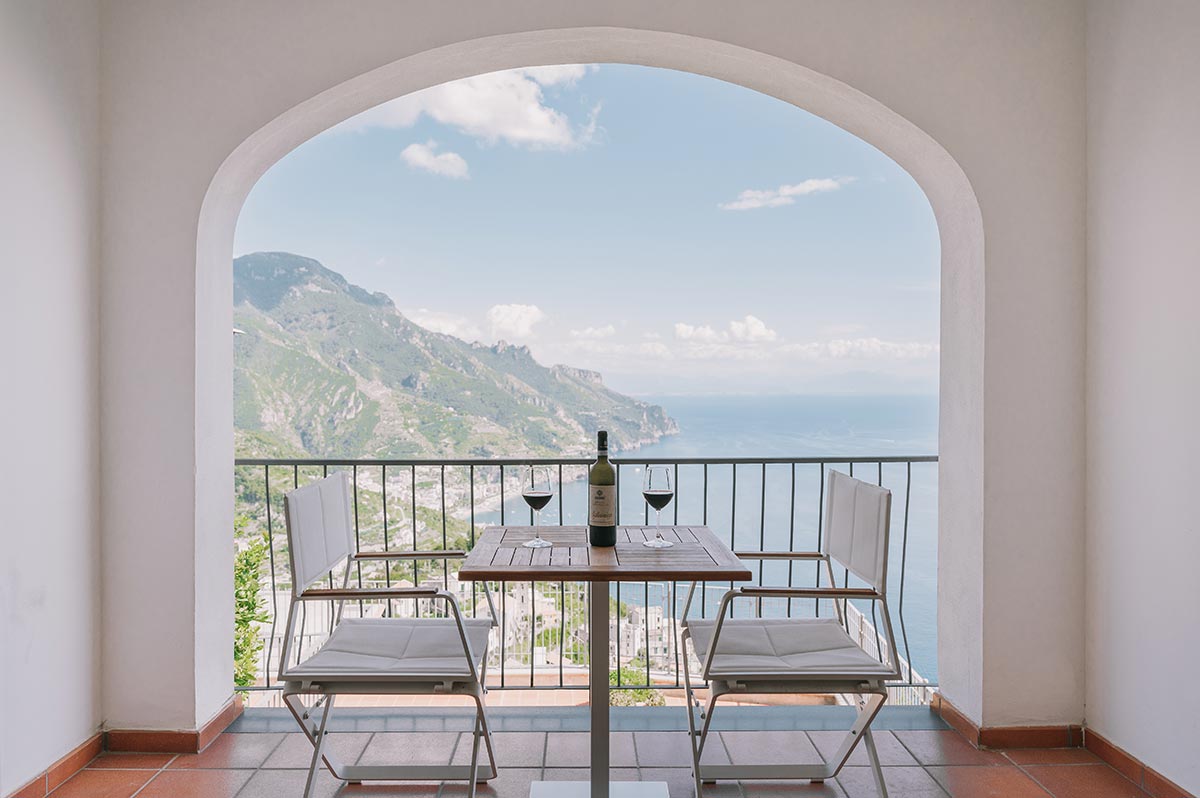
Starting with Palazzo Avino this venue has a rich history and stunning architecture that is a perfect backdrop for a wedding ceremony. The getting ready took place in a well-known B&B in Ravello with a breathtaking coast view. The owners were accommodating and provided a comfortable and beautiful setting for the couple to get ready.
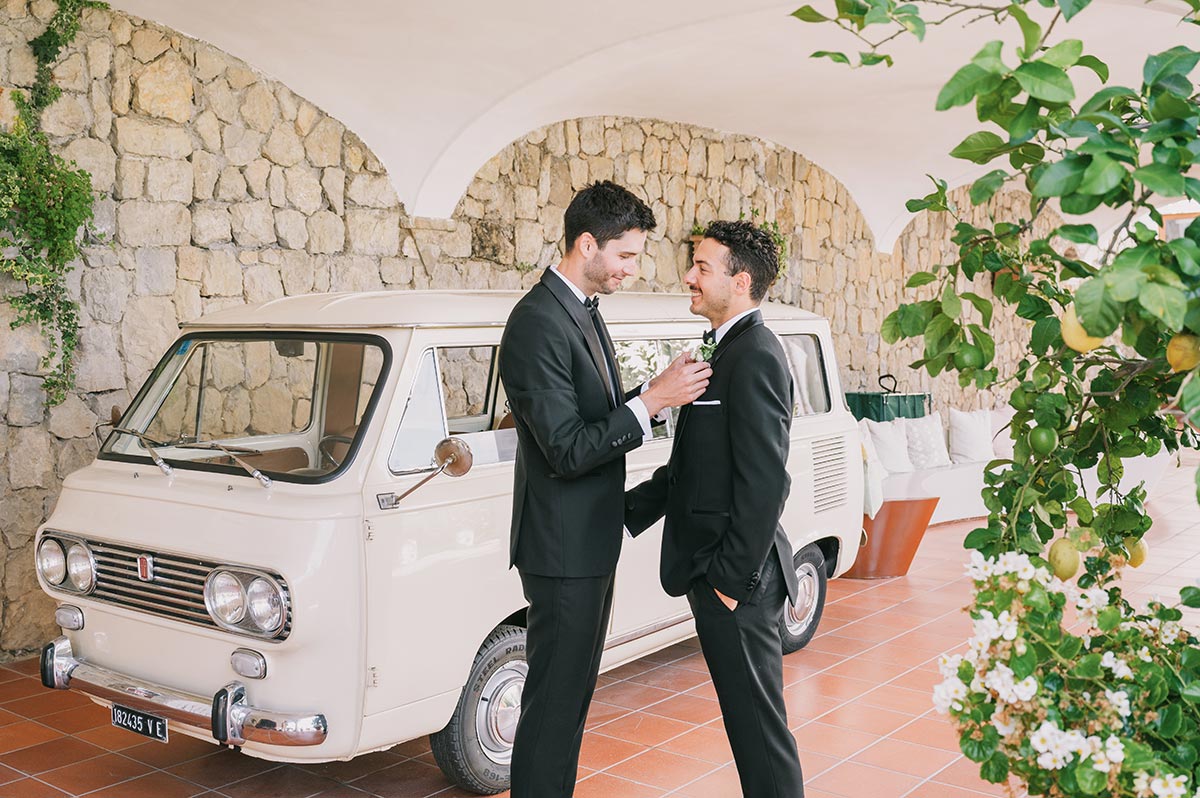
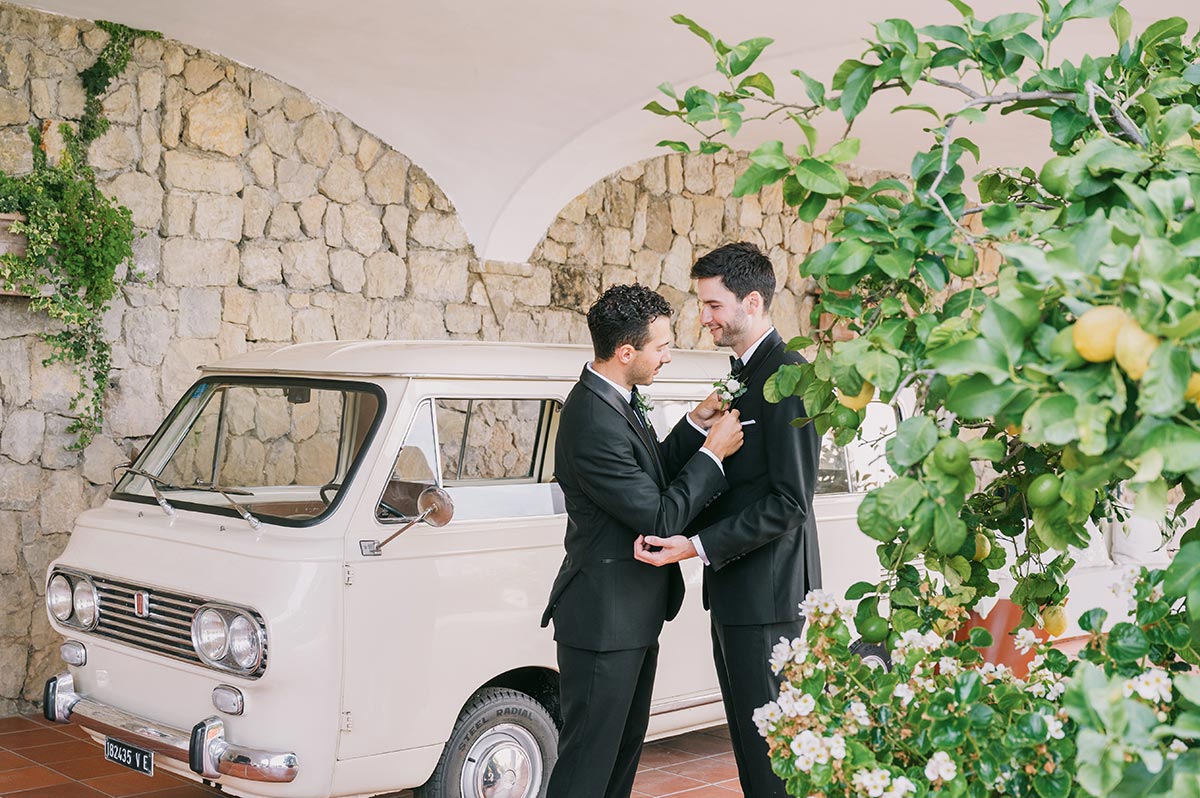
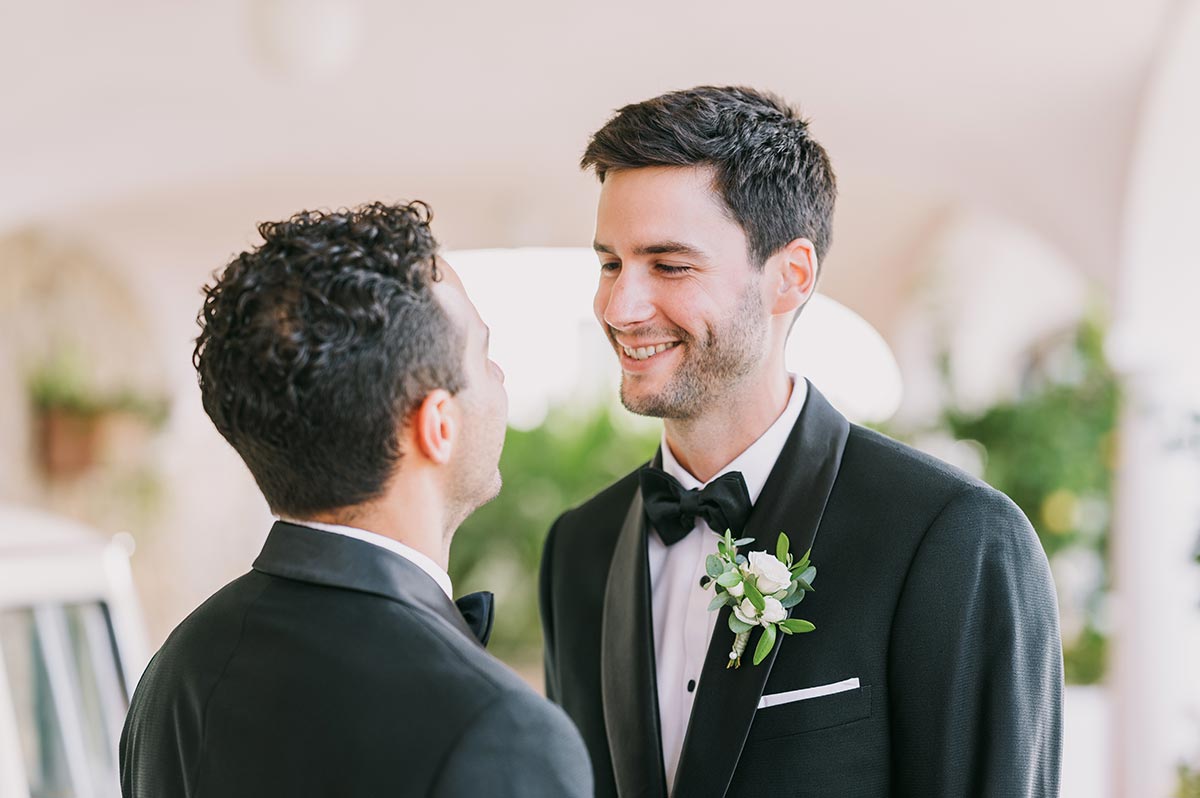
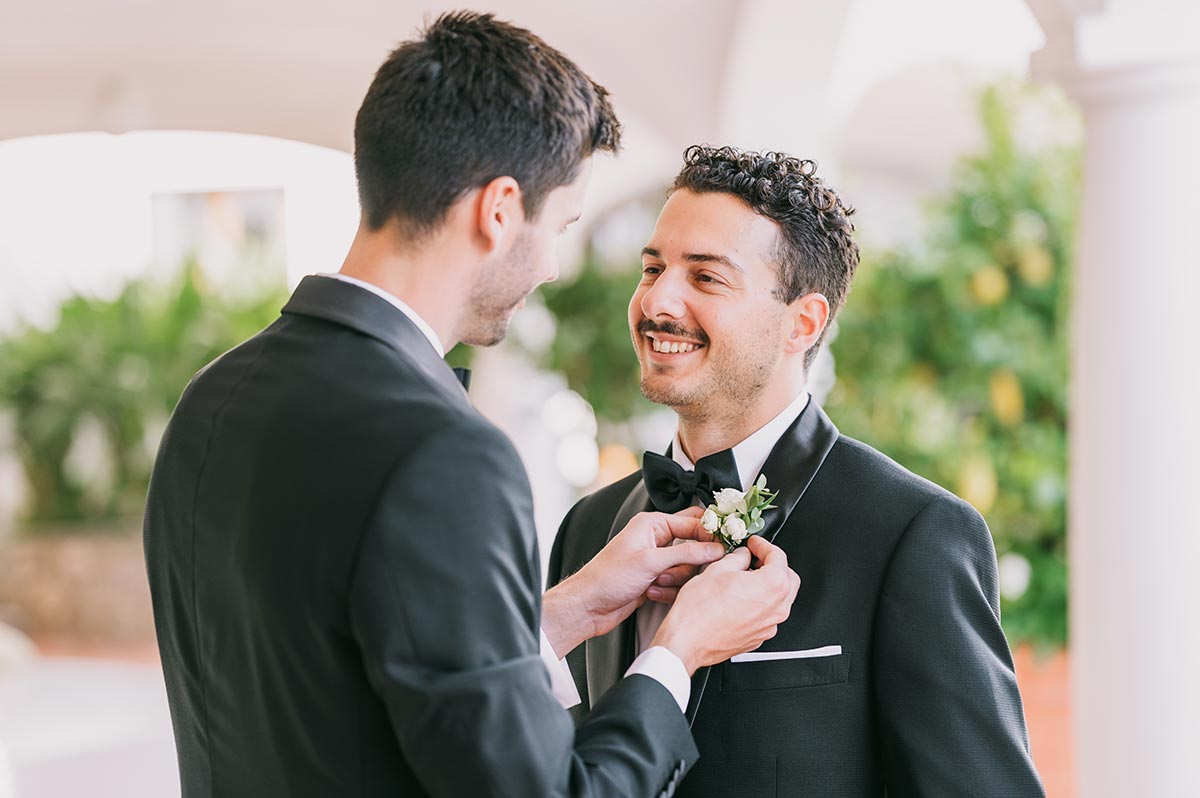
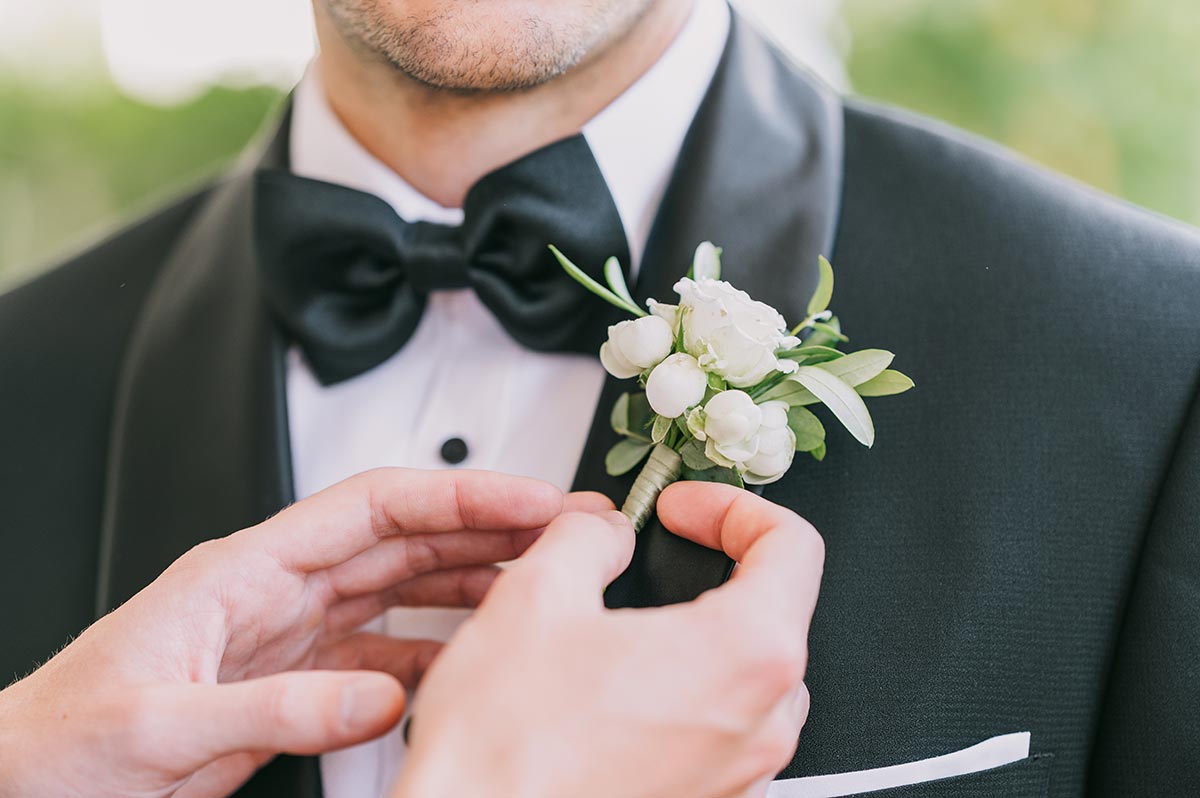
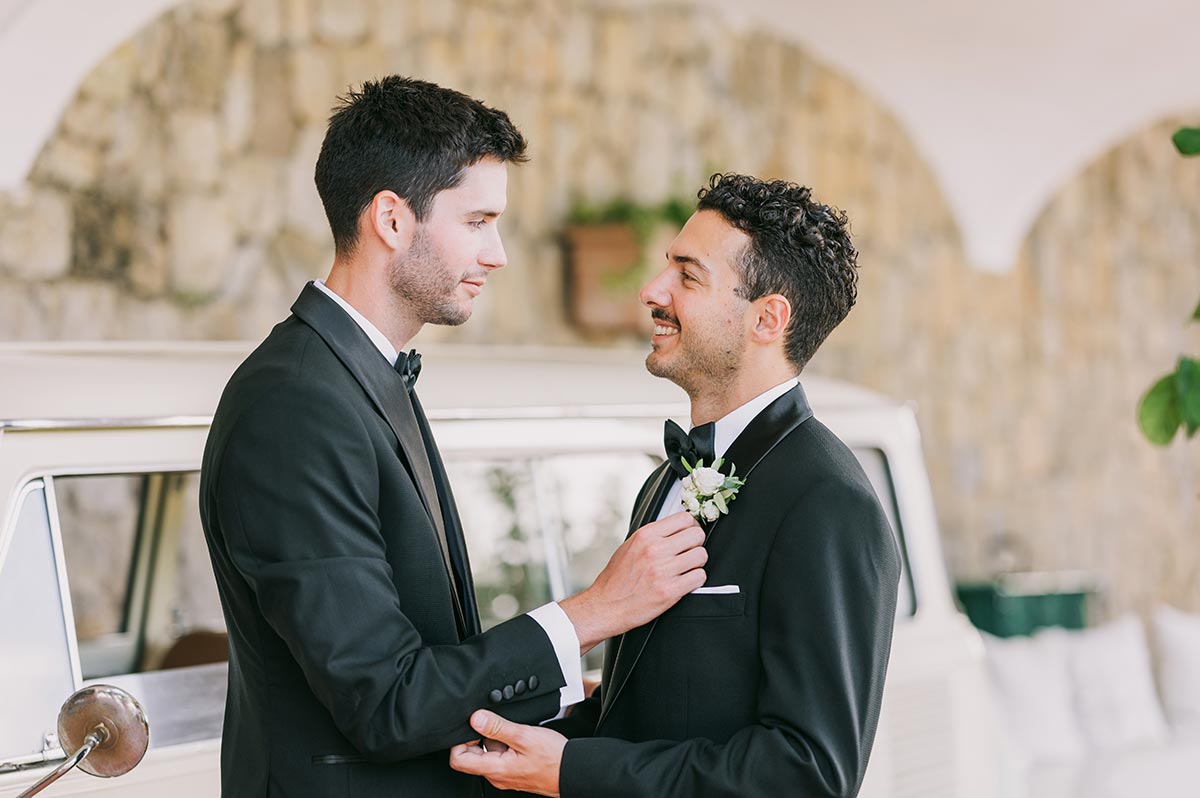
Next, we have Palazzo Confalone, a hotel I love and recommend. The hotel has a charming ambiance, and the staff was accommodating in providing a perfect setting for the photos.
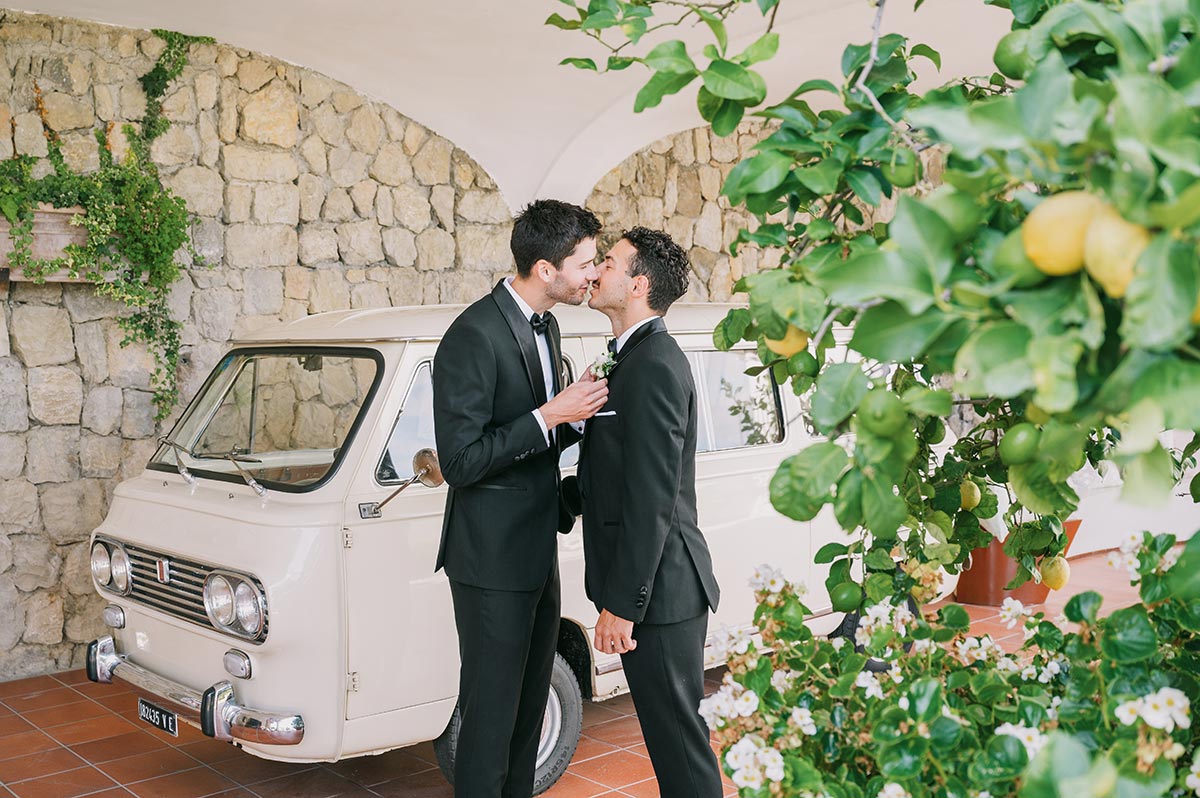
Josh and John were willing to go along with all my ideas, making the most of the opportunity to capture stunning images.
MEMORABLE WEDDINGS WITH A RAVELLO WEDDING PHOTOGRAPHER
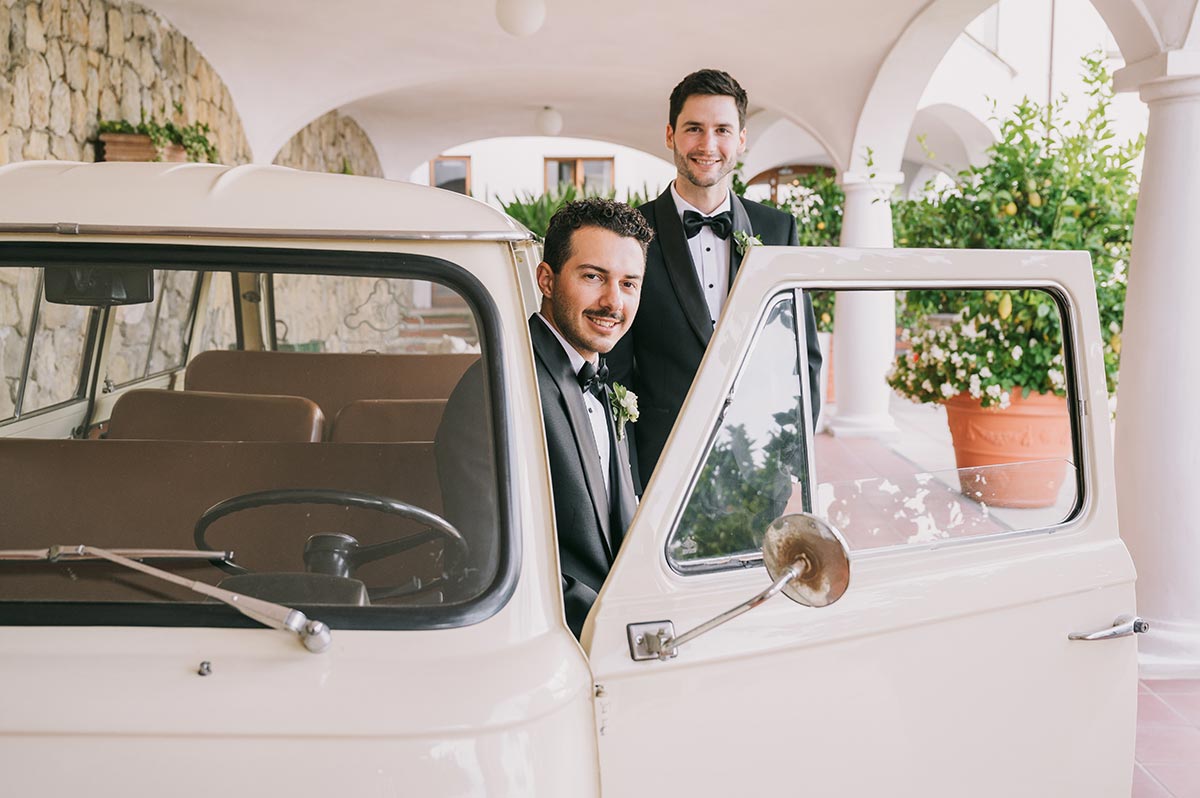
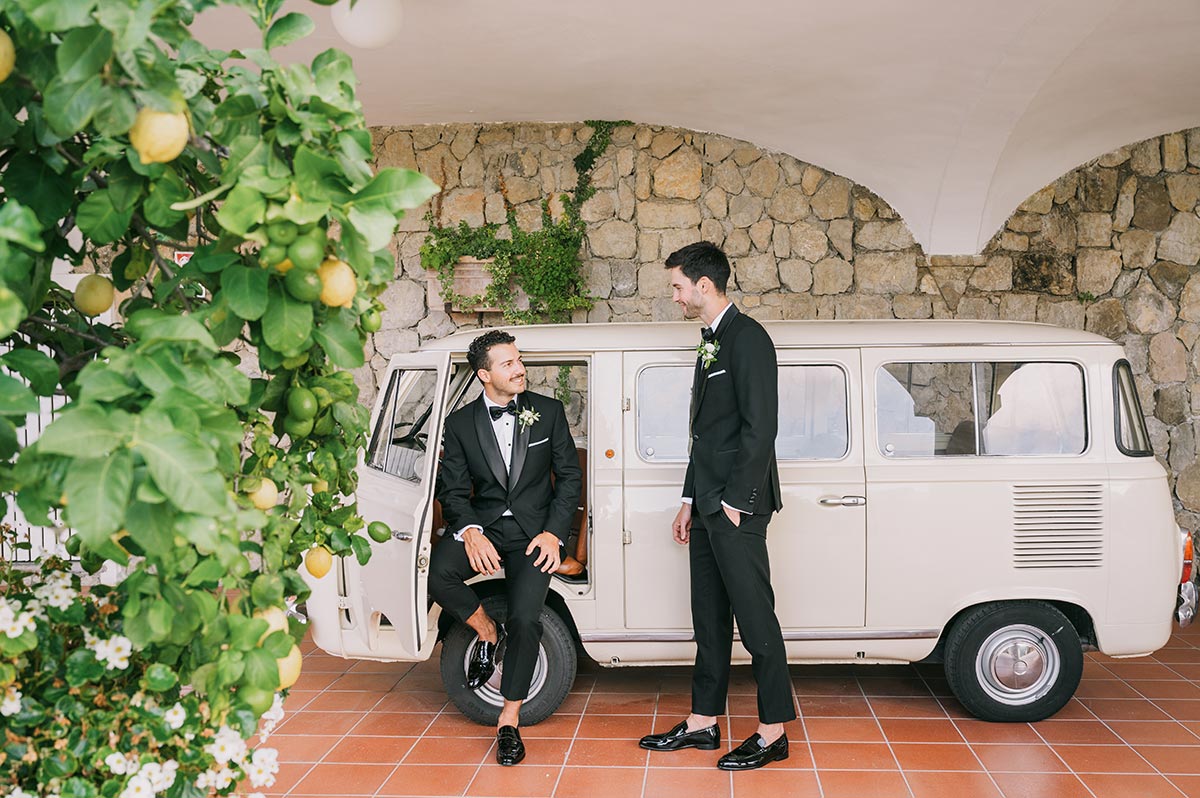
IF YOU THINK OF HIRING ME, IT MEANS THAT YOU SHARE THIS VISION AND WE HAVE MANY THINGS IN COMMON.

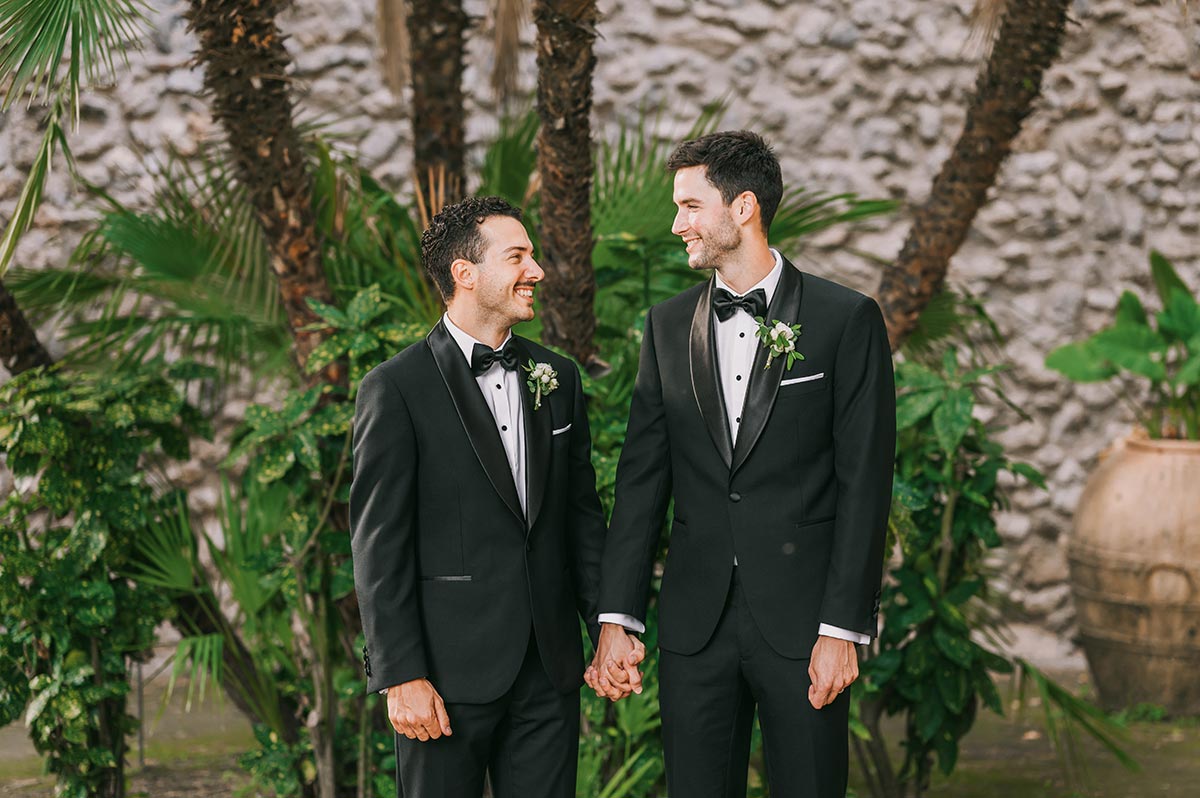
Villa Rufolo was also an essential part of this journey. The stunning gardens and lush greenery provided a perfect setting for gorgeous wedding photos. Josh and John were so happy to be able to take advantage of this beautiful location, and it was a great pleasure for me to capture these special moments.
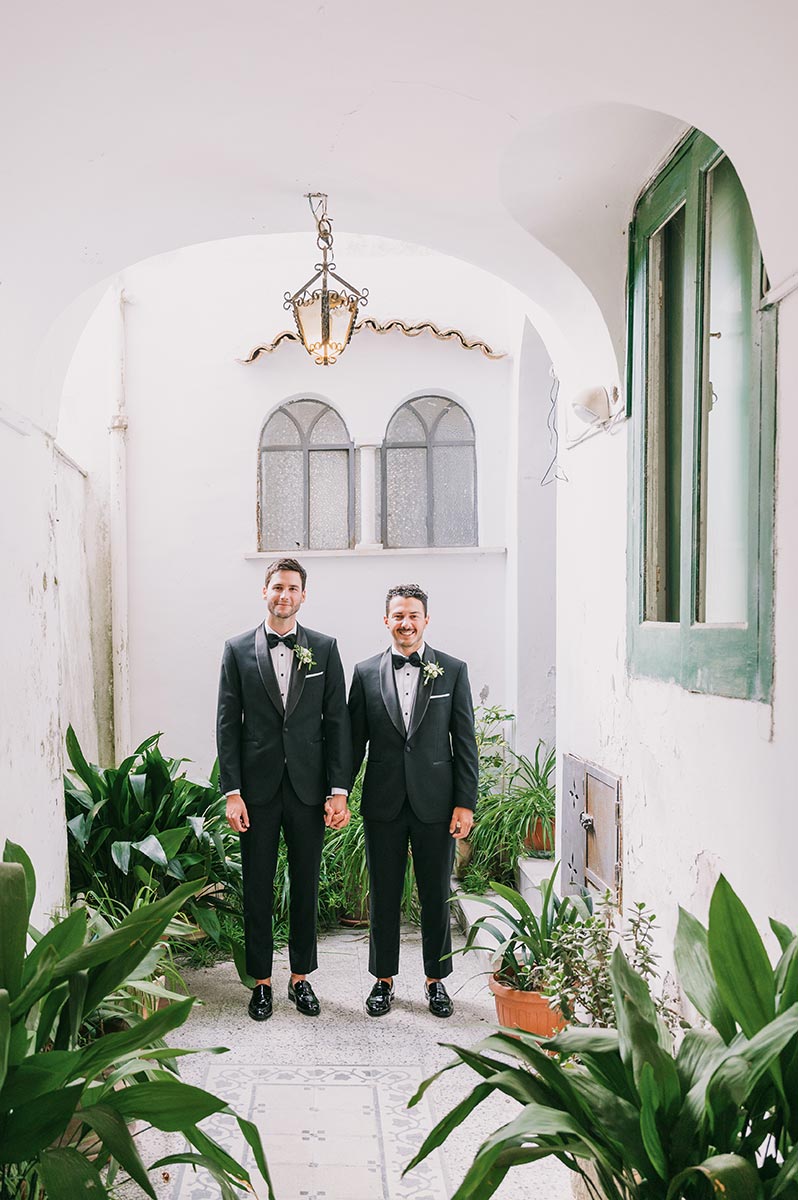

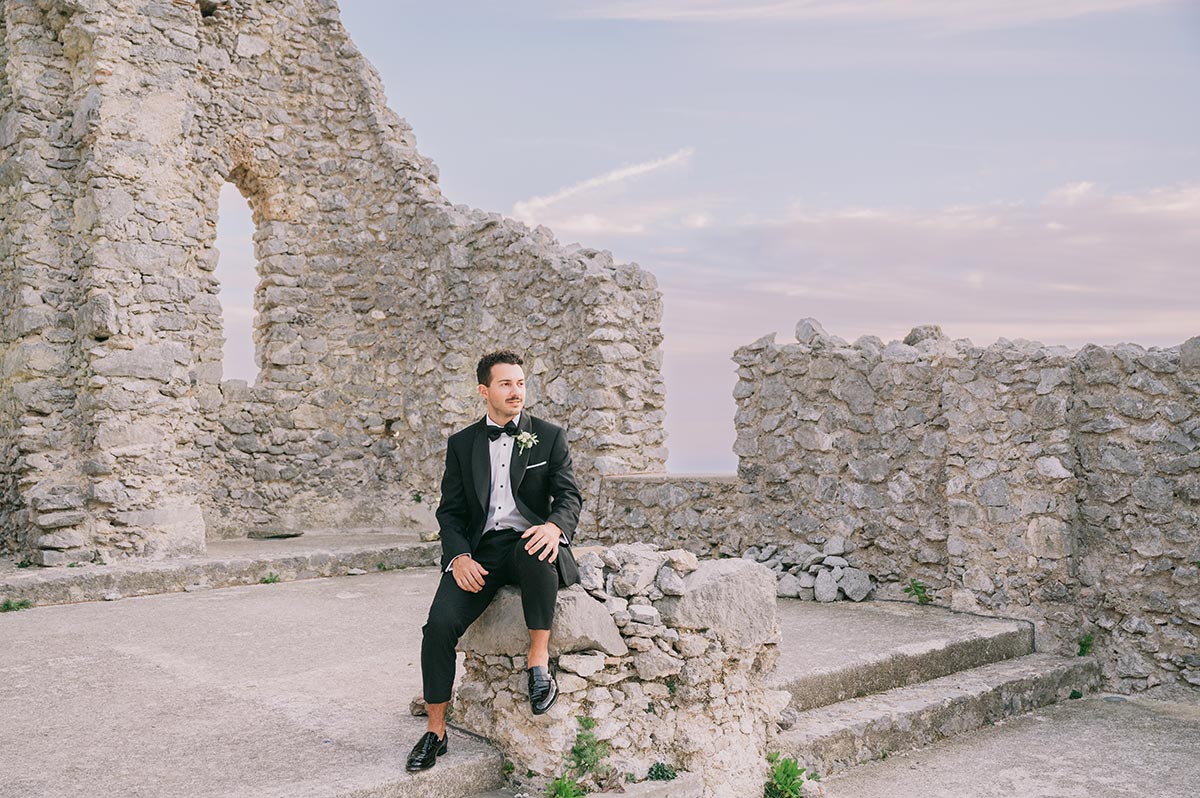
Finally, we come to the Sant’Eustachio ruins in Pontone. This location is little known, but it is truly a hidden gem. The stunning views and beautiful sunset made for a perfect end to this fantastic day.
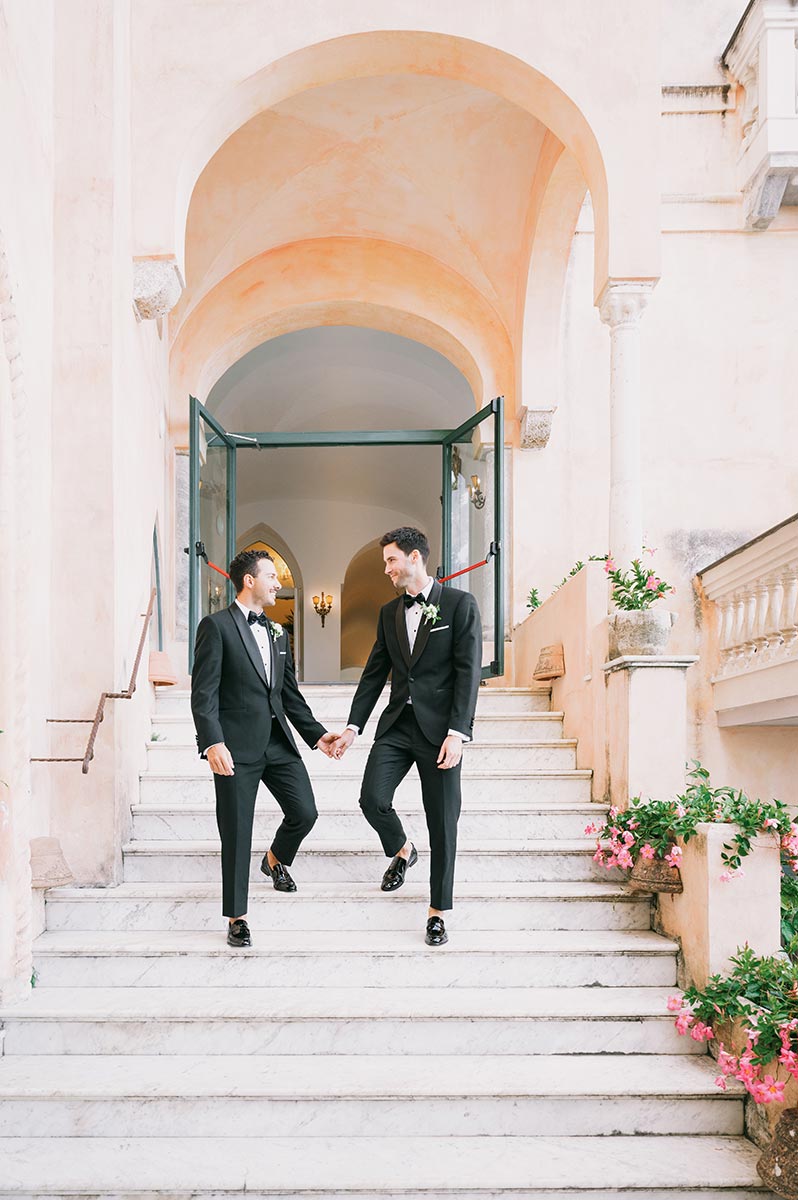

The intimate dinner that followed was made possible by the fantastic skills of Enrico. This summarizes the day. Let’s now see each point of this two-person journey.
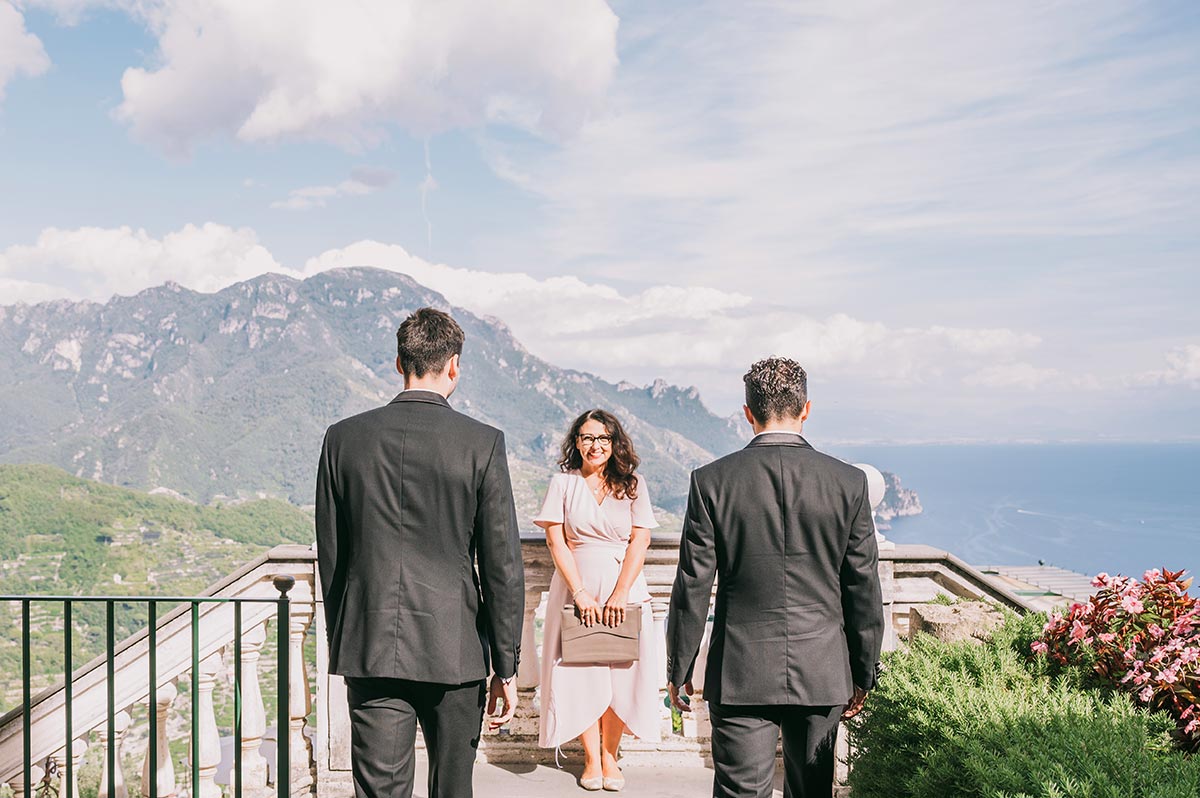
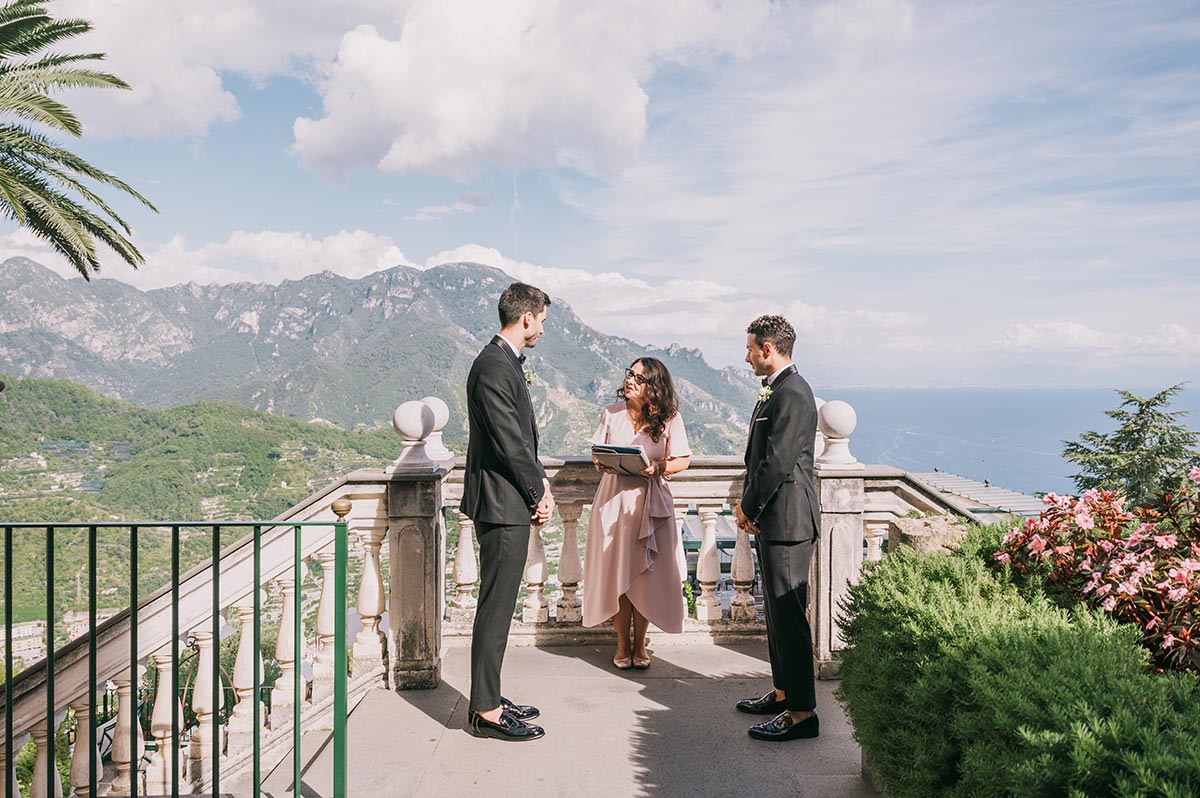

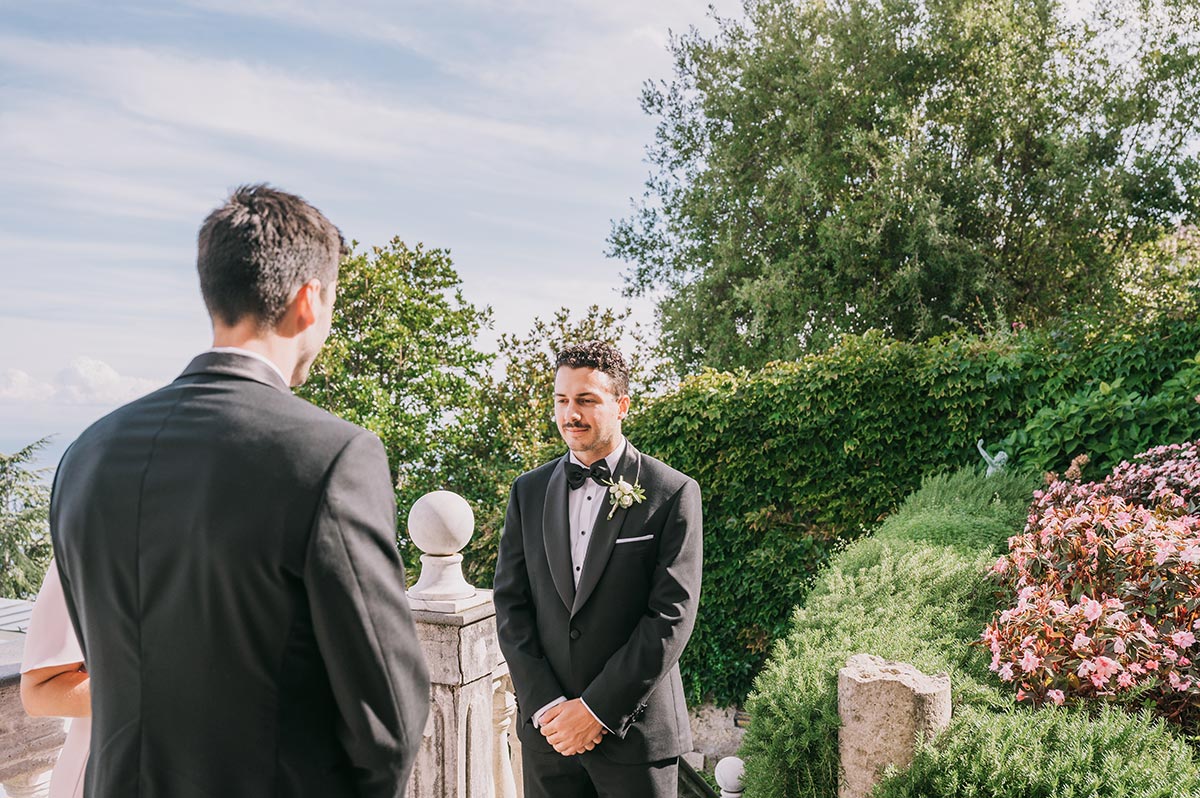
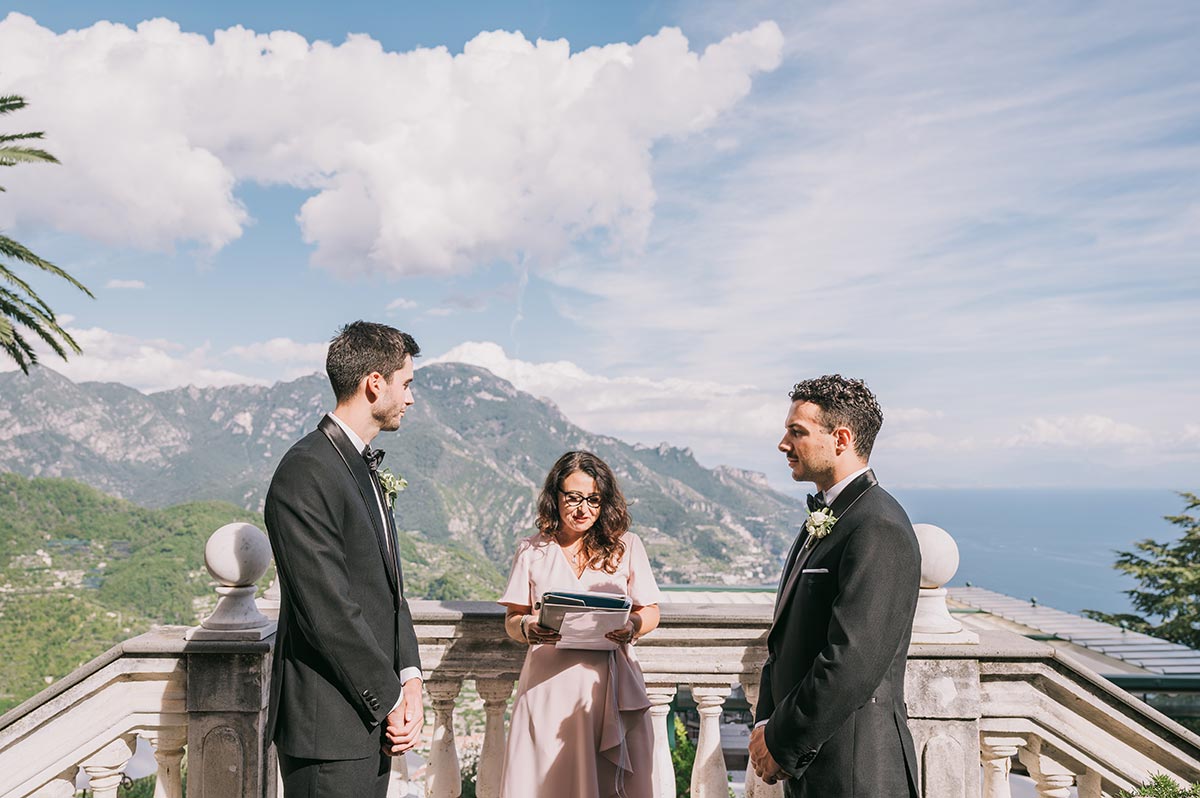
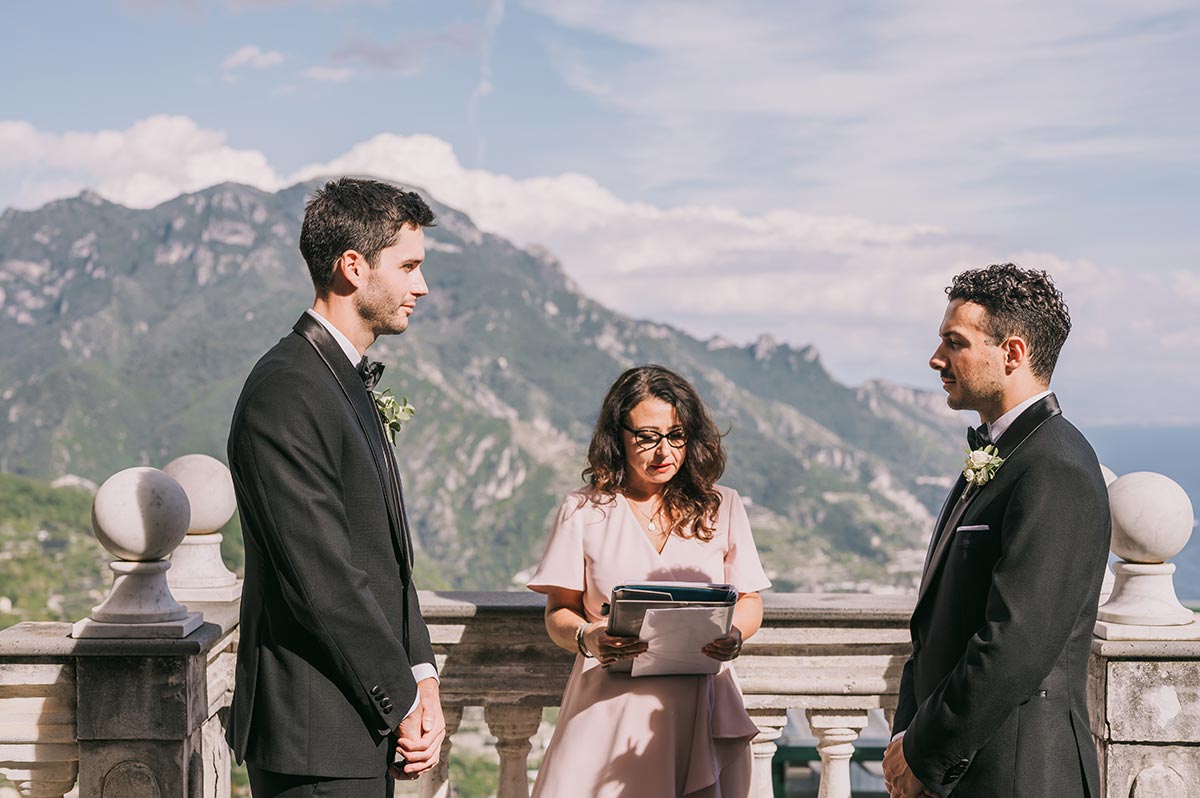
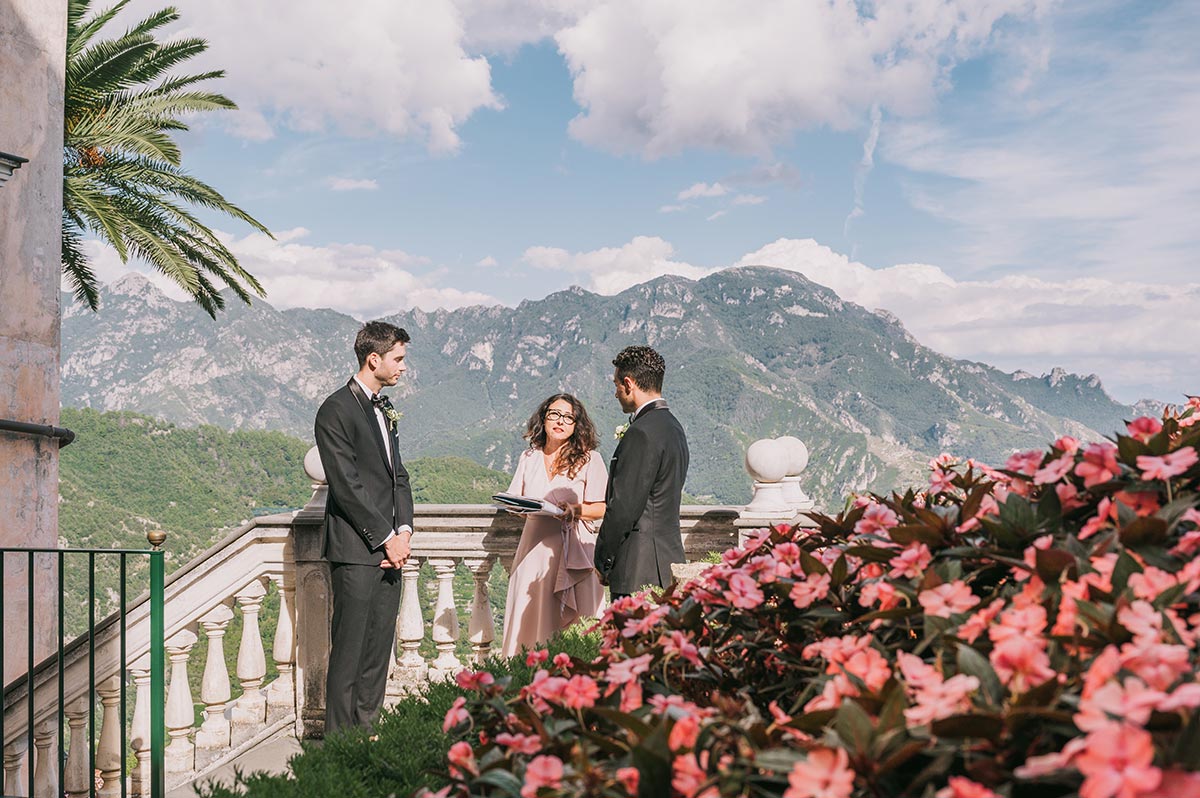
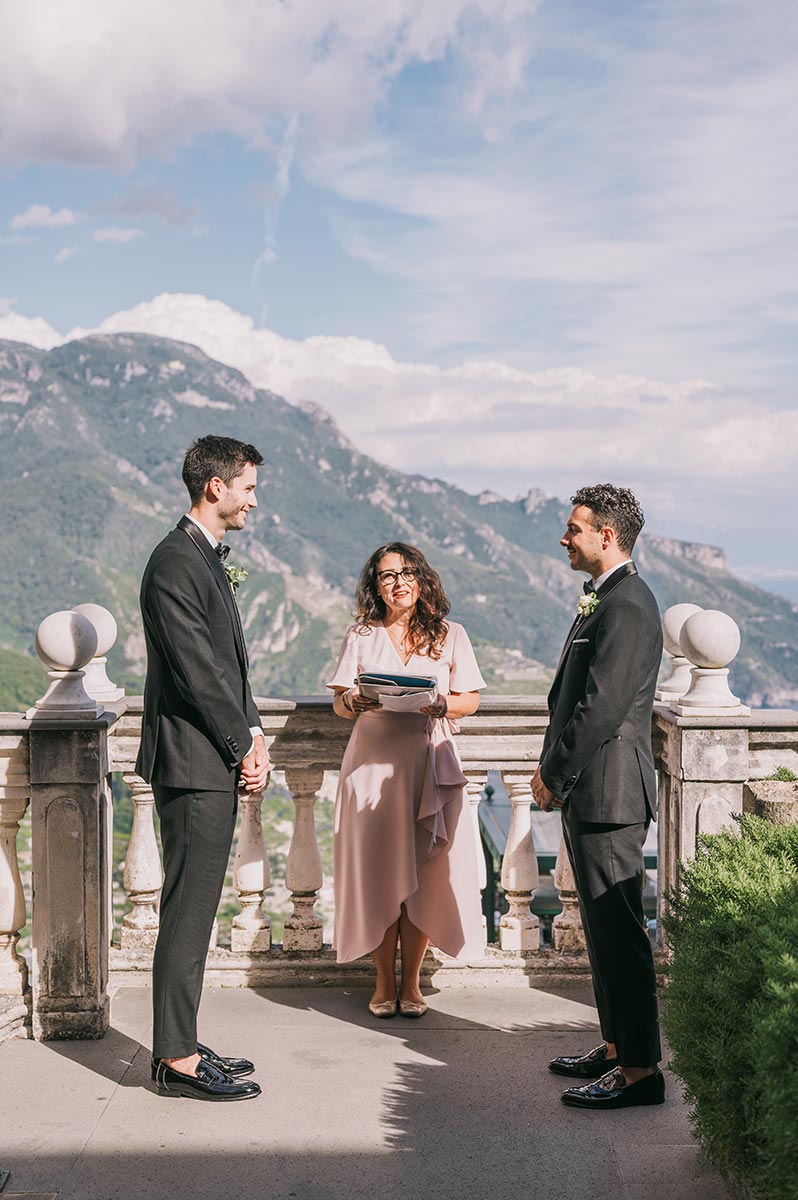
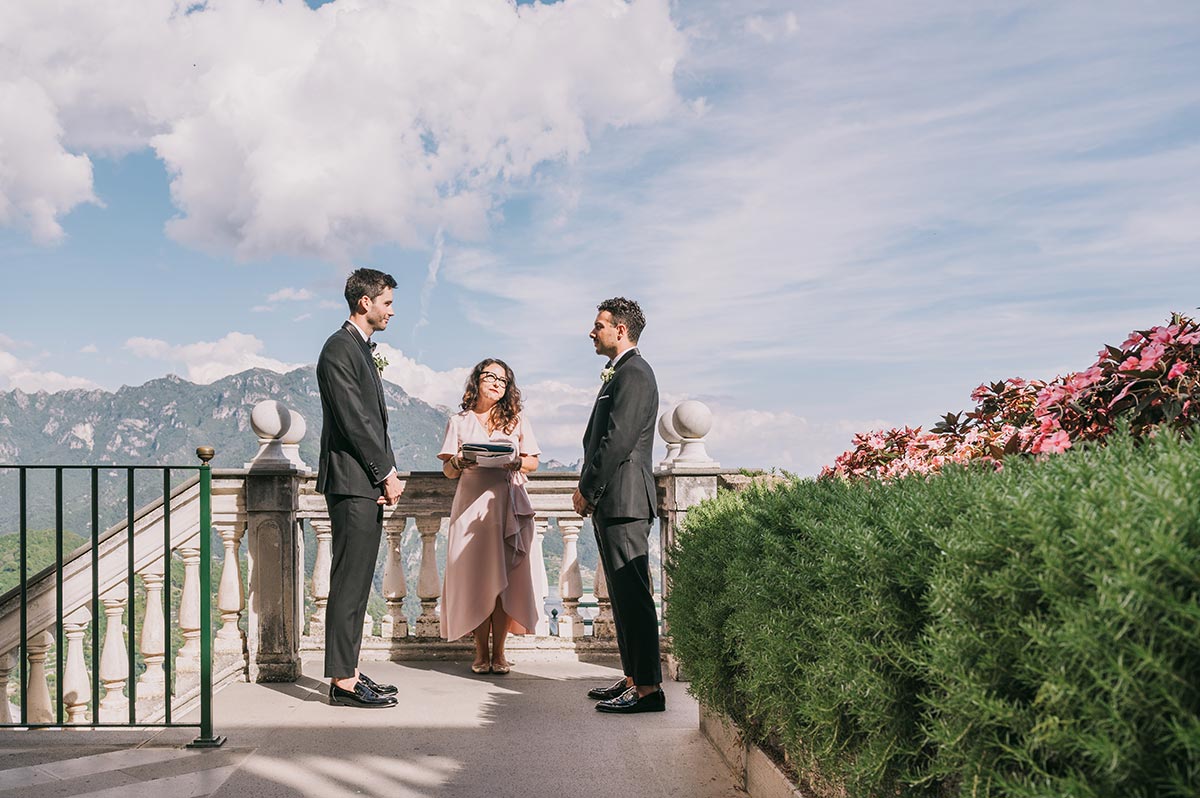
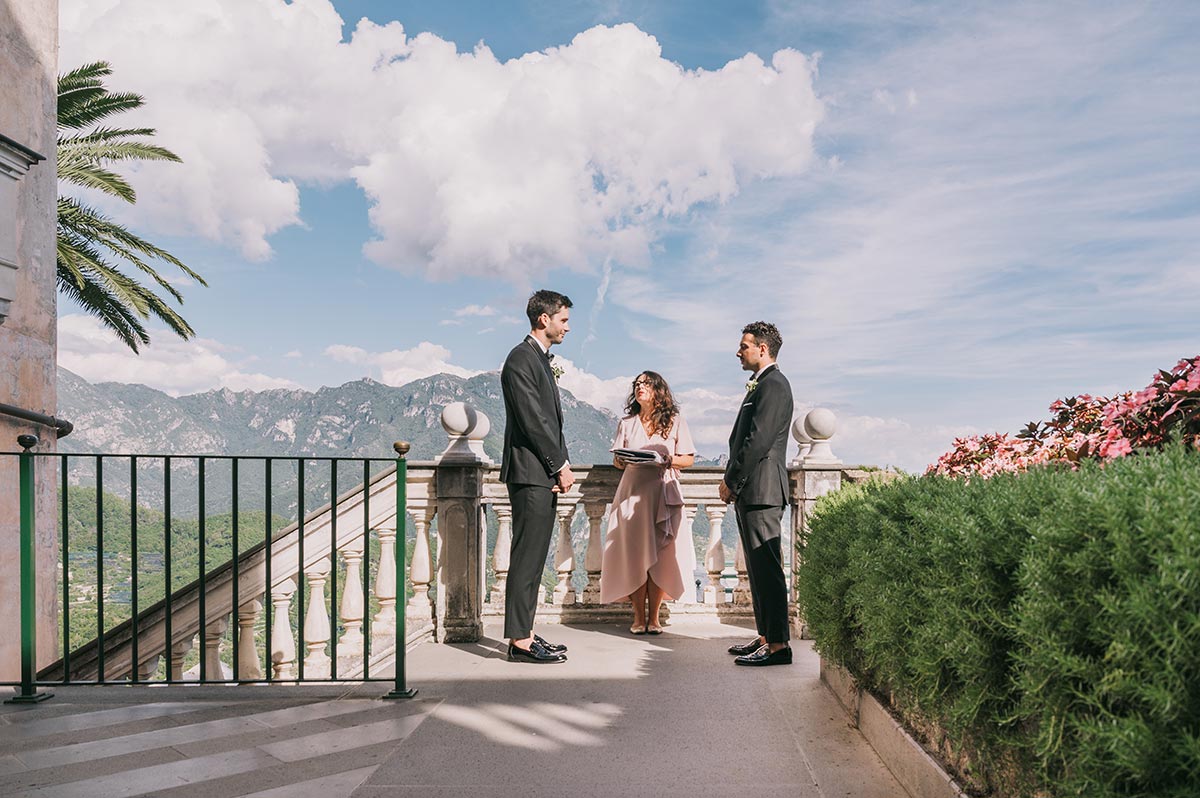
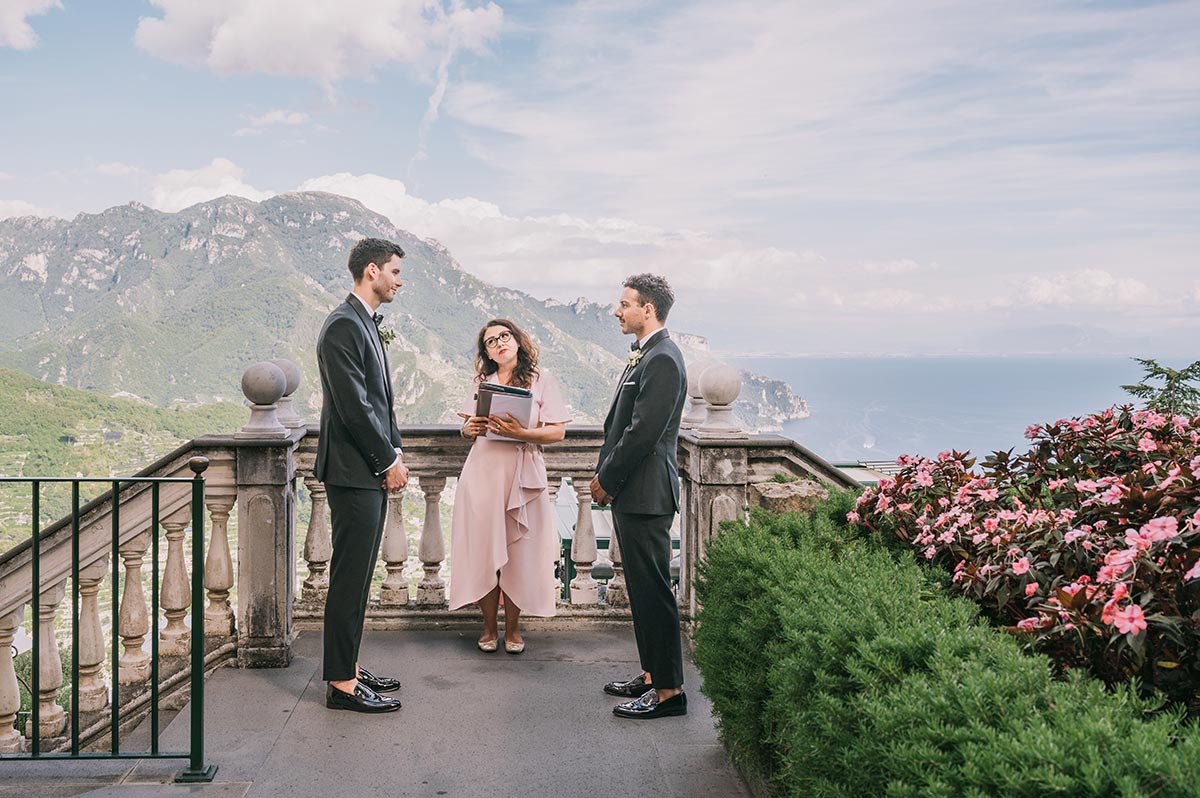
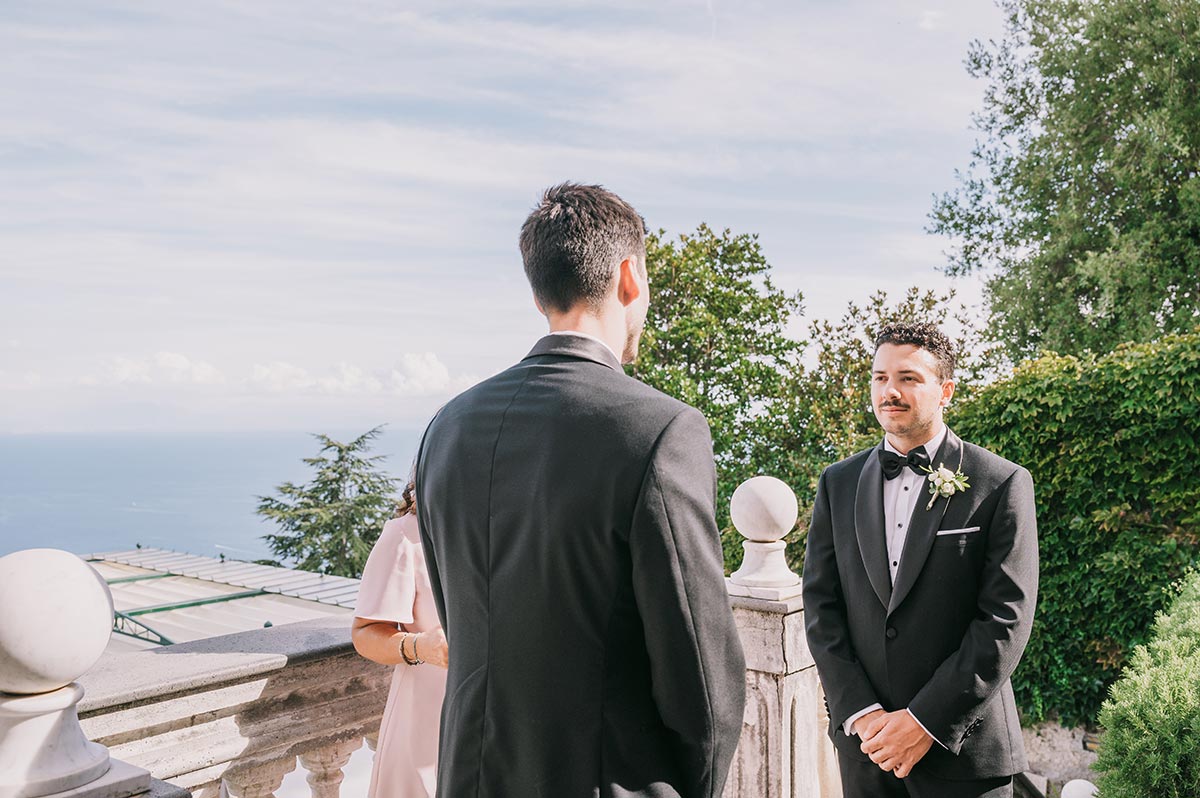
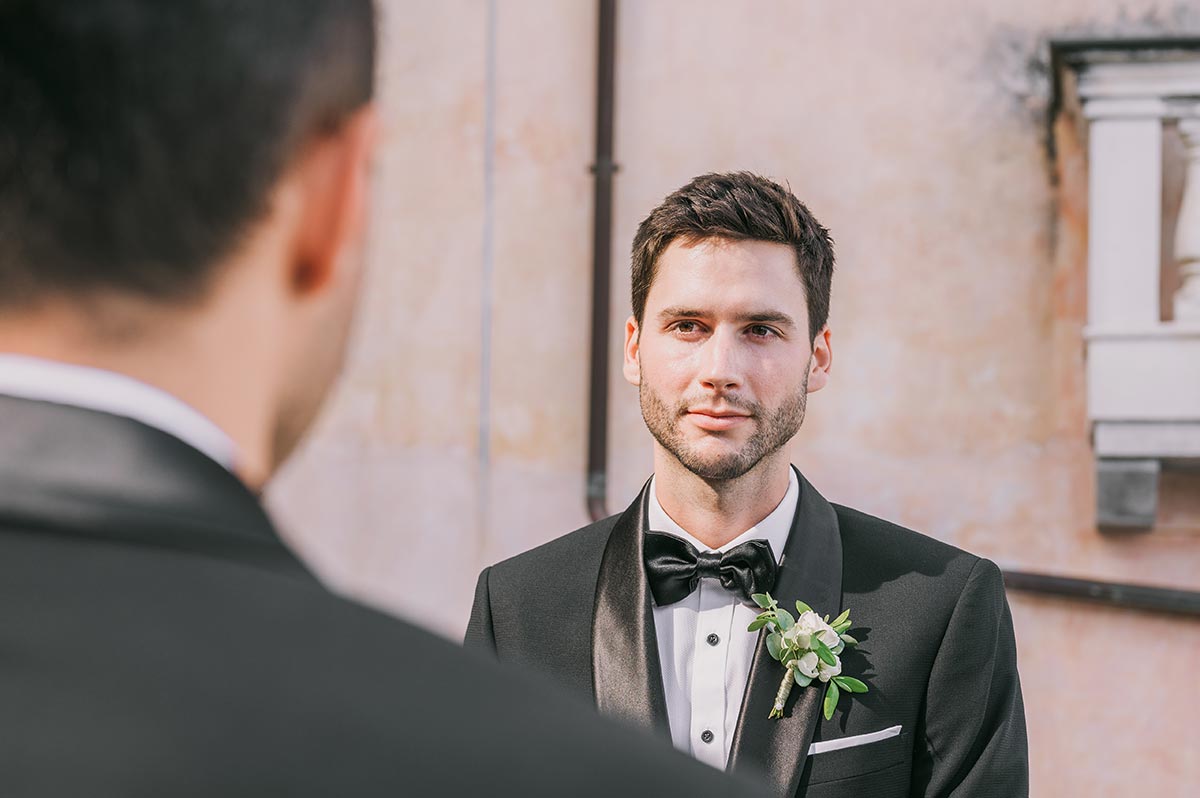

Palazzo Avino: A Stunning Venue for Intimate Weddings in Ravello
Regarding choosing the perfect wedding venue, Palazzo Avino in Ravello, Italy, is a top contender for those seeking a luxurious and intimate celebration. The beauty of this venue is unmatched, both inside and out. However, it is important to consider both the pros and cons of tying the knot at Palazzo Avino.
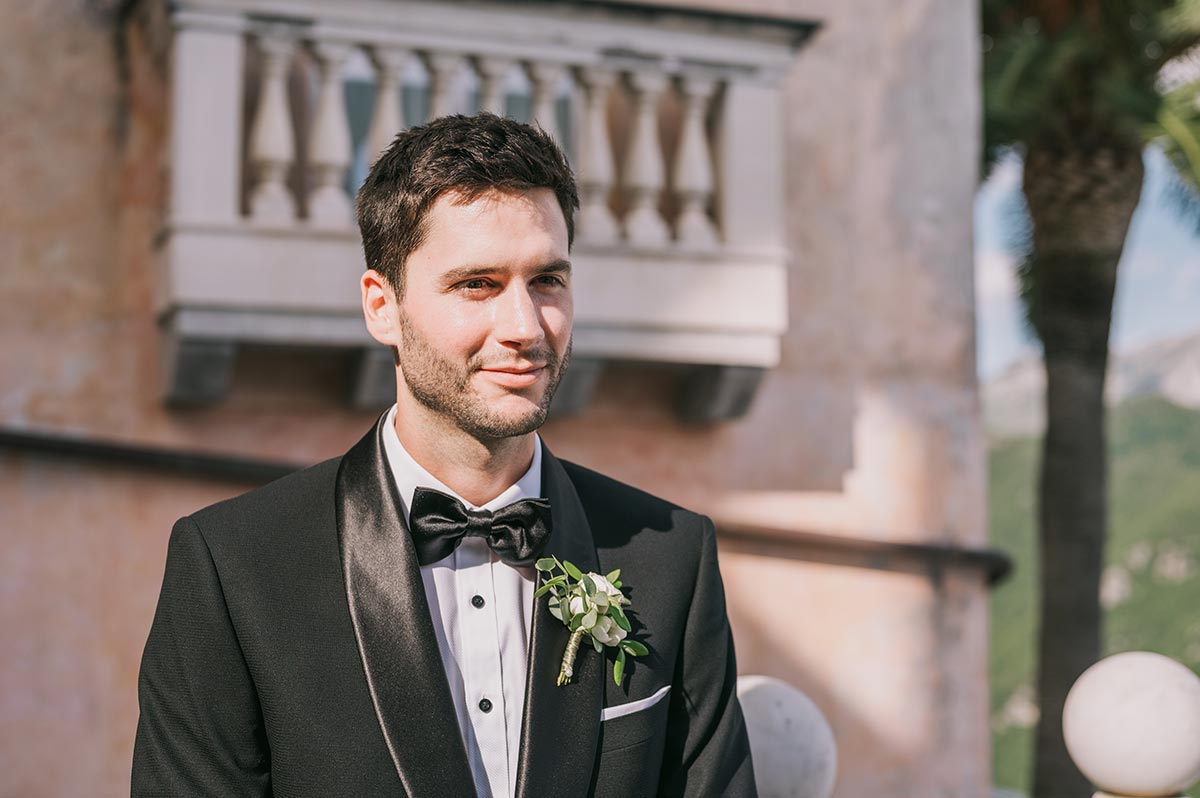
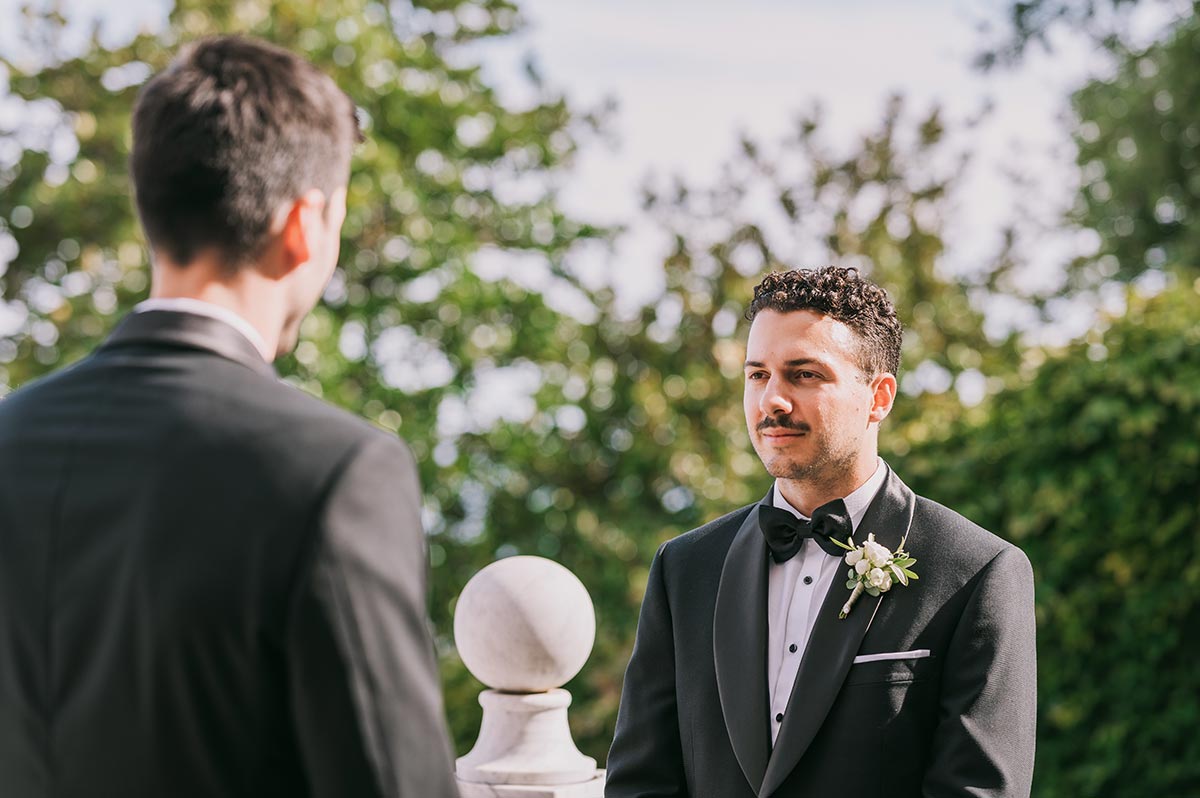




The Pros of Palazzo Avino
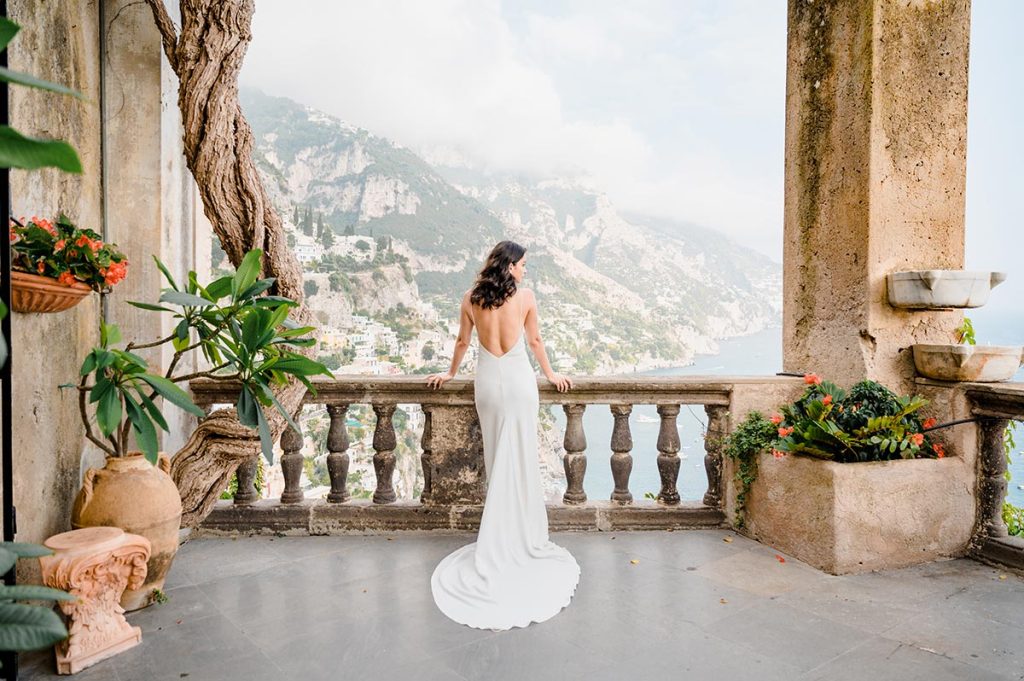
First and foremost, the stunning architecture and decor of the venue are sure to leave a lasting impression on you and your guests. The interior boasts an elegant and sophisticated design, with an atmosphere that is both warm and inviting. The venue’s stunning views of the Amalfi Coast also provide the perfect backdrop for your wedding photos.

The Cons of Palazzo Avino
One of the most significant drawbacks of Palazzo Avino is its limited space. This means that weddings at the venue are typically limited to just the couple or a minimal number of guests. The hotel rooms can also prepare and accommodate guests not attending the wedding ceremony.


Another area for improvement with Palazzo Avino is its “questionable marketing tactics”. They often send out suggested vendors low-price wedding kits, which detracts from the luxury image that a well-known hotel like this should have. This practice is rare among other hotels and can deter potential customers looking for quality services.







Final Thoughts on Palazzo Avino
In conclusion, we would only recommend Palazzo Avino for intimate weddings of two people. Although the venue is beautiful, the limitations on space and the questionable marketing tactics are factors to consider before making your final decision. Additionally, there is a bar located underneath the beautiful loggia, which can limit the music and other activities commonly found at weddings. Despite these drawbacks, Palazzo Avino remains a stunning venue for a once-in-a-lifetime celebration.
TIMELESS PICTURES

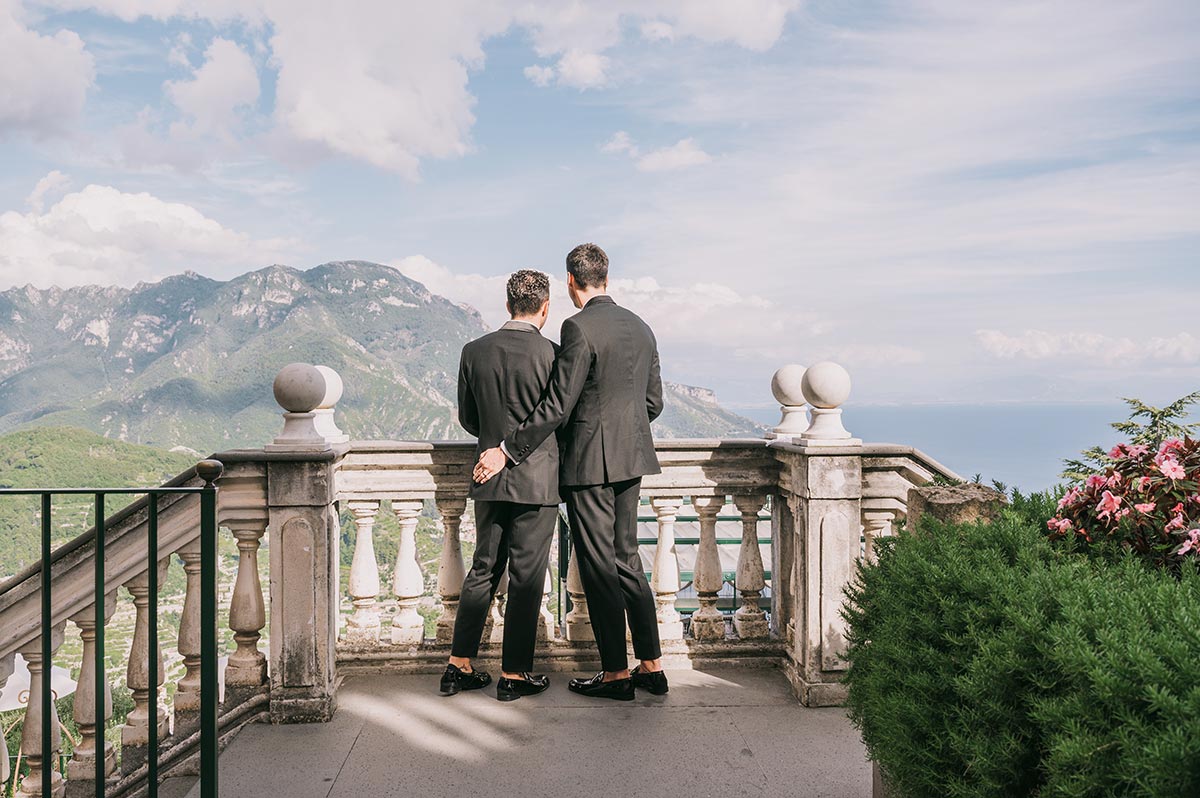
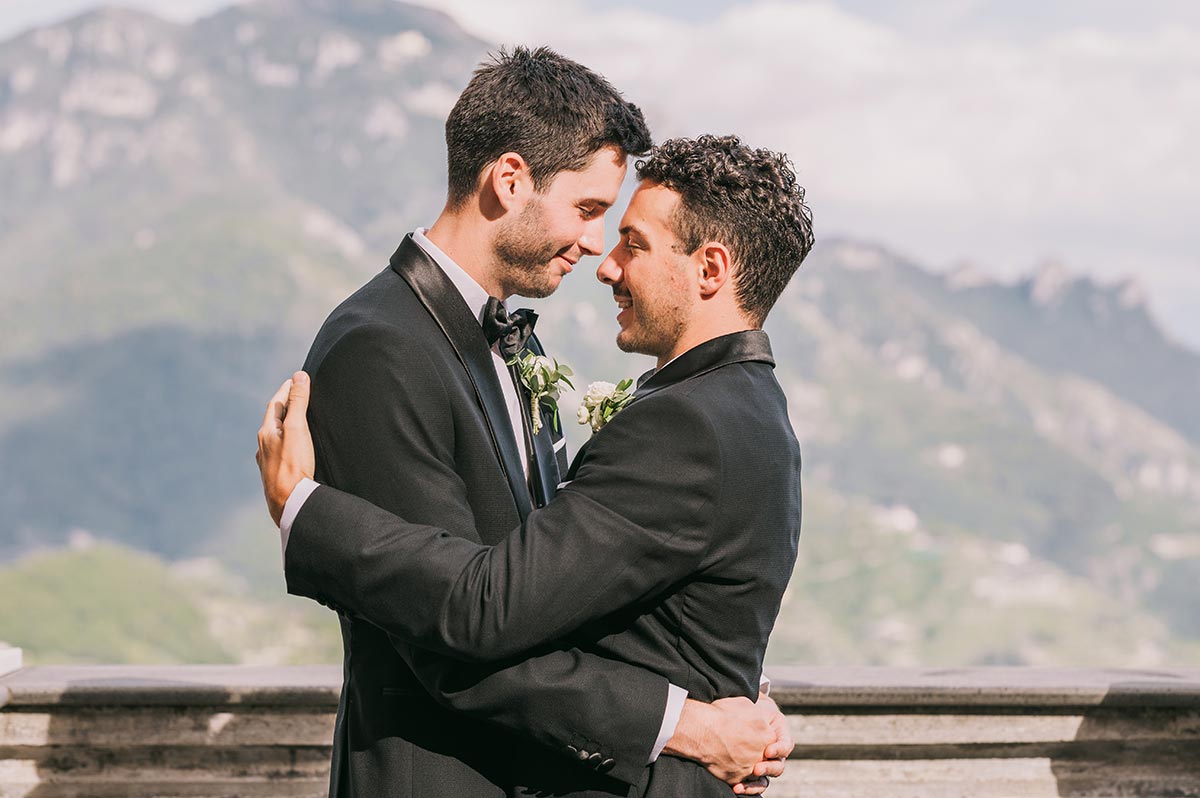
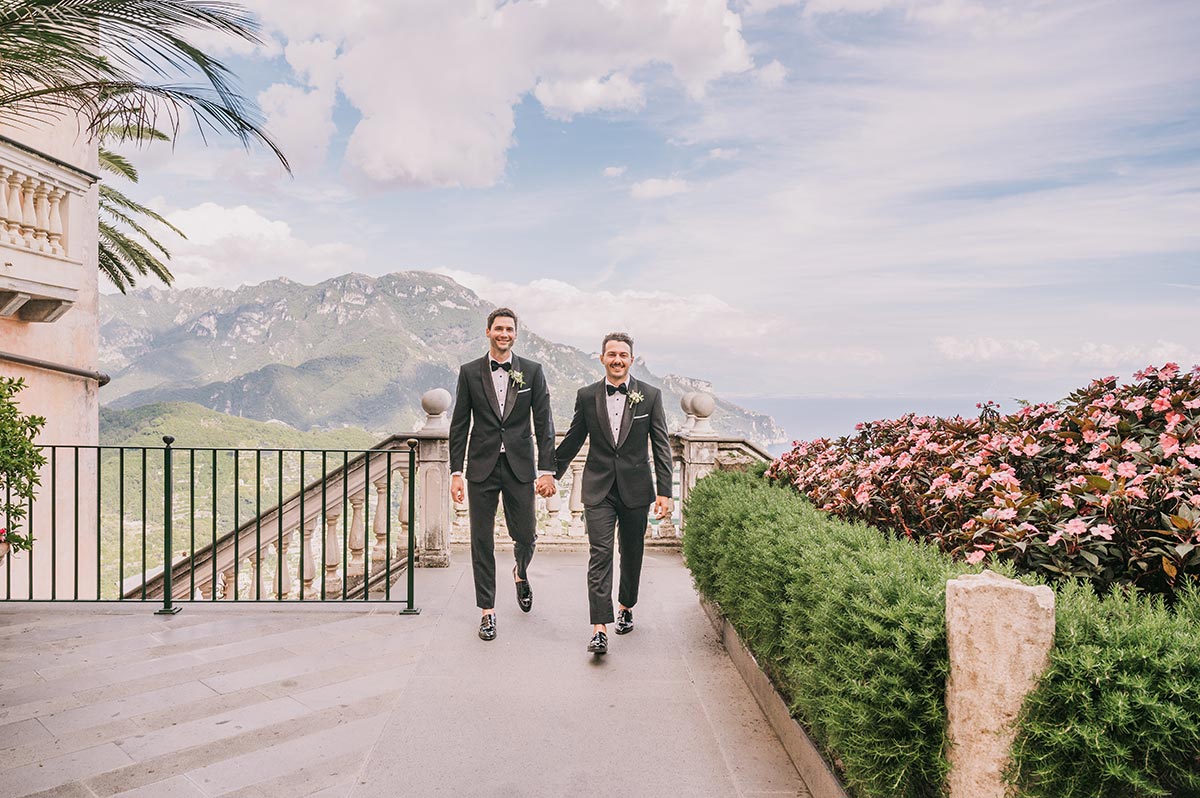
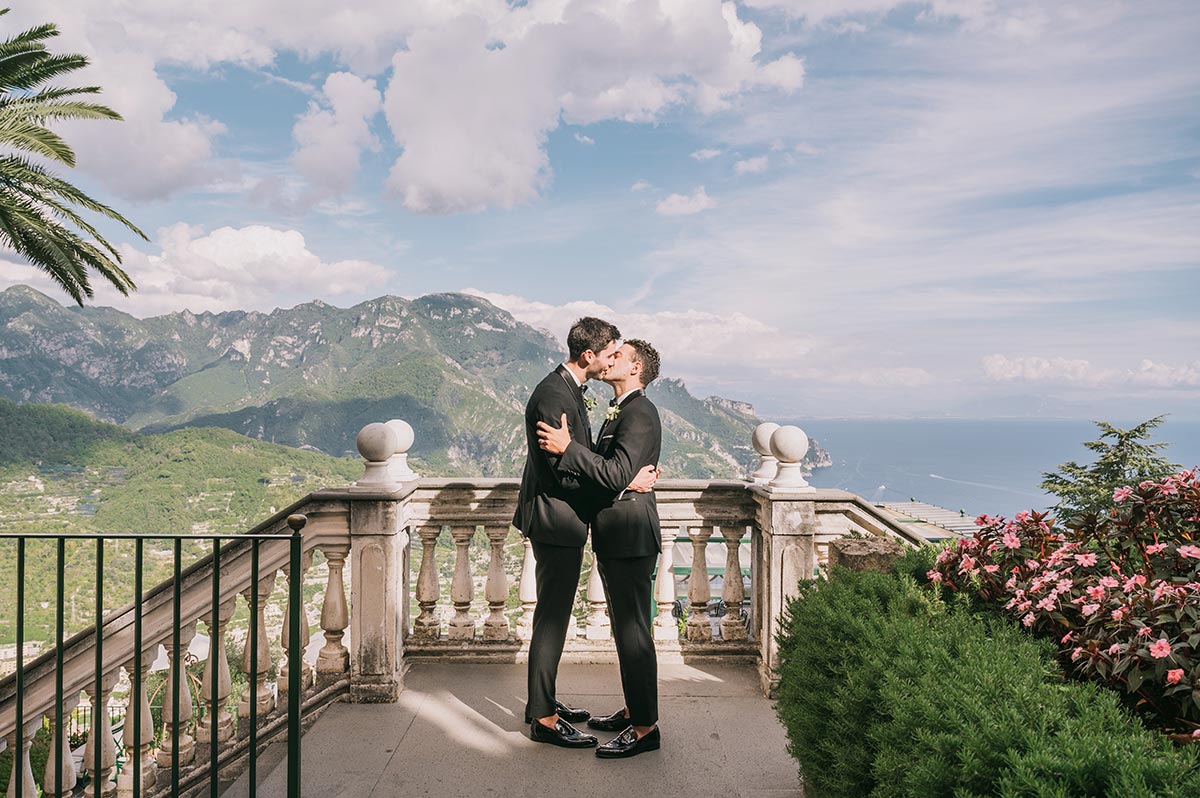
PALAZZO AVINO
Why as photographers, we love working at Palazzo Confalone in Ravello.
Palazzo Confalone is a unique and beautiful location, with a hall, interiors, and exteriors that are truly one-of-a-kind. It’s not just the stunning architecture and elegant design that make this place unique, however. The warm and loving family runs the place, and their incredible sense of hospitality, that genuinely sets Palazzo Confalone apart.
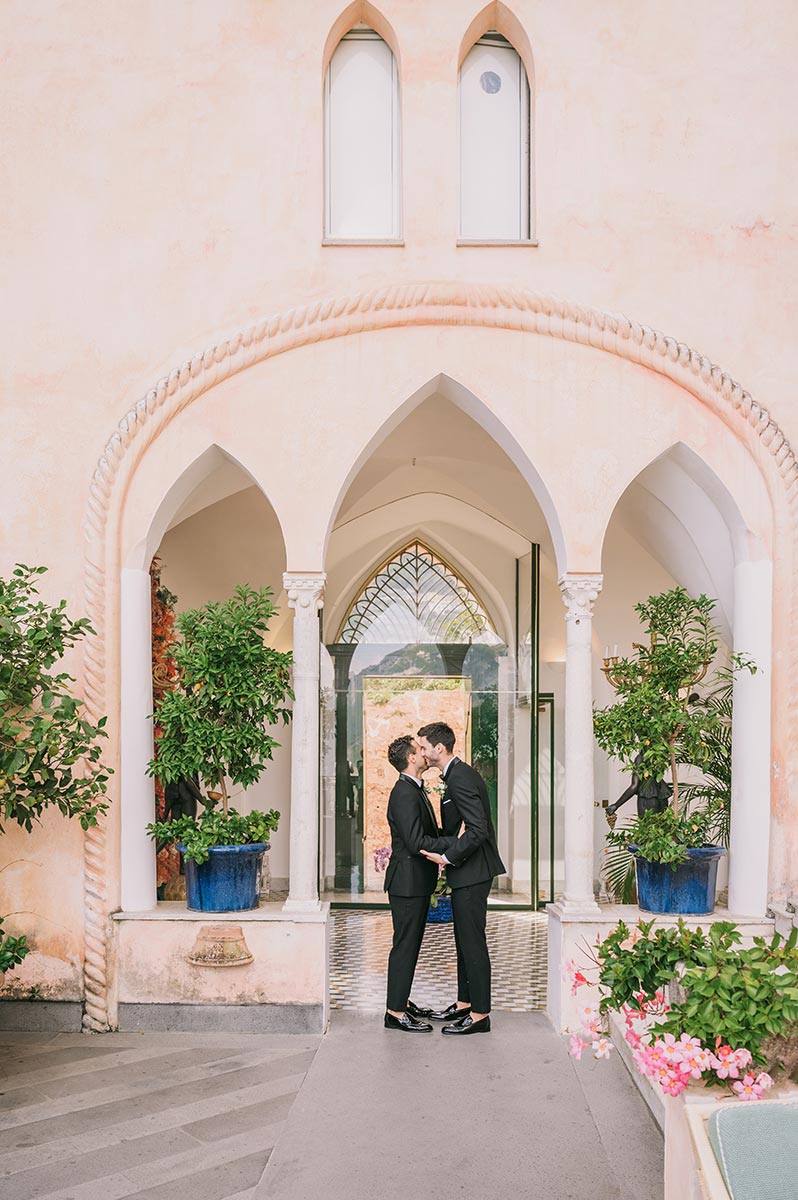
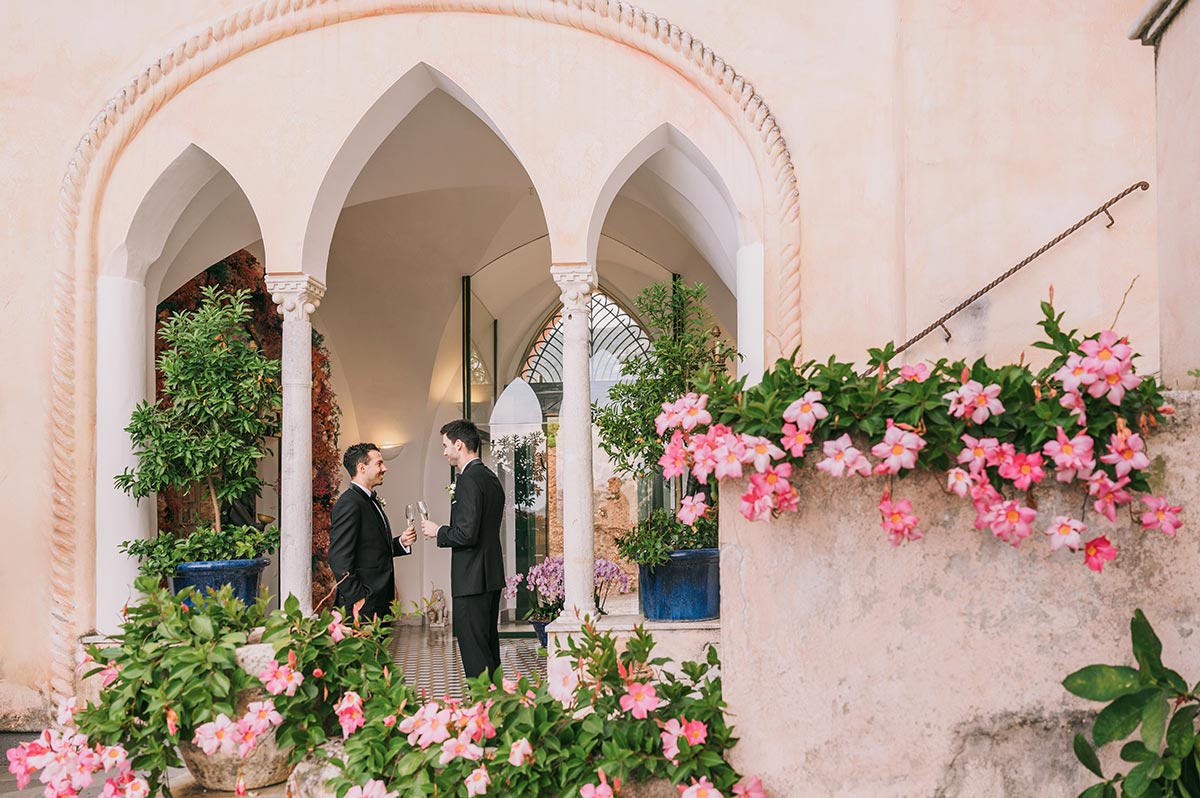
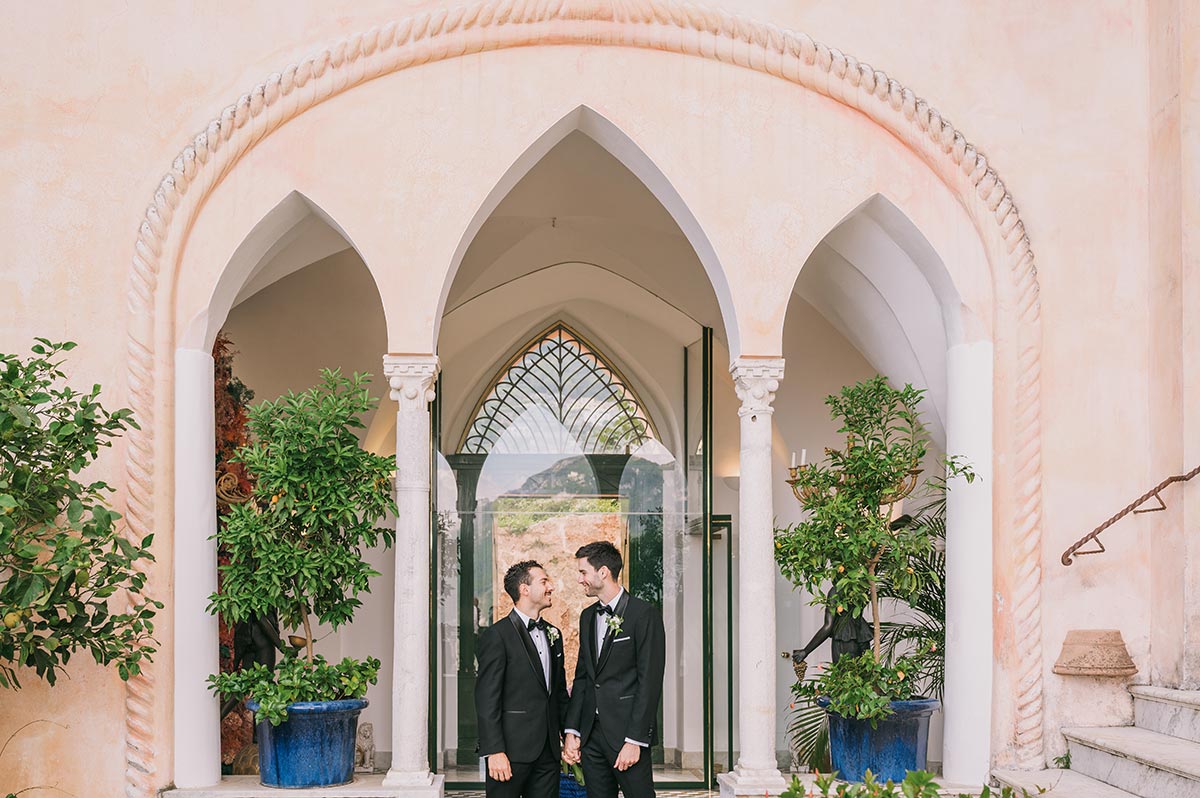
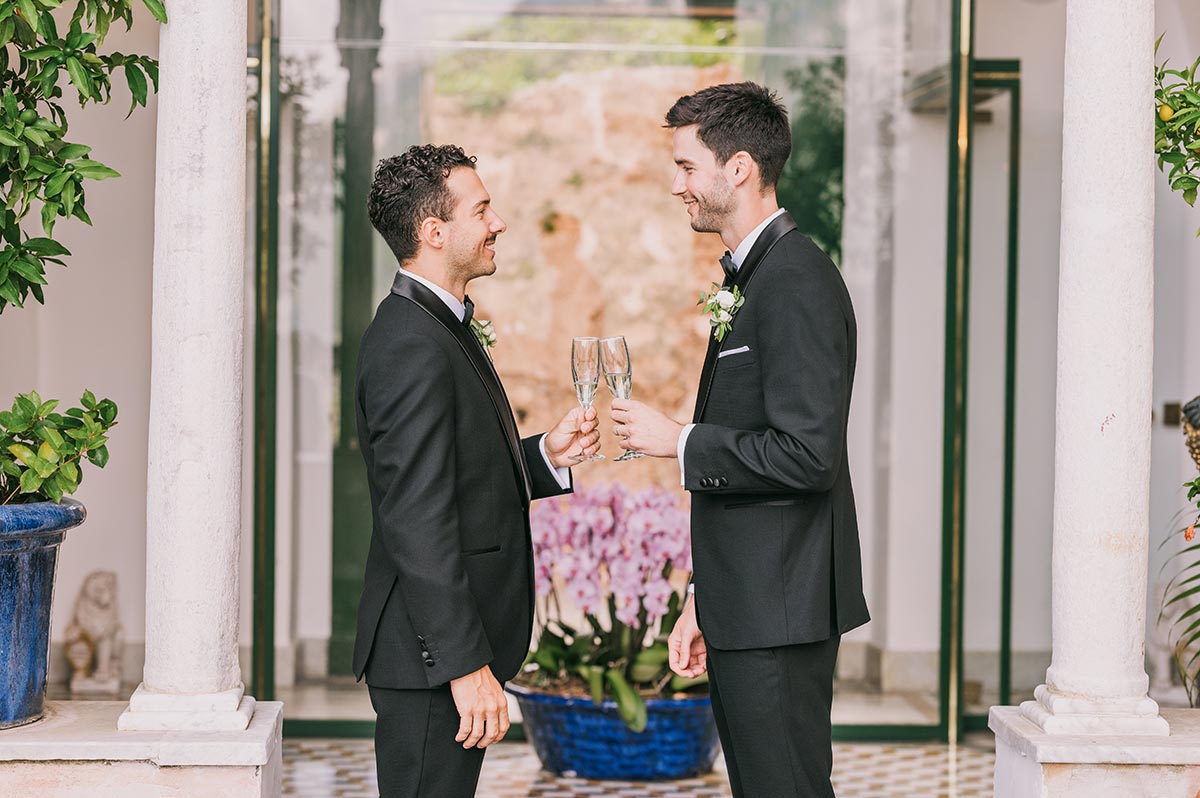
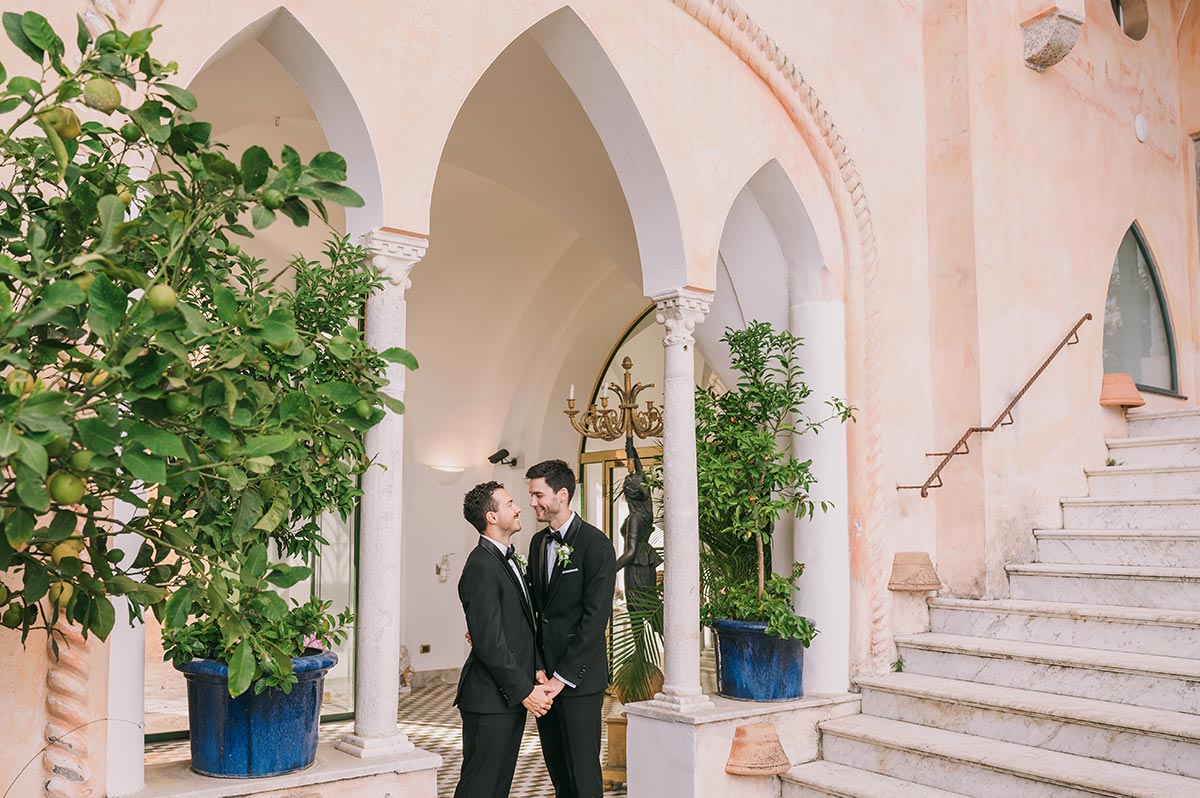
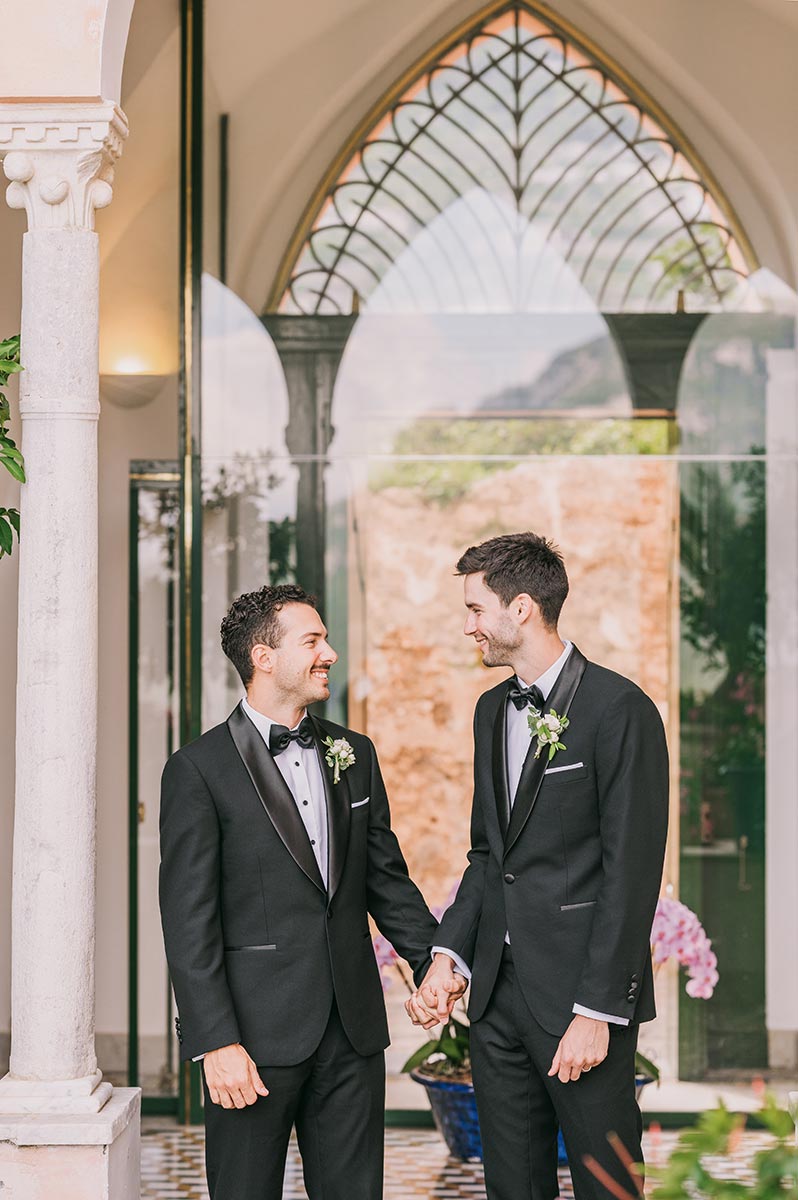
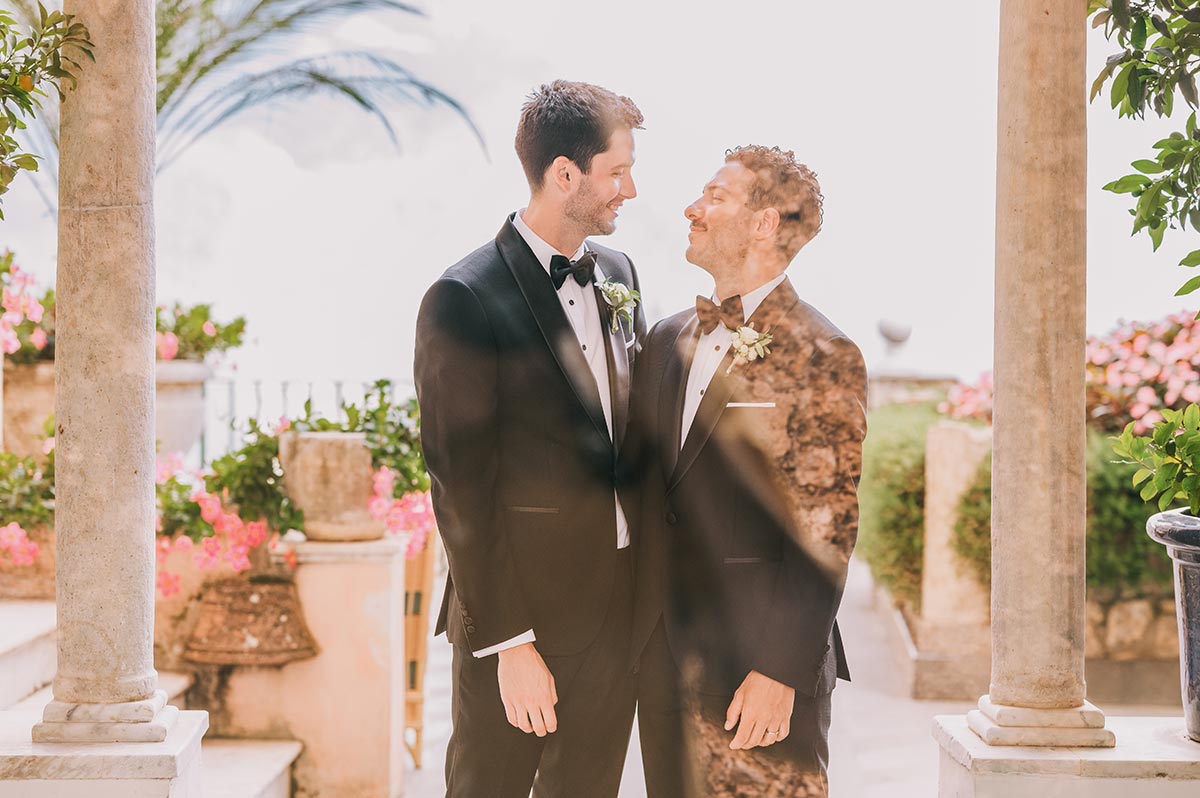
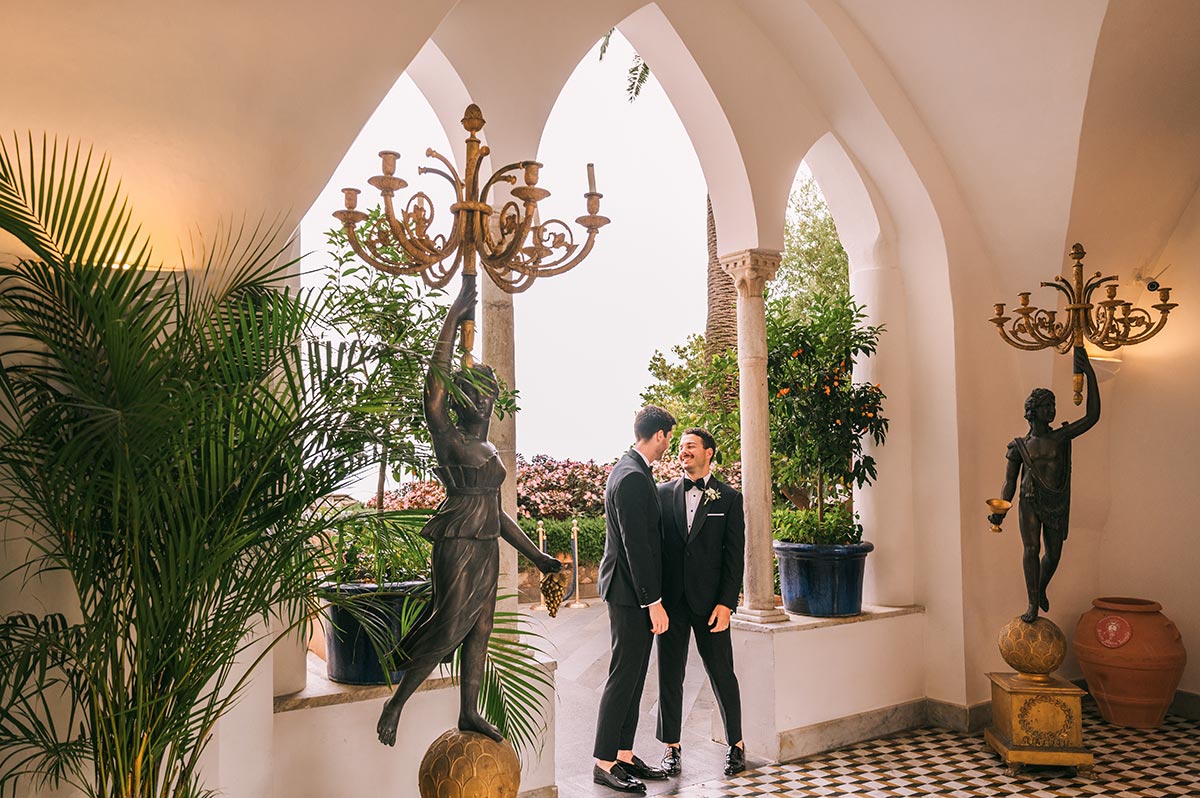
For photographers, Palazzo Confalone is a dream location. The light here is genuinely magical inside and outside the villa. The guardino (watchtower) and terrace are both stunning, offering a wide range of backdrops for photo shoots.

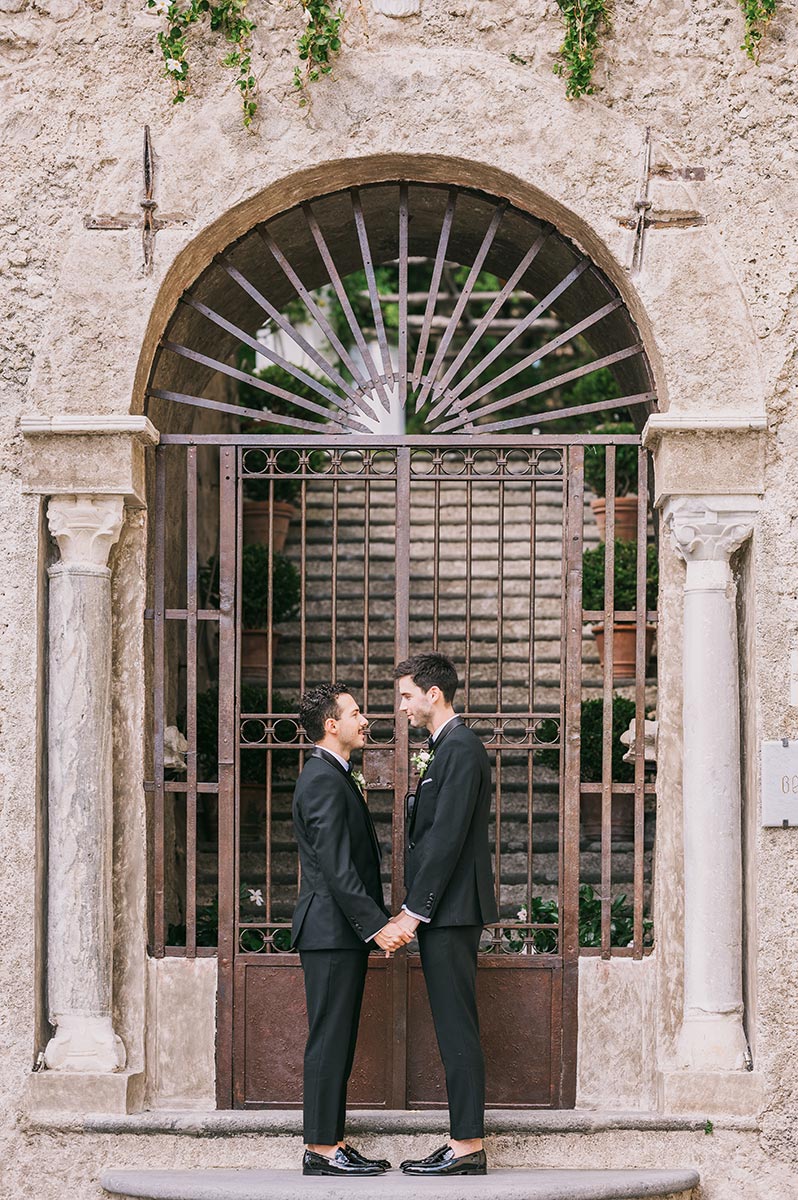
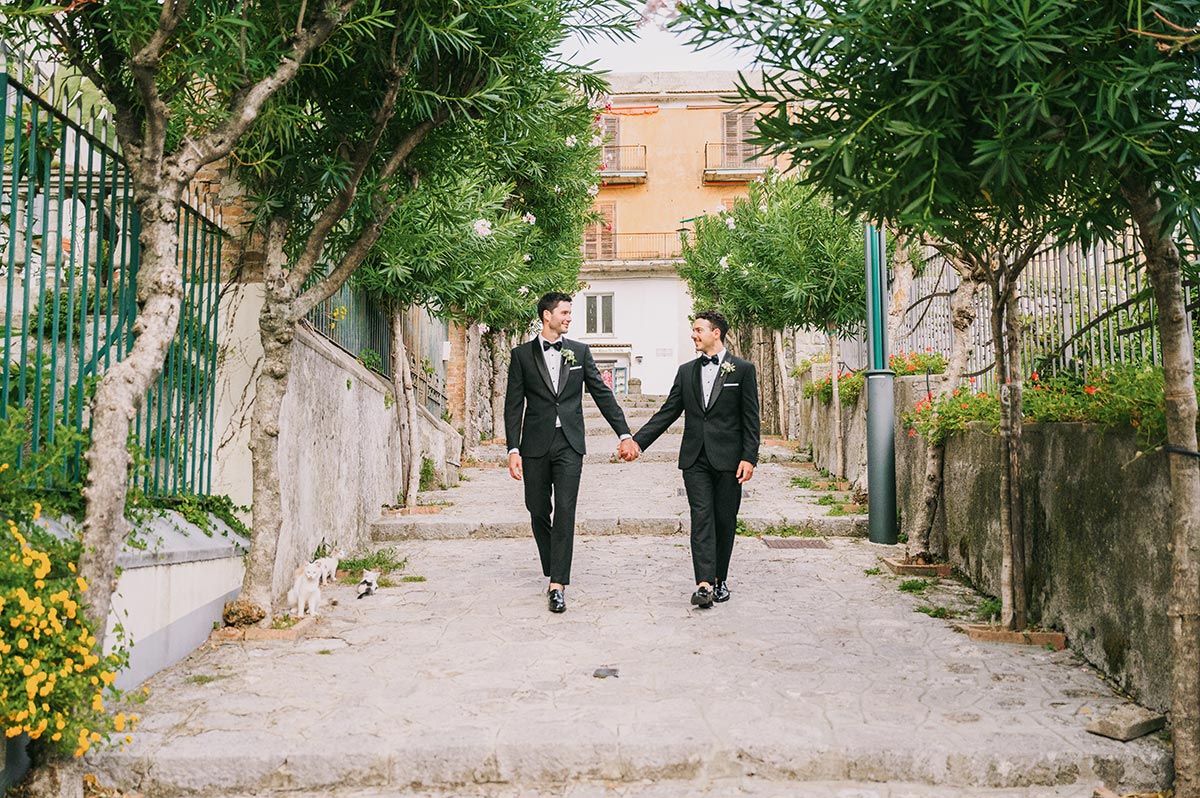

In addition to its beauty and ambiance, Palazzo Confalone has several practical benefits that make it an excellent choice for those seeking a stunning location for their wedding or special event. Unlike Palazzo Avino, Palazzo Confalone has no restrictions on activities or noise levels, making it a much more flexible option for couples.
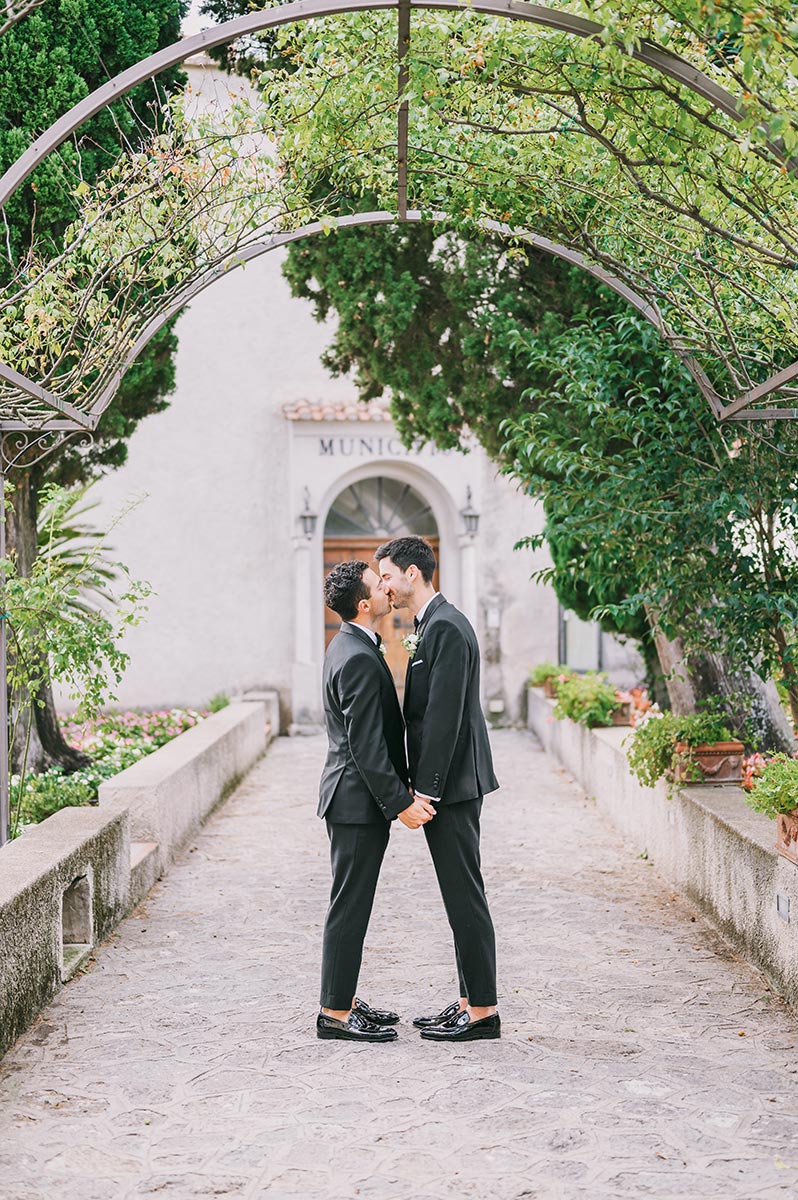
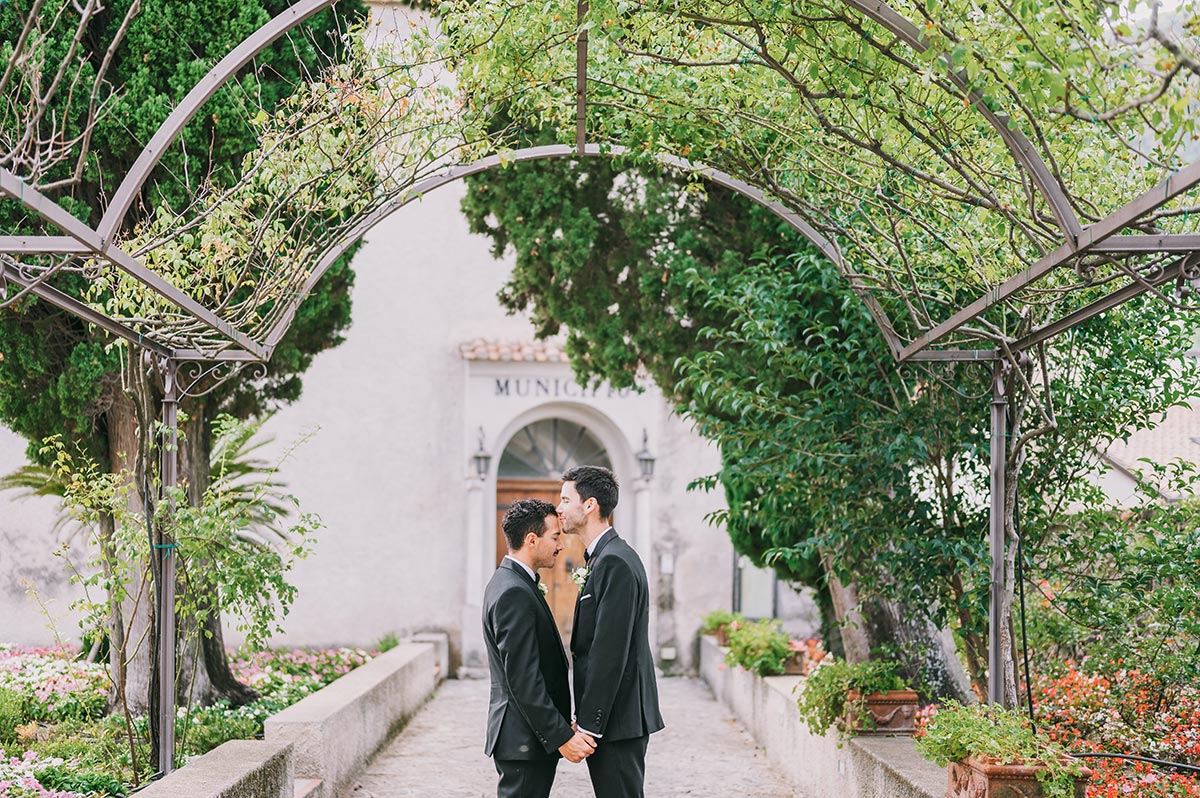
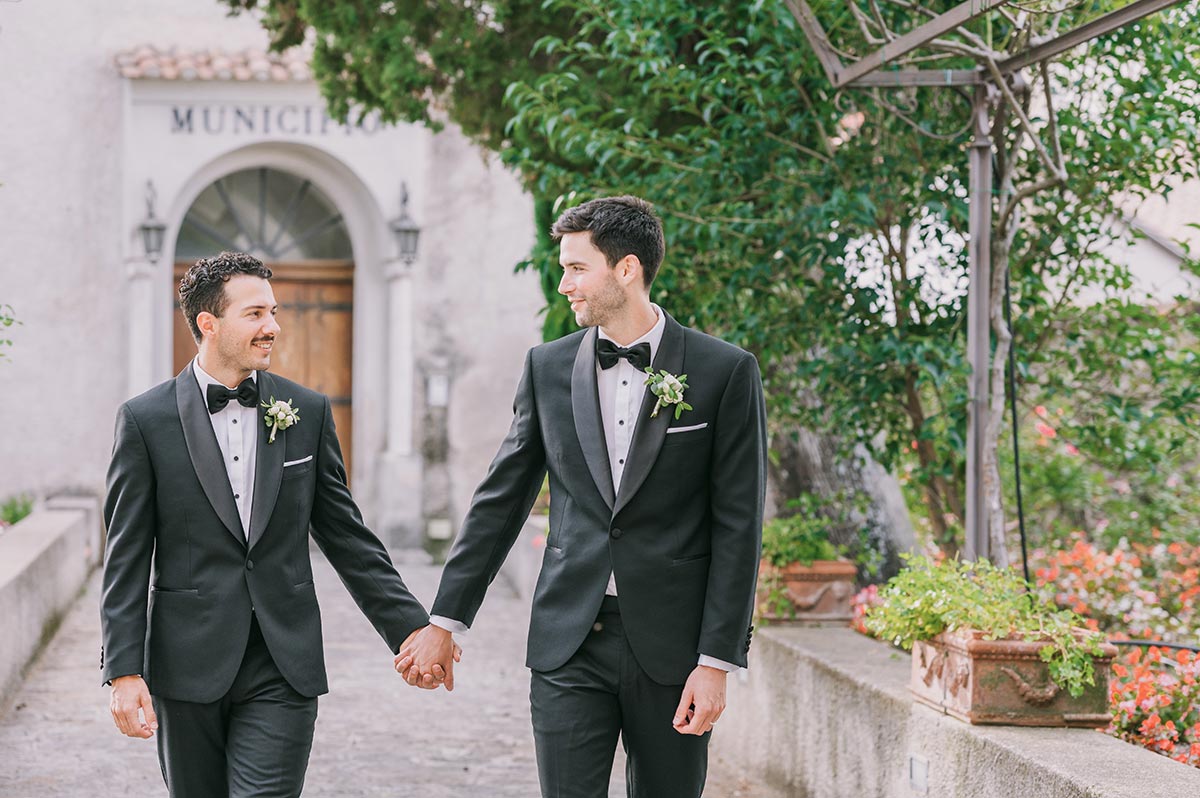
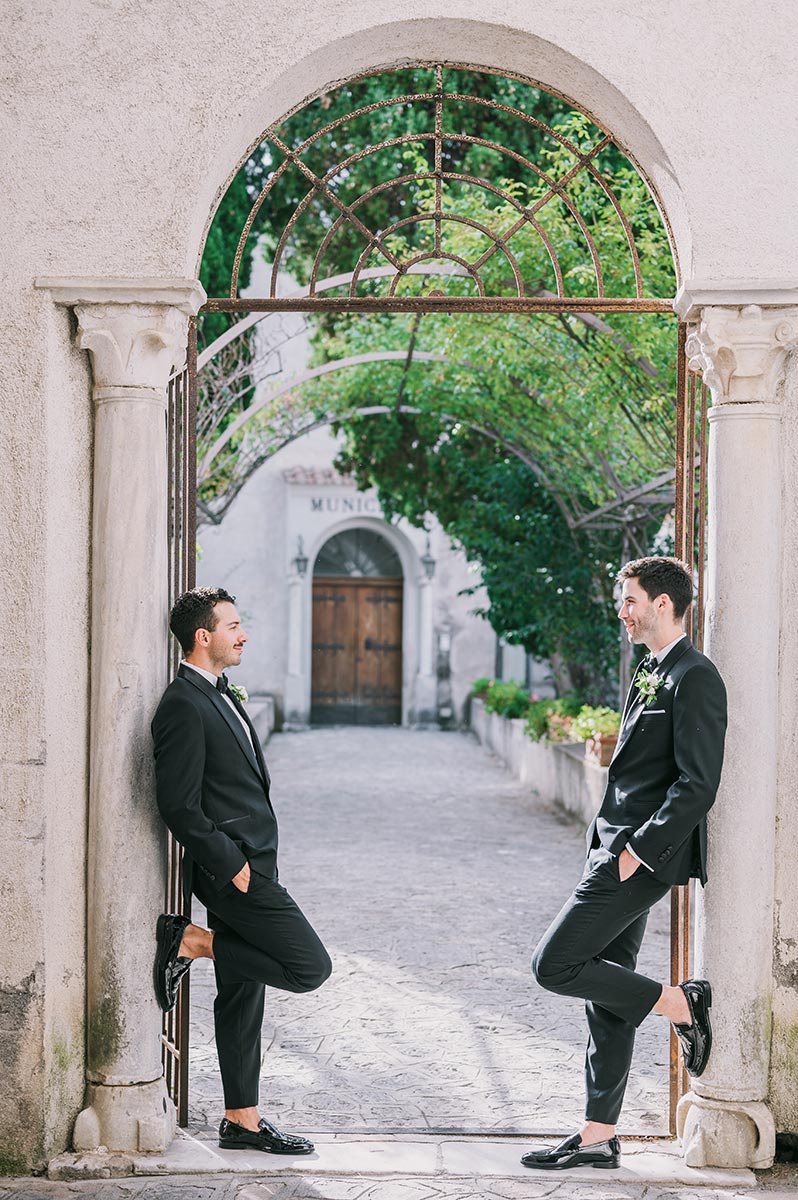
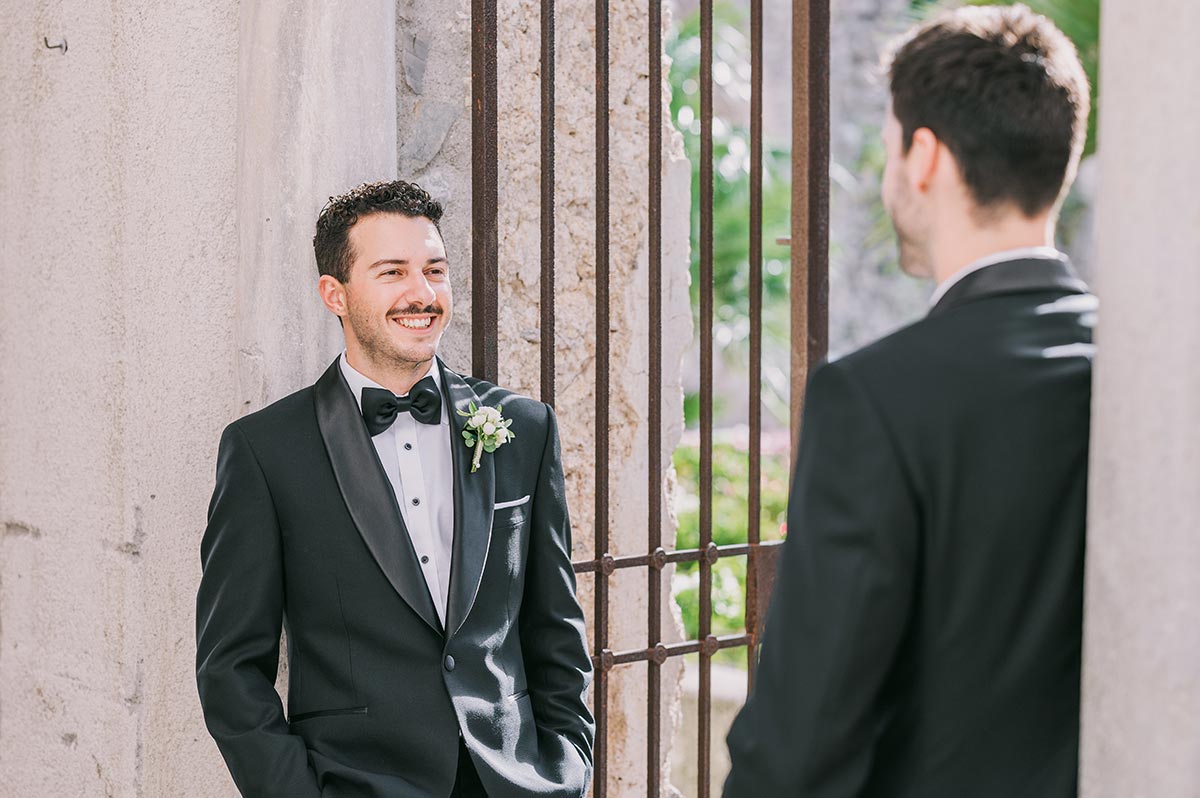
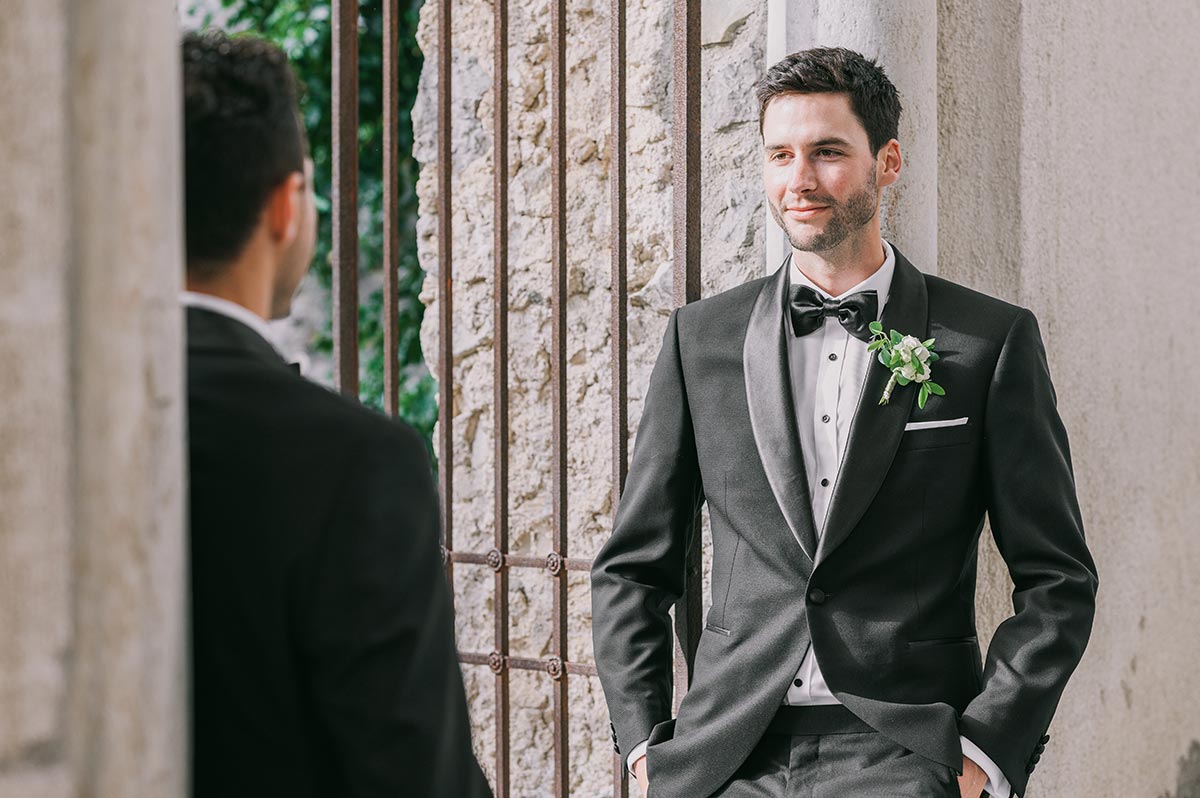
The family that runs Palazzo Confalone is dedicated to offering their guests only the best, which extends to their commercial offerings. Their wedding kit is carefully crafted to promote only the highest-quality vendors, and they are always willing to work with their guests to accommodate their needs and desires.
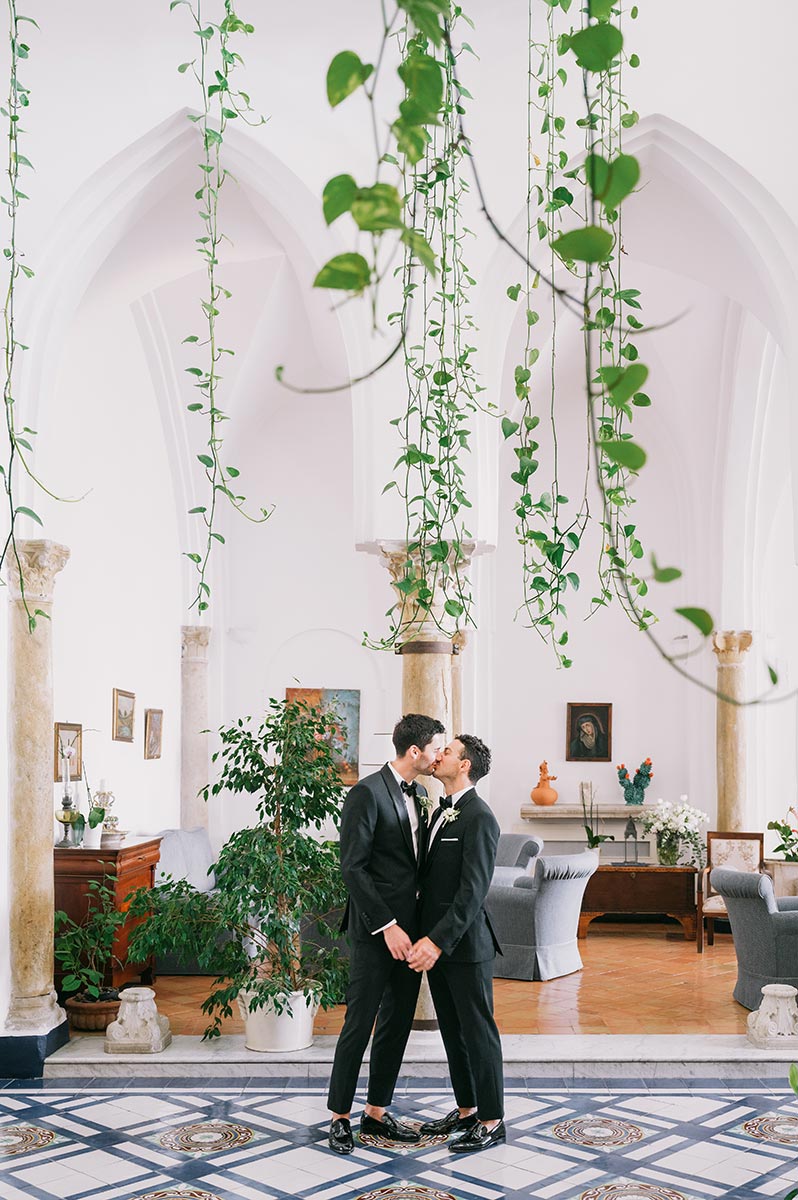
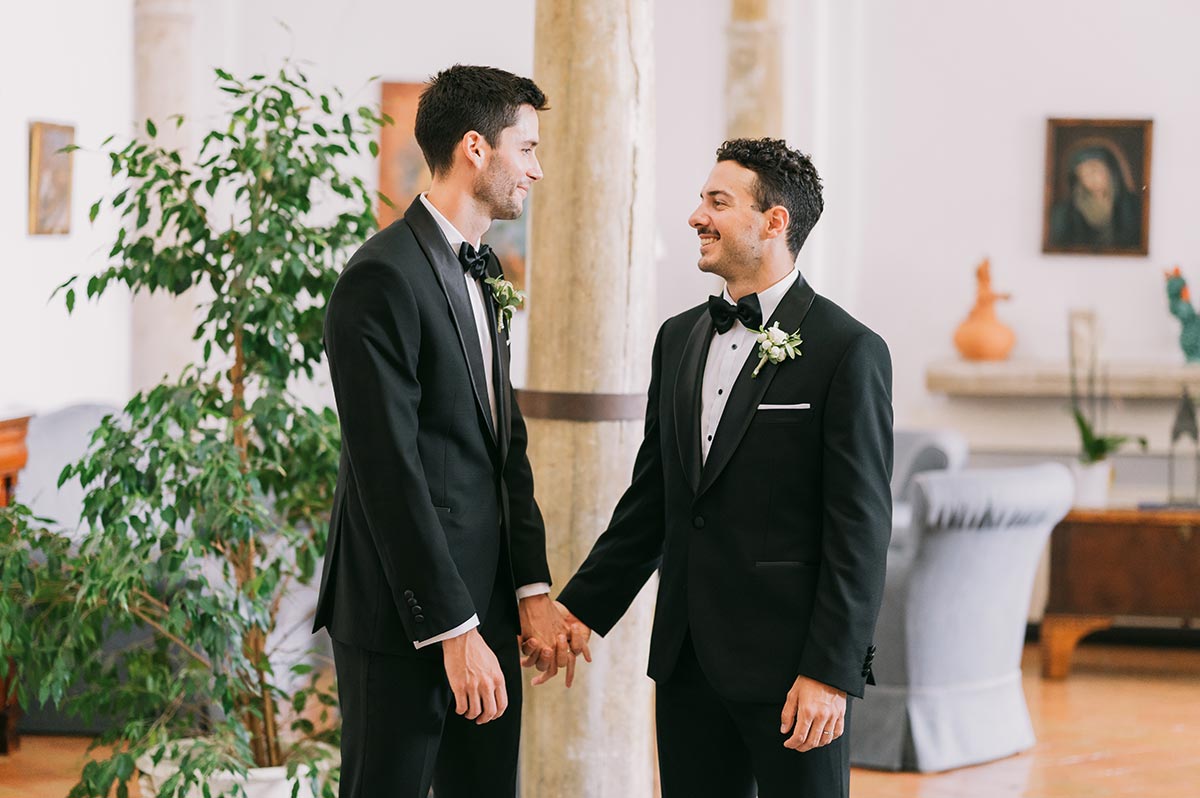
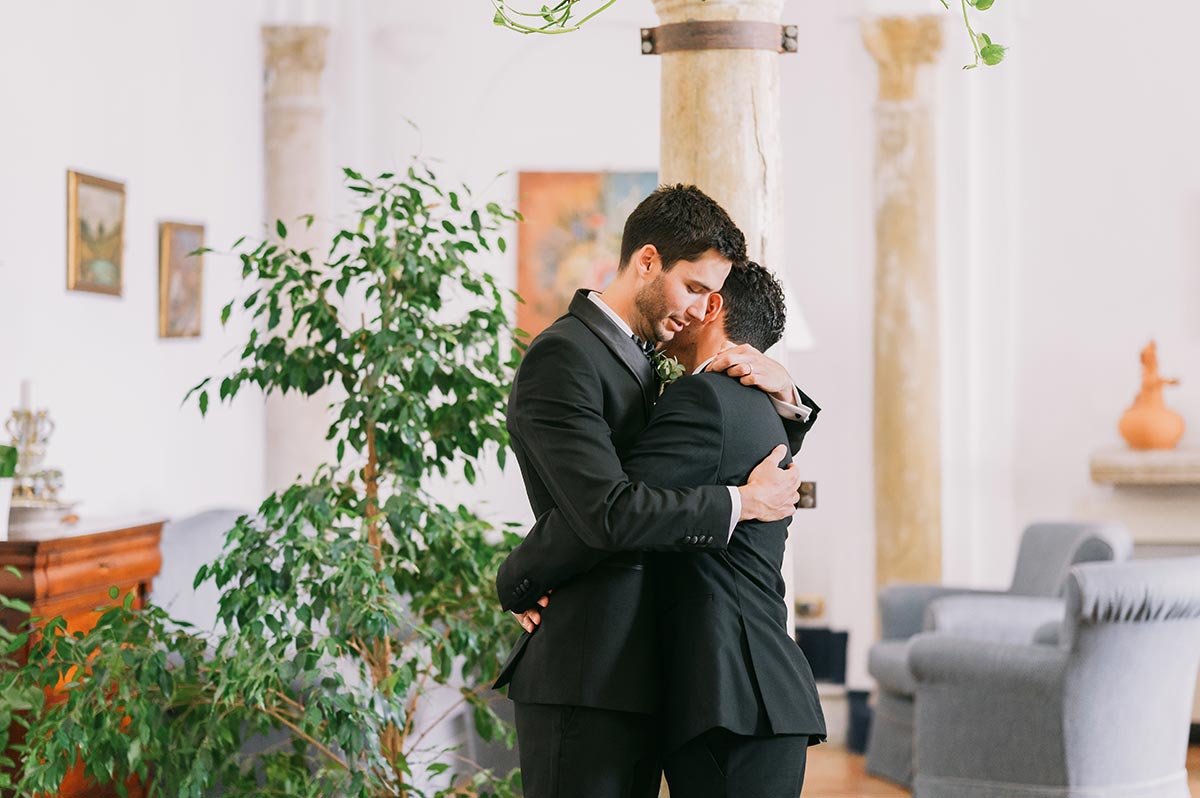
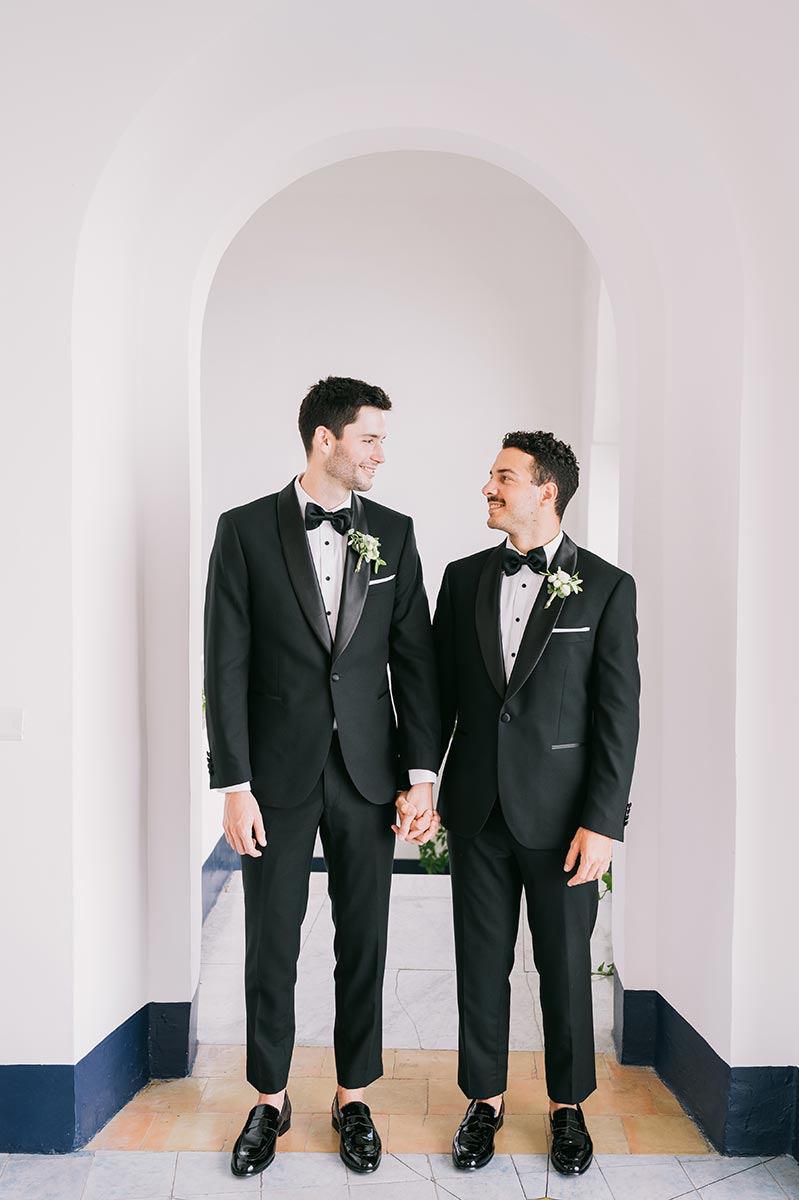


While Villa Cimbrone and its high fees may not be an option for everyone, Palazzo Confalone offers an exceptional alternative, especially when combined with Villa Rufolo, which does not require an entrance fee. These locations offer stunning beauty, incredible hospitality, and a host of truly unique photo opportunities.
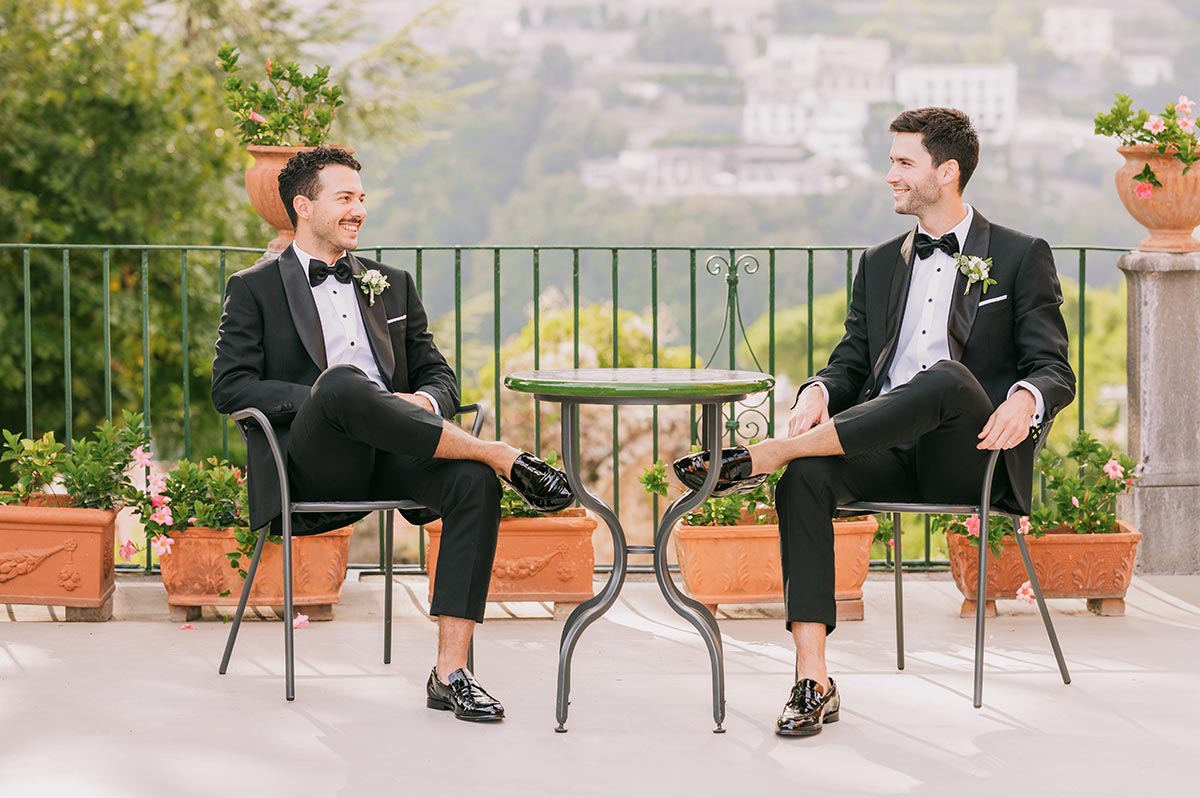
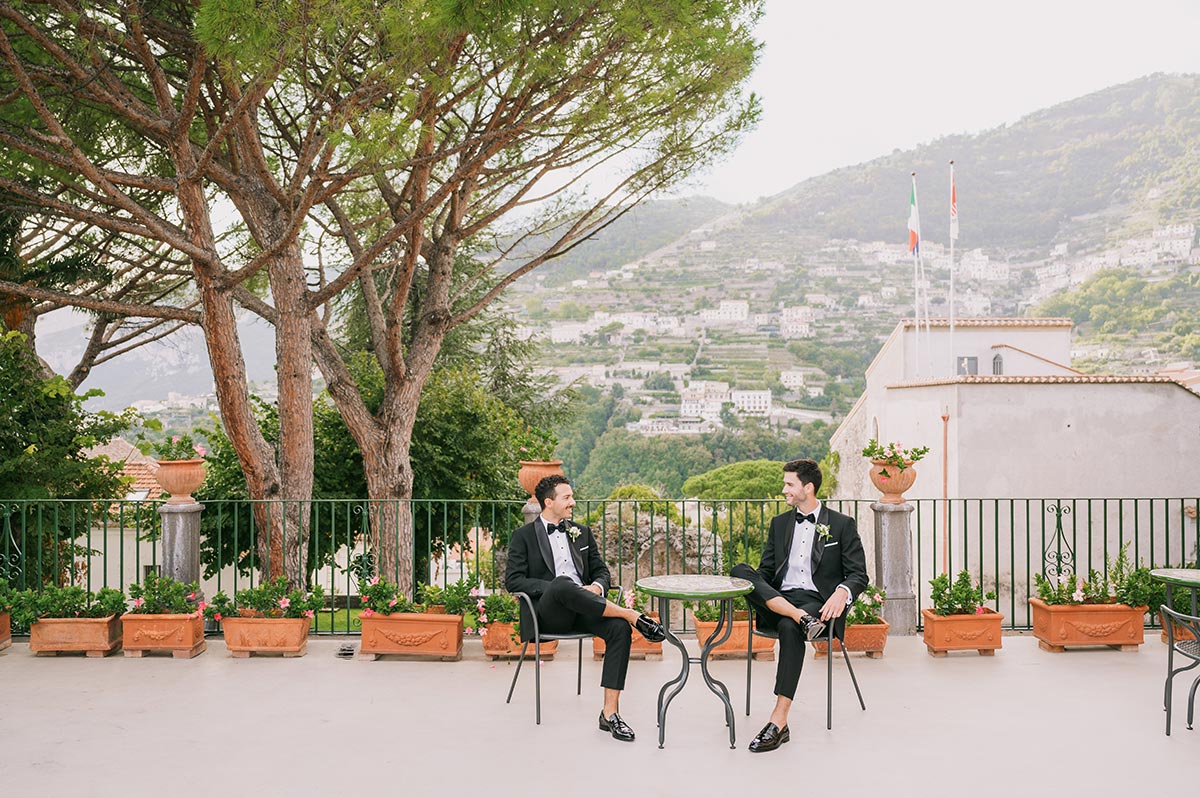
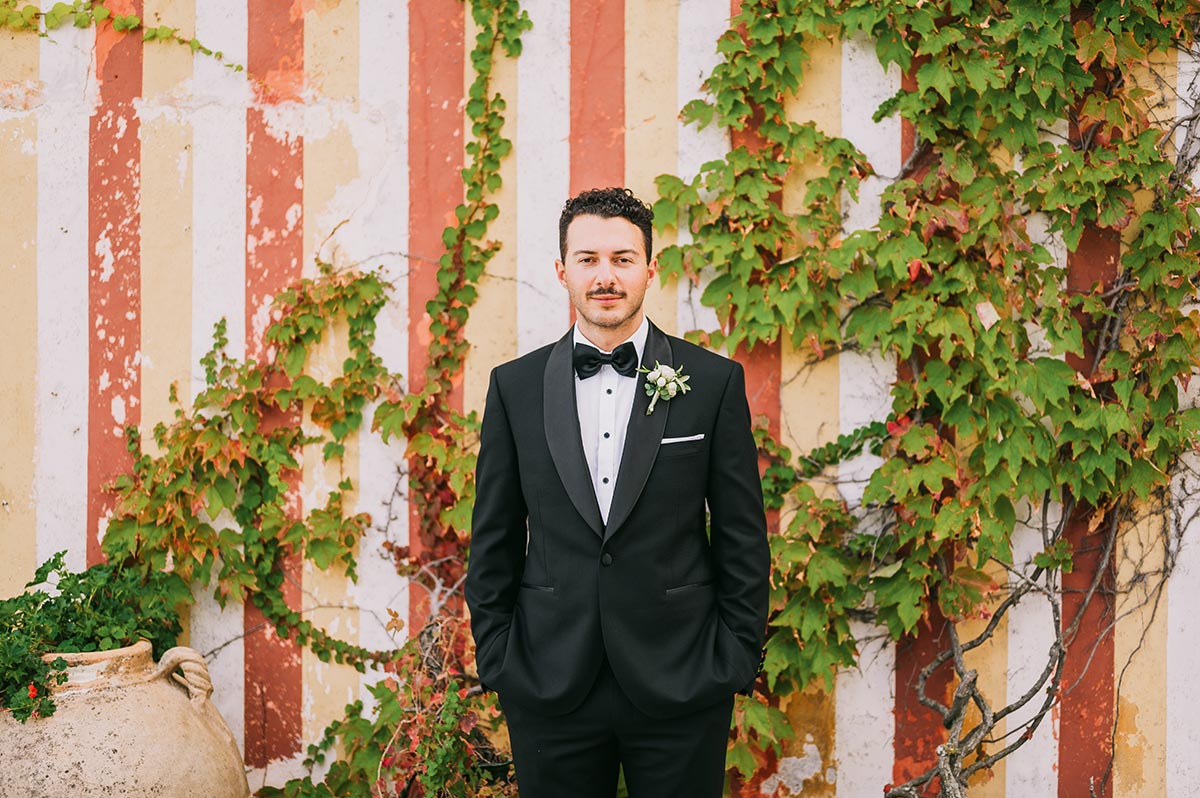
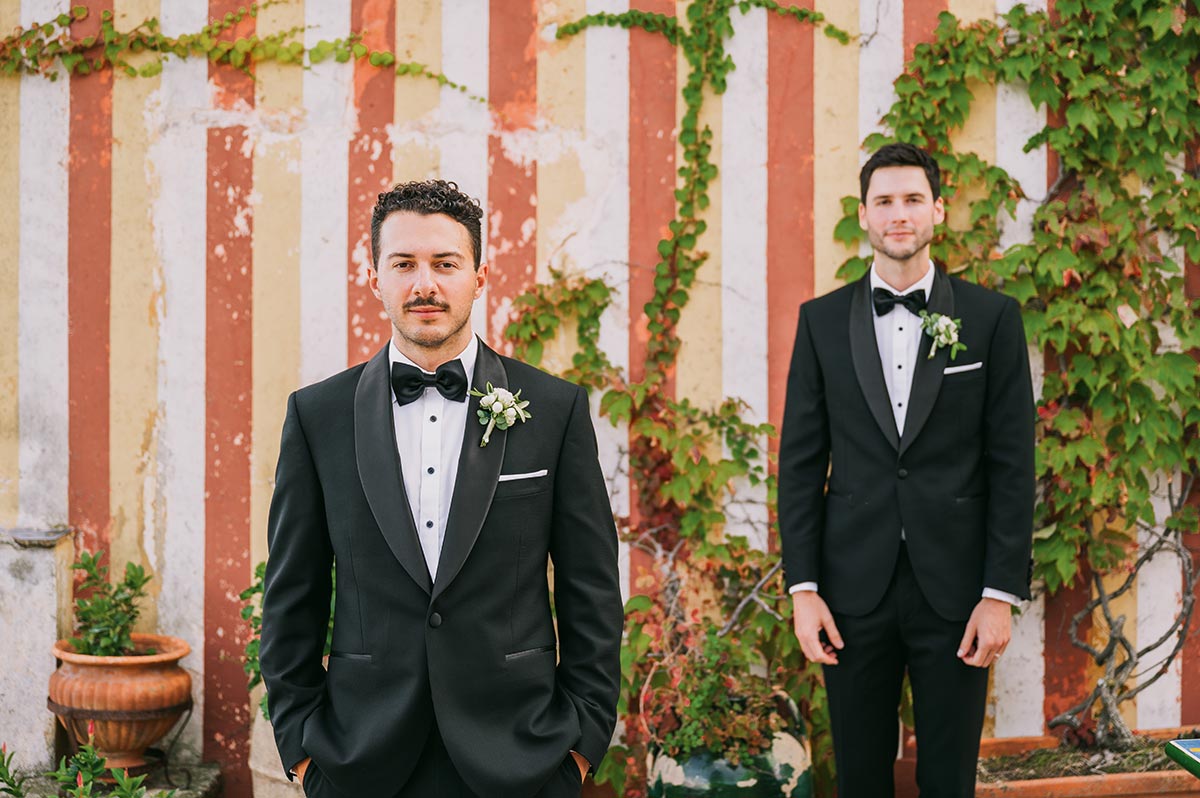
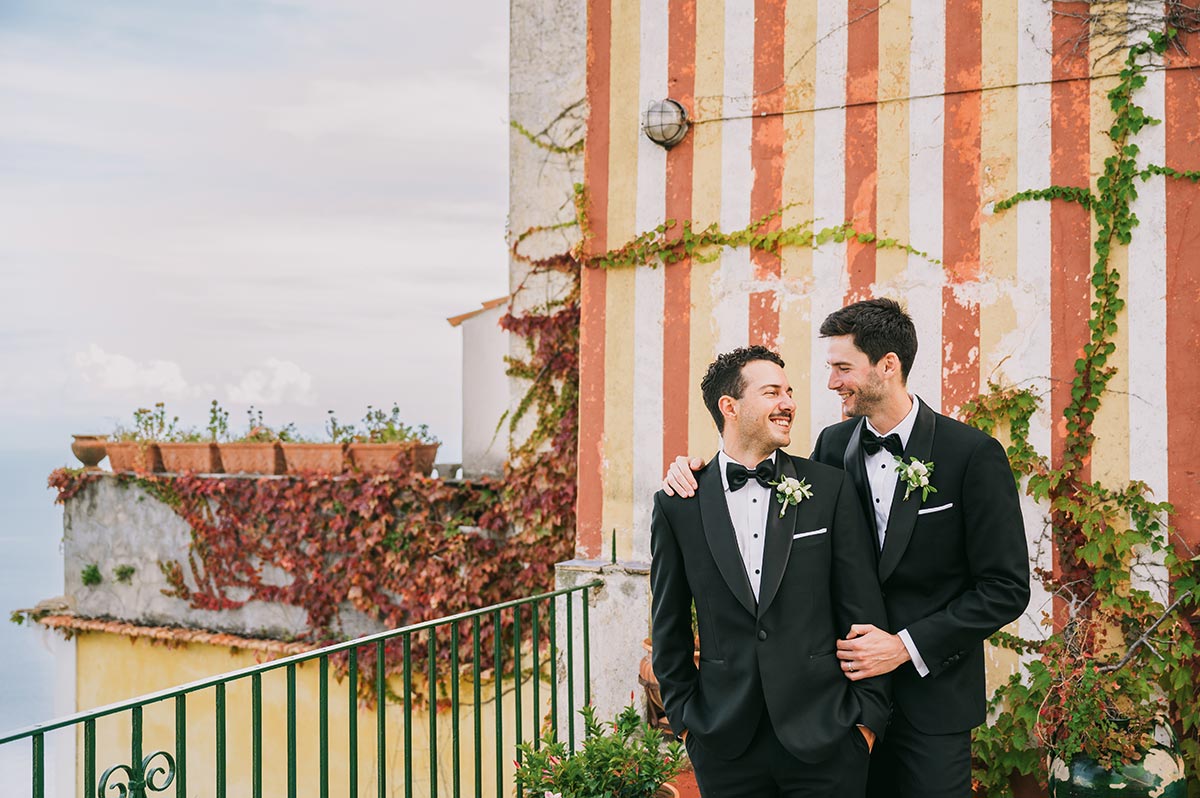
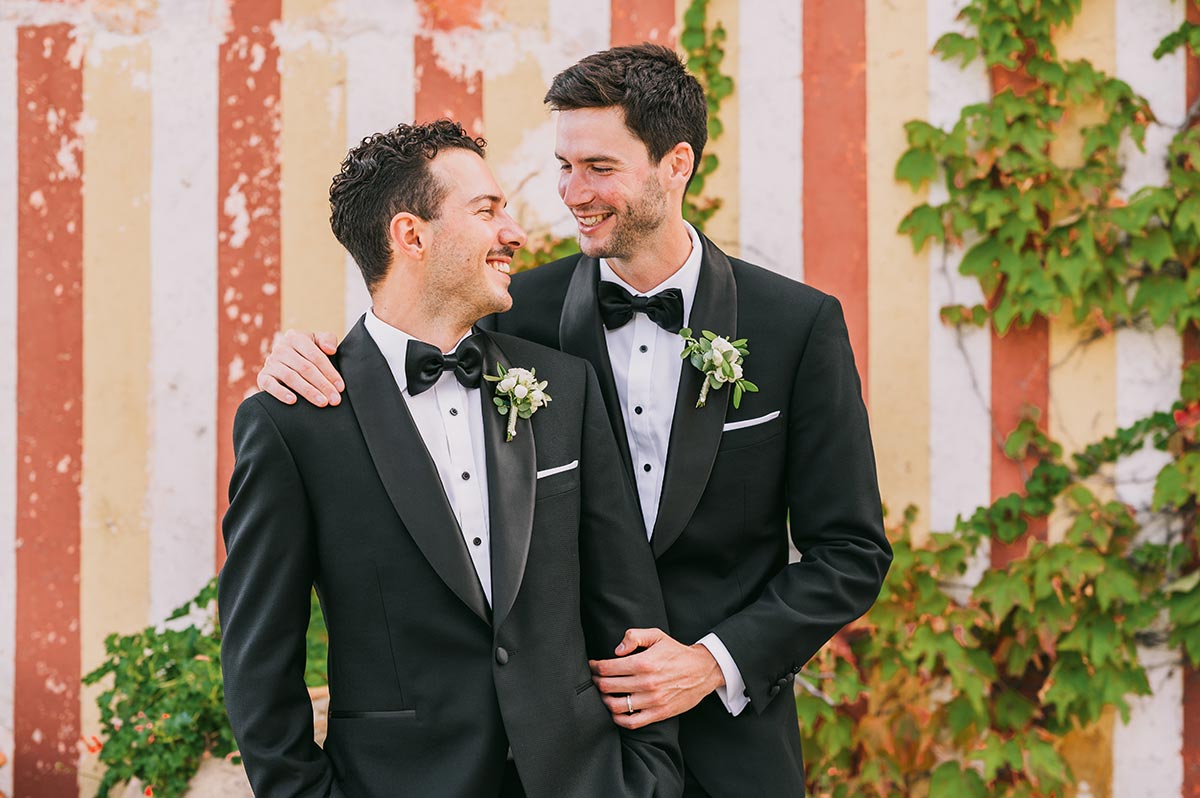
For those looking for a truly memorable and unique location for their special event, Palazzo Confalone is a perfect choice. With its beautiful interiors and exteriors, warm and welcoming family, and incredible sense of hospitality, this place will be treasured by all who visit. Whether you’re looking for a location for your wedding or simply for a photo shoot, Palazzo Confalone is a place that truly has it all.
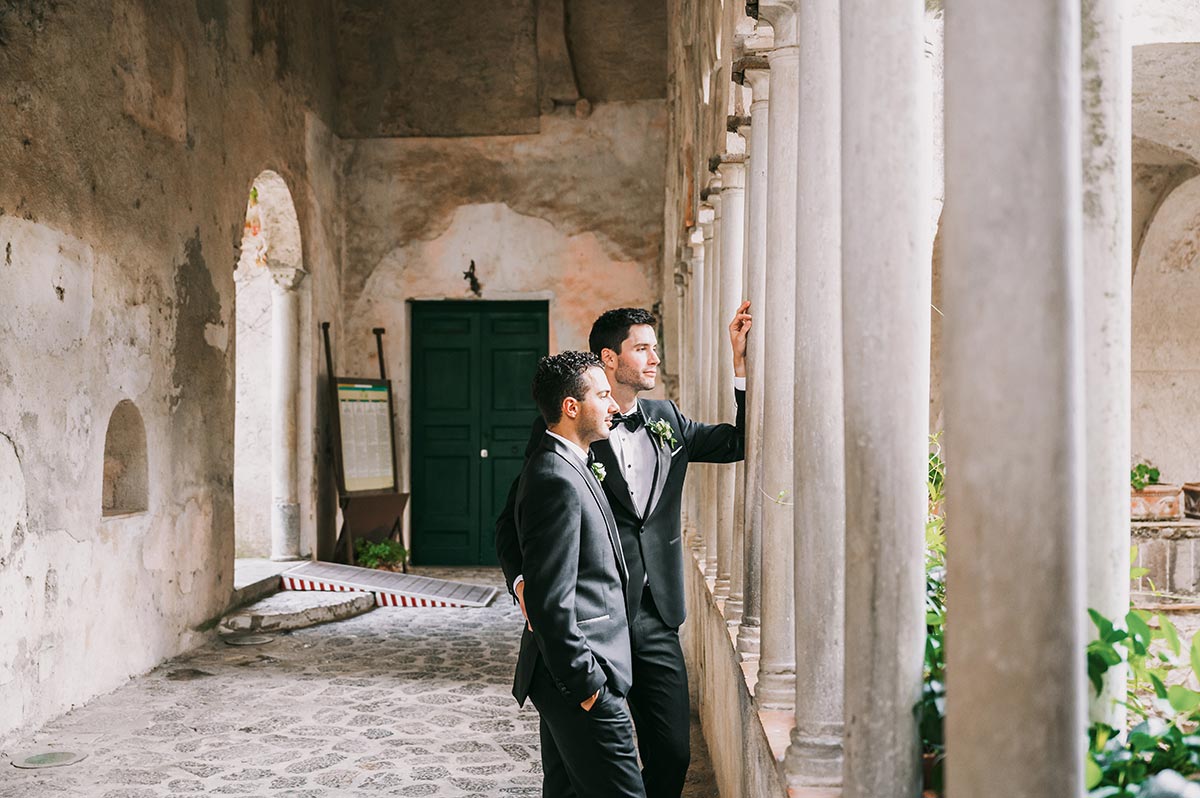
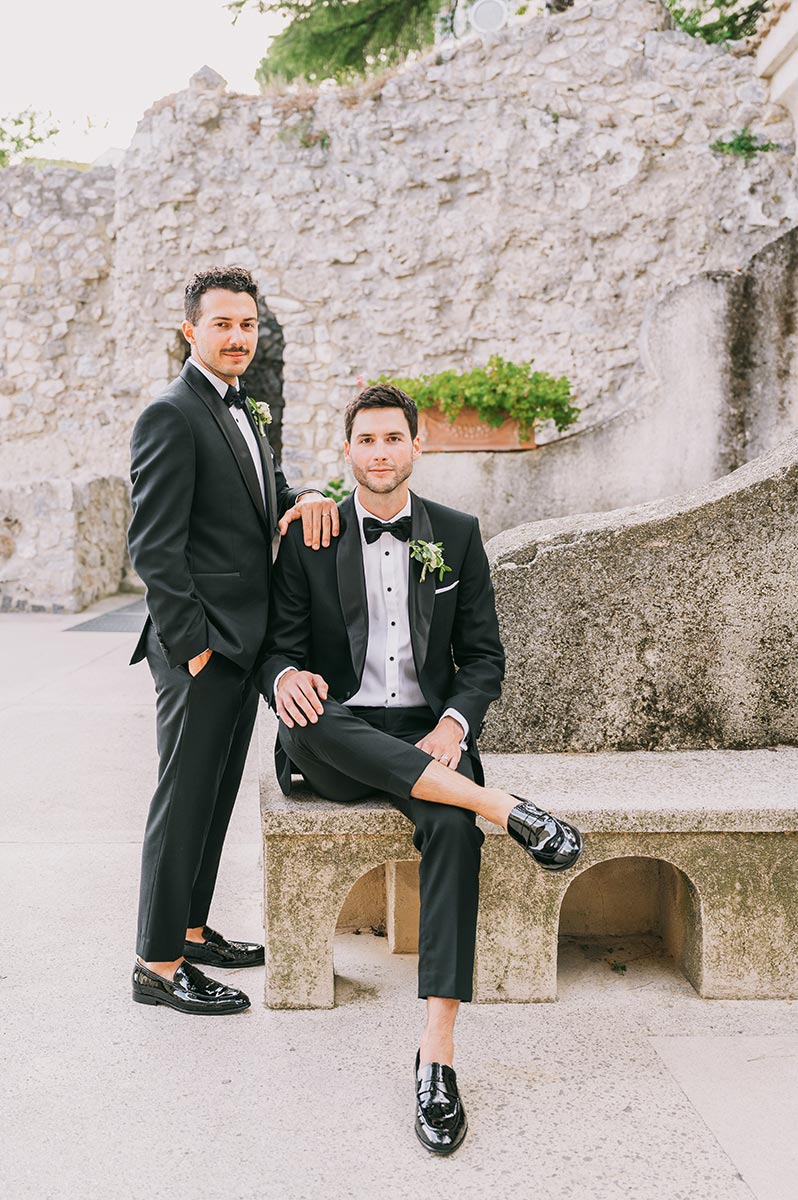
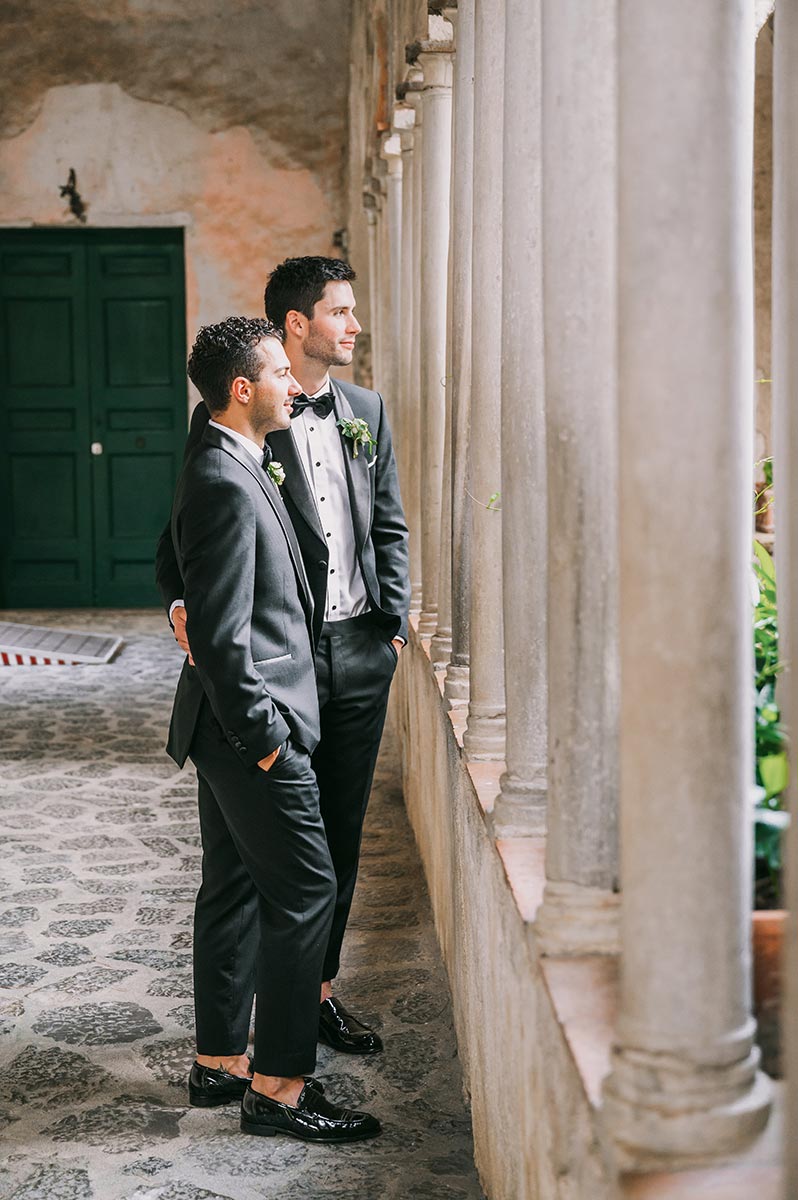
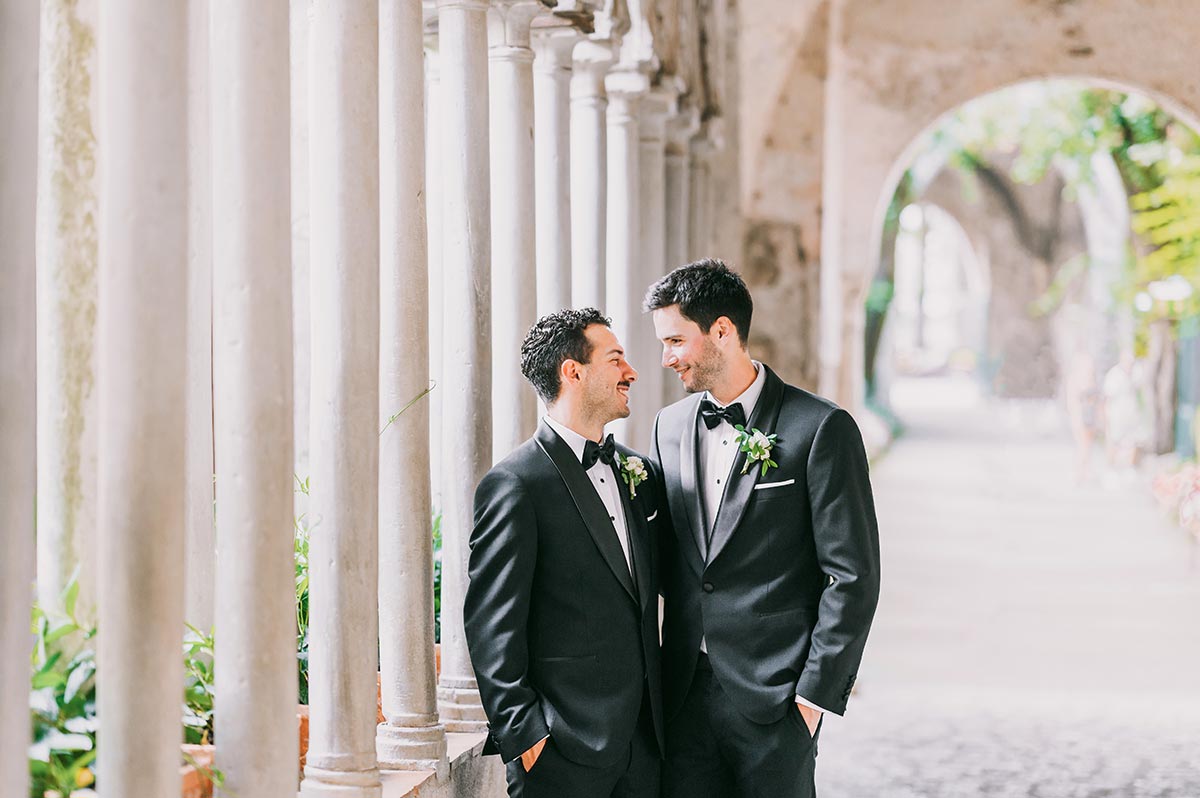
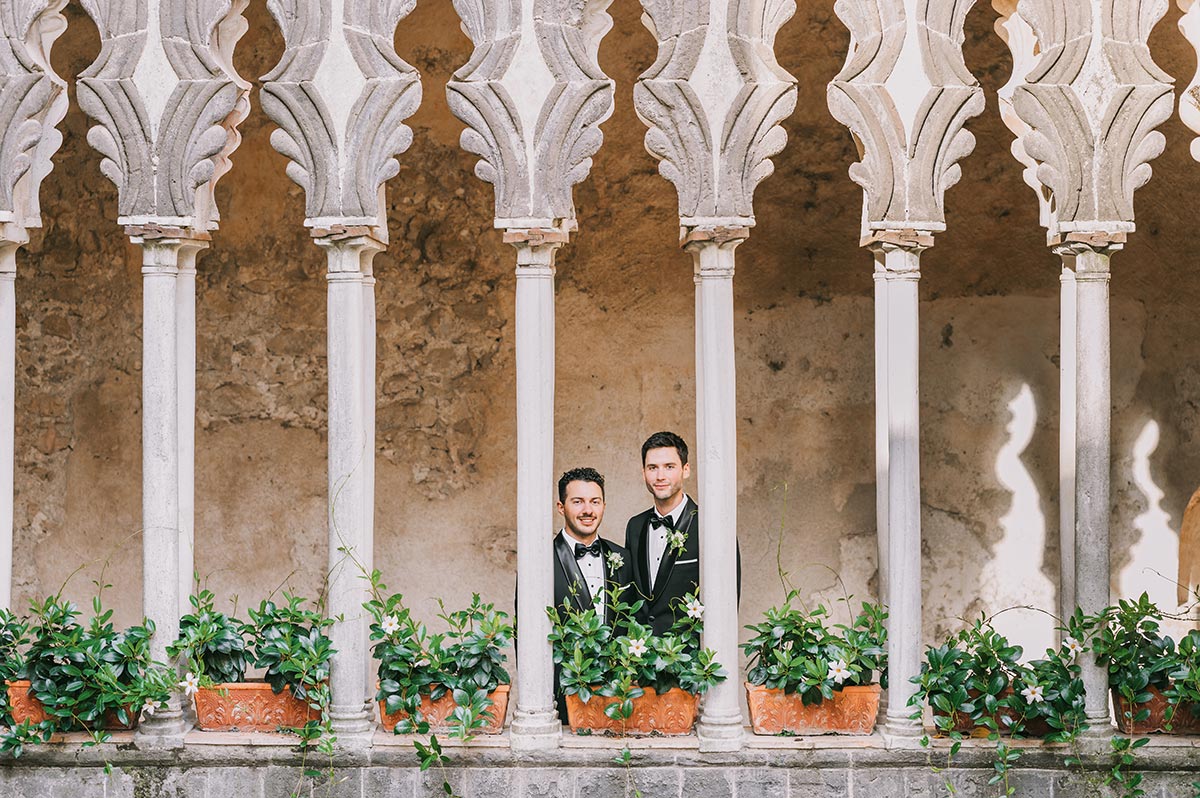
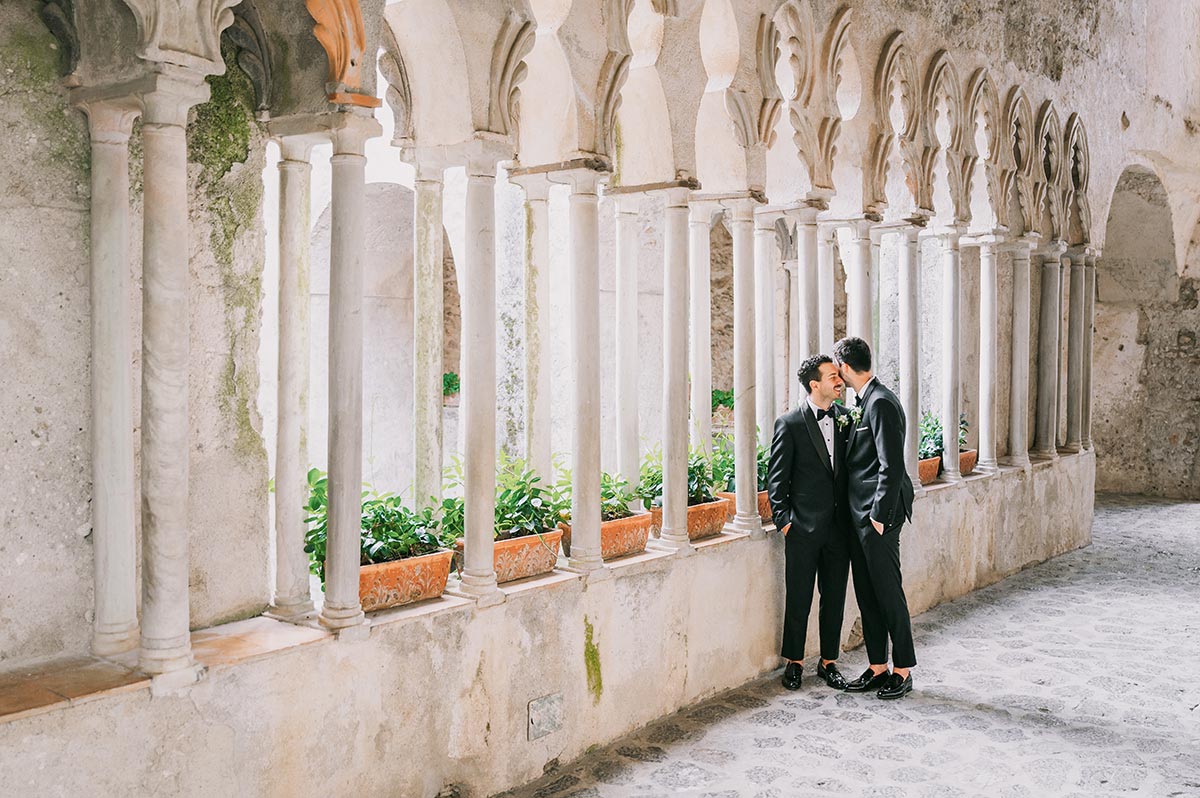
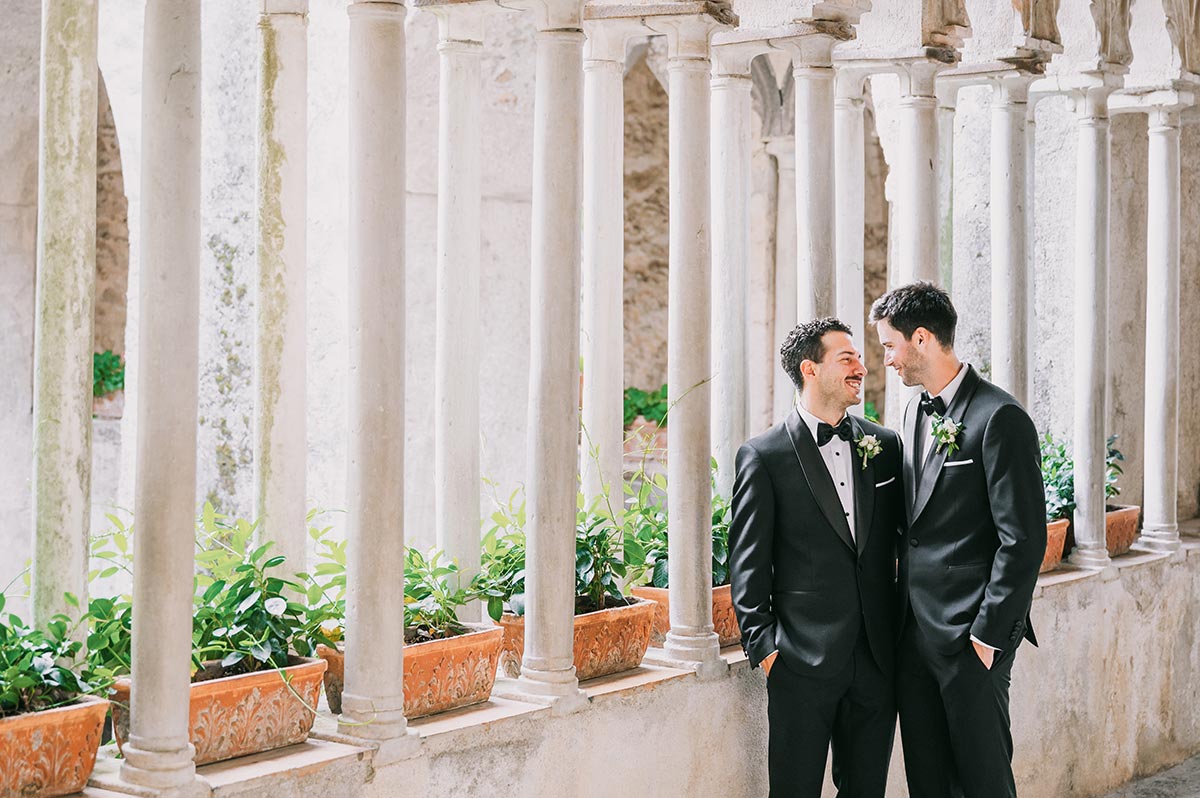
How the Ravello streets can be a night backdrop for wedding pictures
Ravello and its streets can be a fantastic location for a couple of photo shoots, especially at certain times with the proper lighting. The advantage is that when the couple doesn’t have the budget to pay the high fees of Villa Cimbrone, they can be a valid alternative when combined with Villa Rufolo, which doesn’t charge a very high entrance fee in comparison.
RAVELLO EXPERIENCE
Discover the best way to plan a romantic wedding in Ravello, and hire an Italian wedding photographer.
AIRY AND MODERN
The beauty of Ravello is that it’s a quaint and charming town nestled on the Amalfi Coast, offering breathtaking views of the Mediterranean Sea. Its winding streets, lovely architecture, and picturesque views make it a great place to take romantic photos as a couple. Whether you’re taking a stroll through the town, stopping at a scenic overlook, or posing in front of a historic building, Ravello offers endless photo opportunities.
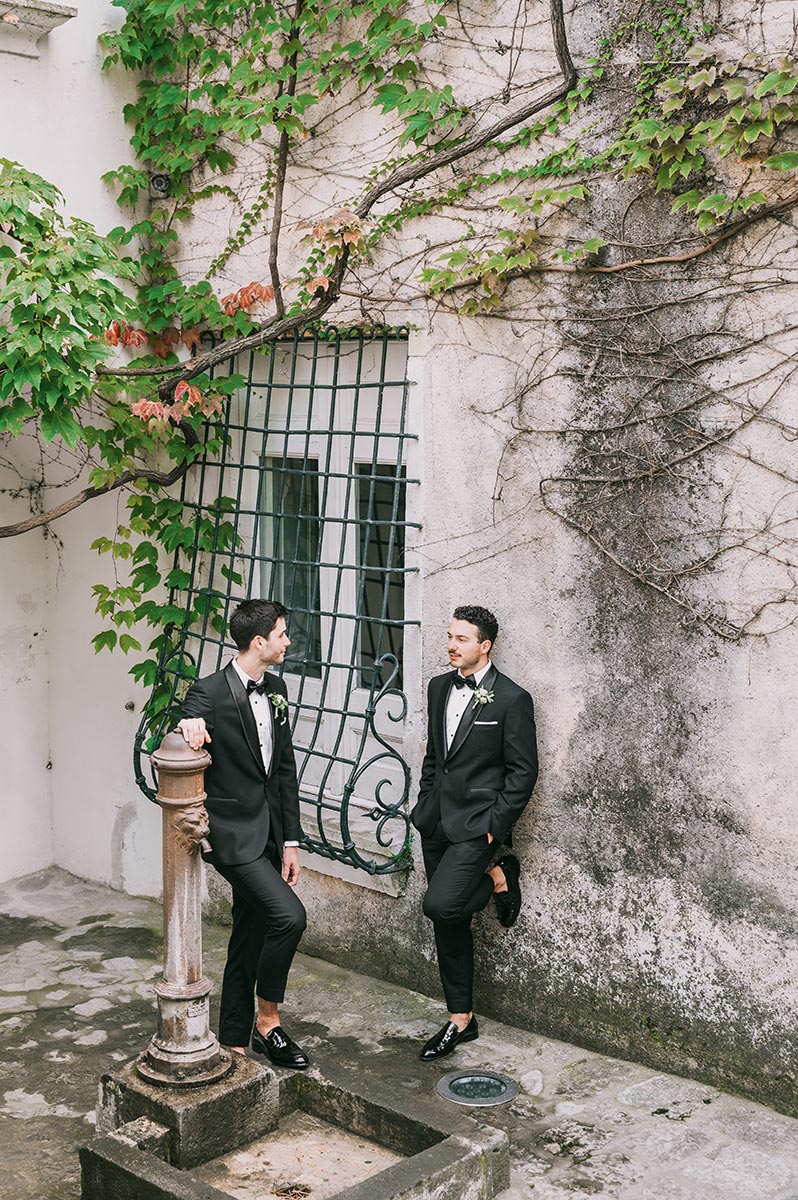
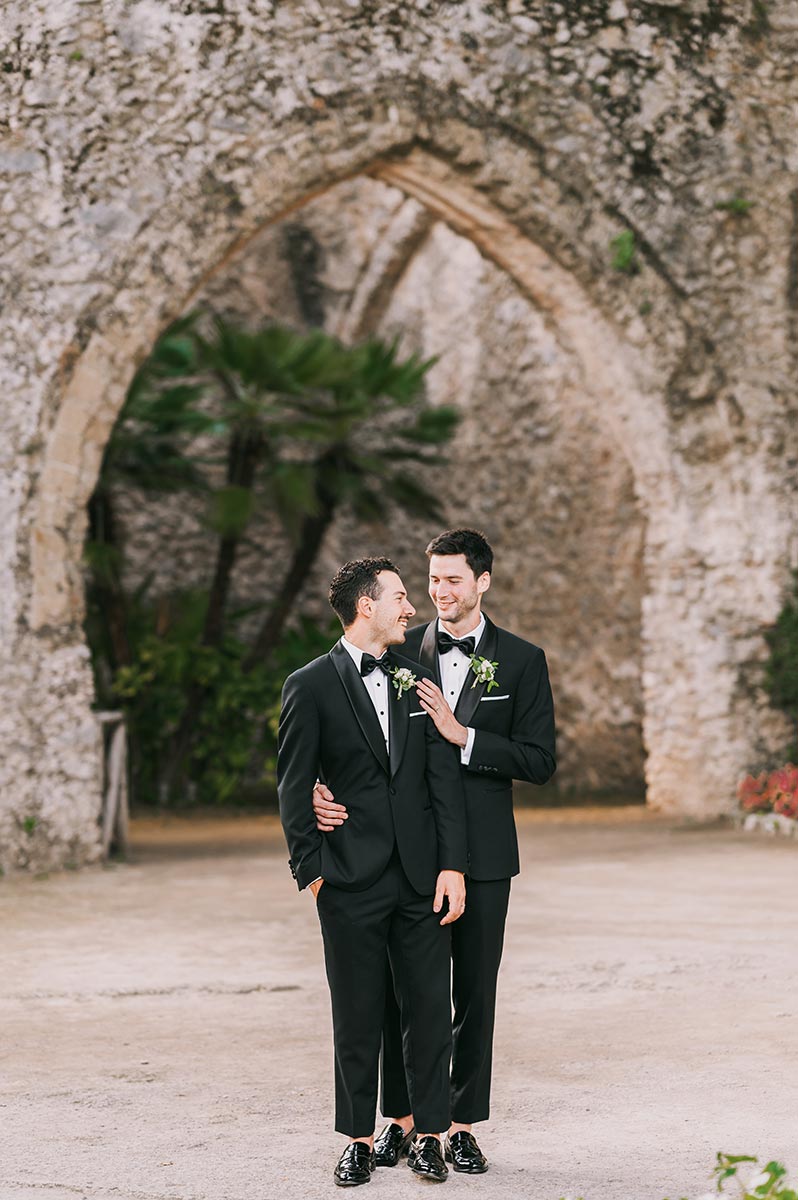


One of the best times to take photos in Ravello is during golden hour, just before sunset. This is when the soft, warm light creates a romantic and dreamy atmosphere, perfect for capturing intimate moments between the couple. This is also when the town comes alive with vibrant colors and stunning sunsets, making for the ideal backdrop for any photo shoot.
Wedding pictures at Villa Rufolo: an unmissable experience for your elopement in Ravello
Villa Rufolo is a stunning, historic building nestled in the picturesque town of Ravello on the Amalfi Coast of Italy. It offers the perfect setting for a romantic elopement and stunning wedding photos. The villa is surrounded by lush gardens and offers panoramic views of the Mediterranean Sea, making it a sought-after destination for those looking for a truly magical experience on their wedding day.
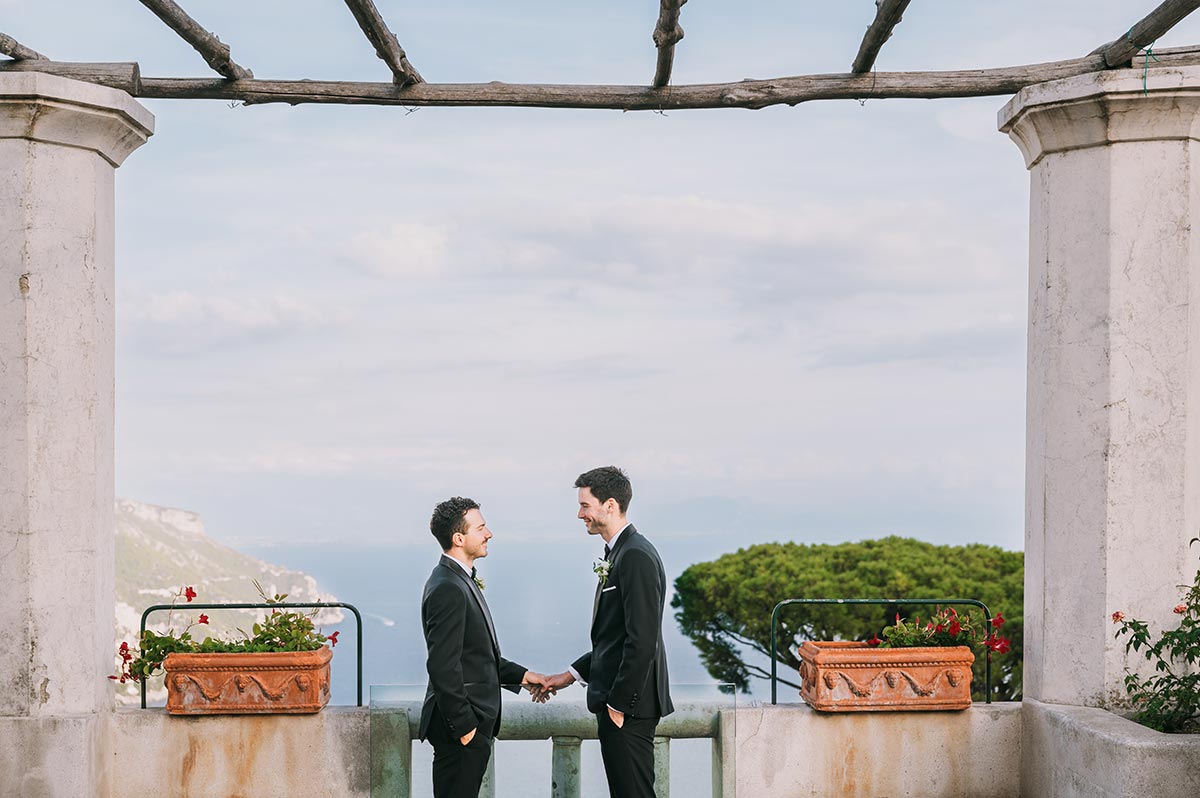
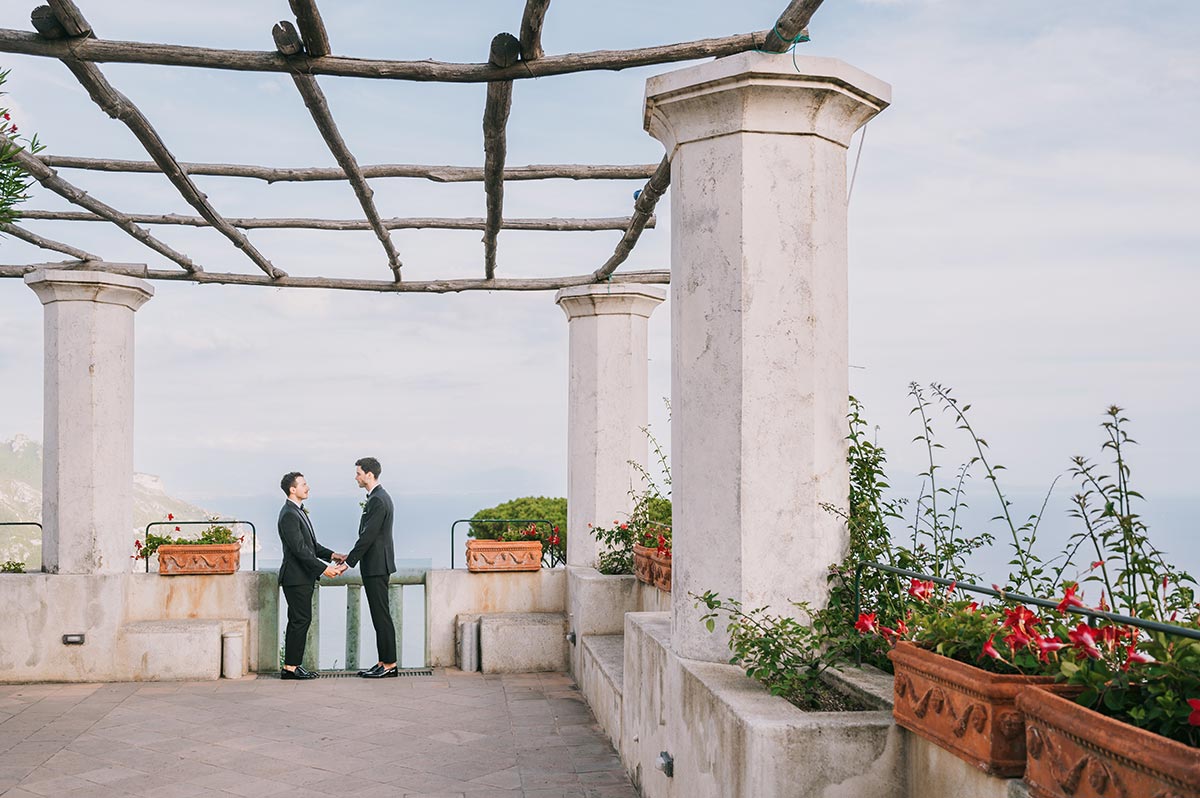
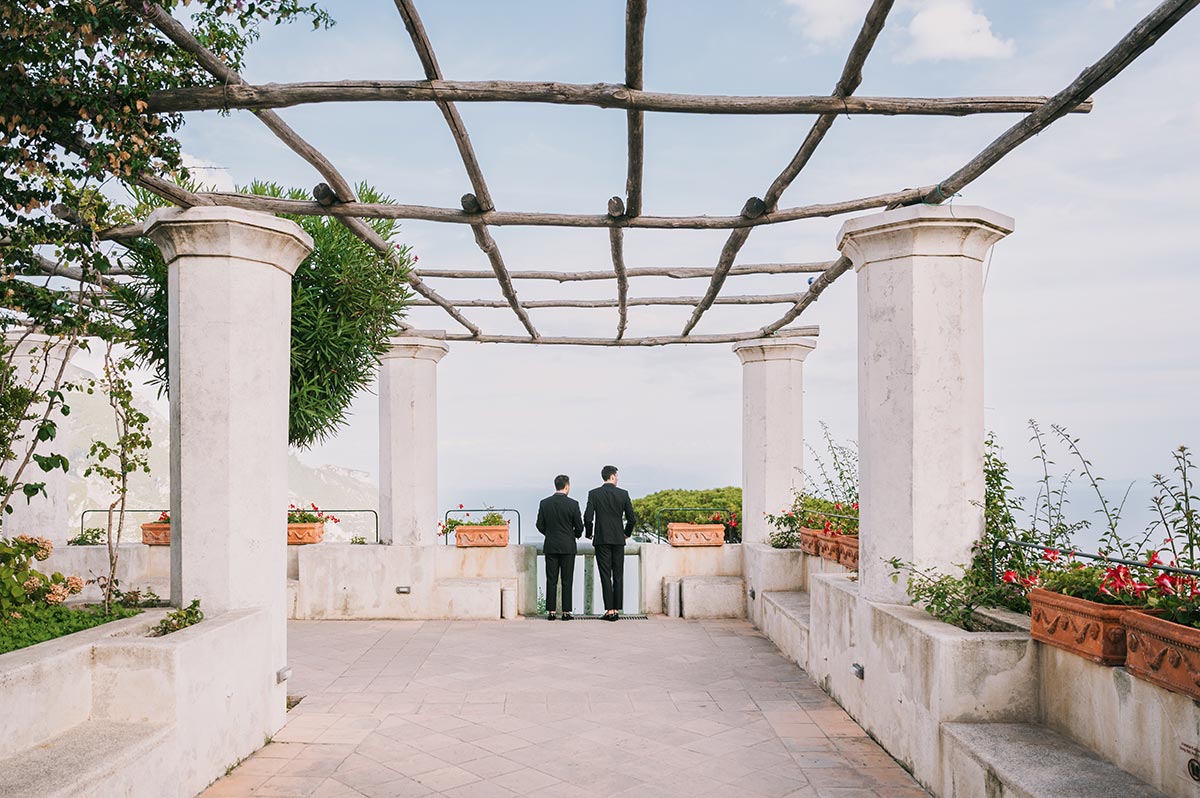
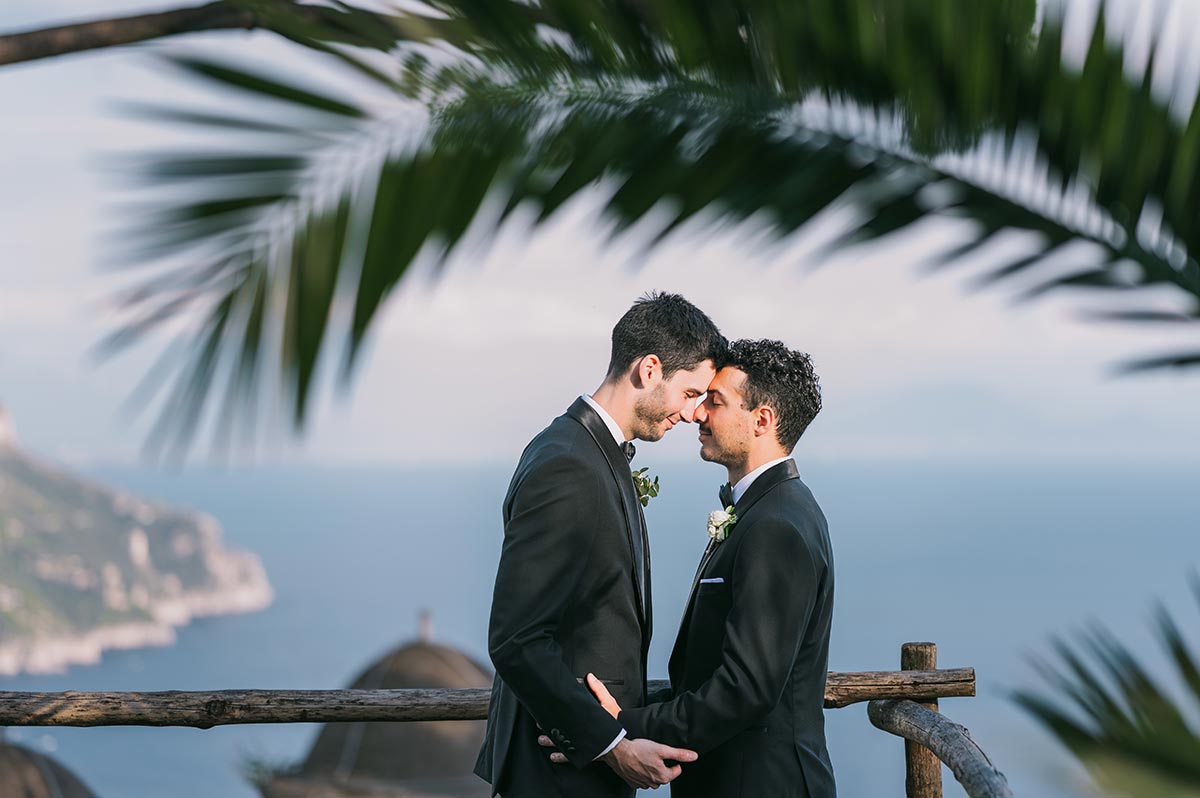
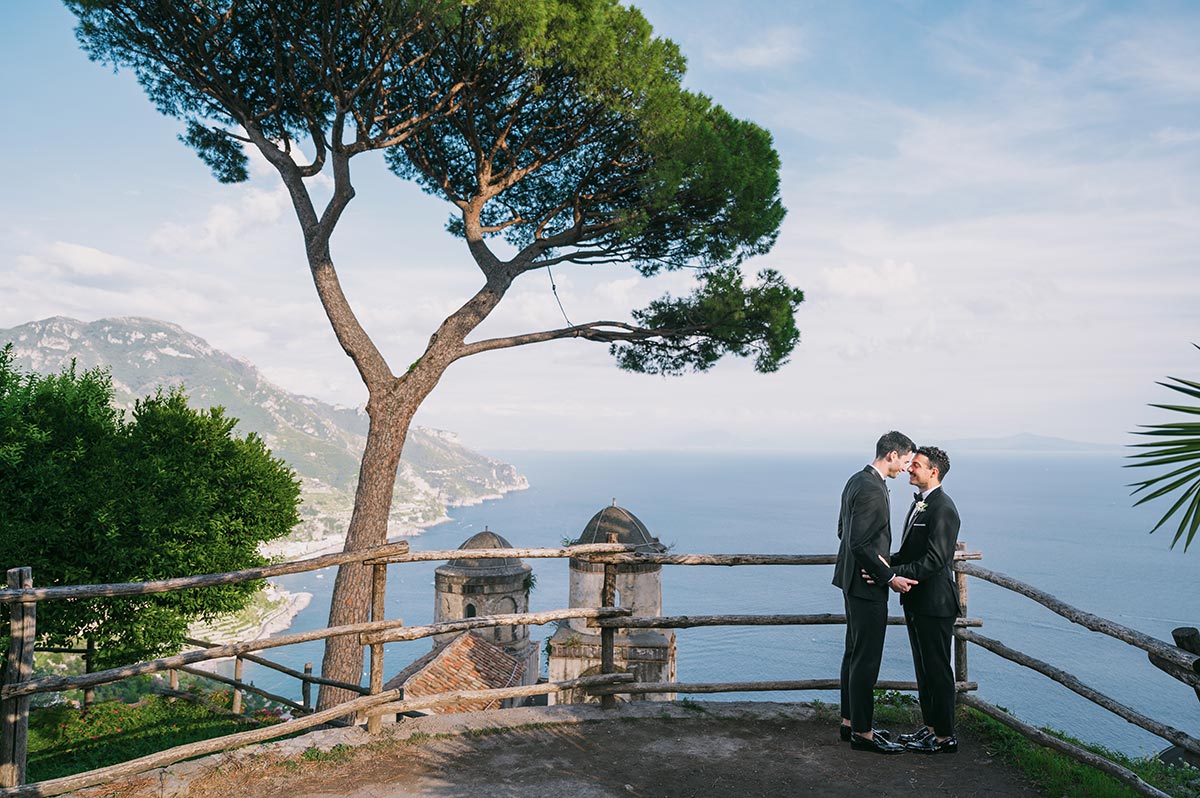

As professional photographers at Emiliano Russo Studio in Ravello, we know all too well just how breathtaking Villa Rufolo can be. The entrance fee required is relatively small compared to other popular wedding venues in the area, such as Villa Cimbrone, and is well worth the investment.
The interior of Villa Rufolo is just as stunning as its exterior. The elegant and tasteful furnishings and décor create an atmosphere of sophistication and charm. The villa’s spacious hallways and rooms offer plenty of space for the happy couple to pose for pictures, and the natural light that filters through the windows provides a warm, soft glow to every image.
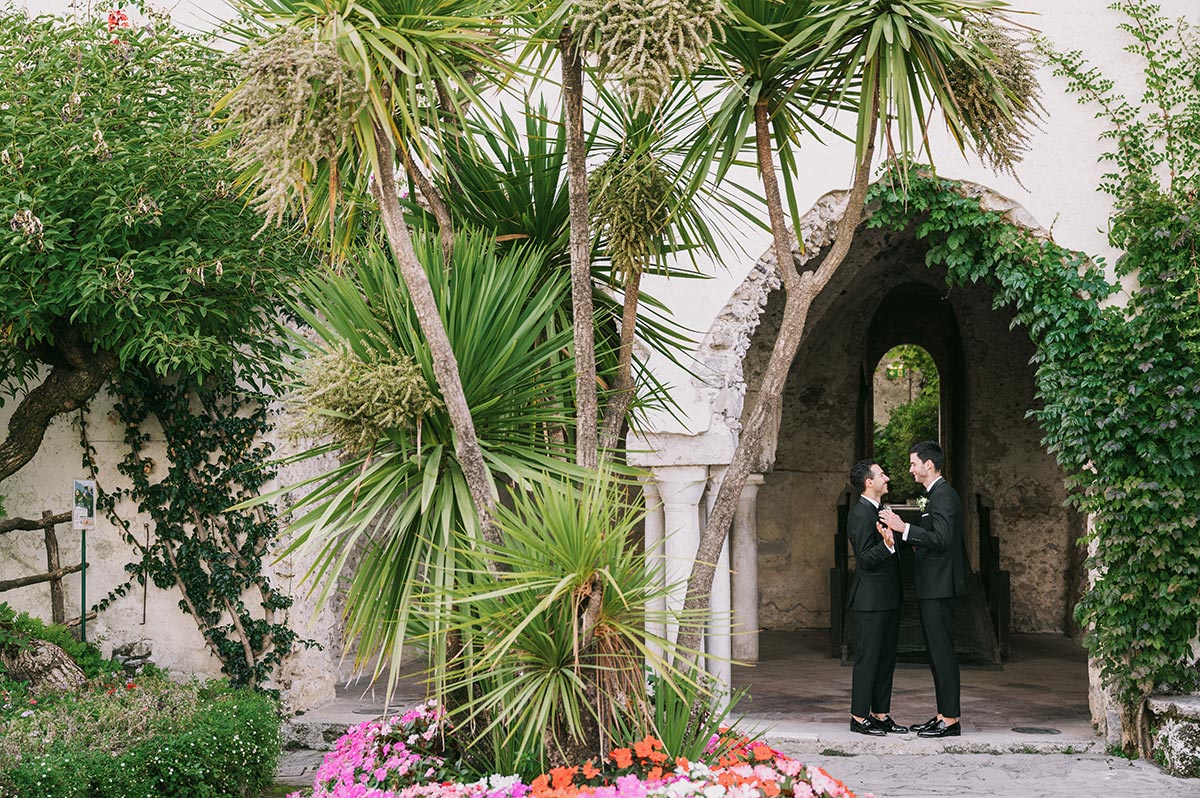
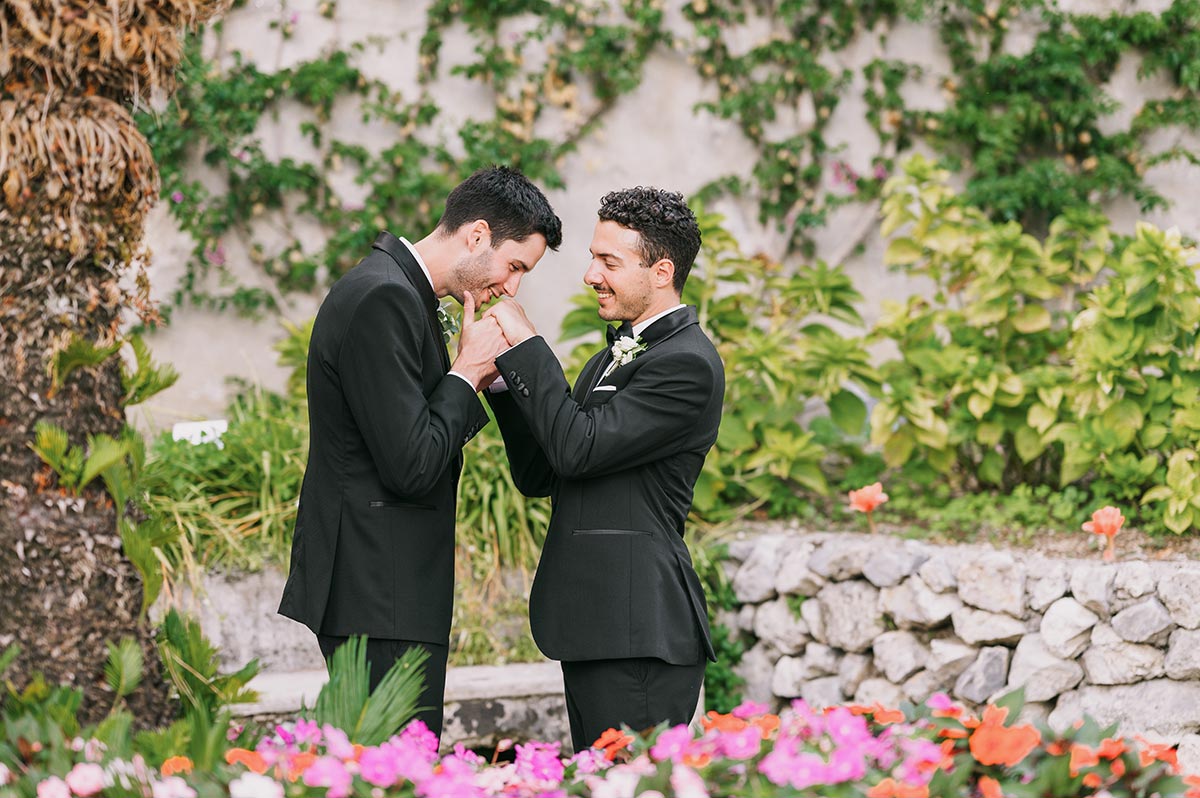
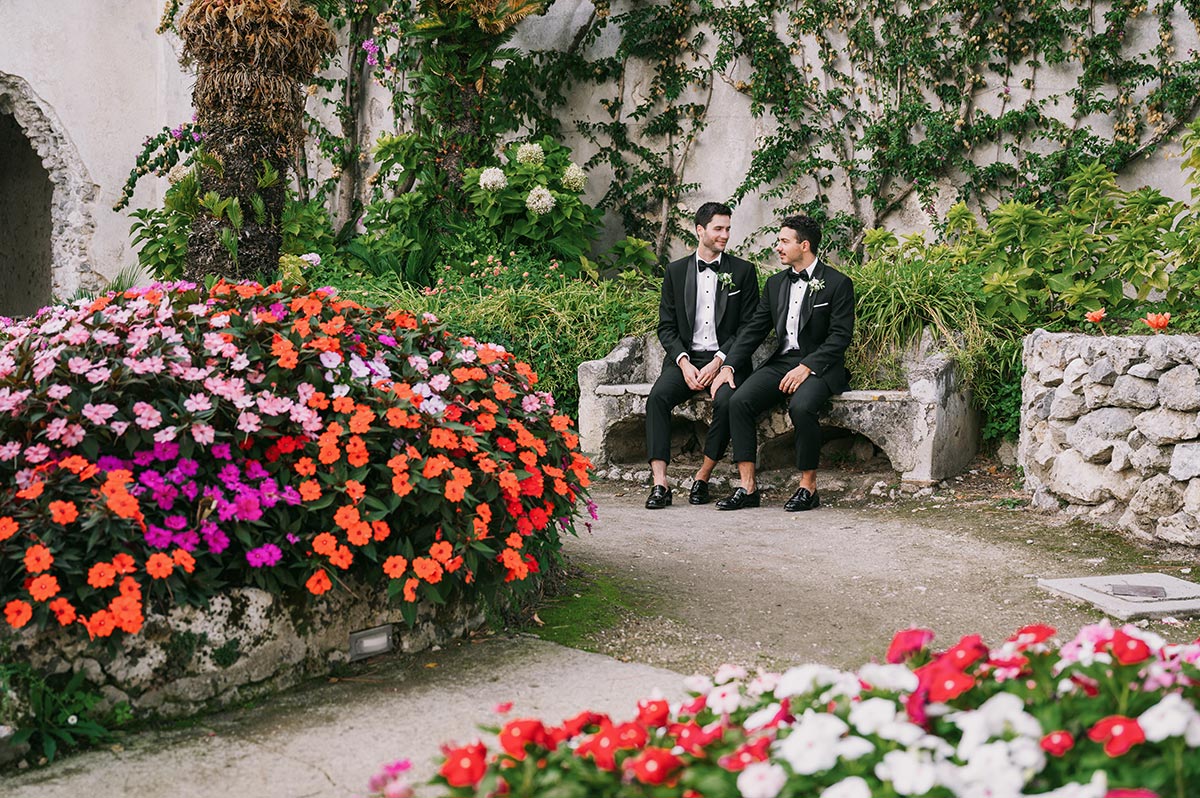
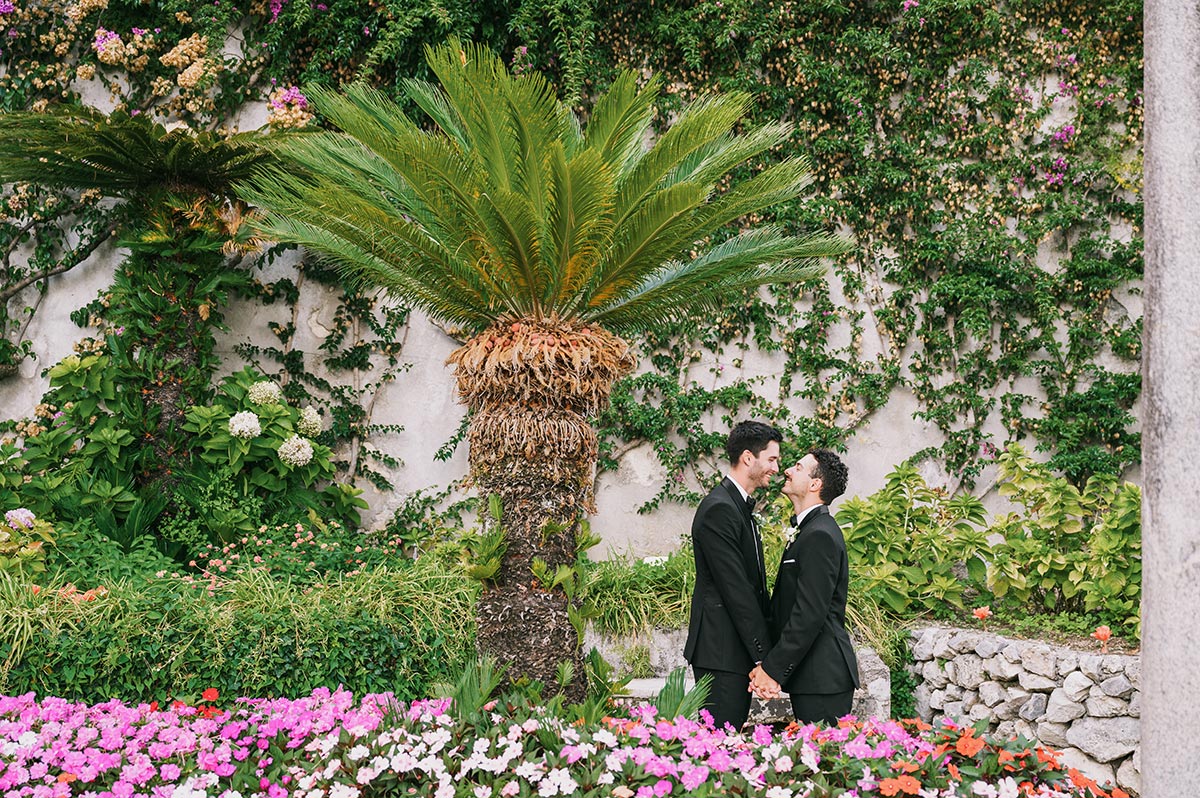
One of the most beautiful aspects of Villa Rufolo is its lush gardens. They provide a perfect backdrop for stunning wedding photos and offer a serene escape from the hustle and bustle of everyday life. The best time to take pictures at Villa Rufolo is during the golden hour before sunset. This time’s warm and soft light creates a magical and romantic atmosphere.
At Emiliano Russo Studio, we take advantage of the natural beauty of Villa Rufolo and its surroundings to create beautiful, timeless images that truly capture the spirit of the occasion. Our professional photographers are experts in capturing the natural beauty and romance of the location, and they take the time to understand each couple’s unique needs to create images that truly reflect their personalities and style.
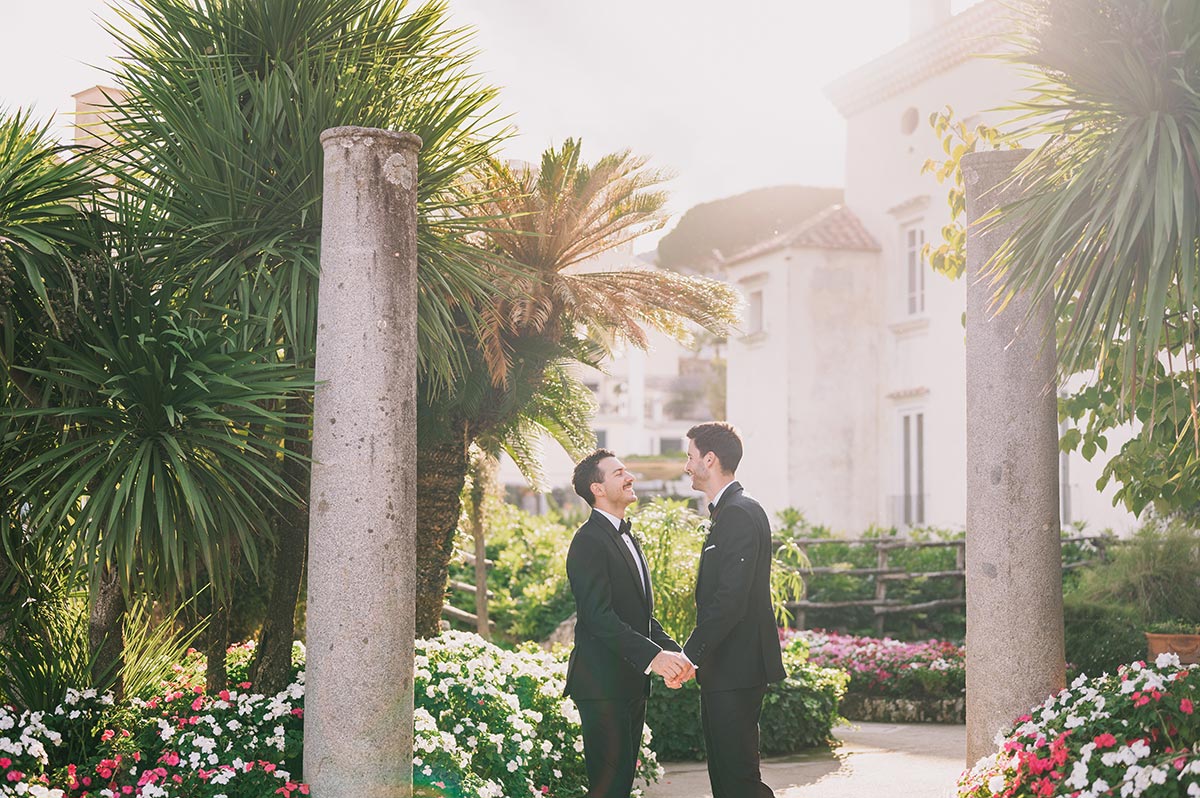
In addition to its stunning beauty, Villa Rufolo is also known for its excellent hospitality. The family that manages the villa is passionate about hospitality and provides a warm and welcoming atmosphere to all its guests. They are always willing to go above and beyond to ensure that the couple and their guests have an unforgettable experience on their wedding day.
Still unknown to most yet so beautiful: Scala is the true hidden gem of the Amalfi Coast
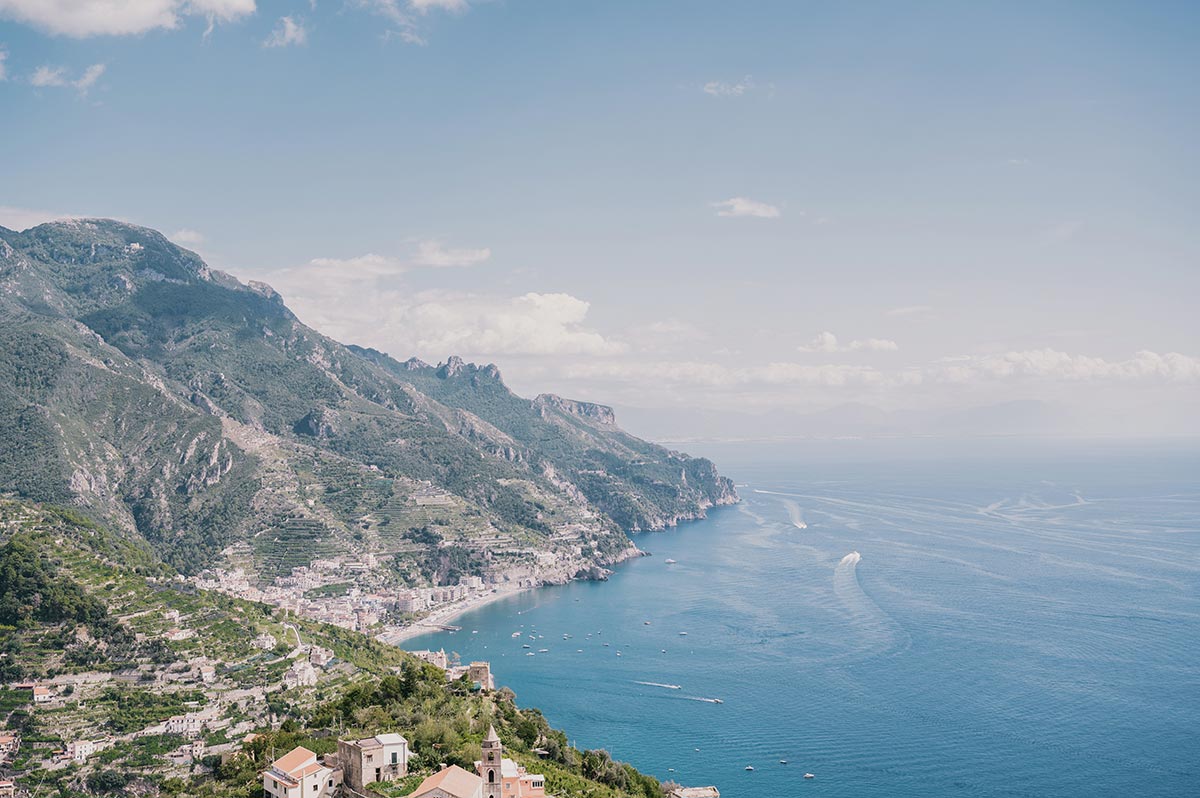
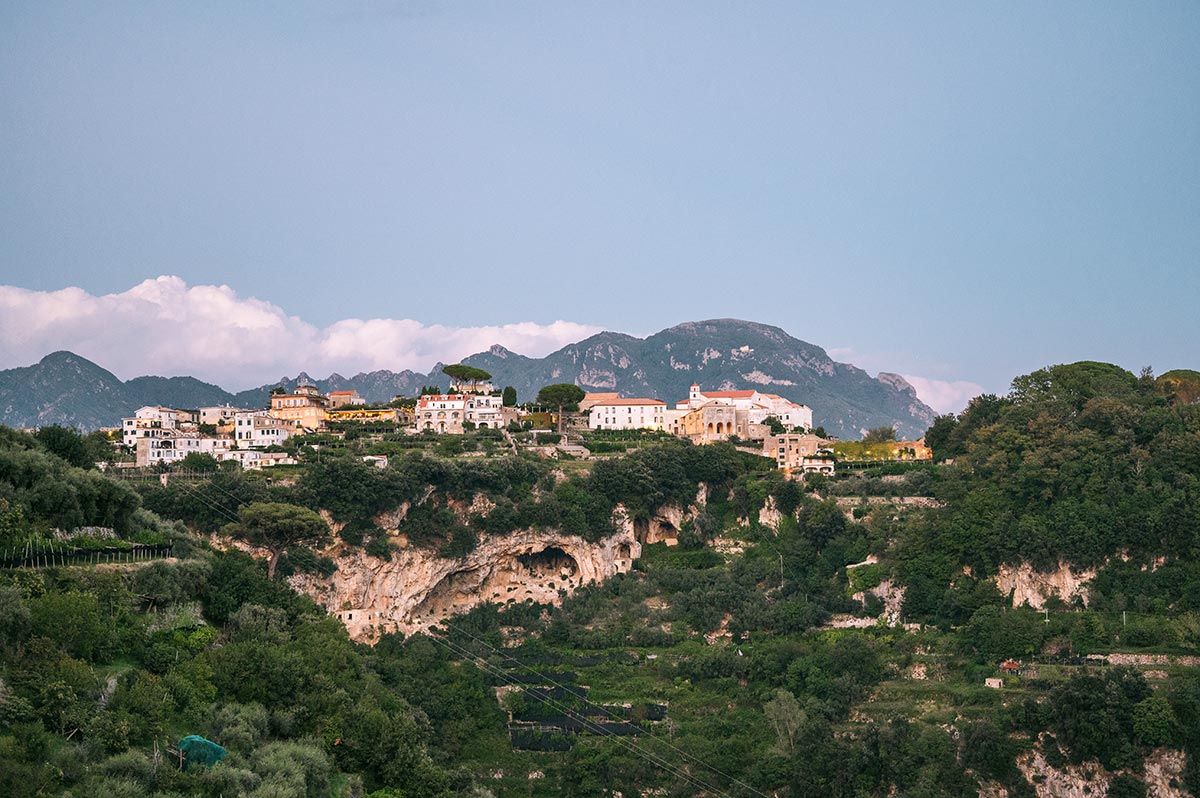
Scala is a small town in the heart of the Amalfi Coast that tourists often overlook, but it is a hidden gem worth exploring. Located just opposite Ravello, Scala offers breathtaking views and a rich history that makes it unique. The town is surrounded by lush green hills and the vibrant blue of the Mediterranean sea, creating a breathtaking landscape.
MEMORABLE WEDDINGS WITH A RAVELLO WEDDING PHOTOGRAPHER
IF YOU THINK OF HIRING ME, IT MEANS THAT YOU SHARE THIS VISION AND WE HAVE MANY THINGS IN COMMON.
One of the main attractions in Scala is the historic church of Santa Maria Maggiore, built in the 9th century. The church boasts stunning architectural features, including its bell tower and intricate frescoes. Visitors can also visit the nearby Convent of San Giovanni Battista, a Benedictine Monastery. This impressive building has now been transformed into a museum and is open to the public.
Another great attraction in Scala is the Palazzo dello Spirito Santo, a beautiful 16th-century palace that has been beautifully preserved. The palace is located in the heart of the town and features a stunning entrance and impressive interiors, complete with original frescoes and paintings. Visitors can also enjoy the spectacular views from the palace’s terrace, which offers panoramic views of the Amalfi Coast.
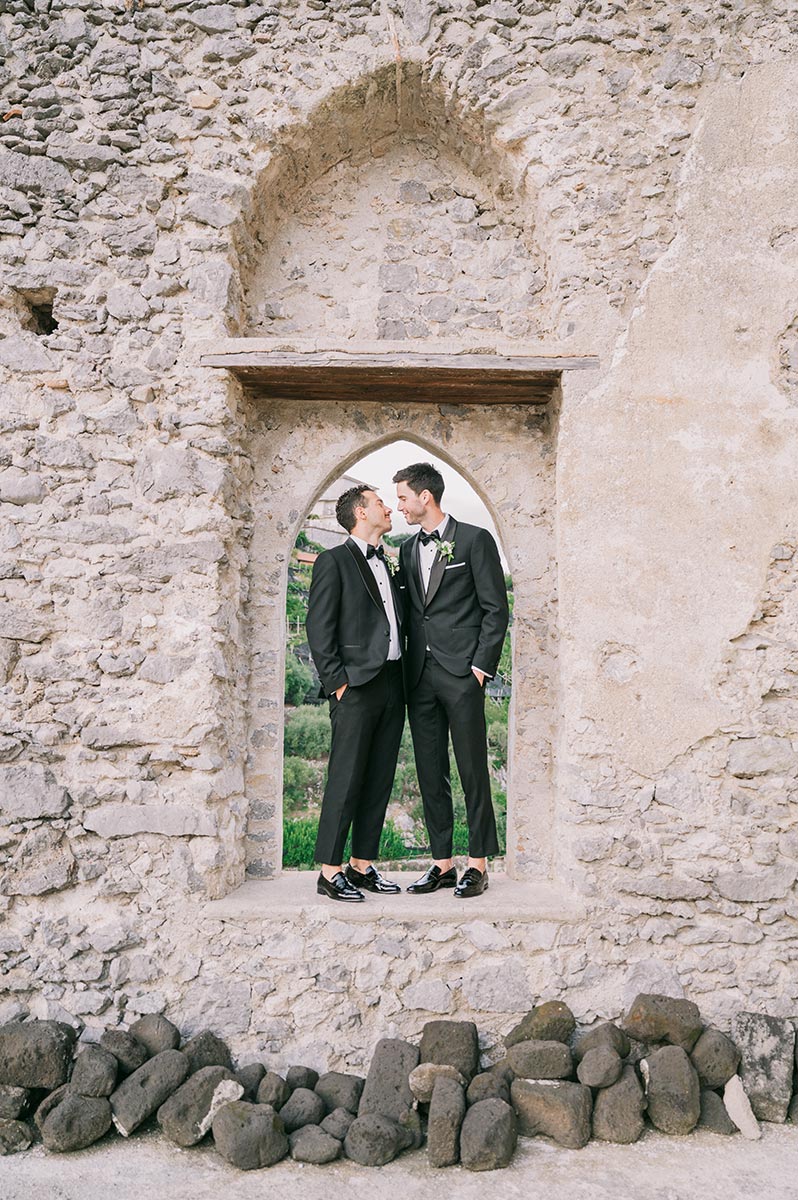



In recent years, Scala has become an increasingly popular destination for weddings and events, with several new wedding venues being built in the area. These venues offer stunning views and beautiful settings, making them the perfect choice for a wedding or elopement on the Amalfi Coast.
Intimate dinner: your ultimate experience in your wedding at sant’Eustachio ruins
Sant’Eustachio ruins in Pontone Scala is a historic site located in the heart of Amalfi Coast. The site is believed to have been built in the early Christian period and has a rich history over several centuries.
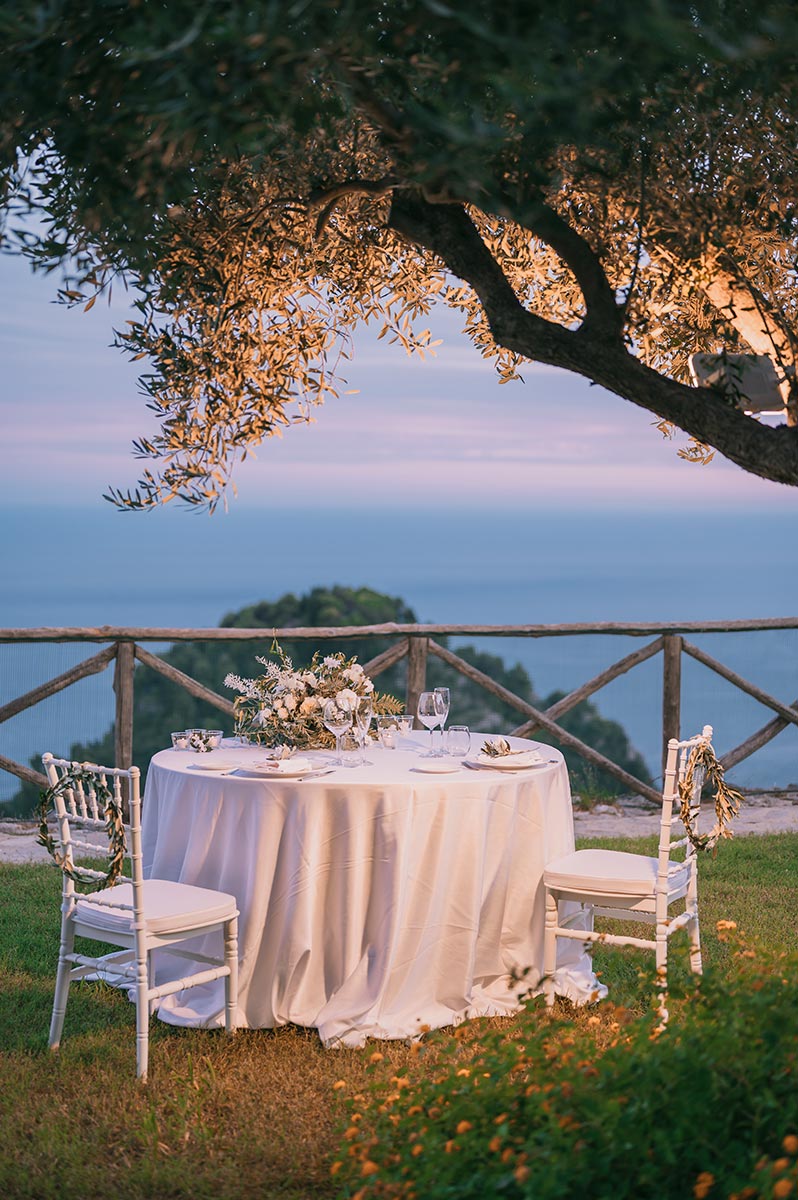


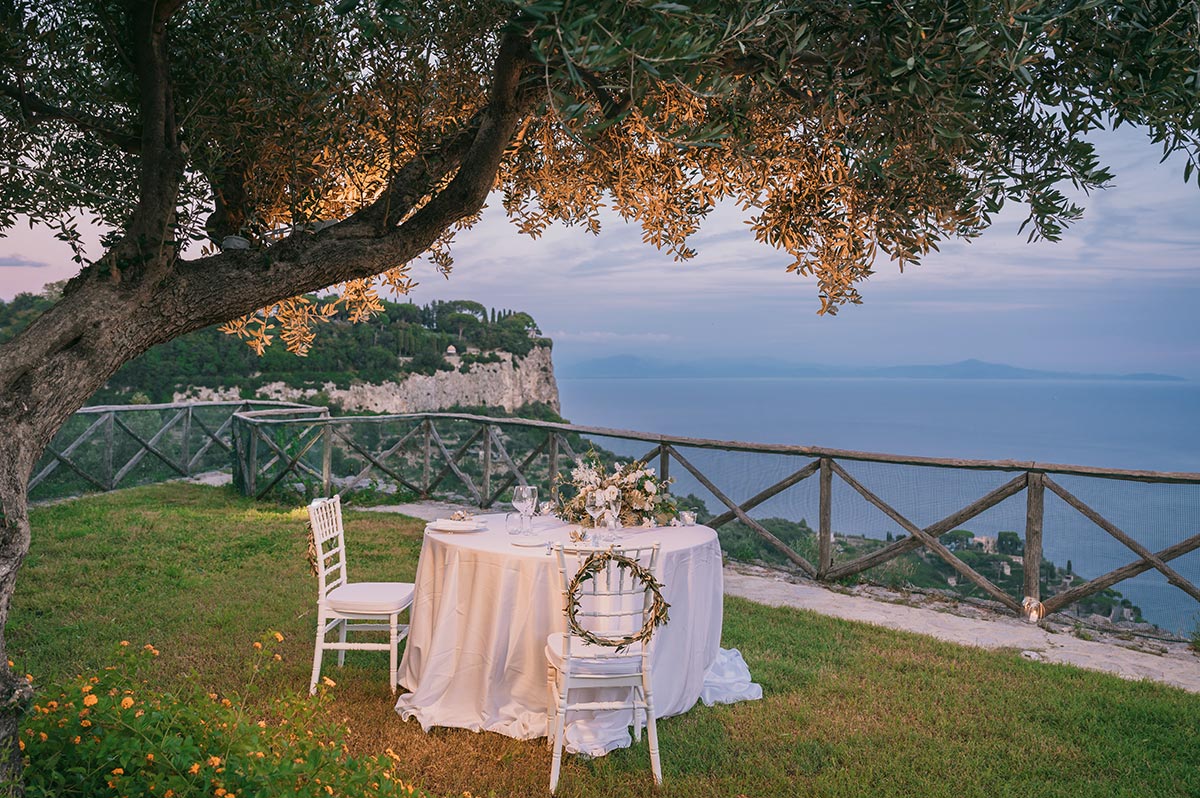
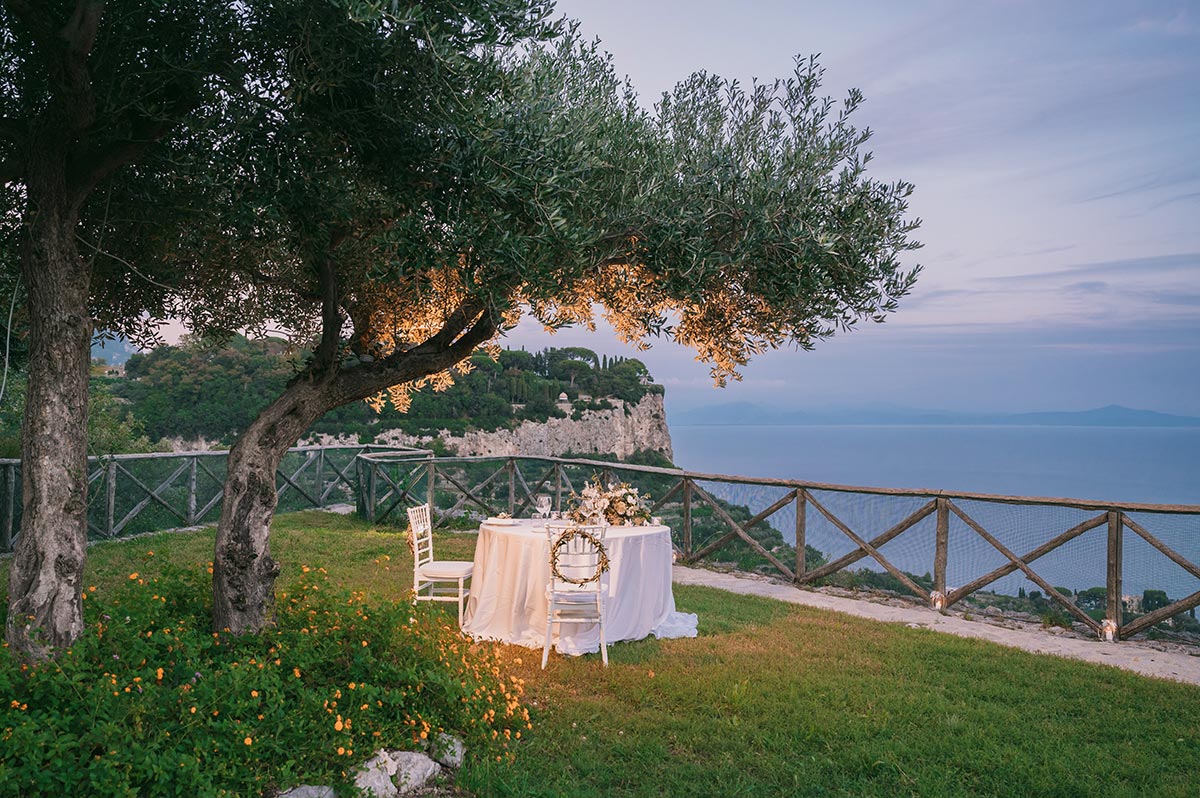
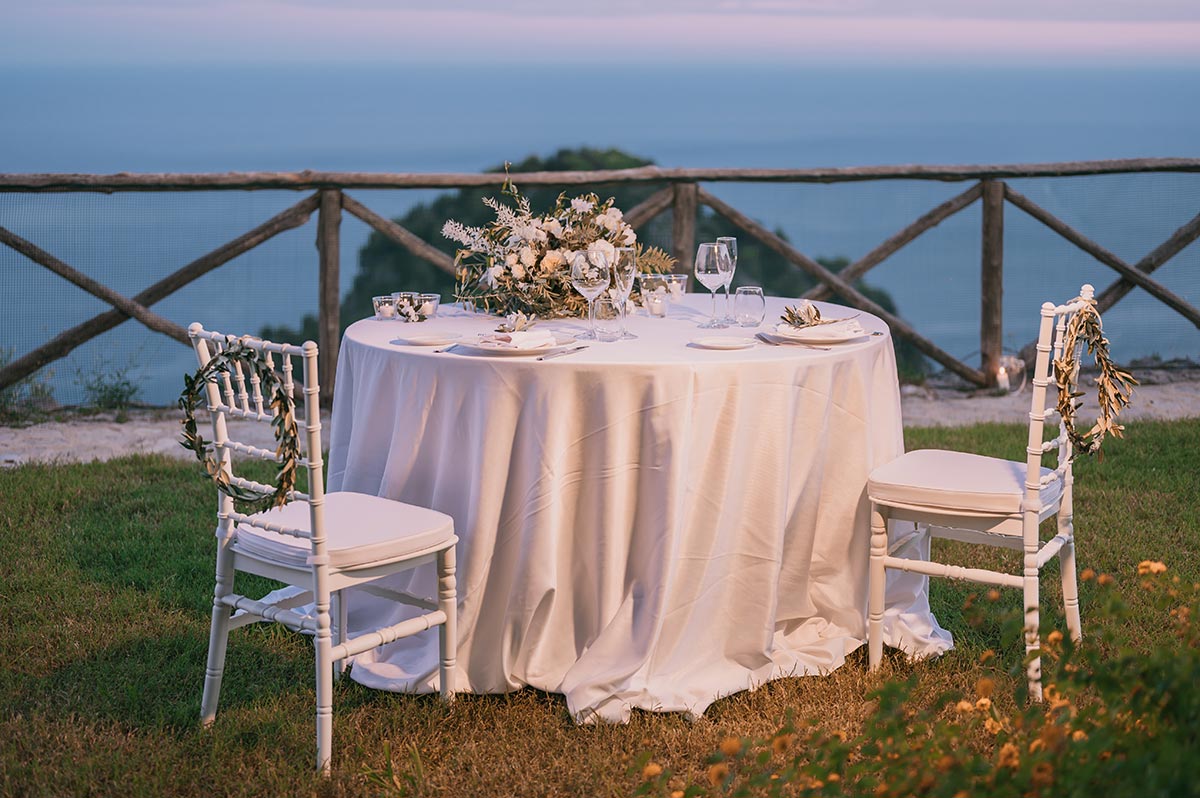
The exact date of the construction of Sant’Eustachio is still being determined, but it is estimated to have been built sometime in the 5th or 6th century AD. It is said to have been made in honor of Saint Eustace, a Roman general who converted to Christianity after seeing a vision of a cross between stag antlers. The church’s name, Sant’Eustachio, is derived from the saint’s name.
Over the centuries, the church underwent several modifications and renovations, the most notable being in the 12th and 13th centuries. The church was expanded and embellished during this period with new architectural elements, including a bell tower and a wooden roof. Despite these additions, the church maintained its original architectural style, which influenced the Byzantine and Romanesque styles.
During the 16th century, the church was abandoned and fell into disrepair. In the 19th century, the ruins were rediscovered, and the site underwent a series of restoration and preservation efforts. The site was declared a national monument in 1904 and has since been a popular tourist destination.
Today, the ruins of Sant’Eustachio in Pontone Scala are considered an important cultural and historical site, attracting visitors from all over the world. The site offers a glimpse into the rich history and architecture of the early Christian period and the various cultural influences that have shaped the region over the centuries.
The magnificent Sant’Eustachio ruins in Pontone Scala is a versatile venue that can accommodate both civil and symbolic weddings during the day, offering a range of opportunities for a beautiful and memorable celebration.
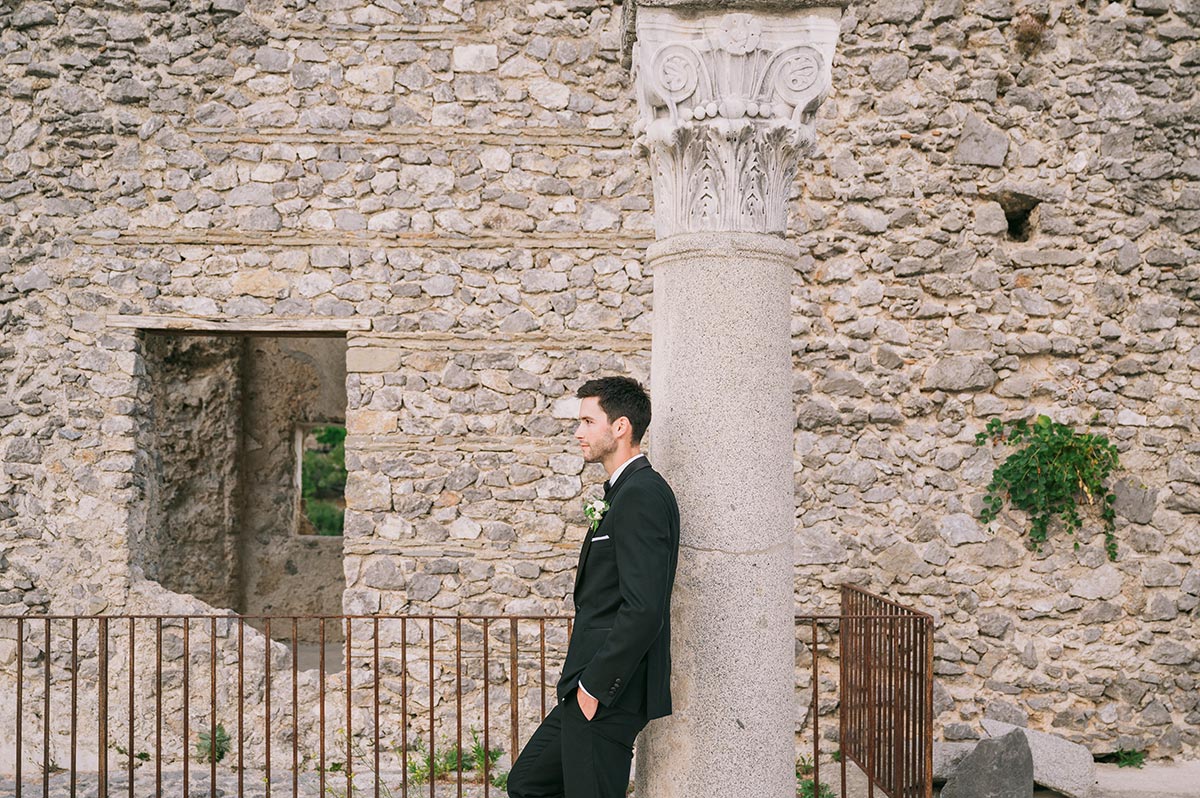
As a wedding venue, the Sant’Eustachio ruins provide a unique and stunning backdrop for the wedding ceremony. Whether it is a civil or symbolic wedding, the ruins offer a beautiful and historic setting for exchanging vows. The lush greenery surrounding the site and the ancient architecture provide a romantic and picturesque atmosphere perfect for a wedding celebration.

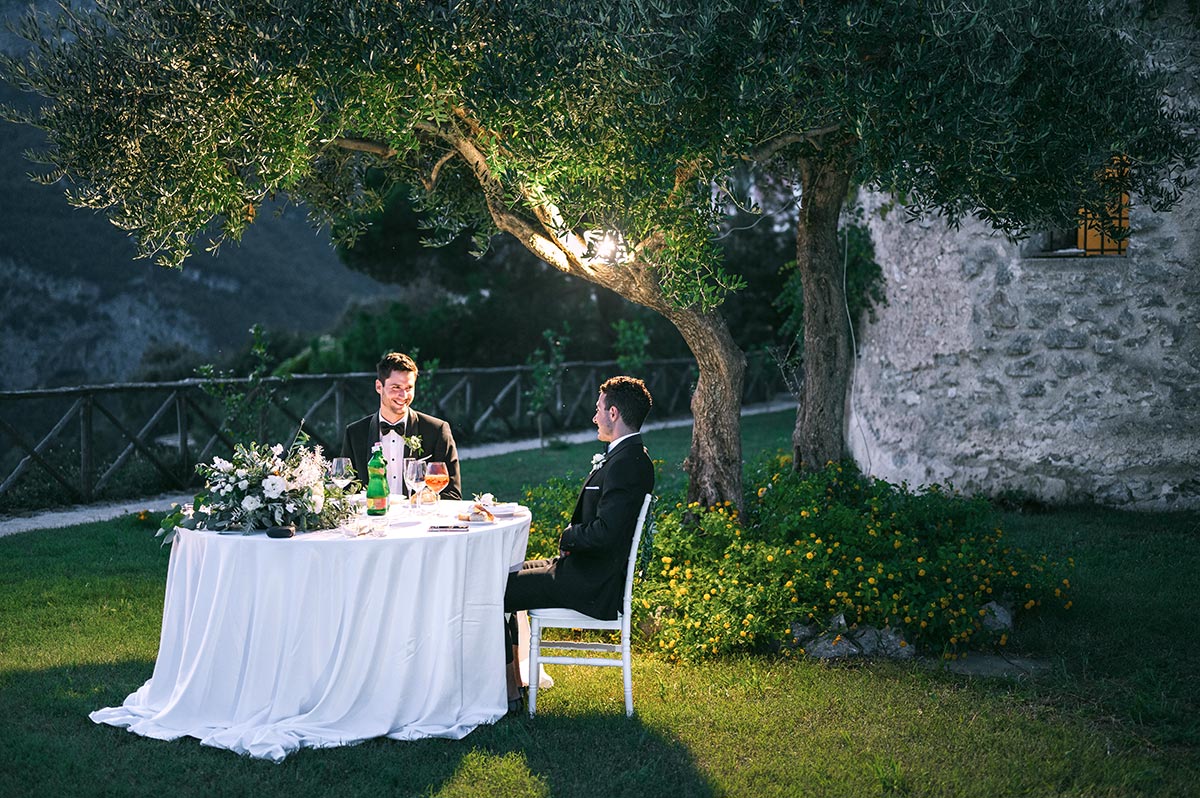
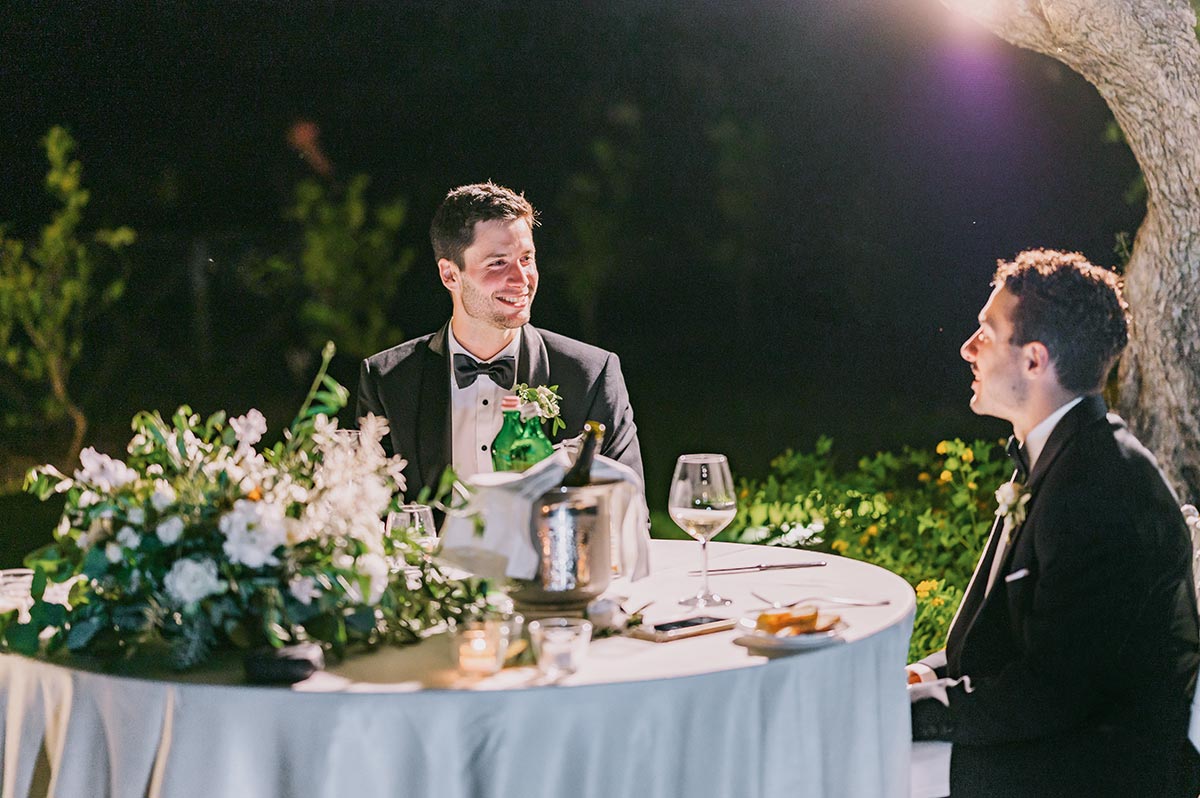

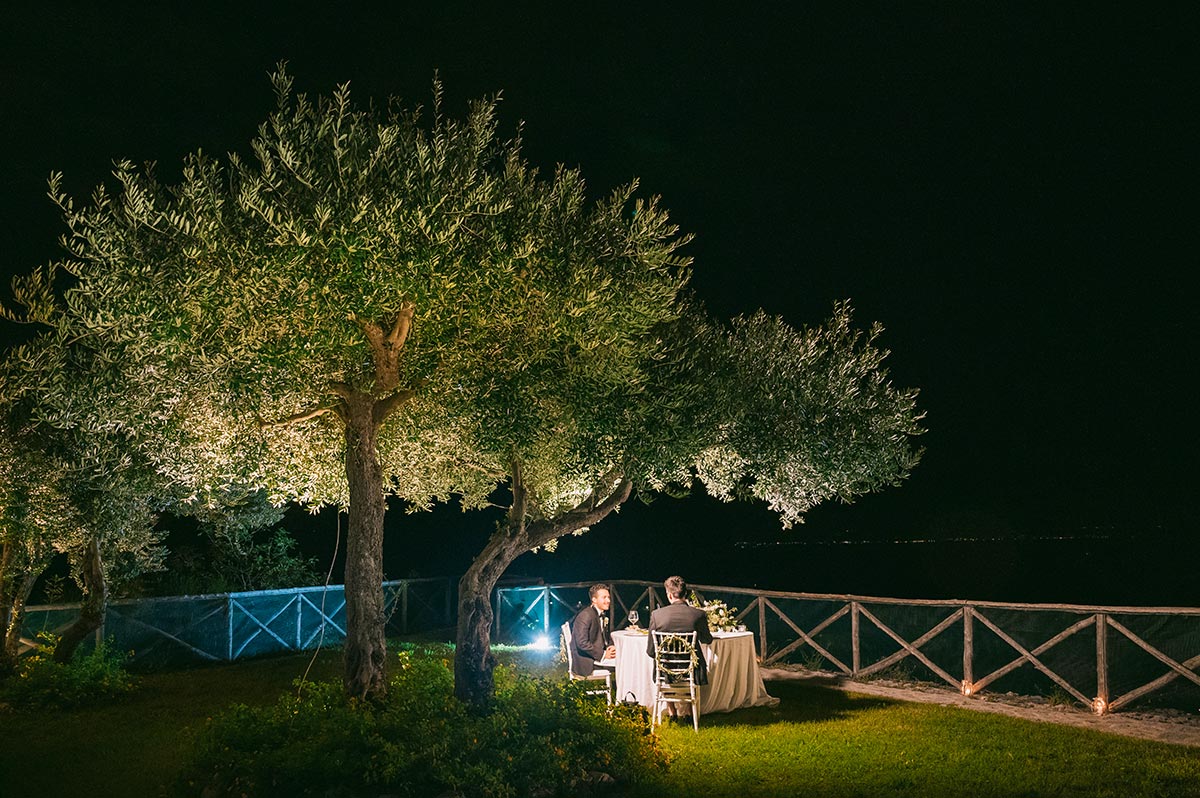
In conclusion, the Sant’Eustachio ruins in Pontone Scala is a versatile and magnificent venue that can accommodate a range of celebrations, from weddings to intimate dinners. Its stunning scenery and romantic atmosphere make it a truly magical location that will leave a lasting impression on all who experience it.