
Amalfi Coast Quinceañera Photos
A real quinceañera session on the Amalfi Coast: four dresses across two towns, from Villa Rufolo’s ruins in Ravello to the covered alleys and seafront of Atrani.

Camila changed dresses four times in one afternoon, and by the time we finished, she had photographed better in a fishing village than she had in a Renaissance garden, which is not what her parents expected when they booked Villa Rufolo. They had flown in from Miami with eleven family members for her fifteenth birthday, and the plan on paper was simple: formal portraits in Ravello, then a second look somewhere by the water. What actually happened was four outfits and two towns, and a gallery with more range than most weddings I photograph.And they want images that will hang on the wall of their living room for the next thirty years.





The First Dress, at Villa Rufolo
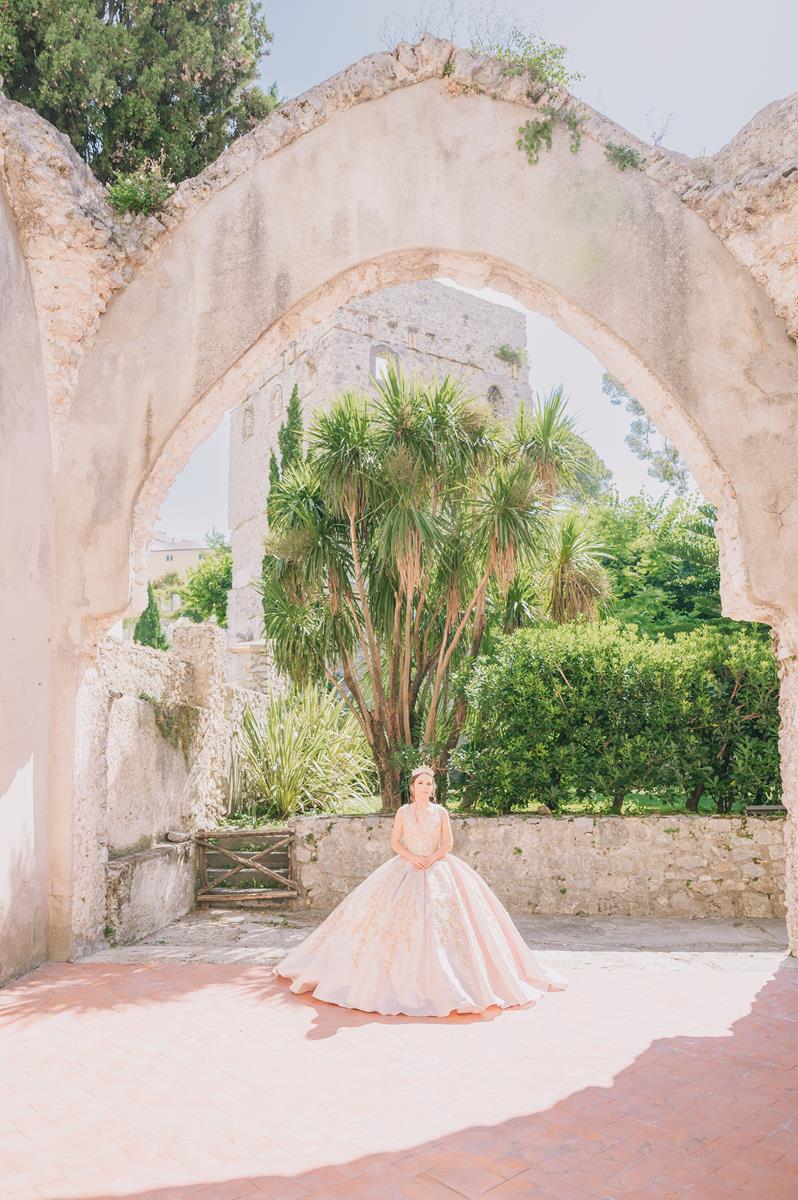
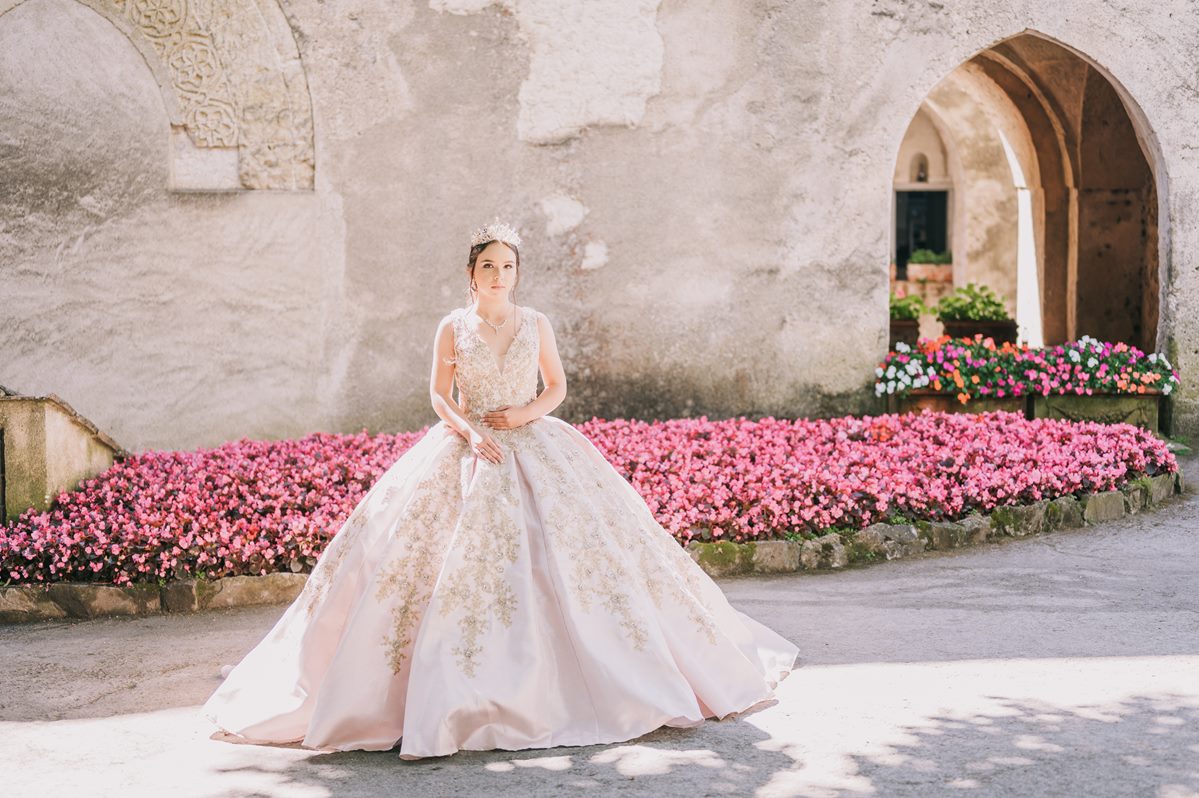
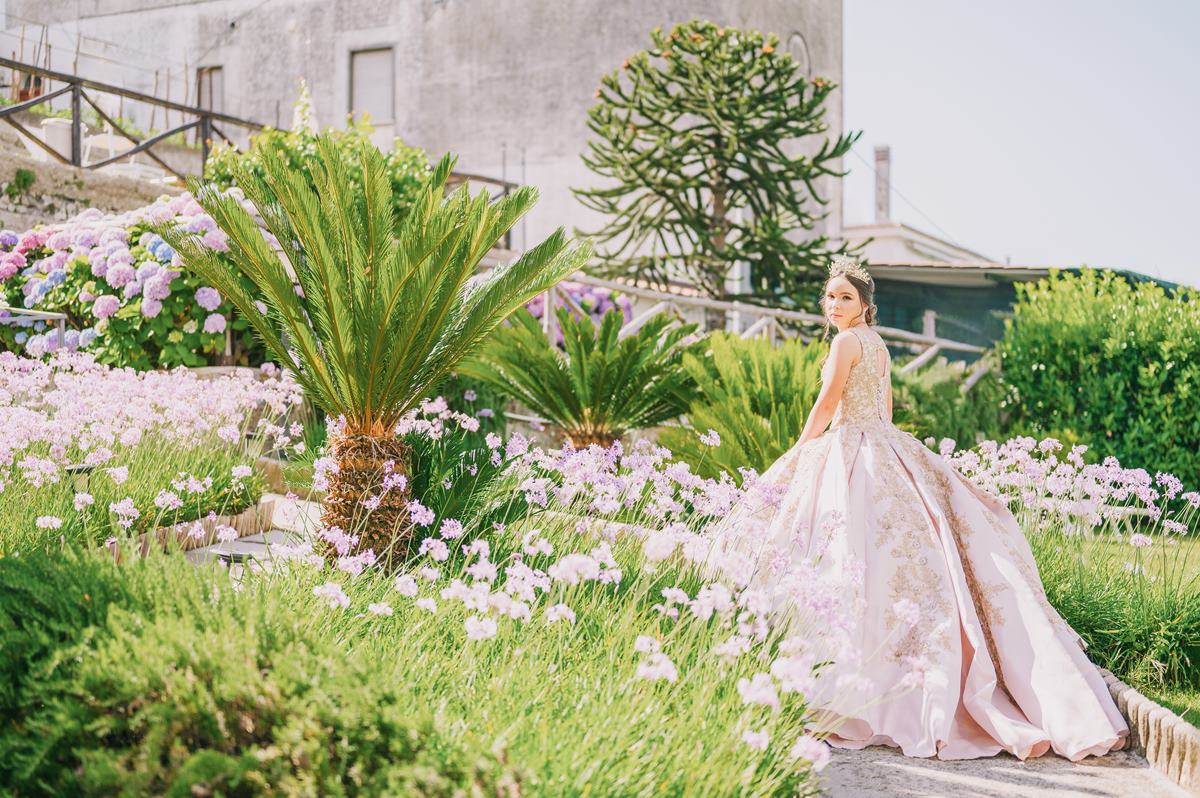
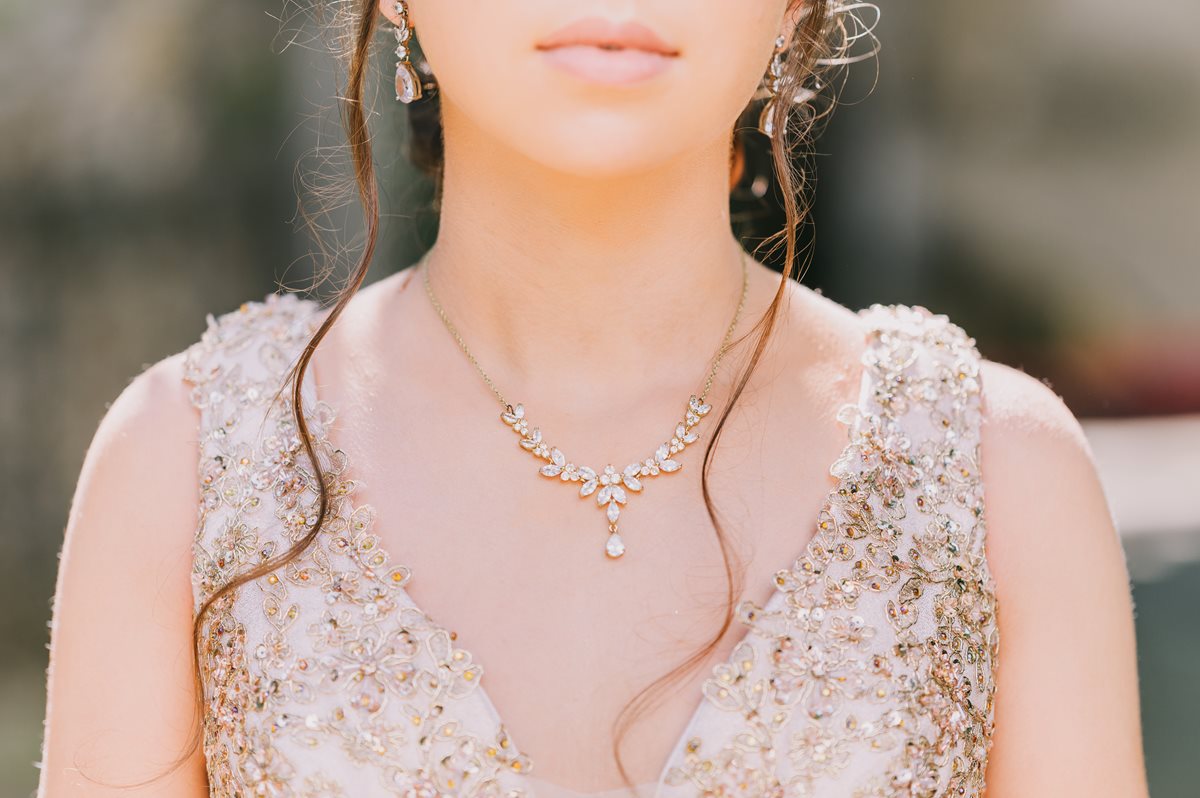
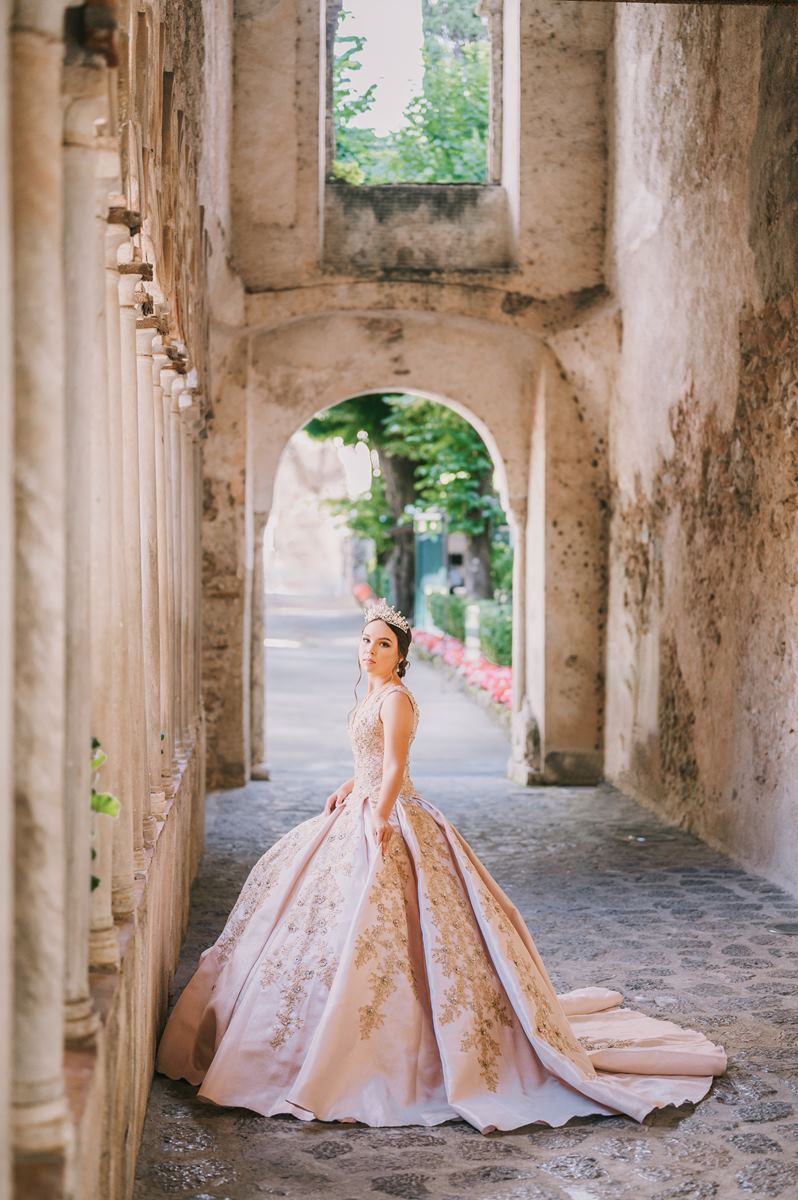
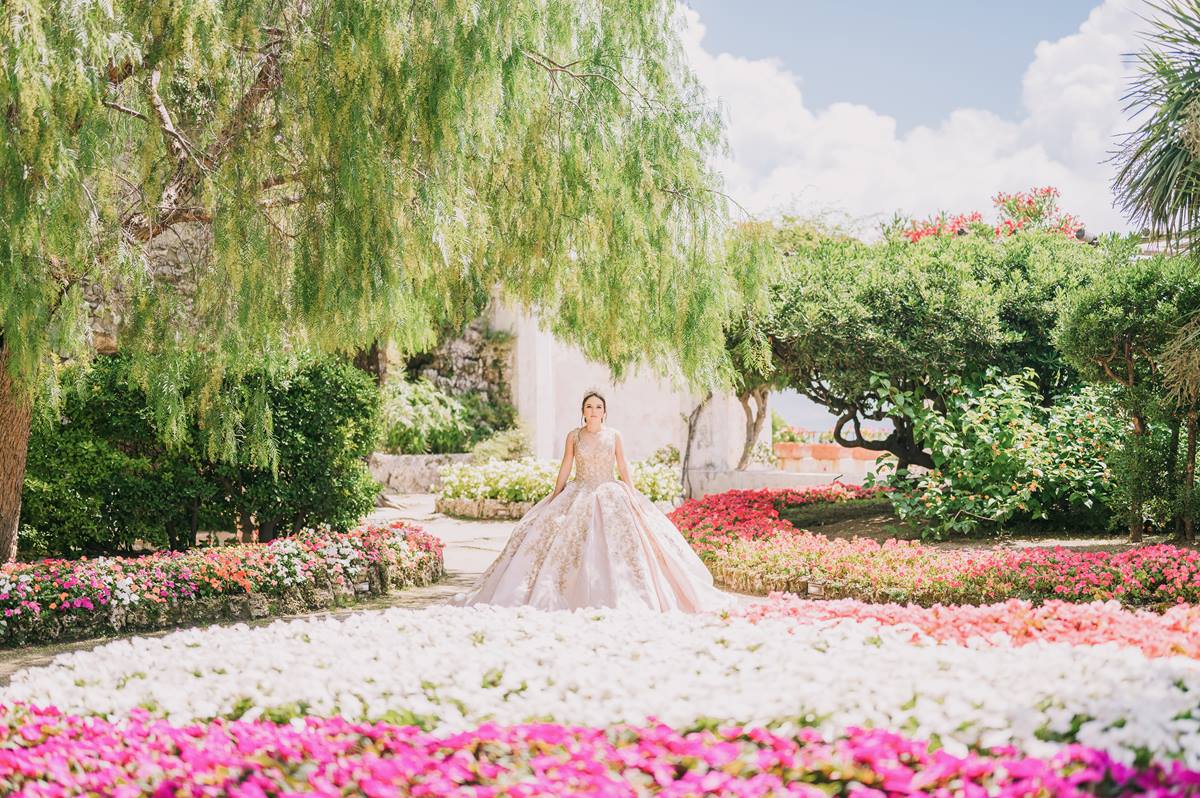
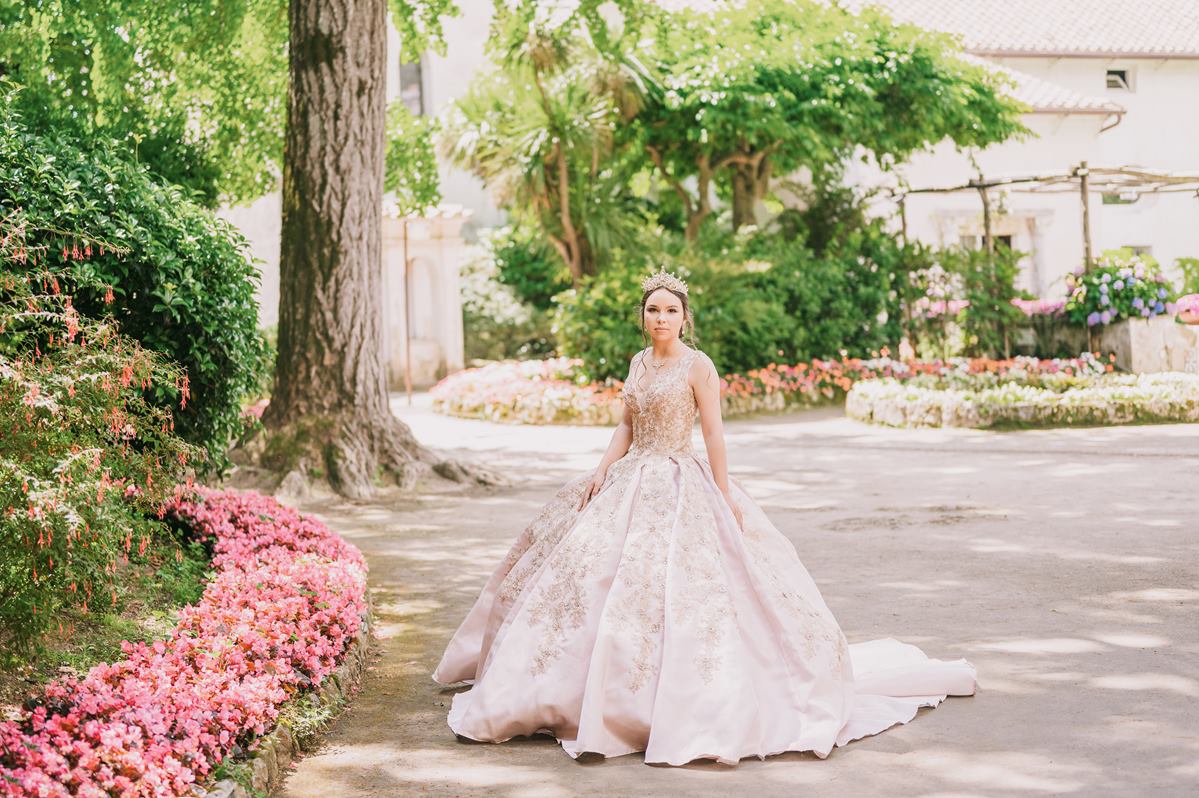
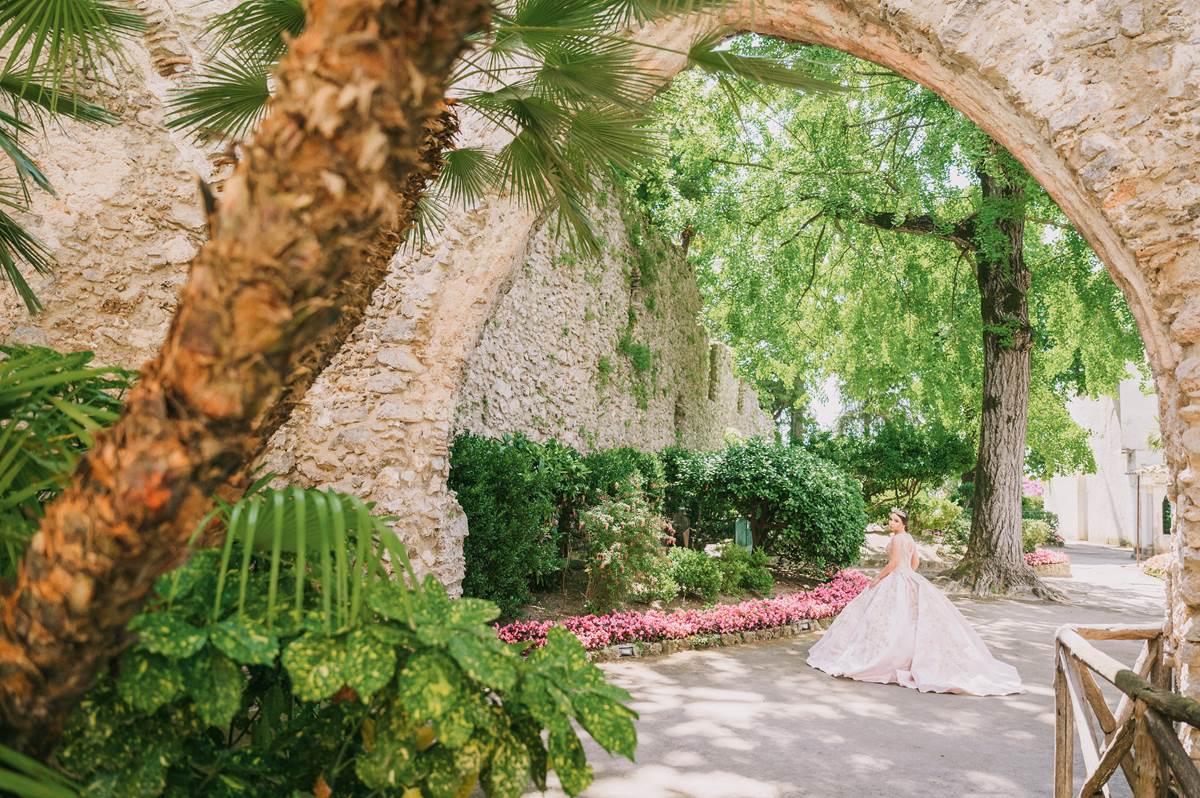
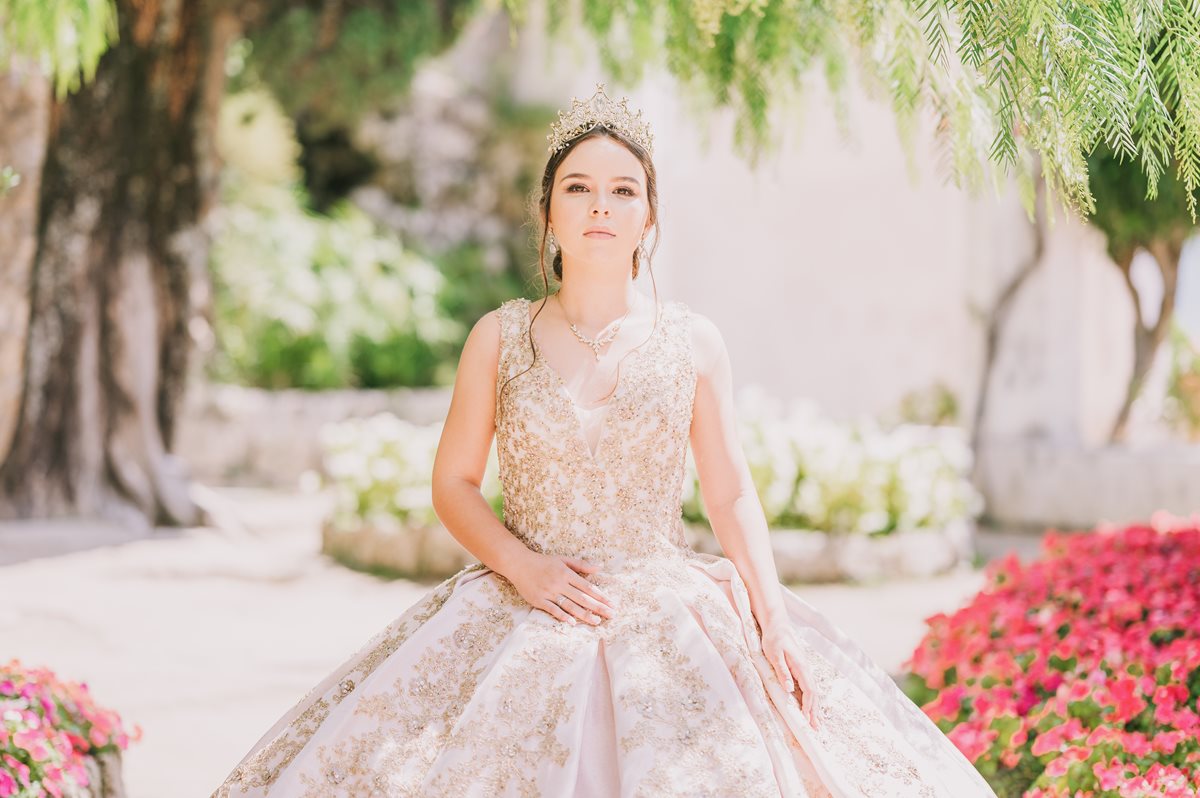
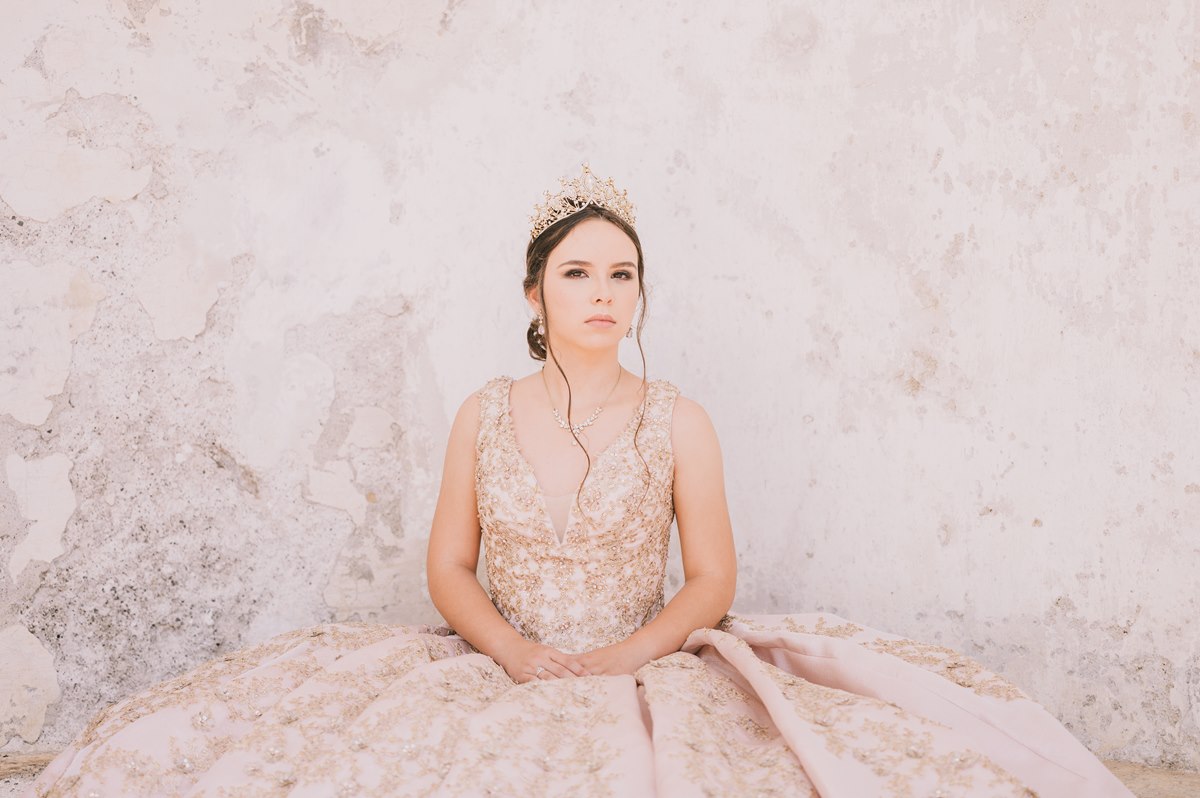
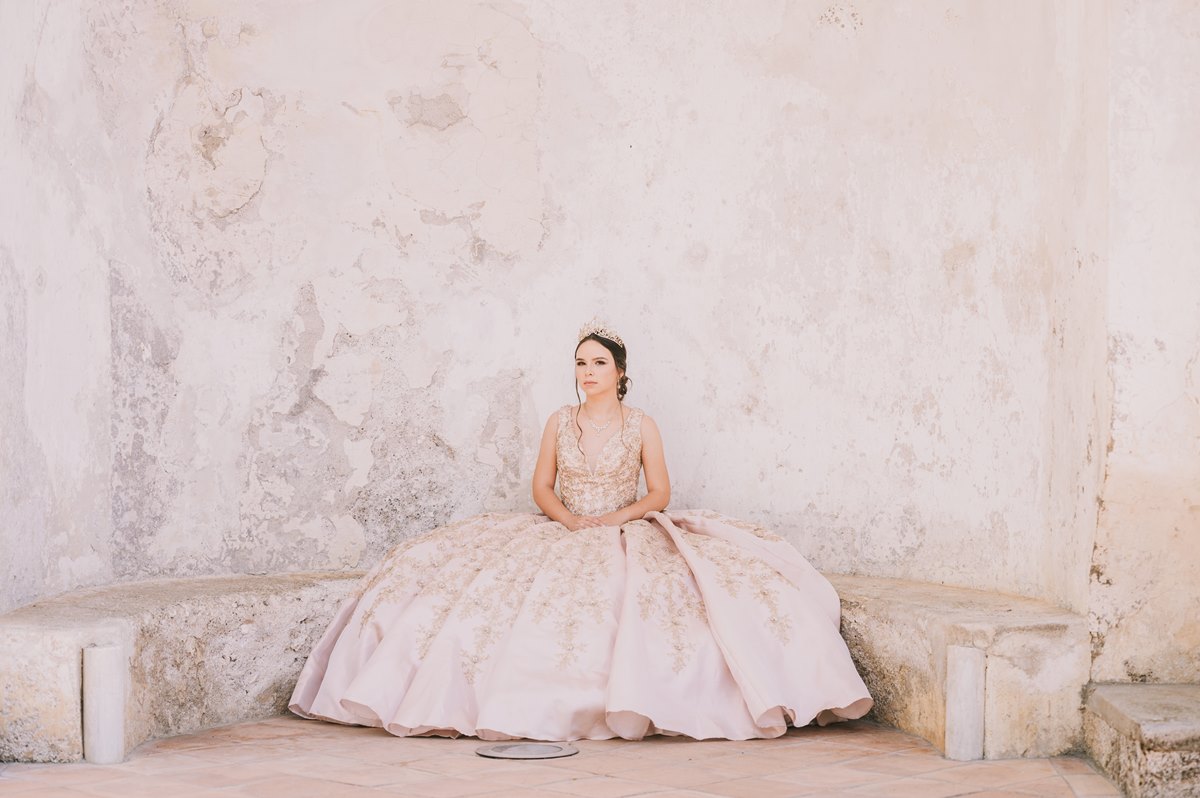
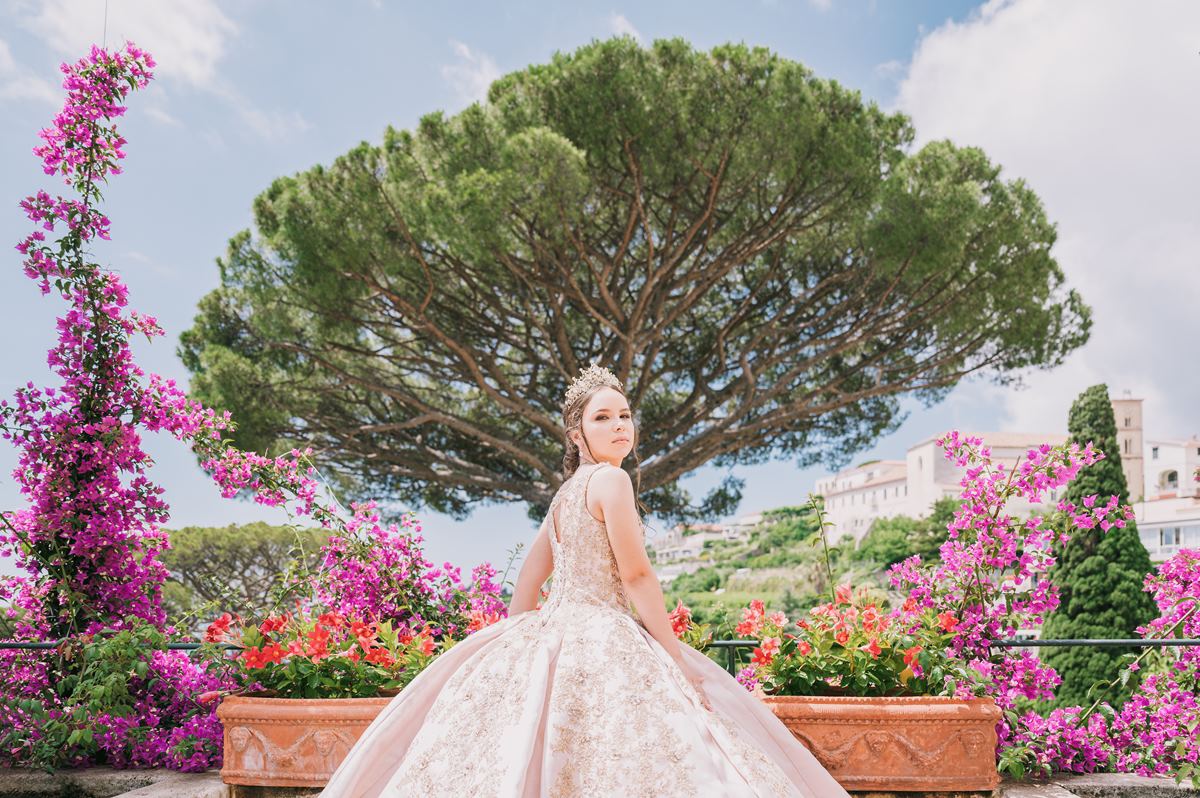
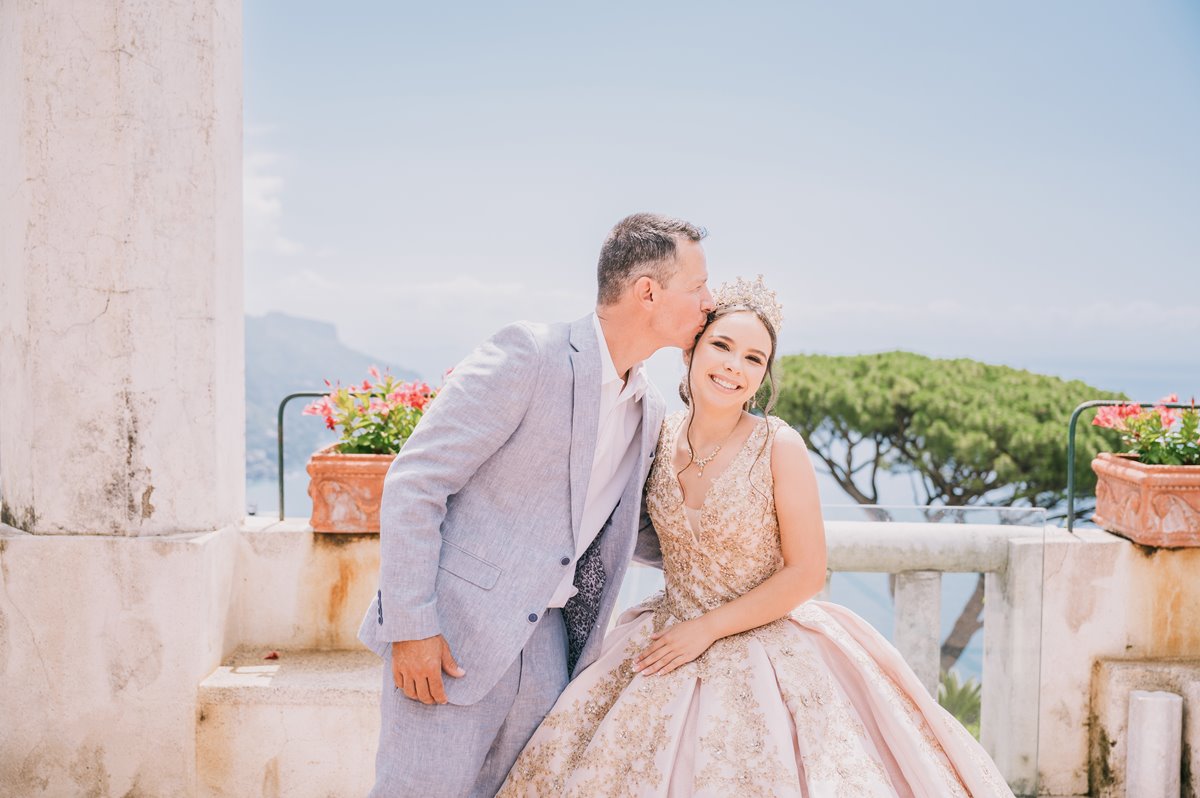
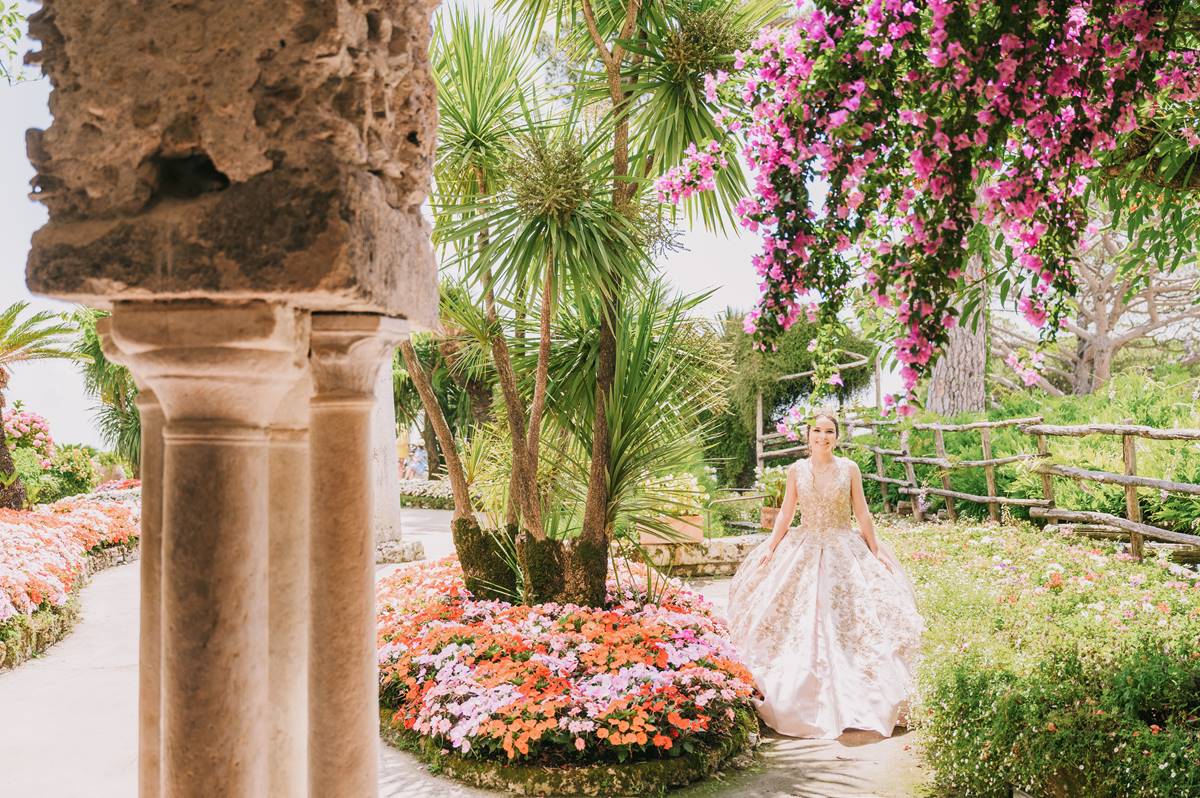
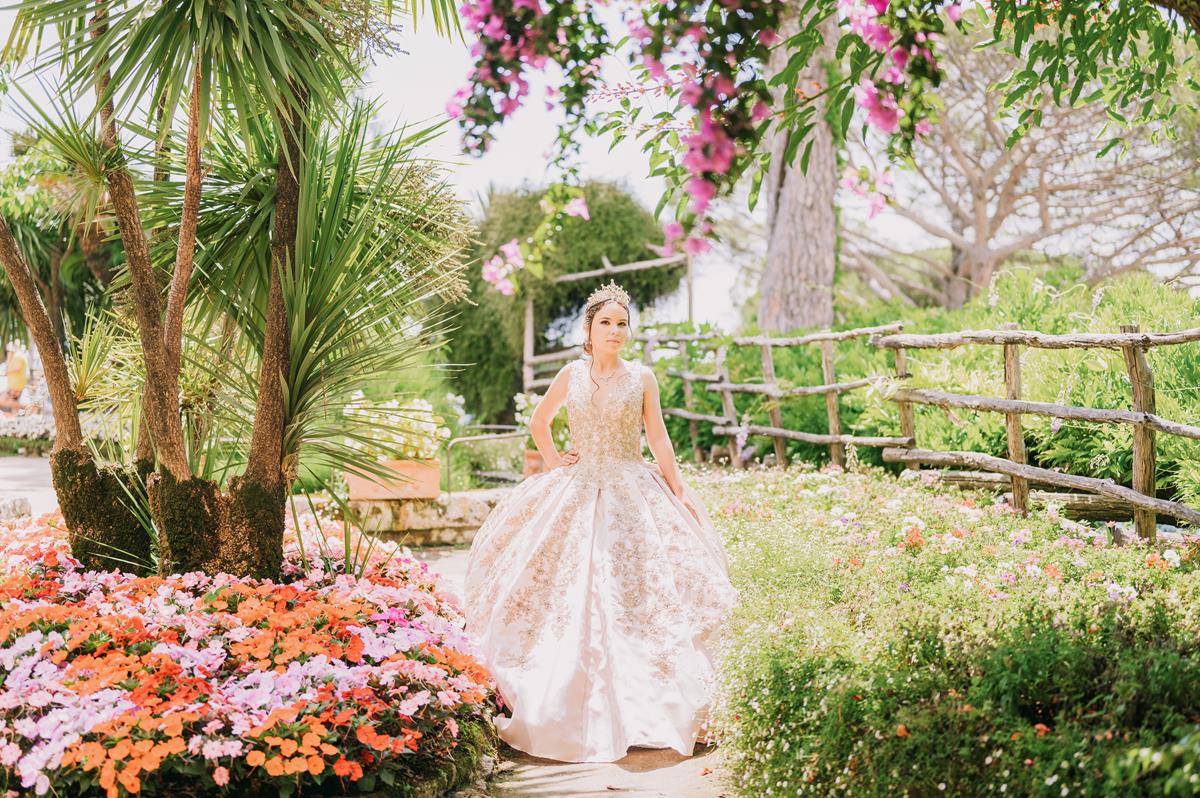
Camila started in a pink and gold ballgown, heavily beaded, with a crystal tiara and a matching necklace that caught the light every time she turned her head. I brought her through the ruined section near Villa Rufolo‘s entrance first, an arched opening in thick medieval stone with a pair of fan palms filling the gap between two collapsed walls. The skirt of a ballgown like this needs scale around it to read correctly, and the ruins gave me that: I shot her small under the arch, the palms and the old stonework doing most of the work, the dress a single bright shape against all that grey.
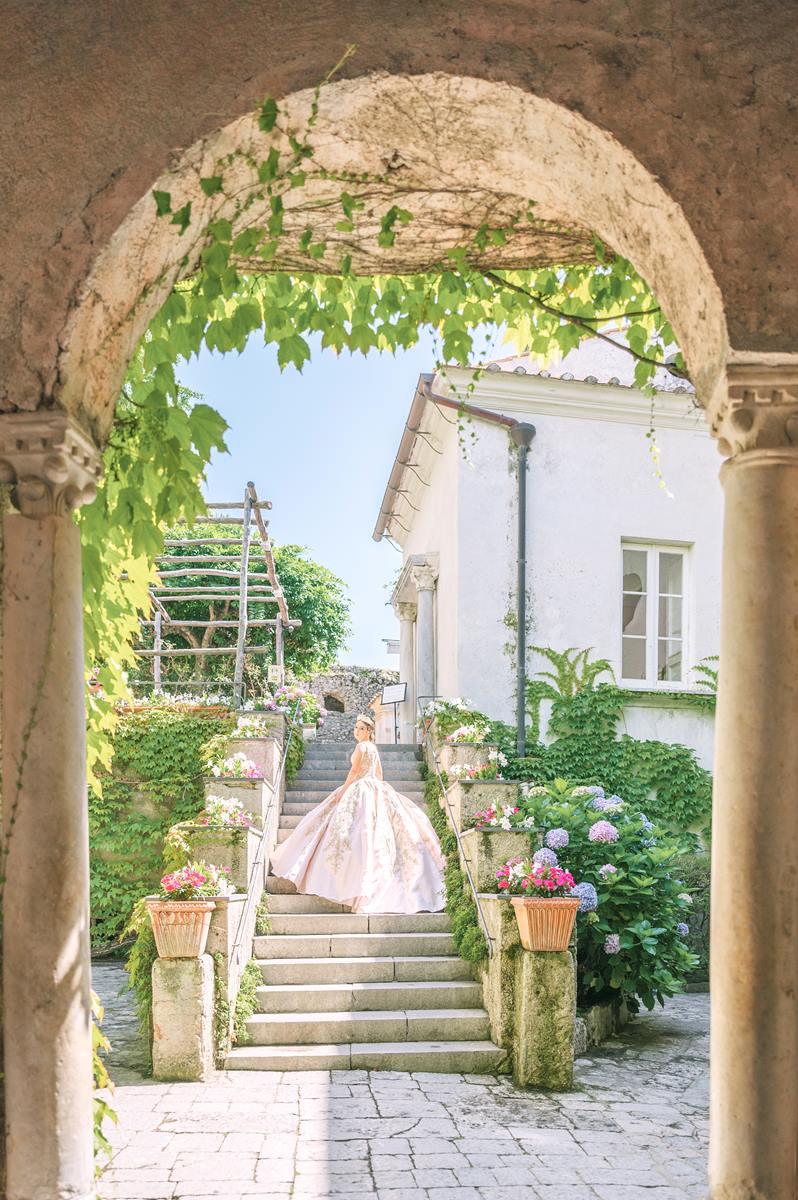
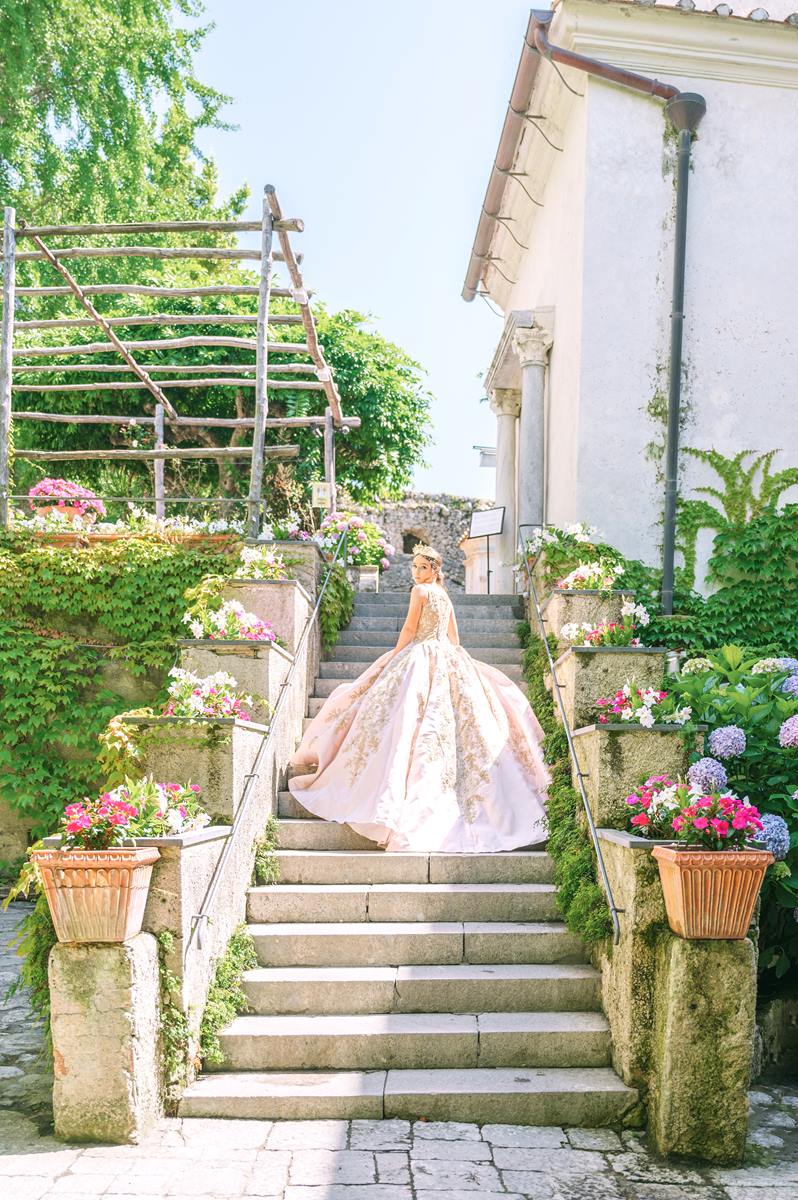
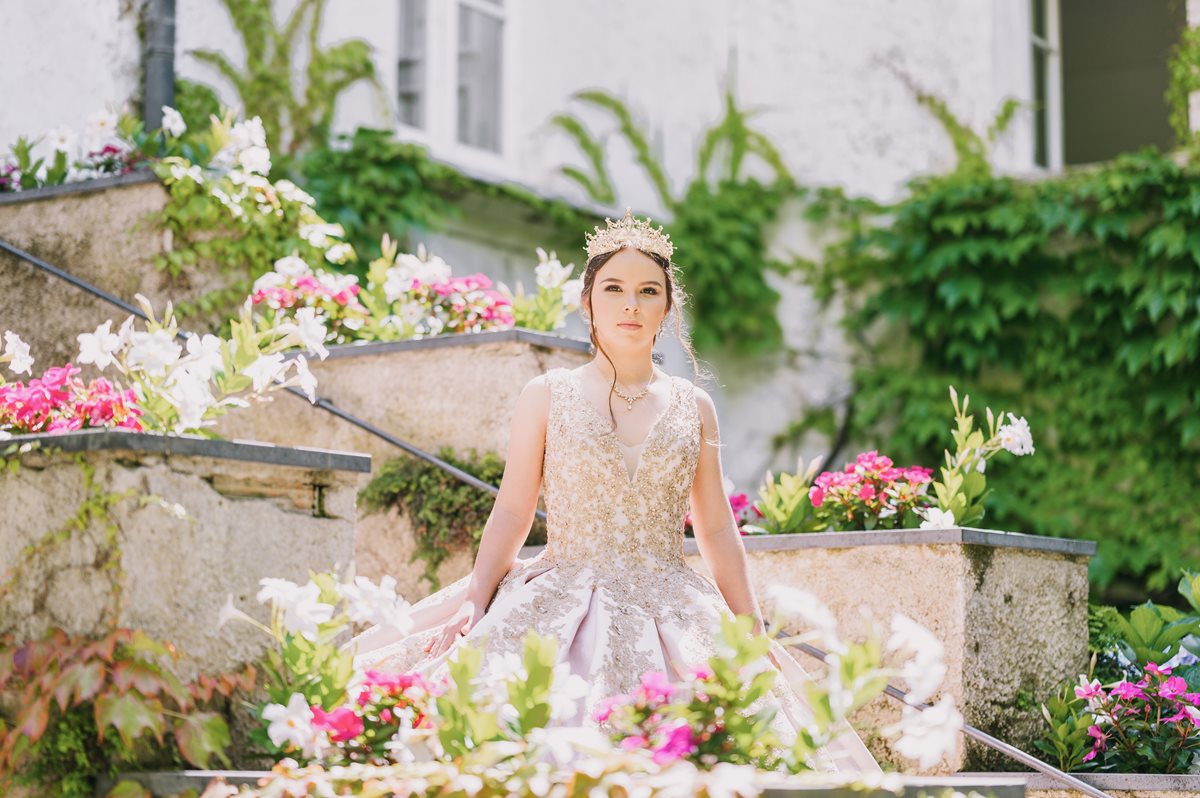
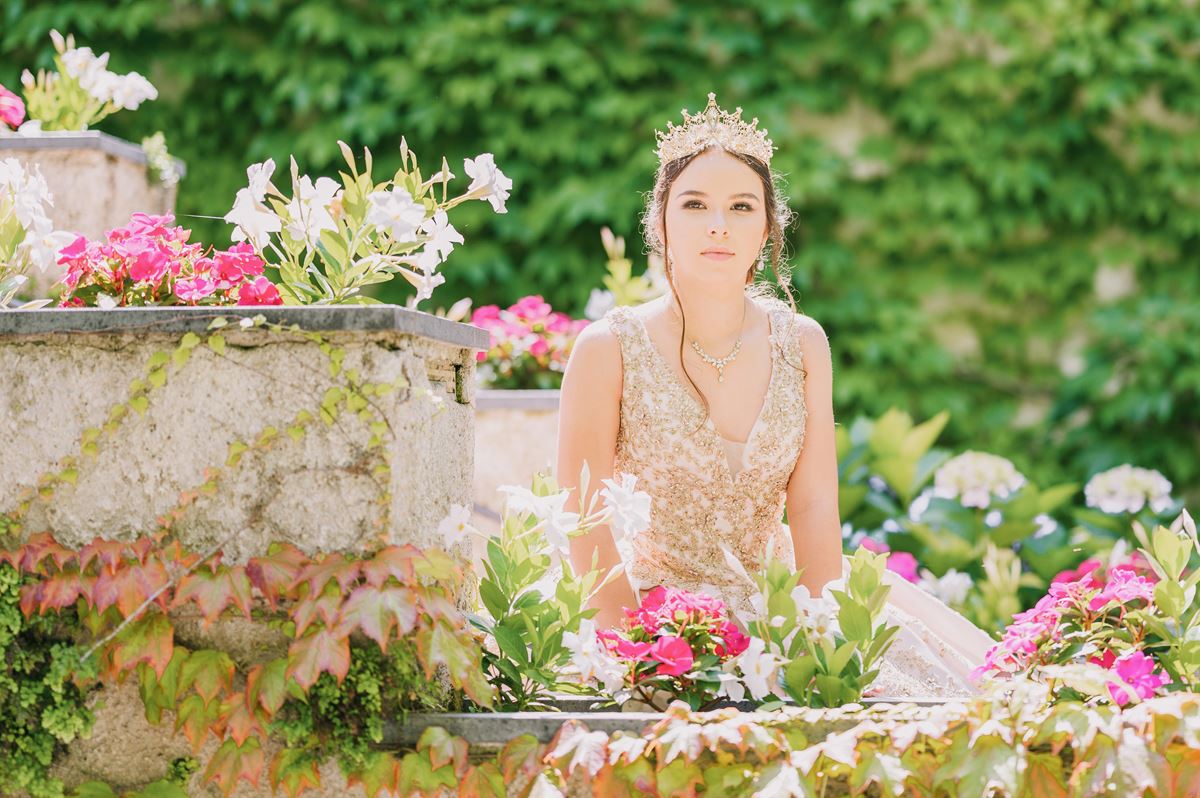
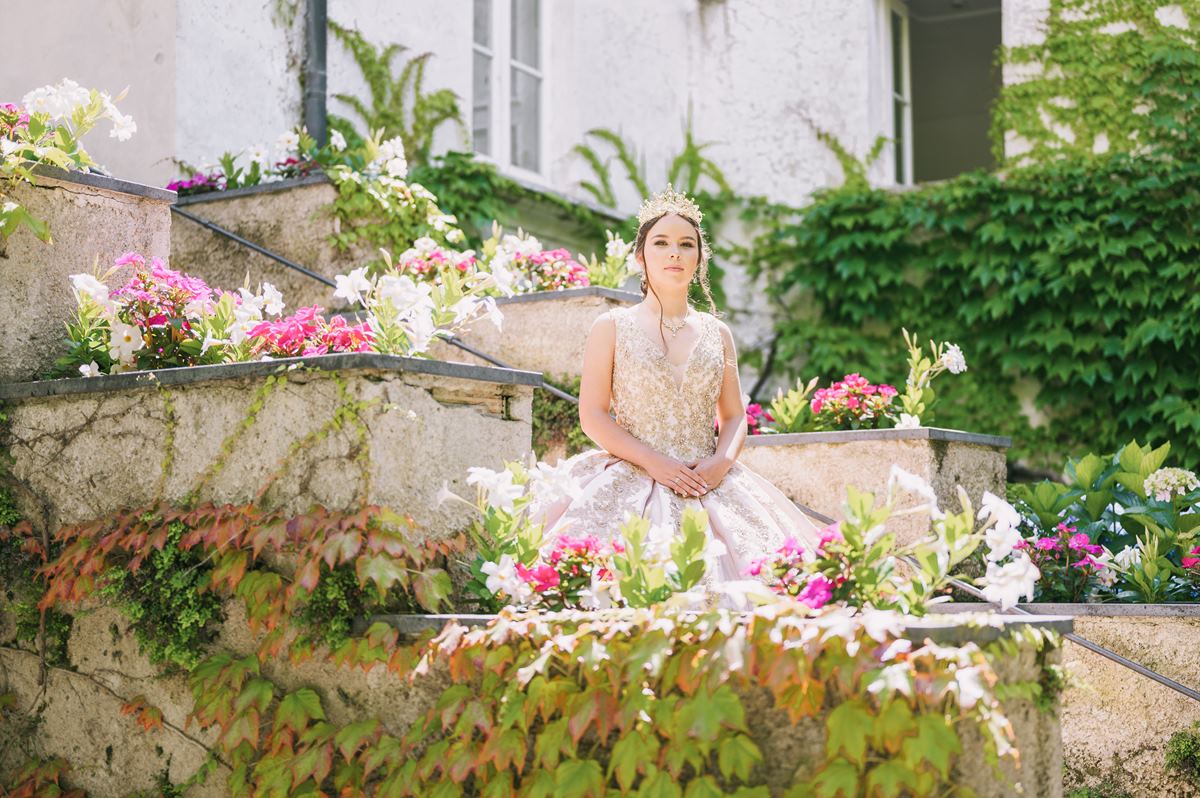
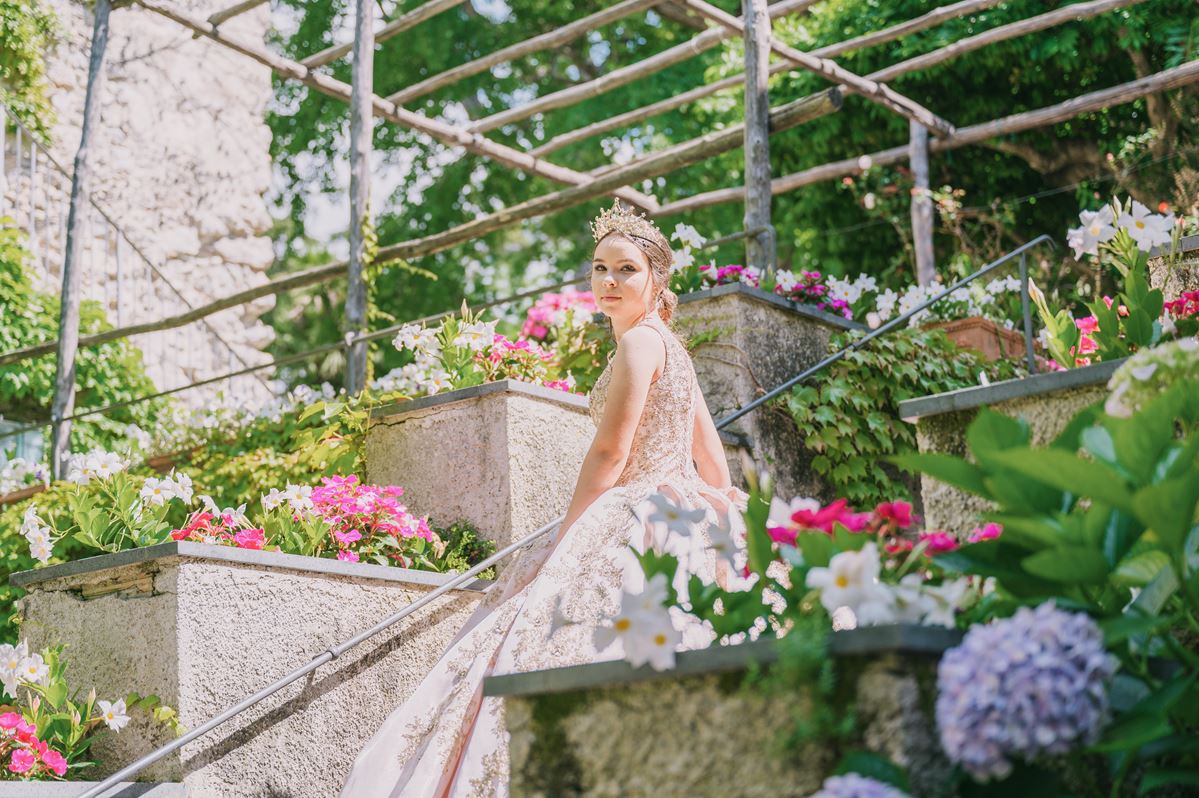
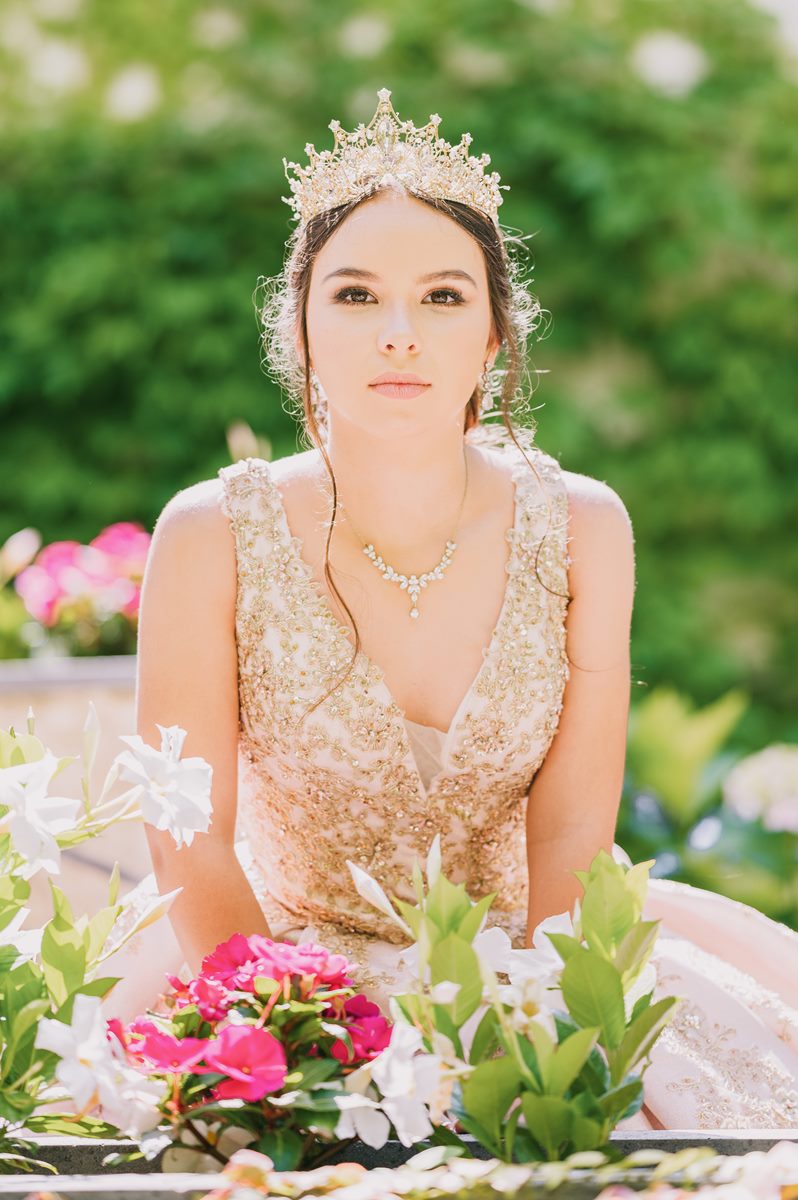
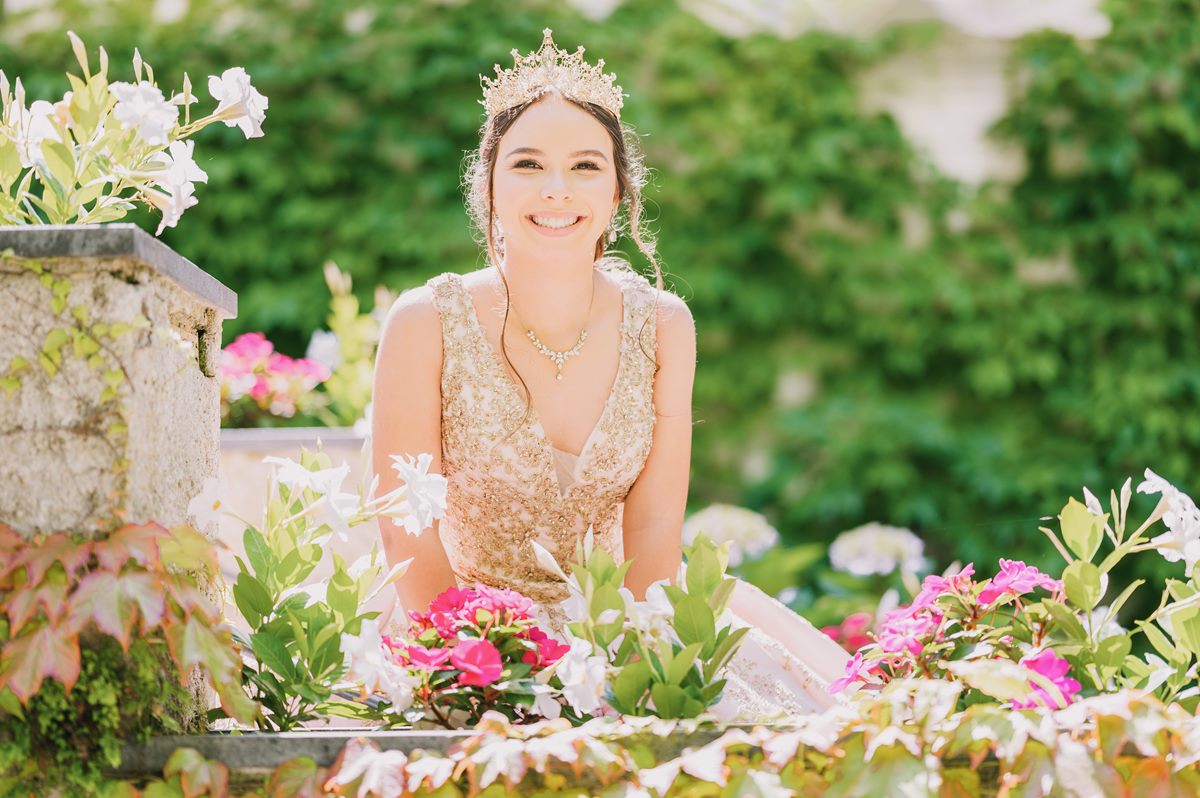
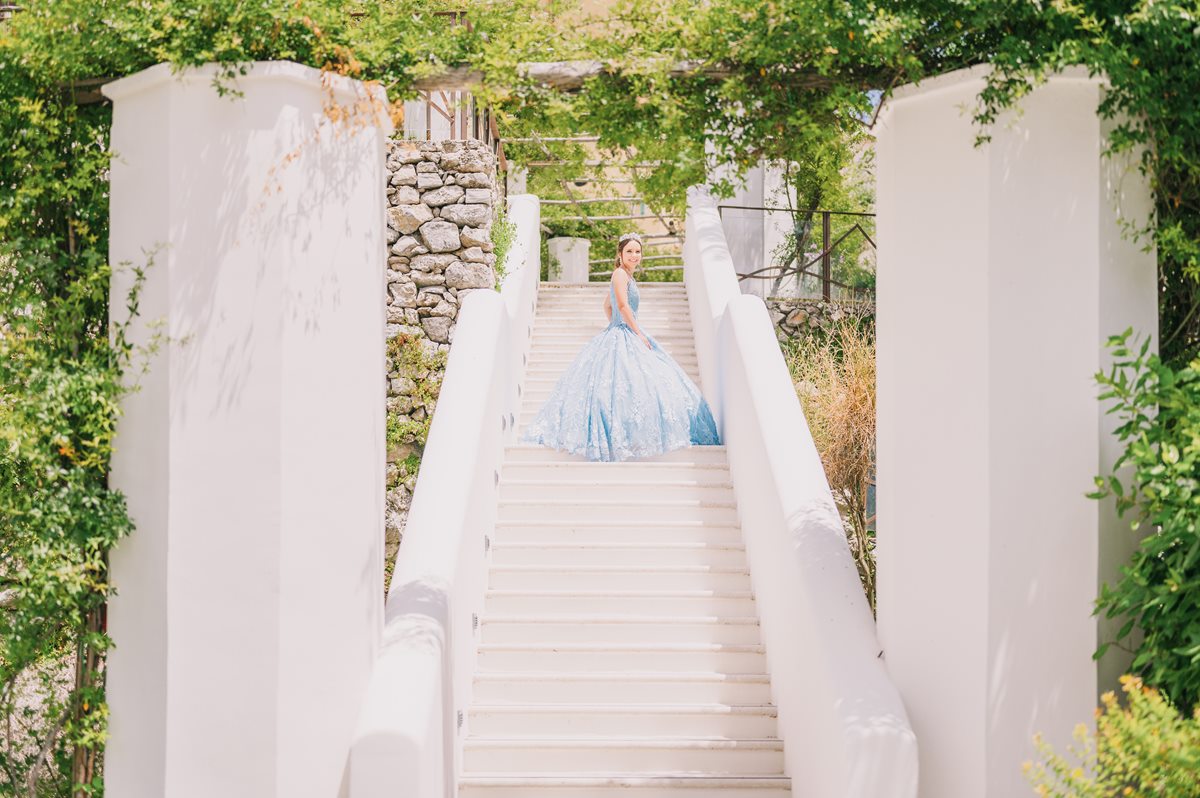
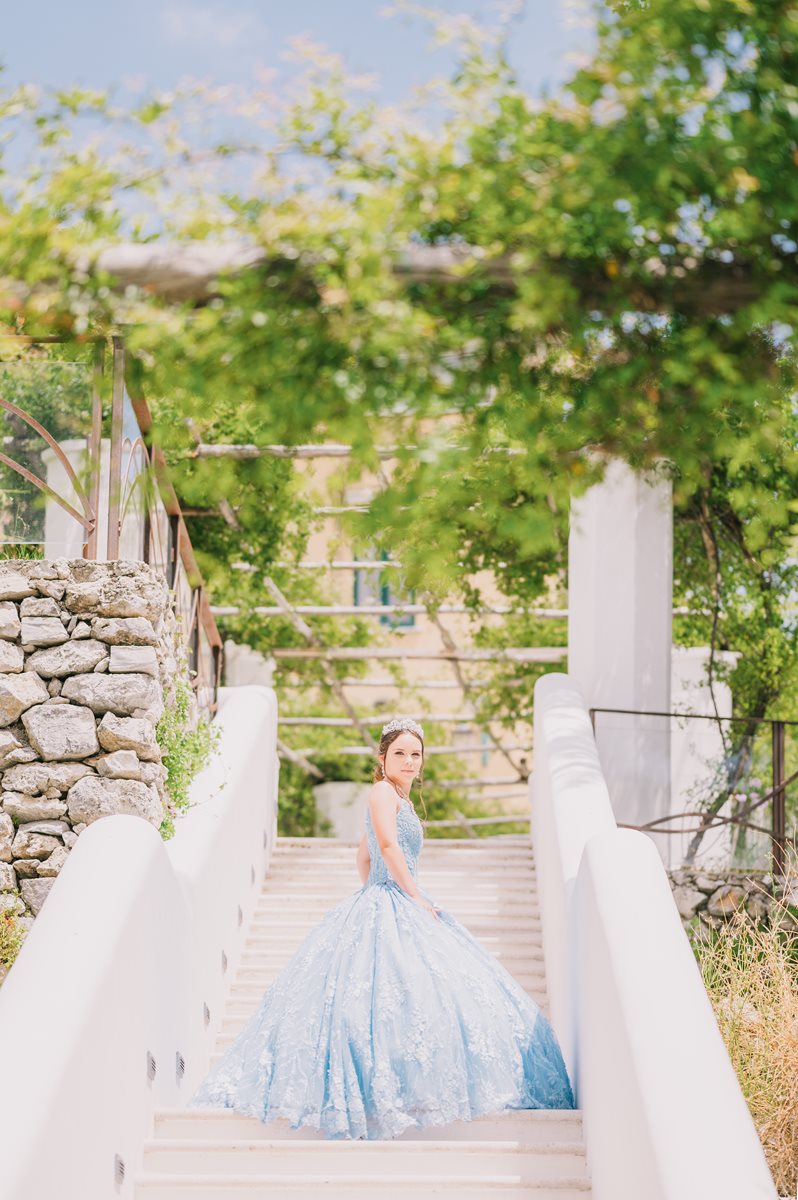
The garden stairs came next. Quinceañera photography leans on staircases more than wedding photography does, because a full skirt drapes across the steps and creates a train effect that a flat lawn cannot produce. I put Camila at the top of a flight lined with pink hydrangea, looking back over her shoulder, the fabric spilling down three or four steps below her. Shooting at a wide aperture with the flowers close to the lens let them dissolve into soft color along the bottom of the frame, so the eye goes straight to her face and the tiara.
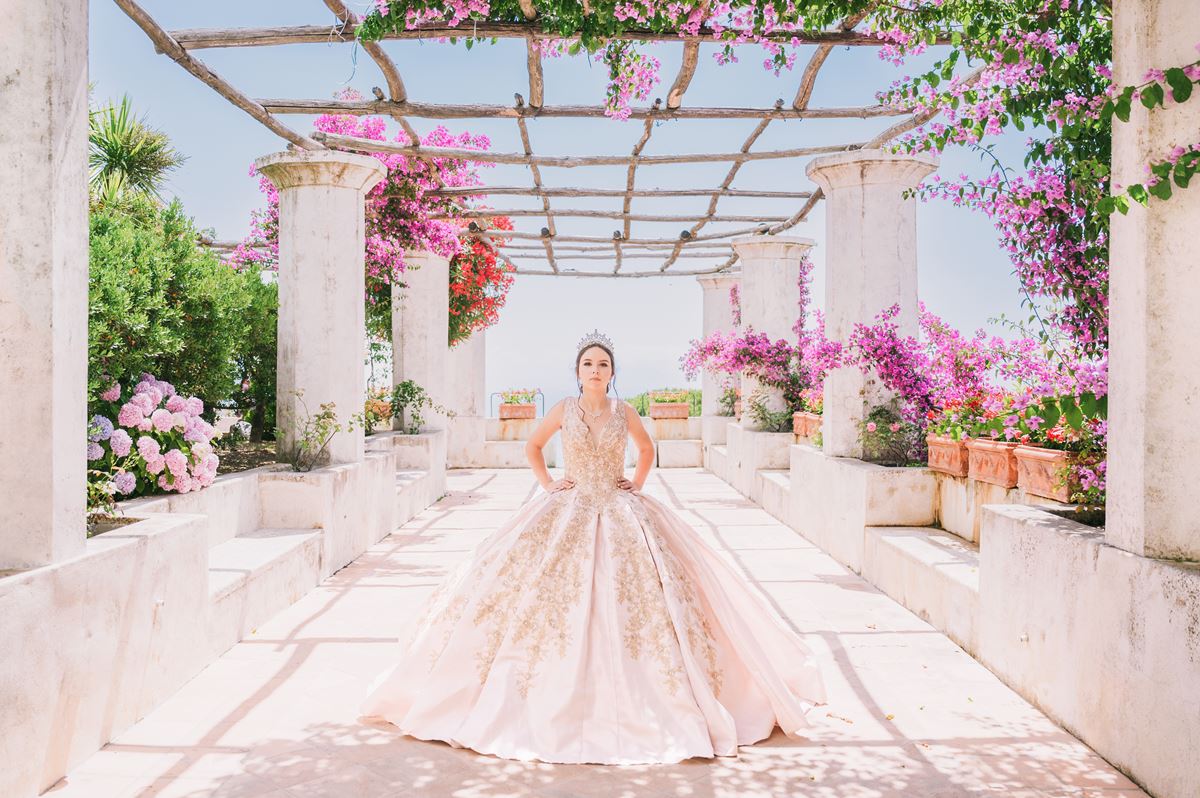
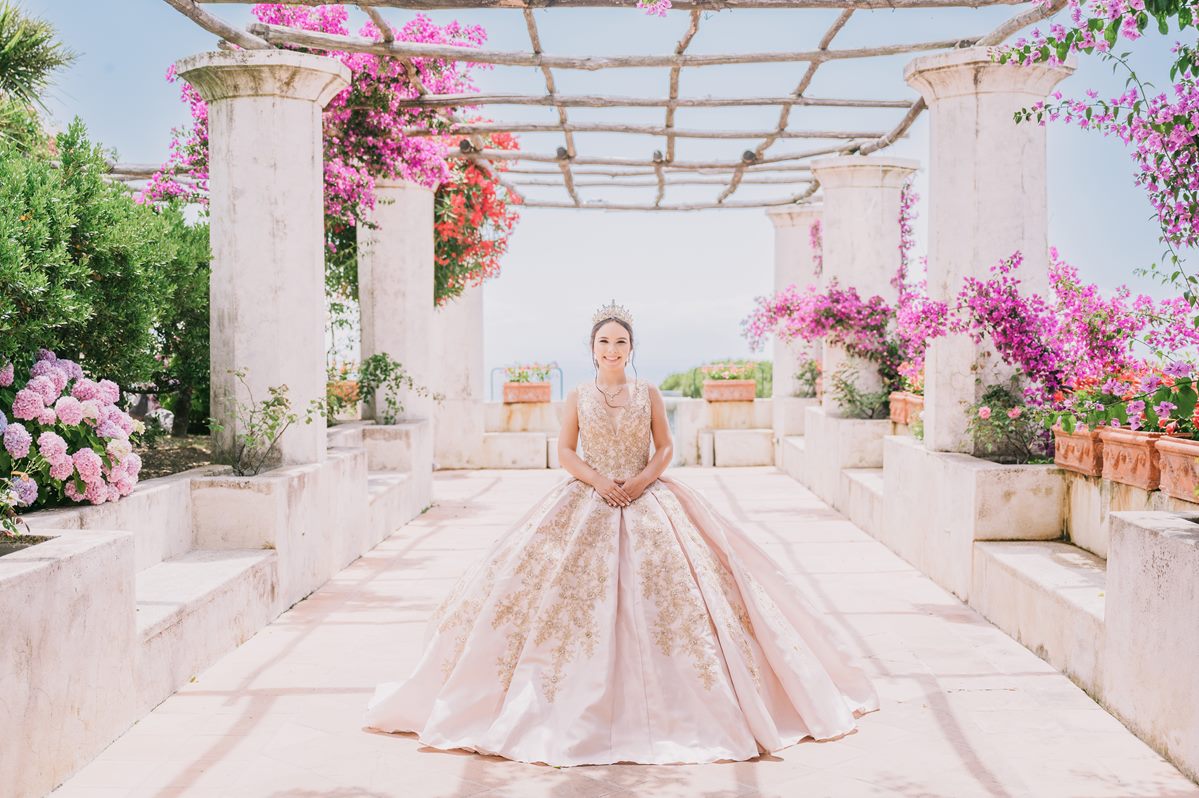
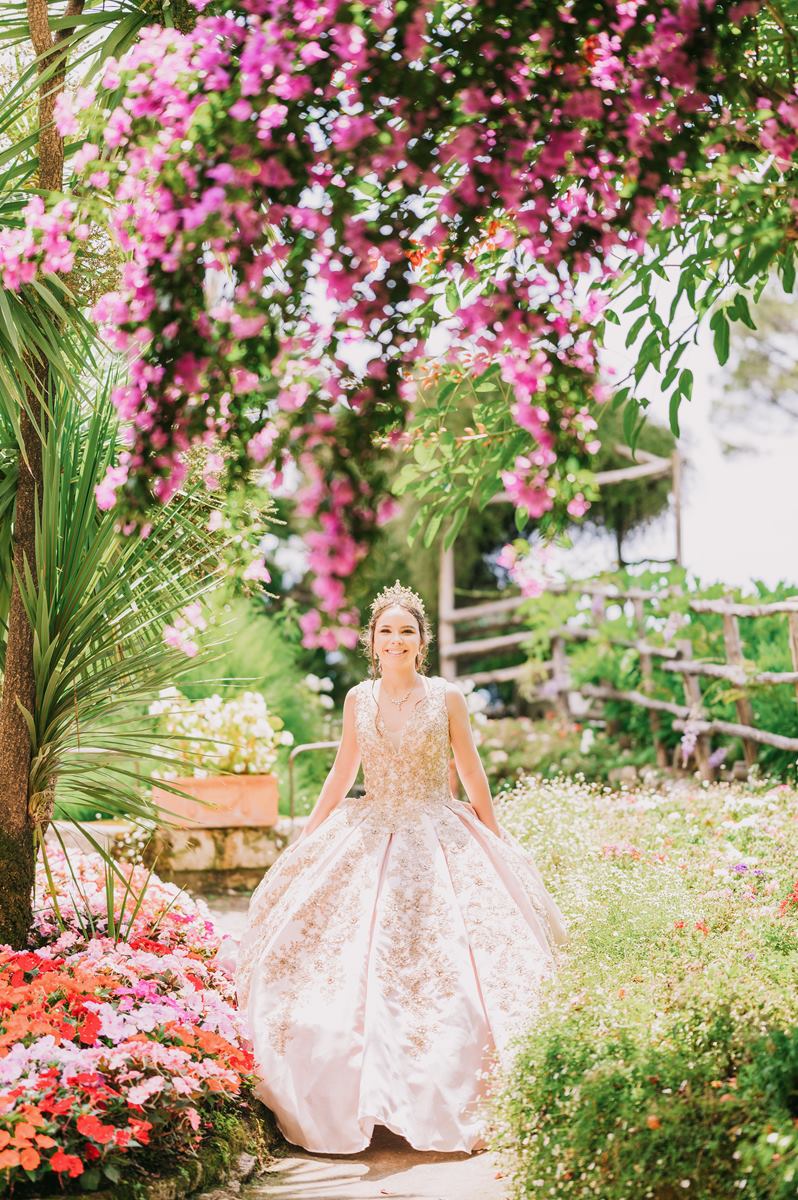
A pergola strung with bougainvillea gave me the last setup in this dress: Camila centered under the arch, hands folded in front of her, pink and fuchsia flowers crowding both sides of the frame. This is the most straightforwardly formal portrait of the whole day, the one built for a large print over a fireplace, and Rufolo’s pergola exists almost as if built for exactly this kind of picture.
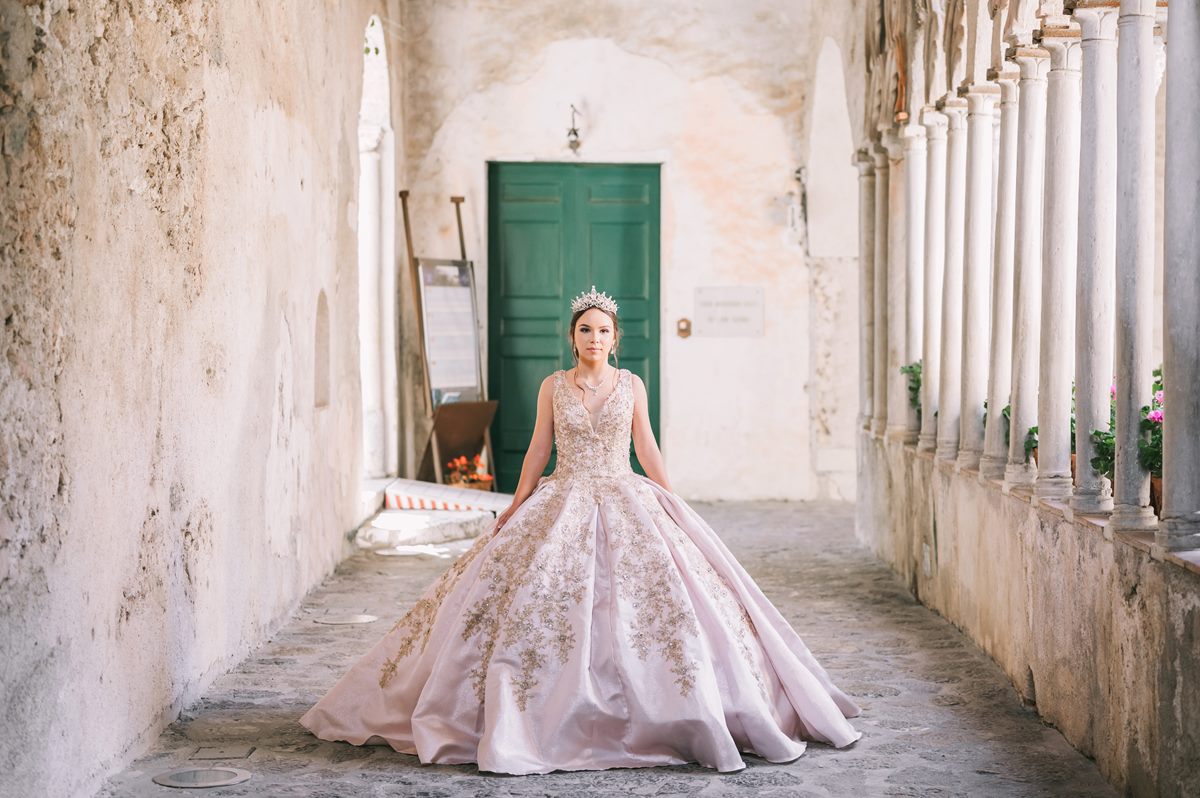
One more setup came from a long colonnade elsewhere on the property, slender columns running down one side, a weathered green door closed at the far end. I shot Camila straight down the middle of it, the skirt filling the width of the passage, the door acting as a single dark point the eye travels toward. It is a quieter, more architectural frame than the pergola or the ruins, and it gave her parents an image built entirely on line and repetition rather than color and flowers.




The Second Dress, Still in Ravello
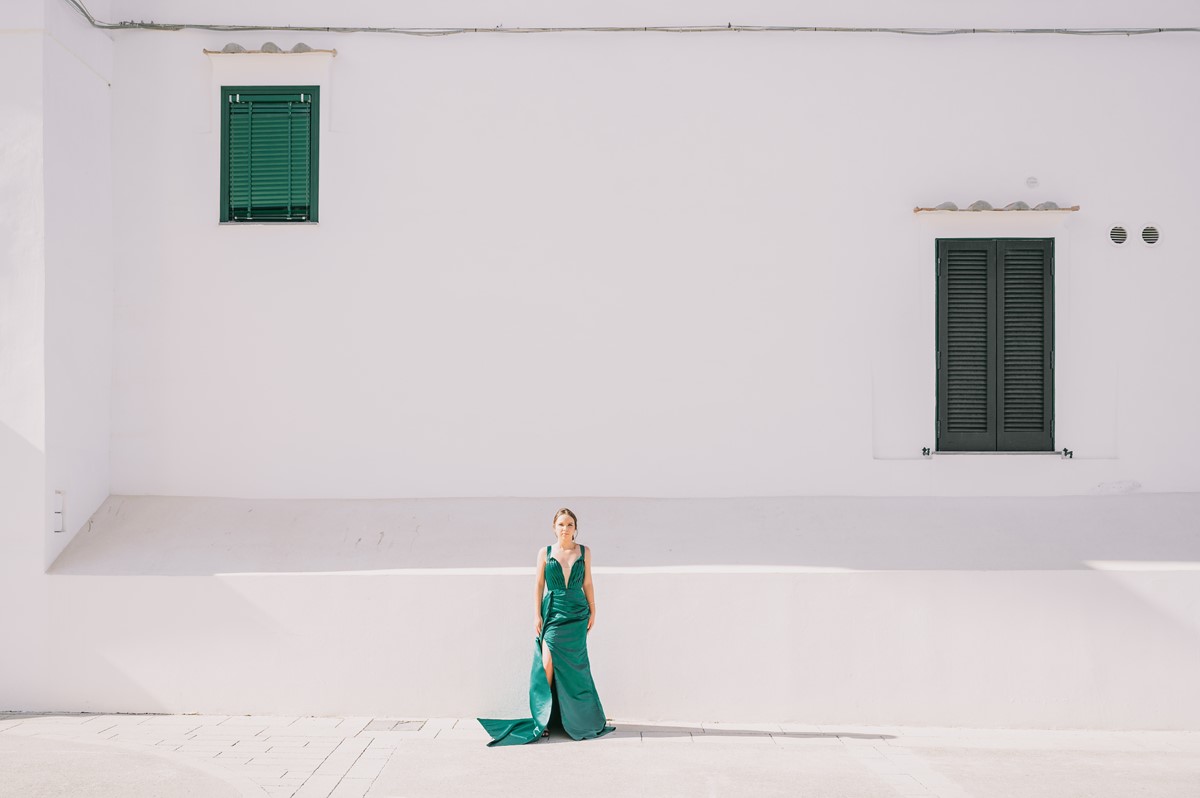
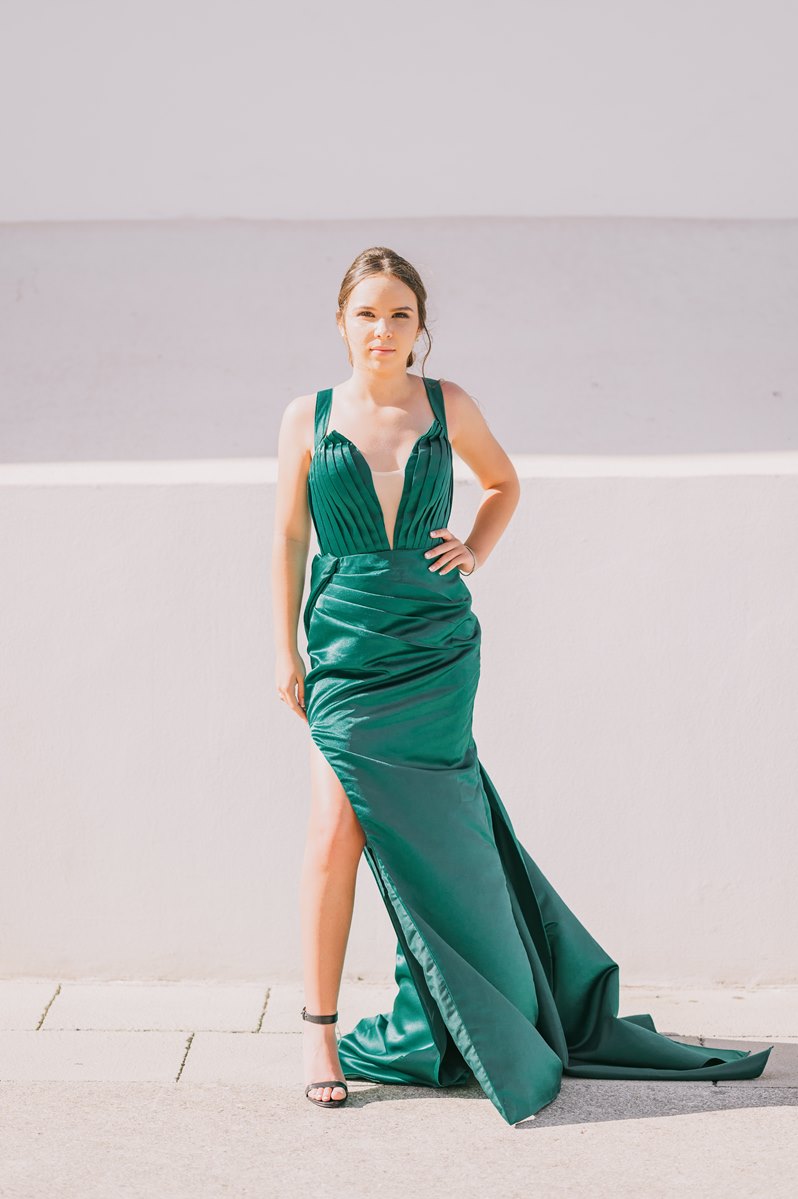
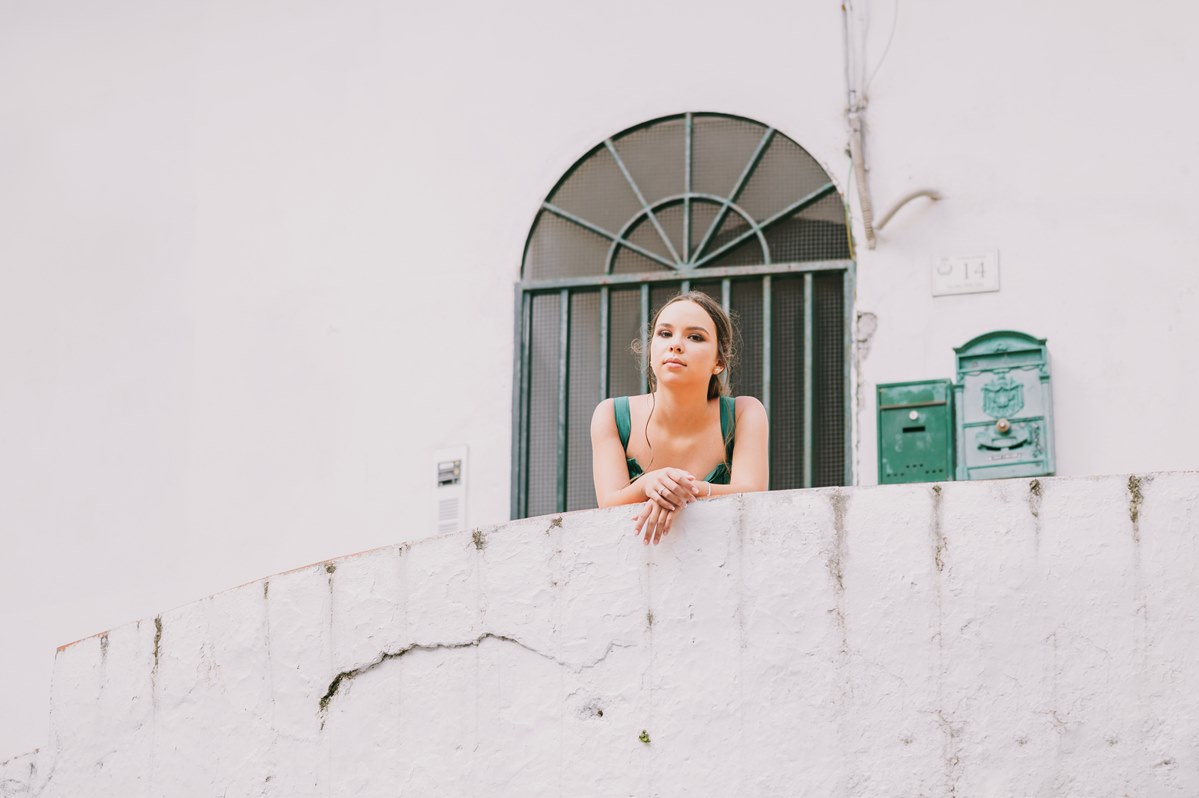
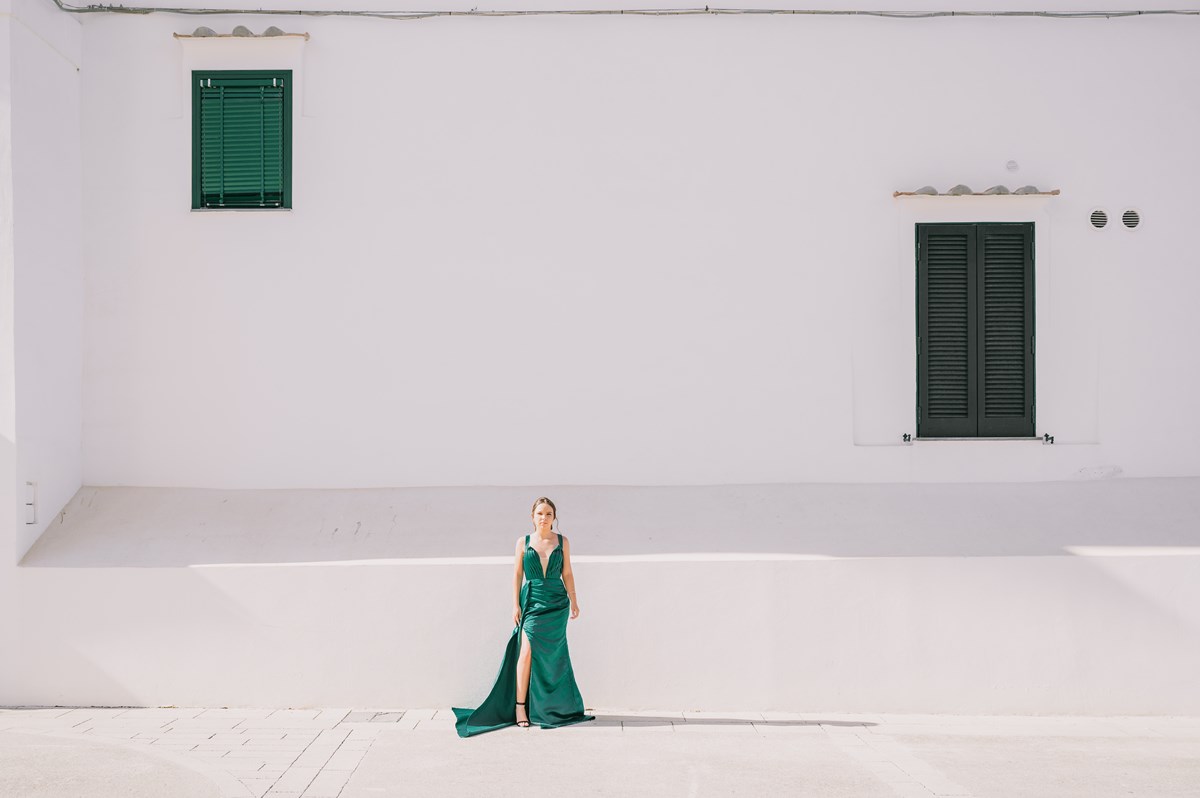
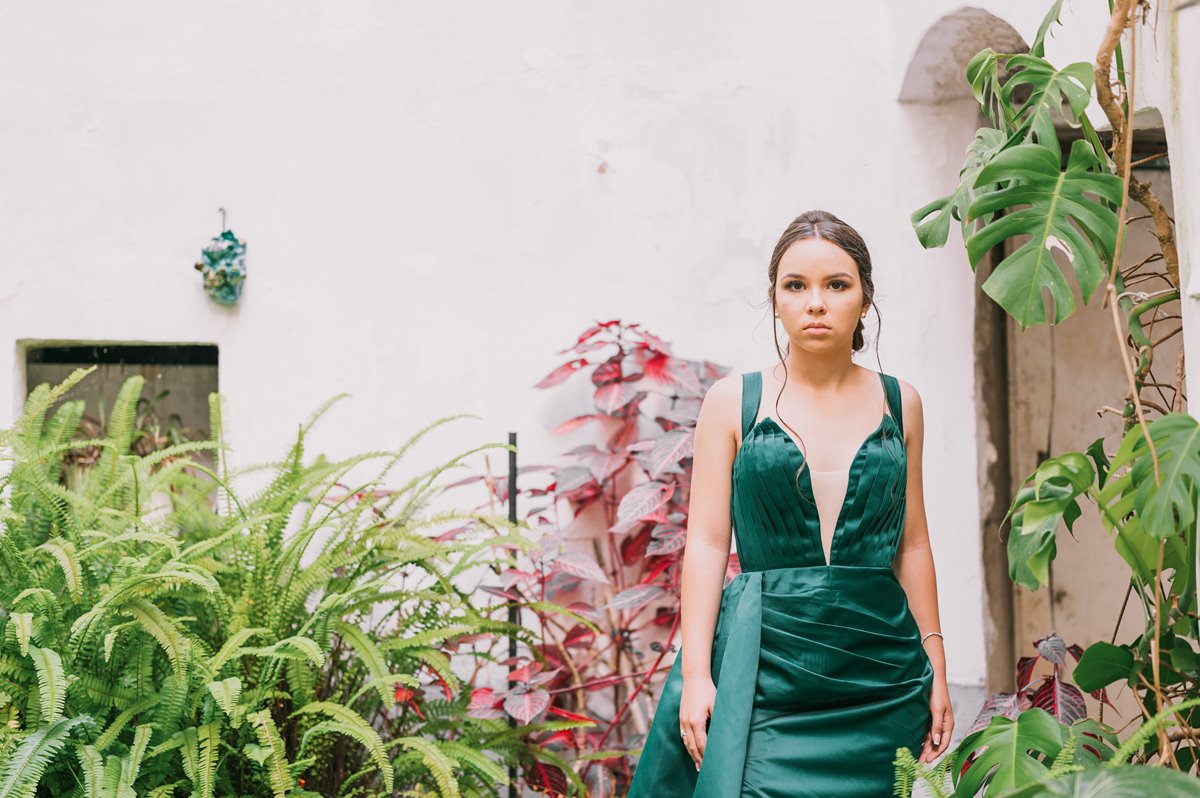
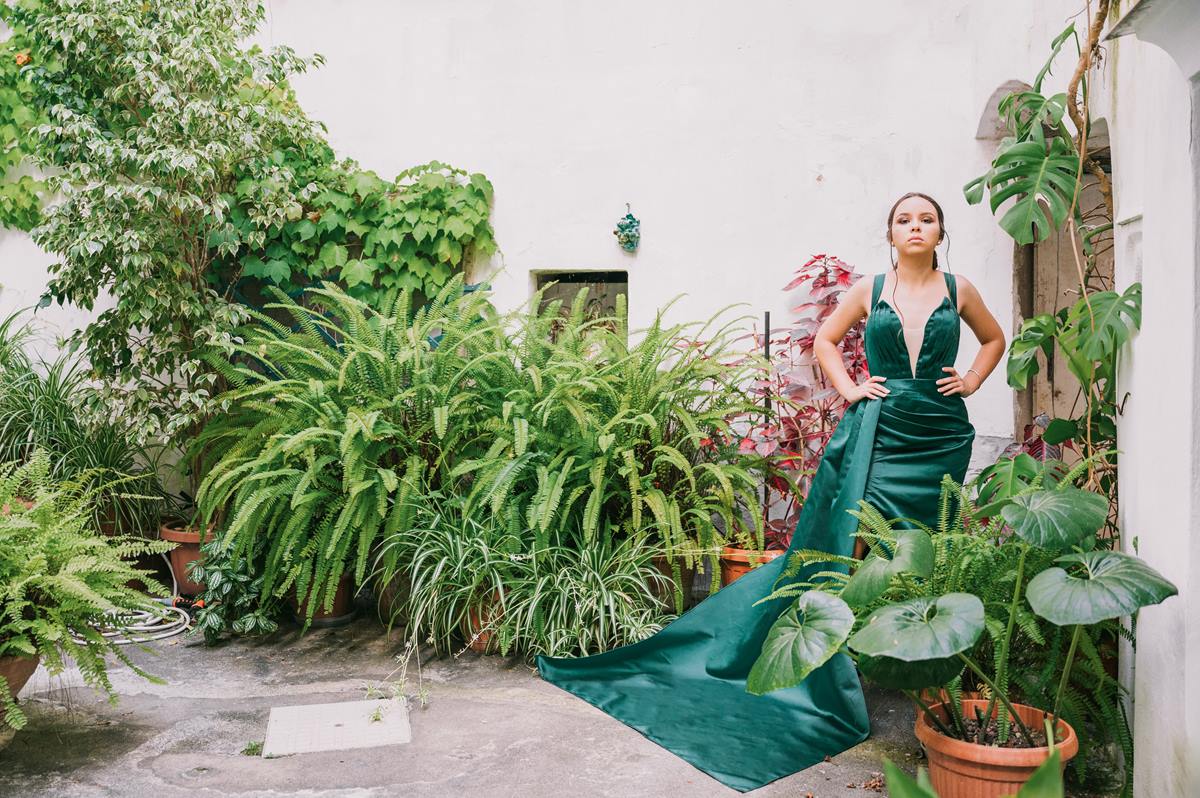
The pink ballgown came off, and Camila changed into a deep emerald velvet gown with a plunging neckline and a long train, a complete change of register from the first outfit. I moved her to a walled garden courtyard nearby, dense with ferns and potted monstera against plain white walls. Velvet reads differently from beaded satin. It absorbs light instead of throwing it back, so I shot her a little closer and a little darker than the Rufolo frames, letting the green of the dress blend into the green of the ferns until the two were almost the same color story. Her mother told me this second dress had been Camila’s own choice, not the one anyone expected her to pick, and it is the outfit she looks most like herself in.
AMALFI JOURNEY
Find the perfect approach to organize a photo session, and select a wedding photographer from Italy.

AIRY AND MODERN




Crossing to Atrani
After the ruins and the courtyard, we drove down to Atrani, the fishing village a short drive below Ravello, for the second half of the day. The shift is deliberate when I plan sessions like this: Ravello gives you scale and formality, stone built by someone with a great deal of money and time. Atrani gives you density and salt air, a village built by people who needed to fit a life onto a very small patch of land. A quinceañera gallery benefits from both registers in a way a single-location session cannot produce.
The Third Dress, in the Alleys
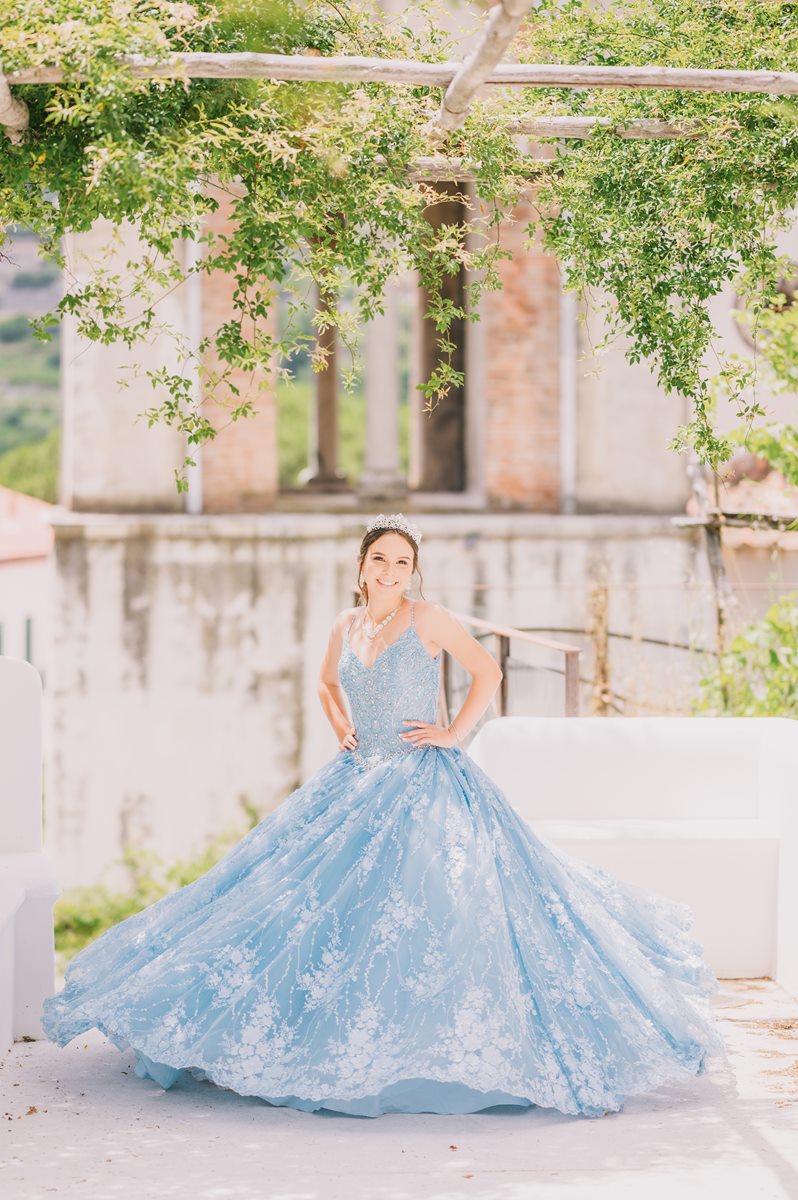
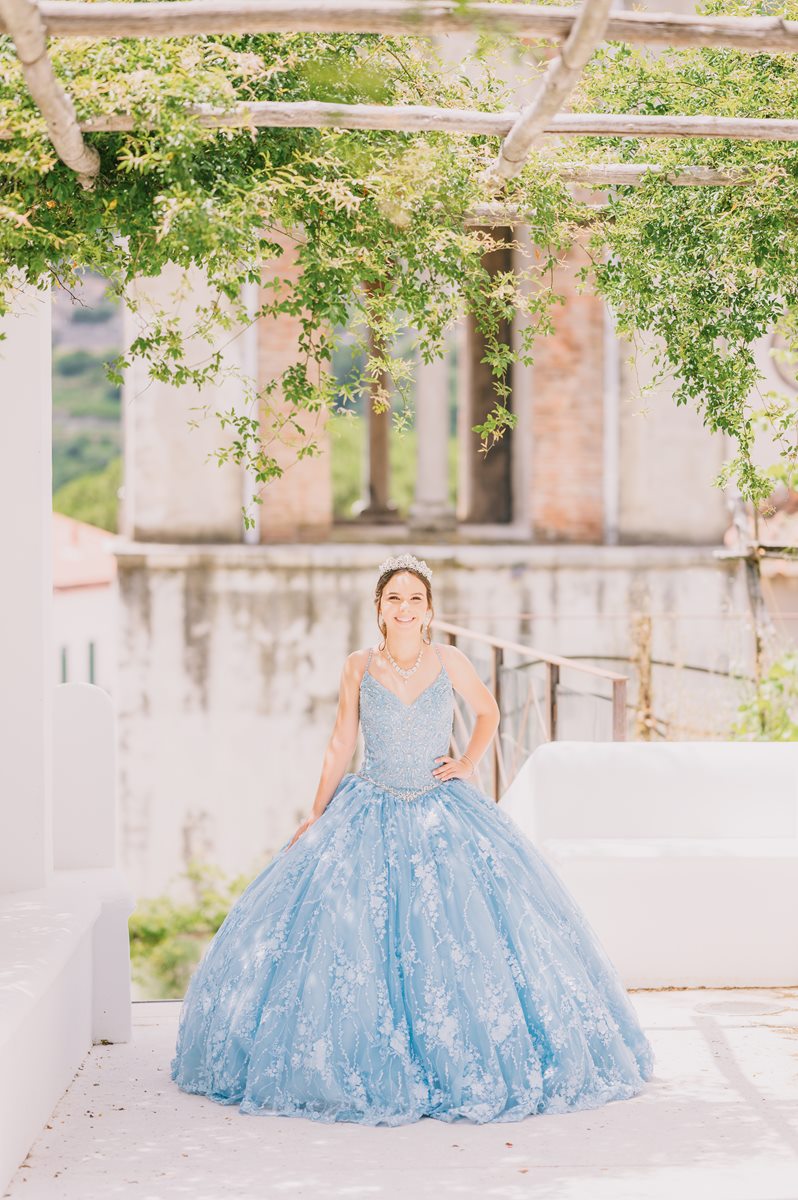
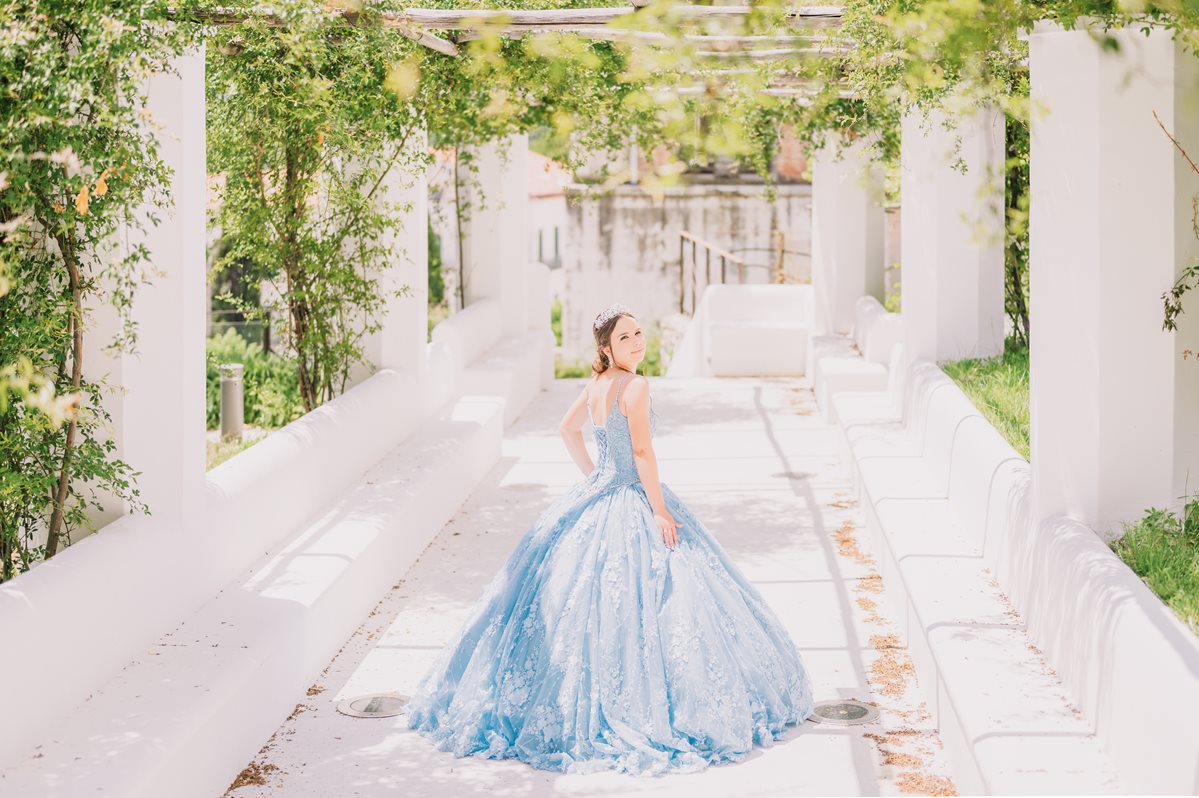
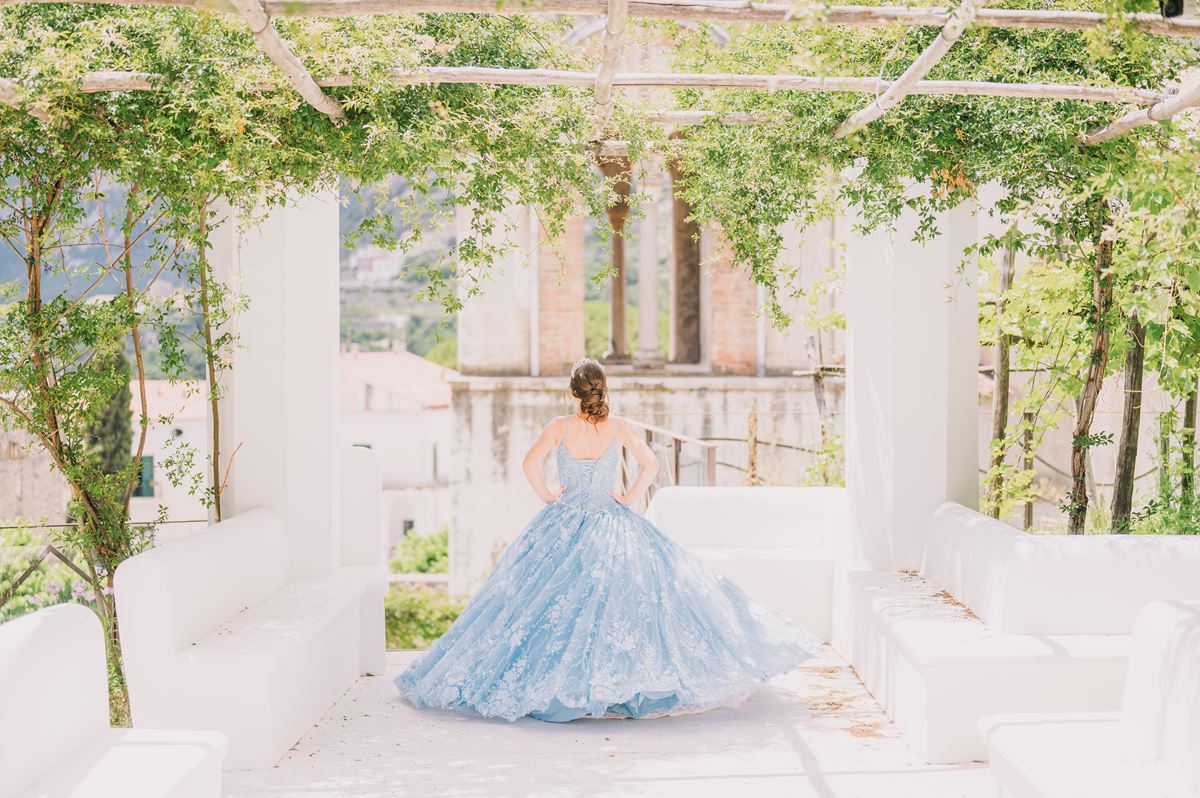
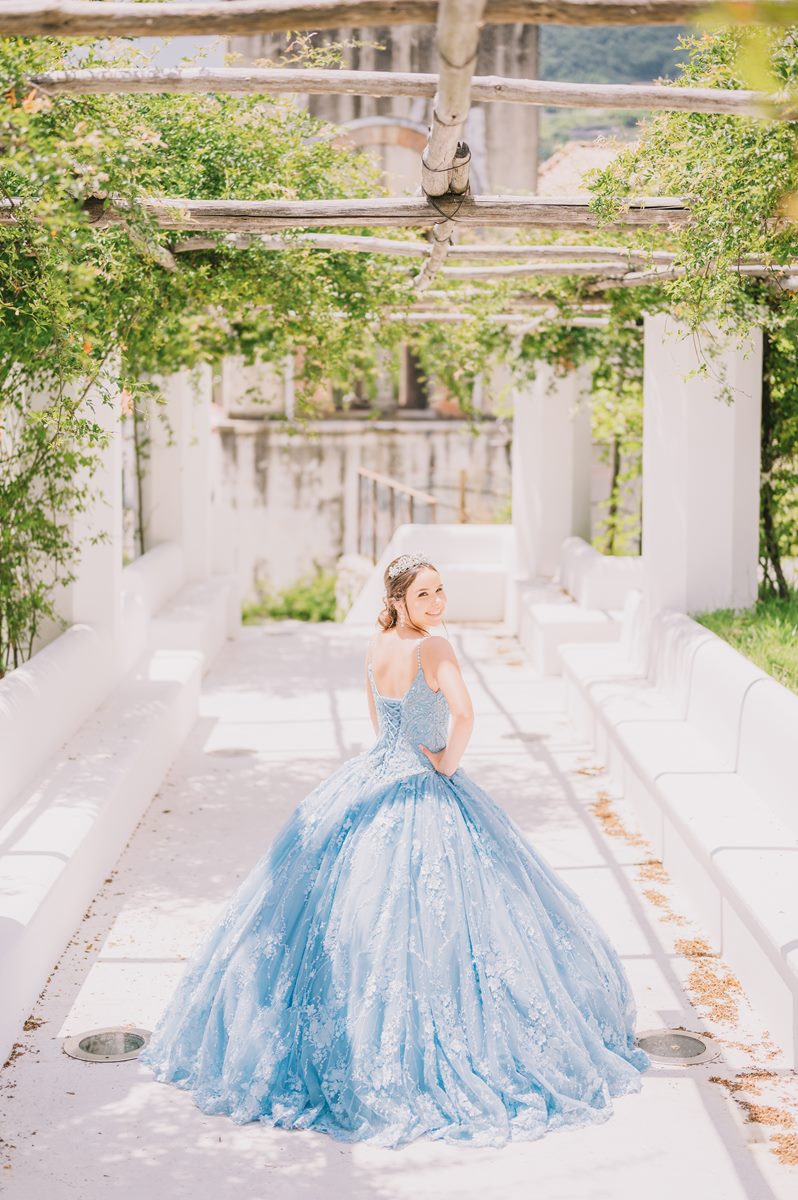
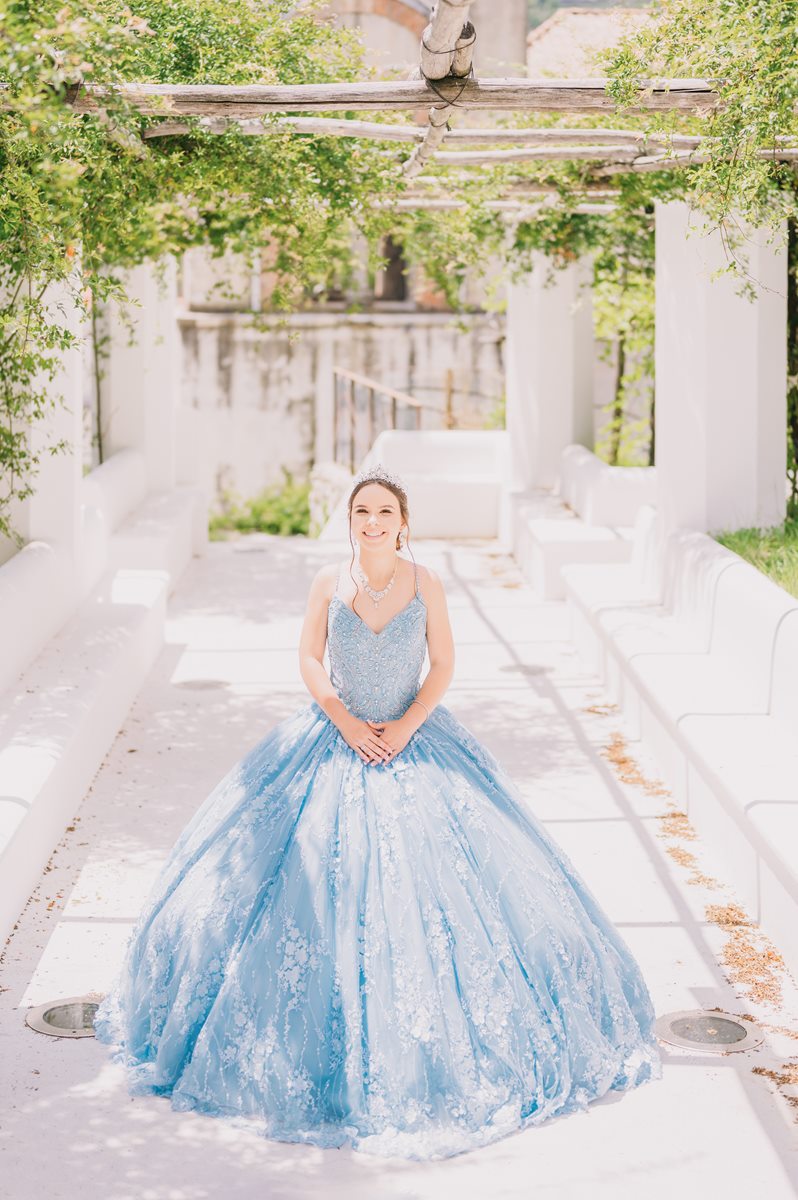
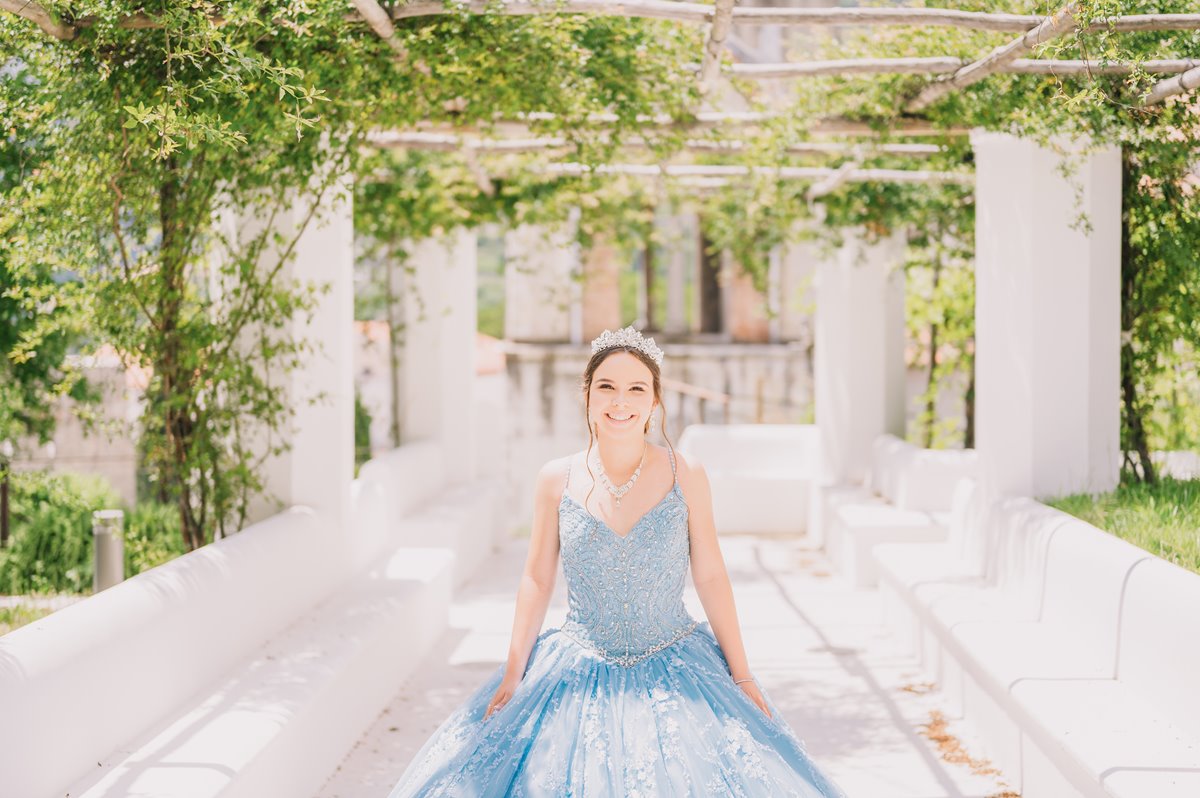
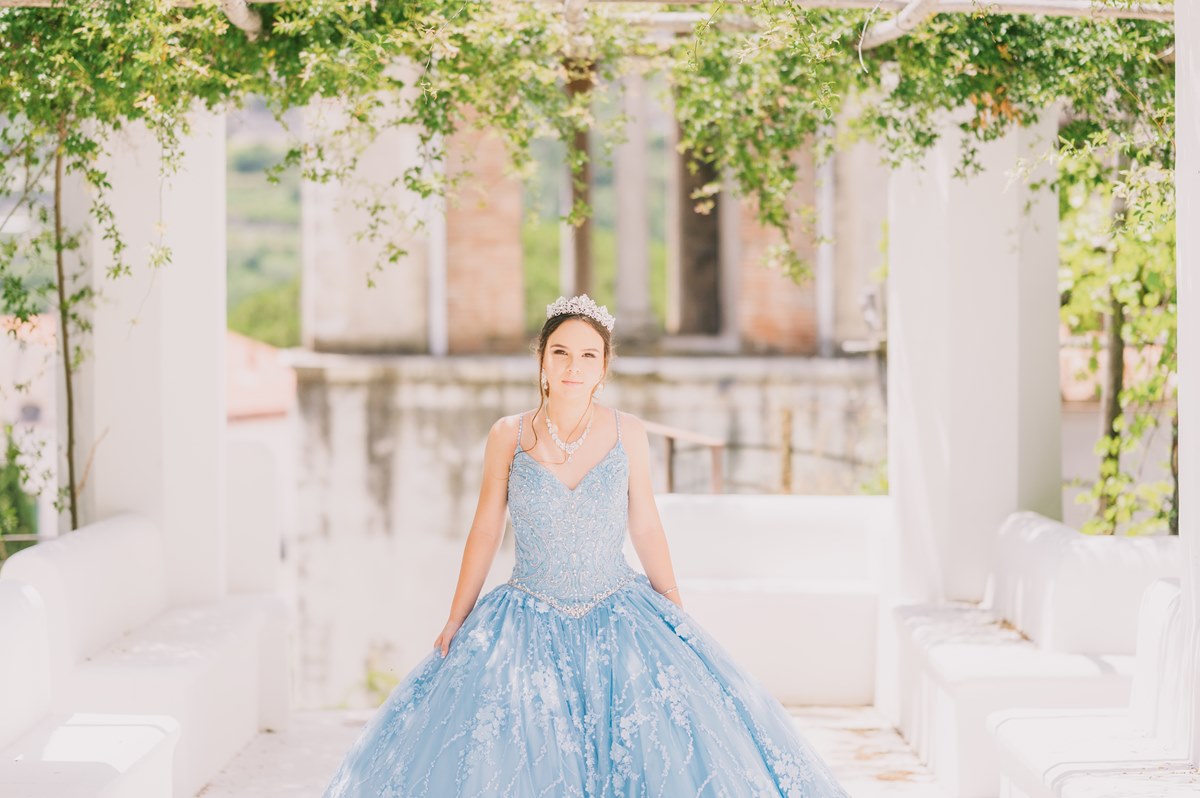
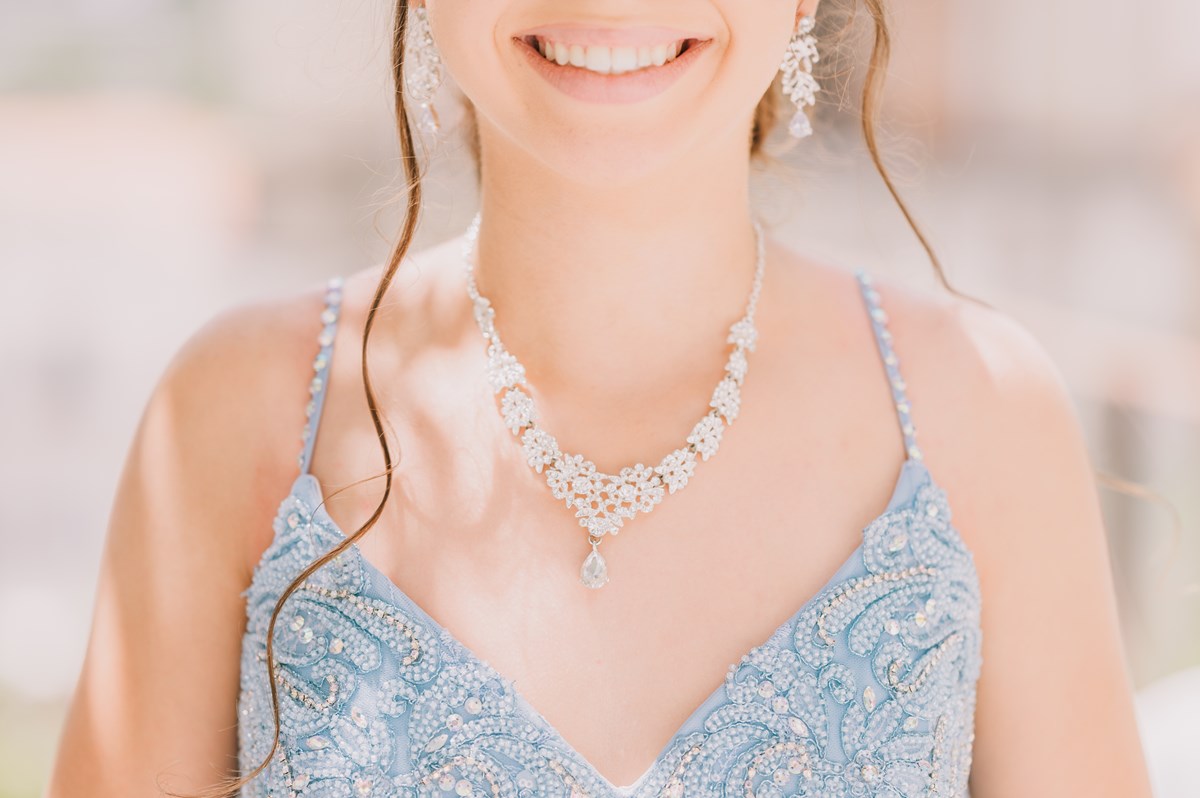
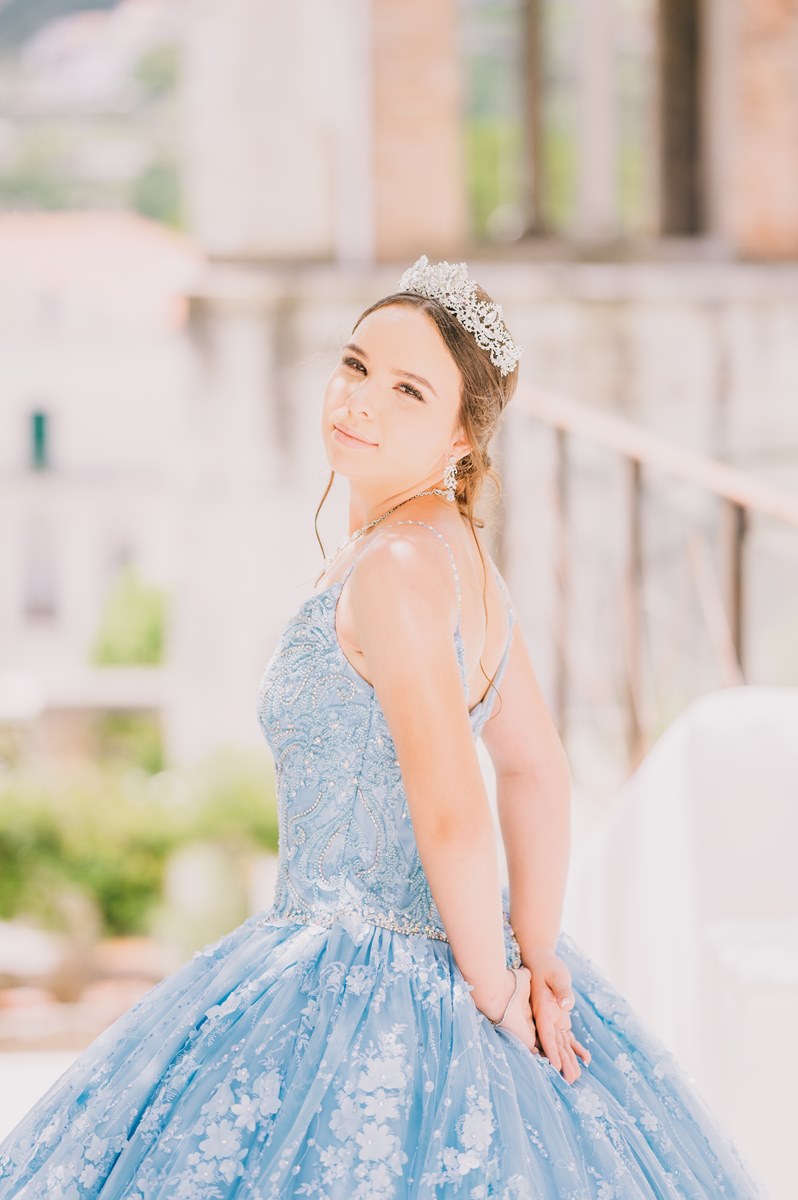
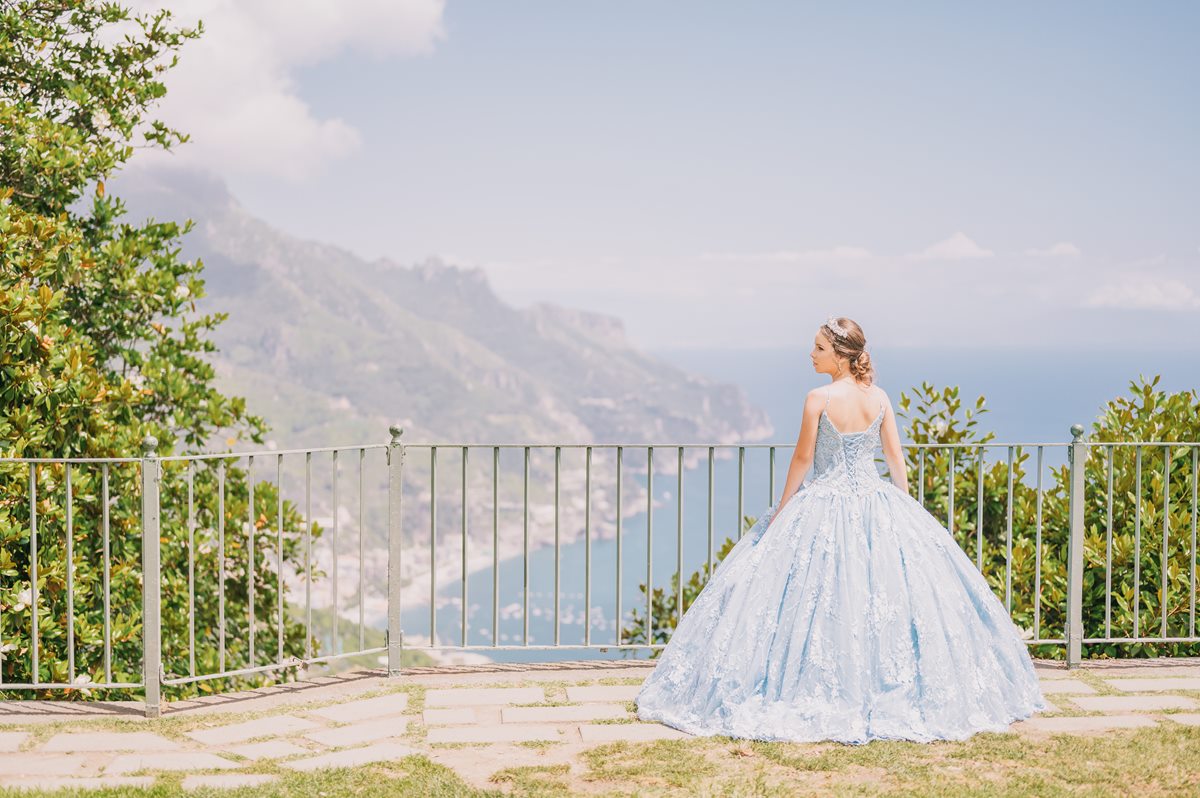
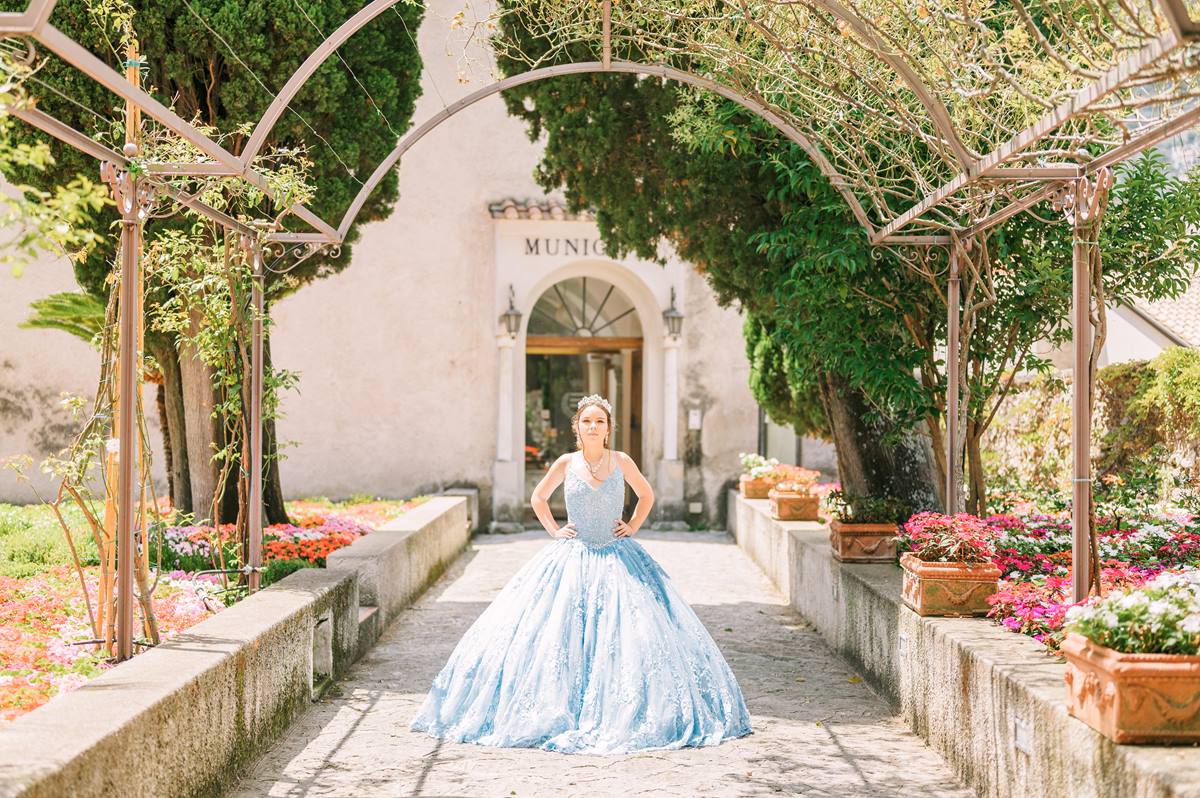
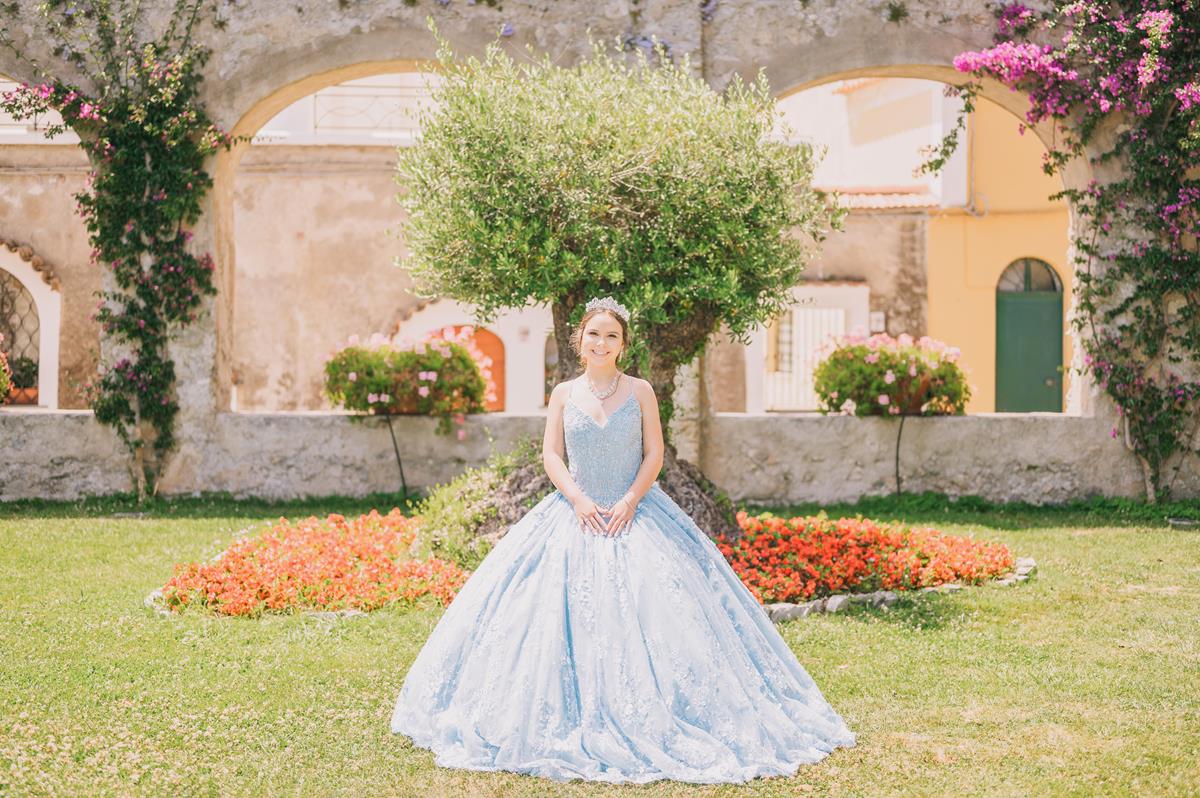
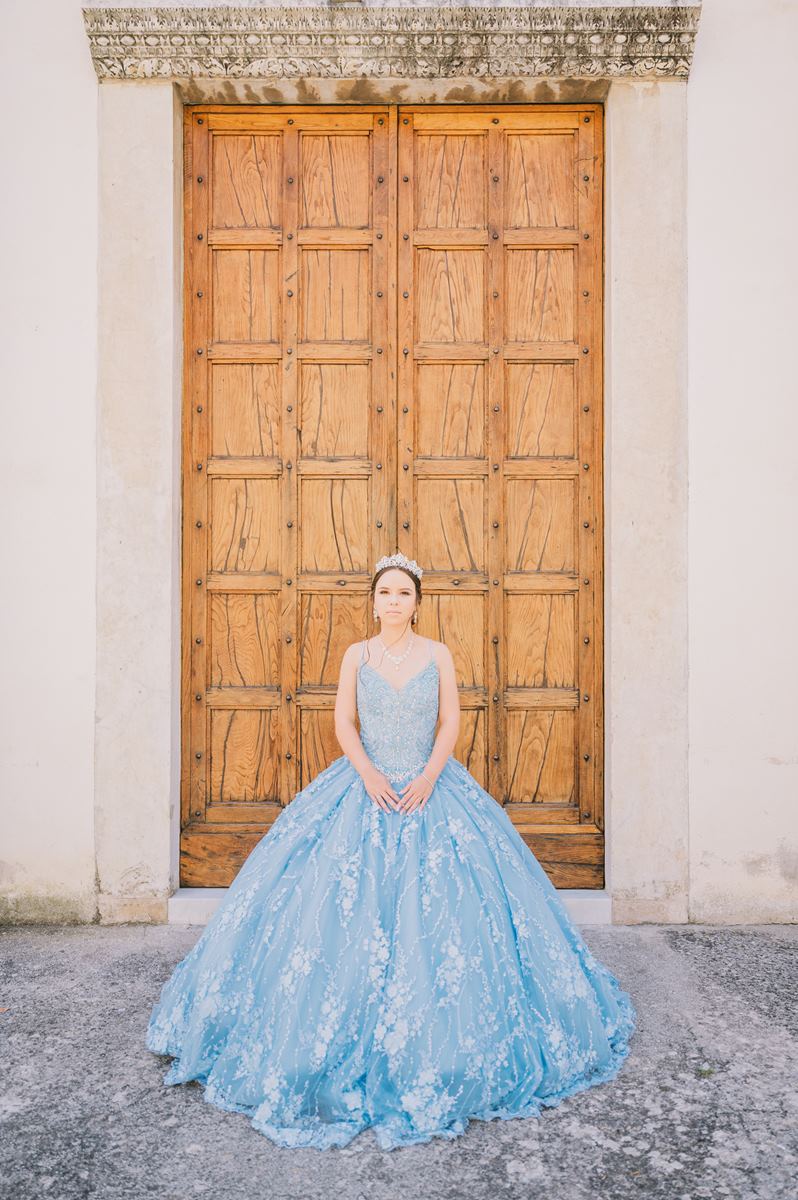
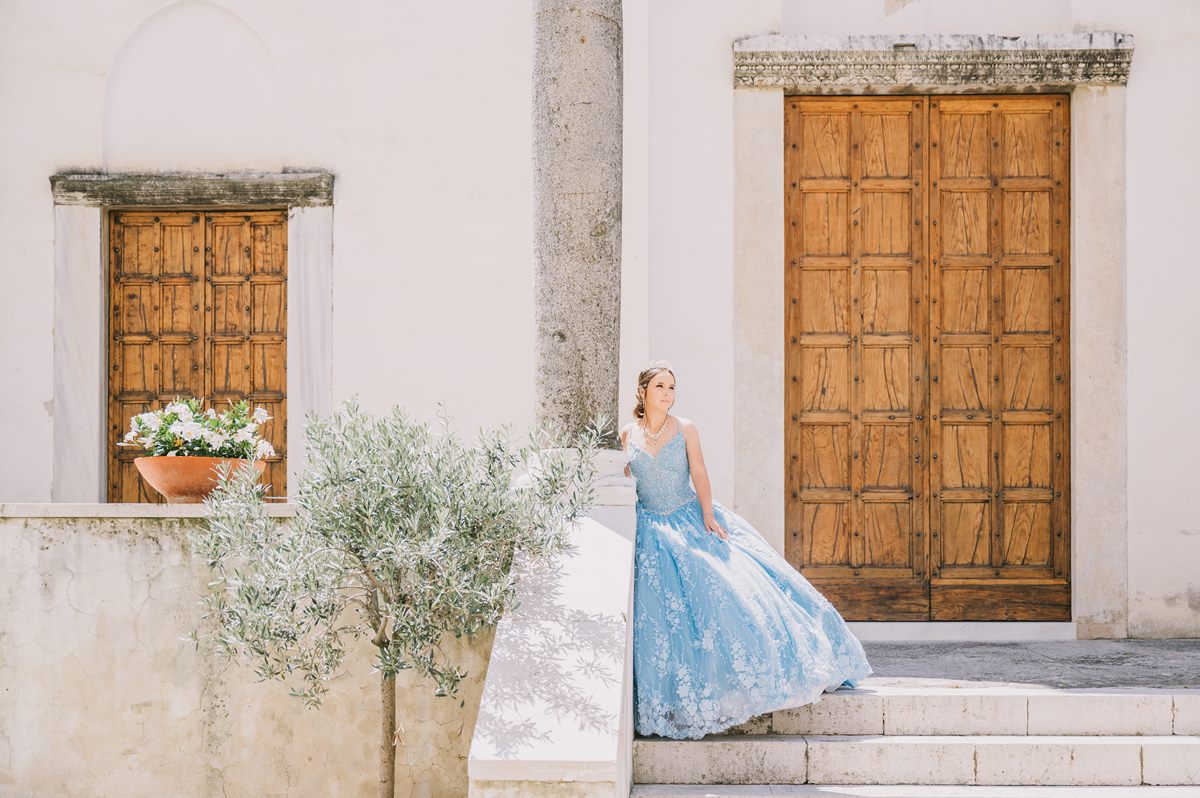
Camila’s third outfit was a pale blue ballgown with heavy beading across the bodice, and I shot most of it in one of Atrani’s covered passages, a vaulted stone tunnel with a hanging lantern and an arched double window at the far end, potted plants crowding the base of the walls. The light inside comes only from the two open ends, so the tunnel behaves like a soft box: even, directional, with none of the harsh midday sun that hits the open piazza outside.



My perspective is heartfelt, just like myself. I aim to highlight moments of character within stunning scenes. In a way, this reveals a piece of my identity and personal journey.

I adore vibrant marriage themes
RAVELLO STORIES
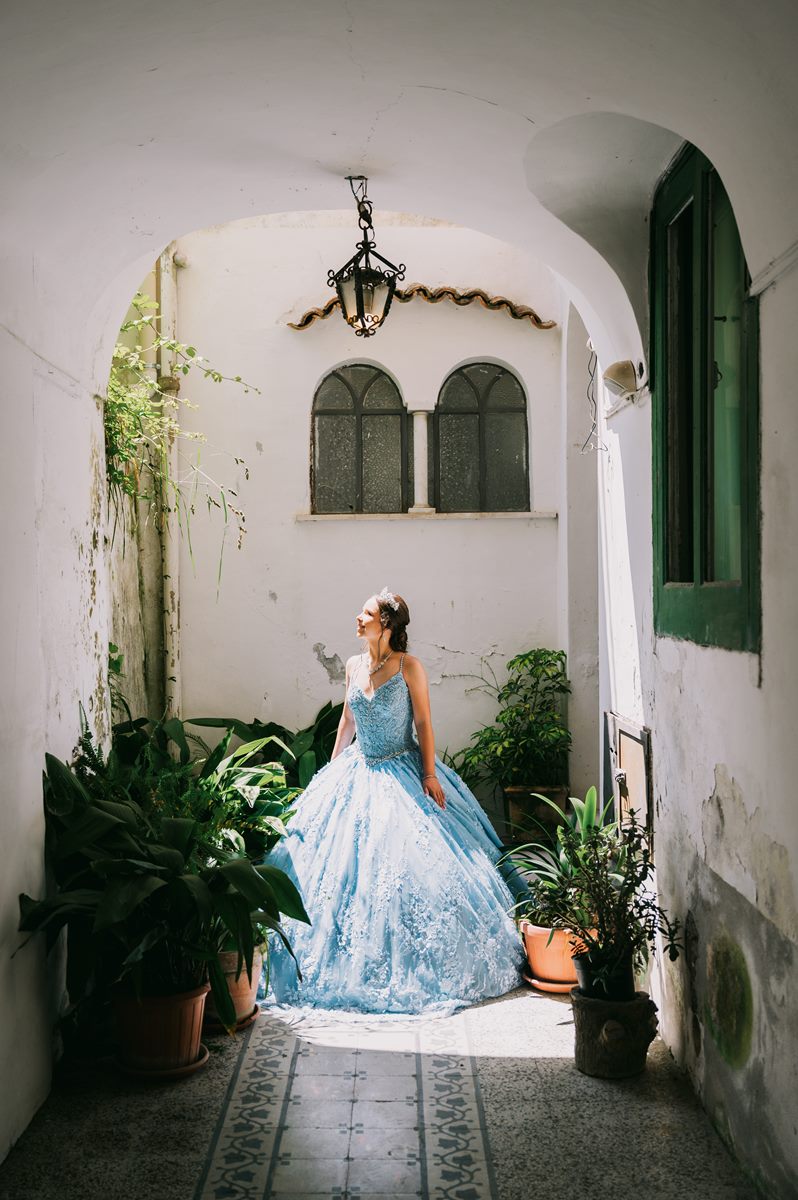

I placed her at the far end where the light was strongest, framed by the dark tunnel walls on both sides, and let the blue dress glow against the whitewash the way it would not have against Rufolo’s warmer stone.


The Fourth Dress, on the Water
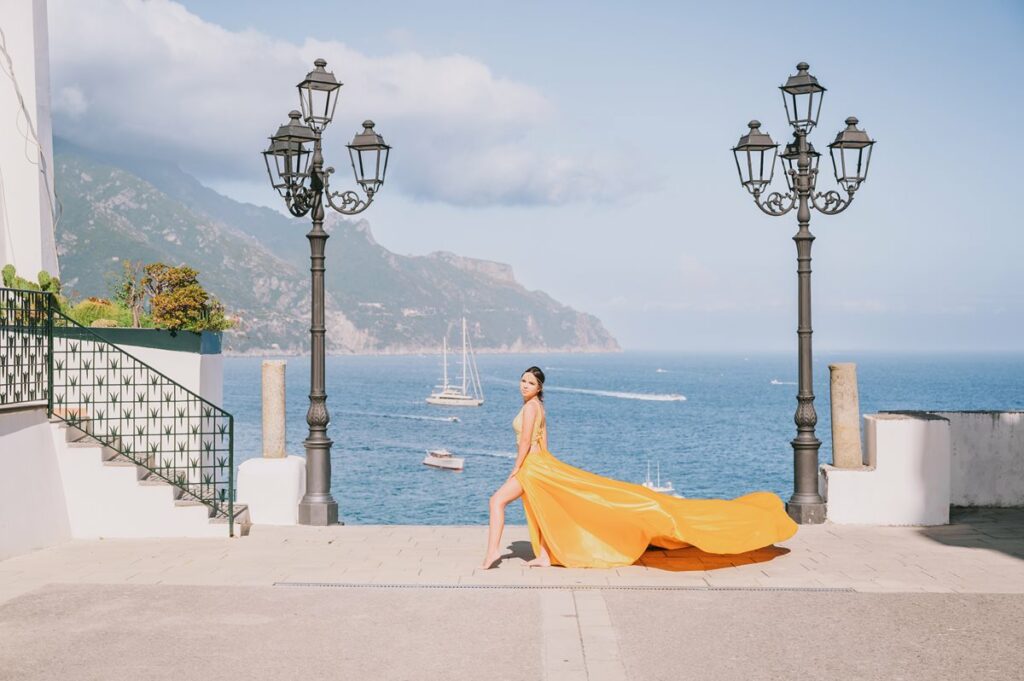
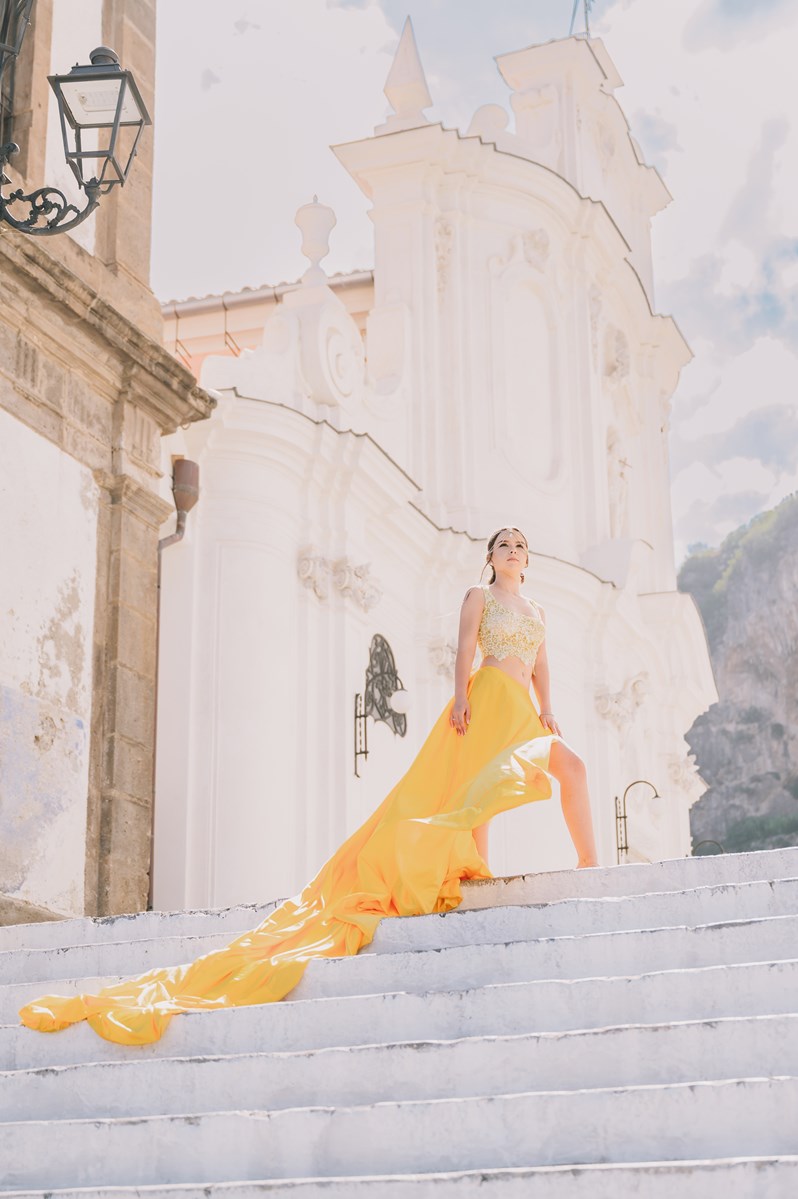
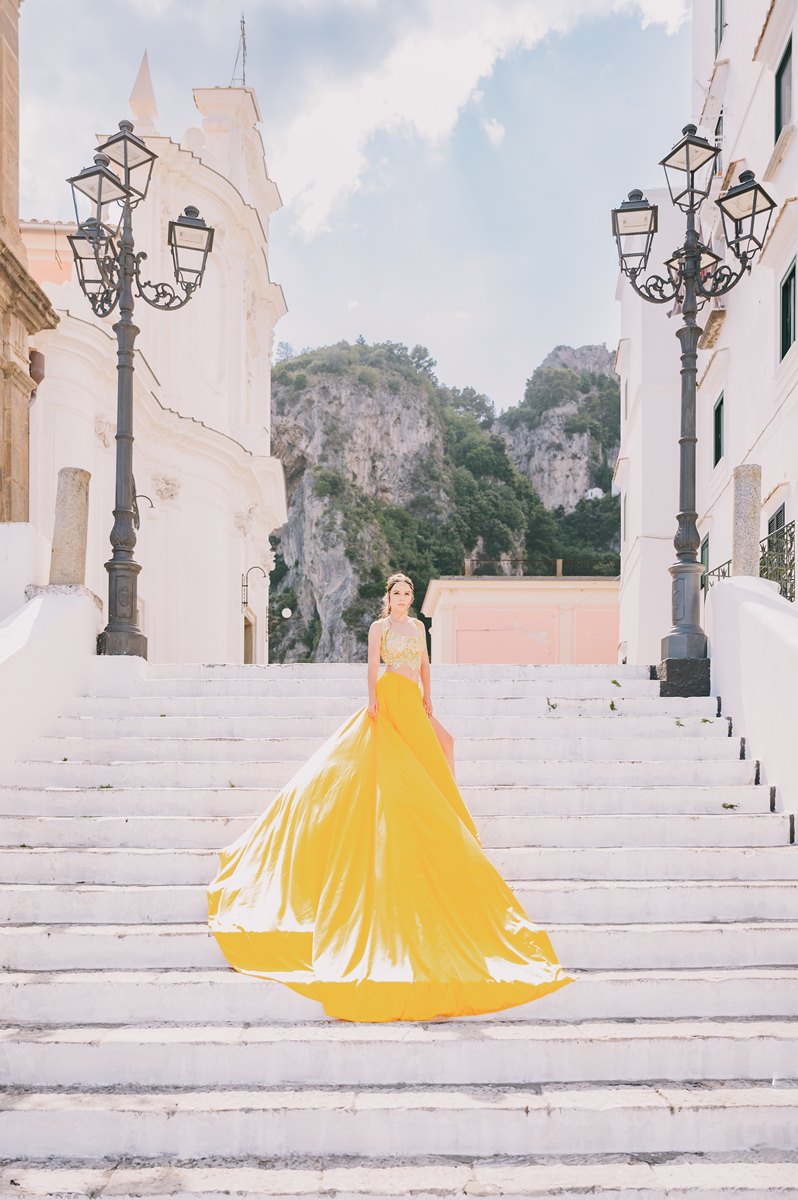
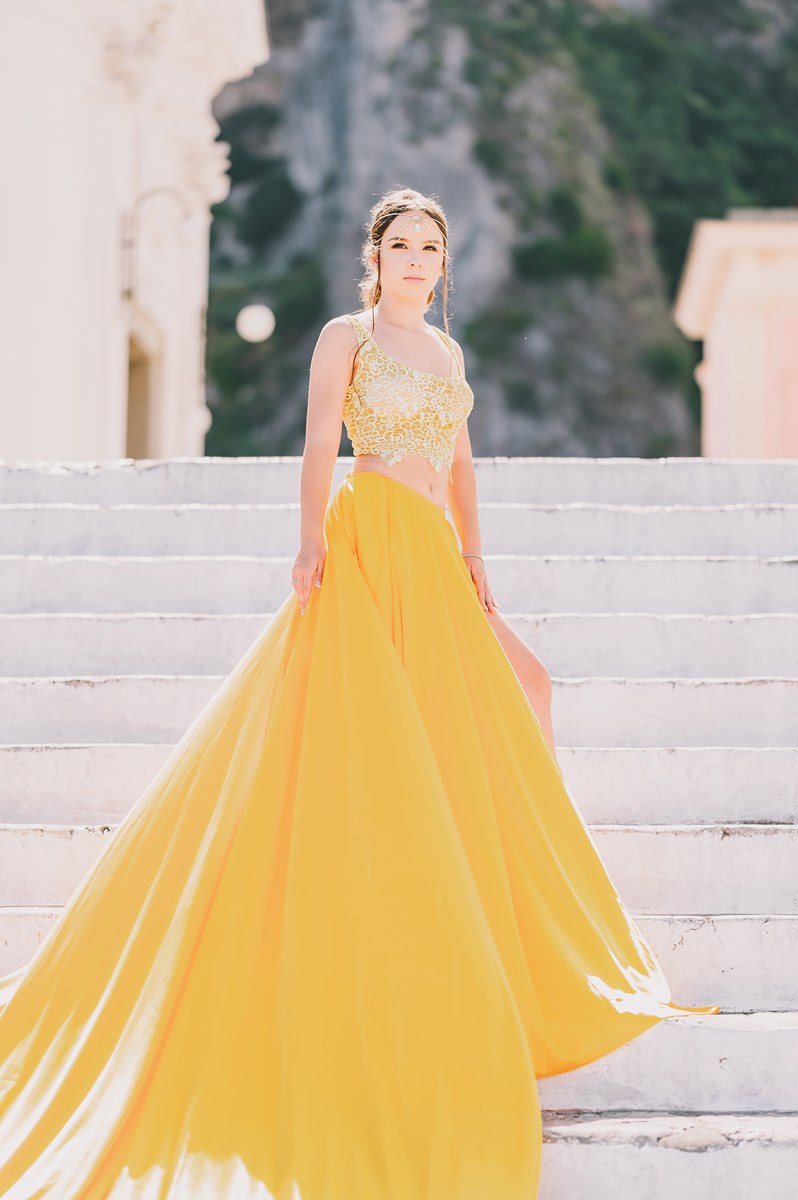
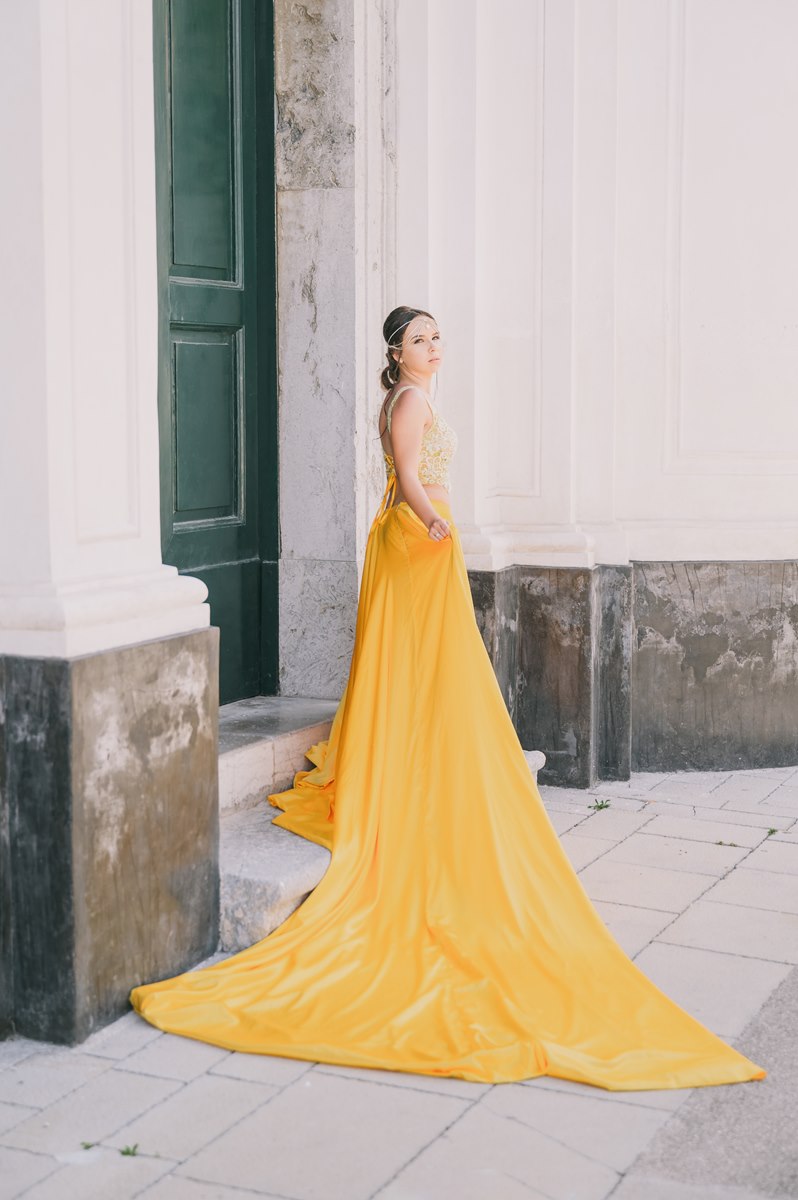
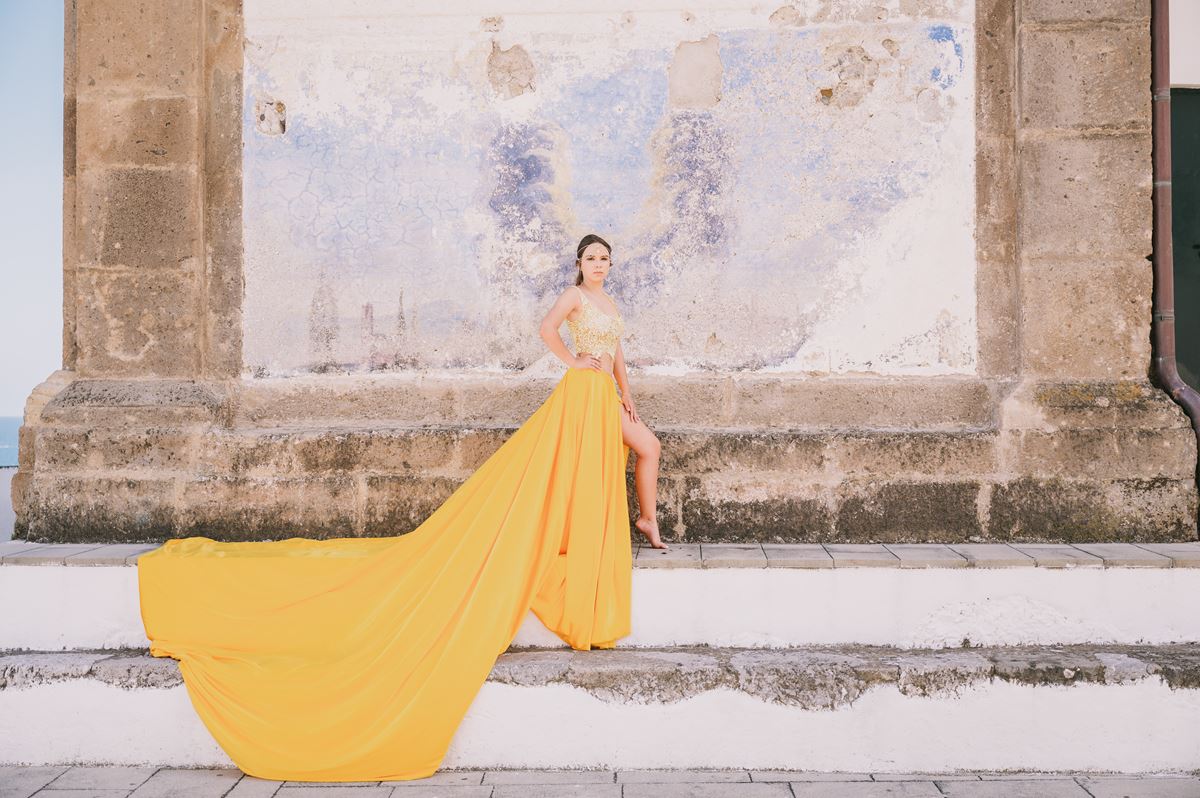
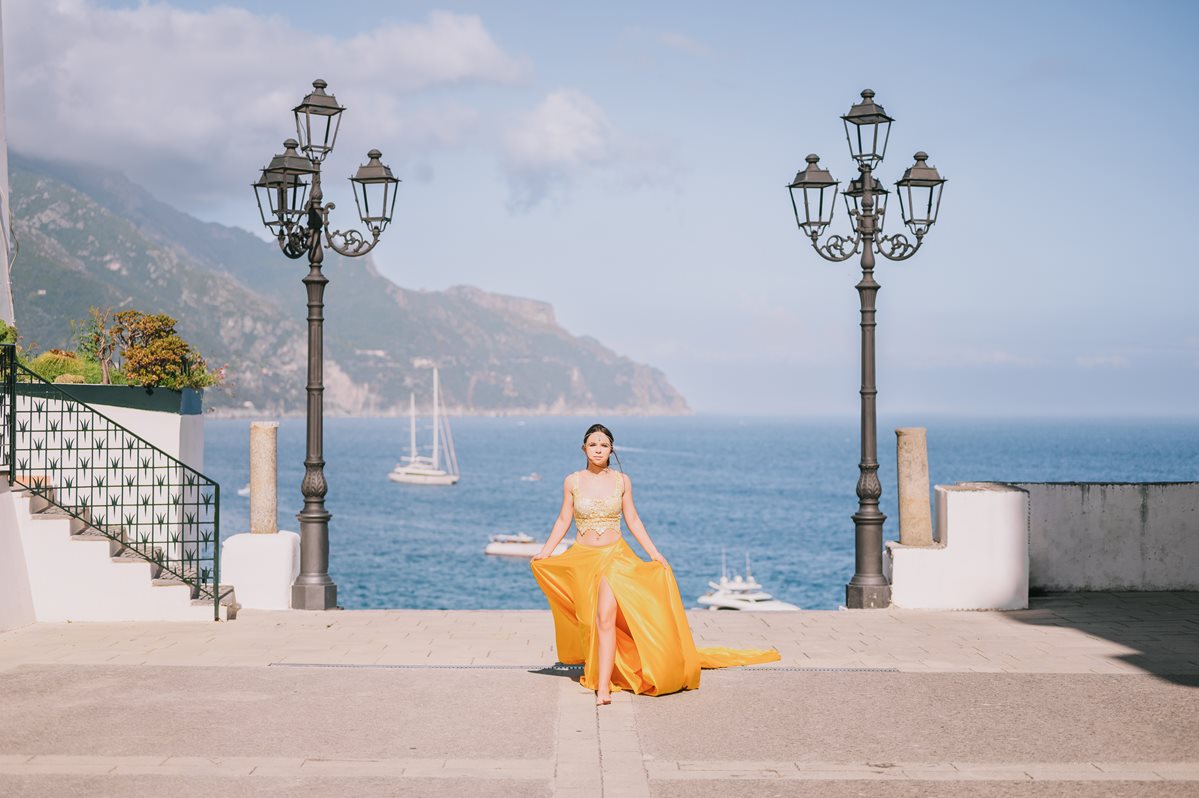
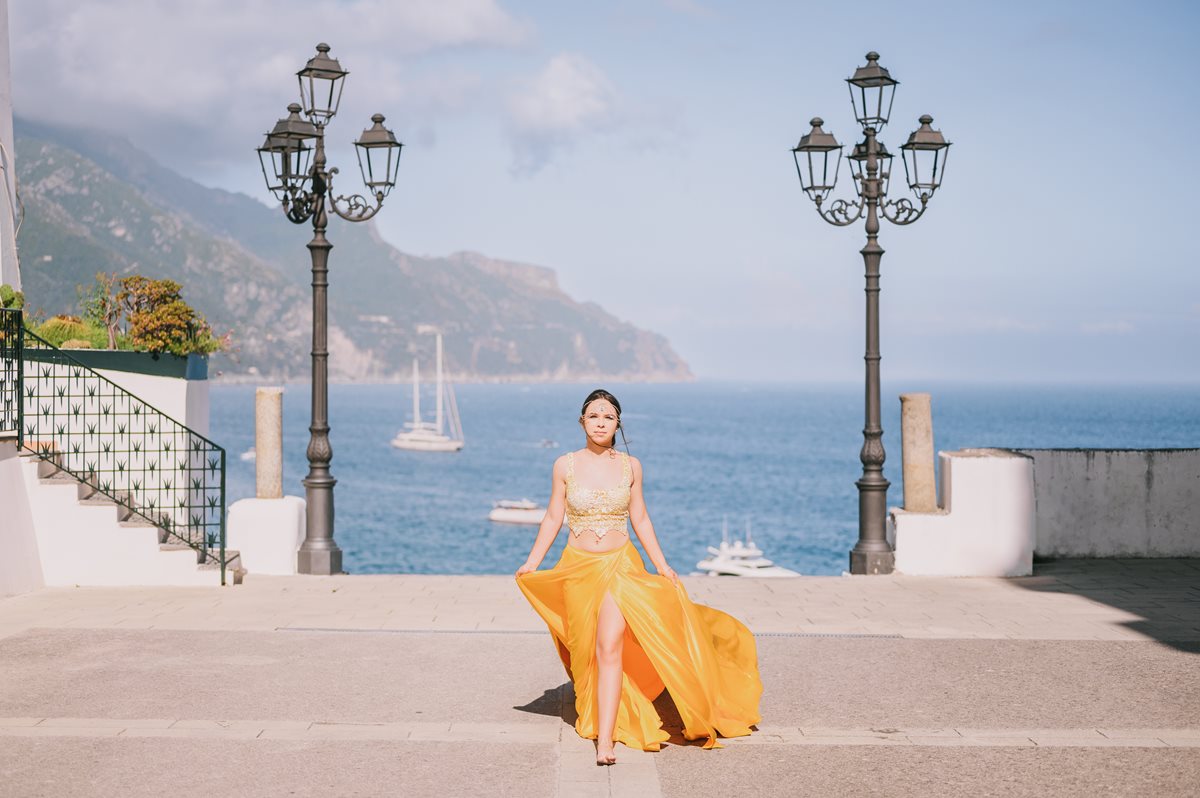
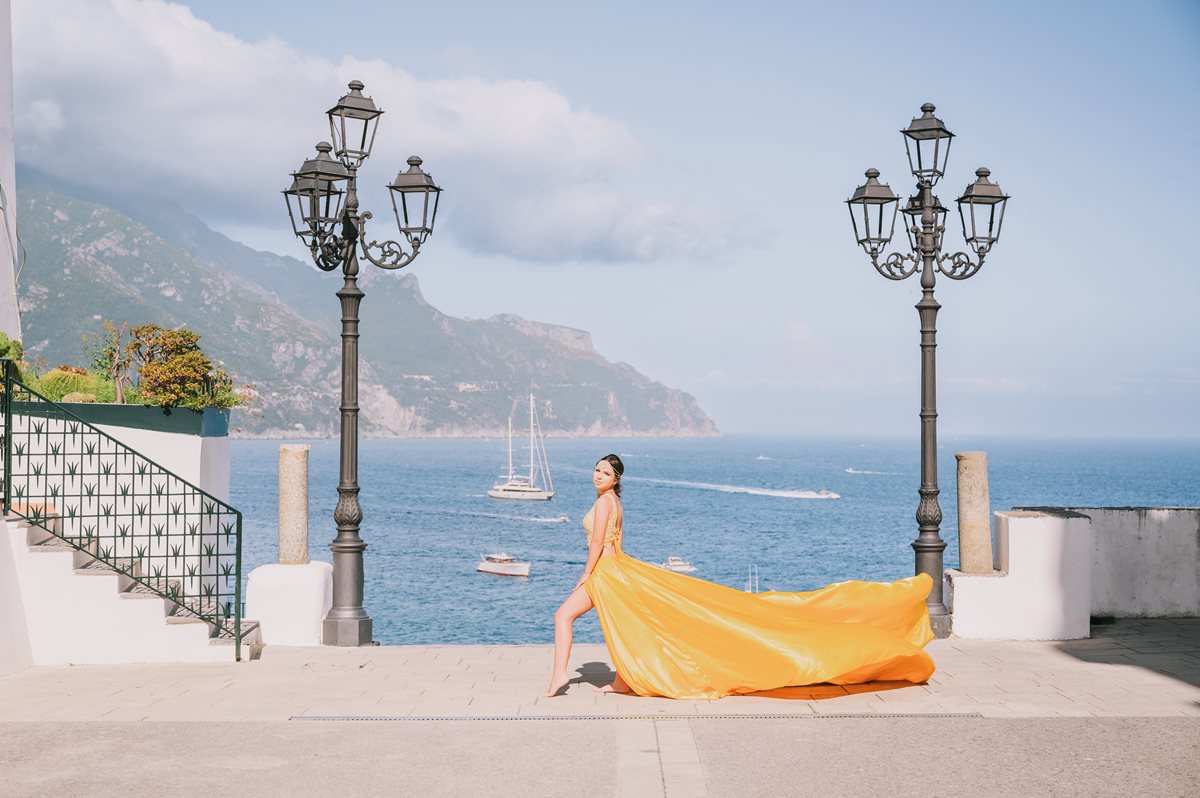
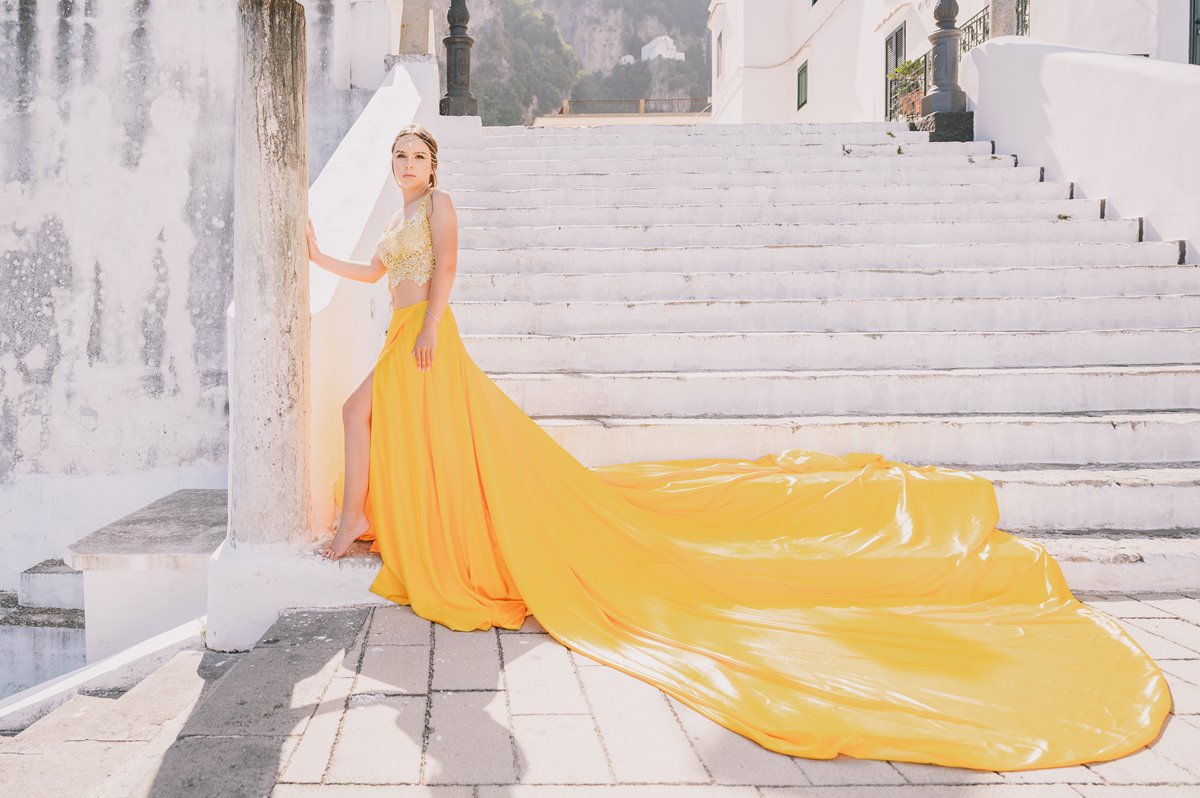
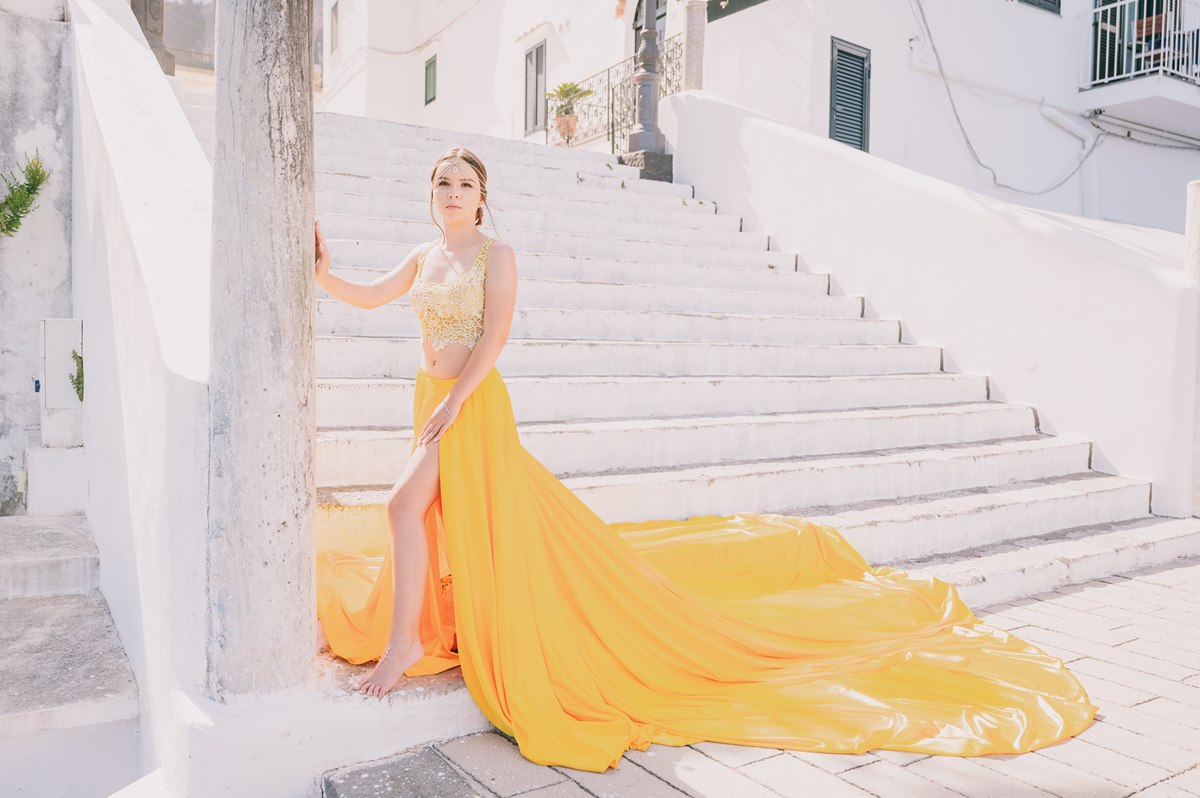
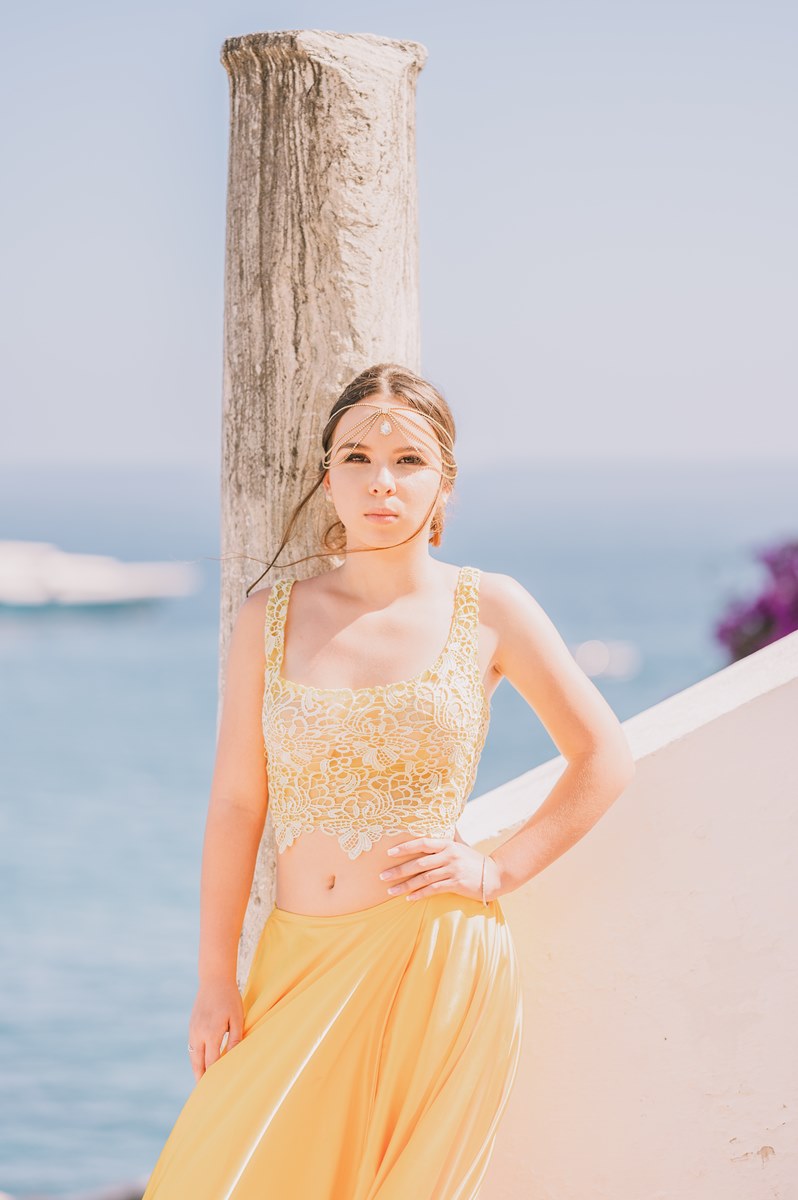
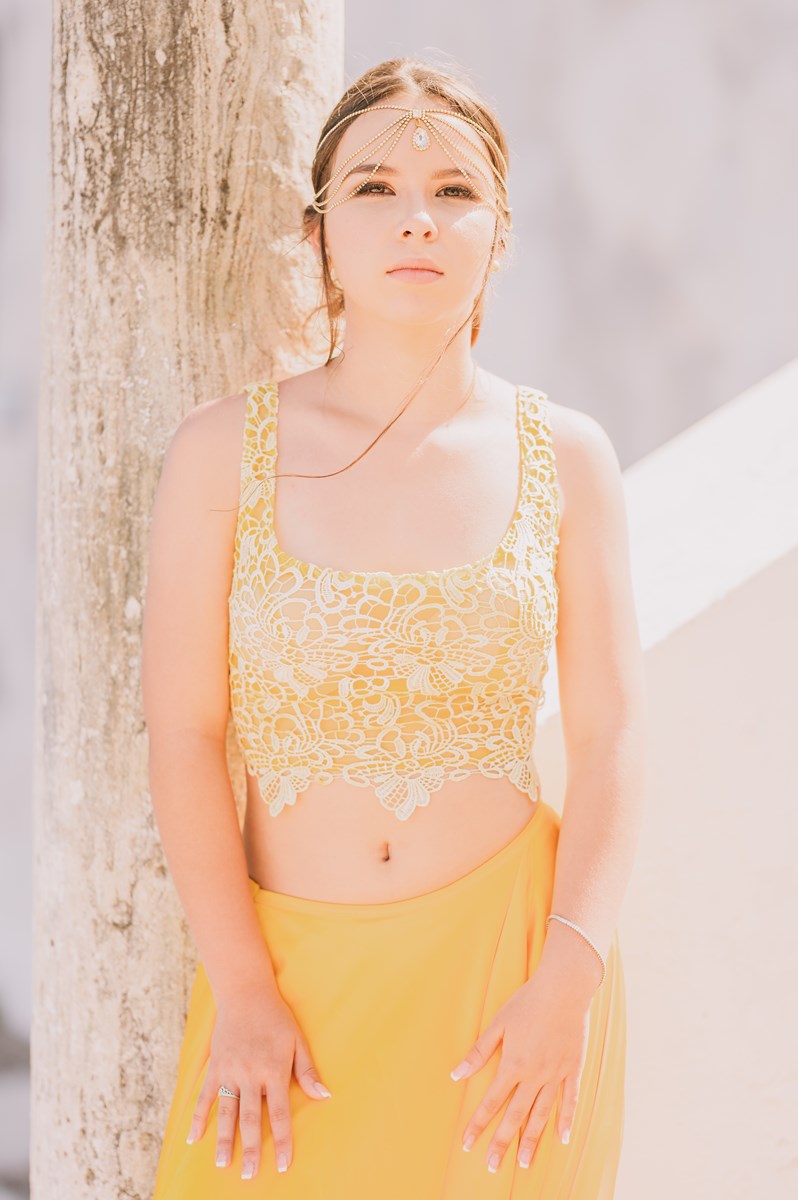
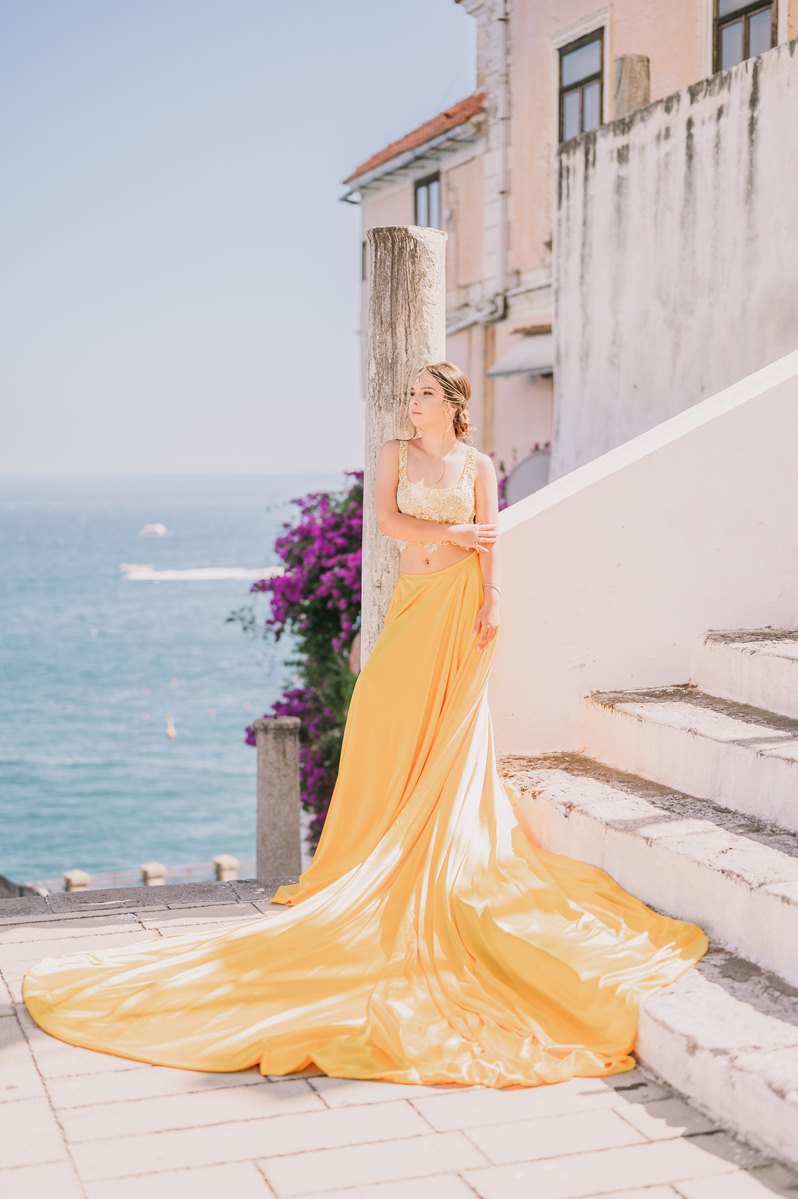
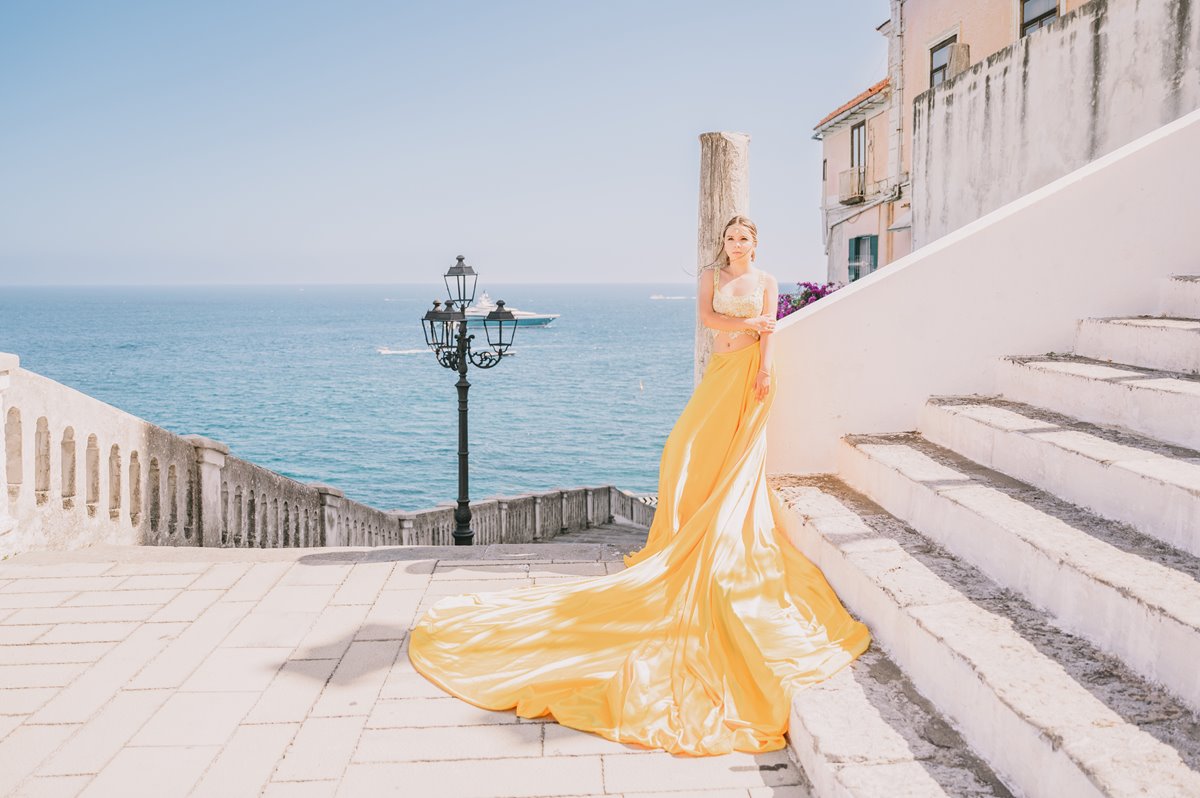
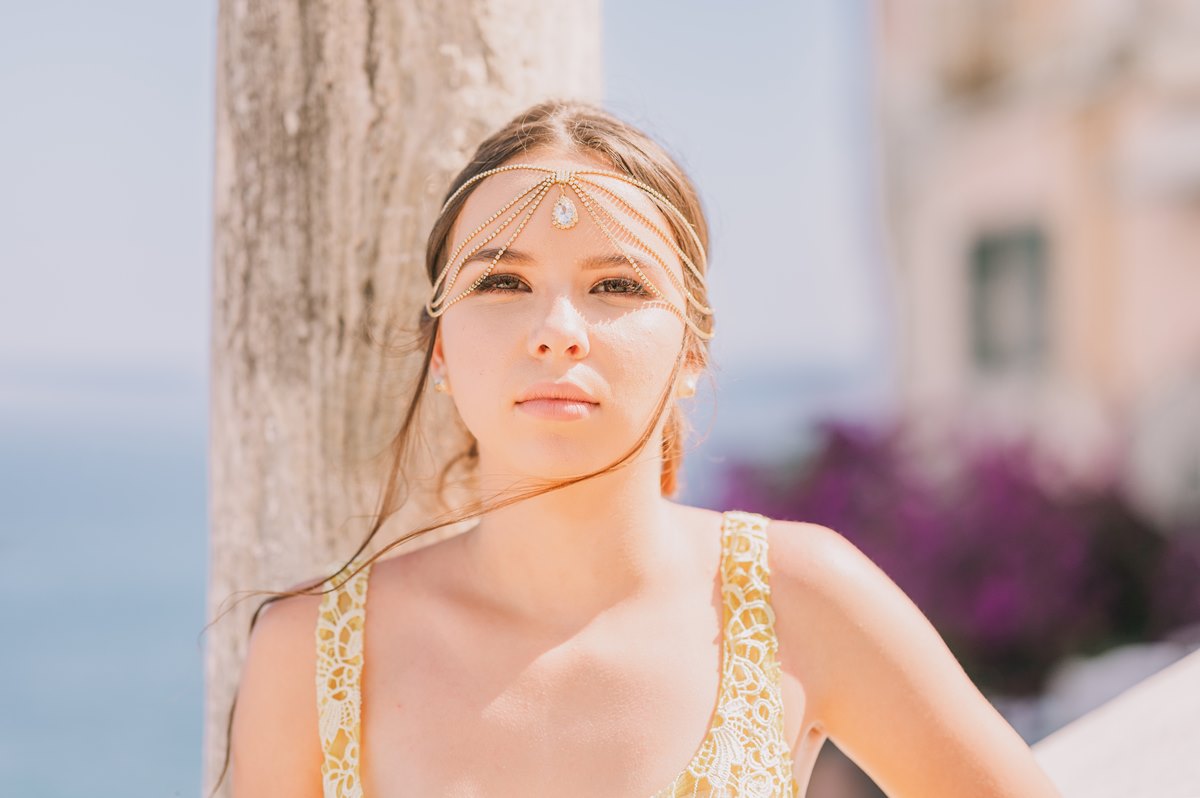
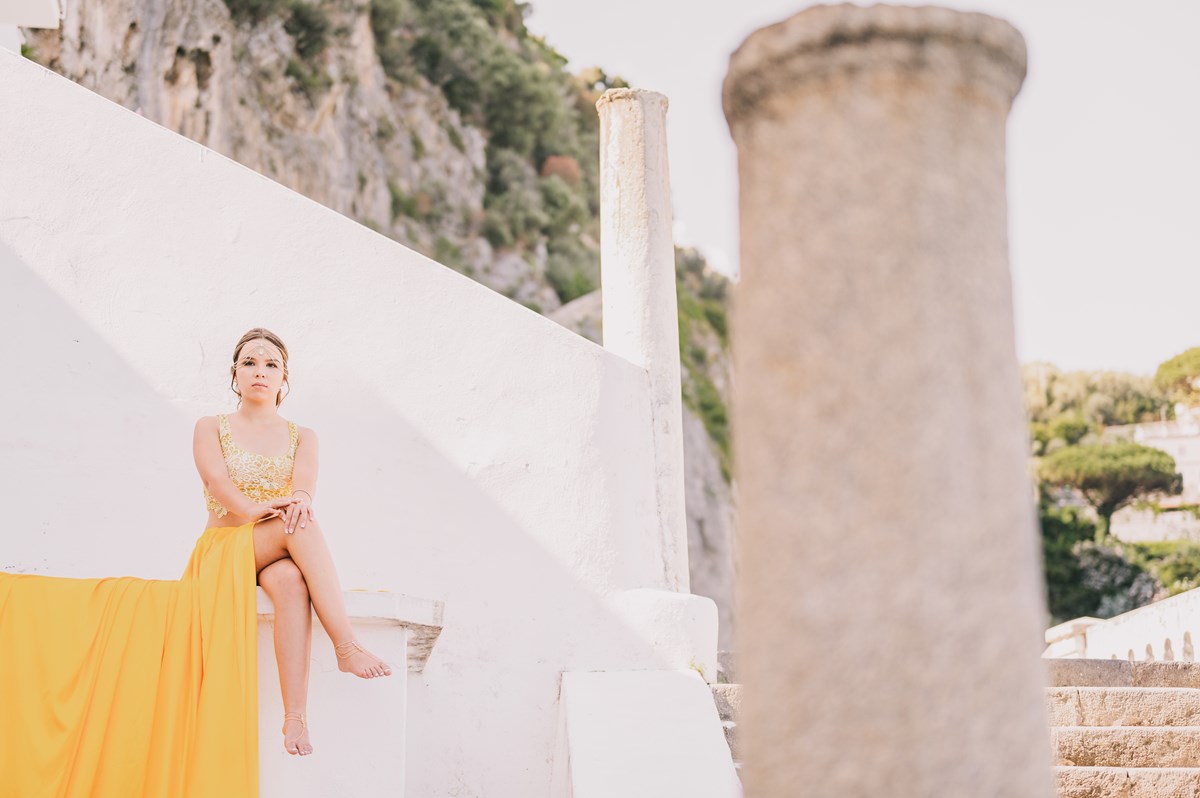
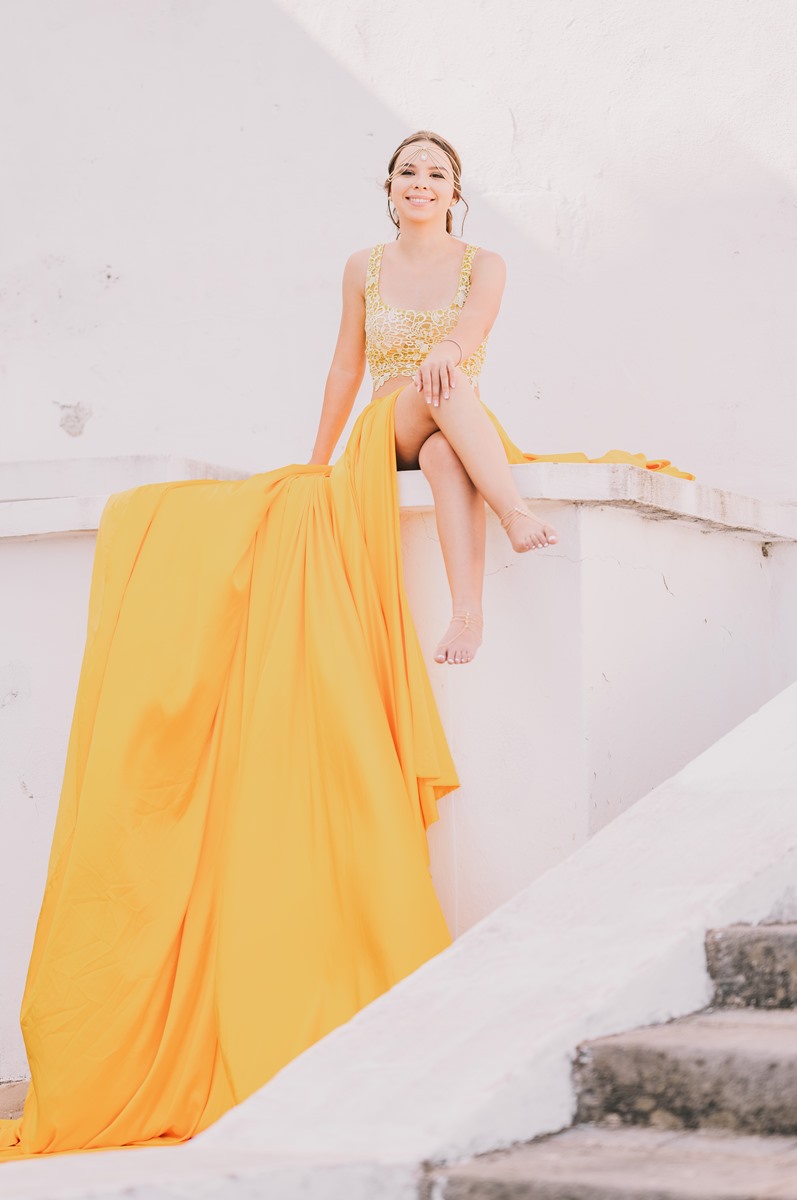
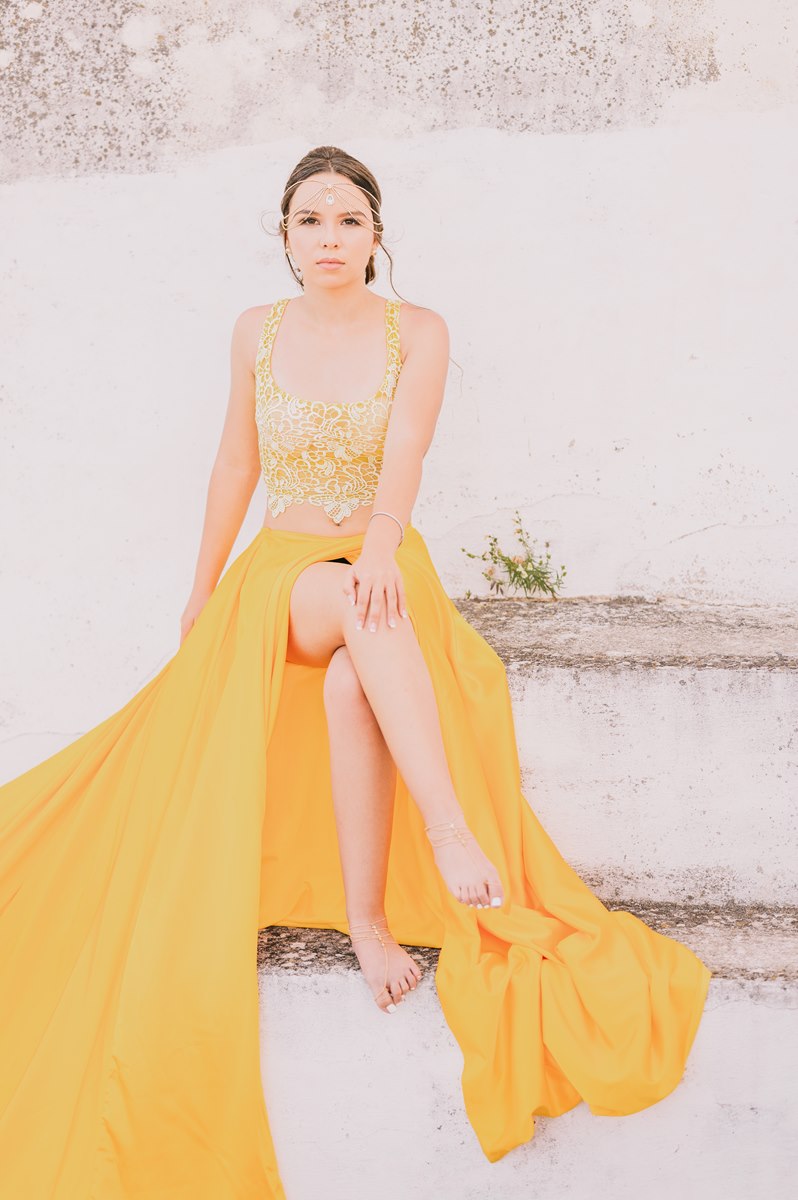
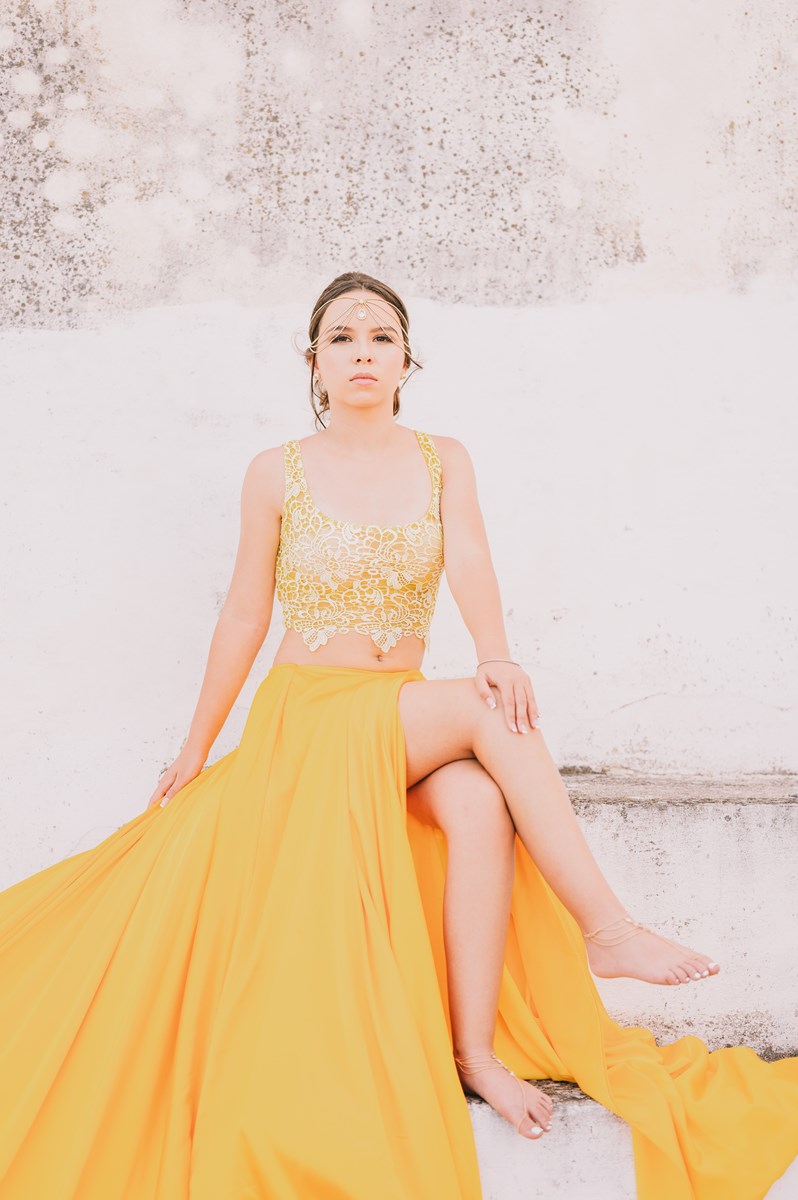
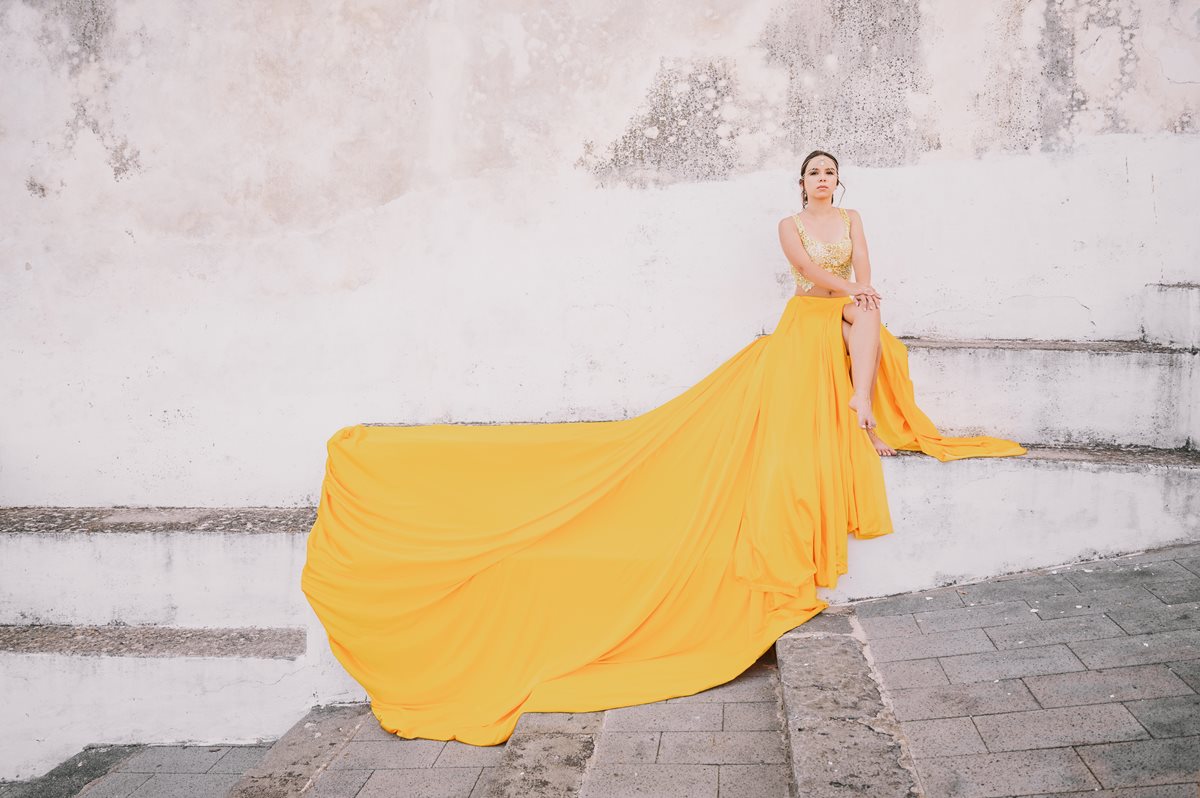
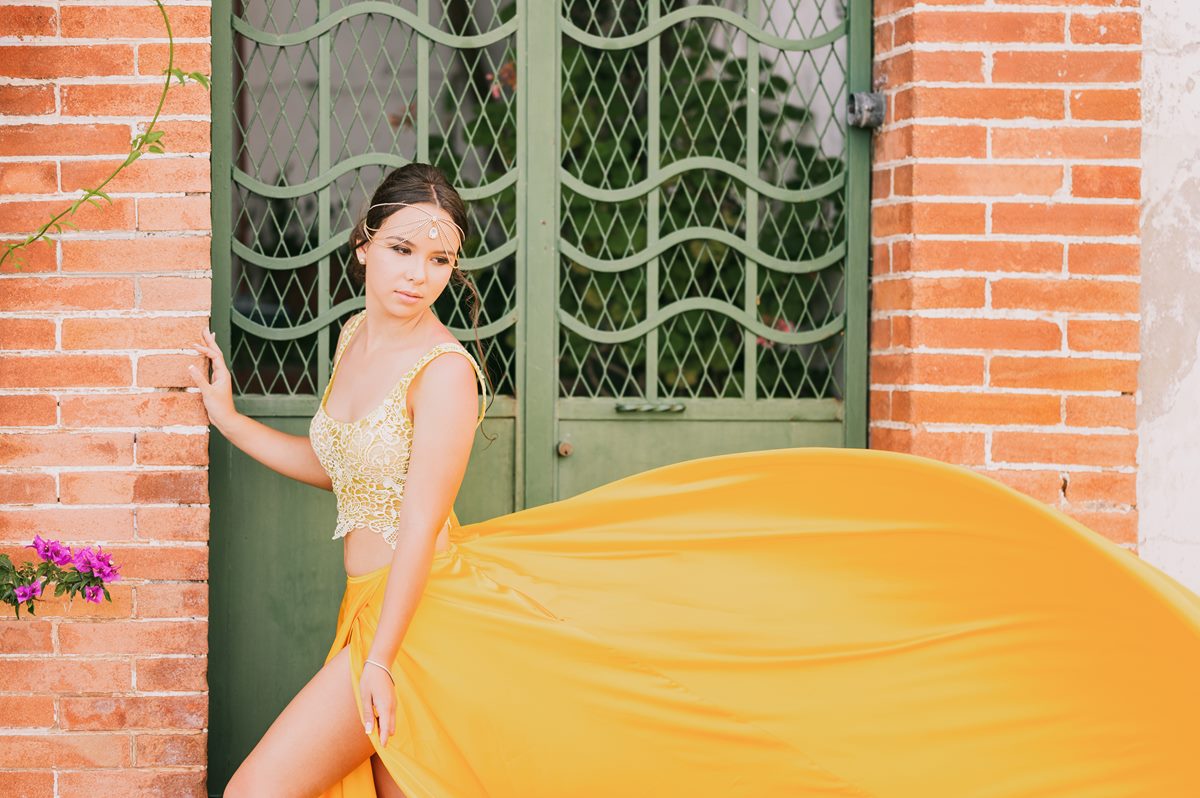
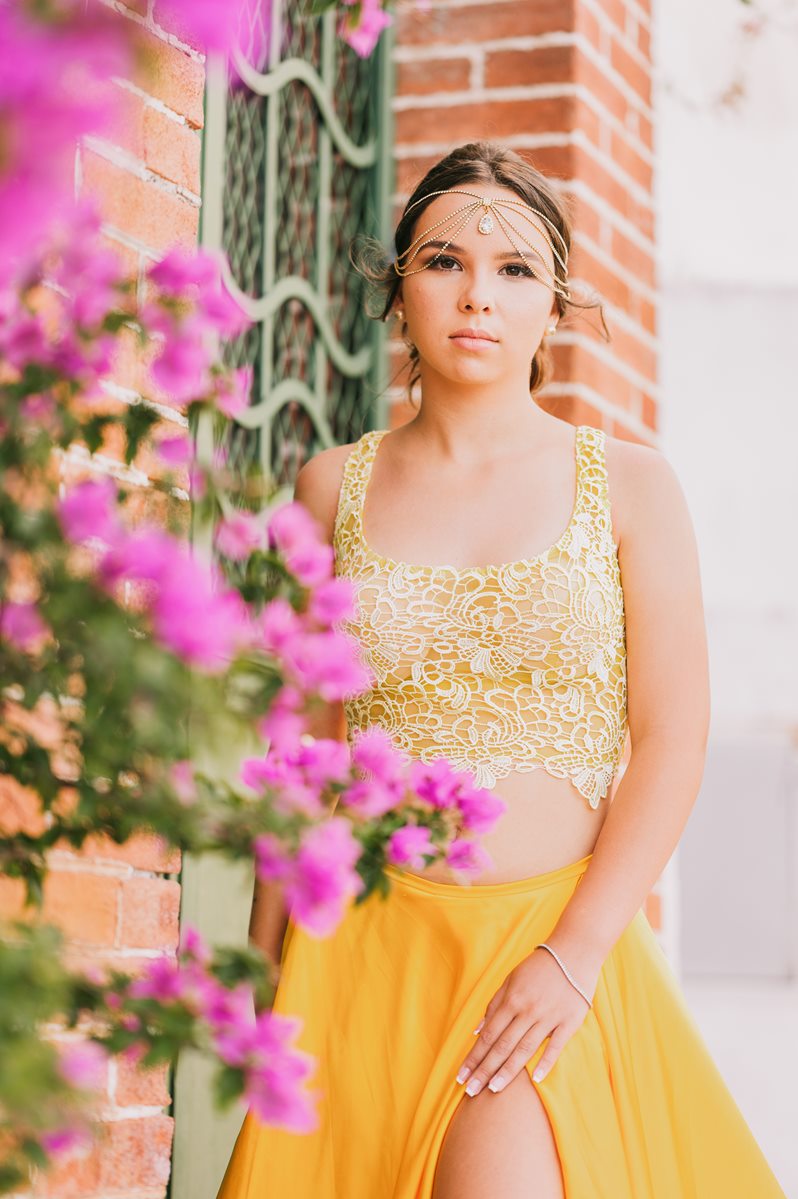
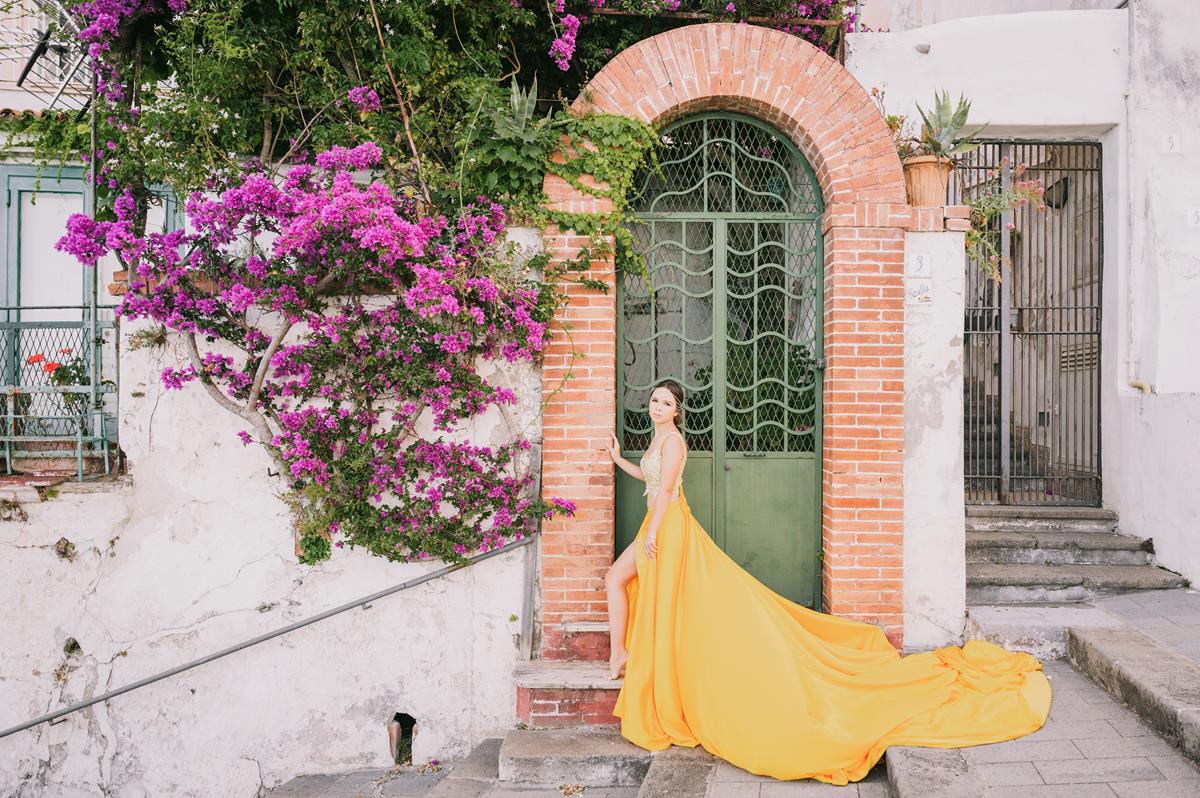
The last outfit was the boldest: a yellow two-piece, a beaded crop top and a flowing skirt slit to the thigh, with a gold chain headpiece across her forehead. We shot it on Atrani’s small seafront, between two tall lampposts with multiple lantern heads, sailboats anchored in the cove behind her and the cliffs rising on both sides.

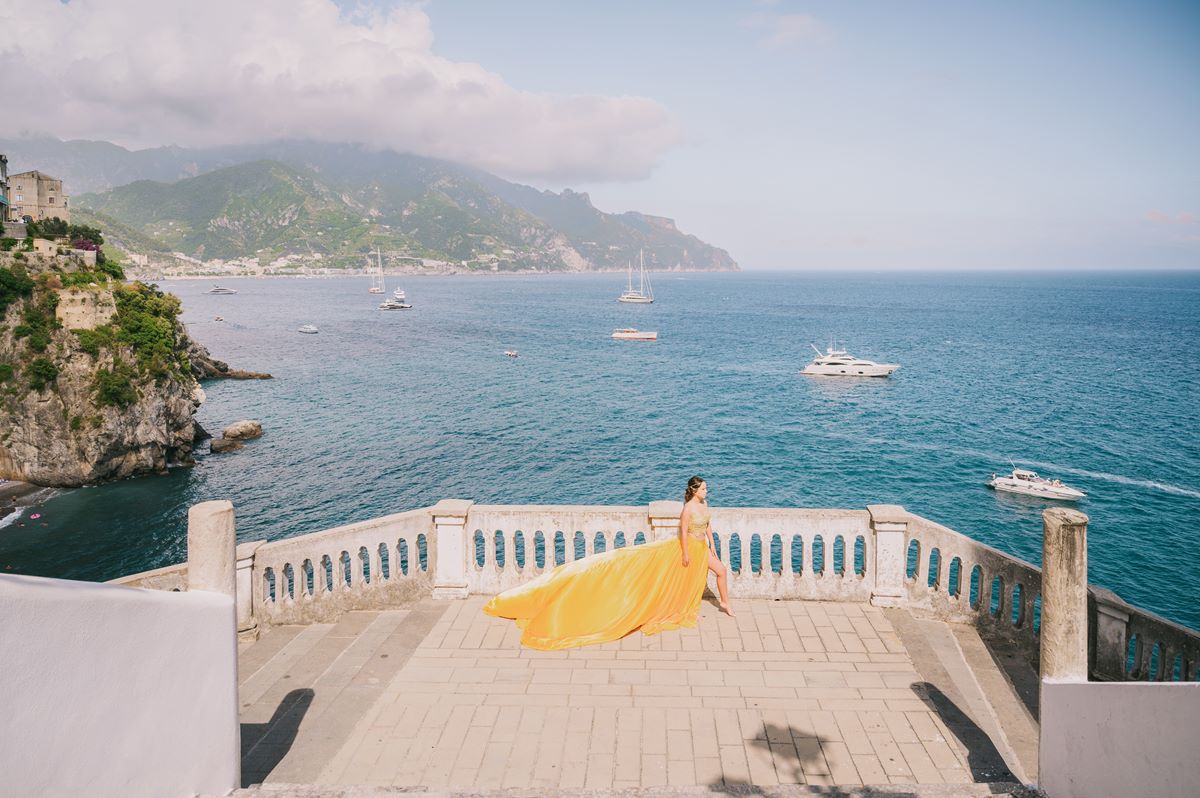

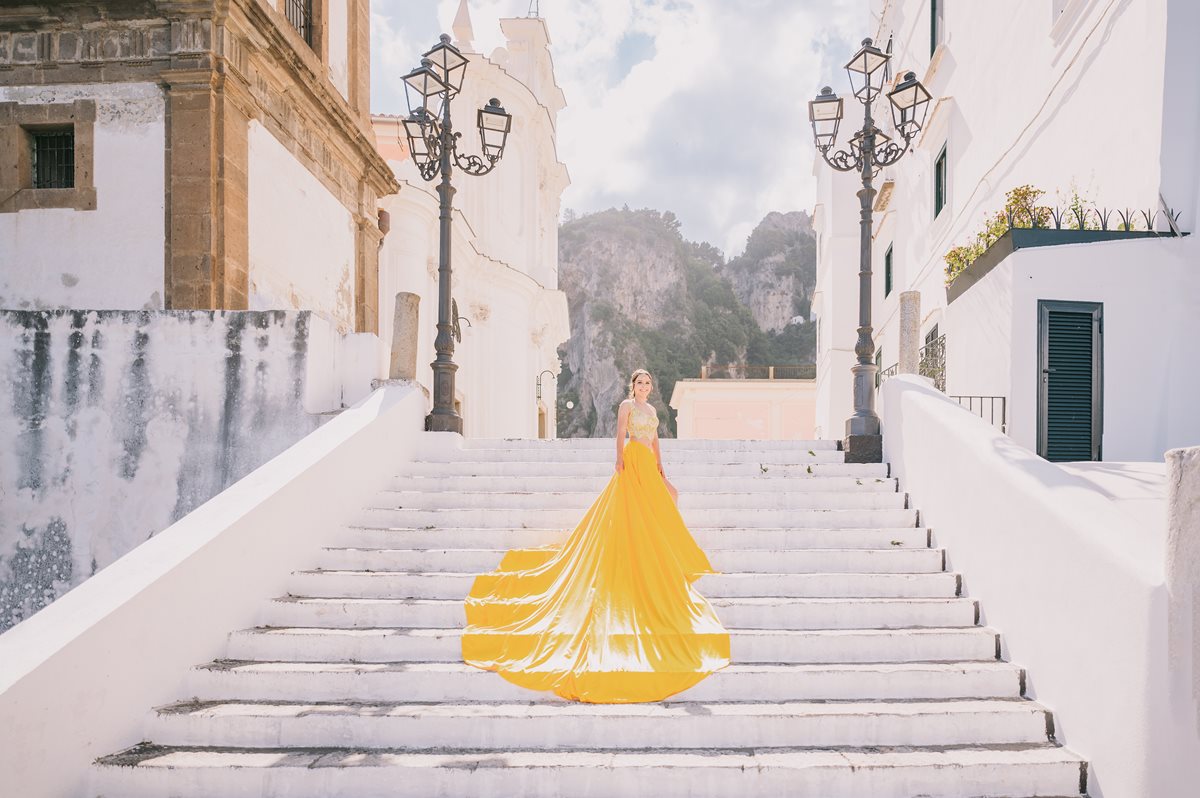

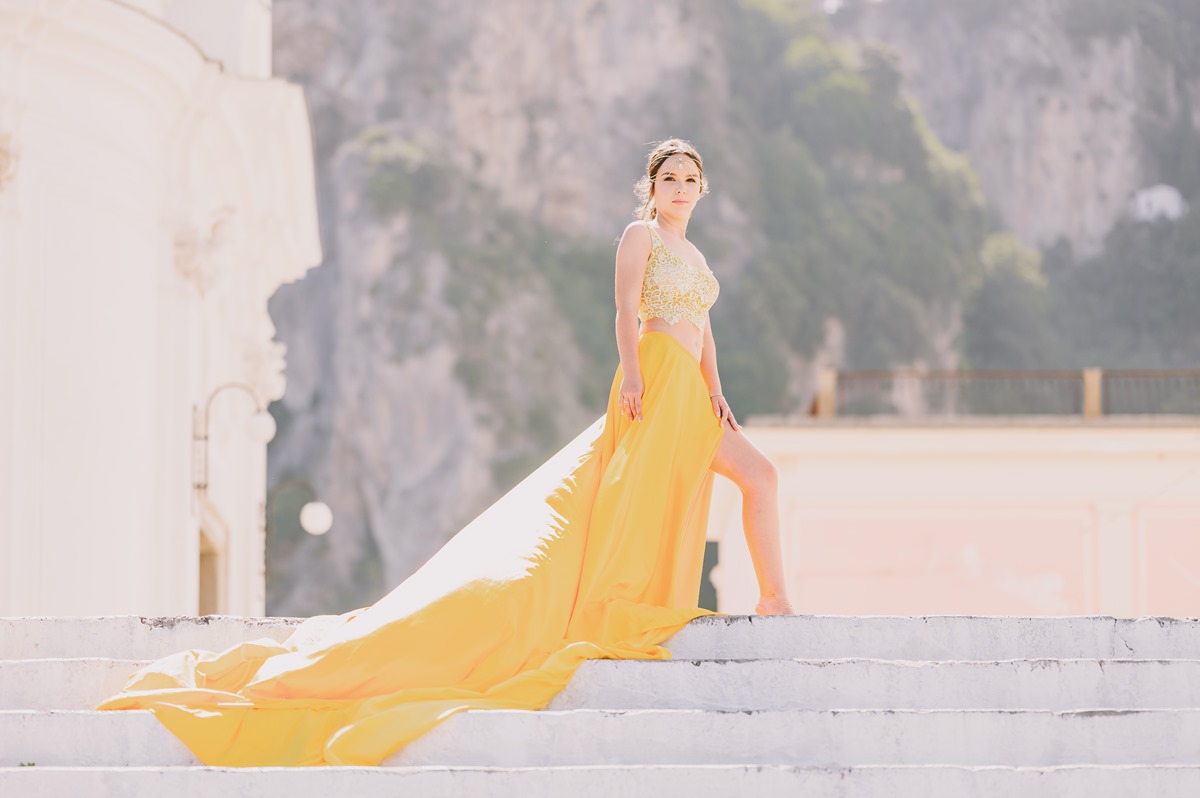

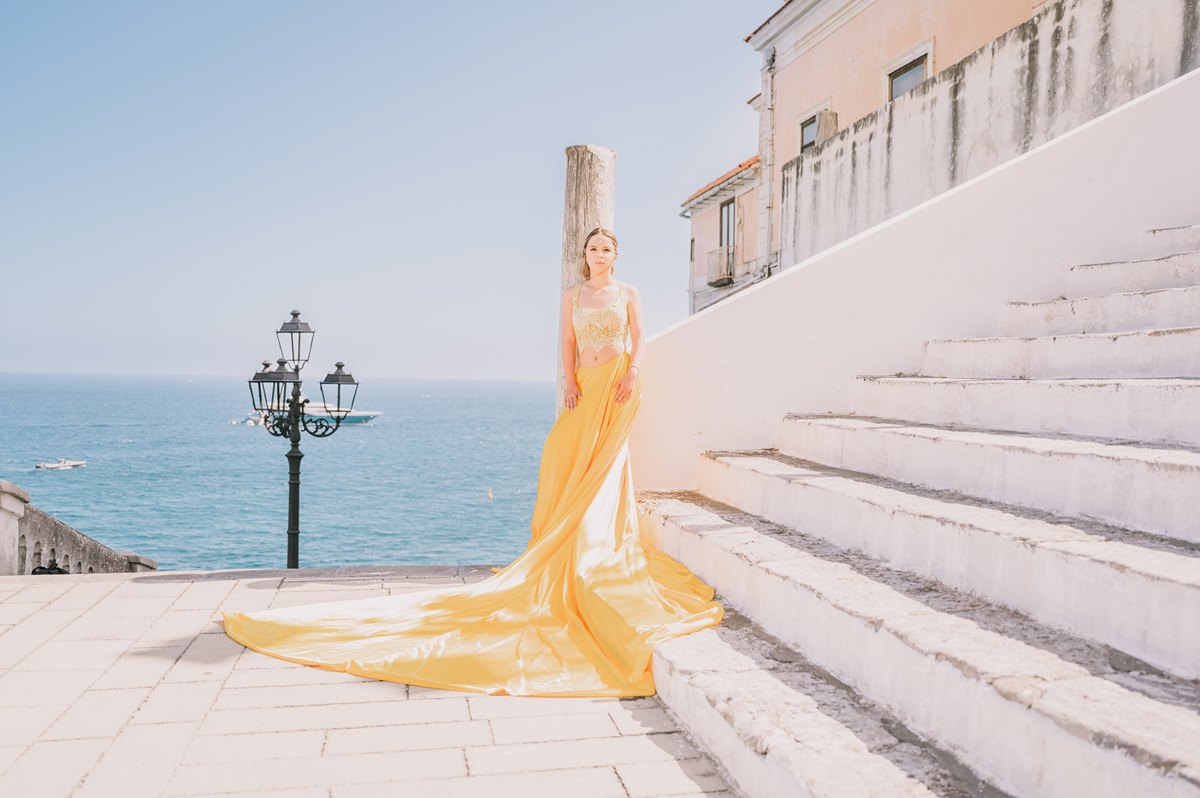
I had her walk the skirt out with one hand so the fabric caught the wind, and shot from low enough that the lampposts framed her symmetrically on either side. On a set of white steps nearby, with a brick wall and cascading fuchsia bougainvillea to one side, the same yellow read completely differently again, warmer, closer, the ocean gone from the frame entirely.











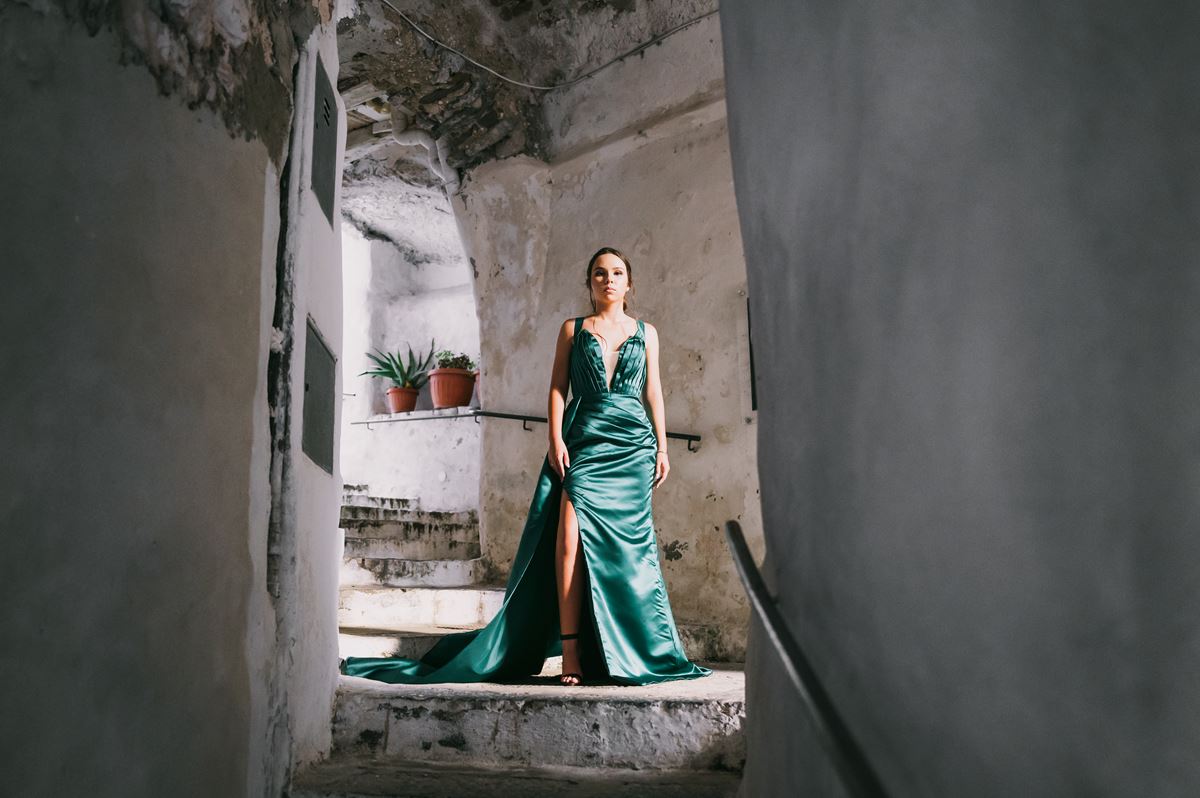
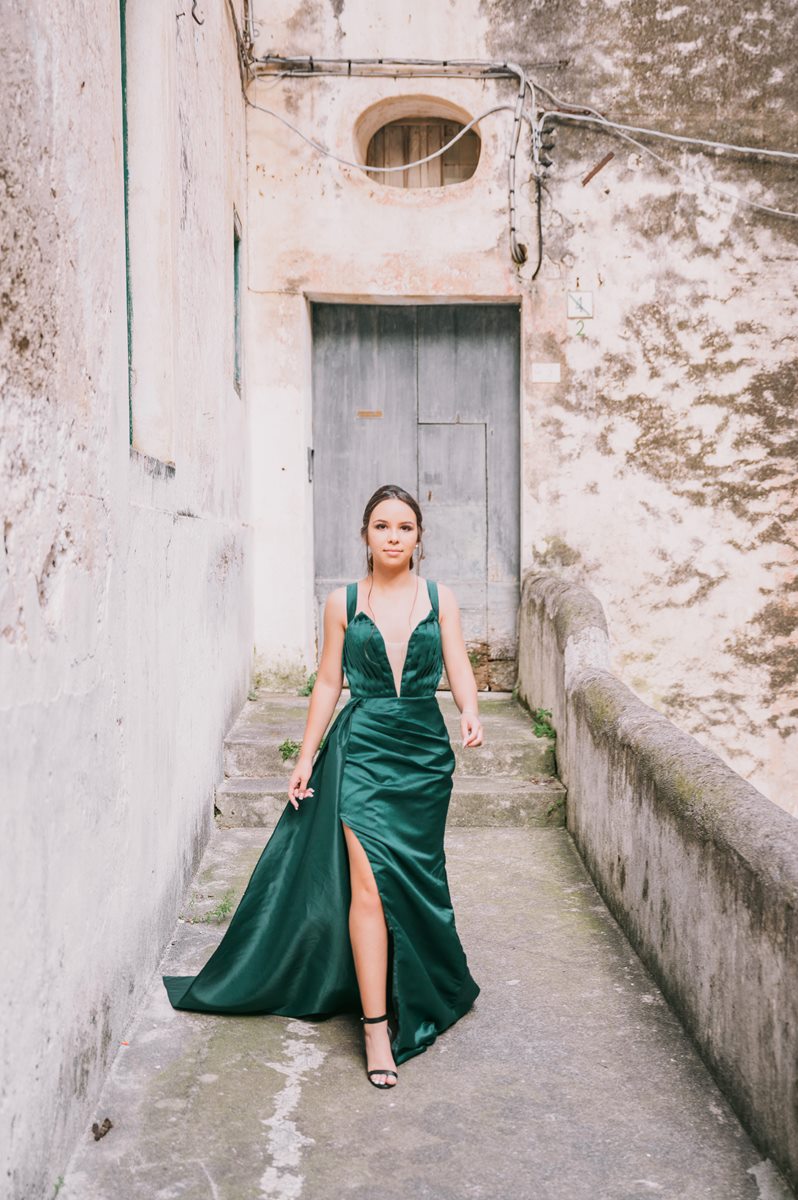
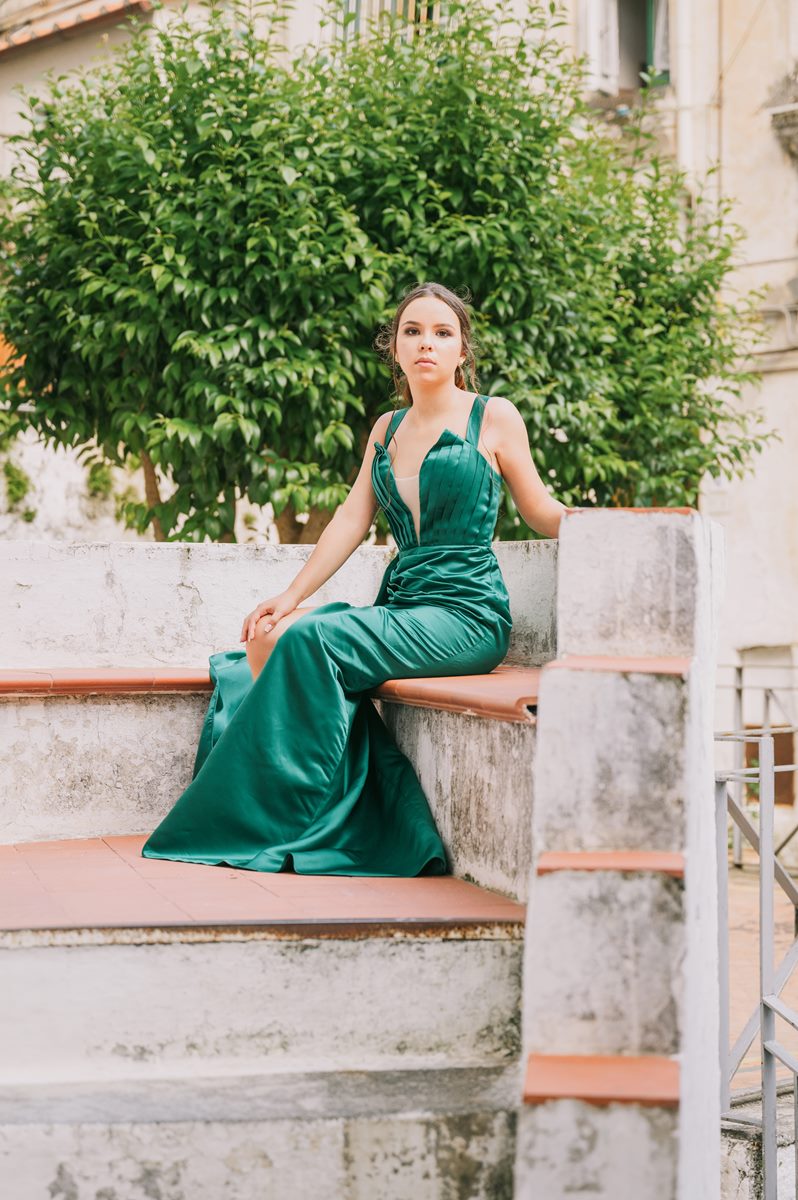
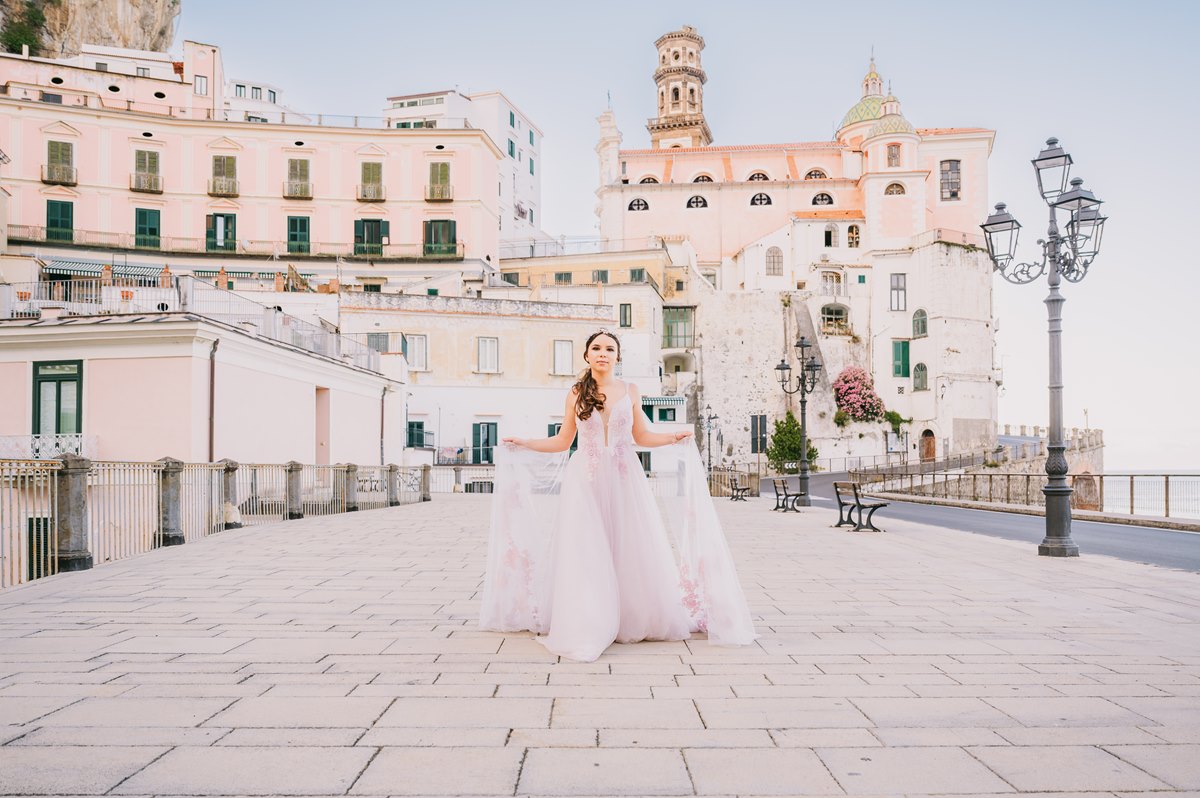
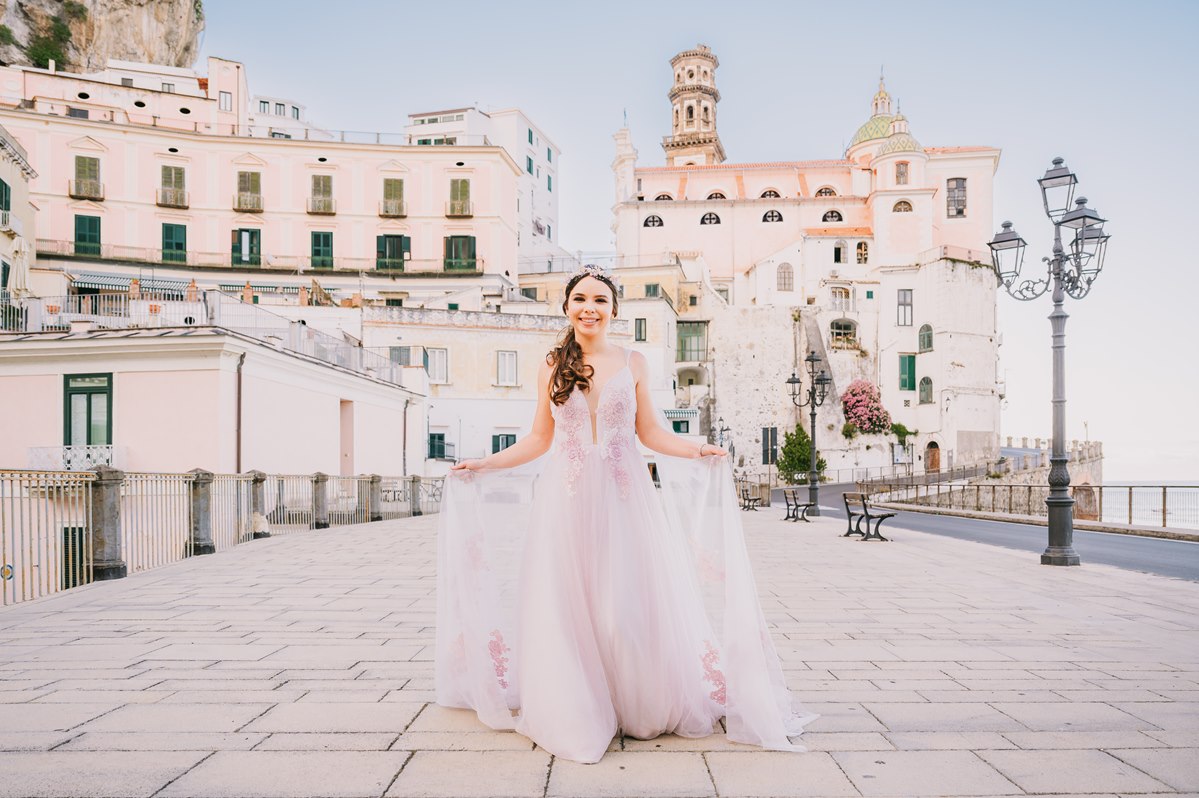
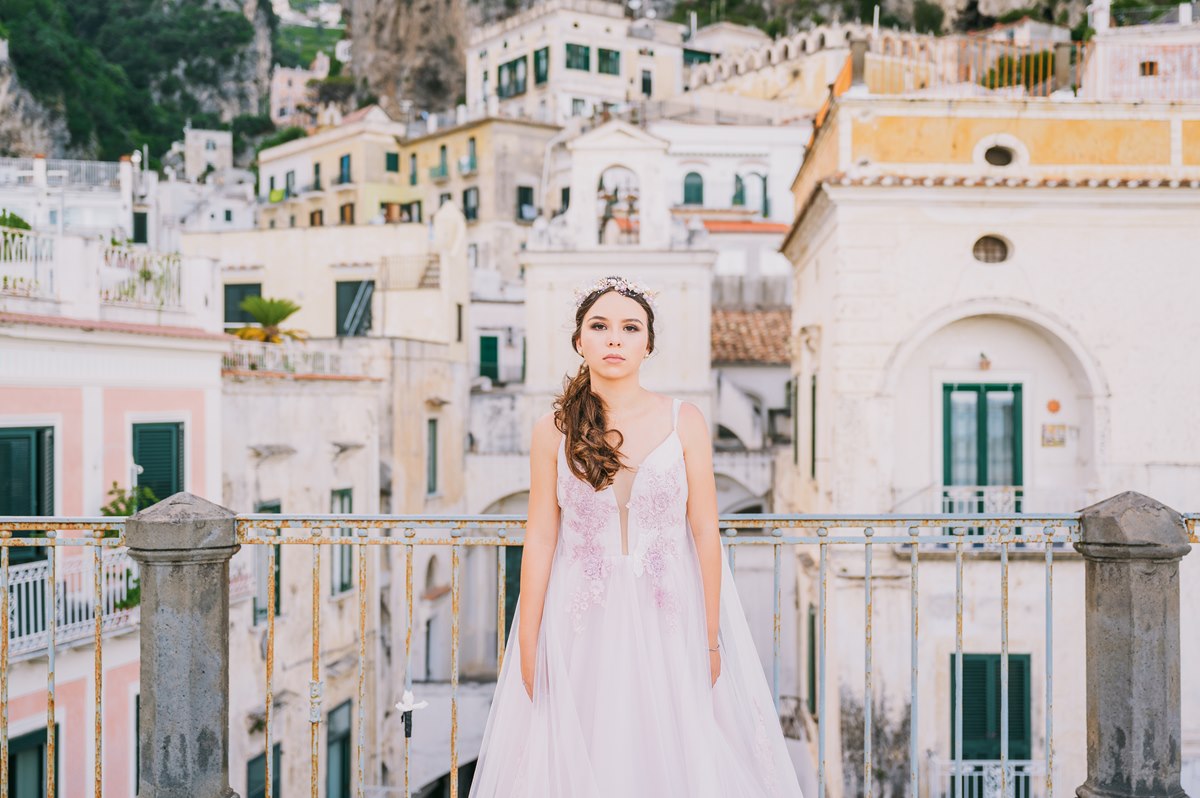
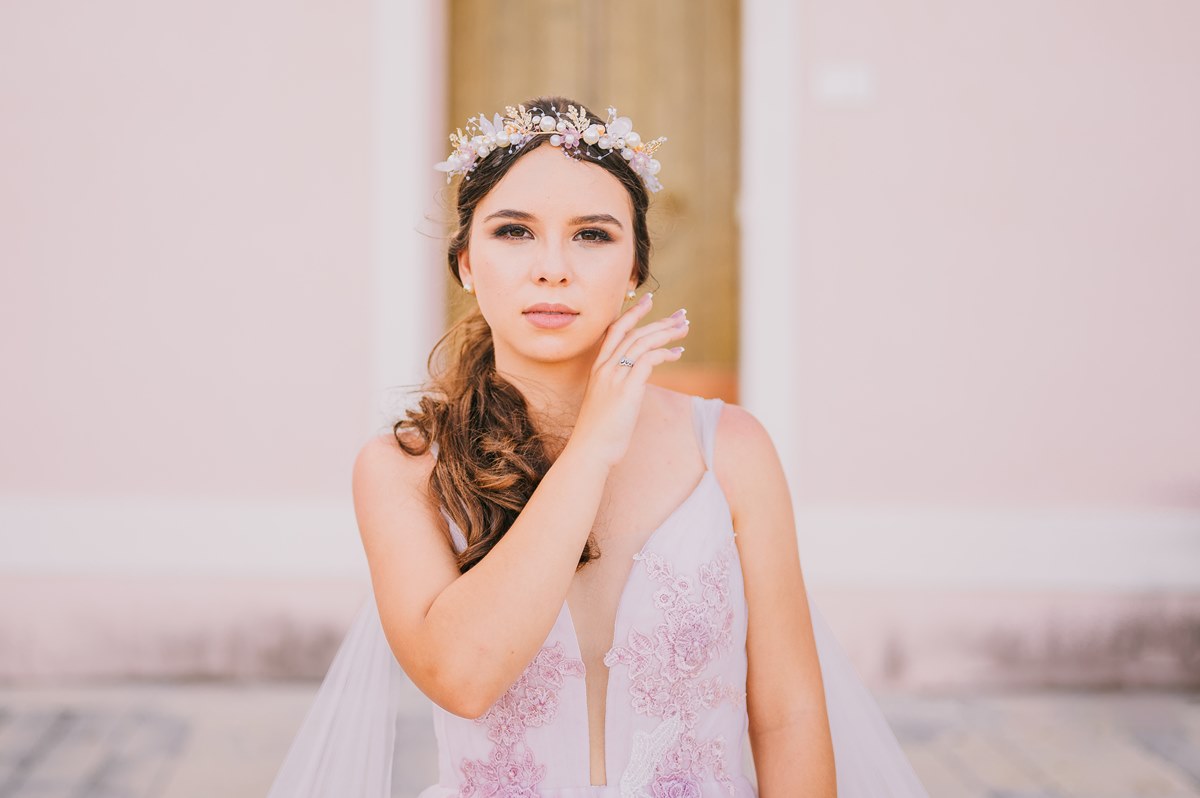
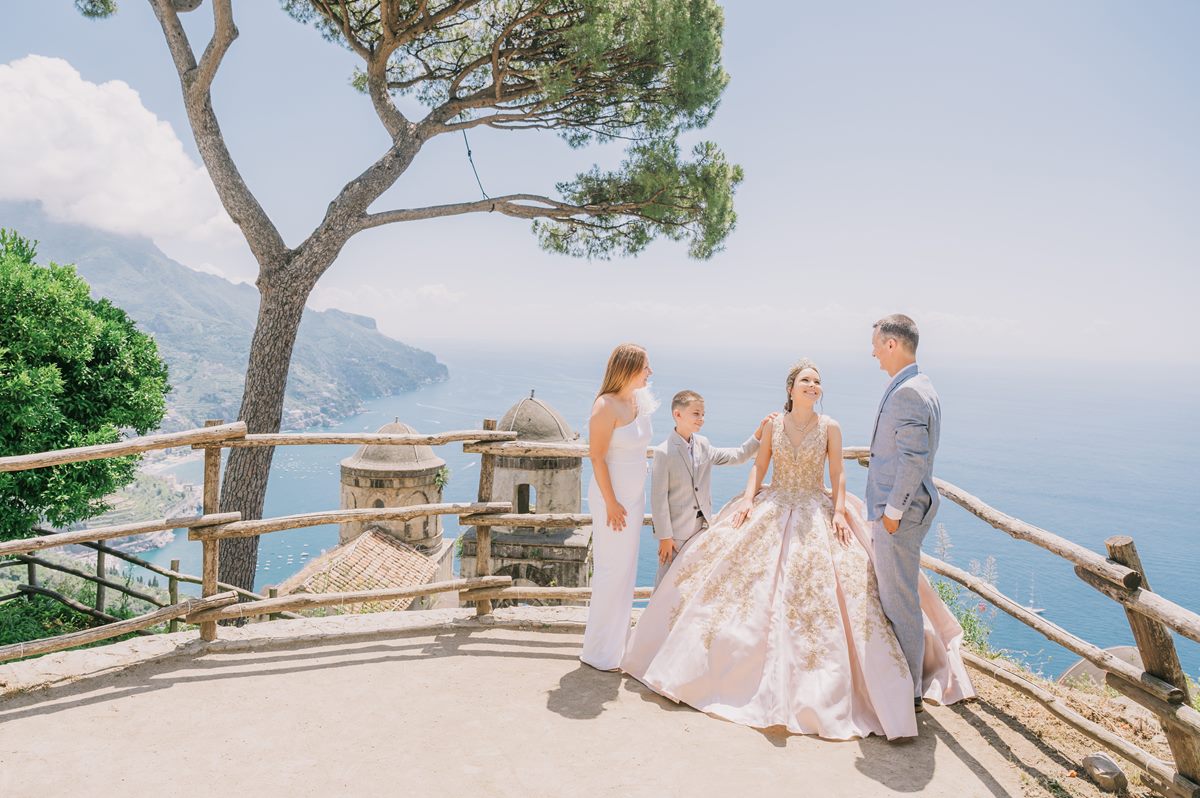
Four dresses, two towns, and by the last hour of light Camila had stopped holding still for the camera and started moving the way a fifteen-year-old actually moves when nobody is telling her to pose. Those unposed frames, taken while she adjusted a strap or laughed at something her brother said off camera, ended up being some of her parents’ favorites from the whole gallery.
Planning a Multi-Dress Quinceañera Session
A session built like Camila’s runs long, closer to five hours than the three or four I quote for a single-location shoot, because two towns and four outfits mean two drives and three changes of clothes and light. I recommend hair and makeup done before I arrive, with a stylist who understands quinceañera styling specifically: bolder color, more defined eyes, a finish that holds through an afternoon of walking between locations. The Villa Rufolo photography permit runs about 150 euros and I handle the booking. Between Ravello and Atrani, plan on twenty to twenty-five minutes each way by car, plus time for the dress change itself, which for a full ballgown is rarely under ten minutes with someone helping.
May, June, and September are the easiest months for this kind of day. July and August bring the tourist crowds that make quiet corners in Rufolo’s ruins harder to find and Atrani’s alleys more crowded than they photograph well. If your family is planning a fifteenth birthday session with more than one outfit, or a combination of towns like Camila’s, write to me with the date and how many dresses you are bringing. My Ravello photography page covers packages and pricing, and the Villa Rufolo page has the details on the venue itself.
 Written By Emiliano Russo