Amalfi Coast Lemon Tour
What the lemon tour above Amalfi actually involves, what the Aceto family charges, how steep the climb really is, and how the terraces work as a location for a couple or a family session.

A MORNING ON THE TERRACES ABOVE AMALFI
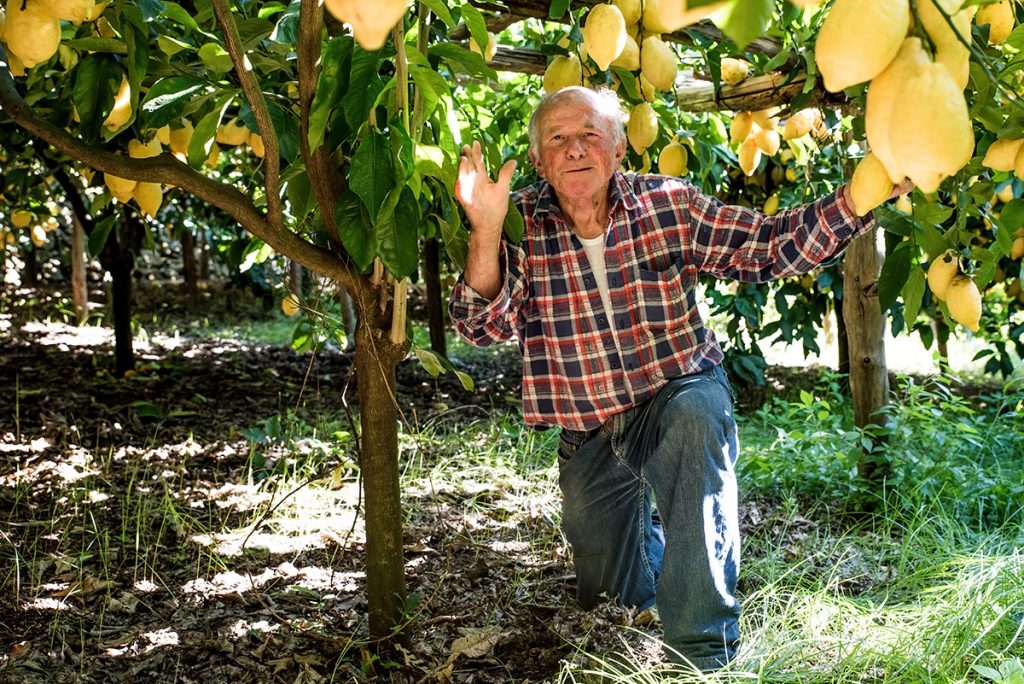
The Amalfi Coast lemon tour costs thirty euros, leaves twice a day at 10:15 and 3:00 PM from March to October, and takes you up into a farm that has belonged to the same family since 1825. It is an Amalfi Coast lemon farm tour on a working property with a harvest to bring in, and that shows in every frame I have ever taken up there. I have photographed the Aceto terraces for the family themselves, and I have gone back up with couples and with whole families who wanted portraits made while the tour was happening around them.
This page covers both sides of it. The practical half is for anyone typing the tour into a search bar the week before they fly: what you pay, when it runs, how steep the walk is, what you actually see. The other half is mine, and it is about what a camera does inside a lemon pergola, which turns out to be one of the more difficult and more rewarding places to work for an Amalfi Coast wedding photographer who spends more days on farms than in ballrooms.

What Thirty Euros Buys on the Aceto Terraces
The Classic Lemon Tour is thirty euros for an adult and fifteen for a child between three and ten, and under three is free. It runs every day except Sunday, takes about an hour and a half, and holds up to thirty people. You walk up through the groves, meet the people working them, stop for lemon cake and cold lemonade, and finish inside the Museum of Rural Life, Art and Crafts and the small factory where the limoncello is made, with a tasting at the end. It all happens at Via delle Cartiere 59, up behind the town, and the company is registered as Amalfi Lemon Experience S.r.l.
If you want the morning to become the day, the classic tour with an aperitif is 60 euros, with lunch on the property 100, and with the cooking class 200, which is the one that takes up the whole day. The cooking class on its own is 180 euros and starts around 11:45. A private lemon tour is 60 euros a person, or 150 with lunch.
I have photographed the cooking class more than once and it is the part guests remember, which surprised me the first time. People come for the lemons and leave talking about the pasta machine. If you are choosing blind, take the classic tour and eat somewhere in town afterward, unless you have a group that needs to be kept together for a whole day.
Why I Send Couples on the Morning Departure
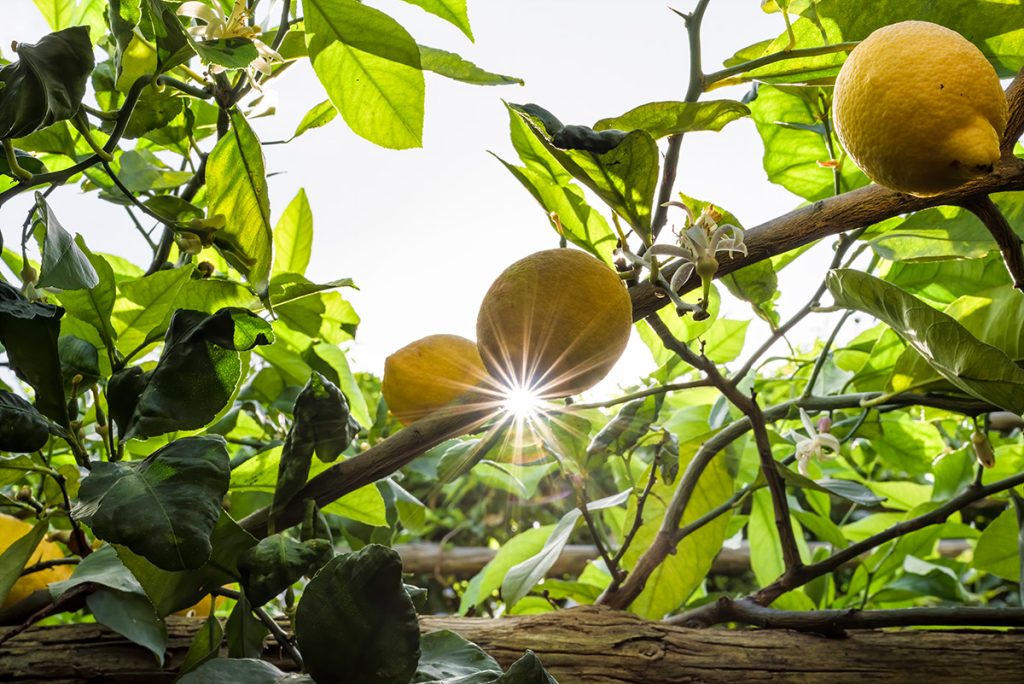
Both departures work, and the morning one gives me better pictures. At 10:15 the sun has climbed high enough to be over the ridge but has not yet flattened out overhead, so the light coming through the pergola still has an angle to it. You get stripes across the ground and across people’s shoulders. By three in the afternoon in July that same pergola is doing something closer to a grid: hard little squares of light dropped straight down, hitting the tops of heads and nothing else.
There is a second reason, and it is about heat. The climb is warm work between June and September, and doing it before eleven means arriving at the top able to talk. Go up at three and you will be photographed slightly out of breath, and it reads.
What the Ticket Leaves Out
There is no parking at the property and no vehicle can reach it. The farm says so plainly and I would take it seriously, because the alternative is circling Amalfi for an hour and arriving late for a departure that will not wait. Reach Amalfi by bus or ferry and come up on foot from the center.
The ticket does not include a photographer, which sounds obvious until you are standing in a grove holding a phone and realizing the pergola has eaten all your contrast. If your Amalfi Lemon Experience photos are part of why you are going, that has to be arranged separately, and it changes how the walk gets spent.

Two Centuries of One Family on the Same Hillside
The first Salvatore Aceto planted a small plot at Ravello in 1825, and the family is now six generations in. They expanded down the coast through the nineteenth century, hit their peak in foreign trade between 1930 and 1938, and came out of the war as the largest lemon producer on this stretch of coastline. A Salvatore Aceto still runs the tours today.
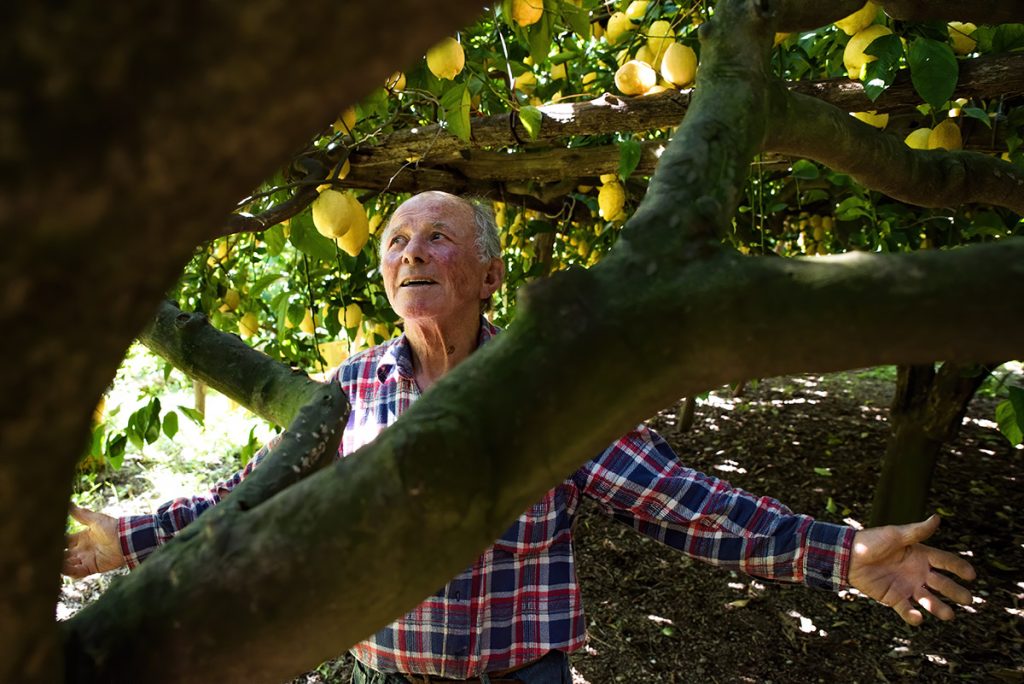
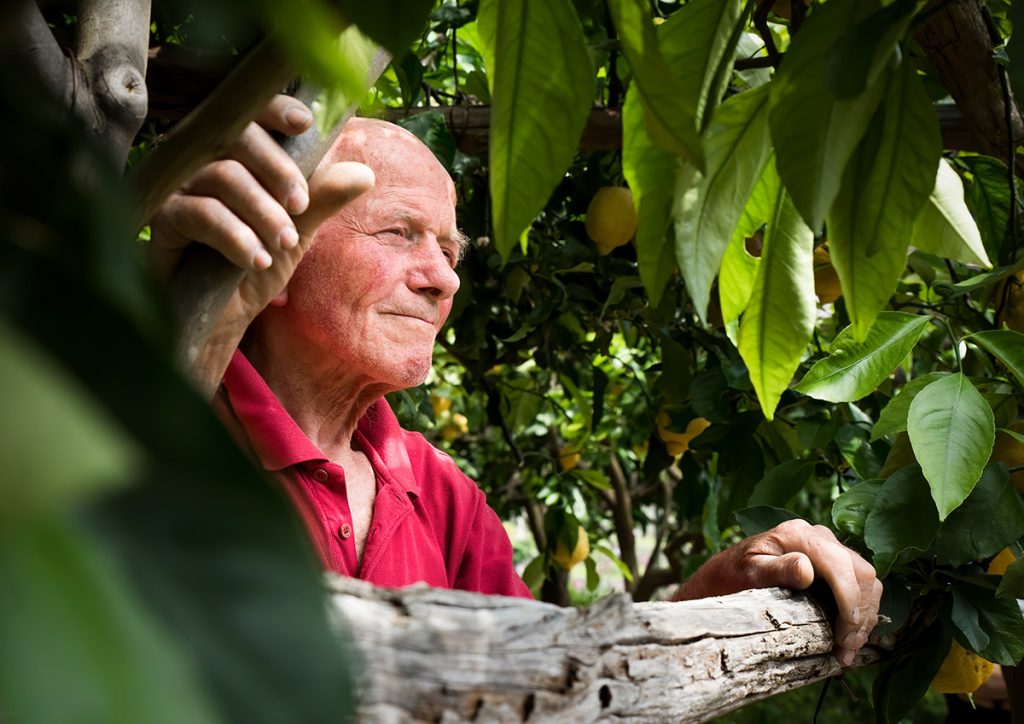
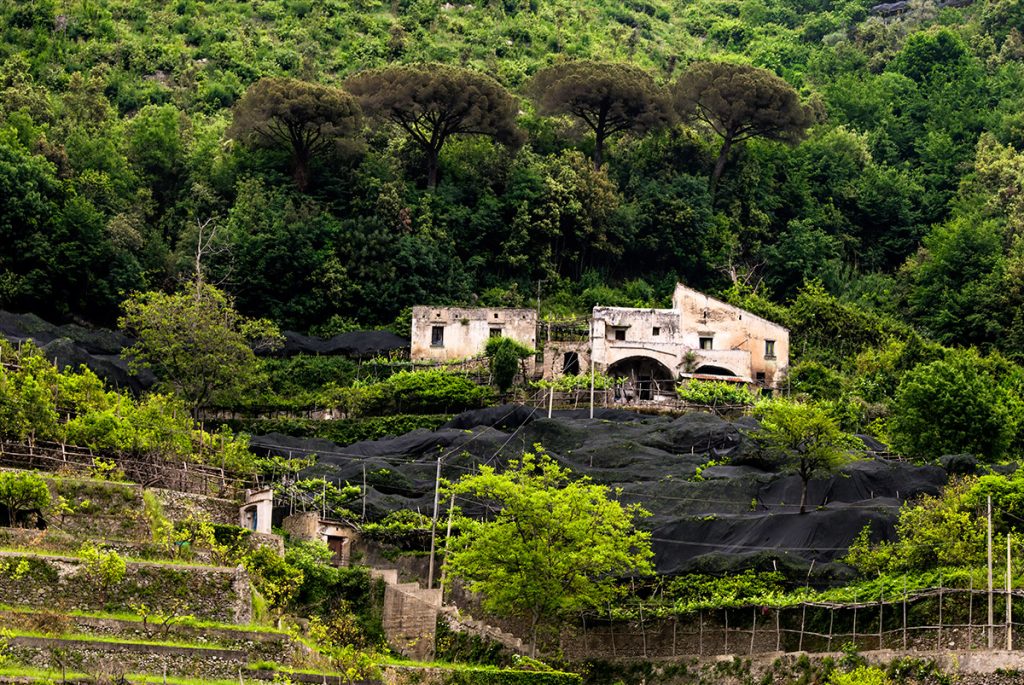
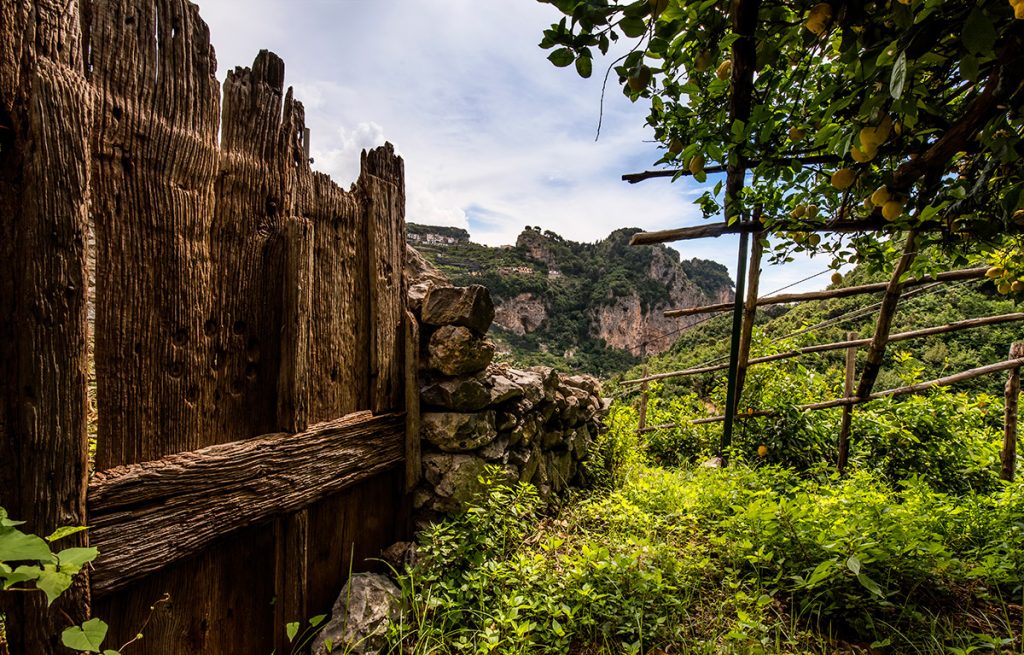
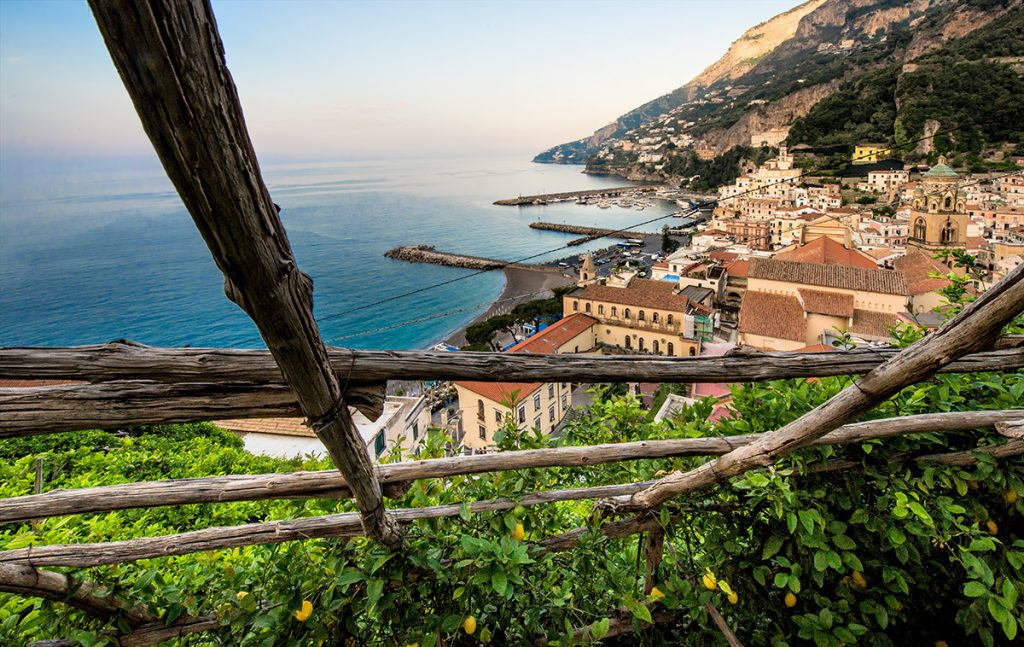
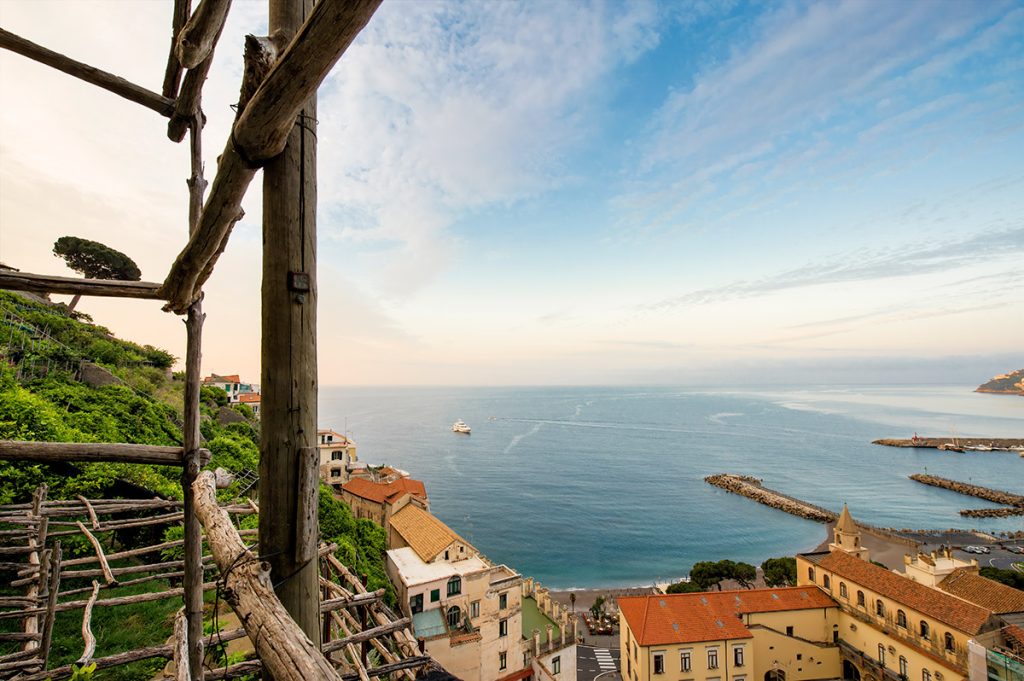
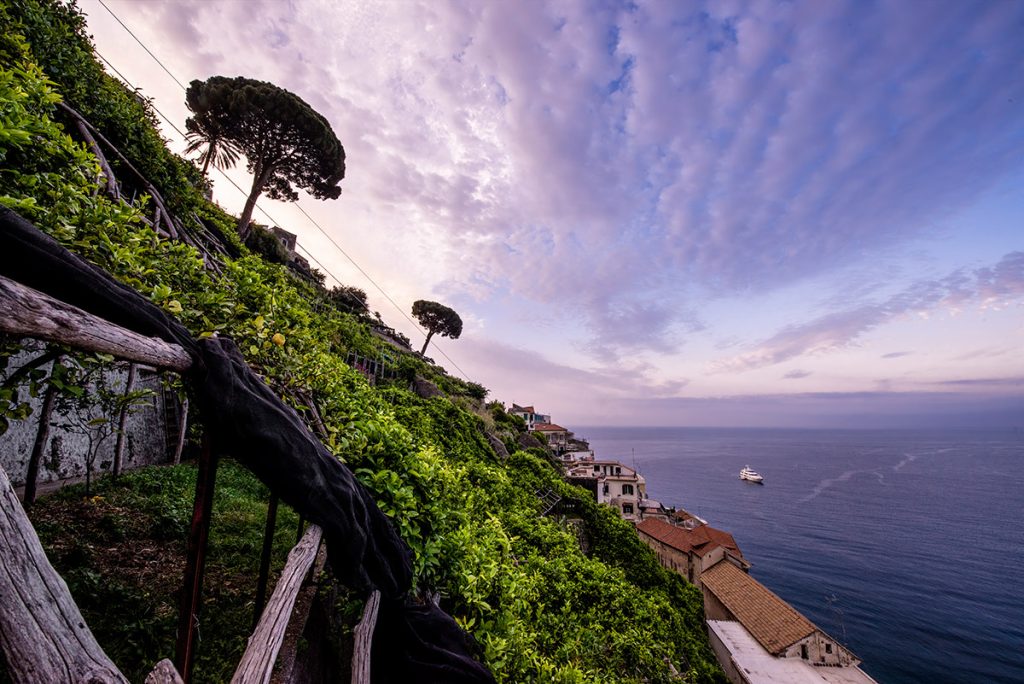
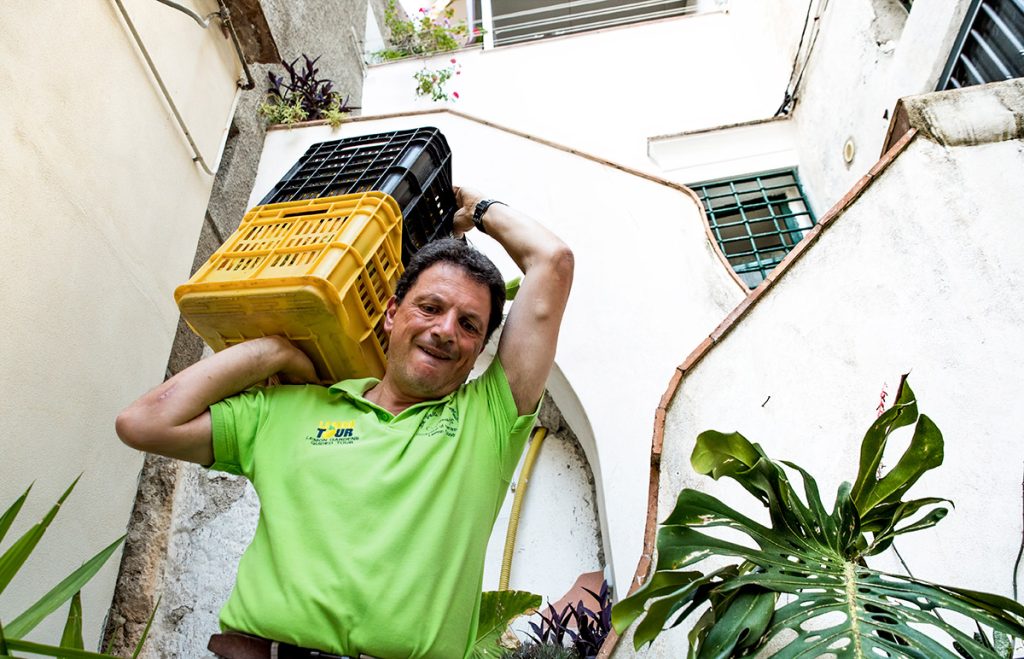
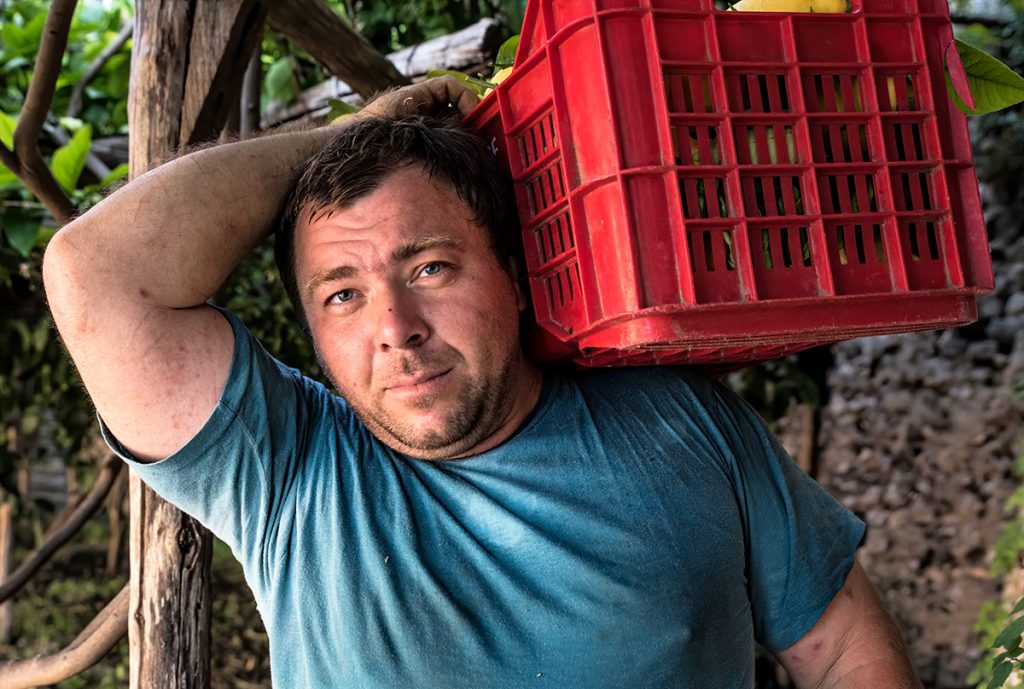
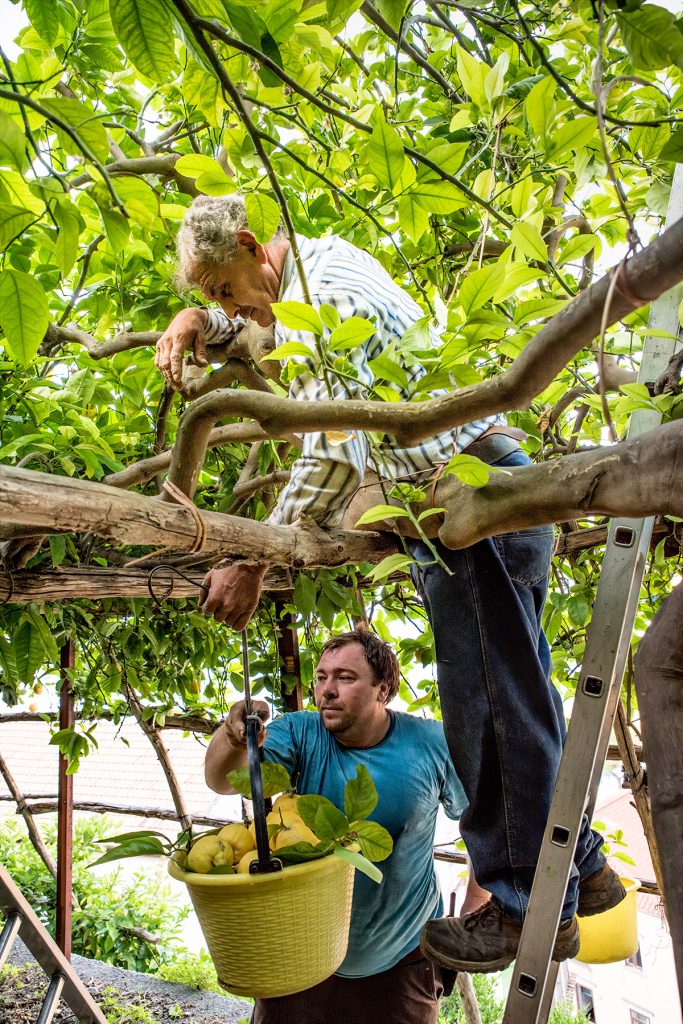
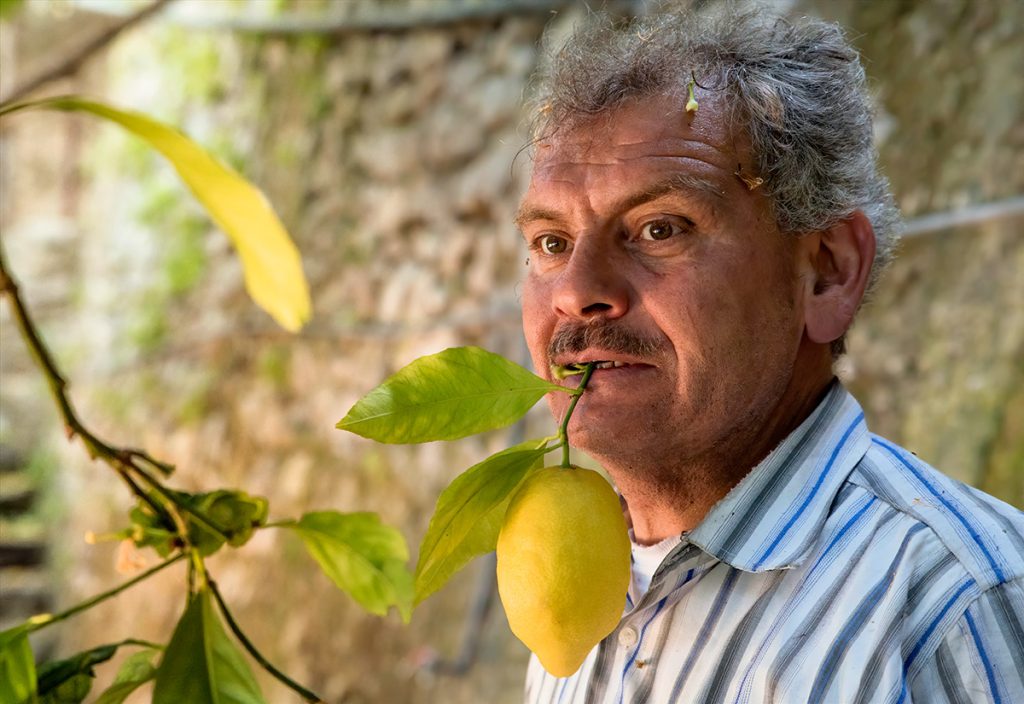
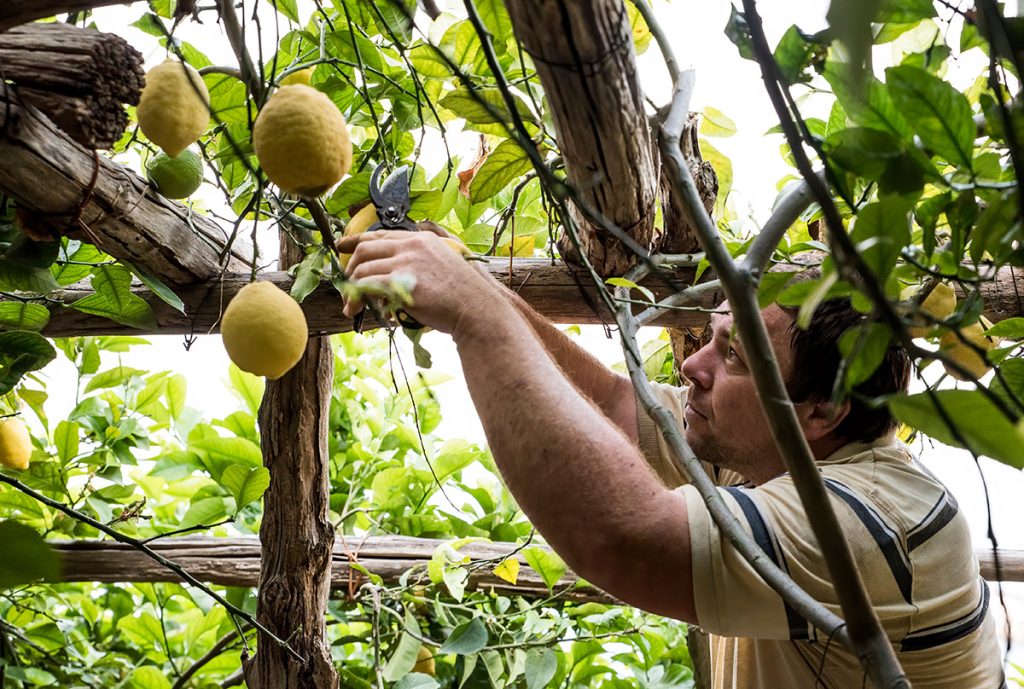
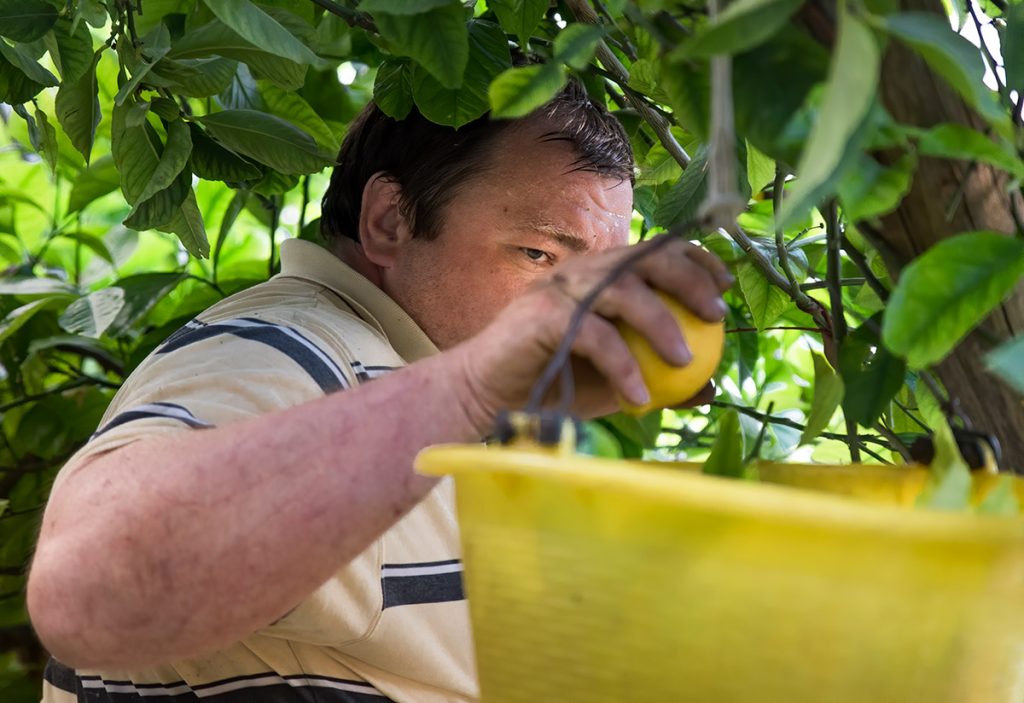
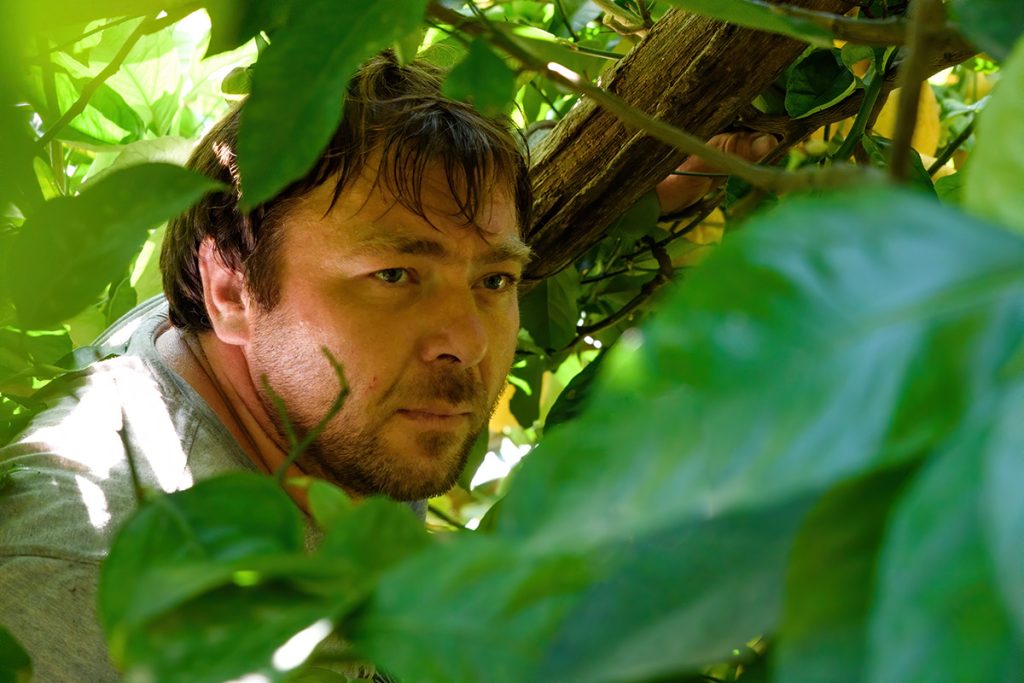
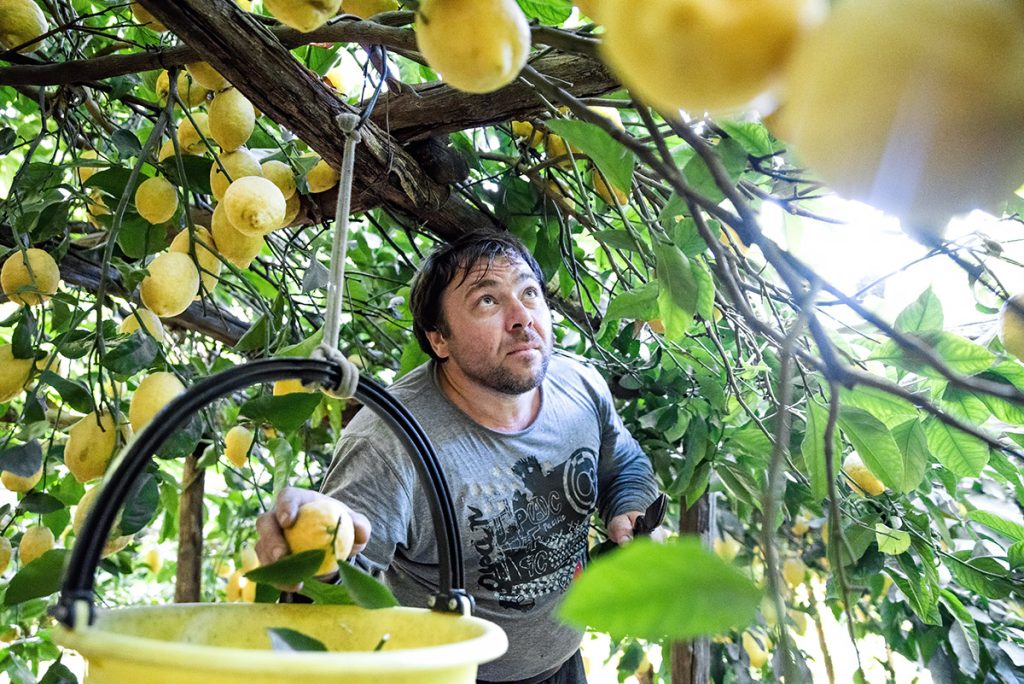
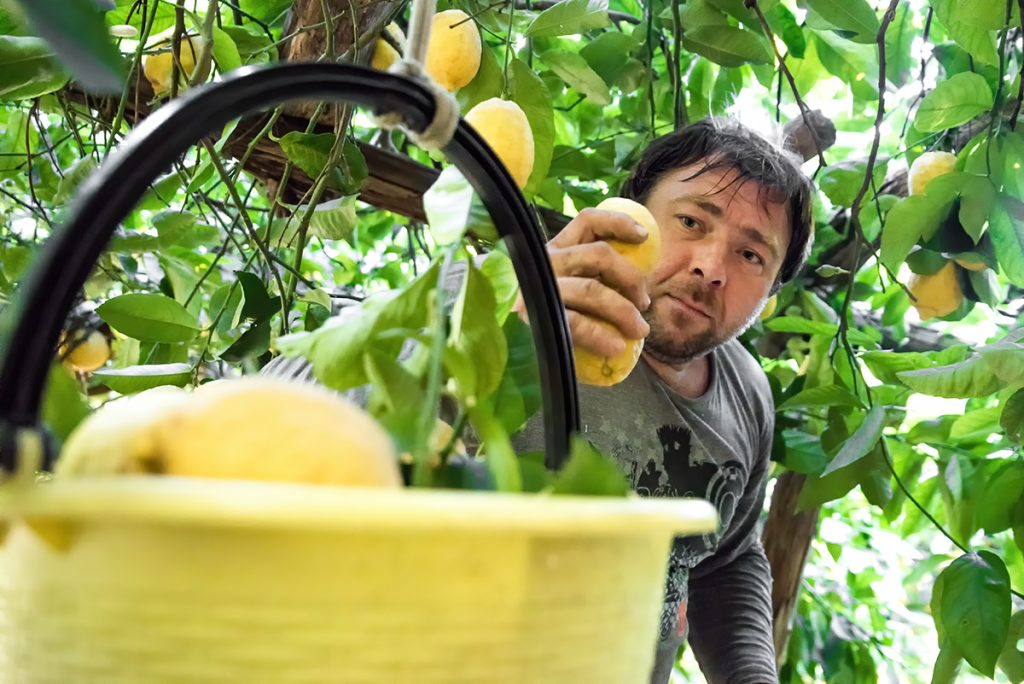
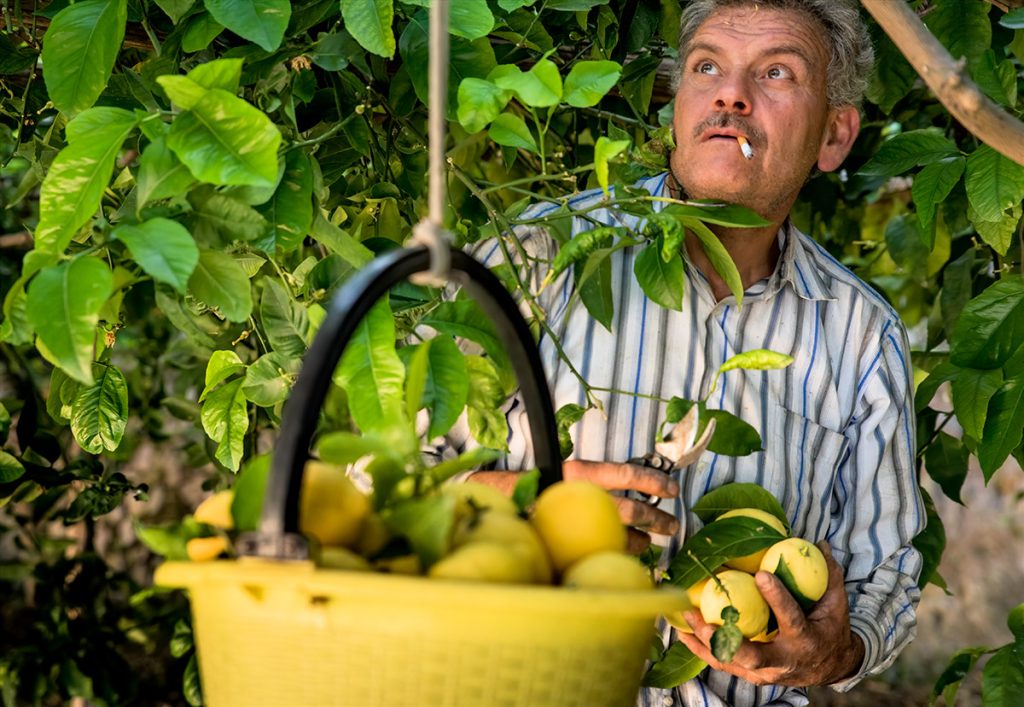
I mention the dates because they explain the terraces themselves. Nobody builds drystone walls up a cliff for a two-year business. The pergolas are chestnut poles lashed together, replaced pole by pole as they rot, standing on walls that predate anyone’s grandfather. When you photograph up there you are photographing maintenance more than architecture, and the pictures are better for it. A grove that looks styled looks like nothing. A grove with a plastic bucket hanging off a branch and a ladder left where somebody finished pruning looks like the Amalfi Coast.
If you want the wedding version of this hillside rather than the visitor version, I wrote about a whole day spent inside one of these properties in Joelle and Rob’s La Limonaia wedding in Maiori, where the couple never once left the estate. Different family, same coast, same chestnut poles.
The Climb Is What People Underestimate
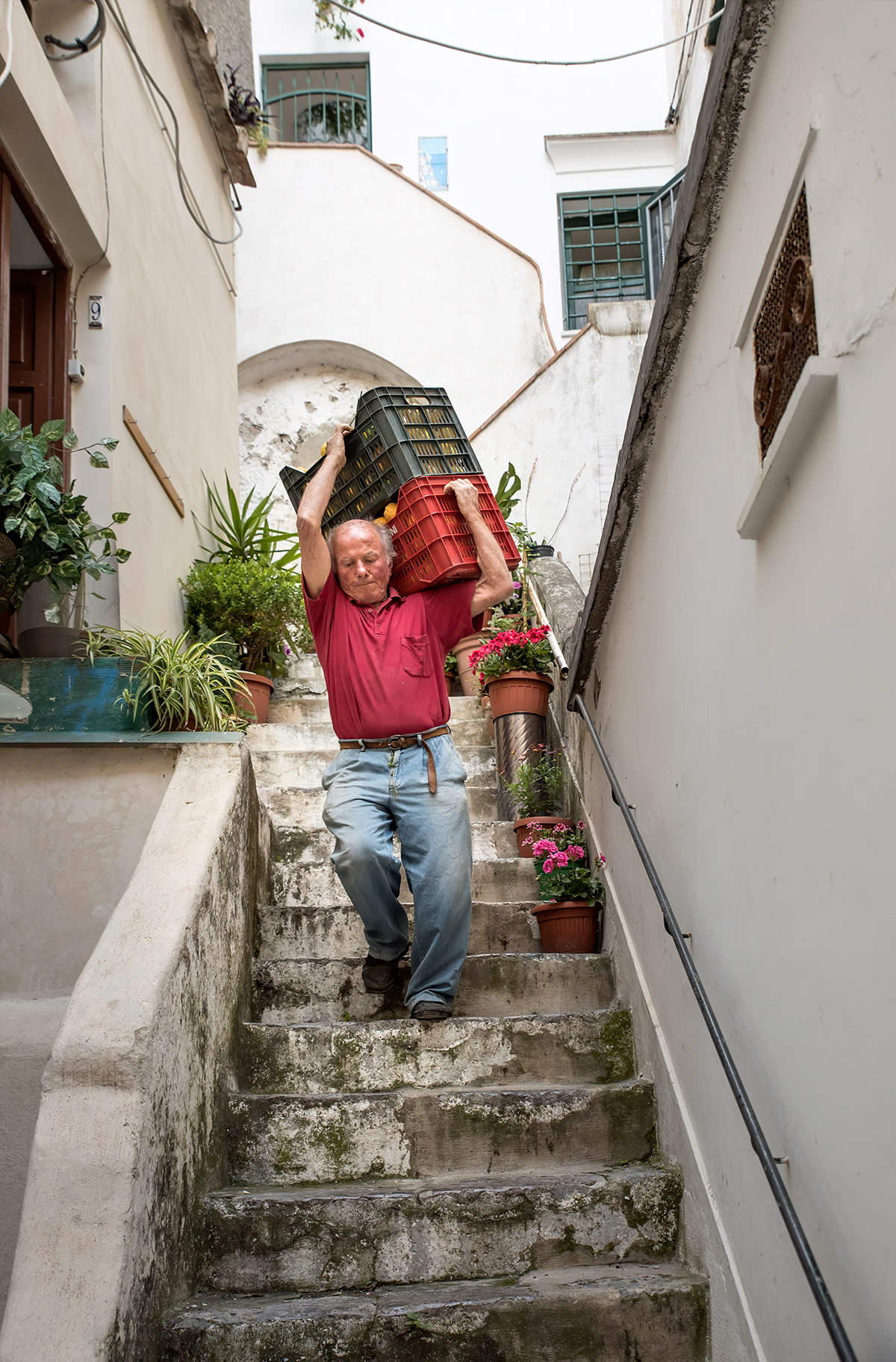
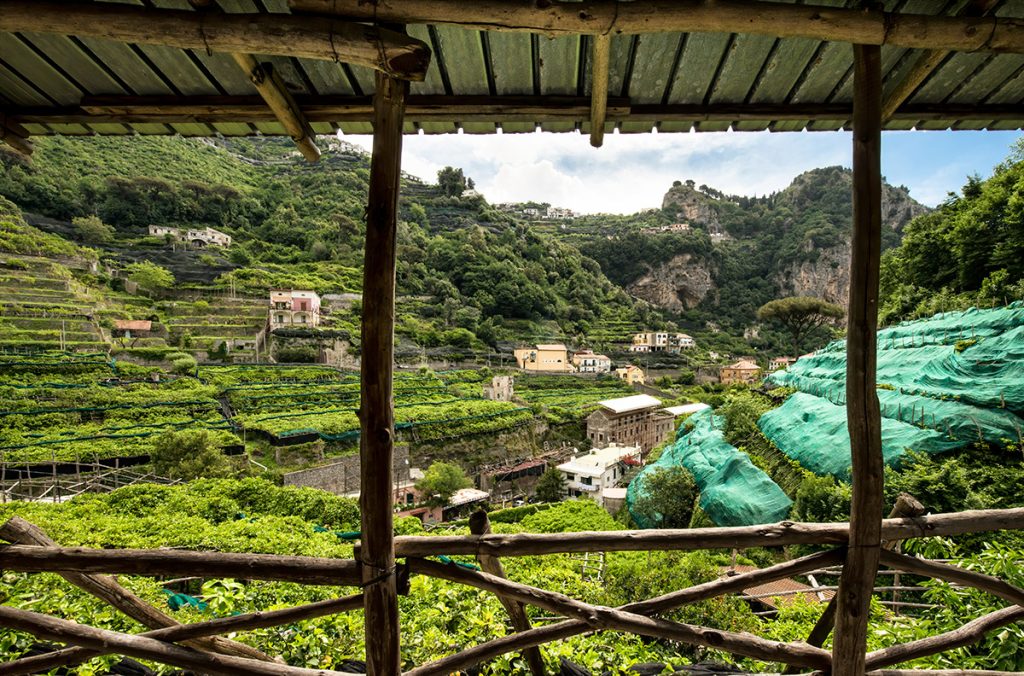
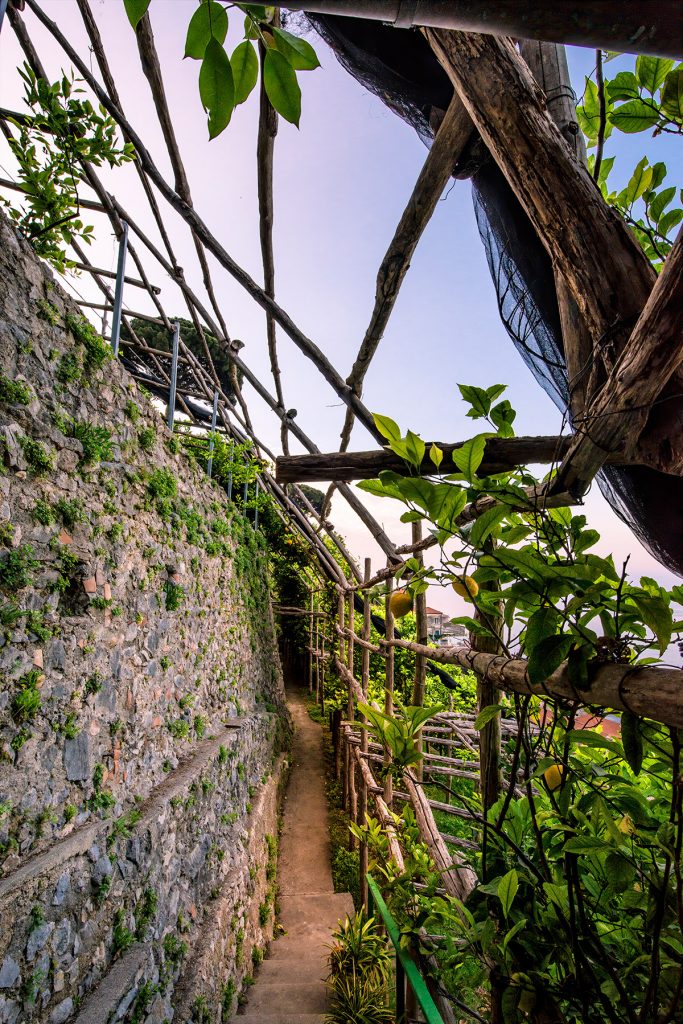
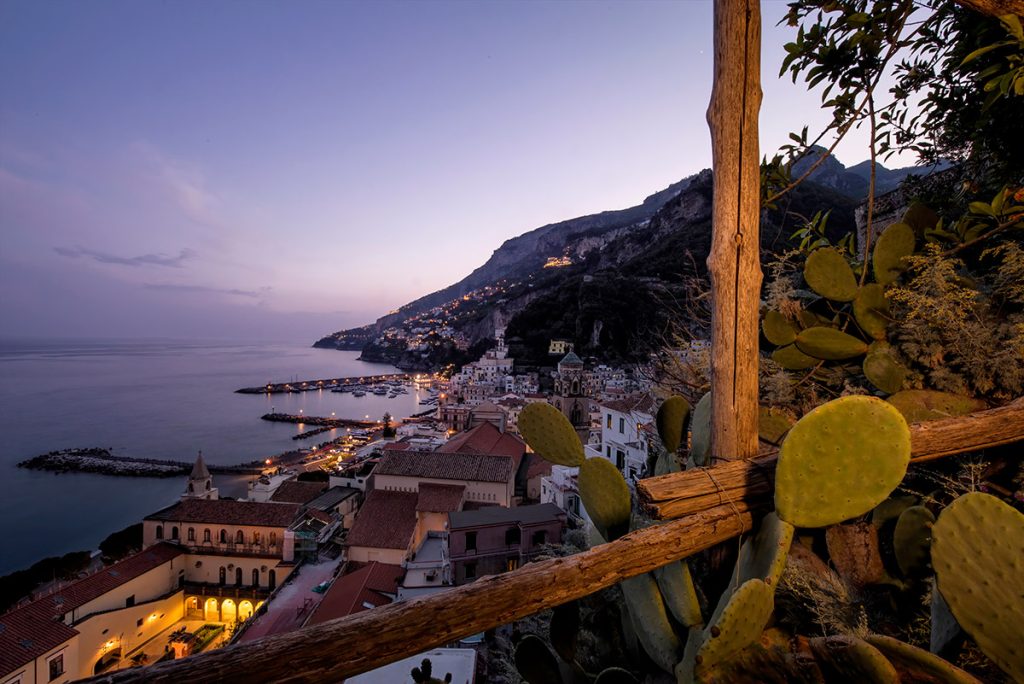
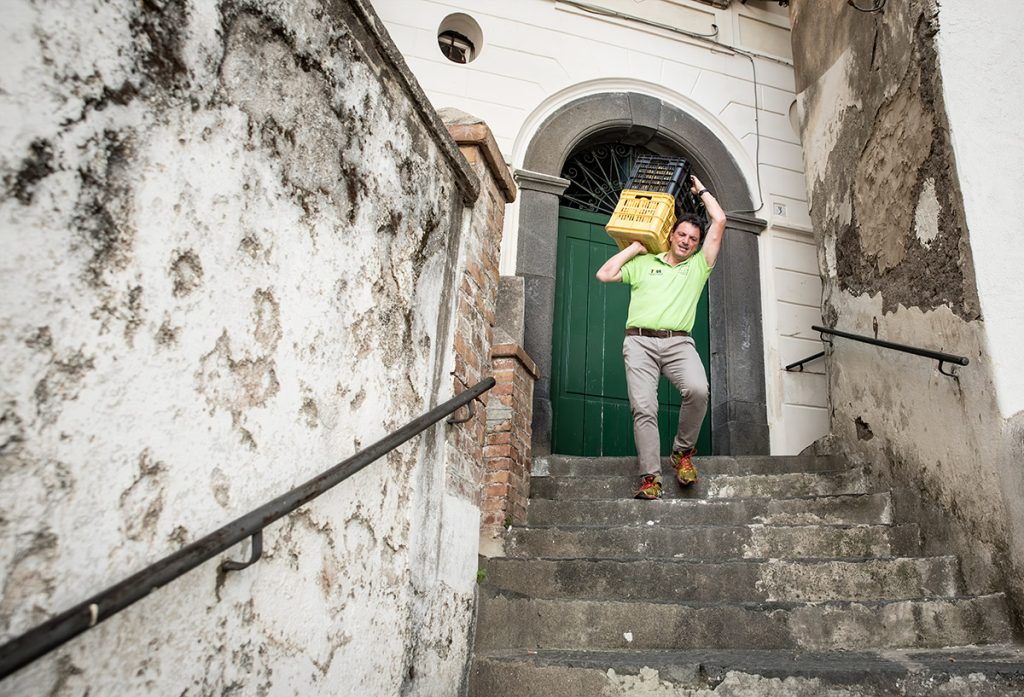
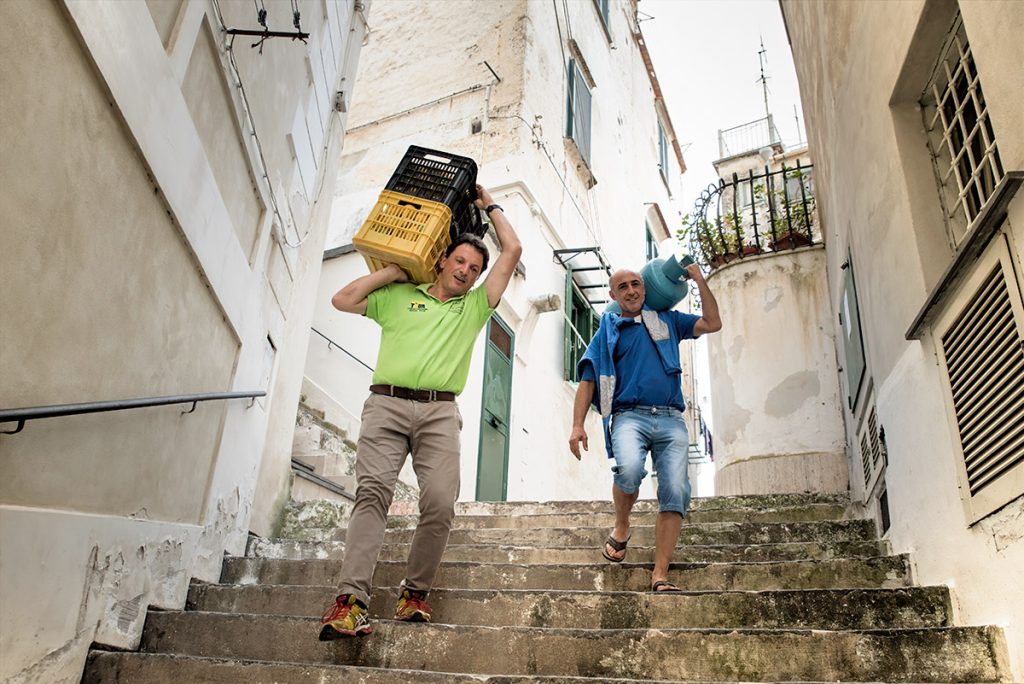
The official warning is about steep stairs, and the farm means it. Amalfi farms grow upward because there is no flat ground to grow outward on, so the route is a sequence of staircases cut between retaining walls, some of them narrow enough that two people cannot pass without one turning sideways. I have gone up carrying two bodies and a bag and I was working for it.
Nobody publishes a step count for this particular farm, and I have never counted. What I can tell you is the shape of it: you climb in bursts and stop at each terrace level, because that is how the tour is built. The farm itself says the walk is not recommended for guests with mobility difficulties, and I would take that at face value. If your knees are fine on a hilly town at home, you will manage with time built in.
One thing that catches visitors out: the crates of picked fruit do not come down the way you go up. There is a rail for that, built for the harvest and not for passengers. You will see it. You do not ride it.

Shoes, Water, and the Hour I Would Pick
Wear trekking shoes or sneakers with a real sole. The farm warns that guests in high heels or slippery soles may not be allowed to join, and I have watched someone attempt those stairs in leather-soled loafers while the rest of us spent the morning quietly watching him instead of the lemons.
Bring water even though there is a drink stop, bring a hat between June and September, and skip the white linen if you are the sort of person who minds about a mark. The ground under a pergola is soil and leaf litter, and it gets on hems.
For the light, my order of preference across the year runs late April into early June first, then late September into October, then everything else. This is the same window I steer people toward for a wedding in Amalfi Coast with days built around walking, and for the same reason: the coast is warm without being punishing and the middle of the day is still usable.
Two Stops Darker Than the Sea Behind Them
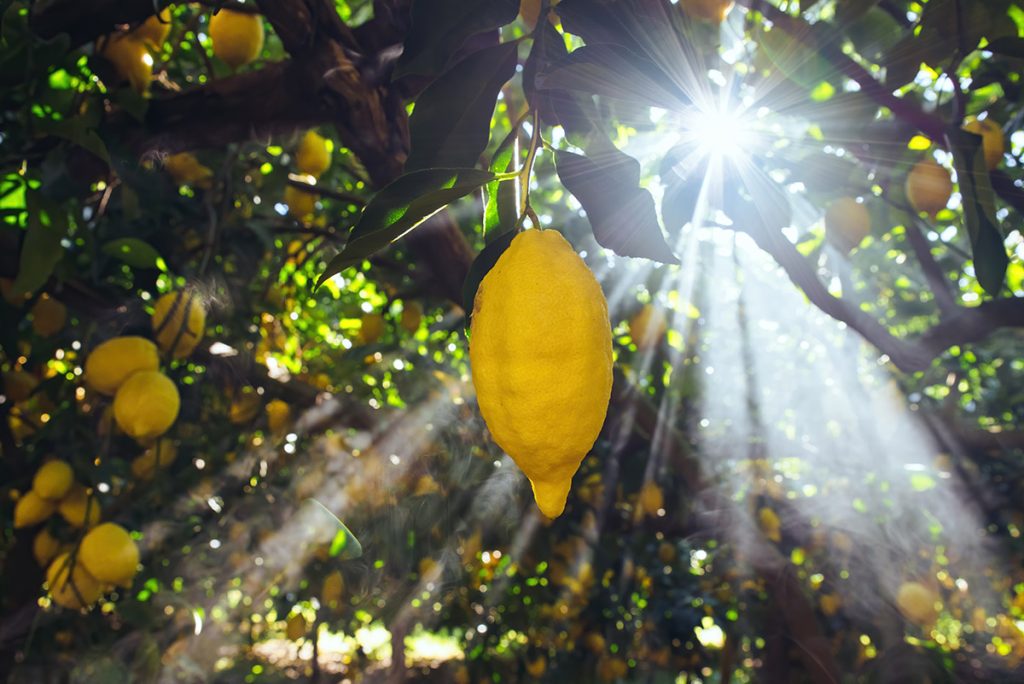
A pergola of lemon trees is a ceiling made of leaves. Above you there is a grid of chestnut beams, and trained across it there is a canopy dense enough that the ground underneath sits two or three stops darker than the sea view at the edge of the terrace. That gap is the whole problem. Expose for the couple standing under the canopy and the sea behind them blows out to white paper. Expose for the sea and they become silhouettes with nice hair. Phones handle this badly, because that gap is wider than a small sensor can hold, so expect faces to come back dark or the view to come back white.
Where I Put People, and Why It Is Never the Middle
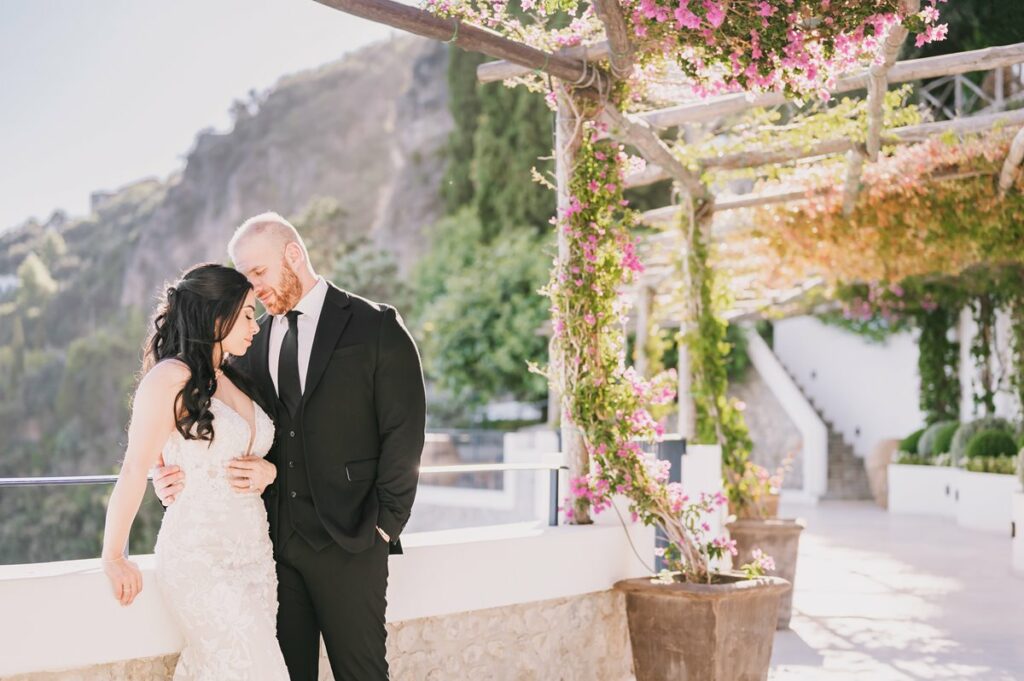
I work the edges. There is a band, three to six feet wide, where the canopy stops and the open terrace starts, and inside that band a face receives soft light from above and bounced light from the pale stone wall behind. Two steps deeper into the grove and the same face goes flat and green, because leaves are green and everything reflecting off them is too.
The other place I use is directly under a gap. Every one of these pergolas has holes in it where a tree has been cut back or died, and a hole is a softbox. I have moved couples twelve feet for a hole. That looks like fussing until you compare the two frames.
Ripe Fruit Throws Color Onto Skin
Ripe lemons hanging at head height throw yellow onto skin. On a bride in white, on anyone in a pale shirt, you get a cast that has to be pulled back later, and pulled back badly it turns people gray. So I shoot the fruit and the people in separate frames more often than you would expect, and when I do want both I put the fruit above the frame line or off to one side rather than directly beside a cheek.
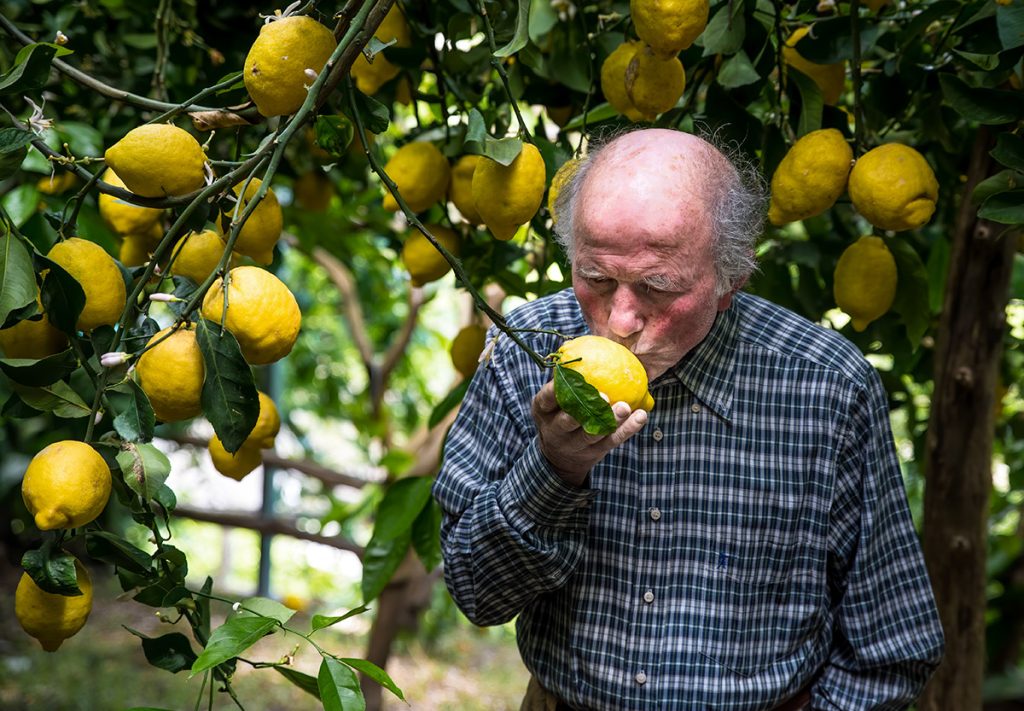
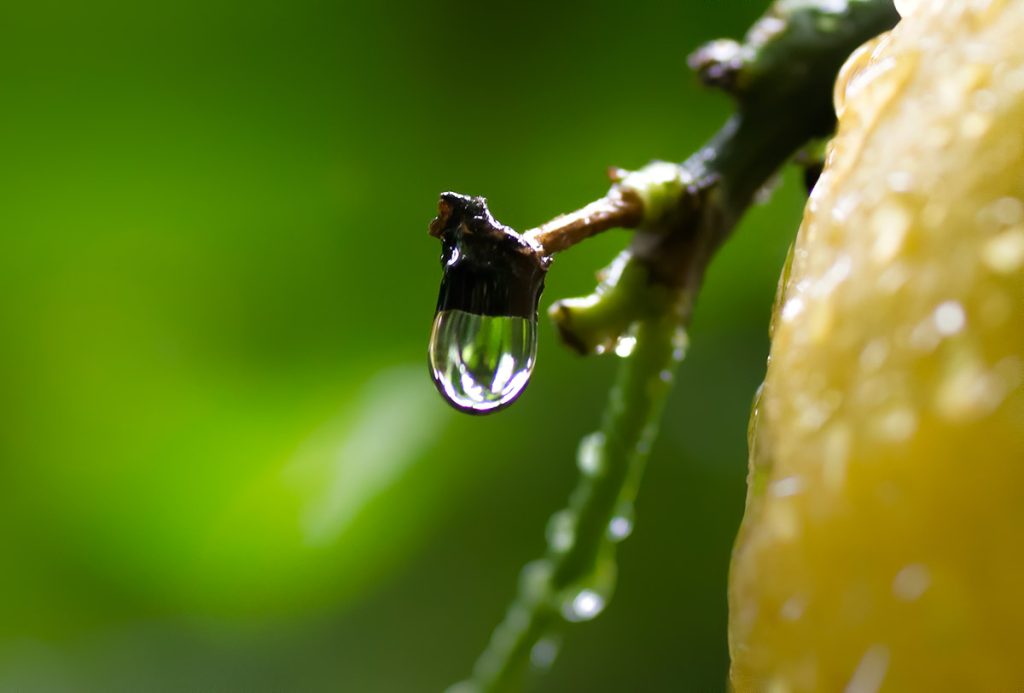
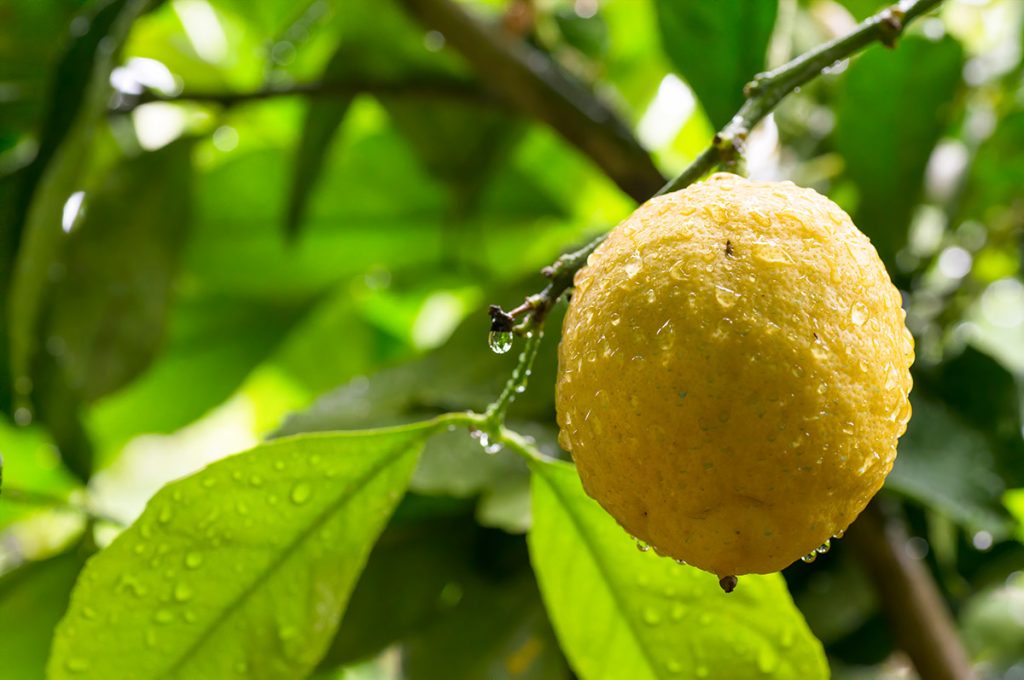
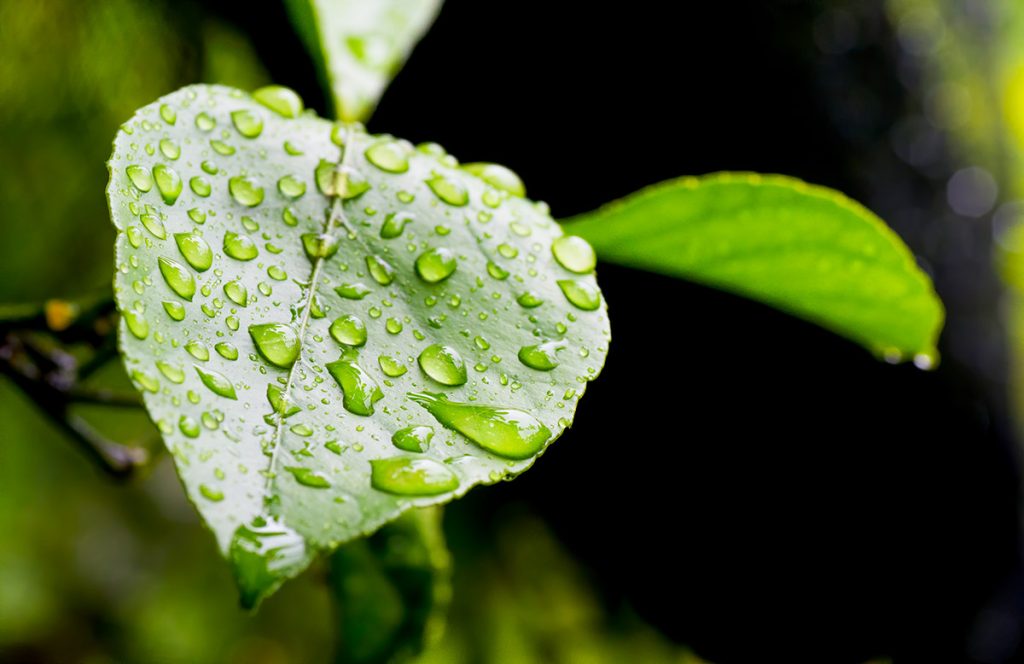
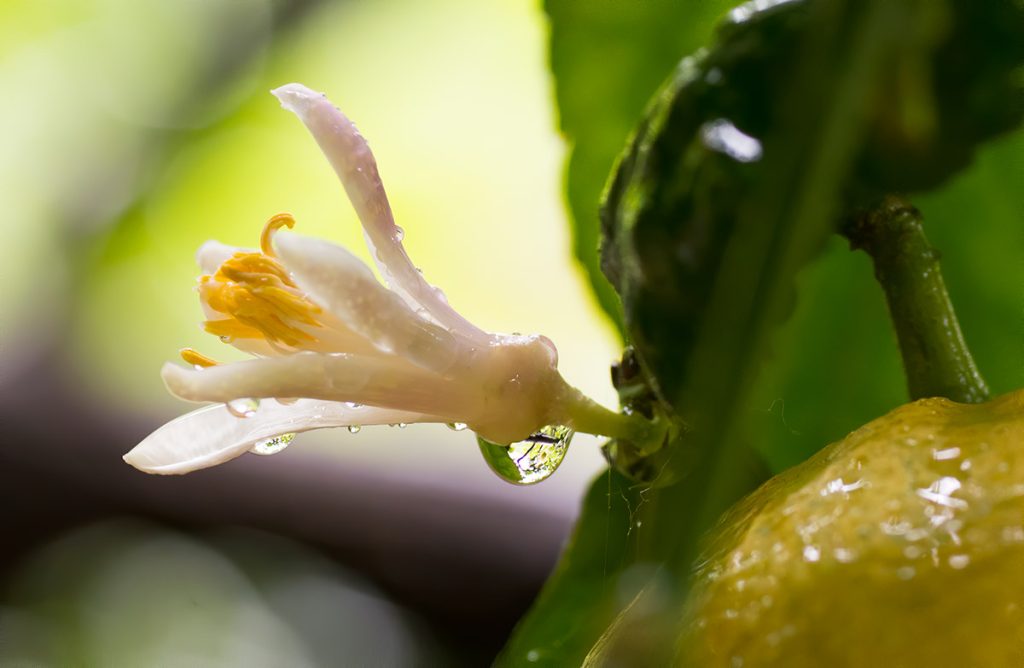
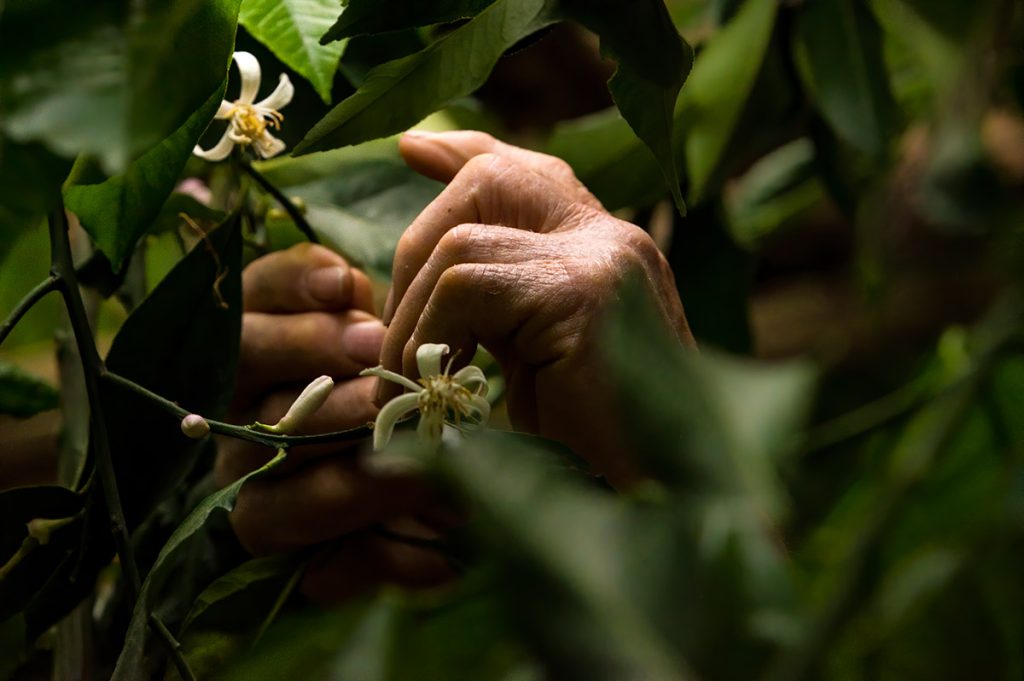
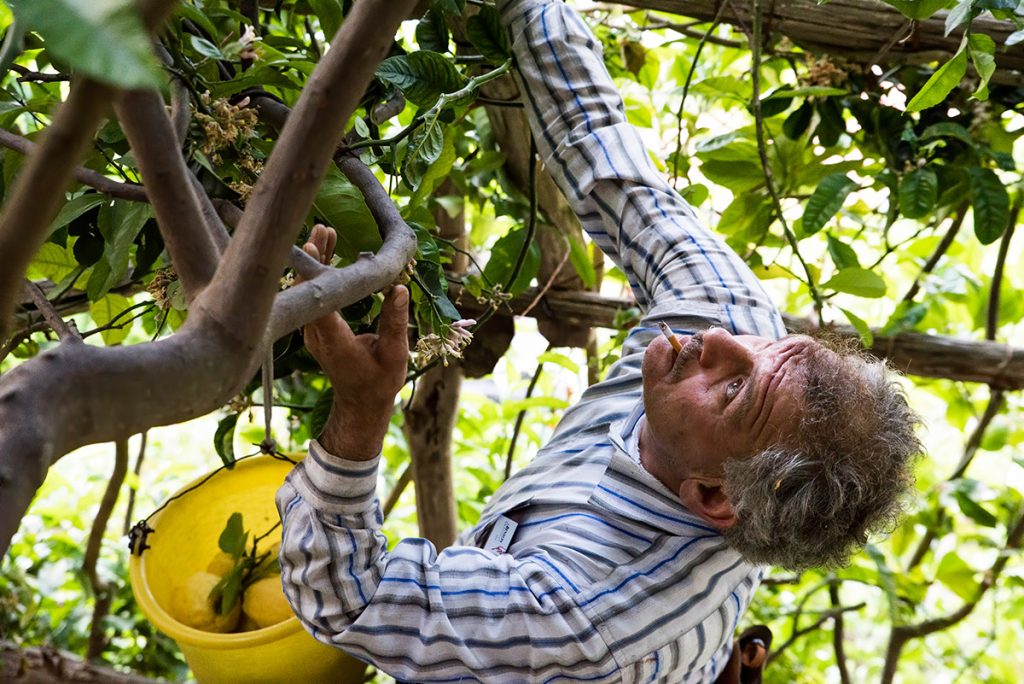
The blossom is the opposite and I chase it. Lemon flowers are white and waxy, they hold water after rain like little cups, and in spring you can find blossom and full ripe fruit on the same branch. Photograph that once and you understand why the whole coast smells the way it does in May.
Bringing a Family Up There
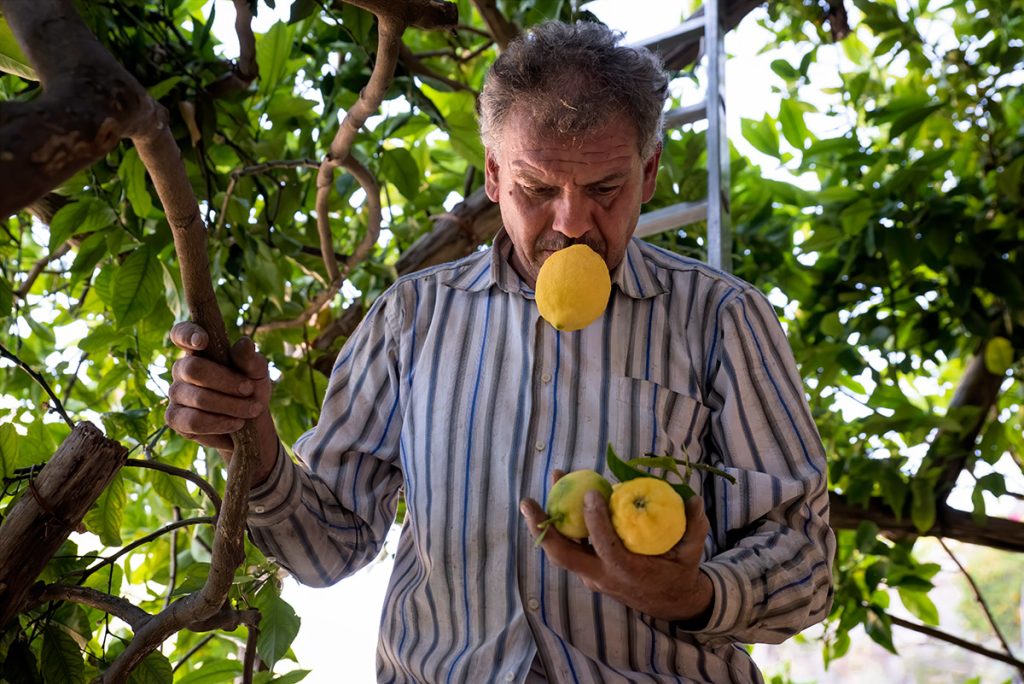
Most people assume this is a couples location. The sessions I get asked for most often now are families, and they work better than the couples ones for a plain reason: children have something to do. There is fruit at grabbing height, there are buckets, there is an old man who will hand a five-year-old a lemon and let them try to bite it. Nobody has to be told to look natural.
I photograph these the way I would photograph a wedding morning, which is to say I stay out of it and let the tour happen. The guide talks, the family listens or does not listen, someone wanders off to look at the sea, and I work around them. Posed group portraits I do at the end, on the terrace with the coastline behind, and I keep them short because by then everyone has climbed enough stairs.
Grandparents come up too, more often than I expected. The stairs decide it more than the age does. If your parents walk a hilly town at home without complaint, they will be fine here with time built in.
A Proposal Hidden Inside a Guided Tour
A proposal on this property works, and it works for a specific reason: an Amalfi Coast lemon tour gives you cover. Nobody wonders why a photographer is present, because a photographer being present is normal on a farm that hosts visitors twice a day. The person being proposed to has no reason to suspect anything.
The practical version goes like this. You book the tour, you tell the family what you are planning, and you and I agree on a terrace and roughly when. I go up ahead or I go up as part of the group depending on how observant your partner is. The moment itself happens at a stop, usually the one with the widest view, and it lasts under a minute the way these always do.
Everything else about how I handle these, including how long to give me and what happens in the minute after, sits in my guide for anyone hiring an Amalfi Coast proposal photographer who scouts the spot first. The lemon terraces are one option among a dozen on that page, and they are the right one for couples who would rather be somewhere quiet than somewhere famous.

The Cooking Class Half of the Day
The class starts around 11:45, lasts about three hours and takes fifteen people at most, and it is a genuinely different photographic problem: indoors, warm, crowded, everyone’s hands covered in flour. I like it. Faces concentrating on a task are easier to photograph honestly than faces being asked to enjoy themselves.
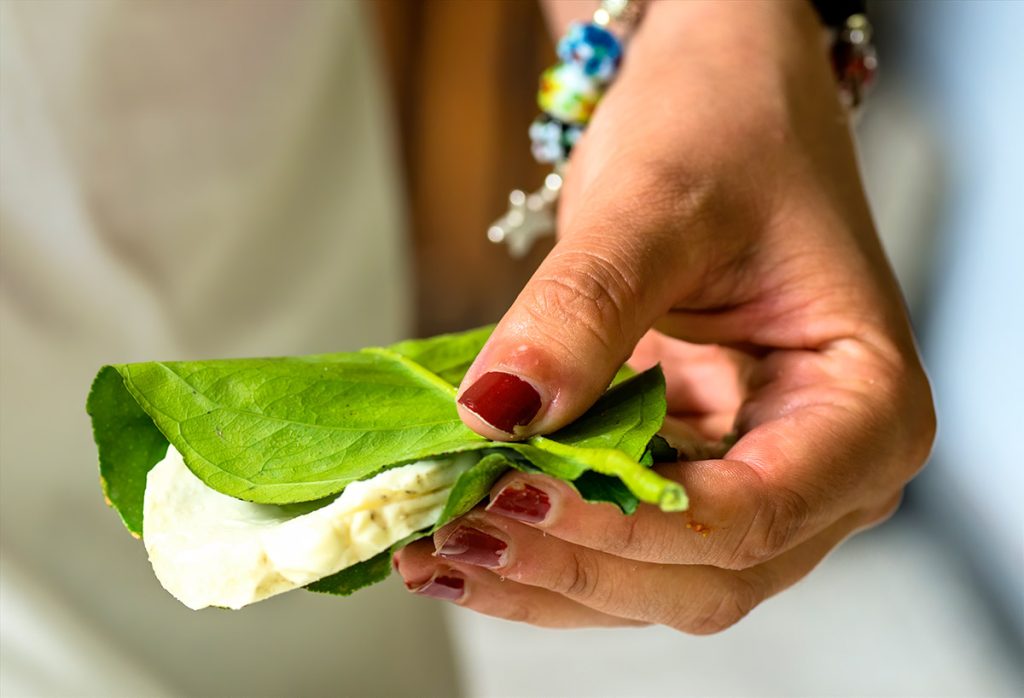

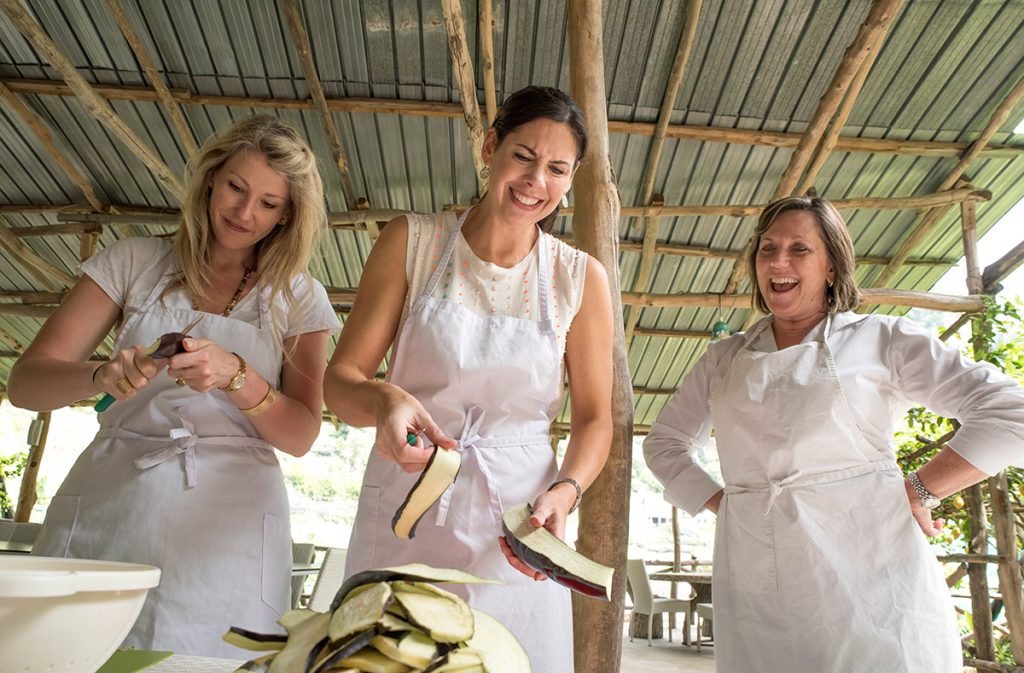
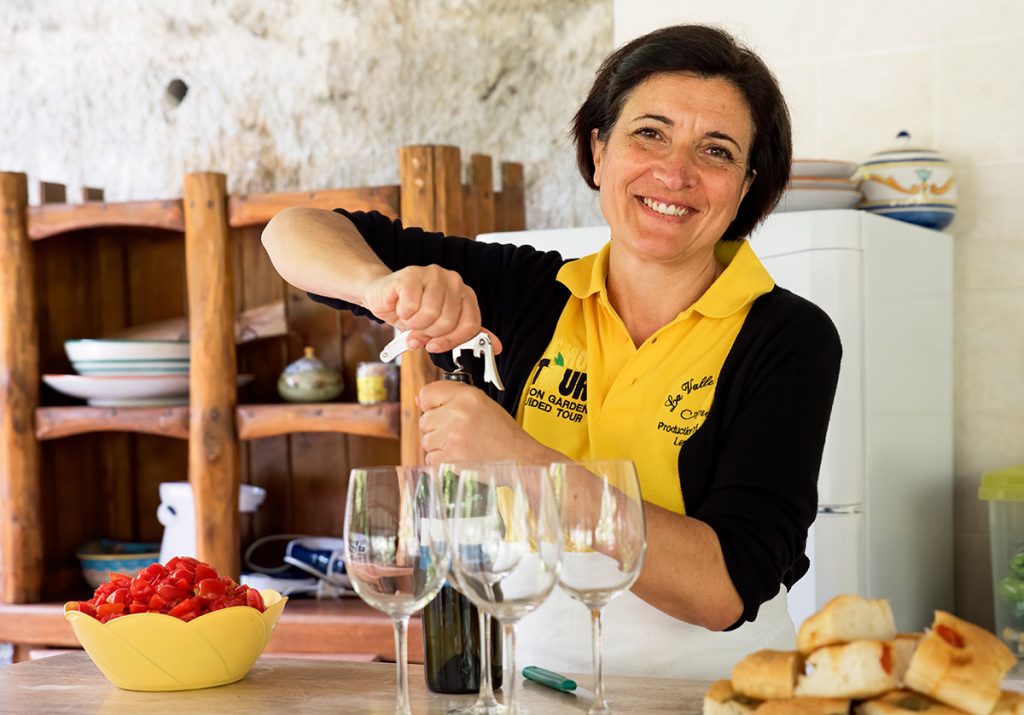
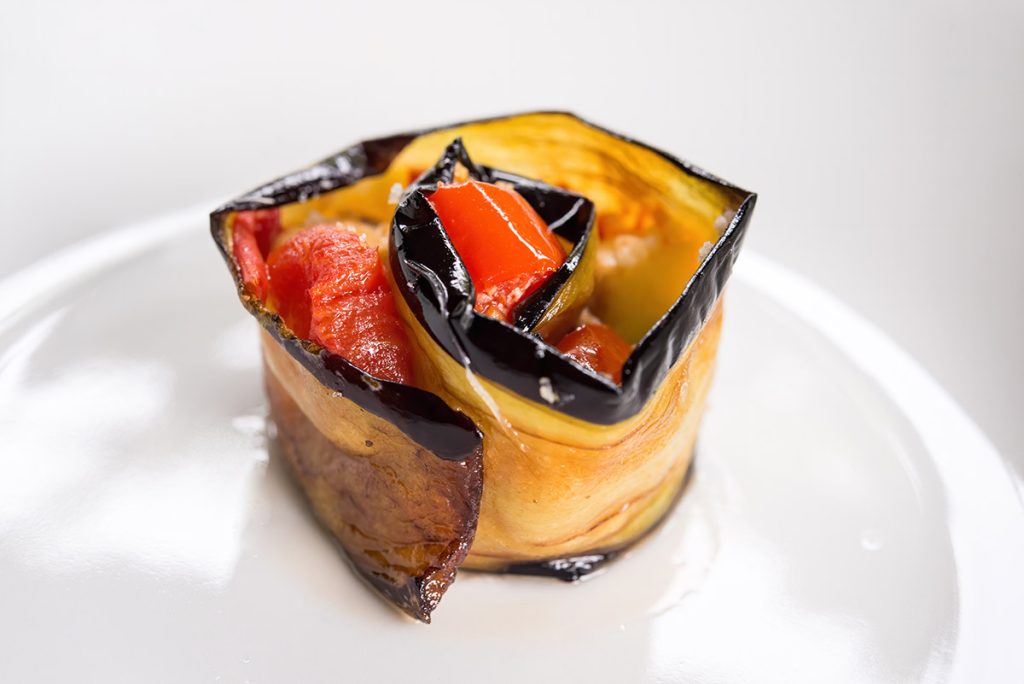
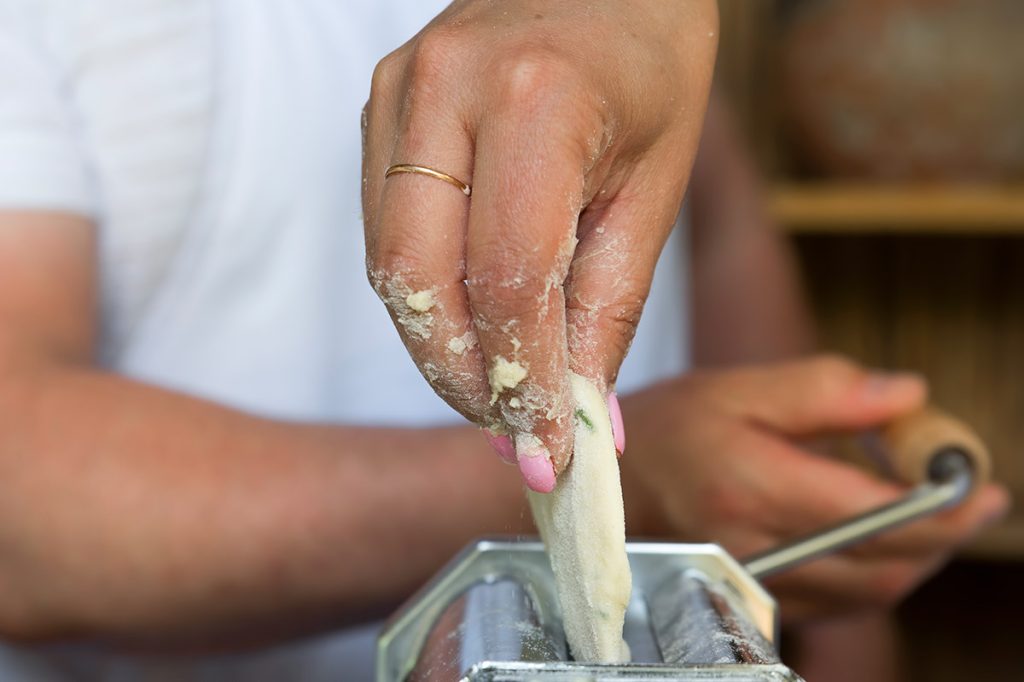
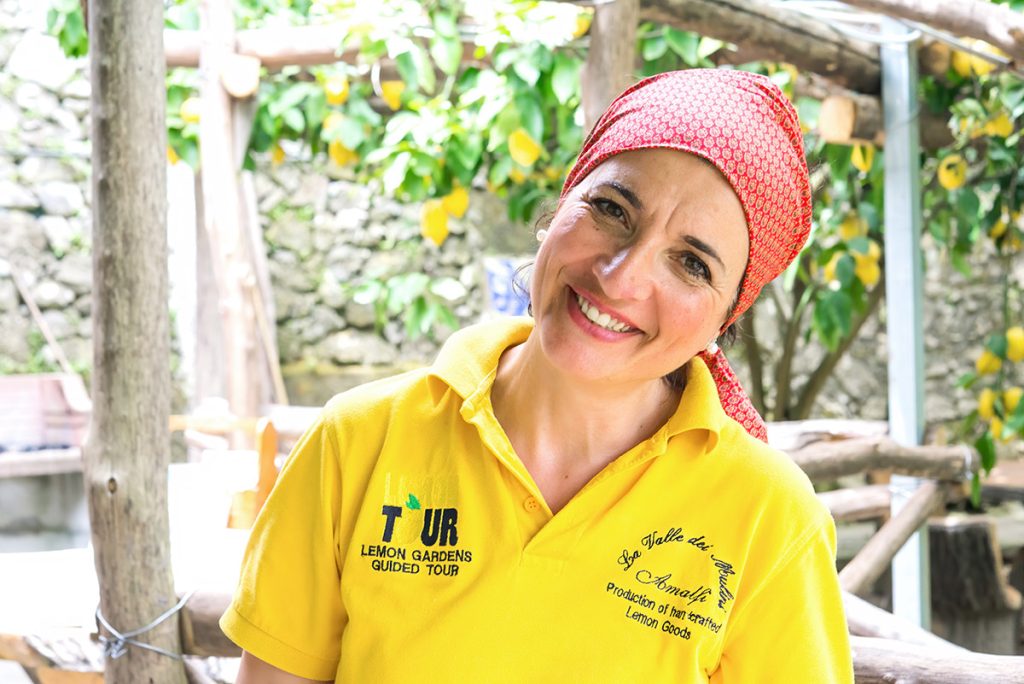
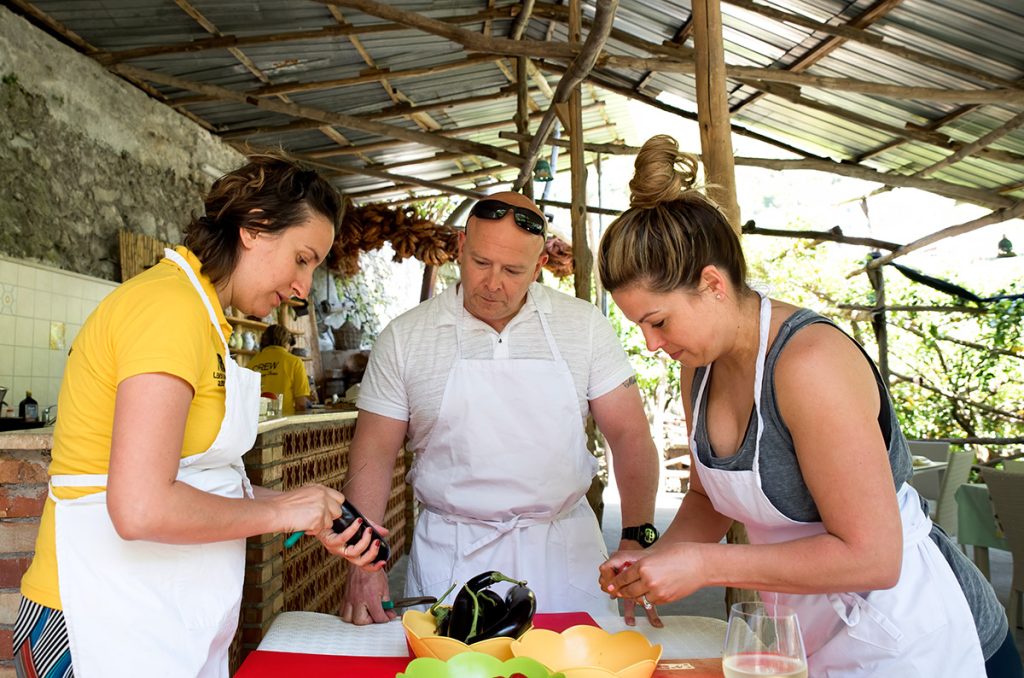
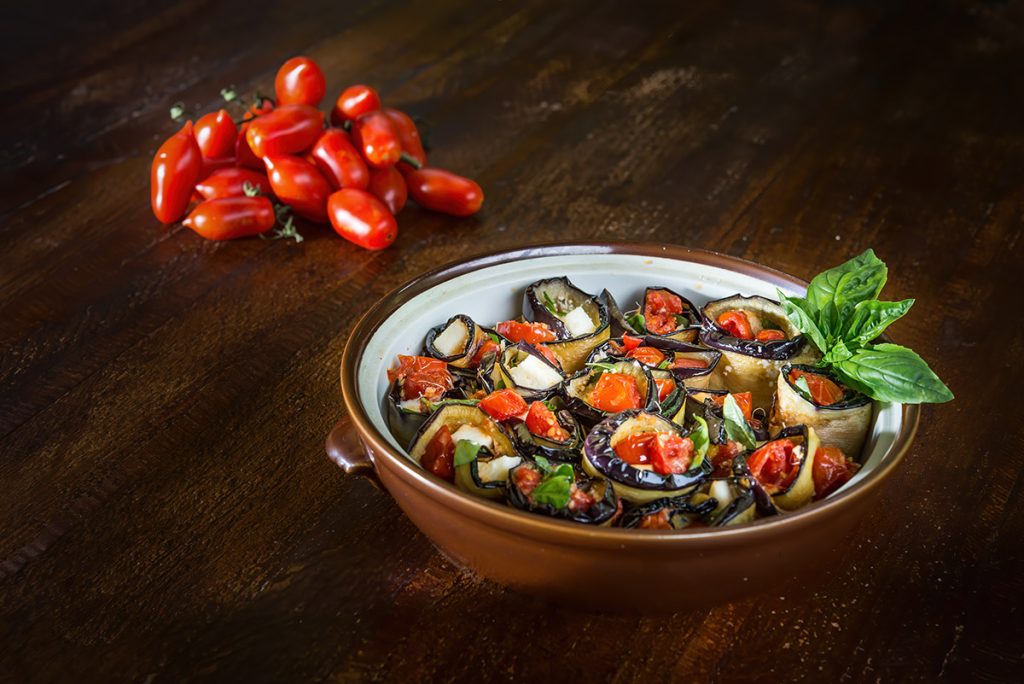
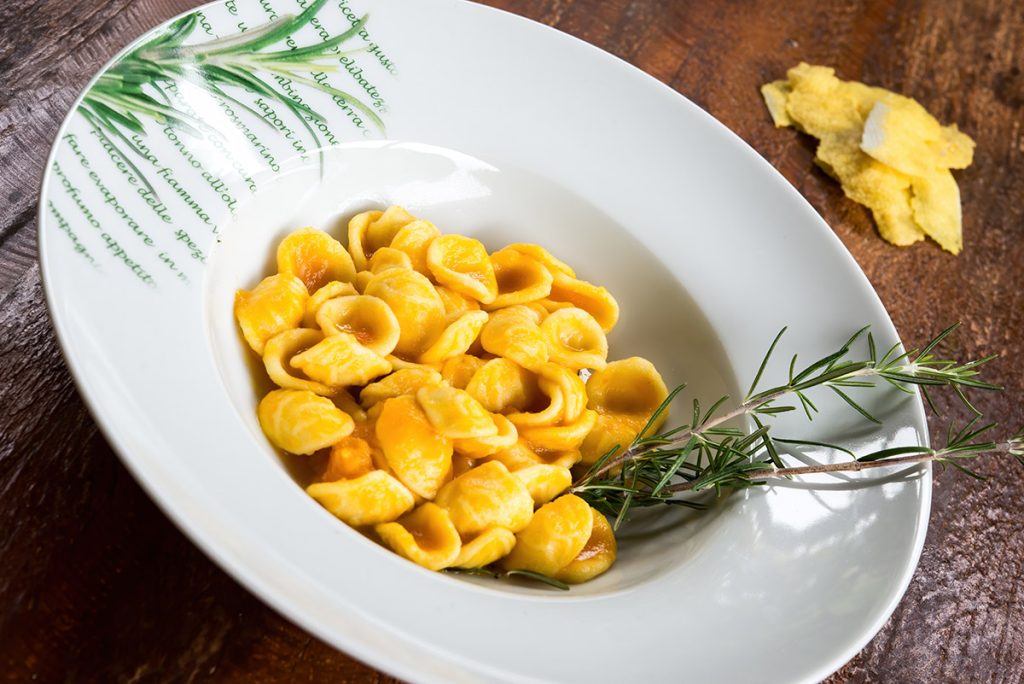
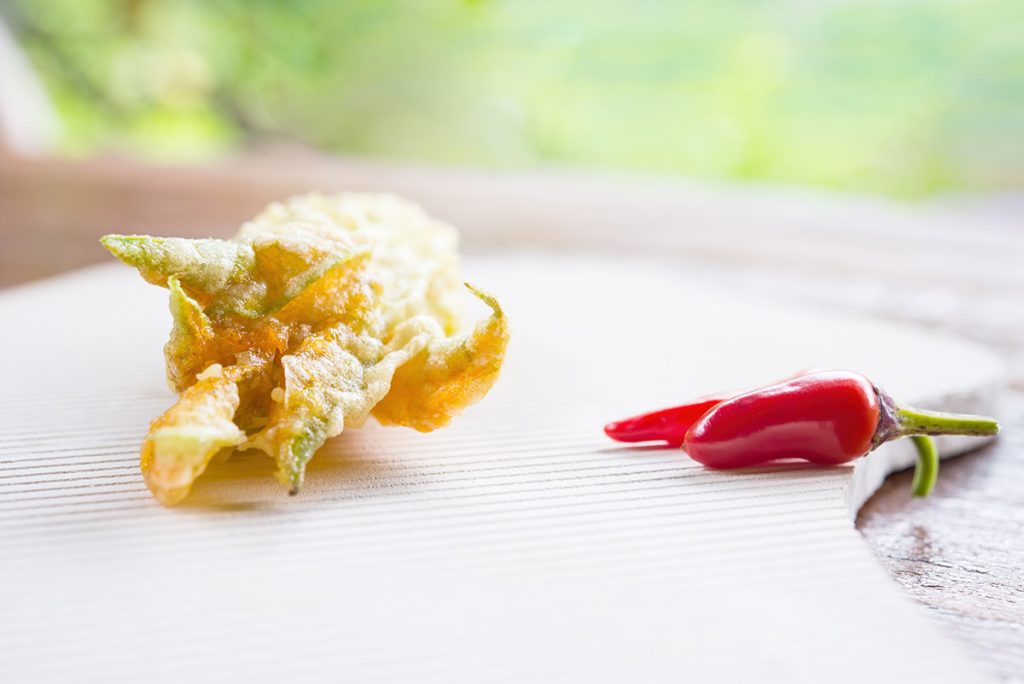
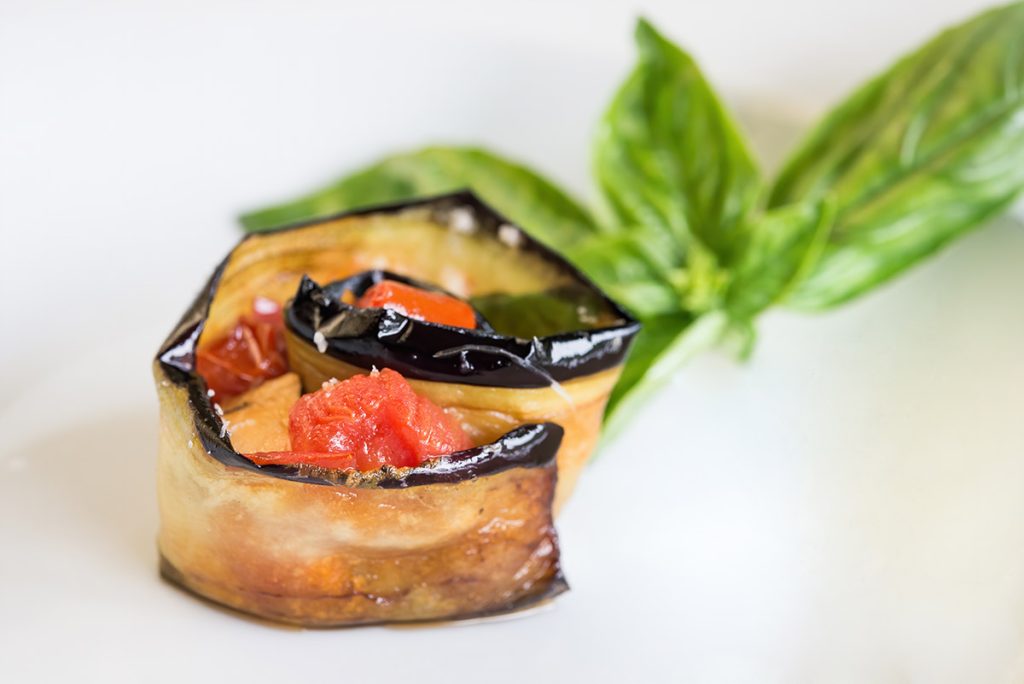
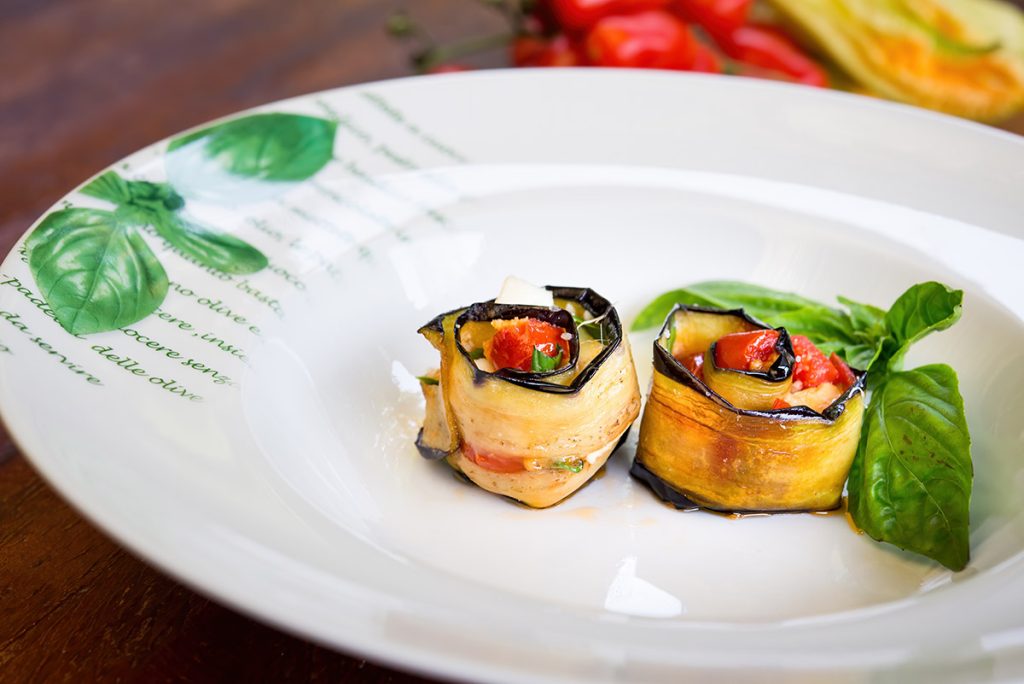
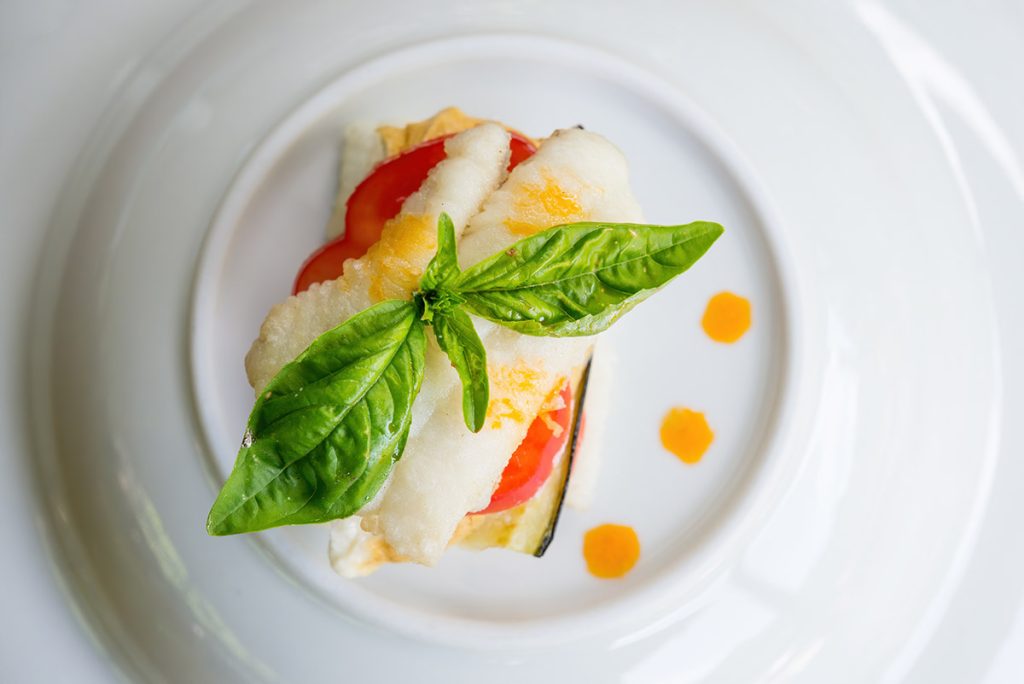
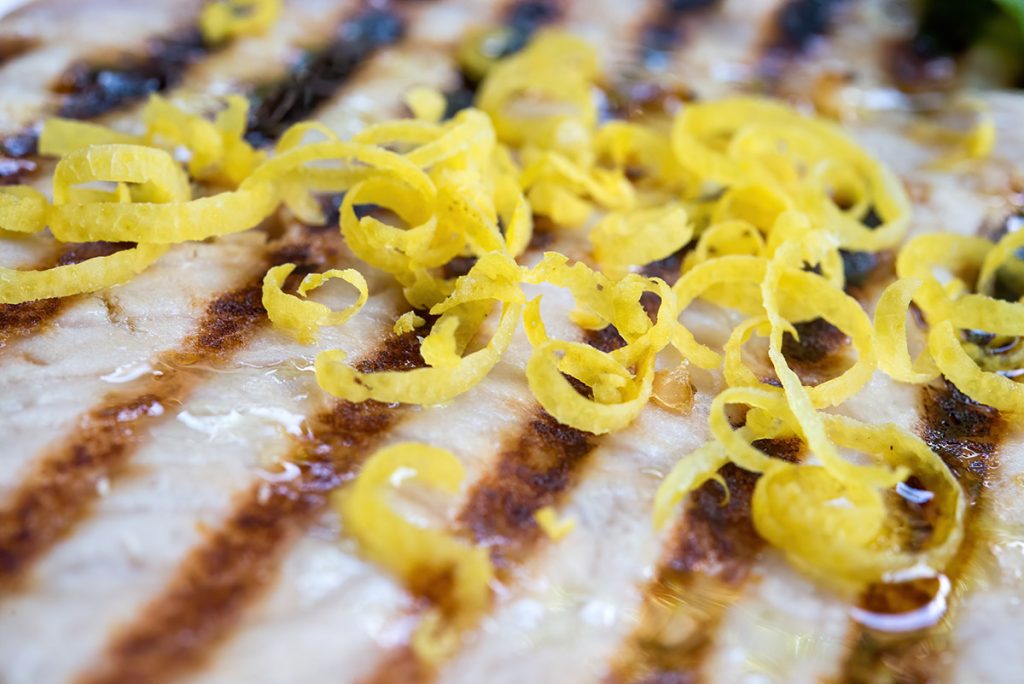
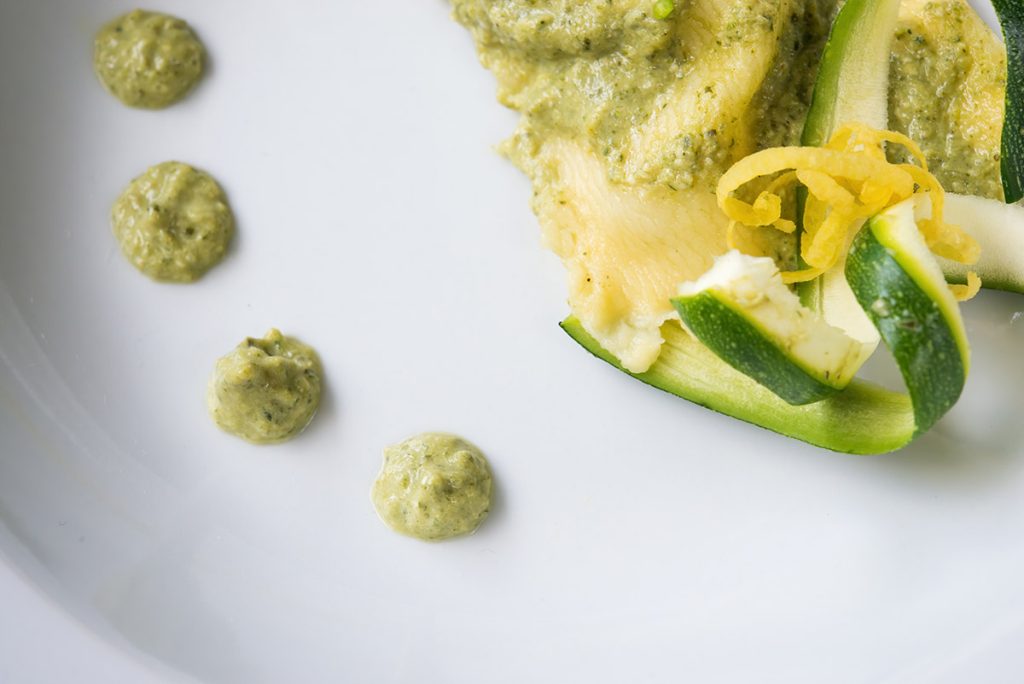
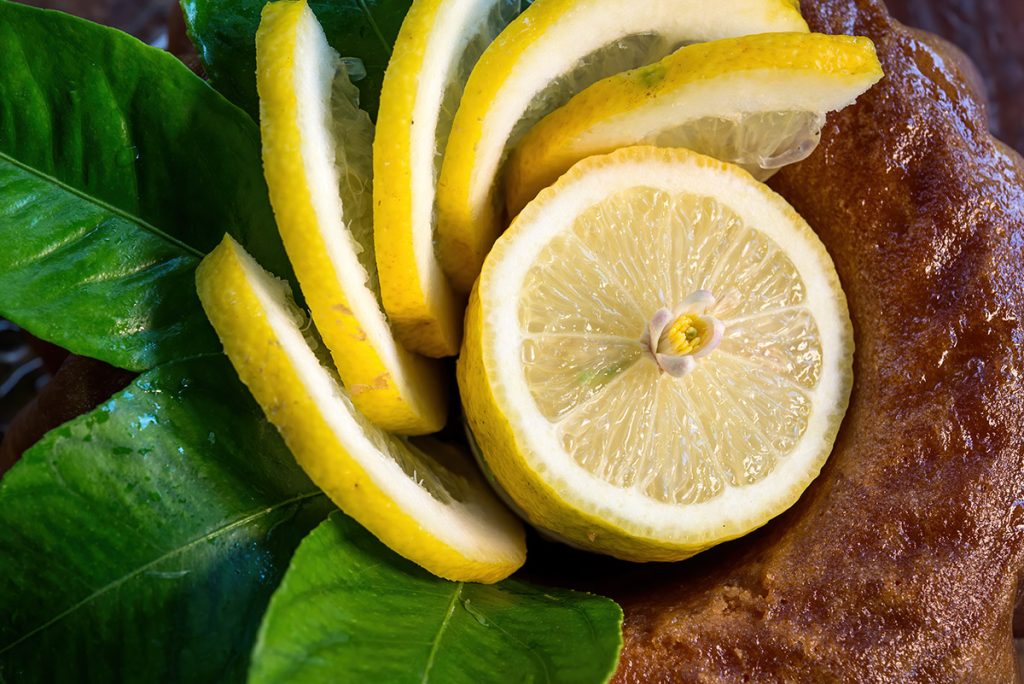
What actually happens is pasta by hand through a cranked machine, zucchini flowers fried whole and served next to a single red chilli, fish with mint and shaved lemon zest, and a cake with lemon slices laid over the top on their own leaves. The lemon runs through all of it without turning into a gimmick. That is harder to pull off than it sounds and it is why the food photographs well.
For anyone building a whole guest program rather than one morning, this is the sort of thing worth handing to an Amalfi Coast wedding planner who can hold twenty people to a schedule on a working farm. Group bookings on a property with no parking and a departure time need somebody watching the clock.





How the Limoncello Gets Made, and Why I Shoot It Last
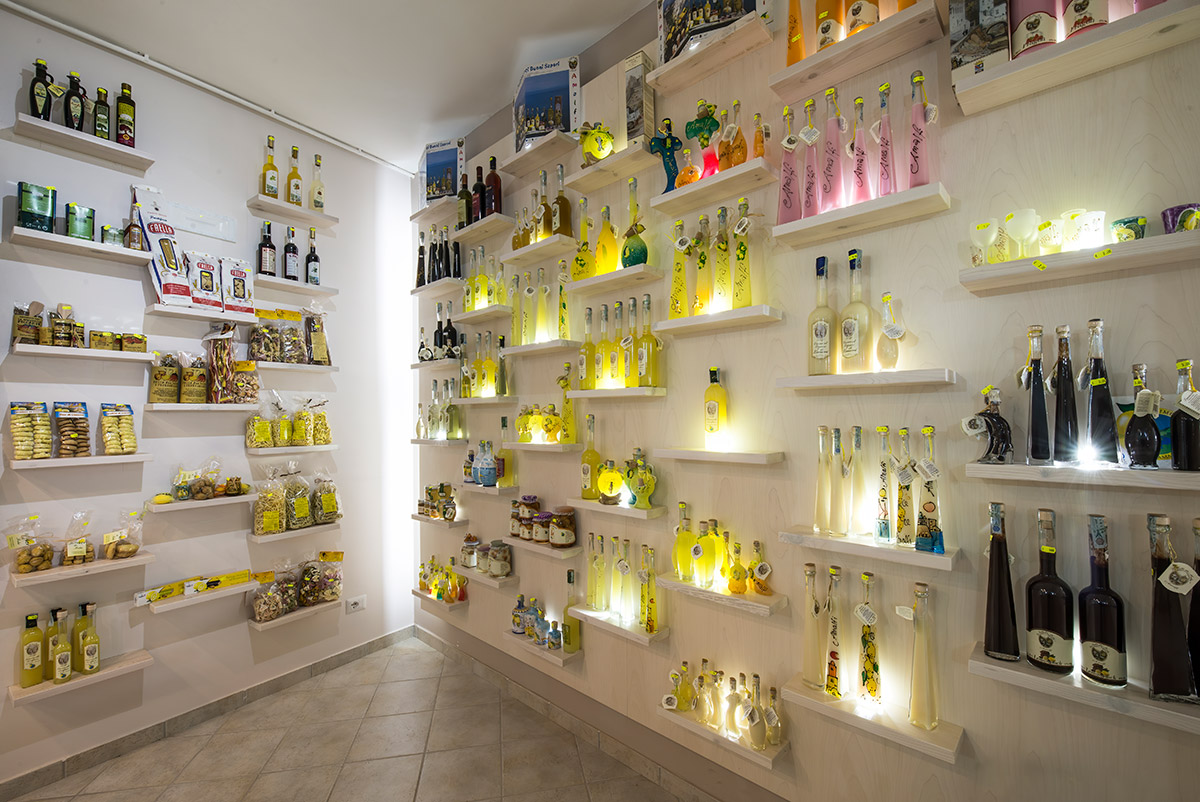
The last stop, the part people call the Amalfi limoncello tour, is the factory and the museum, and it is dark in there after a morning of Mediterranean glare. Your eyes need a minute. So does a sensor.
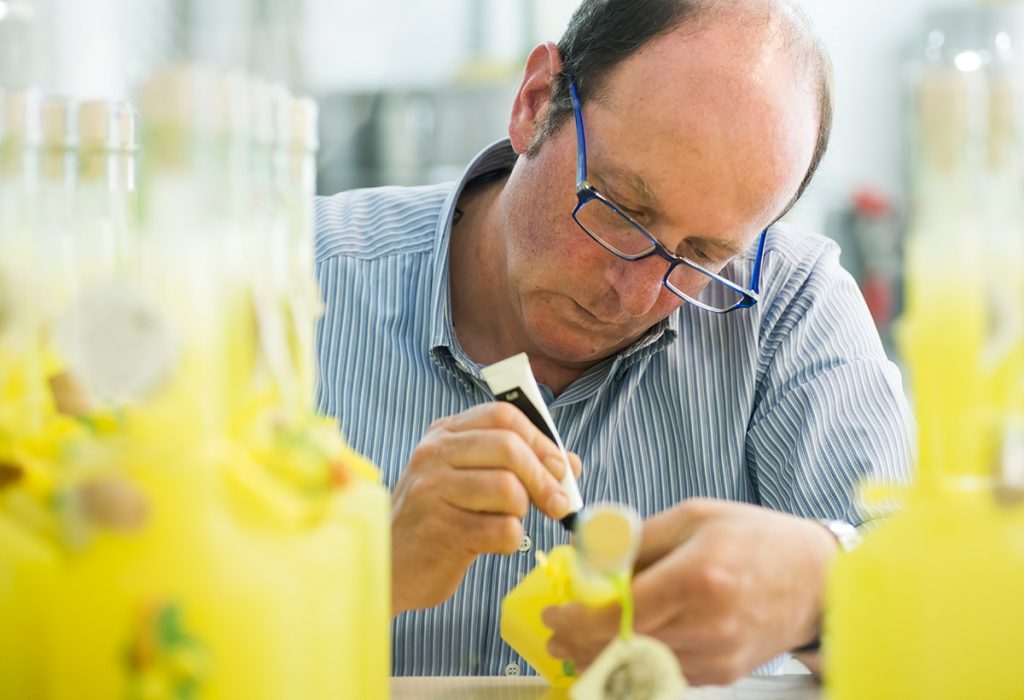
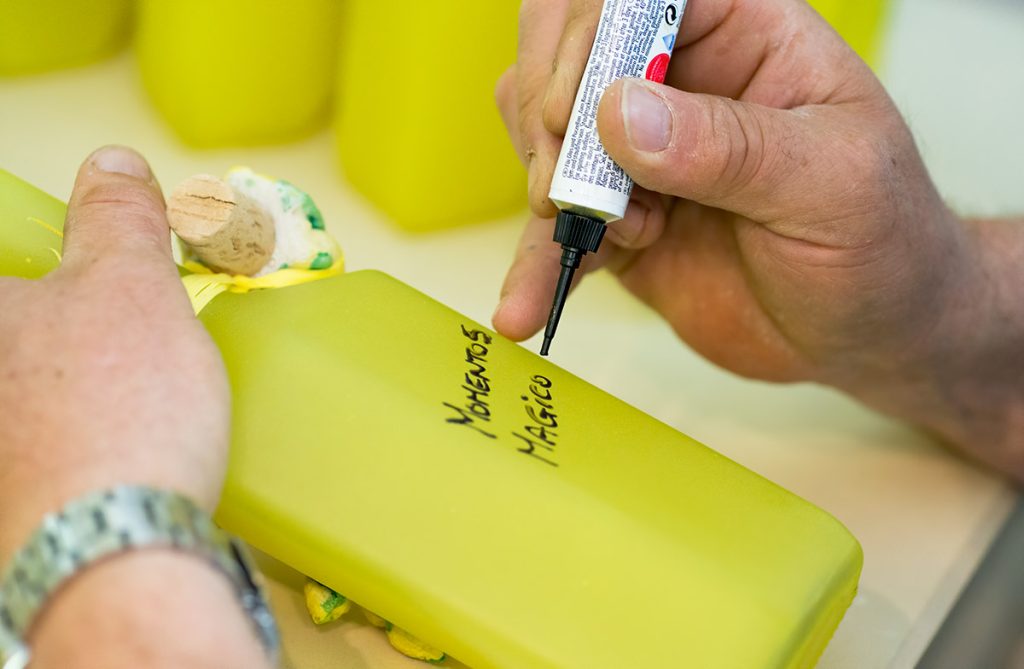
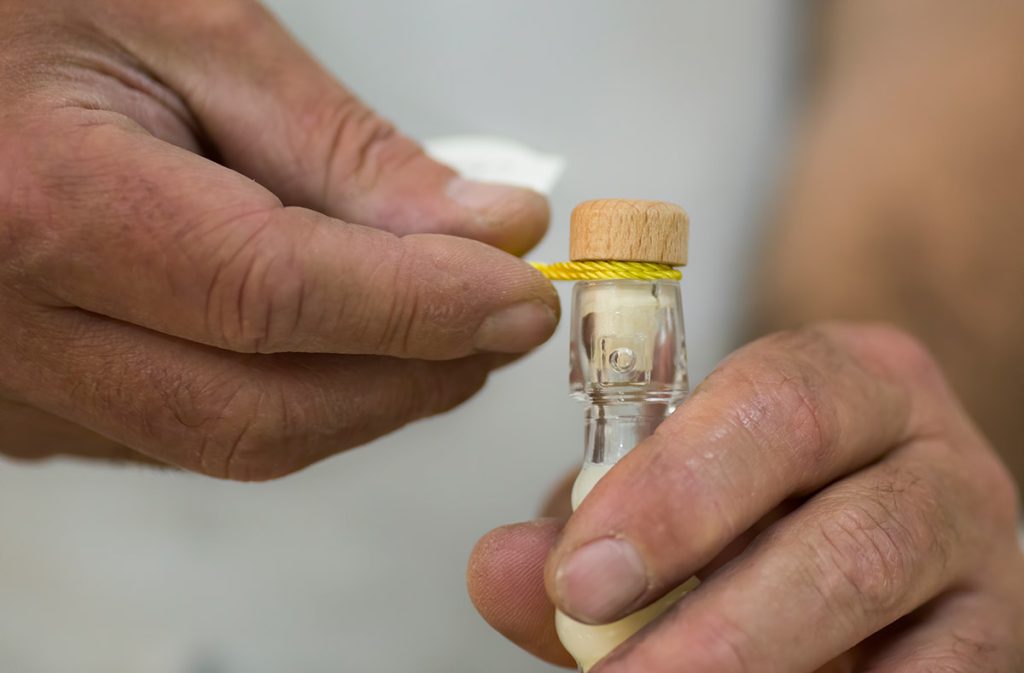
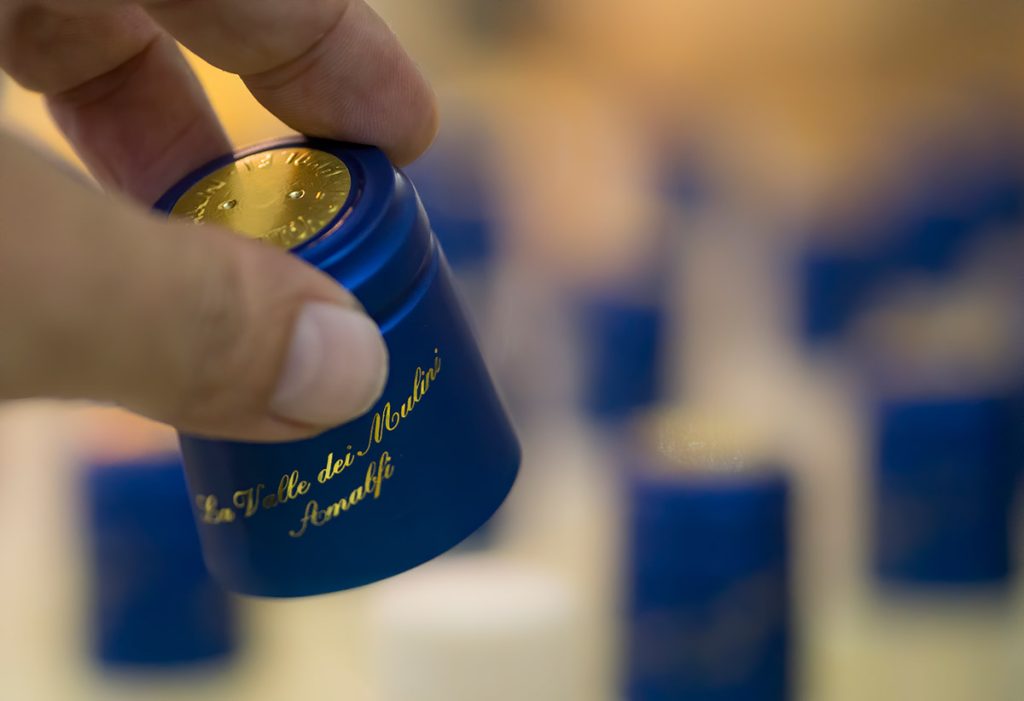
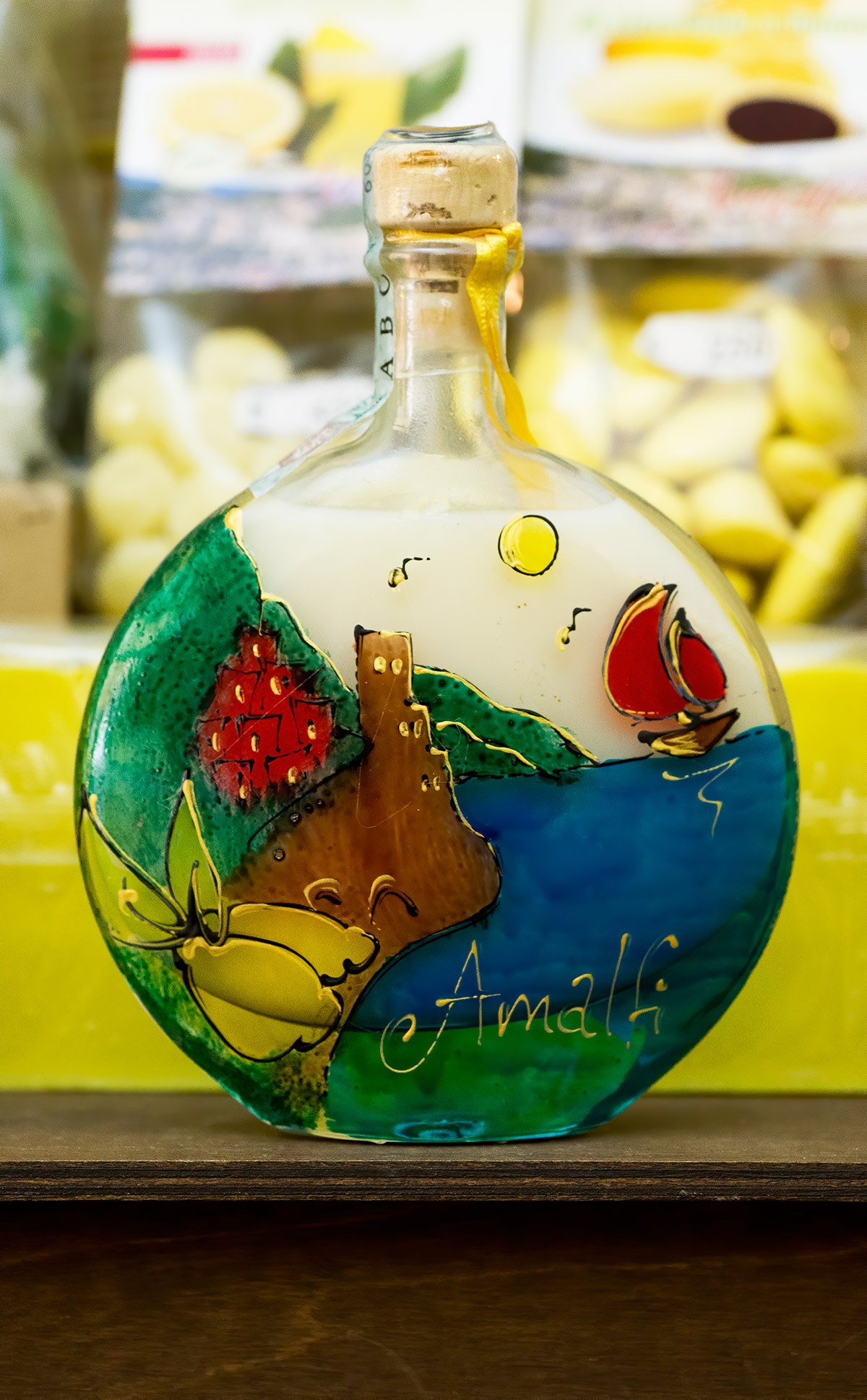
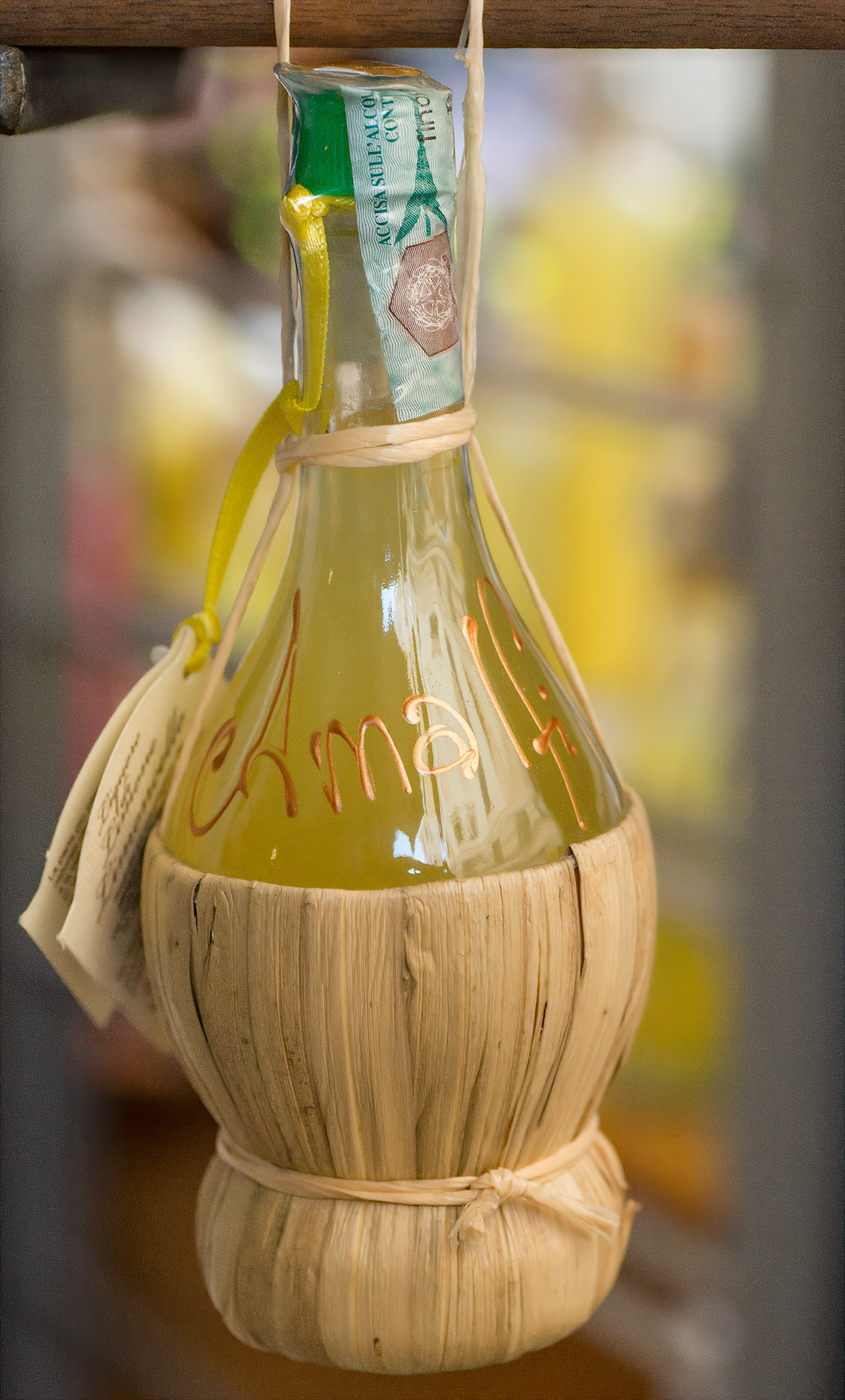
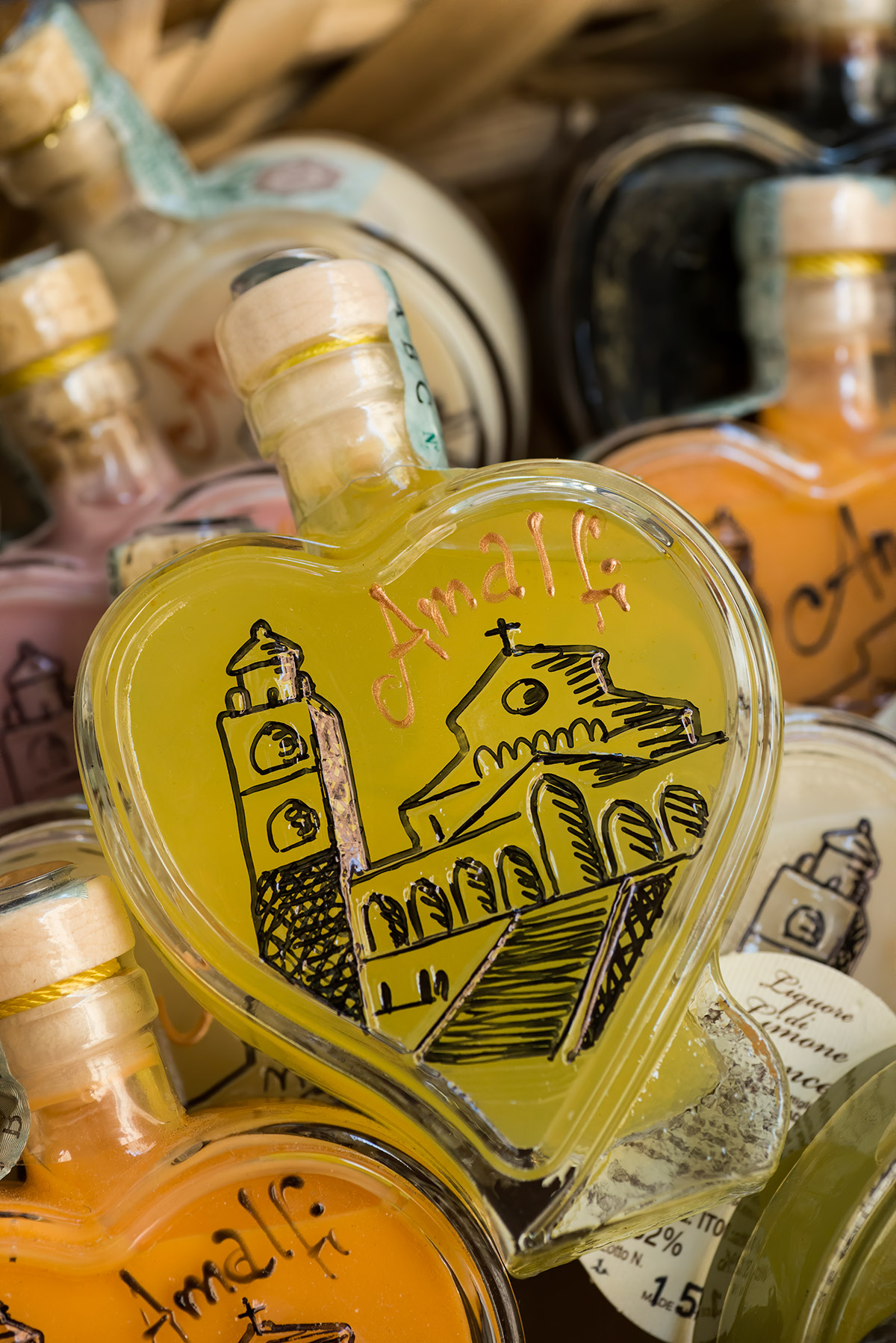
The shots in there are small ones. A man in glasses lettering a bottle with a fine paint pen, thick fingers tying a yellow cord around a cork, a blue capsule going on by hand, one at a time. Then the bottles themselves, straw-wrapped, hanging in rows, some of them hand-painted with the cathedral on the front.
I photograph this section last for a practical reason. Coming out of the bright groves into a dim room is the natural end of a visual sequence, warm to cool, wide to close. Do it in reverse and the gallery ends outdoors on the same wide view it started with, which reads as though nothing happened in between.
The Groves Between March and October
The farm opens from March to October, and in those eight months the Sfusato Amalfitano does not keep to one tidy season, so you will always find something on the trees. What changes is what you find.
In spring there is blossom, and blossom is the reason to come if pictures matter to you: white flowers, heavy scent, and fruit from the previous cycle still hanging. In high summer the main crop is on the trees and the fruit is at its most photogenic while the light is at its worst, so you work early or you work in the shade of the canopy on purpose. By October the groves feel like a farm again rather than an attraction, because most of the visitors have gone home.

Fitting an Amalfi Coast Lemon Tour Into a Wedding Week
Almost every couple I photograph is here for four or five days, not one. The wedding takes the middle day and the rest is loose, and this is where an Amalfi Coast lemon tour earns its place: it takes about an hour and a half, it is walkable from the center of Amalfi, and it entertains a group of mixed ages without a boat, a driver, or a booking made six months out.
The slot I recommend is the morning after everyone arrives, before the wedding day. People are jet-lagged, they wake at six anyway, and a 10:15 departure suits them. It also gets the whole group into the same place doing the same thing on day one, which does more for a guest list than any welcome dinner.
If you are marrying with nobody watching, you can go up alone instead, the morning after, still wearing something of what they wore. That version overlaps with how I shoot an Amalfi Coast elopement with a second morning attached to it, where the ceremony is short and the pictures are the point.
The two slots that work best for a group are the day before the wedding and the day after, and they do different jobs. The day before puts everyone in the same place while the couple is still free, and it burns off jet lag in a way that sitting by a pool does not. The day after suits people who are leaving on an evening flight and have a morning to fill, and it is a quieter version, because half the group is tired and nobody is watching the clock. I suggest one or the other to most couples who ask me what to do with their guests, and it costs a fraction of a boat day.
The Aceto Farm as a Private Session
The tour is what the farm is known for, and it is no longer all they do. The Acetos take couple sessions on the terraces, they take family sessions, and they will host an elopement up among the trees. That side of the business is newer and they are actively looking to grow it, which in practice means the property is available to you for something other than a ticketed walk with a group of strangers.
It changes what you can ask for. On a scheduled departure I work around a group of up to thirty and a guide who has a route to finish. On a session booked as a session, the pace is yours: we can stand still under the same pergola for twenty minutes waiting for the light to move off a face, go back up to a terrace we already passed, or let two children run the length of a row while I stay at the bottom of it with a longer lens. None of that is possible when the group has to be back down for the next departure.
For a family this is the version I would push you toward, and for an engagement session it is the one I book most often. You are paying for time and privacy on a working farm rather than for a ticket, and the pictures show it: no strangers in the background, no queue at the tasting table, and nobody standing in the frame with a phone.
Sfusato, Prices, and the Other Lemon Path
How much are Amalfi Lemon Experience tickets?
The classic tour is 30 euros for an adult, 15 for a child from three to ten, and free under three. Book through the farm’s own site, since resale platforms can show a higher price for the same walk.
What are Amalfi lemons called?
Sfusato Amalfitano. It is the variety protected under the European PGI name Limone Costa d’Amalfi, grown on these terraces from Vietri sul Mare to Positano.
Why are Amalfi lemons so big?
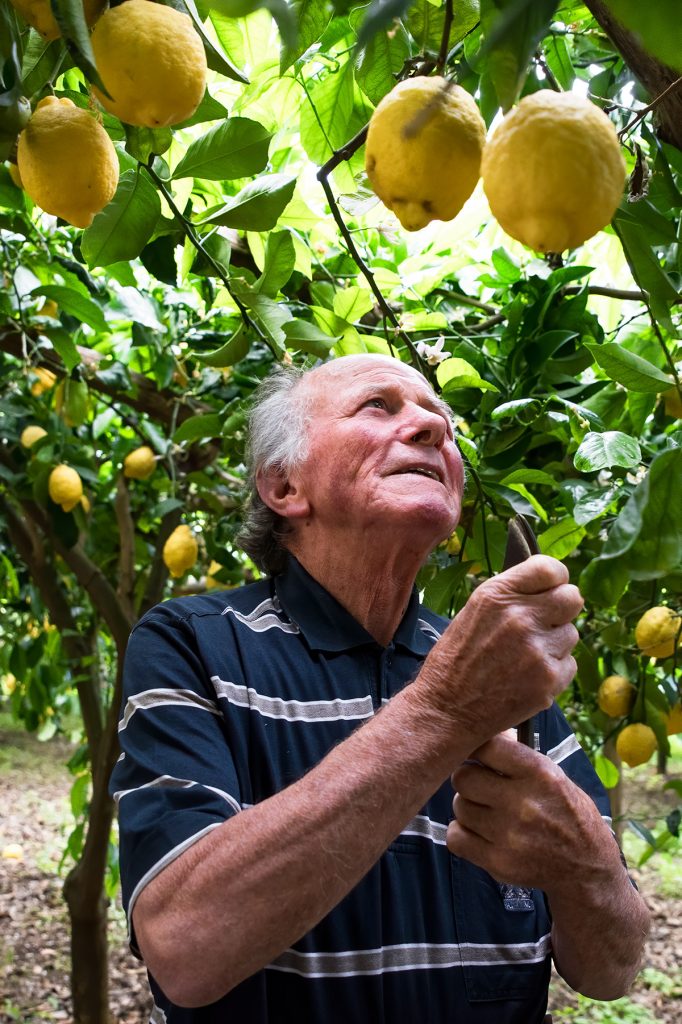
Mostly because of the variety. The Sfusato is a long, tapered fruit with a thick, fragrant peel, and it is trained across chestnut pergolas on terraces facing the sea. You will see fruit hanging at head height on the tour, large enough that the first thing most people do is pick one up in both hands.
When is lemon season on the Amalfi Coast?
The main crop comes late, in summer, and the tours run from March to October, so there is fruit on the trees whenever you can visit. For blossom and fruit together, come in spring.
What is the Path of the Lemons?
The Sentiero dei Limoni is a public walking trail through the terraces between Maiori and Minori, and it has nothing to do with the farm above Amalfi. You can walk it on your own, on stairs, with no ticket and no guide. If you want the groves explained by the people who work them, take the tour.
A Free Morning and a Camera
A morning up there gives me something I cannot get anywhere else on this coast: a real place doing real work, with a couple or a family inside it rather than posed in front of it. The pictures show the Amalfi Coast that sits behind the one everyone photographs.
If an Amalfi Coast lemon tour fits your trip, book it yourself and tell me which departure you are on, or leave the dates with me. Either way tell me which morning of your trip is still free and I will tell you honestly whether it is worth the climb for what you want out of it.
 Written By Emiliano Russo